
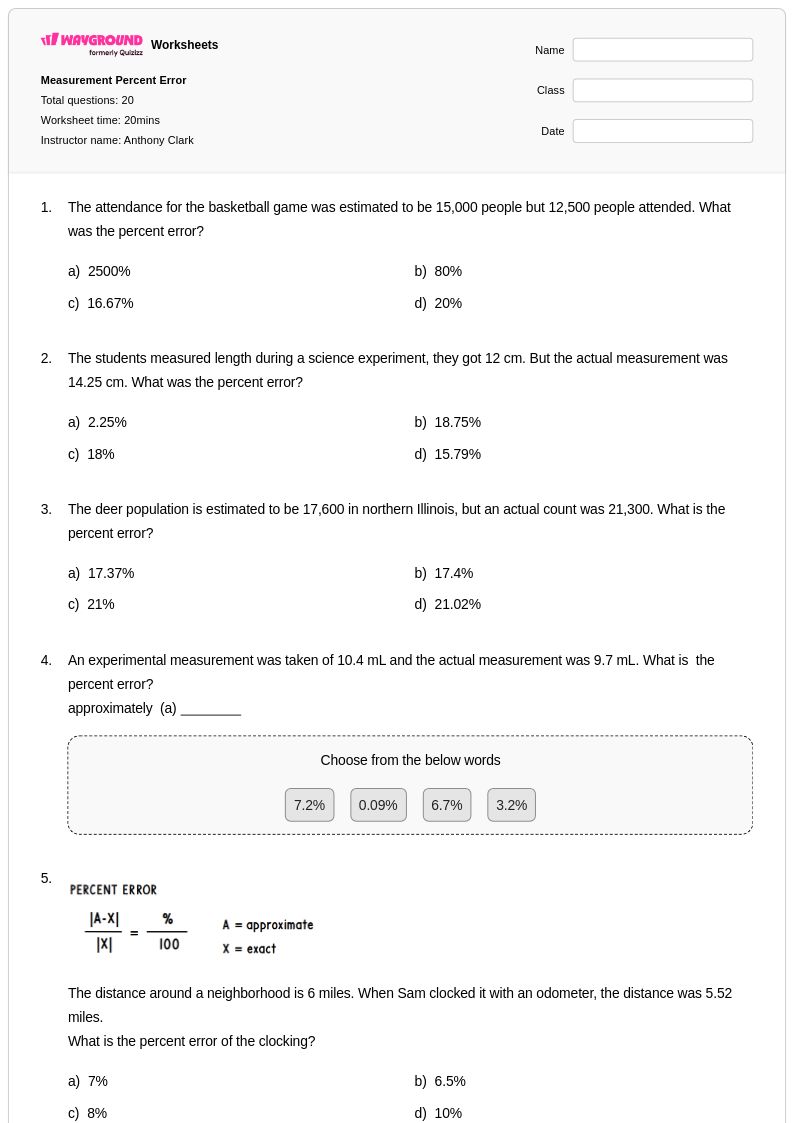
20 Q
7th - Uni
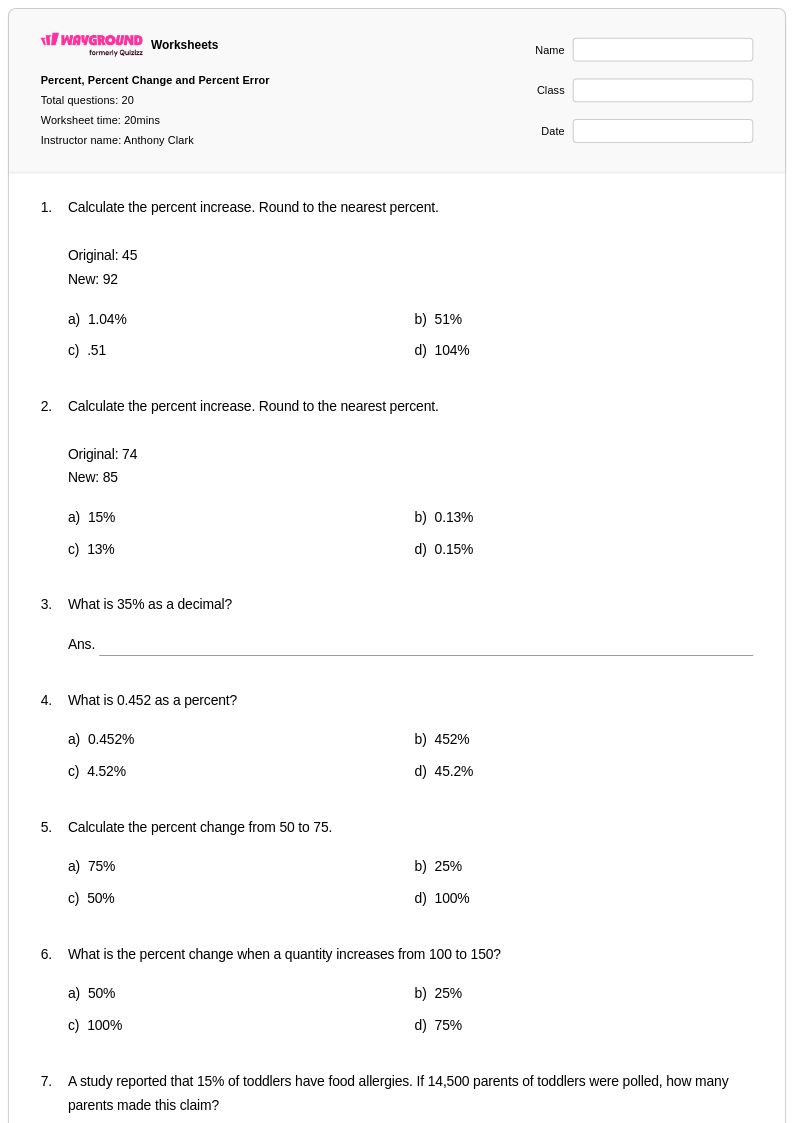
20 Q
7th - Uni
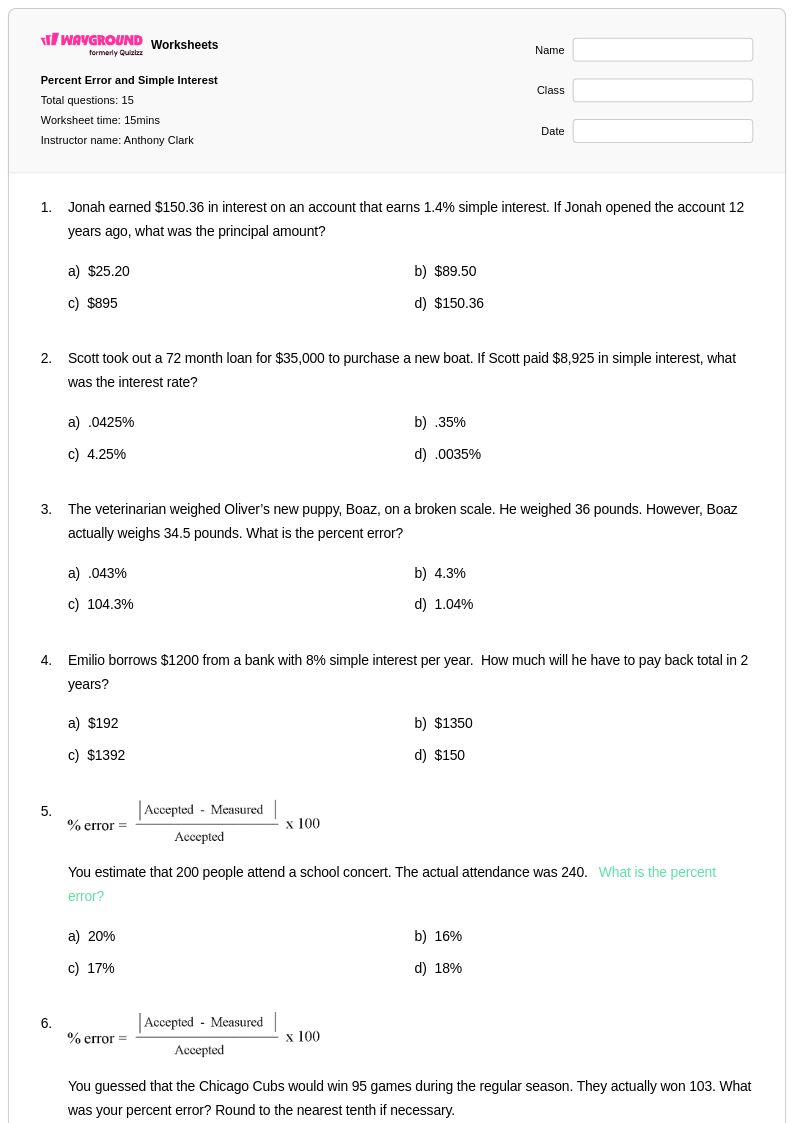
15 Q
7th - Uni
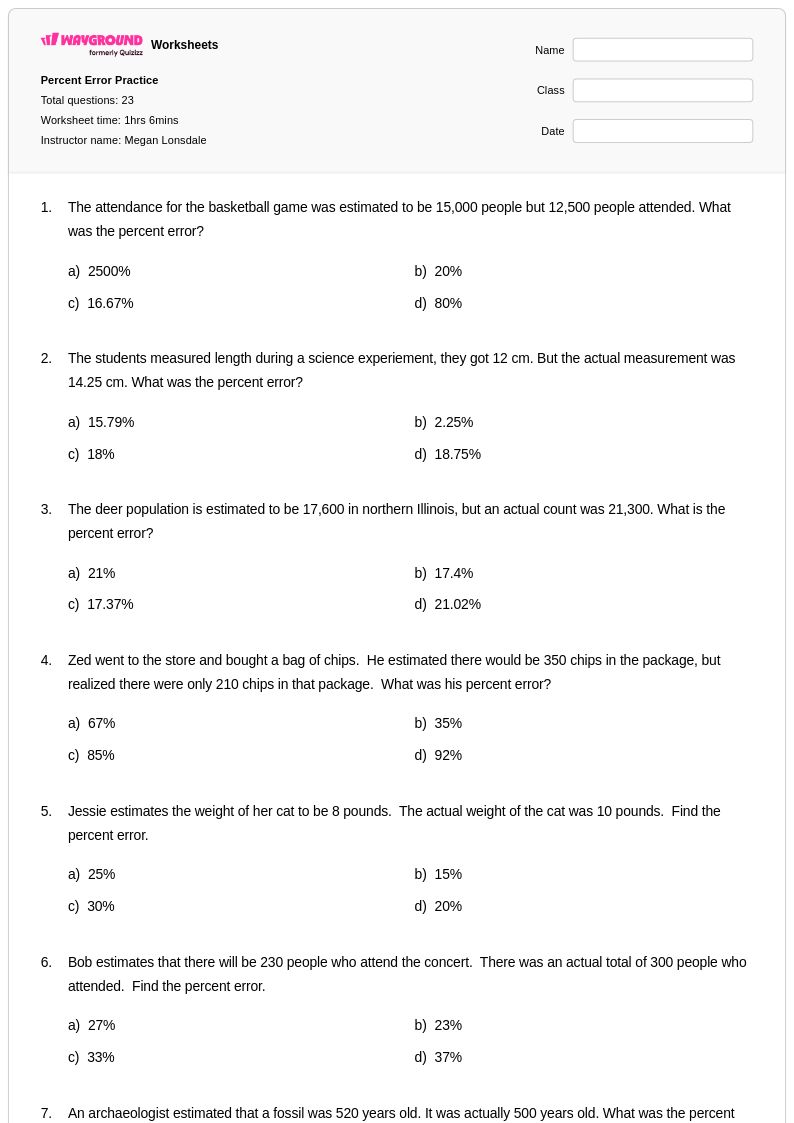
23 Q
6th - 9th
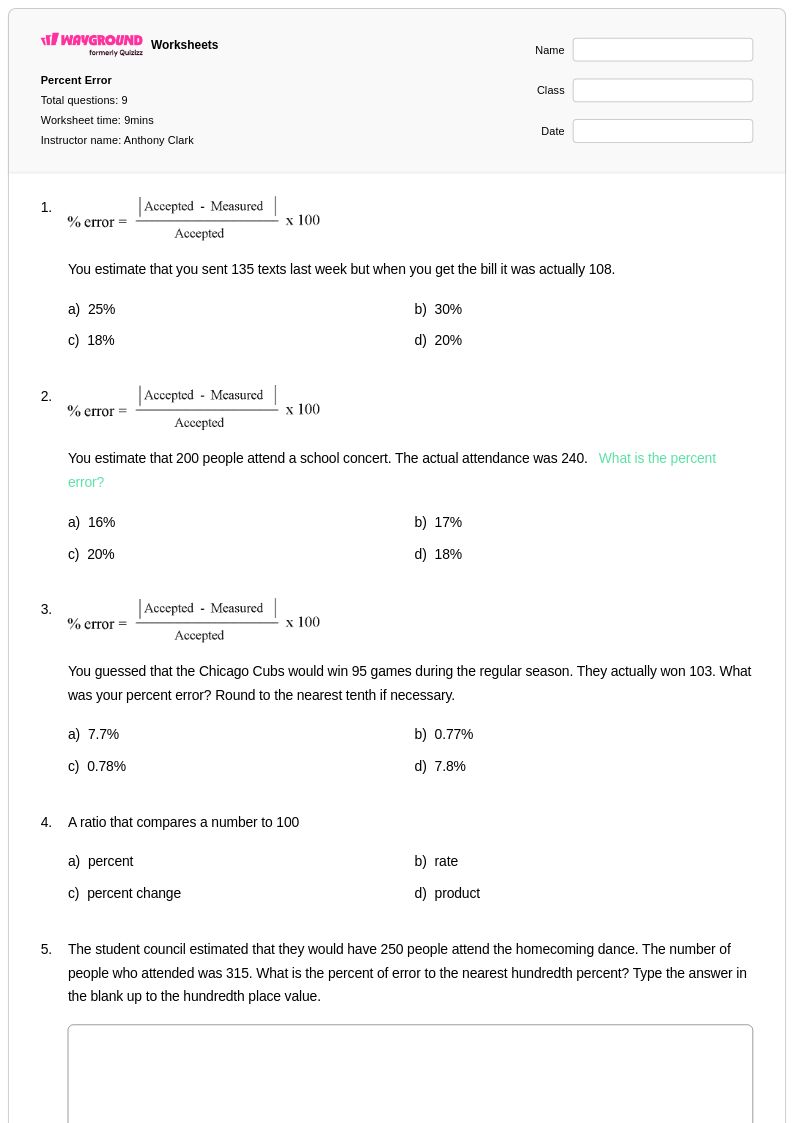
9 Q
7th - Uni
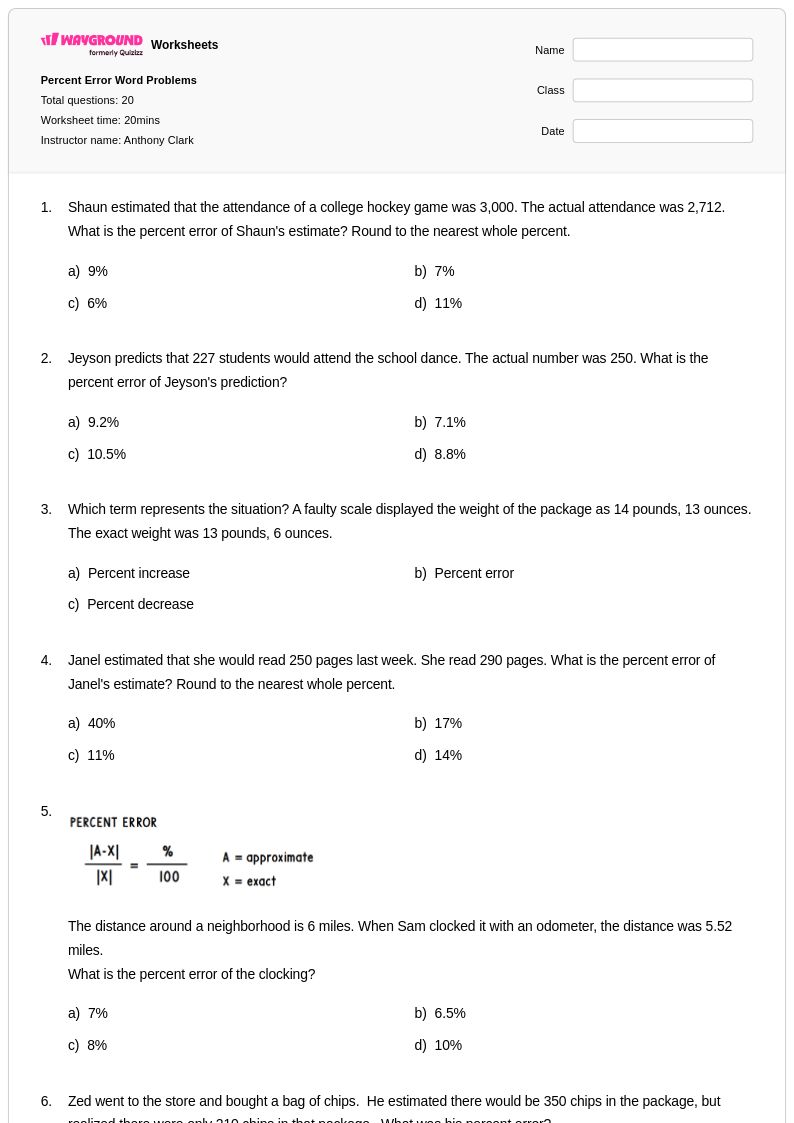
20 Q
7th - Uni
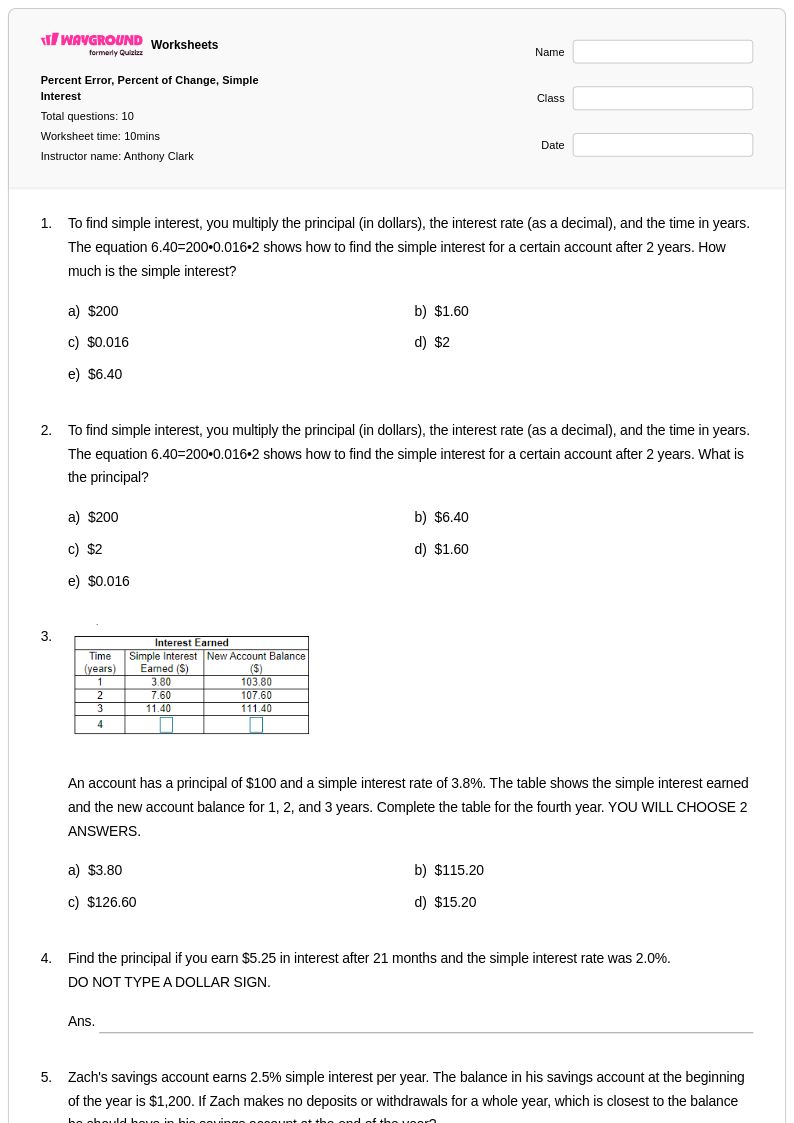
10 Q
7th - Uni
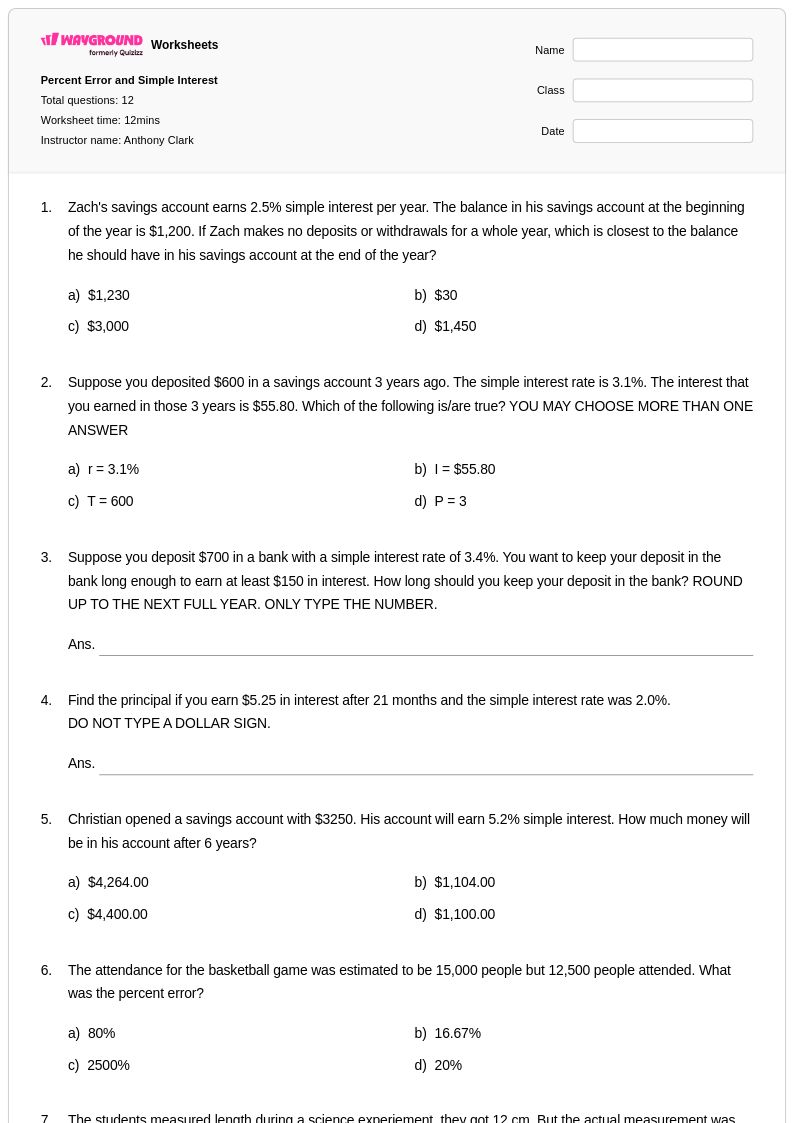
12 Q
7th - Uni
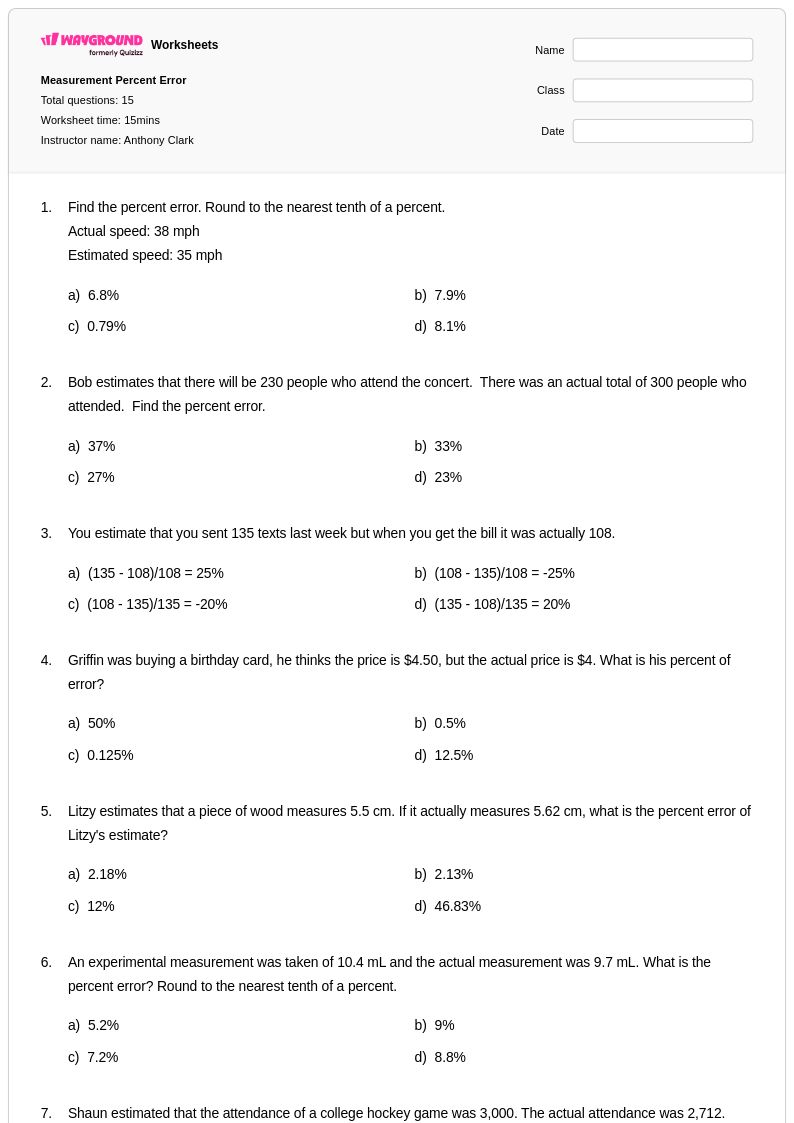
15 Q
7th - Uni
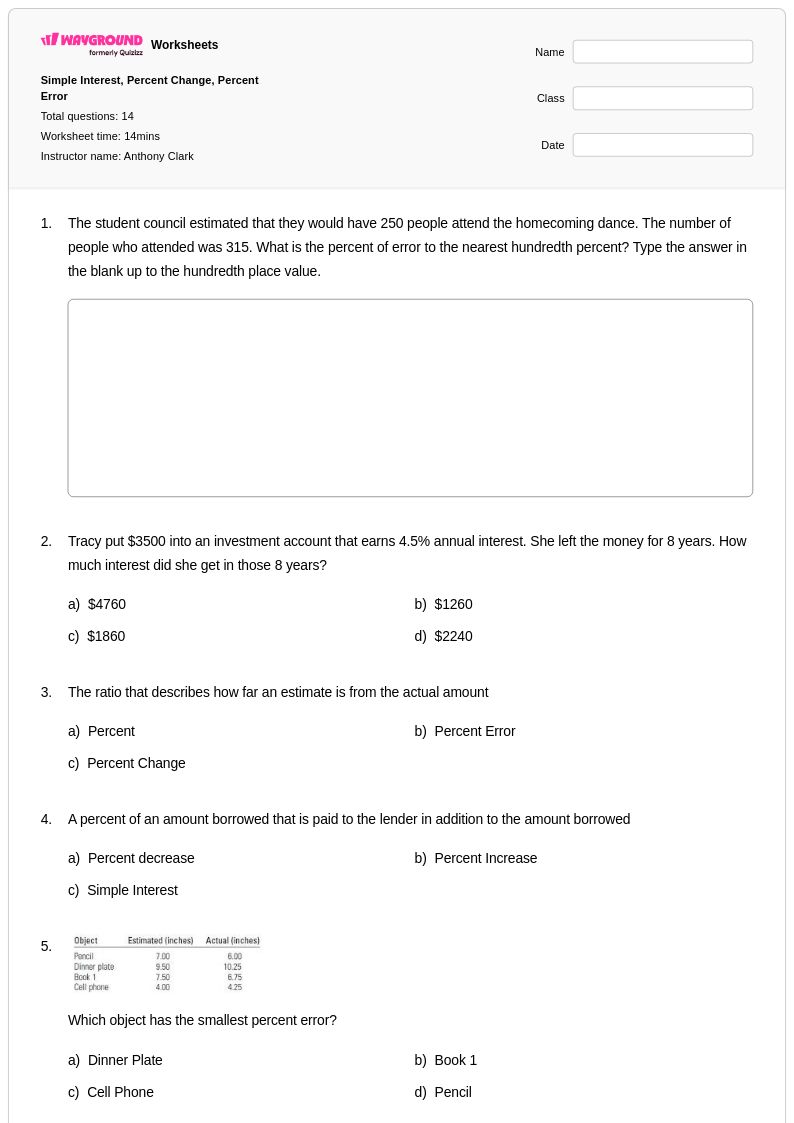
14 Q
7th - Uni
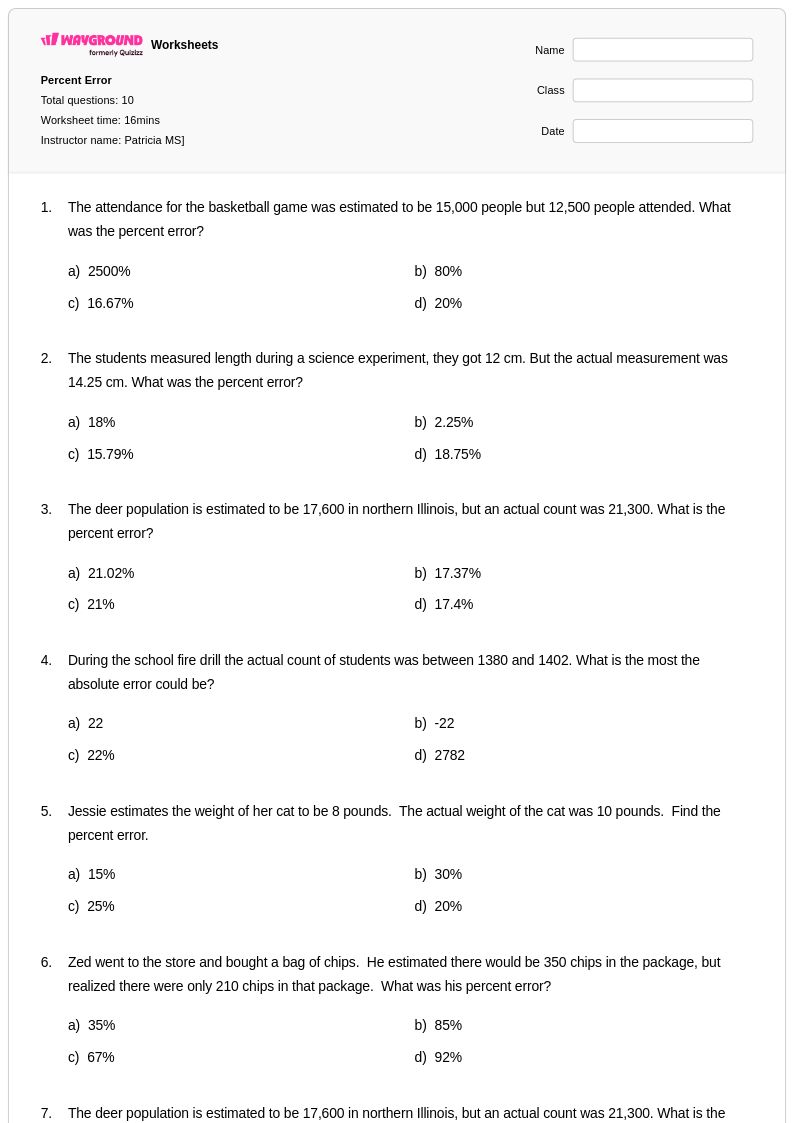
10 Q
7th - 9th
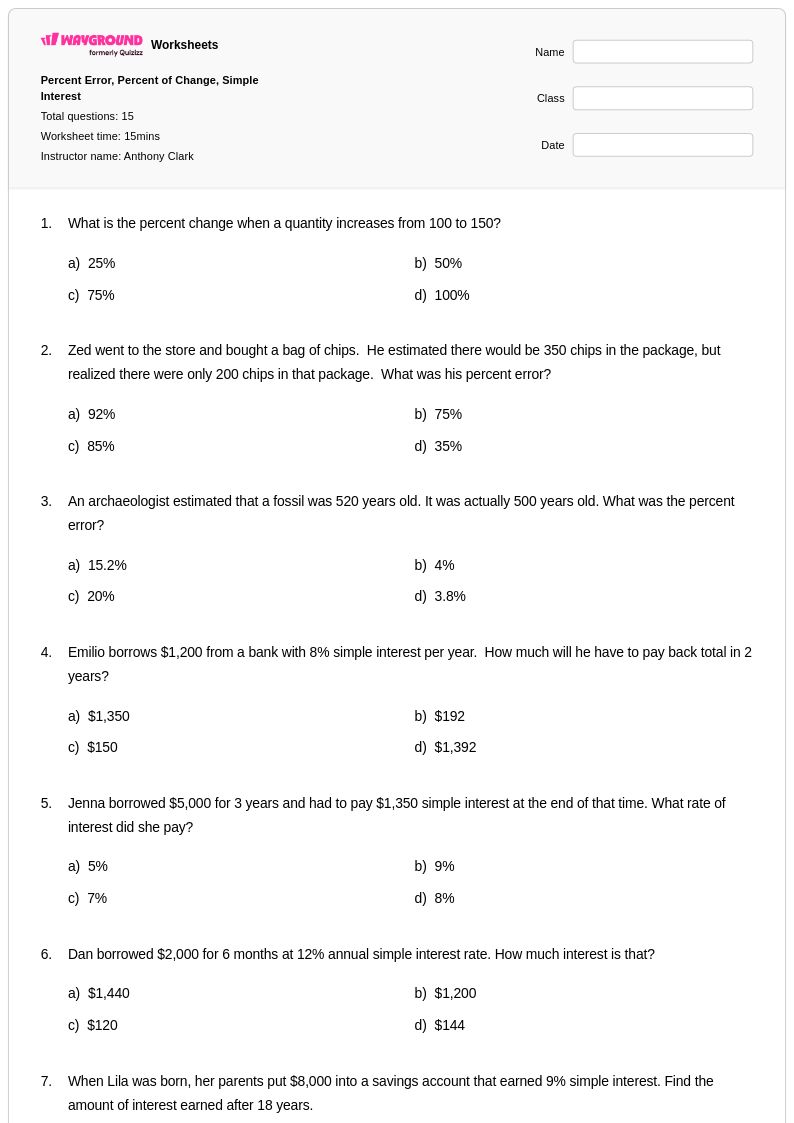
15 Q
7th - Uni
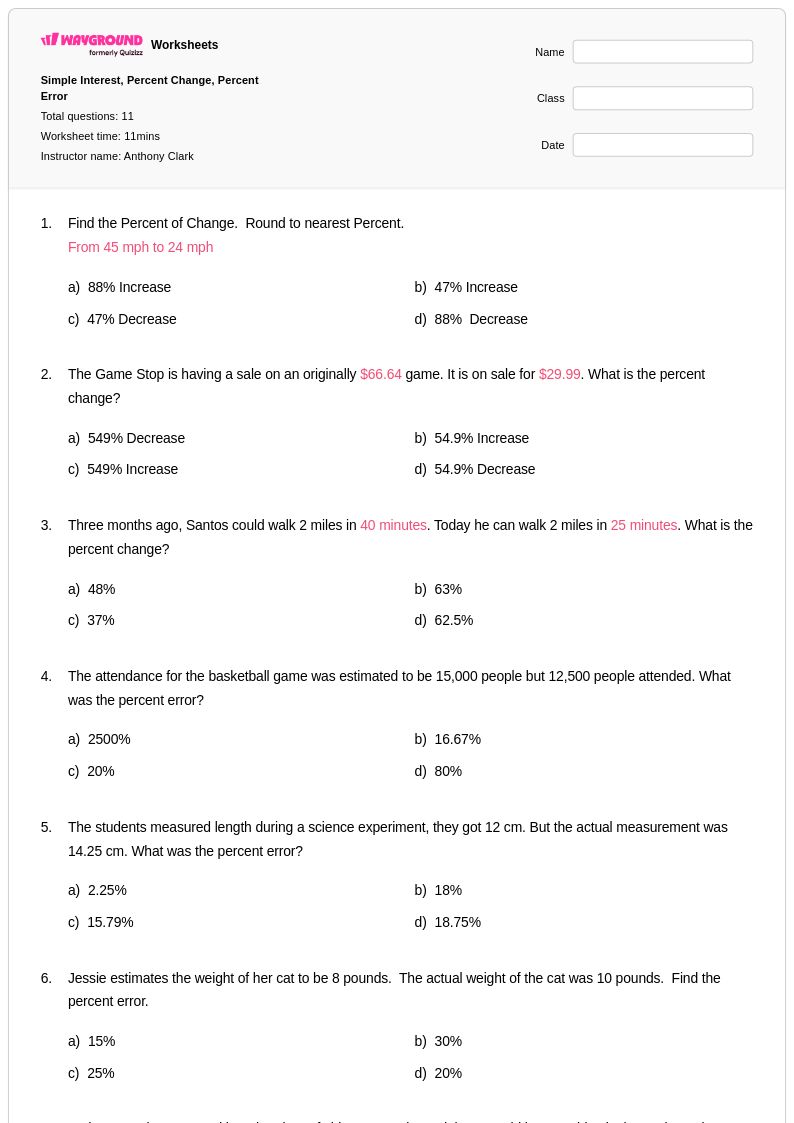
11 Q
7th - Uni
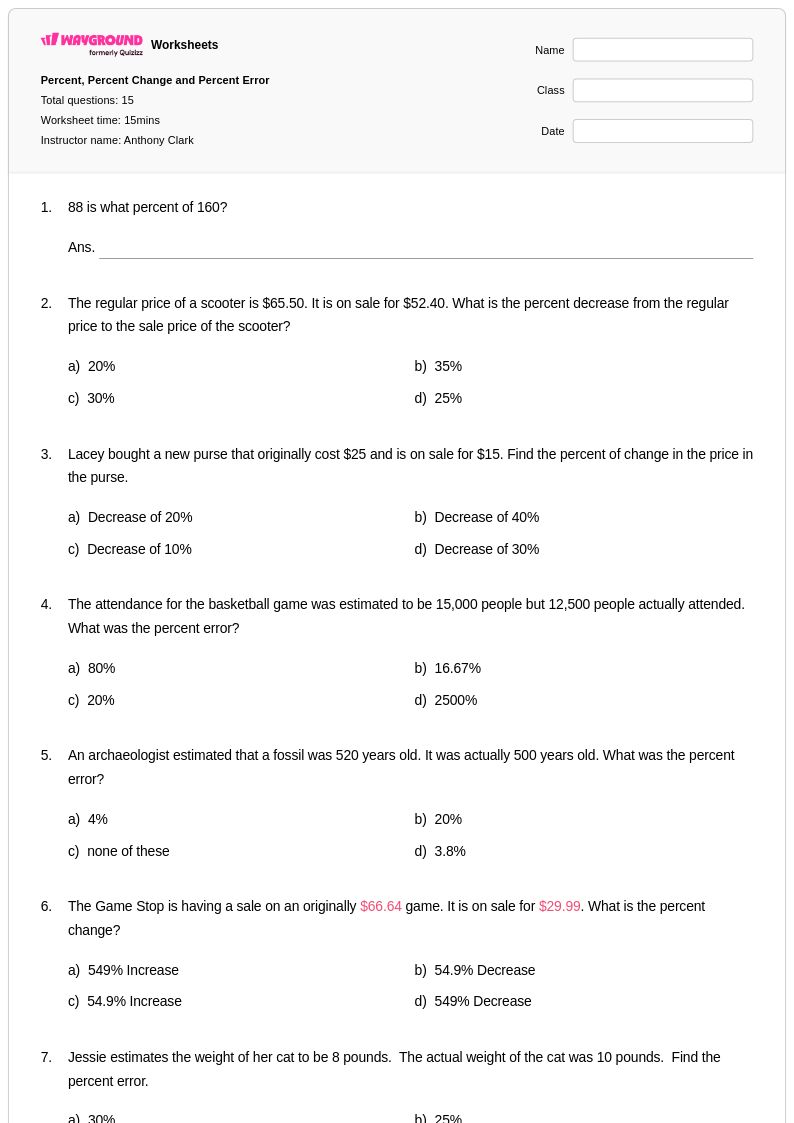
15 Q
7th - Uni
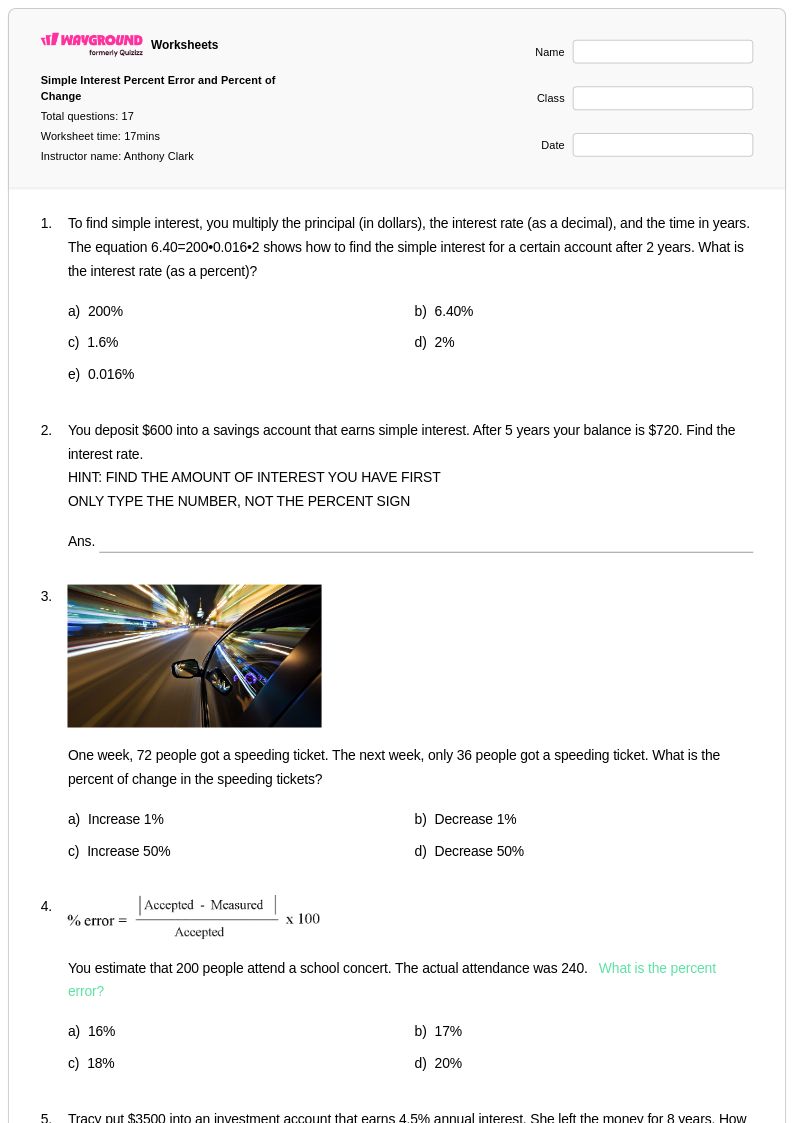
17 Q
7th - Uni
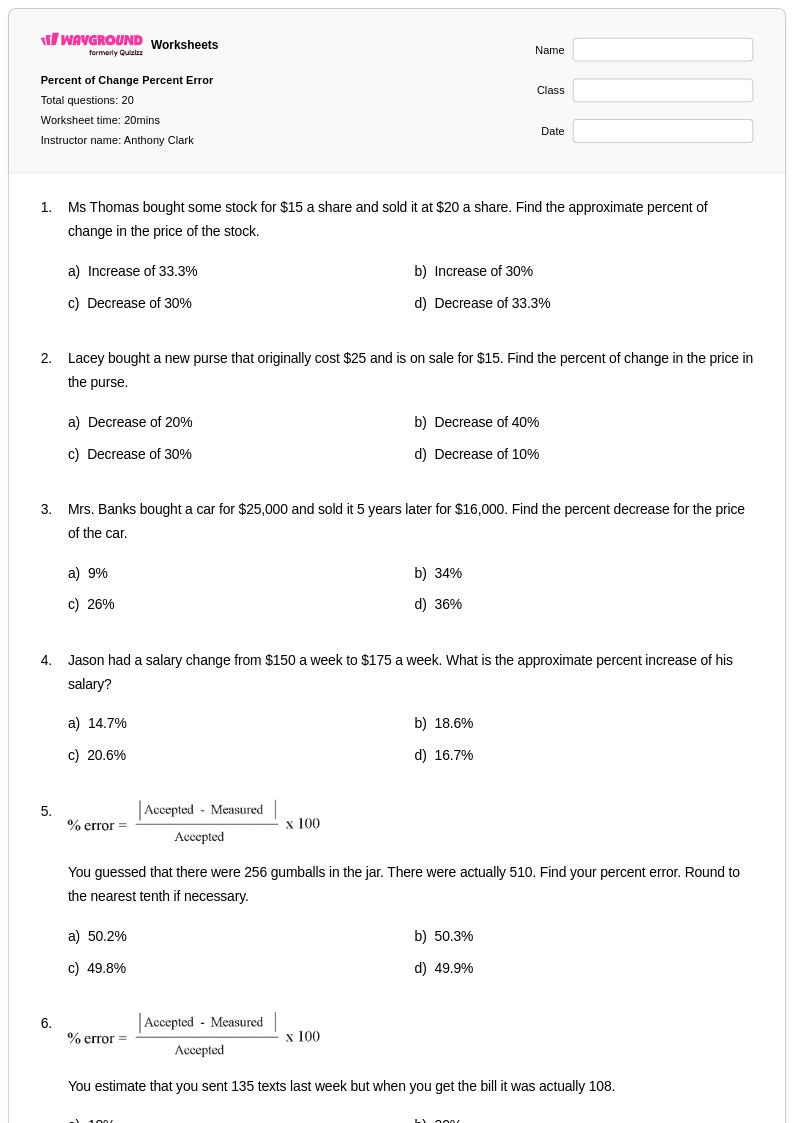
20 Q
7th - Uni
8 Q
7th - Uni
10 Q
7th - Uni
12 Q
7th - Uni
20 Q
7th - Uni
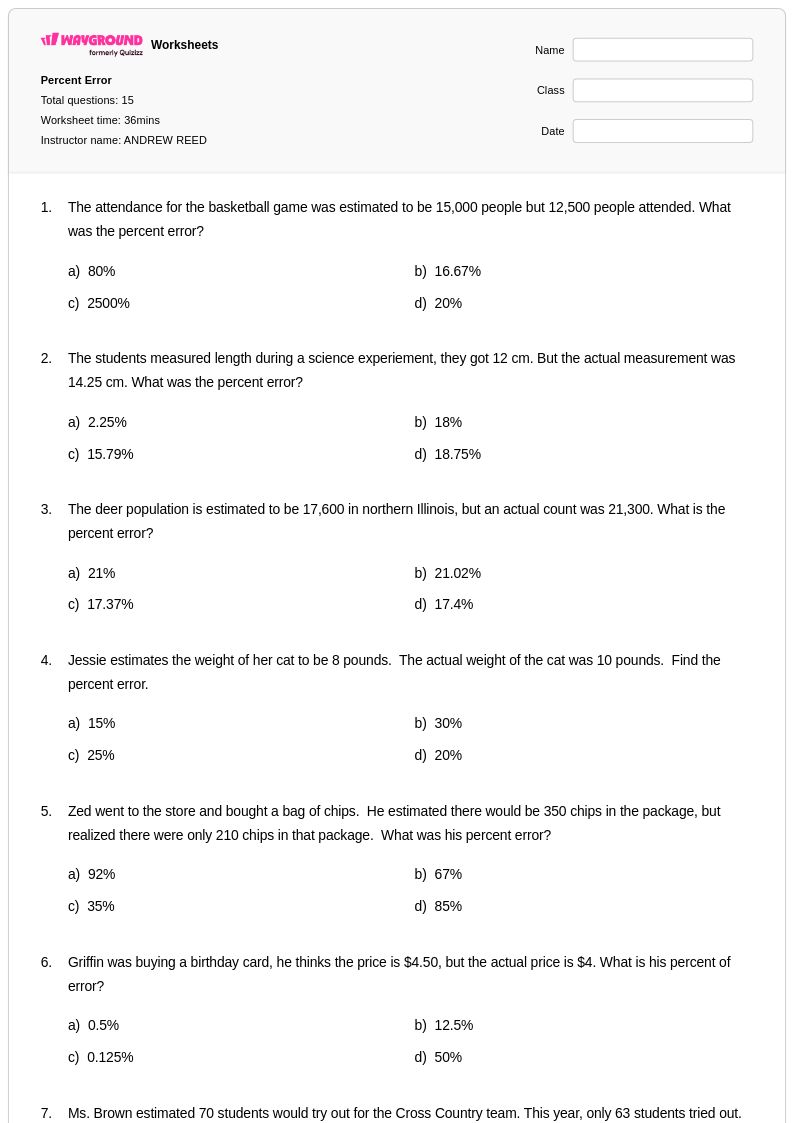
15 Q
9th
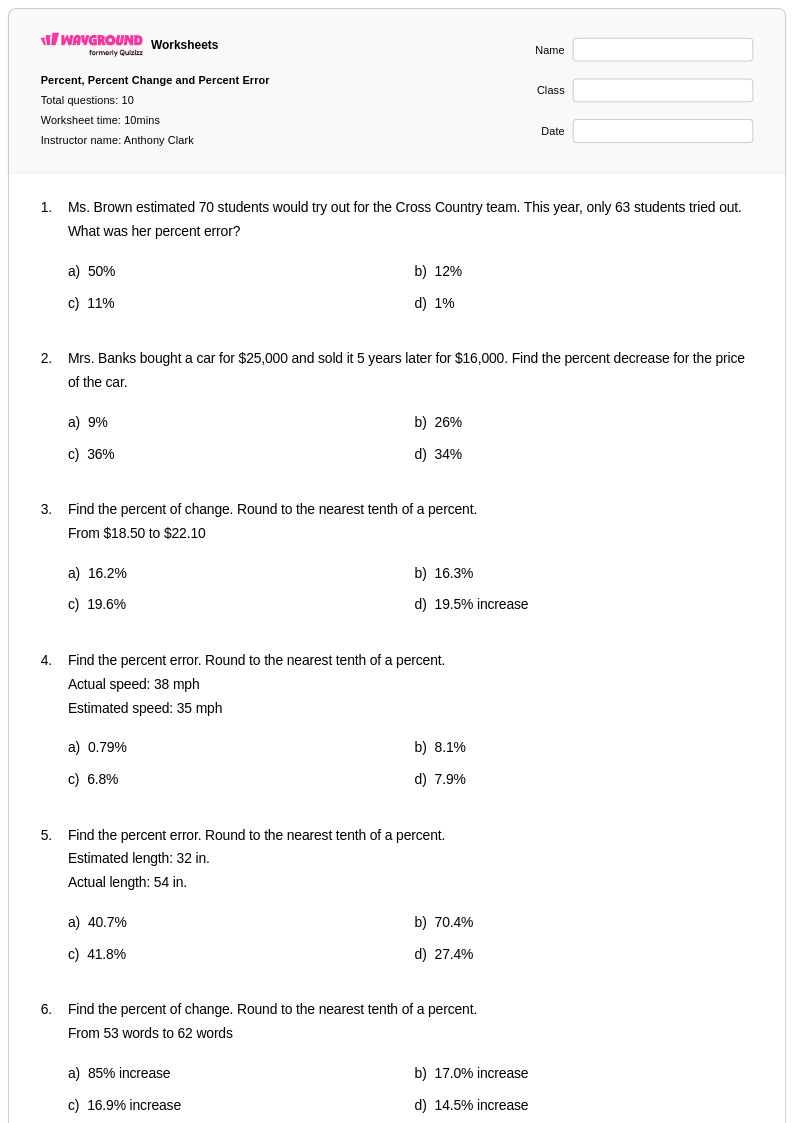
10 Q
7th - Uni
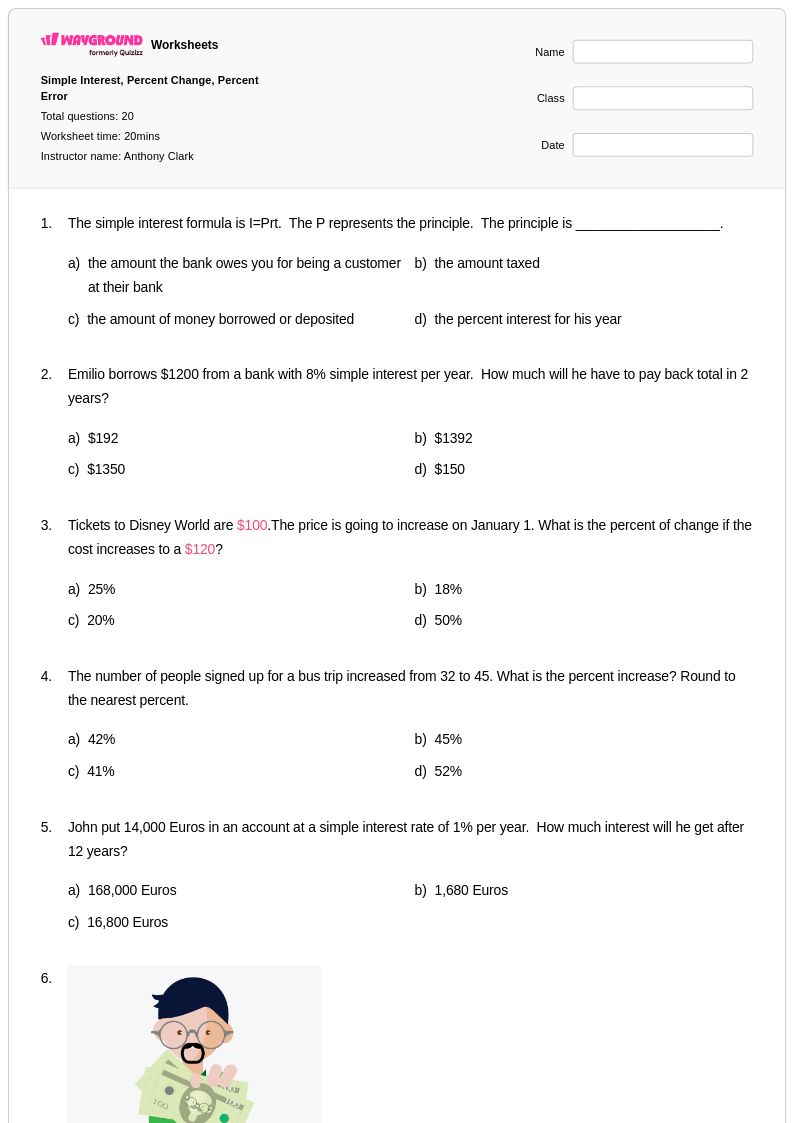
20 Q
7th - Uni
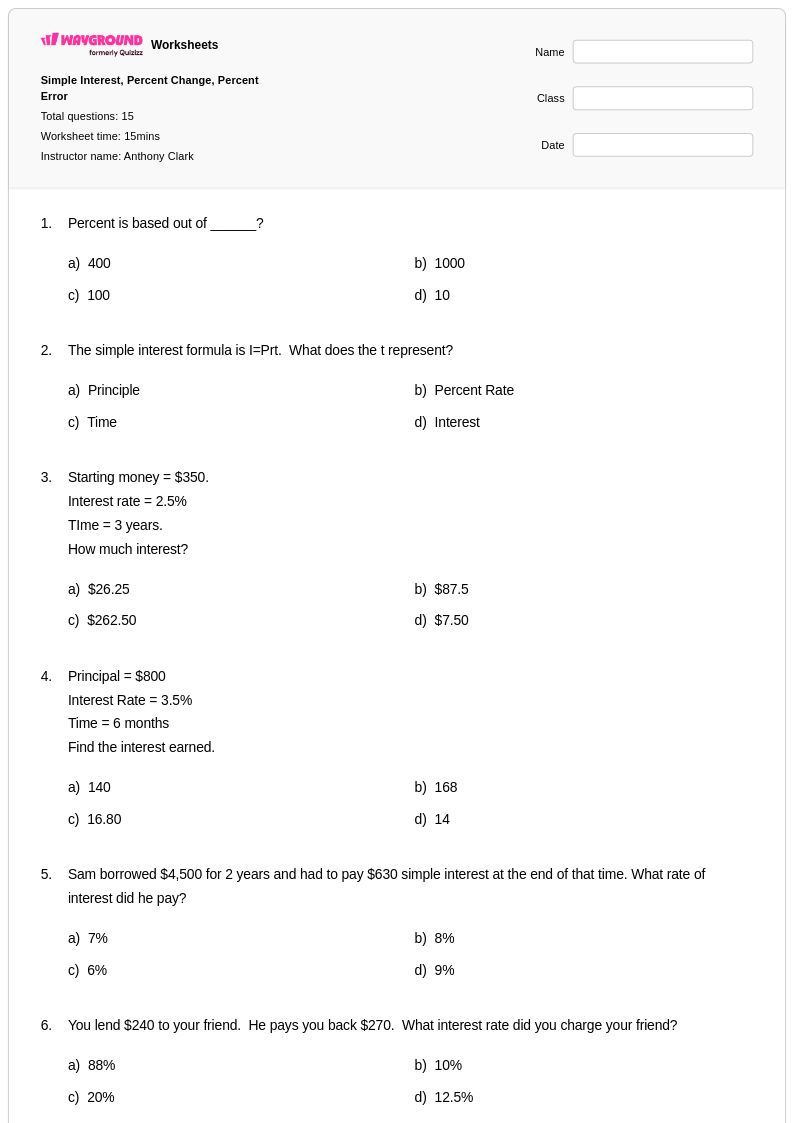
15 Q
7th - Uni
Explore Other Subject Worksheets for class 9
Explore printable Percent Error worksheets for Class 9
Class 9 percent error worksheets available through Wayground (formerly Quizizz) provide comprehensive practice for students learning to calculate and interpret measurement accuracy in mathematical contexts. These educational resources strengthen critical analytical skills by teaching students how to determine the difference between experimental and theoretical values, express errors as percentages, and understand the significance of accuracy in real-world applications. The collection includes systematic practice problems that guide students through the percent error formula, help them identify absolute error values, and develop proficiency in converting decimal results to percentage form. Each worksheet comes with a complete answer key and is available as a free printable pdf, making it easy for educators to implement structured practice sessions that build mathematical precision and scientific reasoning skills.
Wayground (formerly Quizizz) supports mathematics educators with an extensive library of millions of teacher-created percent error resources specifically designed for Class 9 instruction. The platform's advanced search and filtering capabilities allow teachers to locate worksheets that align with specific curriculum standards and match their students' skill levels, while differentiation tools enable customization of problem difficulty and complexity. These versatile materials are available in both printable pdf format and interactive digital versions, providing flexibility for classroom instruction, homework assignments, and independent study. Teachers can effectively use these resources for lesson planning, targeted remediation of calculation errors, enrichment activities for advanced learners, and ongoing skill practice that reinforces the connection between mathematical theory and practical measurement applications across science and engineering disciplines.
FAQs
Is percent error relevant in 9th-grade science?
How should I approach teaching percent error in a high school lab context?
What kind of percent error problems are appropriate for 9th graders?
What's a common mistake 9th graders make when interpreting percent error?
How does percent error support high school science standards?
How can I use this worksheet for my 9th-grade class?
How can I support diverse learners with this topic?