Free Printable Personal Fitness Worksheets for Class 1
Class 1 Personal Fitness free worksheets and printables help young students discover healthy habits, basic exercise movements, and wellness practices through engaging practice problems with comprehensive answer keys available as downloadable PDFs.
Explore printable Personal Fitness worksheets for Class 1
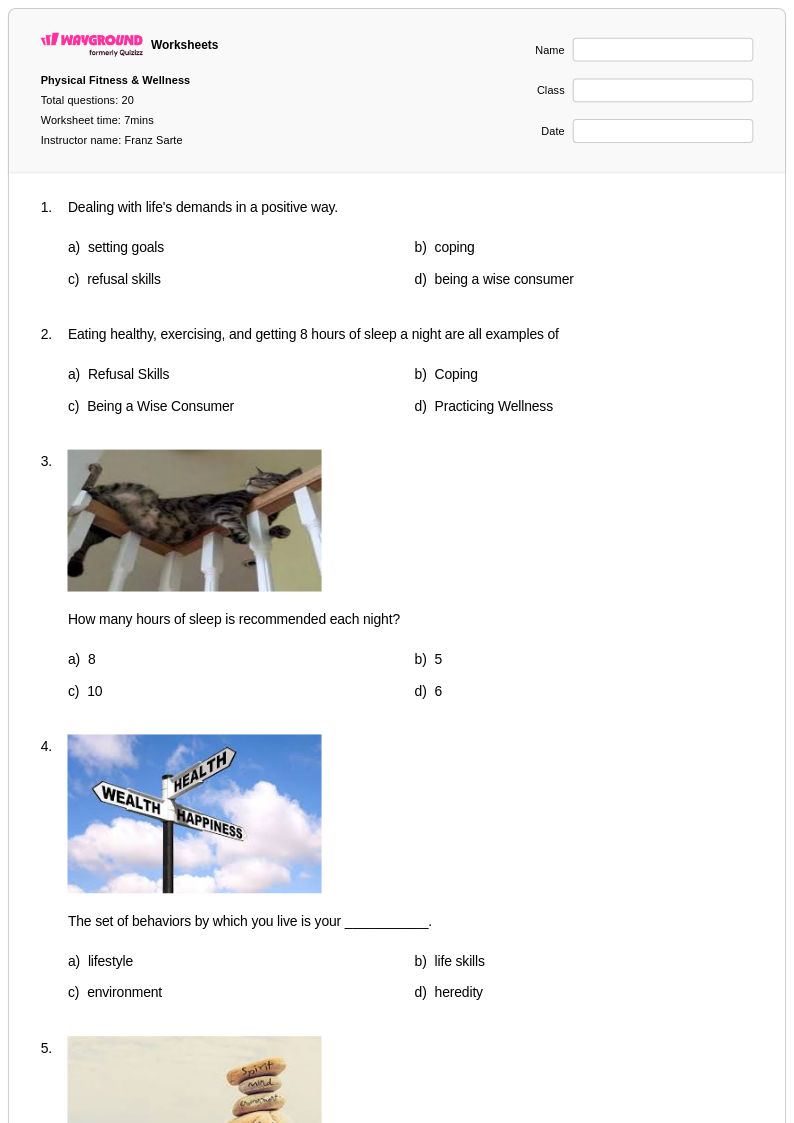
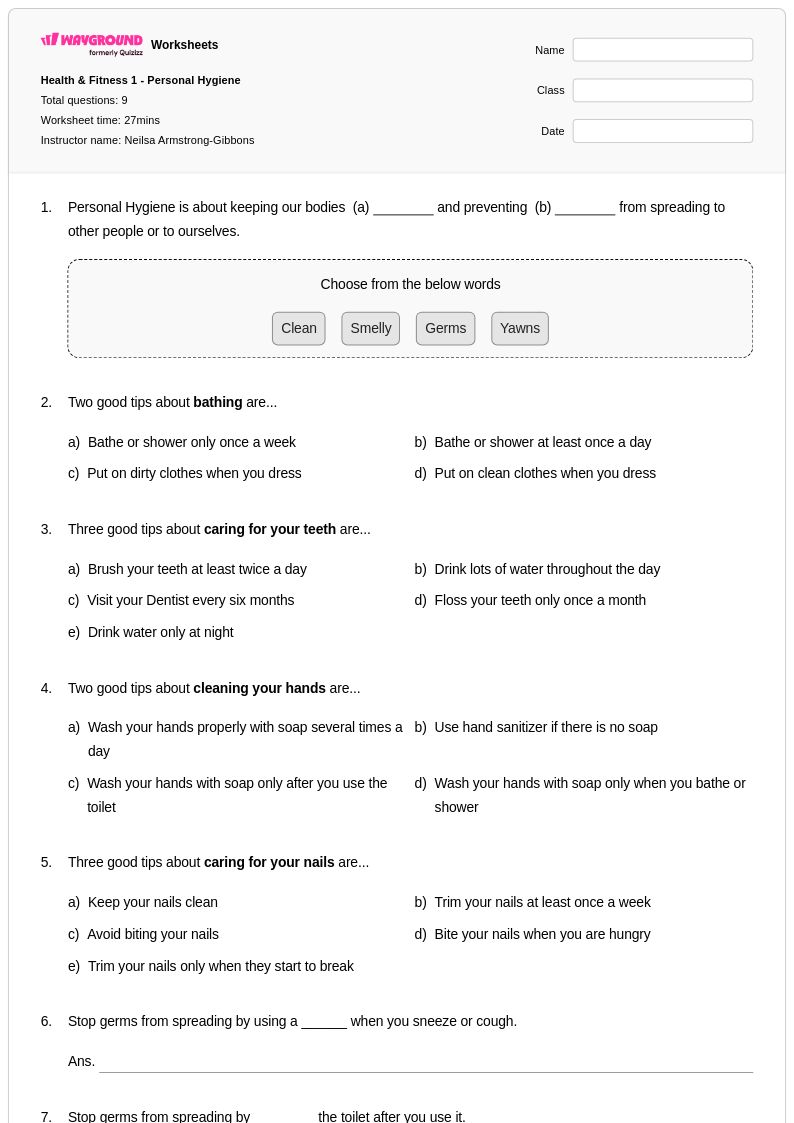
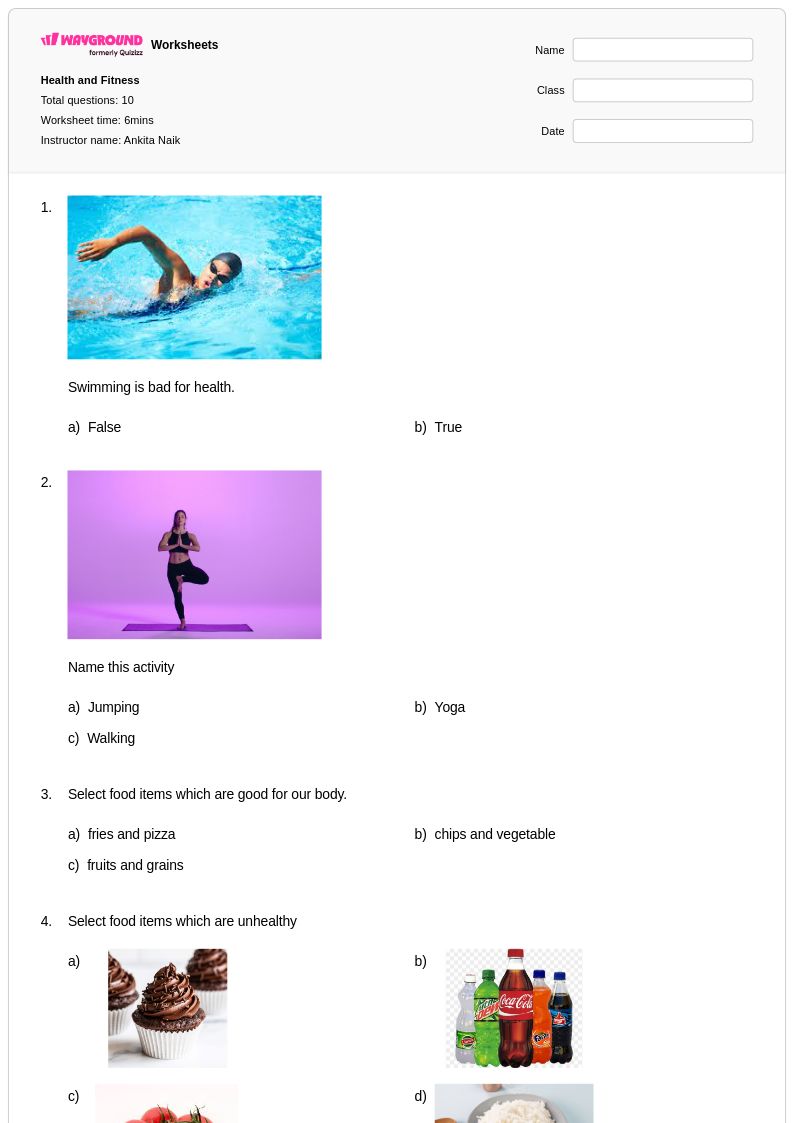
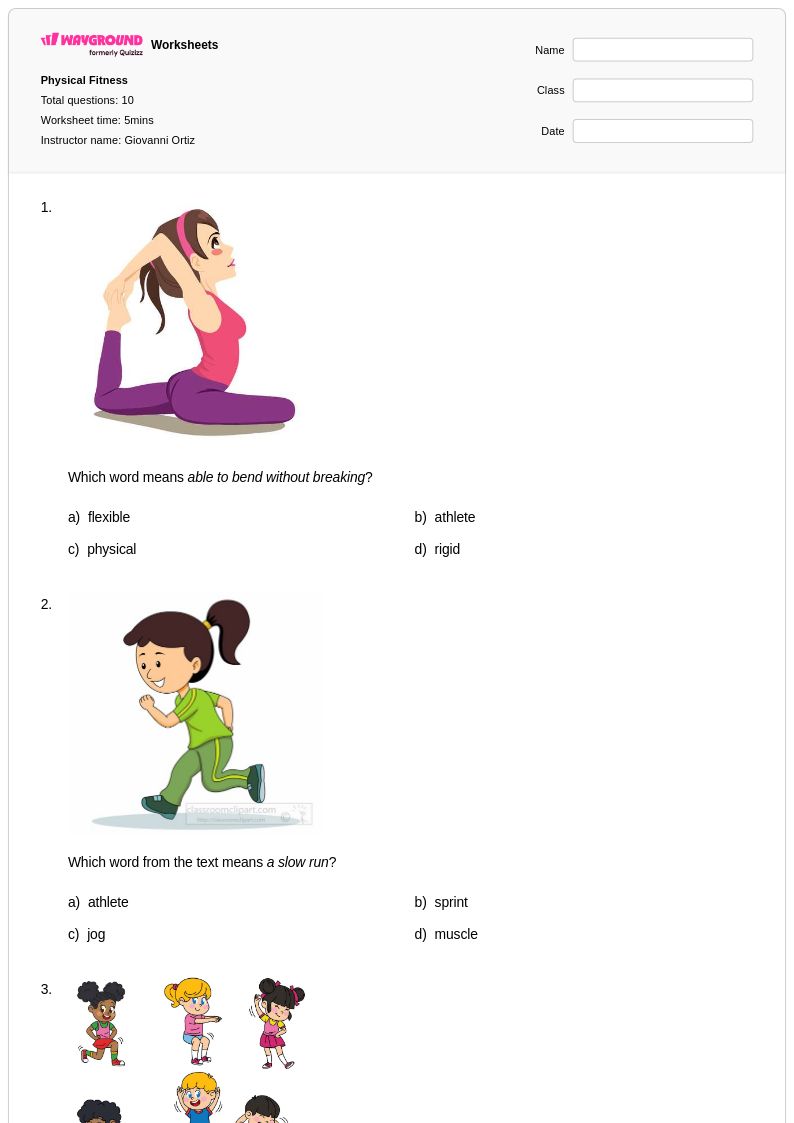
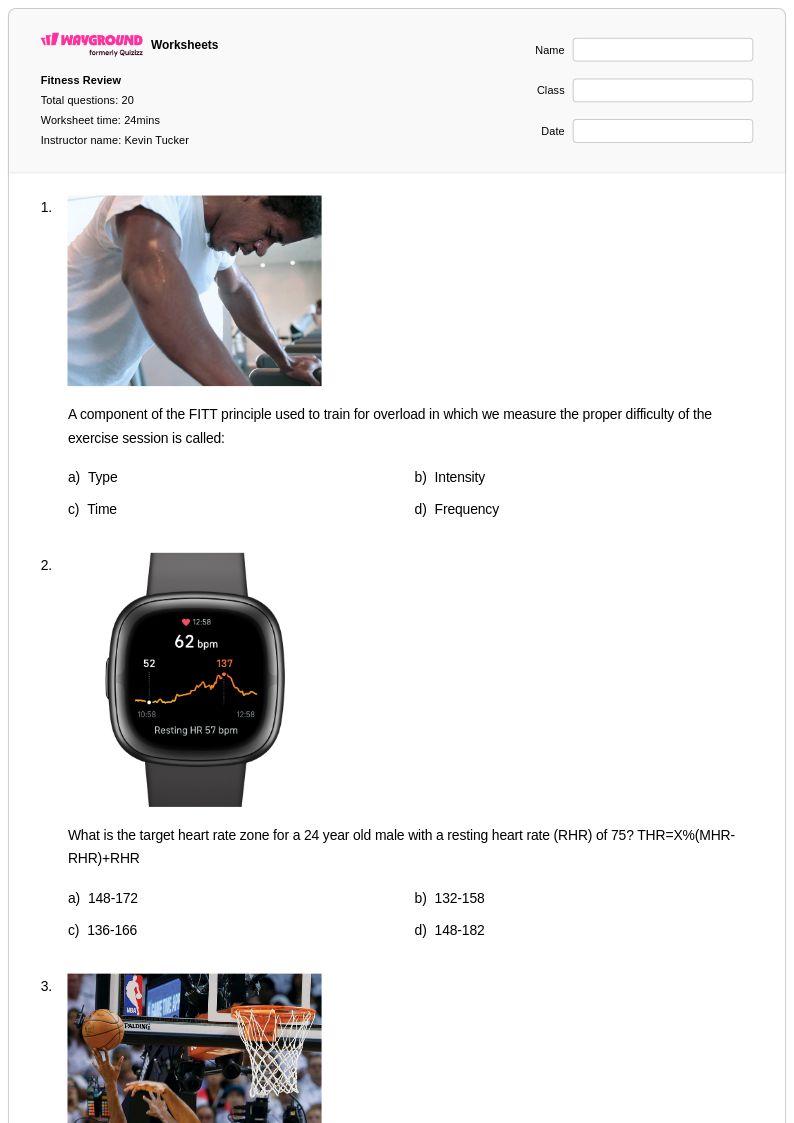
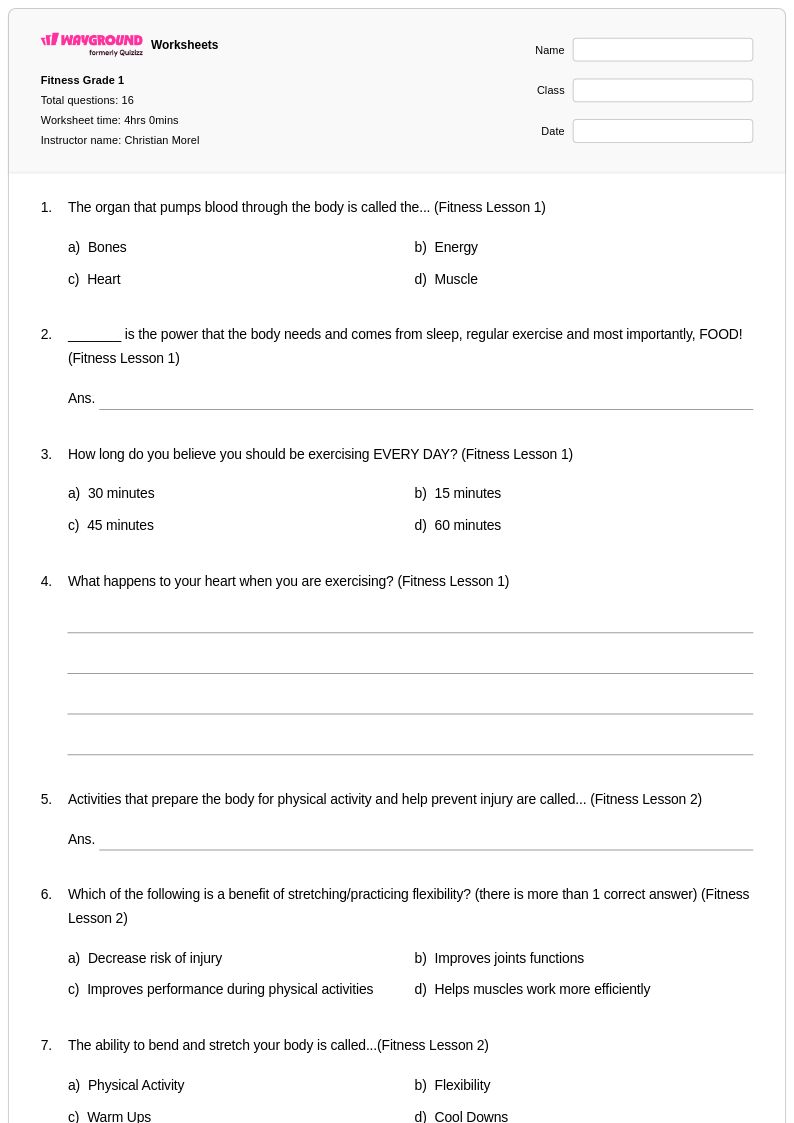
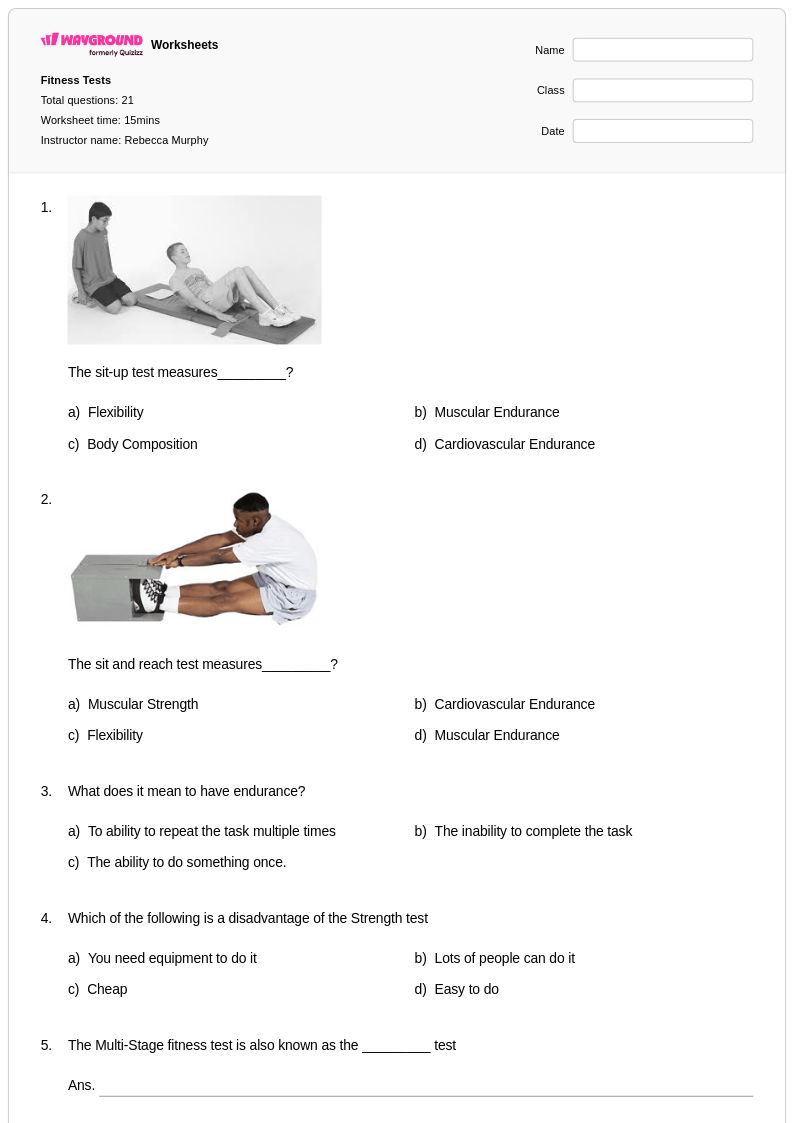
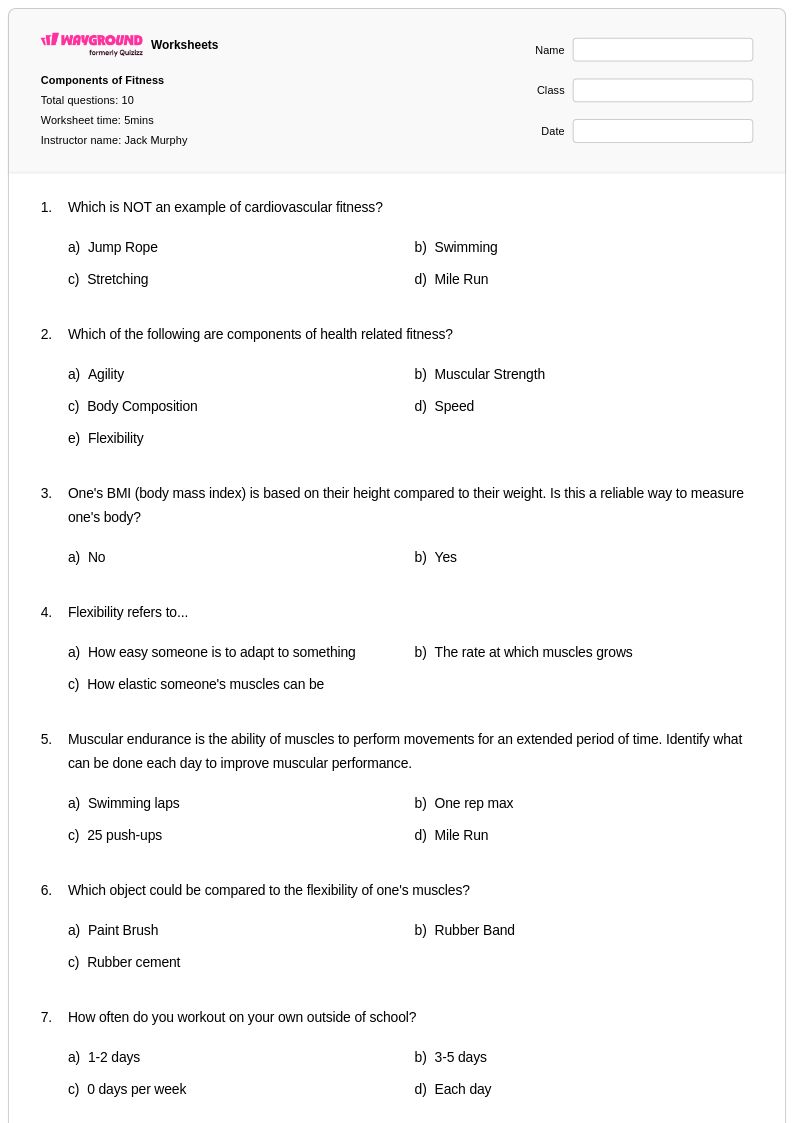
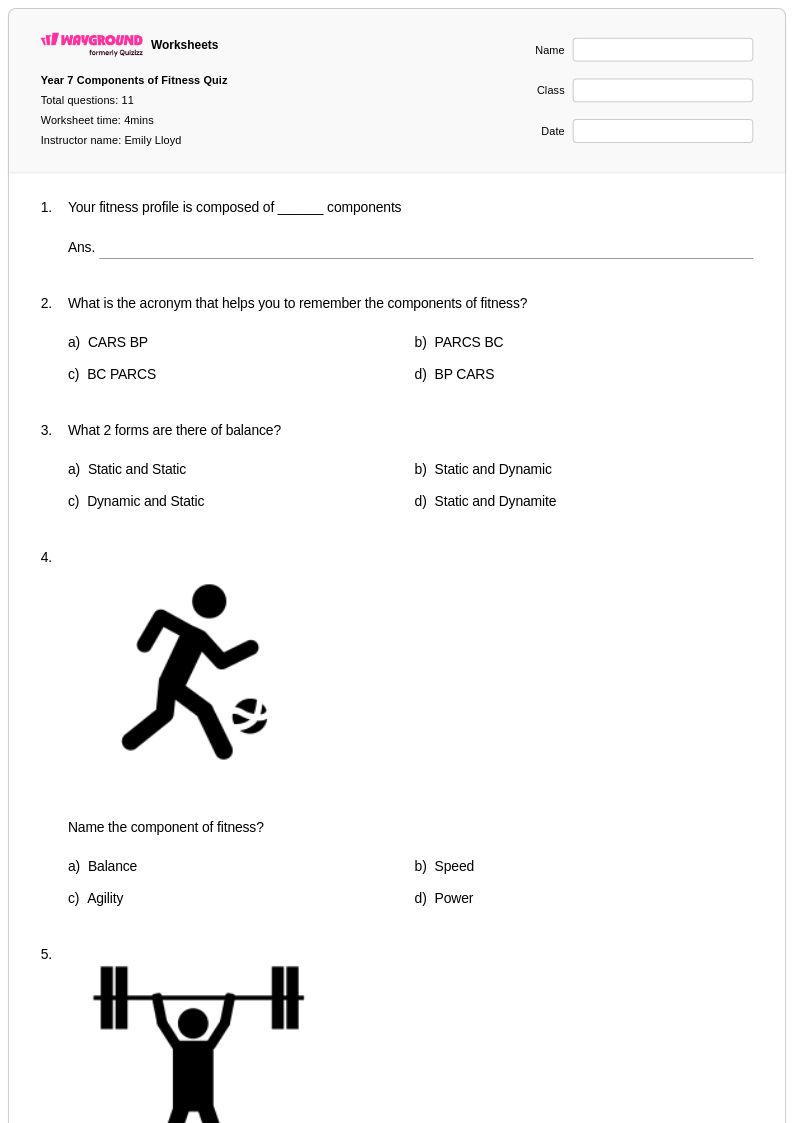
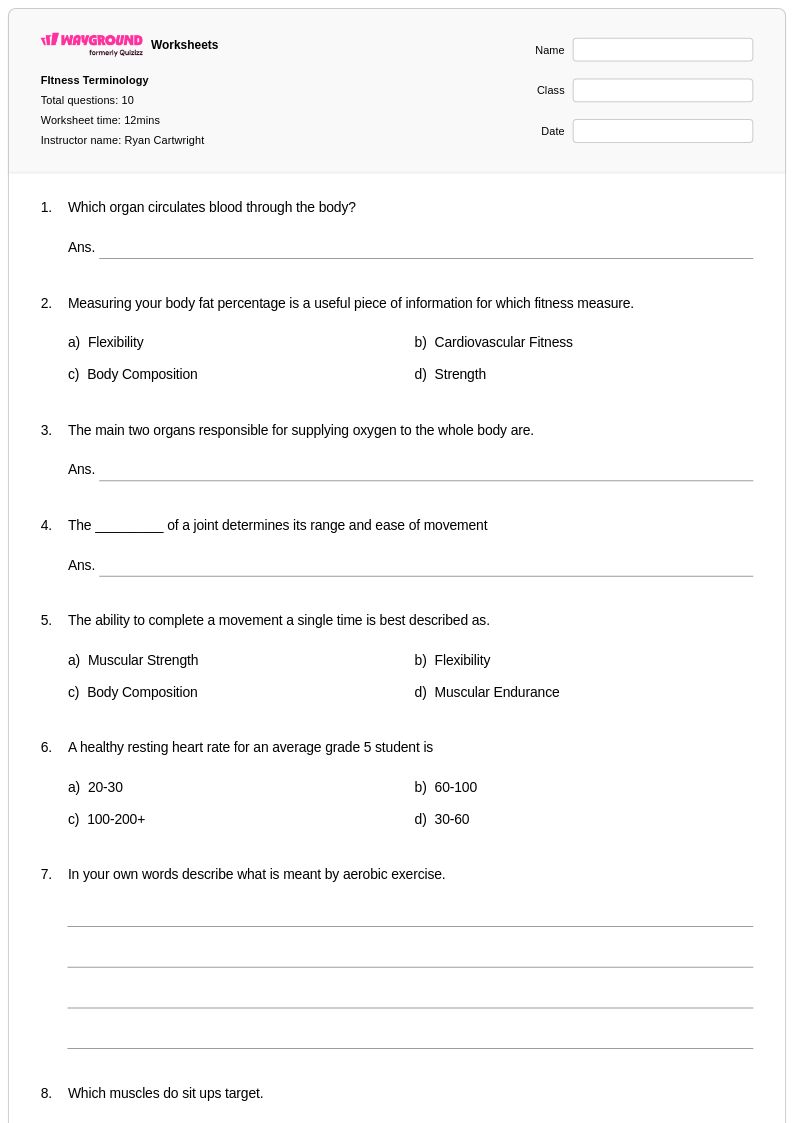
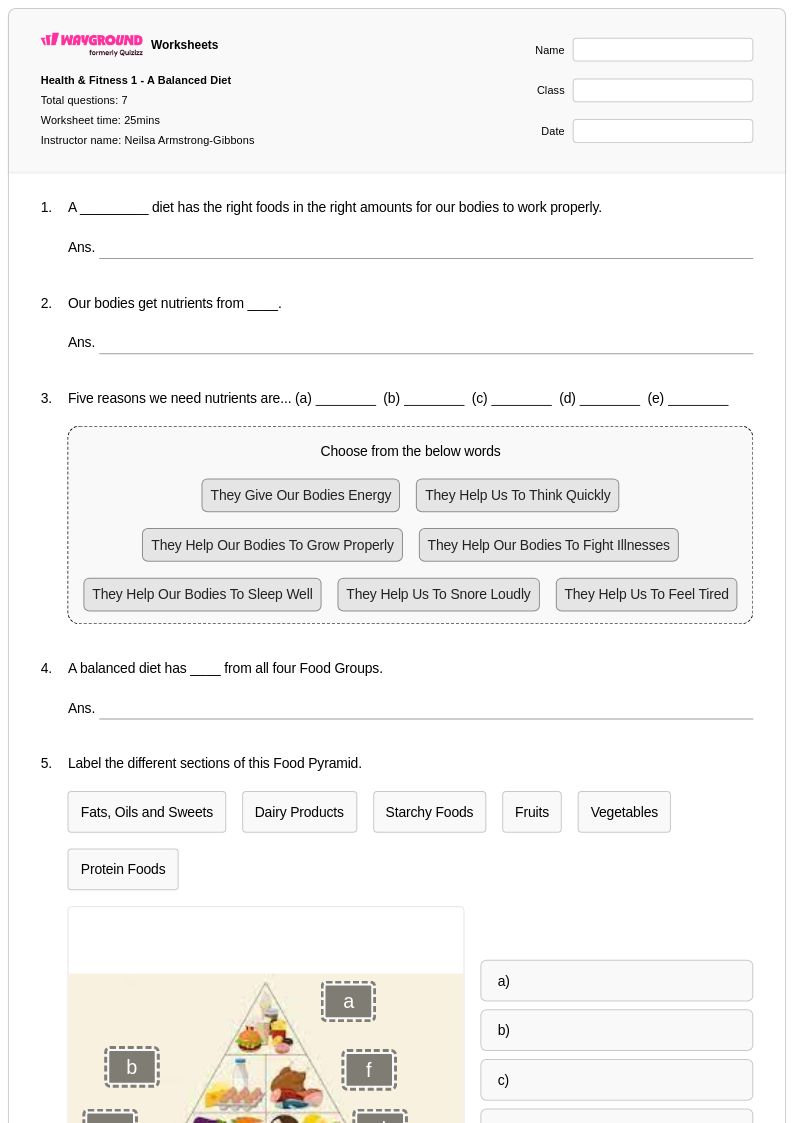
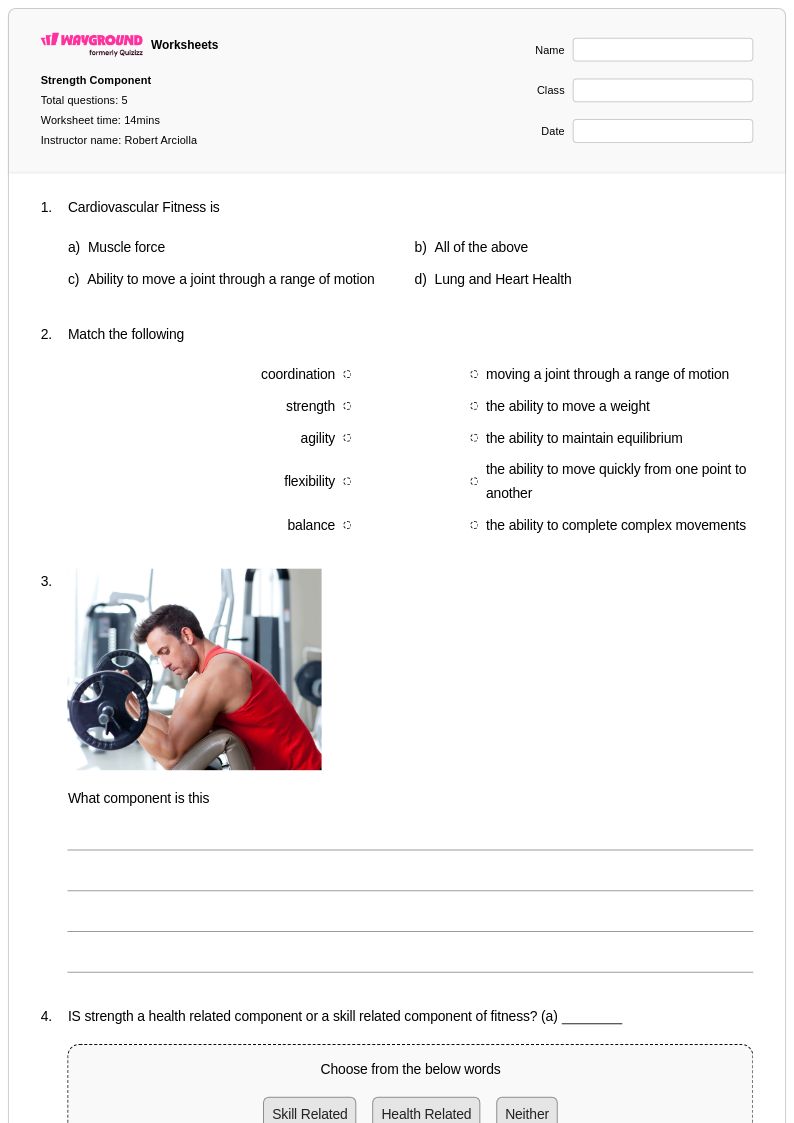
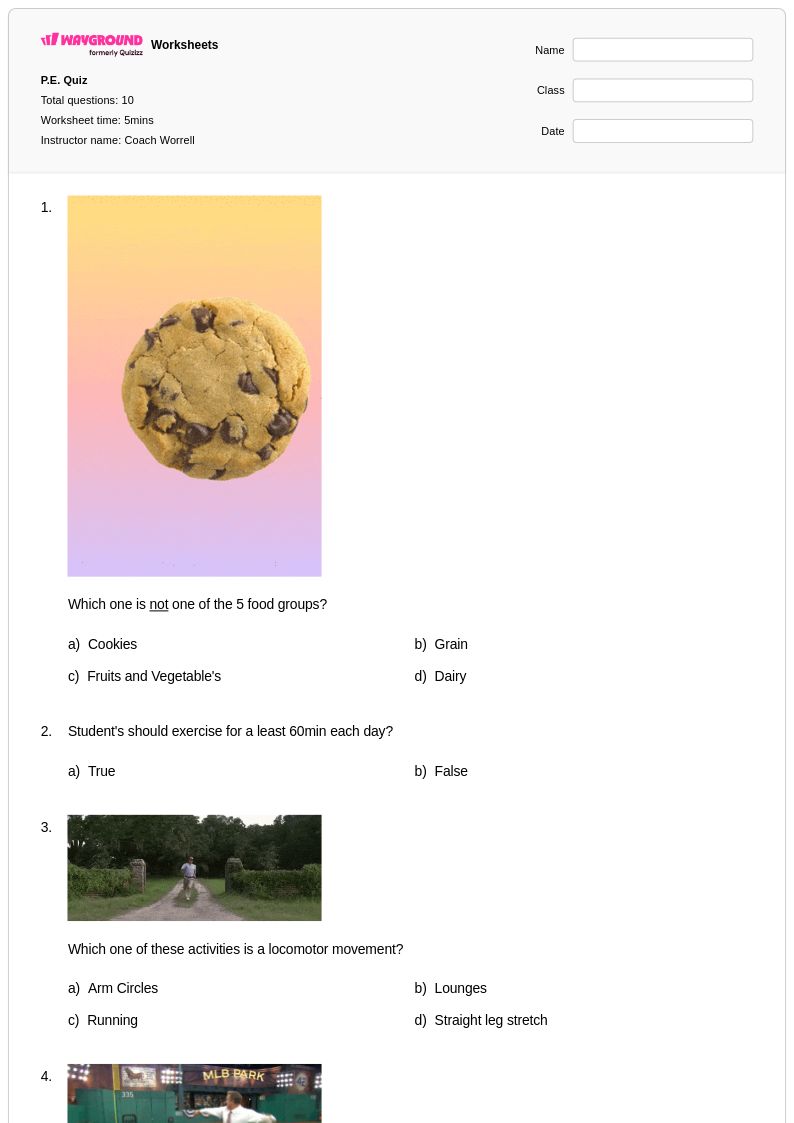
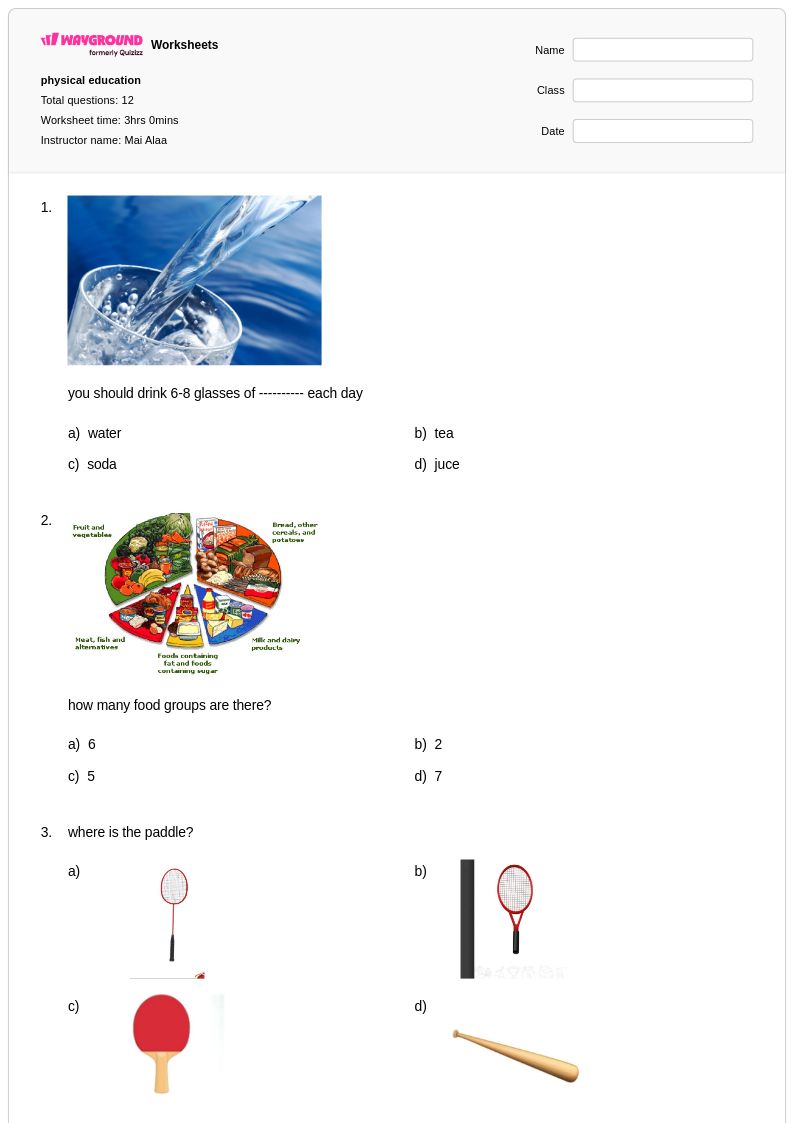
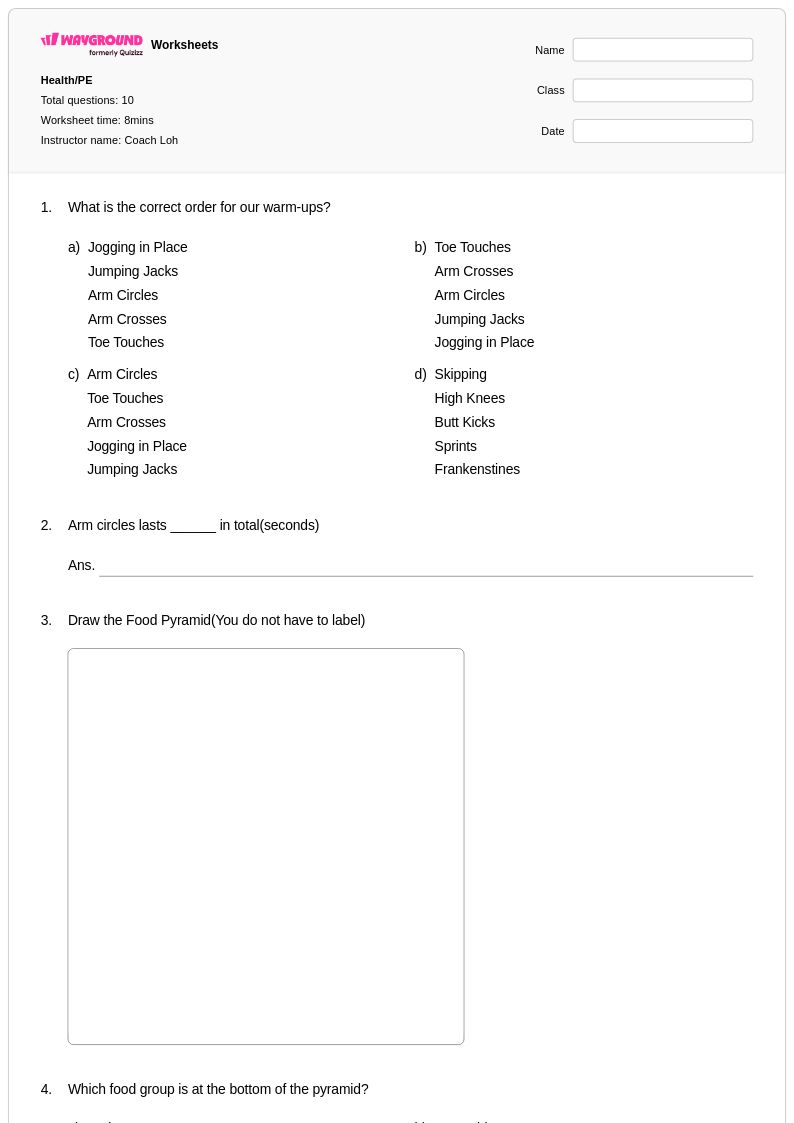
Personal fitness worksheets for Class 1 students available through Wayground (formerly Quizizz) introduce young learners to fundamental concepts of body awareness, healthy habits, and basic movement skills essential for lifelong wellness. These carefully designed educational resources help first-grade students develop an understanding of their bodies, recognize the importance of regular physical activity, and begin establishing positive health behaviors through engaging practice problems and interactive activities. The comprehensive collection includes printable worksheets that cover topics such as identifying body parts used in exercise, understanding the difference between rest and activity, recognizing healthy foods that fuel their bodies, and learning basic safety rules for physical activity. Each worksheet comes with a complete answer key and is available as a free pdf download, making it simple for educators to implement meaningful fitness education that builds foundational knowledge while encouraging students to think critically about their personal health choices.
Wayground (formerly Quizizz) empowers physical education teachers and classroom instructors with access to millions of teacher-created resources specifically designed to support Class 1 personal fitness instruction across diverse learning environments. The platform's robust search and filtering capabilities allow educators to quickly locate age-appropriate materials that align with curriculum standards and accommodate different learning styles and abilities through built-in differentiation tools. Teachers can easily customize existing worksheets or create new ones to target specific skill gaps, provide remediation for struggling learners, or offer enrichment opportunities for advanced students, with all materials available in both printable and digital formats including downloadable pdf files. This flexibility streamlines lesson planning while ensuring that every first-grade student receives targeted practice in personal fitness concepts, whether through individual worksheet completion, small group activities, or whole-class instruction that builds essential health literacy skills from an early age.
FAQs
How do I teach personal fitness concepts in a PE or health class?
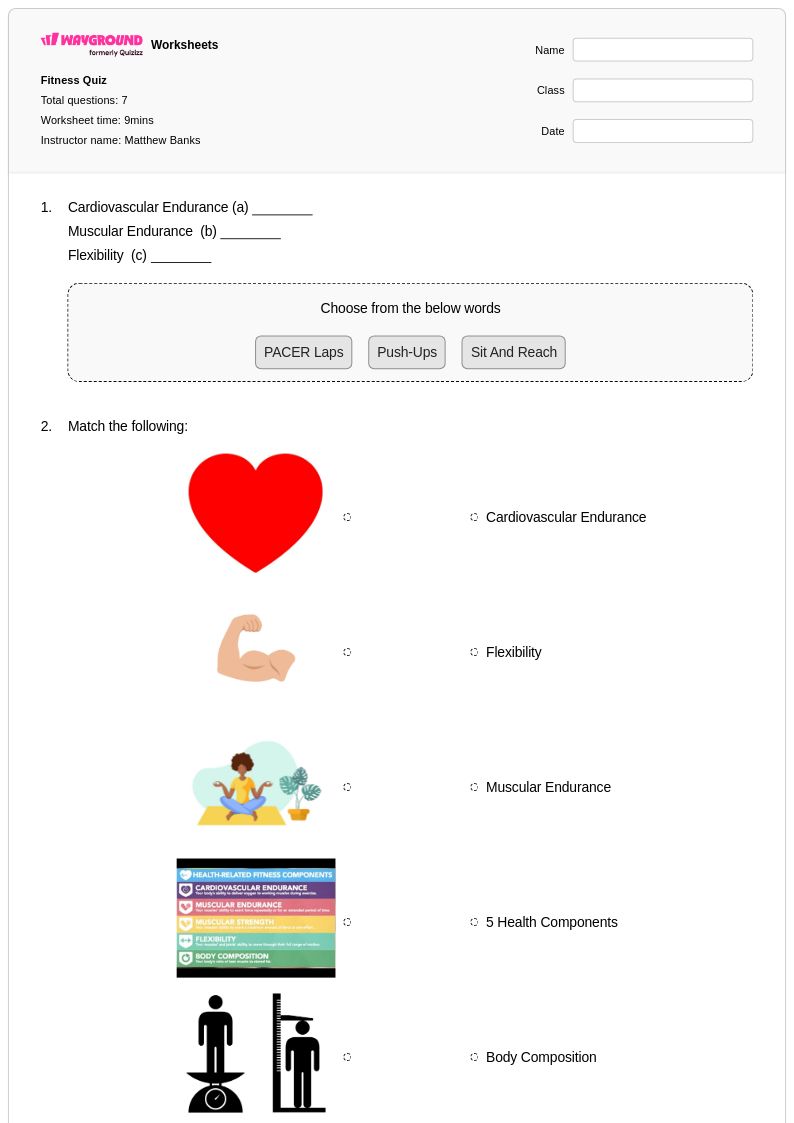
Effective personal fitness instruction combines foundational knowledge with applied planning. Start by introducing the components of physical fitness (cardiovascular endurance, muscular strength, flexibility, and body composition), then guide students through goal-setting frameworks and fitness assessments so they can connect those concepts to their own health. Giving students ownership over their fitness planning, rather than following a generic routine, builds long-term engagement and real-world wellness habits.
What activities help students practice personal fitness planning skills?
Worksheets that ask students to design personalized workout plans, track nutrition, and monitor progress over time are among the most effective practice tools for personal fitness. These exercises require students to apply training principles, evaluate exercise modalities, and make evidence-based decisions about their health, which deepens understanding far beyond passive note-taking. Structured practice problems that simulate real planning scenarios help students build the critical thinking skills they need for lifelong wellness.
What mistakes do students commonly make when learning about personal fitness?
One of the most frequent misconceptions is that more exercise always equals better results, which leads students to overlook rest, recovery, and training progression as essential components of a fitness plan. Students also tend to set vague or unrealistic goals rather than specific, measurable ones, making it difficult to track progress meaningfully. Worksheets that explicitly address goal-setting criteria and the principles of progressive overload help correct these patterns before they become habits.
How can I use personal fitness worksheets to support students at different ability levels?
Personal fitness worksheets can be differentiated by adjusting the complexity of the planning tasks, ranging from basic goal-setting for beginners to multi-week periodization planning for advanced learners. On Wayground, teachers can apply built-in accommodations such as read-aloud support, reduced answer choices, and extended time to individual students without disrupting the rest of the class. These settings are reusable across sessions, which makes ongoing differentiation in a PE or health setting practical and low-effort.
How do I use Wayground's personal fitness worksheets in my classroom?
Wayground's personal fitness worksheets are available as printable PDFs for traditional classroom use and in digital formats for technology-integrated environments, including the option to host them as a quiz directly on the platform. Teachers can use them for direct instruction, independent practice, remediation, or enrichment depending on where students are in their understanding of fitness concepts. The included answer keys support both self-assessment and teacher-led review, making them flexible enough to fit most instructional formats.
How do I align personal fitness worksheets with fitness standards and learning objectives?
Wayground's robust search and filtering tools allow teachers to quickly locate personal fitness materials aligned with specific fitness standards and learning objectives, reducing the time spent on lesson planning. Because the resources cover a broad range of personal fitness concepts, including goal setting, workout planning, nutrition tracking, and progress monitoring, teachers can select materials that match exactly where their curriculum is at any given point in the unit.