Free Printable Personal Safety Worksheets for Class 3
Explore Wayground's free Class 3 personal safety worksheets and printables that help students learn essential safety skills through engaging practice problems and comprehensive answer keys.
Explore printable Personal Safety worksheets for Class 3
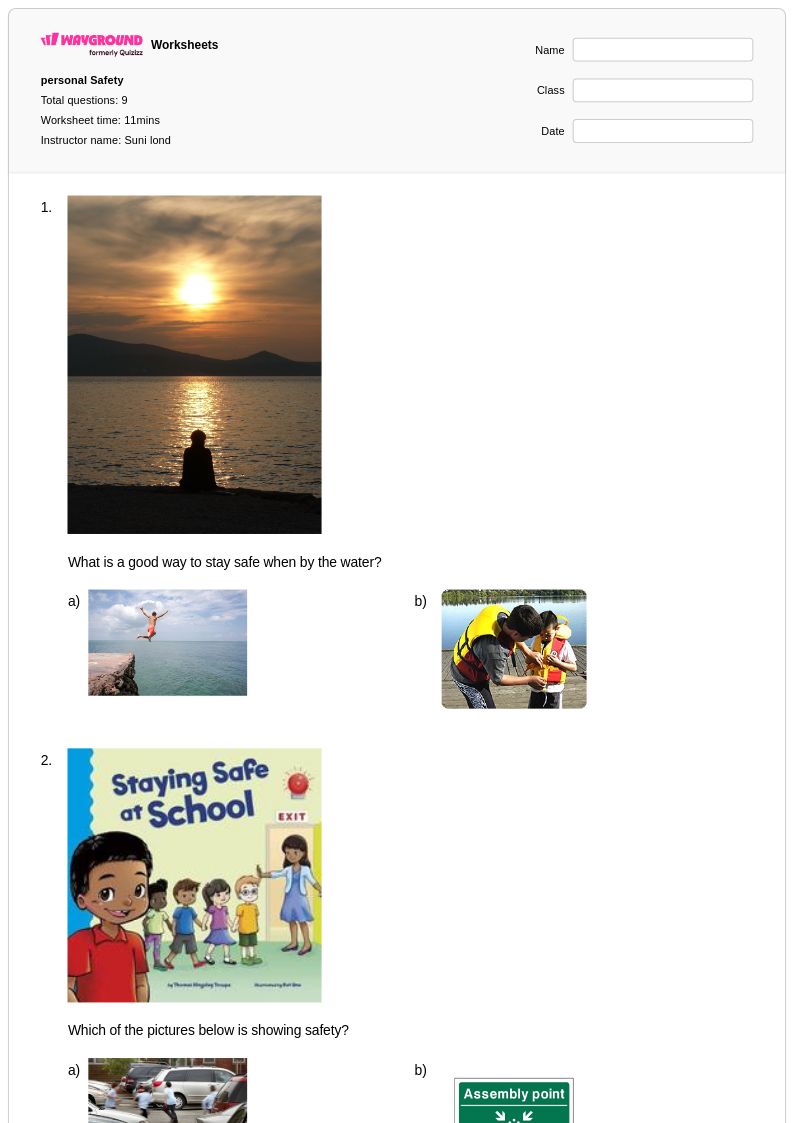
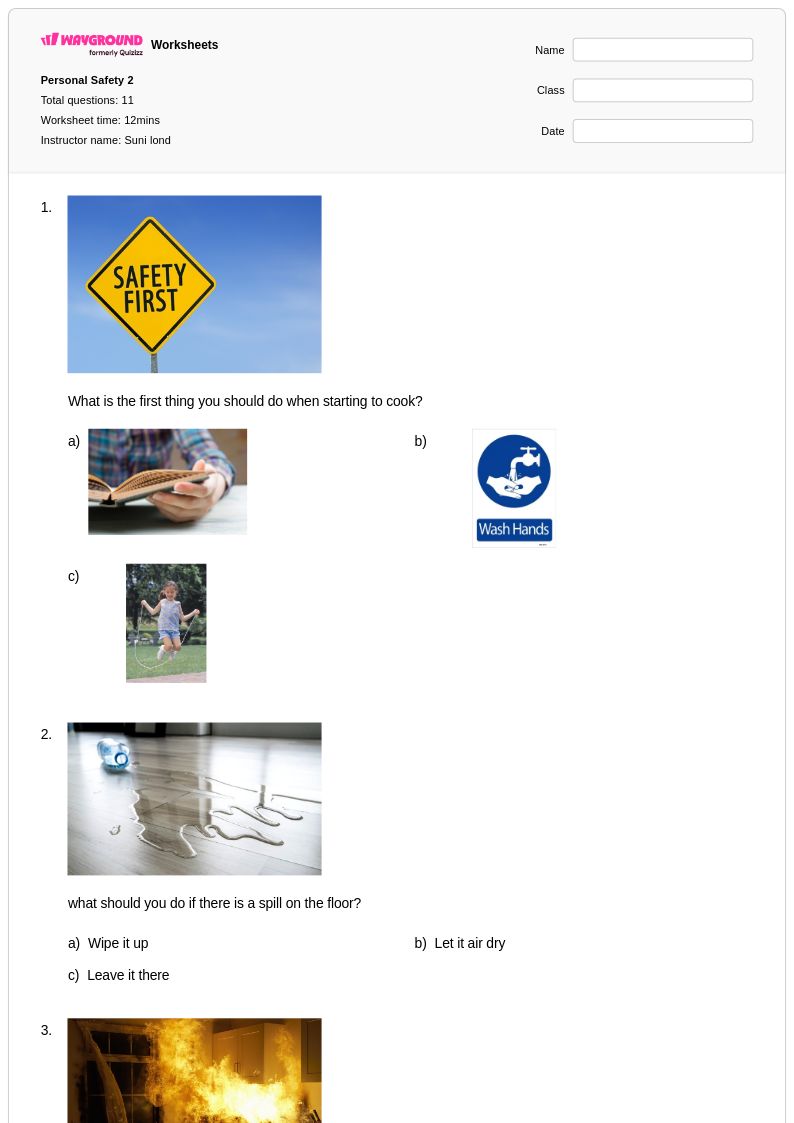
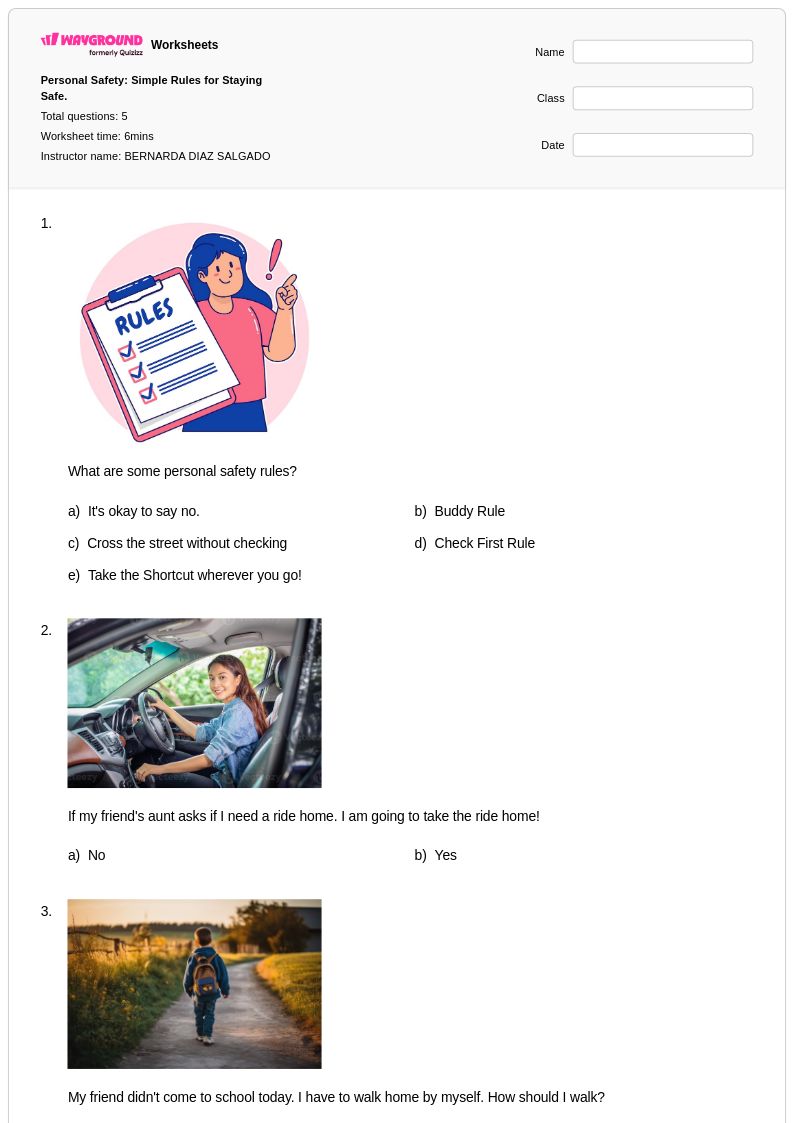
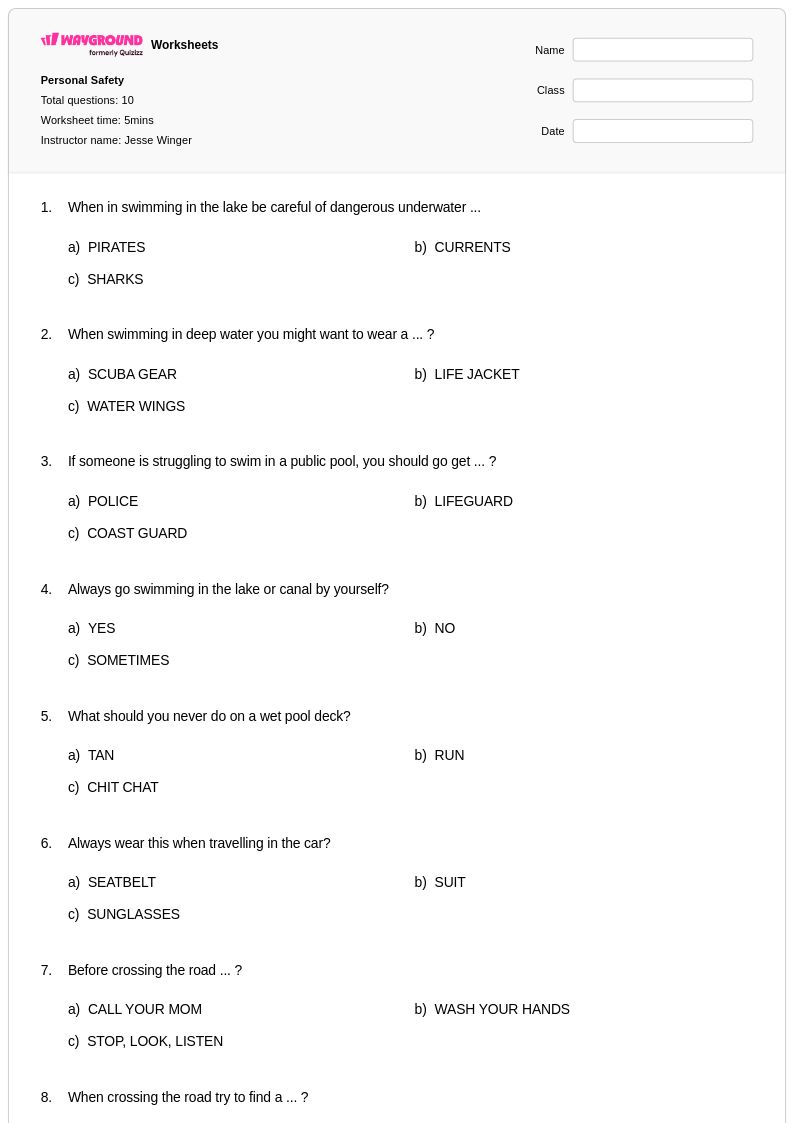
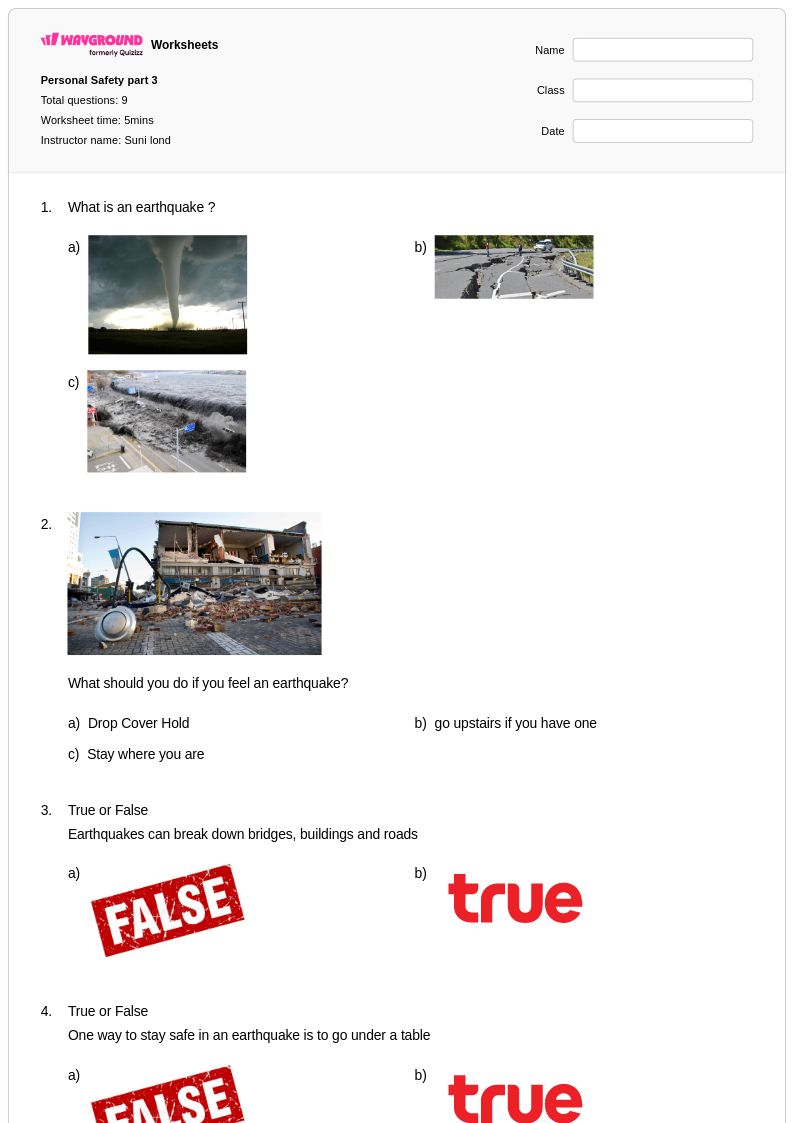
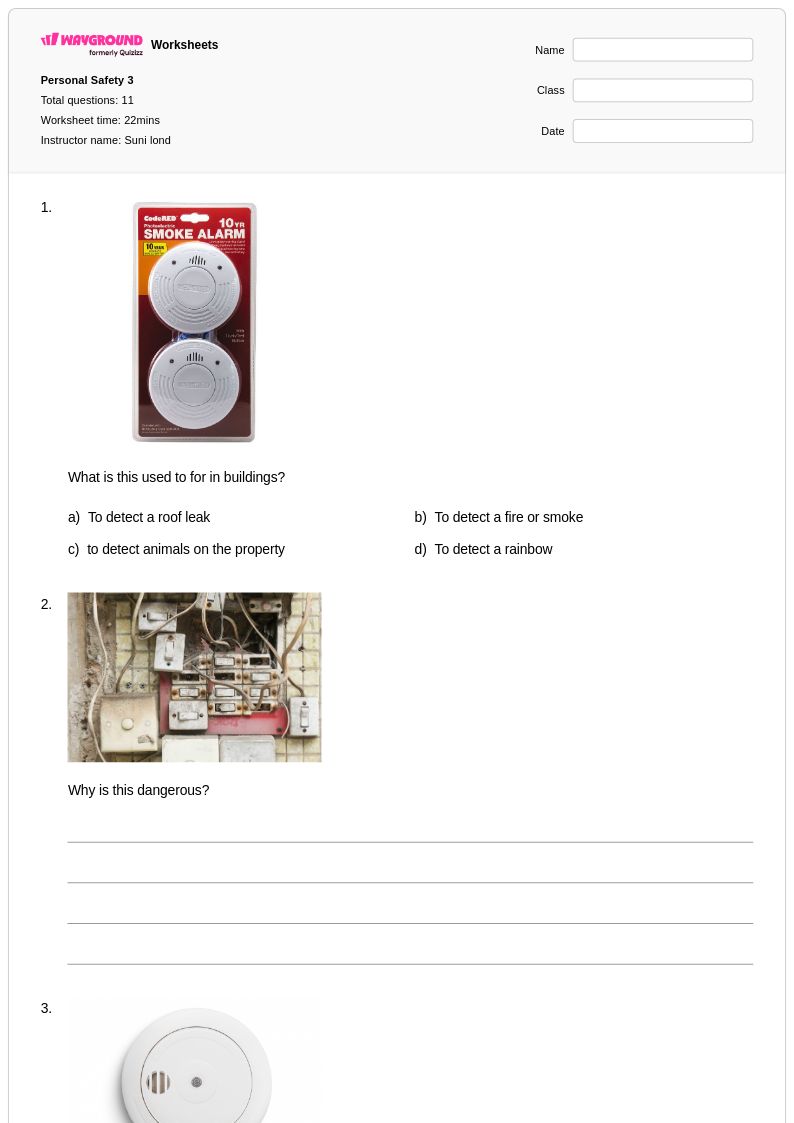
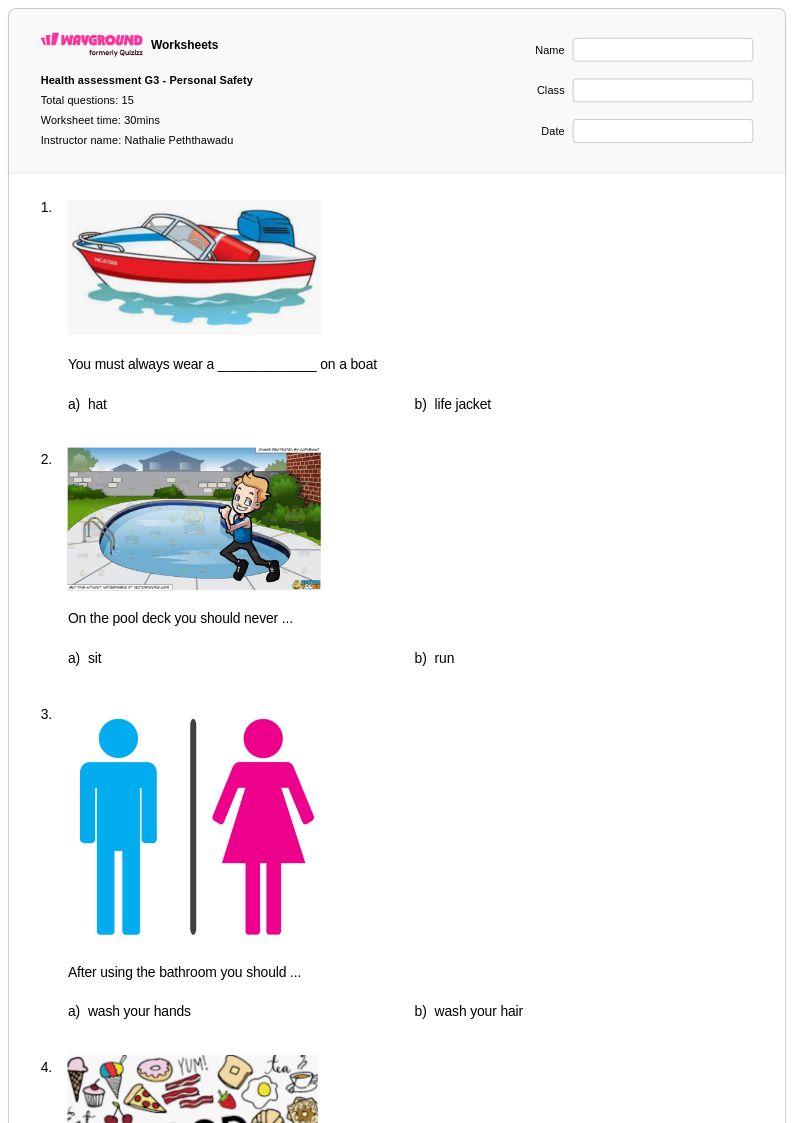
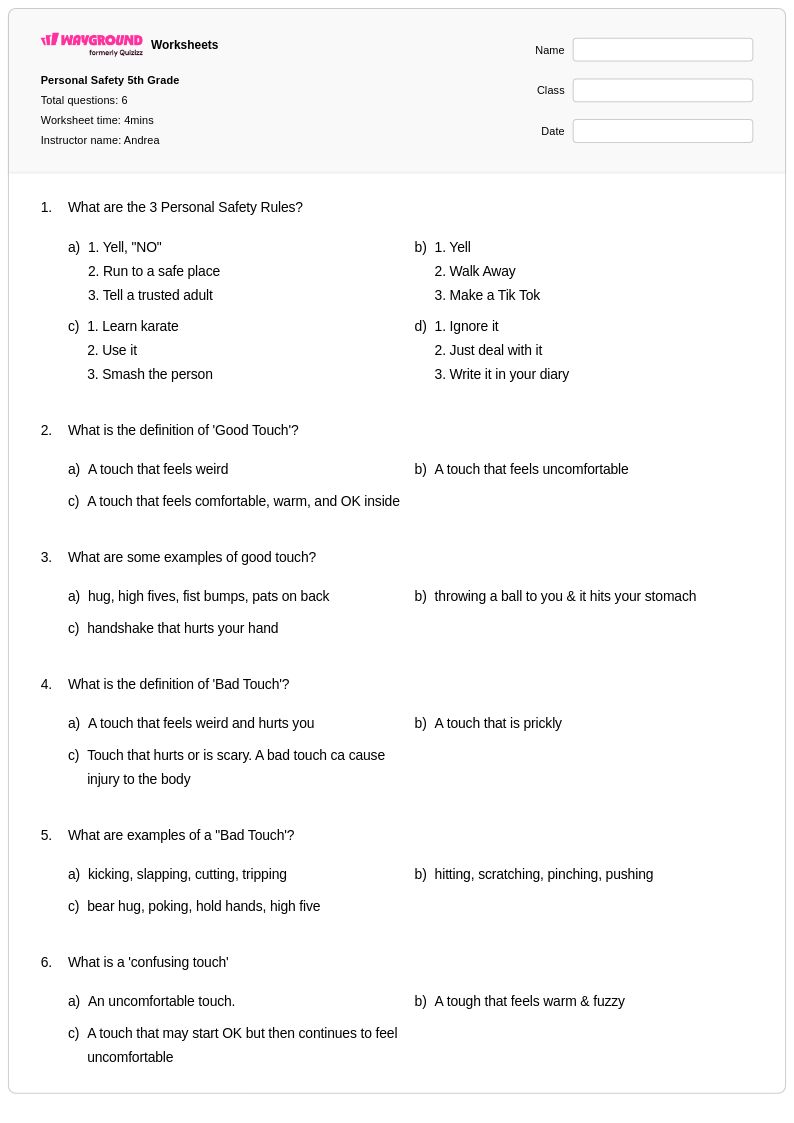
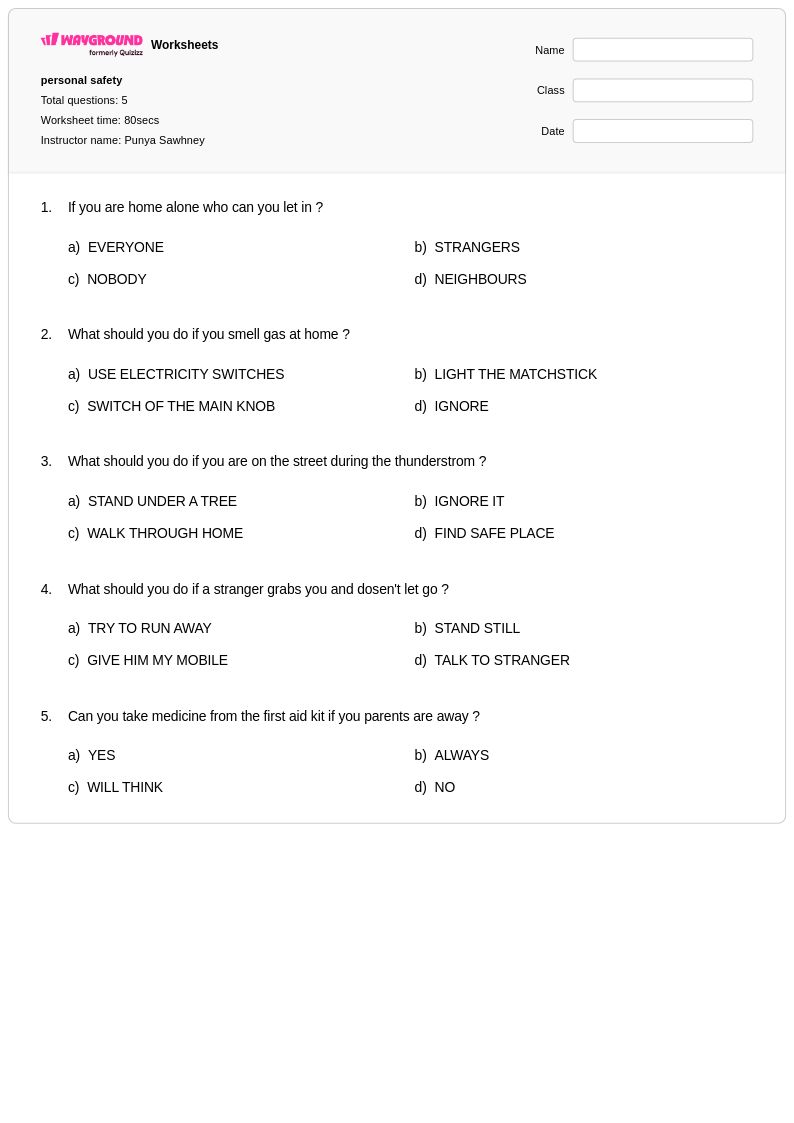
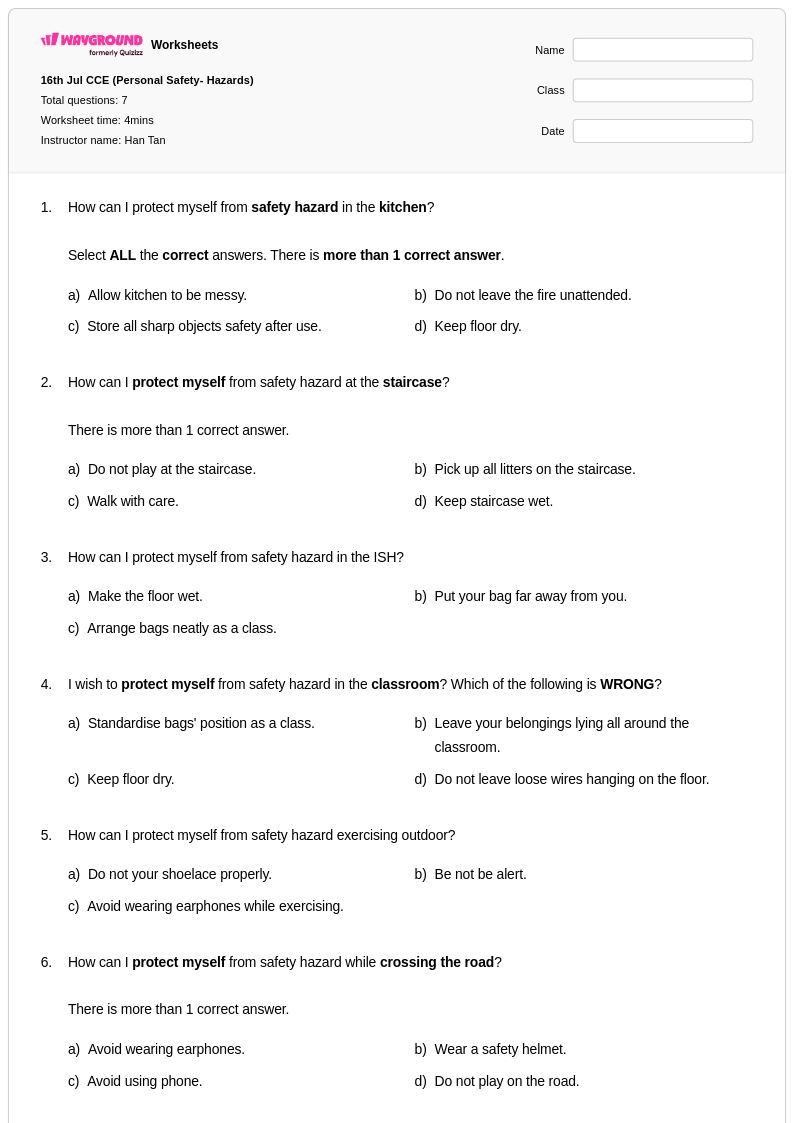
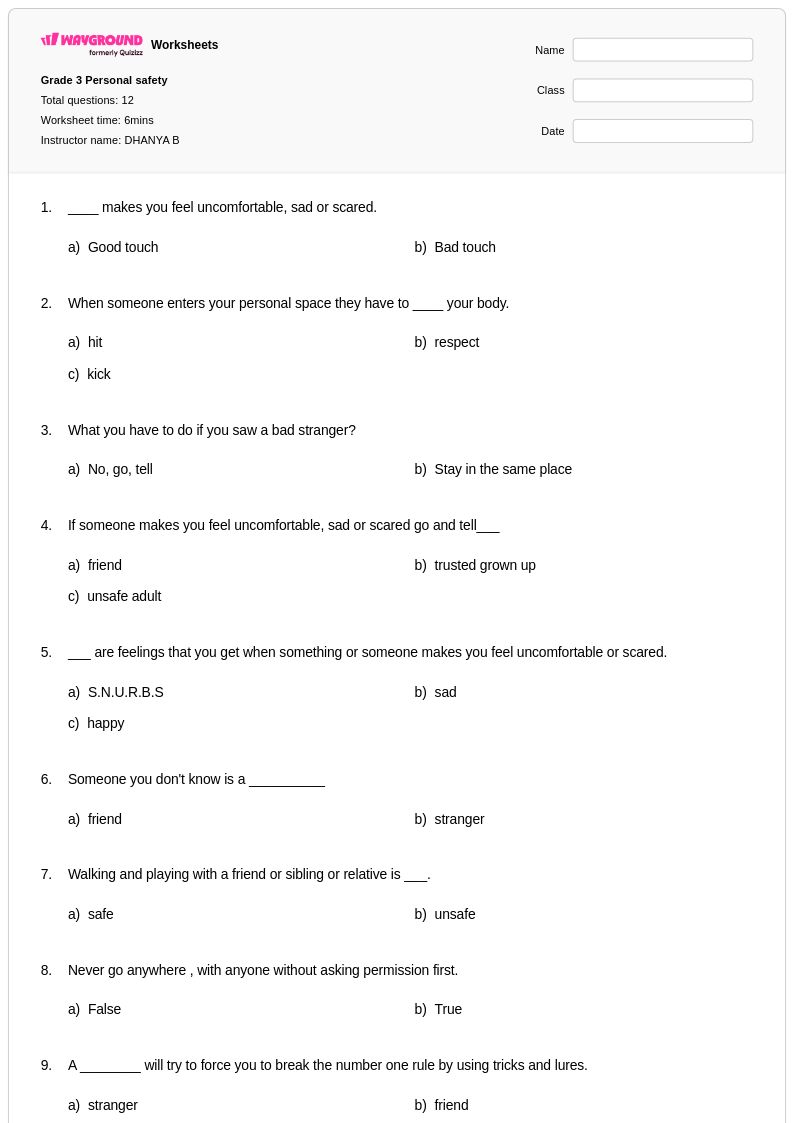
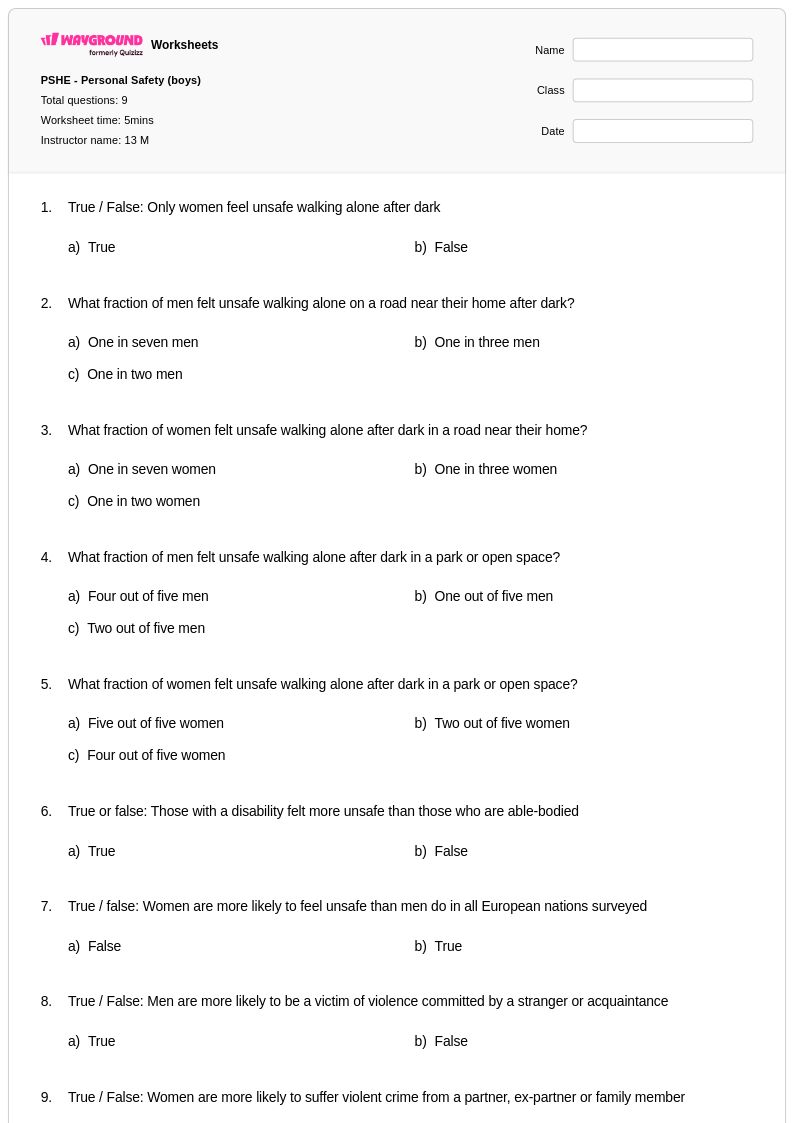
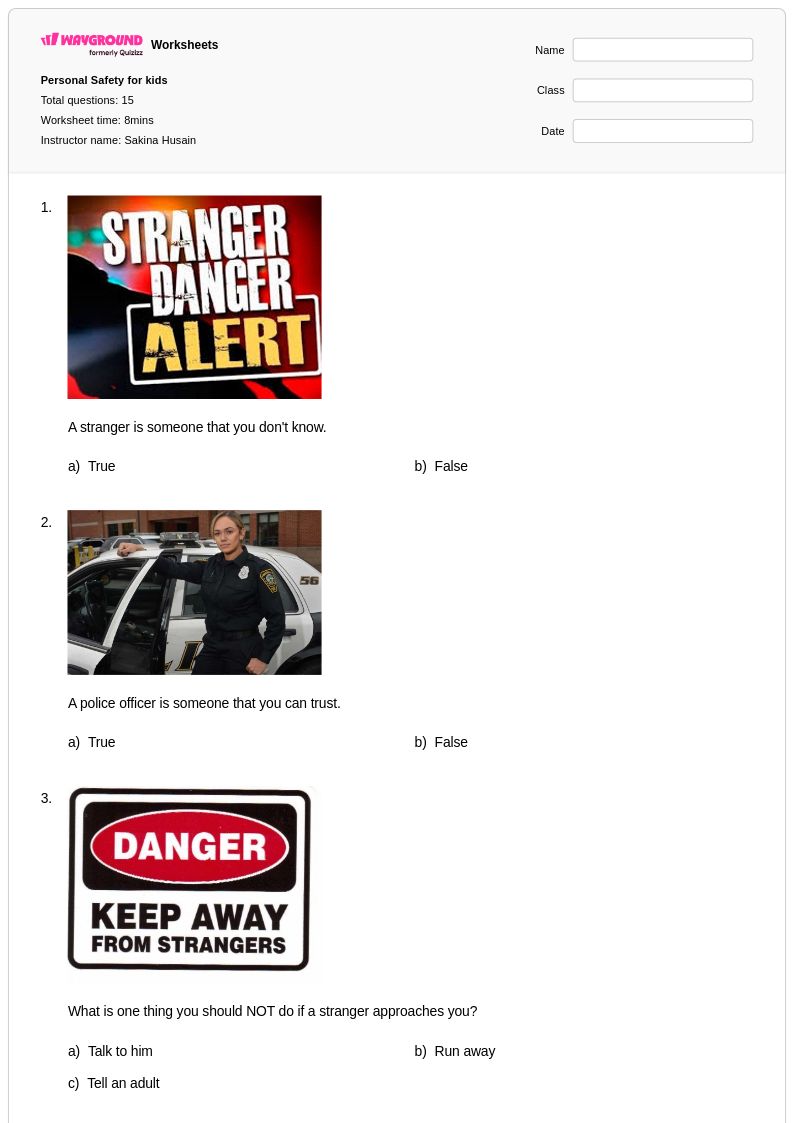
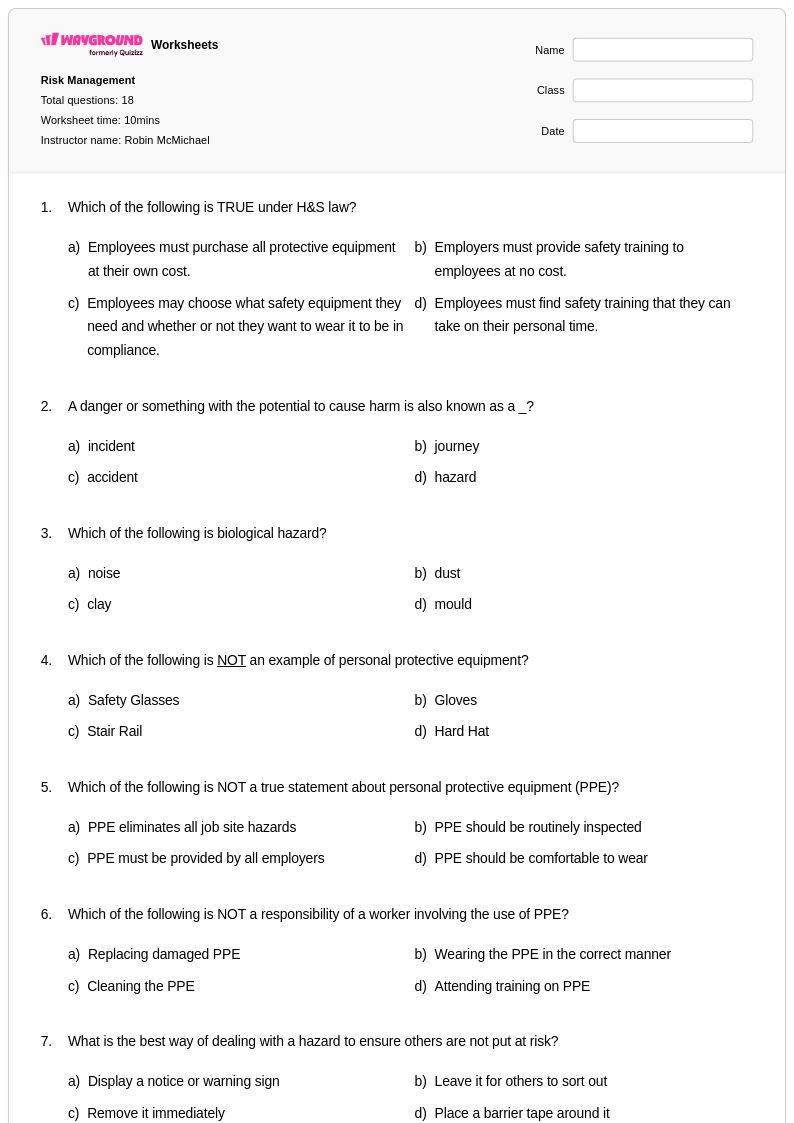
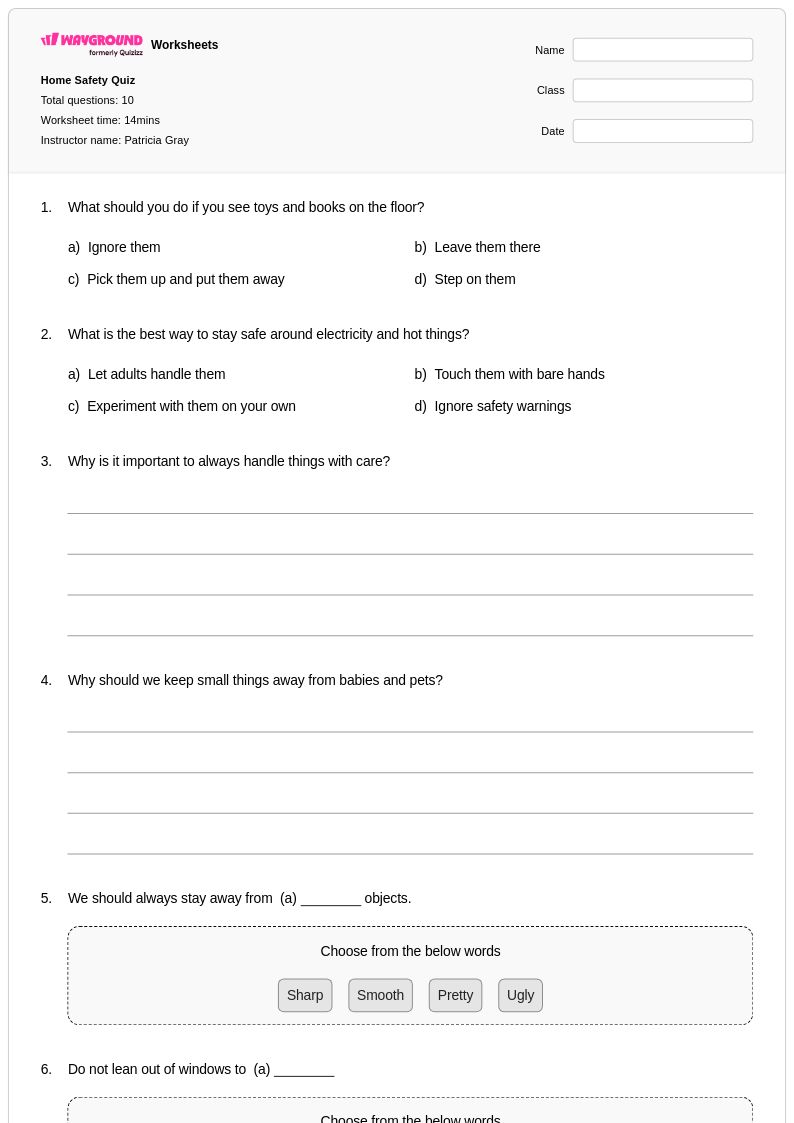
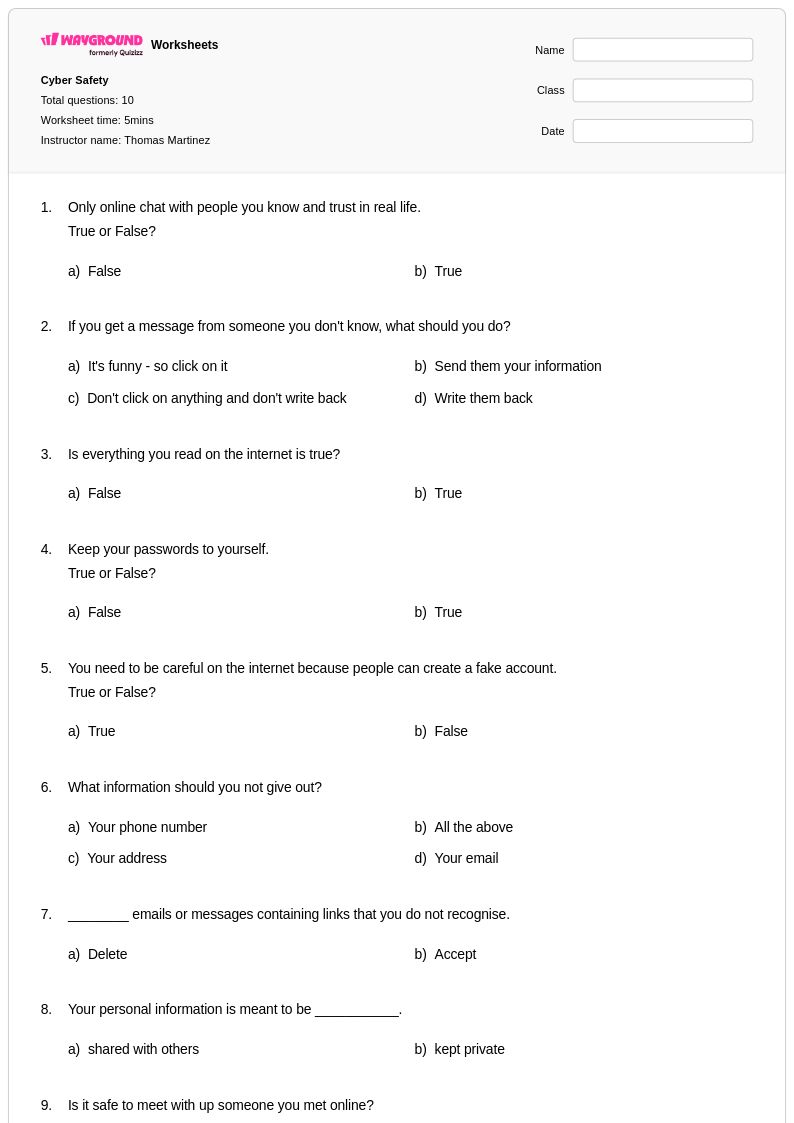
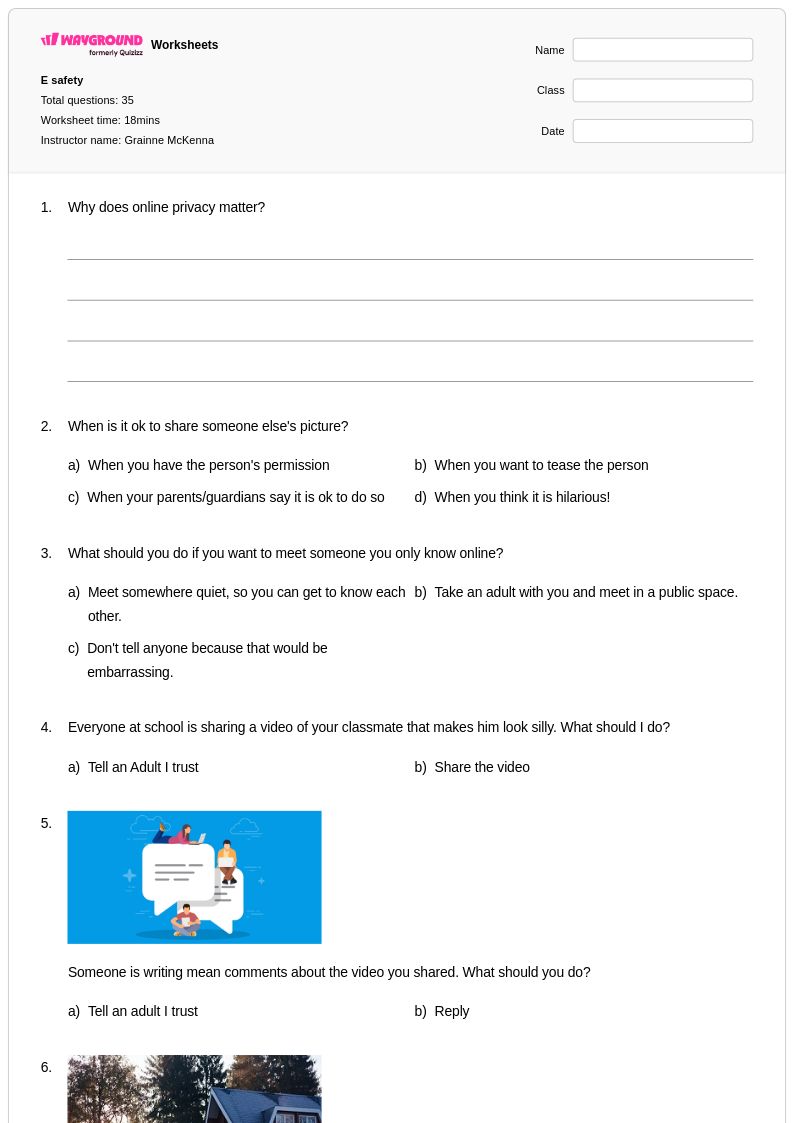
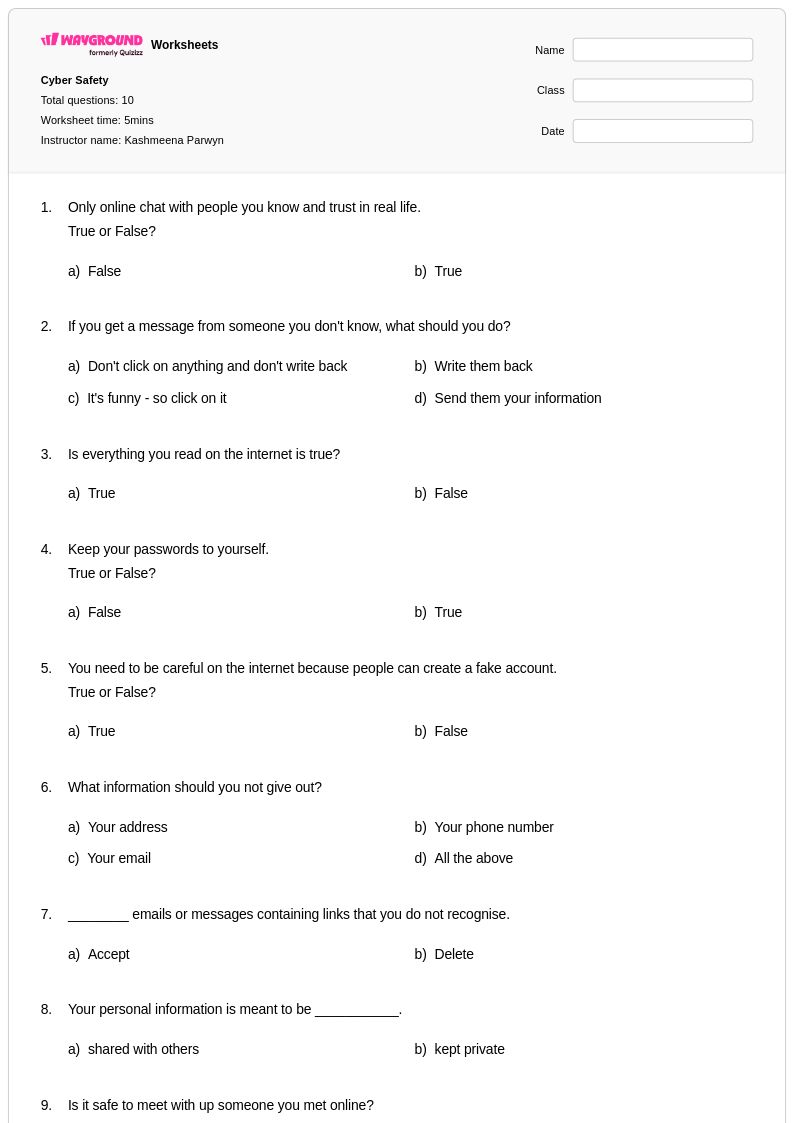
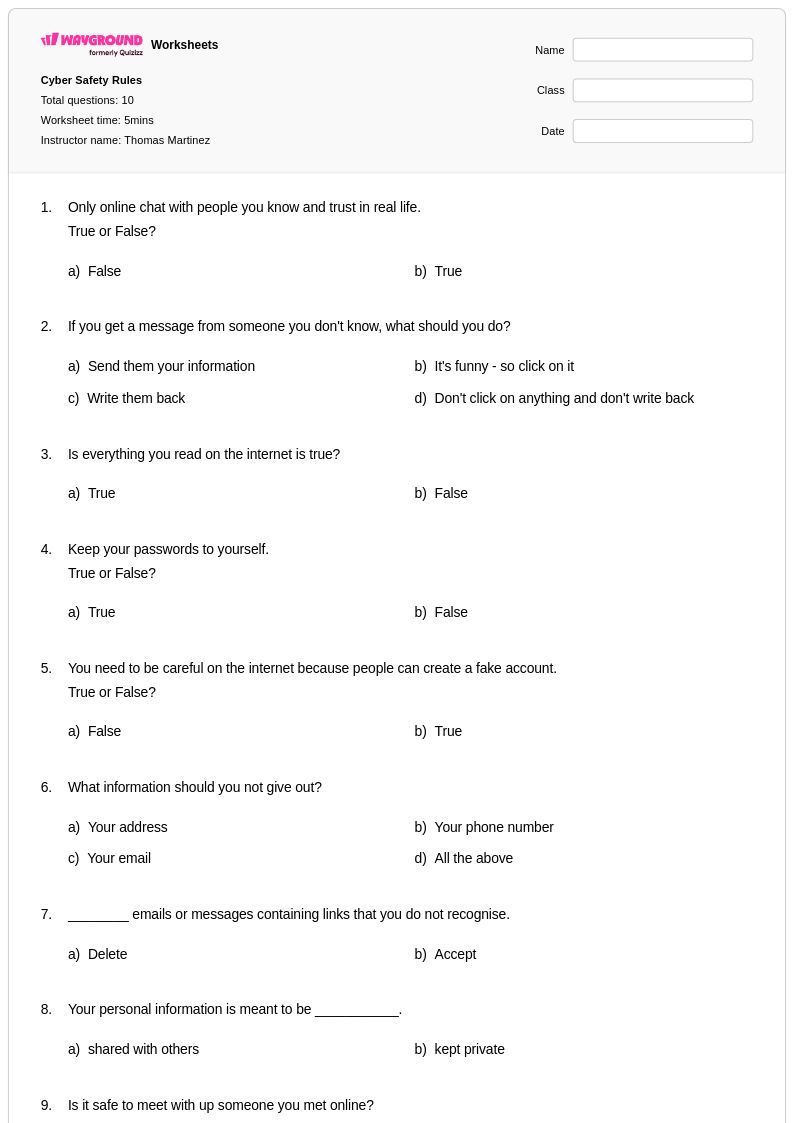
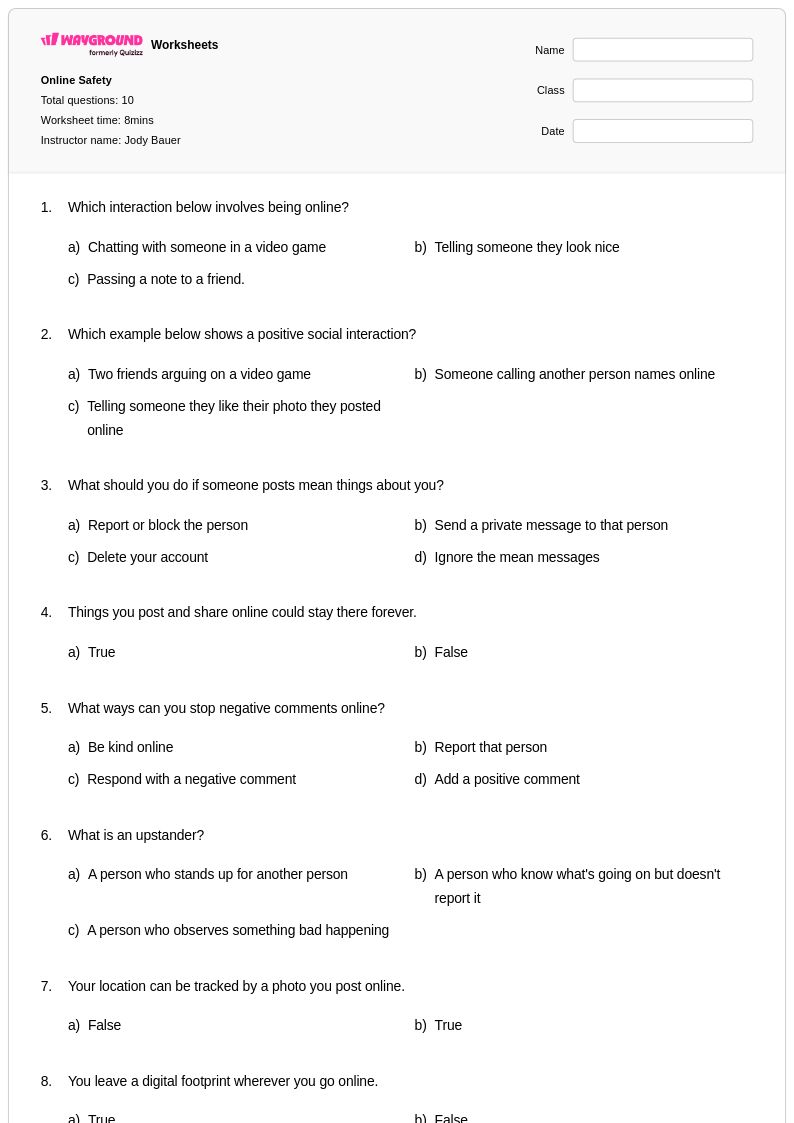
Personal safety worksheets for Class 3 students available through Wayground (formerly Quizizz) provide essential foundational knowledge that helps young learners develop critical awareness and protective behaviors in various environments. These comprehensive educational resources focus on teaching elementary students how to recognize potentially dangerous situations, understand appropriate responses to emergencies, and practice decision-making skills that prioritize their wellbeing. The worksheets strengthen key competencies including identifying trusted adults, understanding body safety concepts, recognizing warning signs in different settings, and developing communication skills for seeking help when needed. Teachers can access complete practice problems with detailed answer keys, ensuring thorough preparation for classroom instruction, while the free printable pdf format allows for flexible implementation across diverse learning environments and individual student needs.
Wayground (formerly Quizizz) supports educators with an extensive collection of teacher-created personal safety resources, drawing from millions of expertly designed materials that align with grade-appropriate safety education standards. The platform's robust search and filtering capabilities enable teachers to quickly locate worksheets that match specific learning objectives, whether focusing on stranger awareness, home safety protocols, or emergency procedures suitable for third-grade comprehension levels. Advanced differentiation tools allow instructors to customize content complexity and presentation style, accommodating varied learning abilities within the same classroom while maintaining consistent safety messaging. Available in both printable and digital formats including downloadable pdfs, these versatile resources facilitate seamless lesson planning, targeted skill remediation for students requiring additional support, and enrichment opportunities that deepen understanding of personal safety concepts through engaging, age-appropriate practice activities.
FAQs
How do I teach personal safety to elementary and middle school students?
Effective personal safety instruction uses real-world scenarios to help students recognize risks and practice safe decision-making before they encounter danger. Teachers should cover core areas including stranger awareness, internet safety, home hazard identification, and emergency response procedures. Pairing direct instruction with structured practice activities reinforces these concepts and gives students a framework for applying safety knowledge independently.
What topics should personal safety worksheets cover?
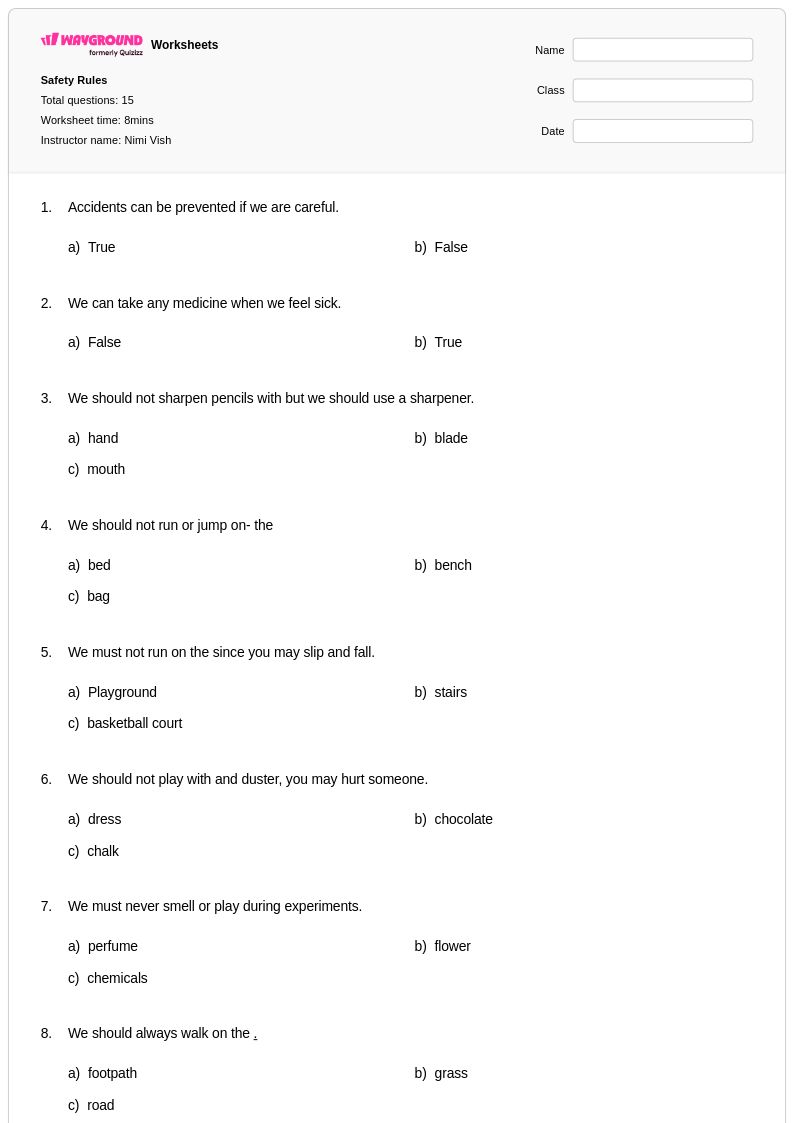
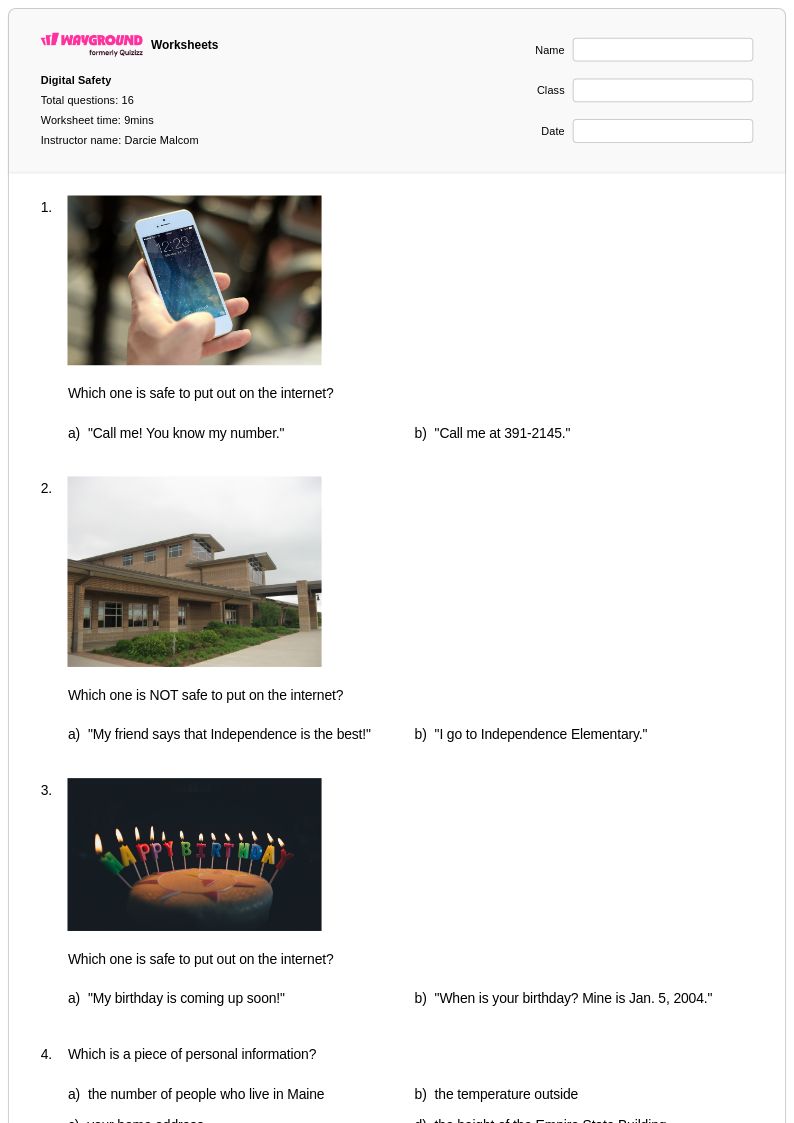
A well-rounded set of personal safety worksheets should address stranger danger awareness, internet and online safety protocols, home safety measures, playground and sports safety guidelines, and basic first aid knowledge. Covering this range ensures students can recognize hazards and respond appropriately across the environments they encounter daily. Worksheets that use real-world scenarios are especially effective at building transferable decision-making skills.
What common mistakes do students make when learning personal safety concepts?
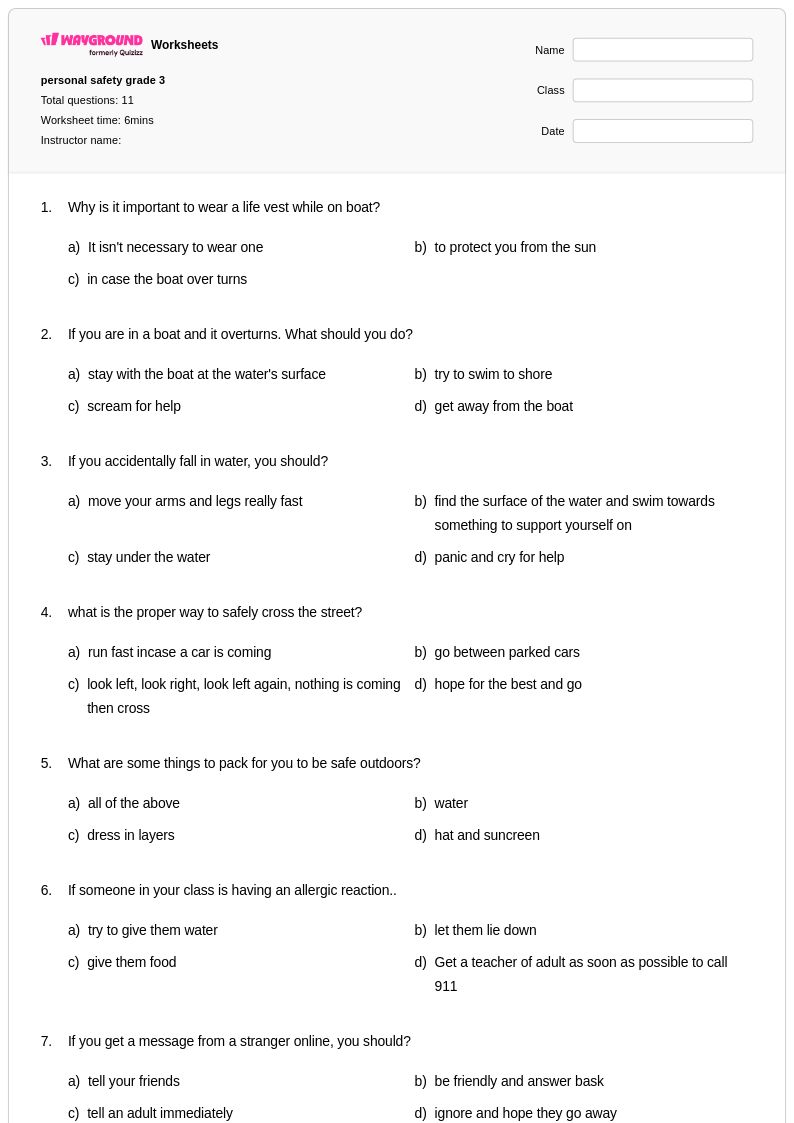
Students frequently struggle to distinguish between situations requiring immediate action and those requiring adult consultation, often either overreacting to minor risks or underreacting to genuine danger. Another common error is applying safety rules too rigidly without understanding the reasoning behind them, which limits their ability to handle unfamiliar scenarios. Worksheet activities that present nuanced, real-world situations help students develop contextual judgment rather than rote rule recall.
How can I differentiate personal safety instruction for students with different learning needs?
Differentiation in personal safety can include adjusting the complexity of scenarios presented, reducing answer choices for students who need additional support, or providing audio read-aloud of questions for students with reading challenges. On Wayground, teachers can apply individual accommodations such as extended time, read aloud, reduced answer choices, and adjustable reading modes to specific students without affecting the rest of the class. These settings are saved and reusable, making it easy to consistently support diverse learners across multiple lessons.
How do I use personal safety worksheets effectively in my classroom?
Personal safety worksheets work best when integrated into scenario-based discussions rather than used as standalone assignments, so students can connect worksheet content to real decisions they might face. Wayground's personal safety worksheets are available as printable PDFs for traditional classroom use and in digital formats for technology-integrated environments, including the option to host them as interactive quizzes on the Wayground platform. Complete answer keys are included with each resource, allowing teachers to assess comprehension quickly and provide targeted feedback.
How do I assess whether students have actually internalized personal safety skills?
Beyond recall-based questions, effective assessment of personal safety knowledge requires students to apply concepts to novel scenarios they have not encountered in instruction. Look for whether students can explain their reasoning, not just identify a correct answer, as this reveals whether they understand the underlying safety principle. Structured worksheet activities with answer keys help teachers identify specific gaps in hazard recognition, emergency response knowledge, or decision-making that need reteaching.