Enhance Class 8 students' phonics skills with Wayground's comprehensive collection of free worksheets, printables, and practice problems featuring detailed answer keys to strengthen sound-letter relationships and decoding abilities.
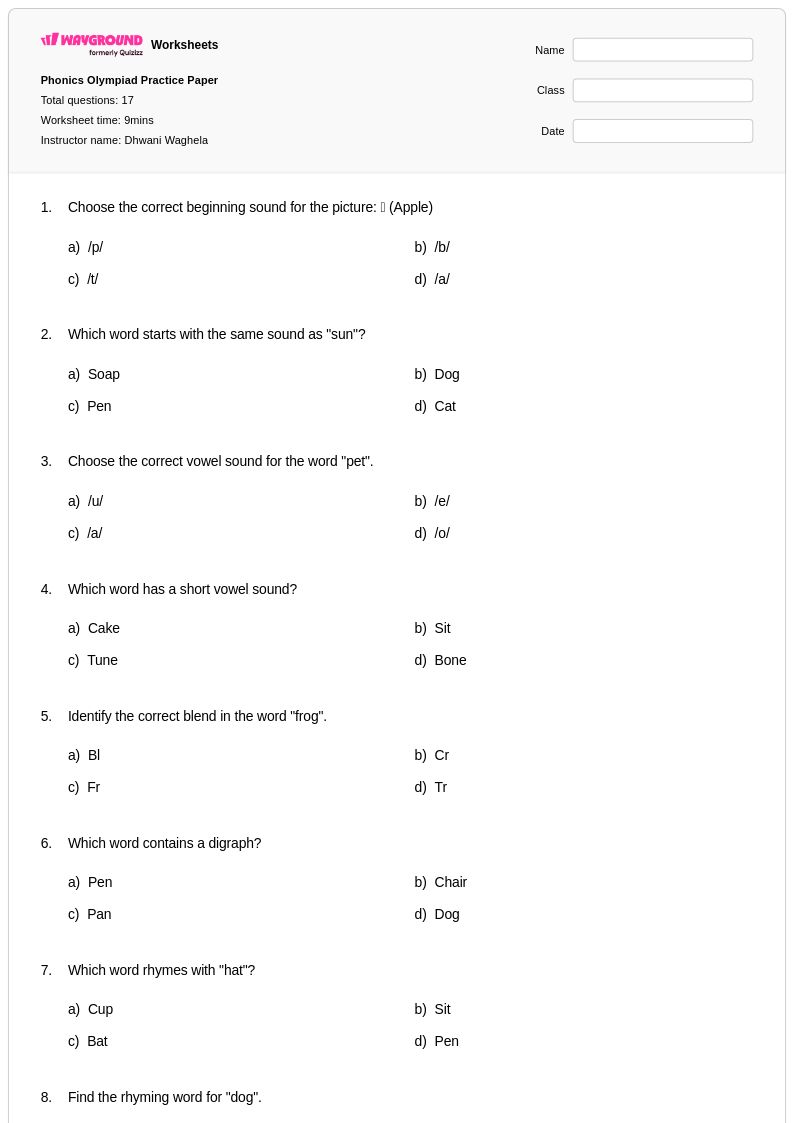
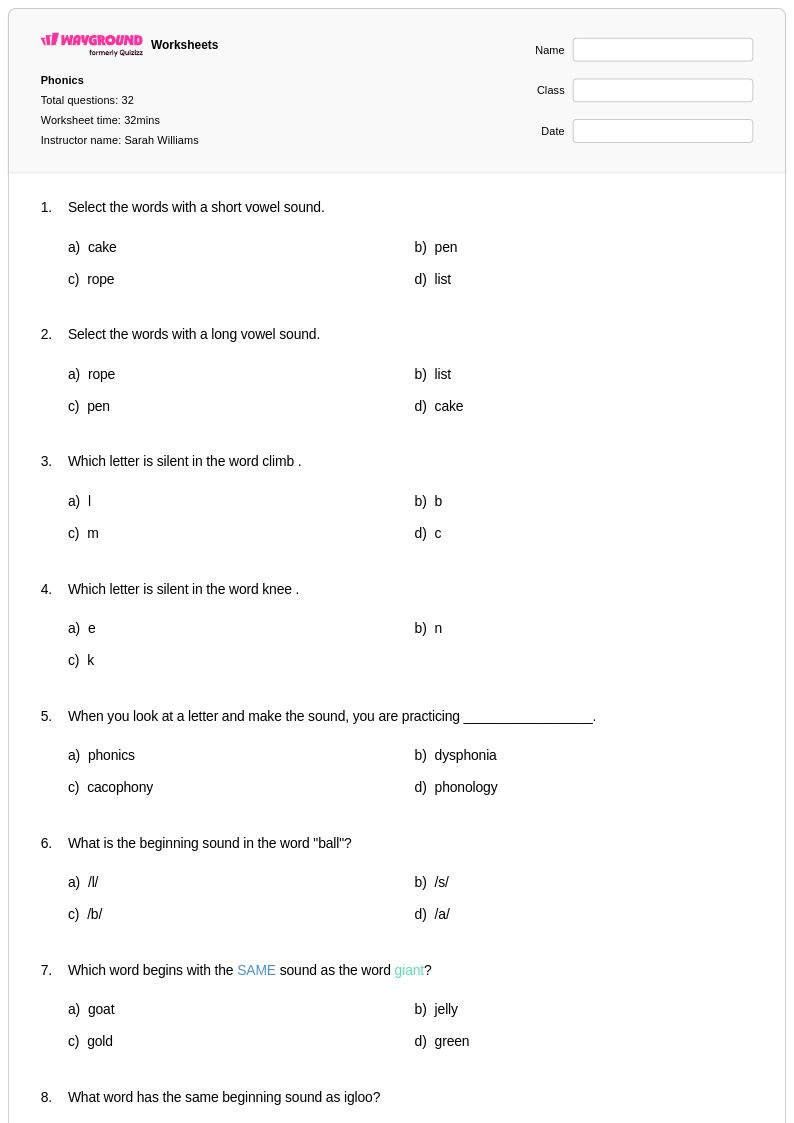
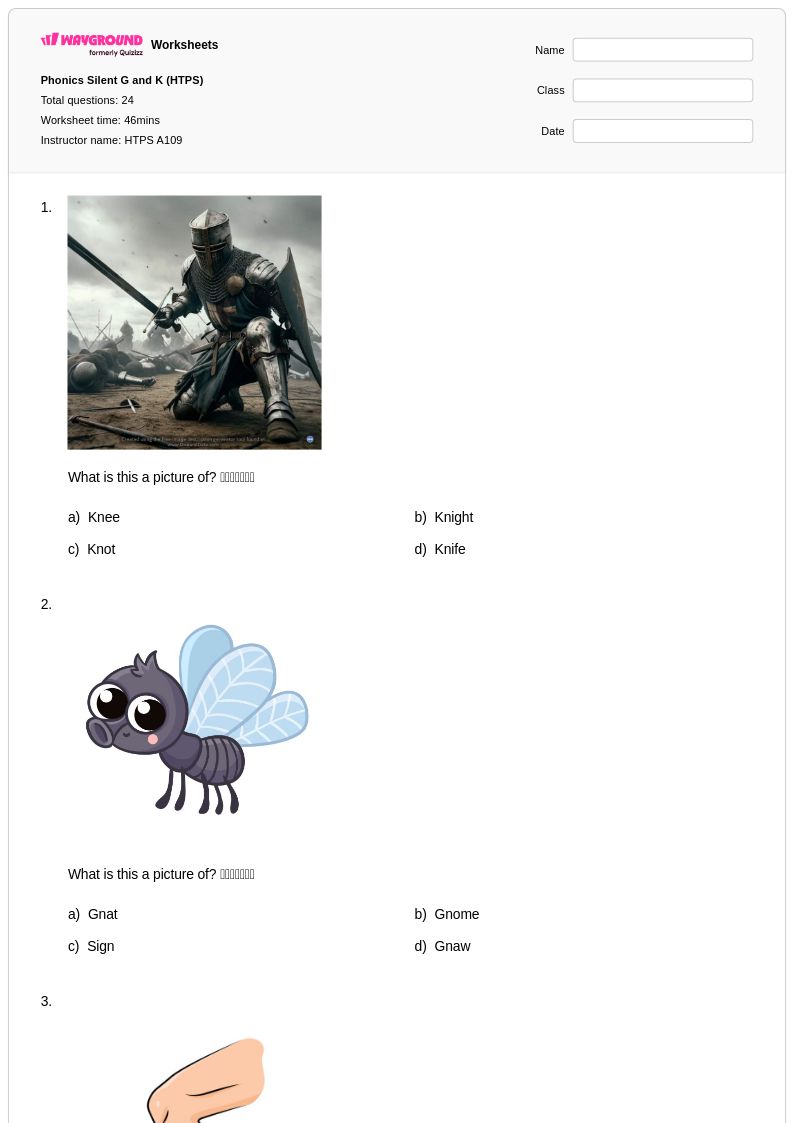
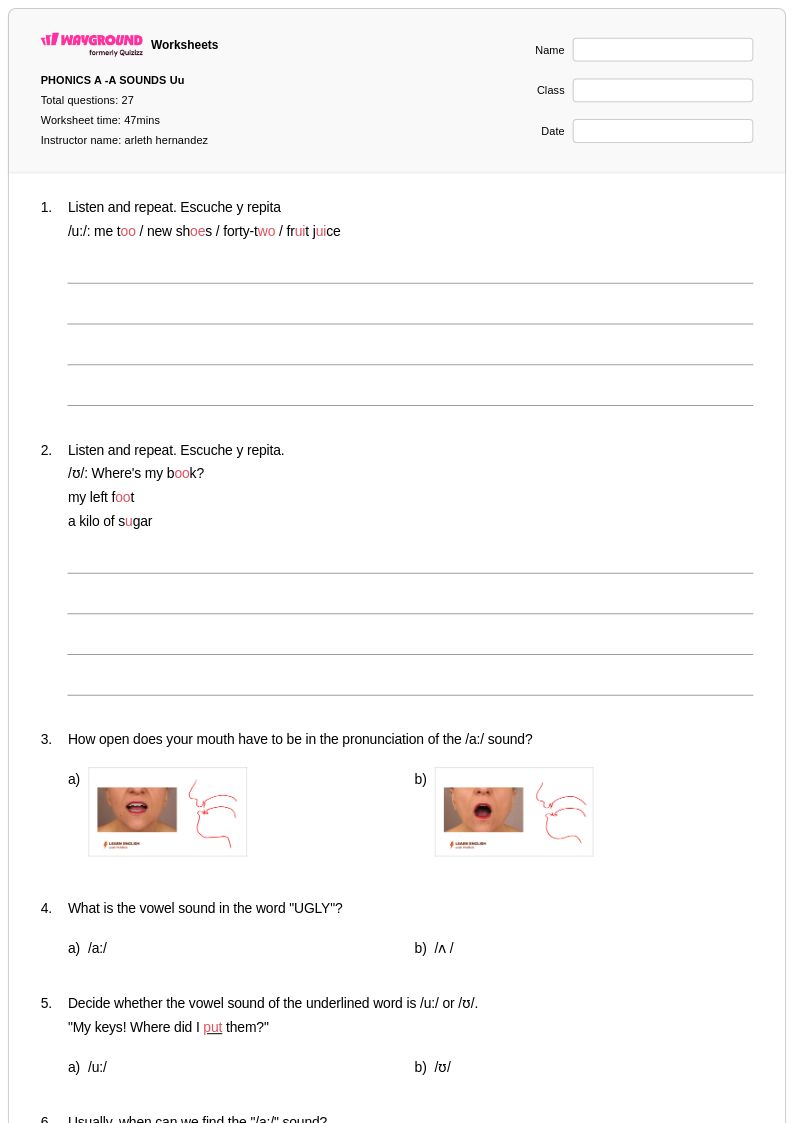
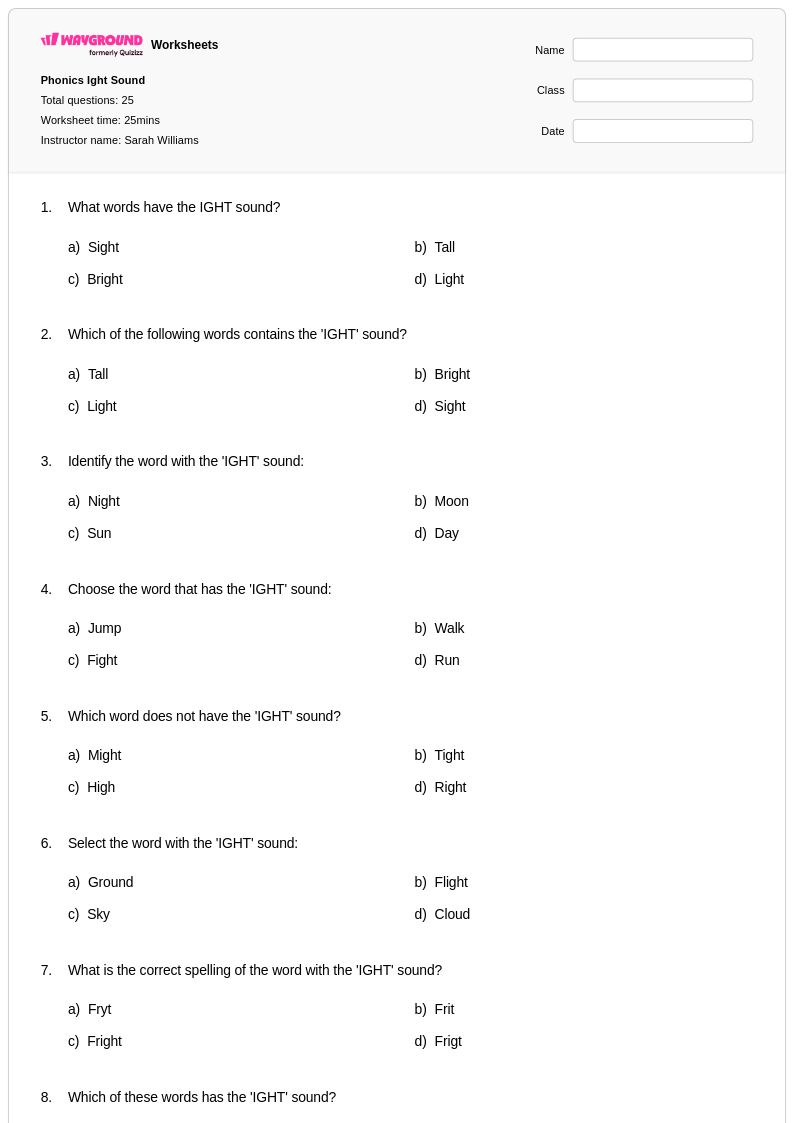
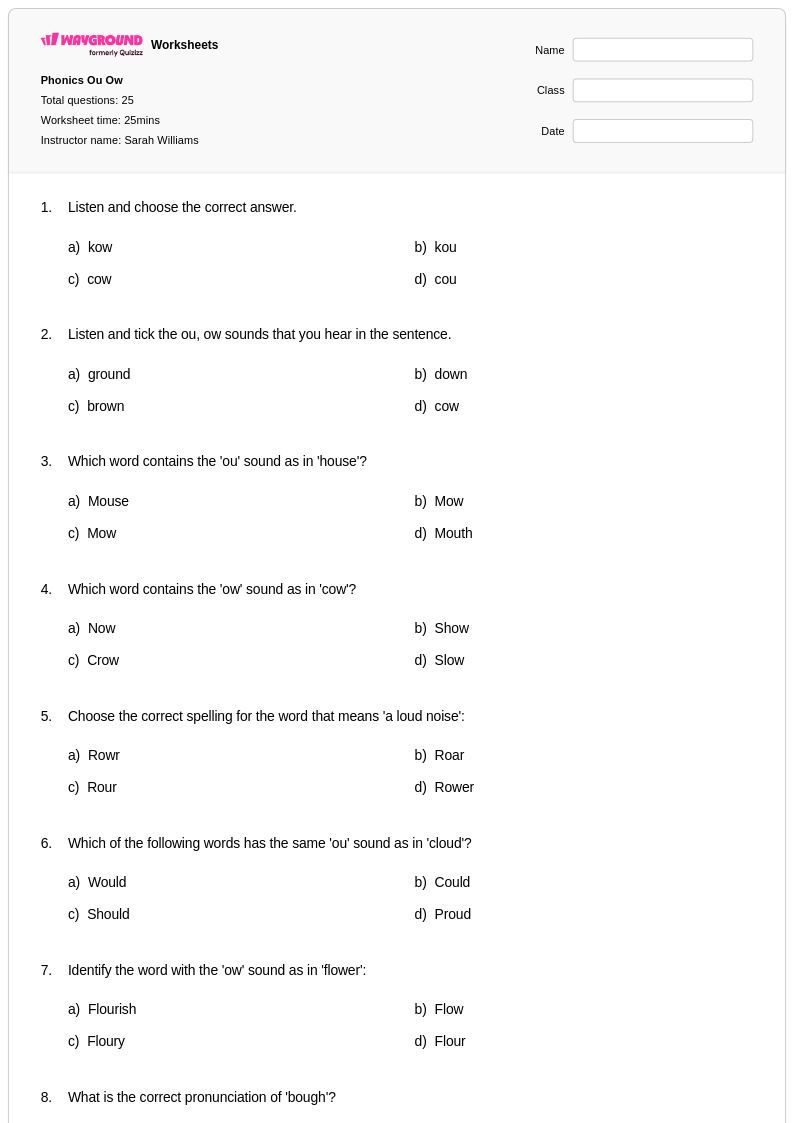
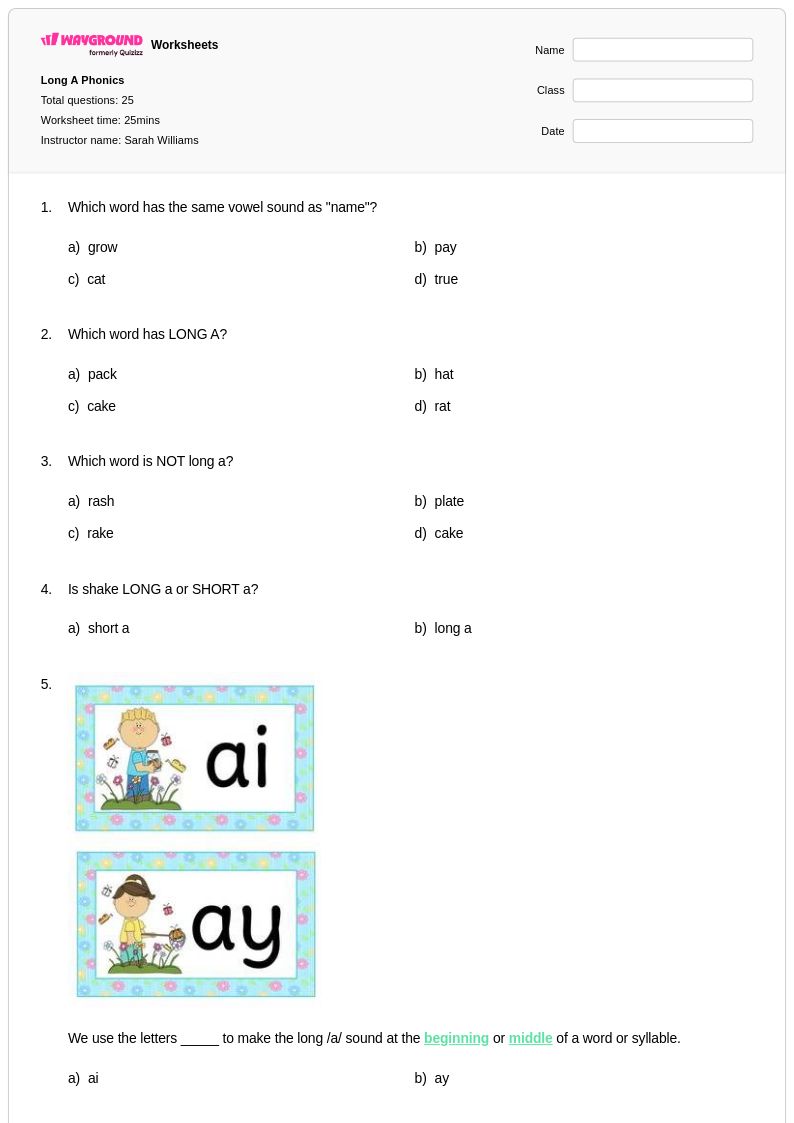
Class 8 phonics worksheets available through Wayground (formerly Quizizz) provide comprehensive practice with advanced phonological patterns and word analysis skills that eighth-grade students need to master. These expertly designed worksheets focus on complex phonetic concepts including multisyllabic word decoding, morphological awareness, Greek and Latin root recognition, and sophisticated vowel patterns that appear in academic vocabulary. Students work through practice problems that strengthen their ability to break down unfamiliar words using phonetic principles, which directly supports reading comprehension and vocabulary development across all subject areas. Each worksheet comes with a complete answer key and is available as a free printable pdf, making it easy for educators to provide targeted phonics instruction and assessment opportunities.
Wayground (formerly Quizizz) supports English teachers with an extensive collection of millions of teacher-created phonics resources specifically curated for grade 8 instruction. The platform's advanced search and filtering capabilities allow educators to quickly locate worksheets that align with specific phonics standards and learning objectives, while differentiation tools enable teachers to customize content complexity for diverse learners. These versatile materials are available in both printable pdf format and interactive digital versions, giving instructors the flexibility to implement phonics practice during whole-class instruction, small group work, or independent study sessions. Teachers can efficiently plan systematic phonics instruction, provide targeted remediation for struggling readers, offer enrichment opportunities for advanced students, and deliver consistent skill practice that builds the phonological foundation essential for academic success.
FAQs
How do I teach phonics systematically in the classroom?
Systematic phonics instruction moves students through a clearly sequenced progression, starting with simple consonant-vowel-consonant words and letter-sound correspondences before advancing to blends, digraphs, vowel teams, and multisyllabic word patterns. Teachers should introduce one pattern at a time, provide immediate corrective feedback, and build in cumulative review so students consolidate earlier skills before encountering new ones. Using structured worksheets that follow this same logical sequence helps reinforce what's taught during direct instruction and gives students the repeated practice needed to internalize each phonics rule.
What exercises help students practice phoneme segmentation and blending?
Phoneme segmentation exercises ask students to break spoken words into their individual sounds, while blending exercises have them push those sounds together to form a word. Effective practice formats include say-and-tap tasks, phoneme-grapheme mapping grids, and written segmentation where students mark each sound in a word with a box or line. These skills are best practiced together because students who can segment easily tend to blend more accurately, and both skills directly support decoding and spelling development.
What are the most common mistakes students make when learning phonics?
One of the most frequent errors is confusing visually similar letters such as b/d or p/q, which reflects difficulty with letter orientation rather than sound knowledge. Students also commonly skip medial vowels when reading CVC words, misapply the silent-e rule to words where it doesn't govern the vowel, and treat digraphs like ch or th as two separate sounds rather than one. Identifying which specific error pattern a student shows helps teachers target the exact phonics concept that needs reinforcement rather than re-teaching the whole scope and sequence.
How do I differentiate phonics instruction for students at different skill levels?
Differentiation in phonics means matching the complexity of the skill being practiced to where each student currently is in the phonics sequence. Students who are still working on CVC blending should not be expected to complete digraph or vowel team tasks simultaneously. On Wayground, teachers can apply individual accommodations such as read-aloud support for students who need questions read to them, reduced answer choices to lower cognitive load for students who are still building automaticity, and extended time for students who need additional processing time. These settings can be assigned to individual students without affecting the rest of the class.
How can I use Wayground's phonics worksheets in my classroom?
Wayground's phonics worksheets are available as both printable PDFs and in digital formats, making them practical for whole-class lessons, small-group instruction, literacy centers, homework, and remote learning. Teachers can print and distribute worksheets for hands-on practice or assign them digitally for independent completion. Wayground also allows teachers to host worksheets as a quiz directly on the platform, giving students an interactive experience while automatically tracking responses. All worksheets include answer keys, which reduces grading time and makes it easier to use the materials for quick formative checks.
When should students move from short vowel CVC words to more complex phonics patterns?
Students are generally ready to move beyond CVC words when they can accurately and automatically blend and segment three-phoneme words without sounding out individual letters one at a time. Signs of readiness include consistent correct reading of word families, accurate spelling of short-vowel words from dictation, and the ability to isolate medial vowel sounds. Introducing blends, digraphs, or the silent-e pattern before CVC mastery is solid tends to create confusion, so using diagnostic assessments or skill-specific worksheets to confirm readiness before advancing is a reliable practice.
What phonics subtopics should I prioritize for early readers?
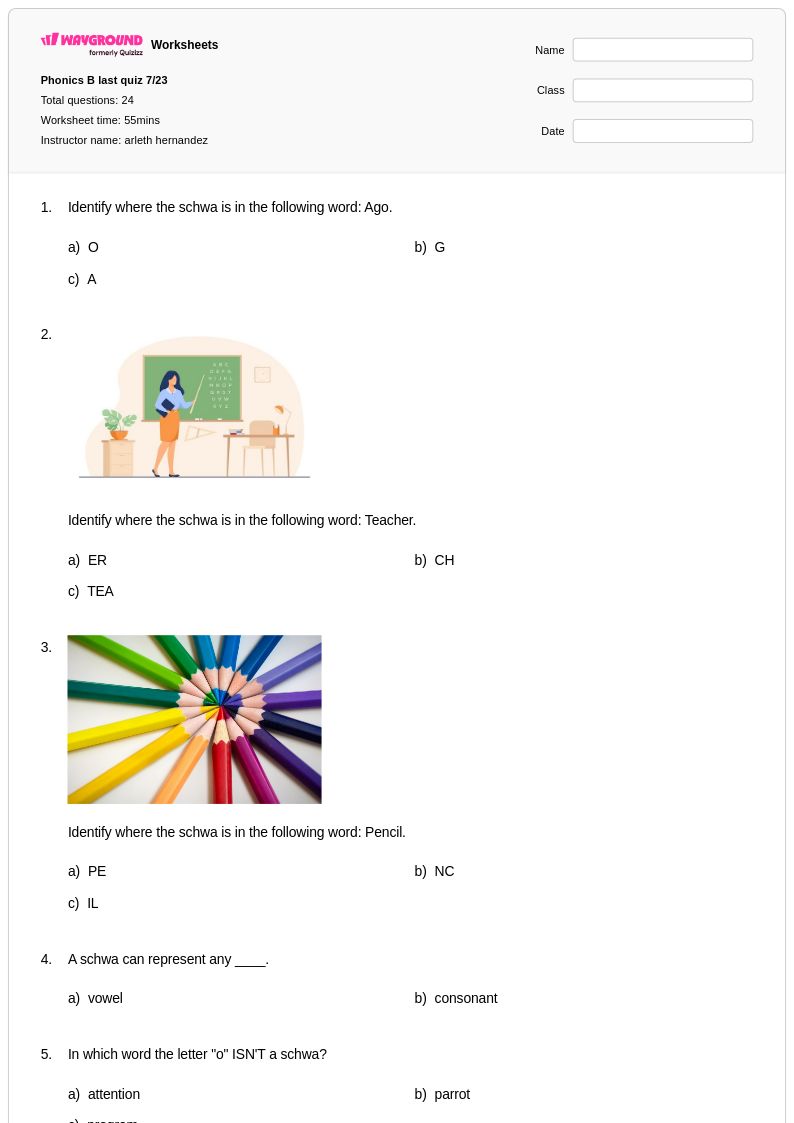
Early phonics instruction should prioritize letter-sound identification, CVC word blending, consonant sounds, and phoneme segmentation because these skills form the decoding foundation everything else builds on. Once those are secure, teachers typically introduce consonant blends, digraphs such as th and ck, and word families to expand students' decoding range. Patterns like vowel teams, diphthongs, the schwa sound, and syllable division strategies are better suited for students who have already demonstrated solid control of short and long vowel correspondences.