
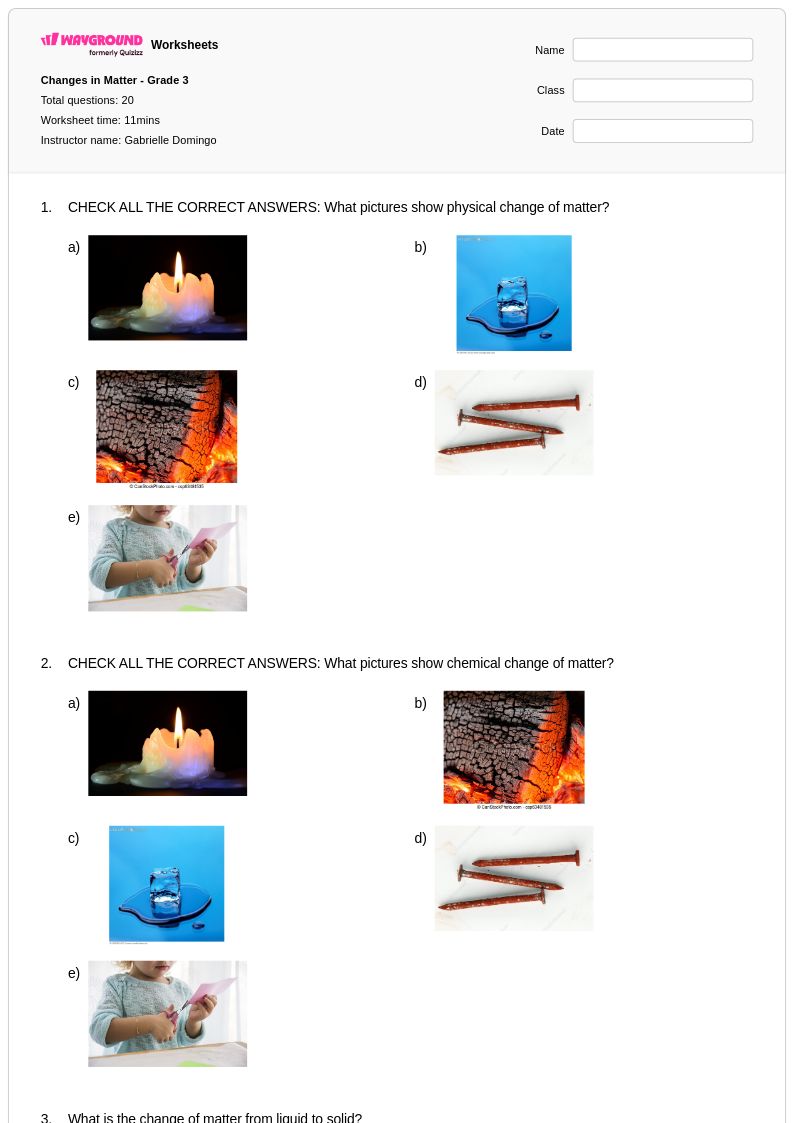
20 Q
1st - 5th
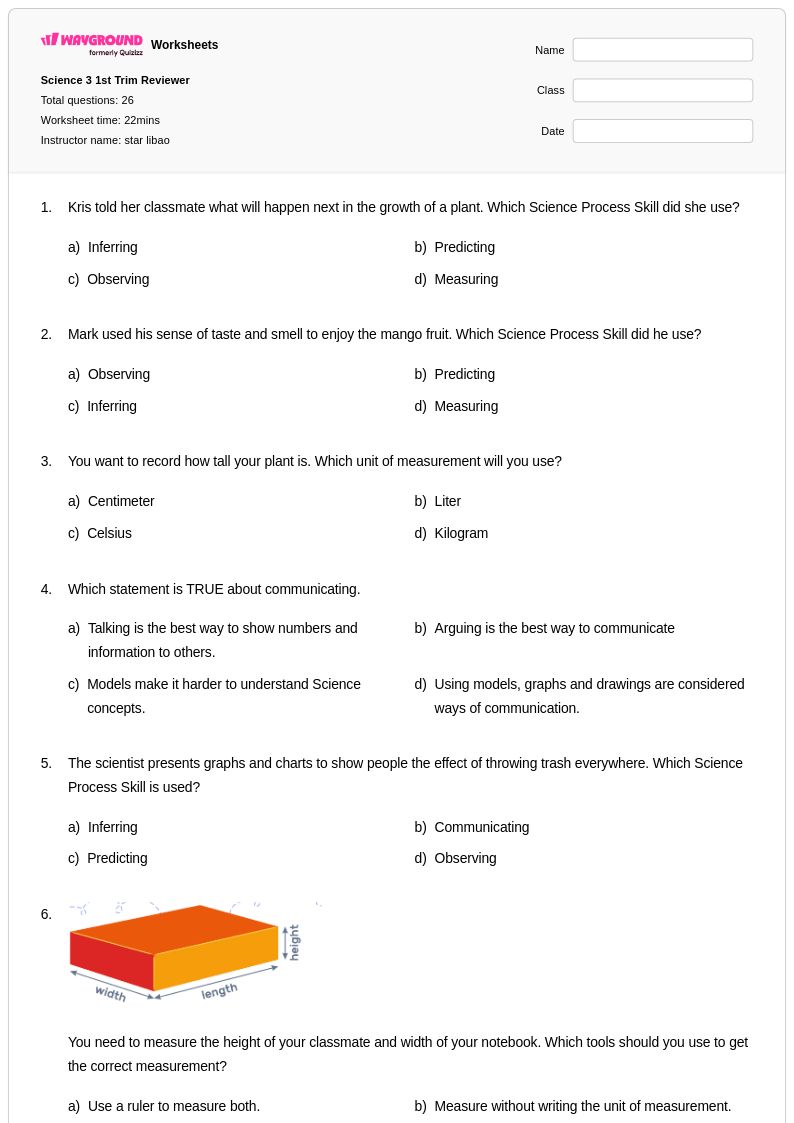
26 Q
1st - 5th
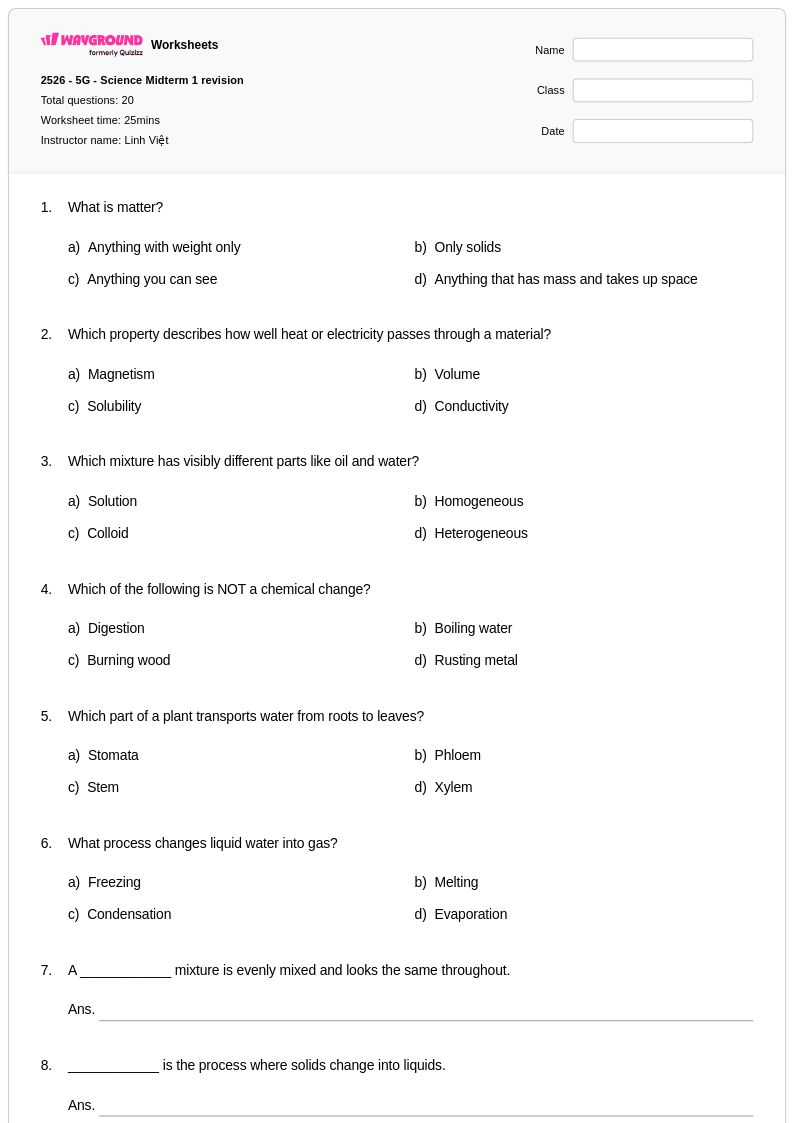
20 Q
1st - 5th
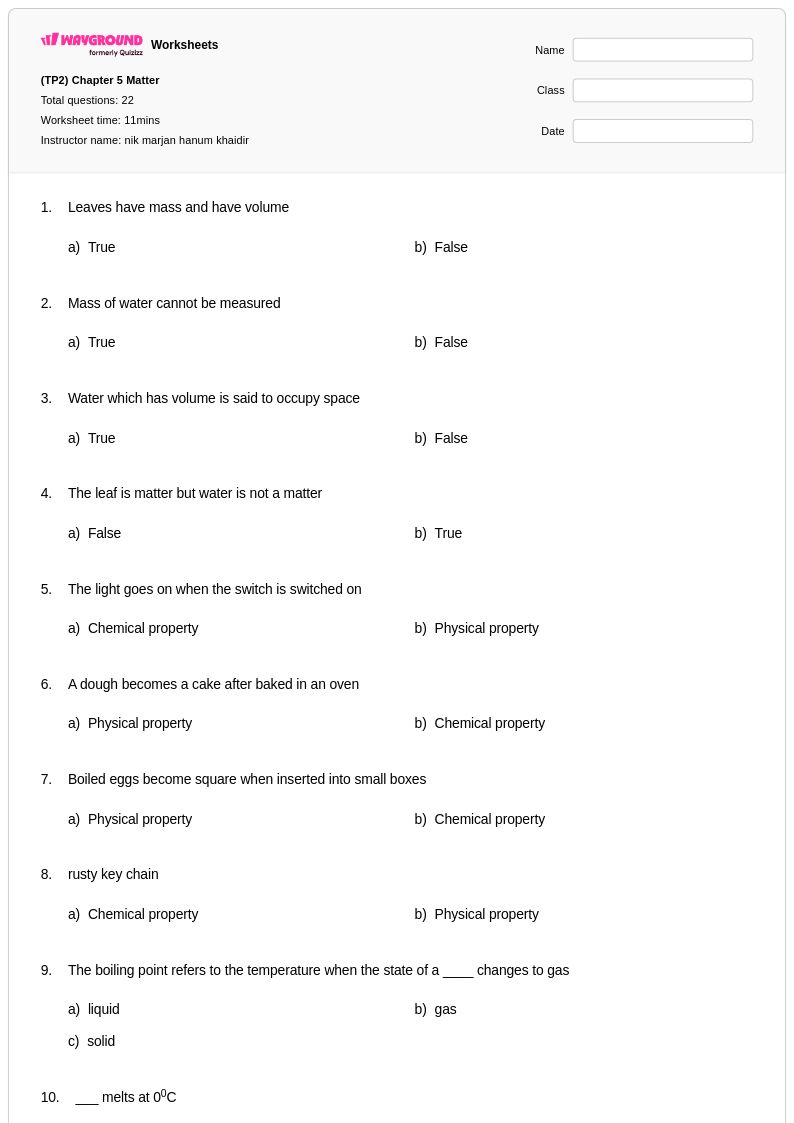
22 Q
1st
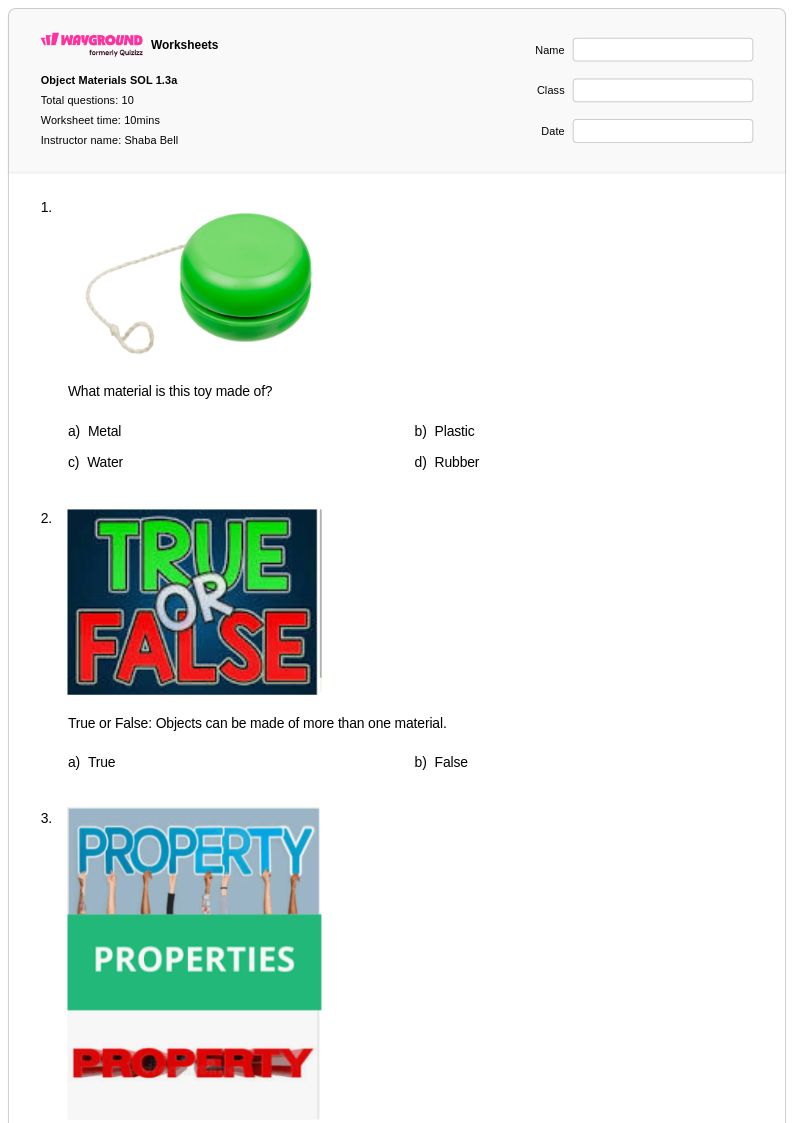
10 Q
1st
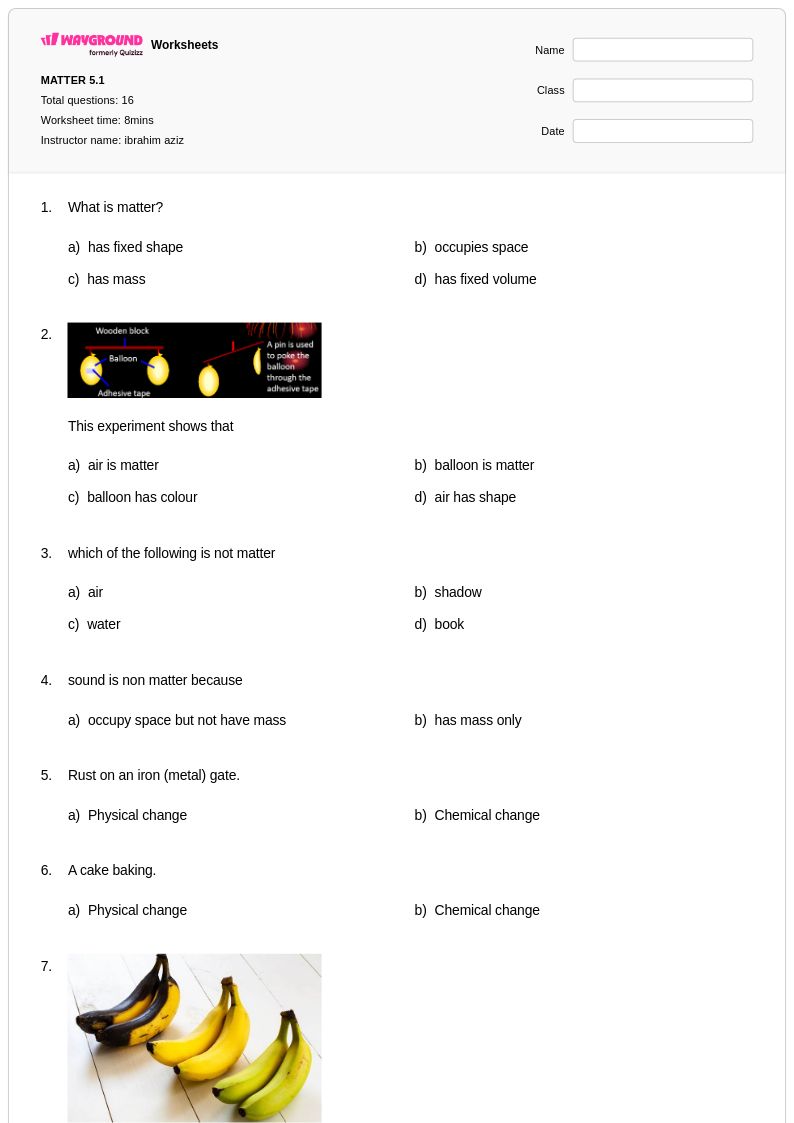
16 Q
1st
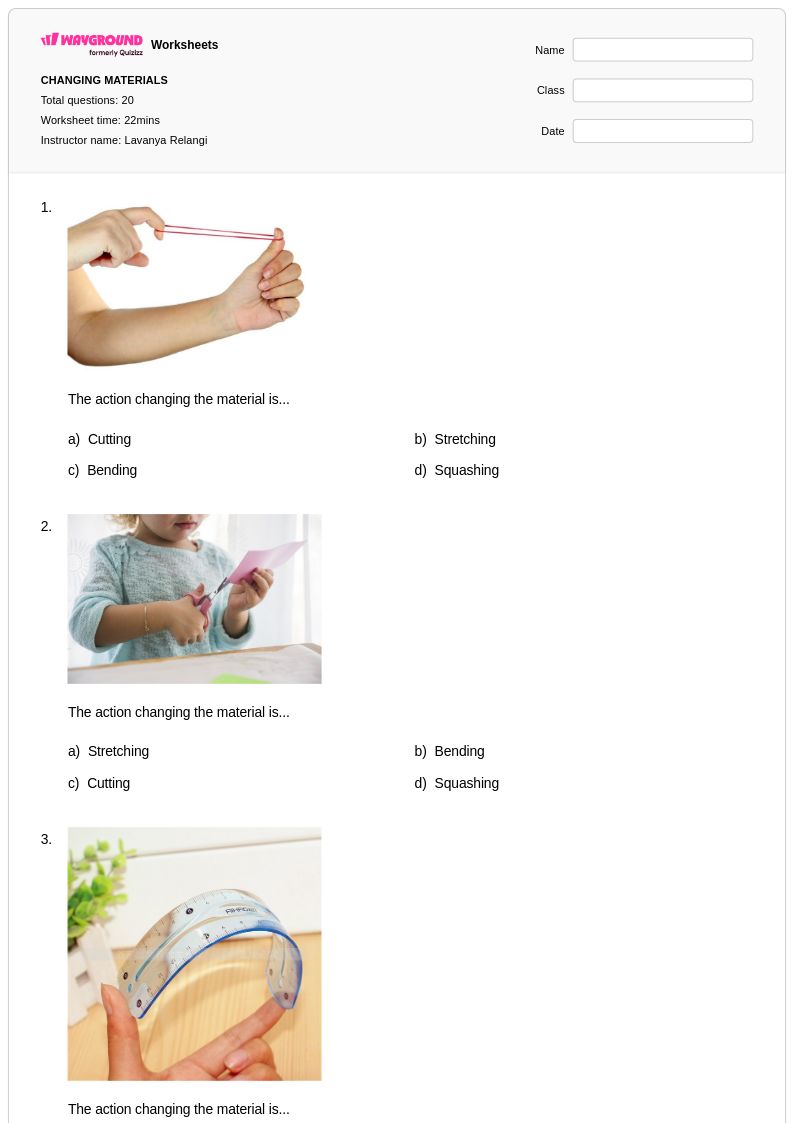
20 Q
1st - 2nd
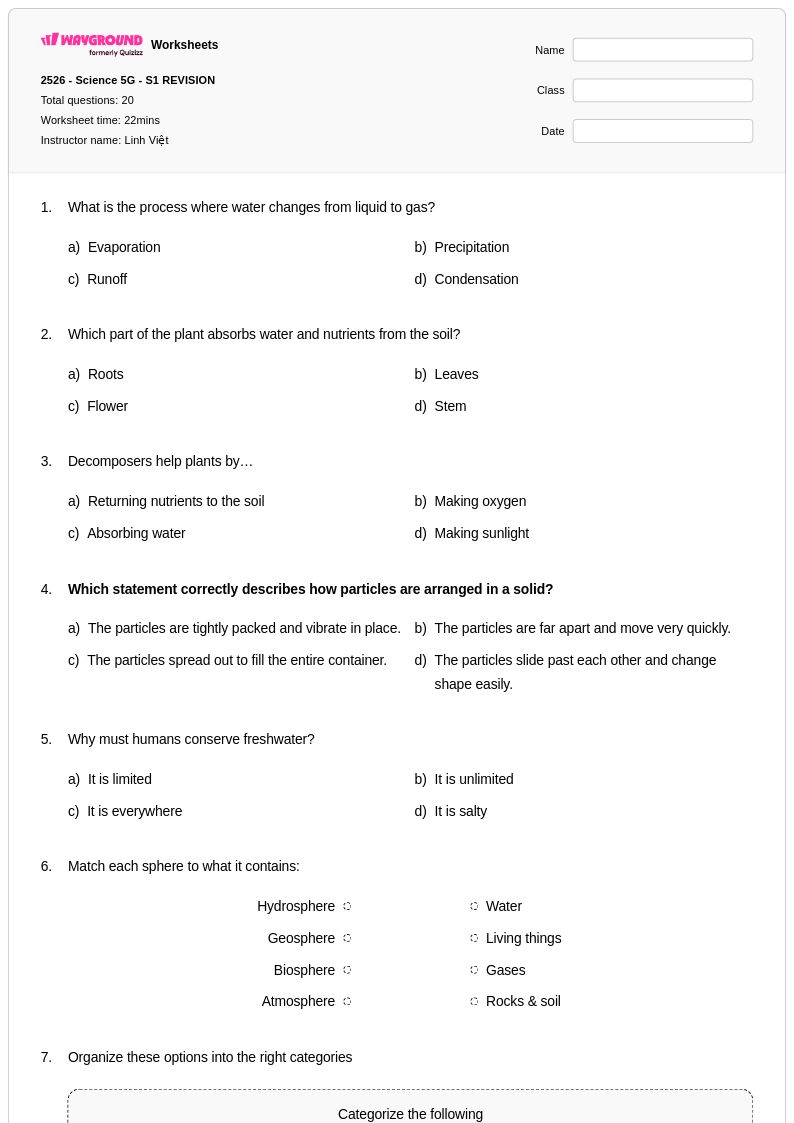
20 Q
1st - 5th
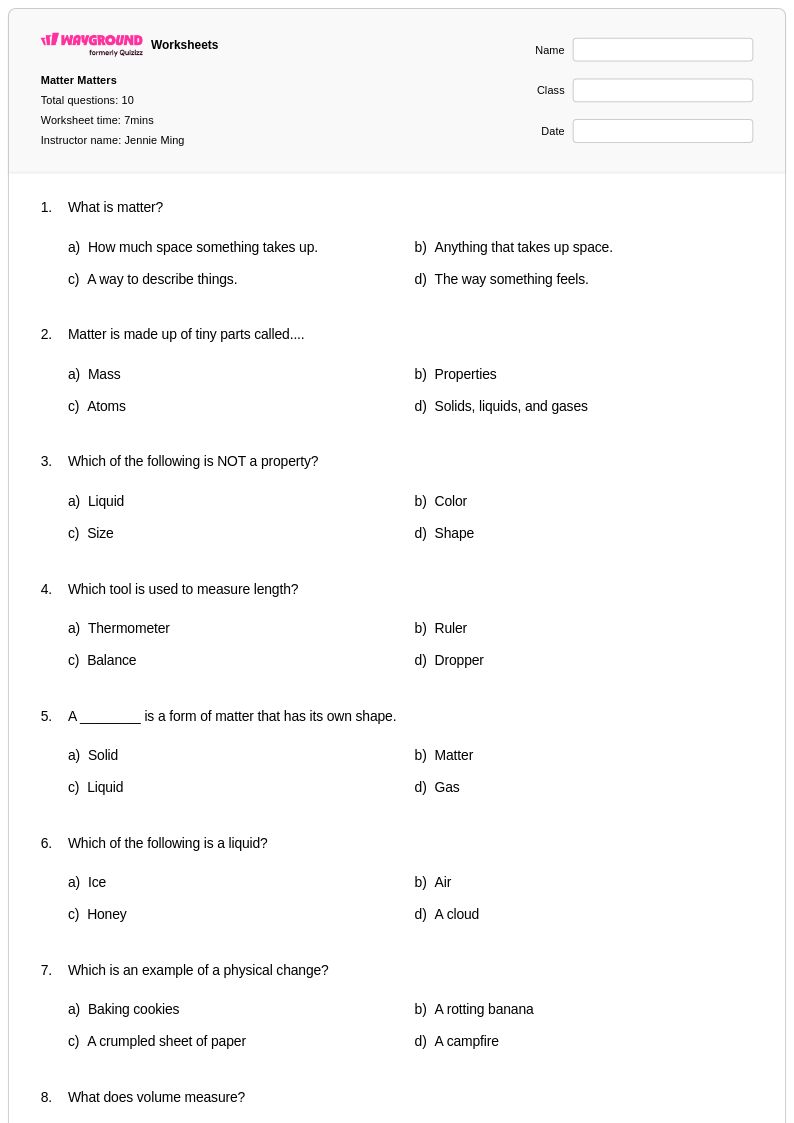
10 Q
1st - 3rd
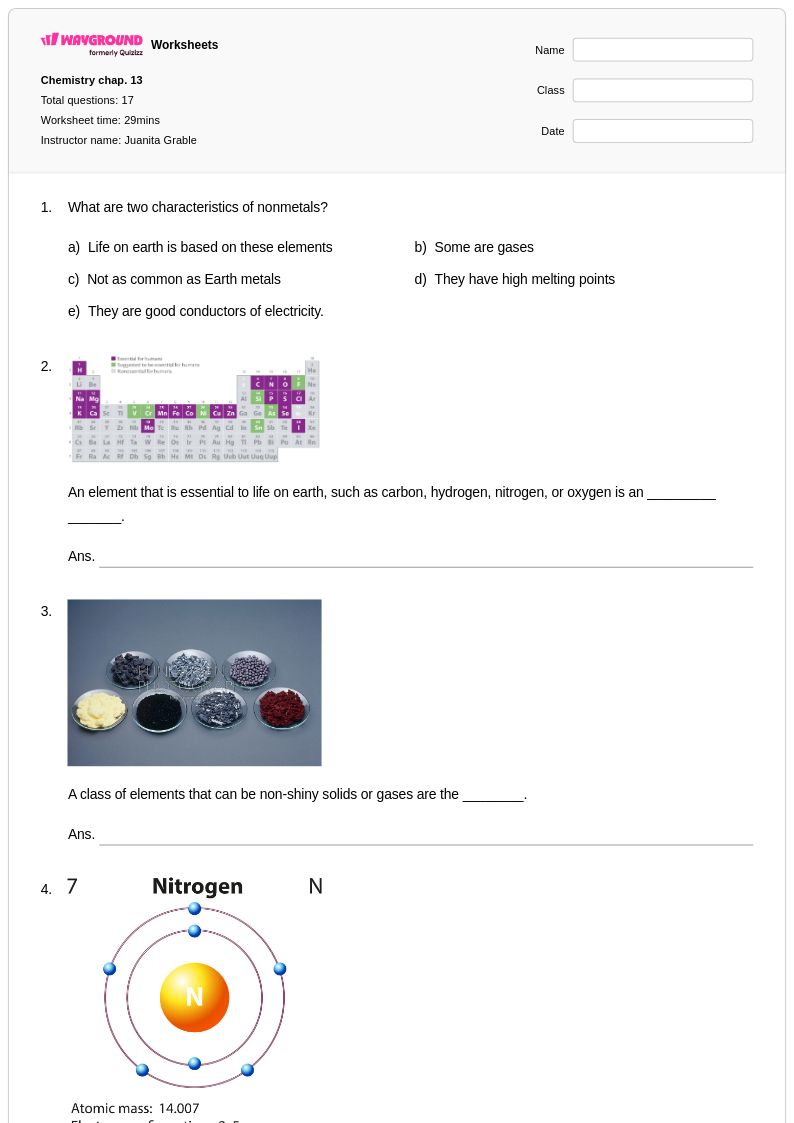
17 Q
1st - 5th
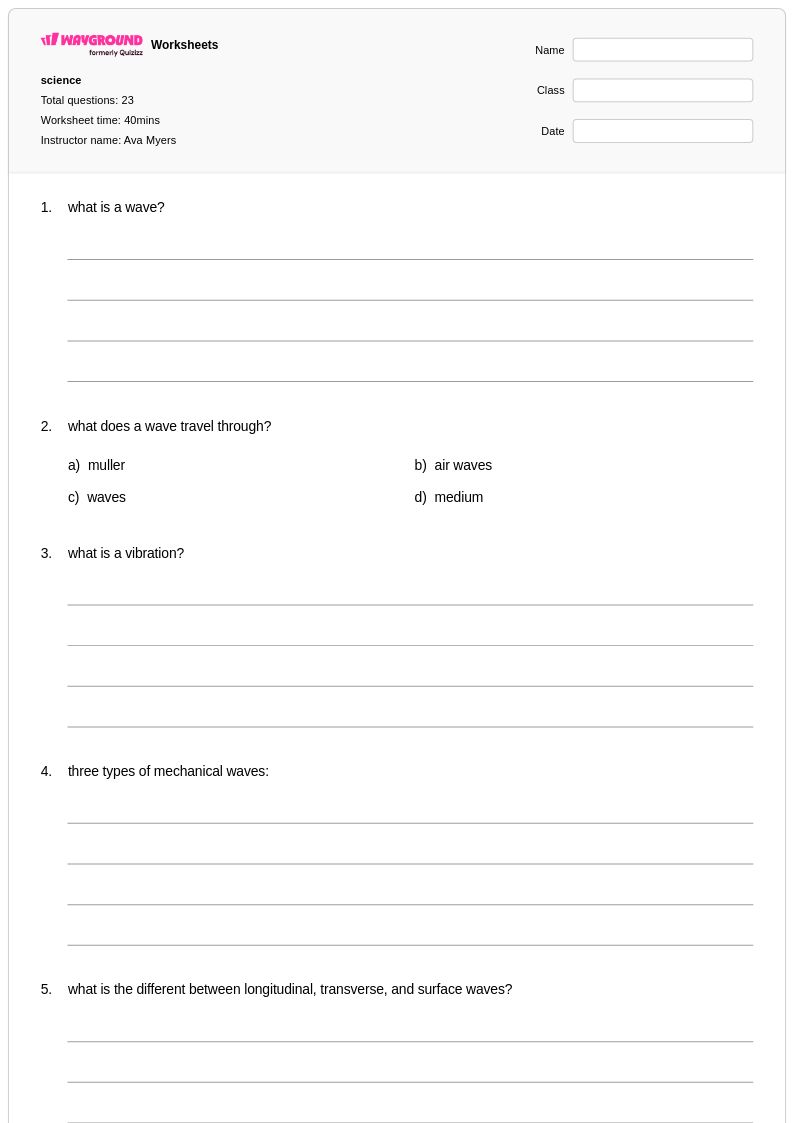
23 Q
1st - 5th
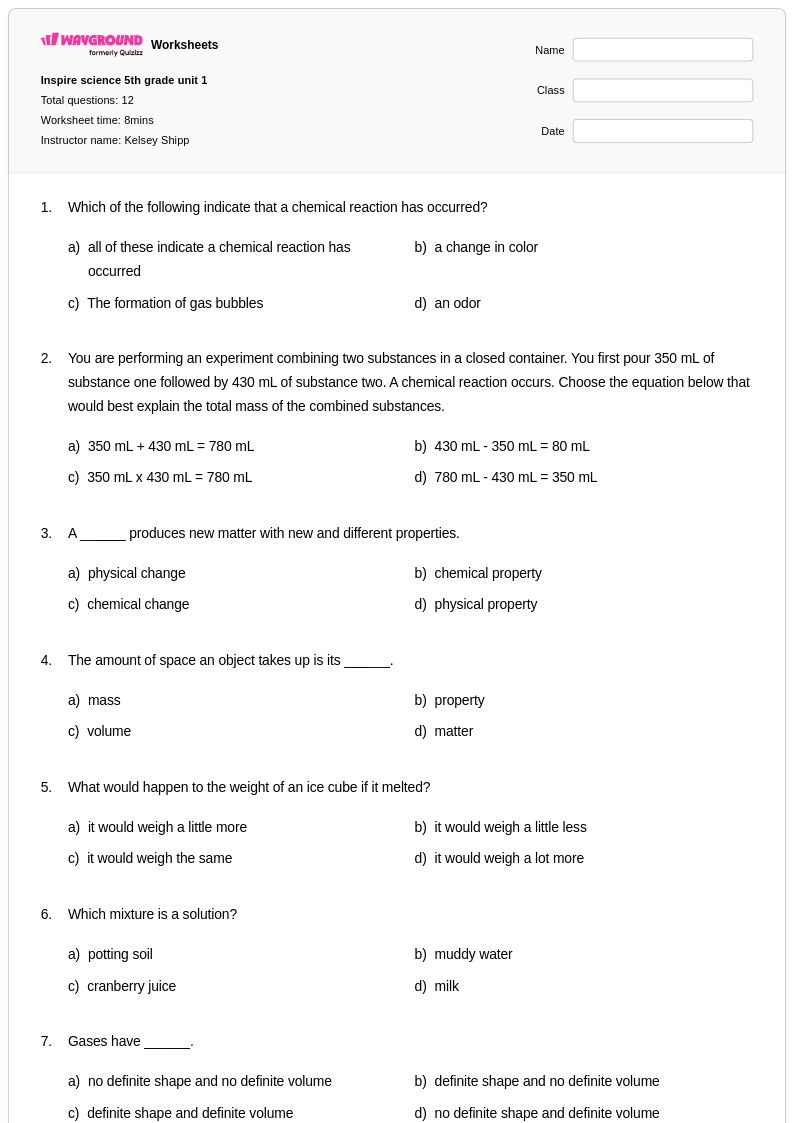
12 Q
1st - 5th
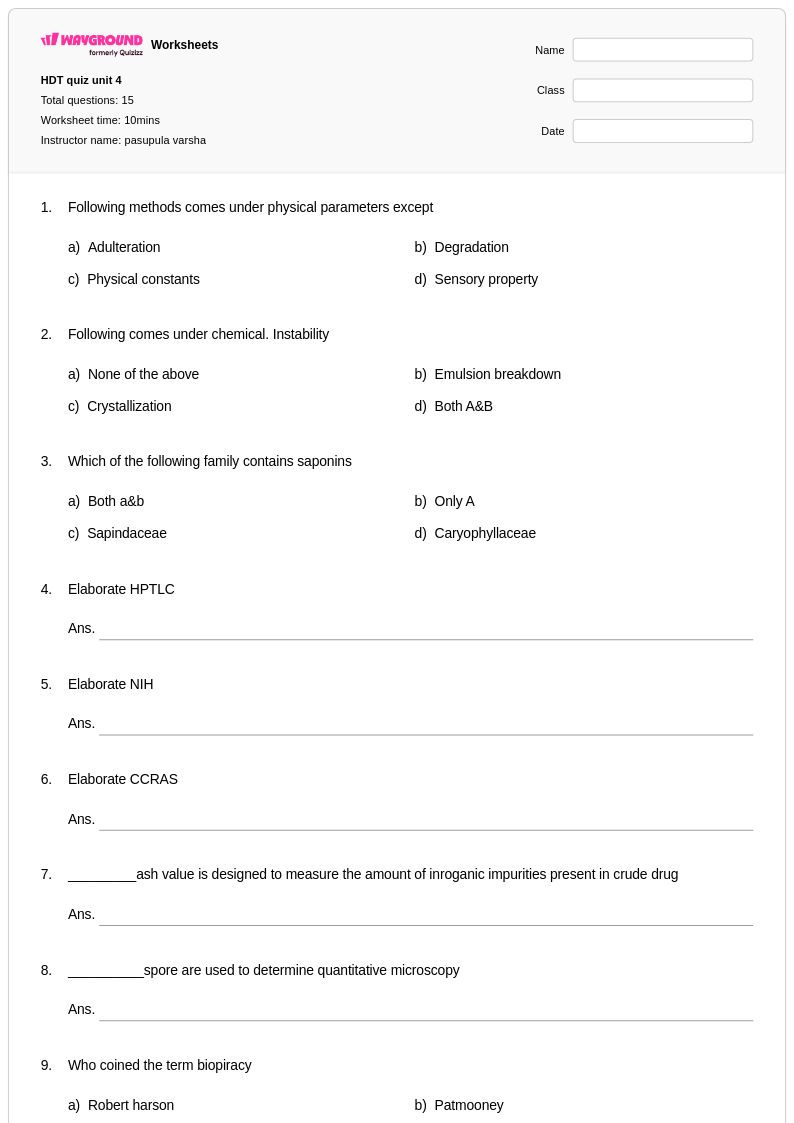
15 Q
1st - 12th
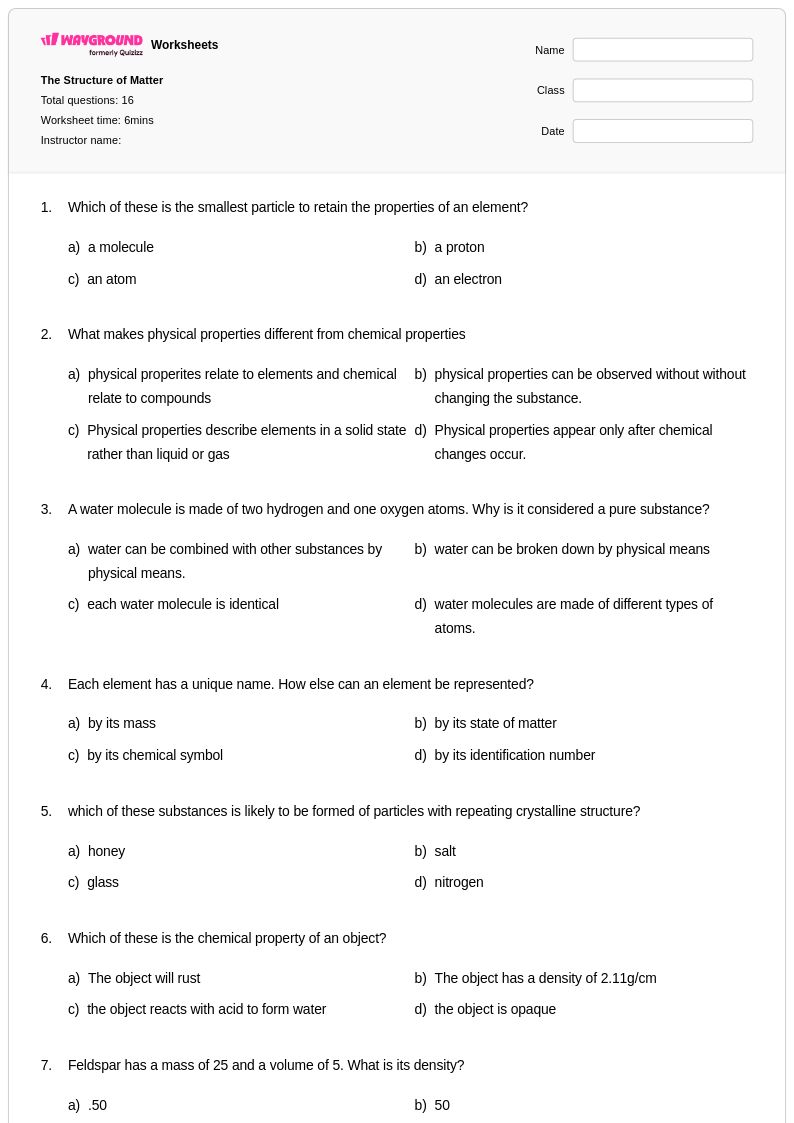
16 Q
1st - 8th
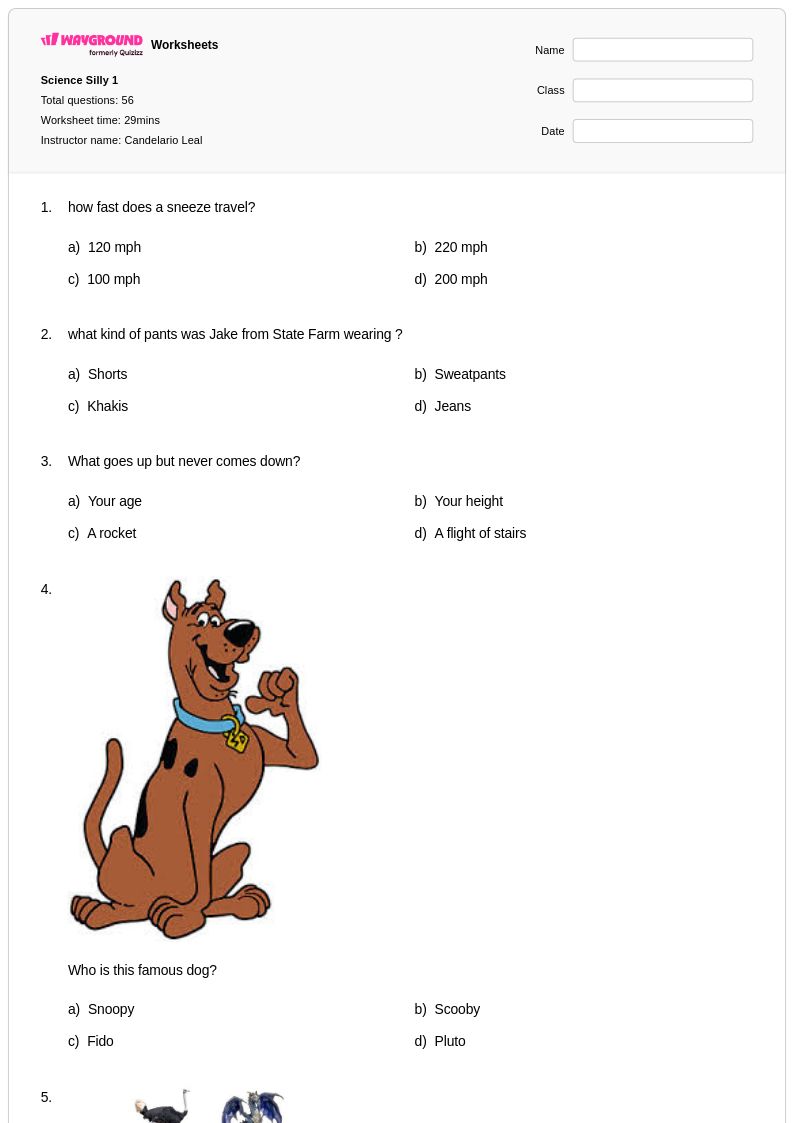
56 Q
1st - 5th
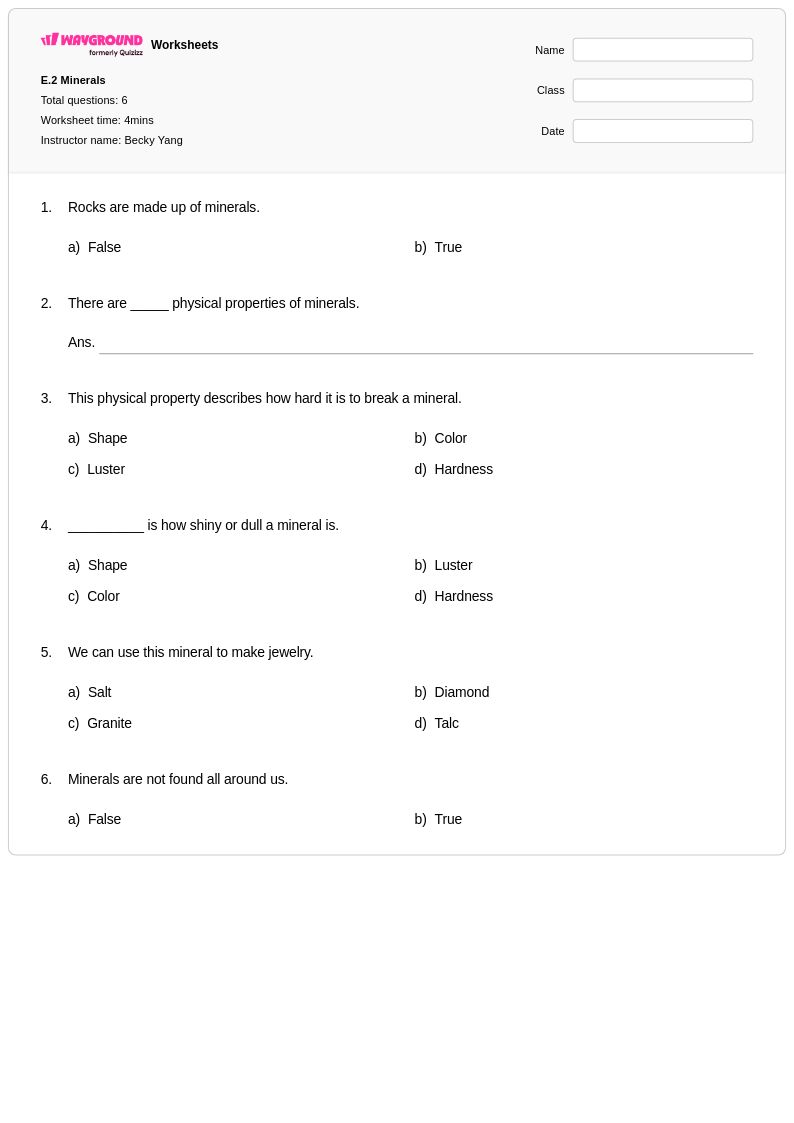
6 Q
1st
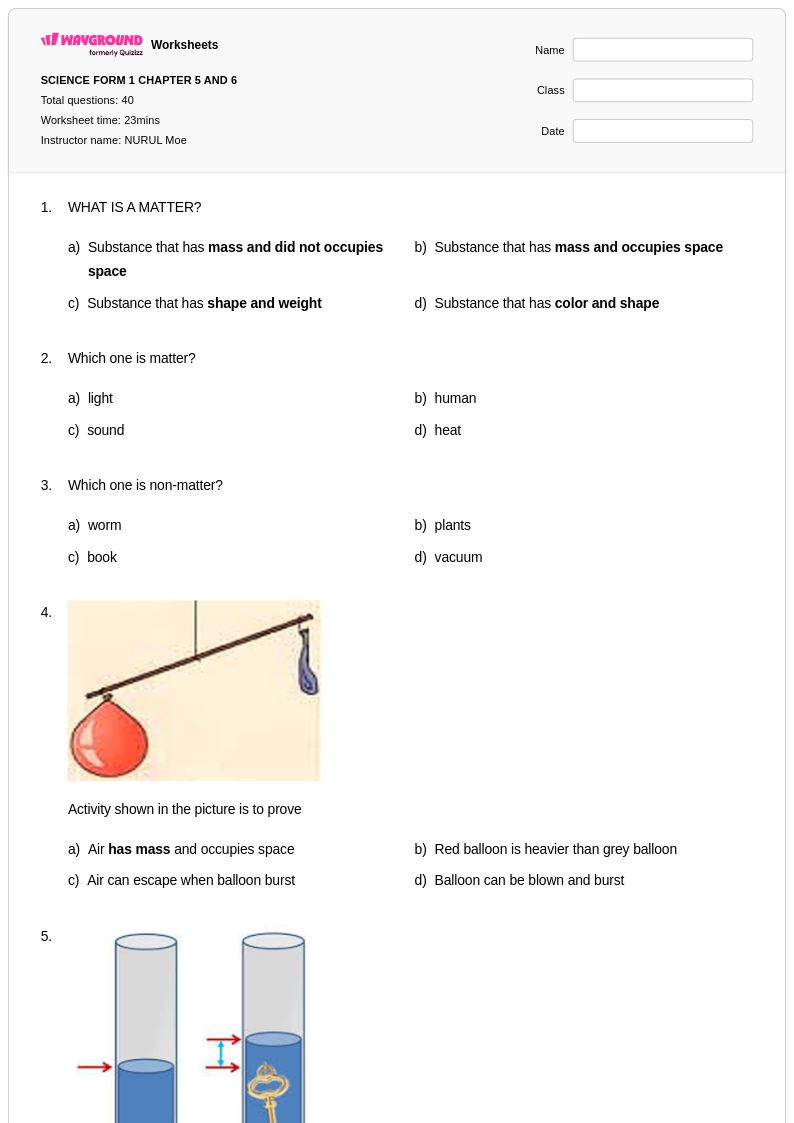
40 Q
1st
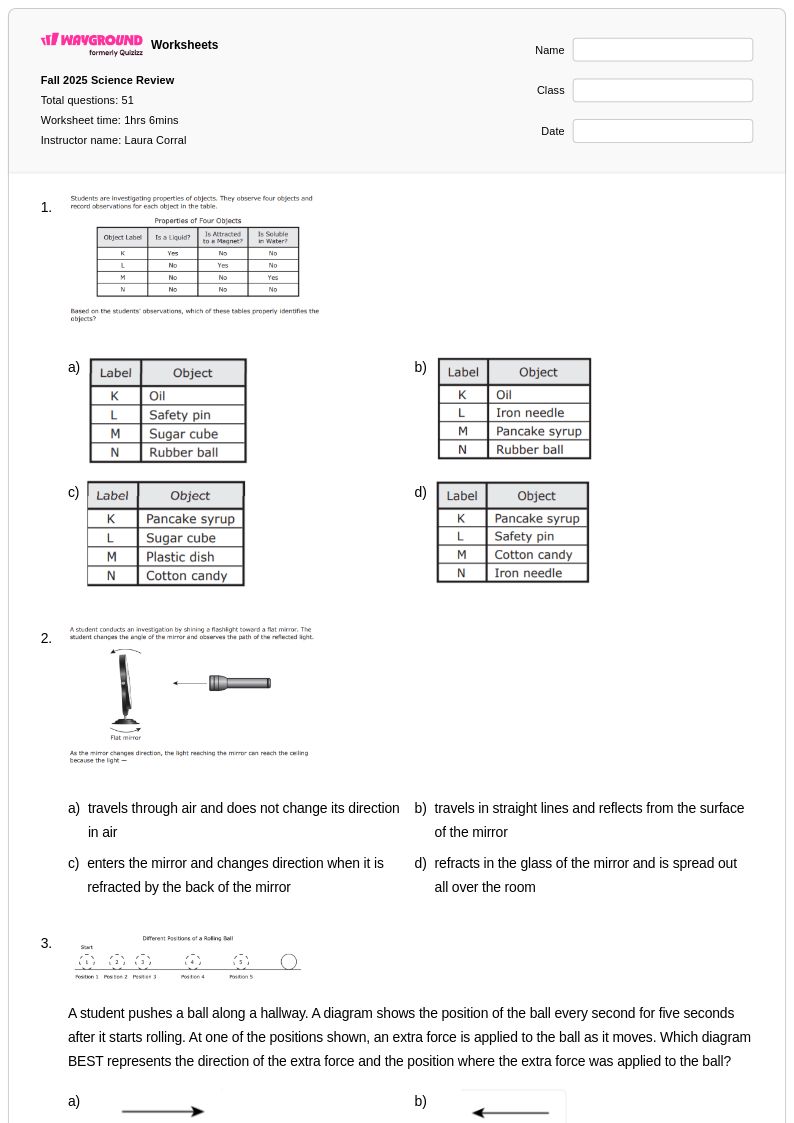
51 Q
1st - 5th
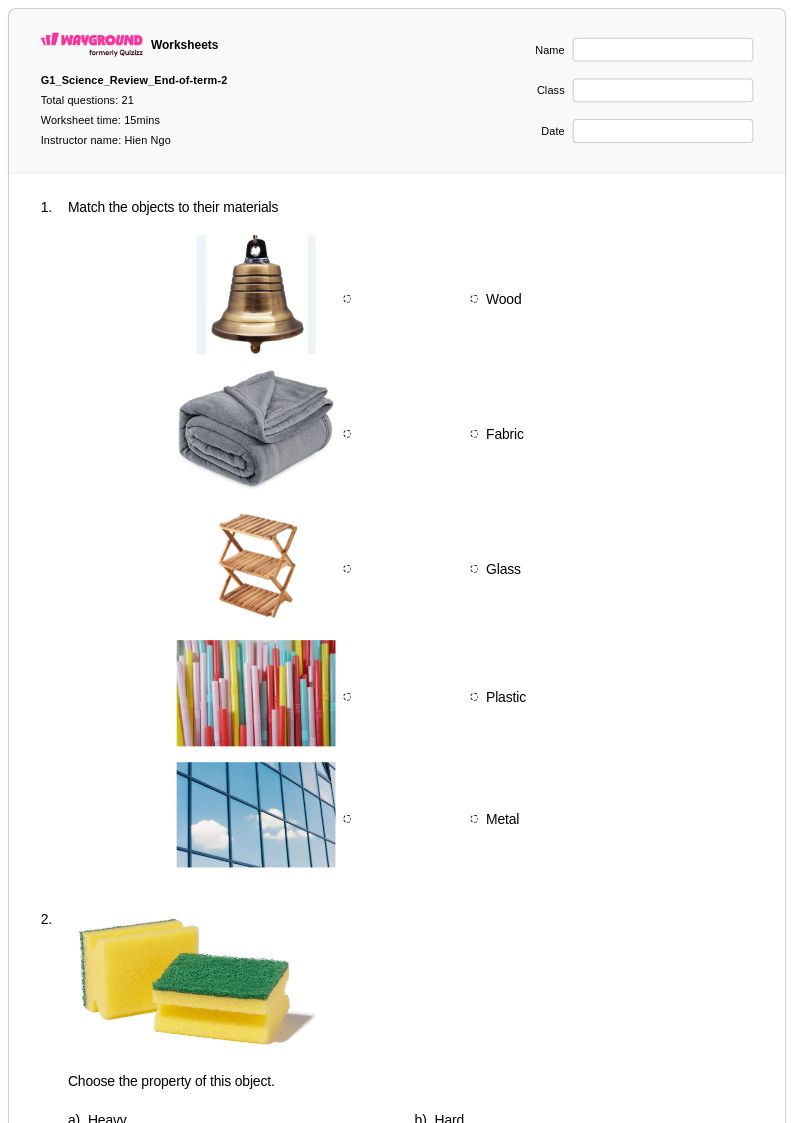
21 Q
1st
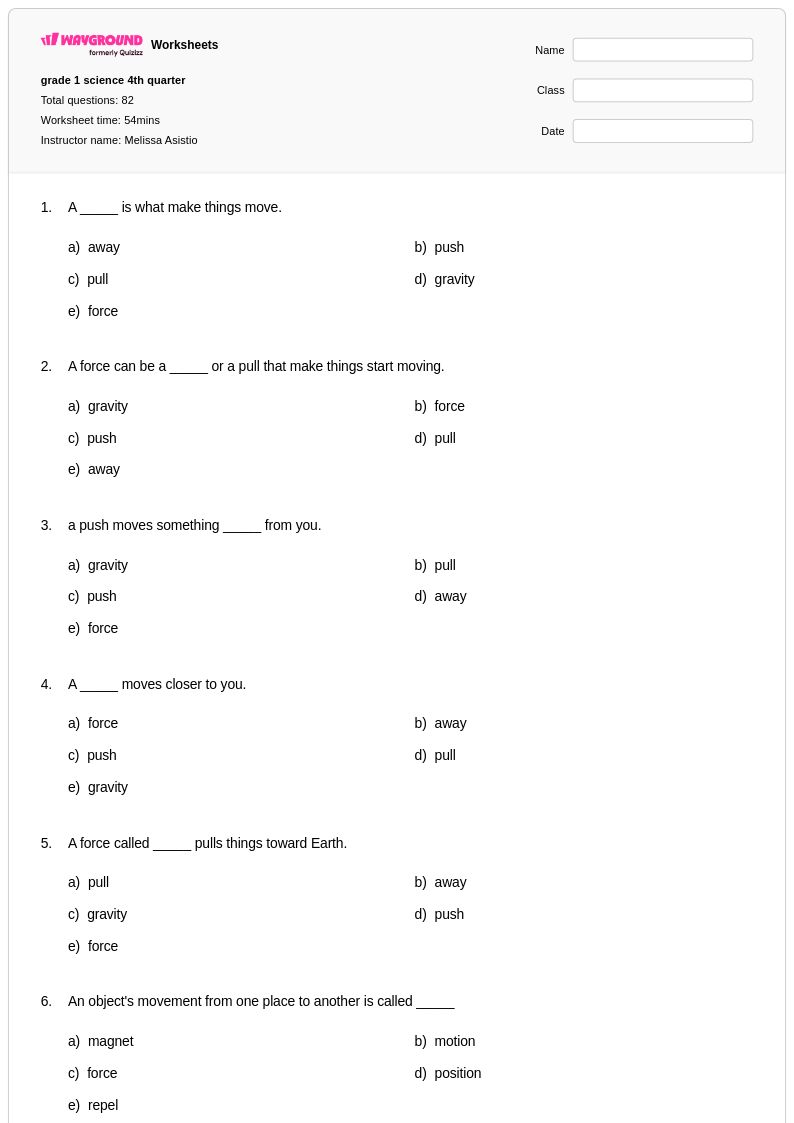
82 Q
1st
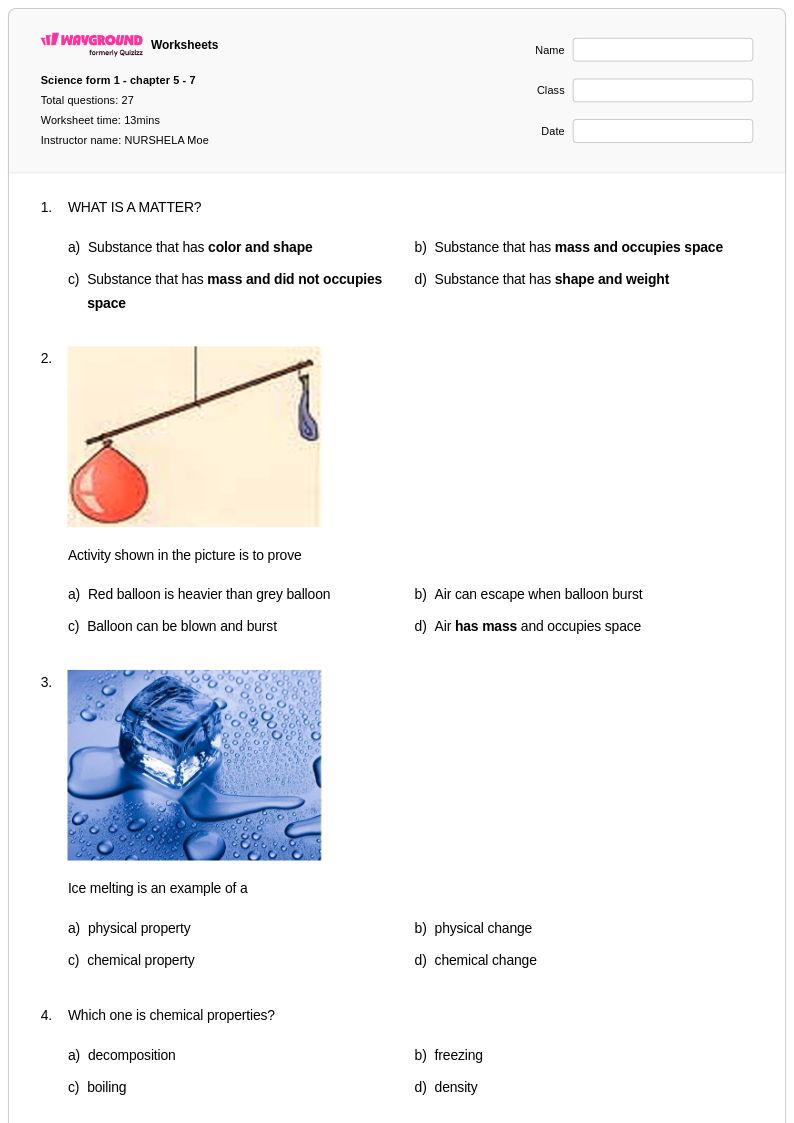
27 Q
1st
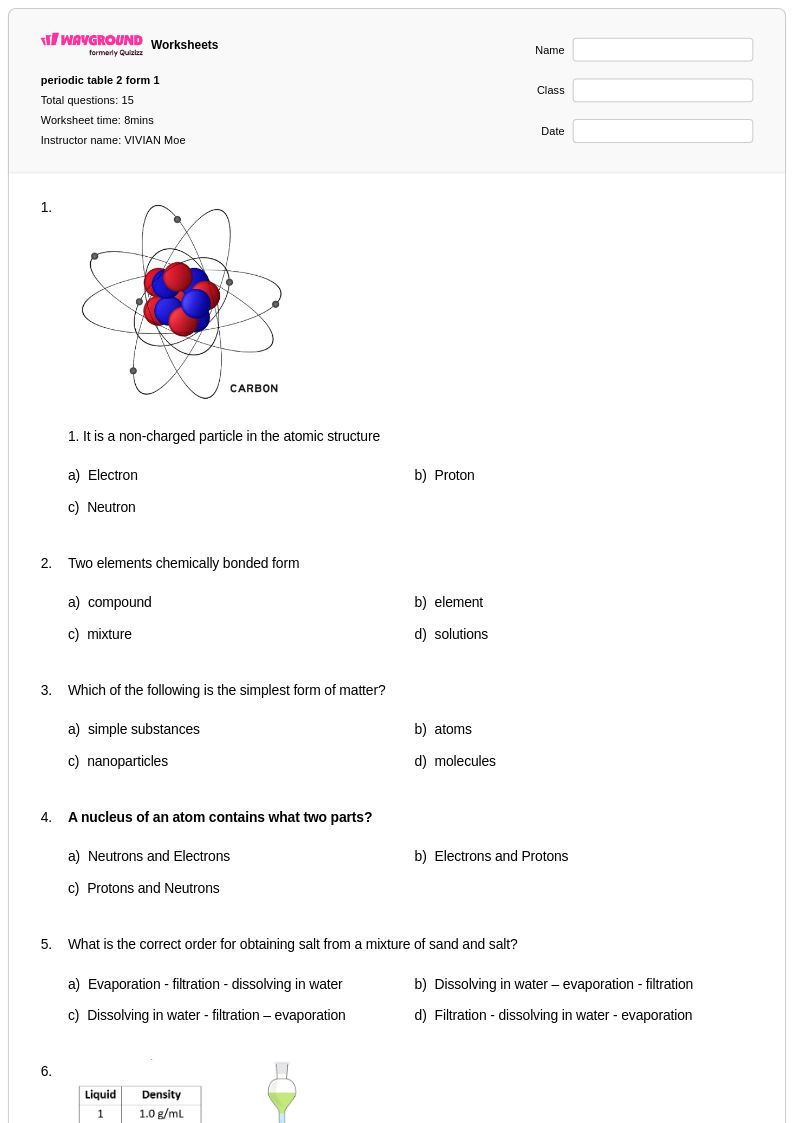
15 Q
1st
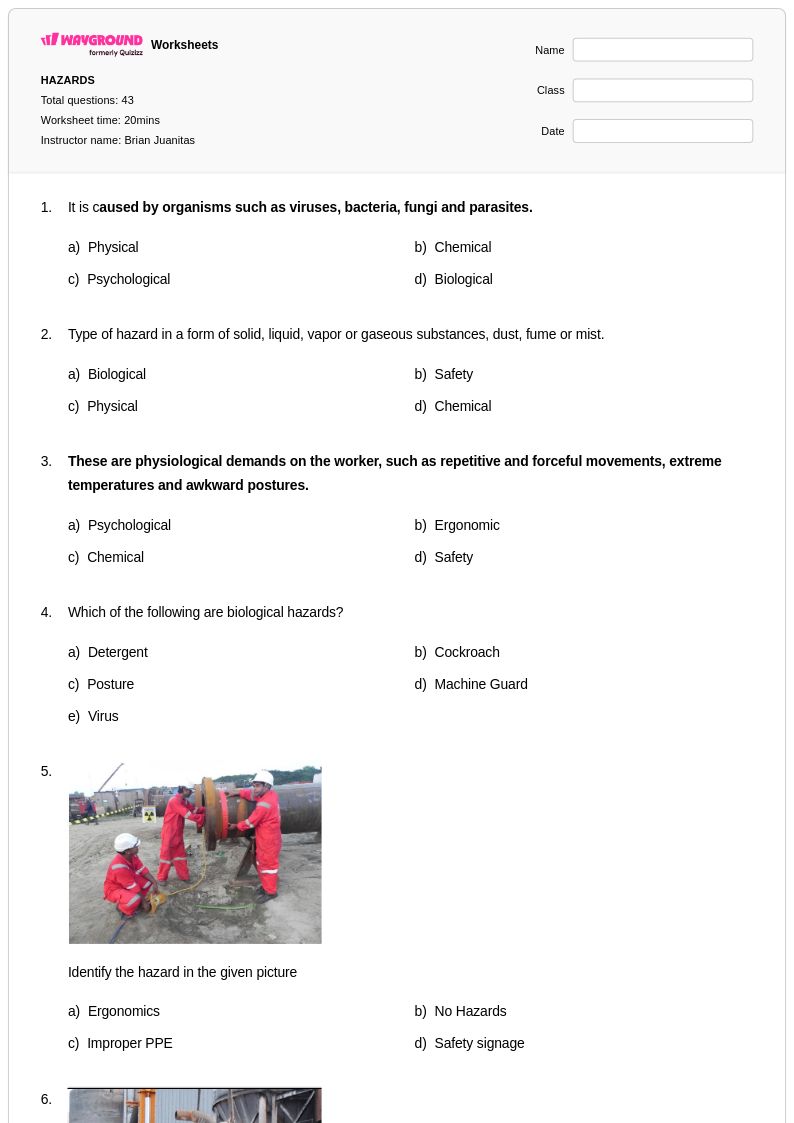
43 Q
1st
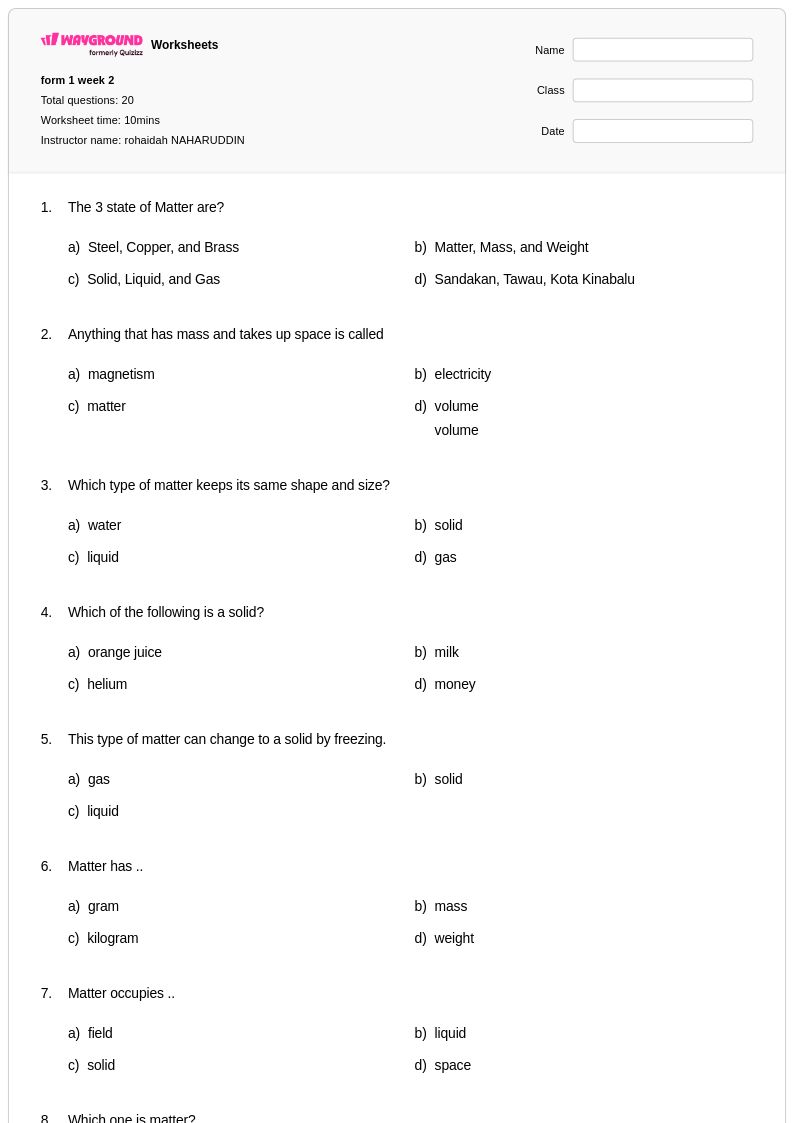
20 Q
1st - 2nd
Explore Physical Property Worksheets by Grades
Explore Other Subject Worksheets for class 1
Explore printable Physical Property worksheets for Class 1
Physical property worksheets for Class 1 students available through Wayground (formerly Quizizz) introduce young learners to the fundamental concept of observable characteristics that can be used to describe and classify materials. These carefully designed printables focus on helping first-grade students identify basic physical properties such as color, shape, size, texture, and hardness through engaging activities and practice problems. The worksheets strengthen essential scientific observation skills while building vocabulary related to material characteristics, with each resource including a comprehensive answer key to support accurate assessment. These free educational materials provide structured opportunities for students to explore how objects can be described using their senses, laying crucial groundwork for more advanced scientific concepts in later grades.
Wayground's extensive collection of physical property worksheets draws from millions of teacher-created resources, ensuring educators have access to diverse, high-quality materials that align with Class 1 science standards. The platform's robust search and filtering capabilities allow teachers to quickly locate worksheets that match their specific instructional needs, whether for initial concept introduction, skill practice, or assessment purposes. These resources are available in both printable pdf formats and interactive digital versions, providing flexibility for various classroom environments and learning preferences. The differentiation tools and customization options enable educators to modify content difficulty and presentation style, making these worksheets invaluable for remediation support, enrichment activities, and targeted skill development that accommodates the diverse learning needs present in early elementary science education.
FAQs
How do I teach physical properties of matter to students?
What exercises help students practice identifying physical properties?
What mistakes do students commonly make when learning about physical properties?
How do I differentiate physical property instruction for students at different ability levels?
How can I use Wayground's physical property worksheets in my classroom?