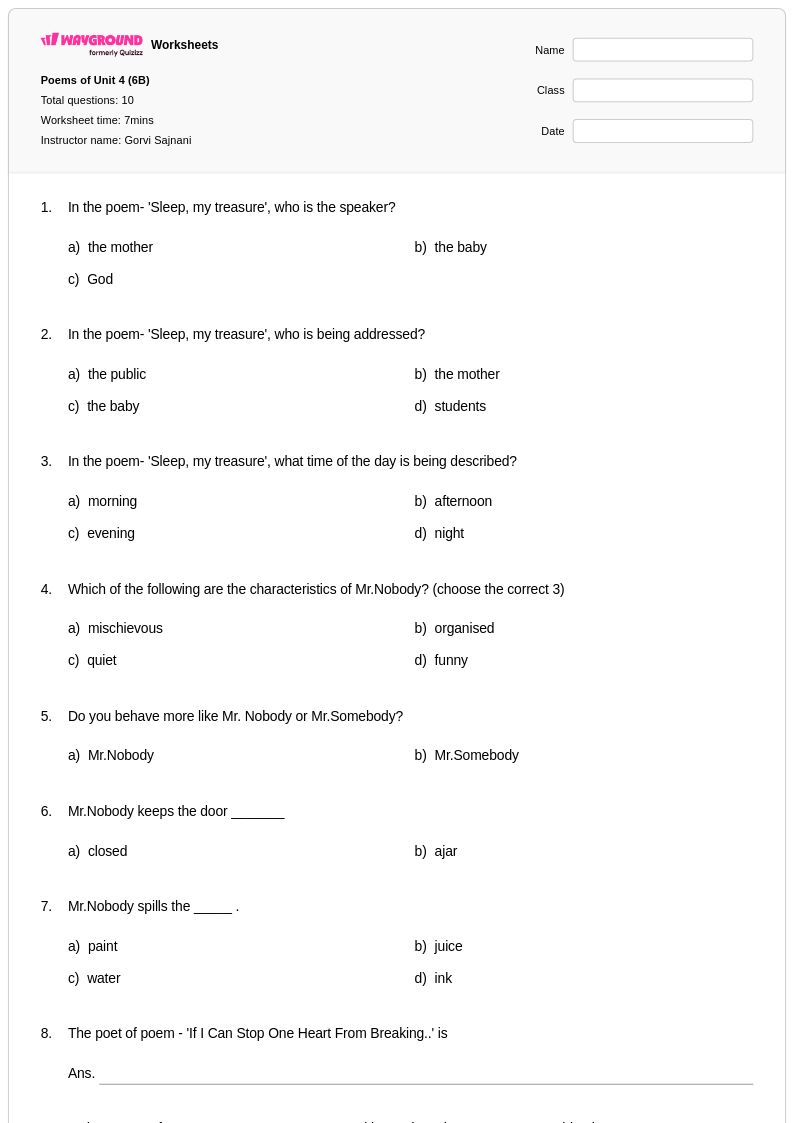
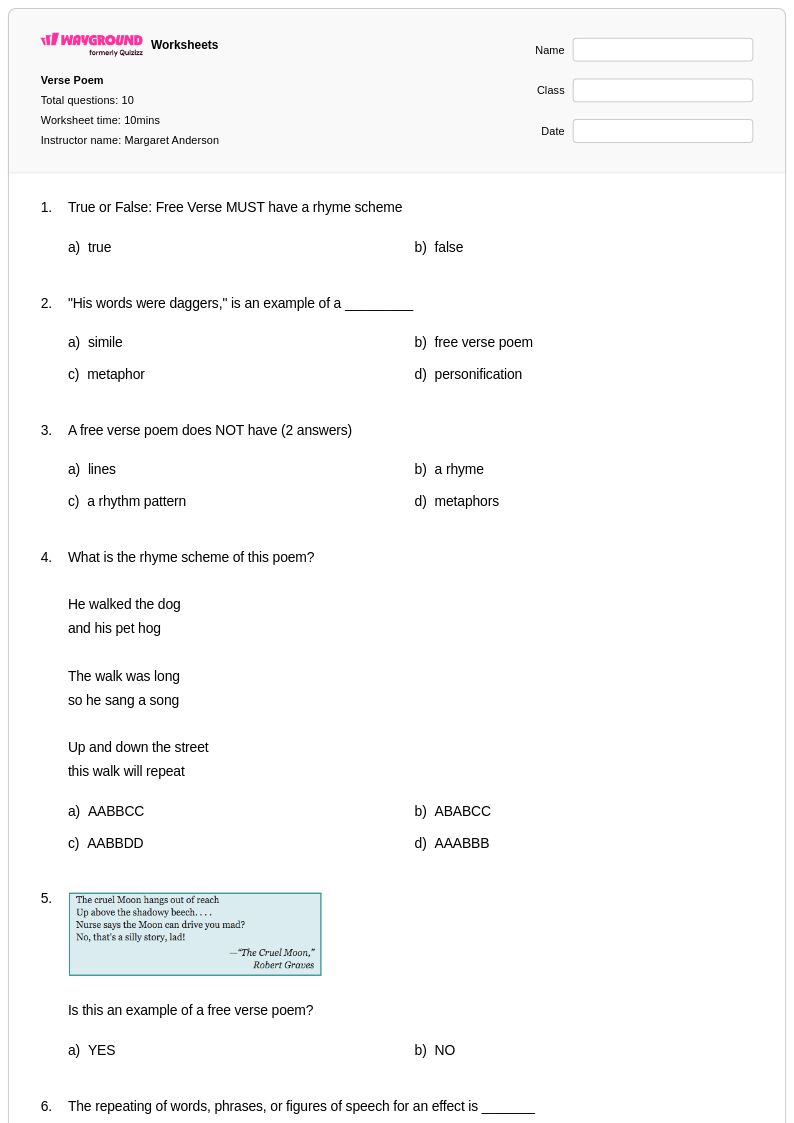
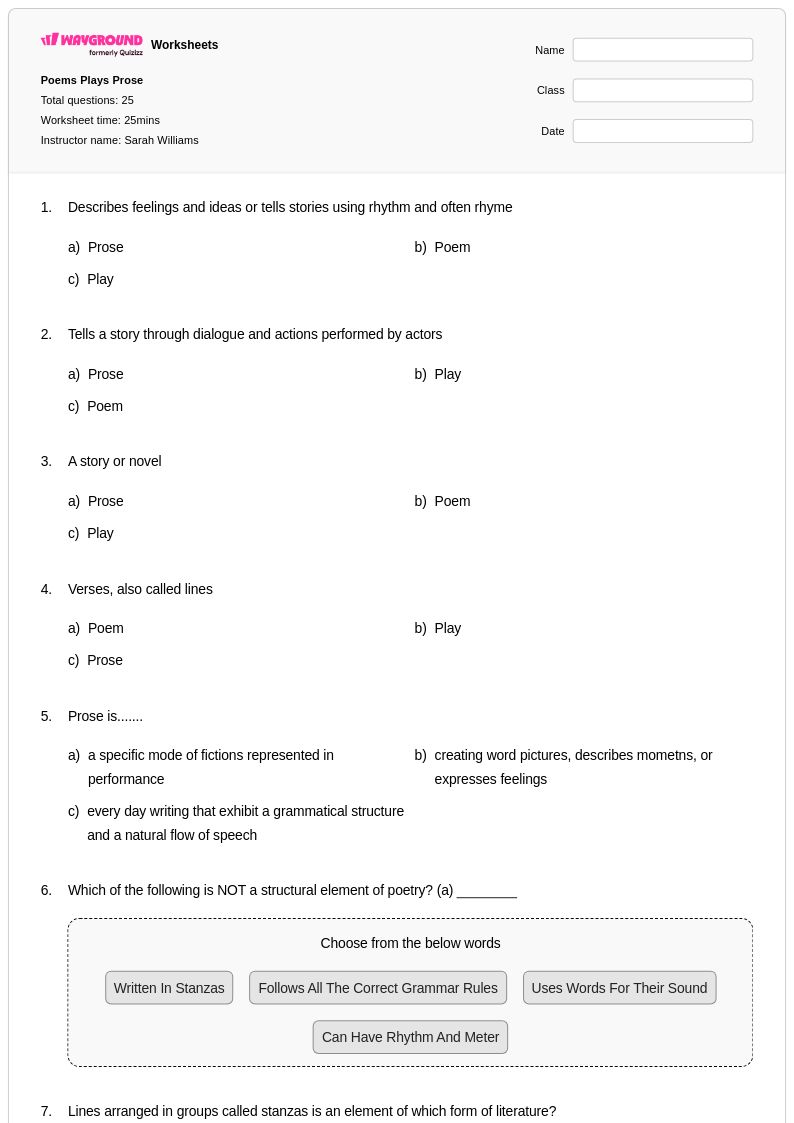
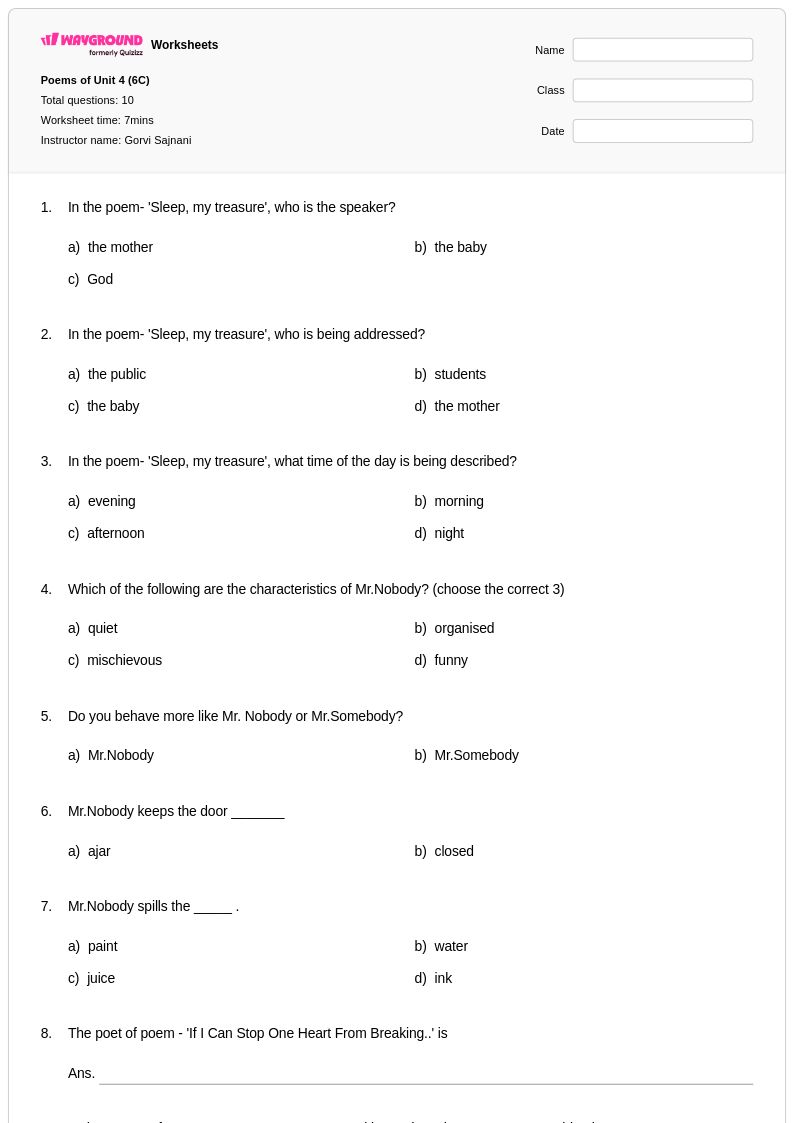
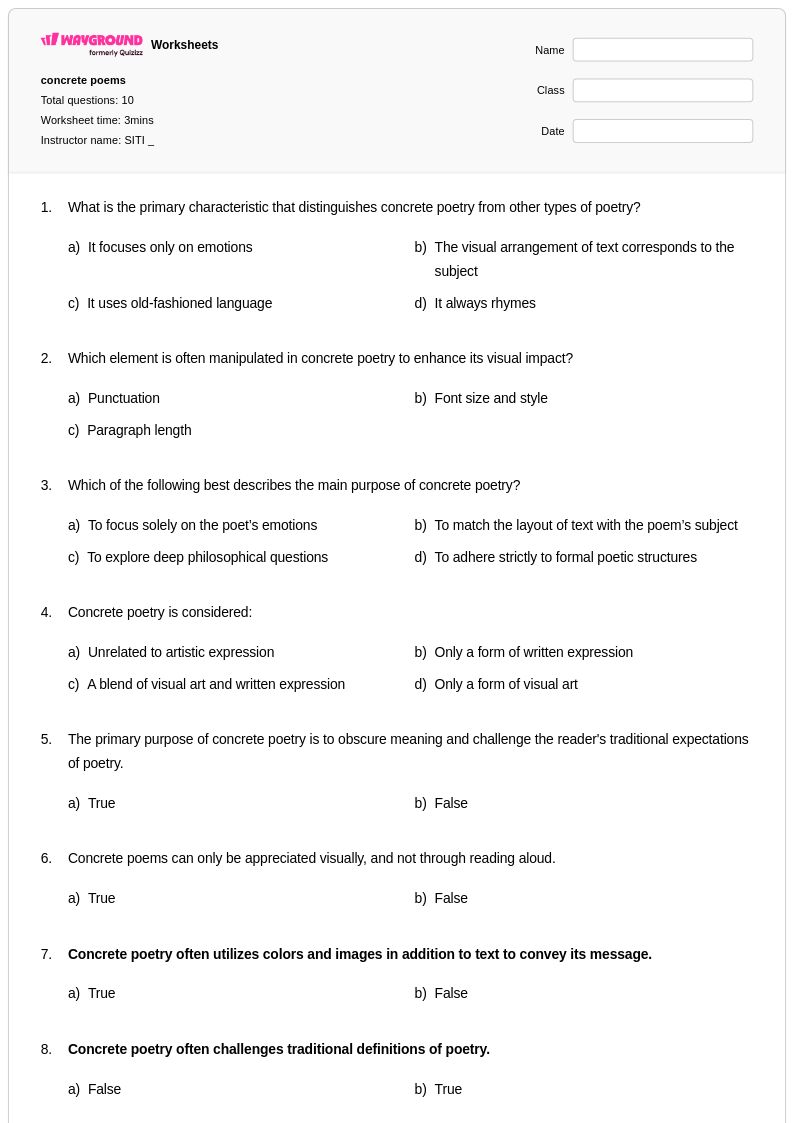
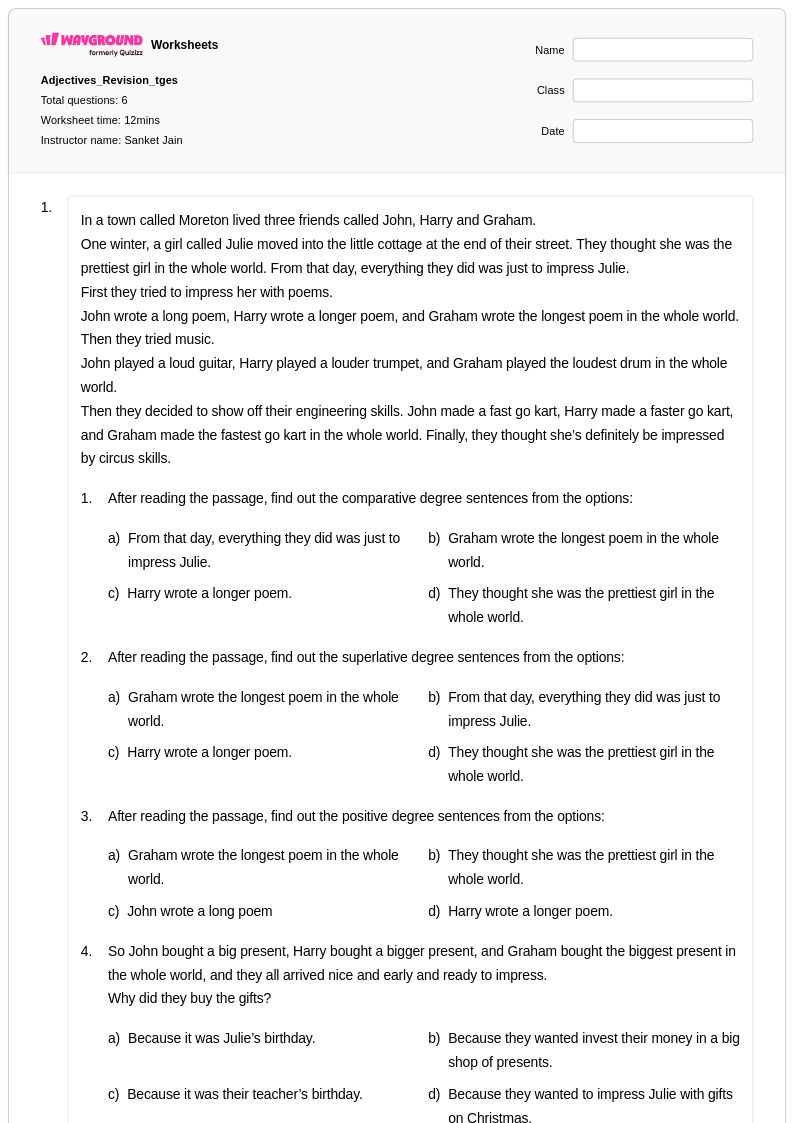
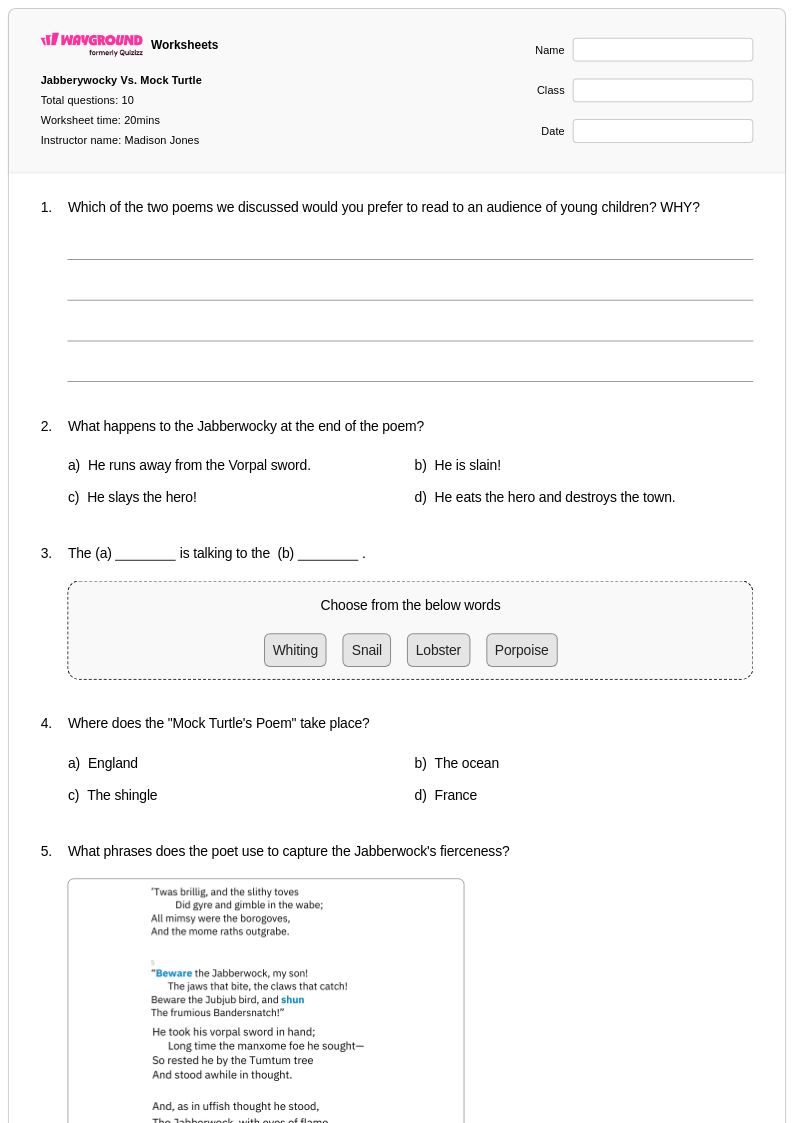
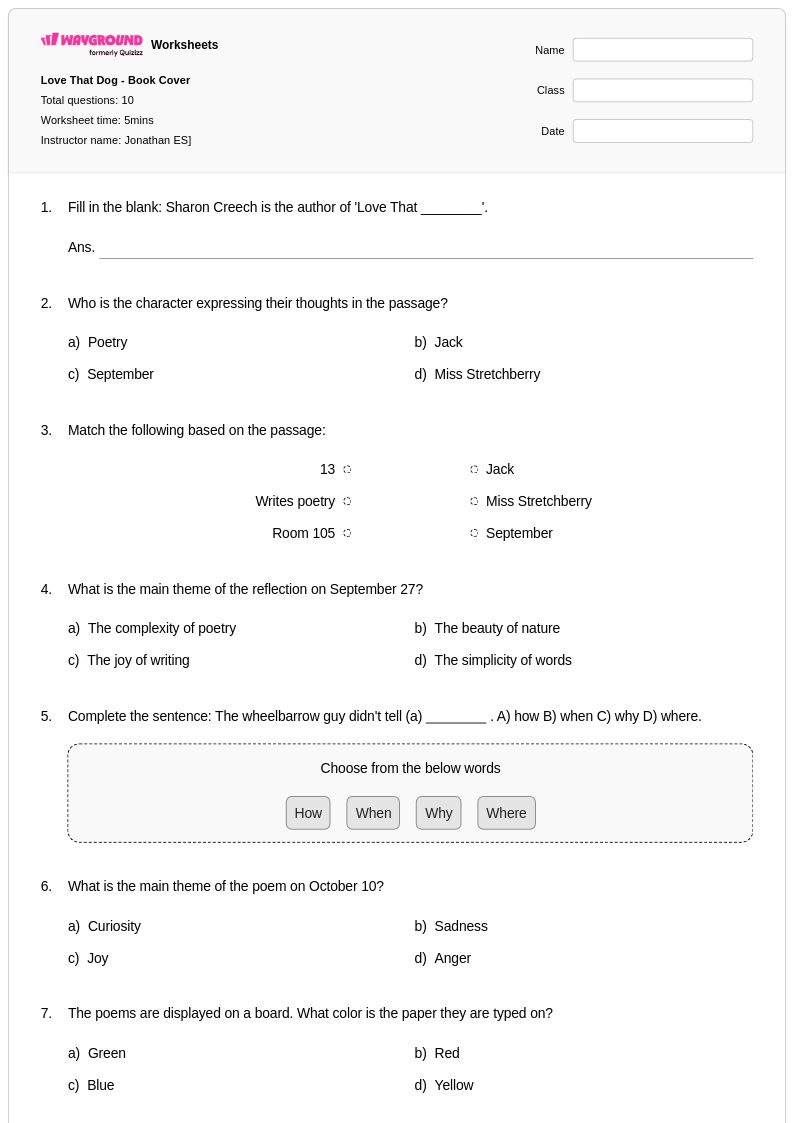
Class 6 poems worksheets and printables help students explore poetic forms, literary devices, and analysis skills through engaging practice problems with comprehensive answer keys available as free PDF downloads.
Class 6 poetry worksheets available through Wayground (formerly Quizizz) provide comprehensive practice for students developing critical reading and analysis skills across various poetic forms and literary devices. These carefully designed resources help sixth-grade learners identify and understand different types of poems, including narrative, lyric, and free verse, while strengthening their ability to recognize poetic elements such as rhyme scheme, meter, imagery, and figurative language. Students work through structured practice problems that guide them to analyze tone, mood, and theme in age-appropriate poetry selections, with answer keys ensuring accurate self-assessment and independent learning. The printable worksheets offer systematic skill-building opportunities that align with middle school English language arts objectives, helping students develop the foundational poetry analysis skills essential for advanced literary study.
Wayground (formerly Quizizz) empowers educators with an extensive collection of millions of teacher-created poetry worksheets specifically designed for Class 6 students, featuring robust search and filtering capabilities that allow teachers to locate resources by specific poetic forms, literary devices, or skill focus areas. The platform's standards alignment ensures that worksheet selections directly support curriculum requirements, while built-in differentiation tools enable teachers to modify content difficulty and provide appropriate challenge levels for diverse learners. These versatile resources are available in both printable pdf formats and interactive digital versions, offering maximum flexibility for classroom instruction, homework assignments, remediation support, and enrichment activities. Teachers can seamlessly customize existing worksheets or combine multiple resources to create comprehensive poetry units that address individual student needs and promote mastery of essential literary analysis skills.
FAQs
How do I teach students to analyze a poem in the classroom?
Start by having students read the poem aloud before any analysis begins, since hearing the rhythm and sound devices helps ground their understanding. From there, guide them through a structured close-reading process: identify the speaker, examine word choice and figurative language, then work toward theme and meaning. Breaking analysis into discrete steps prevents students from jumping to interpretation before they have engaged with the text's formal features.
What poetic devices should students be able to identify by middle school?
By middle school, students should reliably identify rhyme scheme, meter, alliteration, assonance, metaphor, simile, personification, and imagery. They should also be able to distinguish between structural forms such as sonnets, haikus, and free verse. These devices form the analytical vocabulary students need to move from surface reading to literary interpretation.
What exercises help students practice identifying figurative language in poetry?
Targeted exercises that isolate one device at a time are most effective early on, such as worksheets that ask students to underline all similes in a poem and explain what two things are being compared. As students gain confidence, mixed-device exercises that require them to label and interpret multiple figures of language in a single poem build synthesis skills. Repeated low-stakes practice with diverse poem types helps students recognize devices across different tones and genres.
What mistakes do students commonly make when analyzing poetry?
The most common error is paraphrasing the poem rather than analyzing it, restating what happens instead of examining how language creates meaning. Students also frequently confuse tone with theme, or identify a device correctly but fail to explain its effect on the reader. Teaching students to always follow an identification with an explanation of purpose helps correct both patterns.
How can I use poems worksheets to support students at different reading levels?
Differentiated poetry worksheets allow teachers to assign accessible poem selections to developing readers while giving more complex texts to advanced students, all within the same lesson framework. On Wayground, teachers can apply individual accommodations such as read aloud support and reduced answer choices for students who need them, without signaling differences to the rest of the class. This makes it practical to run a whole-class poetry unit while still meeting varied comprehension levels.
How do I use Wayground's poems worksheets in my classroom?
Wayground's poems worksheets are available as printable PDFs, making them easy to distribute for in-class practice, homework, or assessment prep in traditional classroom settings. They are also available in digital formats for technology-integrated environments, and teachers can host any worksheet as a live quiz directly on Wayground. Each worksheet includes a complete answer key, so grading and self-assessment are built in from the start.