Class 7 Portuguese worksheets and printables help students practice essential language skills through engaging exercises, free PDF downloads, and comprehensive answer keys for effective learning.
Explore printable Portuguese worksheets for Class 7
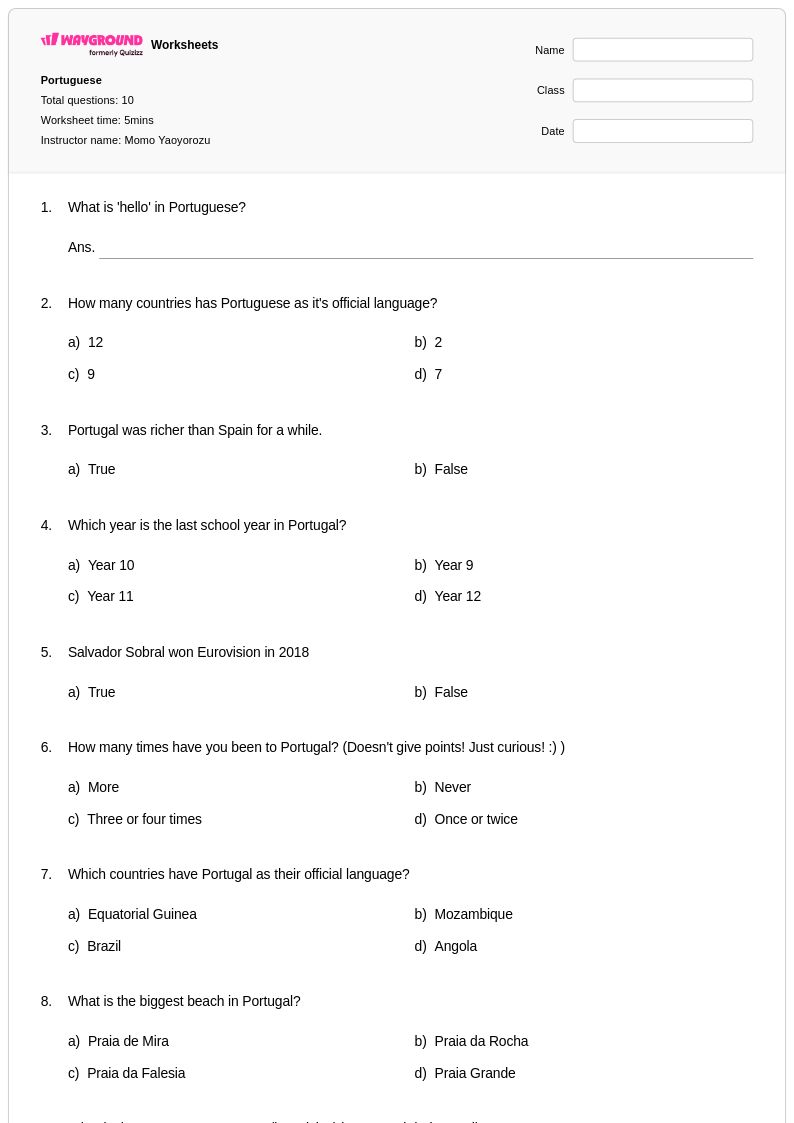
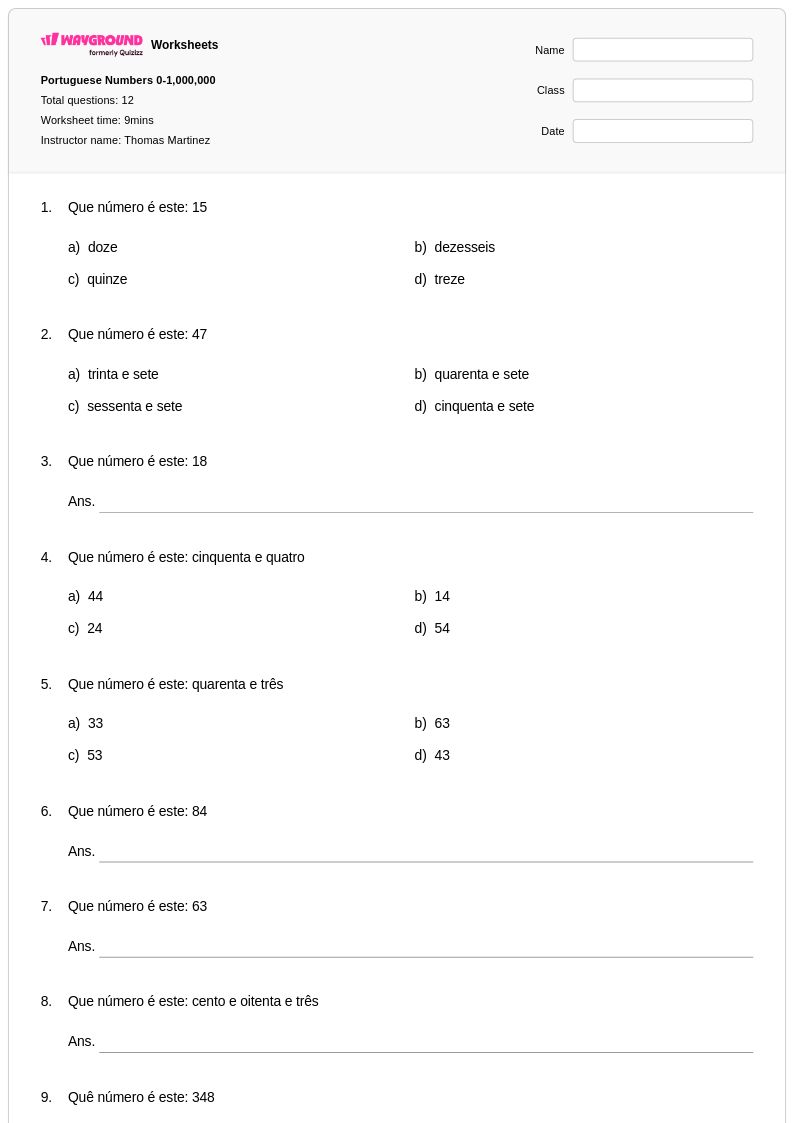
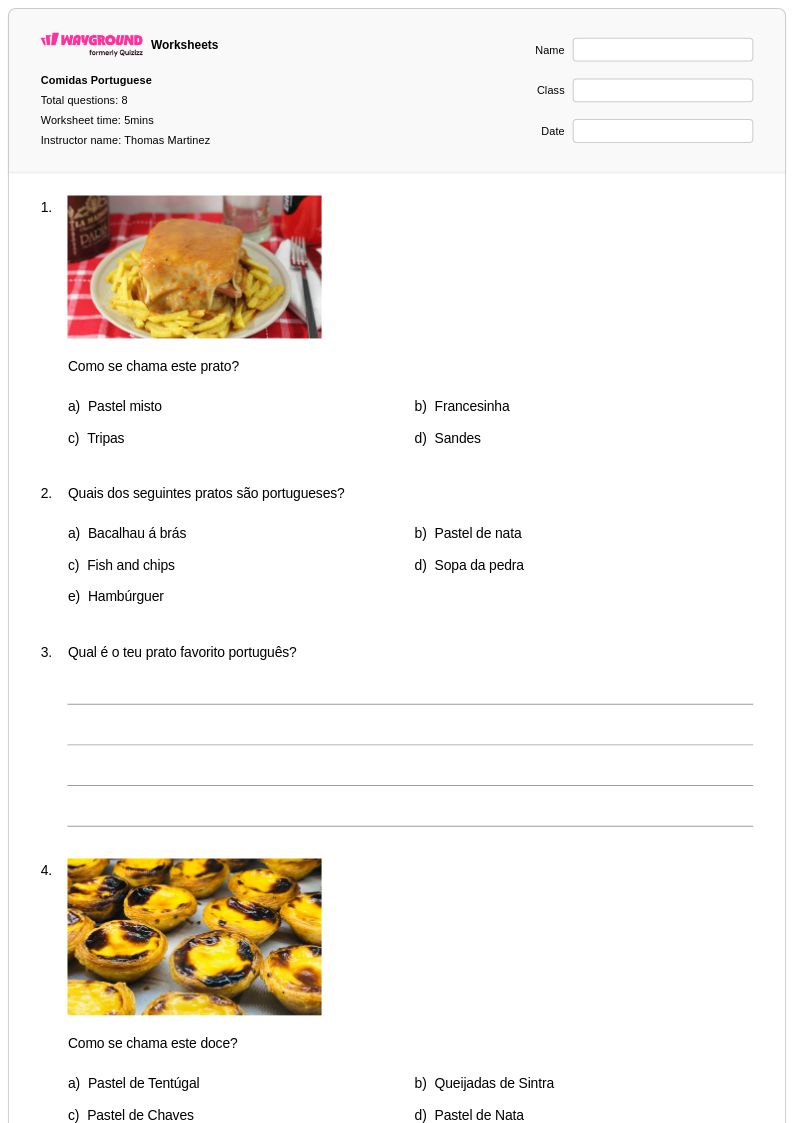
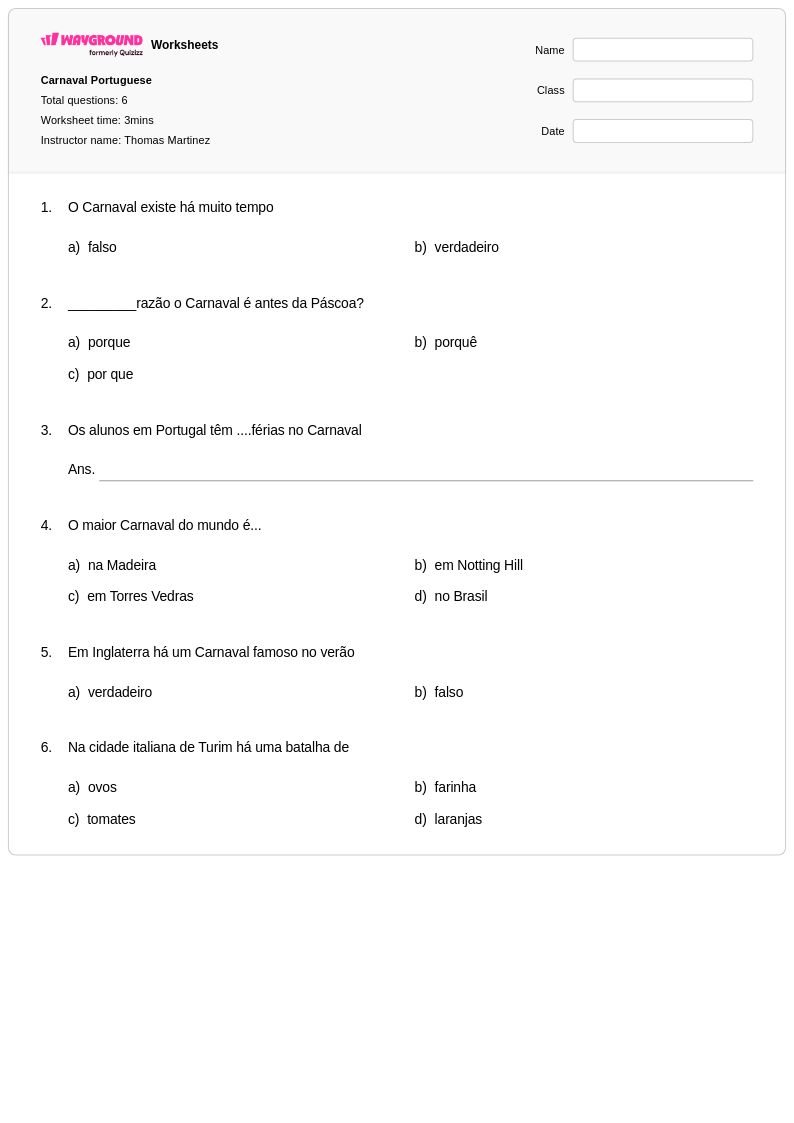
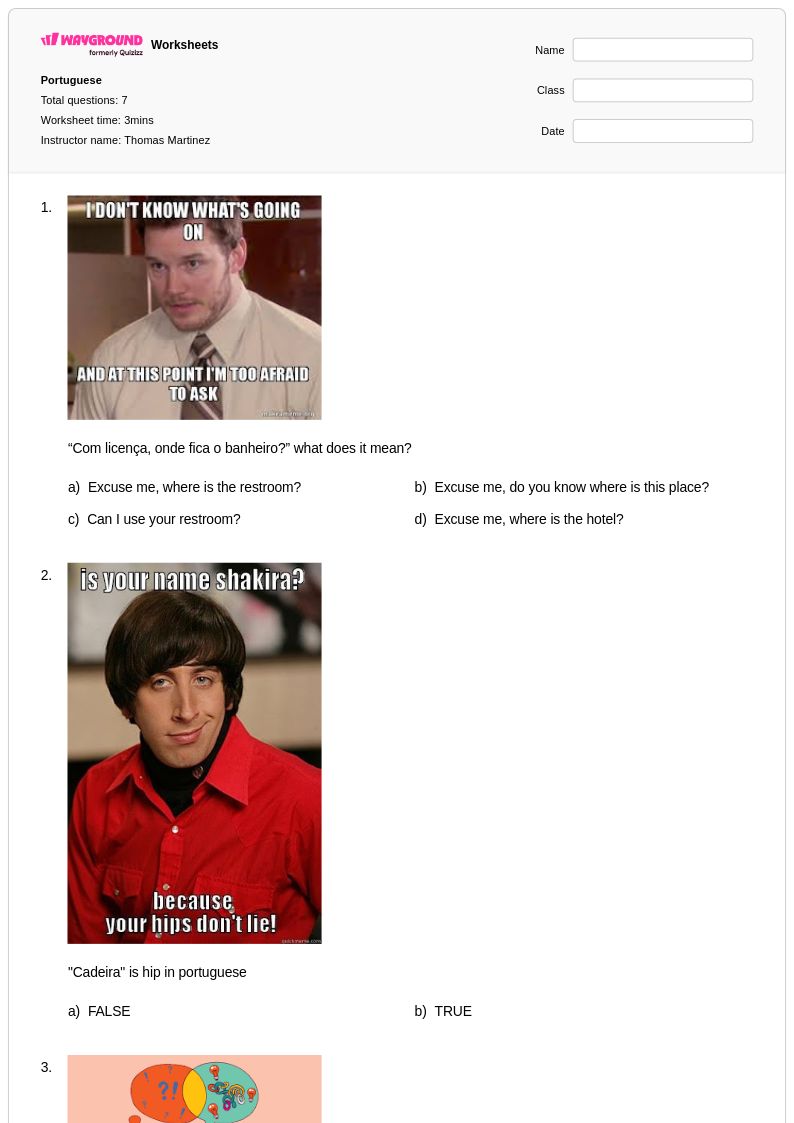
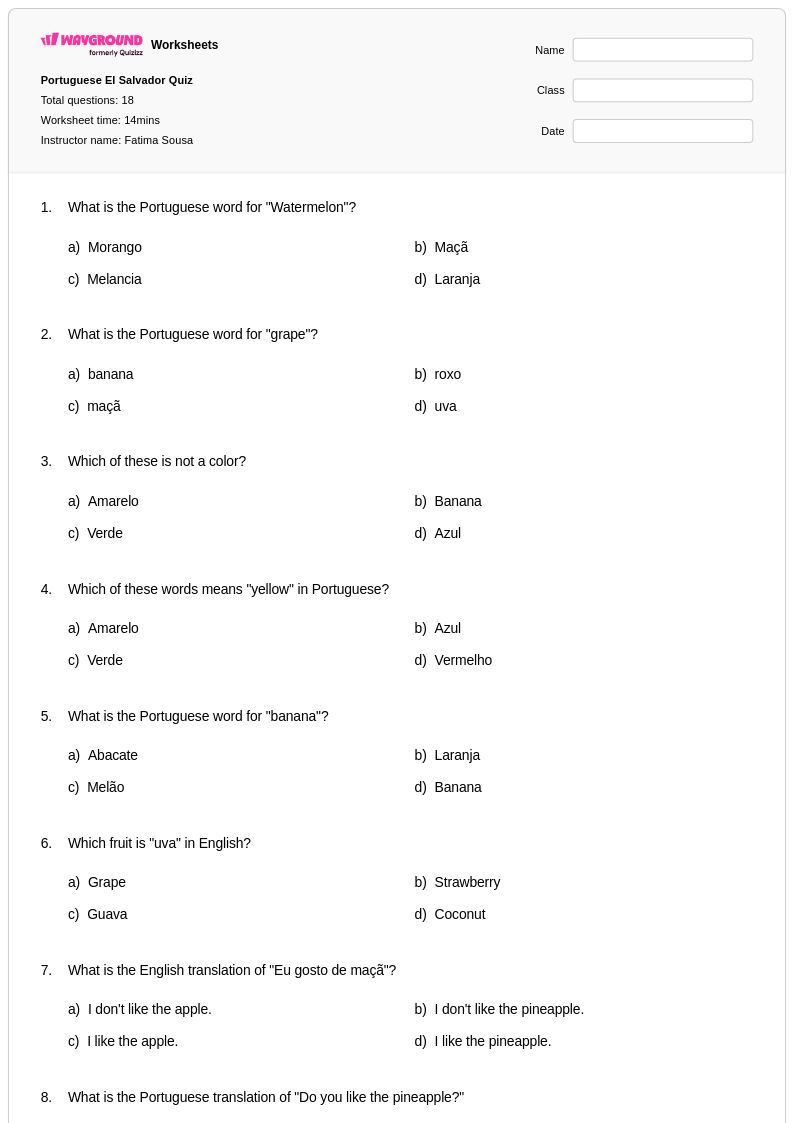
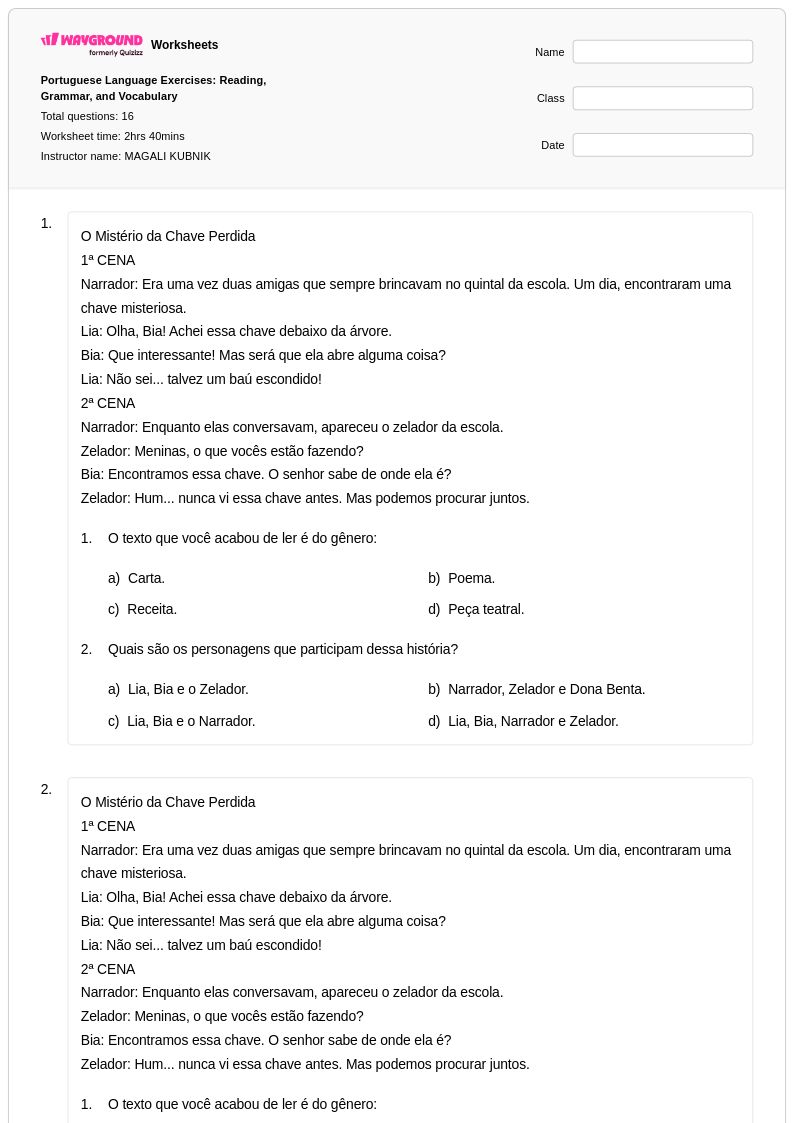
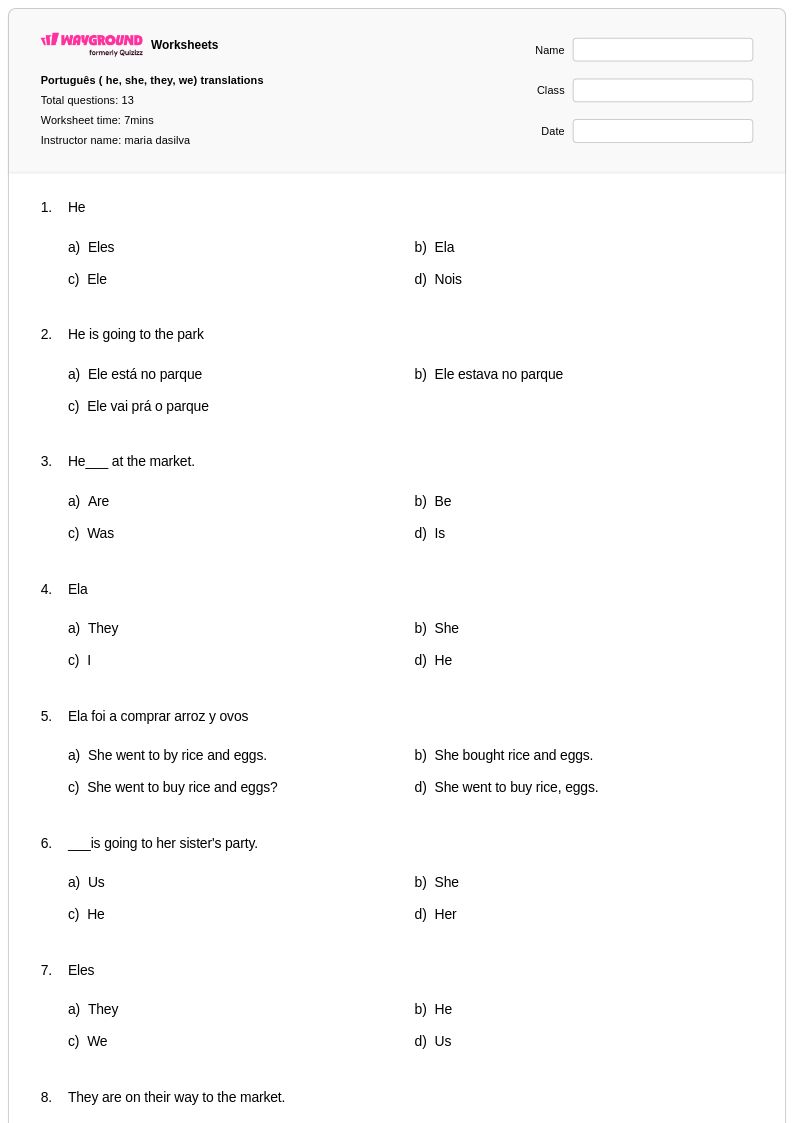
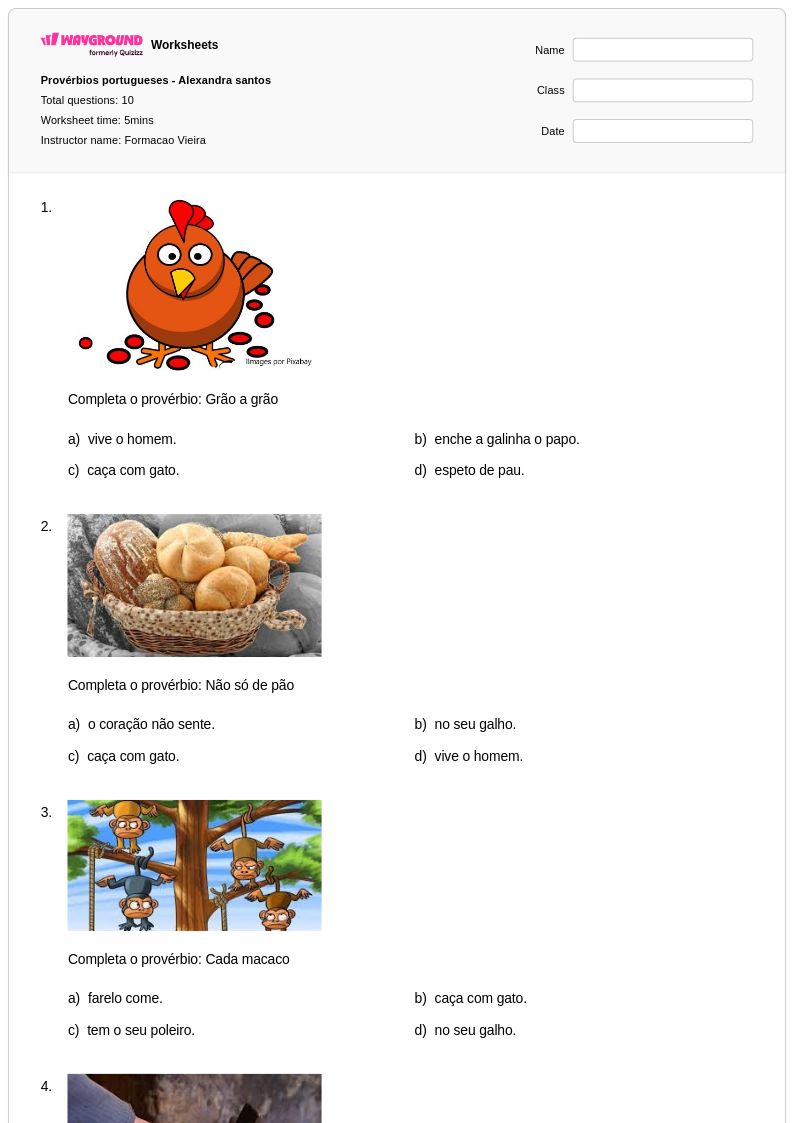
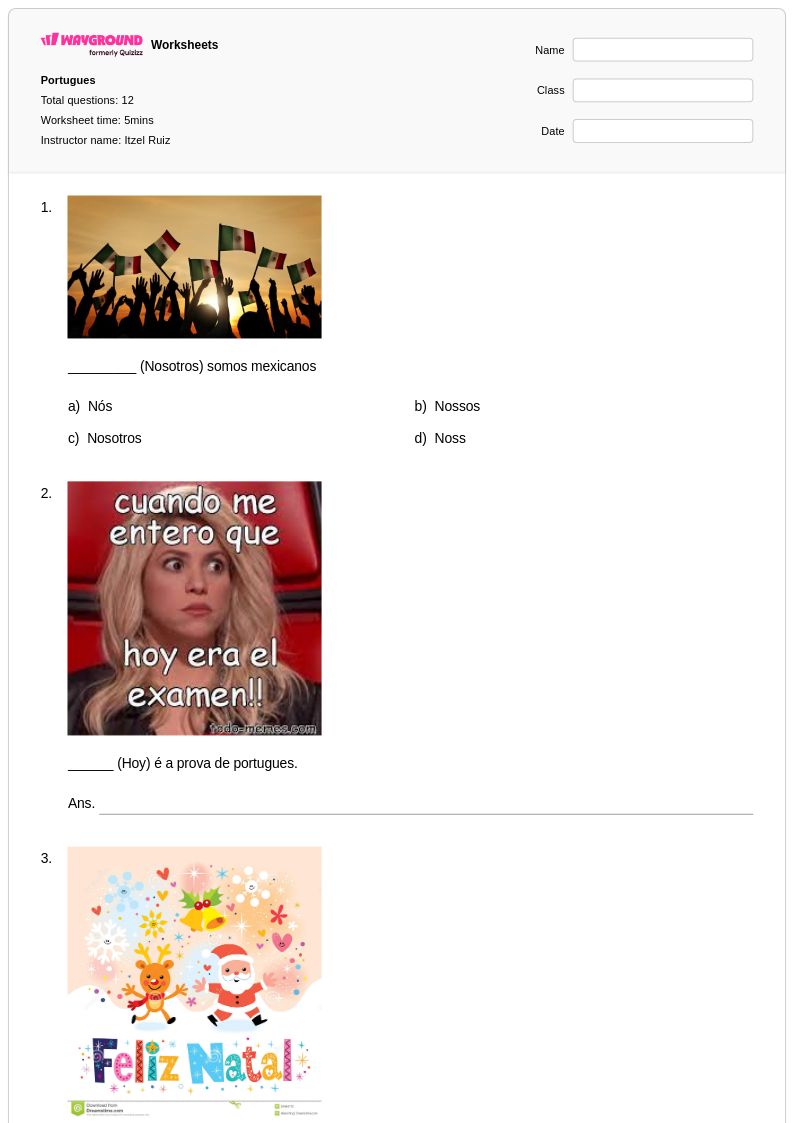
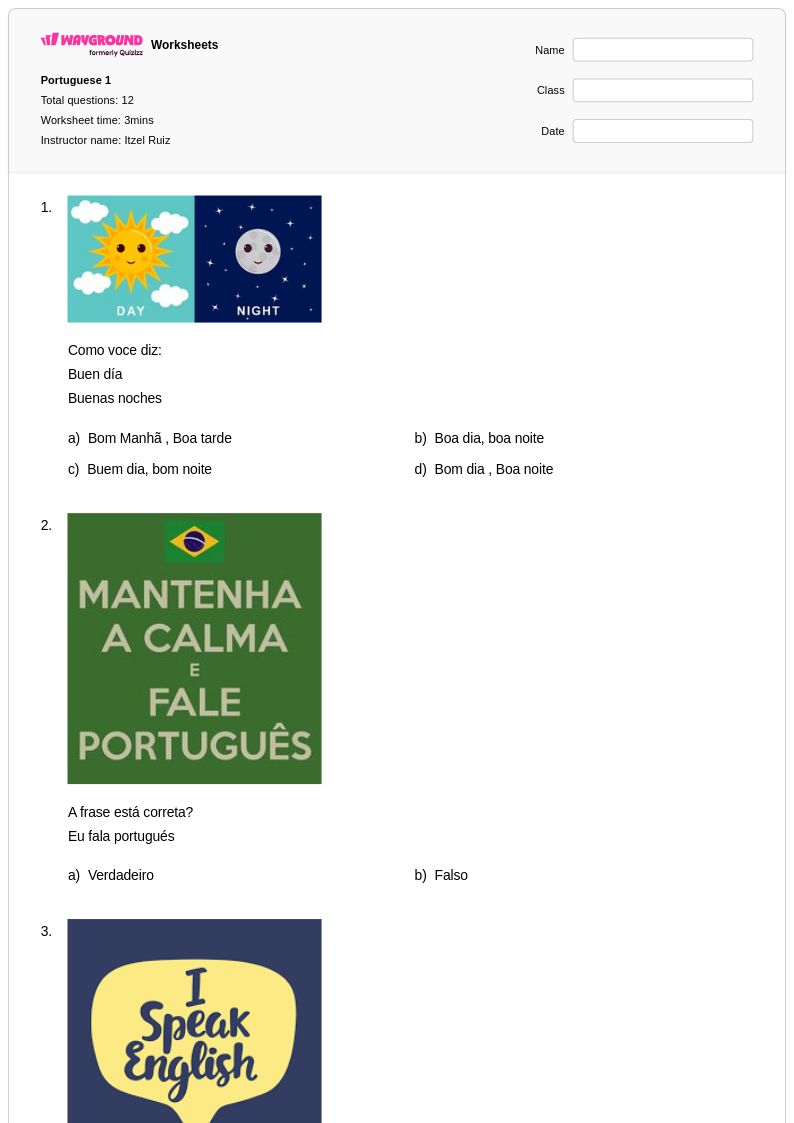
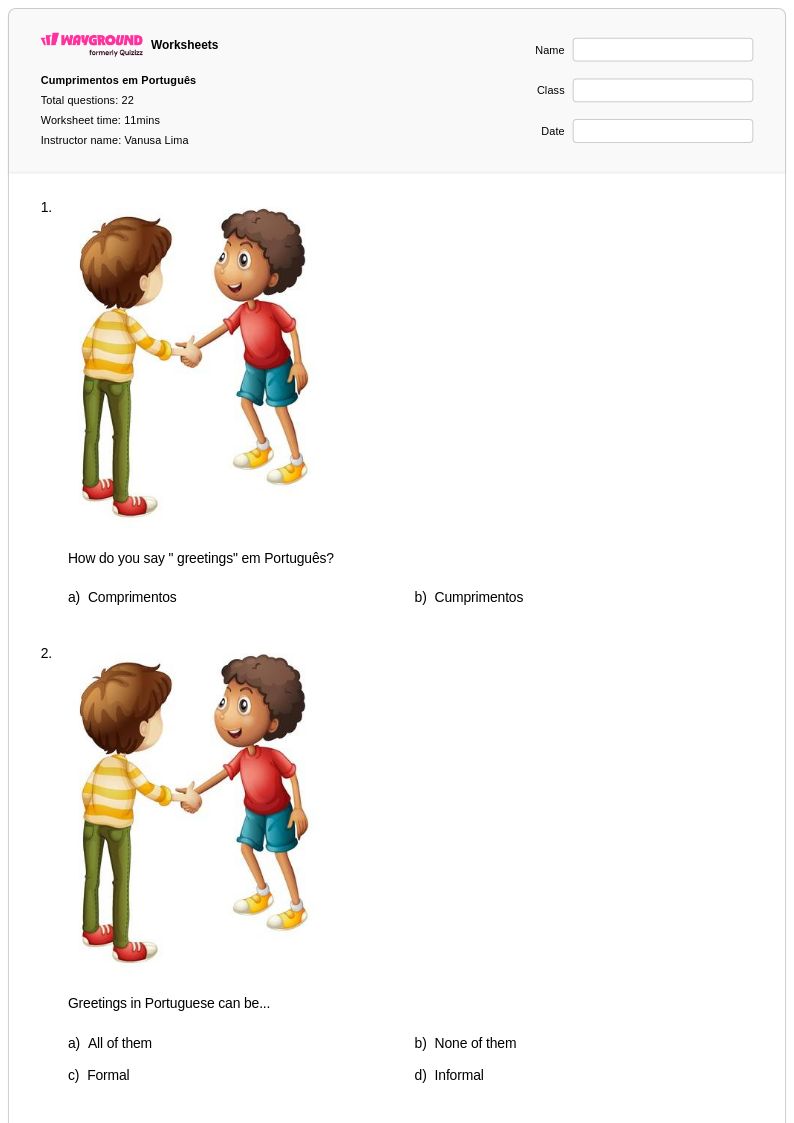
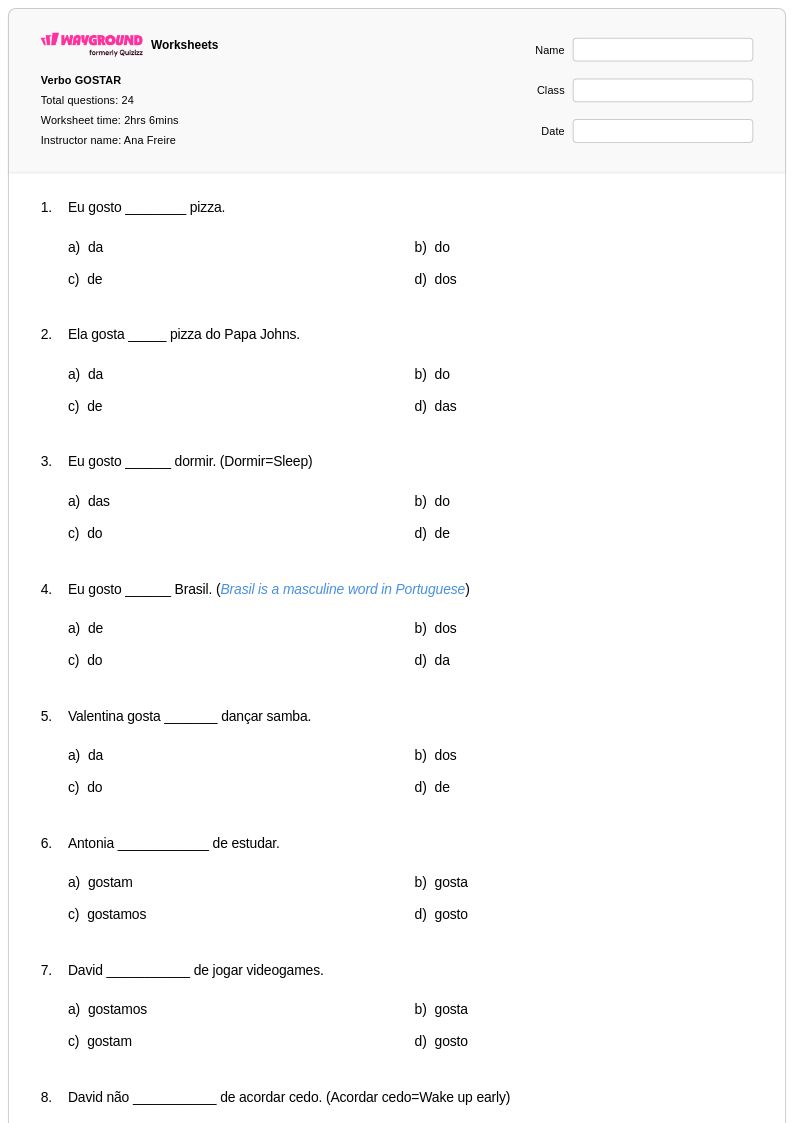
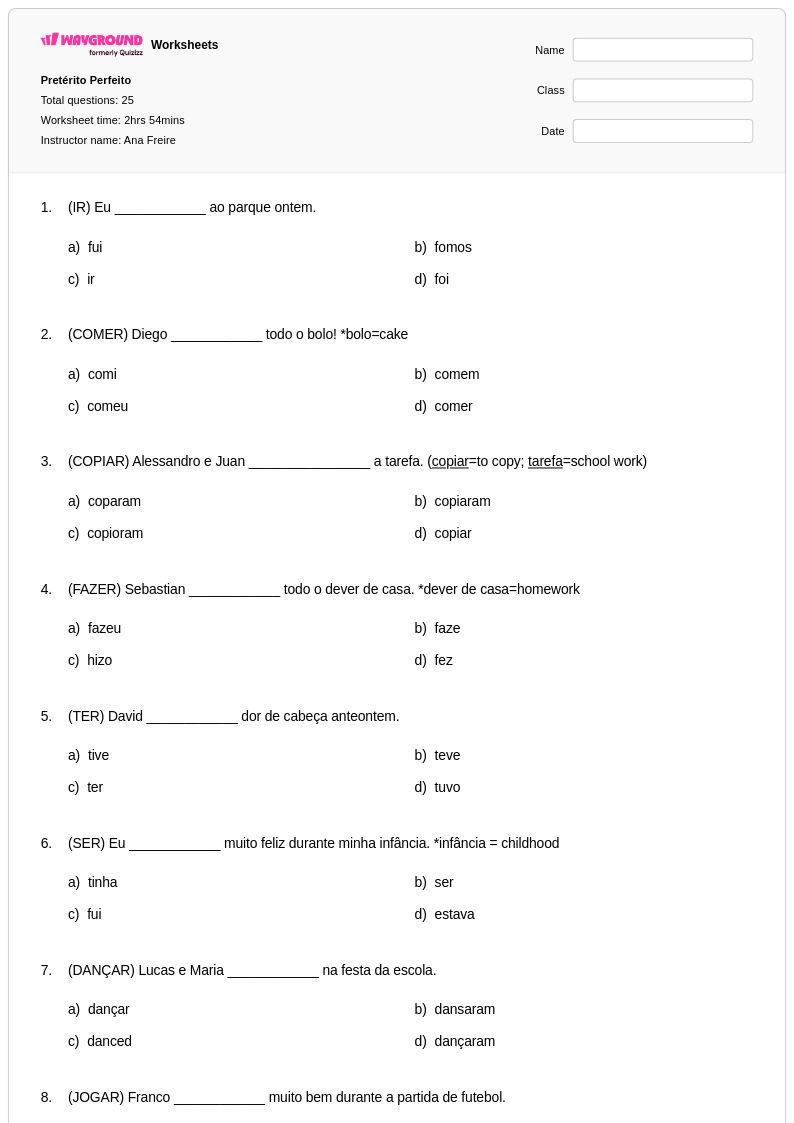
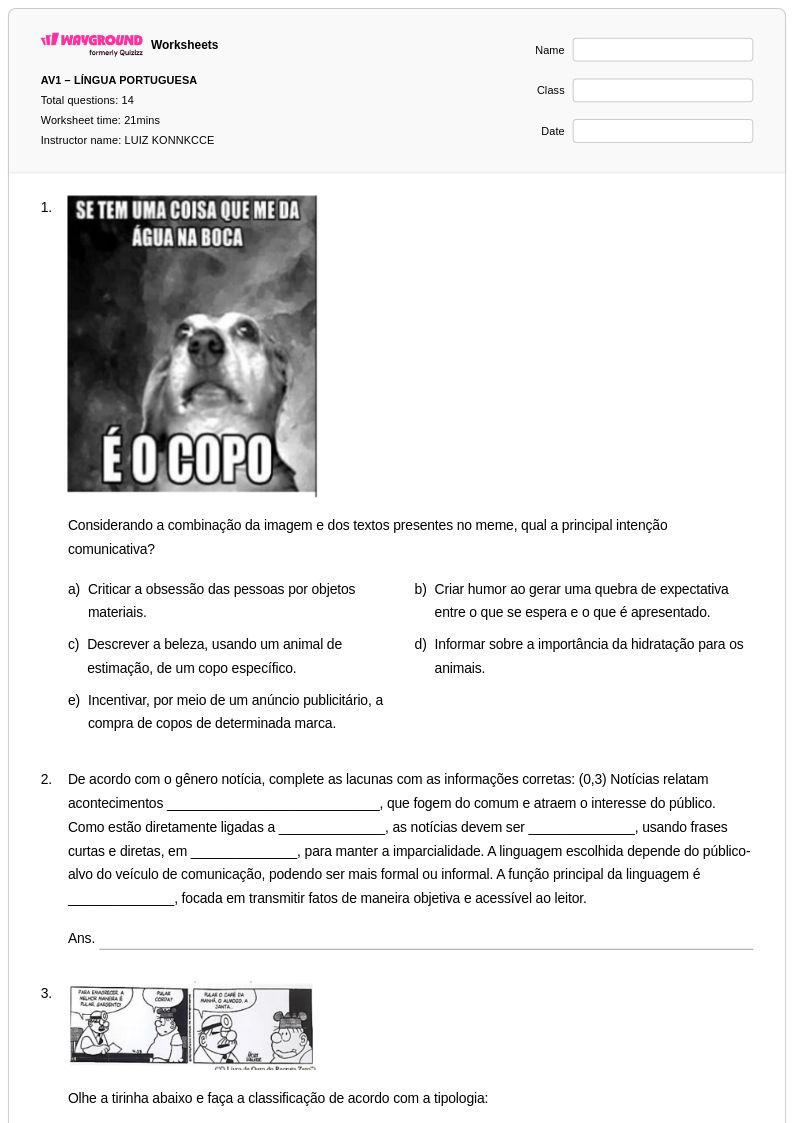
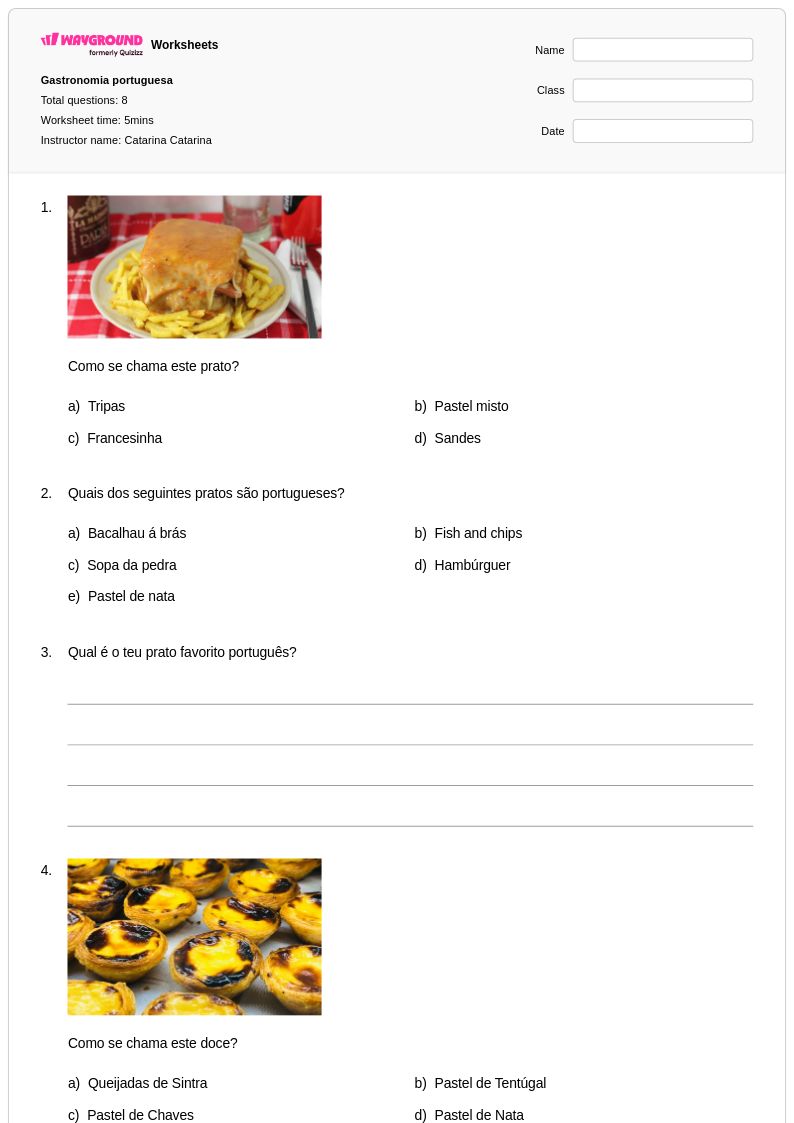
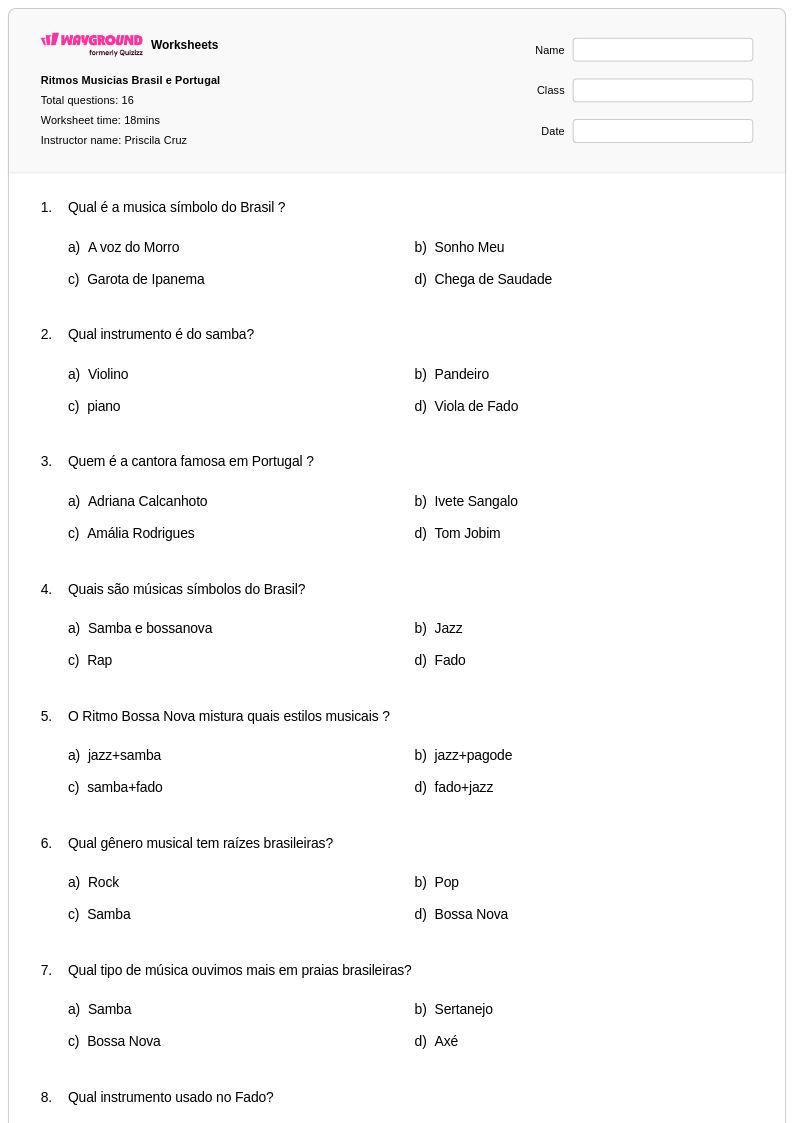
Portuguese language worksheets for Class 7 students available through Wayground (formerly Quizizz) provide comprehensive practice opportunities that build essential foundational skills in this Romance language. These educational resources focus on core Portuguese concepts including vocabulary acquisition, verb conjugations, sentence structure, pronunciation guides, and cultural context that seventh-grade learners need to develop communicative competency. The worksheets incorporate diverse practice problems that range from basic grammar exercises to more complex reading comprehension activities, helping students progress systematically through Portuguese language fundamentals. Each worksheet collection includes detailed answer keys that support both independent study and classroom instruction, with free printable materials designed to reinforce learning objectives through structured repetition and application.
Wayground (formerly Quizizz) empowers educators with access to millions of teacher-created Portuguese language resources specifically curated for middle school instruction. The platform's robust search and filtering capabilities allow teachers to quickly locate Class 7 Portuguese worksheets that align with curriculum standards and target specific learning objectives, whether for introductory vocabulary building or advanced grammatical concepts. These differentiation tools enable instructors to customize materials for diverse learning needs, supporting both remediation for struggling students and enrichment activities for advanced learners. Available in both printable pdf format and interactive digital versions, these worksheet collections streamline lesson planning while providing flexible options for skill practice, formative assessment, and homework assignments that reinforce Portuguese language acquisition in meaningful, engaging ways.
FAQs
How do I teach Portuguese verb conjugations to beginners?
Start with high-frequency regular verbs in the present tense before introducing irregular forms, using repetition-based exercises that build pattern recognition. Contextualize conjugations within simple sentences or dialogues so students connect grammar rules to real communication rather than memorizing tables in isolation. As students gain confidence, introduce past and future tenses incrementally, revisiting prior conjugation patterns to reinforce retention.
What exercises help students practice Portuguese vocabulary effectively?
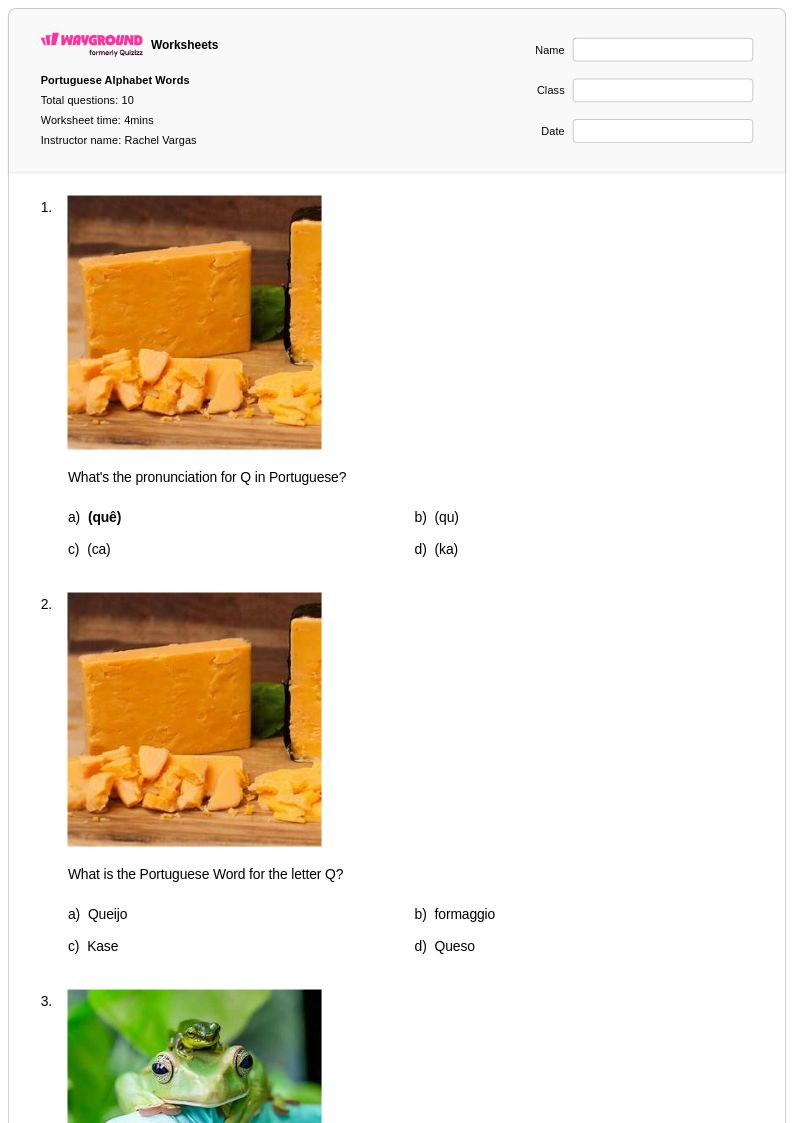
Thematic vocabulary practice — grouping words by topic such as food, travel, or family — helps students build usable word banks rather than disconnected lists. Exercises that require students to use new vocabulary in sentence-writing, gap-fill activities, or short reading passages are especially effective because they force retrieval in context. Combining vocabulary work with pronunciation guides also reinforces correct sound-letter correspondence in Portuguese, which differs significantly from English.
What grammar mistakes do students commonly make when learning Portuguese?
One of the most frequent errors is misapplying gender agreement, since Portuguese assigns masculine or feminine gender to all nouns and their modifying adjectives must match. Students also commonly confuse the two verbs meaning 'to be' — ser and estar — using them interchangeably when each has distinct, rule-governed uses. False cognates between Portuguese and English, such as 'polvo' (octopus, not powder) and 'borracha' (rubber, not drunk), are another common source of errors worth explicitly addressing.
How do I differentiate Portuguese language instruction for students at different proficiency levels?
For lower-proficiency students, reduce cognitive load by focusing on one language domain at a time and providing sentence frames or word banks within exercises. More advanced students benefit from open-ended writing tasks, authentic text analysis, and exercises that target nuanced grammar points like subjunctive mood or complex verb tenses. On Wayground, teachers can apply individual student accommodations such as reduced answer choices or read-aloud settings, allowing the same worksheet session to serve learners at different levels without drawing attention to those differences.
How do I use Wayground's Portuguese worksheets in my classroom?
Wayground's Portuguese worksheets are available as printable PDFs for traditional classroom use and in digital formats for technology-integrated or remote learning environments, and can also be hosted as a quiz directly on the Wayground platform. Teachers can assign them as guided practice, independent work, or formative assessments depending on the lesson objective. Each worksheet includes a complete answer key, making grading and feedback straightforward whether used in print or digitally.
How do I teach Portuguese pronunciation to English-speaking students?
Portuguese contains sounds that do not exist in English, including nasal vowels and the 'lh' and 'nh' digraphs, so explicit pronunciation instruction with audio modeling is essential from the start. Minimal pair drills — comparing similar-sounding words that differ in one phoneme — help students develop discrimination between sounds before they attempt production. Regular low-stakes speaking practice, such as reading sentences aloud or repeating after a recording, builds confidence and accuracy over time.
What reading strategies help students comprehend authentic Portuguese texts?
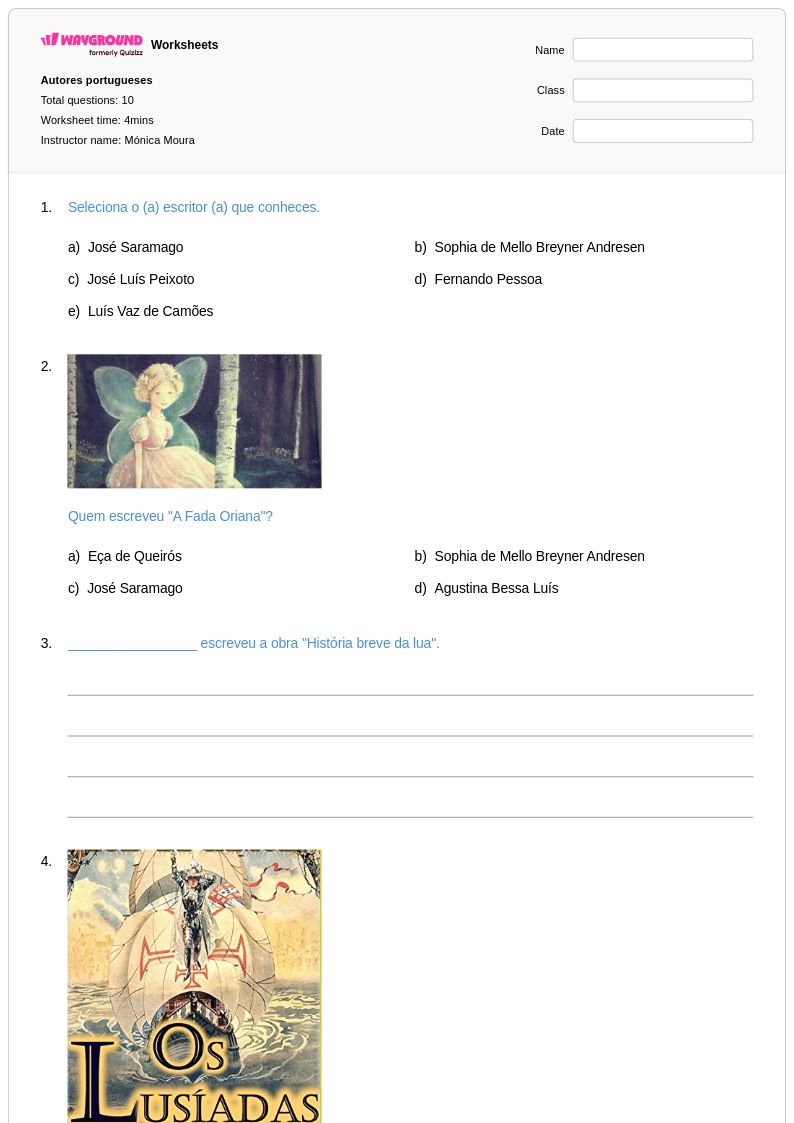
Teach students to use context clues and cognate recognition as first-pass strategies before reaching for a dictionary, since Portuguese shares a significant portion of vocabulary with other Romance languages and even some English academic vocabulary. Pre-teaching key vocabulary and activating background knowledge before reading reduces cognitive demand and improves comprehension. After reading, structured response tasks — such as identifying the main idea, answering targeted questions, or summarizing in simple Portuguese — consolidate understanding and develop writing skills simultaneously.