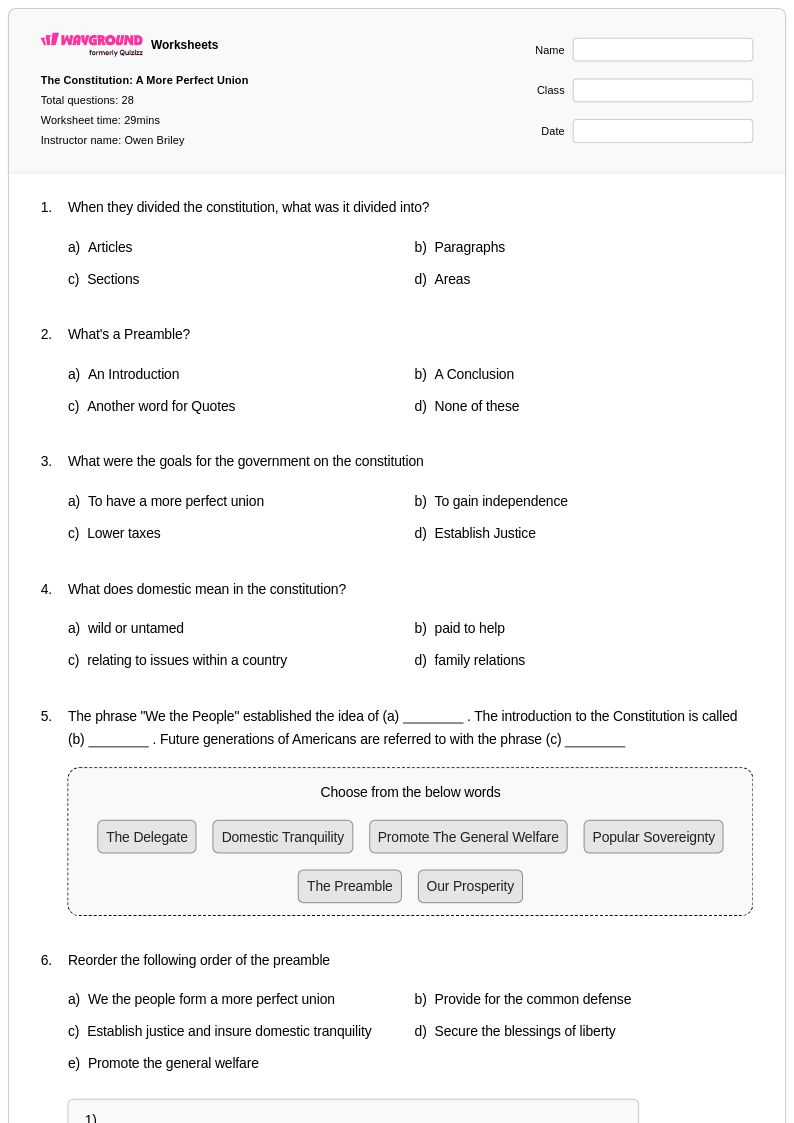
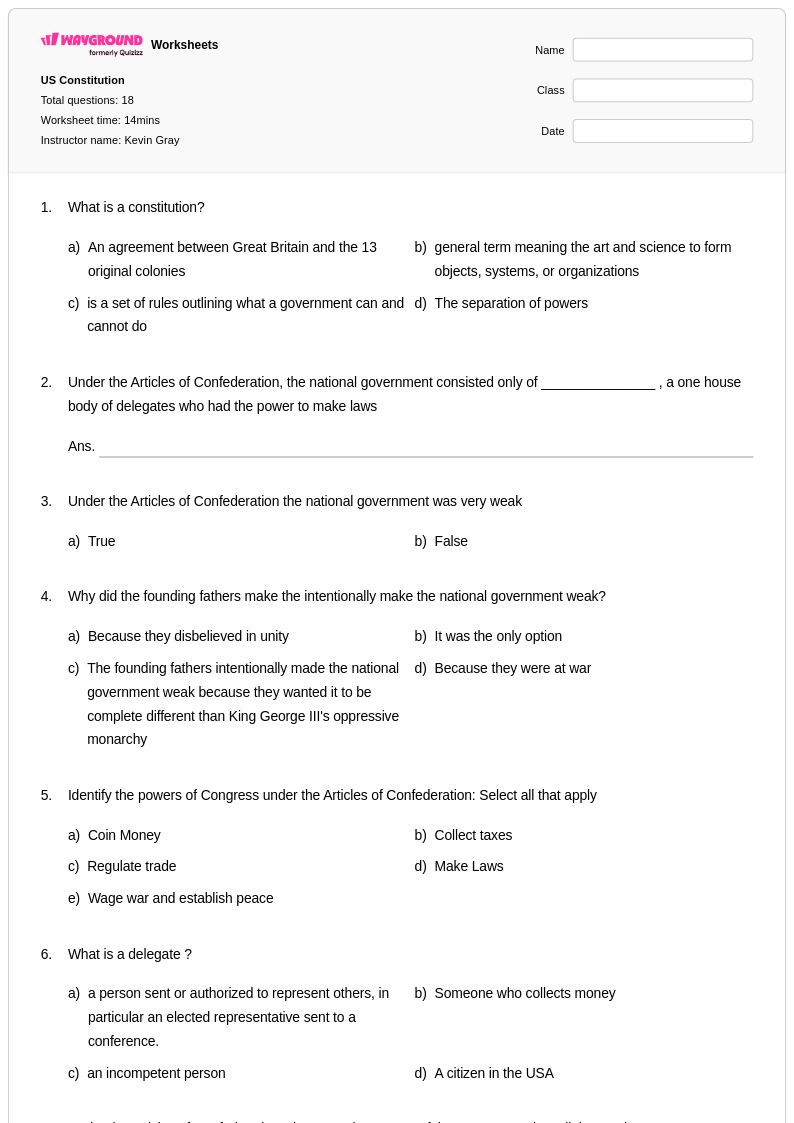
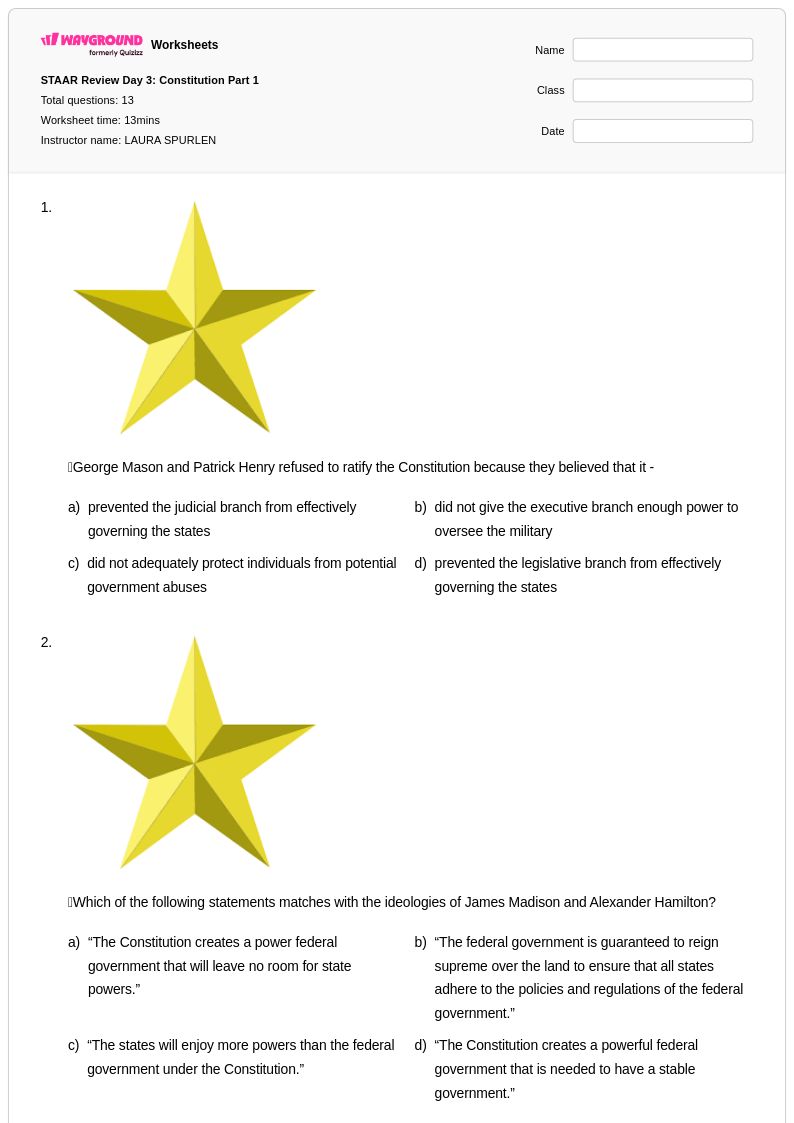
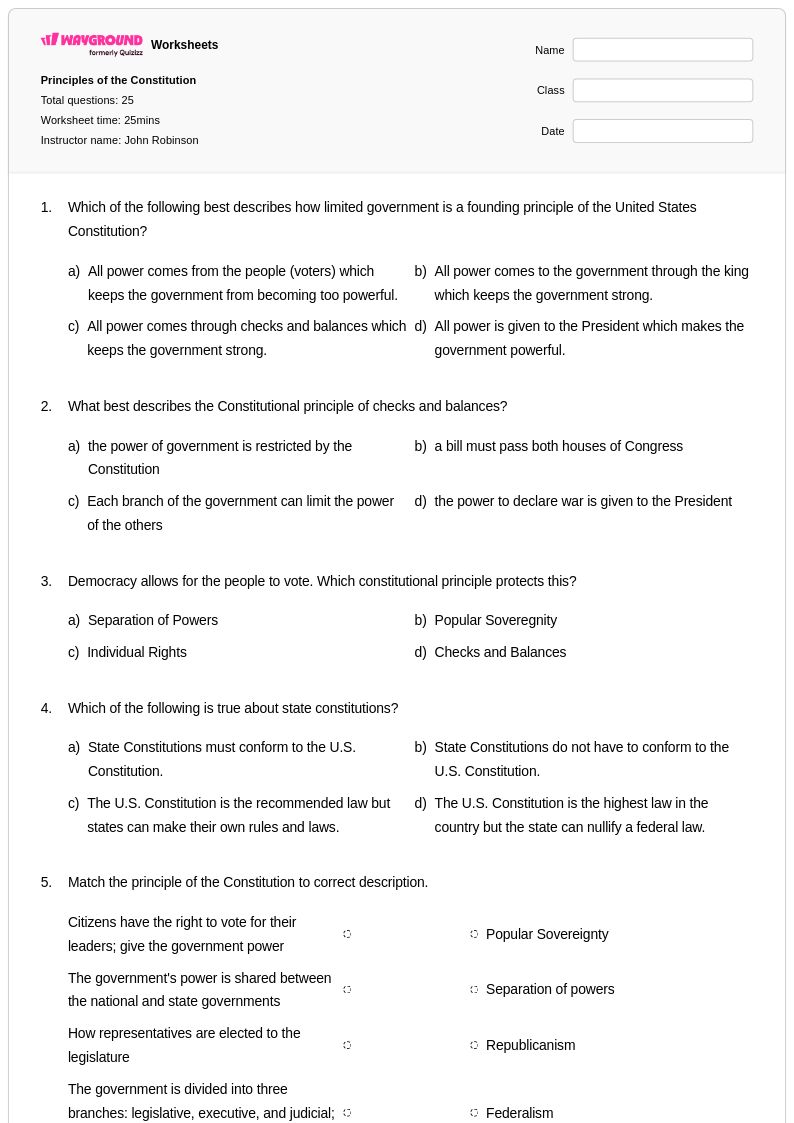
Free Printable Powers of Congress Worksheets for Class 8
Class 8 Powers of Congress printable worksheets and practice problems help students master legislative authority, constitutional powers, and governmental processes through comprehensive free PDF resources with answer keys available on Wayground.
Explore printable Powers of Congress worksheets for Class 8
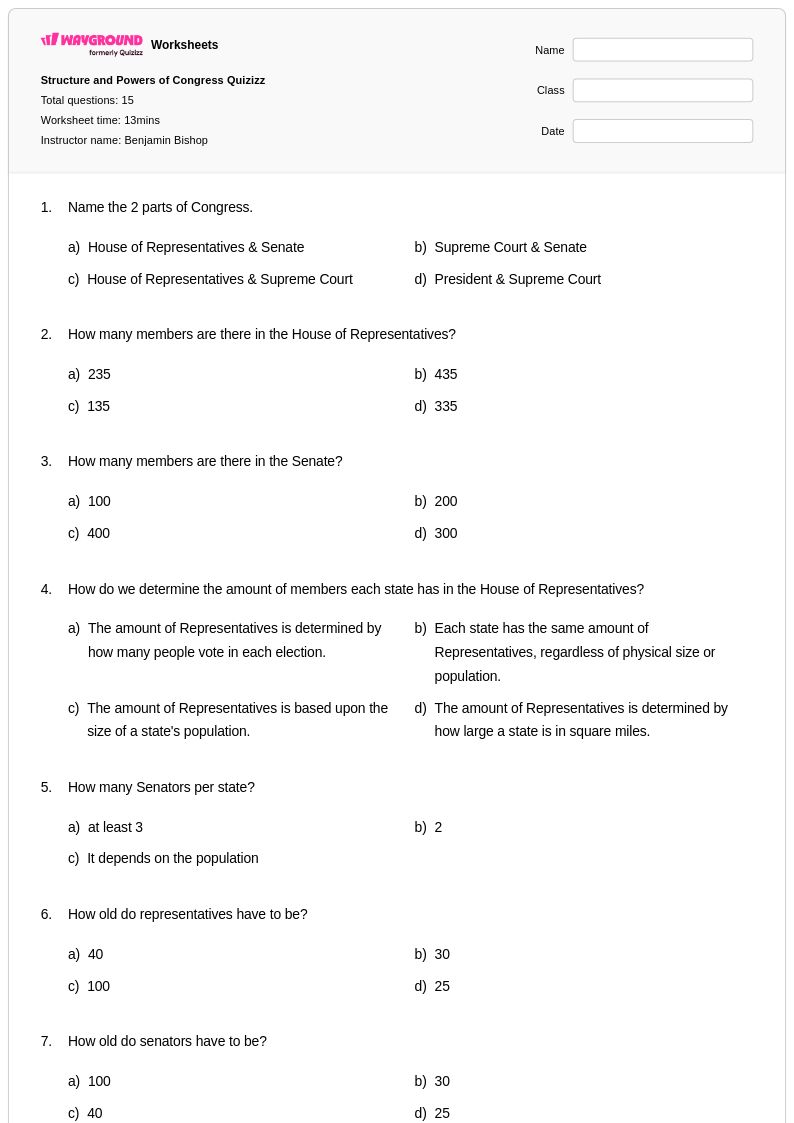
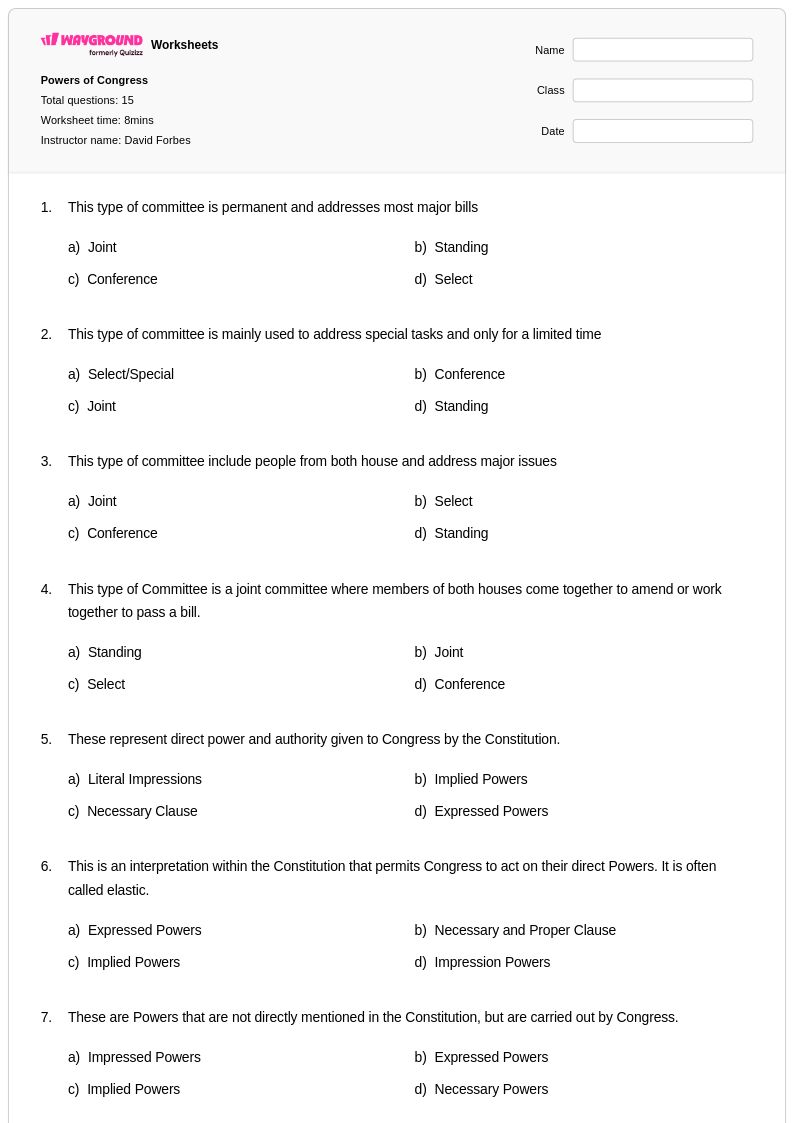
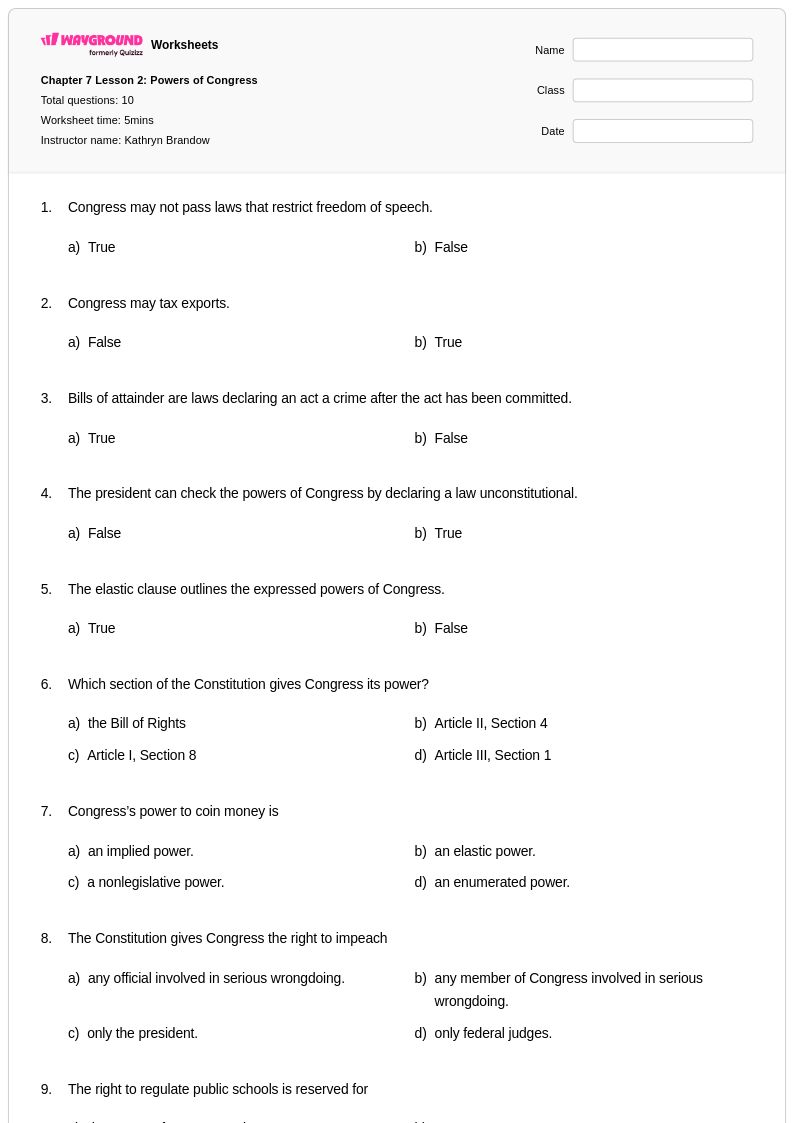
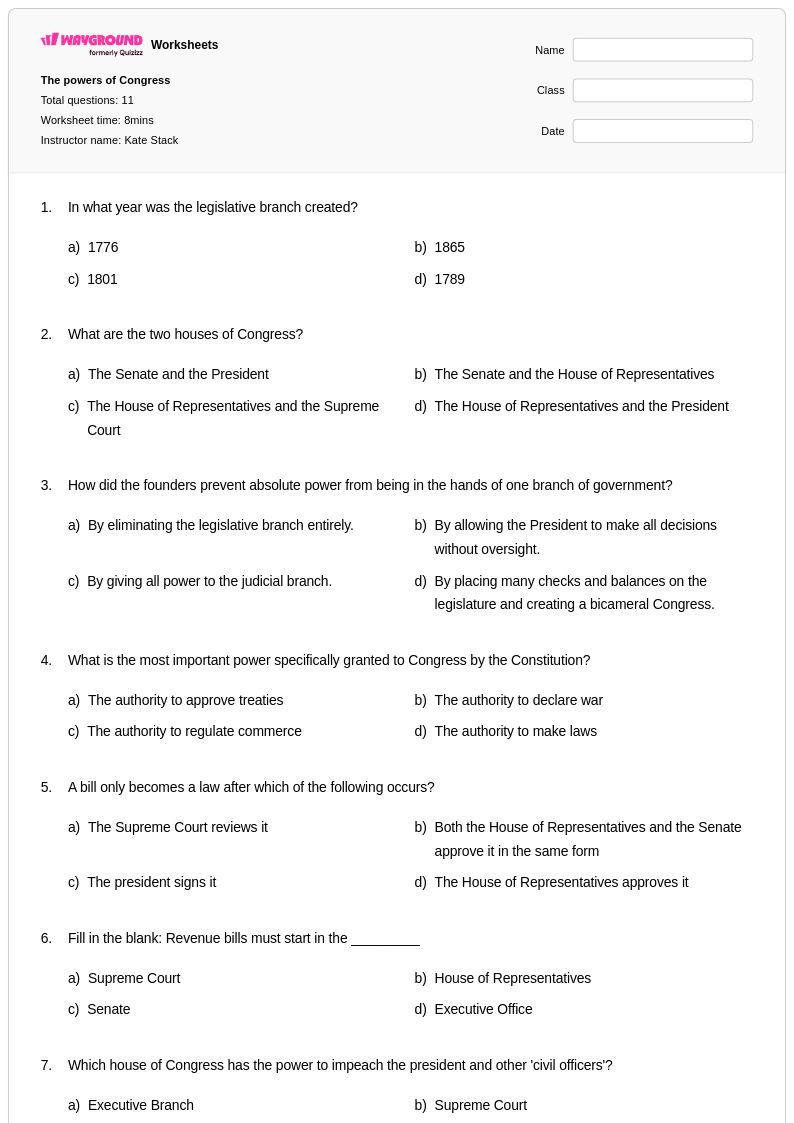
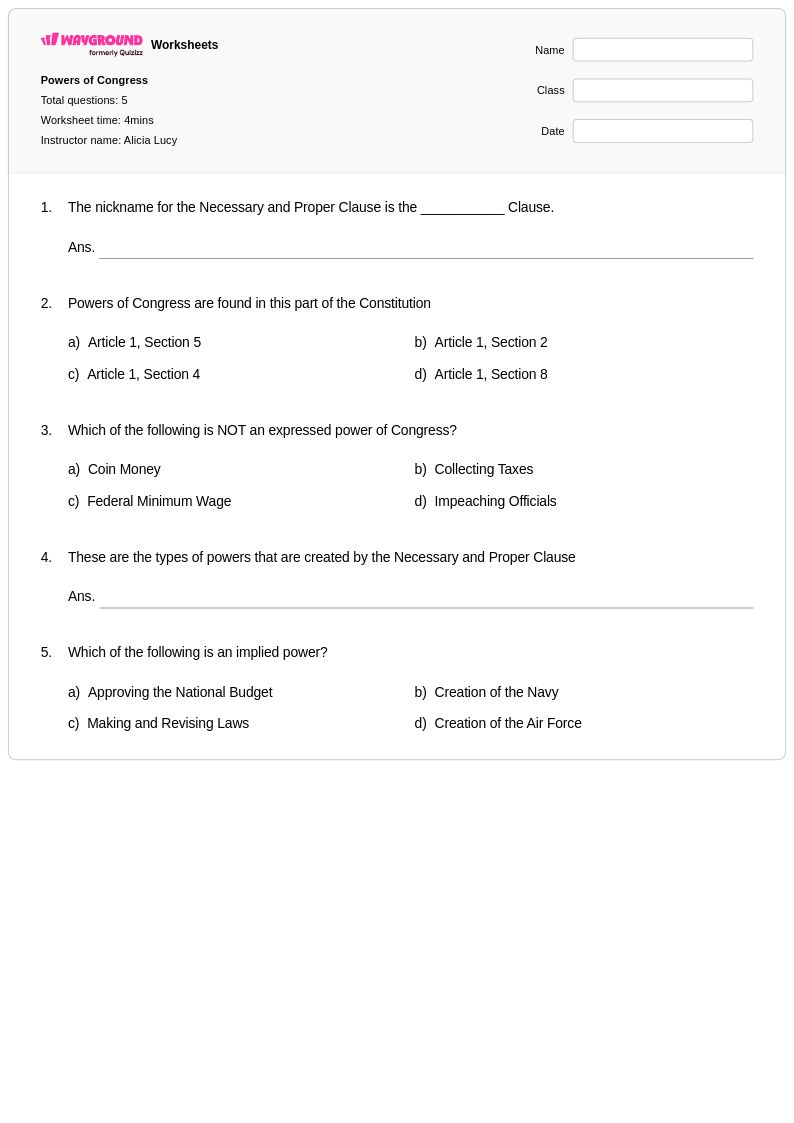
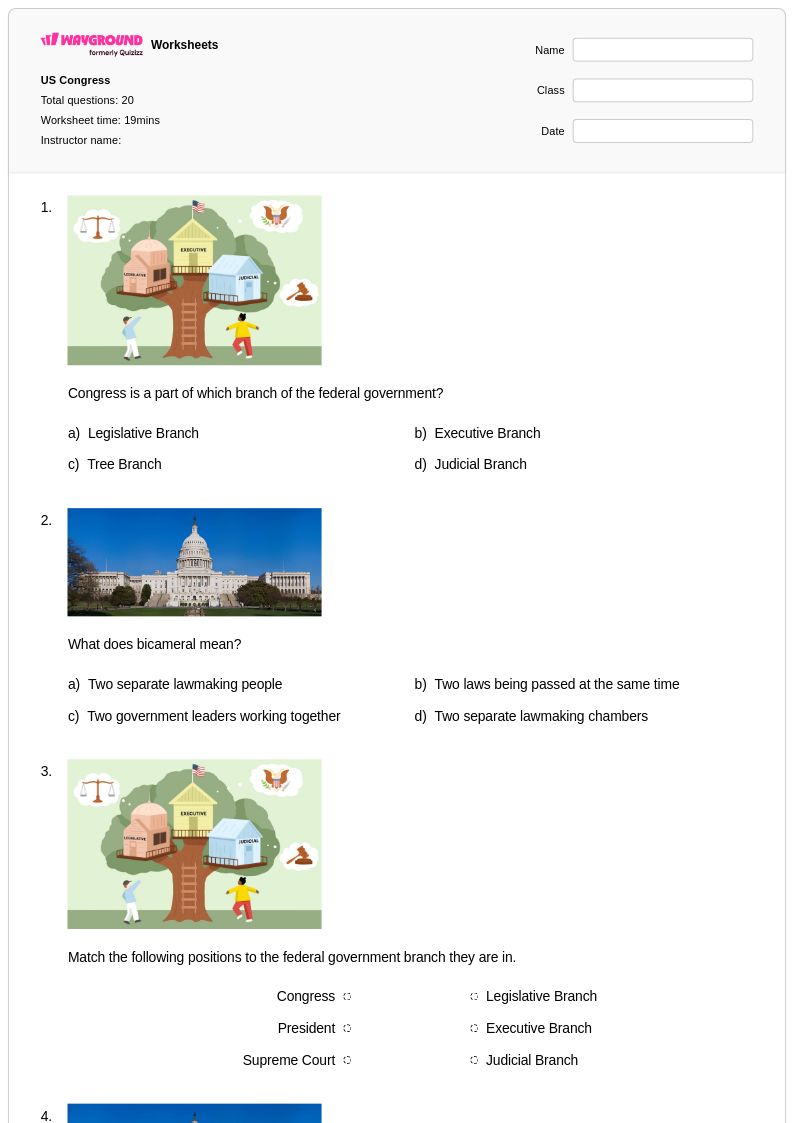
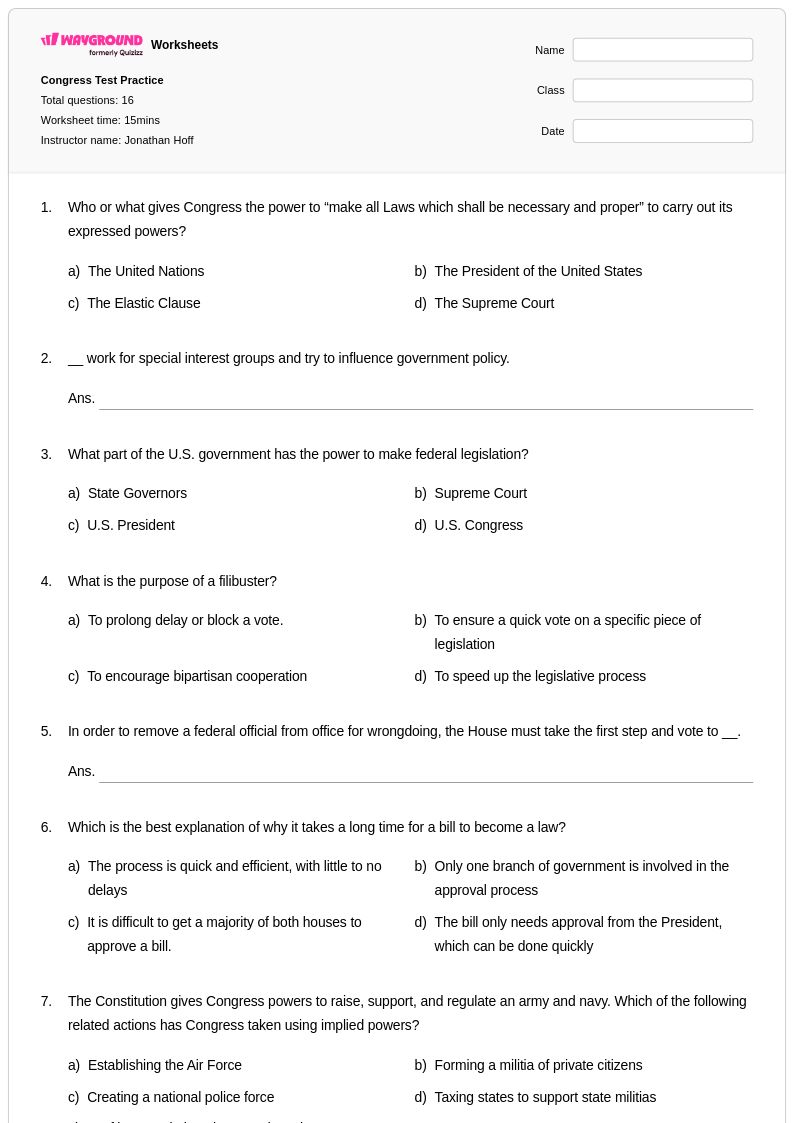
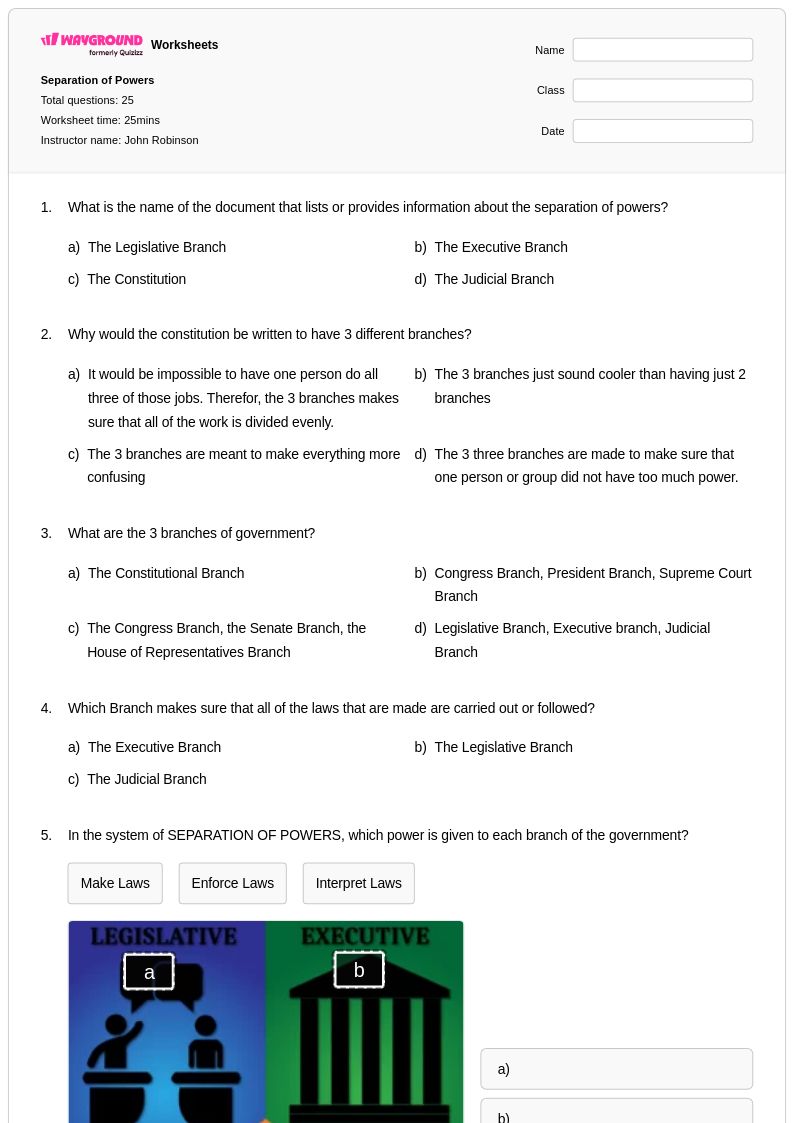
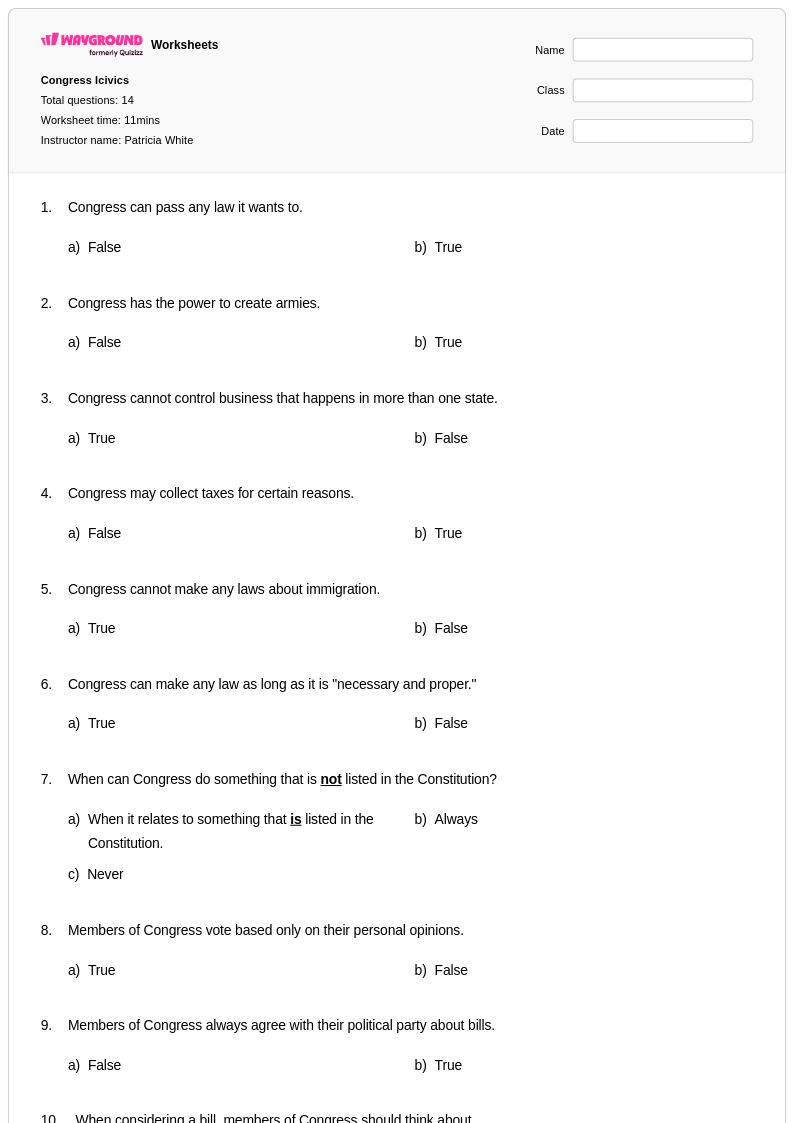
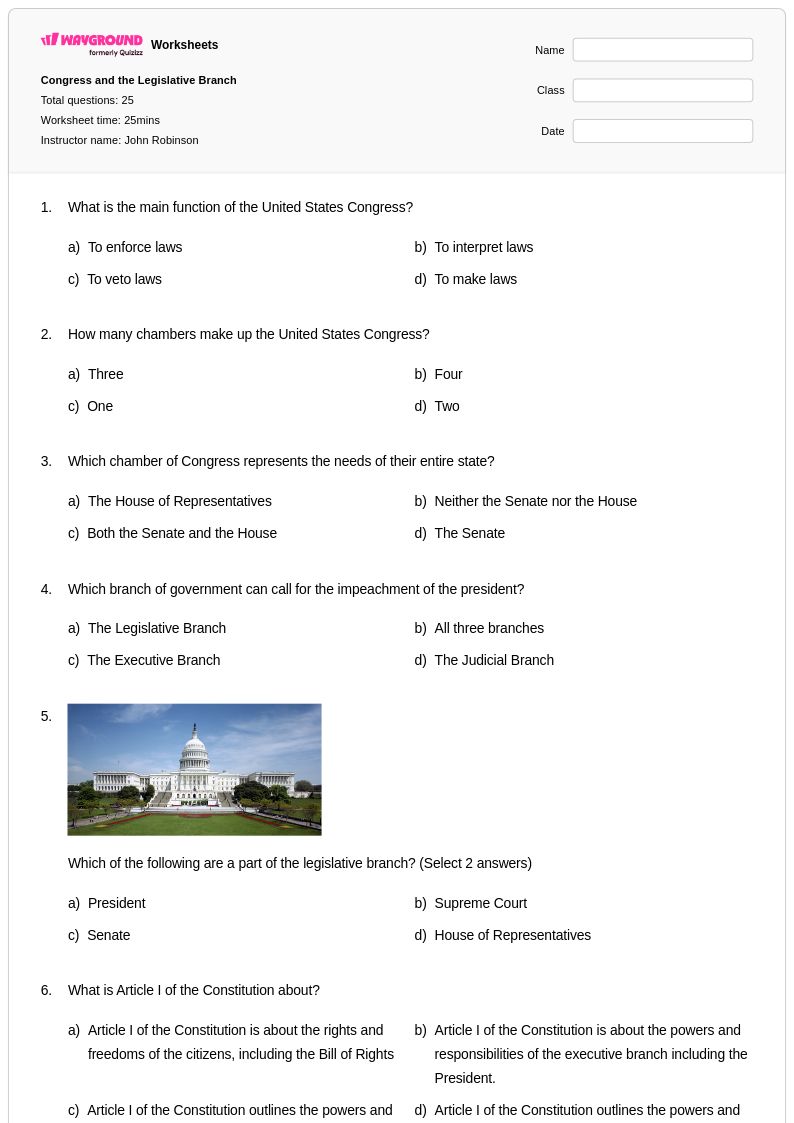
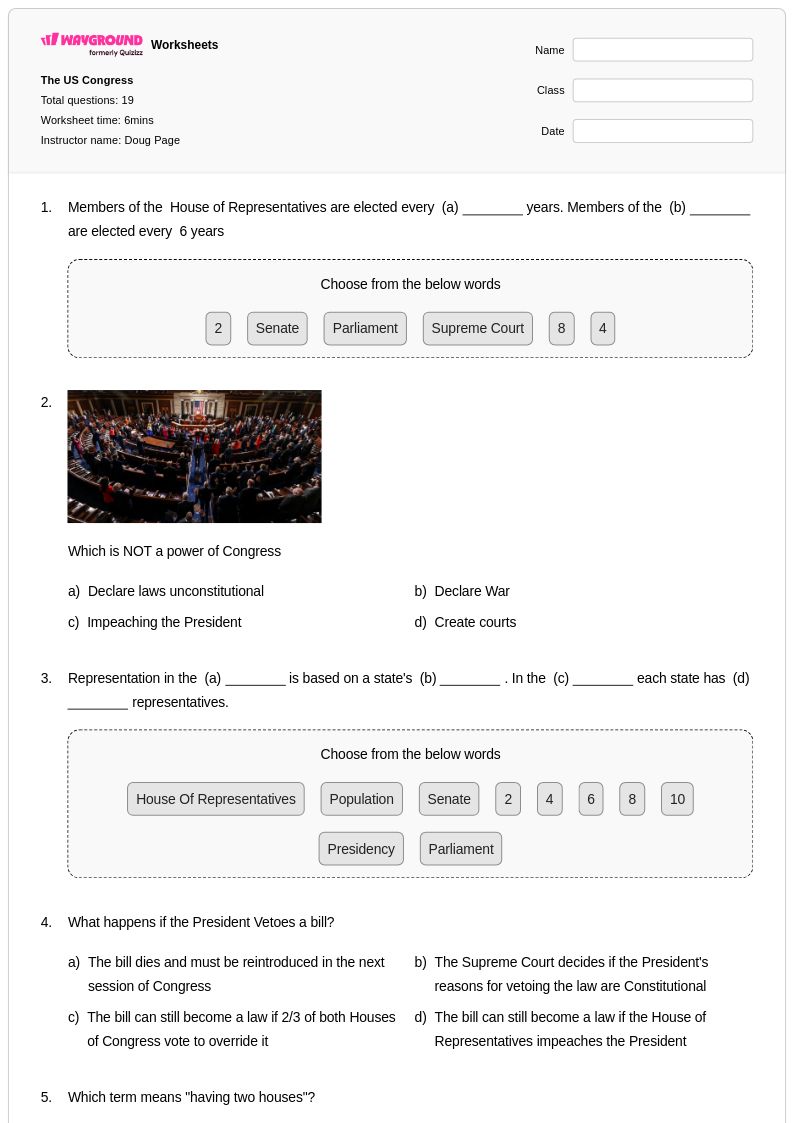
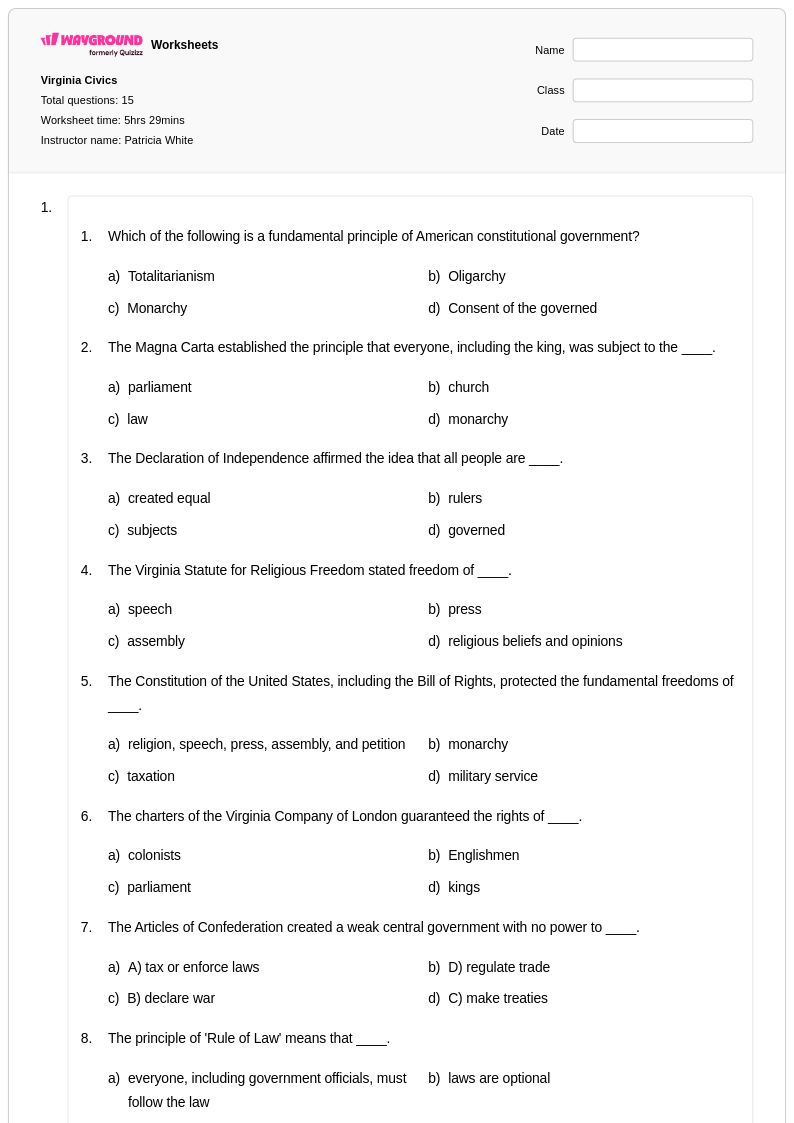
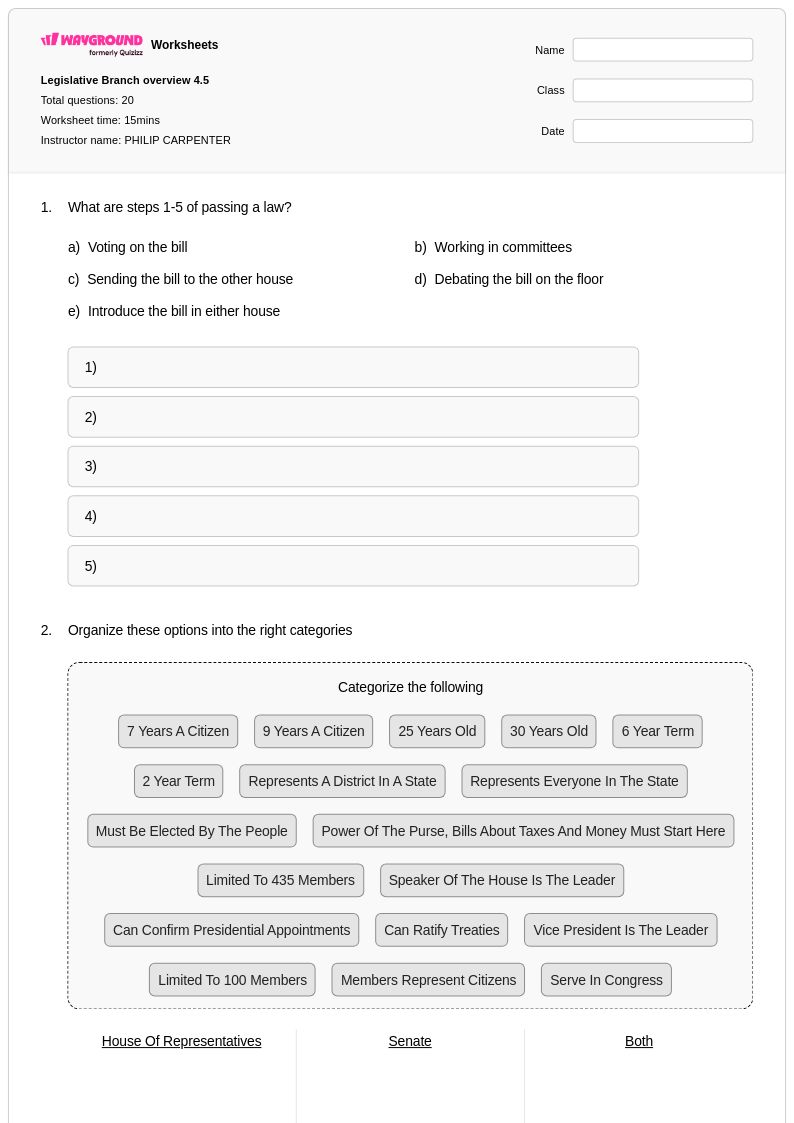
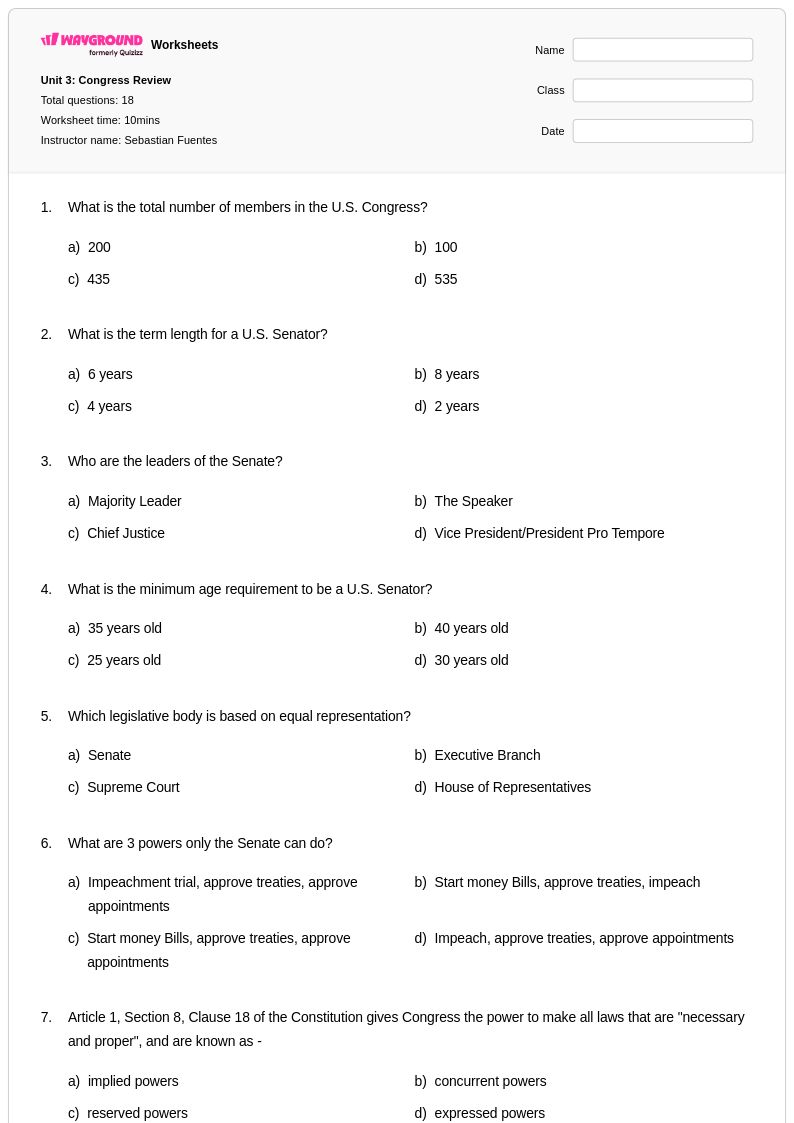
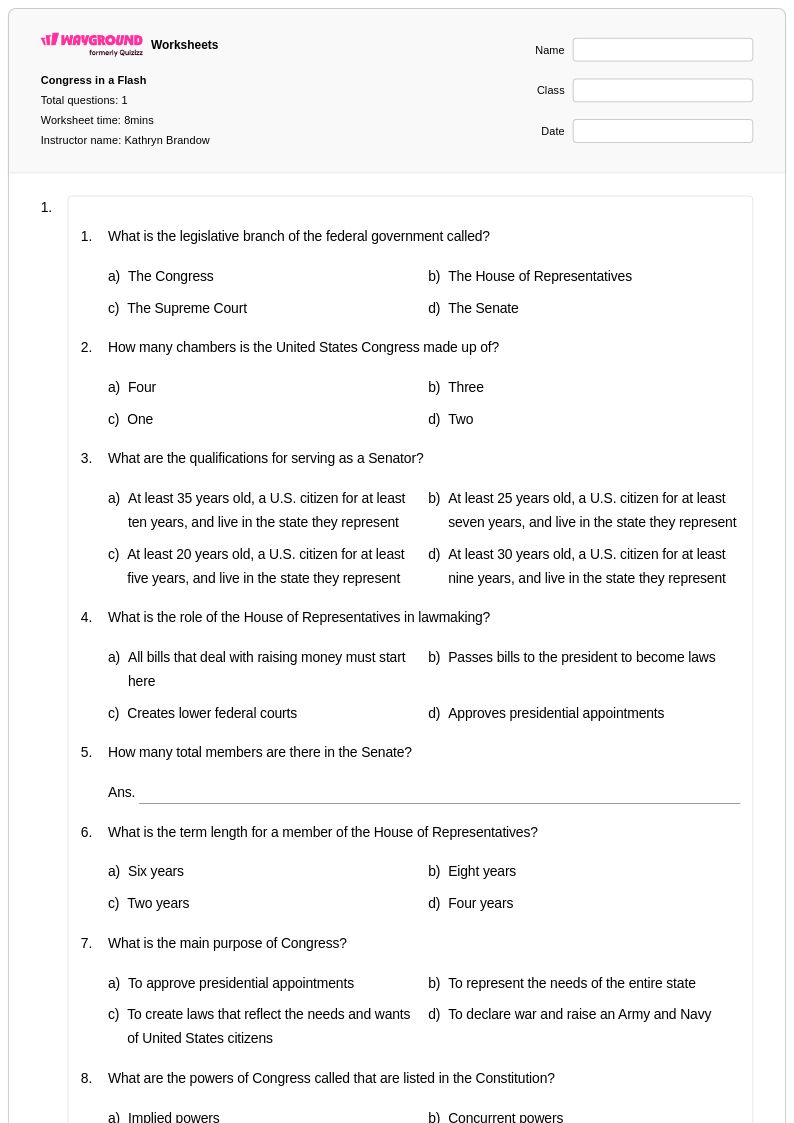
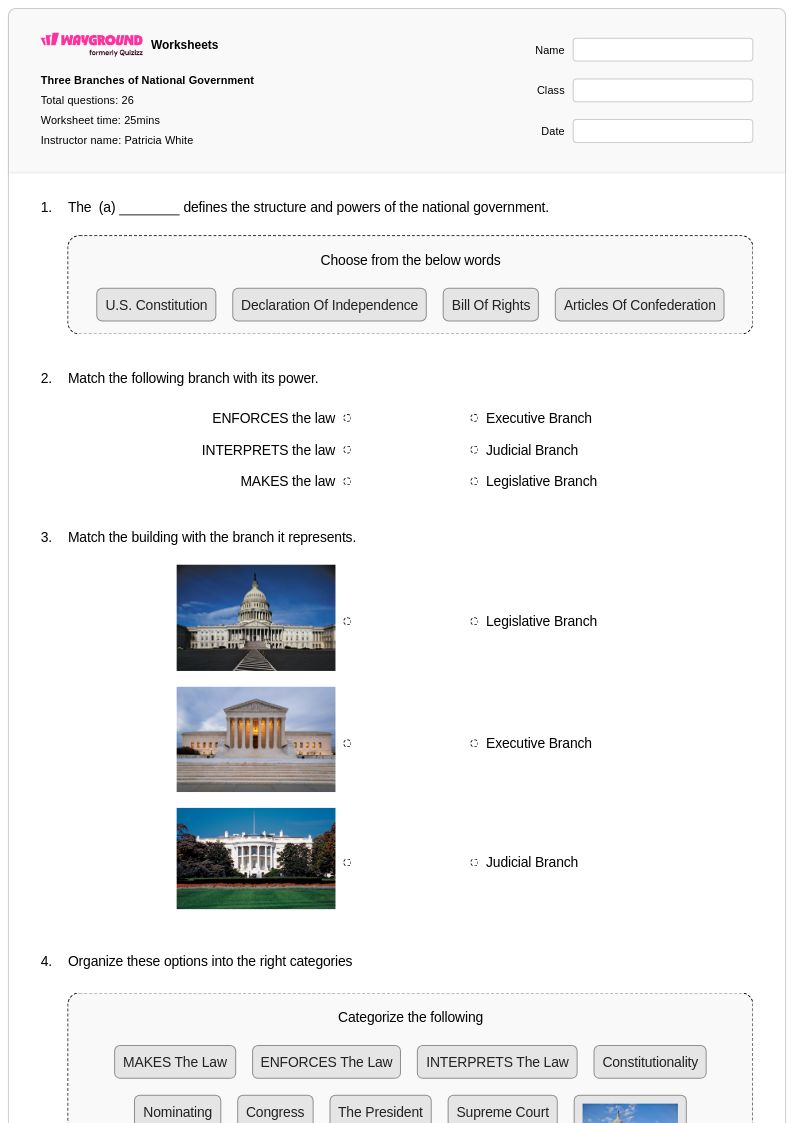
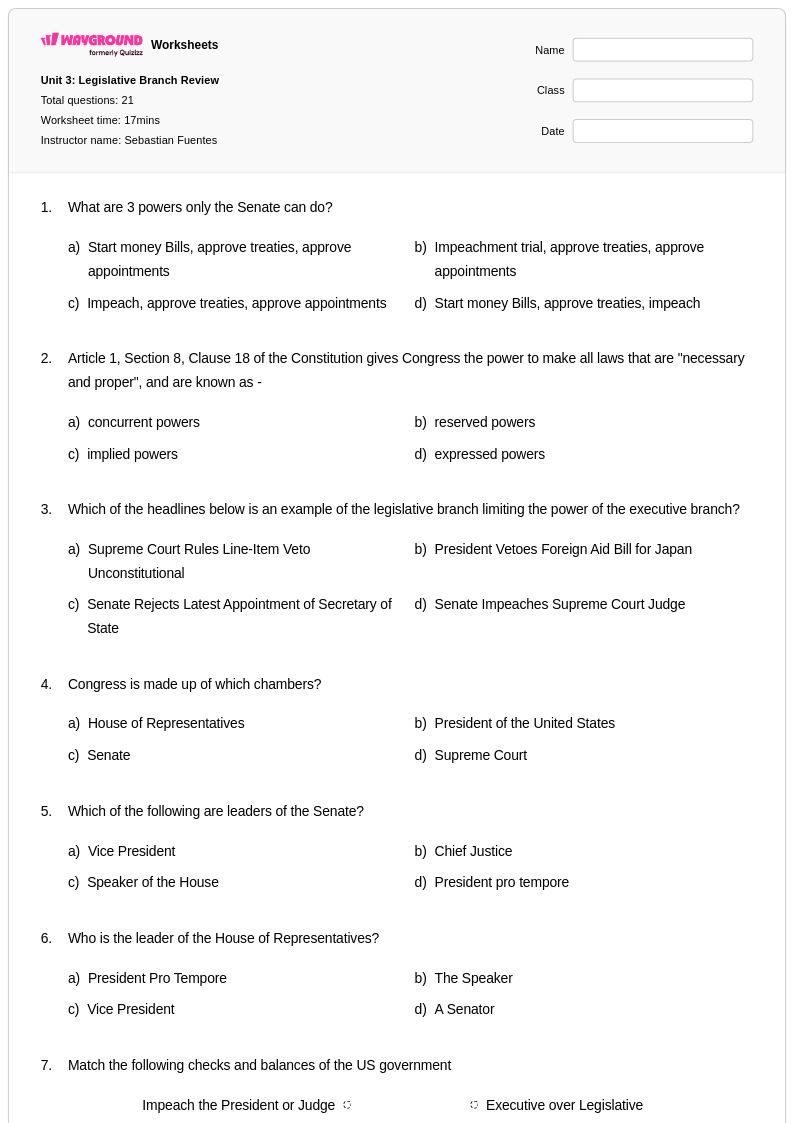
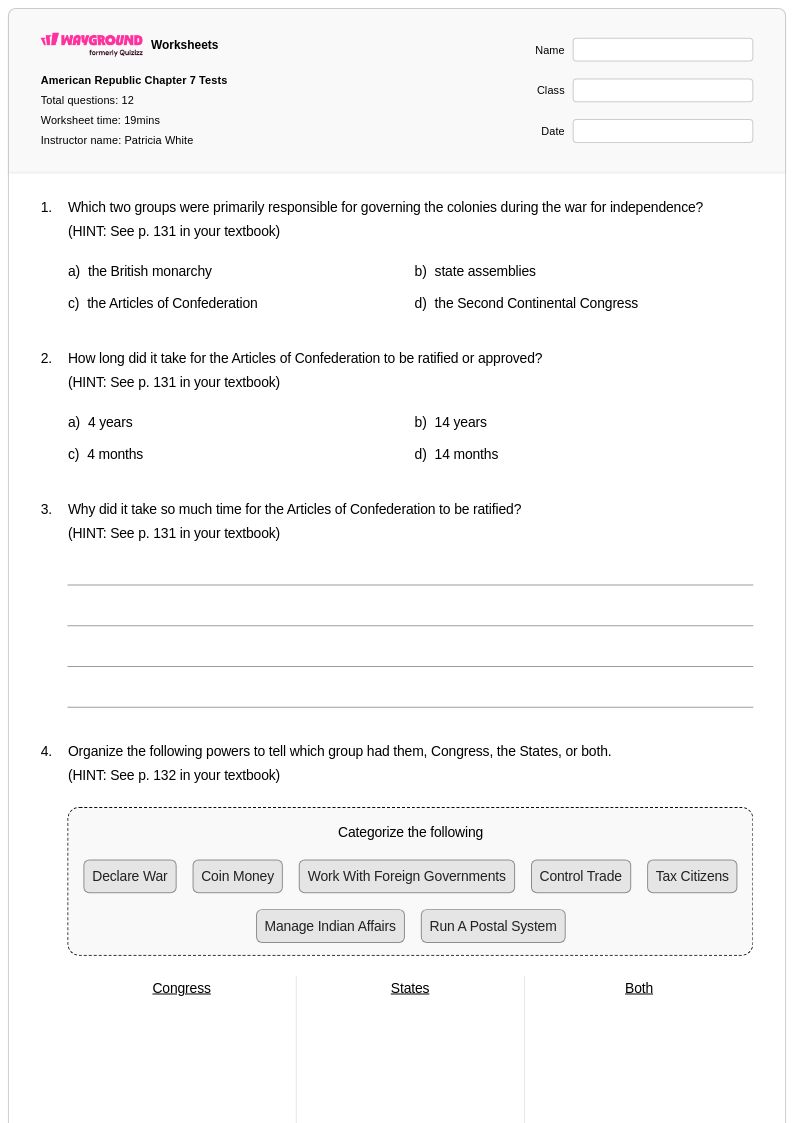
Powers of Congress worksheets for Class 8 students provide comprehensive coverage of the legislative branch's constitutional authorities and responsibilities within the American government system. These educational resources help students master critical civics concepts including enumerated powers, implied powers, and the elastic clause while developing analytical skills essential for understanding how federal legislation impacts daily life. Through carefully structured practice problems, students explore Congress's ability to tax, regulate interstate commerce, declare war, and establish post offices, among other key functions. The worksheets feature detailed answer keys that support both independent study and classroom instruction, with free printable pdf formats making these valuable resources accessible for diverse learning environments.
Wayground, formerly Quizizz, empowers educators with an extensive collection of teacher-created worksheets covering the powers of Congress and related civics topics, drawn from millions of high-quality educational resources. The platform's robust search and filtering capabilities enable teachers to quickly locate materials aligned with state and national social studies standards, while differentiation tools allow for seamless customization to meet varied student needs and learning levels. These versatile resources are available in both printable and digital pdf formats, supporting flexible lesson planning whether for whole-class instruction, small group activities, or individual remediation and enrichment opportunities. The comprehensive worksheet collections help teachers efficiently develop engaging practice sessions that reinforce constitutional principles while building students' critical thinking skills about governmental structures and processes.
FAQs
How do I teach the powers of Congress to my students?
Start by distinguishing between enumerated powers (those explicitly listed in Article I, Section 8 of the Constitution) and implied powers (those derived from the Necessary and Proper Clause). Use primary source excerpts alongside structured note-taking activities to help students categorize specific congressional powers — such as the authority to tax, coin money, regulate interstate commerce, and declare war — before moving into broader analysis of how those powers interact with the other branches through checks and balances.
What are common mistakes students make when learning about congressional powers?
Students frequently confuse enumerated and implied powers, assuming that if a power isn't explicitly listed in the Constitution, Congress cannot exercise it. They also tend to conflate the powers of Congress with those of the executive branch — for example, misattributing the power to declare war to the president rather than Congress. Addressing the Necessary and Proper Clause early and returning to it repeatedly helps correct these misconceptions before they become entrenched.
What exercises help students practice identifying congressional powers?
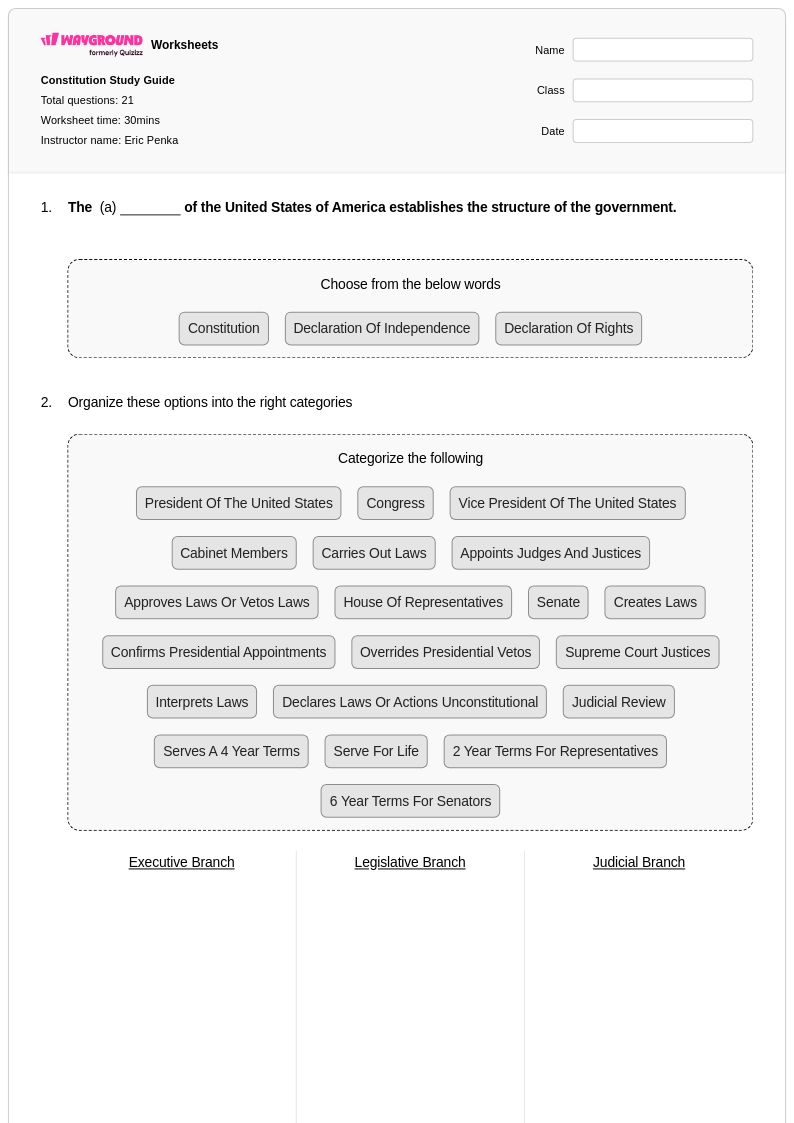
Sorting and classification activities work well — give students a list of governmental actions and have them identify whether each reflects an enumerated power, an implied power, or falls outside congressional authority. Scenario-based questions that require students to cite specific constitutional provisions strengthen analytical skills and prepare them for higher-order assessments. Practice problems that connect congressional powers to landmark Supreme Court cases, such as McCulloch v. Maryland, are especially effective for building contextual understanding.
How can I differentiate instruction on congressional powers for students at different skill levels?
For students who need additional support, reduce the complexity of source texts and focus on the most concrete enumerated powers before introducing implied powers or court cases. On Wayground, teachers can apply individual accommodations such as read aloud, reduced answer choices, and extended time to specific students, while the rest of the class receives standard settings without notification. These accommodations are reusable across future sessions, making differentiation manageable at scale.
How do I use Powers of Congress worksheets from Wayground in my classroom?
Wayground's Powers of Congress worksheets are available as printable PDFs, making them easy to distribute for in-class work, homework, or assessment. They are also available in digital formats, allowing teachers to assign them in technology-integrated classrooms or host them as a quiz directly on the Wayground platform. Each worksheet includes an answer key, so teachers can use them for independent practice, small group review, or formative assessment without additional preparation.
How do I connect the powers of Congress to checks and balances in my lessons?
Frame congressional powers not in isolation, but in relation to how they constrain or interact with executive and judicial authority. For example, Congress's power to declare war, control the budget, and override vetoes directly limits presidential authority, while the Senate's role in confirming appointments creates a check on judicial power. Using scenario-based worksheets that ask students to trace a specific action through all three branches helps them see checks and balances as a dynamic system rather than a static diagram.