Free Printable Pronoun-antecedent Agreement Worksheets for Class 6
Enhance Class 6 students' understanding of pronoun-antecedent agreement with Wayground's comprehensive collection of free worksheets, printable PDFs, and practice problems featuring detailed answer keys.
Explore printable Pronoun-antecedent Agreement worksheets for Class 6
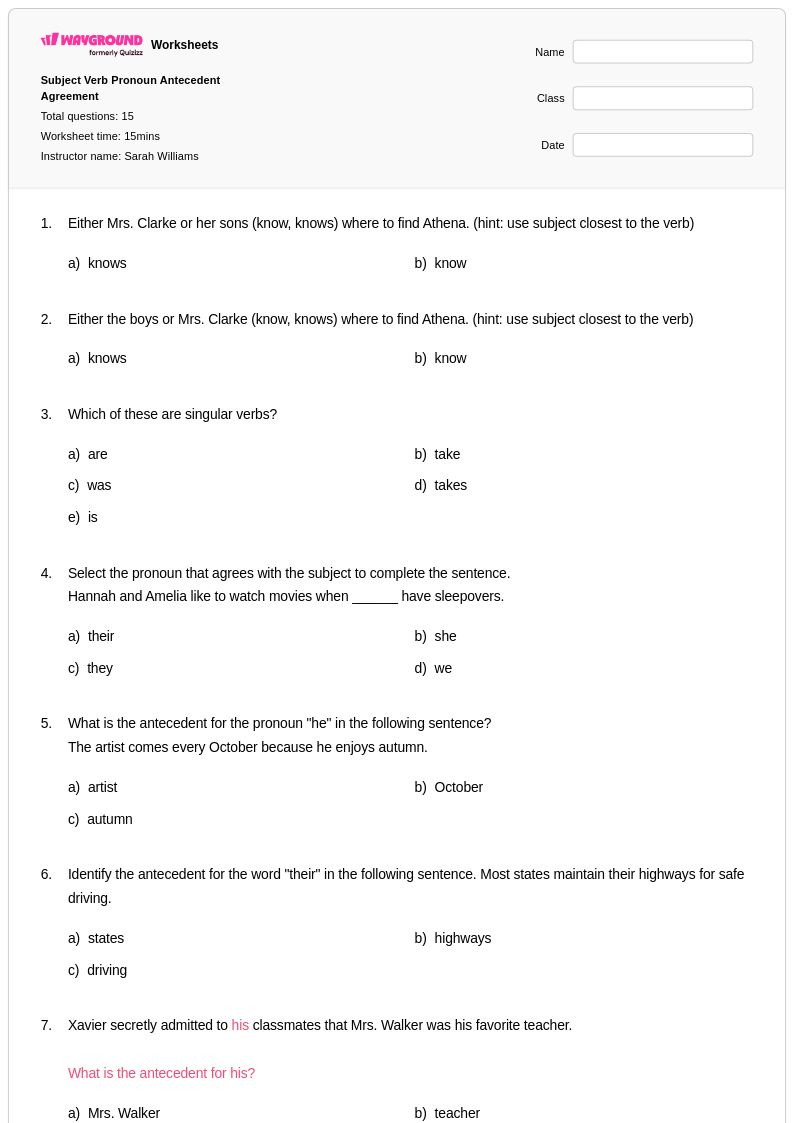
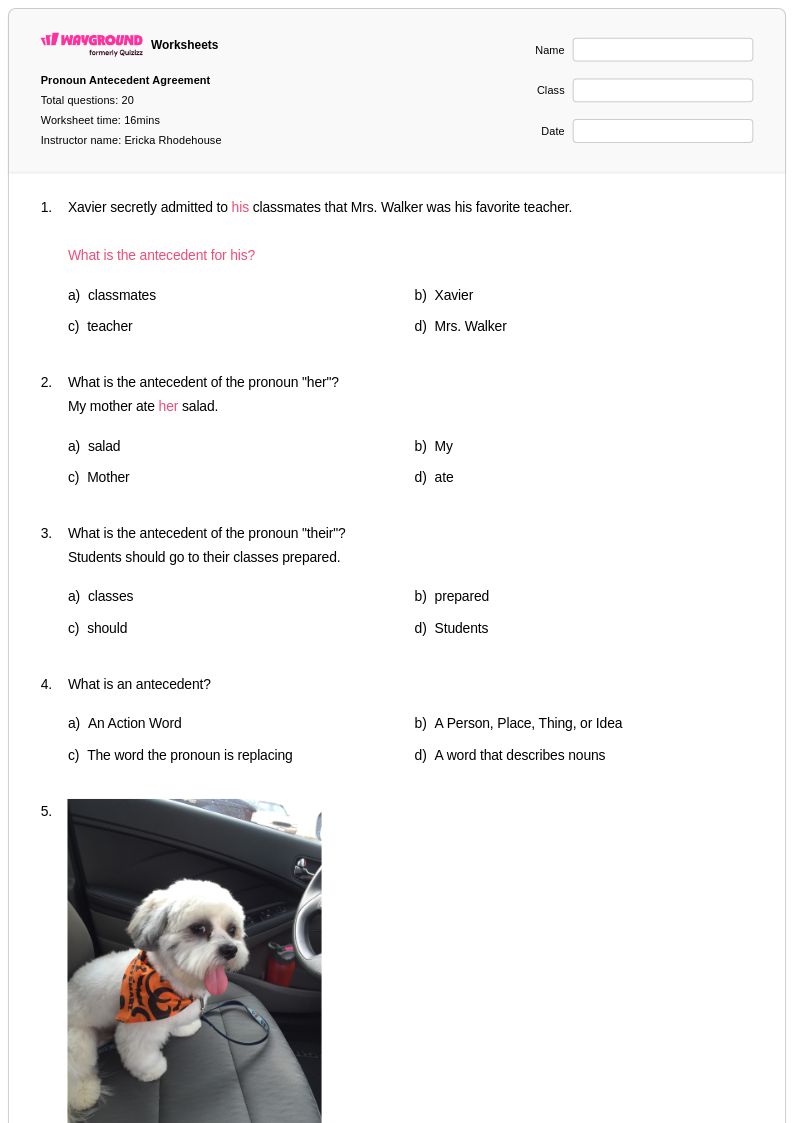
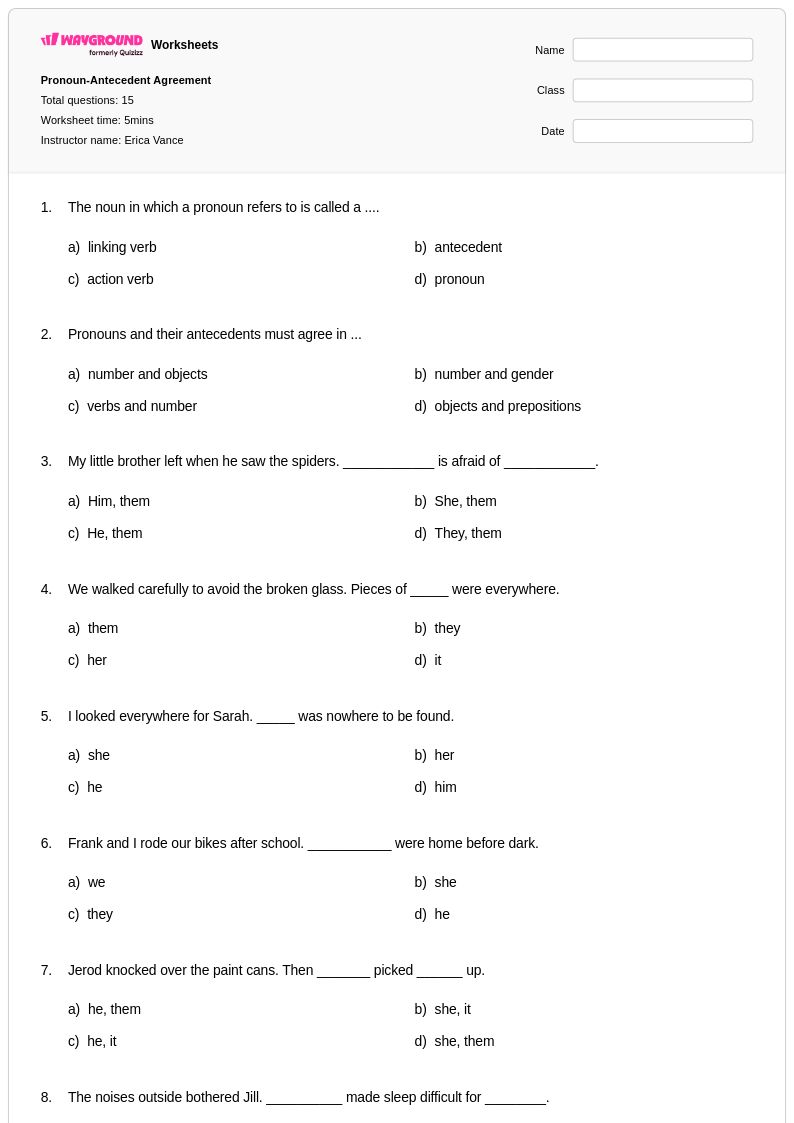
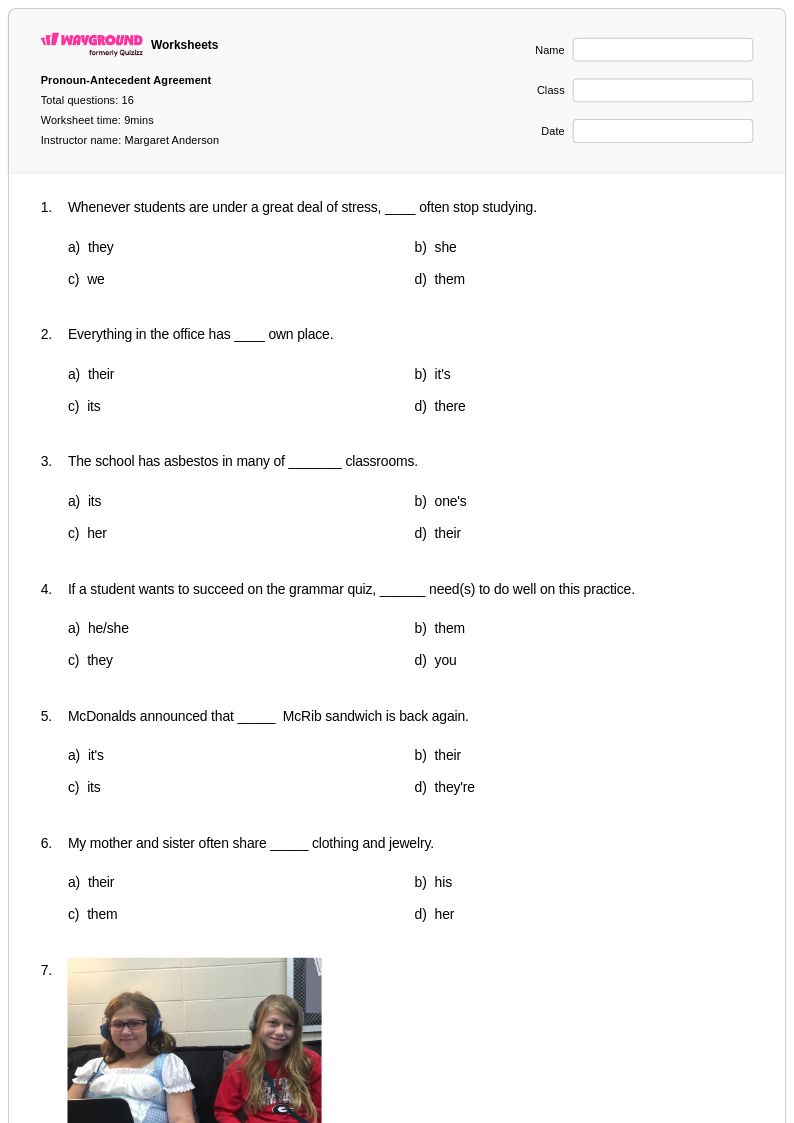
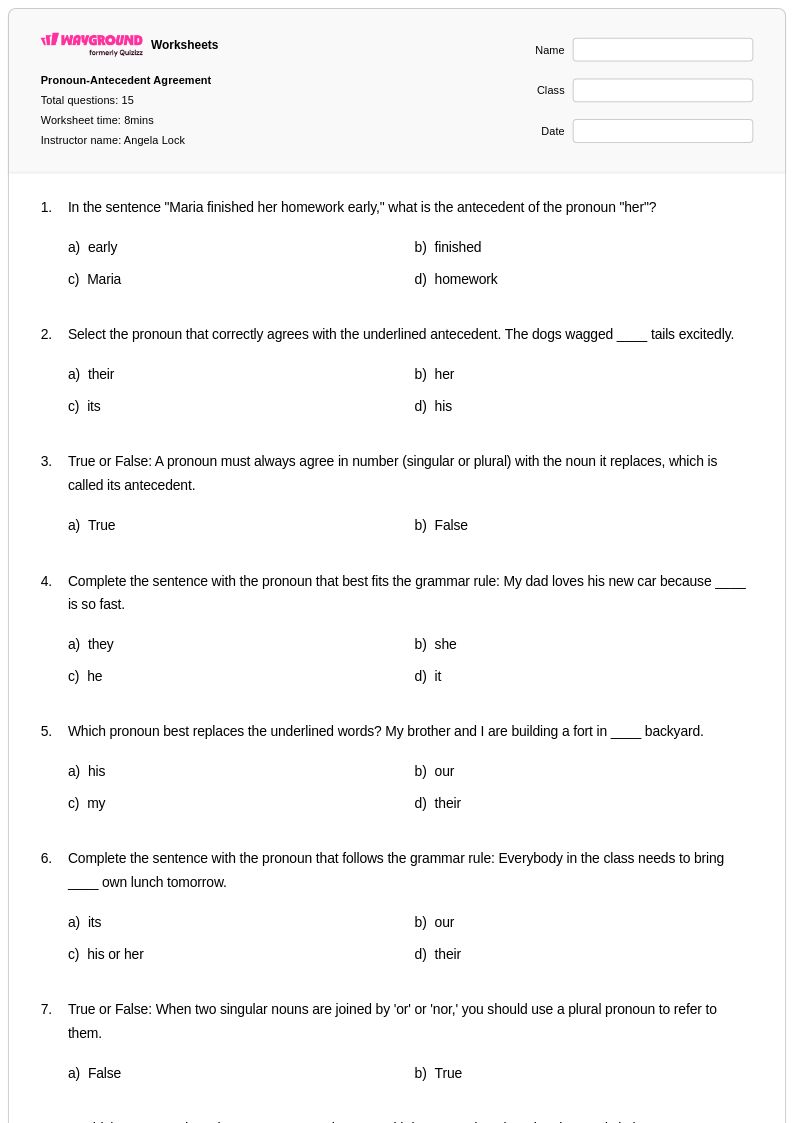
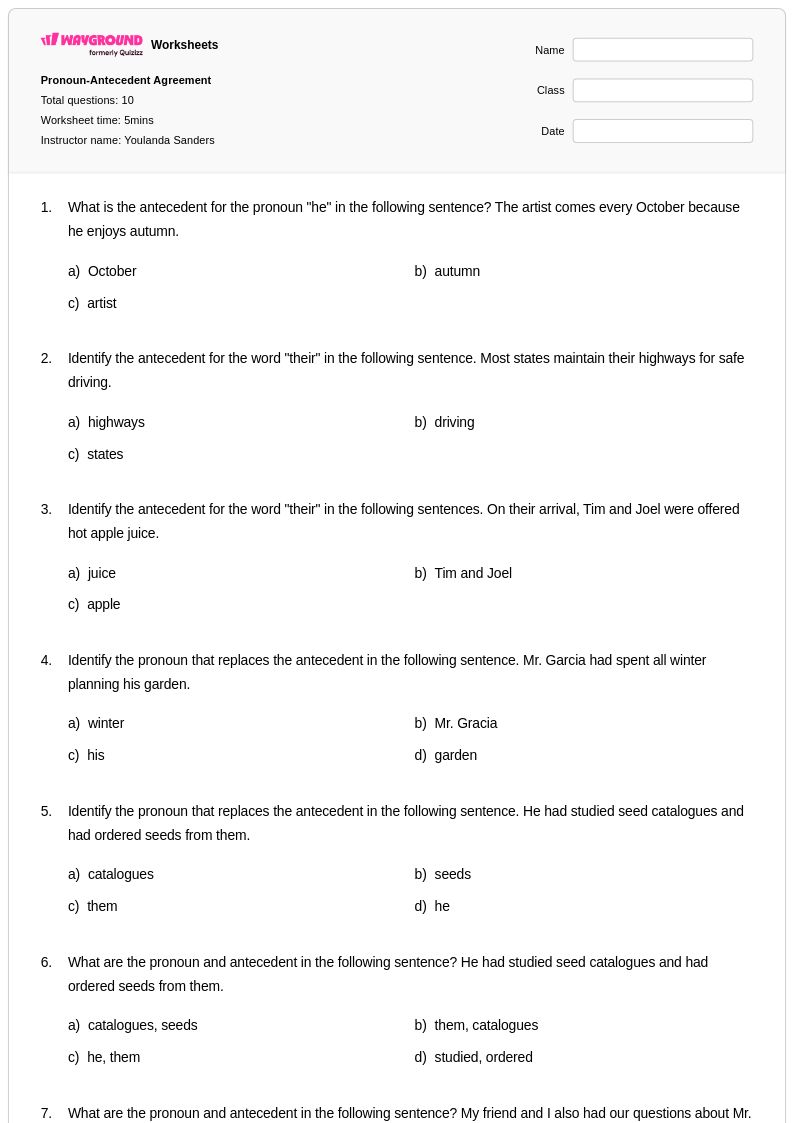
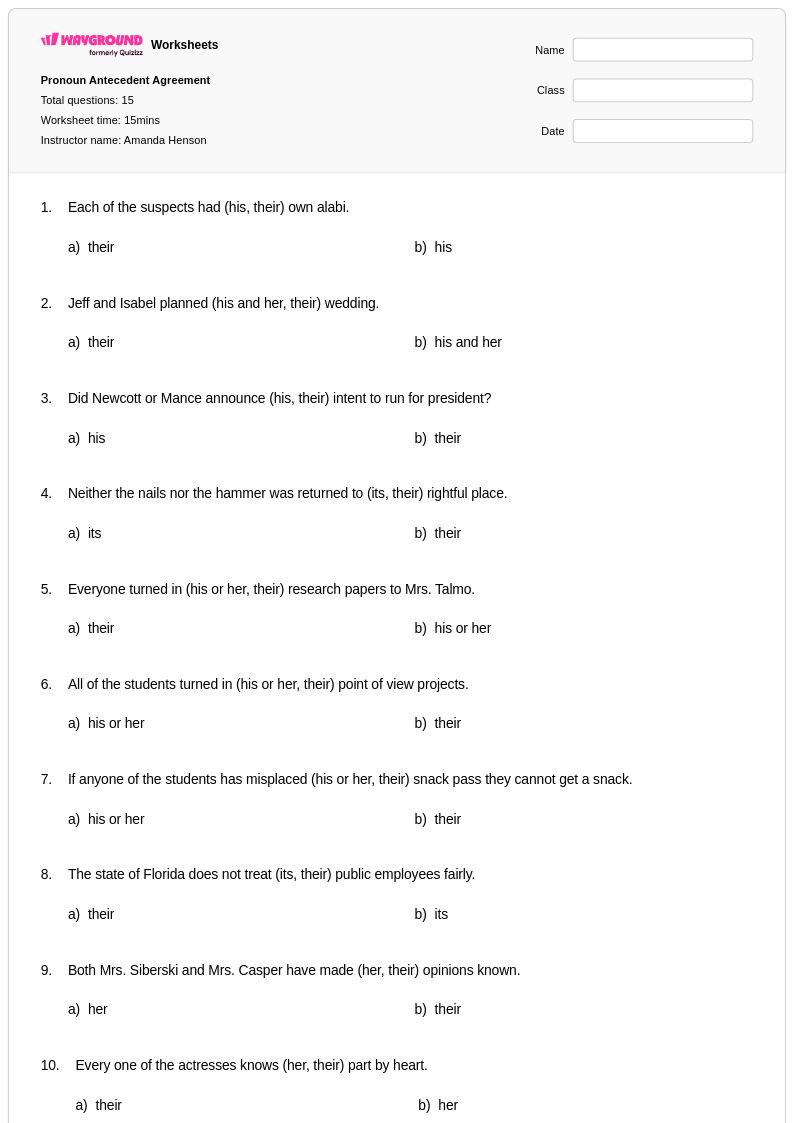
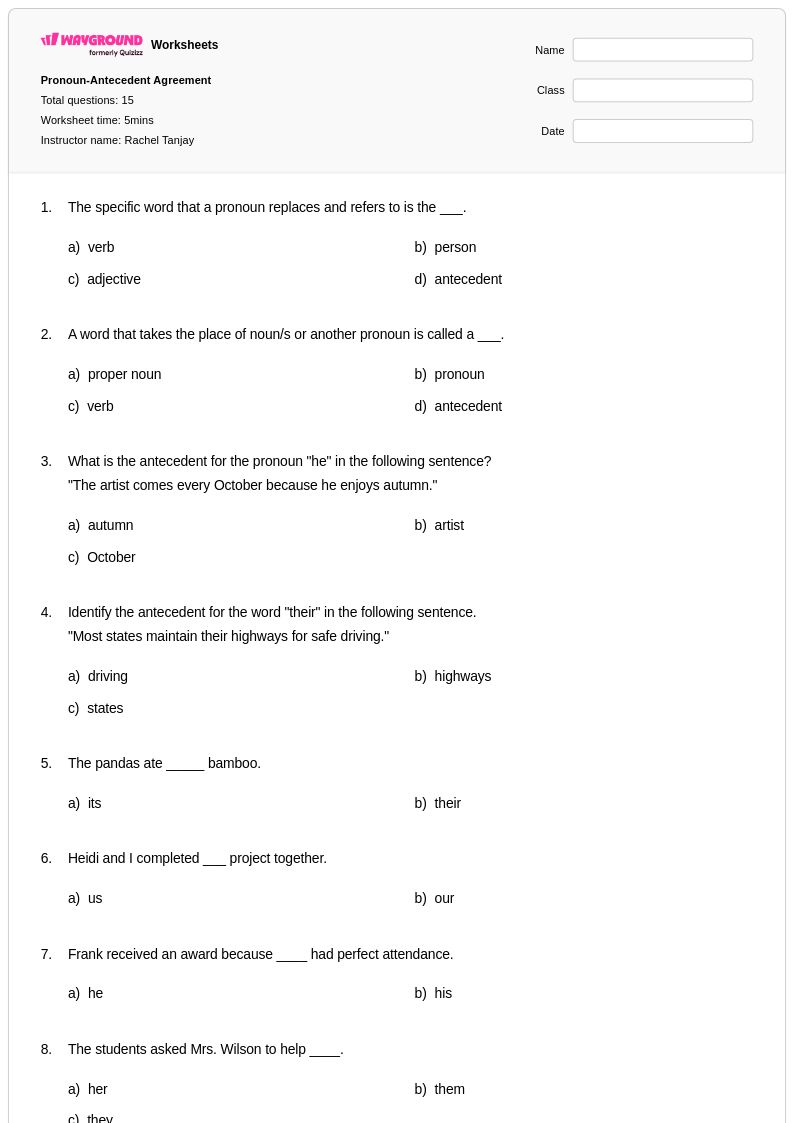
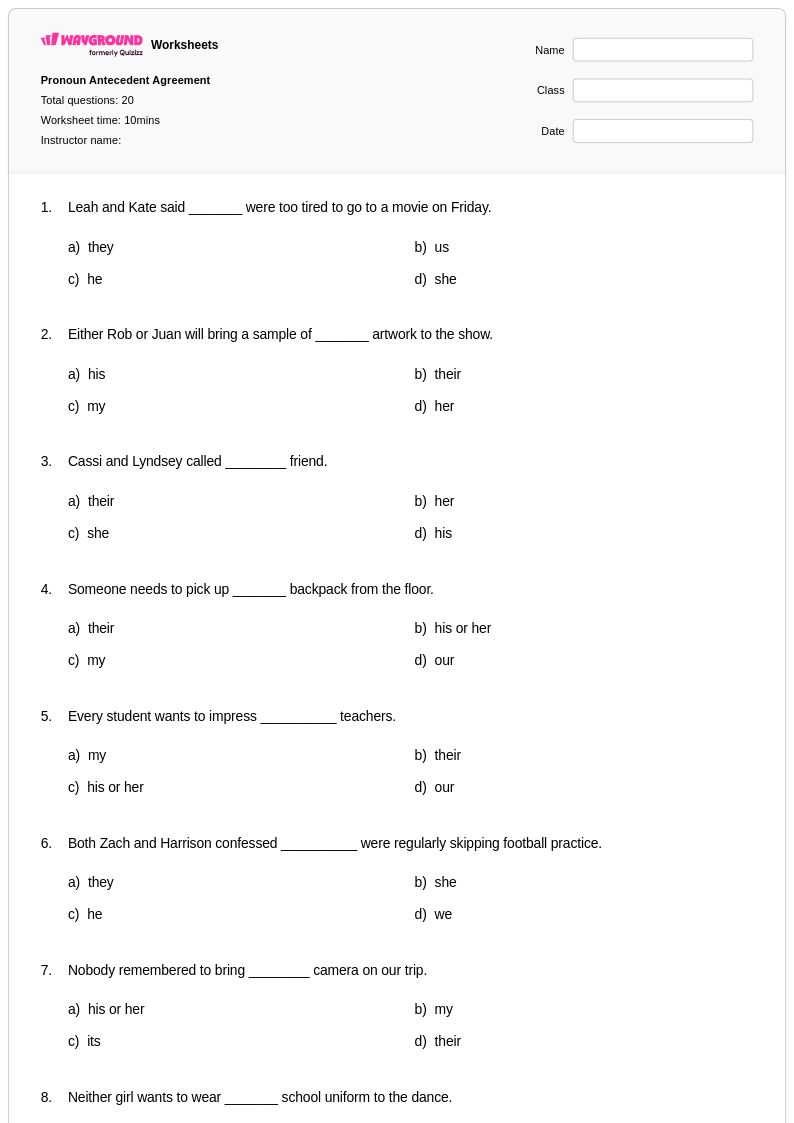
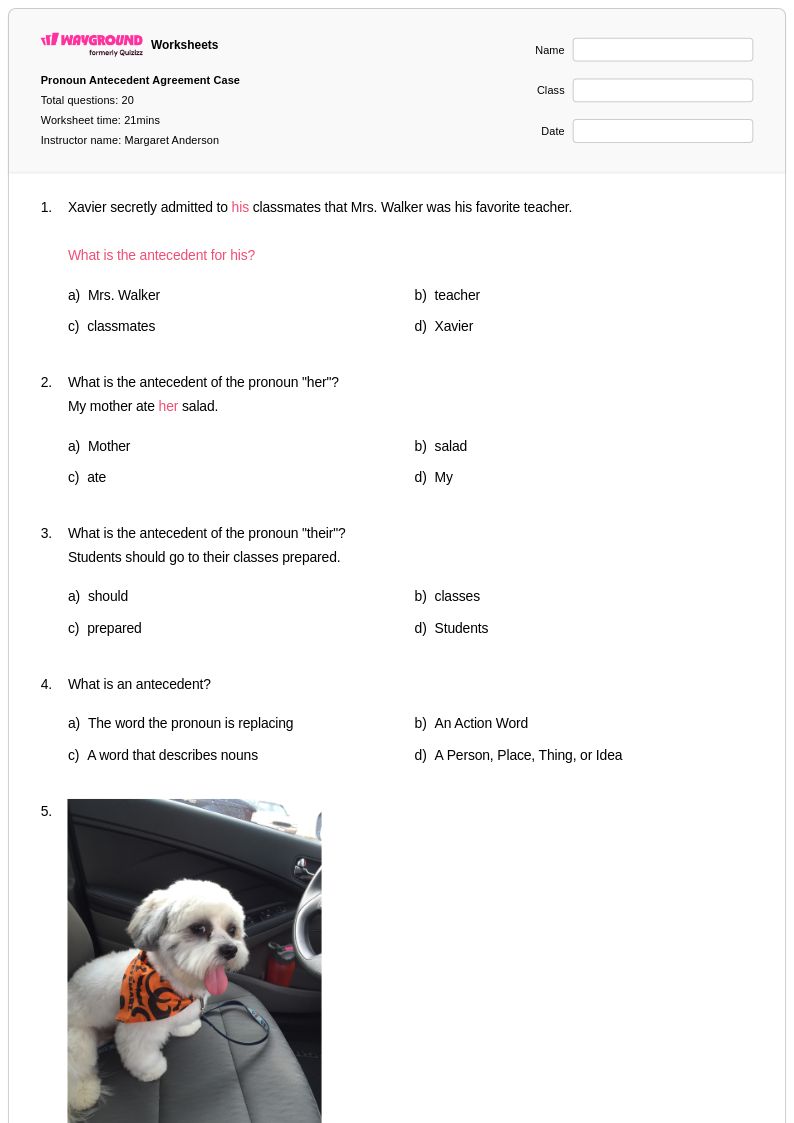
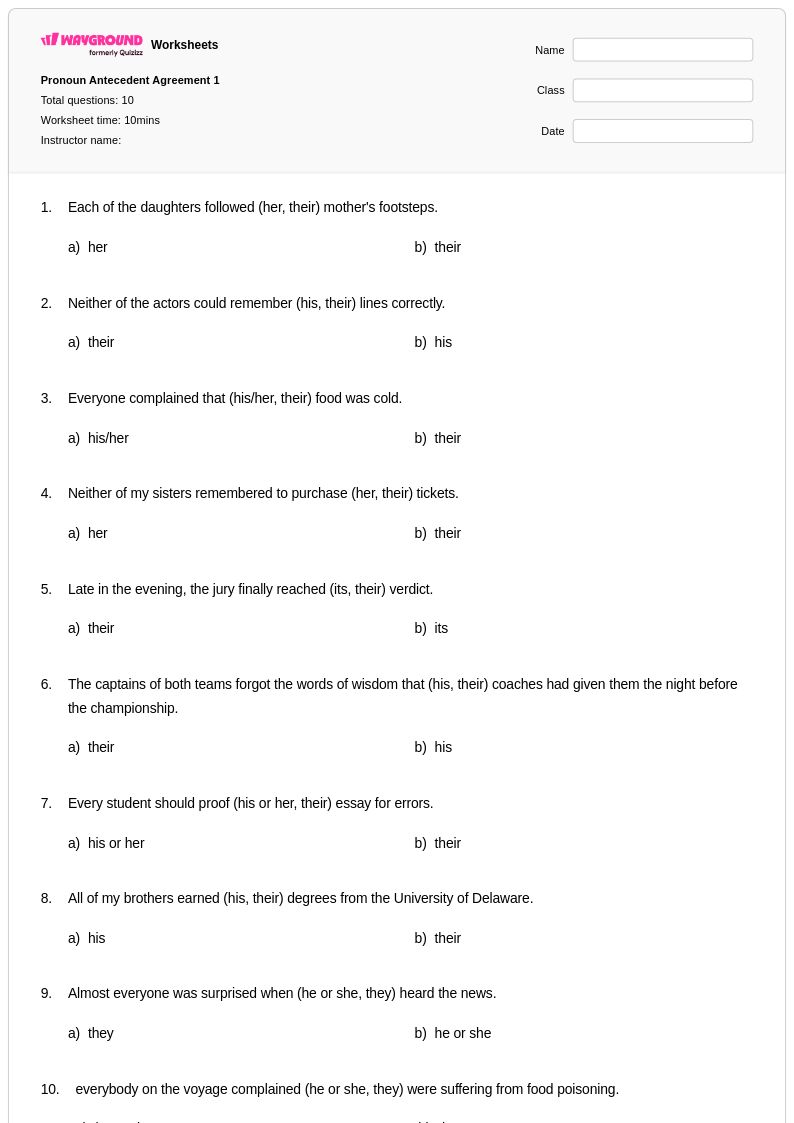
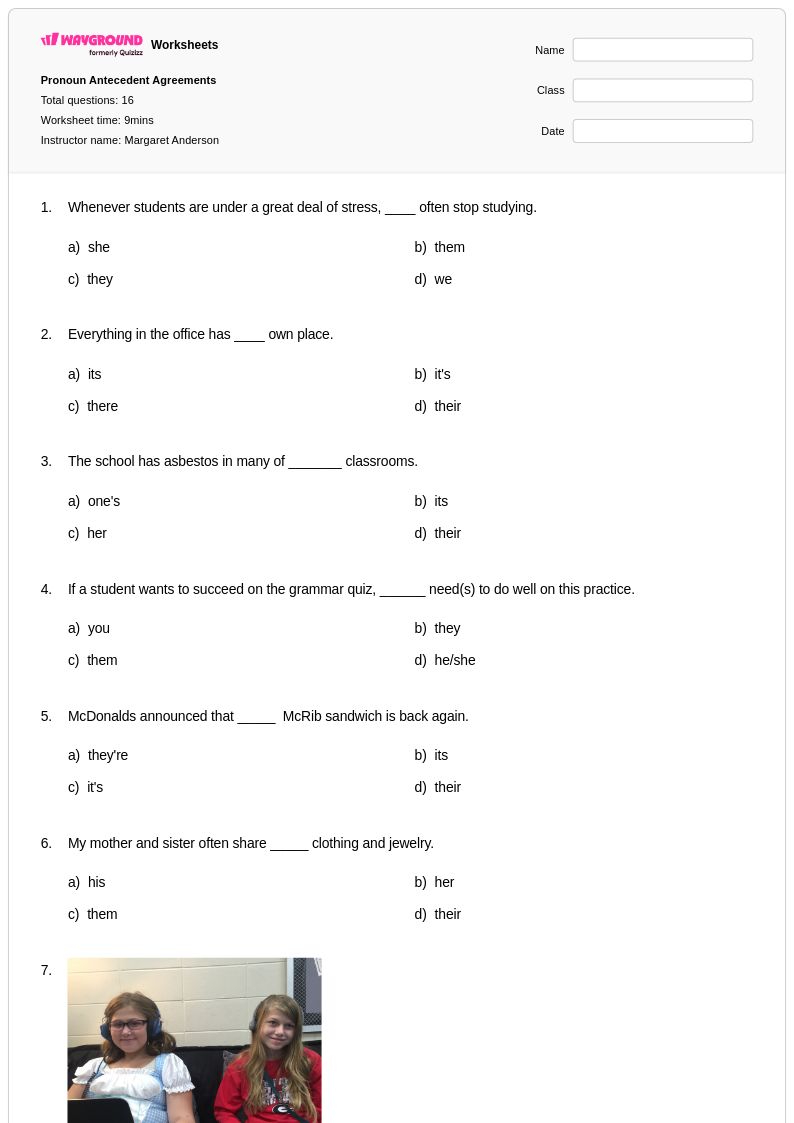
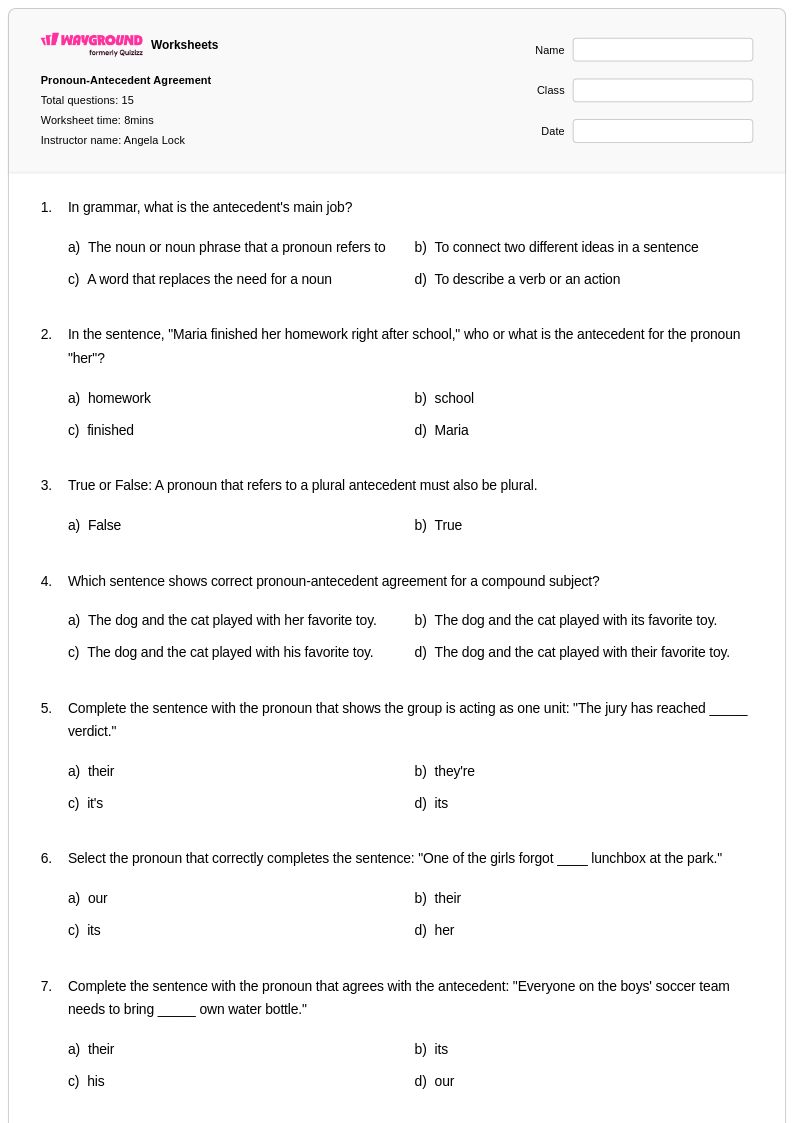
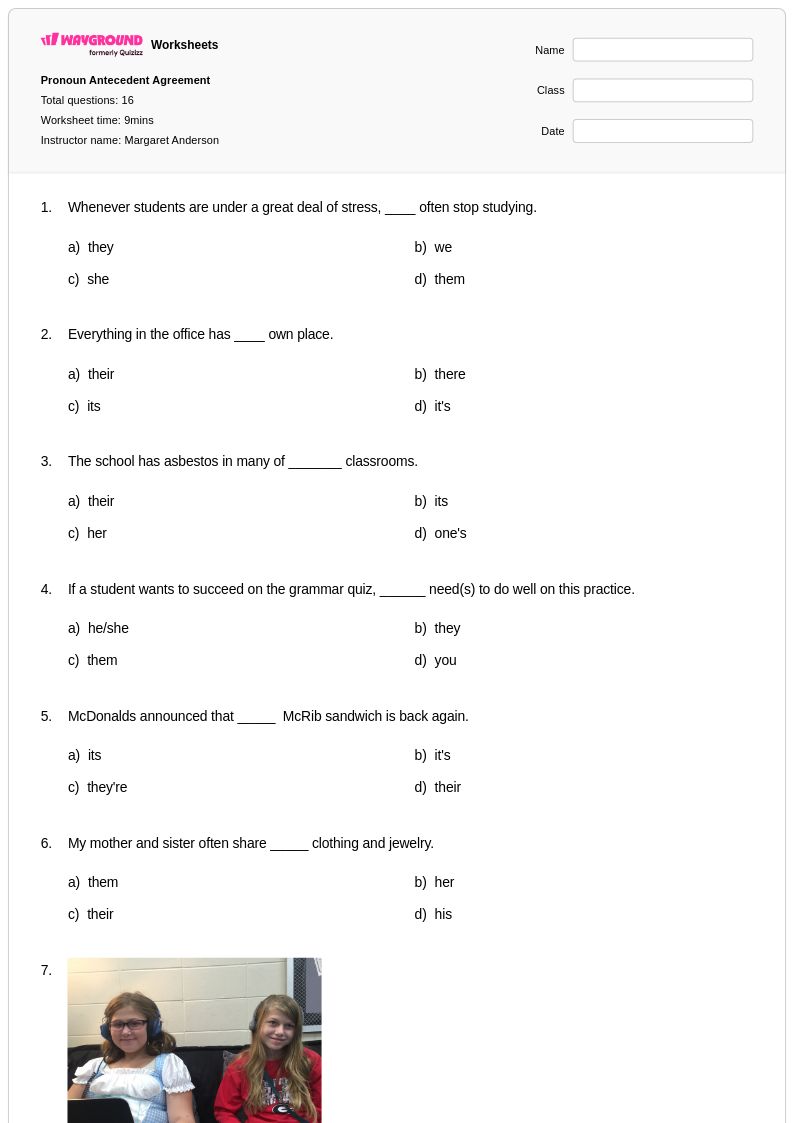
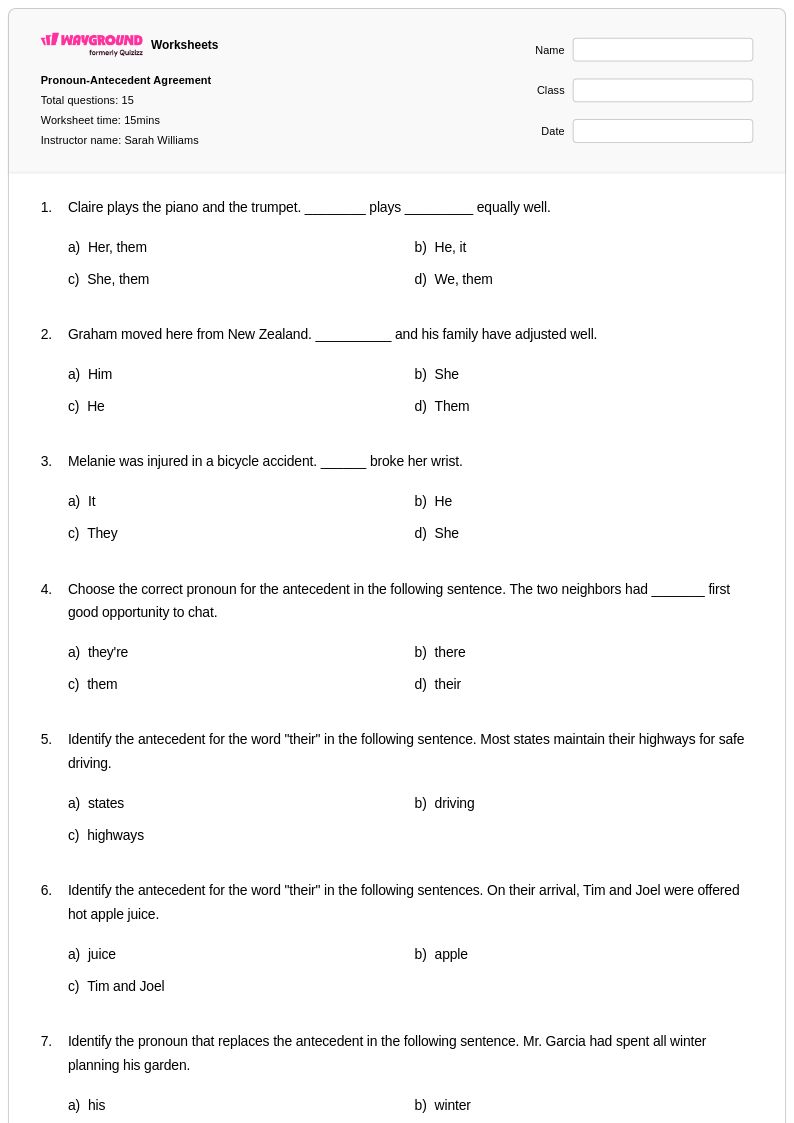
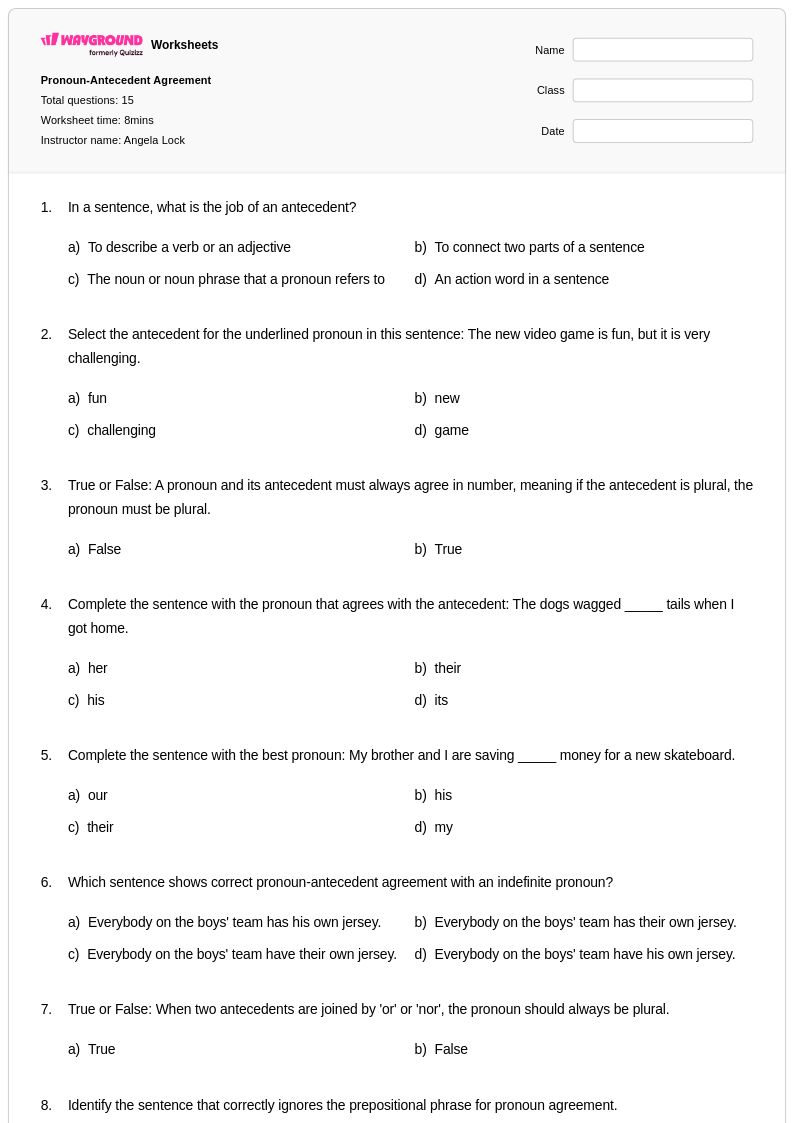
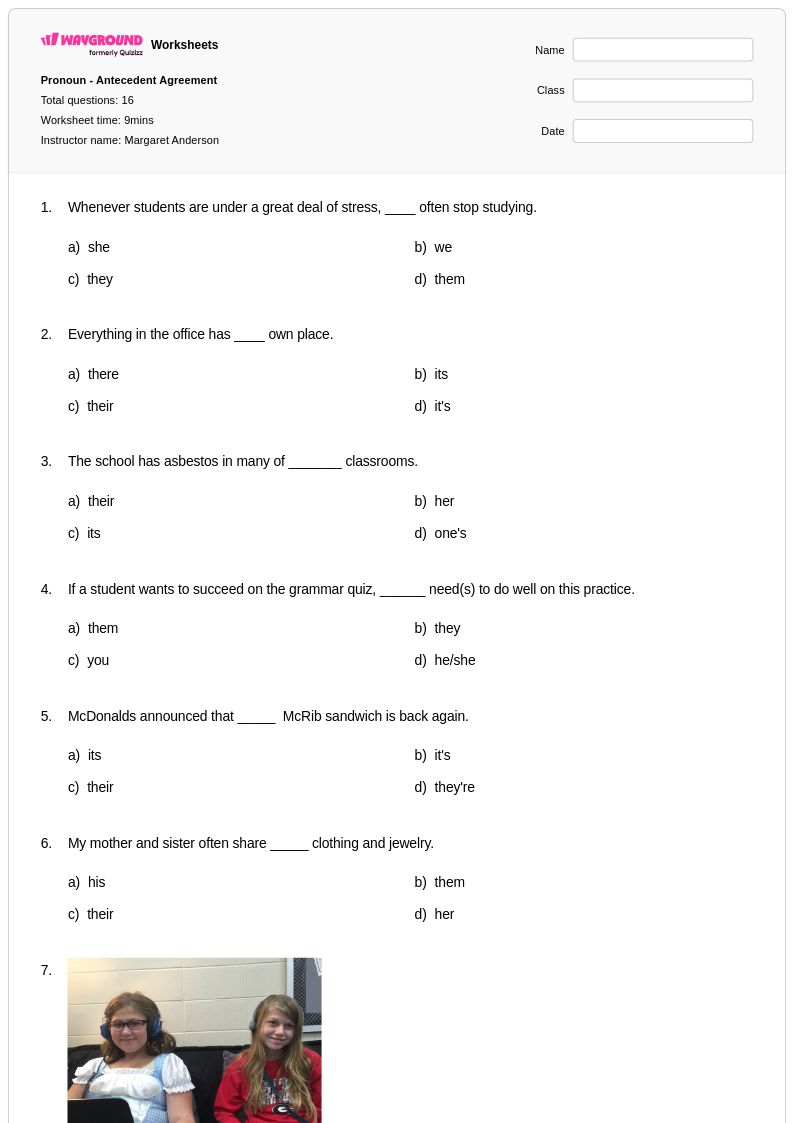
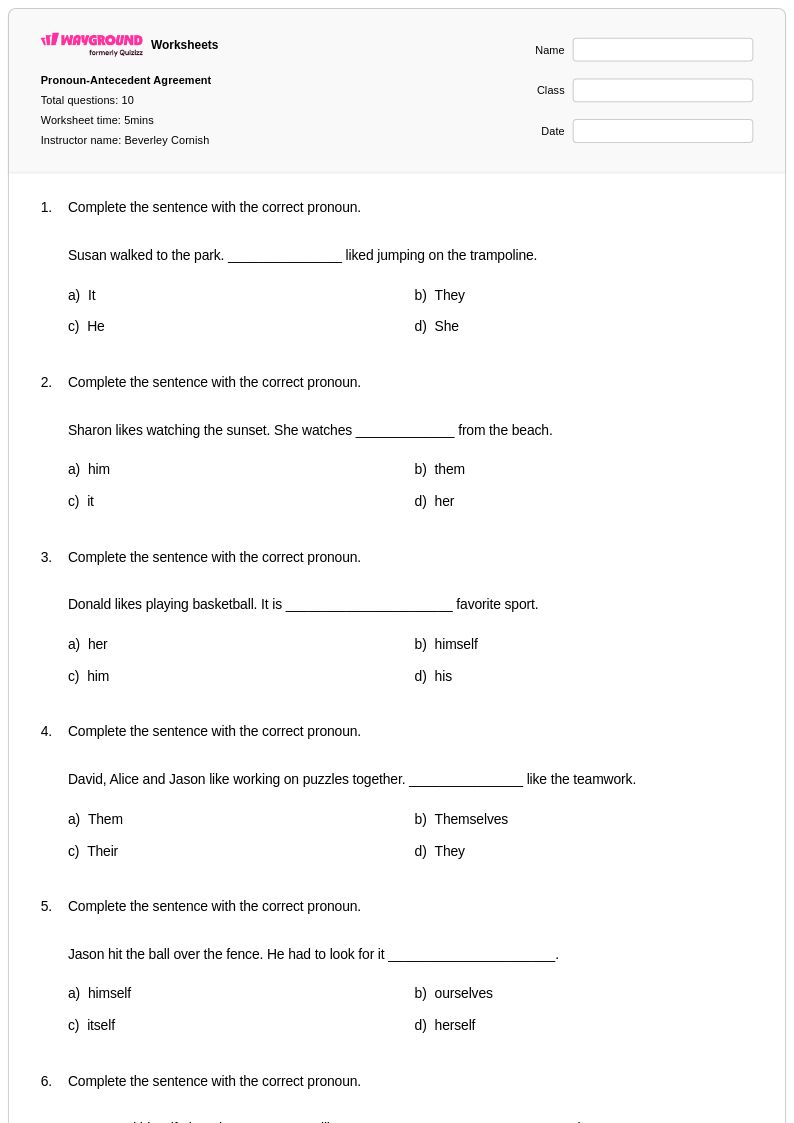
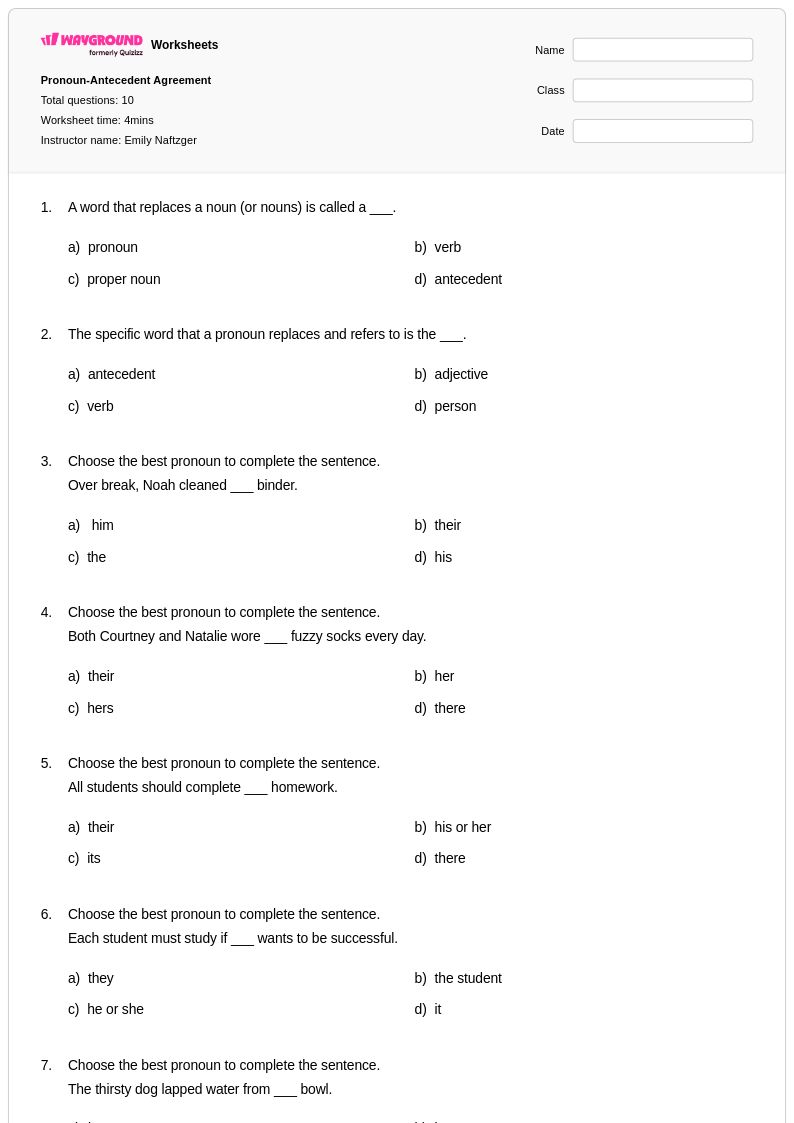
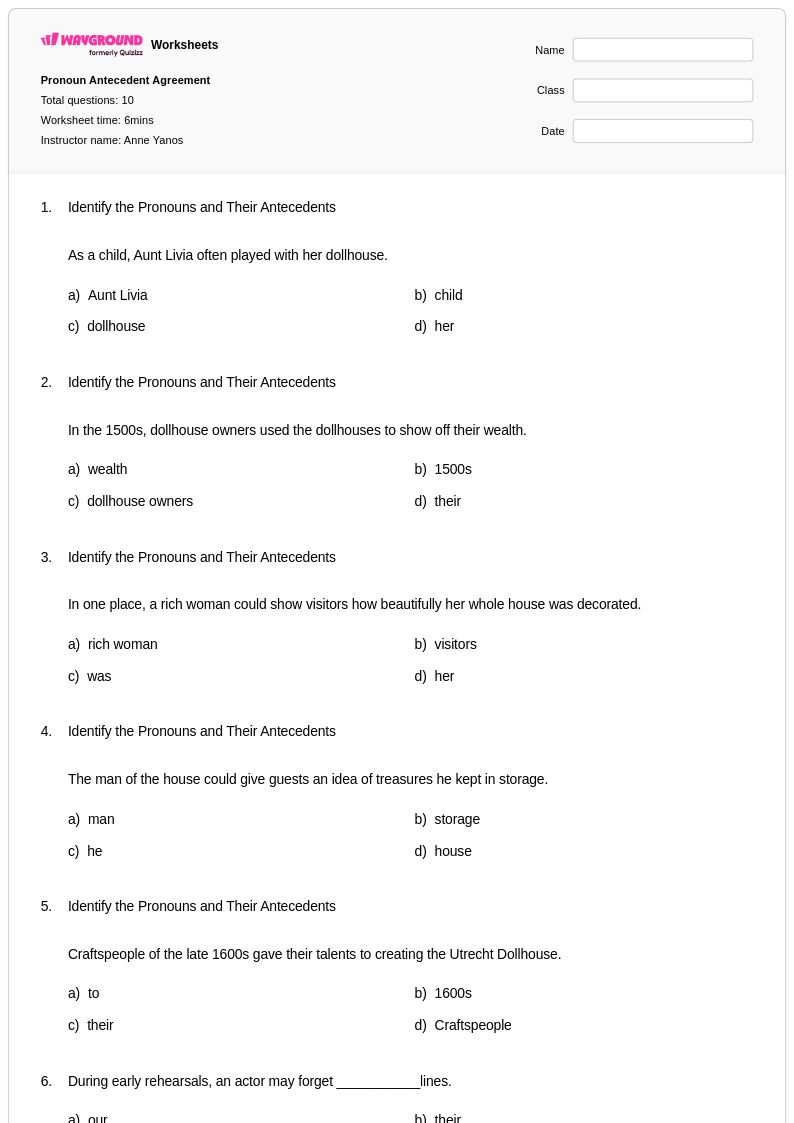
Pronoun-antecedent agreement worksheets for Class 6 students available through Wayground (formerly Quizizz) provide comprehensive practice in mastering one of English grammar's most essential skills. These educational resources focus on helping sixth-grade learners understand how pronouns must correctly correspond with their antecedents in number, gender, and person, ensuring clear and grammatically accurate communication. The worksheets strengthen critical thinking abilities as students identify antecedents within complex sentence structures, select appropriate pronouns, and recognize common agreement errors in both their own writing and published texts. Each printable resource includes detailed answer keys and practice problems that progress from basic singular and plural agreements to more challenging scenarios involving indefinite pronouns, compound antecedents, and collective nouns, making these free materials invaluable for systematic skill development.
Wayground (formerly Quizizz) empowers educators with access to millions of teacher-created pronoun-antecedent agreement resources specifically designed for Class 6 English instruction. The platform's advanced search and filtering capabilities allow teachers to quickly locate worksheets that align with specific curriculum standards and match their students' varying proficiency levels, while built-in differentiation tools enable seamless customization for diverse learning needs. Teachers can easily modify existing materials or combine multiple resources to create targeted practice sessions, remediation activities, or enrichment challenges that address individual student gaps in pronoun usage. Available in both printable pdf format and interactive digital versions, these comprehensive worksheet collections streamline lesson planning while providing flexible options for in-class instruction, homework assignments, and assessment preparation, ensuring students develop confident mastery of pronoun-antecedent agreement rules.
FAQs
How do I teach pronoun-antecedent agreement to my students?
Start by ensuring students can identify the antecedent — the noun a pronoun refers back to — before asking them to evaluate whether the pronoun matches it in number, gender, and person. Anchor instruction in clear examples that isolate one agreement rule at a time, such as singular indefinite pronouns (everyone, nobody) before moving to compound antecedents joined by 'or' or 'nor'. Using sentence-level practice before moving to full-paragraph editing helps students build the skill incrementally without cognitive overload.
What exercises help students practice pronoun-antecedent agreement?
Effective practice moves from recognition to correction to production. Identification exercises — where students underline the antecedent and circle its pronoun — build foundational awareness, while error-correction tasks develop editing judgment. Sentence-rewriting activities that require students to fix agreement errors in context are particularly useful because they mirror the proofreading demands of real academic writing. Pronoun-antecedent agreement worksheets on Wayground include varied practice problems ranging from basic identification to complex sentence analysis, giving students multiple entry points into the skill.
What mistakes do students commonly make with pronoun-antecedent agreement?
The most persistent errors involve singular indefinite antecedents like 'everyone,' 'someone,' and 'nobody,' which students routinely pair with plural pronouns (e.g., 'Everyone brought their lunch' instead of 'his or her lunch'). Students also struggle with compound antecedents joined by 'or' or 'nor,' where the pronoun must agree with the closer antecedent — a rule that feels counterintuitive. Collective nouns such as 'team' or 'committee' cause additional confusion because they can be singular or plural depending on context, and students often apply the wrong interpretation.
How do I differentiate pronoun-antecedent agreement instruction for students at different levels?
For students who need foundational support, limit practice to singular and plural nouns with clear, concrete antecedents before introducing indefinite pronouns or compound structures. Advanced learners benefit from passage-level editing tasks and writing prompts that require accurate pronoun use under authentic conditions. On Wayground, differentiation tools allow teachers to customize materials for students at various skill levels, from those requiring foundational practice to advanced learners ready for challenging applications. Wayground also supports individual accommodations such as read aloud, extended time, and reduced answer choices, which can be assigned per student without affecting the rest of the class.
How do I use pronoun-antecedent agreement worksheets from Wayground in my classroom?
Wayground's pronoun-antecedent agreement worksheets are available as free printable PDFs for traditional classroom use and in digital formats for technology-integrated or hybrid learning environments, including the option to host them as a quiz directly on Wayground. Each worksheet includes a complete answer key, making them effective for independent practice, small-group instruction, or whole-class review without requiring additional prep. Teachers can use the platform's search and filtering tools to locate materials that match specific grammar standards or skill levels quickly.
When should I introduce pronoun-antecedent agreement in my grammar curriculum?
Pronoun-antecedent agreement is most effective after students have a working understanding of pronoun types (personal, indefinite, relative) and basic noun-verb agreement, typically in upper elementary through middle school. Revisiting the concept in high school grammar instruction is valuable because errors persist in student writing well into secondary grades, particularly with indefinite antecedents and collective nouns. Embedding the skill within writing feedback cycles — not just isolated grammar drills — helps students transfer the rule to their own compositions.