Free Printable Public Speaking Worksheets for Class 10
Enhance Class 10 students' public speaking confidence and communication skills with Wayground's comprehensive collection of free worksheets, printables, and practice exercises featuring structured activities and detailed answer keys.
Explore printable Public Speaking worksheets for Class 10
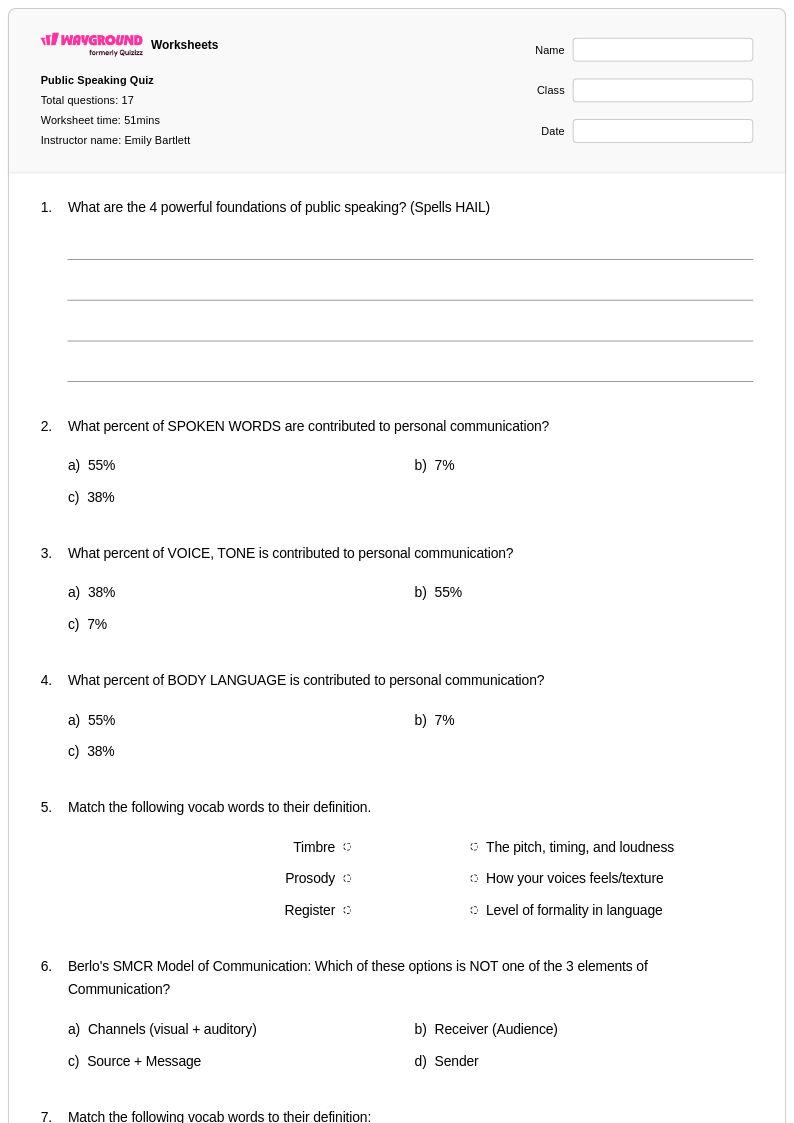
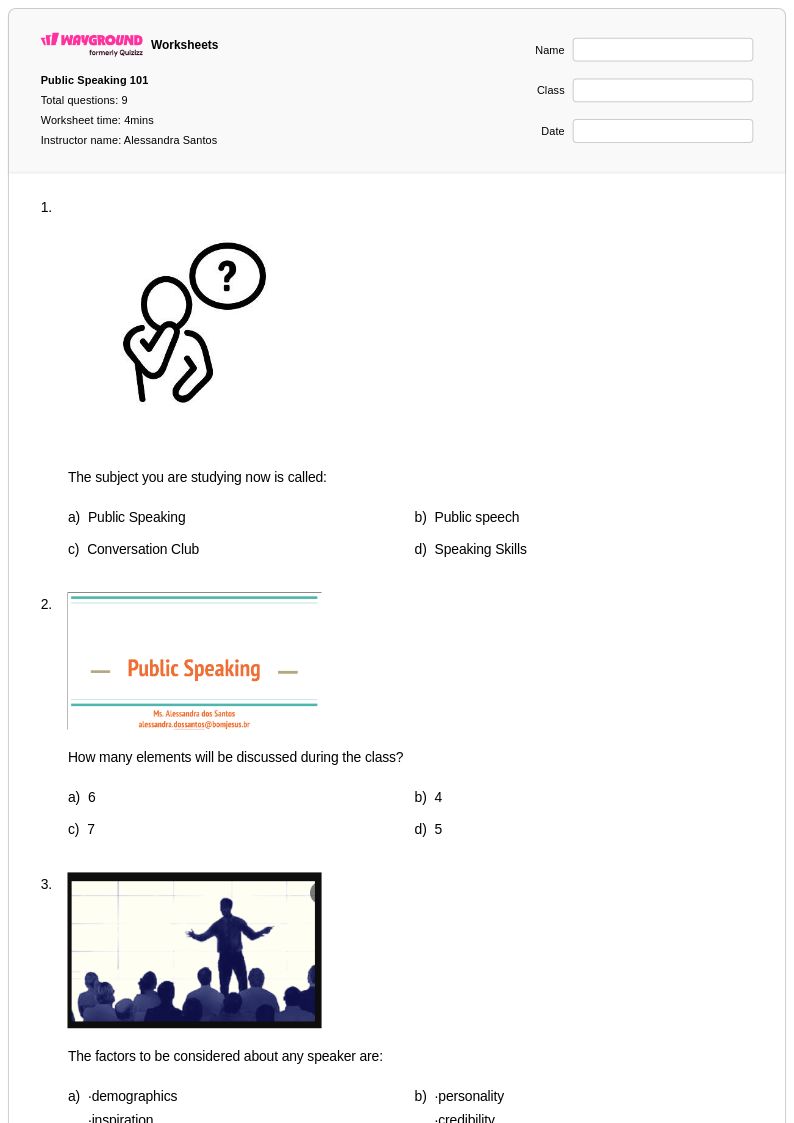
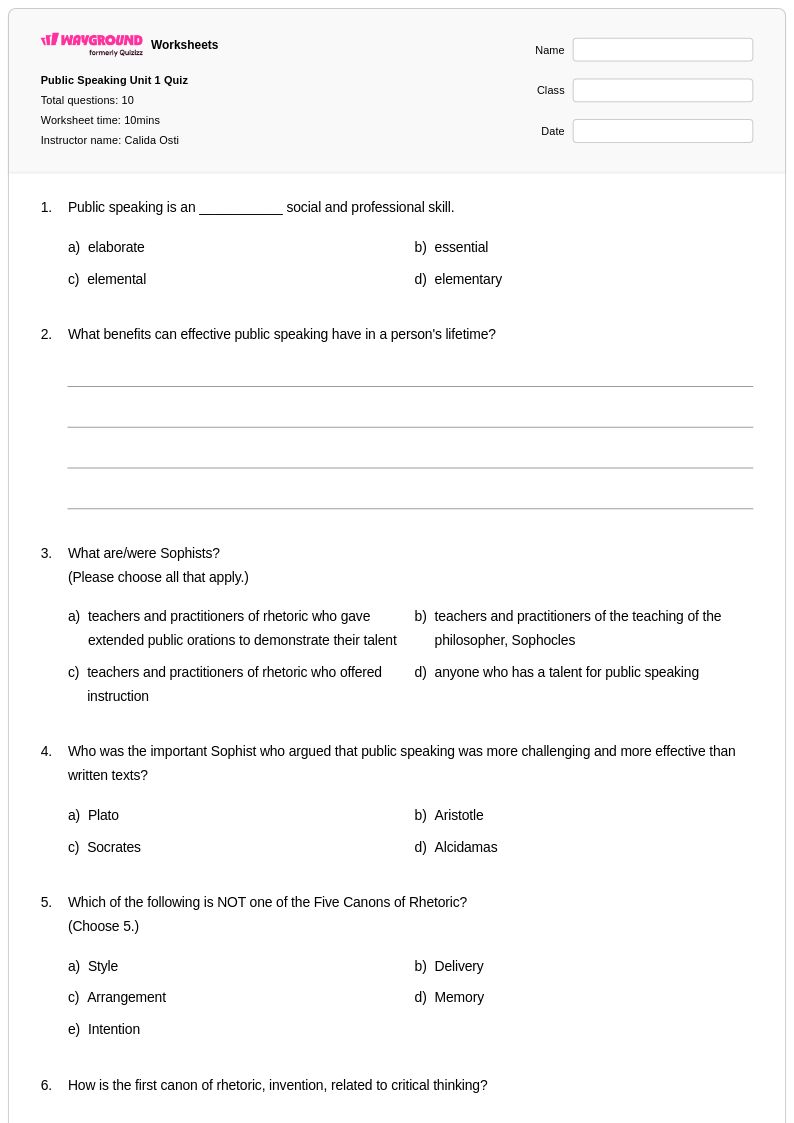
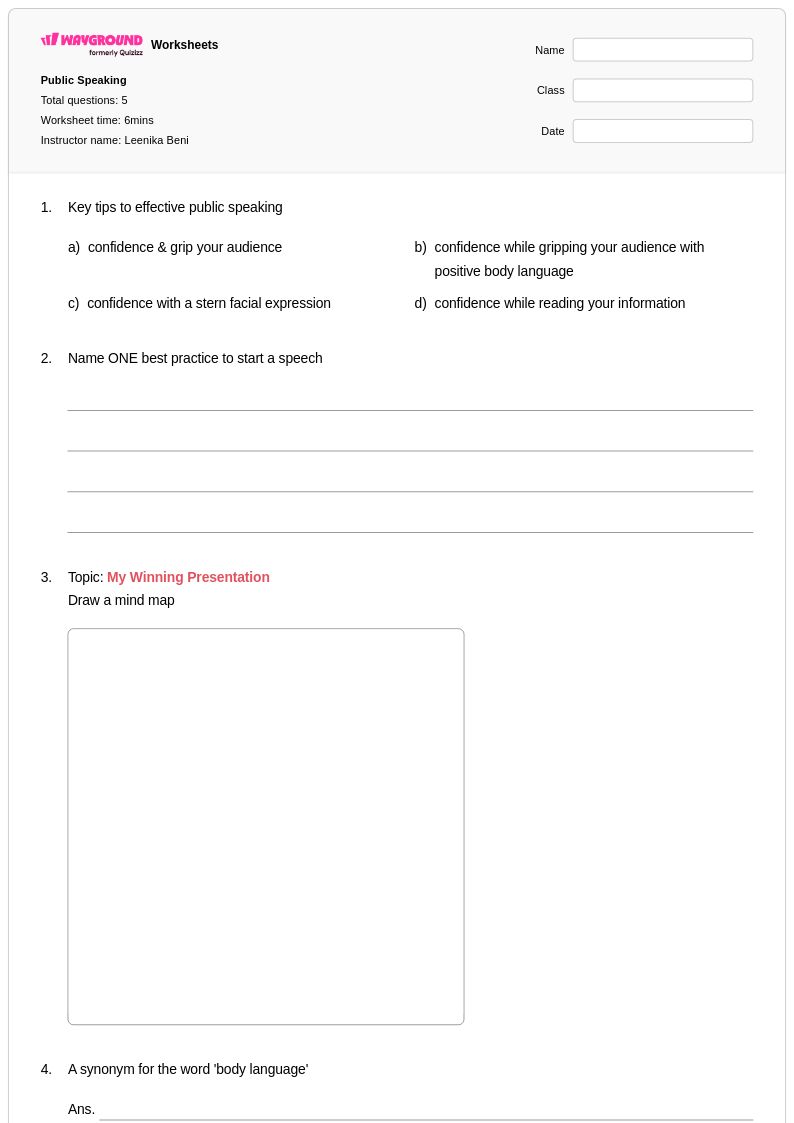
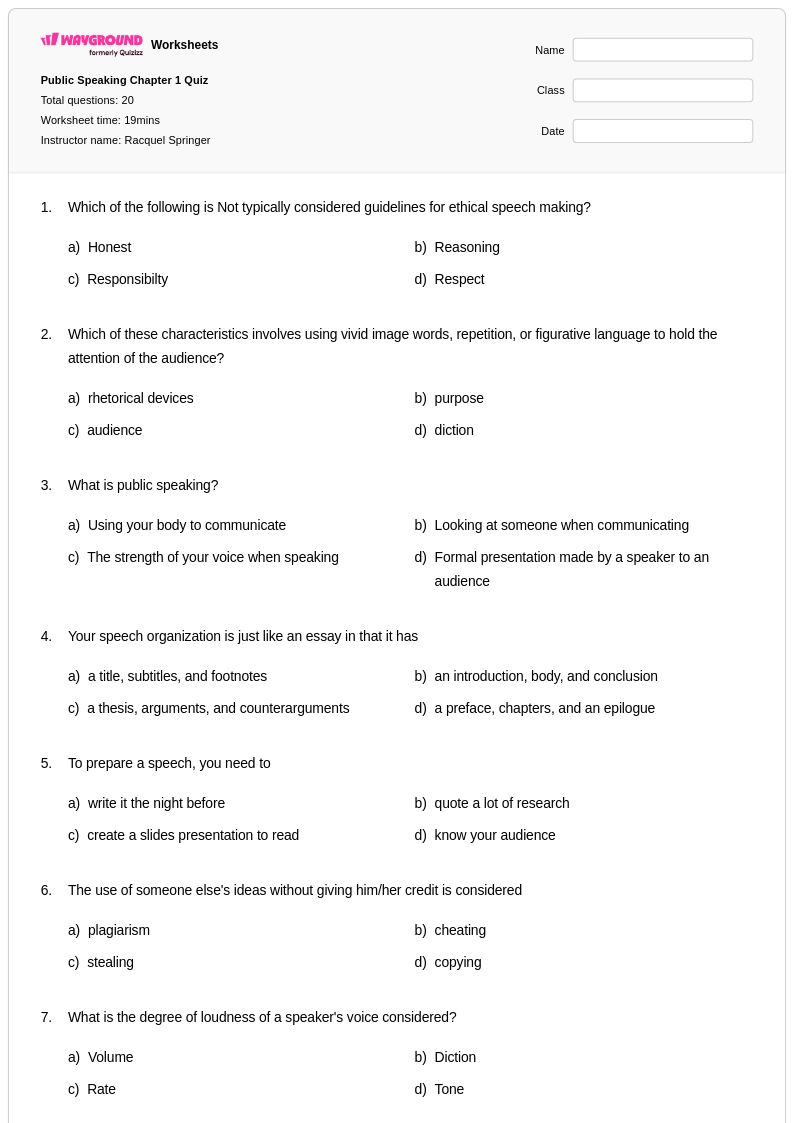
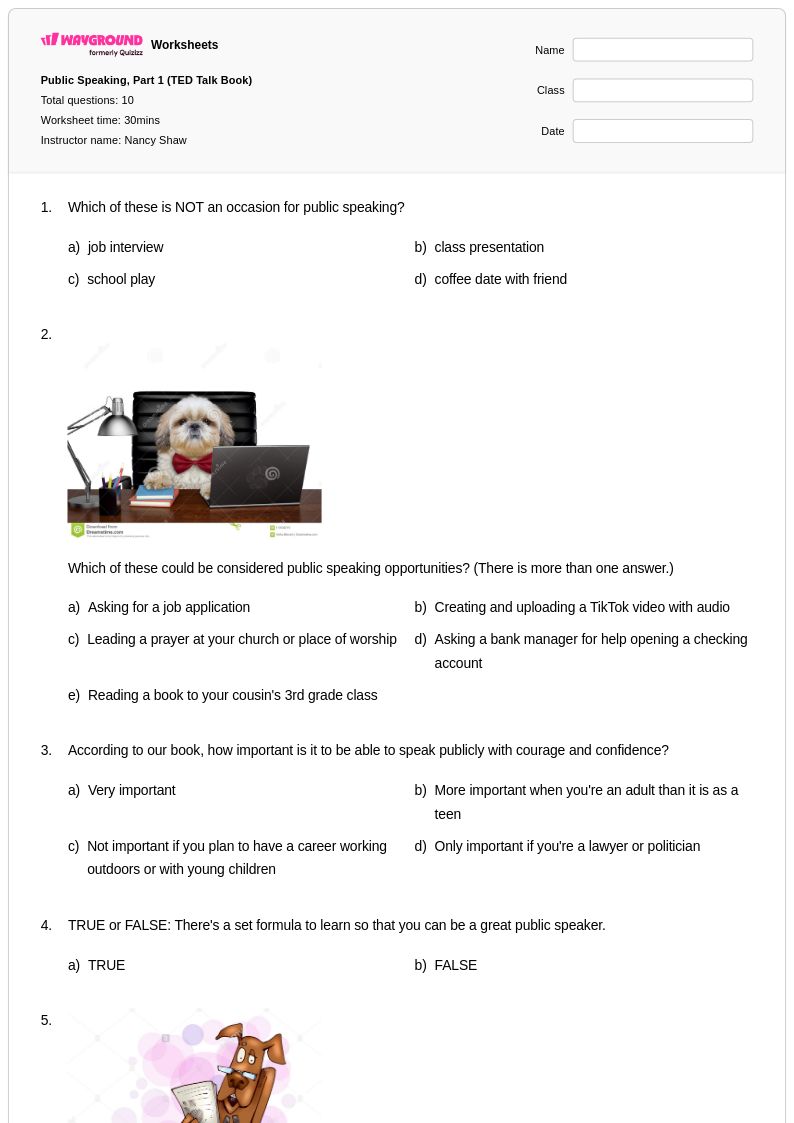
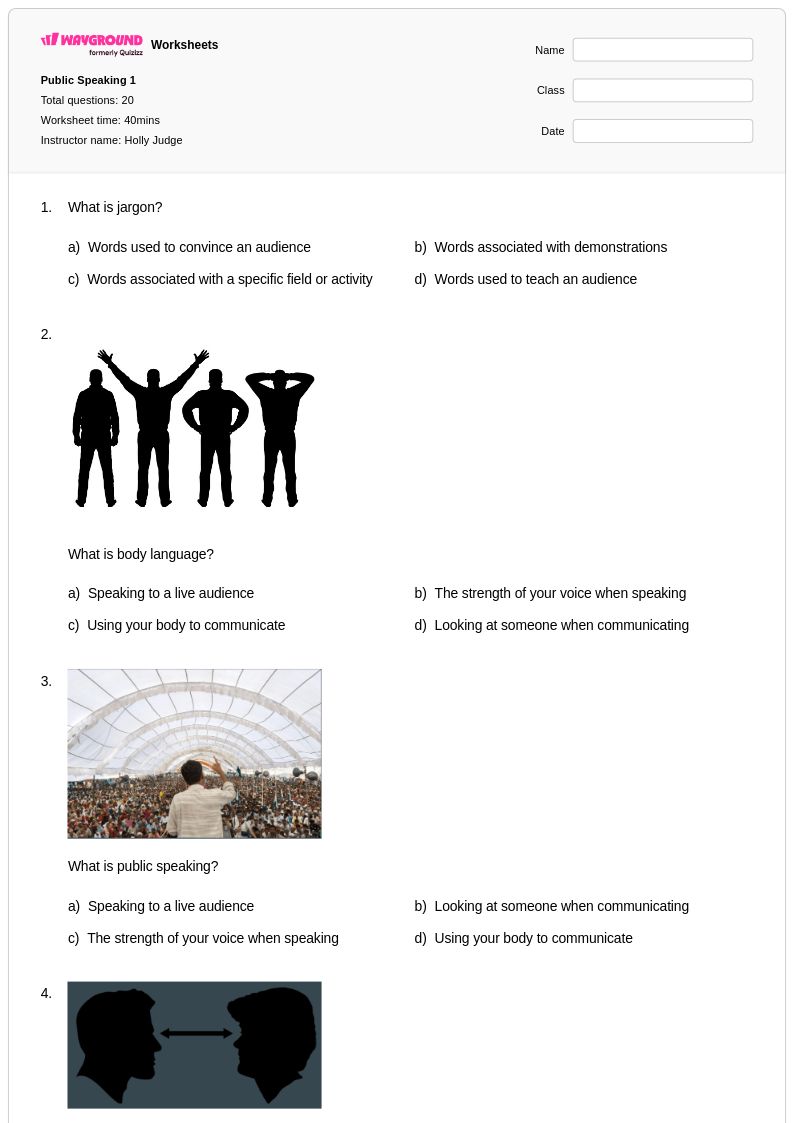
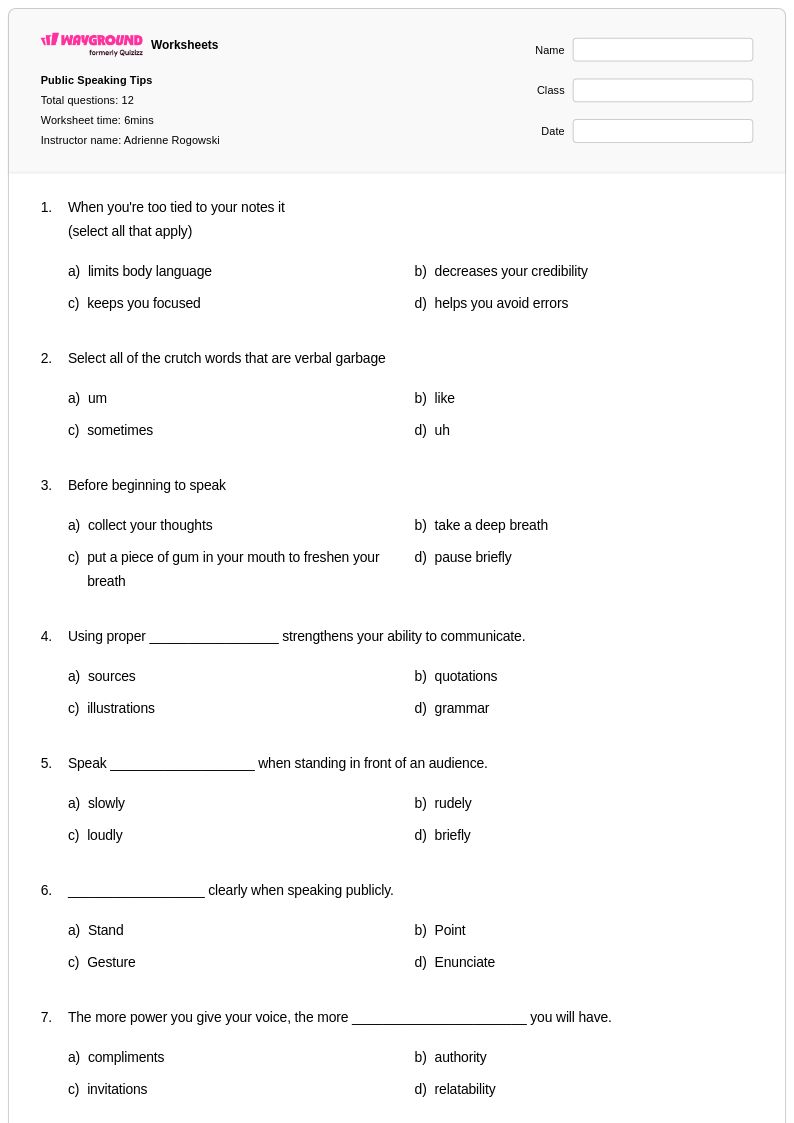
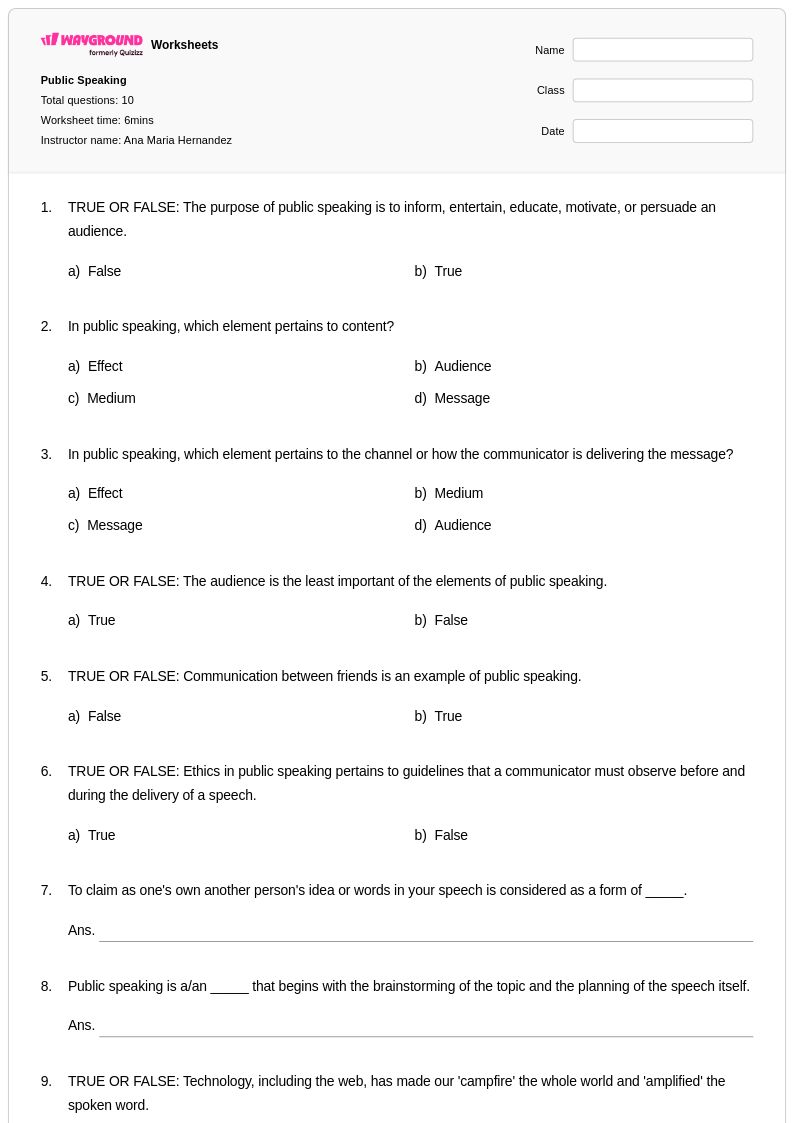
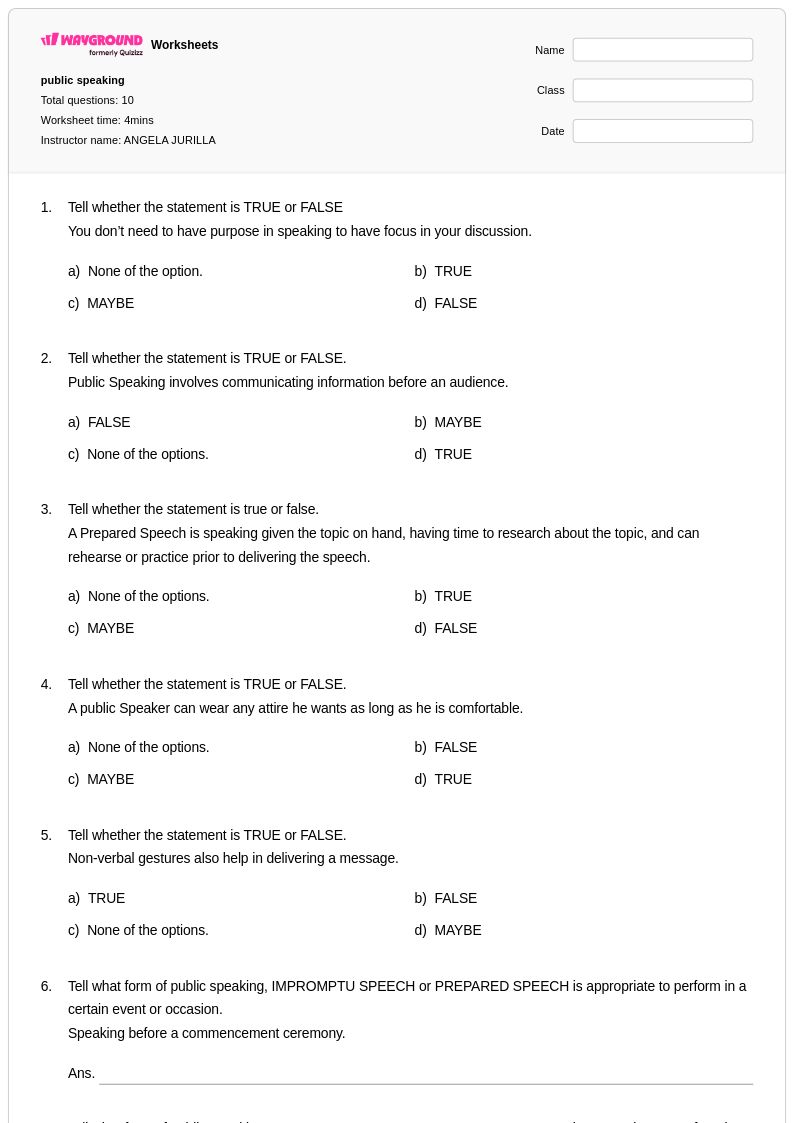
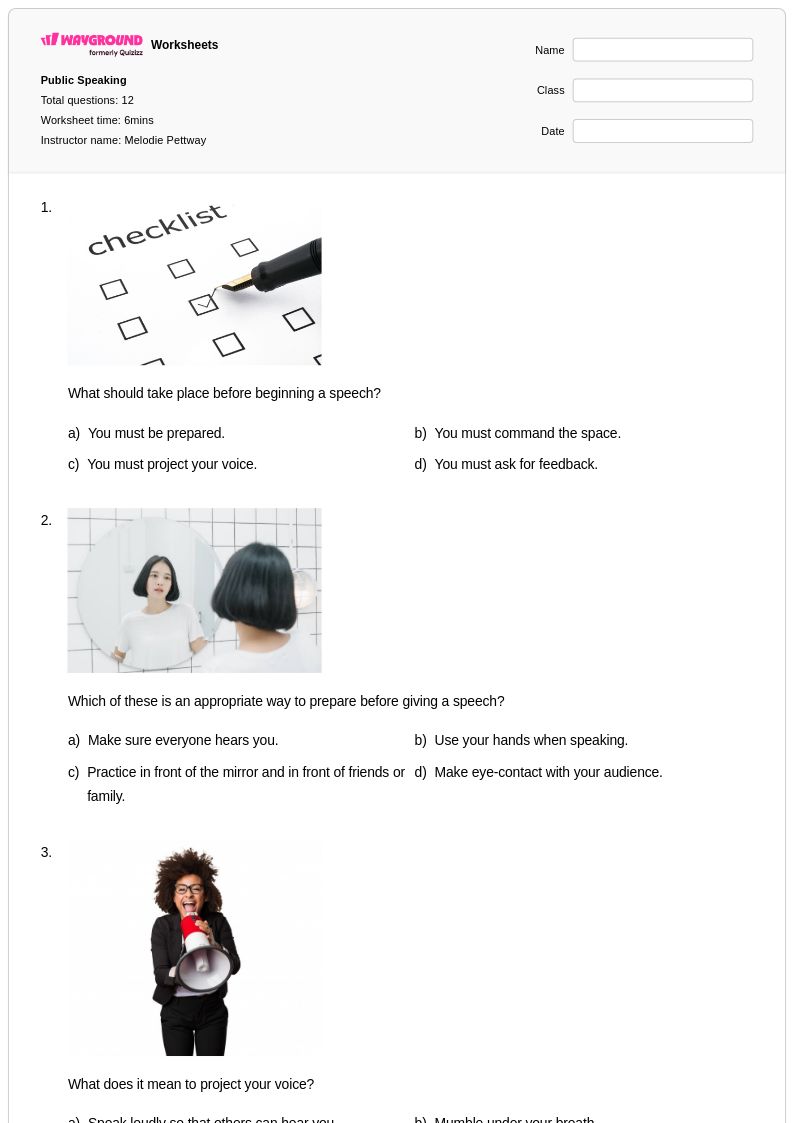
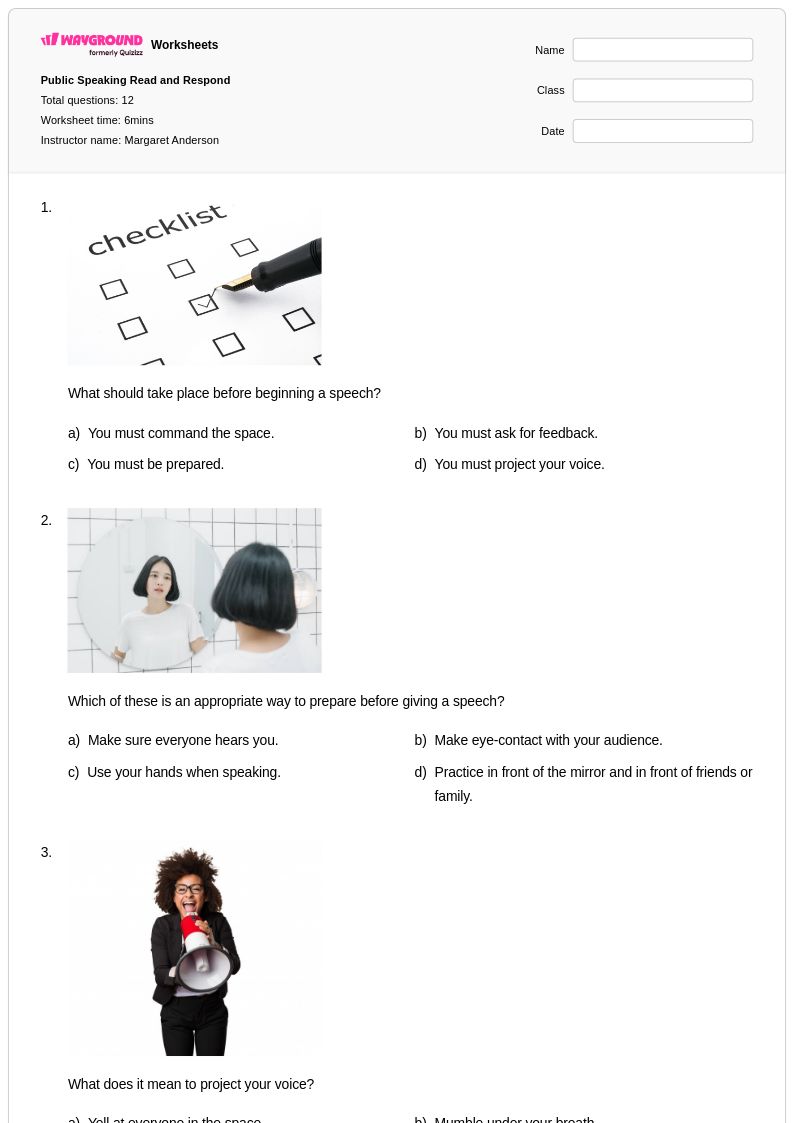
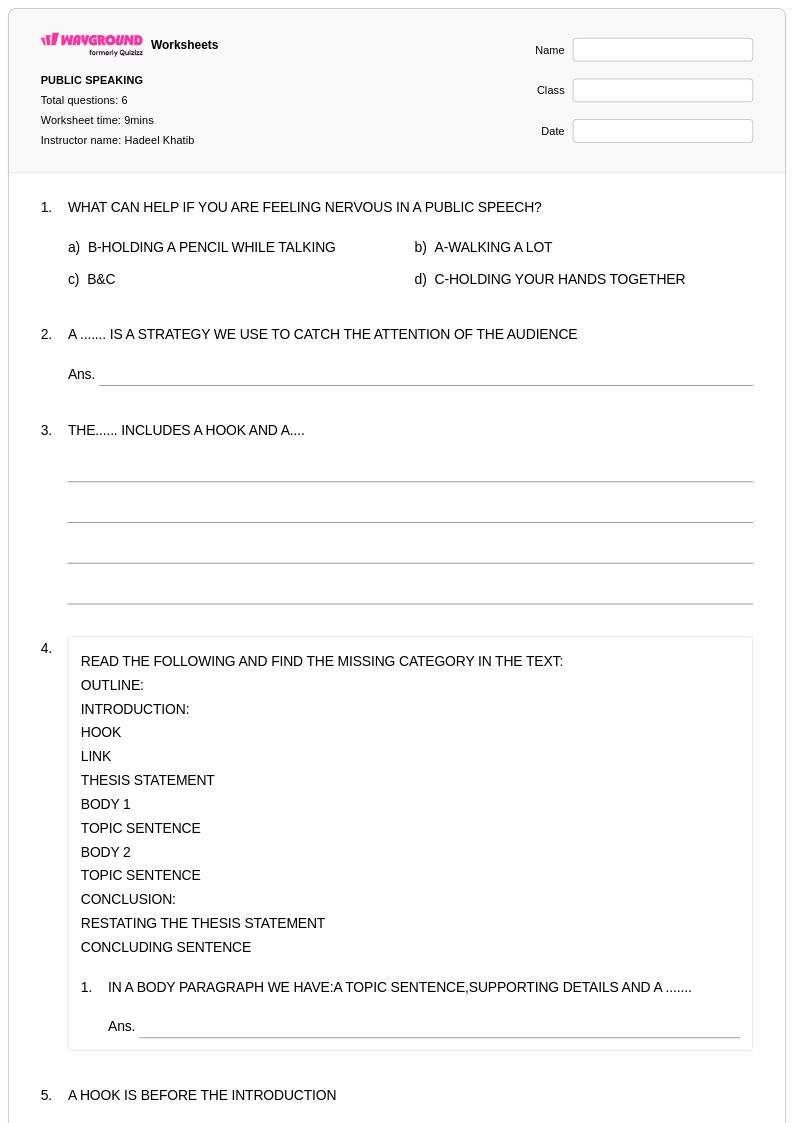
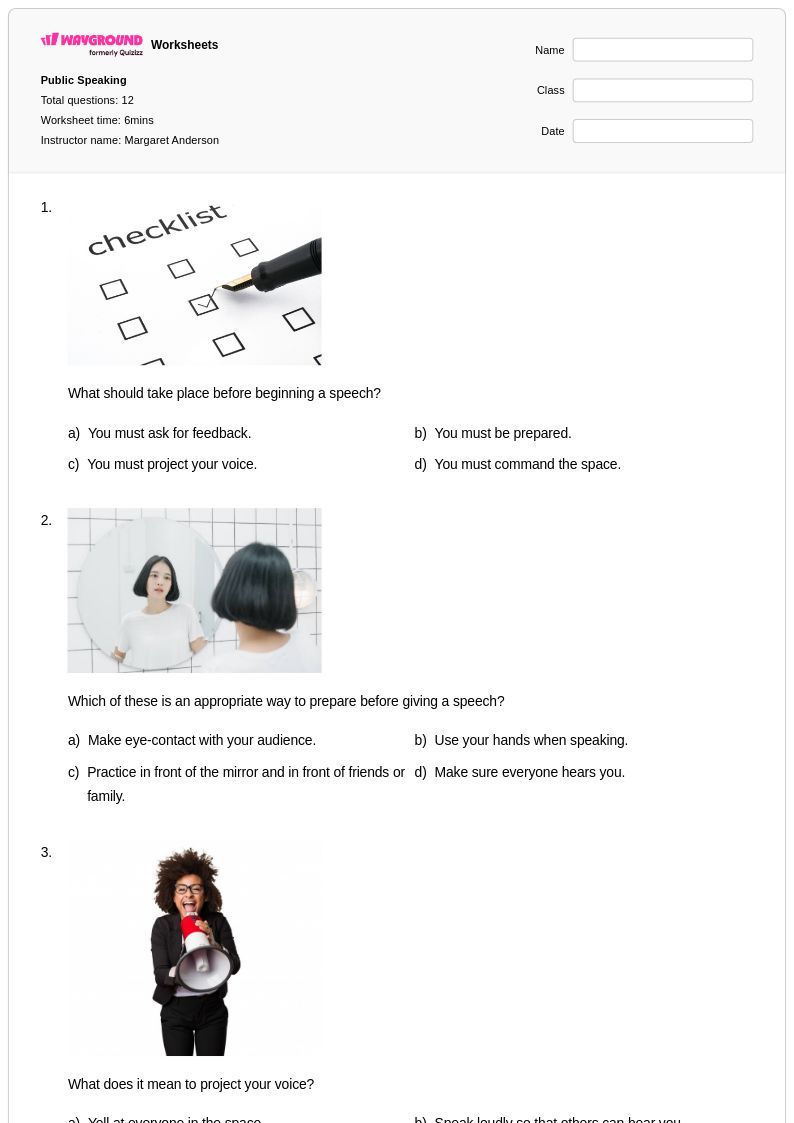
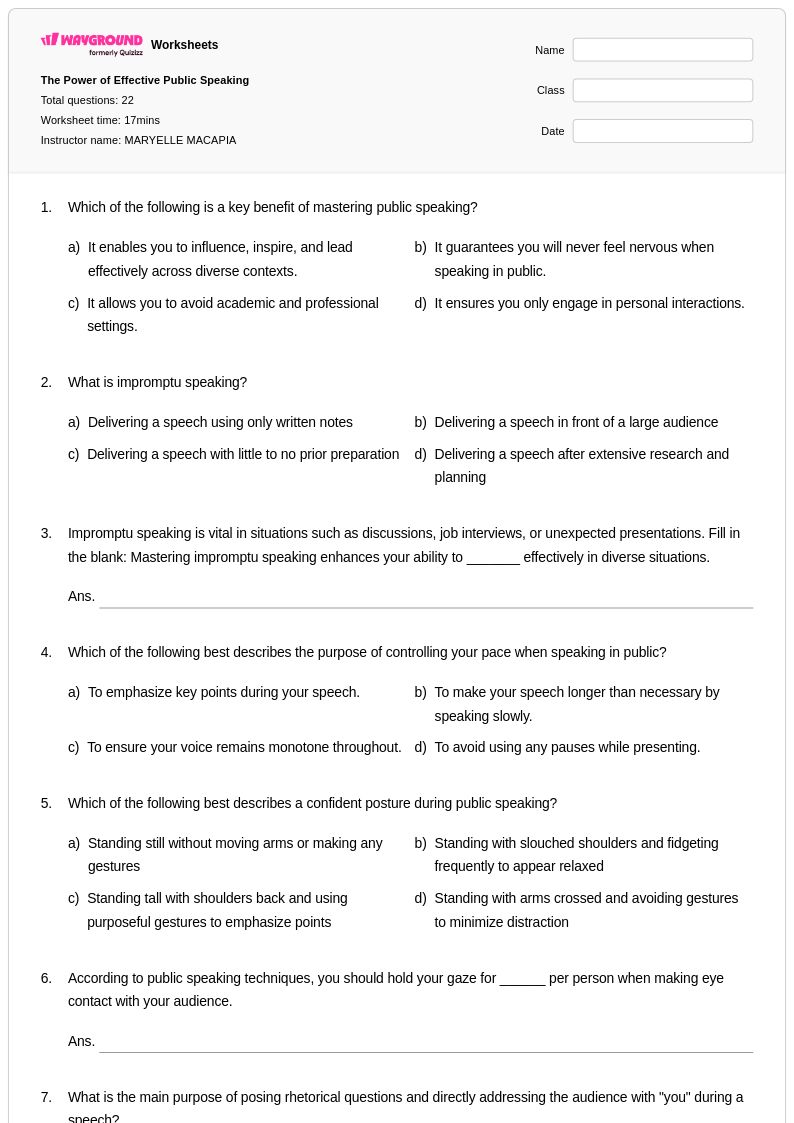
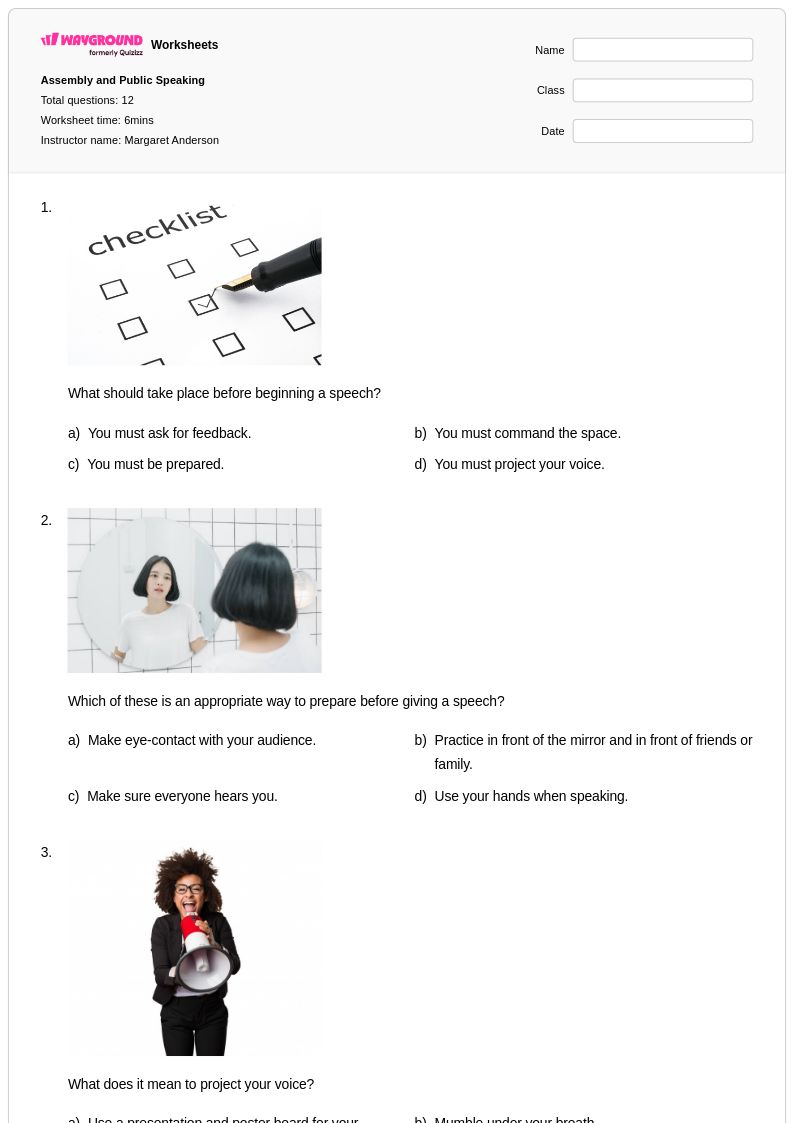
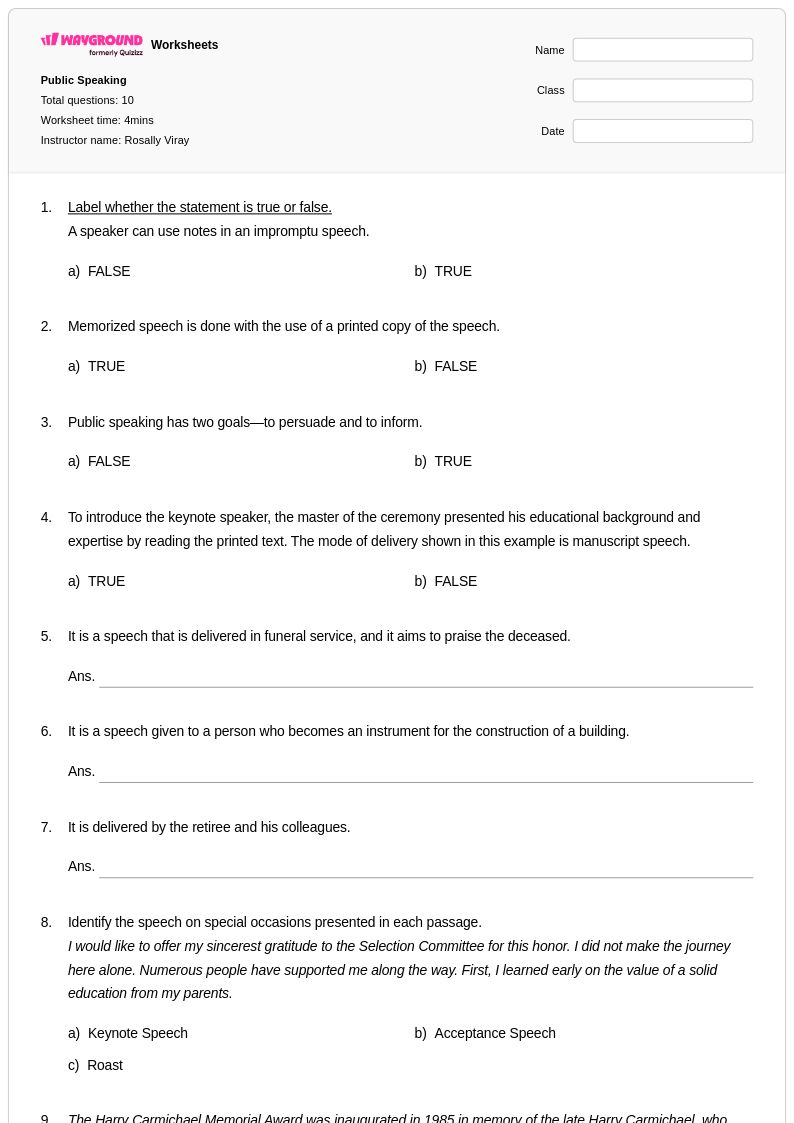
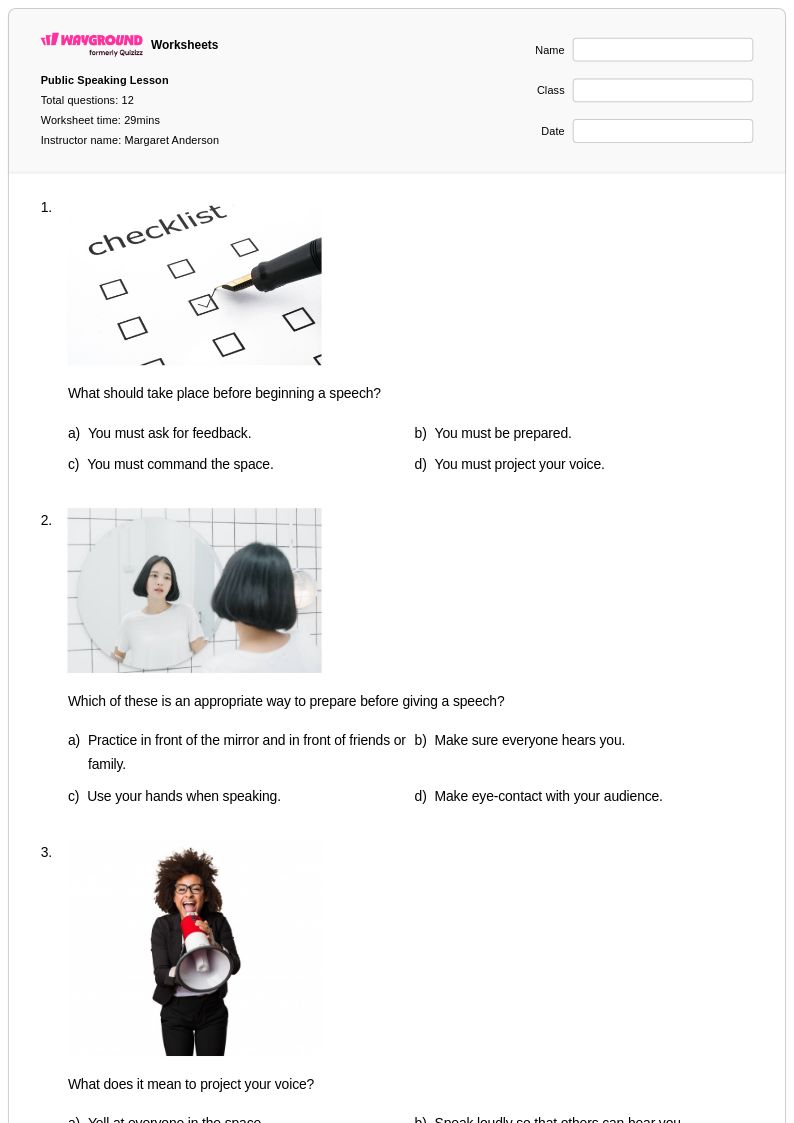
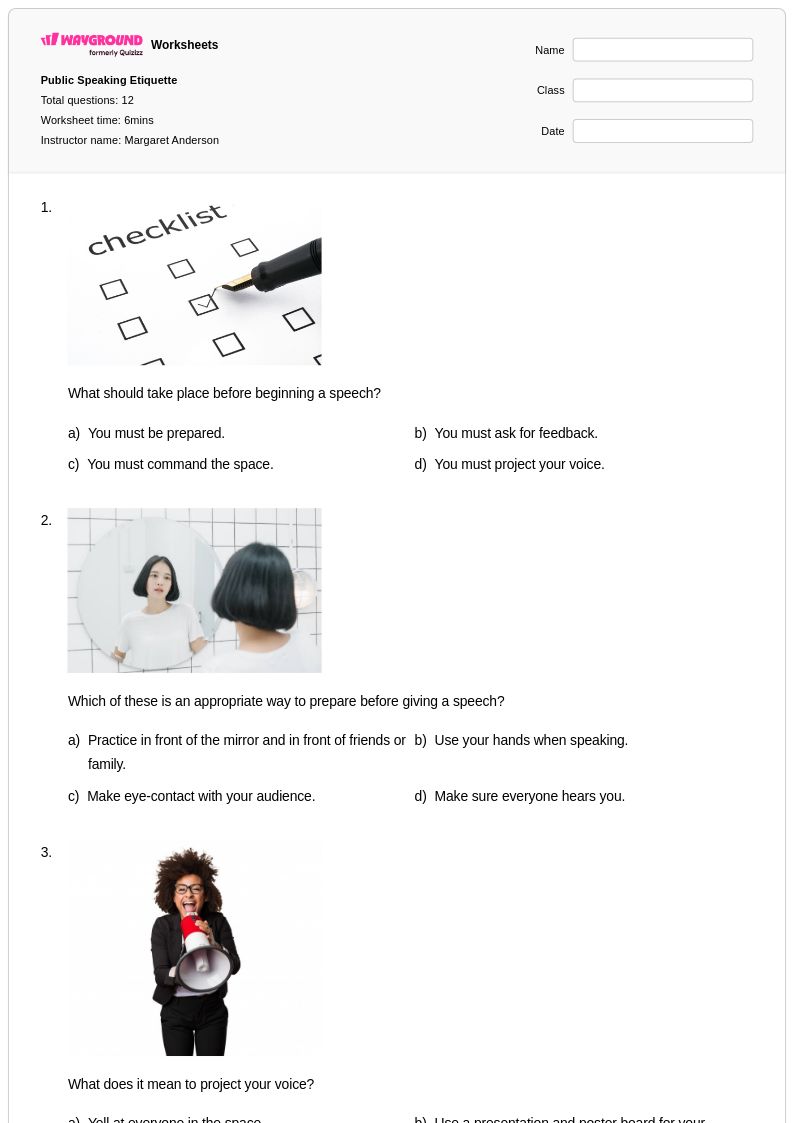
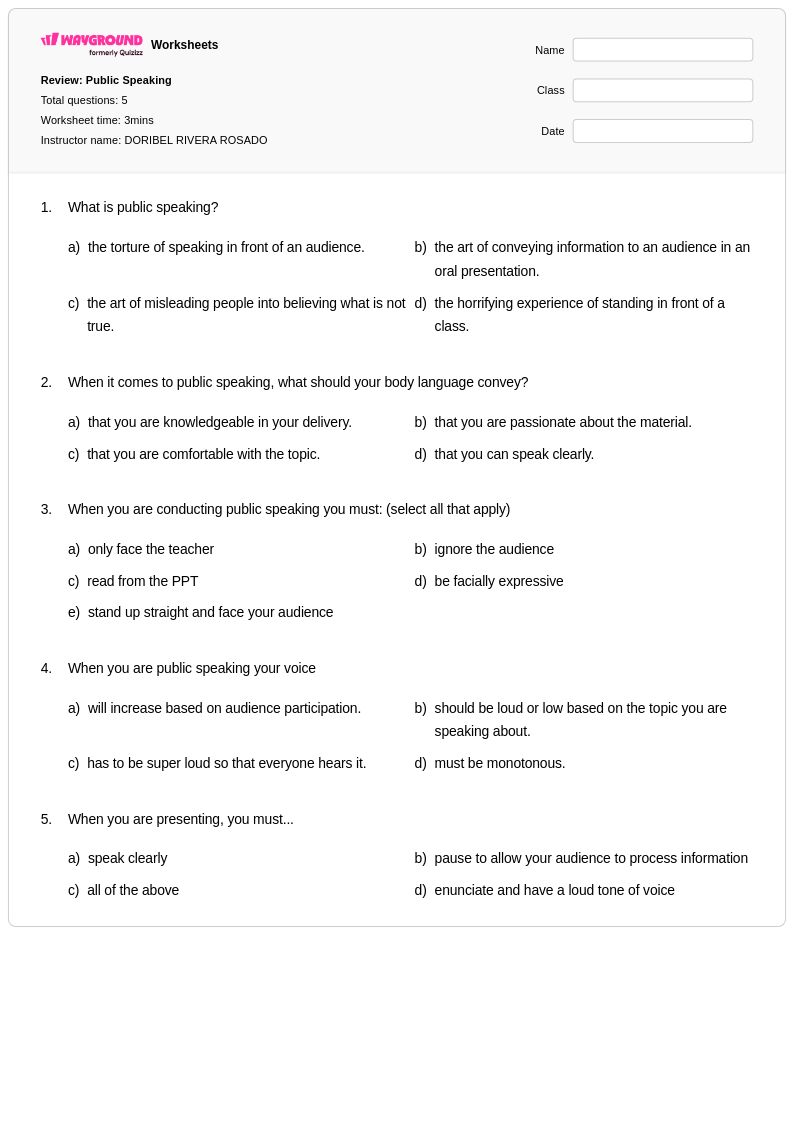
Public speaking worksheets for Class 10 students available through Wayground (formerly Quizizz) provide comprehensive practice opportunities that develop essential oral communication skills required at the high school level. These expertly designed resources focus on critical components of effective public speaking, including speech organization, audience analysis, vocal delivery techniques, body language awareness, and overcoming presentation anxiety. Students work through structured practice problems that guide them in crafting compelling introductions, developing coherent main points with supporting evidence, and creating memorable conclusions. The worksheets include detailed answer keys that help students self-assess their progress, while printable pdf formats ensure easy access for both classroom instruction and independent study. Free resources cover diverse speech types from informative presentations to persuasive arguments, allowing students to build confidence across multiple speaking contexts while strengthening their ability to communicate ideas clearly and persuasively.
Wayground (formerly Quizizz) empowers educators with millions of teacher-created public speaking resources that streamline lesson planning and enhance student outcomes in Class 10 English courses. The platform's robust search and filtering capabilities enable teachers to quickly locate worksheets aligned with specific curriculum standards and learning objectives, while differentiation tools allow for seamless customization based on individual student needs and skill levels. These versatile materials are available in both printable and digital formats, including downloadable pdfs, making them ideal for traditional classroom settings, hybrid learning environments, and remote instruction scenarios. Teachers leverage these comprehensive worksheet collections for targeted skill practice, remediation support for struggling speakers, and enrichment activities for advanced students, ensuring that every learner develops the public speaking competencies essential for academic success and future career readiness.
FAQs
How do I teach public speaking skills to students who are nervous or shy?
Start by normalizing presentation anxiety as a shared experience, then build confidence incrementally through low-stakes speaking activities before moving to formal speeches. Structured practice with speech outlines, audience analysis exercises, and vocal delivery drills gives students concrete skills to focus on rather than their nerves. Impromptu speaking exercises and peer feedback routines also help students become comfortable performing in front of others over time.
What are the most important public speaking skills students need to practice?
Core public speaking competencies include speech organization, vocal delivery techniques such as pacing and volume, body language awareness, eye contact, and audience analysis. Students also need guided practice in crafting strong introductions and conclusions, using rhetorical strategies effectively, and structuring both informative and persuasive presentations. Worksheets that walk students through the full speech preparation process, from brainstorming to final delivery, build these skills in a logical sequence.
What mistakes do students most commonly make when preparing and delivering speeches?
Students frequently over-rely on notes or scripts, which disrupts natural delivery and limits eye contact with the audience. Another common error is neglecting speech structure, resulting in presentations that lack a clear introduction, organized body, or strong conclusion. Students also underestimate the importance of vocal variety, defaulting to a monotone delivery that loses audience engagement. Targeted worksheets that address each of these areas help students self-identify and correct these patterns before formal assessments.
How can I use worksheets to help students prepare for persuasive speeches?
Persuasive speech worksheets work best when they guide students through audience analysis, claim construction, and the use of rhetorical strategies such as ethos, pathos, and logos. Structured outlines that scaffold the argument-building process help students understand how to sequence their points for maximum impact. Worksheets that include self-assessment or peer review components give students opportunities to refine their arguments and delivery before presenting to the class.
How do I use Wayground's public speaking worksheets in my classroom?
Wayground's public speaking worksheets are available as printable PDFs for traditional classroom use and in digital formats for technology-integrated or remote learning environments, and can also be hosted as a quiz directly on Wayground. Each worksheet includes a complete answer key, making them practical for guided instruction, independent practice, and formative assessment. Teachers can use the platform's filtering tools to locate materials aligned to specific speaking formats, such as informative speeches, persuasive presentations, impromptu speaking, or formal debates, and can apply student-level accommodations including read aloud, extended time, and reduced answer choices to support diverse learners.
How do I differentiate public speaking instruction for students at different skill levels?
For struggling students, focus on foundational skills such as basic speech organization and overcoming presentation anxiety before introducing complex rhetorical techniques. Advanced speakers benefit from enrichment activities centered on persuasive strategy, debate formats, and stylistic refinement. On Wayground, teachers can apply individual accommodations such as read aloud for students who need audio support or reduced answer choices to lower cognitive load, while the rest of the class receives standard settings without any notification.