Free Printable Rate, Distance, and Time Worksheets for Class 8
Wayground's Class 8 rate, distance, and time worksheets provide free printables and practice problems with answer keys to help students master calculating speed, travel time, and distances using mathematical formulas and real-world applications.
Explore printable Rate, Distance, and Time worksheets for Class 8
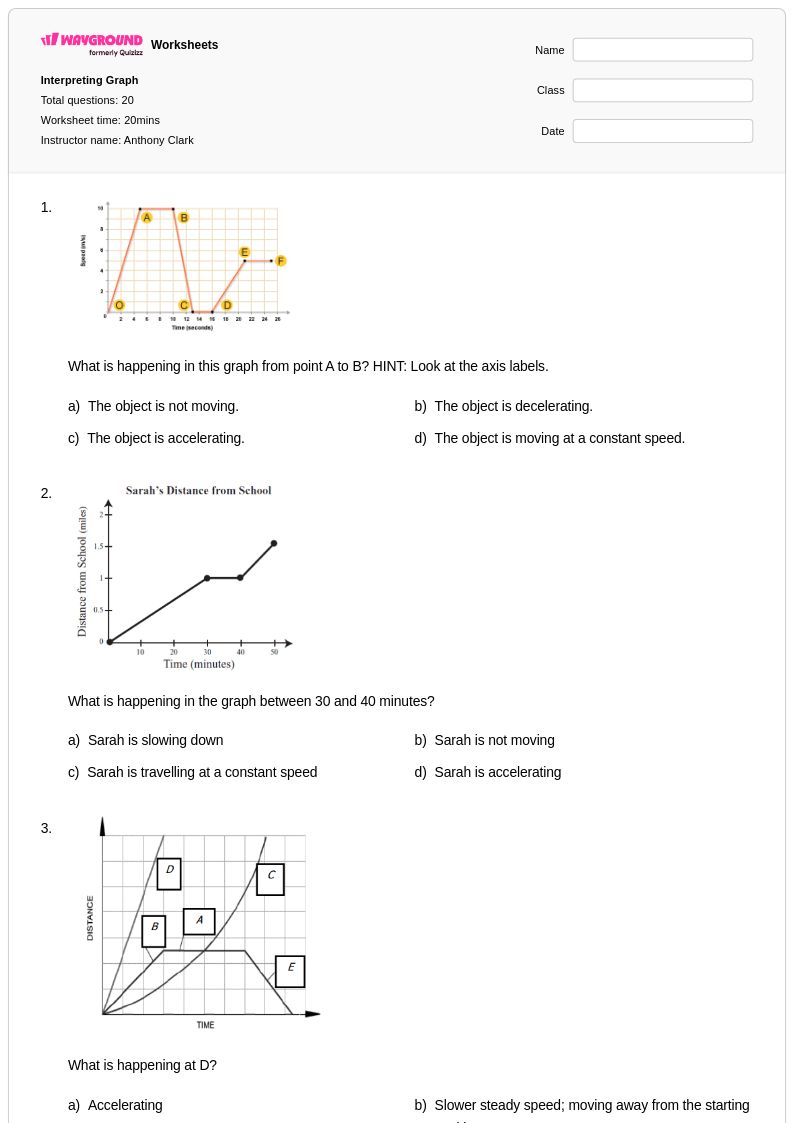
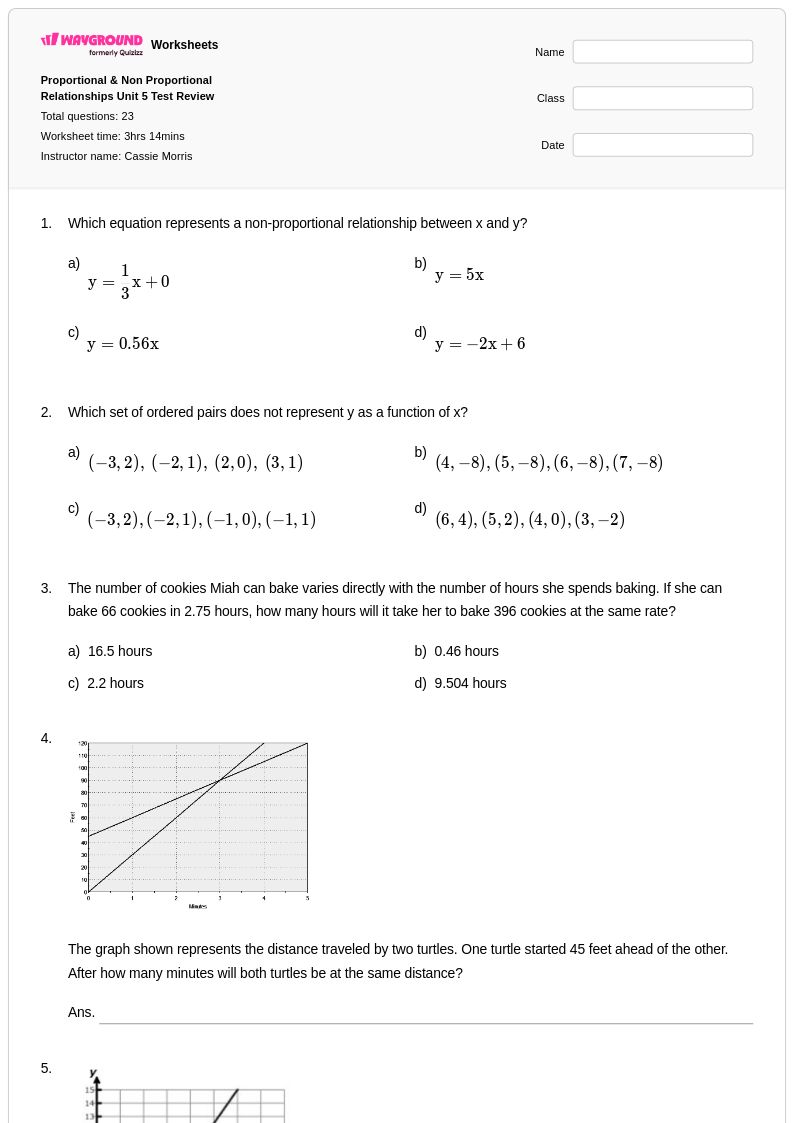
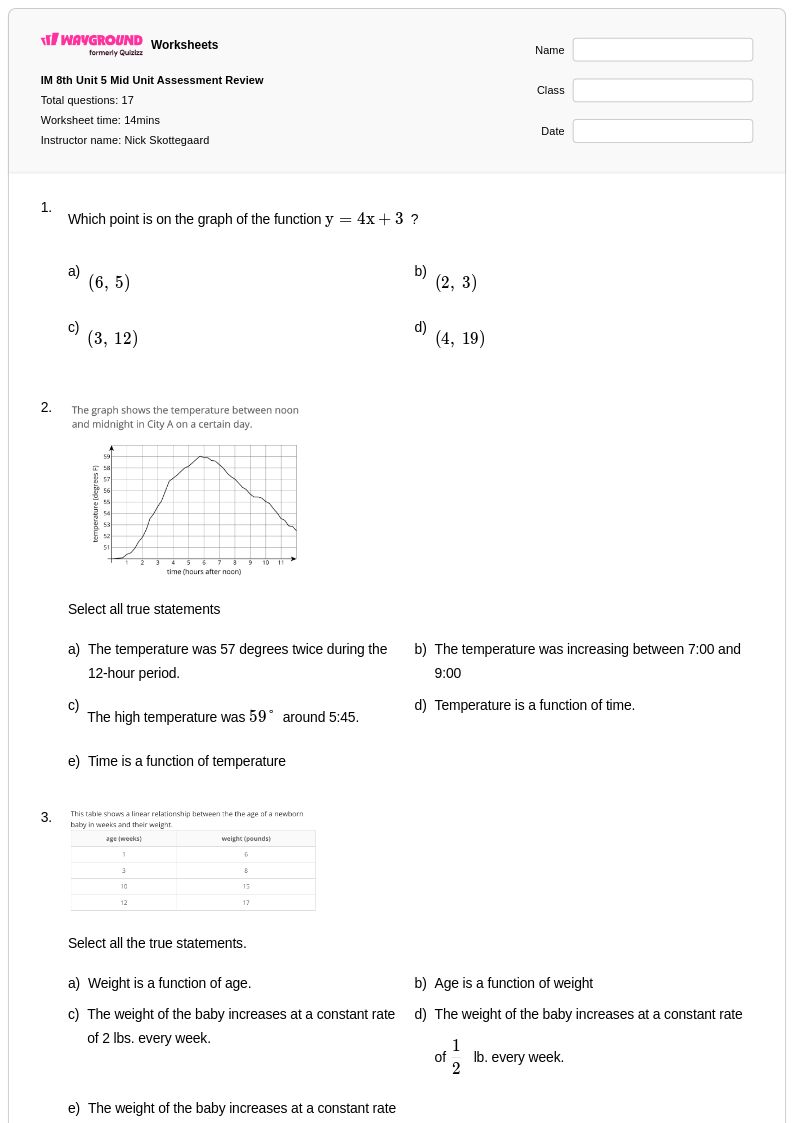
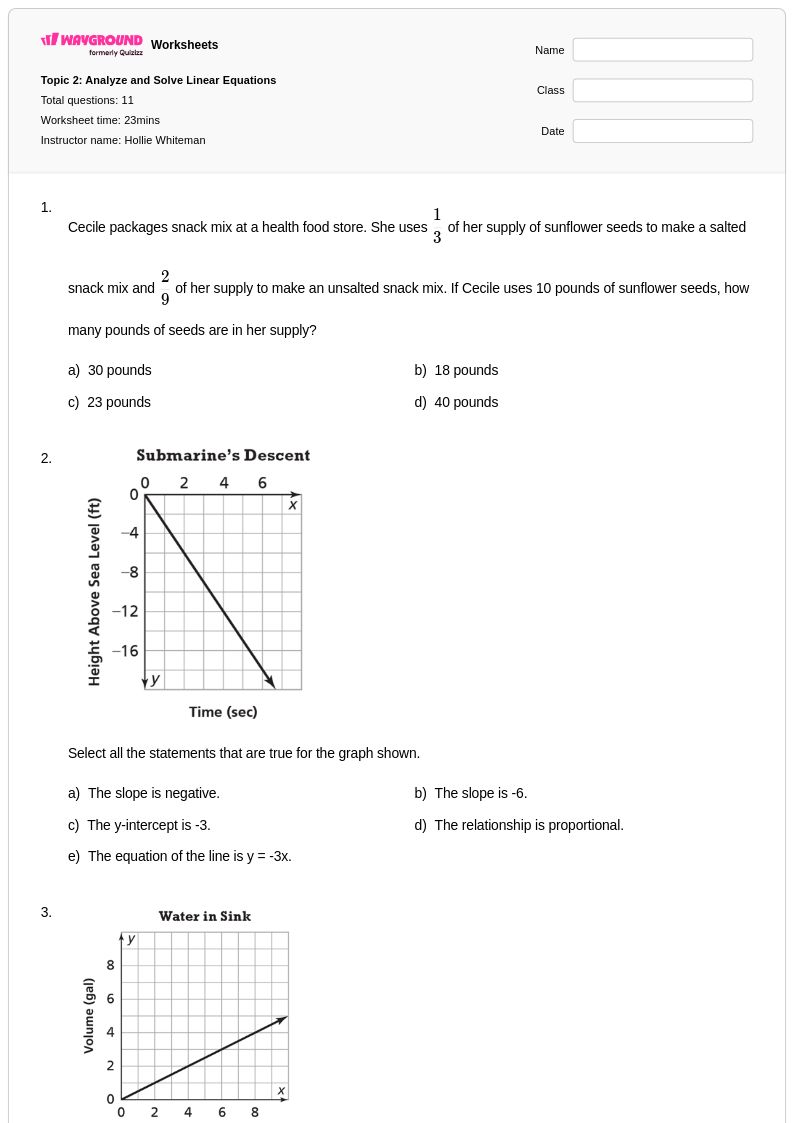
Rate, distance, and time worksheets for Class 8 students available through Wayground (formerly Quizizz) provide comprehensive practice with one of the most practical applications of mathematical relationships. These worksheets strengthen essential skills including calculating speed using the distance-time formula, solving for missing variables in rate problems, and converting between different units of measurement for time, distance, and speed. Students work through carefully structured practice problems that progress from basic rate calculations to complex real-world scenarios involving multiple steps and unit conversions. Each worksheet collection includes a complete answer key and is available as free printables in pdf format, making it easy for educators to provide targeted skill practice both in classroom settings and for independent study.
Wayground (formerly Quizizz) supports mathematics teachers with an extensive library of millions of teacher-created resources specifically designed for Class 8 rate, distance, and time instruction. The platform's robust search and filtering capabilities allow educators to quickly locate worksheets that align with specific curriculum standards and match their students' skill levels. Teachers can access differentiation tools that help customize content for varied learning needs, while the flexible format options include both printable pdf versions for traditional paper-and-pencil work and digital formats for interactive learning environments. These comprehensive worksheet collections streamline lesson planning by providing ready-to-use materials for initial instruction, targeted remediation for struggling learners, enrichment activities for advanced students, and ongoing skill practice that reinforces mastery of rate-distance-time relationships.
FAQs
How do rate, distance, and time problems evolve for 8th graders?
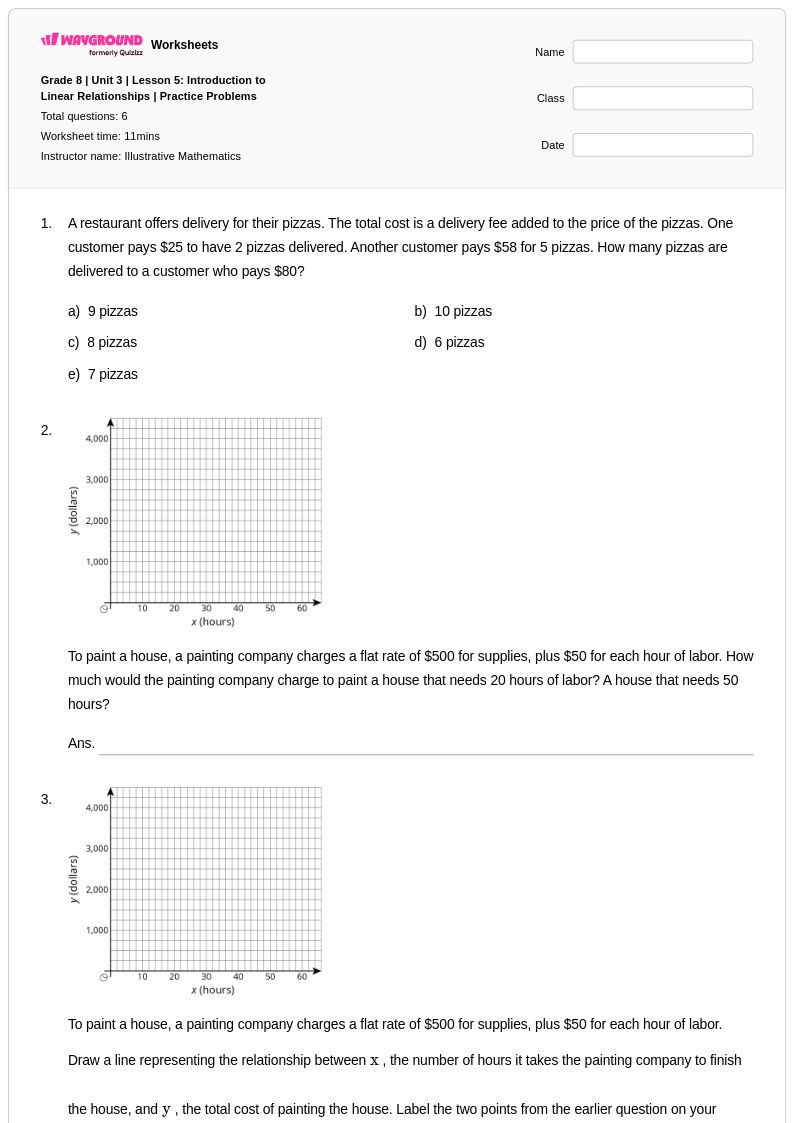
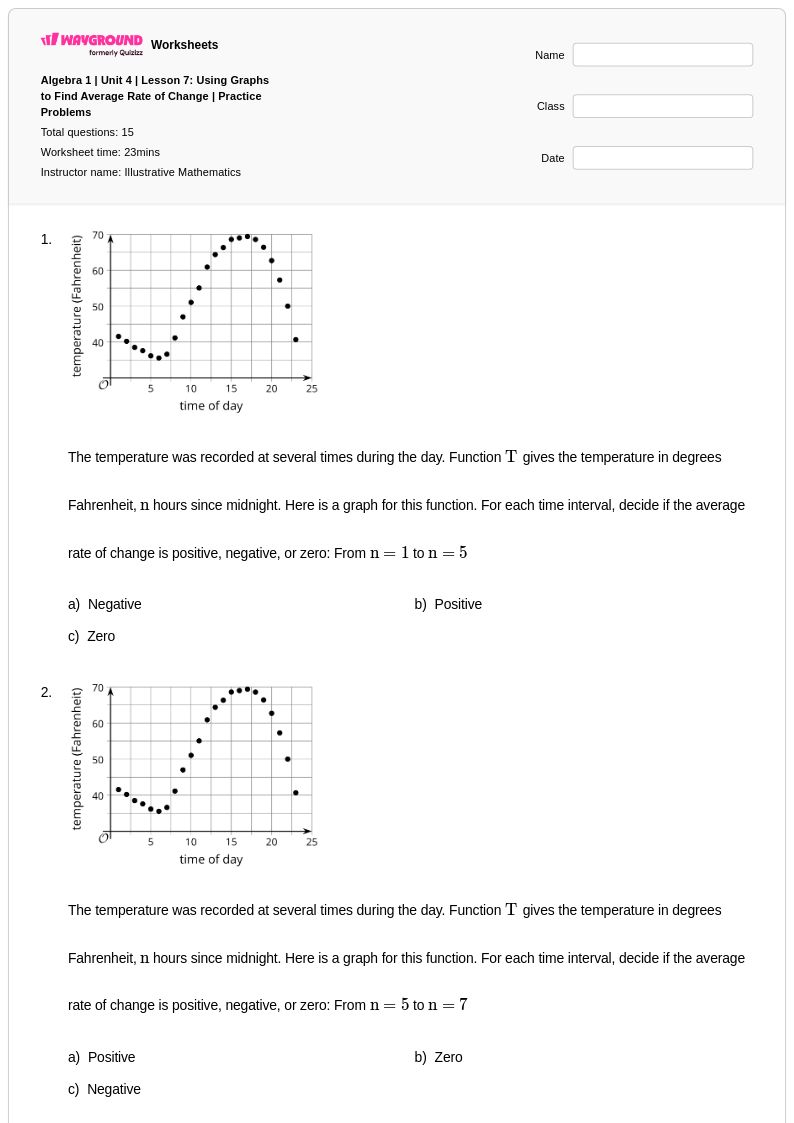
In 8th grade, these problems become a vehicle for understanding linear equations and systems of equations. The complexity increases to include scenarios with two moving objects or interpreting distance-time graphs where the rate is represented by the slope of the line.
How can I connect d=rt problems to linear equations?
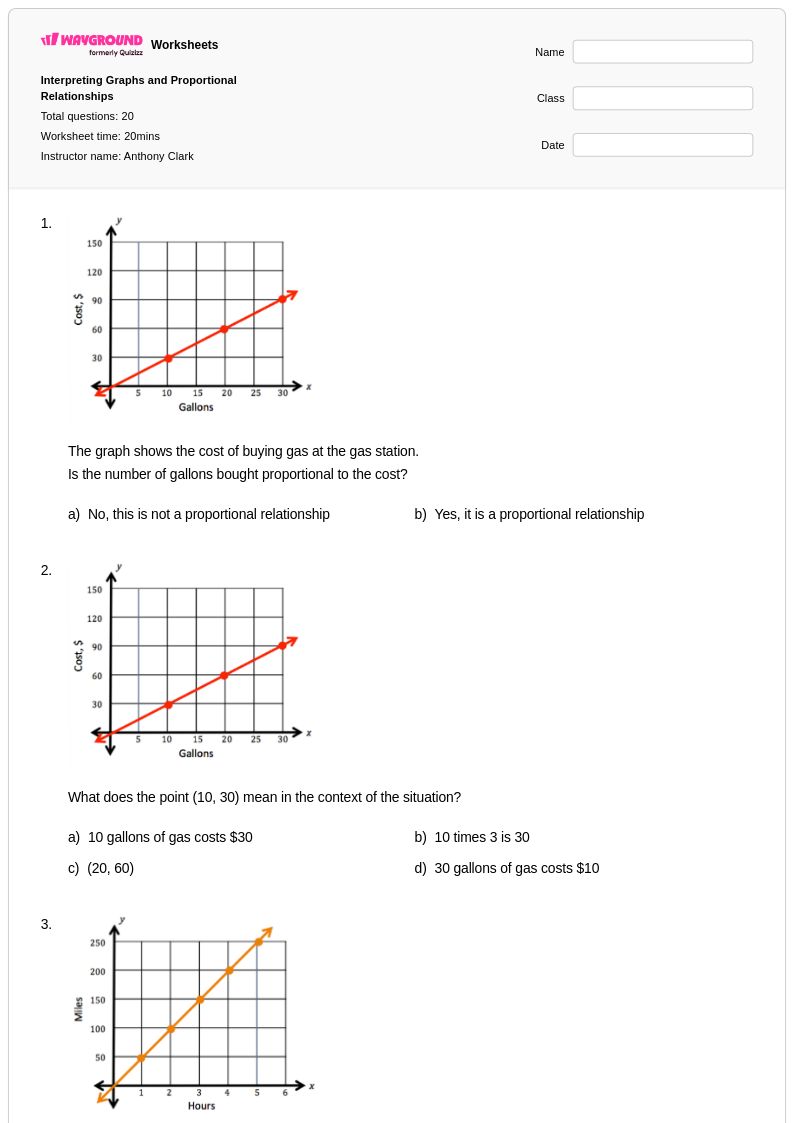
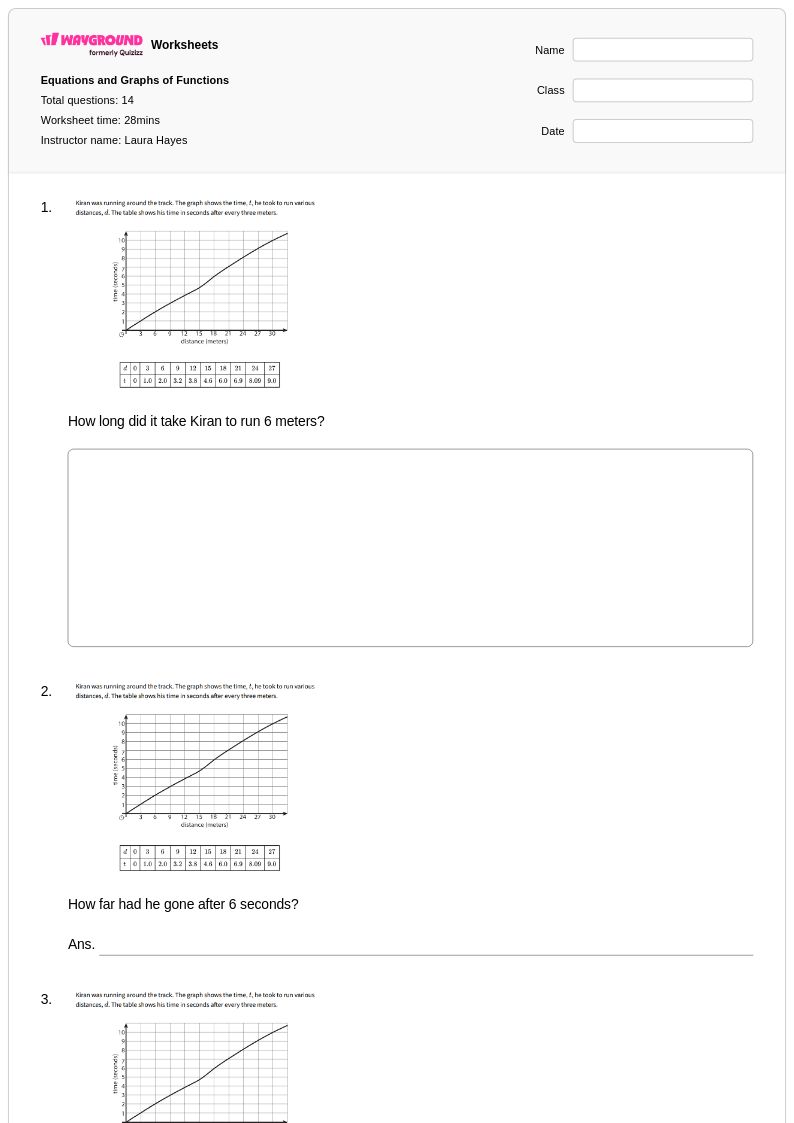
Use distance-time graphs. Show students that for an object moving at a constant rate, the graph of its distance versus time is a straight line. Help them see that the rate (r) in d=rt is the same as the slope (m) of that line, providing a concrete meaning for the concept of slope.
What types of advanced problems are appropriate for 8th grade?
Problems involving two objects in motion are excellent for this level. This includes "catch-up" scenarios (one object starting later but moving faster) or "meeting" scenarios (two objects moving toward each other). These often require setting up and solving a system of linear equations.
Where do 8th graders get stuck on complex rate problems?
A common error is incorrectly setting up the equations for scenarios with two travelers. For example, in a problem where two cars drive toward each other, students might struggle to express the relationship between their individual distances and the total distance separating them.
How can I use this worksheet with my 8th-grade students?
This worksheet is available in multiple formats to fit your lesson plan. You can assign it as an interactive digital quiz on Wayground or download the printable PDF for students who benefit from offline, paper-based work. All versions include a complete answer key for efficient grading.
How does this topic support 8th-grade Common Core standards?
This topic directly supports the 8th-grade standard of understanding the connection between proportional relationships, lines, and linear equations. Specifically, it requires students to interpret the unit rate as the slope of the graph, a critical link between abstract algebra and real-world contexts.
How can I differentiate these complex word problems?
For students needing support on digital assignments, use Wayground's "Reduced answer choices" feature to lower the cognitive load. For enrichment, challenge advanced students to create their own multi-step "catch-up" problem, solve it, and graph the solution.