Free Printable Relationship Patterns Worksheets for Class 1
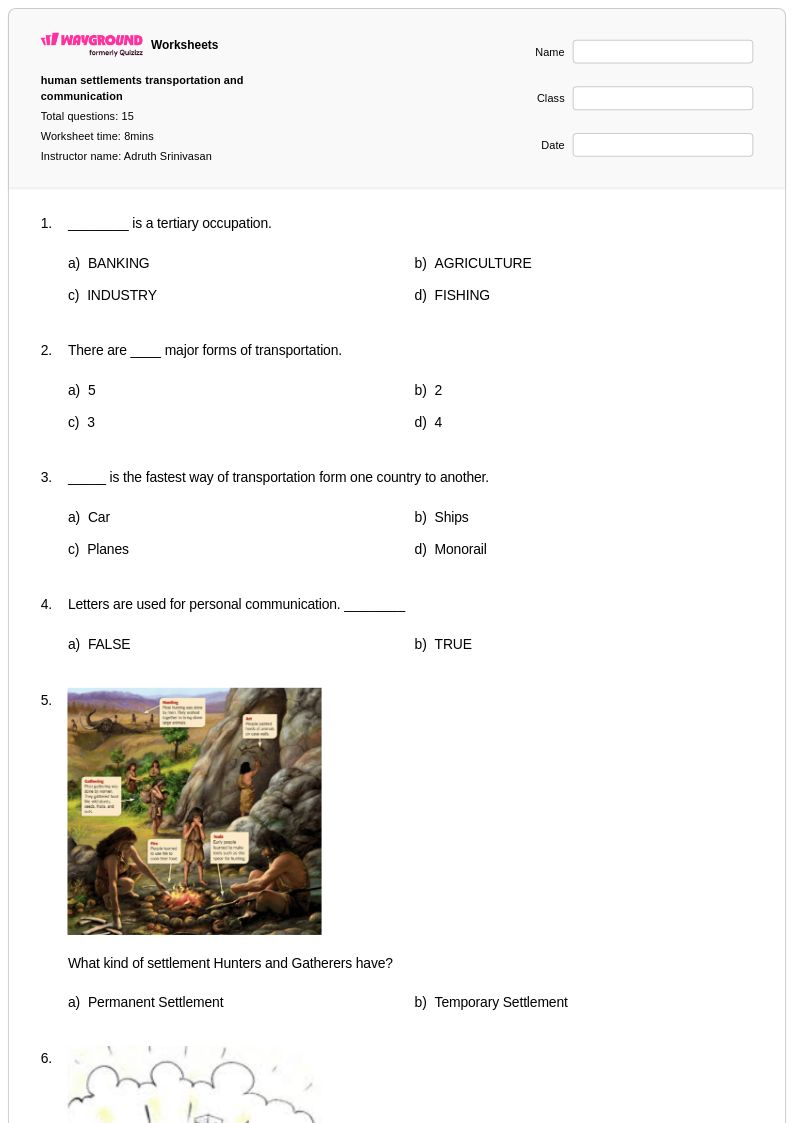
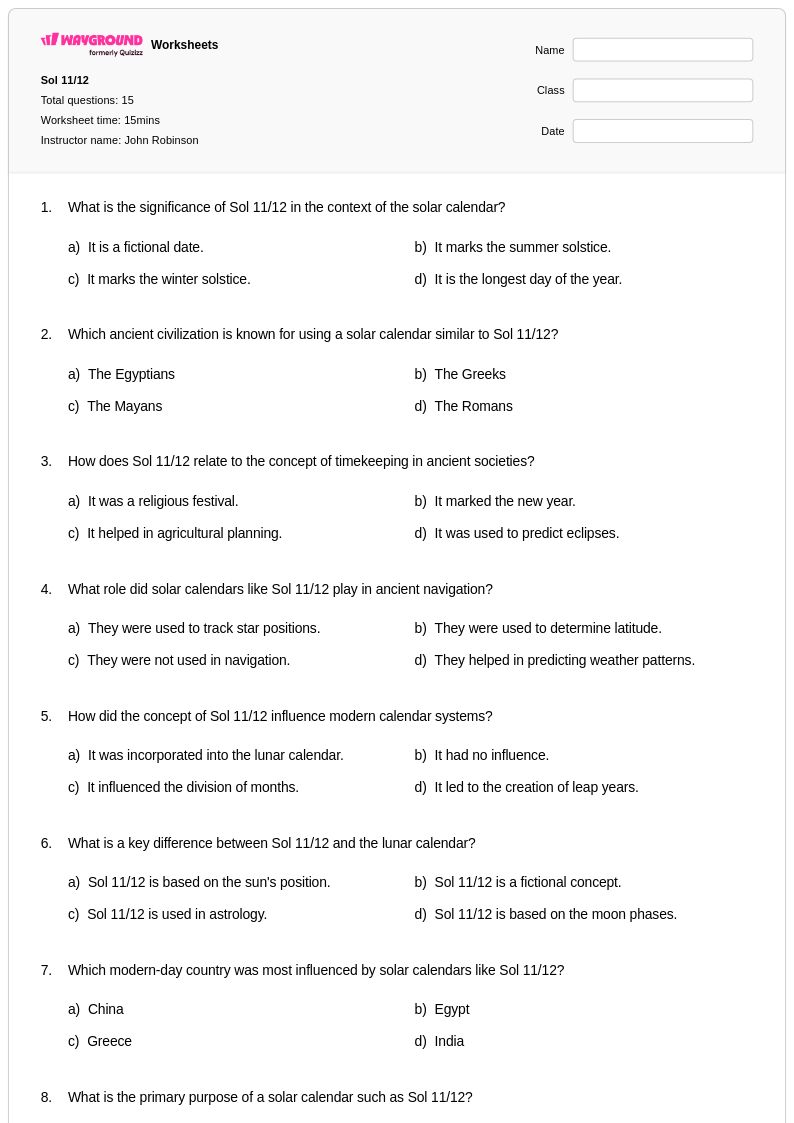
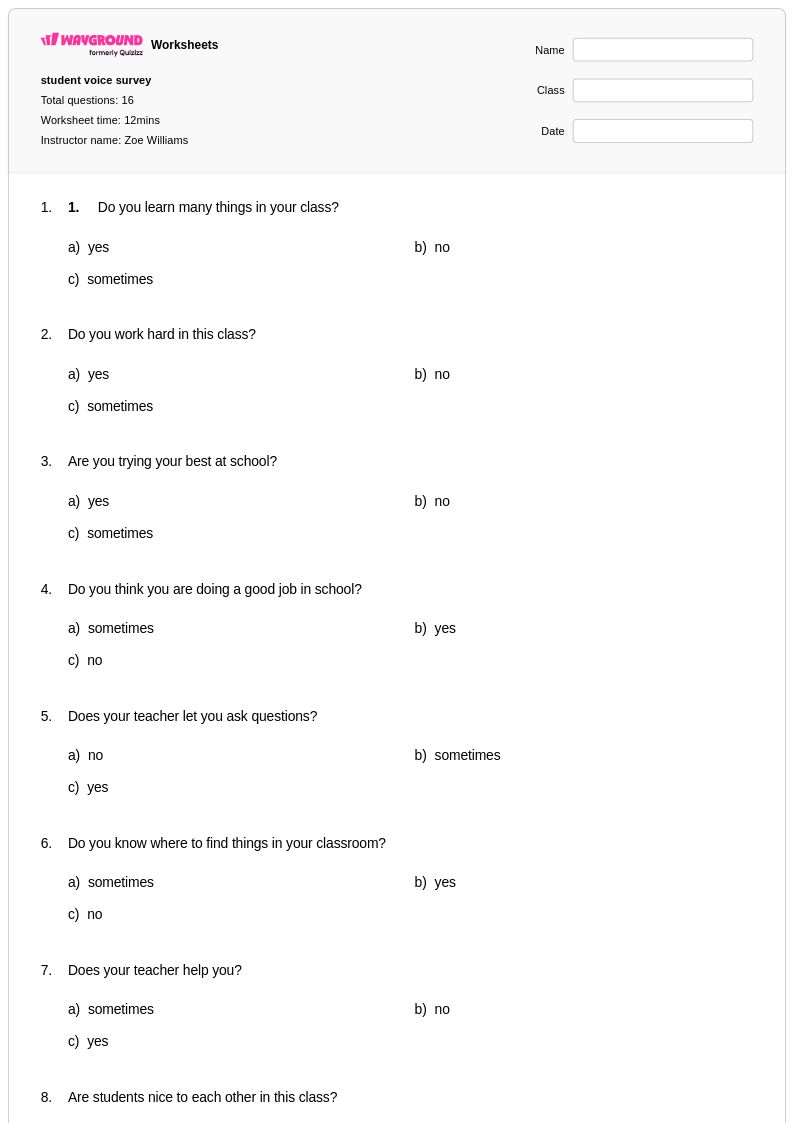
Free Class 1 relationship patterns worksheets and printables help students explore social connections through engaging practice problems, with PDF downloads and answer keys available for comprehensive social skills development.
Explore printable Relationship Patterns worksheets for Class 1
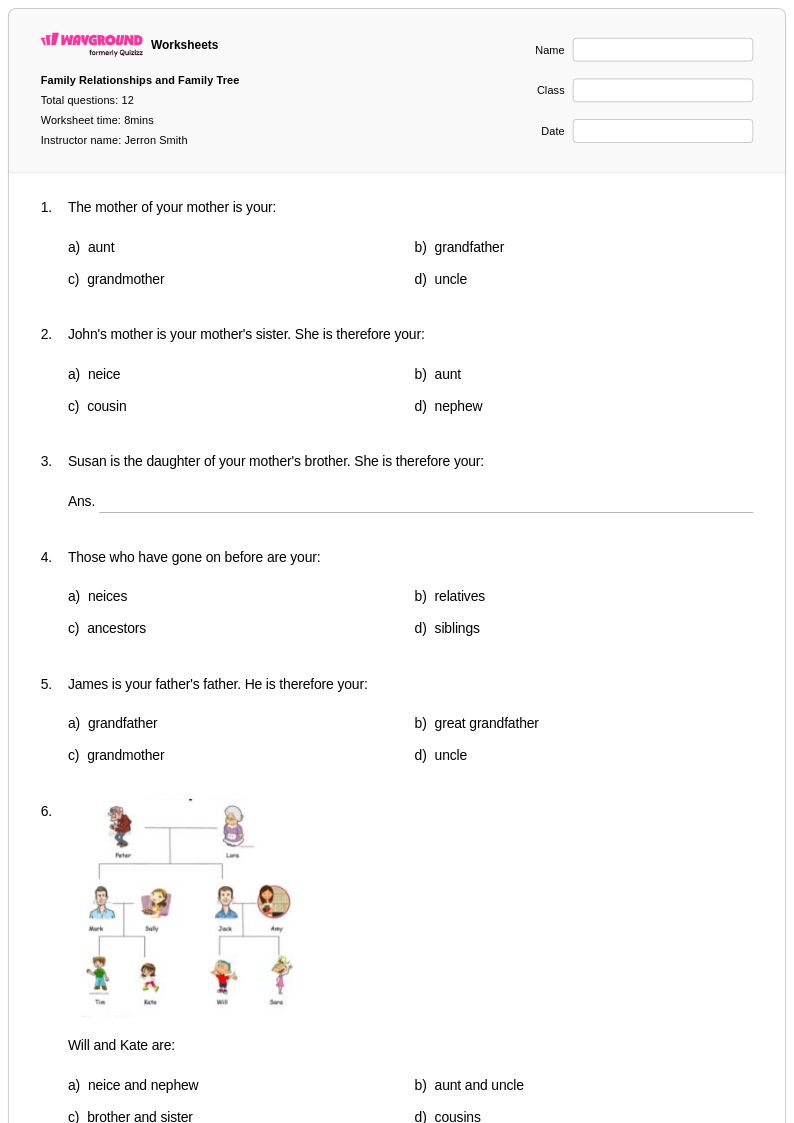
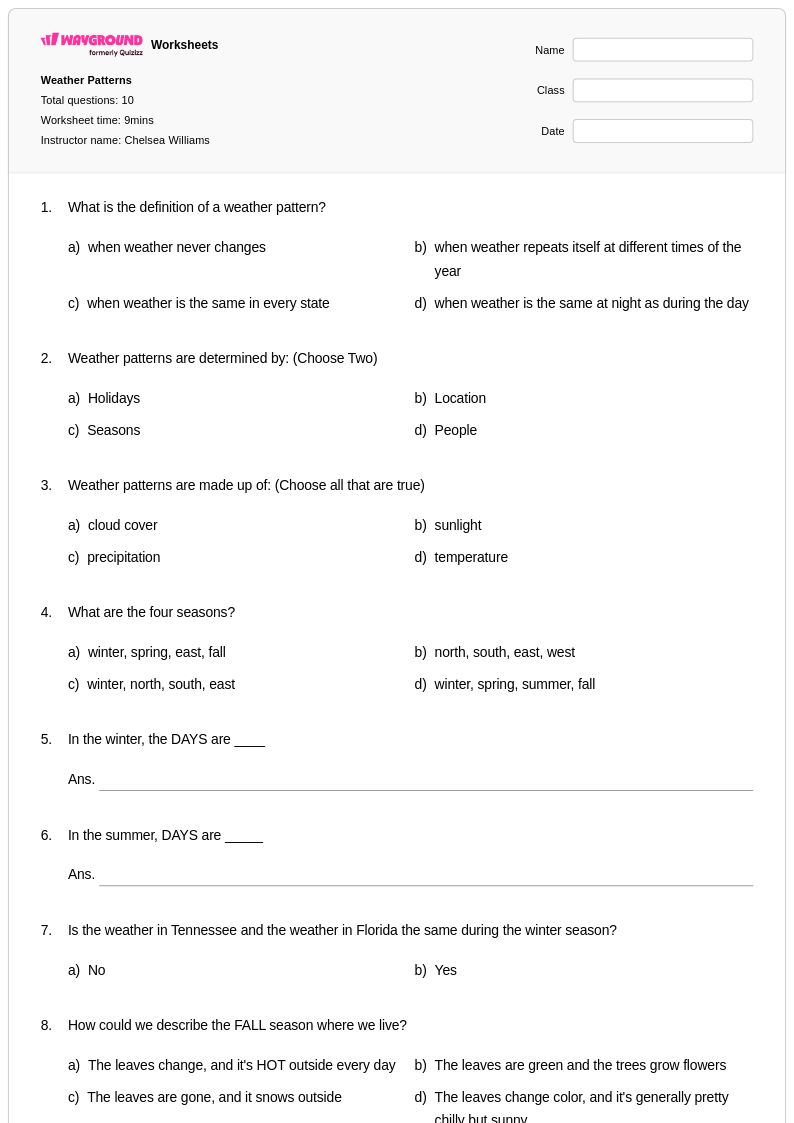
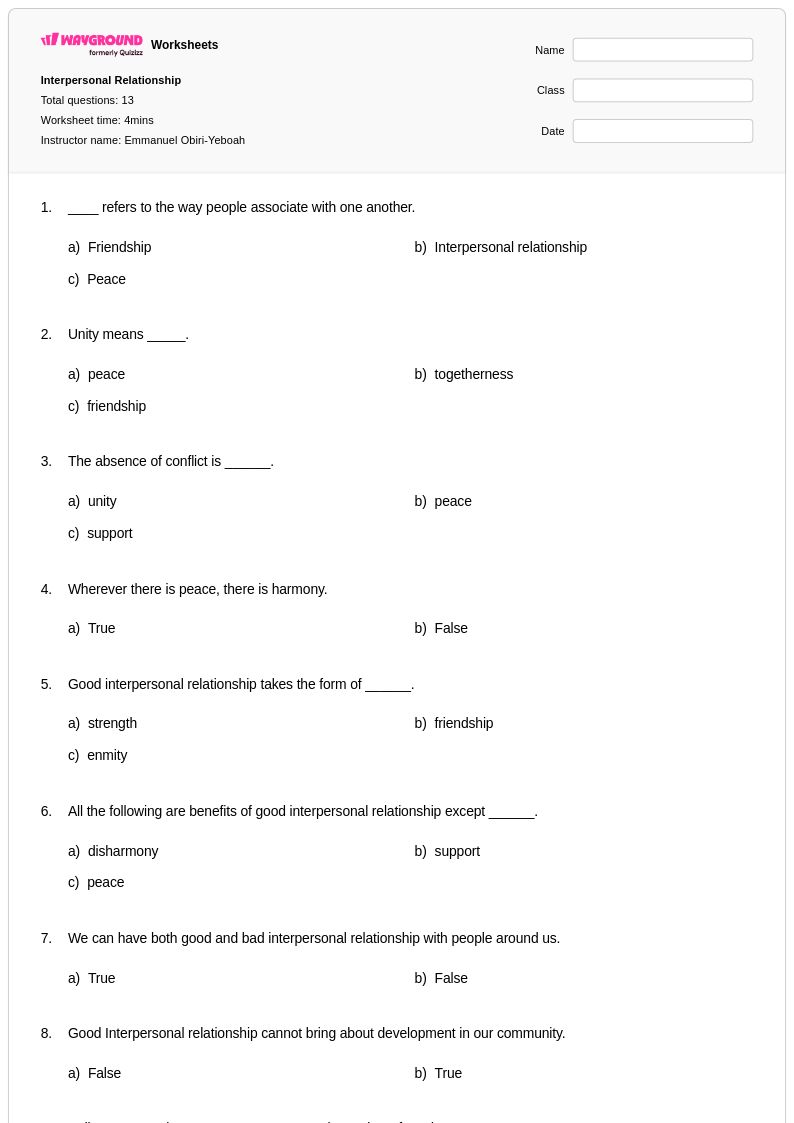
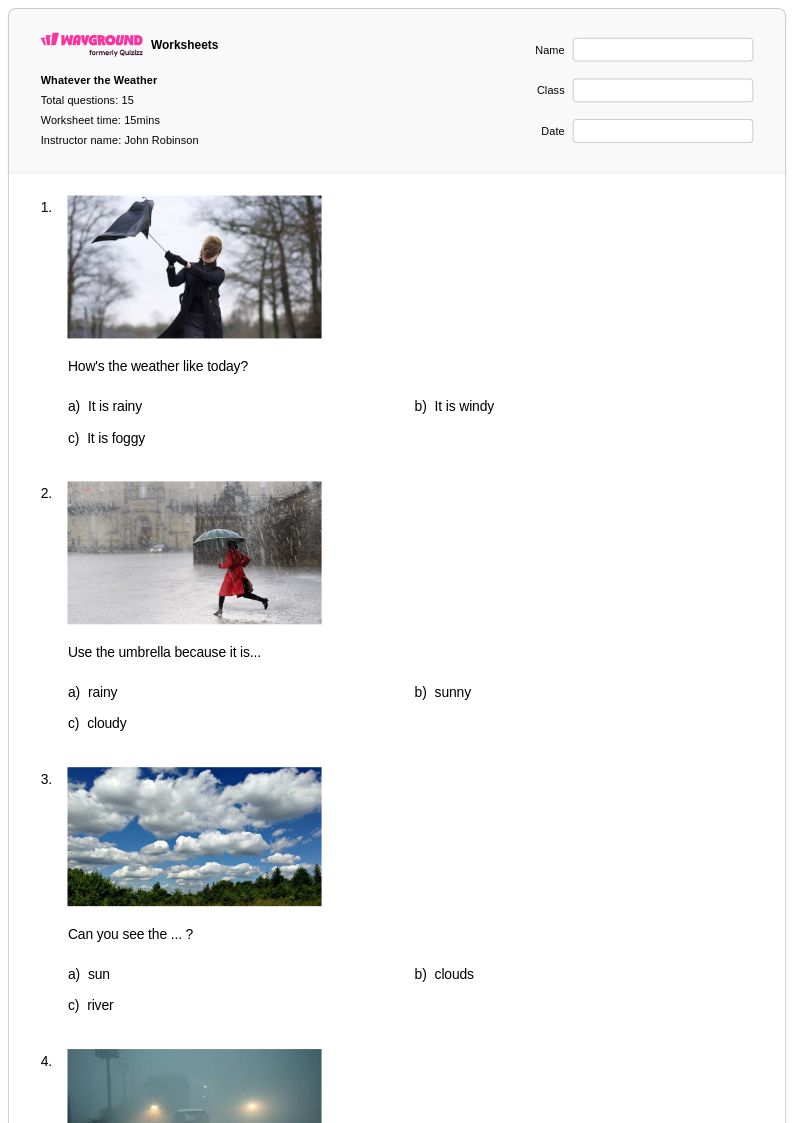
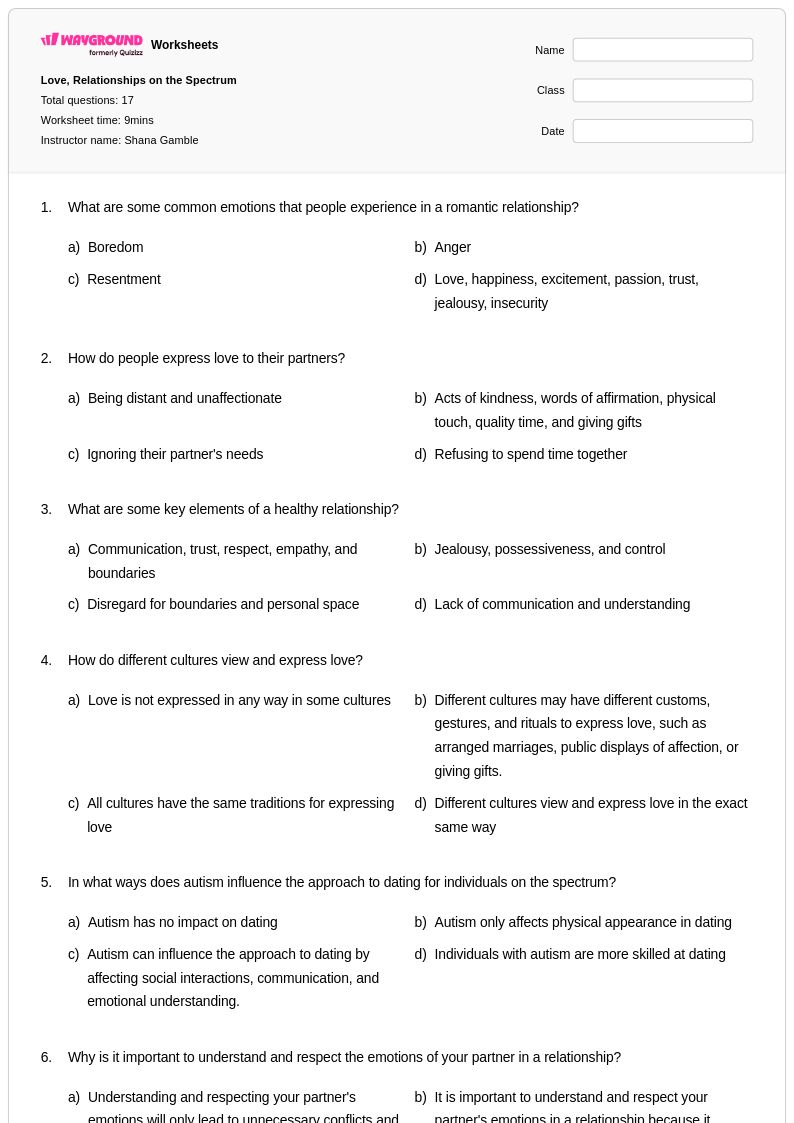
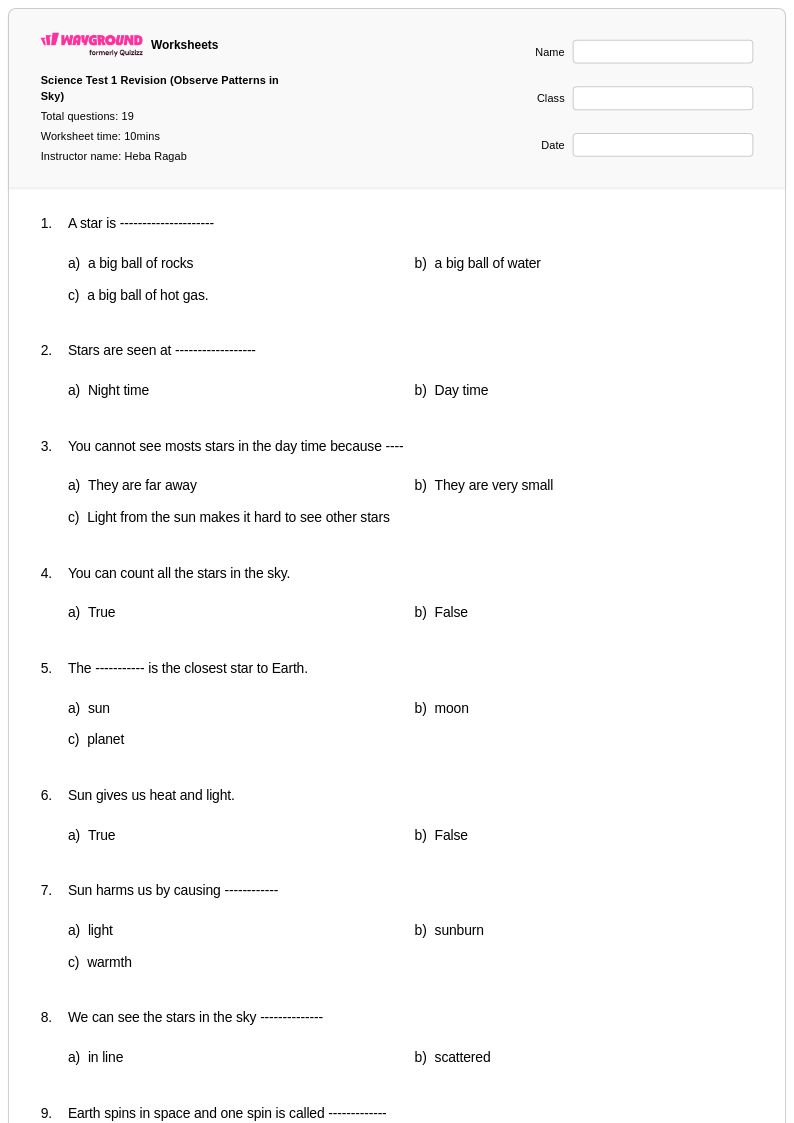
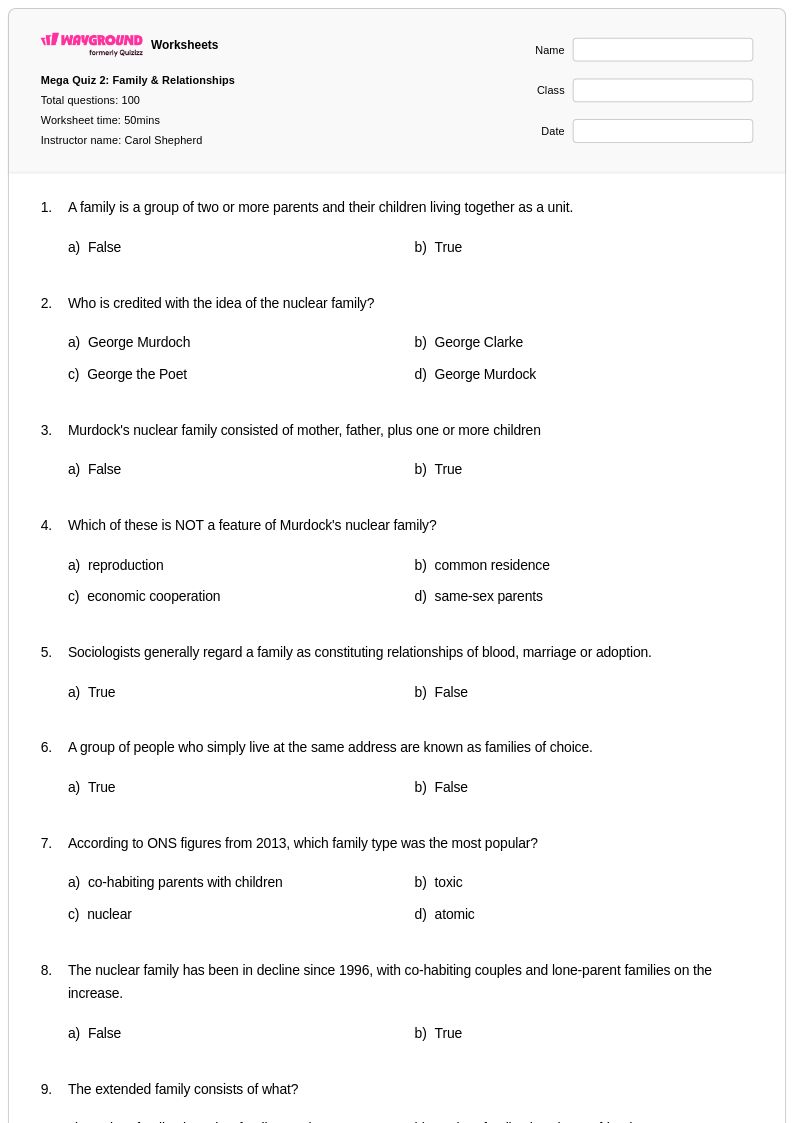
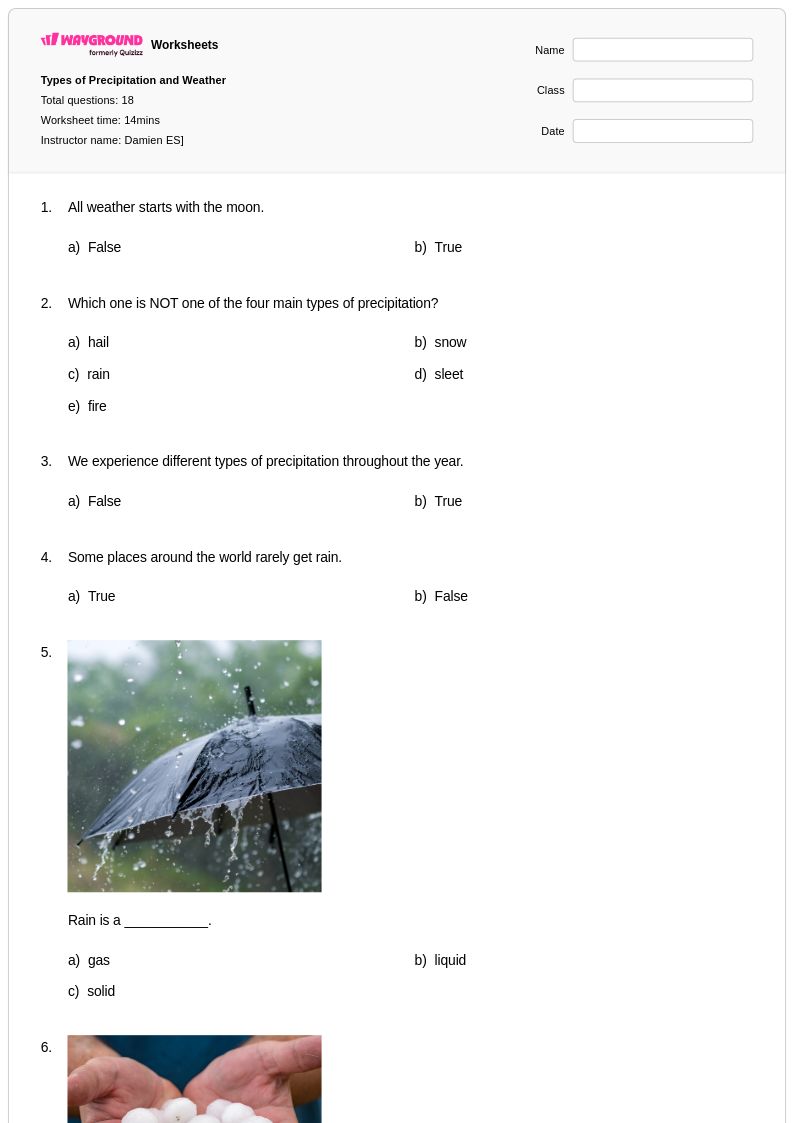
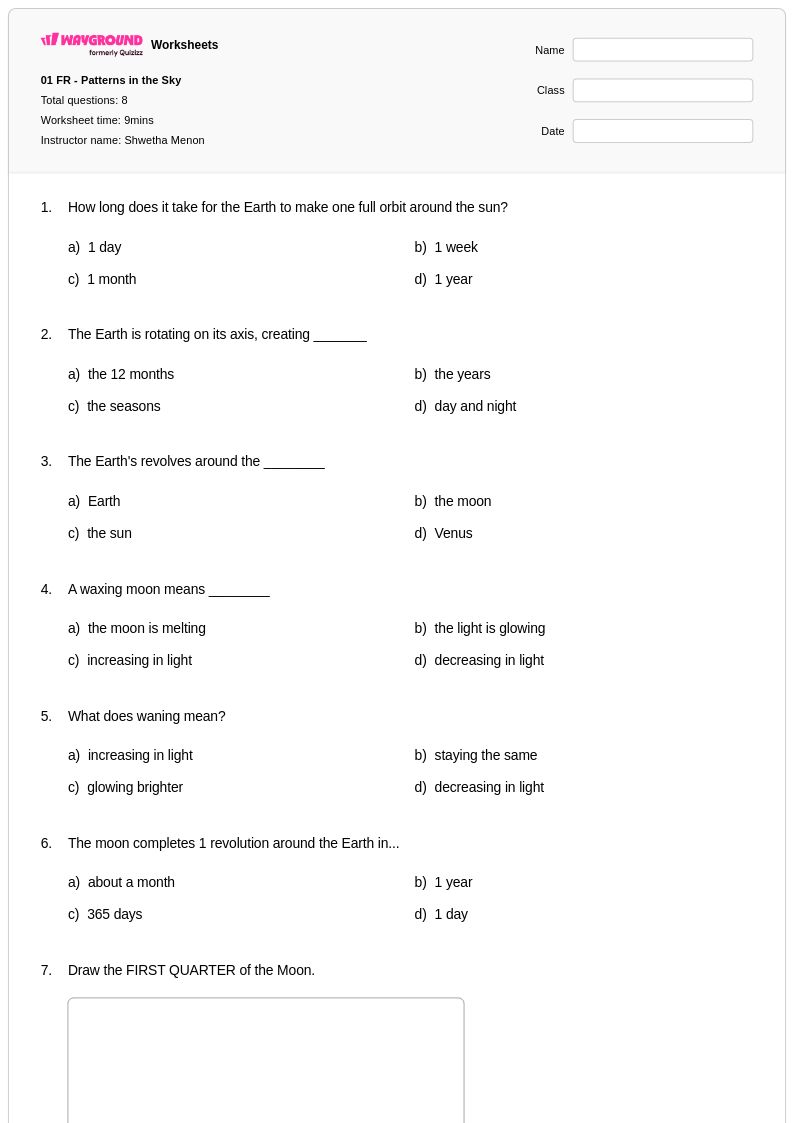
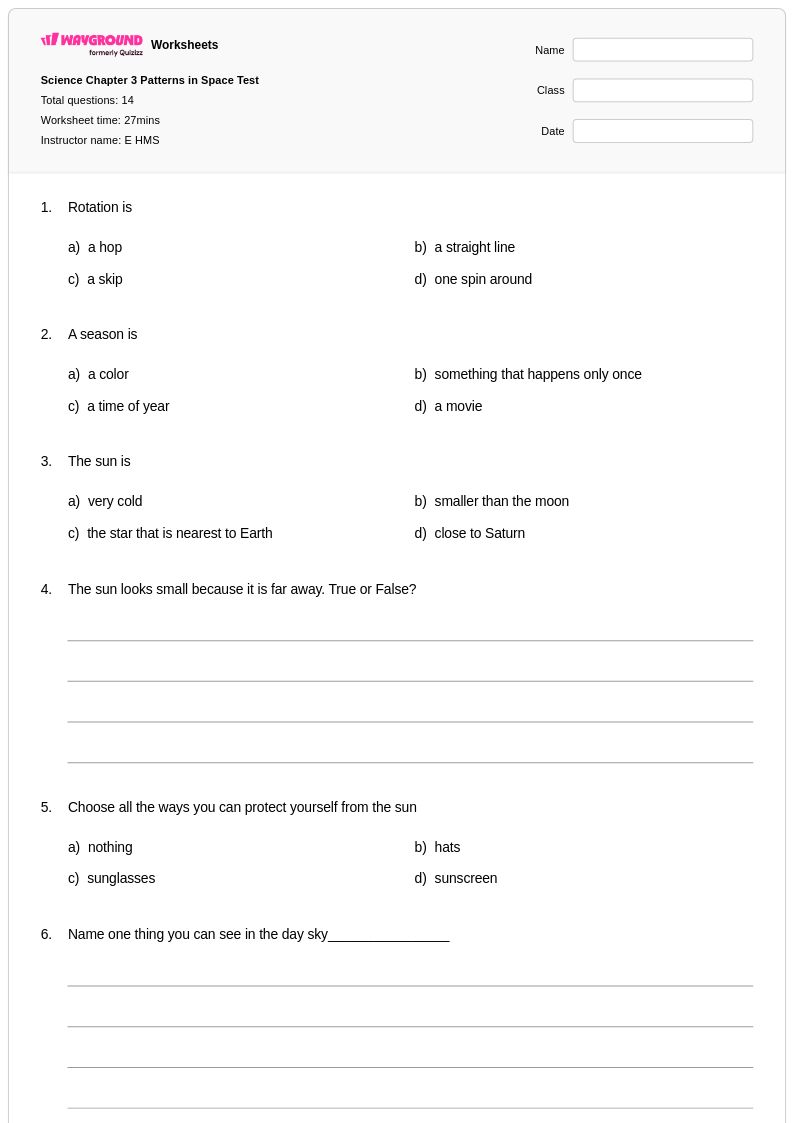
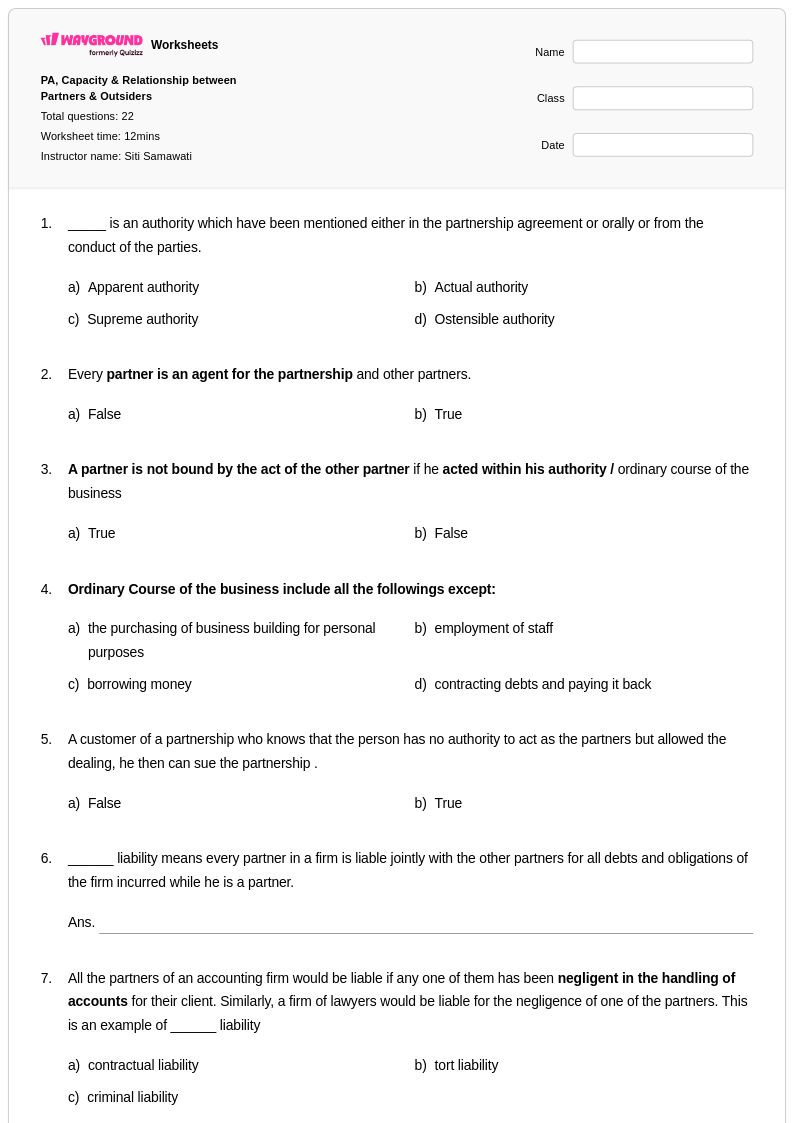
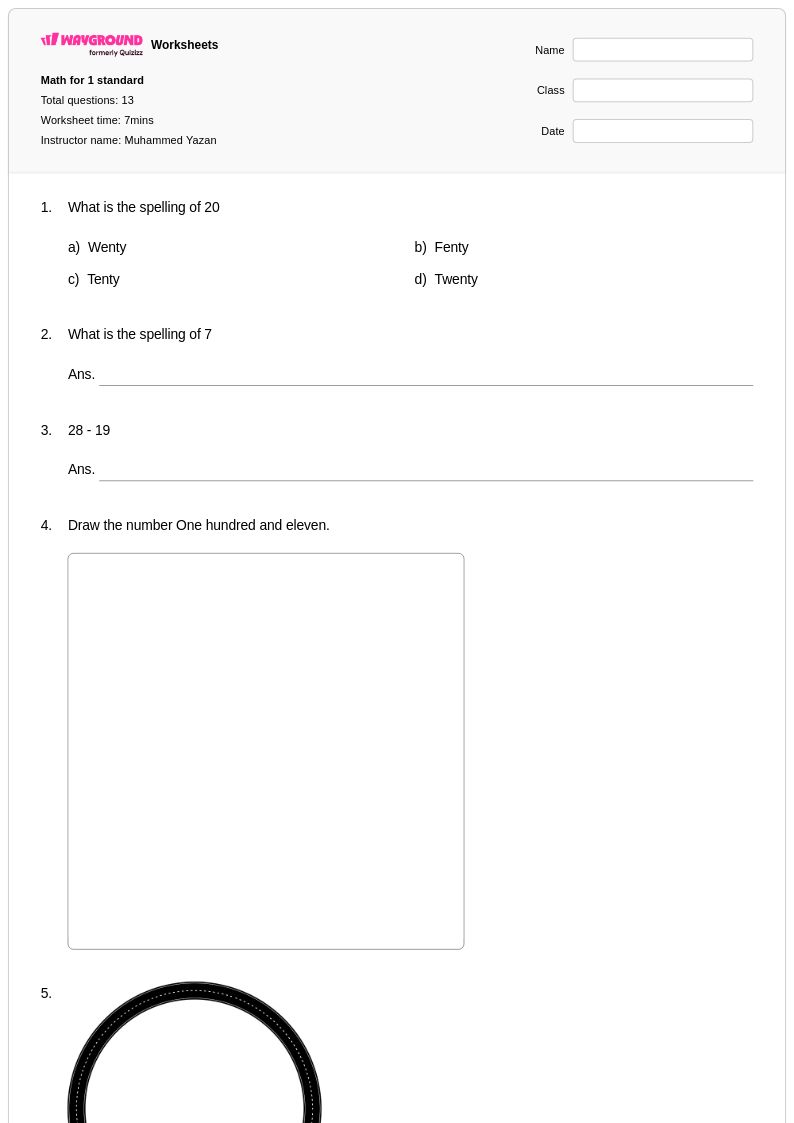
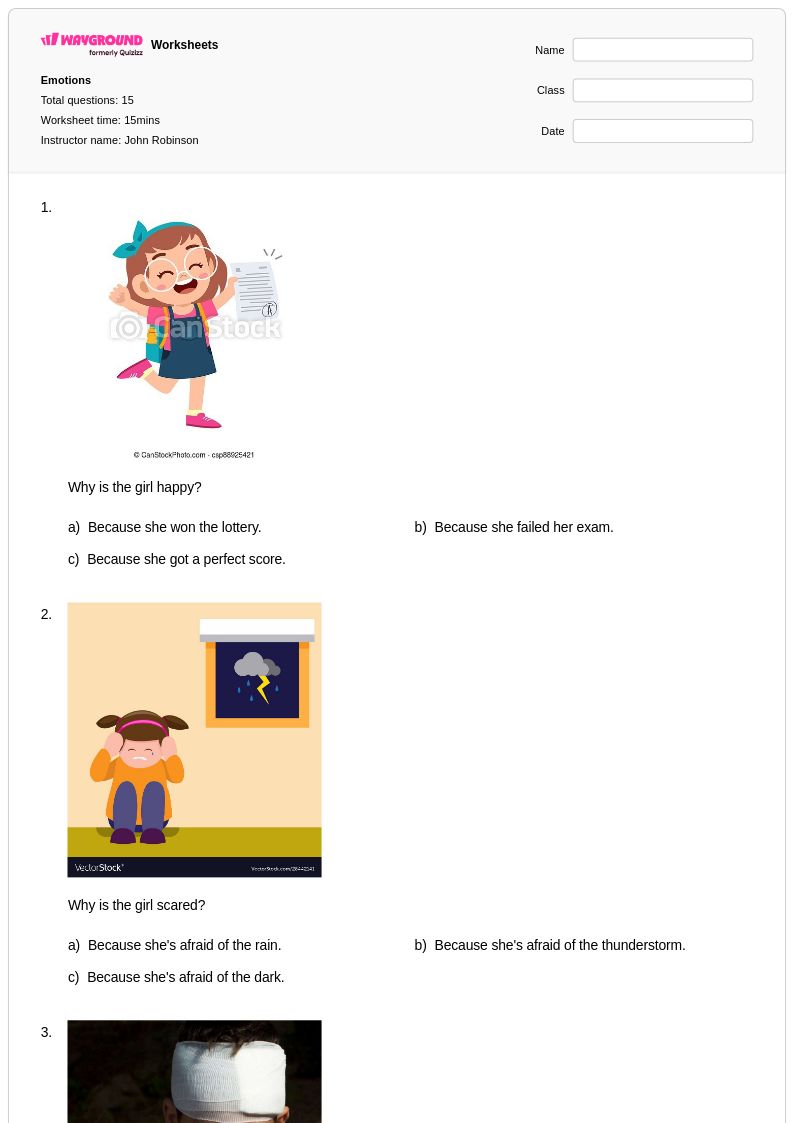
Relationship patterns form the foundation of social development for Class 1 students, and Wayground's comprehensive worksheet collection provides educators with engaging resources to teach these essential interpersonal skills. These carefully designed worksheets help young learners identify and understand different types of relationships in their daily lives, from family dynamics and friendships to classroom interactions and community connections. Students develop critical social awareness through practice problems that explore concepts like sharing, taking turns, showing kindness, and recognizing emotions in others. Each worksheet includes a detailed answer key to support accurate assessment, and the free printables offer flexible implementation options for both individual and group activities that strengthen empathy, communication skills, and social problem-solving abilities.
Wayground's extensive library of millions of teacher-created resources ensures educators have access to diverse, high-quality materials specifically tailored to Class 1 relationship pattern instruction. The platform's robust search and filtering capabilities allow teachers to quickly locate worksheets aligned with specific learning standards and differentiate instruction based on individual student needs. These customizable resources are available in both printable PDF format and interactive digital versions, providing maximum flexibility for various classroom environments and learning preferences. Teachers can seamlessly integrate these worksheets into lesson planning for skill practice, use them for targeted remediation with students who need additional support, or implement them as enrichment activities for advanced learners, all while building a strong foundation in social skills that will benefit students throughout their academic journey.
FAQs
How do I teach relationship patterns to students?
Teaching relationship patterns is most effective when students can connect concepts to real-world scenarios they recognize. Start by introducing the distinction between healthy and unhealthy relationship dynamics using case studies or structured scenarios, then move into guided discussion around communication styles, boundary-setting, and emotional responses. Anchoring lessons in concrete examples helps students build the empathy and self-awareness needed to apply these skills outside the classroom.
What activities help students practice identifying healthy vs. unhealthy relationship patterns?
Structured practice activities such as case study analysis, reflection prompts, and role-playing exercises are highly effective for helping students recognize and evaluate relationship dynamics. These formats require students to apply criteria for healthy communication, boundary-setting, and conflict resolution to realistic situations rather than just recalling definitions. Regular practice with varied scenarios builds the pattern recognition students need to navigate real social environments.
What common misconceptions do students have about relationship patterns?
A frequent misconception is that conflict automatically signals an unhealthy relationship, when in reality how conflict is handled matters far more than its presence. Students also tend to conflate intensity of feeling with the quality of a relationship, which can make it difficult to evaluate dynamics objectively. Addressing these misunderstandings early helps students develop more accurate frameworks for assessing their own social connections.
How can I use relationship patterns worksheets to support social-emotional learning in my classroom?
Relationship patterns worksheets support social-emotional learning by giving students structured opportunities to examine interpersonal dynamics, practice perspective-taking, and reflect on their own communication habits. Activities that combine scenario analysis with personal reflection prompts are particularly effective because they bridge abstract concepts like empathy and emotional intelligence to tangible situations. Used consistently, these materials help build a classroom culture where students feel equipped to discuss social challenges constructively.
How do I differentiate relationship patterns instruction for students at different readiness levels?
Differentiation for relationship patterns can involve adjusting the complexity of scenarios, the level of scaffolding provided in reflection prompts, or the degree of abstraction required in analysis tasks. For students who need additional support, reducing the number of response options or providing sentence frames helps lower cognitive load without removing rigor. On Wayground, teachers can apply student-level accommodations such as reduced answer choices, extended time, and read aloud features individually, so each student receives appropriately adjusted support without disrupting the rest of the class.
How do I use Wayground's relationship patterns worksheets in my classroom?
Wayground's relationship patterns worksheets are available as printable PDFs for traditional classroom use and in digital formats for technology-integrated learning environments, including the option to host them as an interactive quiz directly on the platform. Teachers can use the robust search and filtering tools to locate materials aligned with specific curriculum standards and select formats that fit their instructional purpose, whether for initial introduction, guided practice, or independent review. Answer keys are included with each worksheet, supporting both self-directed student learning and efficient teacher-led instruction.