Free Printable Research Writing Worksheets for Class 12
Enhance Class 12 students' research writing skills with Wayground's comprehensive collection of free worksheets and printables, featuring practice problems and answer keys to master citation, source evaluation, and academic writing techniques.
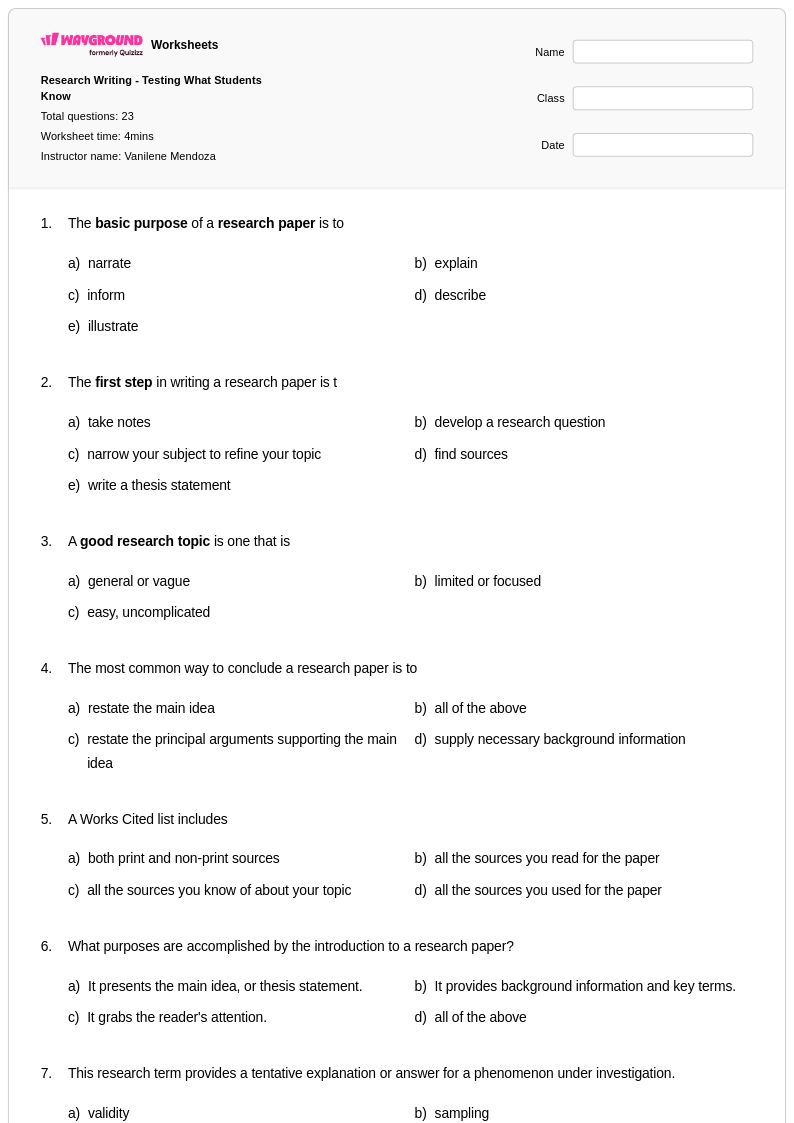
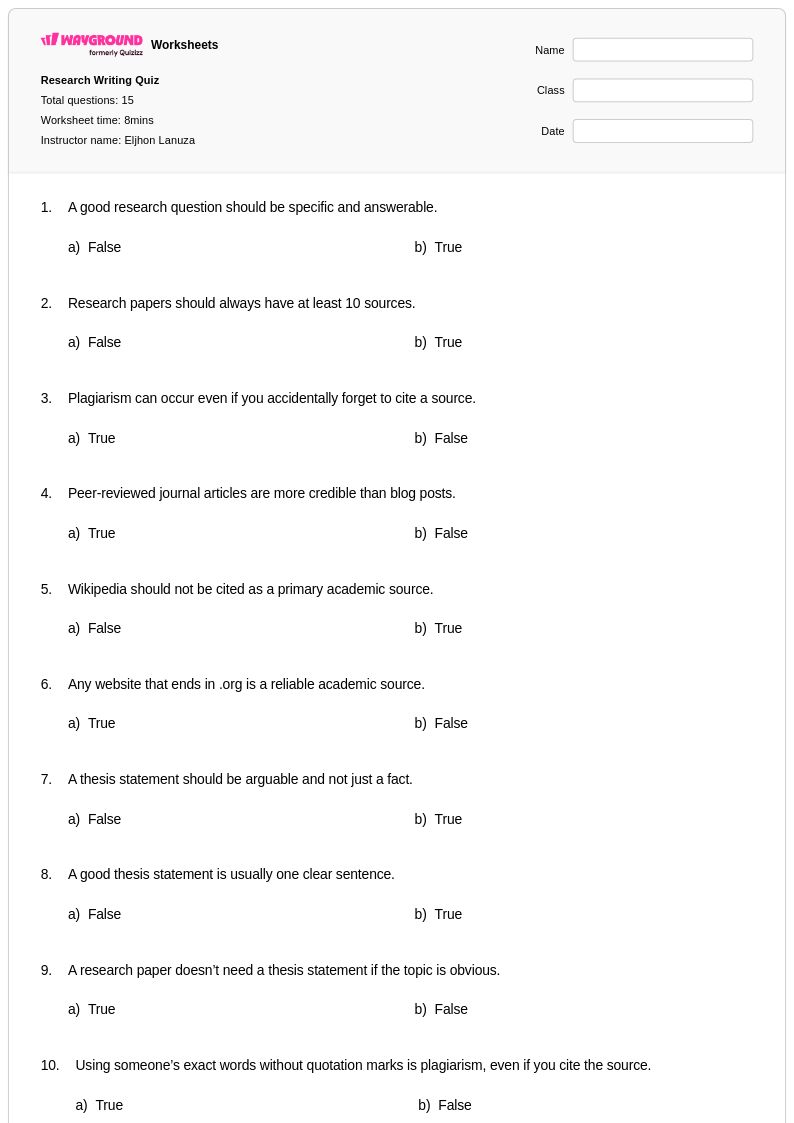
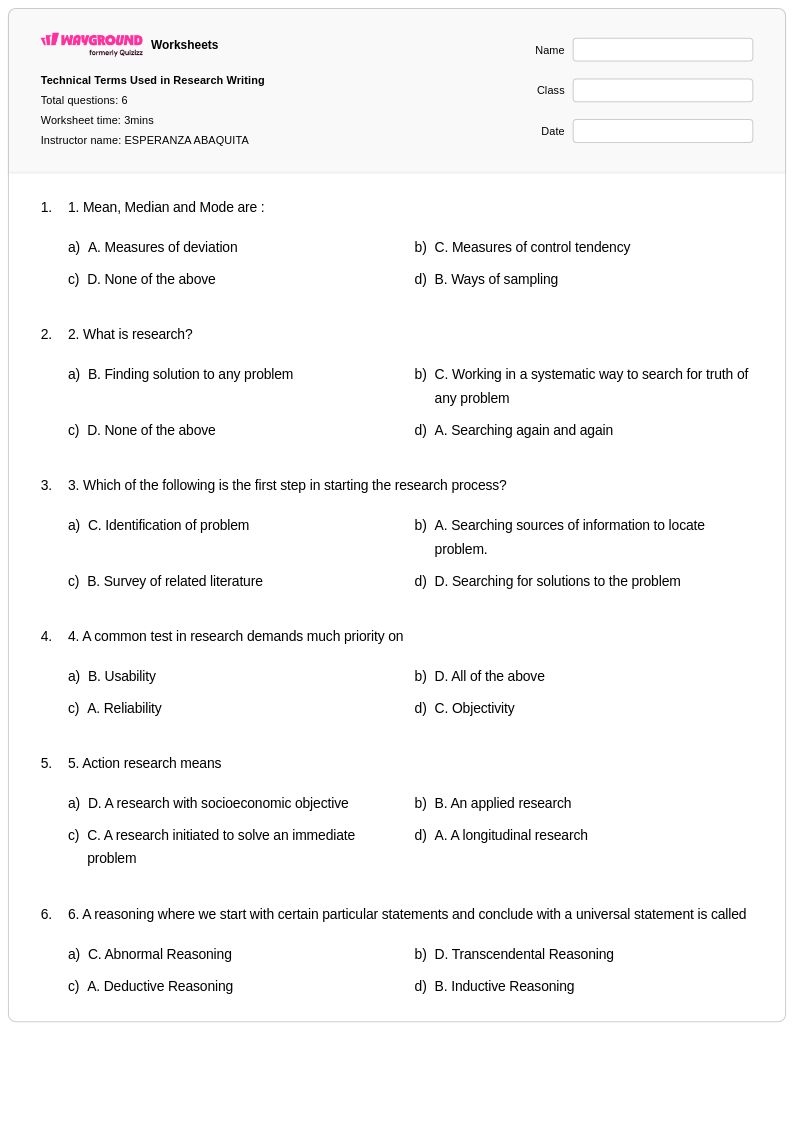
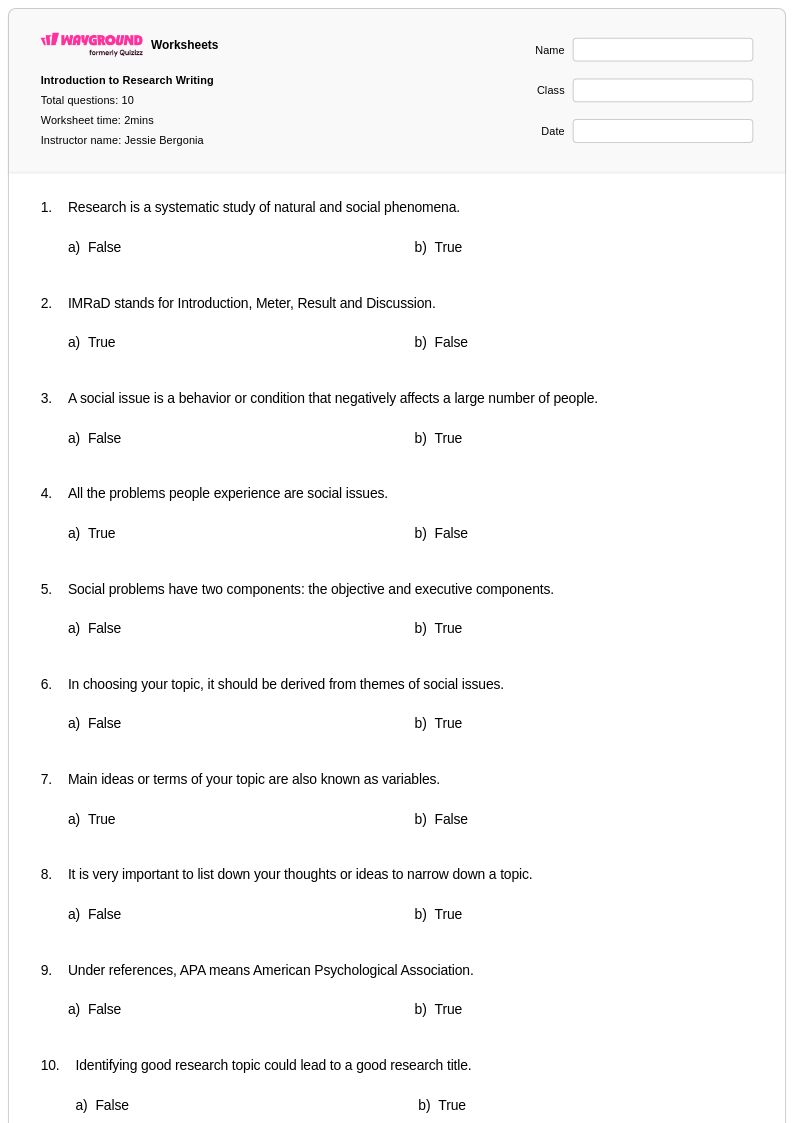
Explore printable Research Writing worksheets for Class 12
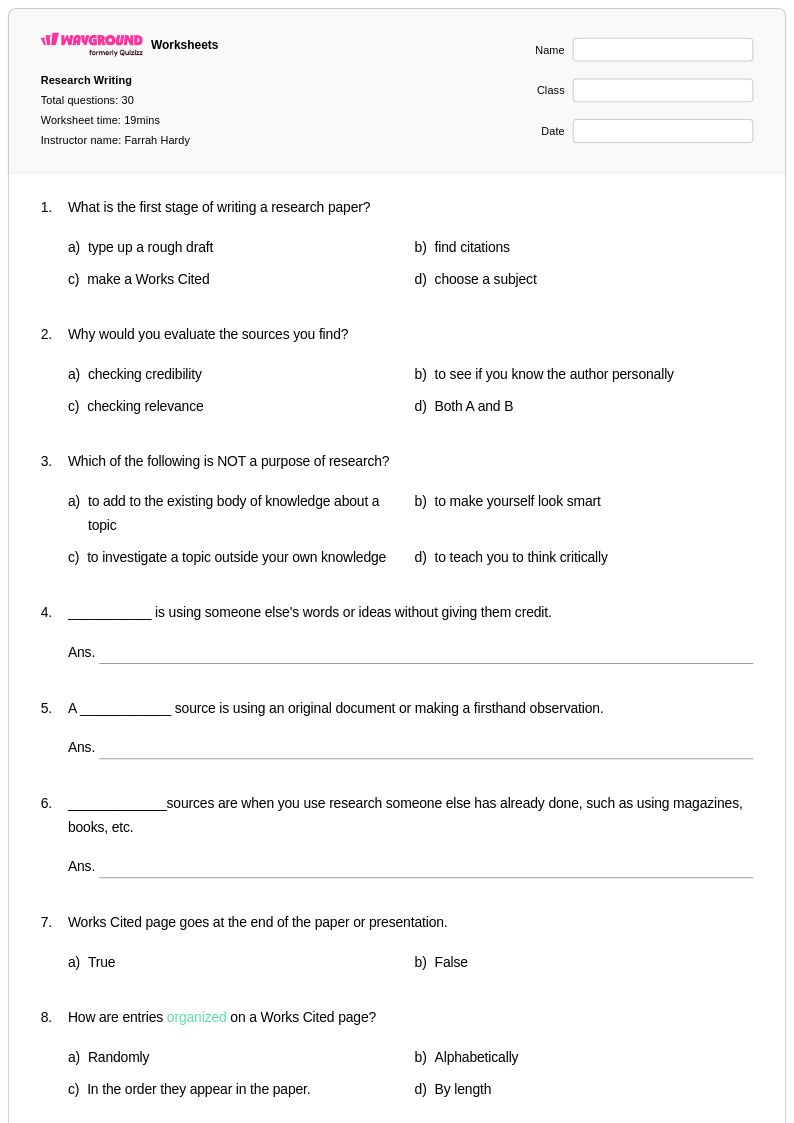
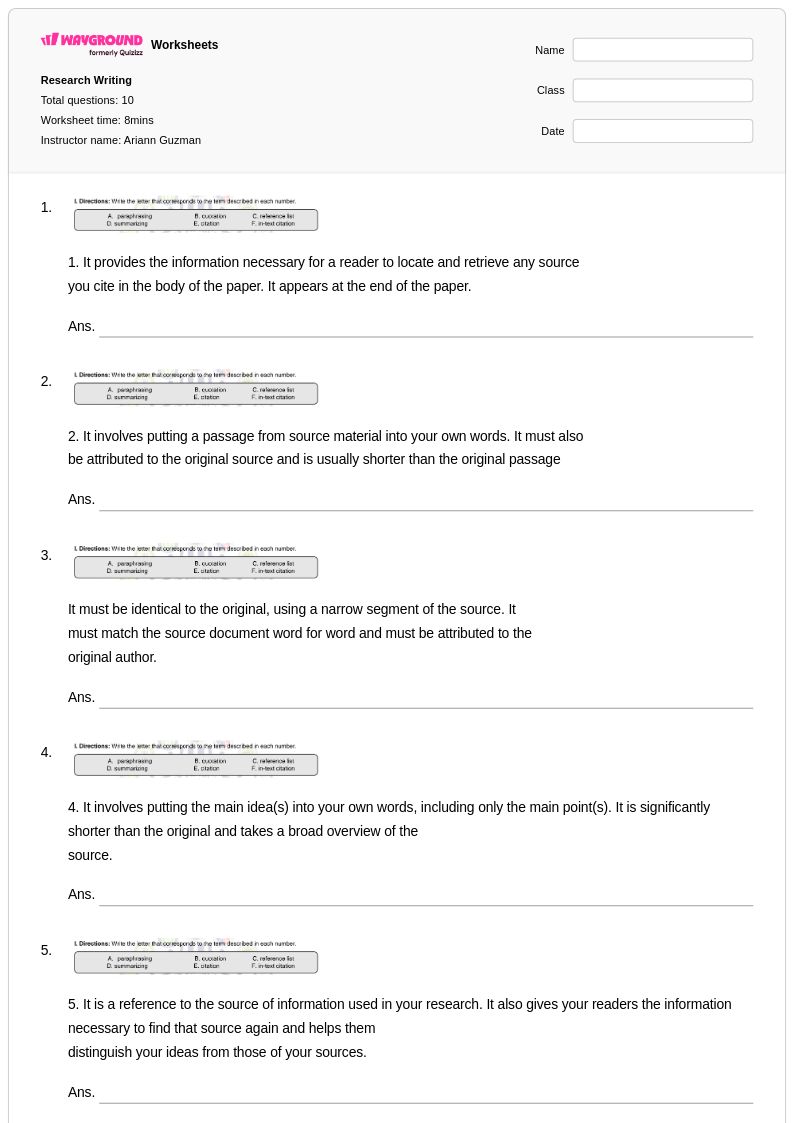
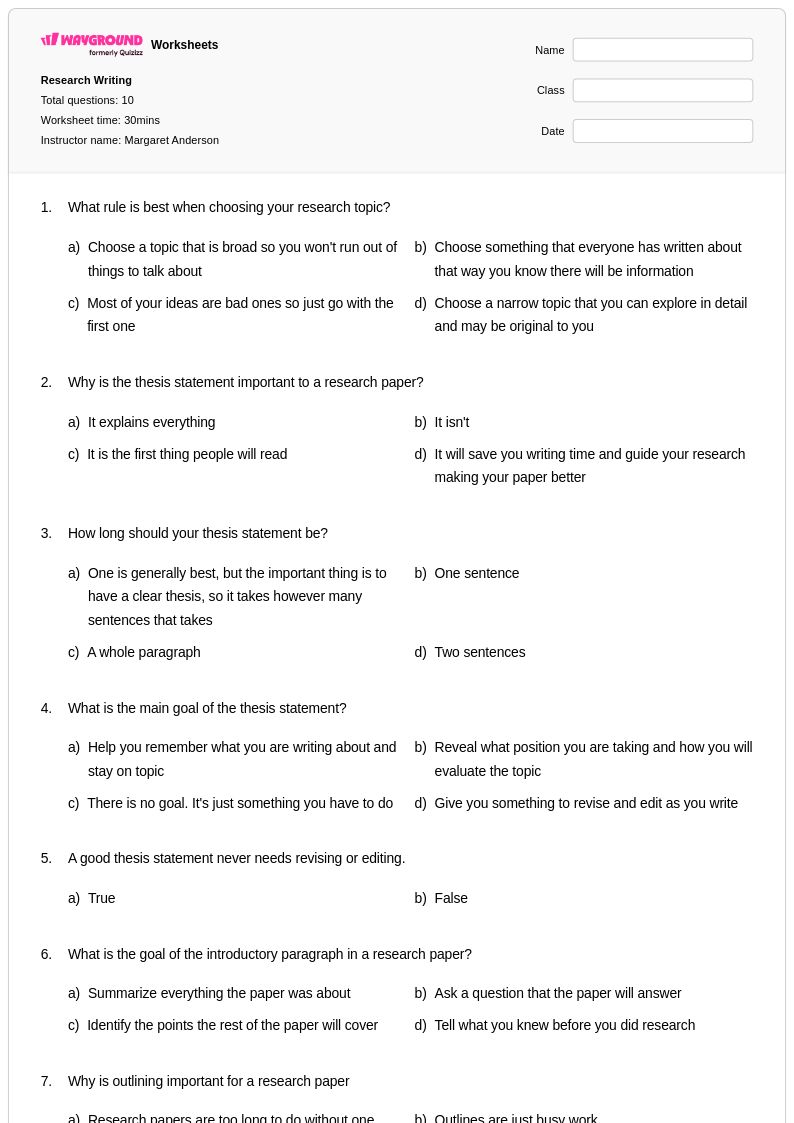
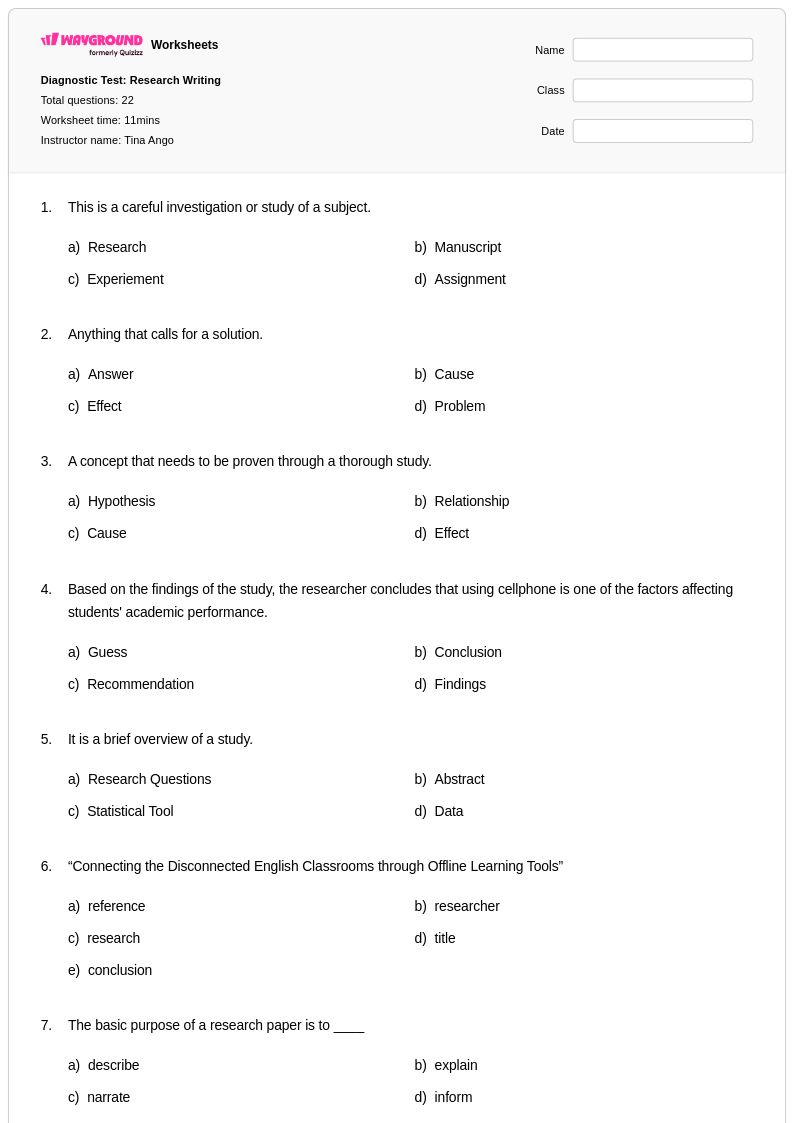
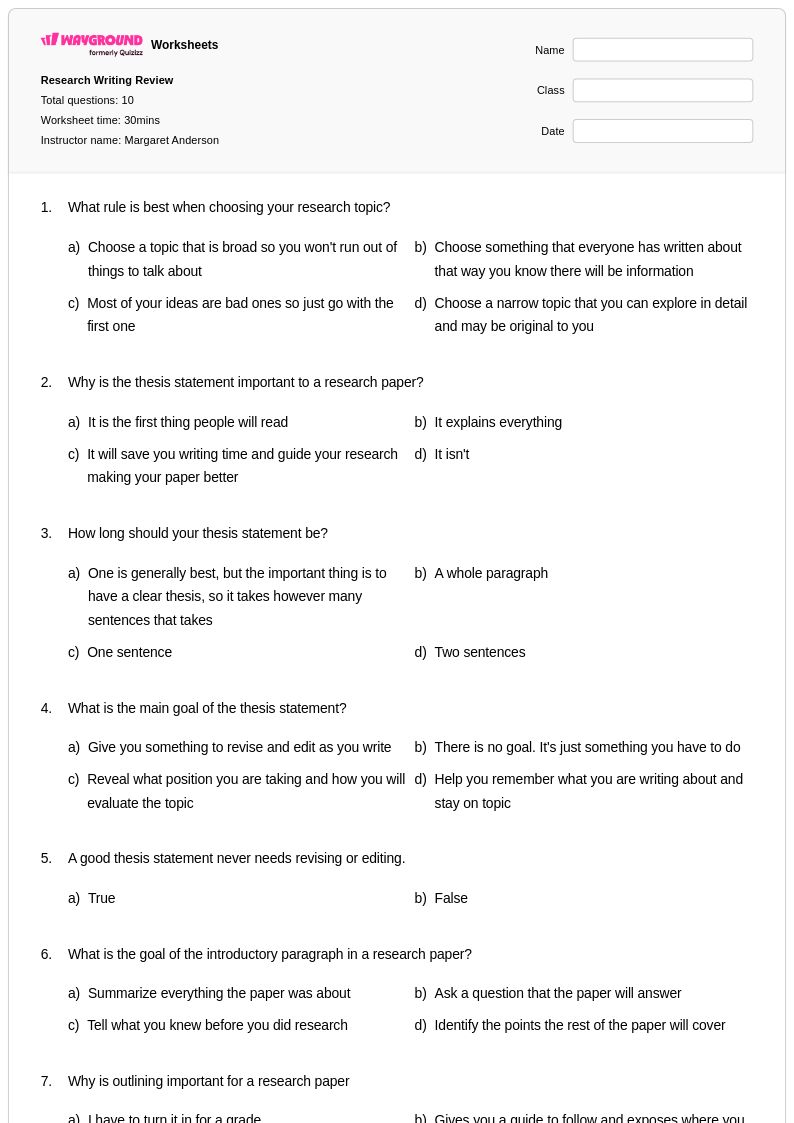
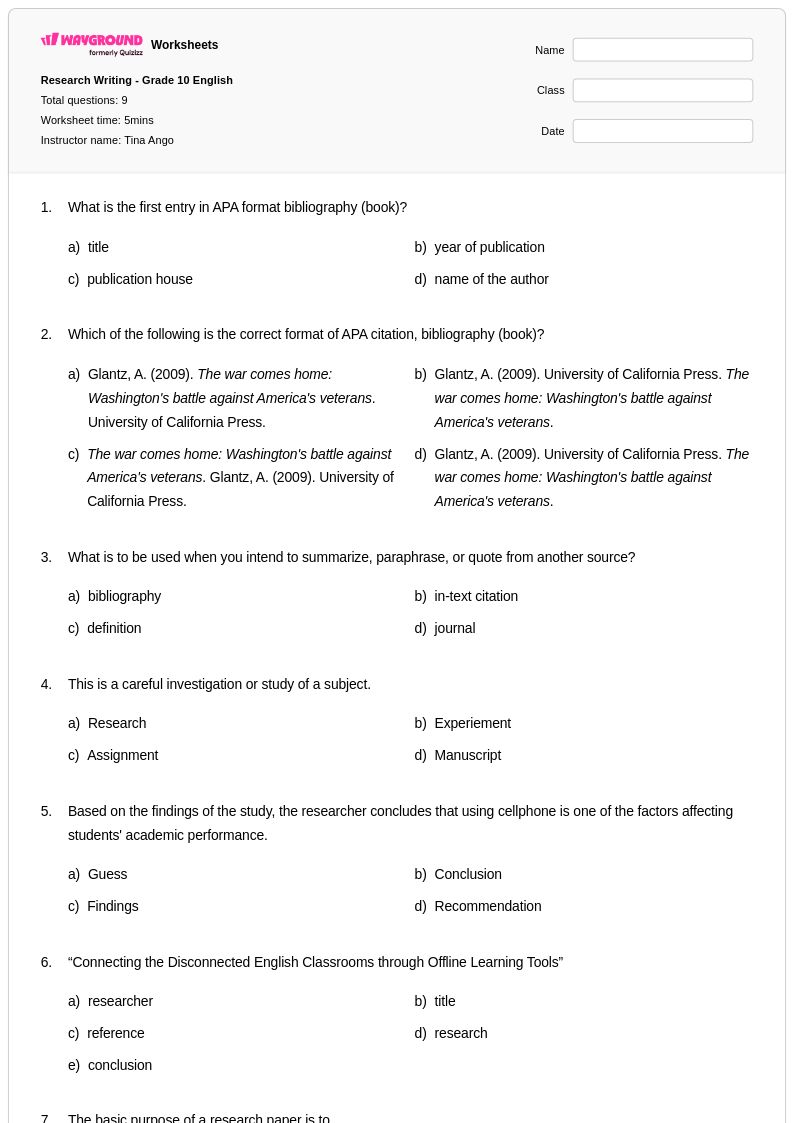
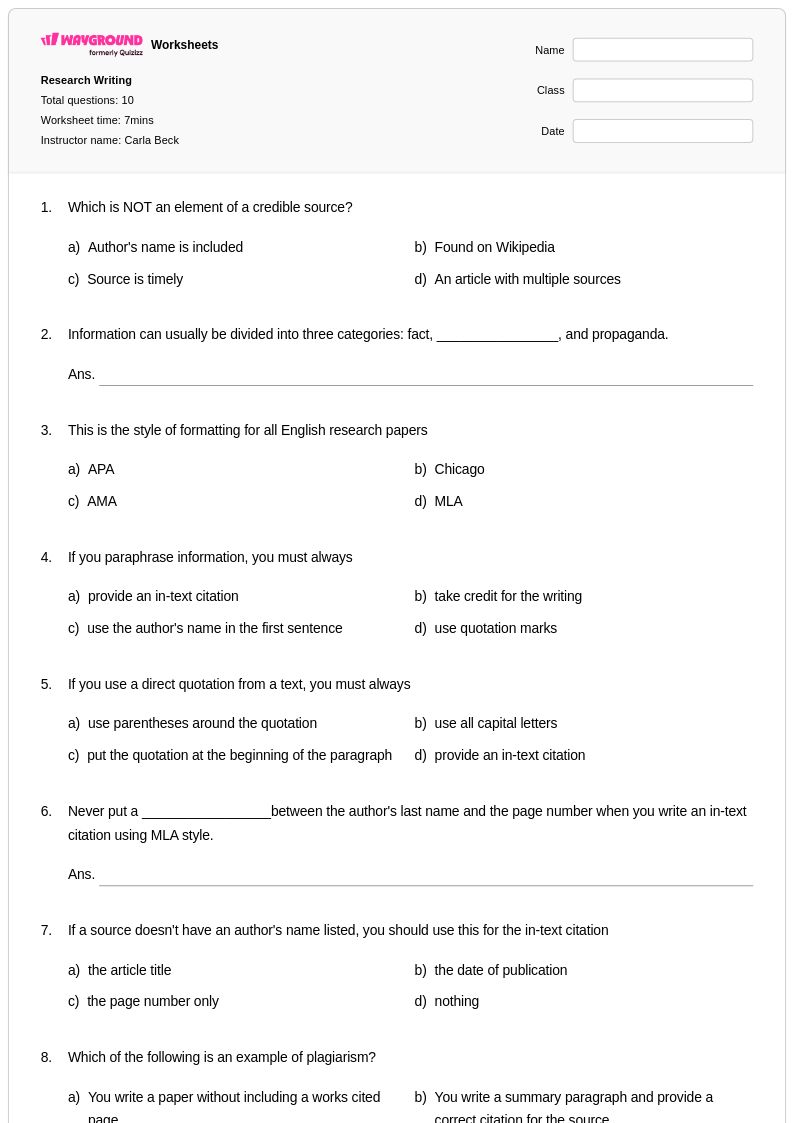
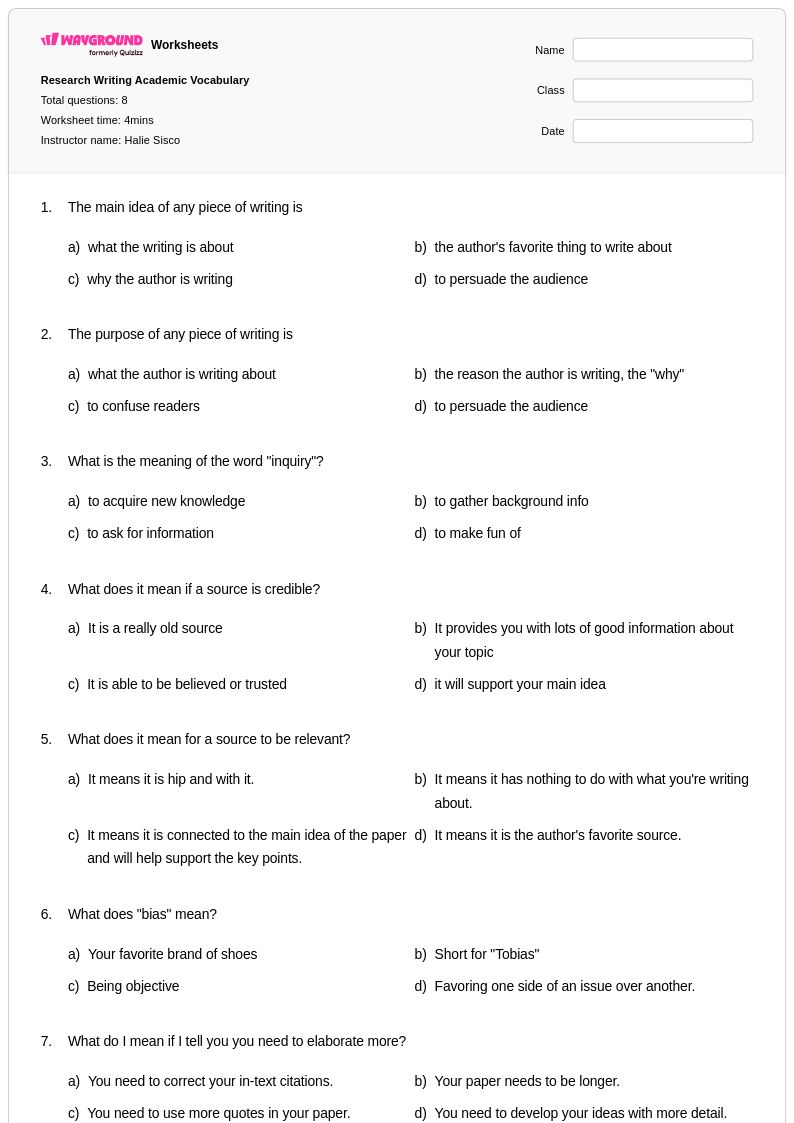
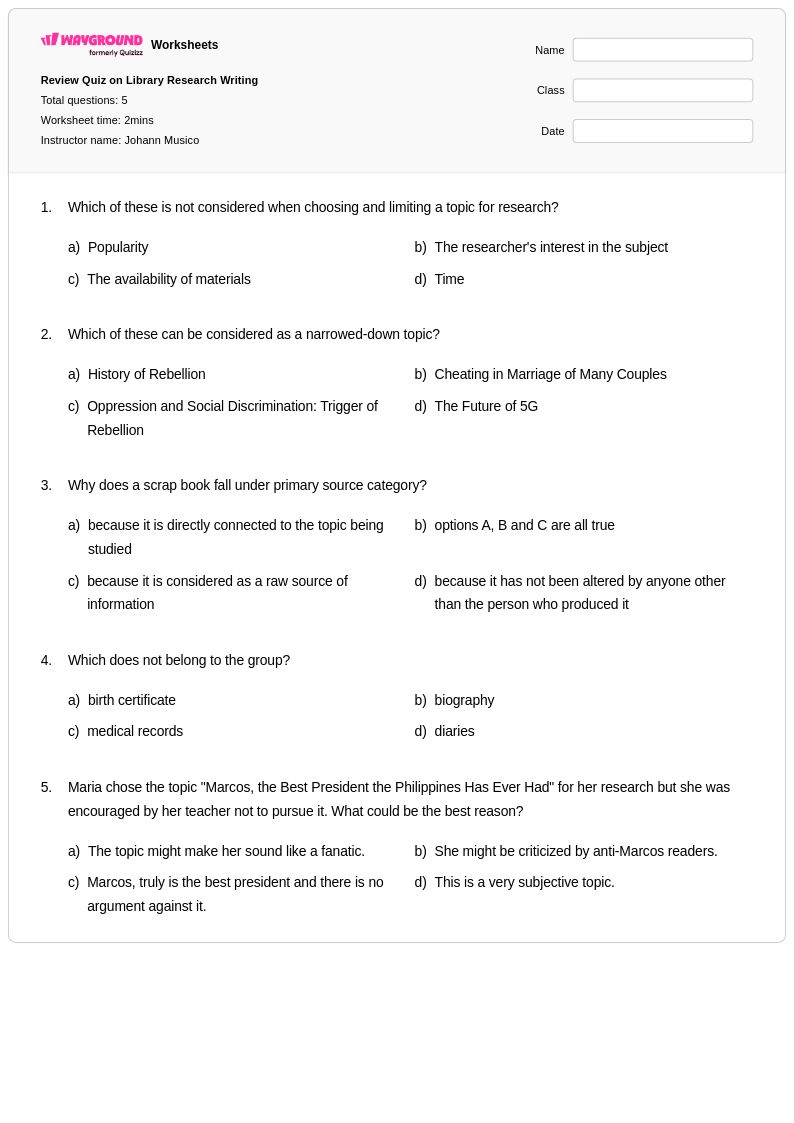
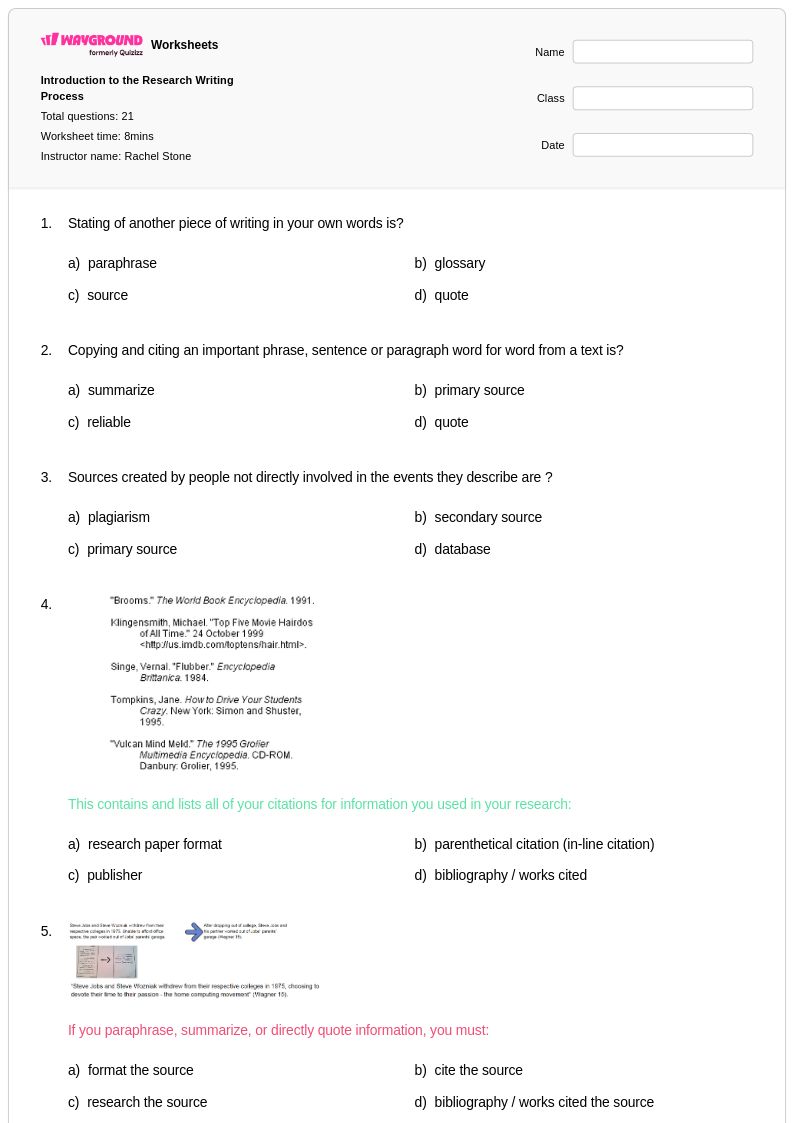
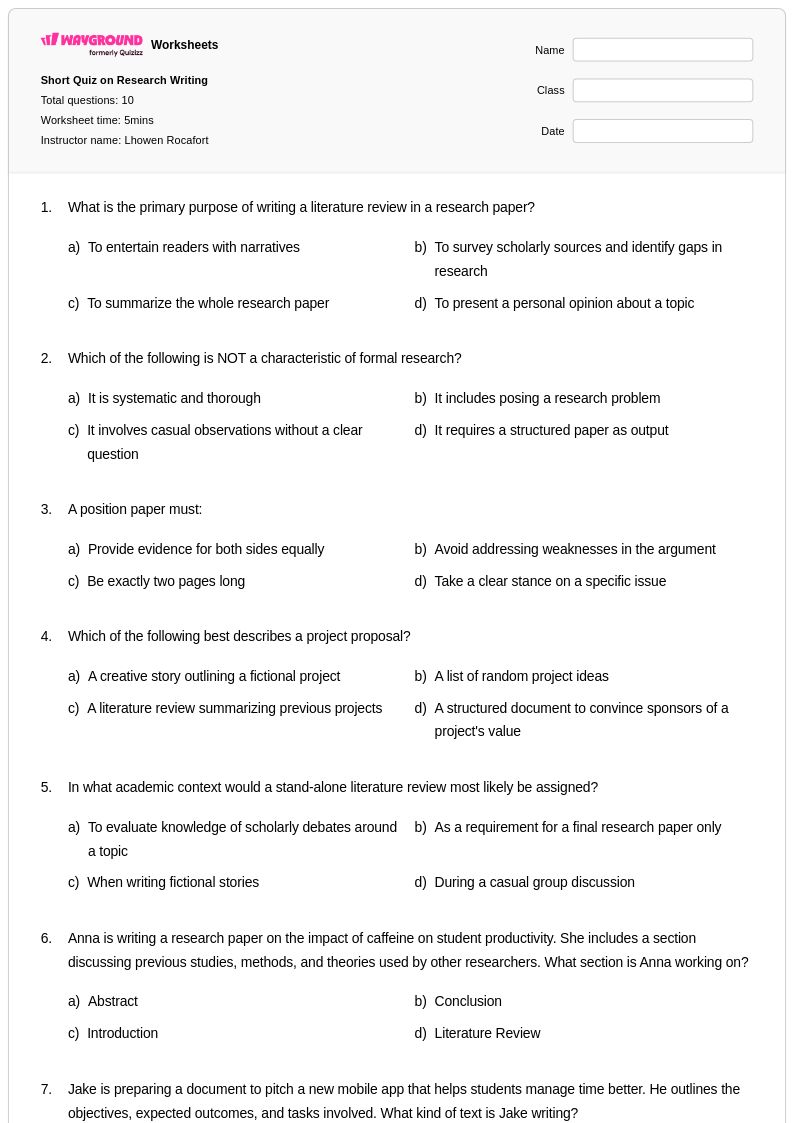
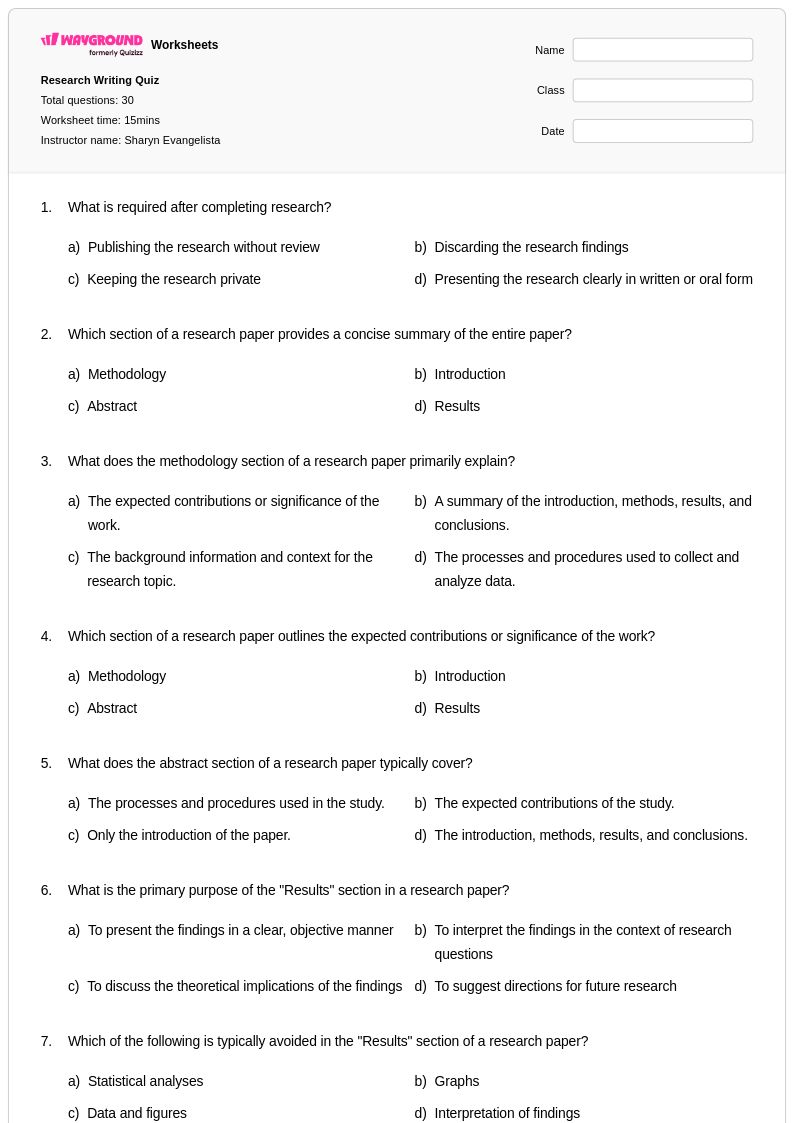
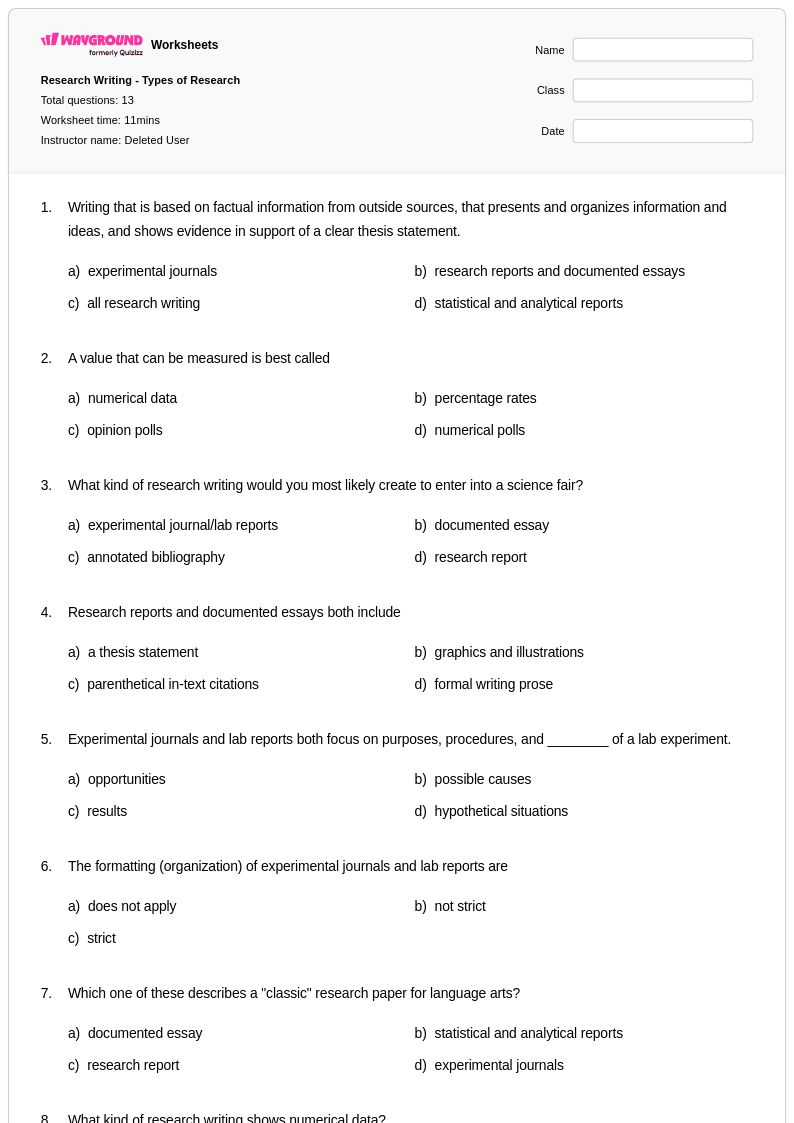
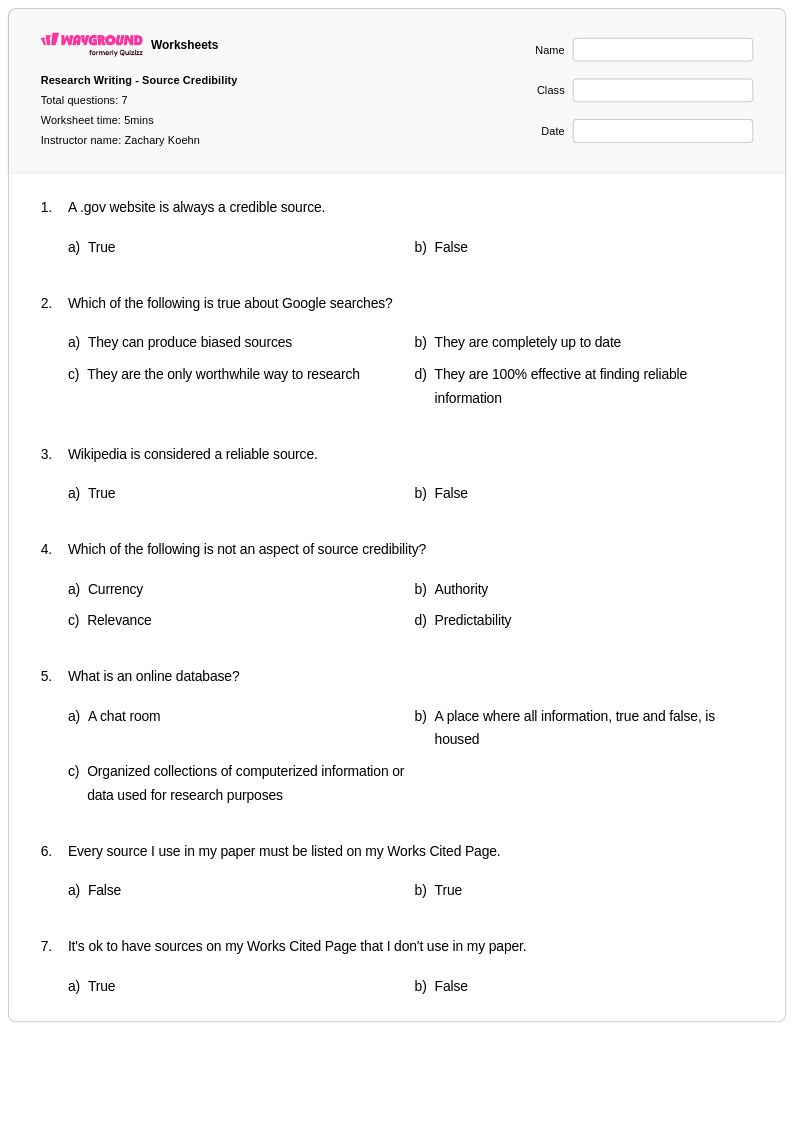
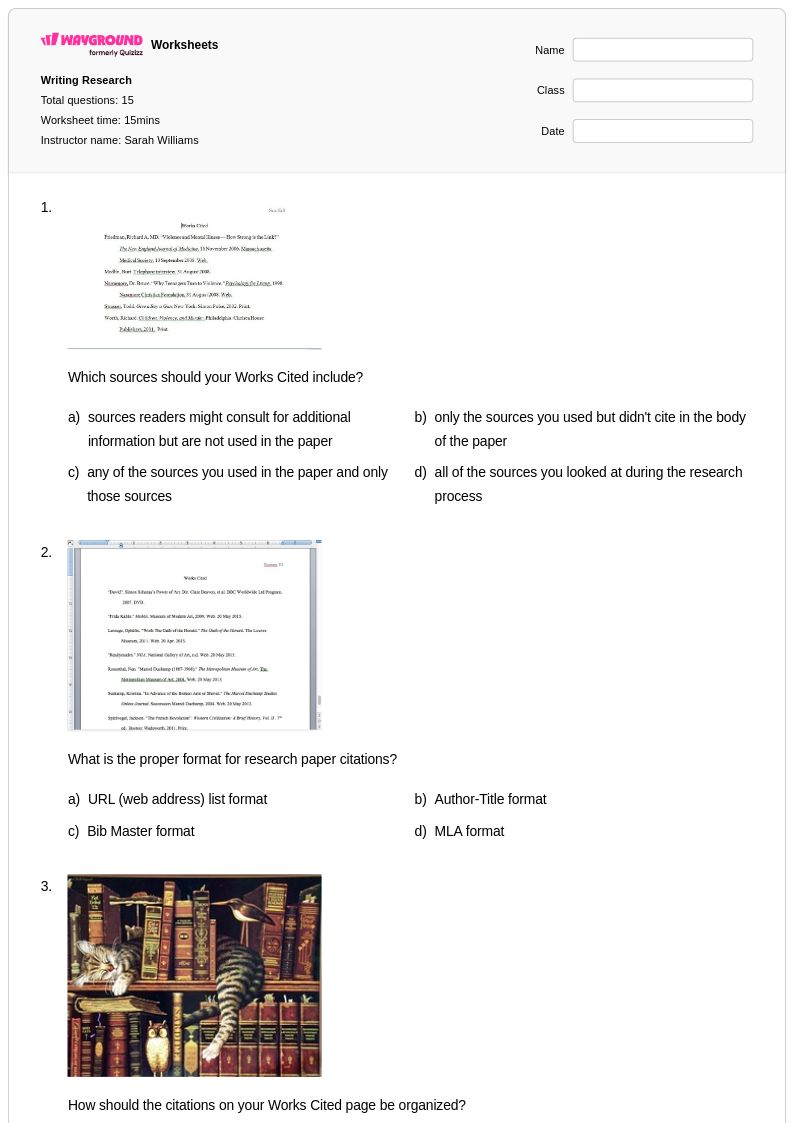
Research writing worksheets for Class 12 students available through Wayground (formerly Quizizz) provide comprehensive practice in the sophisticated skills required for academic and professional inquiry. These carefully designed resources guide students through the complex process of conducting thorough research, evaluating source credibility, synthesizing multiple perspectives, and presenting findings with scholarly rigor. Students develop mastery in creating research questions, constructing annotated bibliographies, integrating primary and secondary sources, and documenting evidence using proper citation formats. The worksheets include practice problems that challenge students to analyze conflicting sources, identify bias in research materials, and construct compelling arguments supported by credible evidence. Each resource comes with detailed answer keys that help students understand the reasoning behind effective research strategies, and the free printable pdf format ensures accessibility for both classroom and independent study.
Wayground (formerly Quizizz) empowers educators with an extensive collection of teacher-created research writing worksheets specifically tailored for Class 12 instruction, drawing from millions of high-quality resources developed by experienced practitioners. The platform's robust search and filtering capabilities allow teachers to quickly locate materials aligned with specific curriculum standards and learning objectives, while differentiation tools enable customization based on individual student needs and skill levels. Teachers can seamlessly adapt worksheets for various instructional purposes, from initial skill-building exercises to advanced enrichment activities that challenge high-achieving students. The flexible format options, including both printable and digital pdf versions, support diverse classroom environments and learning preferences, making it easy to integrate research writing practice into lesson plans, assign targeted remediation work, or provide supplementary materials that reinforce critical thinking and academic writing skills essential for college and career readiness.
FAQs
How do I teach research writing skills to students?
Effective research writing instruction breaks the process into discrete, teachable stages: formulating a focused research question, evaluating source credibility, taking organized notes, synthesizing information from multiple sources, and citing references correctly. Teaching each stage explicitly before asking students to complete a full research task prevents overwhelm and builds procedural fluency. Structured worksheets that guide students through each step help make the research process visible and repeatable.
What exercises help students practice evaluating sources?
Source evaluation practice works best when students compare multiple sources on the same topic and assess each for credibility, relevance, and bias. Exercises that ask students to distinguish between primary and secondary sources, identify author credentials, and detect unsupported claims build the critical reading habits essential to academic research. Repeated exposure to these tasks across different subject areas helps students apply source evaluation skills automatically.
What mistakes do students commonly make with research writing?
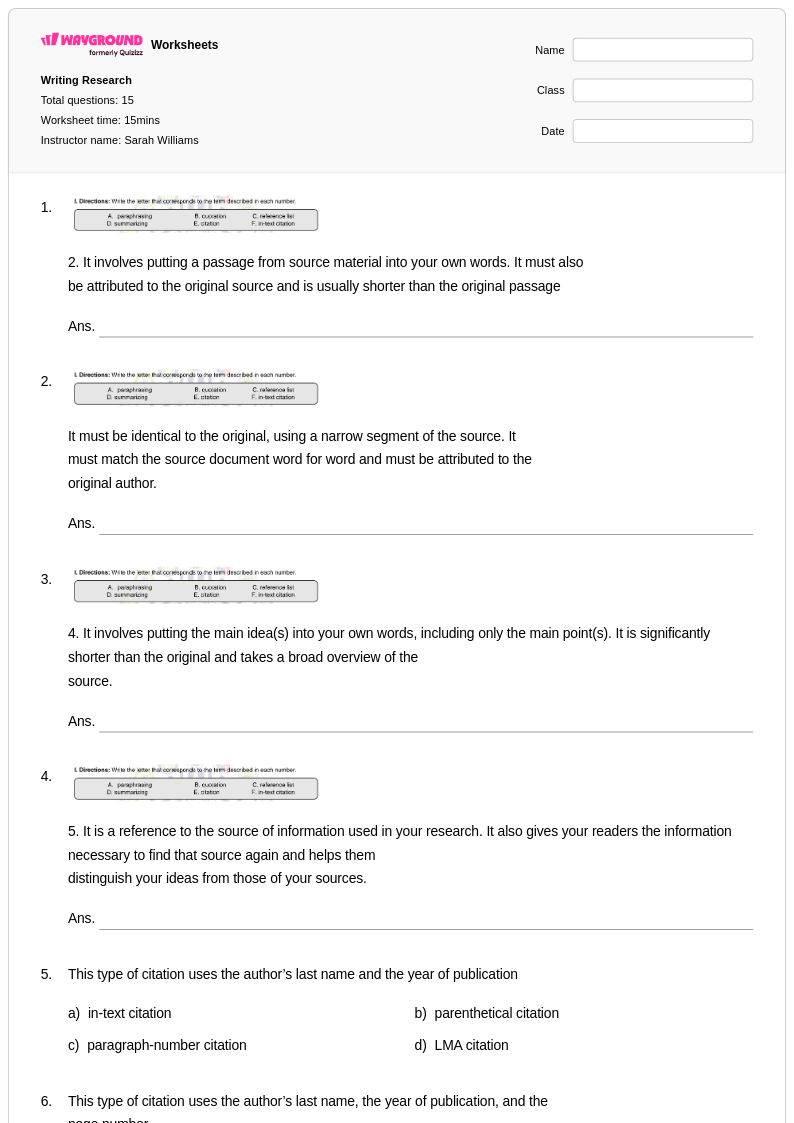
The most common errors in research writing include failing to distinguish between paraphrase and direct quotation, citing sources inconsistently or incompletely, and building arguments that summarize rather than synthesize information. Students also frequently select sources based on convenience rather than credibility, which undermines the quality of their evidence. Targeted practice on citation formats and evidence integration helps students recognize and correct these patterns before they become entrenched habits.
How do I help students construct evidence-based arguments in their writing?
Evidence-based argument construction requires students to understand that a claim without supporting evidence is an assertion, not an argument. Teaching students to use a claim-evidence-reasoning structure, where each point is explicitly tied to cited source material, gives them a repeatable framework for building scholarly arguments. Practice exercises that ask students to evaluate the strength of evidence for a given claim are especially effective at developing this analytical habit.
How do I use Wayground's research writing worksheets in my classroom?
Wayground's research writing worksheets are available as printable PDFs for traditional classroom use and in digital formats for technology-integrated learning environments, making them suitable for in-class instruction, homework assignments, or independent practice. Teachers can also host the worksheets as a quiz directly on Wayground, enabling structured assessment within the same platform. Each worksheet includes a detailed answer key, supporting both self-directed student study and teacher-guided review of student progress.
How can I differentiate research writing instruction for students at different skill levels?
Differentiation in research writing can range from providing graphic organizers and sentence frames for emerging researchers to requiring more complex synthesis tasks and stricter citation standards for advanced students. On Wayground, teachers can apply individual student accommodations such as read aloud support, reduced answer choices, and extended time, all configurable per student without disrupting the rest of the class. These settings are saved and reusable, making it practical to maintain consistent accommodations across multiple research writing sessions.