Free Printable Rhyme Scheme Worksheets for Class 7
Enhance Class 7 students' understanding of rhyme scheme with Wayground's comprehensive collection of free worksheets, printables, and practice problems featuring detailed answer keys to master poetry analysis skills.
Explore printable Rhyme Scheme worksheets for Class 7
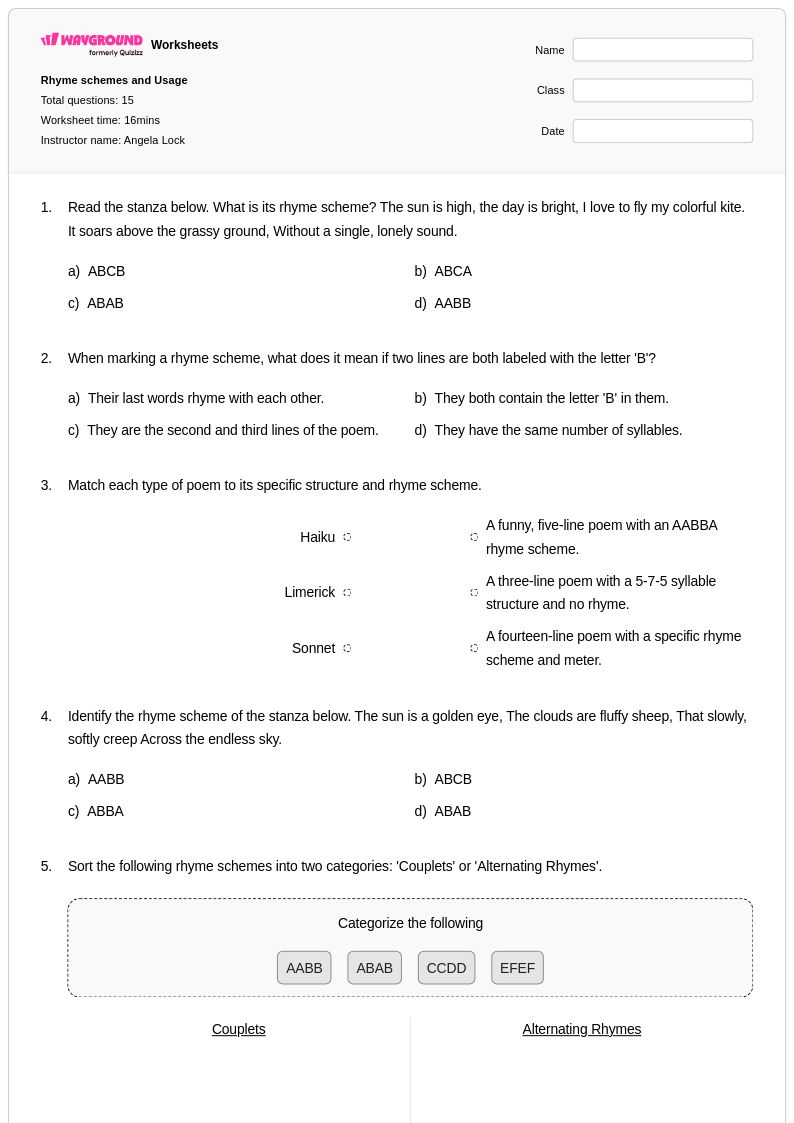
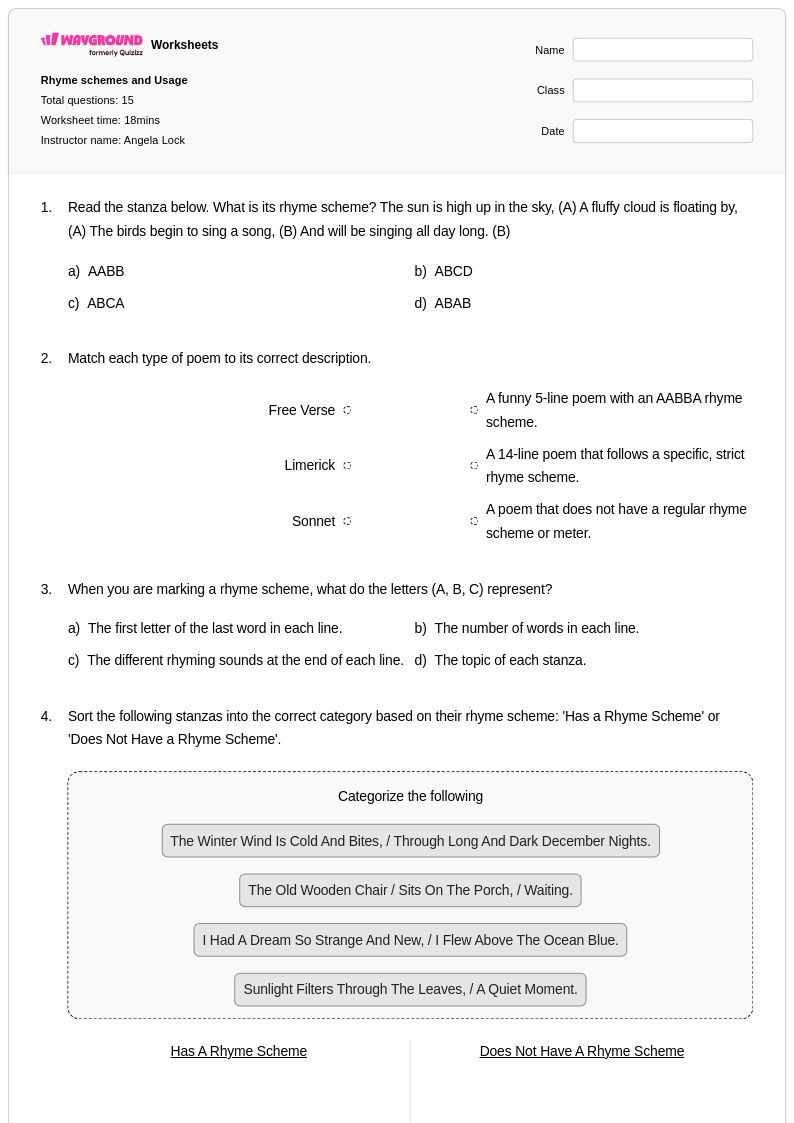
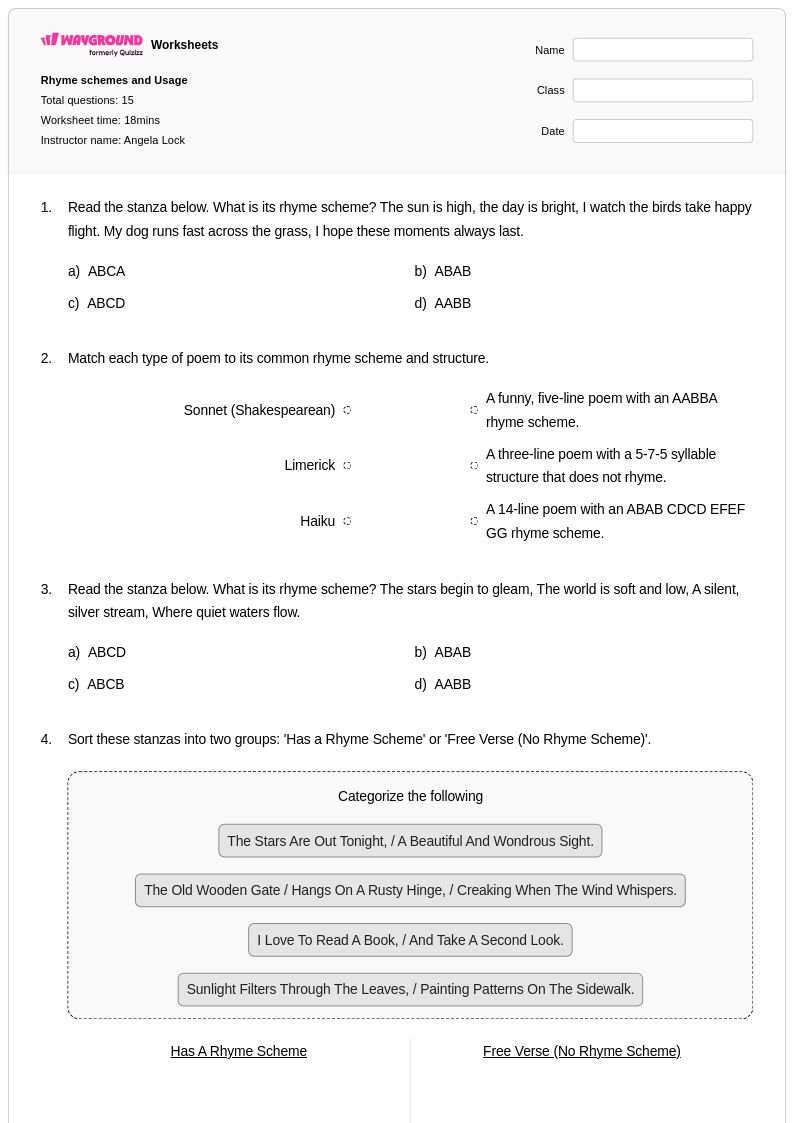
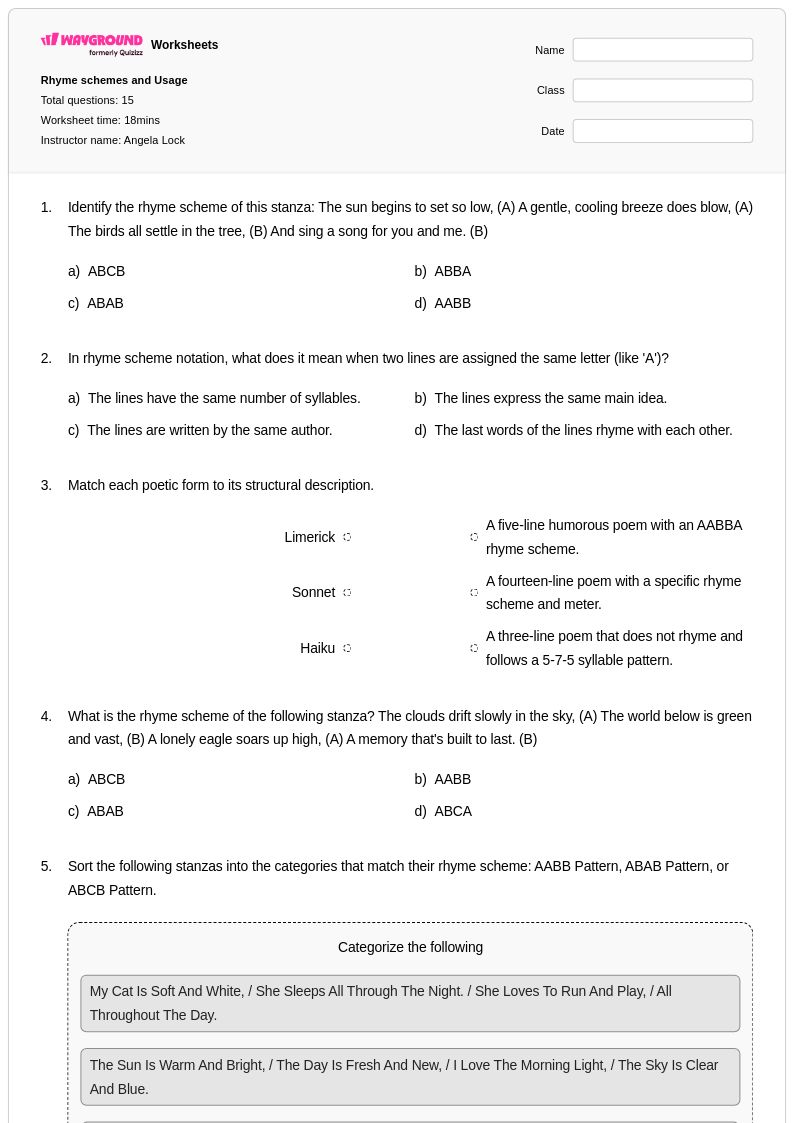
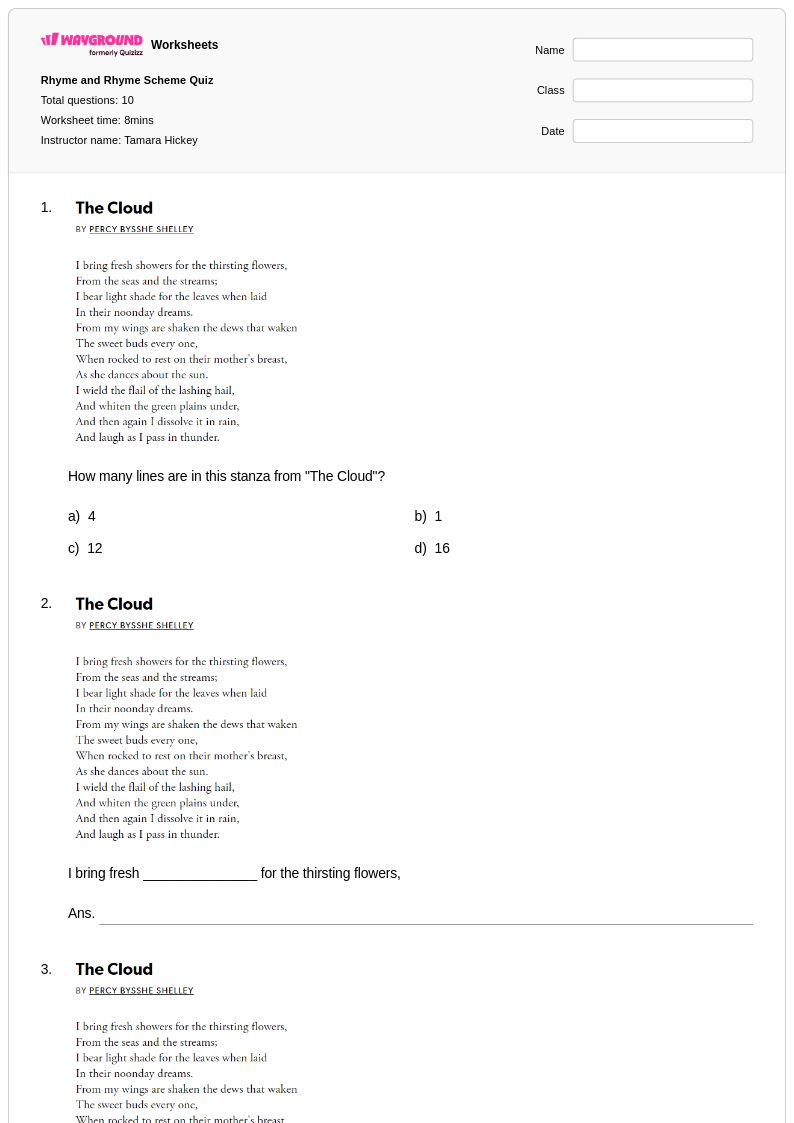
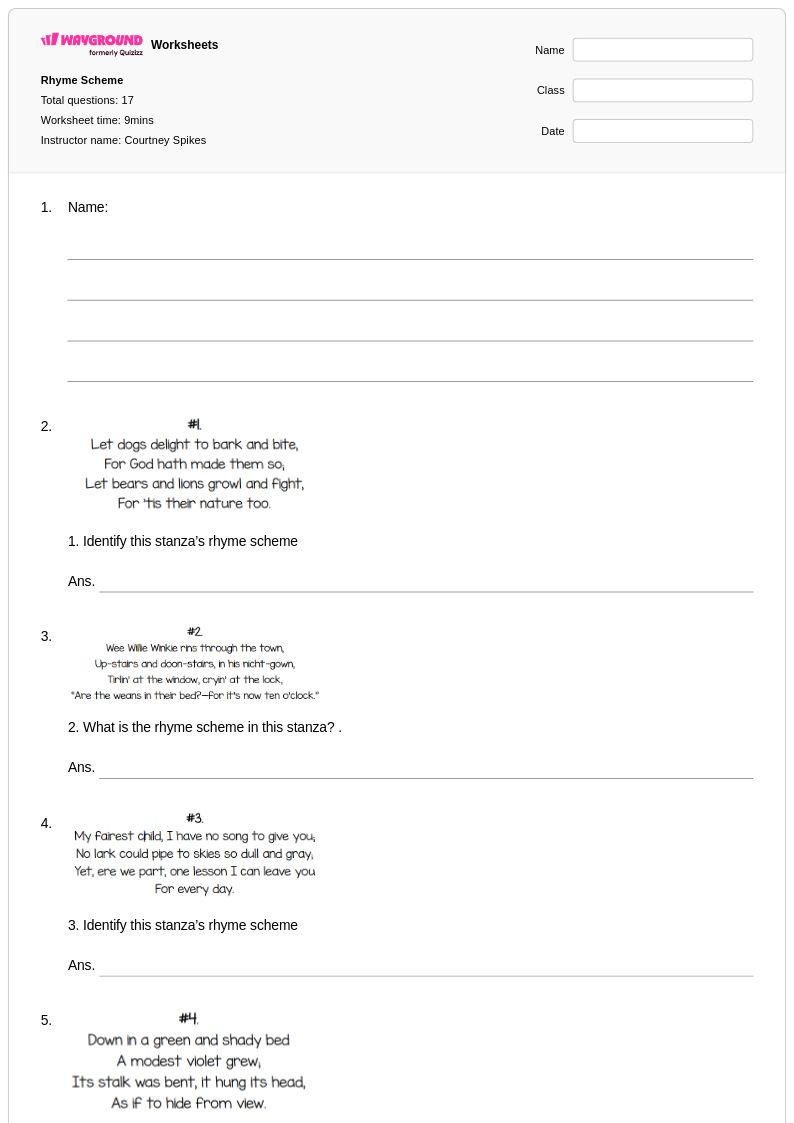
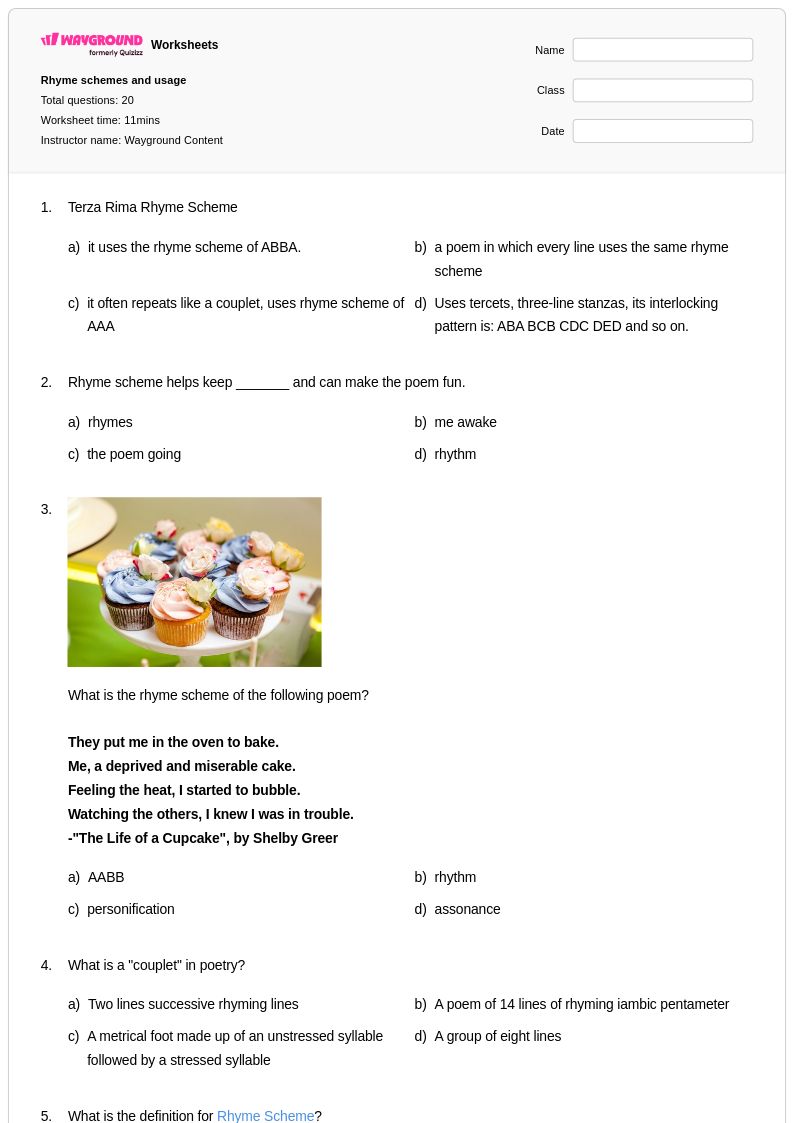
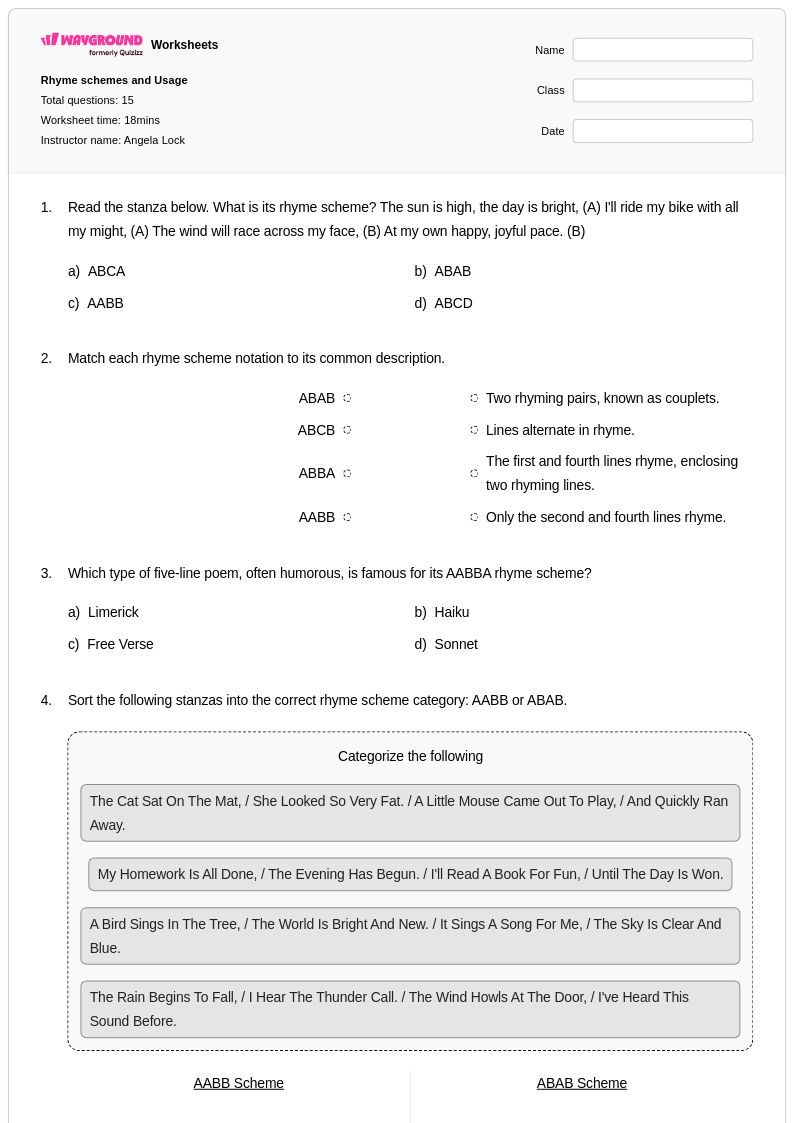
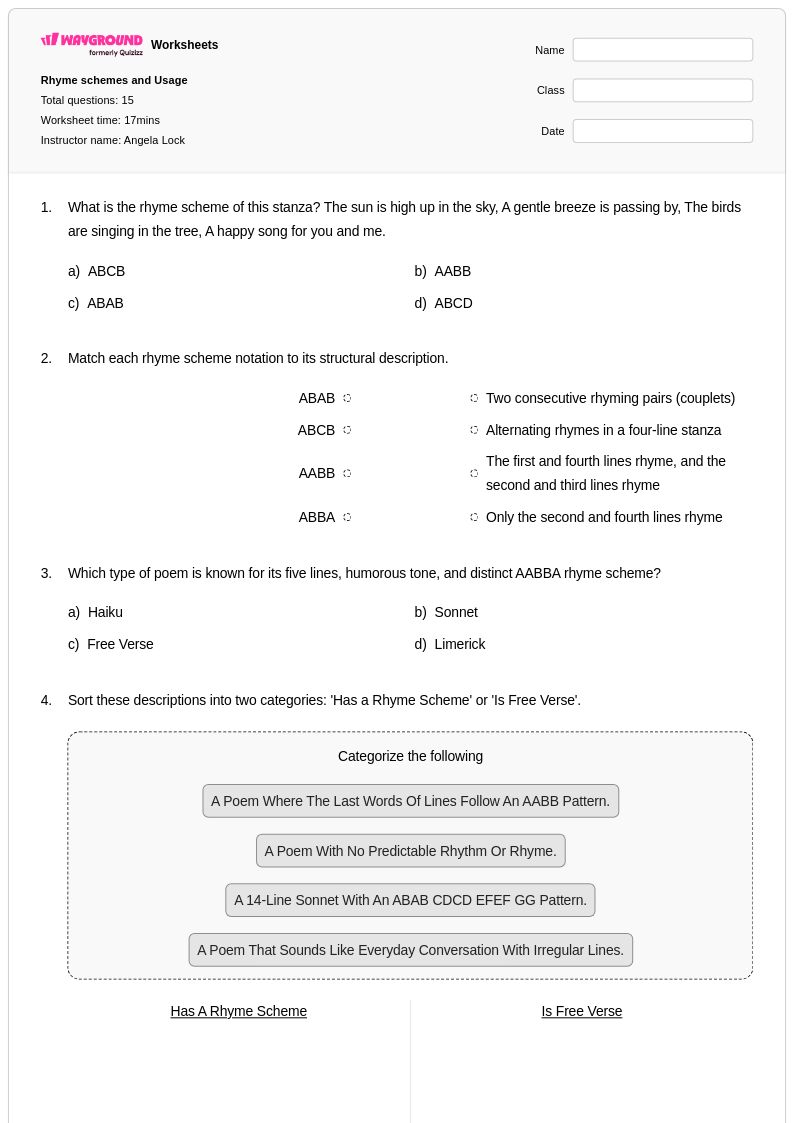
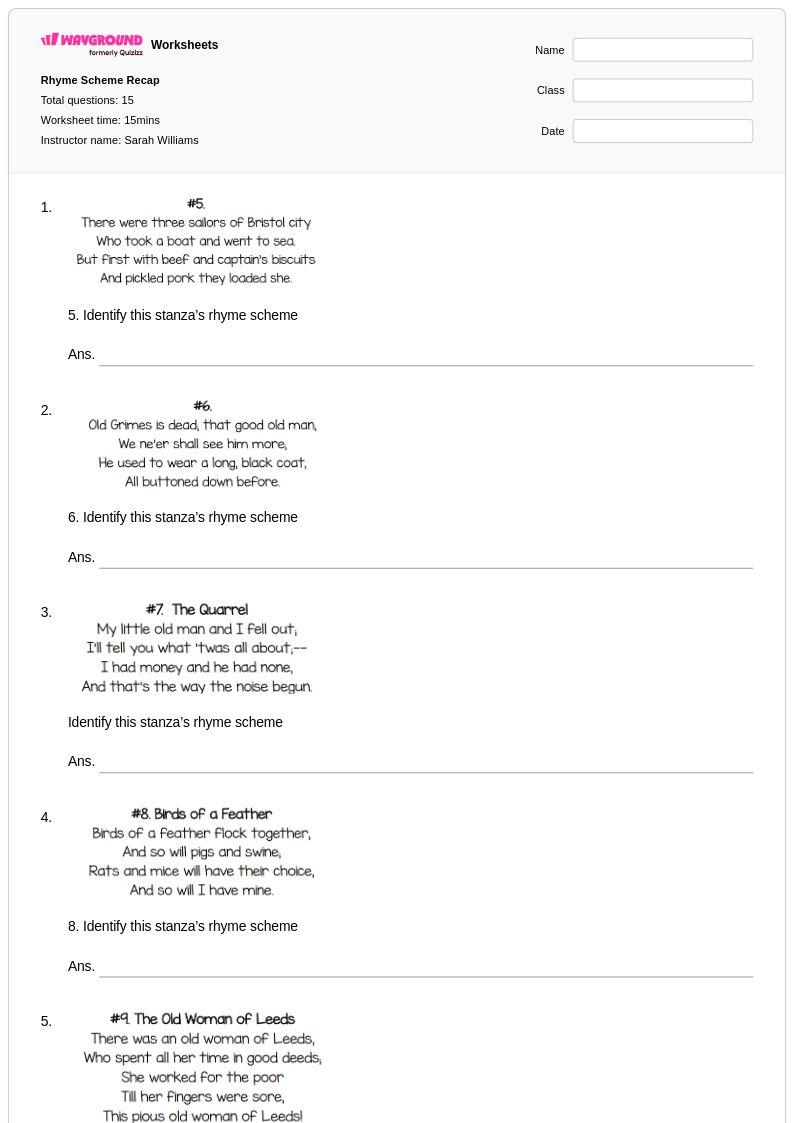
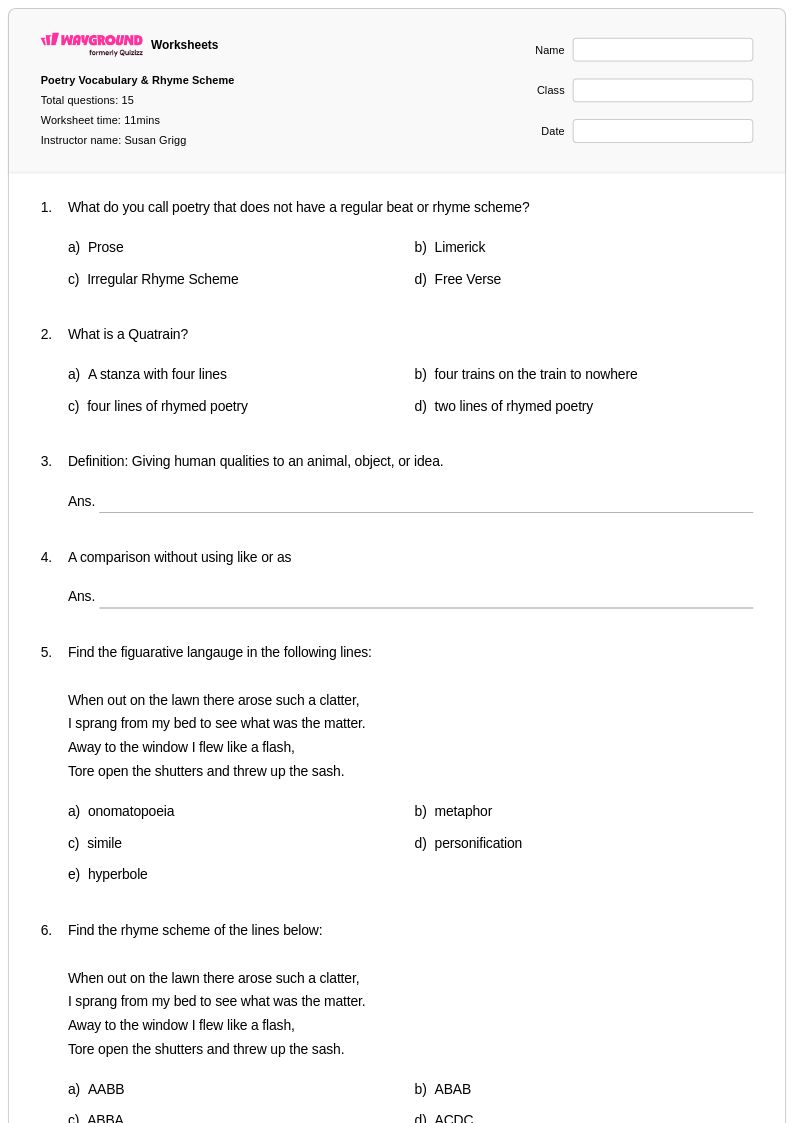
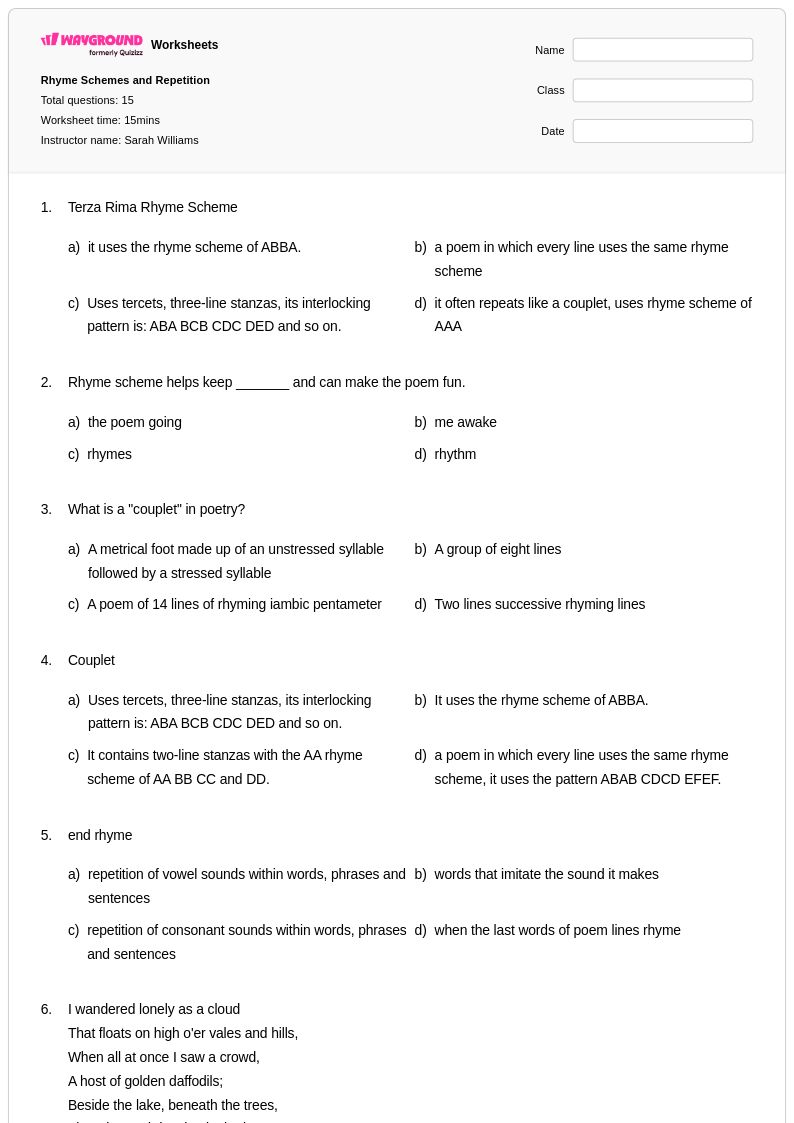
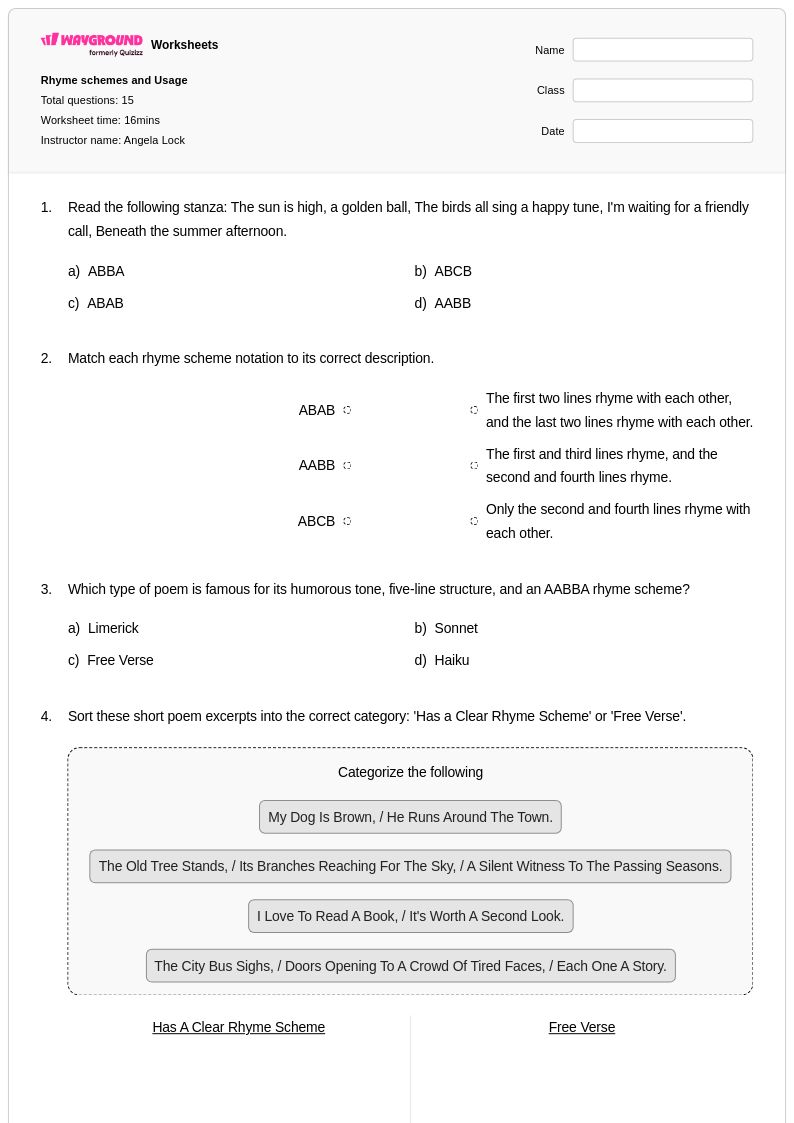
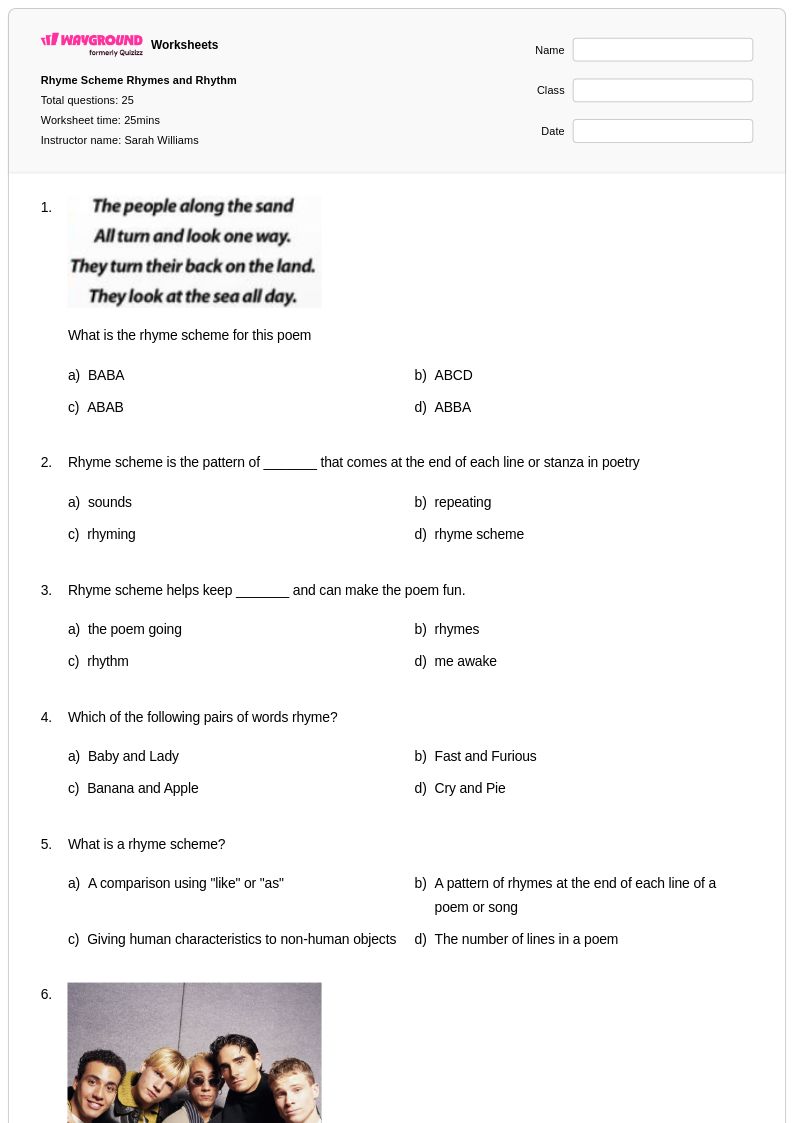
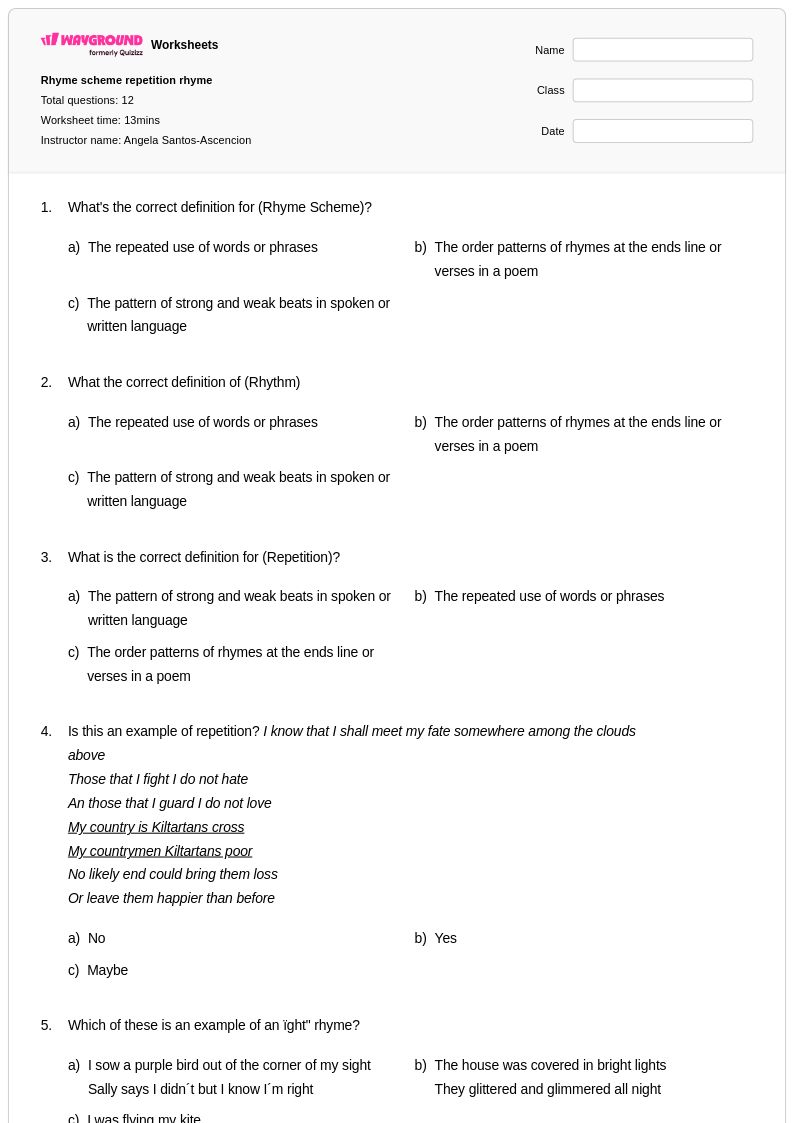
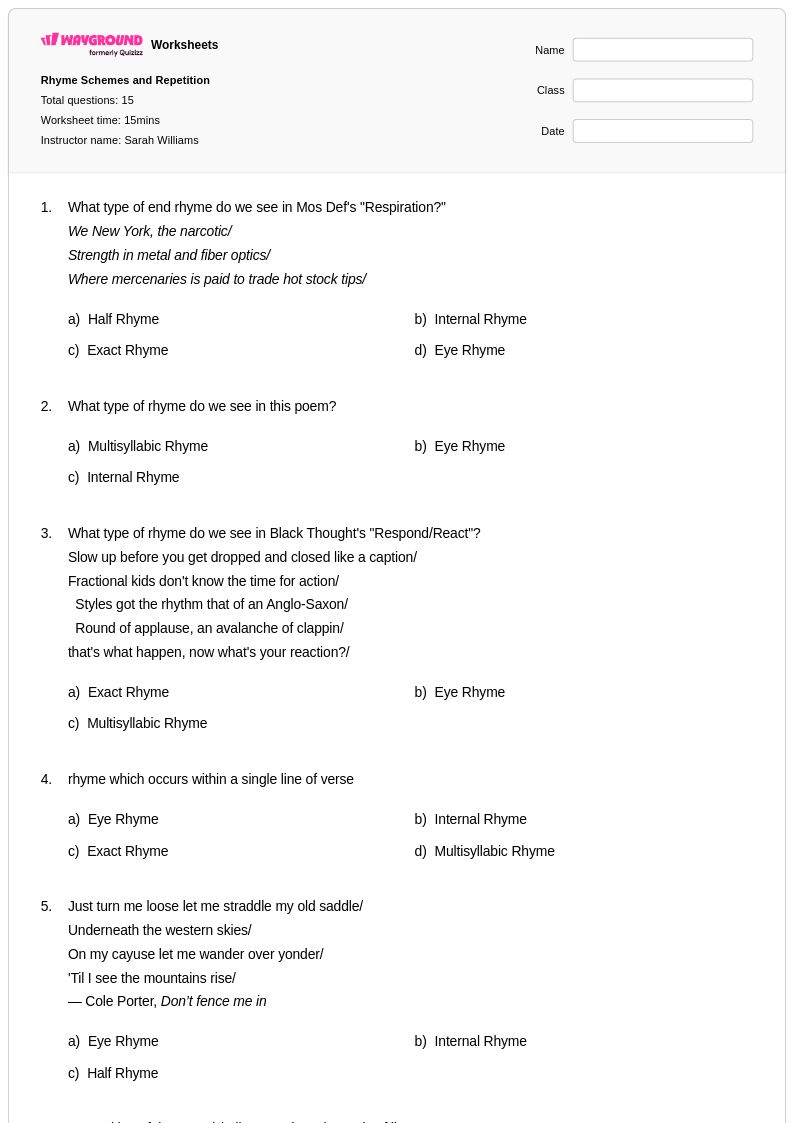
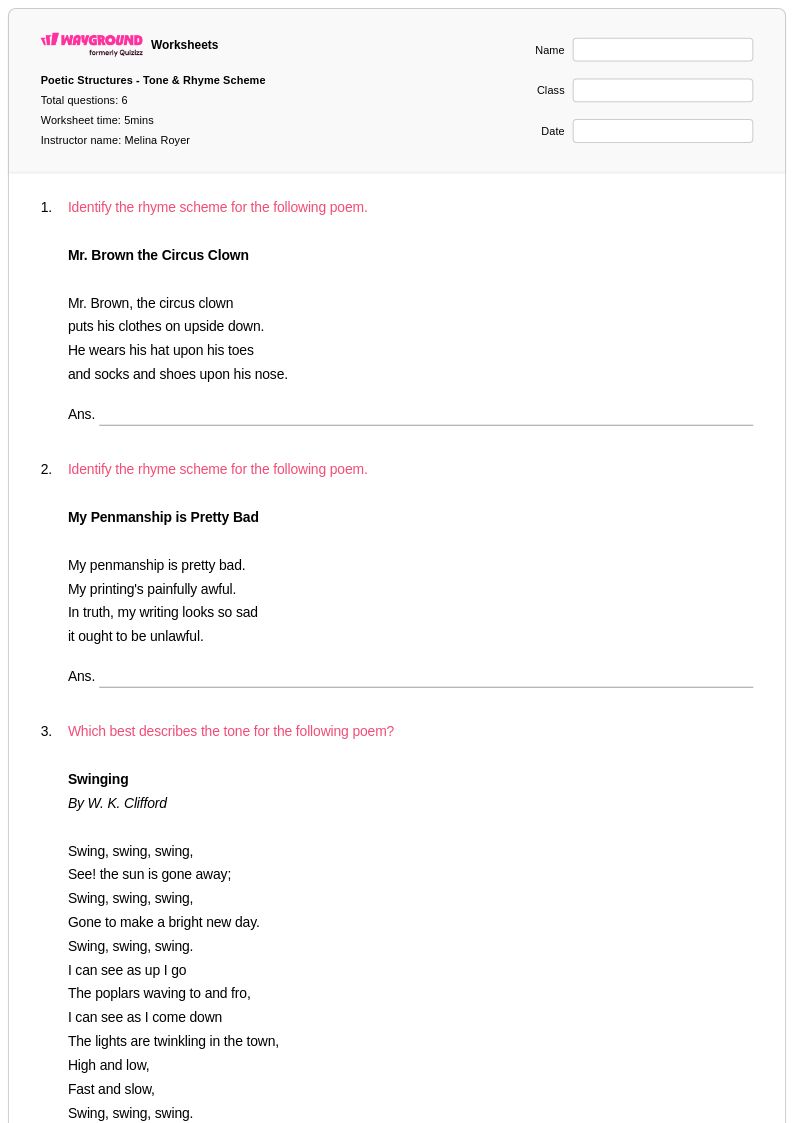
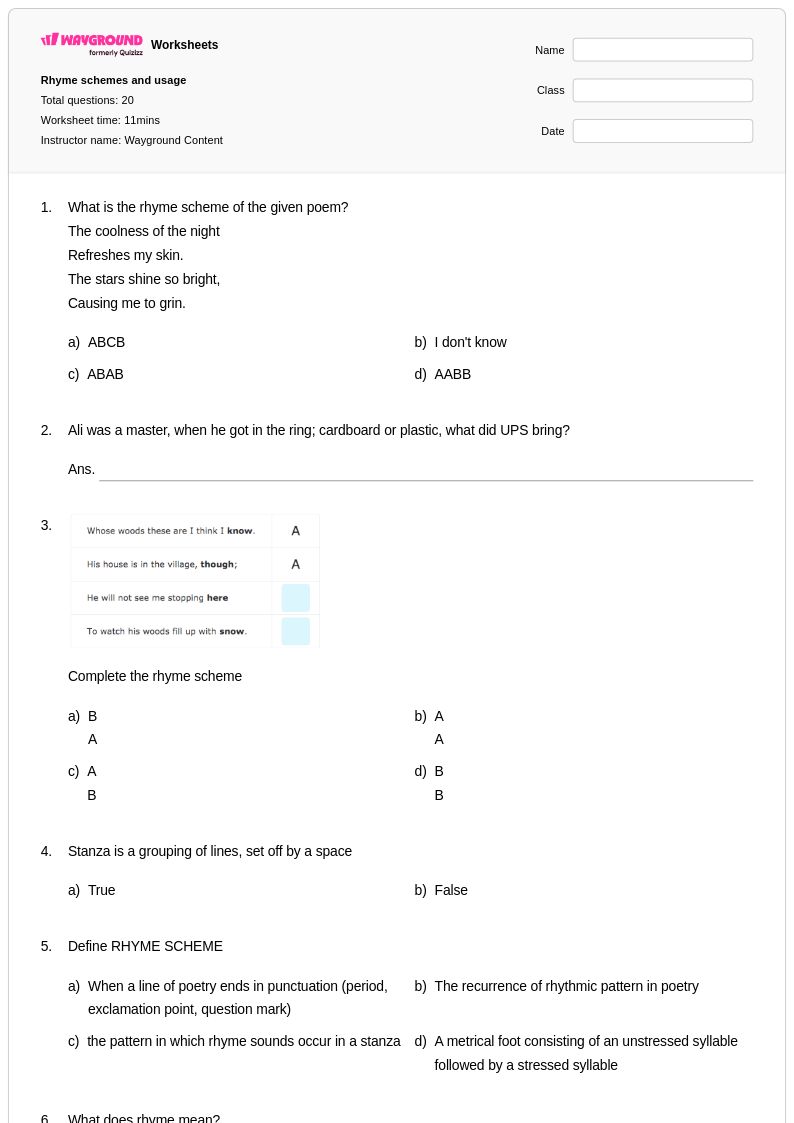
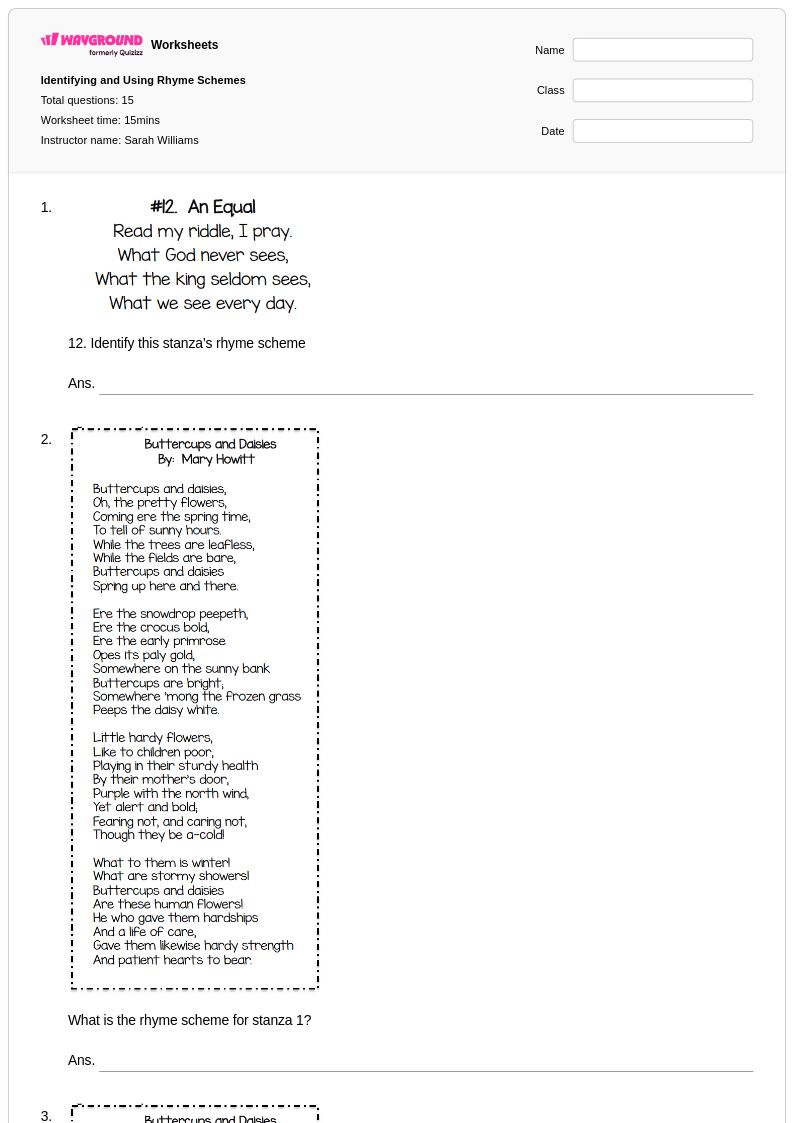
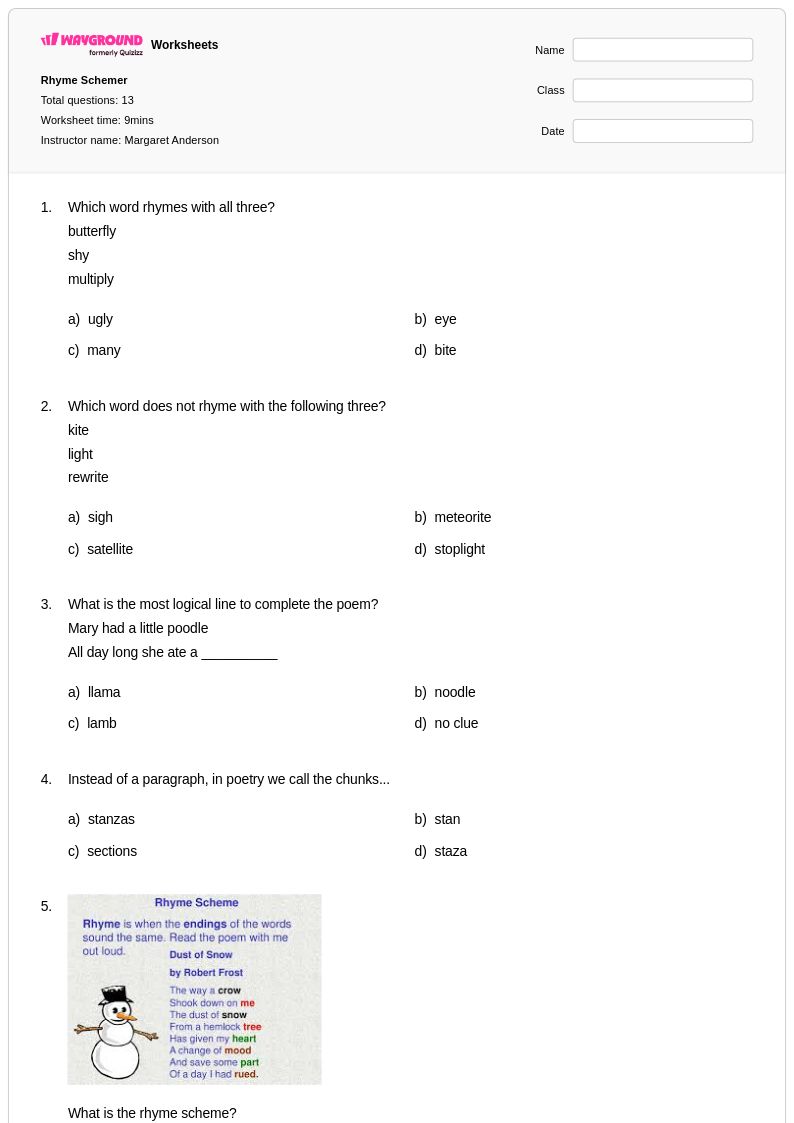
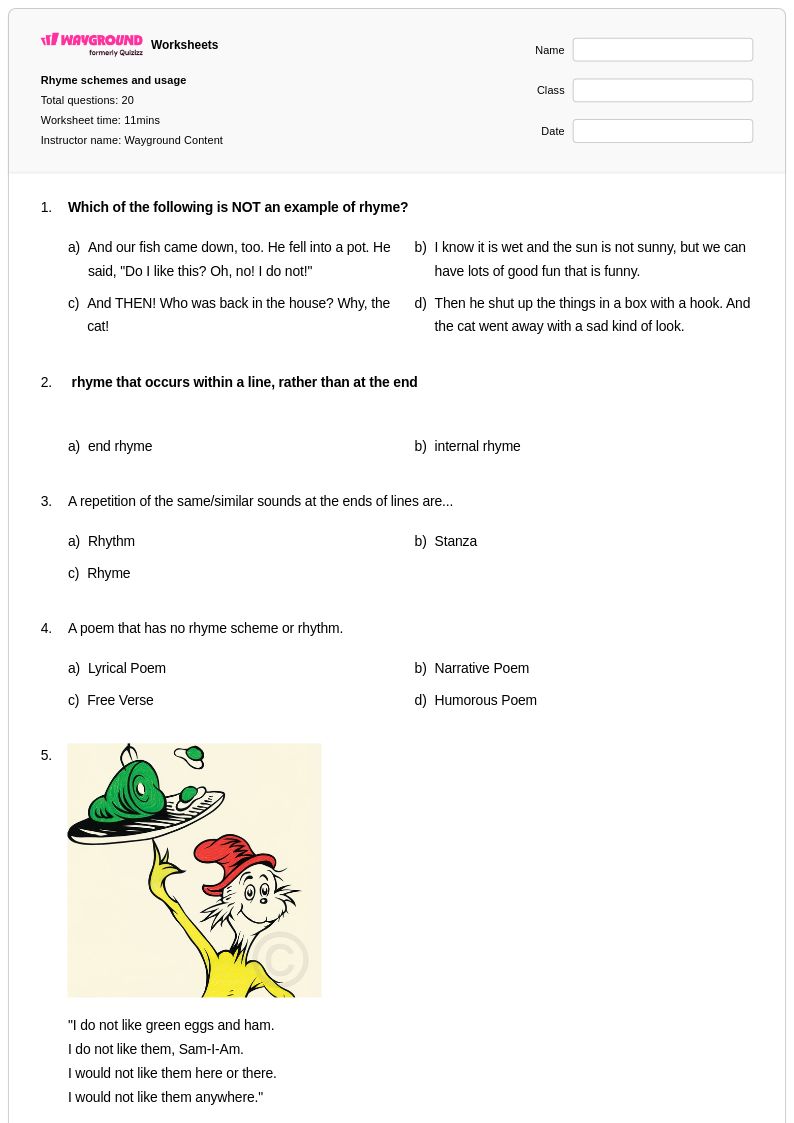
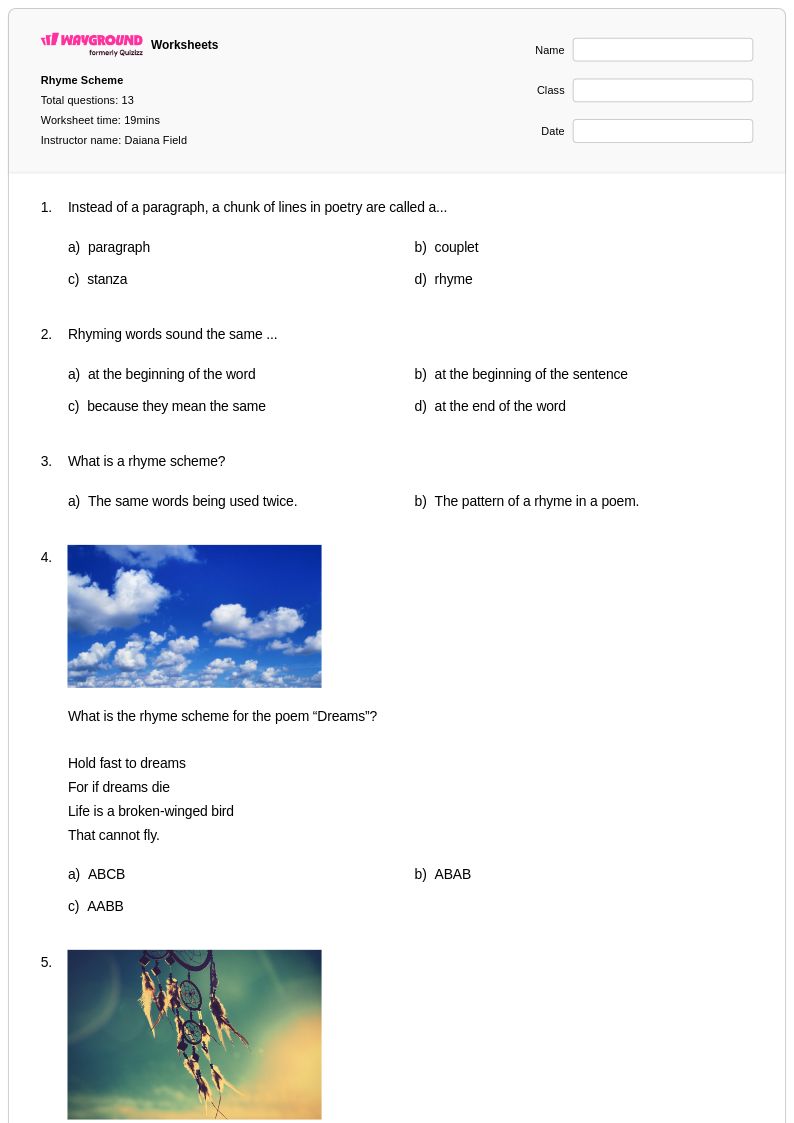
Rhyme scheme worksheets for Class 7 students available through Wayground (formerly Quizizz) provide comprehensive practice in identifying, analyzing, and creating various poetic patterns. These educational resources strengthen students' ability to recognize common rhyme schemes such as ABAB, AABB, ABCB, and more complex patterns found in sonnets and other traditional verse forms. The worksheets include practice problems that guide seventh graders through systematic analysis of poetry excerpts, helping them label rhyme schemes accurately and understand how poets use these patterns to create rhythm, emphasis, and structural unity. Each printable resource comes with a detailed answer key that supports both independent study and classroom instruction, while the free pdf format ensures easy access and distribution for diverse learning environments.
Wayground's extensive collection of teacher-created rhyme scheme materials draws from millions of educational resources specifically designed to meet the developmental needs of middle school poetry instruction. The platform's robust search and filtering capabilities allow educators to locate worksheets that align with specific curriculum standards and match their students' varying skill levels, supporting both remediation for struggling learners and enrichment opportunities for advanced students. Teachers can customize these printable and digital resources to focus on particular poetic forms or combine rhyme scheme analysis with other literary elements, creating flexible lesson plans that accommodate different learning styles and pacing requirements. This comprehensive approach to skill practice enables educators to provide targeted instruction that builds students' confidence in poetry analysis while preparing them for more sophisticated literary studies.
FAQs
How do I teach rhyme scheme to students who are new to poetry analysis?
Start by reading a simple, familiar poem aloud and labeling the end sounds together as a class, assigning the letter A to the first end sound, B to the next new sound, and so on. Once students understand the notation system, move from AABB couplet patterns to alternating ABAB schemes before introducing more complex structures like the Shakespearean sonnet. Anchoring the lesson in poems students already know reduces cognitive load and lets them focus on the analytical process rather than decoding unfamiliar content.
What exercises help students practice identifying rhyme schemes in poetry?
Effective practice exercises include annotating printed poems with letter labels, sorting short stanzas by their rhyme pattern, and rewriting verses to shift a poem from one rhyme scheme to another. Worksheets that mix classic and contemporary examples are especially useful because they show students that rhyme scheme is an active craft choice, not just a feature of old poetry. Moving from guided annotation to independent labeling to original composition builds the skill progressively.
What mistakes do students commonly make when labeling rhyme schemes?
The most frequent error is assigning a new letter every time a word sounds slightly different from a previous line, when in fact it qualifies as a near rhyme or slant rhyme that shares the same label. Students also tend to focus on spelling rather than sound, marking words like 'love' and 'move' as non-rhyming because they look different on the page. Explicitly teaching students to listen for end sounds rather than read for matching letters corrects both errors quickly.
How do I use Wayground's rhyme scheme worksheets in my classroom?
Wayground's rhyme scheme worksheets are available as printable PDFs for traditional classroom use and in digital formats for technology-integrated environments, including the option to host them as a quiz directly on Wayground. Each worksheet comes with a complete answer key, so teachers can distribute them for independent practice, pair work, or homework and provide immediate, accurate feedback without additional prep. The range of difficulty levels in the collection makes it straightforward to assign the right worksheet to the right student based on where they are in their understanding of poetic structure.
How can I differentiate rhyme scheme instruction for students at different skill levels?
For struggling students, begin with two-line couplets using AABB patterns and provide a word bank of end sounds before asking them to label independently. On-level students can work with quatrains in ABAB or ABCB formats, while advanced learners benefit from analyzing fixed forms like sonnets or villanelles where the scheme is integral to meaning. On Wayground, teachers can also apply accommodations such as reduced answer choices or read-aloud support for individual students, allowing the same worksheet set to serve multiple learners without separate lesson plans.
How does understanding rhyme scheme improve students' broader reading and writing skills?
Analyzing rhyme scheme trains students to read poetry deliberately, attending to line endings and sound patterns rather than moving through text for plot alone. This close-reading habit transfers directly to literary analysis tasks, where students must identify structural choices an author makes and explain their effect. On the writing side, students who understand rhyme scheme have a concrete toolkit for making intentional decisions in their own verse, rather than rhyming by accident or avoiding poetry altogether.