Free Printable Rise of Dictators Worksheets for Class 9
Explore Wayground's free Class 9 Rise of Dictators worksheets and printables that help students analyze the emergence of authoritarian leaders in world history through engaging practice problems and comprehensive answer keys.
Explore printable Rise of Dictators worksheets for Class 9
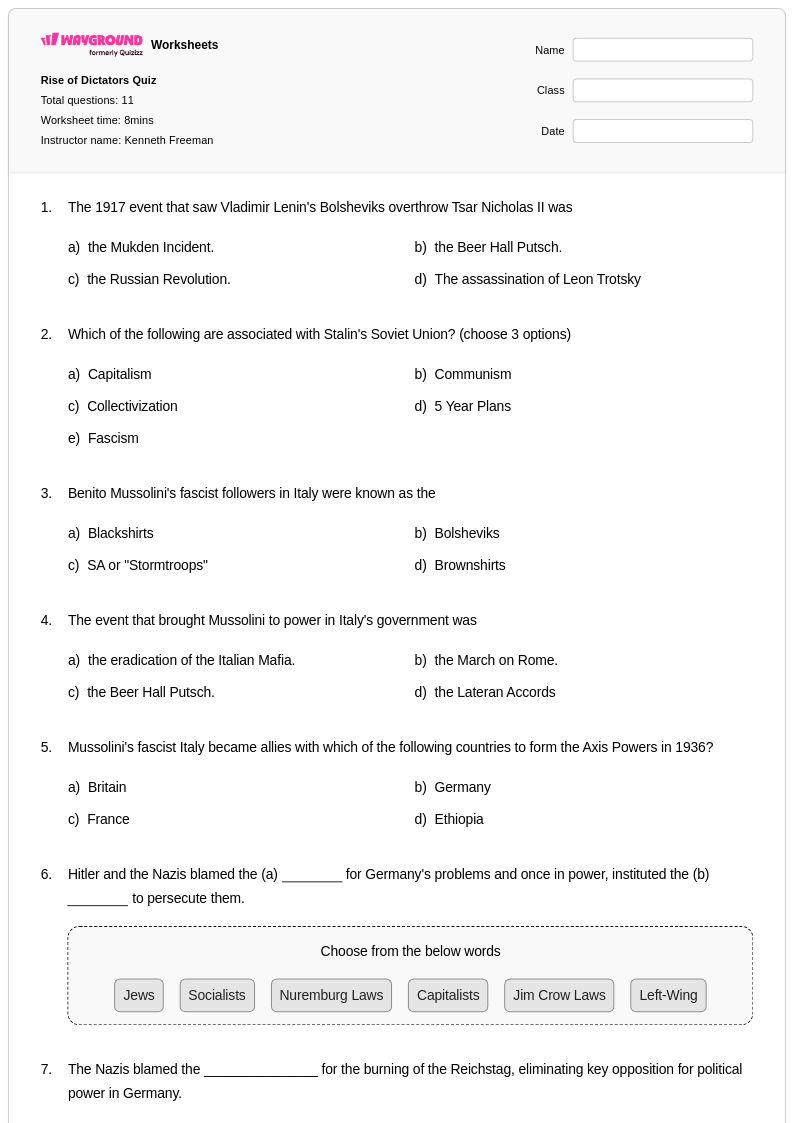
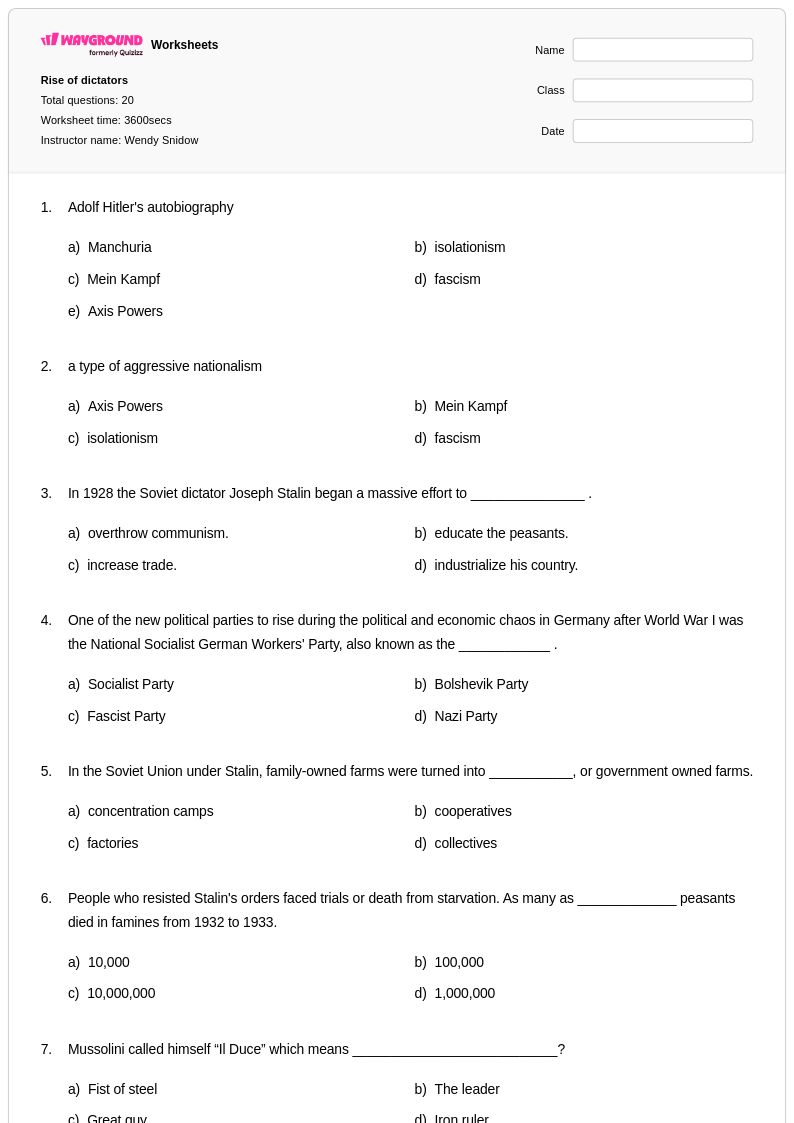
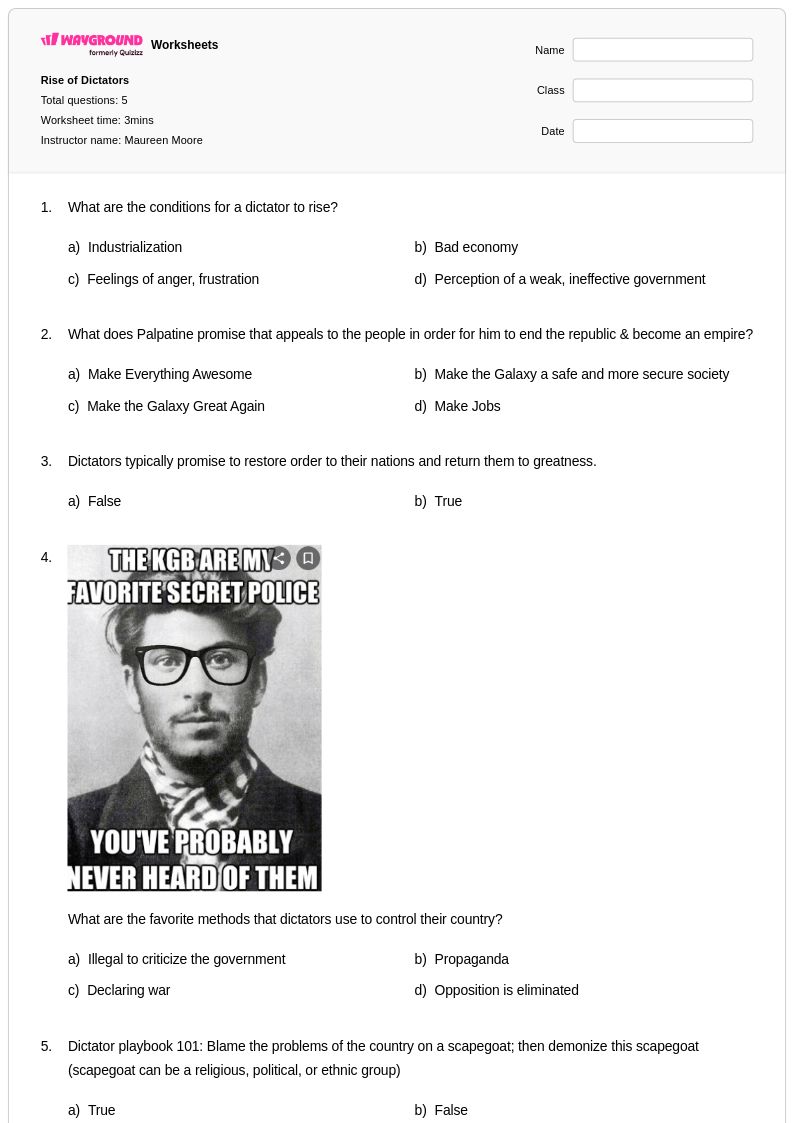
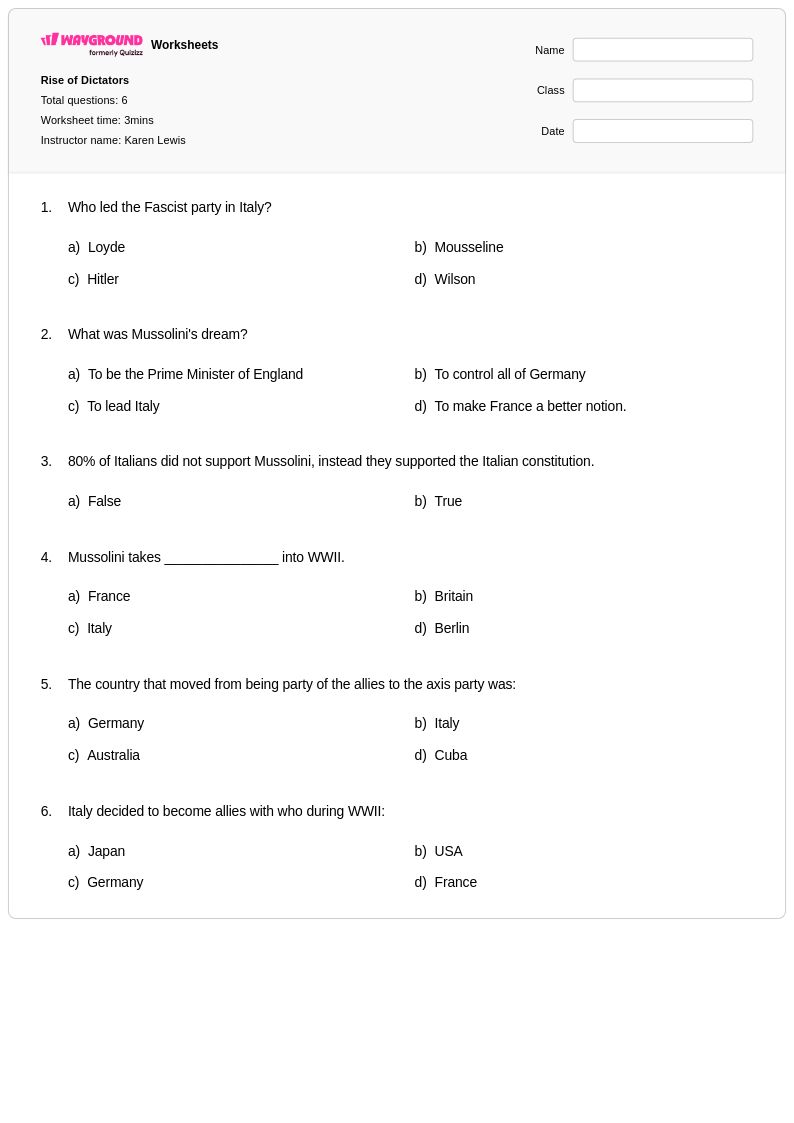
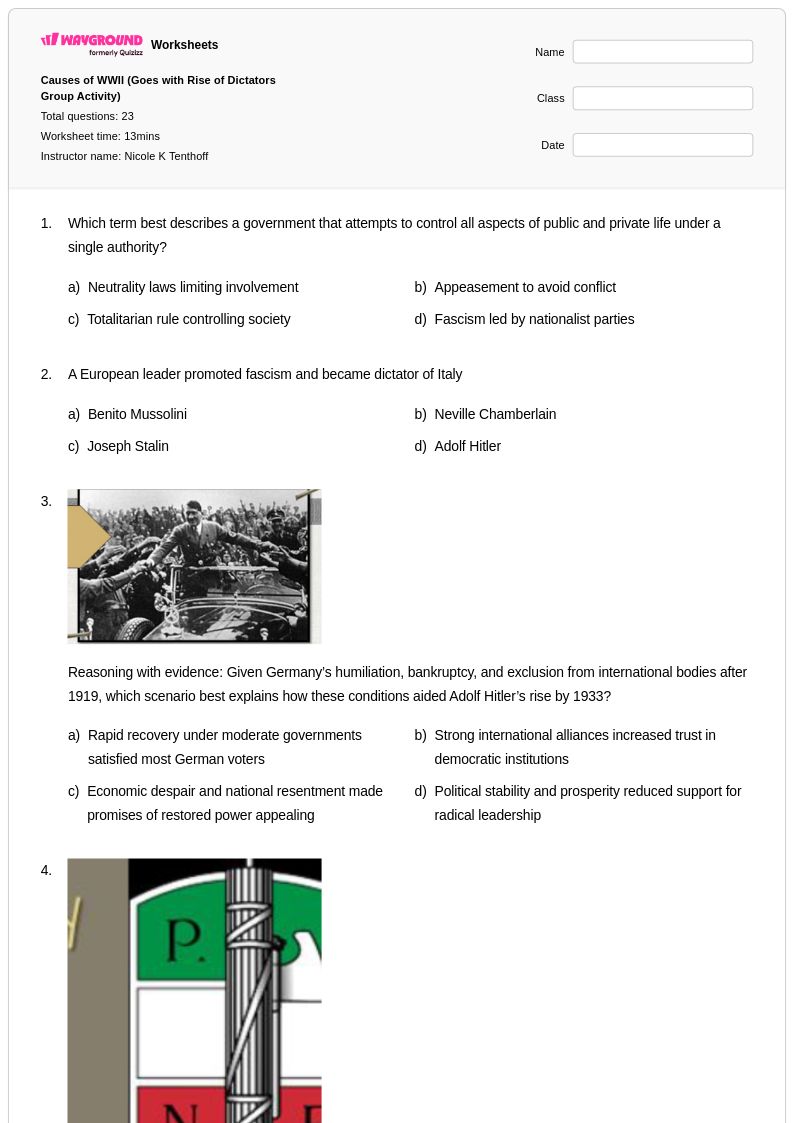
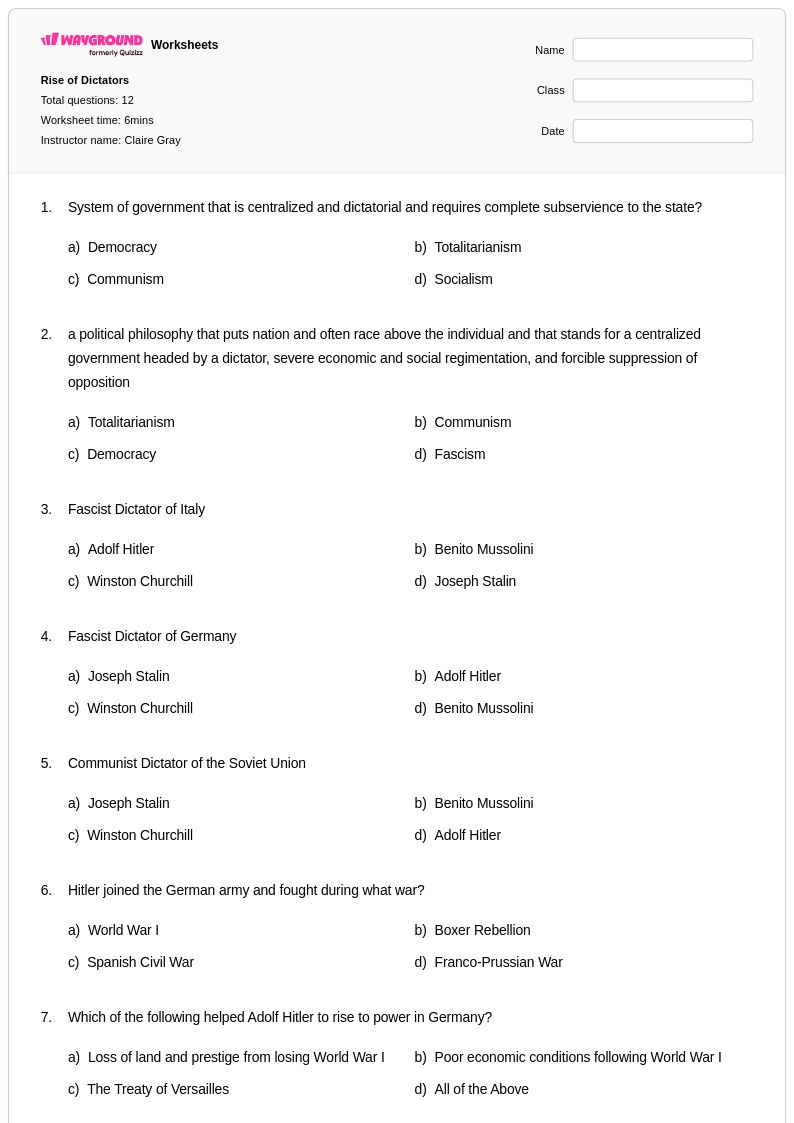
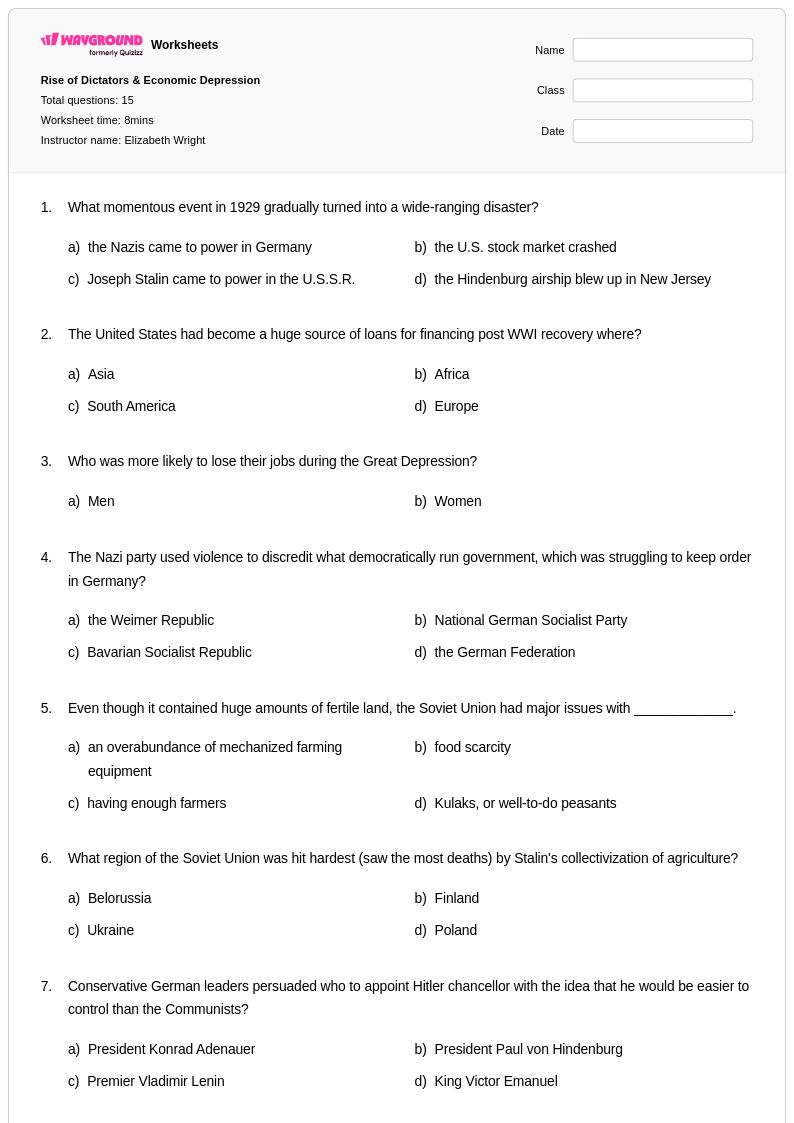
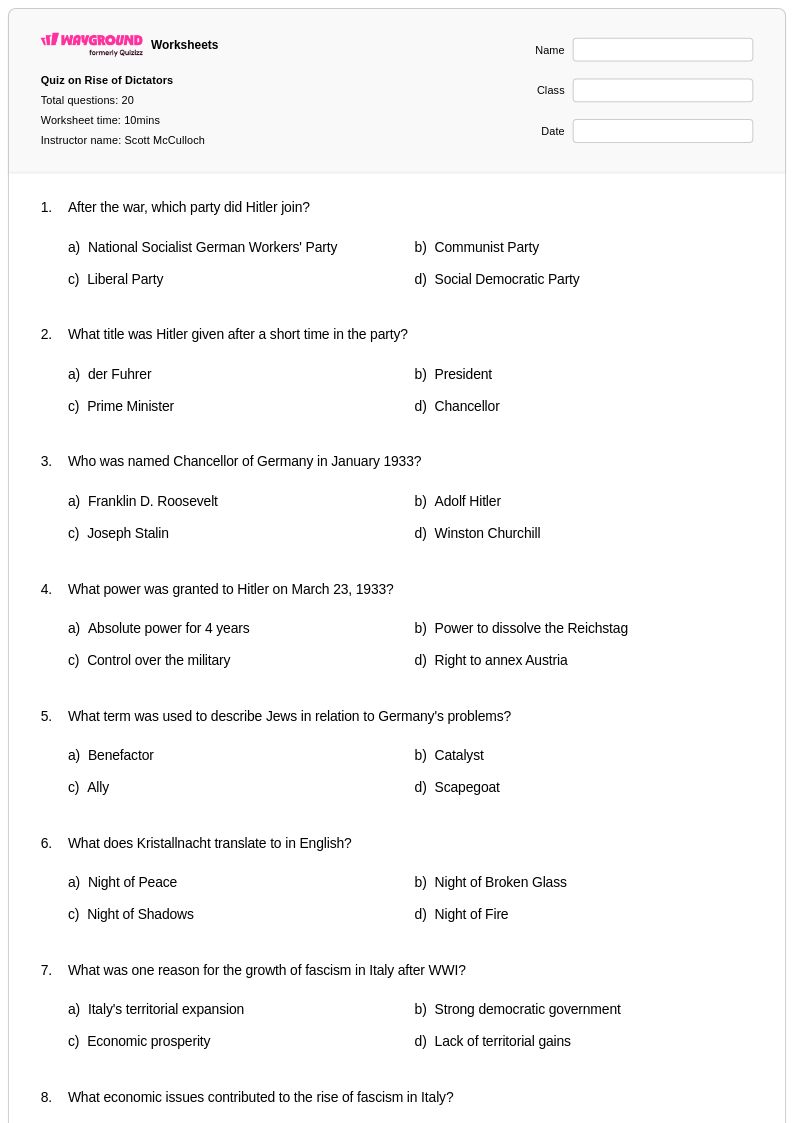
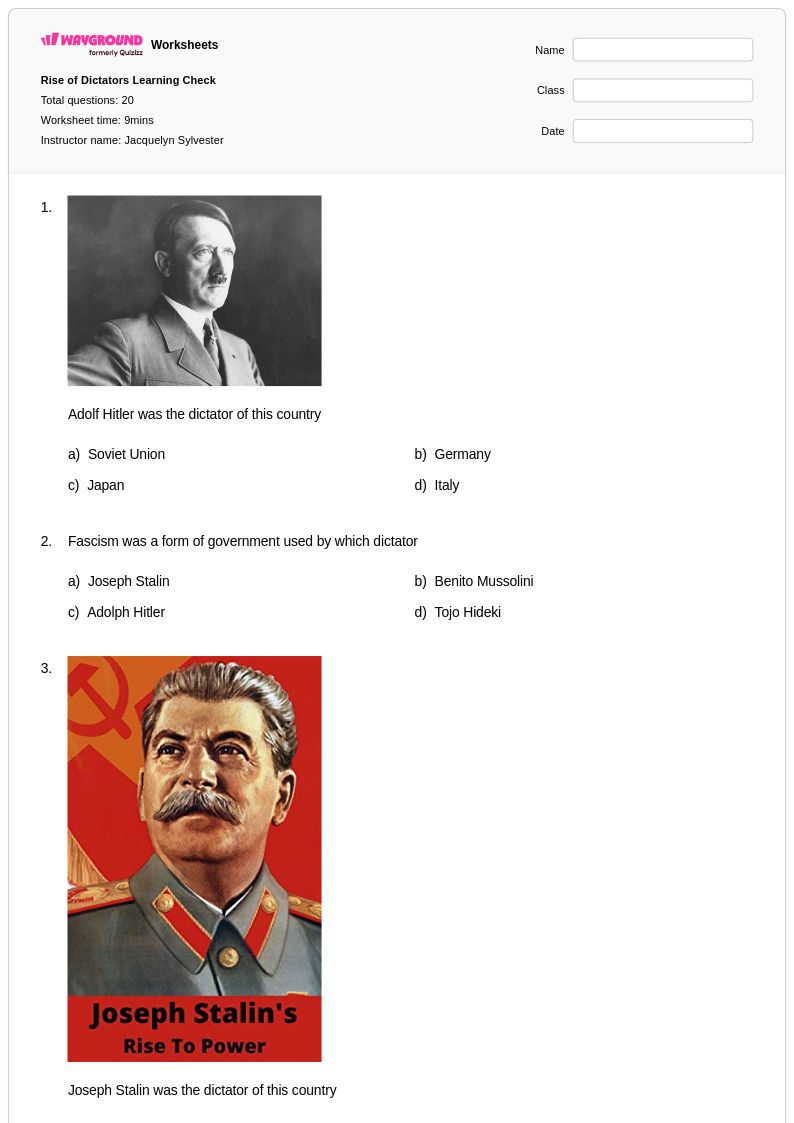
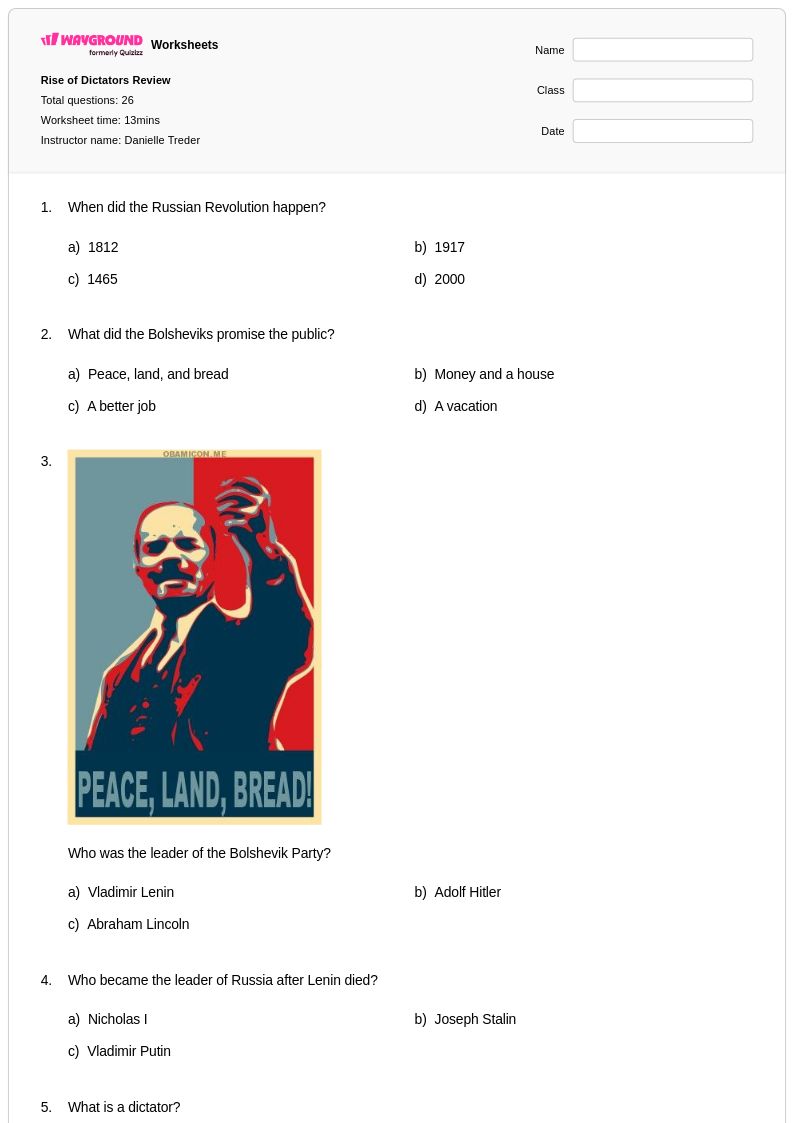
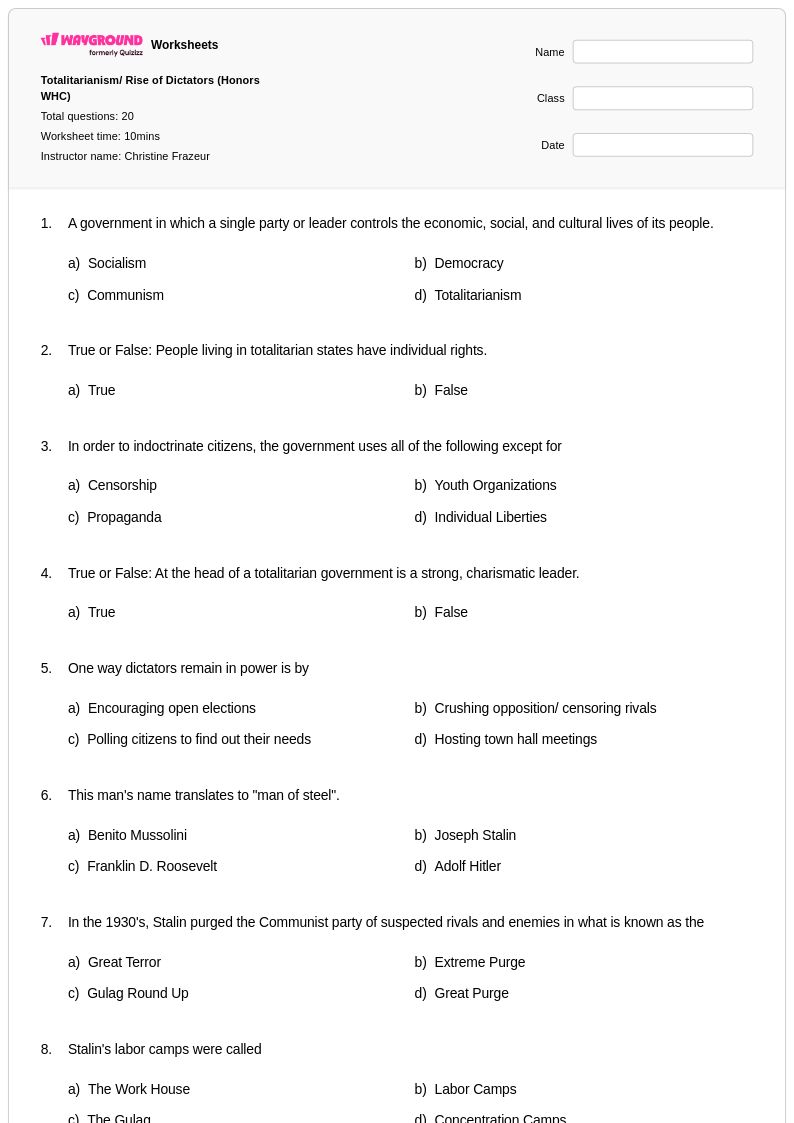
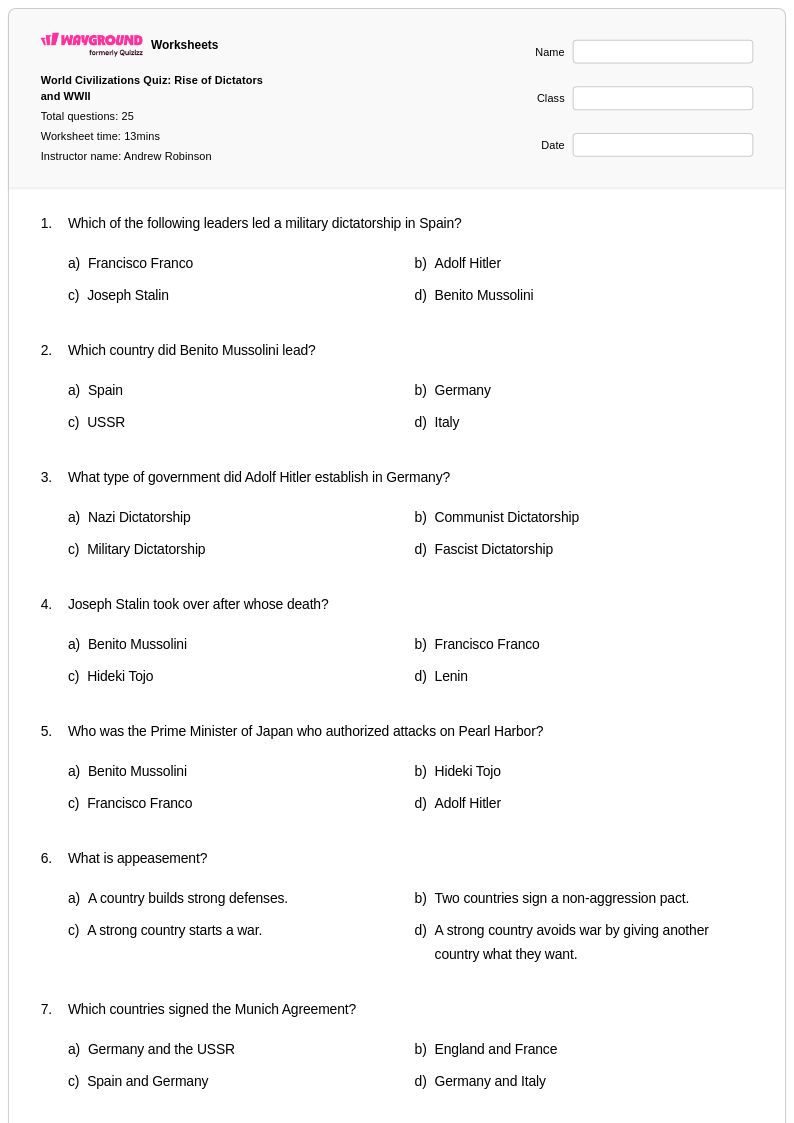
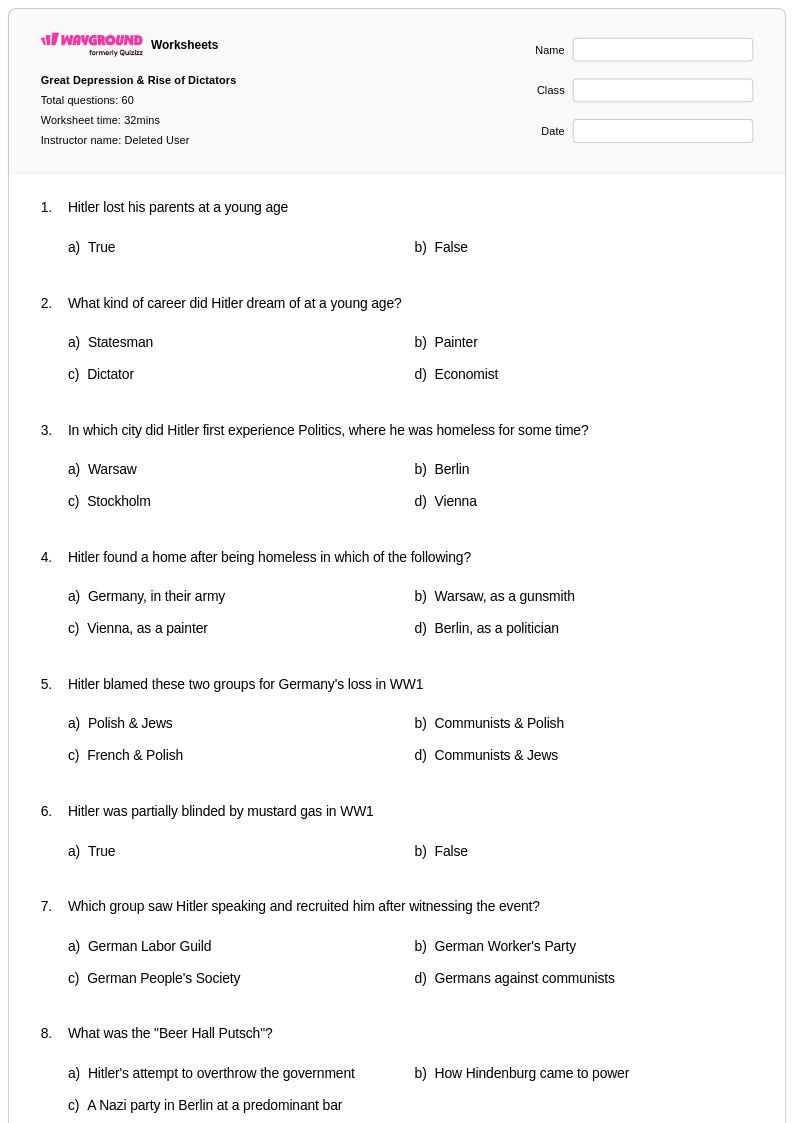
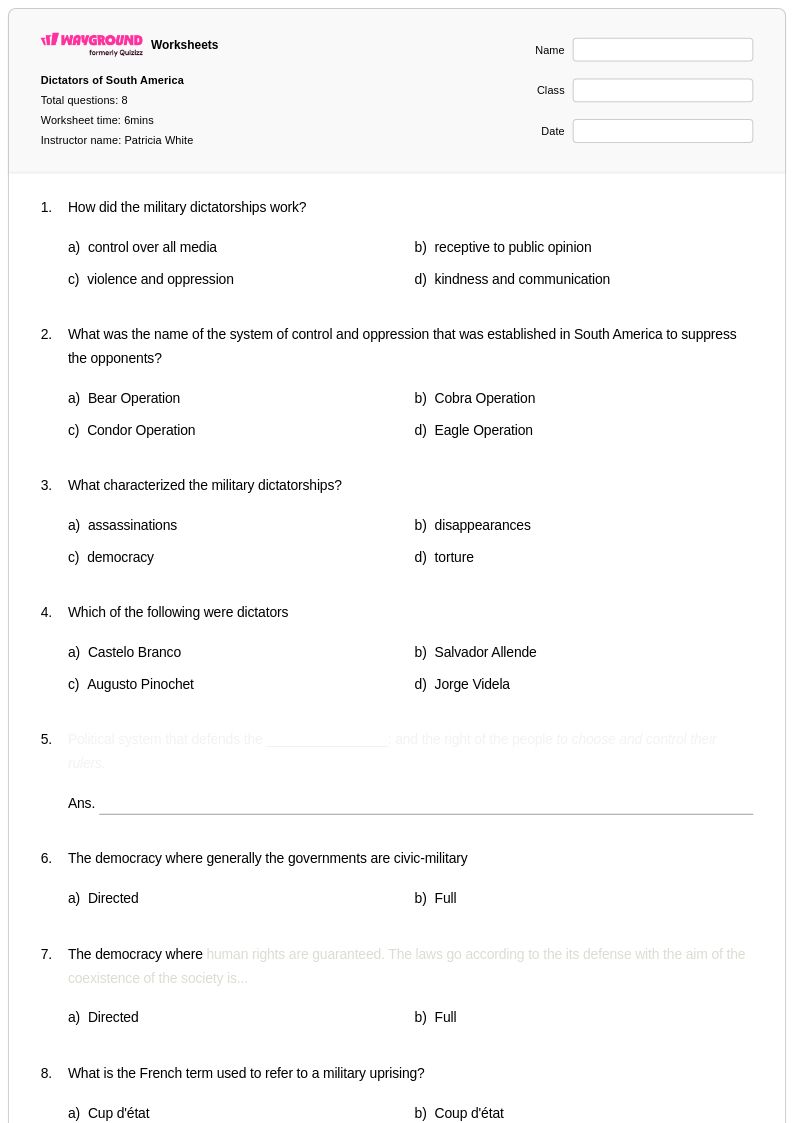
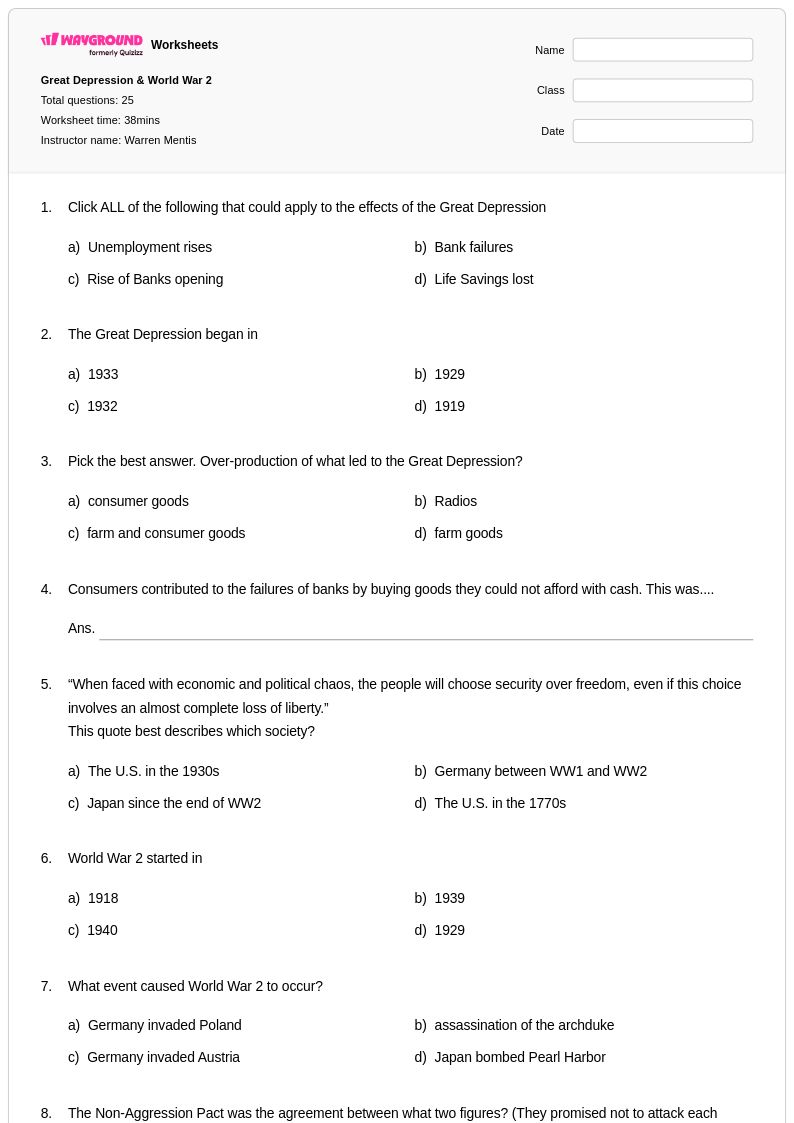
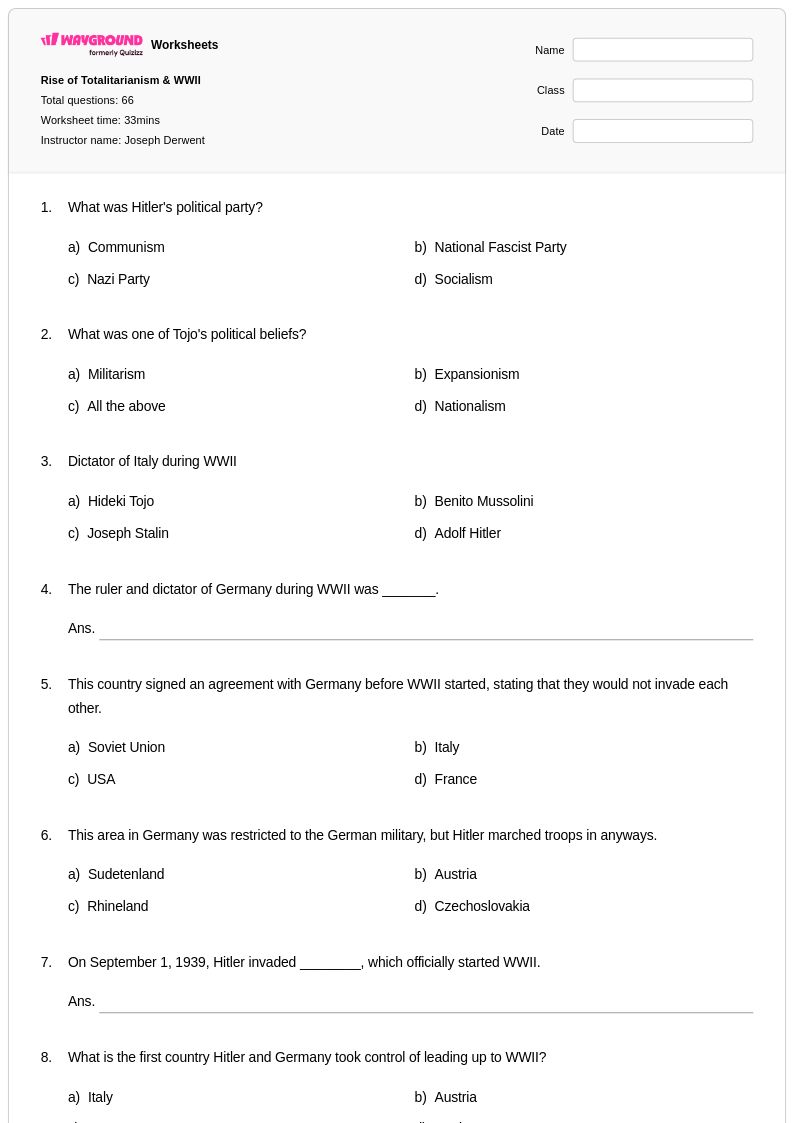
Rise of Dictators worksheets for Class 9 students provide comprehensive educational resources that examine the critical period between World War I and World War II when authoritarian leaders seized power across Europe and beyond. These expertly designed materials guide students through the complex political, economic, and social conditions that enabled figures like Hitler, Mussolini, and Stalin to rise to prominence, strengthening essential analytical skills including cause-and-effect reasoning, primary source interpretation, and historical contextualization. Students engage with practice problems that require them to identify propaganda techniques, analyze the appeal of totalitarian ideologies, and evaluate the failure of democratic institutions during times of crisis. Each worksheet collection includes detailed answer keys that support both independent study and classroom instruction, with free printables available in convenient pdf format to accommodate diverse learning environments and teaching preferences.
Wayground, formerly Quizizz, empowers educators with access to millions of teacher-created resources specifically focused on this pivotal era in world history, featuring robust search and filtering capabilities that allow instructors to locate materials aligned with state and national social studies standards. The platform's differentiation tools enable teachers to modify worksheet complexity and content focus, ensuring appropriate challenge levels for students with varying academic needs and prior knowledge. Flexible customization options support both remediation for struggling learners and enrichment opportunities for advanced students, while the availability of both printable and digital formats, including downloadable pdfs, streamlines lesson planning and classroom management. These comprehensive worksheet collections serve as invaluable resources for skill practice, formative assessment, and deeper exploration of how economic instability, political polarization, and social unrest created conditions that allowed dictatorial regimes to flourish in the twentieth century.
FAQs
How do I teach the rise of dictators in a world history class?
Teaching the rise of dictators is most effective when students first understand the conditions that made authoritarian takeovers possible, including post-WWI economic collapse, political instability, and widespread social grievances. Structure instruction around case studies of Hitler, Mussolini, and Stalin, using primary source documents and propaganda analysis to help students see how these leaders manipulated public sentiment. Connecting each dictator's rise to a specific political and economic context helps students move beyond memorization toward genuine historical analysis.
What exercises help students practice analyzing the rise of dictators?
Effective practice exercises include identifying propaganda techniques in historical documents, comparing the political conditions across Germany, Italy, and the Soviet Union, and evaluating how economic instability weakened democratic institutions. Document-based questions that ask students to analyze speeches, posters, or legislative records build the critical thinking skills needed for this topic. These types of exercises push students to connect cause and effect rather than simply recall names and dates.
What common mistakes do students make when studying the rise of dictators?
A frequent misconception is that dictators like Hitler and Mussolini simply seized power through force alone, when in reality they exploited legal and democratic structures before dismantling them. Students also tend to oversimplify the causes, reducing complex political takeovers to a single factor like economic hardship rather than analyzing the interplay of propaganda, nationalism, and institutional failure. Addressing these misconceptions directly helps students develop a more accurate and nuanced understanding of how authoritarian regimes take hold.
How do I use Rise of Dictators worksheets from Wayground in my classroom?
Wayground's Rise of Dictators worksheets are available as printable PDFs for traditional classroom use and in digital formats for technology-integrated environments, giving teachers flexibility across in-person, hybrid, and remote settings. Teachers can also host worksheets as a live or asynchronous quiz directly on Wayground, making it easy to collect student responses and monitor comprehension in real time. Each worksheet includes a complete answer key, supporting both independent student practice and teacher-led instruction.
How do I differentiate Rise of Dictators instruction for students at different skill levels?
For struggling students, focus on scaffolded tasks such as guided note-taking on a single dictator before introducing comparative analysis. Advanced learners benefit from open-ended document analysis and tasks that ask them to construct an argument about which conditions were most decisive in enabling authoritarian rule. On Wayground, teachers can apply differentiation settings at the individual student level, including reduced answer choices to lower cognitive load for students who need it, while other students receive standard assignments without disruption.
How does studying the rise of dictators connect to broader world history standards?
The rise of dictators is a central topic in most world history curricula because it directly links the aftermath of World War I to the causes of World War II, making it essential for understanding 20th-century global conflict. This topic also intersects with standards on democracy, political theory, propaganda, and economic history, giving teachers multiple entry points for curriculum alignment. Worksheets that address propaganda analysis, institutional failure, and comparative case studies help students meet standards requiring historical causation and argumentation skills.