Free Printable Rocks and Soil Worksheets for Class 1
Class 1 rocks and soil worksheets from Wayground help young learners explore Earth's materials through engaging printables, practice problems, and free PDF activities with answer keys included.
Explore printable Rocks and Soil worksheets for Class 1
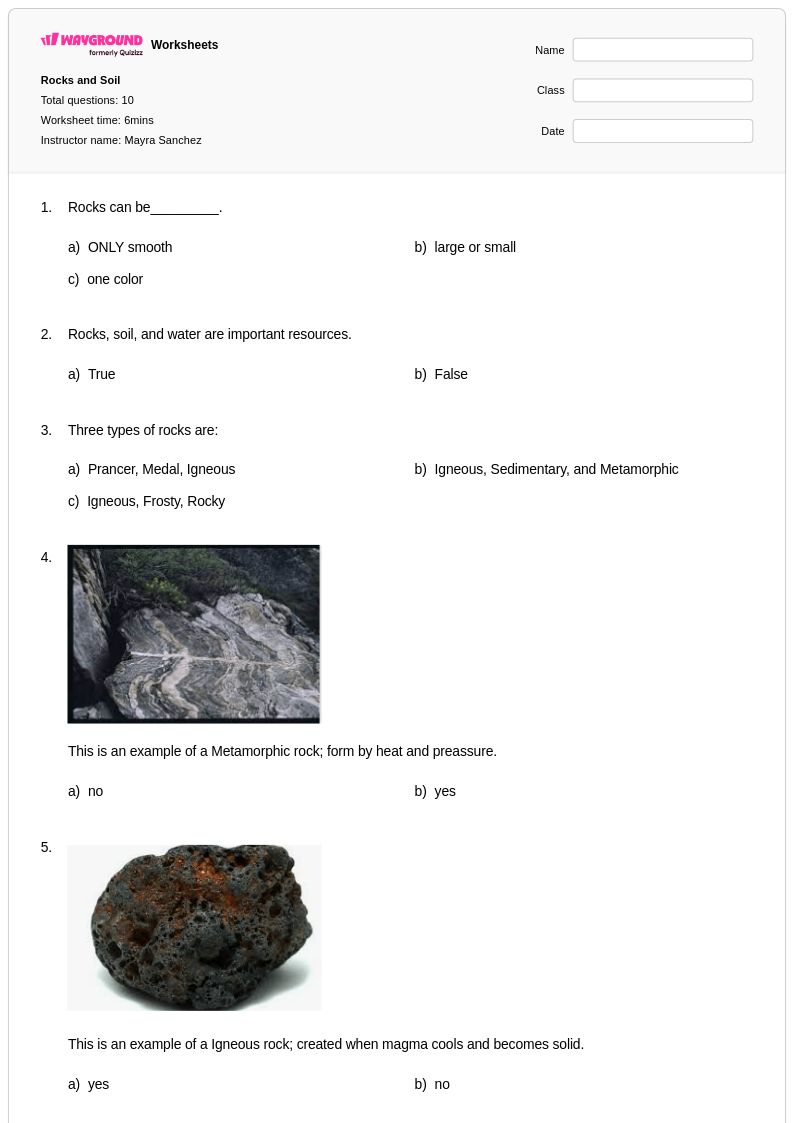
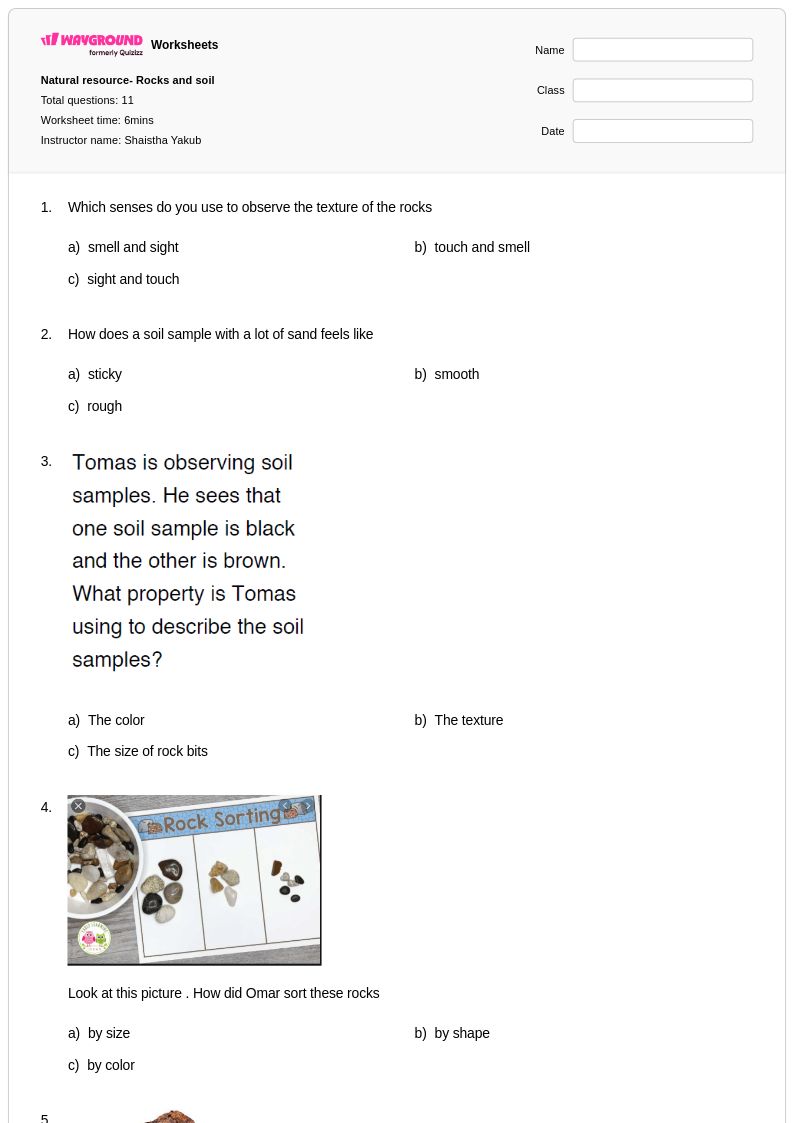
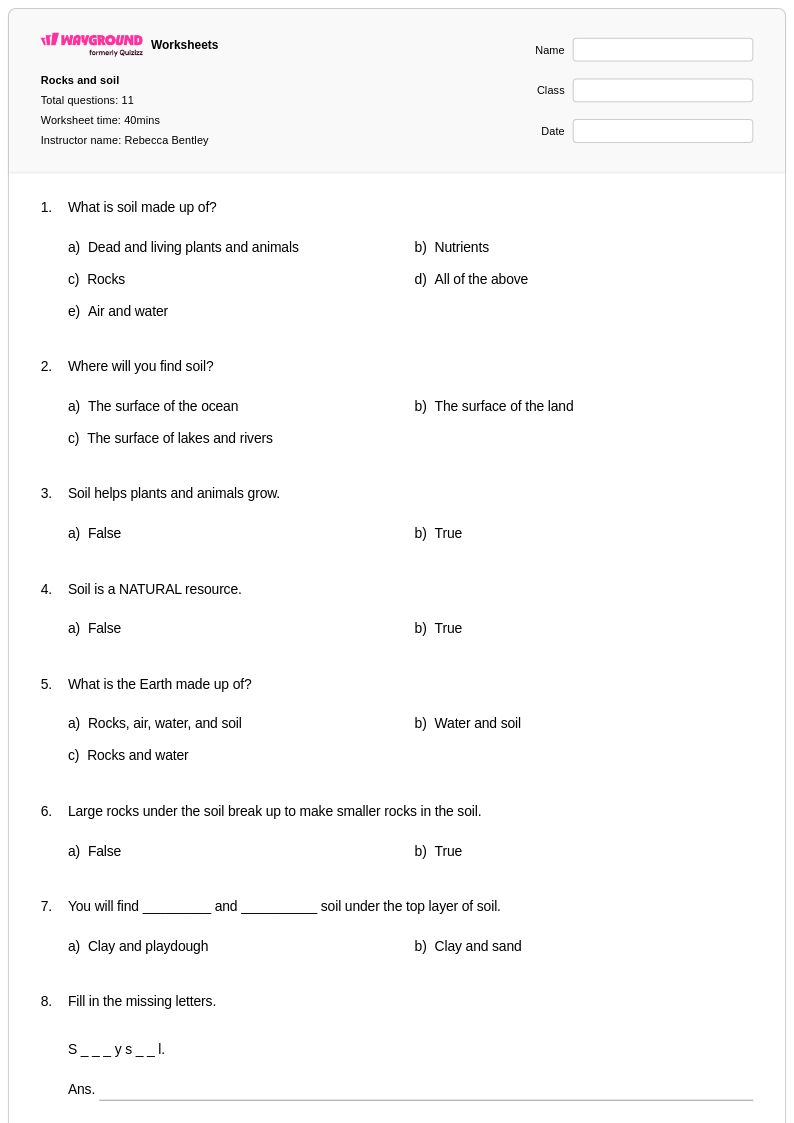
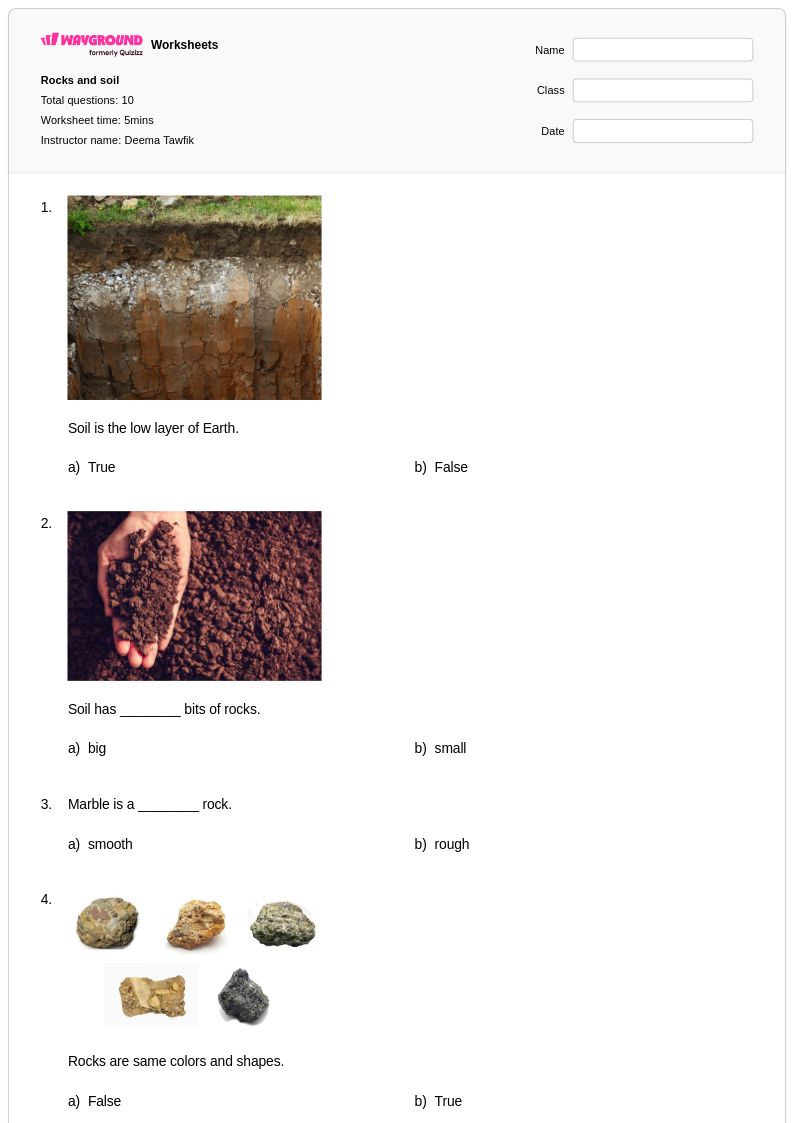
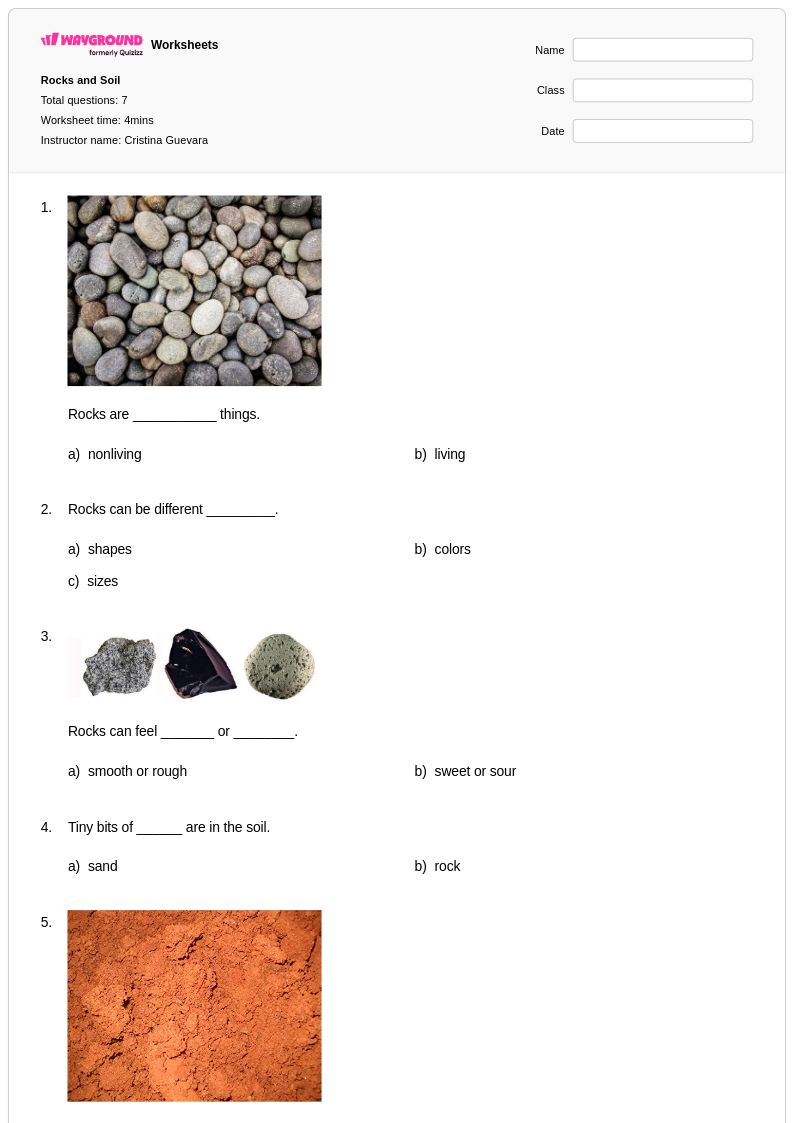
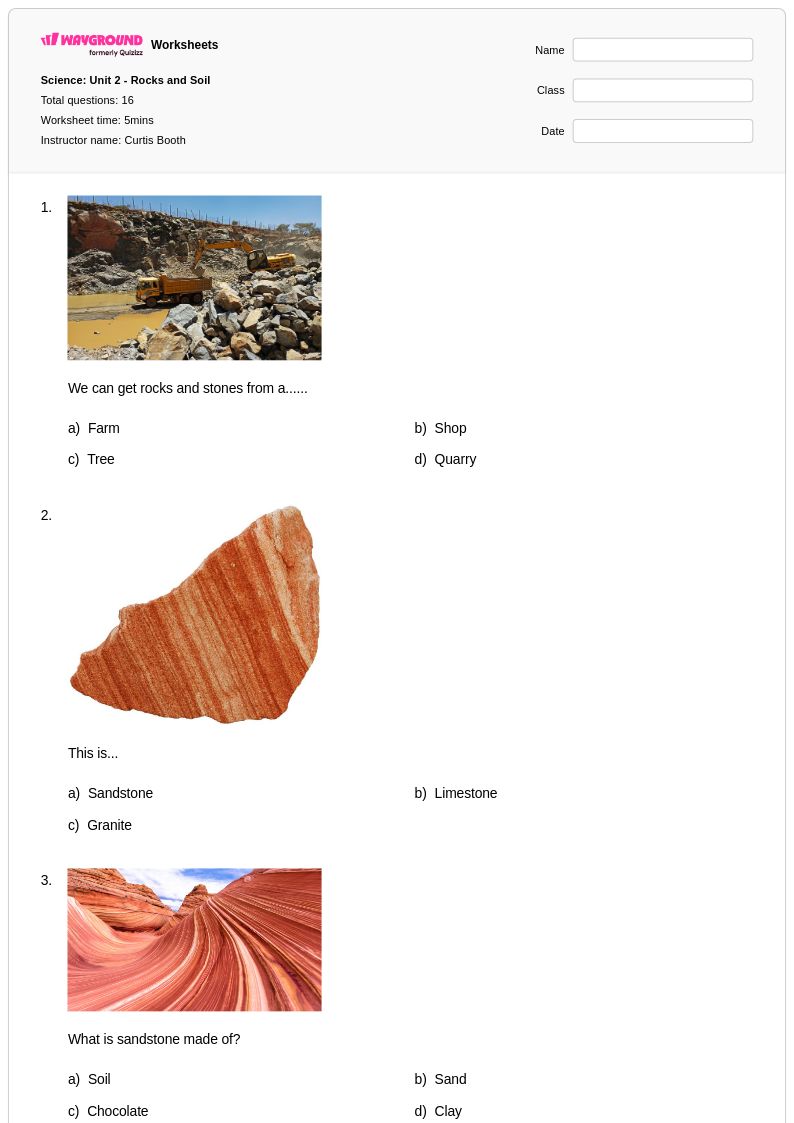
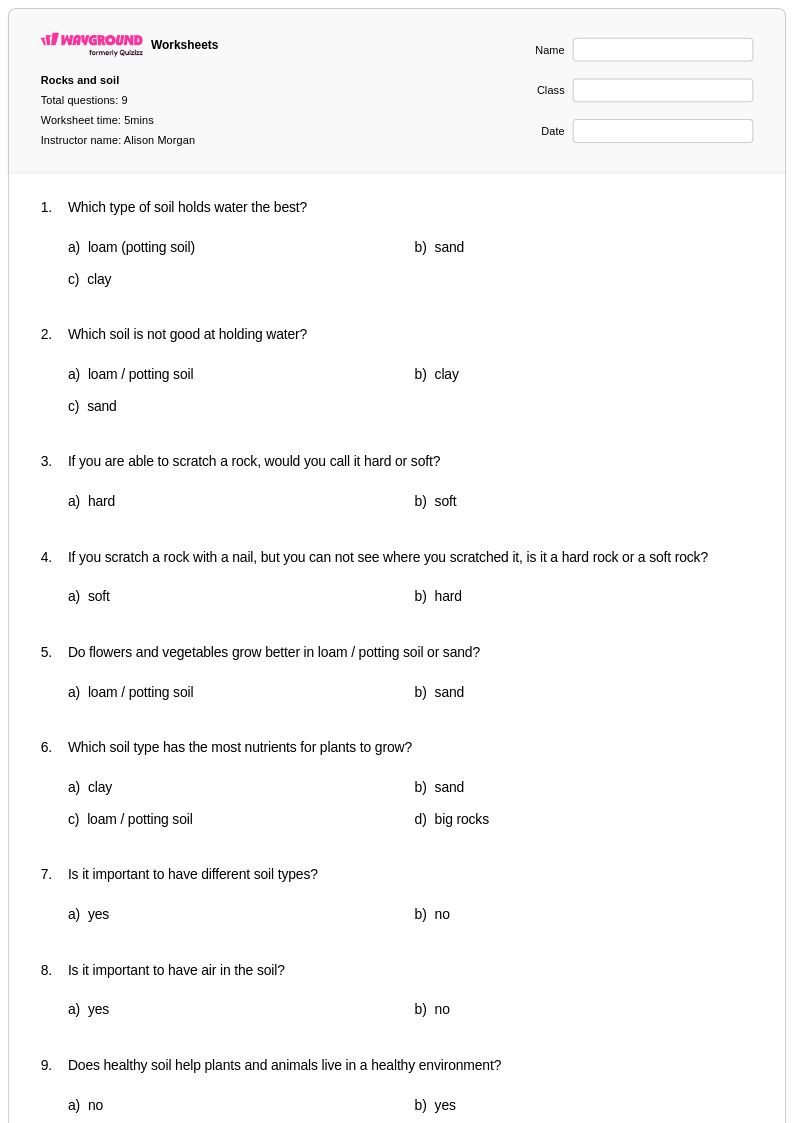
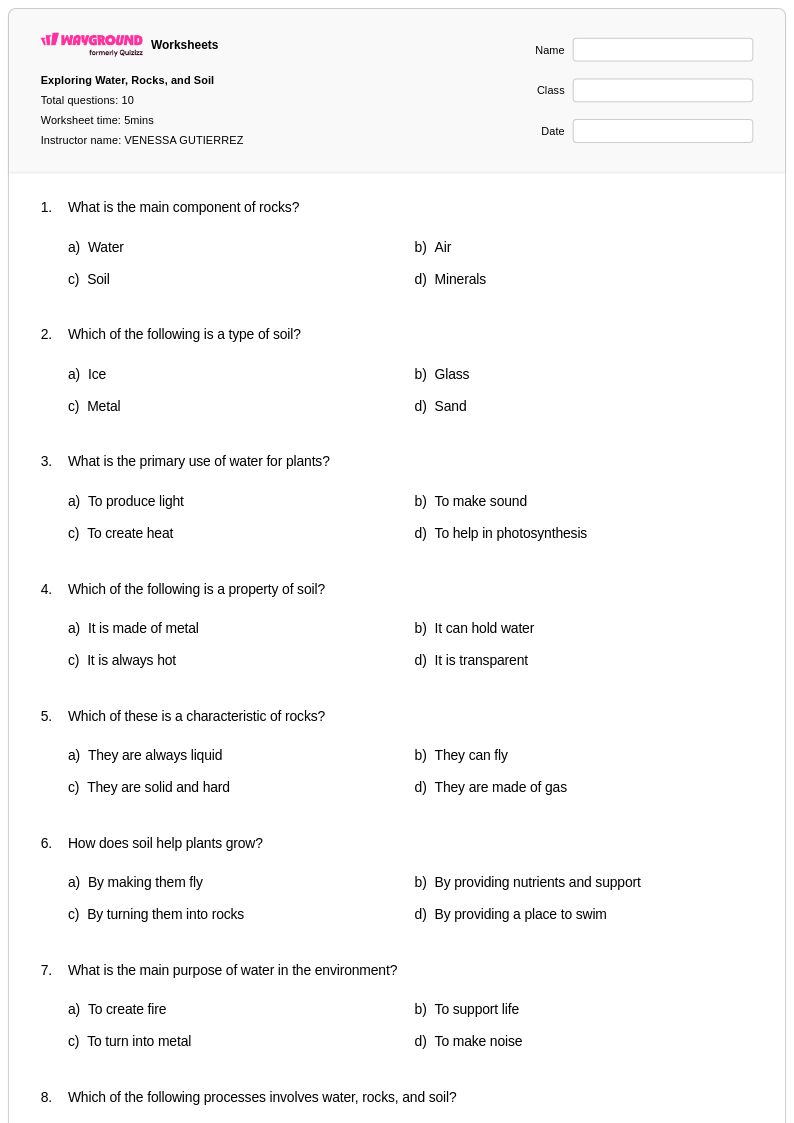
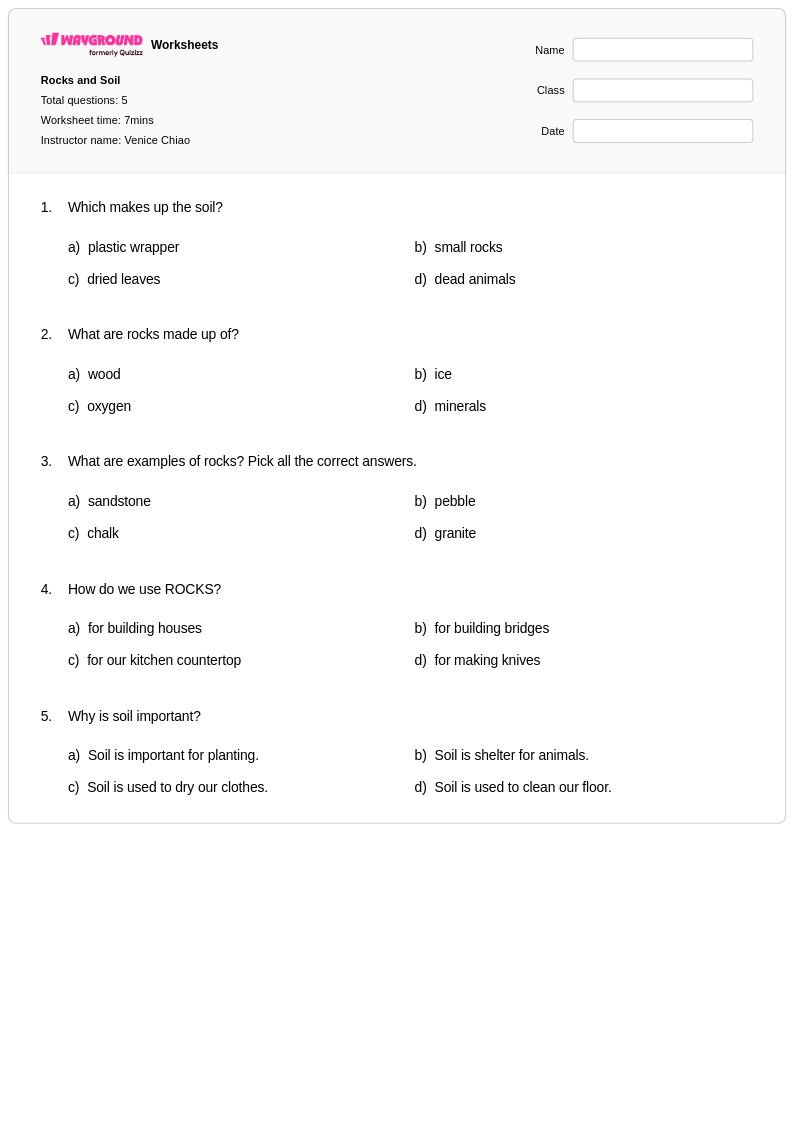
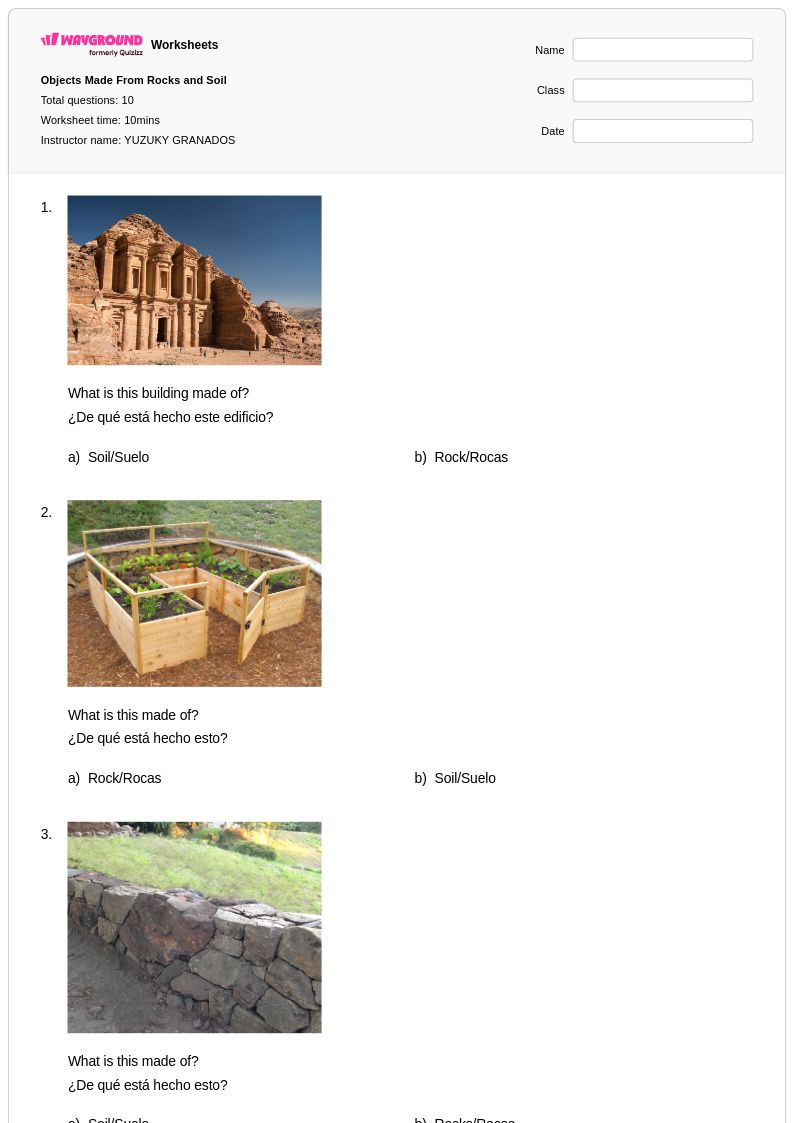
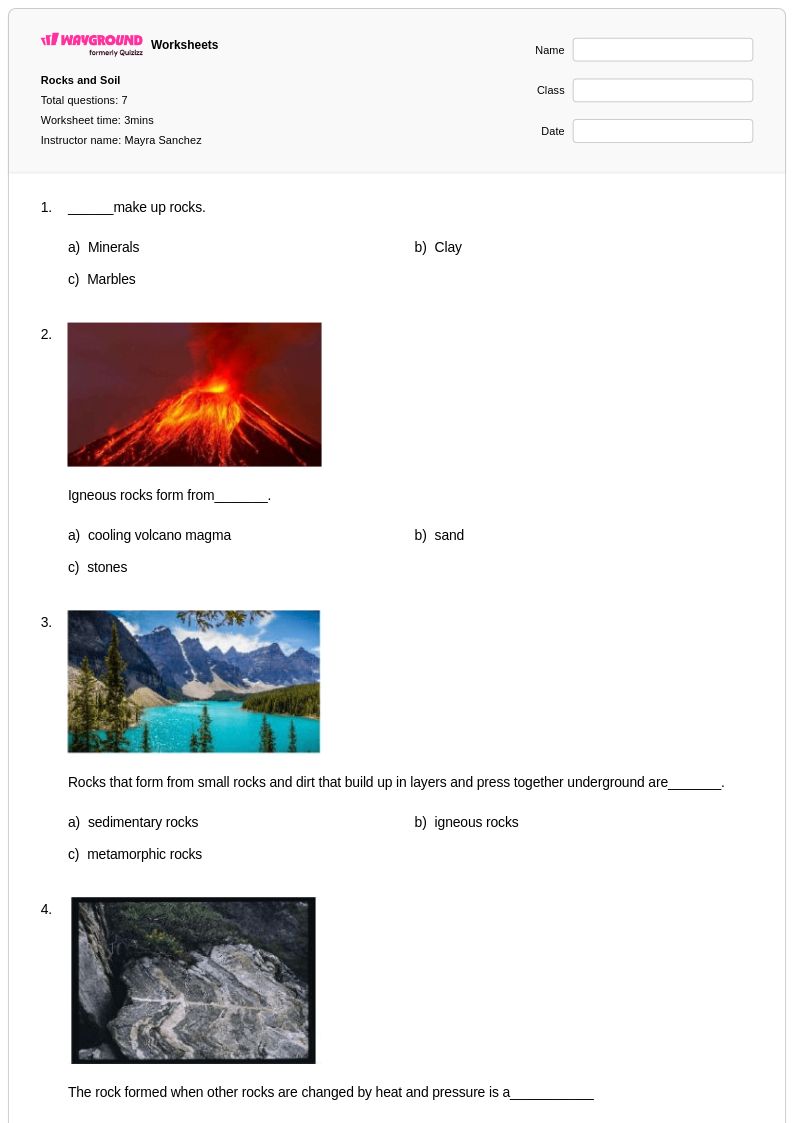
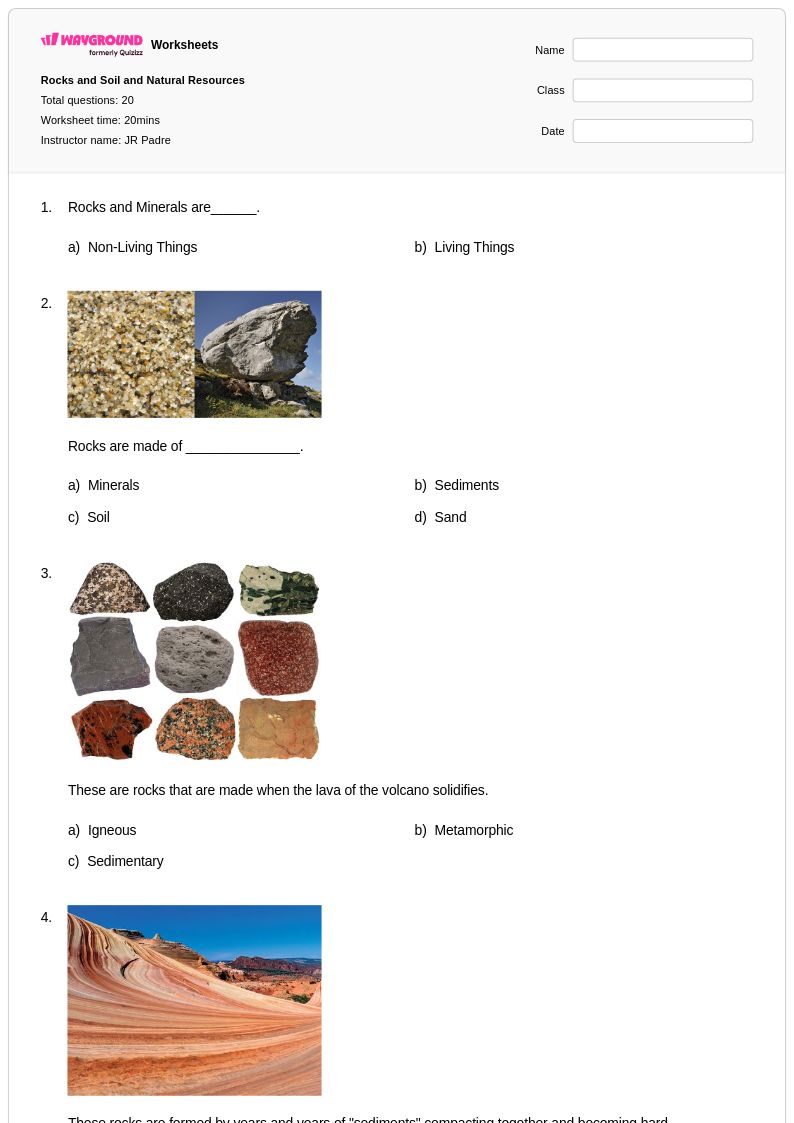
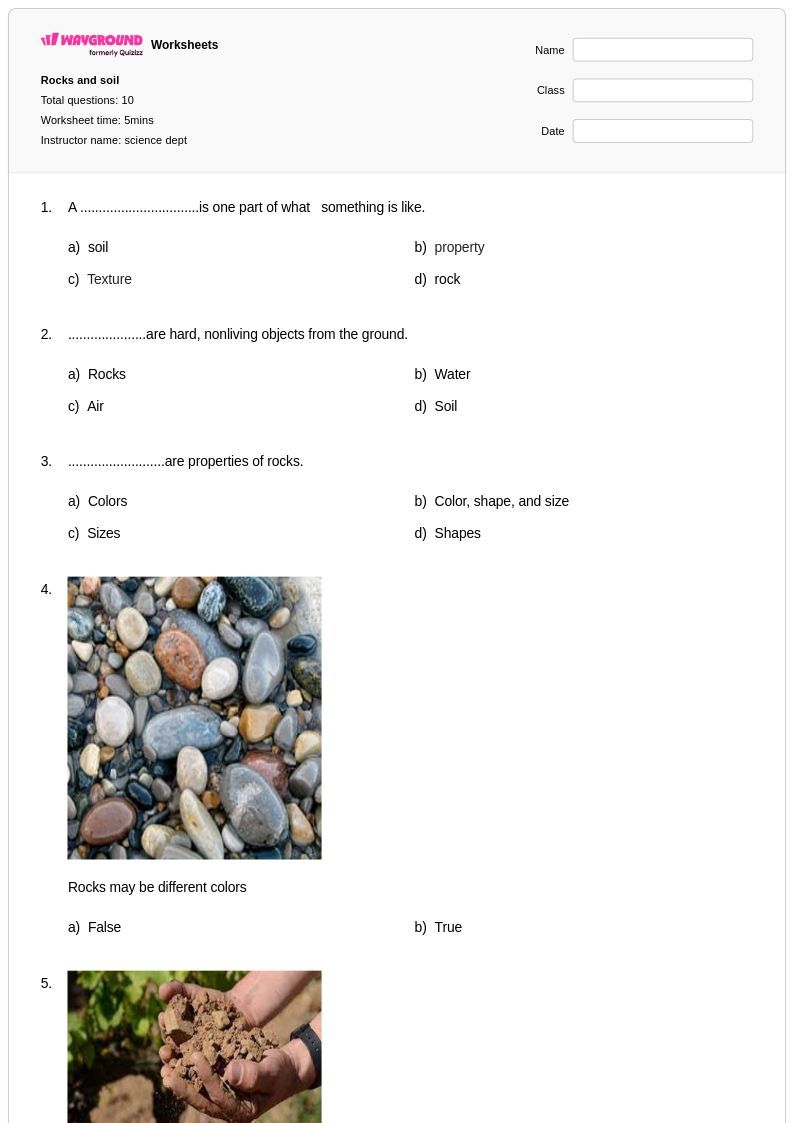
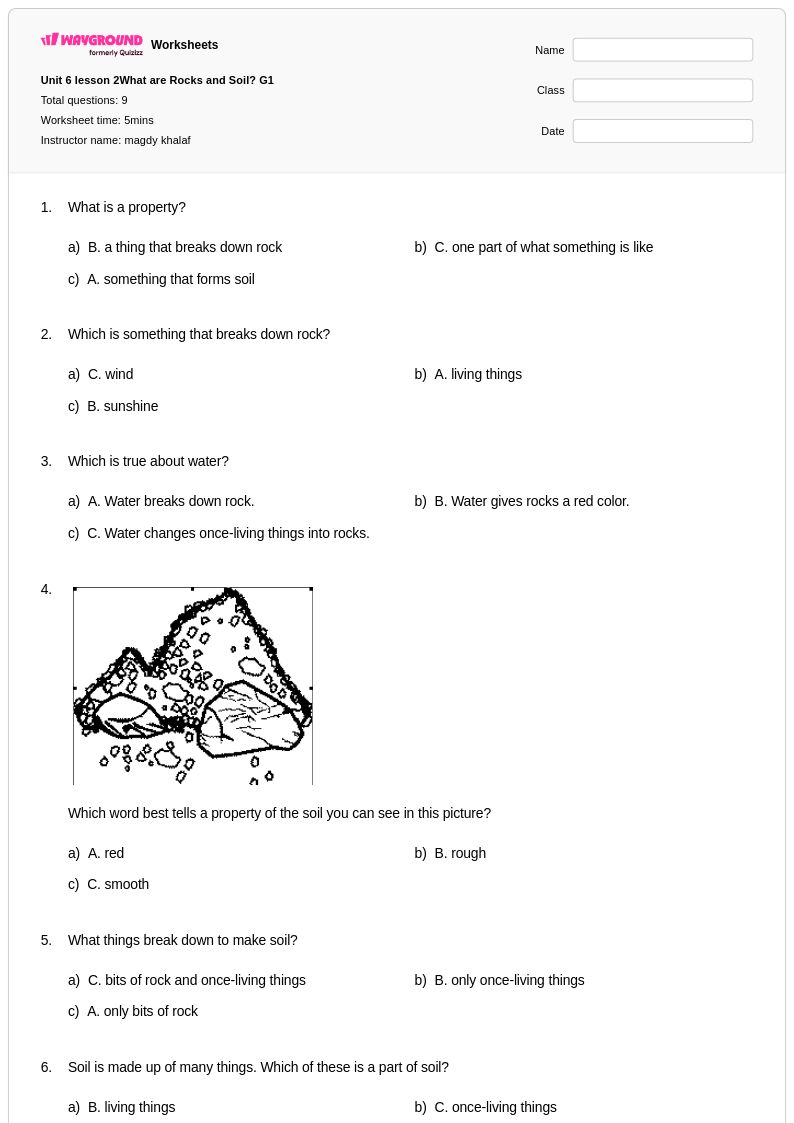
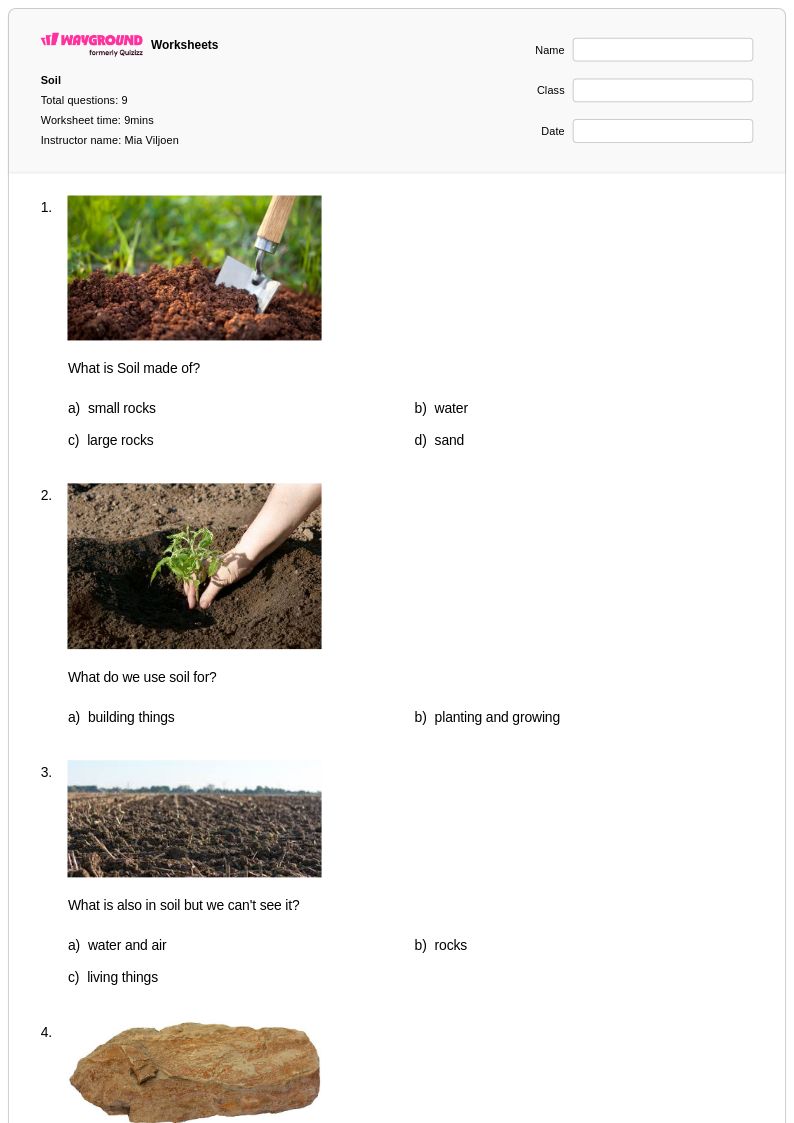
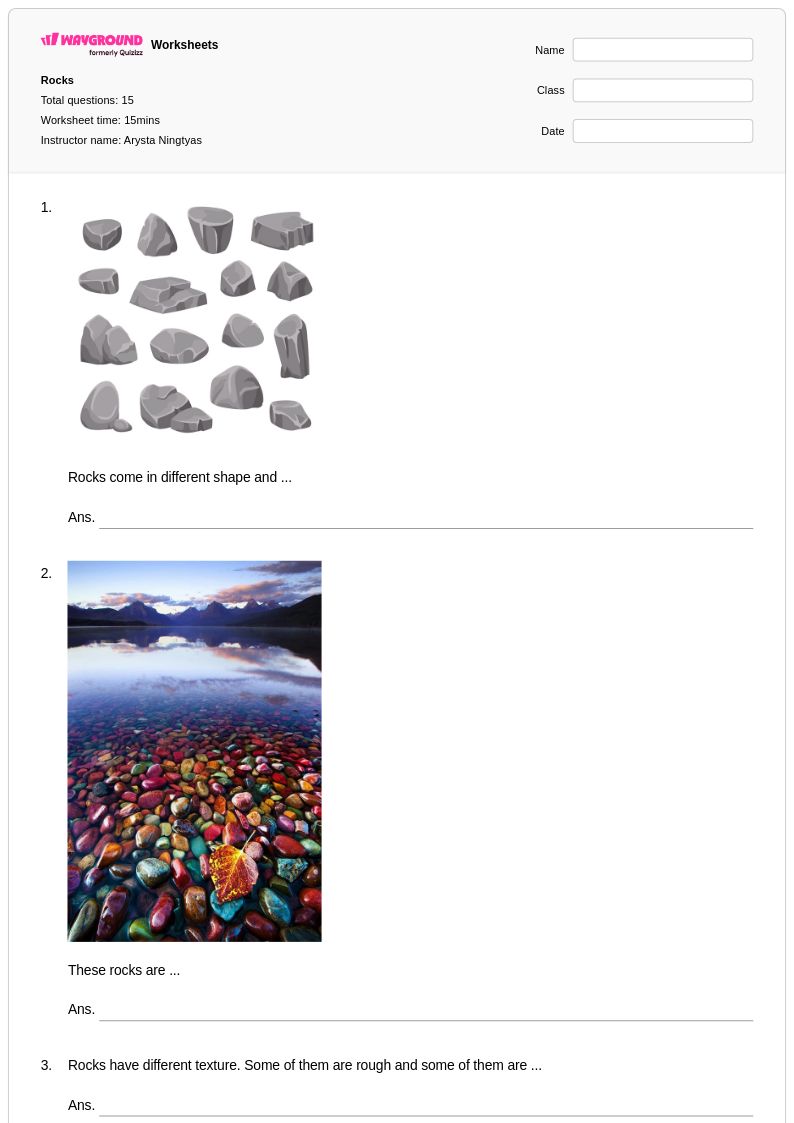
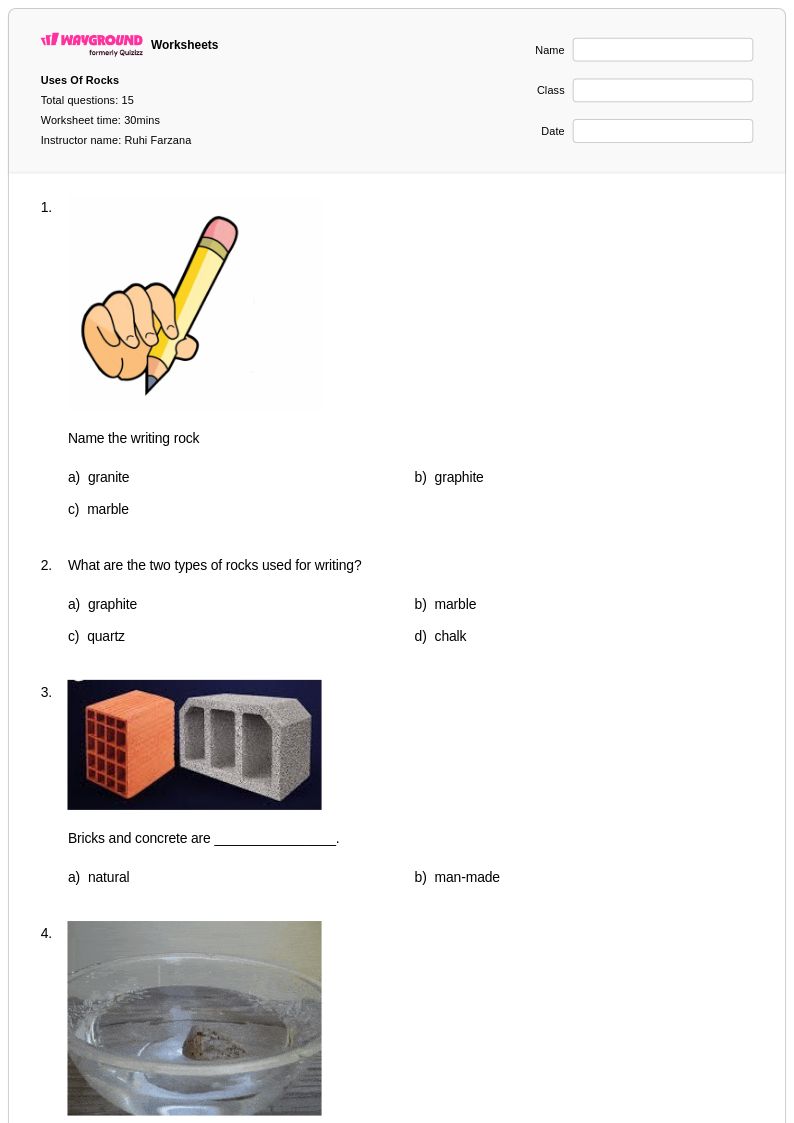
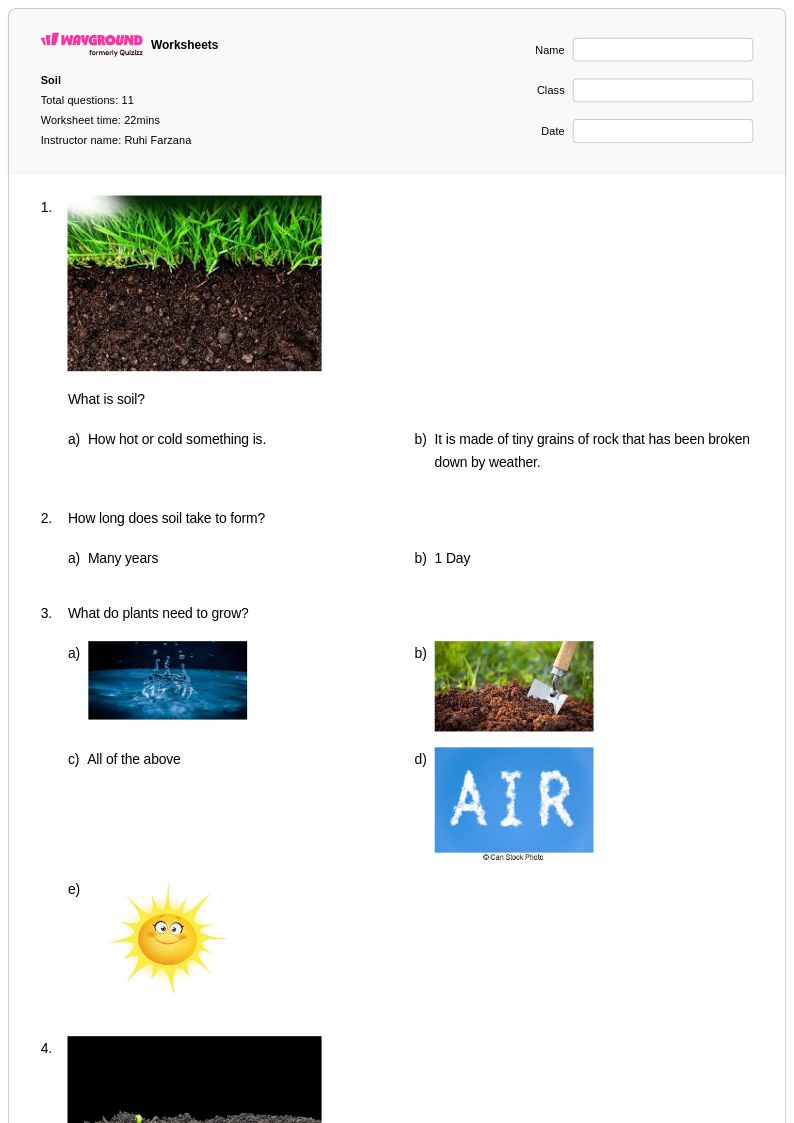
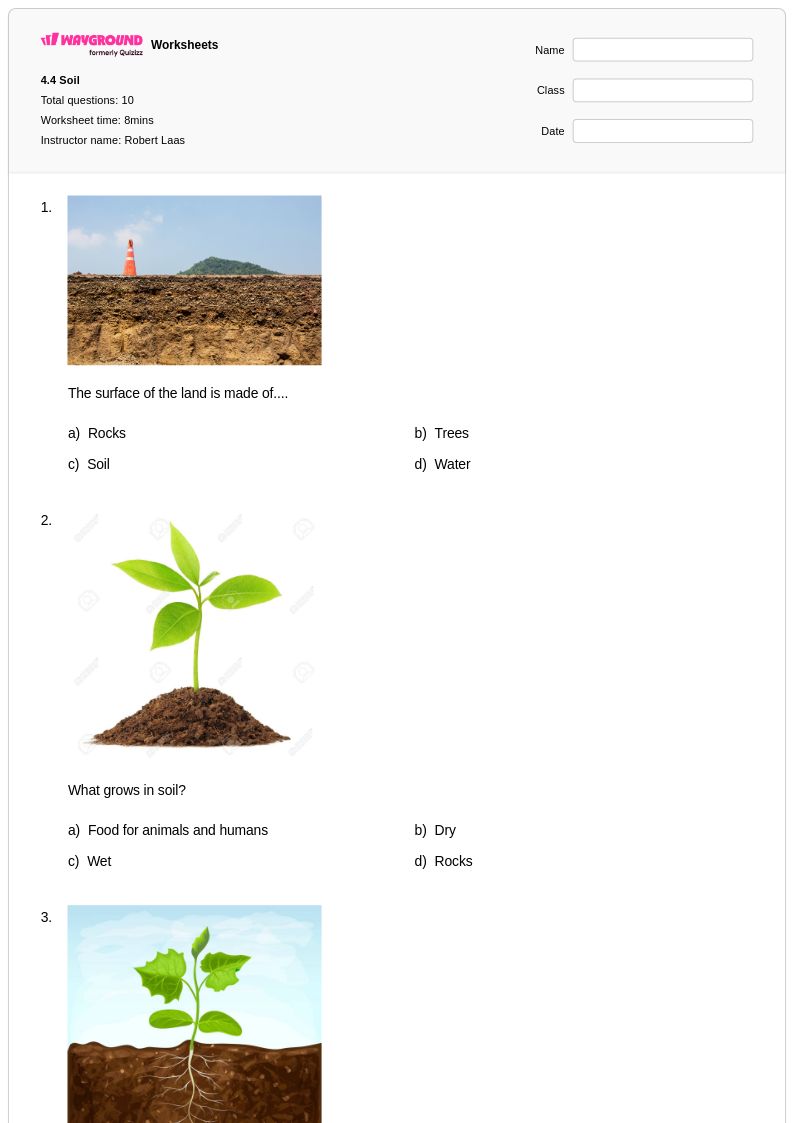
Rocks and Soil worksheets for Class 1 students available through Wayground provide foundational earth science education that introduces young learners to the basic properties and characteristics of geological materials in their environment. These carefully designed practice problems help first graders develop observational skills as they learn to identify different types of rocks, understand how soil forms, and recognize the importance of these materials in daily life. The comprehensive worksheet collection includes hands-on activities, visual sorting exercises, and simple classification tasks that make abstract geological concepts accessible to early elementary students. Each printable resource comes with a detailed answer key, allowing teachers and parents to provide immediate feedback and support student learning. These free educational materials strengthen critical thinking skills while building vocabulary related to earth materials, textures, colors, and basic geological processes that Class 1 students can observe in their local surroundings.
Wayground's extensive library of teacher-created resources supports educators with millions of high-quality worksheets specifically designed for rocks and soil instruction at the Class 1 level. The platform's robust search and filtering capabilities enable teachers to quickly locate age-appropriate materials that align with state science standards and curriculum requirements. These differentiation tools allow educators to customize worksheet difficulty levels, accommodating diverse learning needs within the classroom while maintaining focus on essential geological concepts. Available in both printable pdf format and interactive digital versions, these resources provide flexibility for various instructional settings and learning preferences. Teachers can efficiently plan comprehensive lessons, provide targeted remediation for struggling students, offer enrichment opportunities for advanced learners, and create consistent skill practice opportunities that reinforce understanding of how rocks and soil impact the natural world around first grade students.
FAQs
How do I teach the rock cycle to elementary and middle school students?
Teaching the rock cycle effectively starts with helping students understand that rocks are not static — they transform over time through heat, pressure, weathering, and erosion. A strong approach is to introduce the three rock types (igneous, sedimentary, and metamorphic) first, then show how each transitions into the others through geological processes. Using diagrams, labeled models, and process-tracing activities helps students internalize the cyclical nature of rock formation rather than memorizing isolated facts.
What activities help students practice identifying rock types and soil layers?
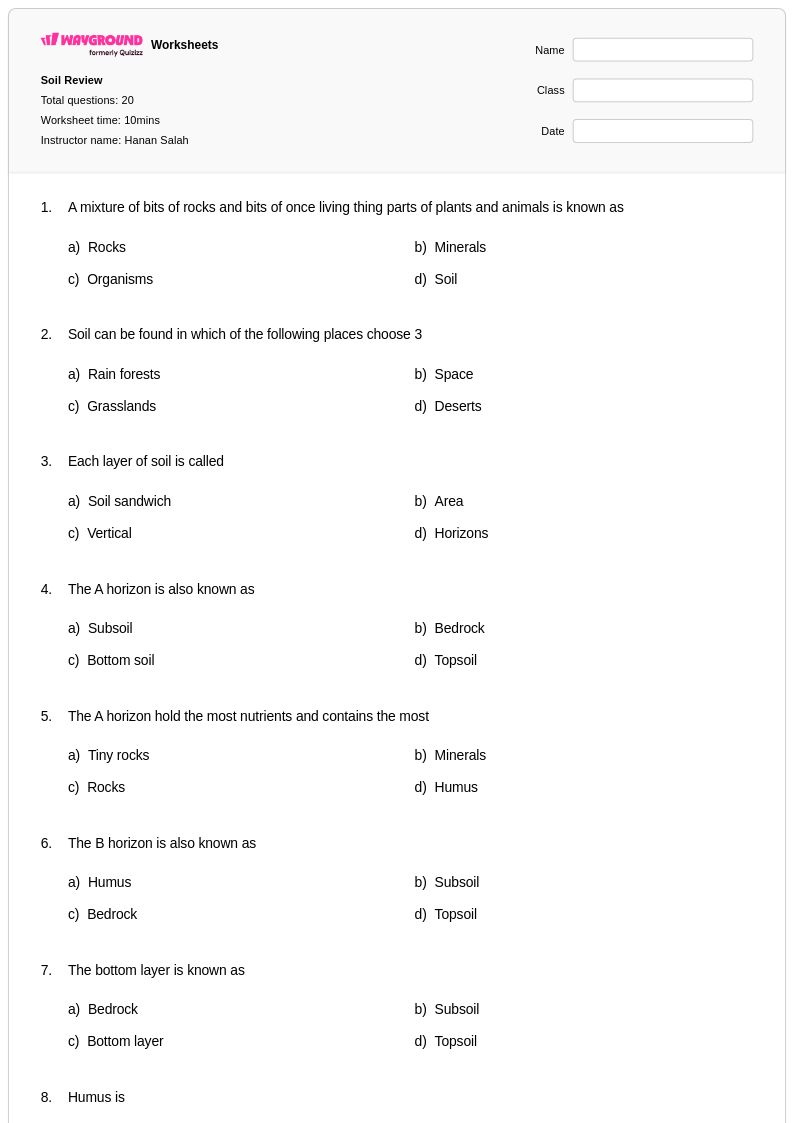
Hands-on classification activities work especially well for rocks and soil — students can sort rock samples by texture, grain size, and formation process to distinguish igneous, sedimentary, and metamorphic types. For soil, labeling and matching exercises that ask students to identify the O, A, B, and C horizons reinforce how each layer differs in composition and organic content. Worksheets that combine visual diagrams with fill-in-the-blank or short-answer questions give students repeated exposure to the vocabulary and concepts they need to master.
What are the most common misconceptions students have about rocks and soil?
One of the most persistent misconceptions is that rocks and soil are the same thing — students often don't recognize that soil is a complex mixture of weathered rock particles, organic matter, water, and air. Another common error is treating the rock cycle as a fixed sequence rather than a flexible set of pathways, leading students to think a sedimentary rock can only become metamorphic before becoming igneous. Students also frequently confuse weathering (the breakdown of rock) with erosion (the movement of broken material), using the terms interchangeably when they describe distinct processes.
How can I differentiate rocks and soil instruction for students at different ability levels?
For students who need additional support, reducing the number of answer choices on identification questions lowers cognitive load while still requiring engagement with the content. Advanced learners benefit from open-ended analysis tasks, such as explaining how a specific environment (e.g., a riverbed or volcanic region) would influence which rock types are most common there. On Wayground, teachers can apply accommodations like reduced answer choices, extended time, and read-aloud support to individual students without disrupting the experience of the rest of the class.
How do I use Wayground's rocks and soil worksheets in my classroom?
Wayground's rocks and soil worksheets are available as printable PDFs for traditional classroom use and in digital formats for technology-integrated or remote learning environments. Teachers can also host the worksheets as an interactive quiz directly on Wayground, giving students an engaging way to work through the material while automatically capturing responses. Each worksheet includes a complete answer key, so grading and review are built into the experience from the start.
How does weathering and erosion connect to the broader rocks and soil unit?
Weathering and erosion are the bridge between the rock cycle and soil formation — weathering breaks down rock into smaller particles through physical and chemical processes, while erosion transports those particles to new locations where they can accumulate as sediment or contribute to soil. Teaching these processes together helps students understand why soil composition varies by region and why sedimentary rocks form in layers. Connecting both concepts to observable real-world examples, such as river valleys or cliffside striations, gives students an anchor for abstract geological timescales.