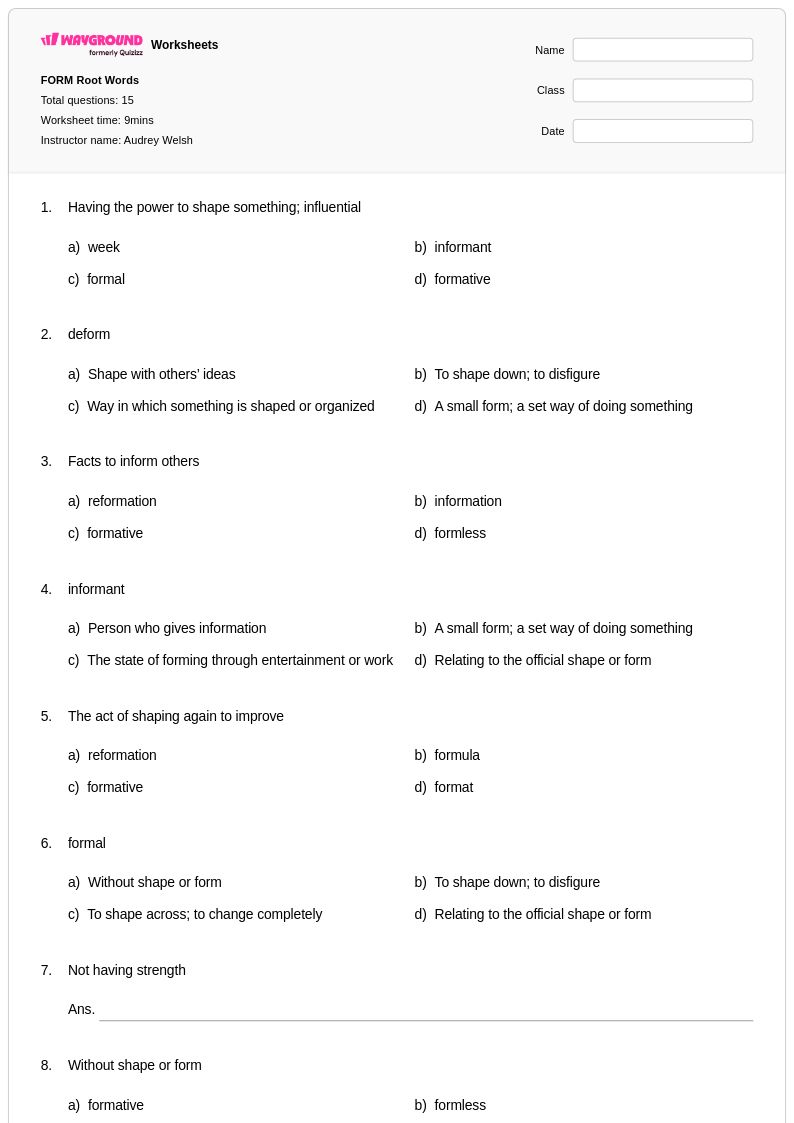
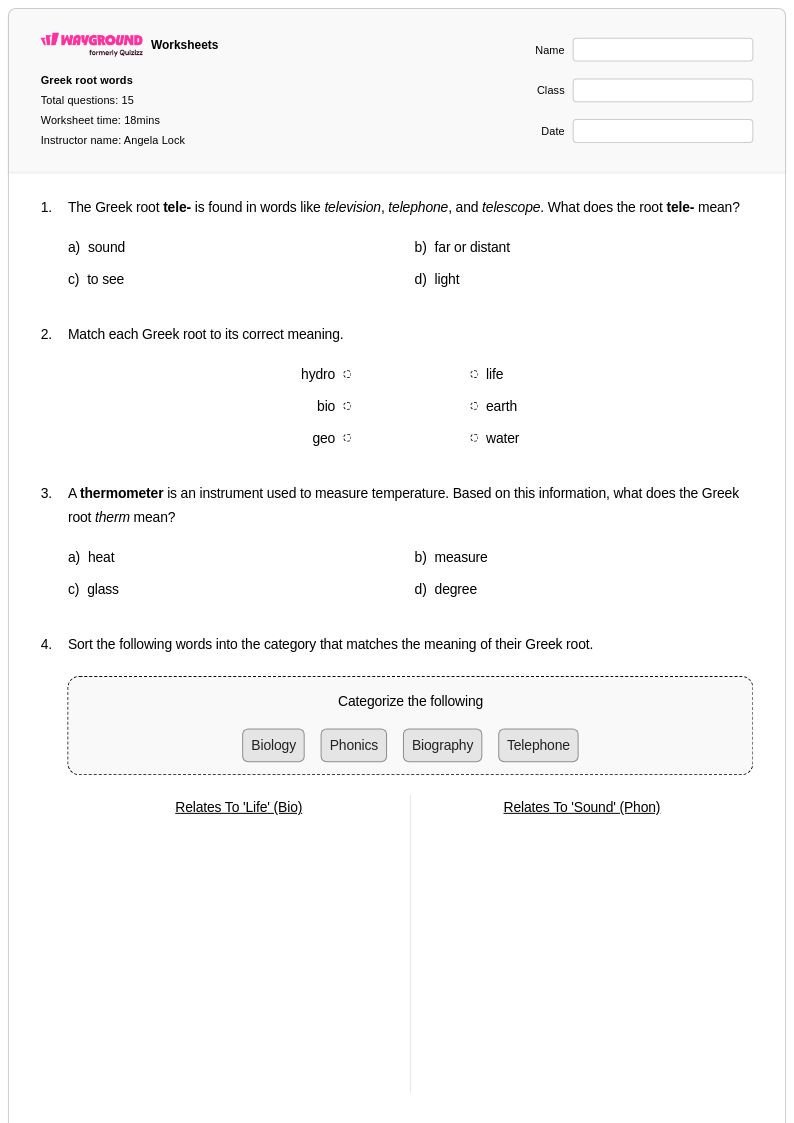
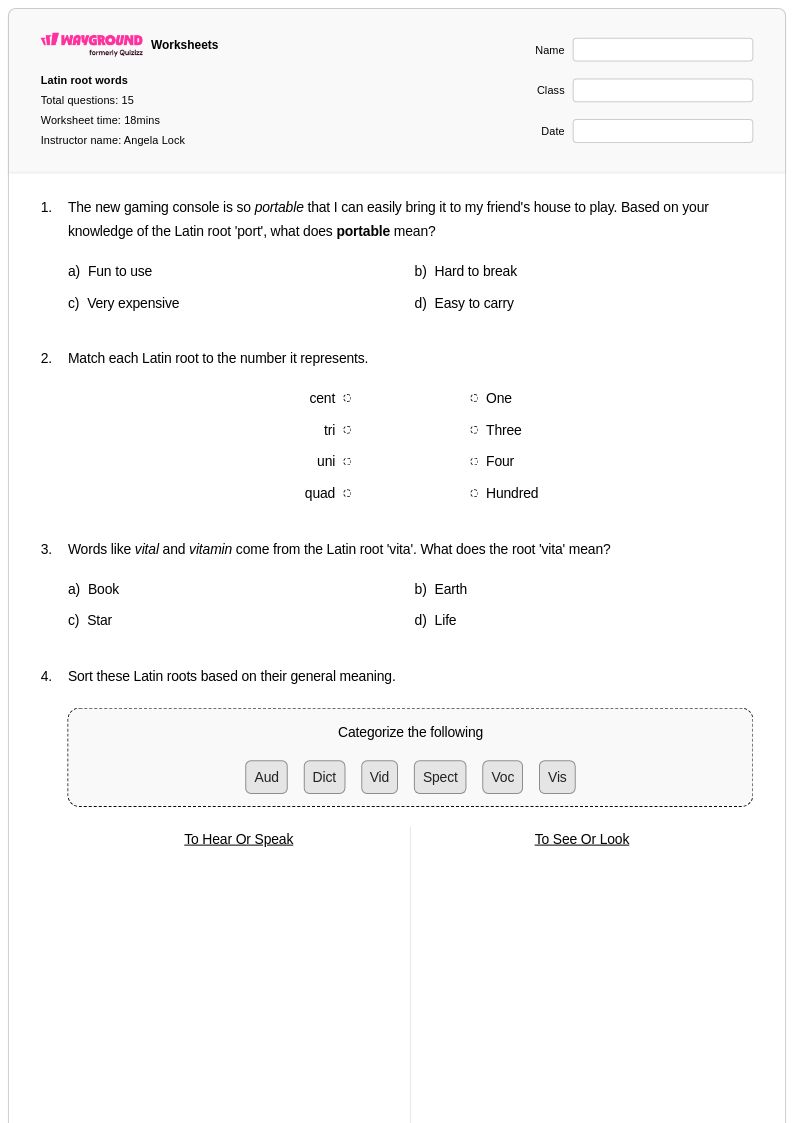
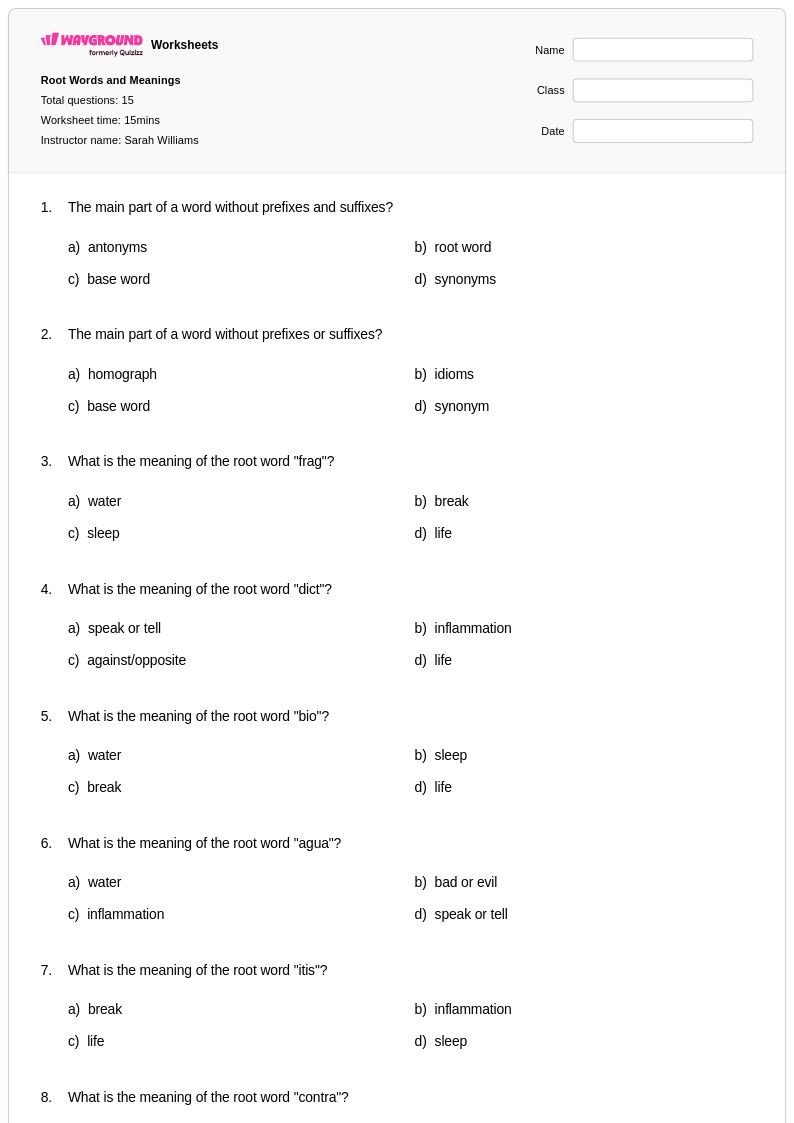
Class 7 root words worksheets from Wayground help students master word origins and meanings through engaging printables, practice problems, and comprehensive answer keys for effective vocabulary building.
Explore printable Root Words worksheets for Class 7
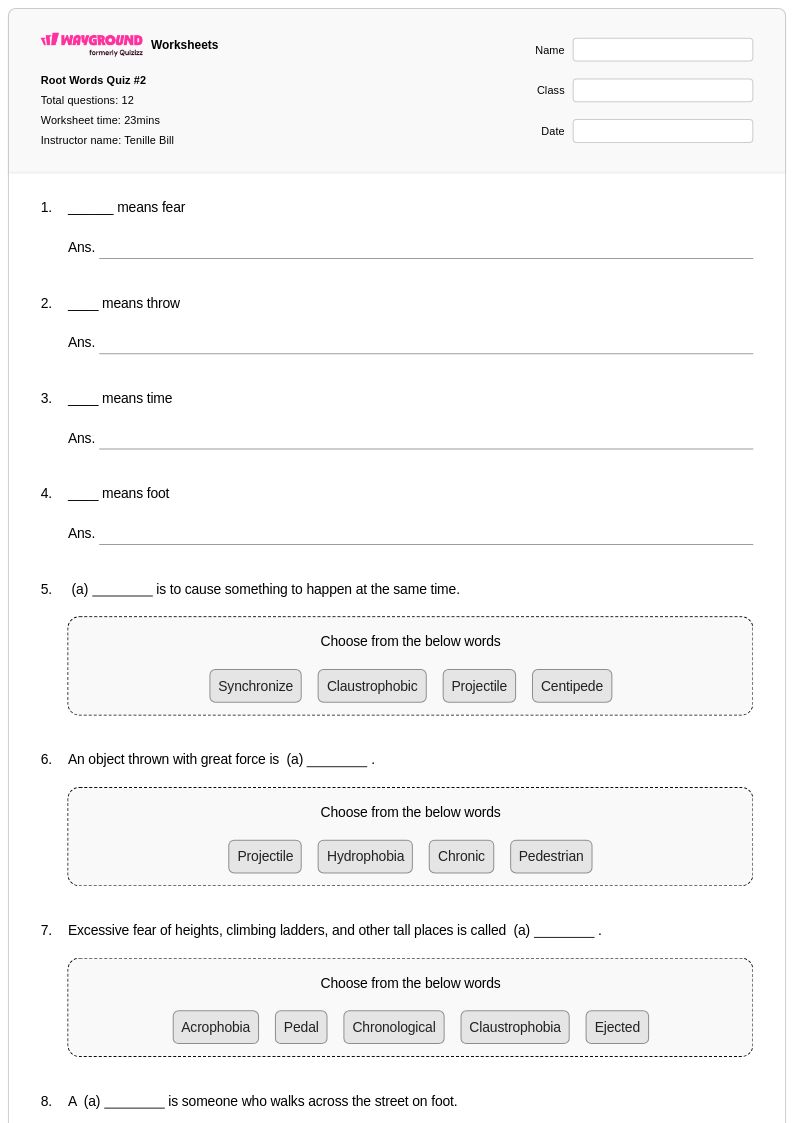
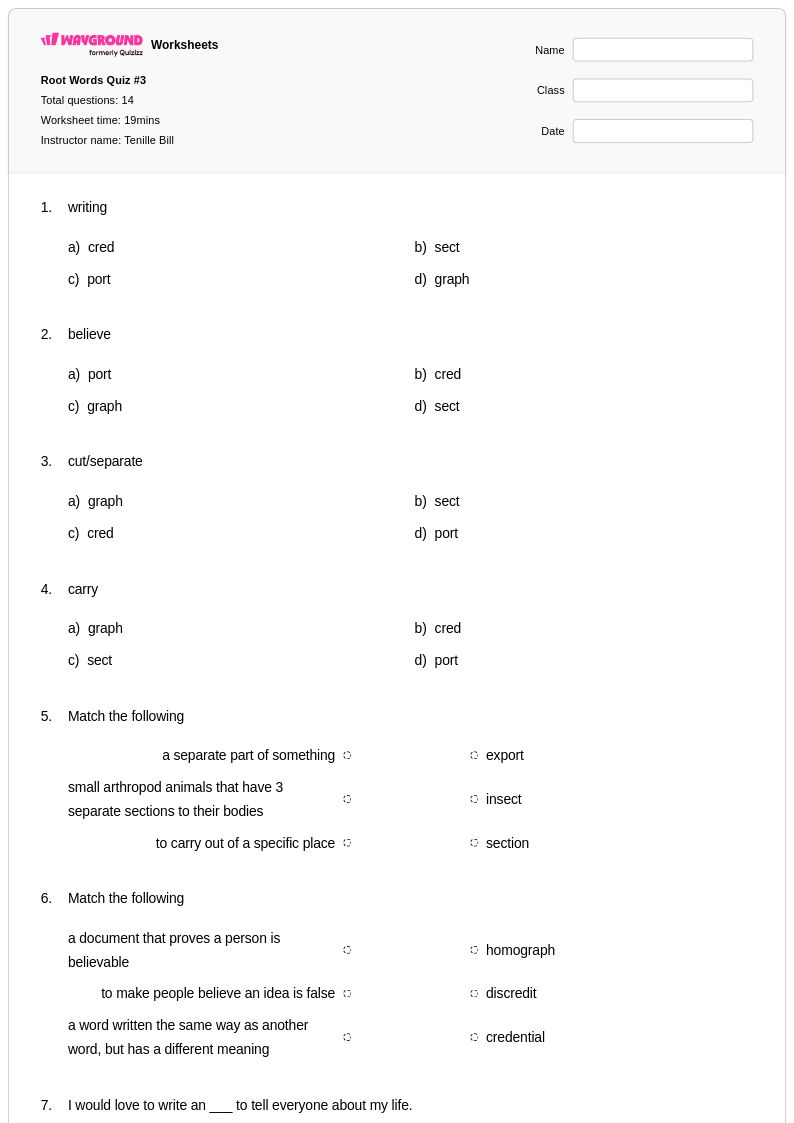
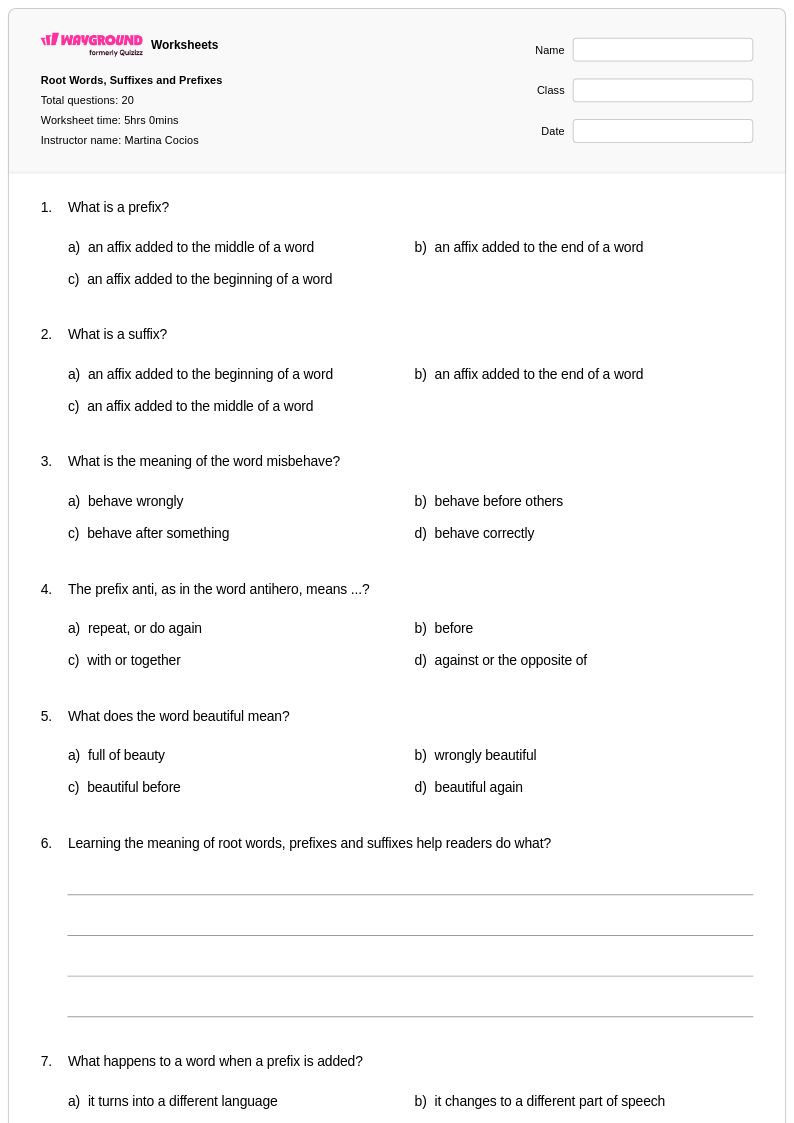
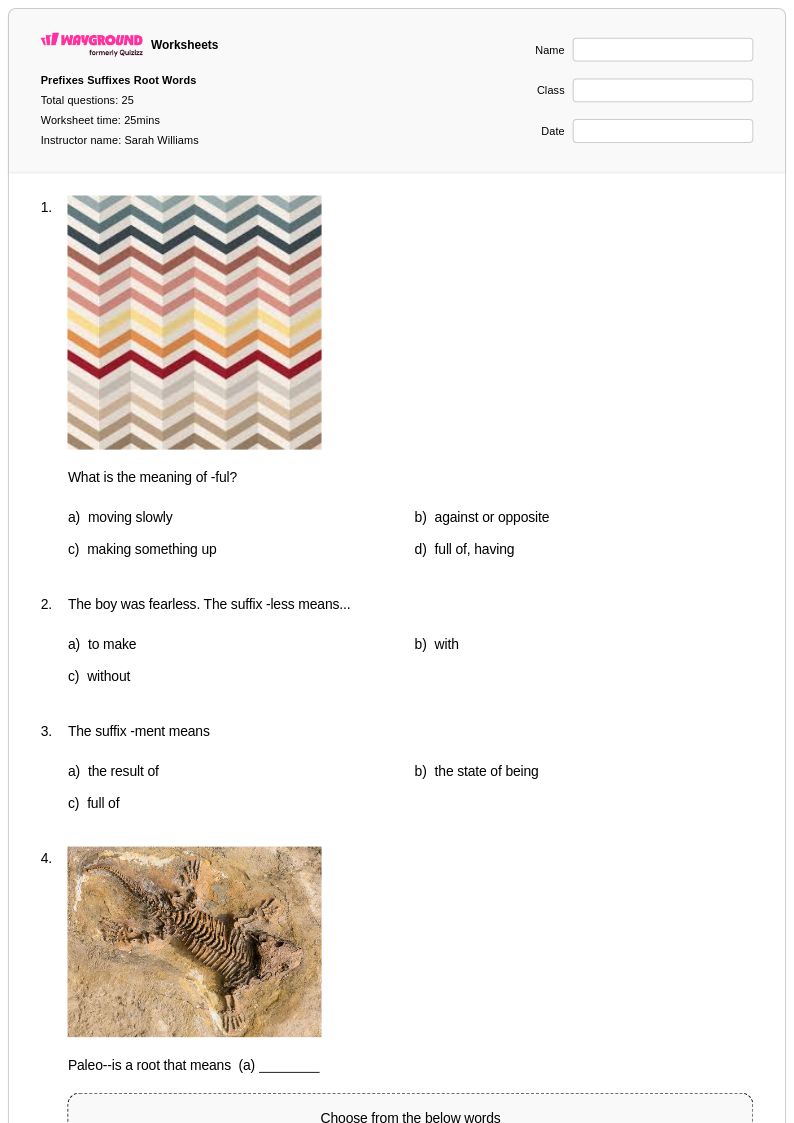
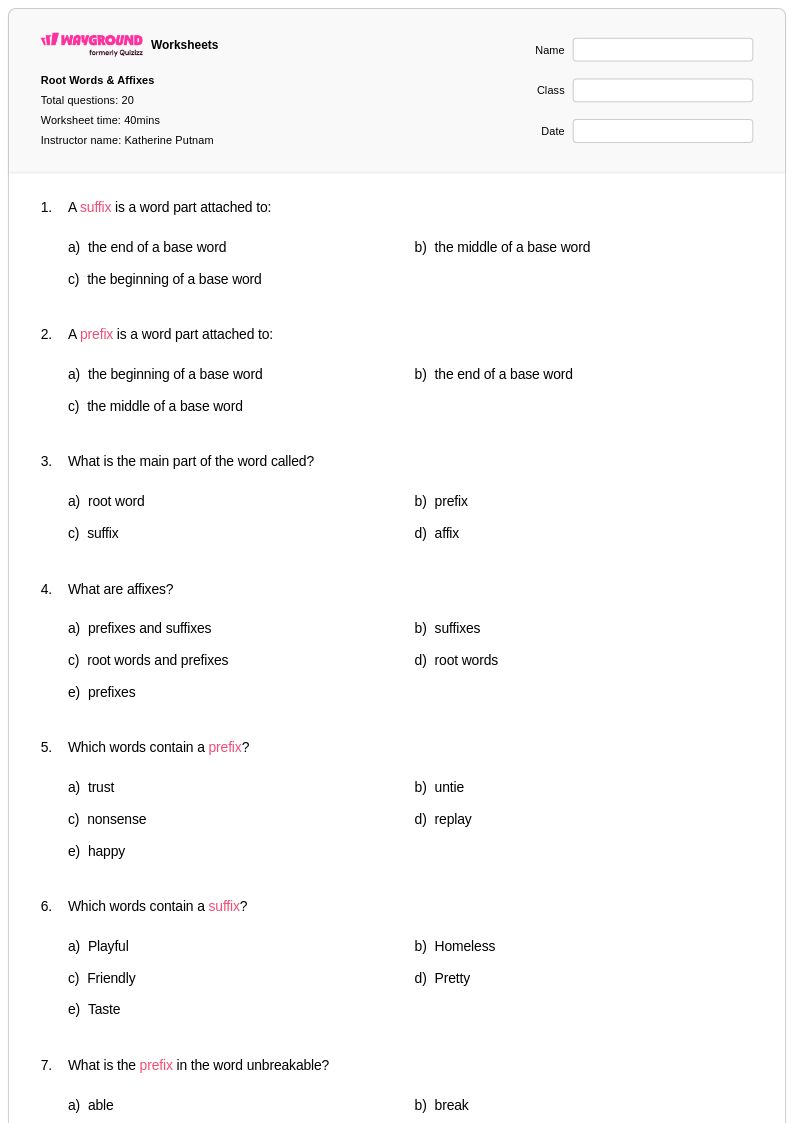
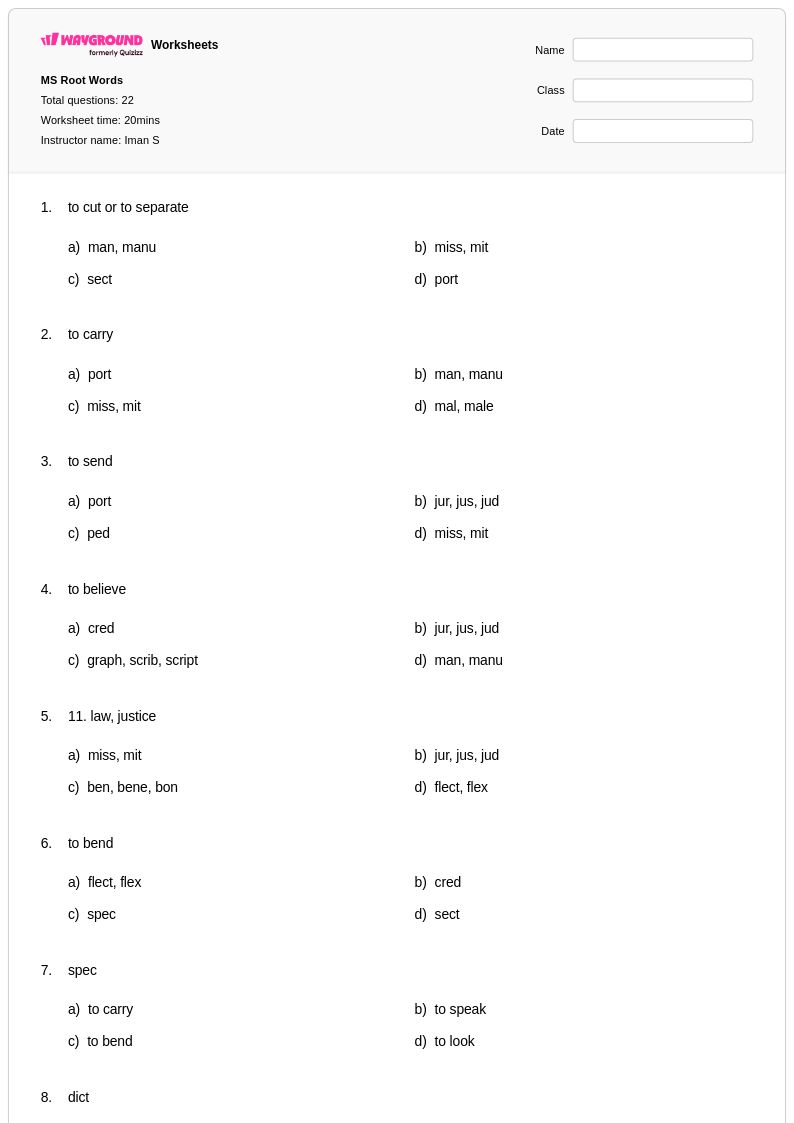
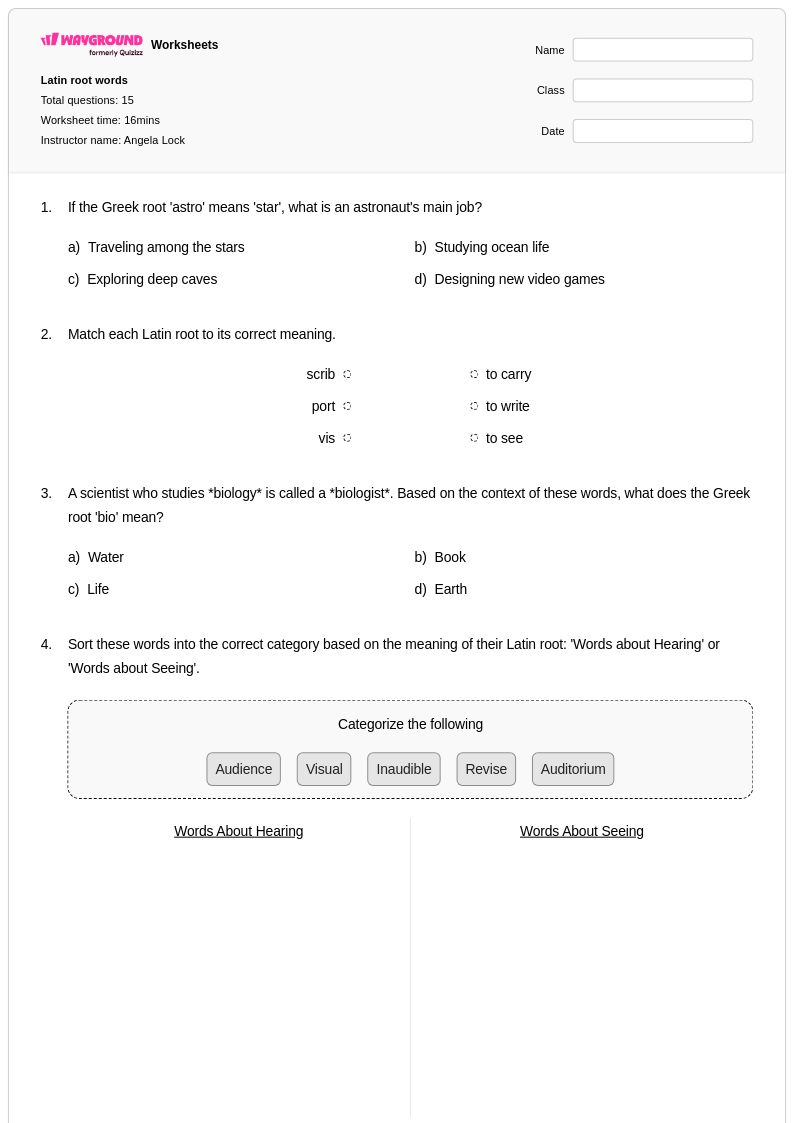
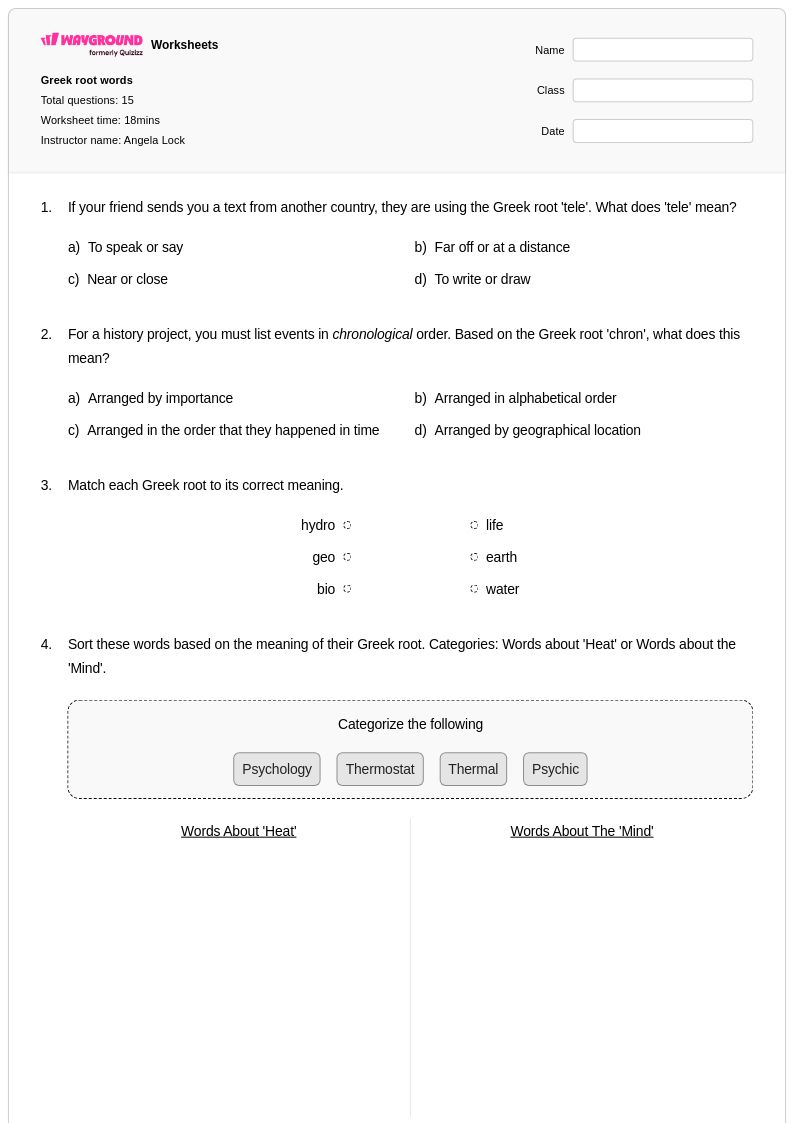
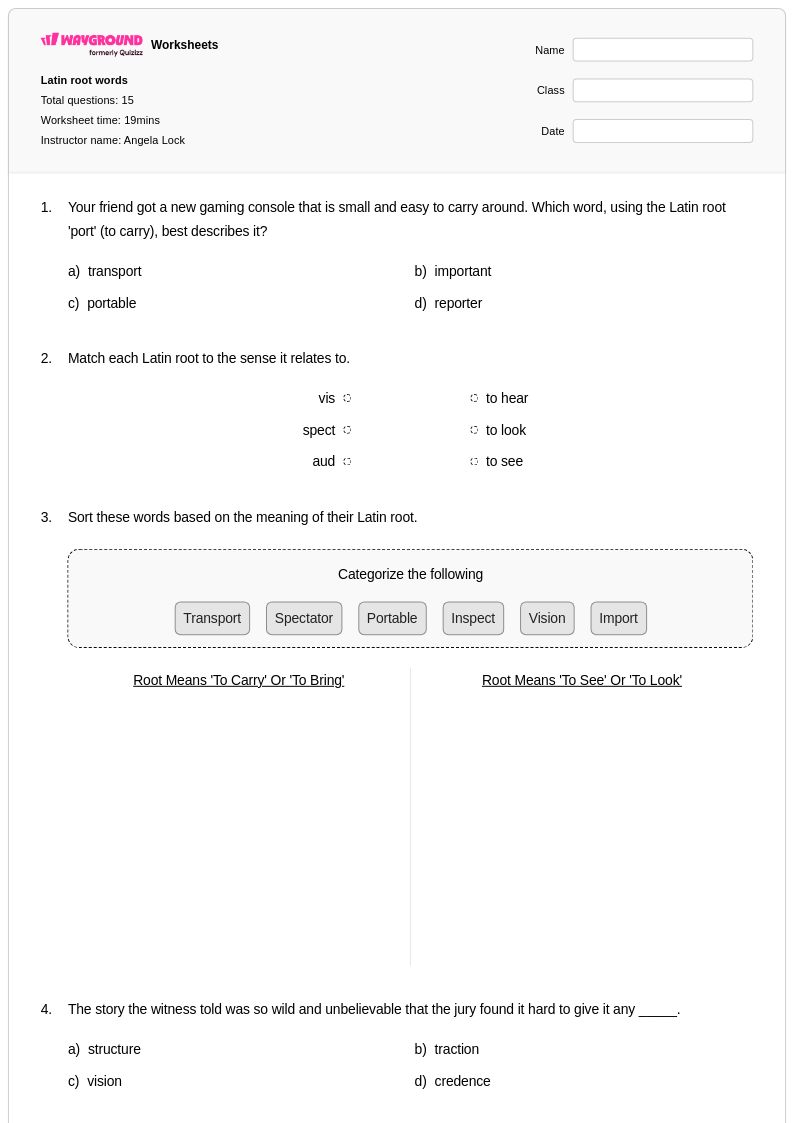
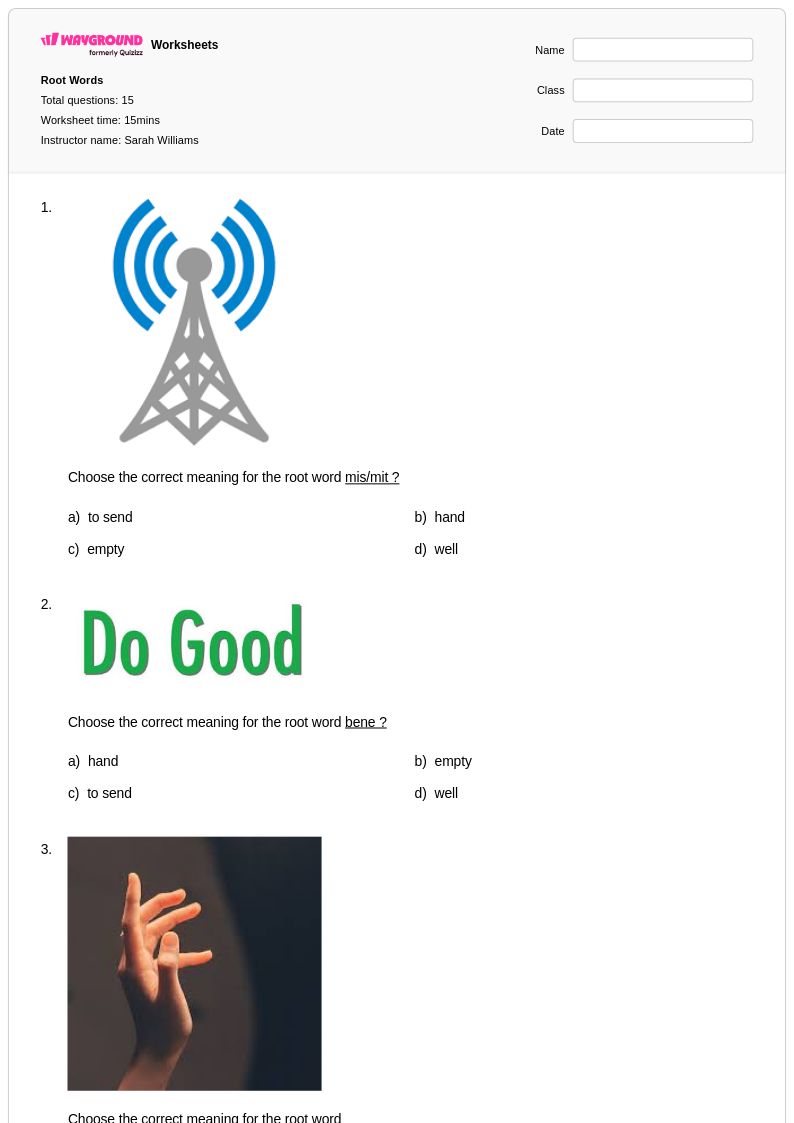
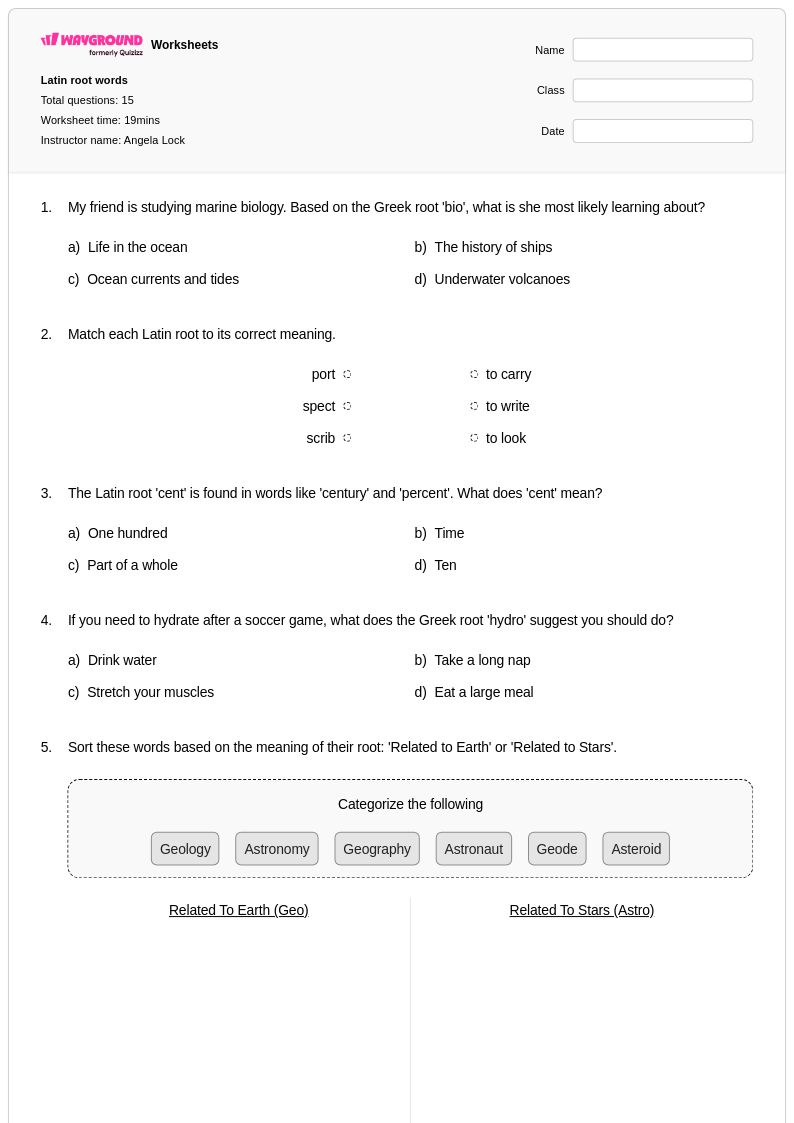
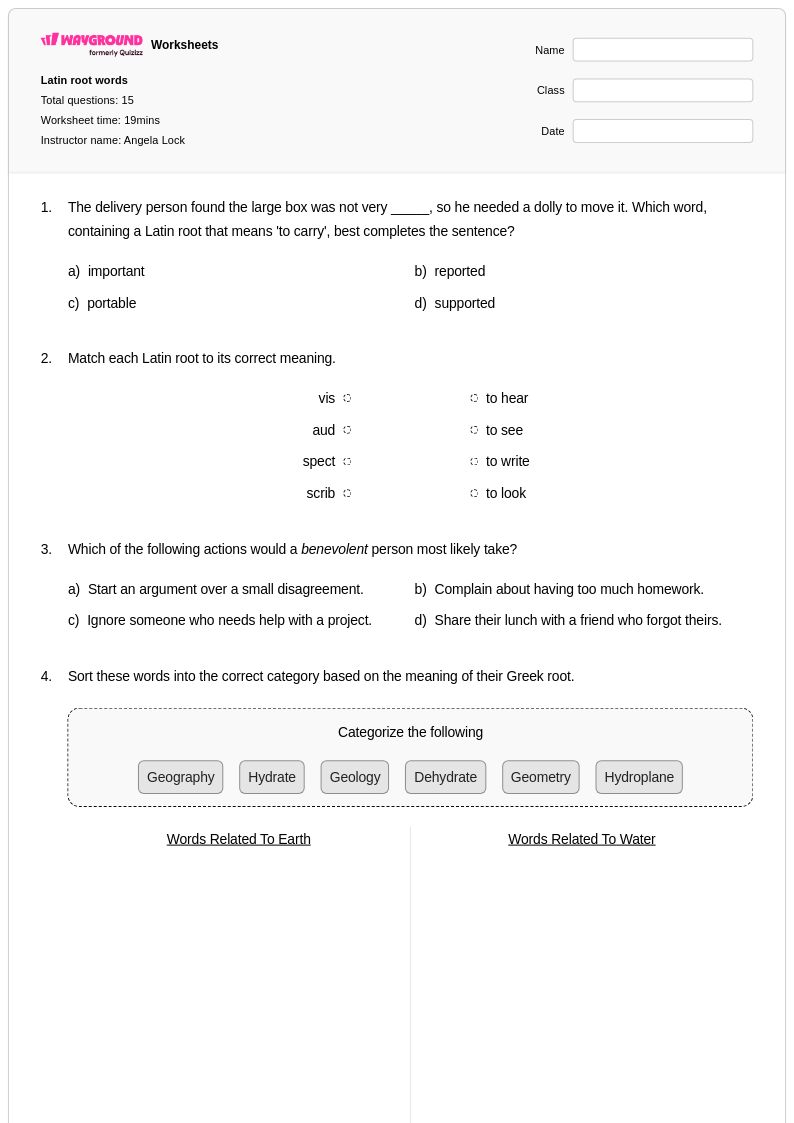
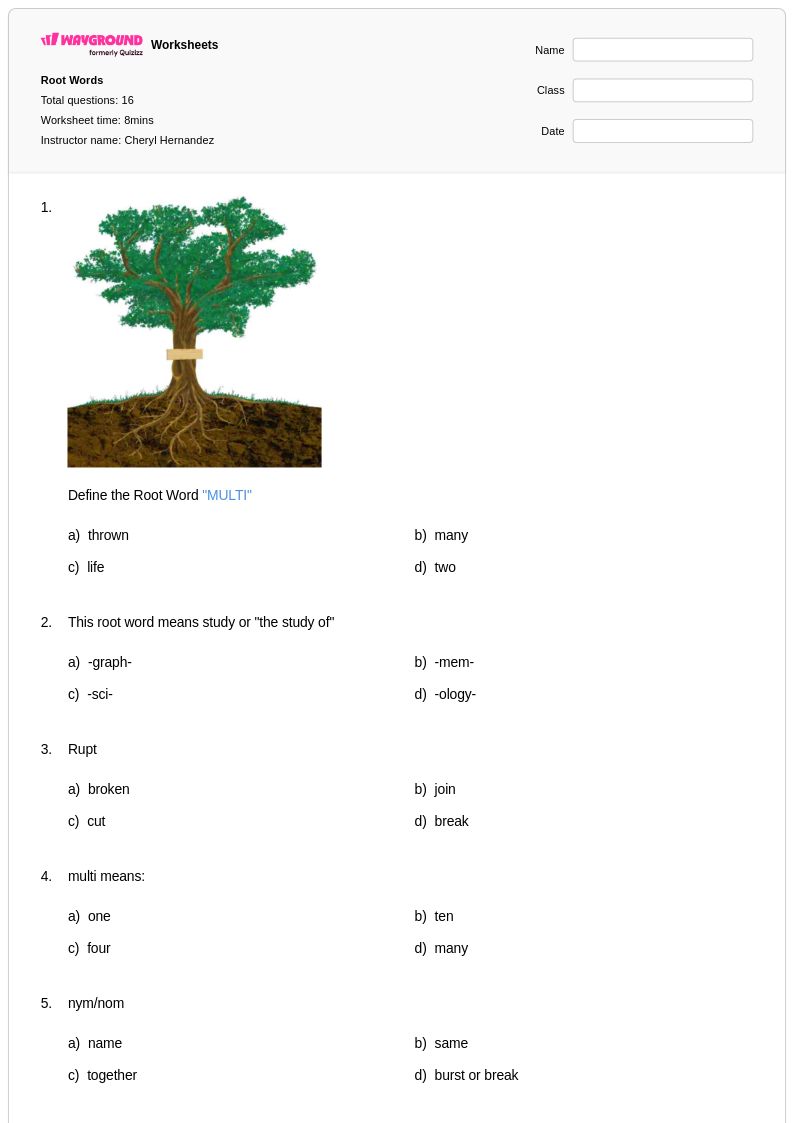
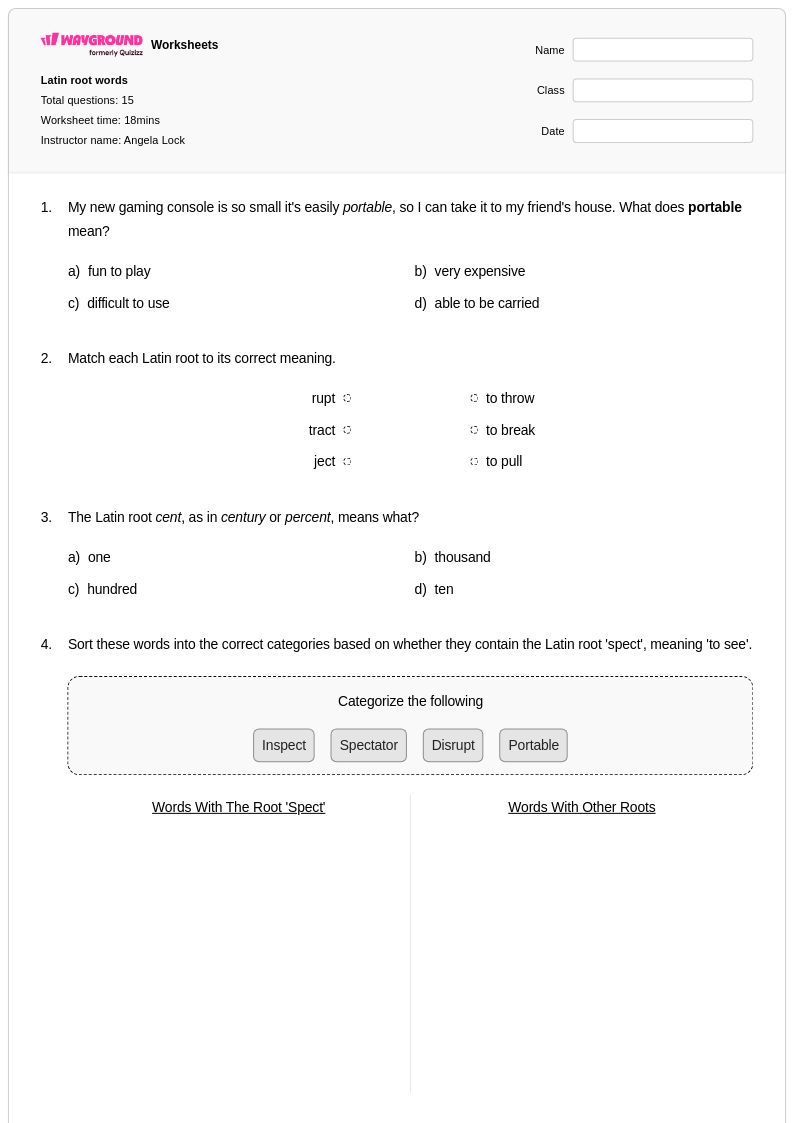
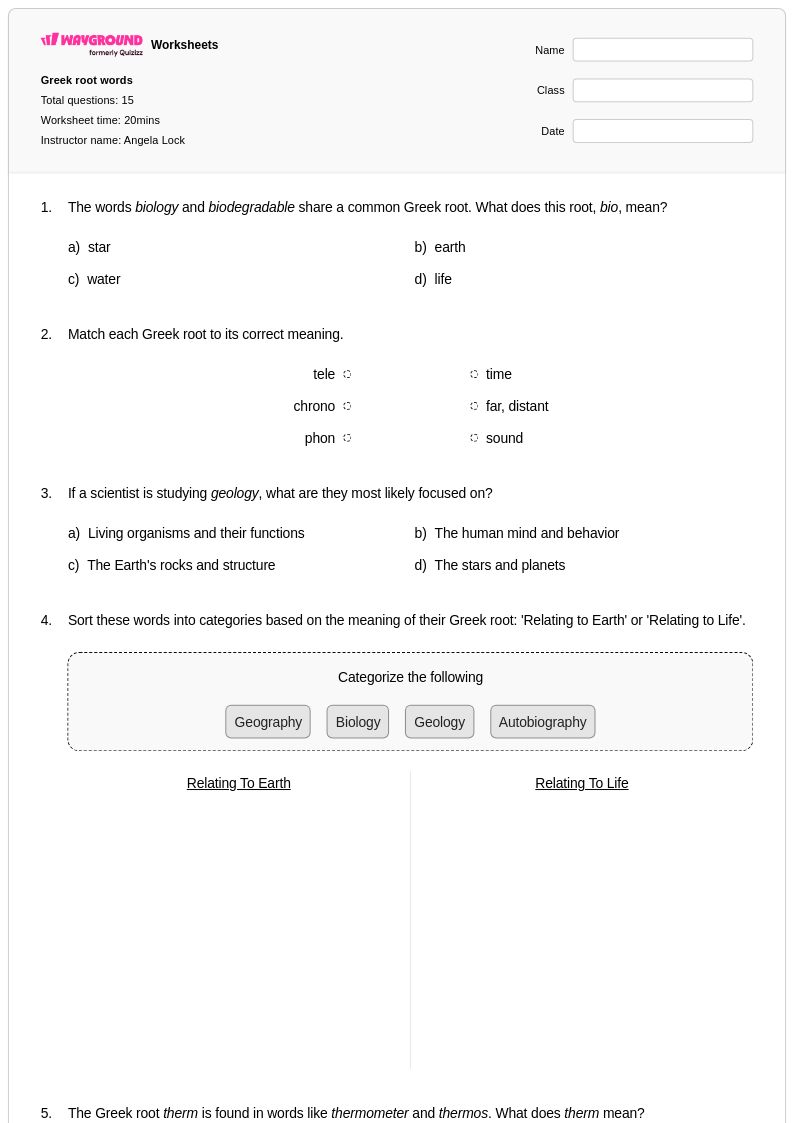
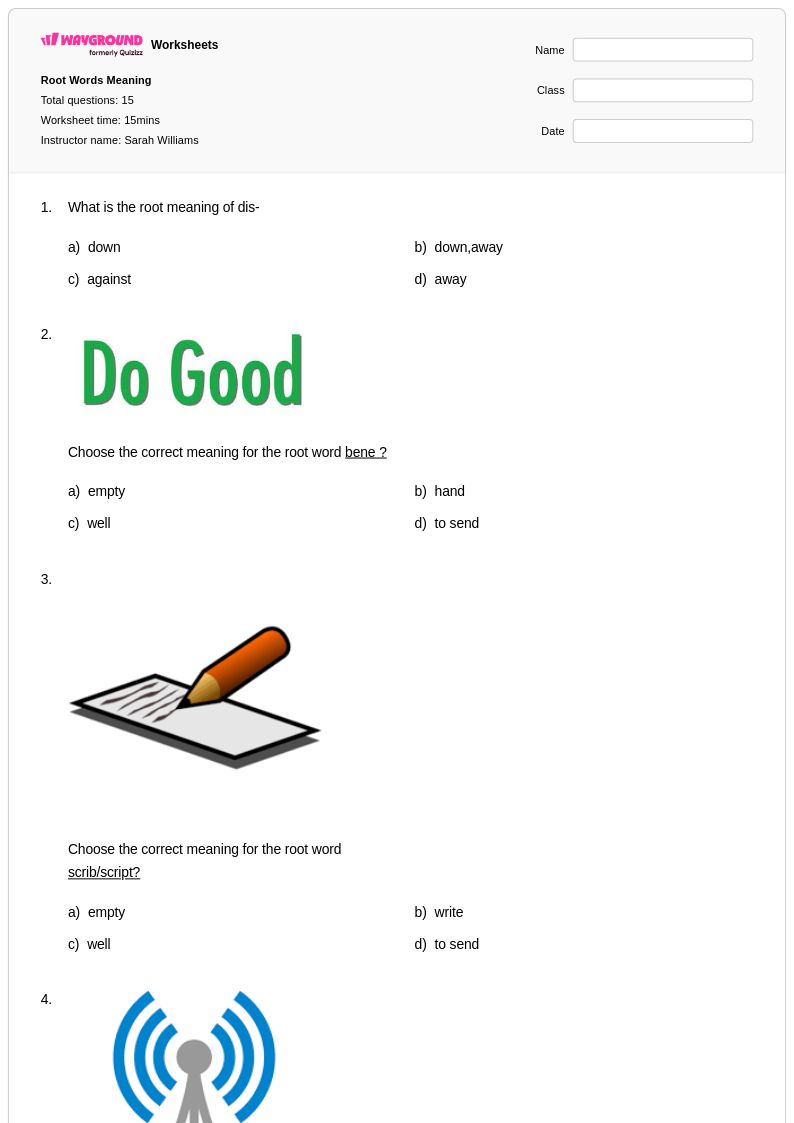
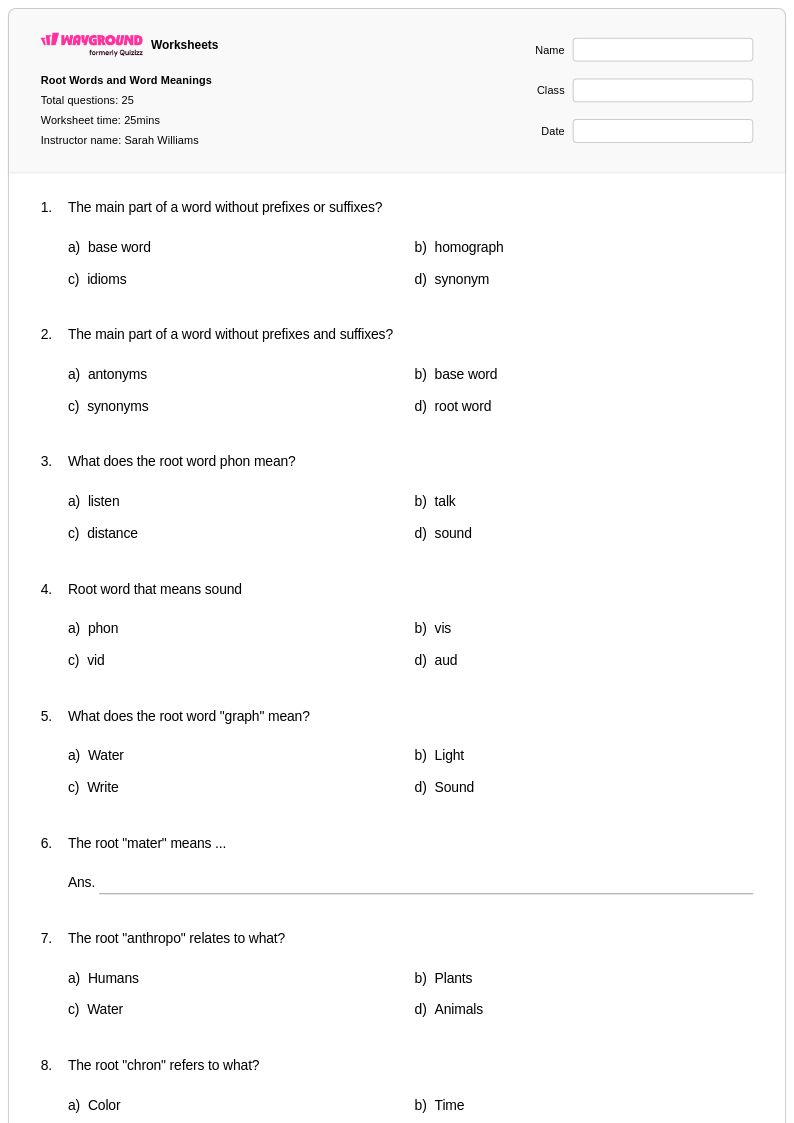
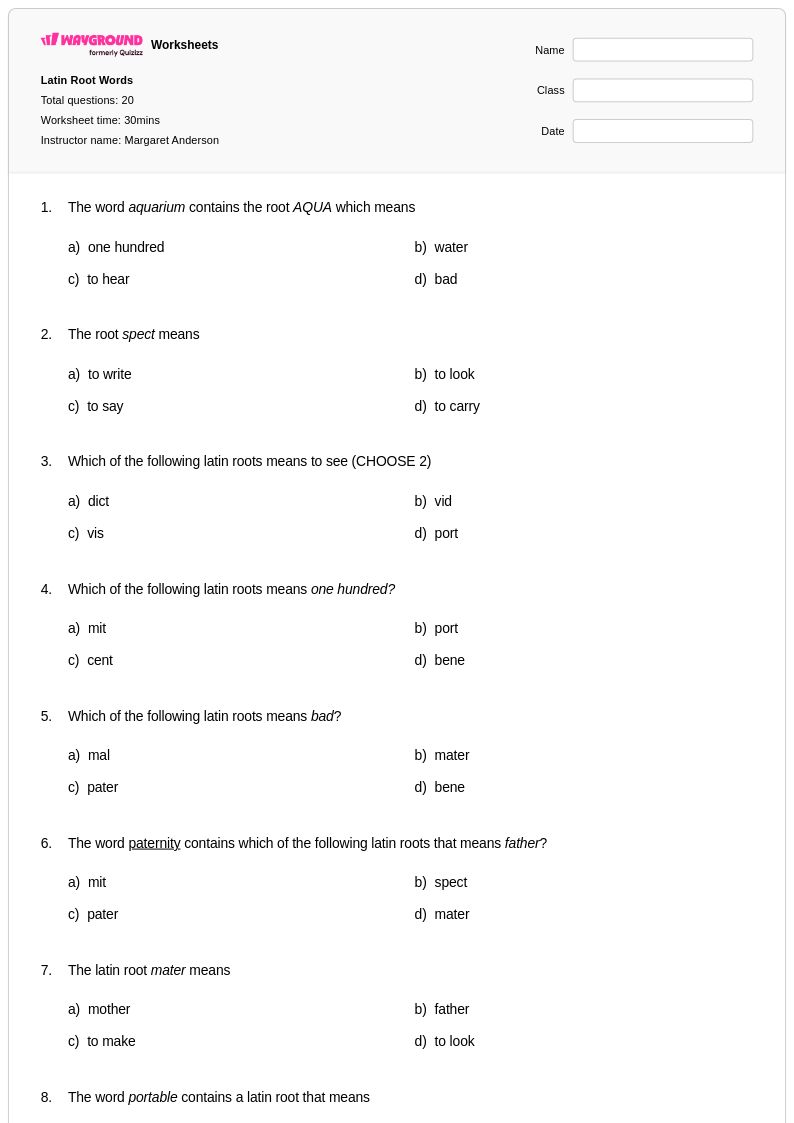
Root words form the foundation of vocabulary development for Class 7 students, serving as the building blocks that unlock meaning across thousands of English words. Wayground's comprehensive collection of root word worksheets provides seventh-grade learners with systematic practice in identifying, analyzing, and applying common Latin and Greek roots such as "spec" (to see), "port" (to carry), and "struct" (to build). These carefully designed printables strengthen students' ability to decode unfamiliar vocabulary by recognizing familiar word parts, while answer keys enable independent learning and immediate feedback. The free practice problems guide students through progressive exercises that move from basic root identification to complex word analysis, helping them develop the etymological awareness essential for advanced reading comprehension and academic success.
Wayground's extensive library, featuring millions of teacher-created resources, empowers educators to find precisely the right root word materials for their Class 7 classrooms through intuitive search and filtering tools. Teachers can access standards-aligned worksheets that support differentiated instruction, allowing them to customize content for students at varying skill levels while maintaining focus on essential vocabulary-building concepts. The platform's flexible format options, including downloadable pdf versions and interactive digital activities, accommodate diverse teaching preferences and learning environments. These robust resources streamline lesson planning by providing ready-to-use materials for skill practice, targeted remediation for struggling learners, and enrichment opportunities for advanced students, ensuring that all seventh graders can master the critical root word knowledge that accelerates their vocabulary growth and reading proficiency.
FAQs
How do I teach root words to students?
Start by introducing a small set of high-frequency Latin and Greek roots — such as 'rupt', 'port', 'bio', and 'graph' — and anchor each one to a familiar word students already know. From there, guide students to generate new words using those roots by adding prefixes and suffixes, which builds the habit of morphological reasoning. Teaching roots in word families rather than in isolation helps students internalize patterns they can apply when decoding unfamiliar vocabulary across subjects.
What exercises help students practice root words?
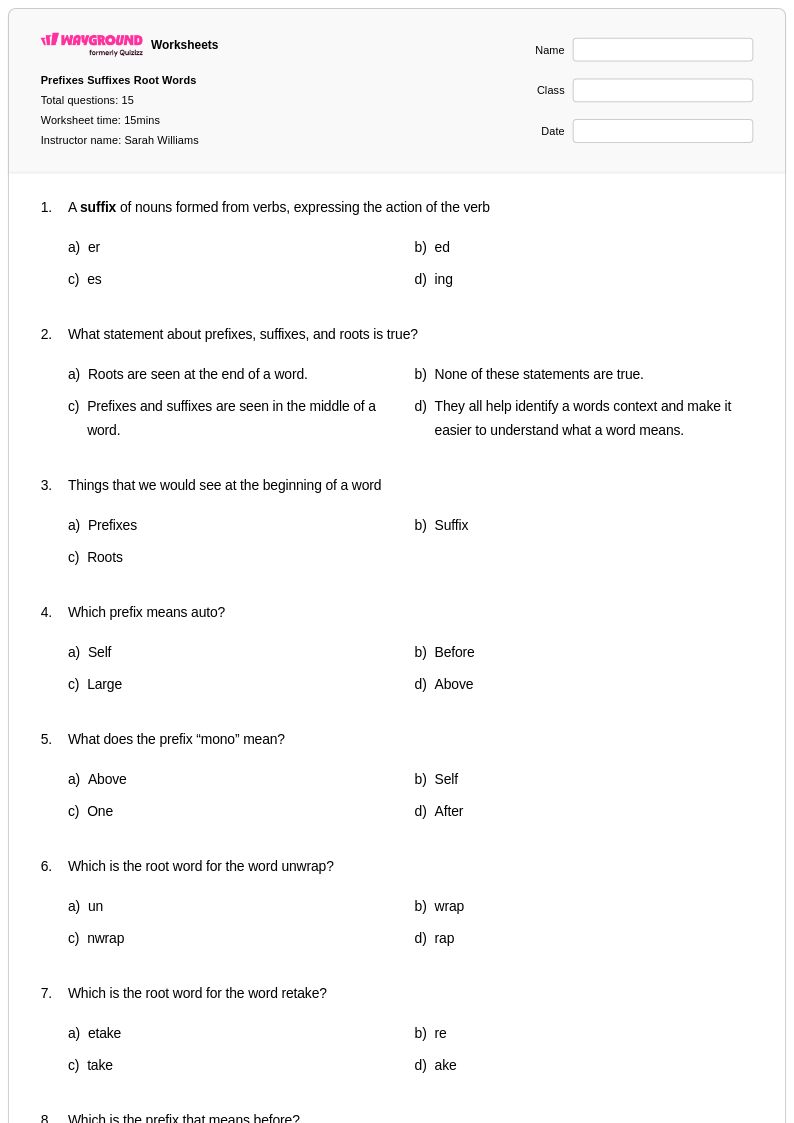
Effective root word practice involves exercises where students isolate the root within a complex word, match roots to their meanings, and apply that knowledge to infer the definitions of unfamiliar terms. Activities that ask students to separate roots from affixes — then reconstruct meaning piece by piece — reinforce analytical decoding skills. Worksheets that present root words in the context of real sentences or content-area vocabulary are especially effective because they connect the skill to authentic reading demands.
What mistakes do students commonly make when identifying root words?
A common error is confusing letter patterns with true roots — for example, treating the 'bio' in 'biography' as a root while misidentifying it in 'biome', where it carries a different etymological origin. Students also frequently strip too much from a word, removing meaningful suffixes along with the root rather than isolating the base correctly. Another persistent misconception is assuming all words follow predictable Latin or Greek patterns, which can lead to overapplication of root-meaning rules in cases where English has absorbed words from other language families.
How can I use root words worksheets to differentiate instruction?
Root words worksheets can be tiered so that struggling learners work with a limited set of common roots in simple, single-affix words, while on-level students analyze multi-affix words, and advanced students apply roots to infer meanings in content-area or academic vocabulary. On Wayground, teachers can assign digital versions of these worksheets with accommodations such as read aloud, reduced answer choices, and extended time configured individually per student — so each learner receives appropriately scaffolded practice without any disruption to the rest of the class.
How do I use Wayground's root words worksheets in my classroom?
Wayground's root words worksheets are available as free printable PDFs for traditional classroom use and in digital formats for technology-integrated environments, giving teachers flexibility in how they deploy them. Teachers can print and distribute them as independent practice, assign the digital version as homework, or host the content as an interactive quiz directly on Wayground. The included answer keys make it straightforward to check student work or enable self-assessment, reducing prep time without sacrificing instructional quality.
Why is teaching root words important for vocabulary development?
Research in vocabulary instruction consistently shows that students who understand morphological roots can decode and infer the meanings of significantly more words than those who rely on memorization alone. Because a relatively small set of Latin and Greek roots underlies thousands of English words — particularly in academic and scientific contexts — root word knowledge acts as a multiplier for vocabulary growth. This is especially valuable in content-area reading, where unfamiliar technical terms often share roots students have already encountered.