Free Printable Run on Sentences Worksheets for Class 6
Enhance Class 6 students' writing skills with Wayground's free run-on sentences worksheets featuring printable PDFs, practice problems, and answer keys to master proper sentence structure.
Explore printable Run on Sentences worksheets for Class 6
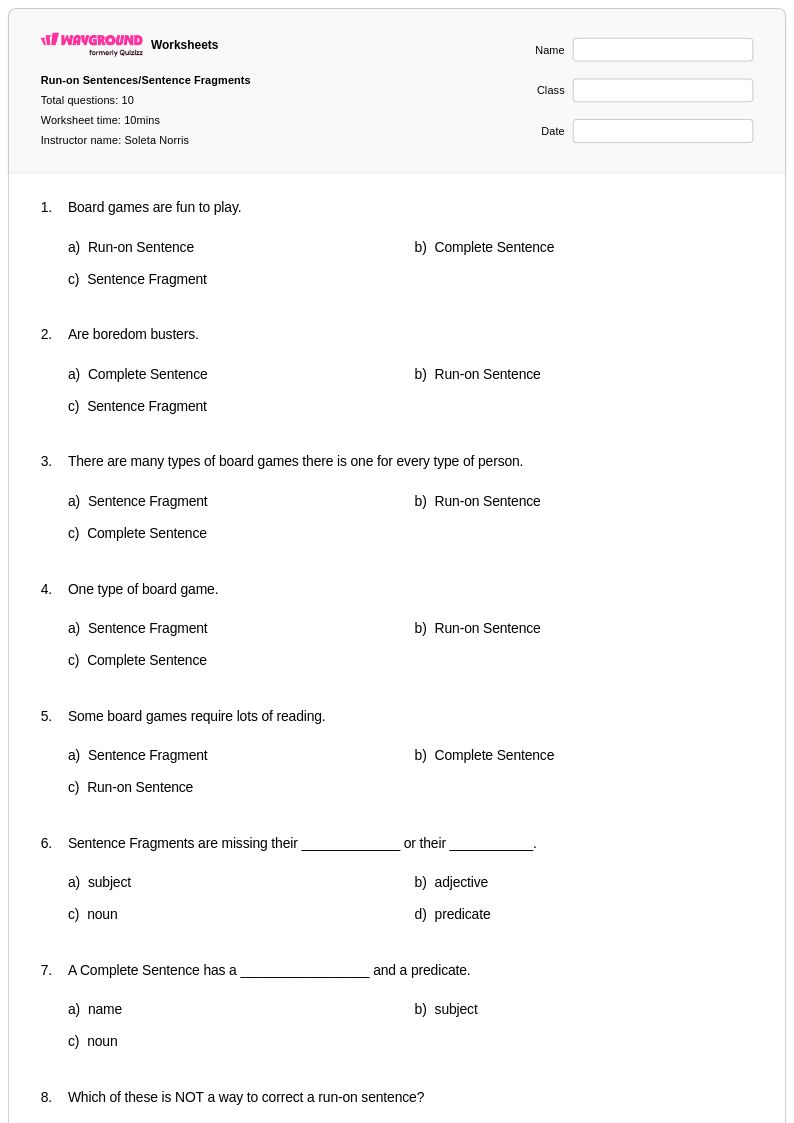
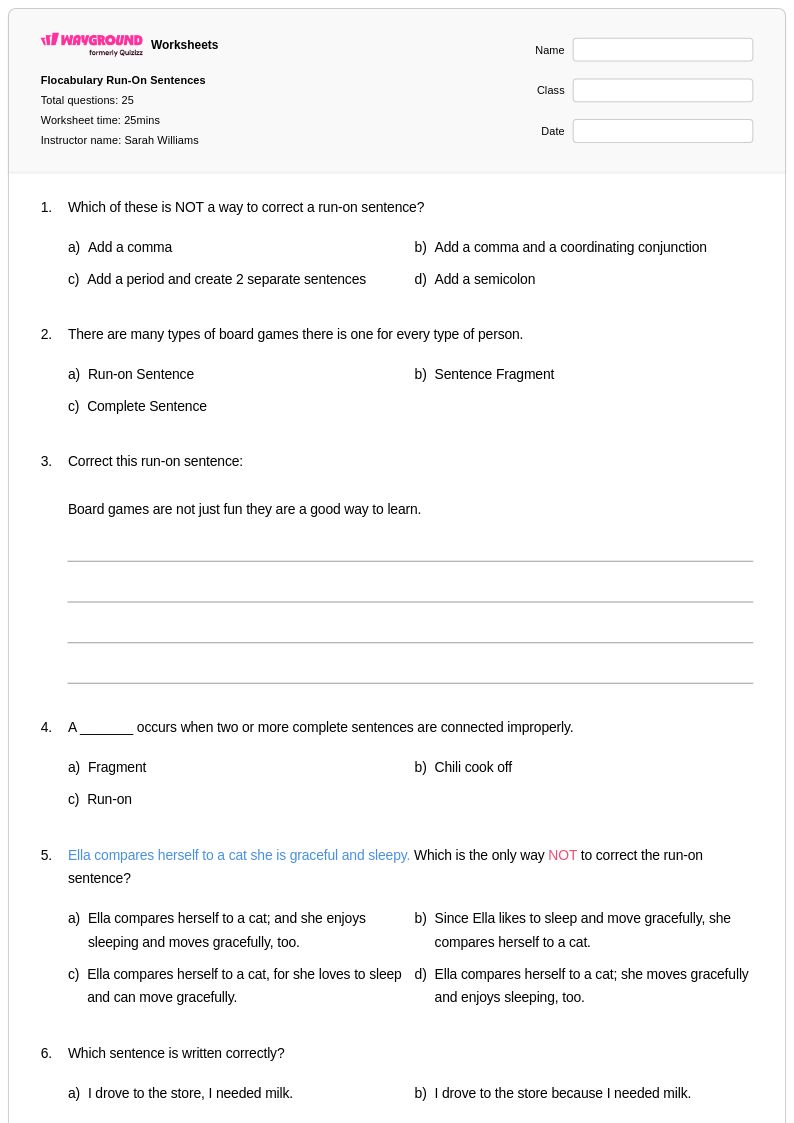
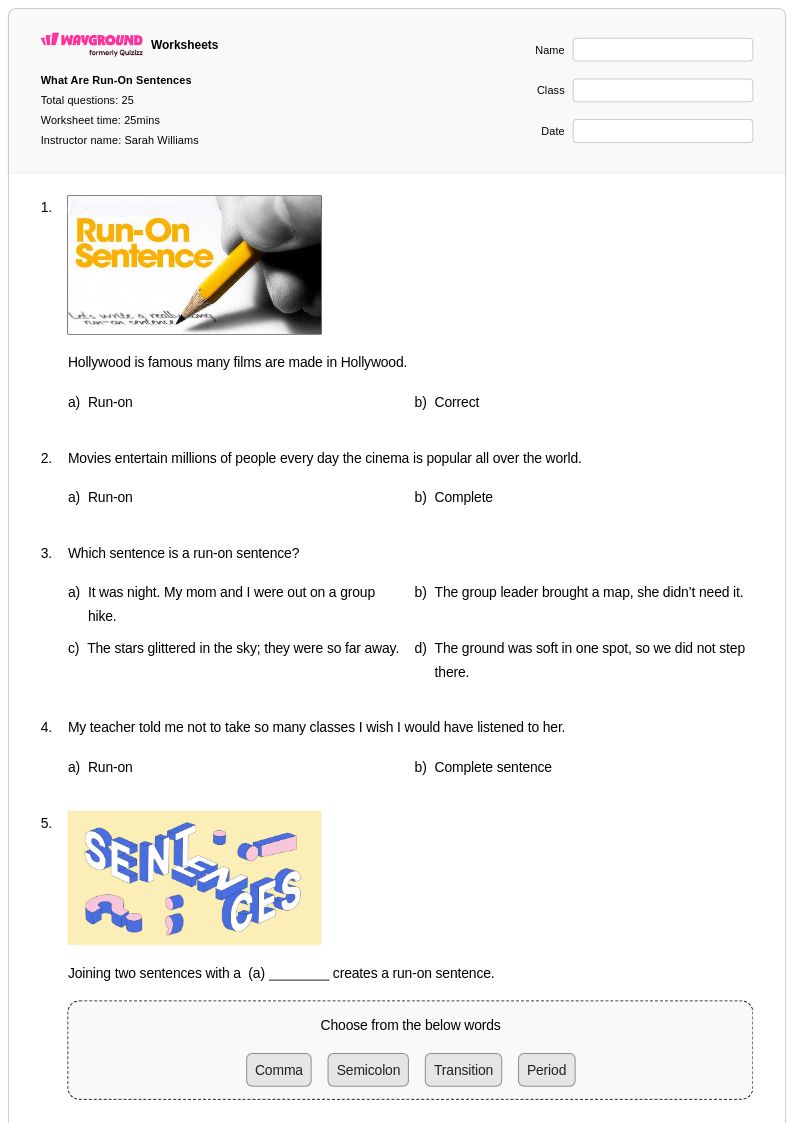
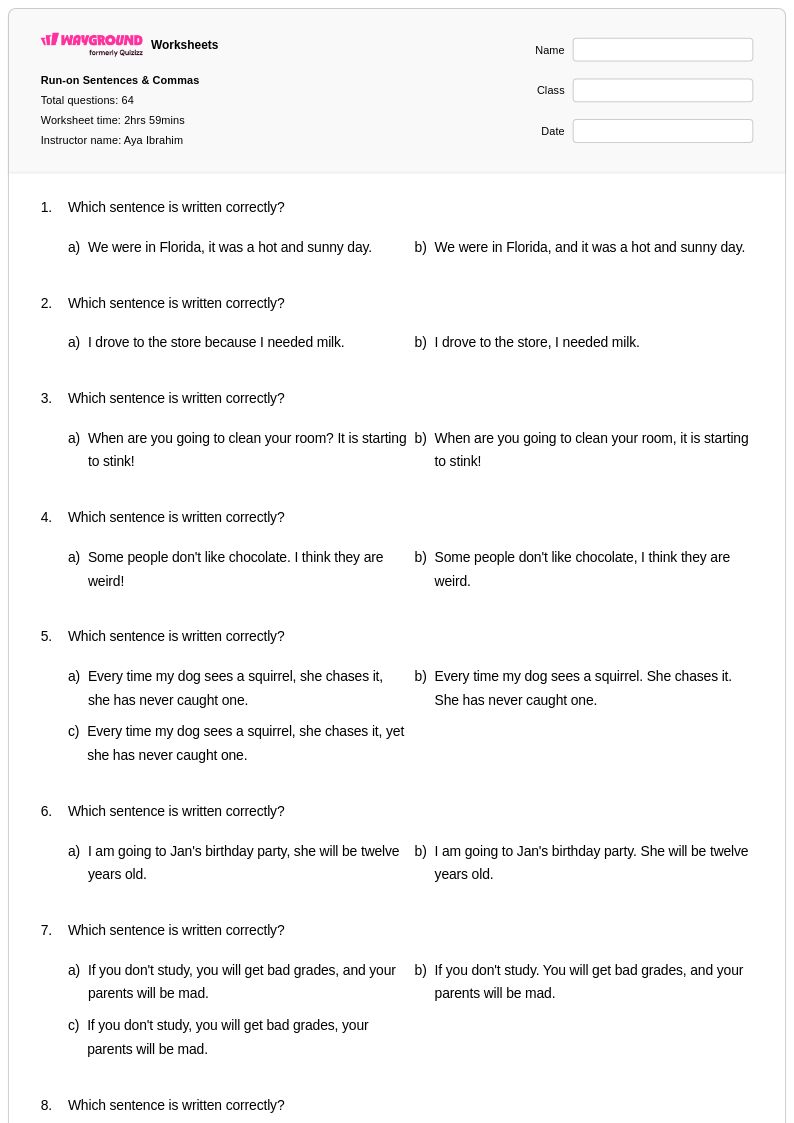
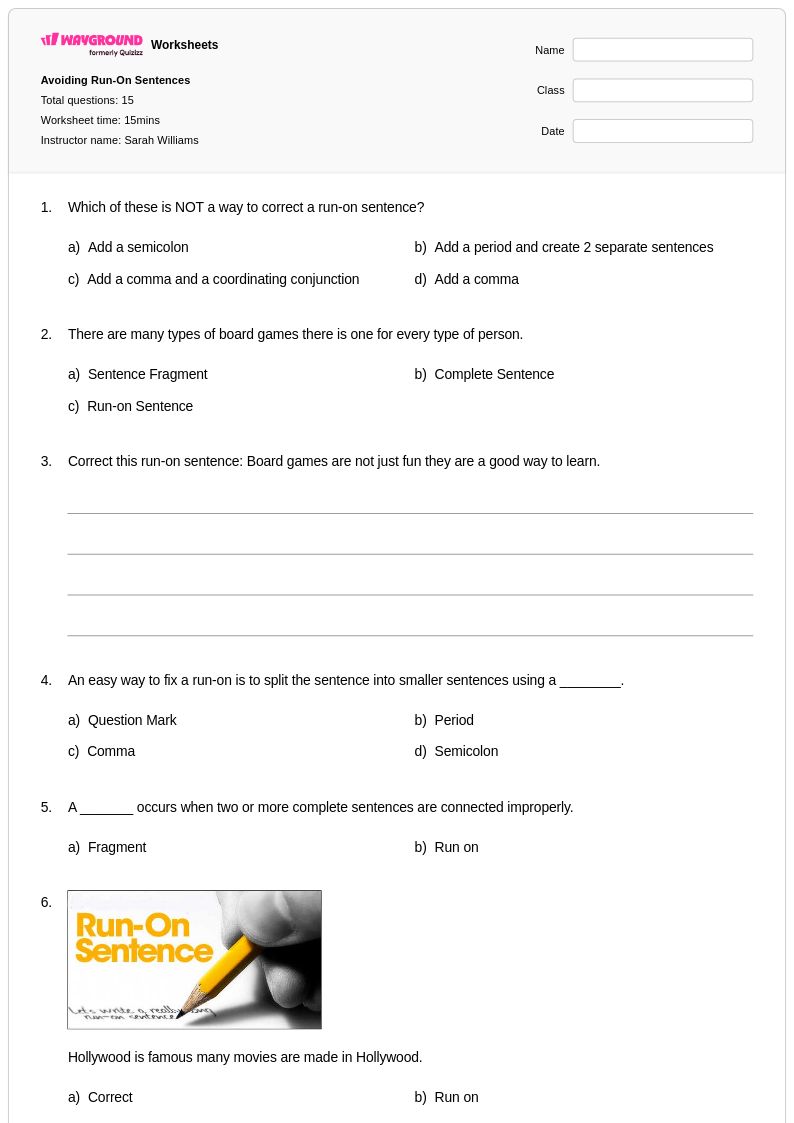
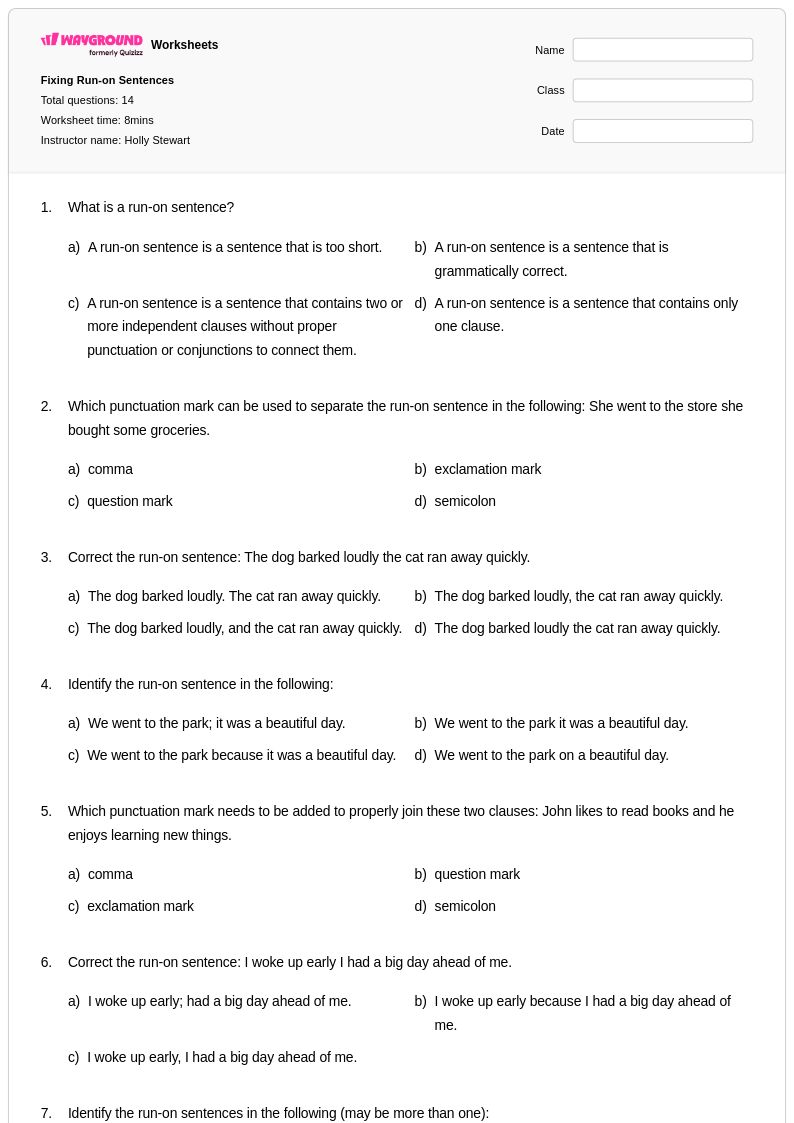
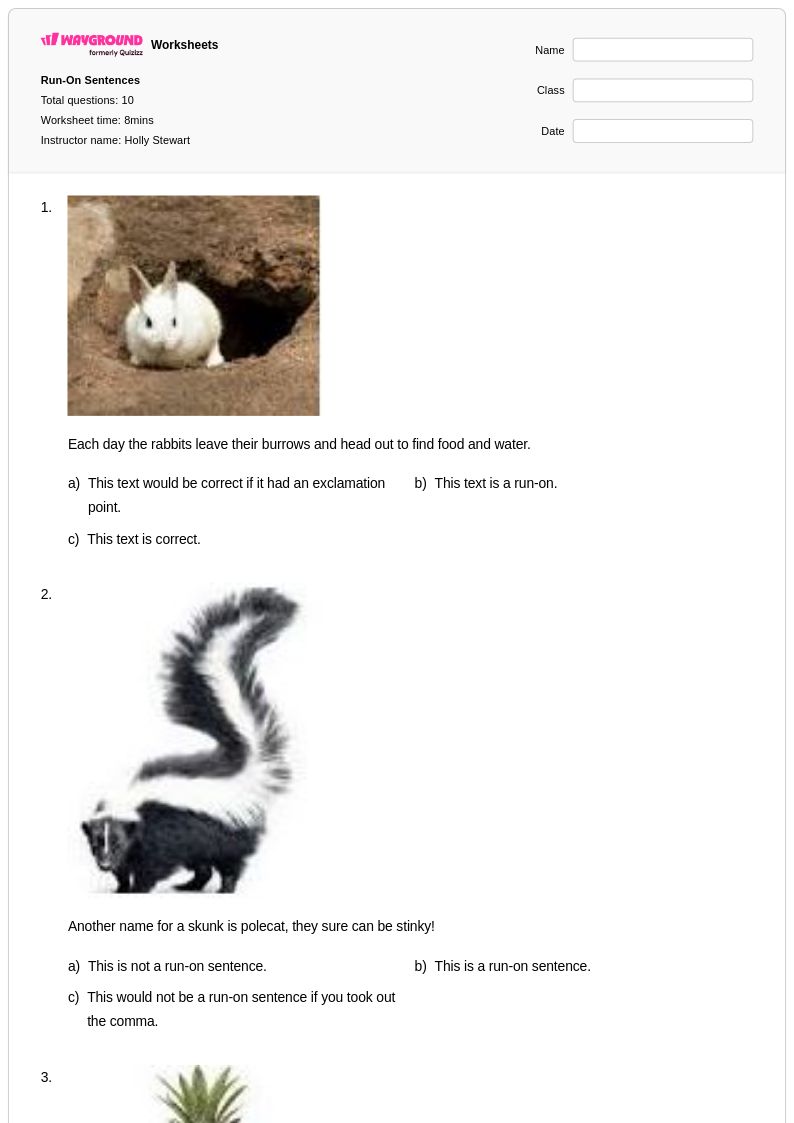
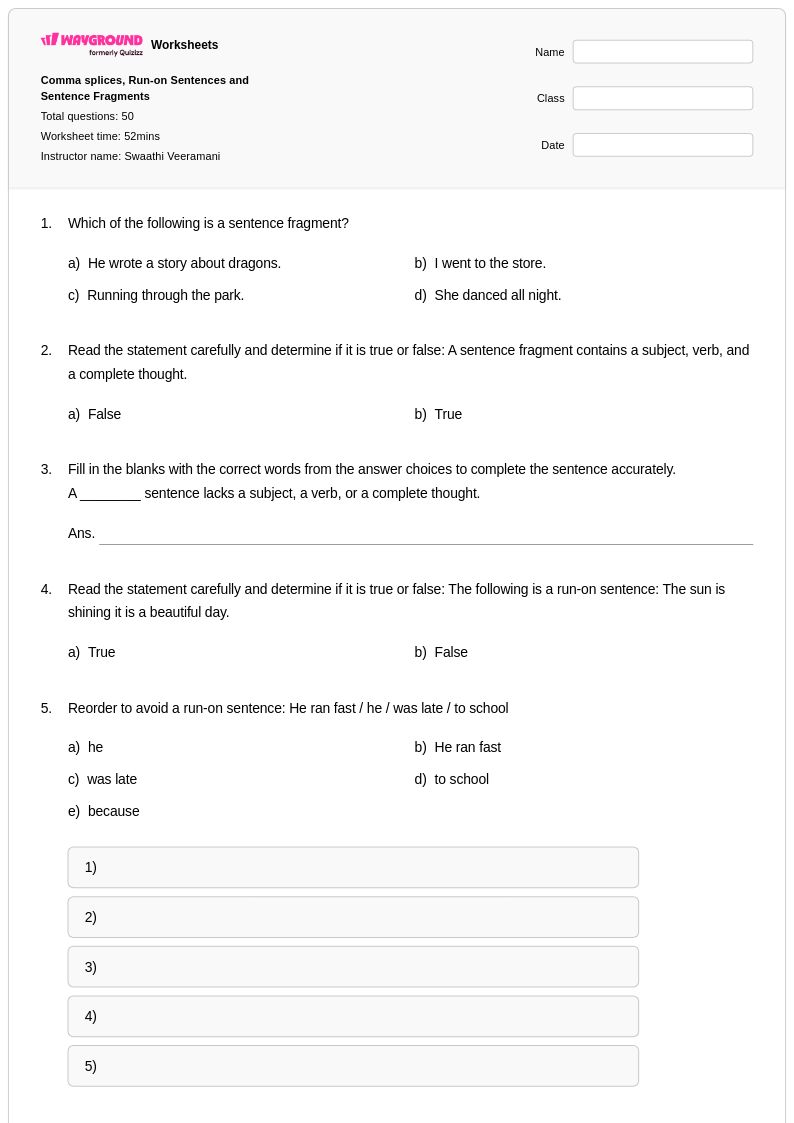
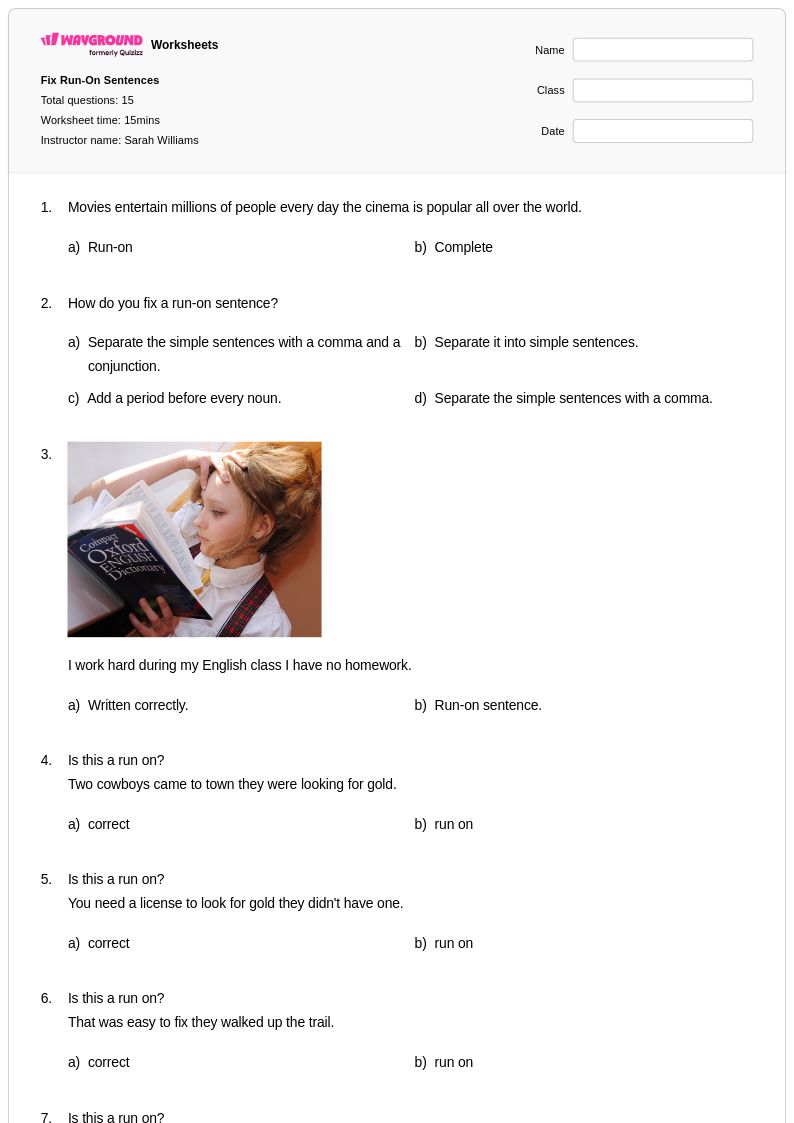
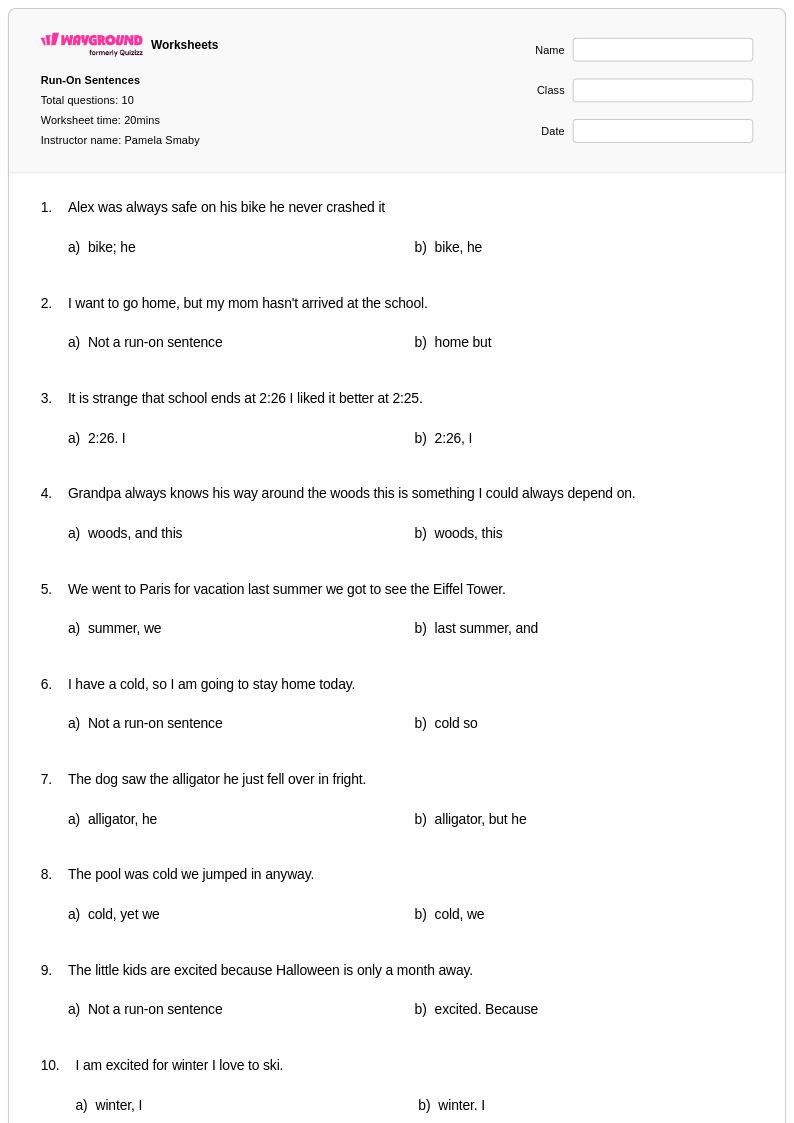
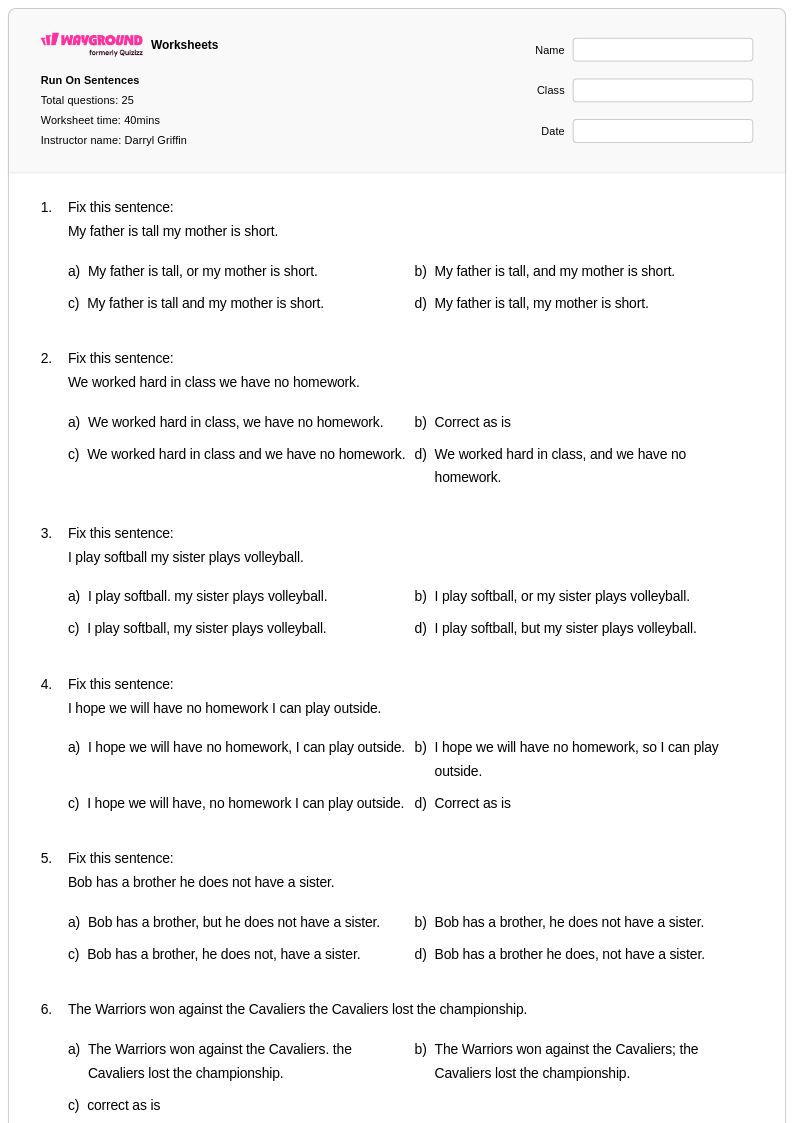
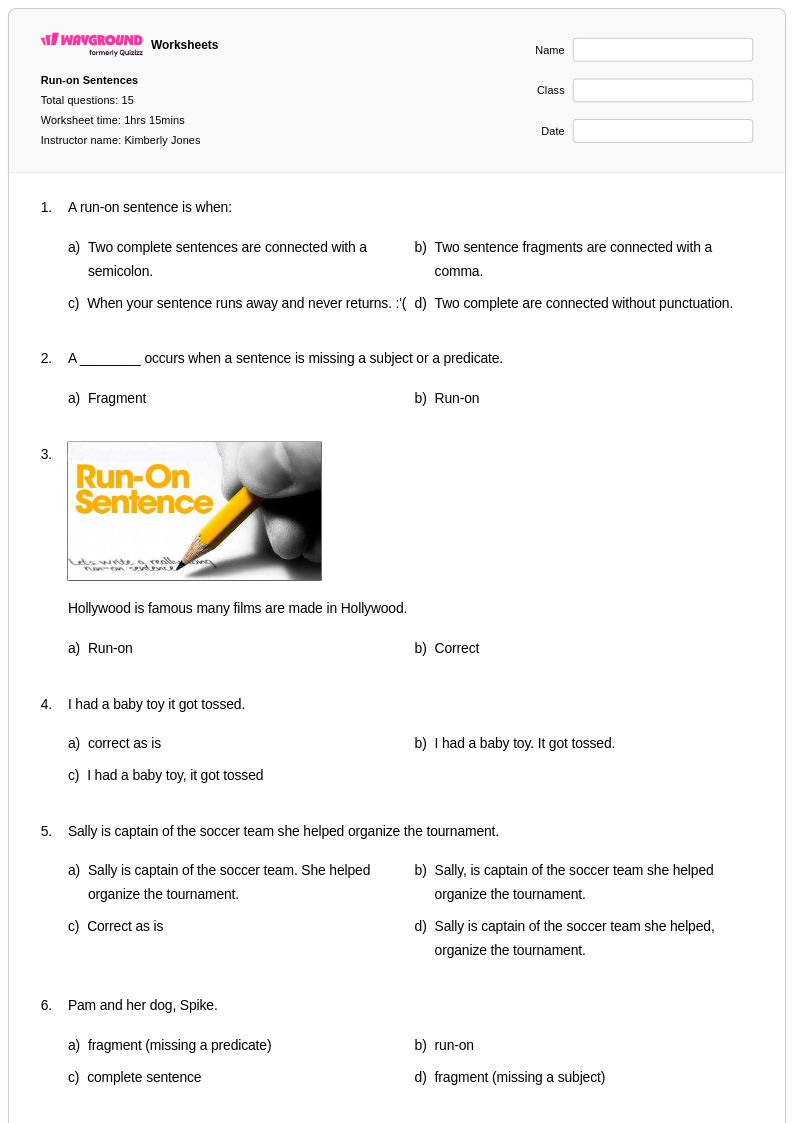
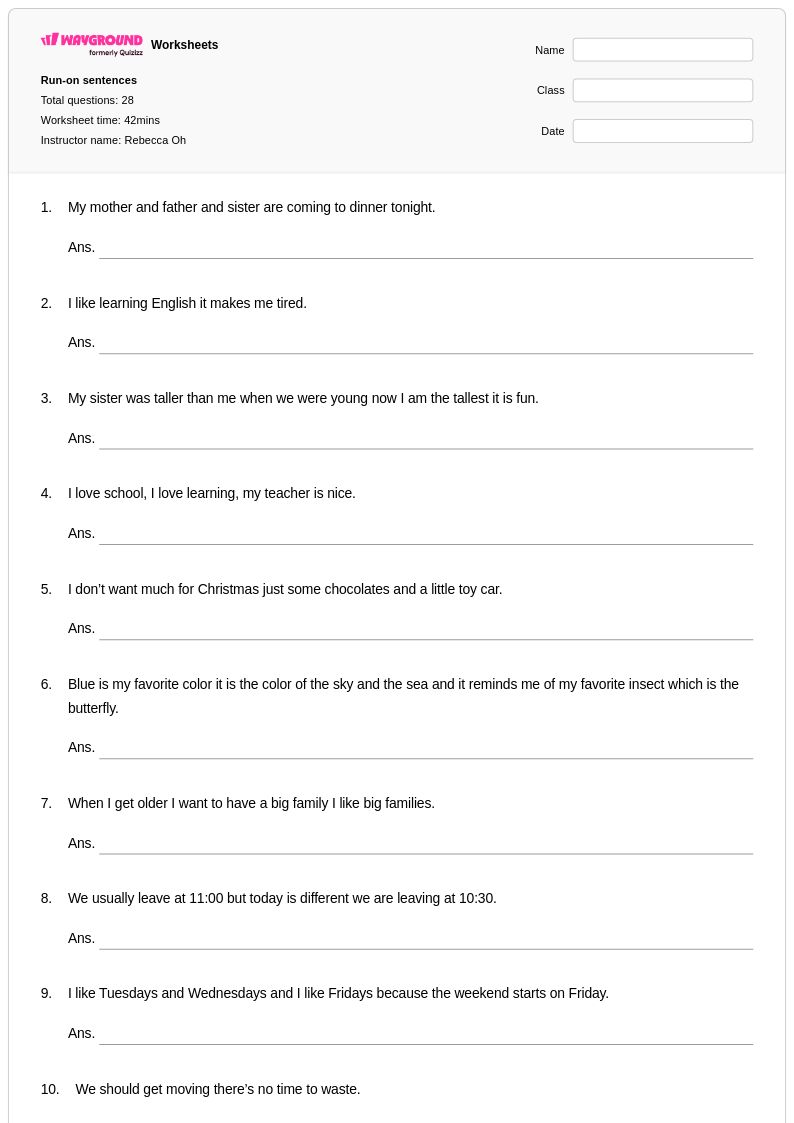
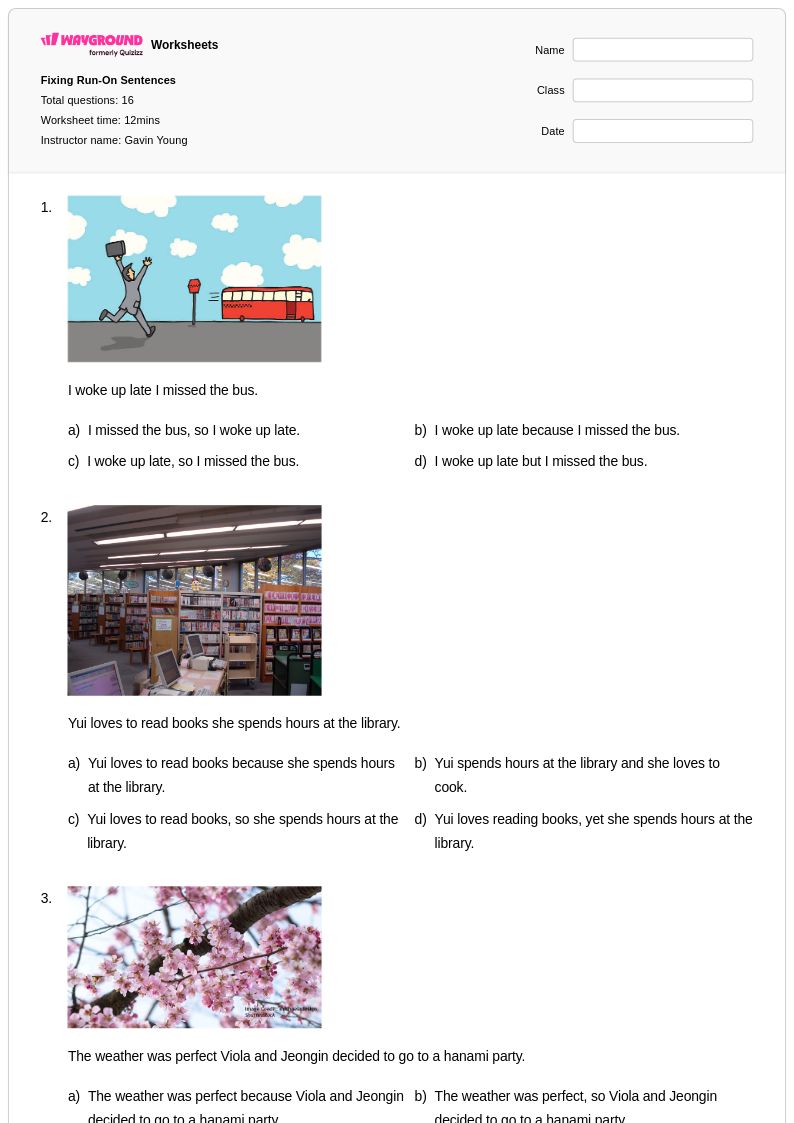
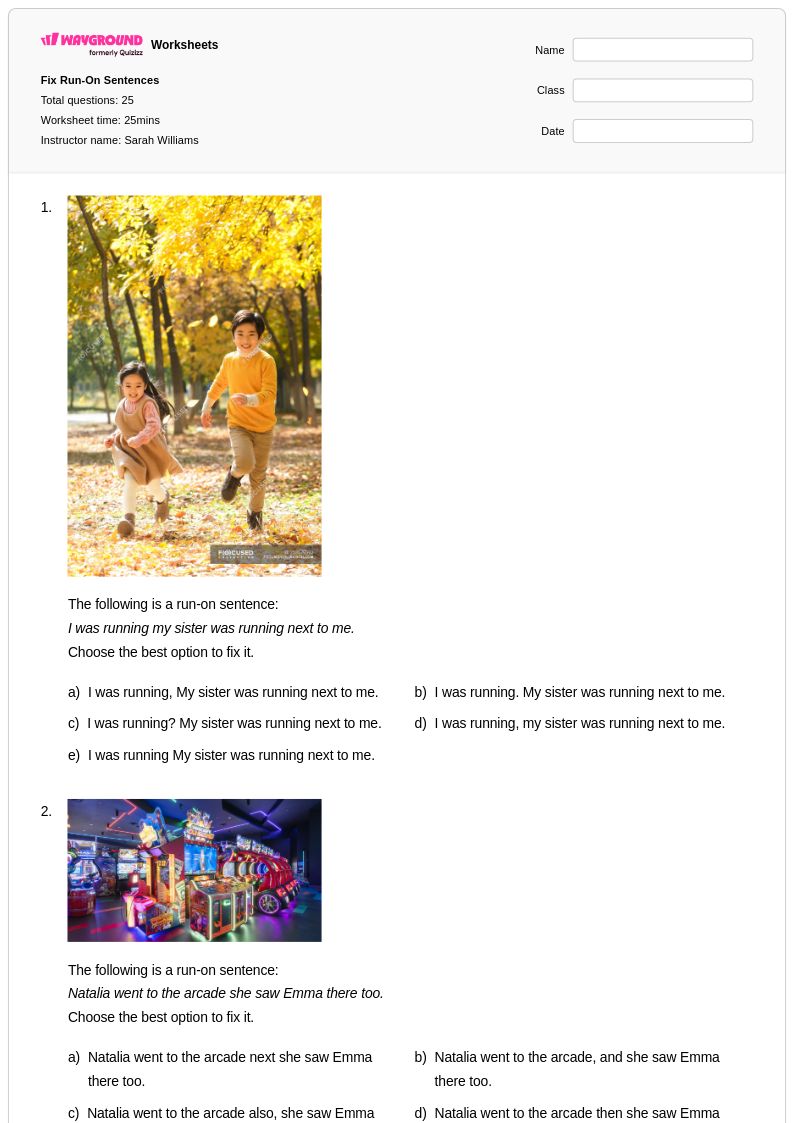
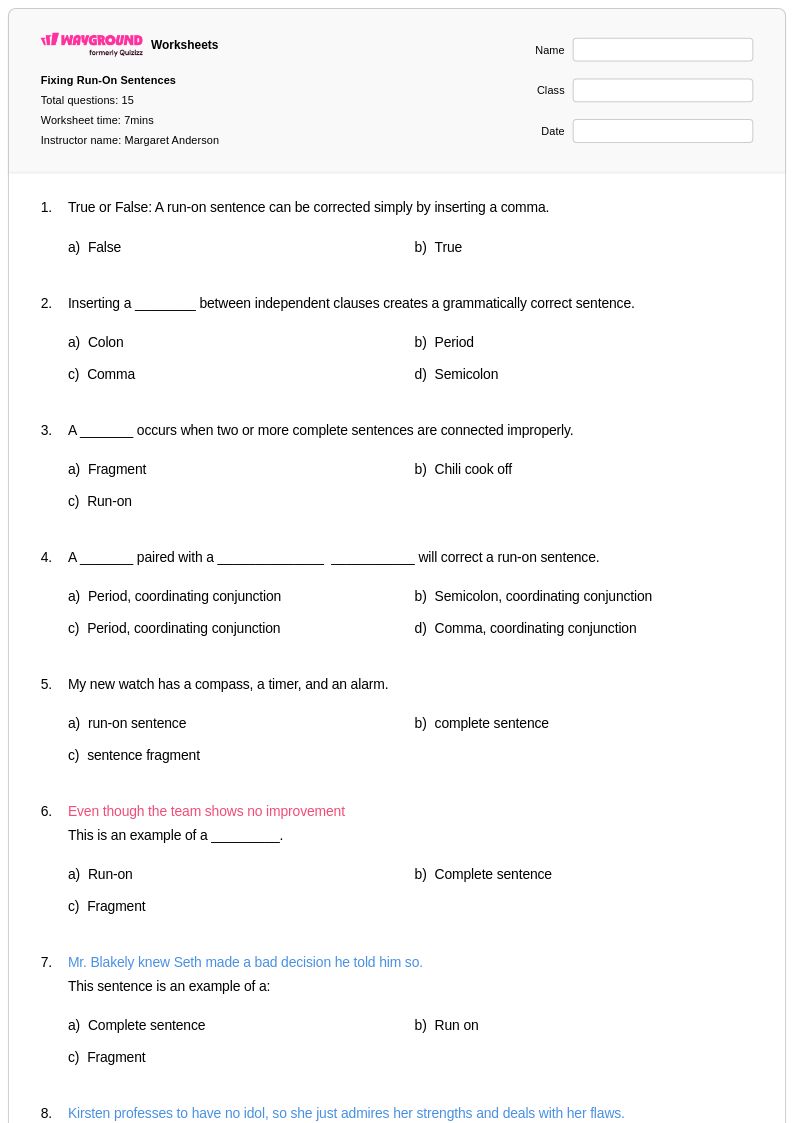
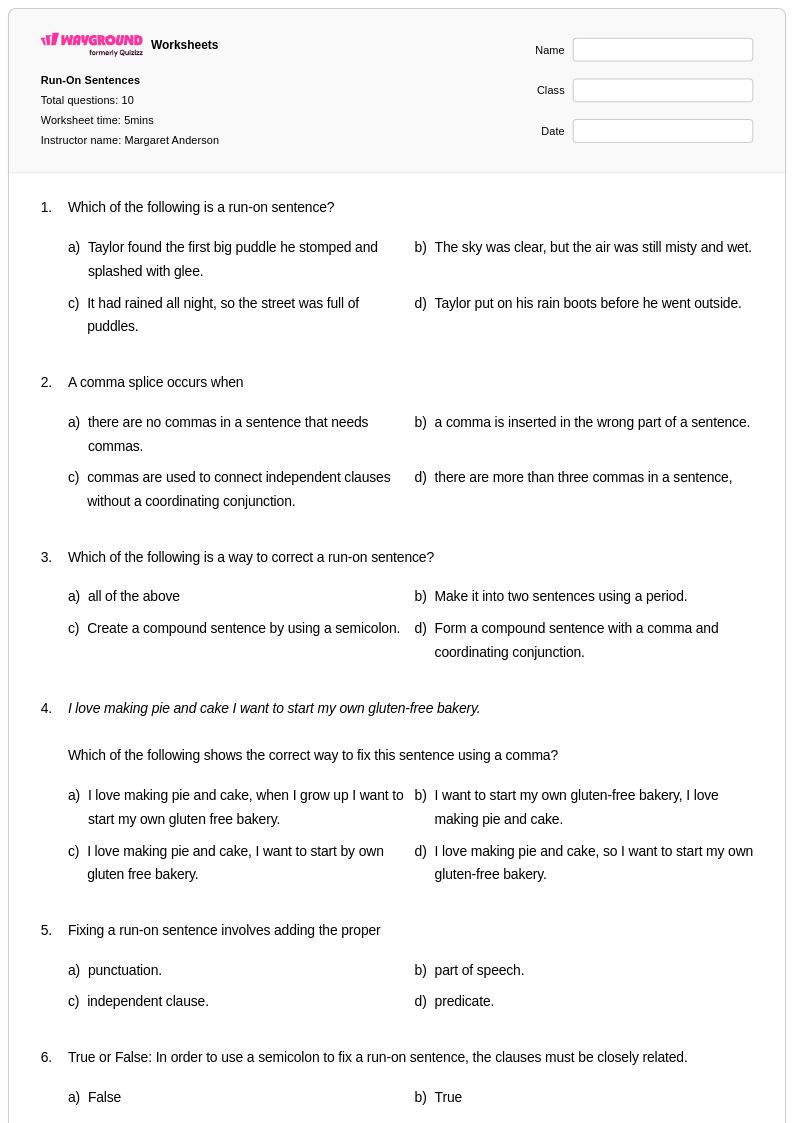
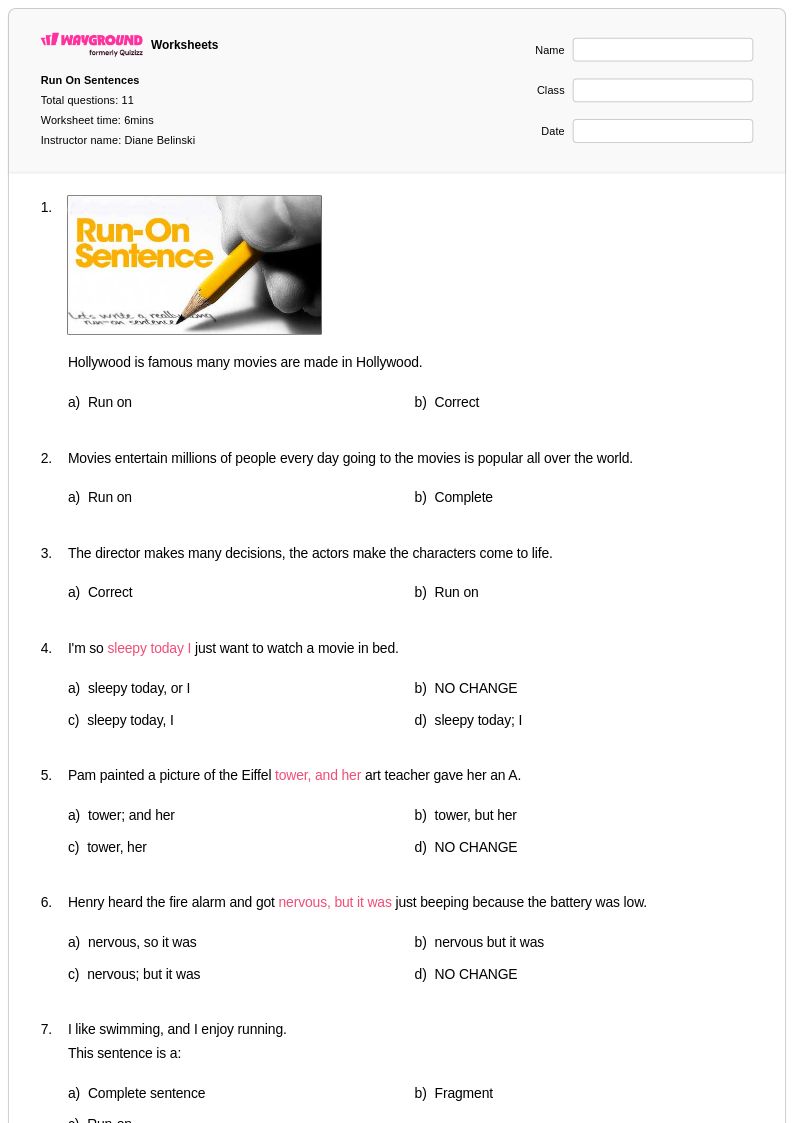
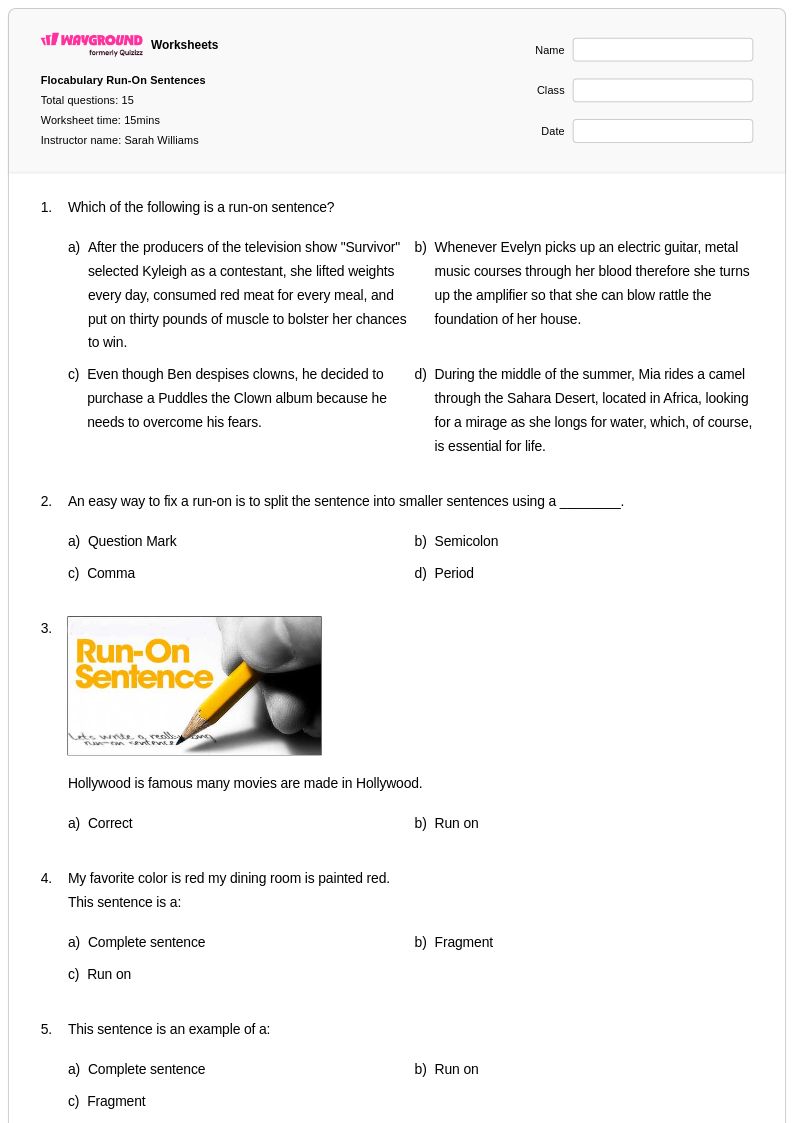
Run-on sentences present a significant challenge for Class 6 students as they develop more sophisticated writing skills and learn to express complex ideas clearly. Wayground's comprehensive collection of run-on sentence worksheets provides targeted practice to help students identify, understand, and correct these common grammatical errors. These educational resources strengthen essential writing fundamentals by teaching students to recognize when sentences contain multiple independent clauses that need proper punctuation or separation. Each worksheet includes detailed practice problems that guide students through the process of breaking down lengthy, confusing sentences into clear, properly structured statements. The materials come complete with answer keys to support independent learning and self-assessment, and are available as free printable pdf resources that teachers can easily distribute for classroom instruction or homework assignments.
Wayground's extensive library contains millions of teacher-created resources specifically designed to address run-on sentence instruction for Class 6 students, offering educators unparalleled flexibility in planning effective grammar lessons. The platform's advanced search and filtering capabilities allow teachers to quickly locate worksheets that align with specific curriculum standards and match their students' individual learning needs. These differentiation tools enable instructors to customize practice materials for remediation support, regular skill reinforcement, or enrichment activities for advanced learners. Teachers can access these resources in both printable and digital formats, including downloadable pdf files that maintain consistent formatting across different devices and printing systems. This comprehensive approach to run-on sentence instruction helps educators create targeted learning experiences that build students' confidence in sentence construction while developing the critical thinking skills necessary for clear, effective written communication.
FAQs
How do I teach students to identify and fix run-on sentences?
Start by helping students understand what an independent clause is and how two independent clauses must be properly joined using a period, semicolon, coordinating conjunction, or subordinating conjunction. A common classroom strategy is to have students read sentences aloud — run-ons often reveal themselves when a sentence feels breathless or overly long. From there, practice should focus on recognizing the error pattern first, then applying the appropriate correction method, since students who can only fix run-ons with periods often struggle when a conjunction would be more stylistically appropriate.
What exercises help students practice correcting run-on sentences?
Effective practice exercises include identifying whether a given sentence is correct or a run-on, rewriting run-ons using multiple correction strategies, and combining short choppy sentences into properly punctuated compound or complex sentences. Exercises that present the same run-on error and ask students to fix it three different ways are especially valuable because they reinforce that there is no single correct fix — only grammatically valid options. Worksheets with targeted practice problems and answer keys allow students to self-check and build independence.
What mistakes do students commonly make when correcting run-on sentences?
The most frequent error is the comma splice — students insert a comma between two independent clauses thinking it resolves the run-on, but a comma alone is not sufficient without a coordinating conjunction. Students also tend to default to adding a period as the only correction strategy, missing opportunities to use semicolons or subordinating conjunctions that would better show the relationship between ideas. Another common misconception is confusing long sentences with run-on sentences — length alone does not make a sentence a run-on; the issue is the absence of proper grammatical connection between independent clauses.
How can I differentiate run-on sentence practice for students at different skill levels?
For struggling students, begin with two-clause run-ons and limit correction choices to periods and coordinating conjunctions before introducing semicolons or subordination. More advanced students can work with multi-clause run-ons and practice selecting the correction method that best preserves the intended meaning of the original sentence. On Wayground, teachers can apply accommodations such as reduced answer choices or read-aloud support to individual students, which reduces cognitive load and makes differentiation manageable without creating entirely separate assignments.
How do I use Wayground's run-on sentences worksheets in my classroom?
Wayground's run-on sentences worksheets are available as printable PDFs for traditional classroom use and in digital formats for technology-integrated environments, making them flexible for in-class practice, homework, or sub plans. Teachers can also host the worksheets as a quiz directly on Wayground, which enables real-time monitoring of student responses. Each worksheet includes a complete answer key, so students can self-correct and teachers can use results to inform targeted reteaching.
How is a run-on sentence different from a comma splice?
A run-on sentence is a broad term for any sentence in which two or more independent clauses are joined without proper punctuation or conjunctions, while a comma splice is a specific type of run-on where only a comma — without a coordinating conjunction — is used to connect those clauses. Teaching this distinction matters because students who understand comma splices as a subcategory of run-ons are better equipped to self-edit their own writing. Both errors are addressed through the same set of correction strategies: adding a period, using a semicolon, or joining clauses with an appropriate conjunction.