Free Printable Russian Revolution Worksheets for Class 10
Explore Wayground's comprehensive Class 10 Russian Revolution worksheets featuring free printables and PDFs with answer keys to help students master key events, causes, and consequences of this pivotal World History period.
Explore printable Russian Revolution worksheets for Class 10
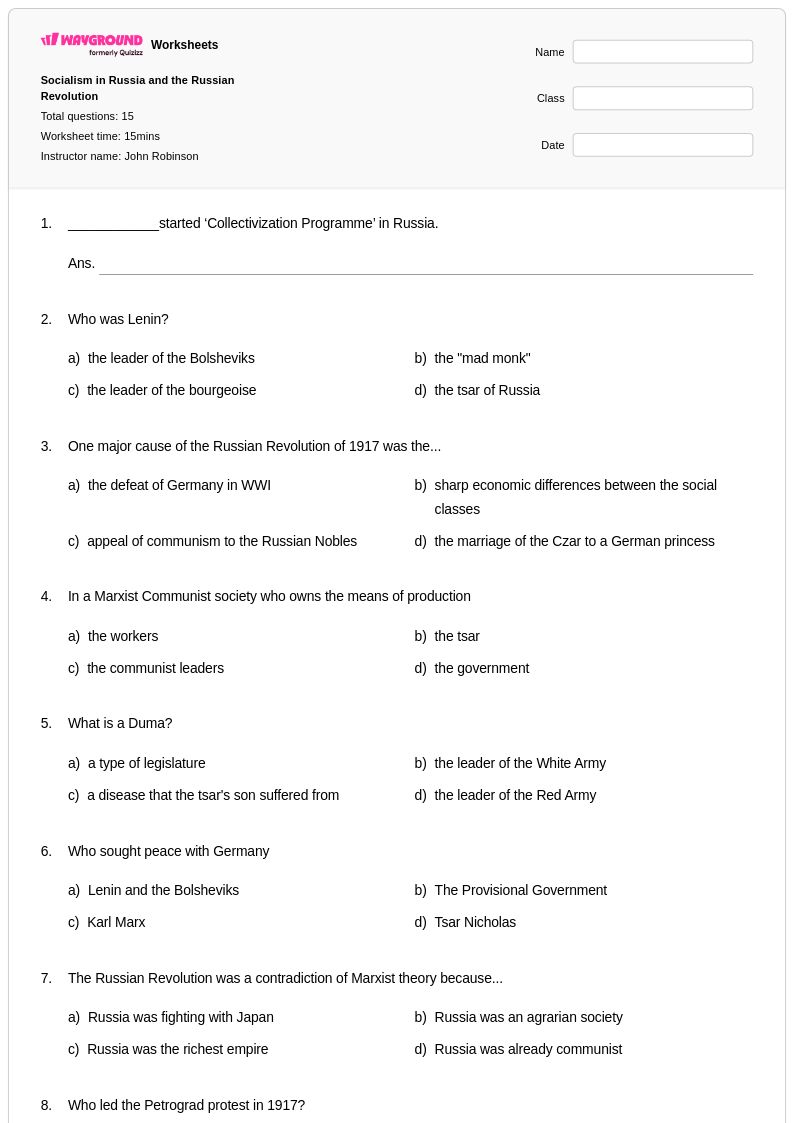
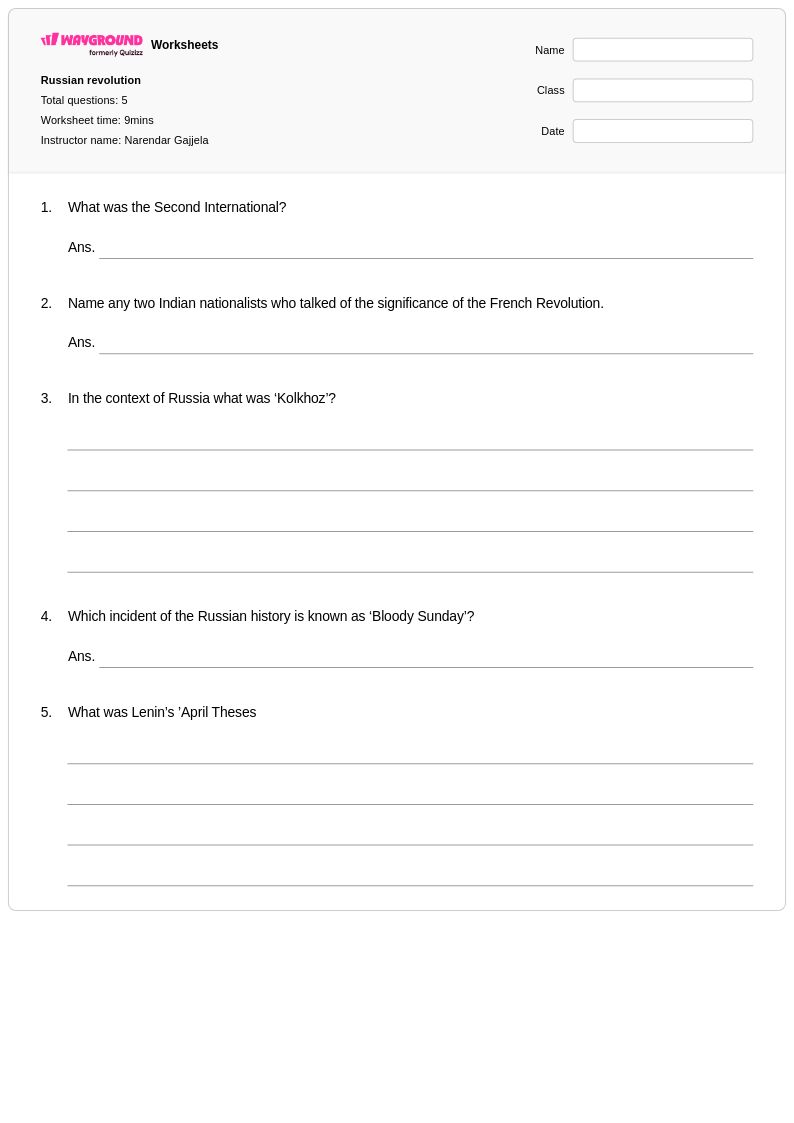
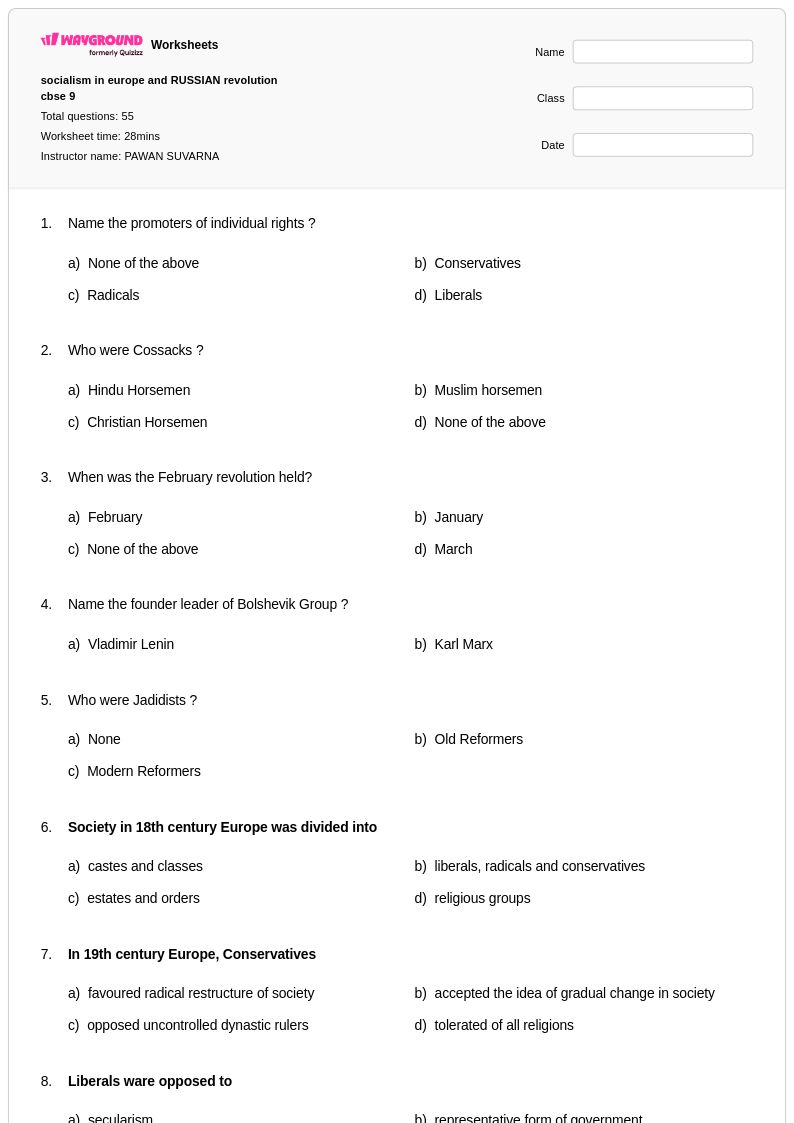
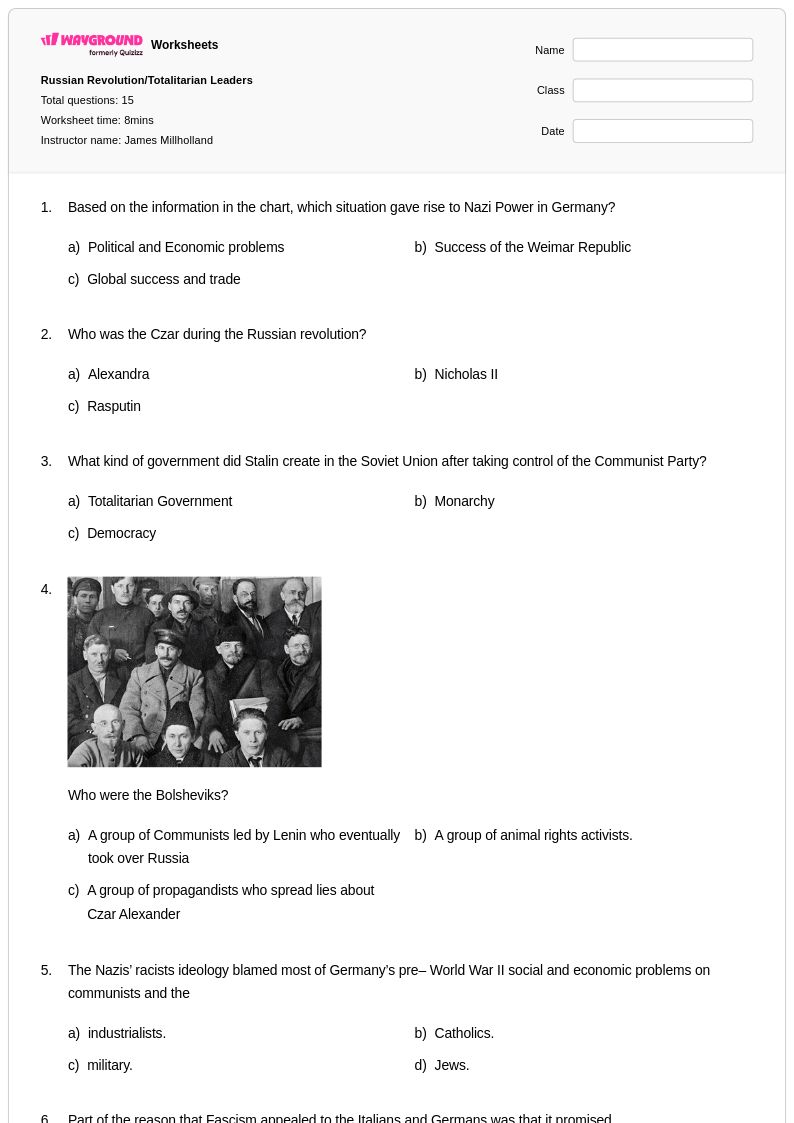
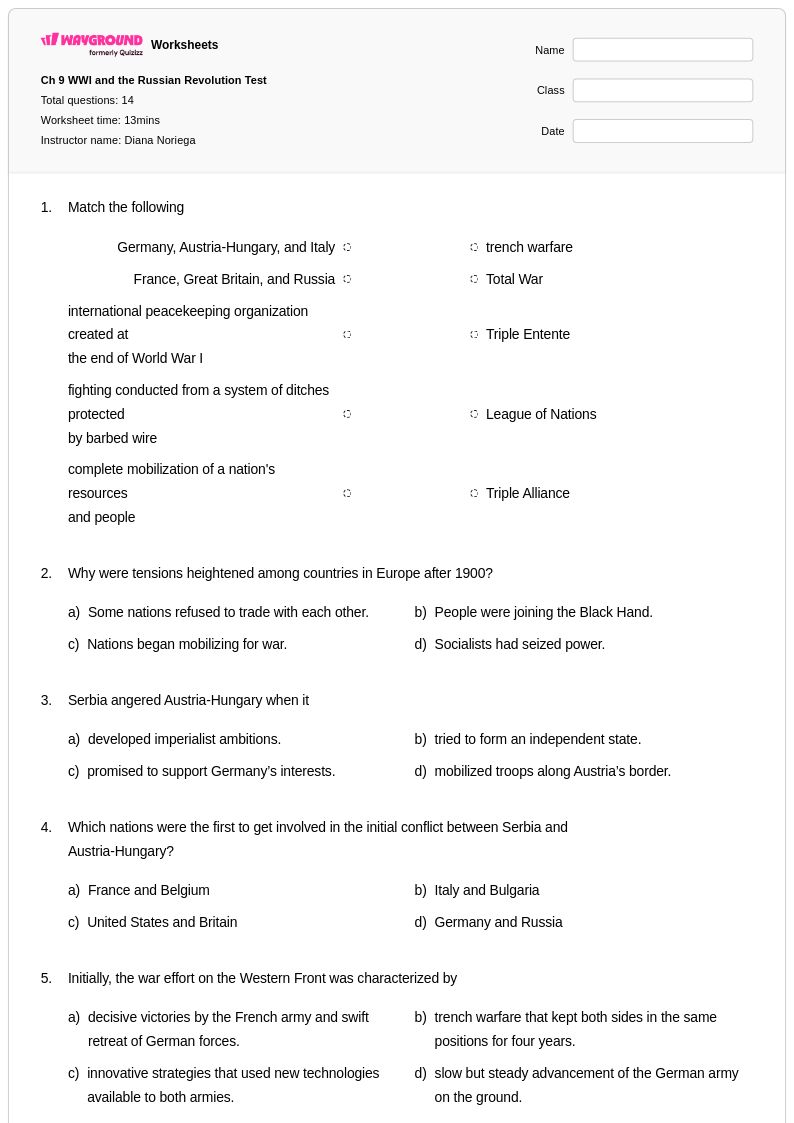
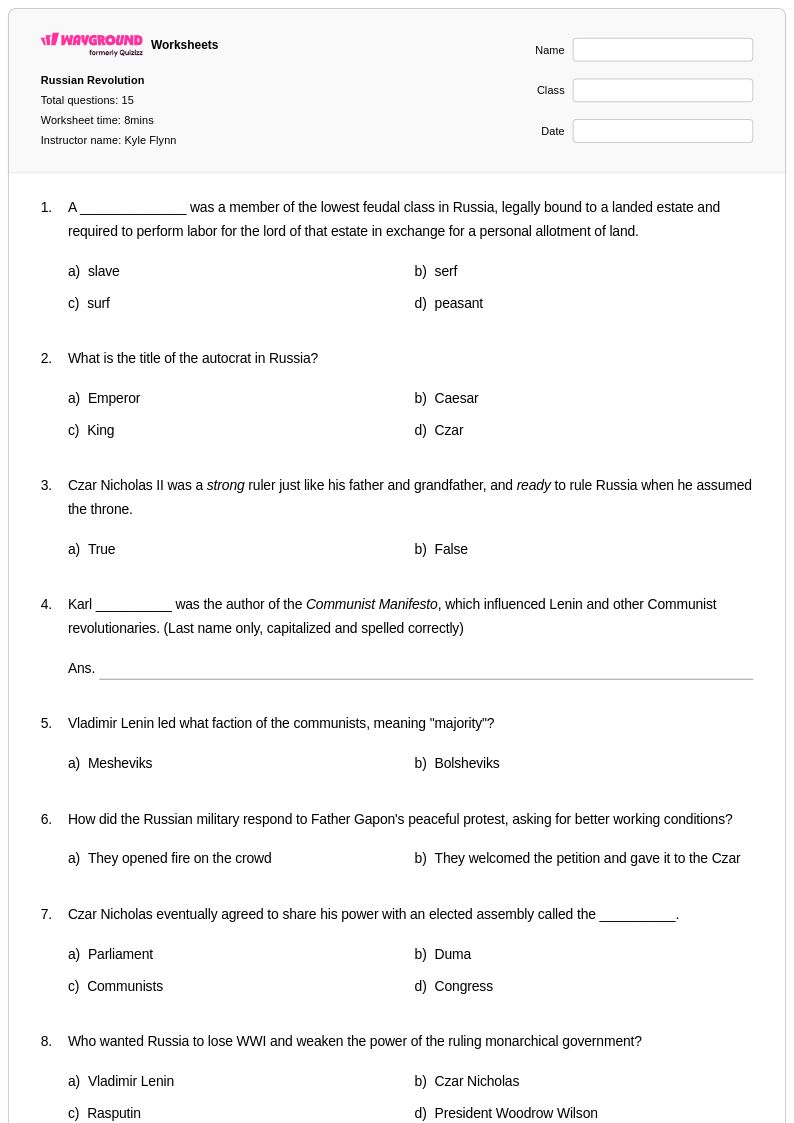
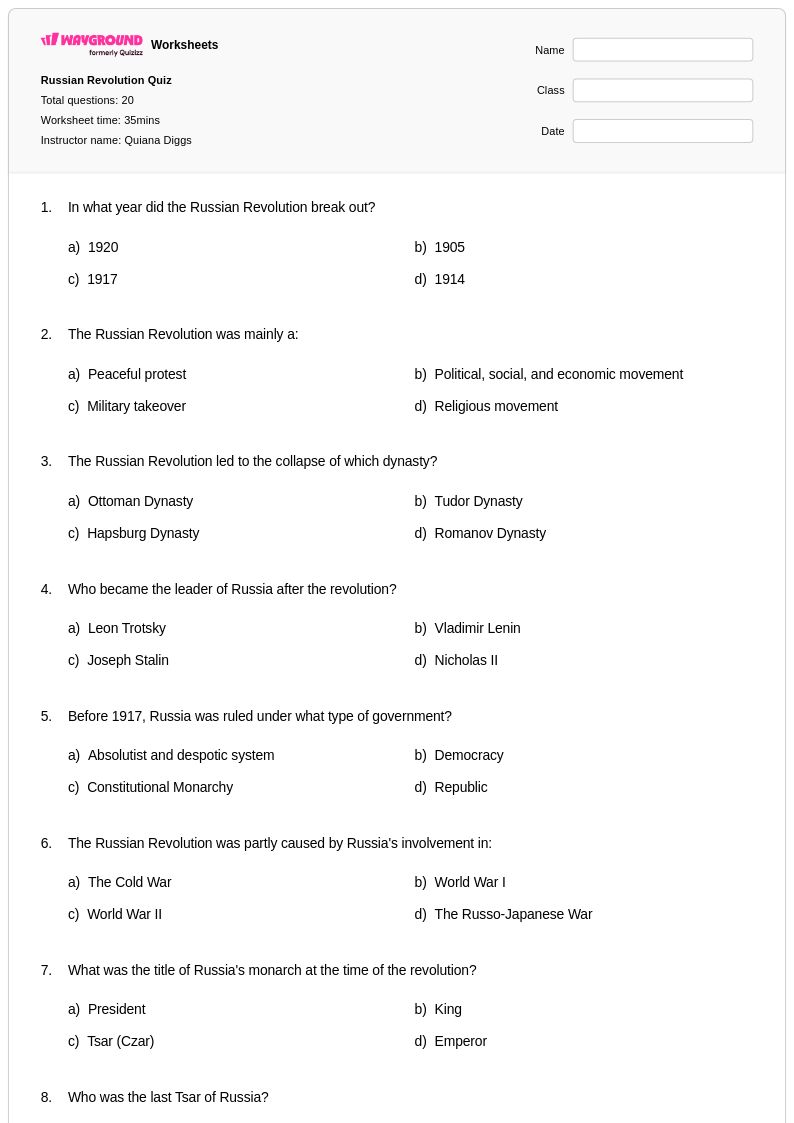
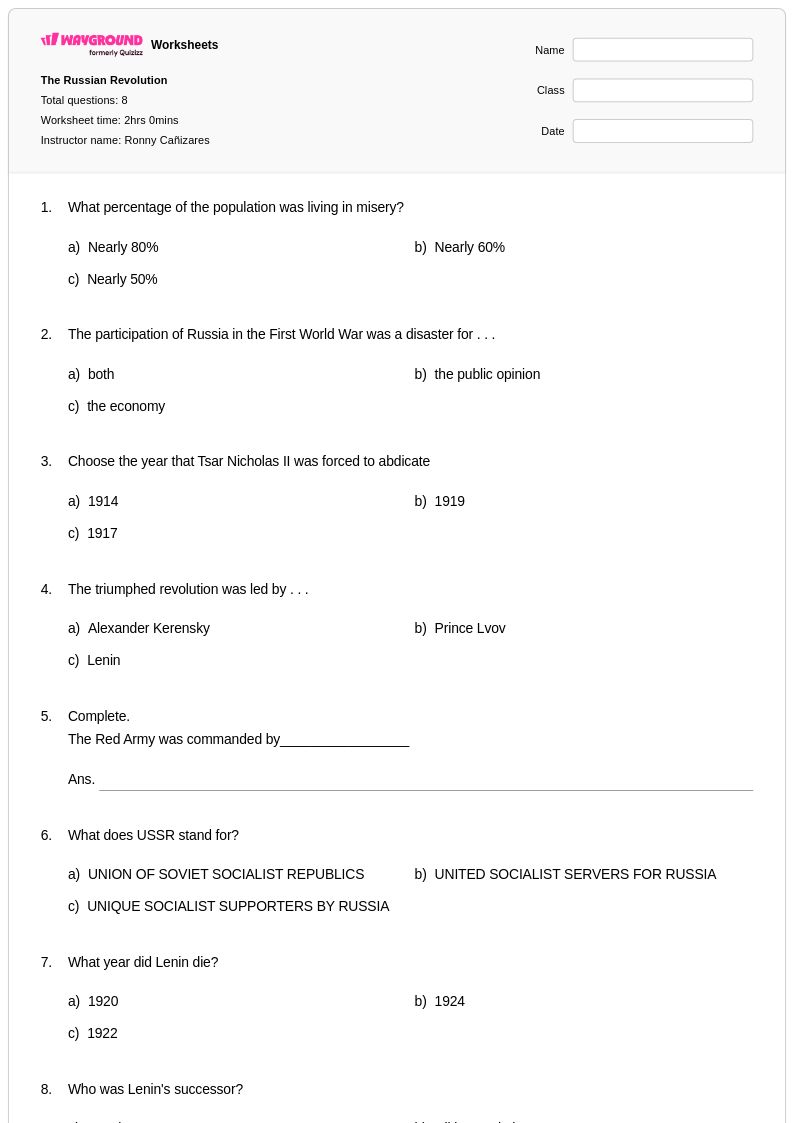
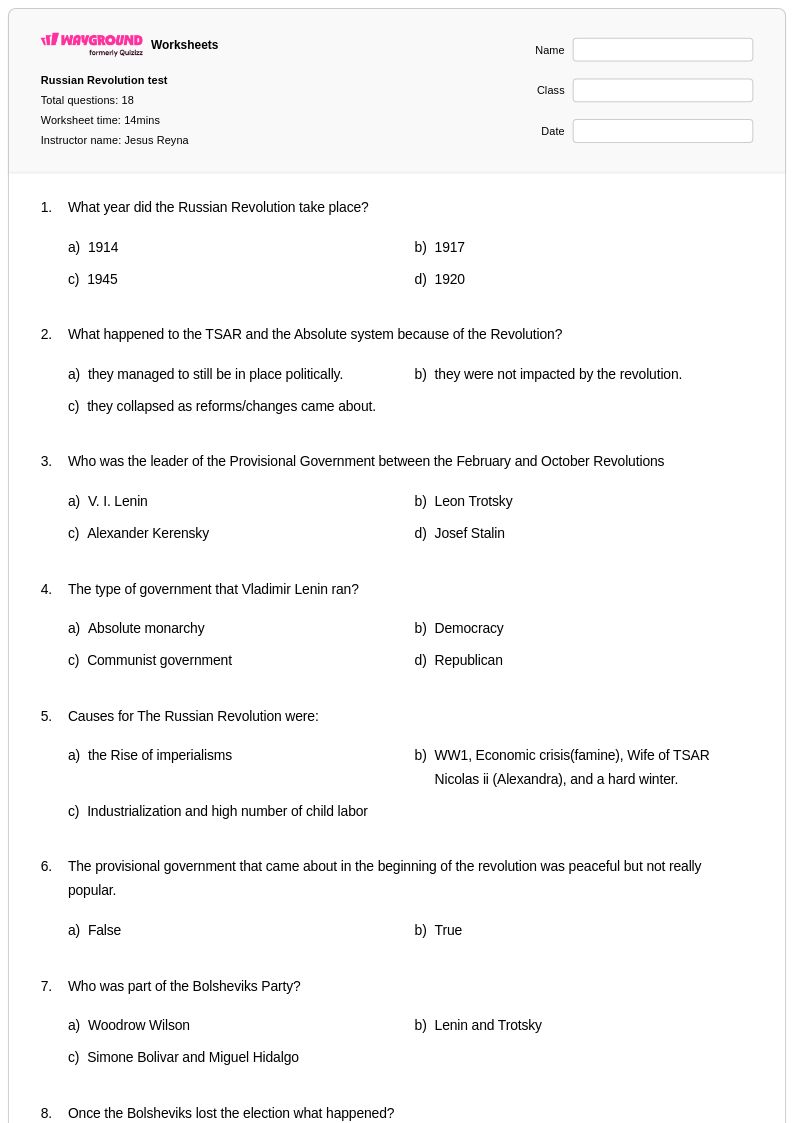
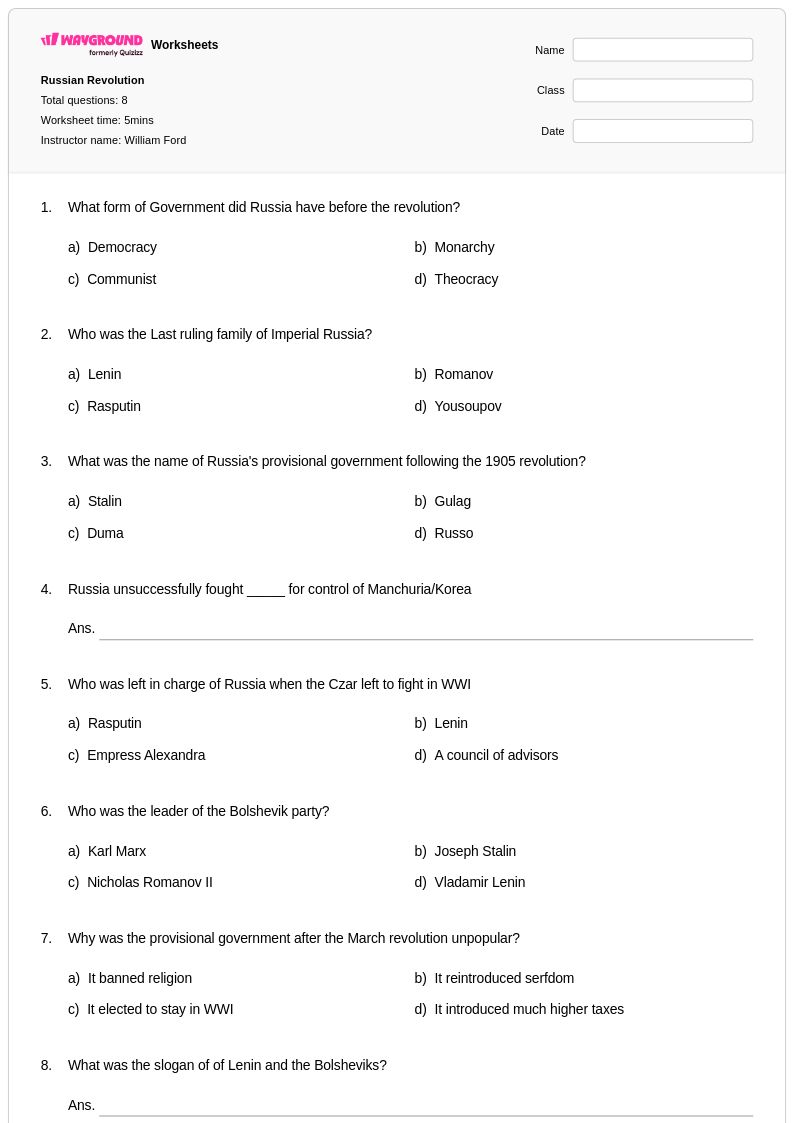
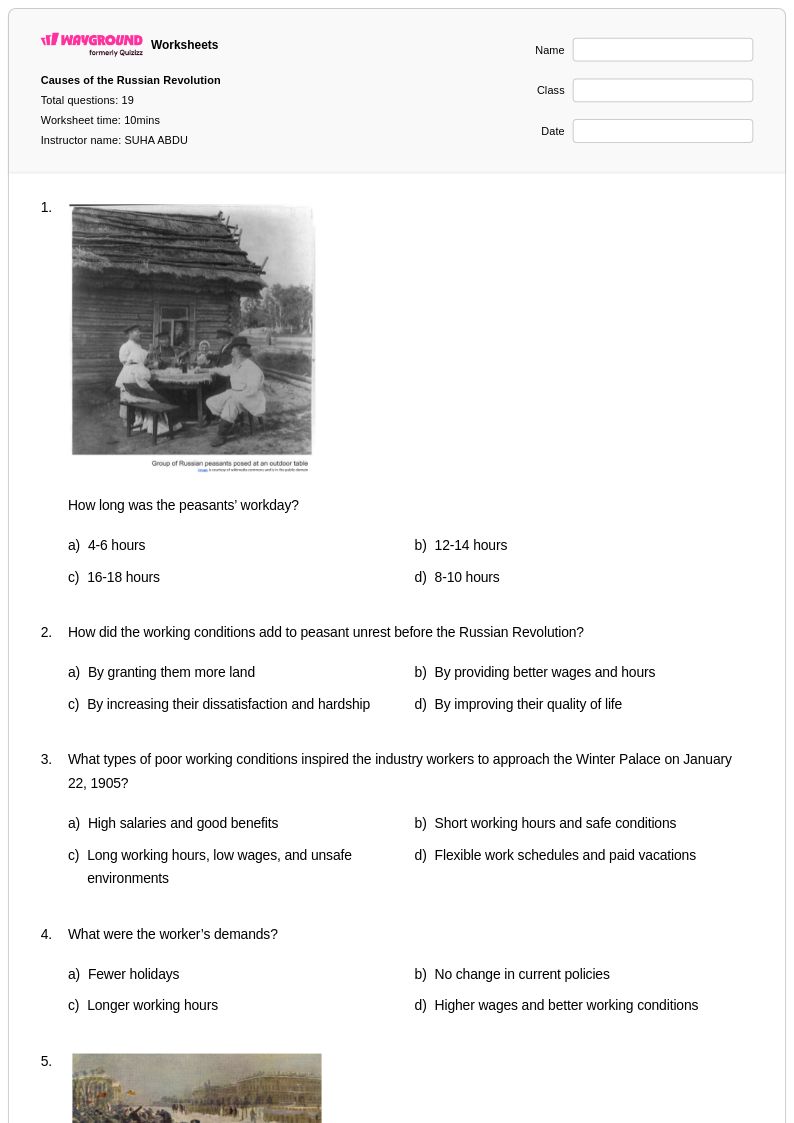
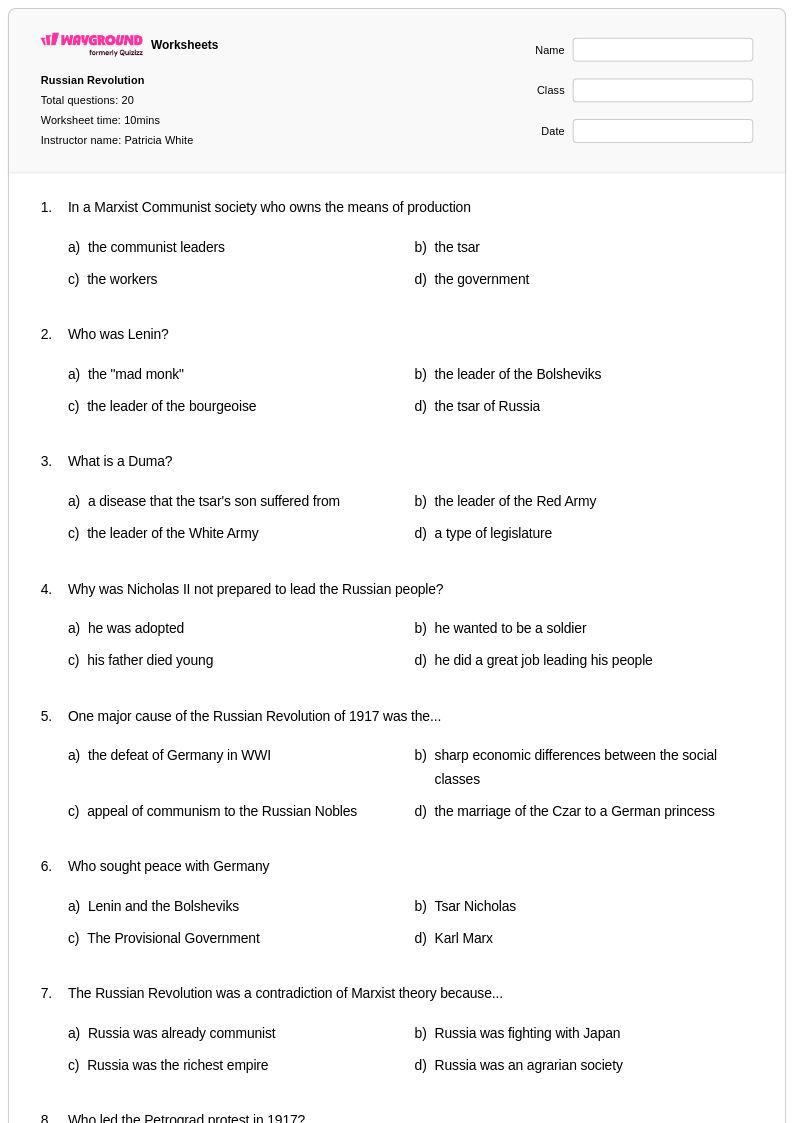
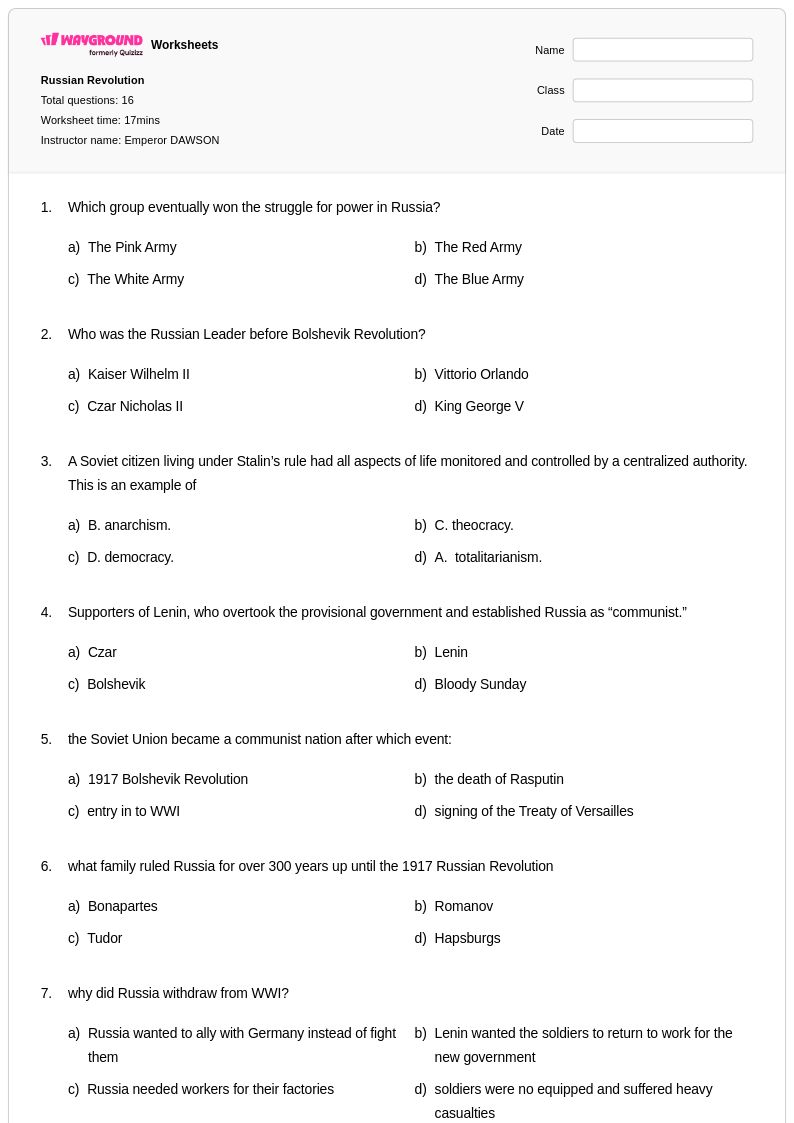
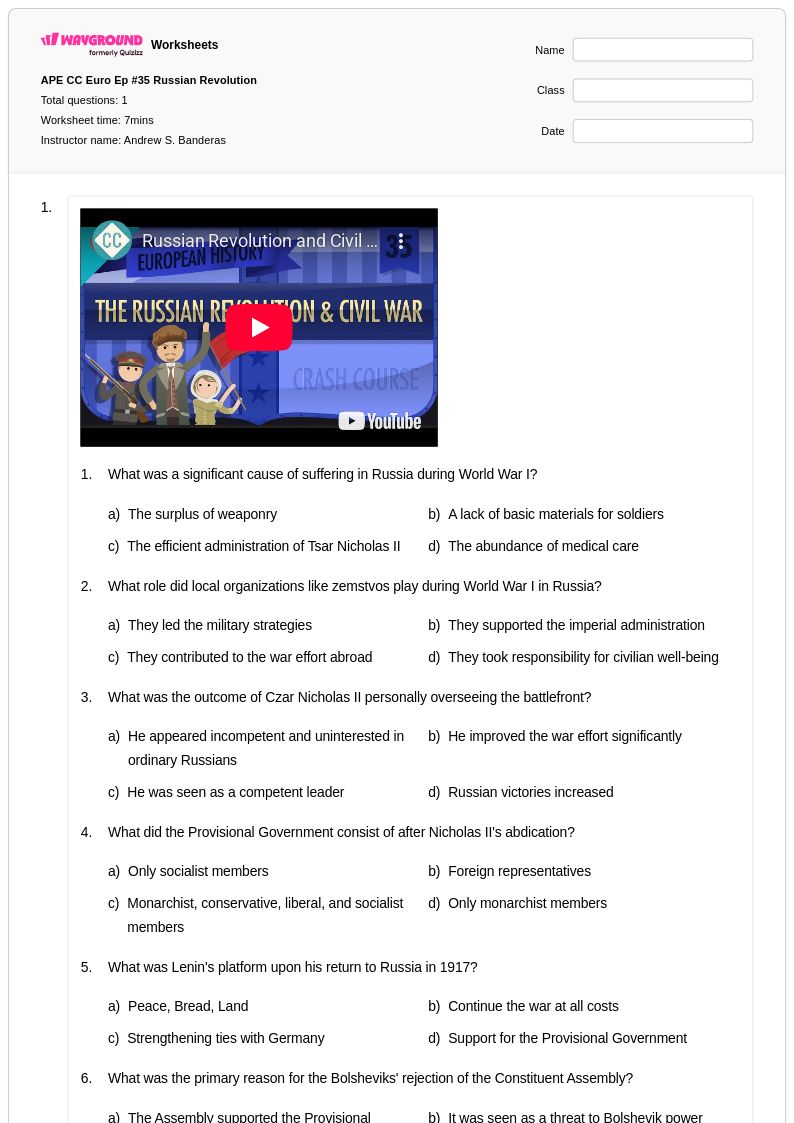
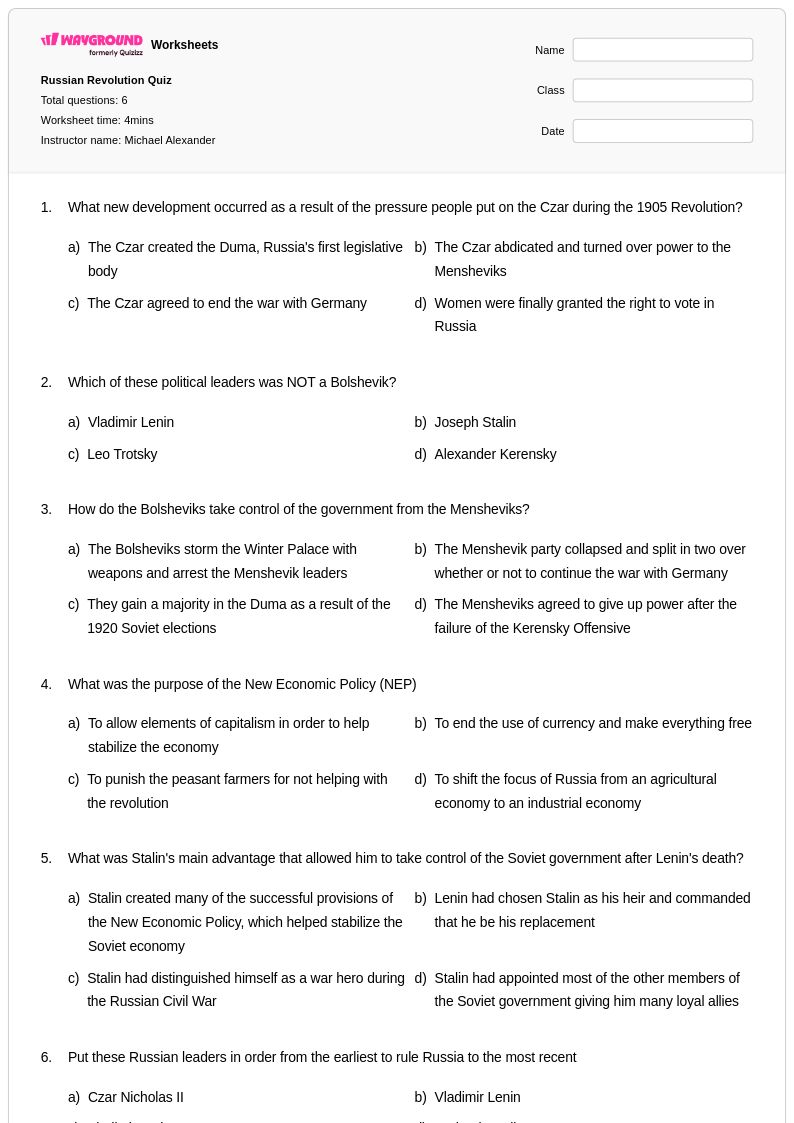
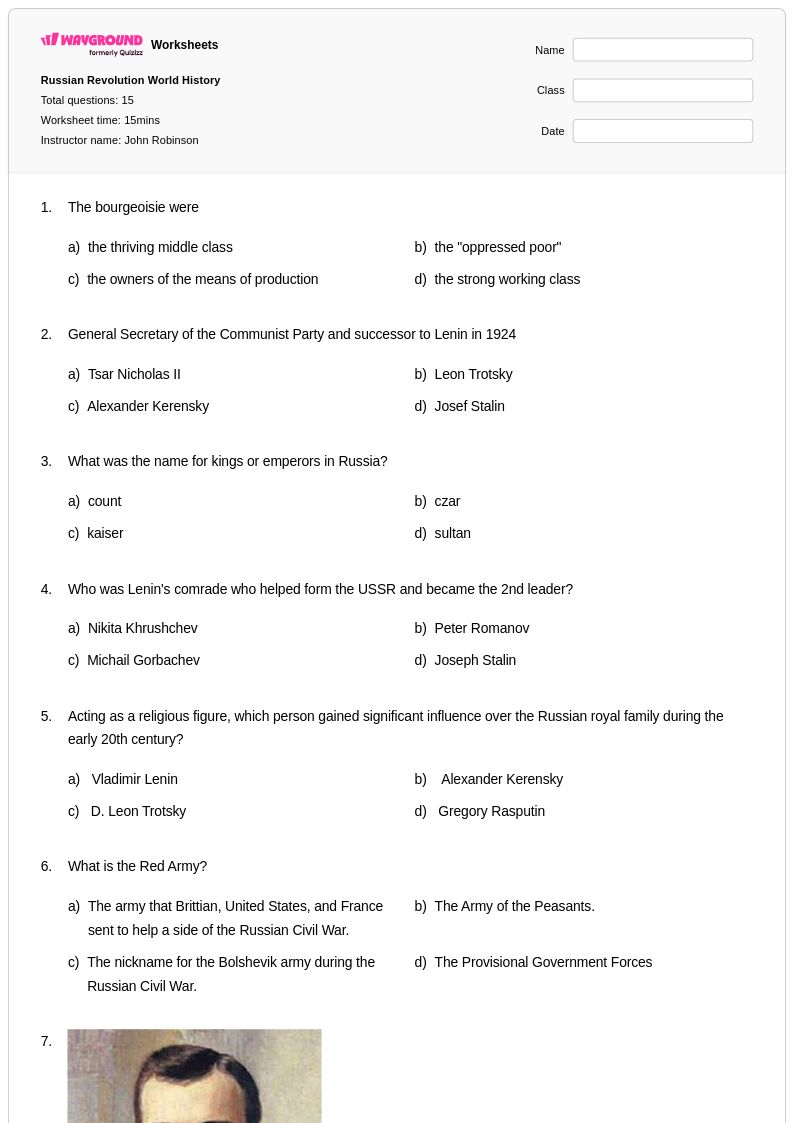
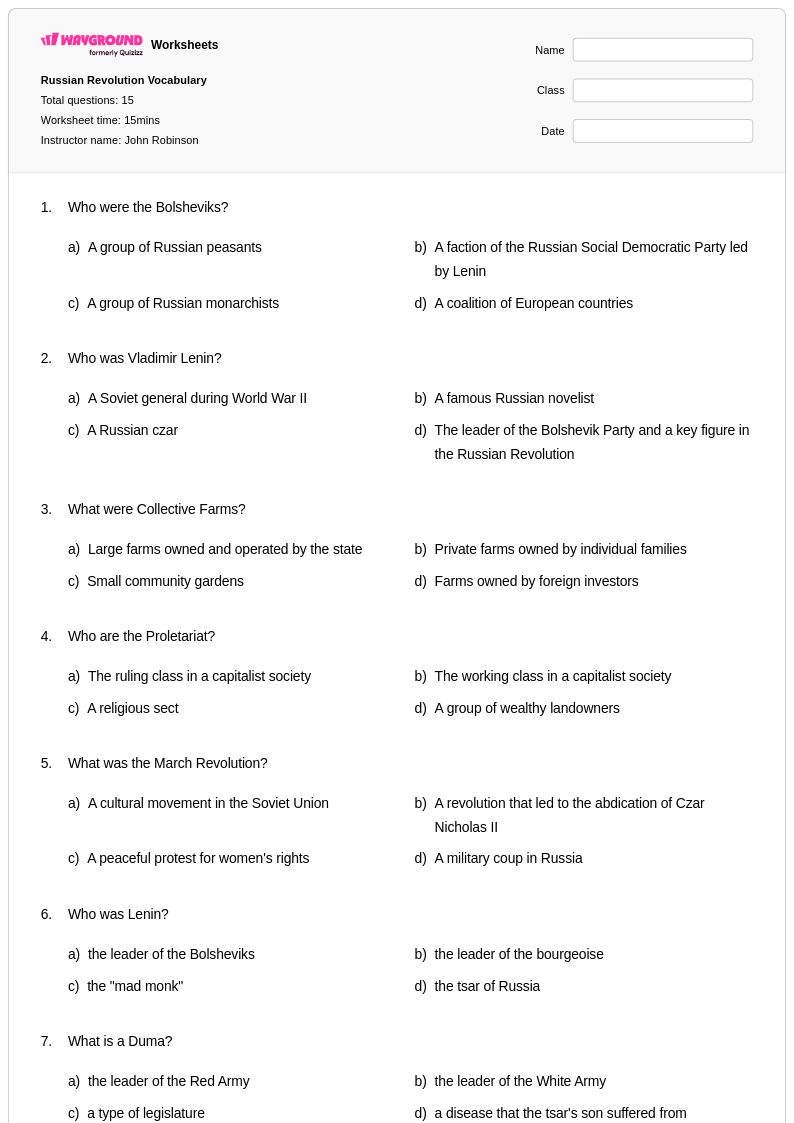
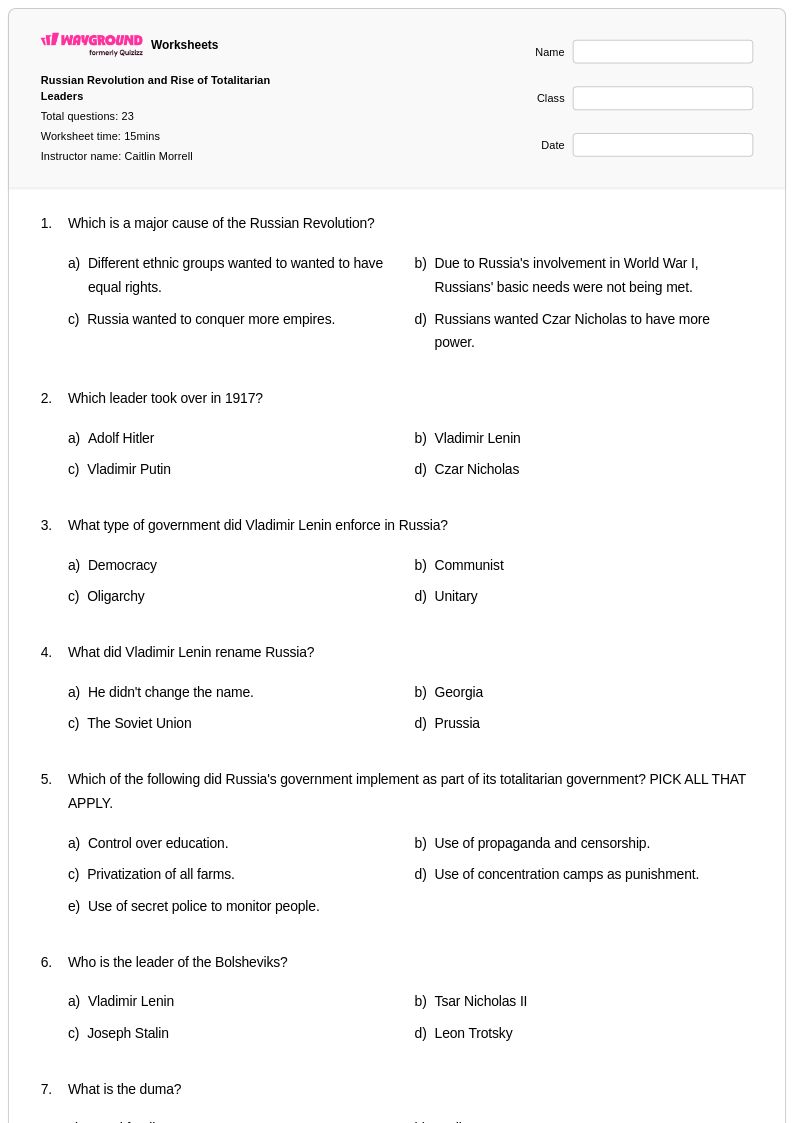
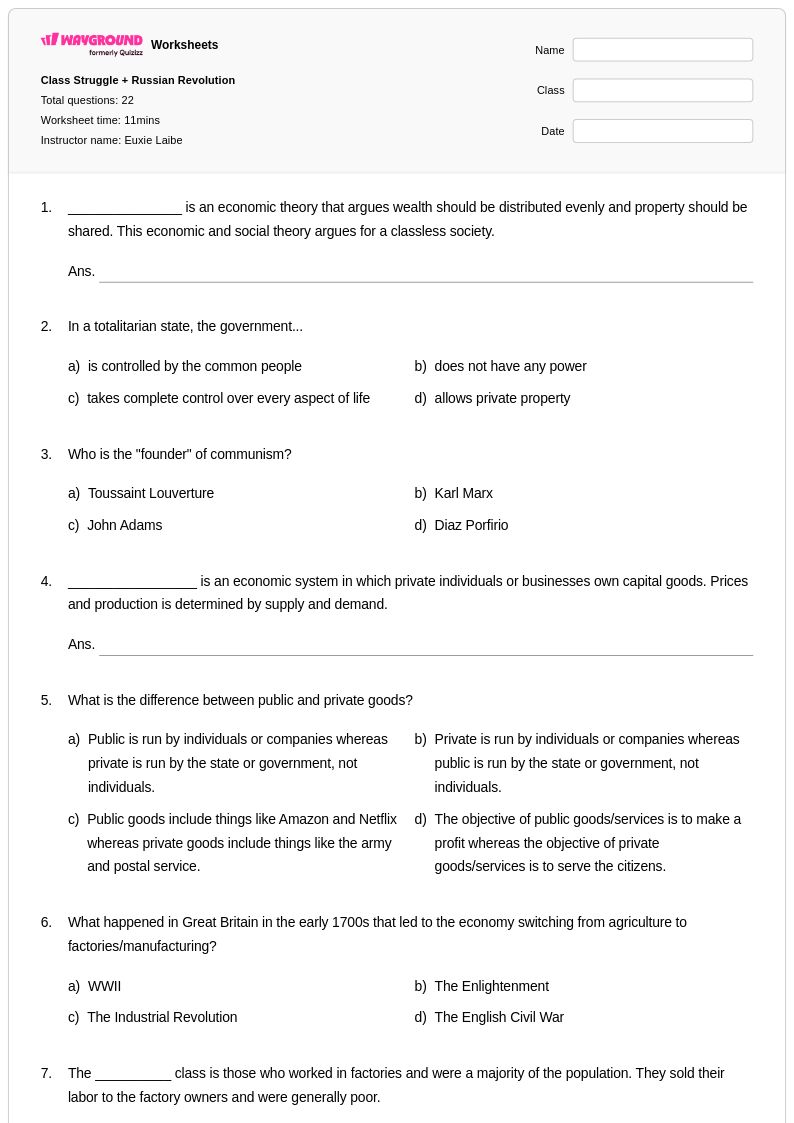
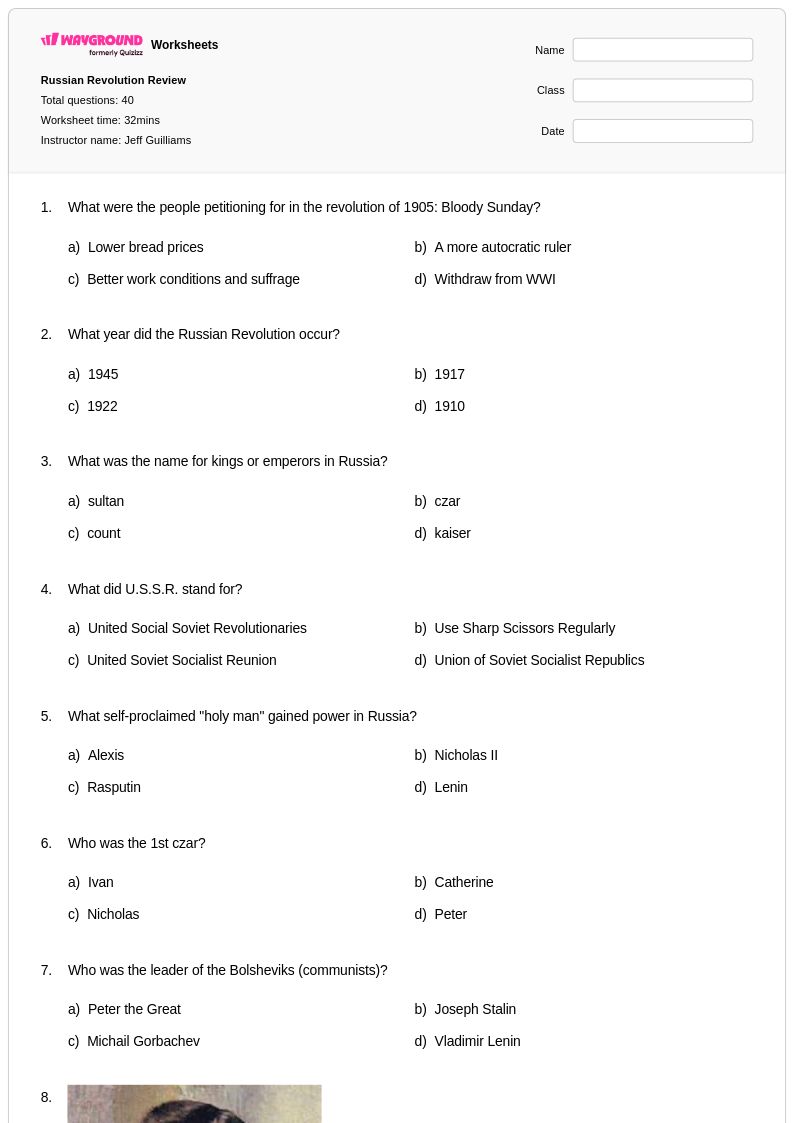
Russian Revolution worksheets for Class 10 students available through Wayground (formerly Quizizz) provide comprehensive coverage of this pivotal period in world history, focusing on the causes, events, and consequences of the 1917 revolutions that transformed Russia from a tsarist autocracy into a communist state. These expertly crafted educational resources strengthen students' analytical skills by examining primary sources, interpreting historical evidence, and understanding the complex social, economic, and political factors that led to the fall of the Romanov dynasty and the rise of the Bolsheviks. The collection includes practice problems that challenge students to analyze the roles of key figures like Lenin, Trotsky, and Nicholas II, while printables and pdf materials feature detailed answer keys that support independent learning and allow teachers to assess comprehension of concepts such as the February Revolution, October Revolution, and the subsequent Russian Civil War.
Wayground (formerly Quizizz) empowers educators with millions of teacher-created Russian Revolution resources that streamline lesson planning and support differentiated instruction for Class 10 world history classrooms. The platform's robust search and filtering capabilities enable teachers to quickly locate worksheets aligned with curriculum standards, while customization tools allow for modifications that meet diverse learning needs and skill levels. These printable and digital materials, including comprehensive pdf collections, facilitate targeted remediation for struggling students and enrichment opportunities for advanced learners, ensuring that all Class 10 students can engage meaningfully with this complex historical period. Teachers benefit from the flexibility to adapt content for various instructional formats, from traditional classroom activities to remote learning environments, making it easier to provide consistent skill practice and assessment opportunities that deepen students' understanding of the Russian Revolution's lasting impact on global history.
FAQs
How do I teach the Russian Revolution to high school students?
Teaching the Russian Revolution effectively means structuring instruction around its two distinct phases: the February Revolution, which toppled Tsar Nicholas II, and the October Revolution, which brought the Bolsheviks to power. Start by grounding students in the underlying causes, including economic hardship, military failures in World War I, and widespread social inequality under autocratic rule. From there, trace the sequence of events through Lenin's April Theses, the abdication of the Tsar, and the Russian Civil War, so students understand the revolution as a process rather than a single event. Primary source analysis and cause-and-effect graphic organizers are particularly effective for building analytical thinking alongside content knowledge.
What exercises help students practice their understanding of the Russian Revolution?
Practice exercises that require students to sequence key events, such as the abdication of the Tsar, Lenin's return, and the Bolshevik takeover, reinforce chronological thinking and factual recall. Cause-and-effect worksheets that connect economic hardship, military defeat, and social unrest to the February and October Revolutions help students move beyond memorization toward historical analysis. Short-answer and document-based questions that ask students to evaluate the roles of specific figures like Lenin and Nicholas II build the critical reading skills central to world history coursework.
What are the most common mistakes students make when learning about the Russian Revolution?
One of the most frequent misconceptions is treating the Russian Revolution as a single event rather than a series of connected upheavals spanning 1917 to 1921, which causes students to conflate the February and October Revolutions. Students also commonly overstate Lenin's personal role while underestimating the structural factors, such as food shortages, military collapse, and peasant unrest, that made revolution possible. Another common error is confusing the Bolsheviks with the broader socialist movement, missing the significant ideological and tactical divisions among revolutionary groups. Addressing these gaps explicitly during instruction prevents surface-level understanding that struggles to hold up under essay or assessment conditions.
How can I use Russian Revolution worksheets to differentiate instruction in my classroom?
Russian Revolution worksheets can be differentiated by adjusting the complexity of tasks, assigning foundational chronology and vocabulary work to students who need remediation while directing others toward analytical questions about the revolution's global impact on socialist movements. On Wayground, teachers can apply individual student accommodations such as read aloud support, extended time, and reduced answer choices, allowing the same core worksheet to serve a range of learners without singling anyone out. These settings are saved per student and carry across future sessions, reducing the prep burden on teachers managing diverse classrooms.
How do I use Wayground's Russian Revolution worksheets in my class?
Wayground's Russian Revolution worksheets are available as printable PDFs, making them straightforward to distribute in a traditional classroom setting, and in digital formats that support remote learning and technology-integrated instruction. Teachers can also host any worksheet as an interactive quiz directly on Wayground, which adds a formative assessment layer without requiring separate tools. The platform's search and filtering capabilities make it easy to locate worksheets by topic focus, such as causes of the revolution, key figures, or the Russian Civil War, so teachers can quickly match resources to their current unit objectives.
How does the Russian Revolution connect to broader world history curriculum standards?
The Russian Revolution is a standard anchor point in modern world history curricula because it illustrates the intersection of industrialization, imperialism, nationalism, and ideological conflict that defined the early twentieth century. Most state and national standards frame it as a case study in political transformation, requiring students to analyze both the internal conditions that destabilized Tsarist Russia and the revolution's downstream effects on the Cold War and global socialist movements. Worksheets that are aligned to these standards help teachers ensure their instructional materials meet curriculum requirements while maintaining the historical depth the topic demands.