Enhance Class 8 students' understanding of sarcasm with Wayground's comprehensive collection of free worksheets, printables, and practice problems that develop critical thinking skills for identifying ironic language, complete with answer keys and PDF formats.
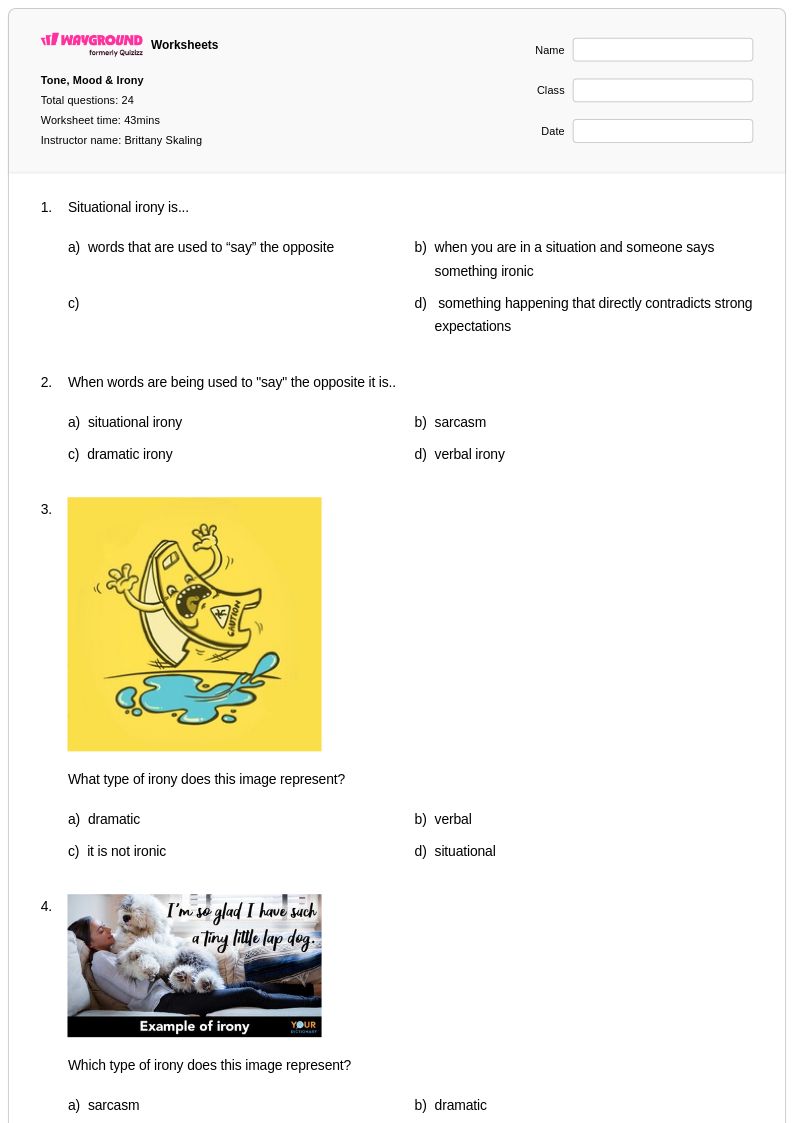
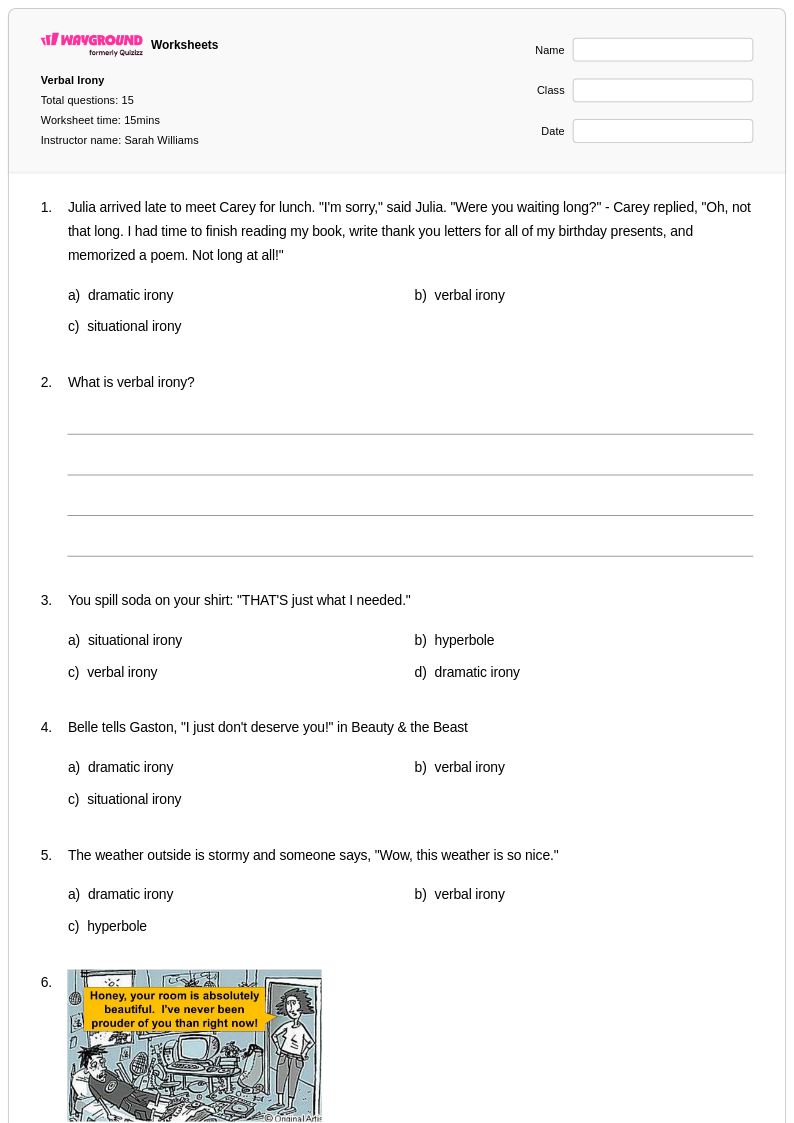
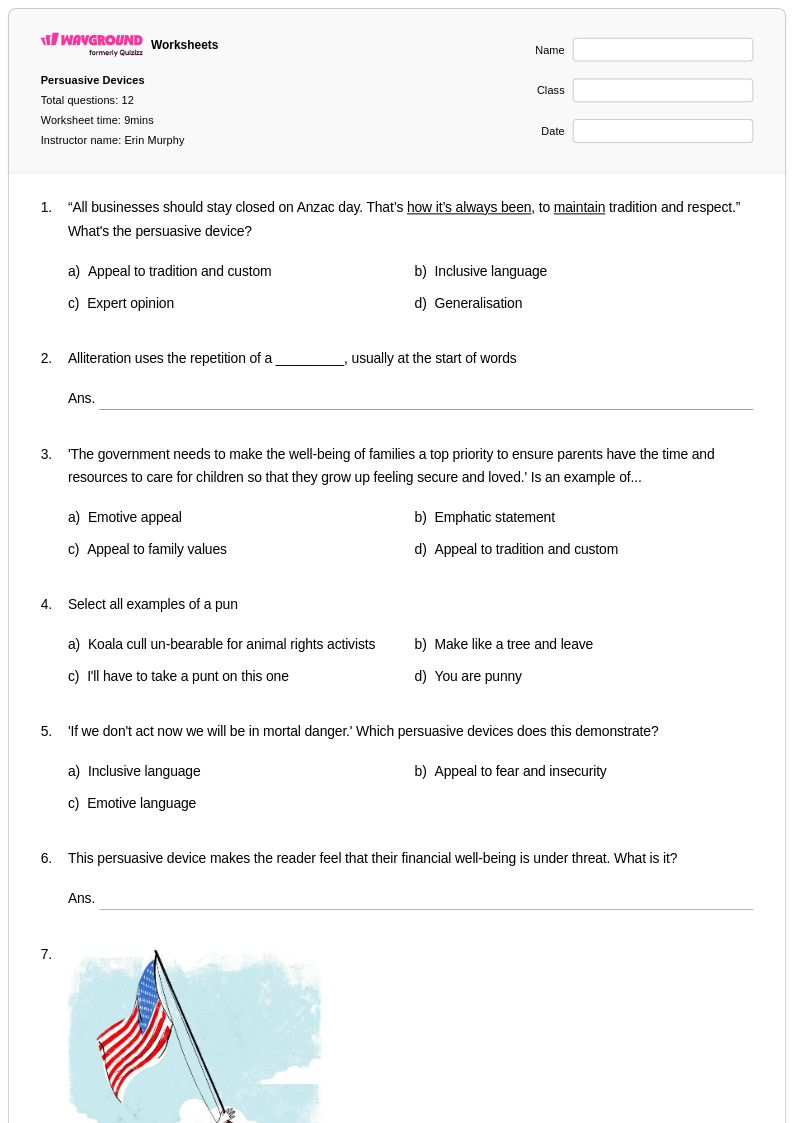
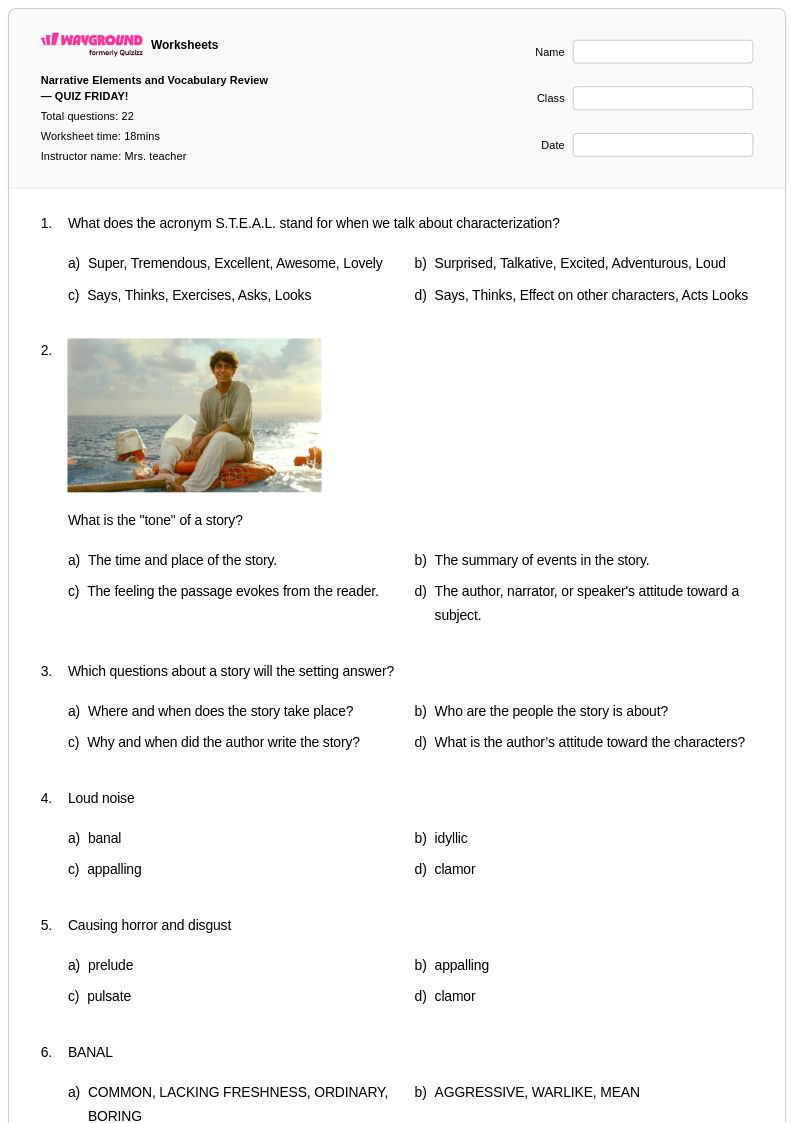
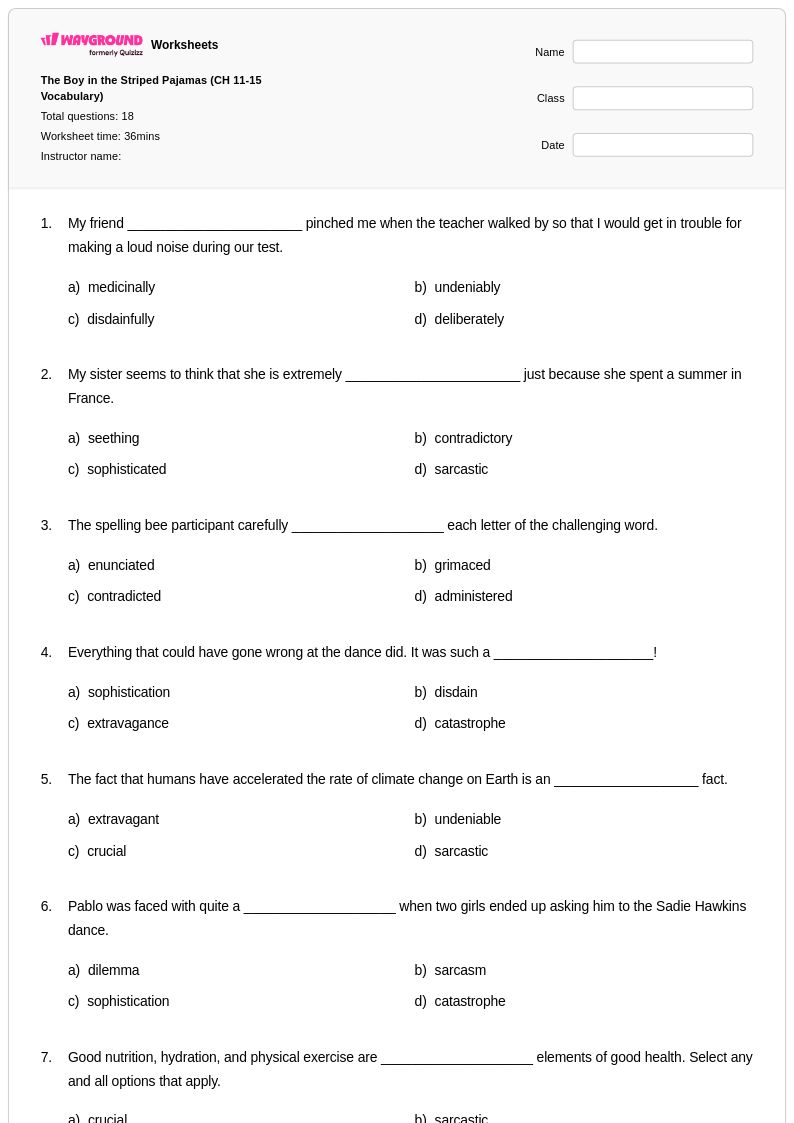
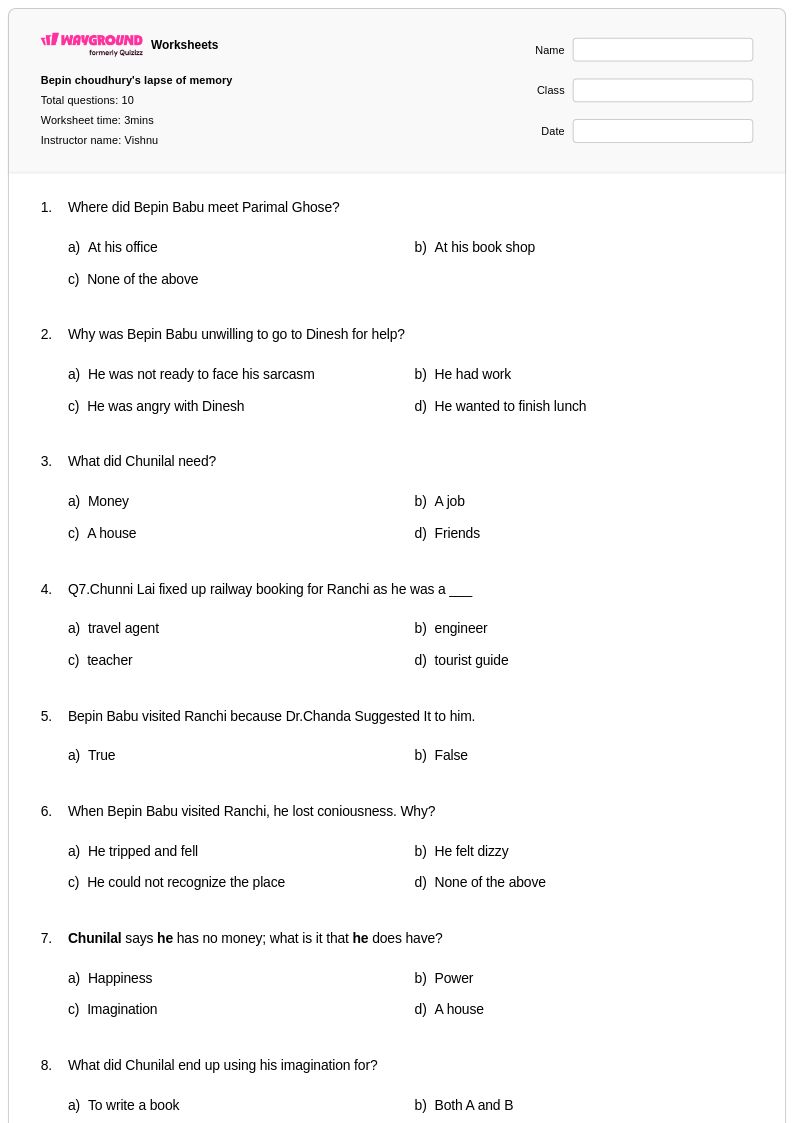
Sarcasm worksheets for Class 8 students available through Wayground (formerly Quizizz) provide comprehensive practice in recognizing, analyzing, and interpreting this sophisticated form of figurative language. These educational resources help students develop critical reading skills by examining how authors use verbal irony to convey meaning that differs from literal statements, often for humorous or critical effect. The worksheets feature diverse practice problems that challenge students to identify sarcastic statements in various contexts, from literary passages to everyday conversations, while building their understanding of tone, context clues, and author's intent. Each printable resource includes detailed answer keys that explain the reasoning behind sarcastic interpretations, making these free materials valuable for both independent study and classroom instruction as students refine their ability to detect subtle language nuances.
Wayground (formerly Quizizz) supports educators with an extensive collection of teacher-created sarcasm worksheets, drawing from millions of educational resources that undergo continuous refinement and expansion. The platform's advanced search and filtering capabilities enable teachers to locate grade-appropriate materials that align with specific learning standards and classroom objectives for figurative language instruction. These differentiation tools allow educators to customize worksheets based on individual student needs, whether for remediation of struggling learners or enrichment activities for advanced students. Available in both printable pdf formats and interactive digital versions, these resources facilitate flexible lesson planning and provide teachers with reliable materials for skill practice, formative assessment, and targeted instruction in helping Class 8 students master the complexities of sarcastic language use in literature and communication.
FAQs
How do I teach sarcasm to students who struggle to recognize it?
Teaching sarcasm effectively starts with helping students understand the gap between literal meaning and intended meaning, which is the defining feature of sarcasm. Begin with clear, exaggerated examples in familiar contexts such as everyday dialogue before moving to subtler literary examples. Pairing tone of voice with written text helps students internalize the cues that signal sarcasm, and then gradually removing the audio component builds their ability to detect it in writing alone.
What exercises help students practice identifying sarcasm in reading?
Exercises that require students to identify contextual clues and tone indicators are the most effective for sarcasm practice. Structured activities using sarcastic statements from literature excerpts and everyday dialogue scenarios give students repeated exposure across different registers. Having students explain why a statement is sarcastic rather than just labeling it deepens their analytical thinking and builds the skills needed for advanced literary interpretation.
What is the difference between sarcasm and other forms of irony, and how do I explain it to students?
Sarcasm is a specific type of verbal irony in which the speaker says the opposite of what they mean, typically with a critical or mocking intent directed at a person or situation. Unlike situational irony, which involves unexpected outcomes, sarcasm is always rooted in tone and speaker intent. Teaching students to ask 'Is someone using this to critique or mock?' is a practical classroom strategy for distinguishing sarcasm from other ironic forms.
What mistakes do students commonly make when identifying sarcasm?
The most common error students make is treating sarcasm as straightforward exaggeration or hyperbole rather than recognizing the critical or mocking intent behind it. Students also frequently misread sarcasm as sincere when it appears in written form without tonal cues, because they focus on the literal meaning of the words rather than the context. Teaching students to look for contextual clues such as the relationship between speaker and subject, the surrounding tone, and the plausibility of the literal meaning helps correct these patterns.
How do I use Wayground's sarcasm worksheets in my classroom?
Wayground's sarcasm worksheets are available as printable PDFs for traditional classroom use and in digital formats for technology-integrated environments, making them suitable for in-class instruction, homework, and targeted remediation. Each worksheet includes detailed answer keys that explain contextual clues and tone indicators alongside correct responses, supporting both independent student practice and teacher-led discussion. You can also host the worksheets as a quiz on Wayground, allowing you to assign them digitally and track student performance in one place.
How can I differentiate sarcasm instruction for struggling readers and advanced students?
For struggling readers, reduce cognitive load by starting with highly contextualized, dialogue-based examples where the sarcastic intent is clear, and consider enabling Wayground's Read Aloud feature so students can hear tone as they work through digital exercises. Advanced students benefit from analyzing sarcasm in complex literary texts where intent is more ambiguous and multiple interpretations are defensible. Wayground also supports reduced answer choices for students who need additional scaffolding, which can be configured individually so other students are unaffected.