Free Printable Sentence Copying Worksheets for Class 2
Enhance Class 2 students' handwriting and language skills with our free sentence copying worksheets and printables, featuring practice problems with answer keys to develop proper letter formation and reading comprehension.
Explore printable Sentence Copying worksheets for Class 2
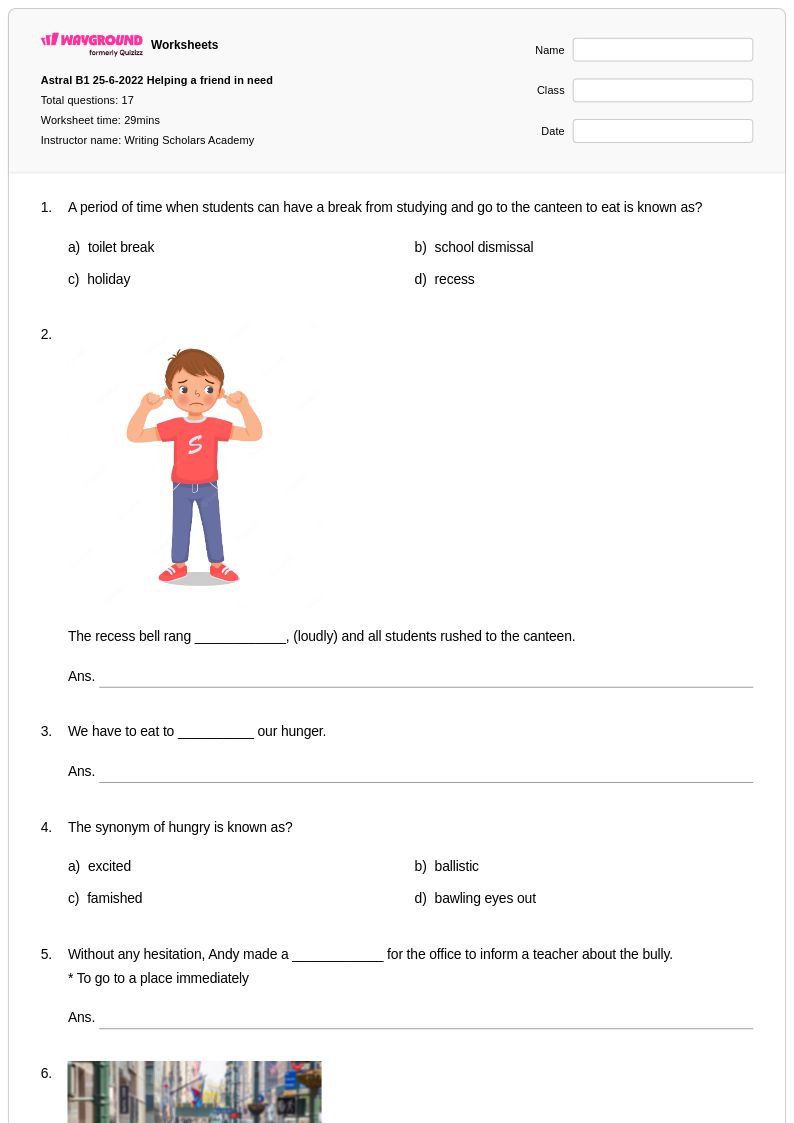
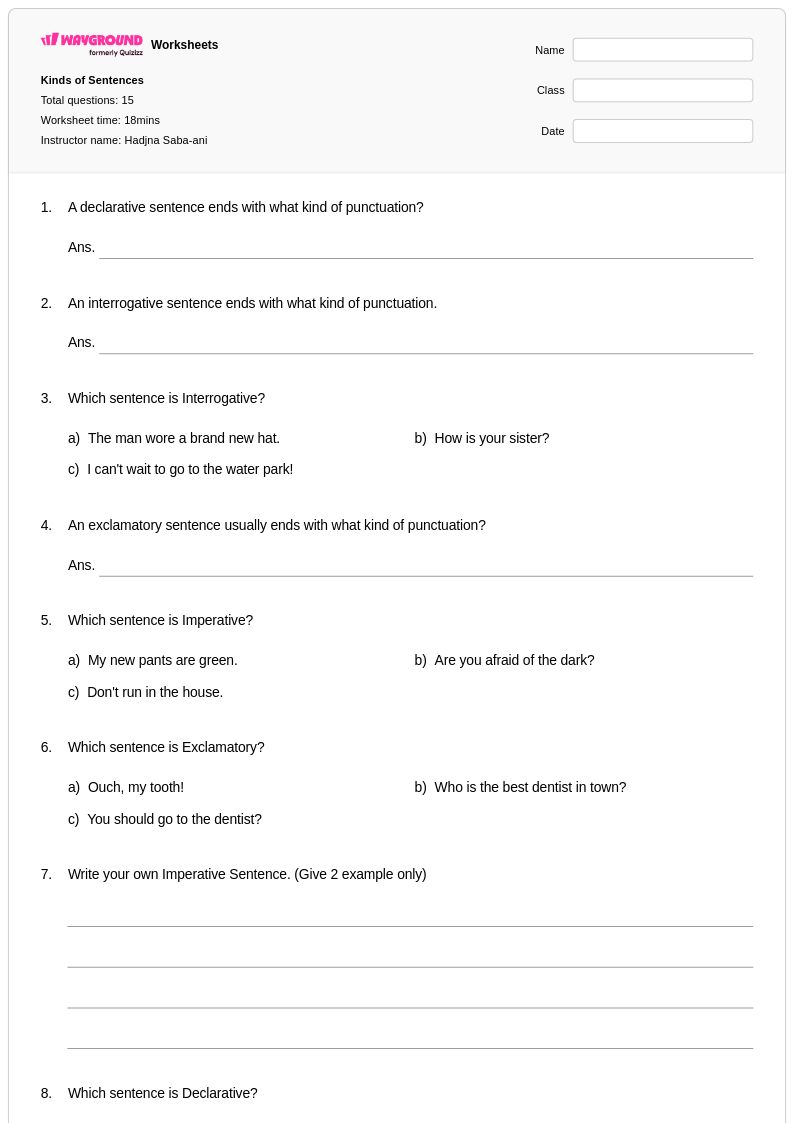
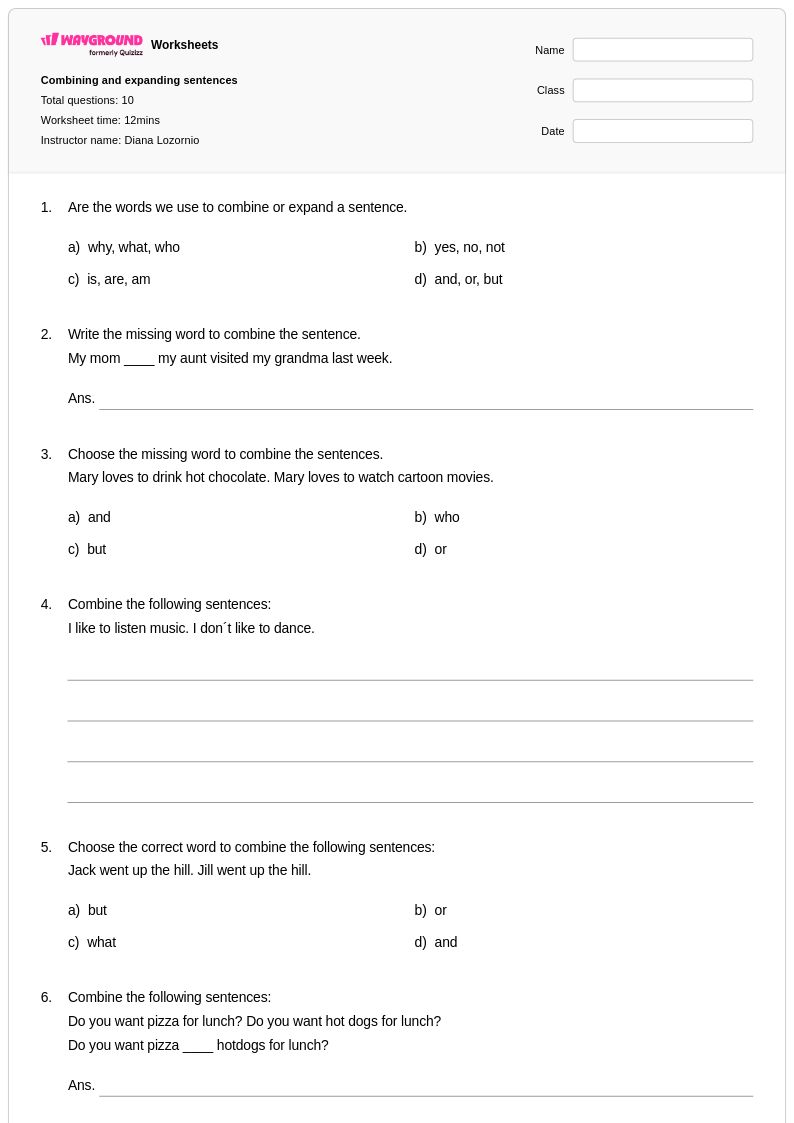
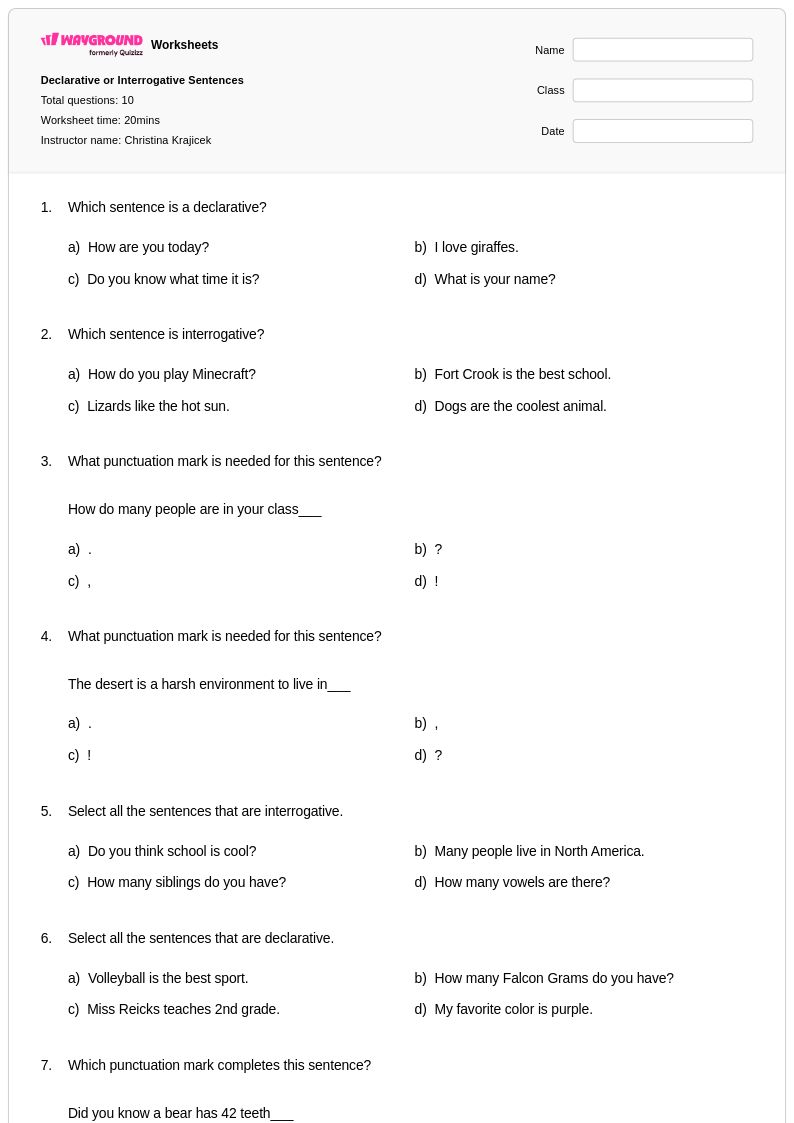
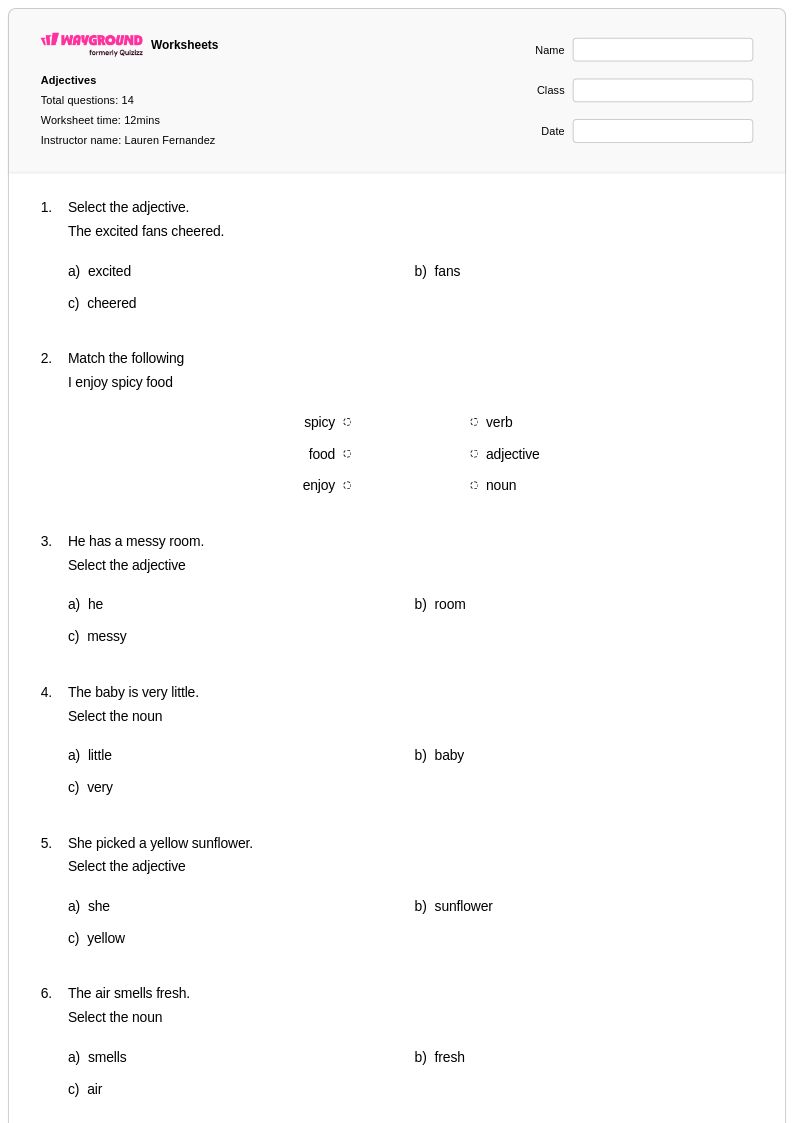
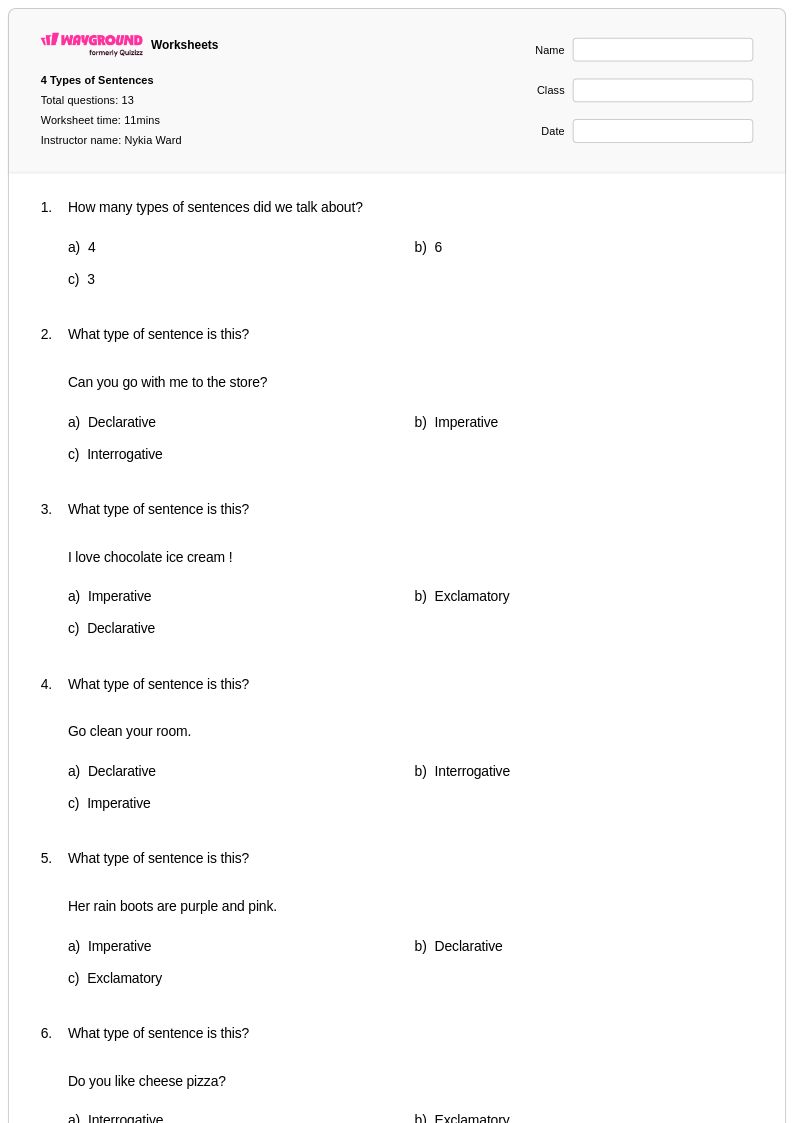
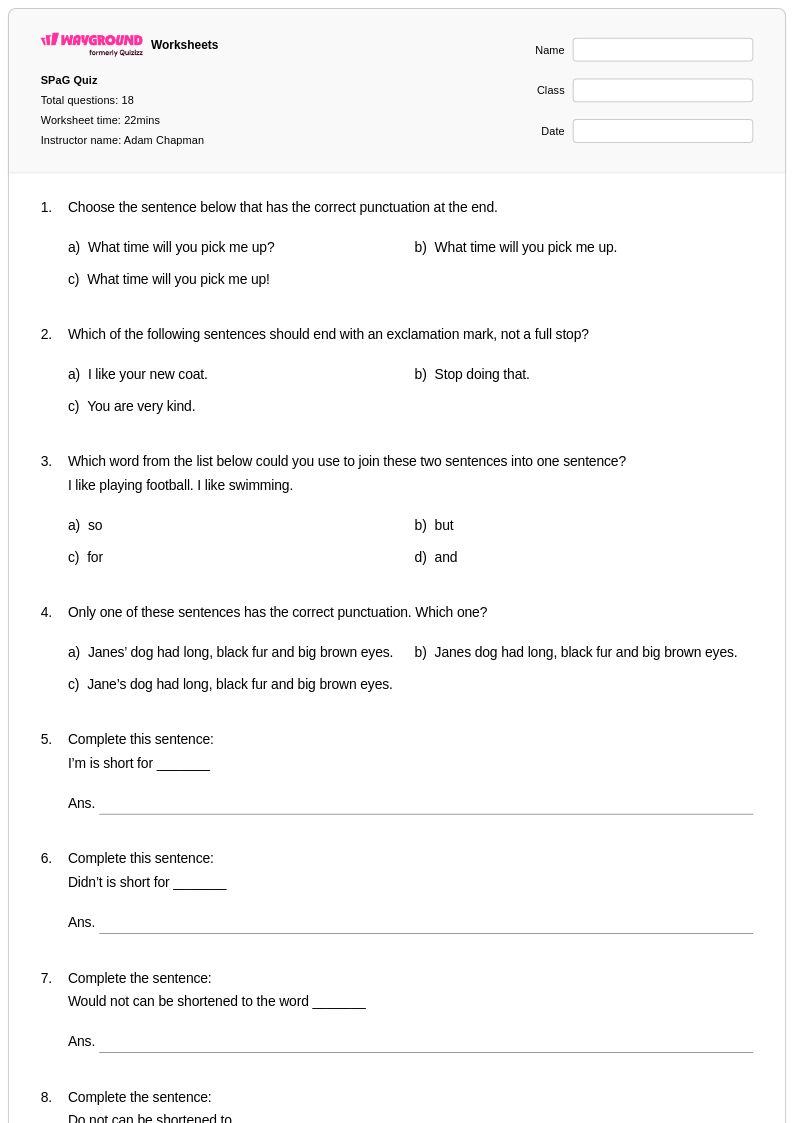
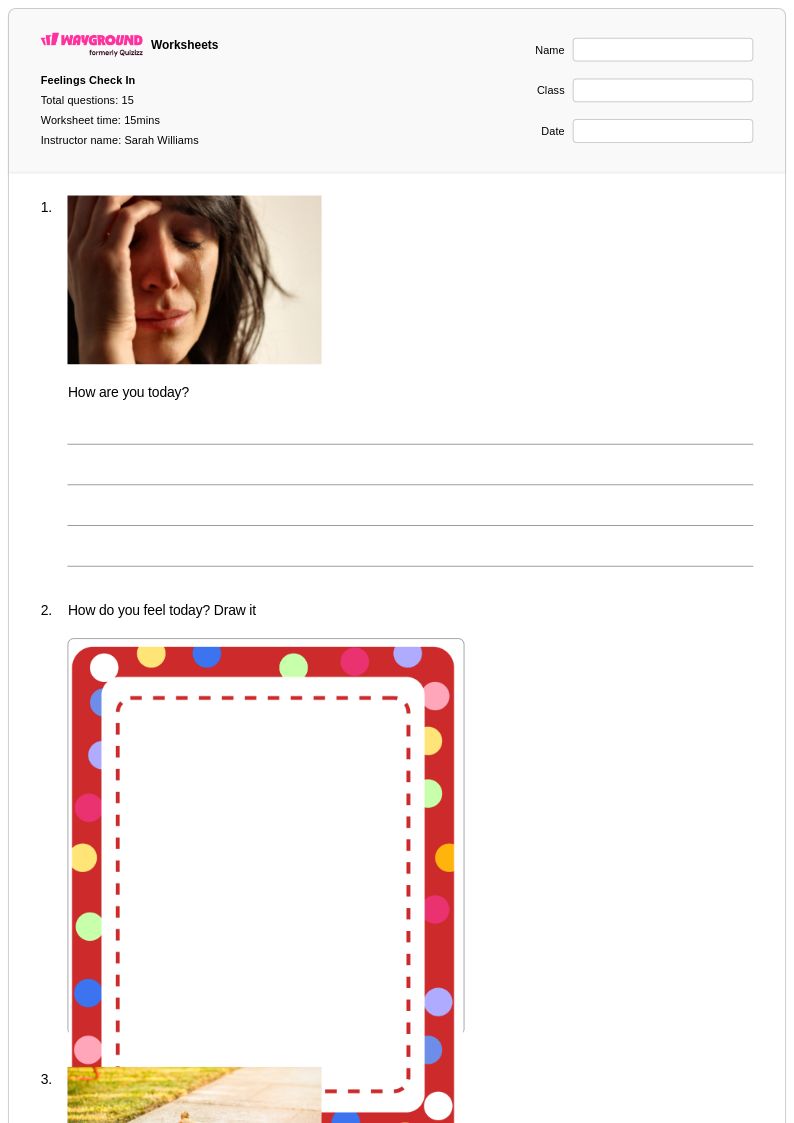
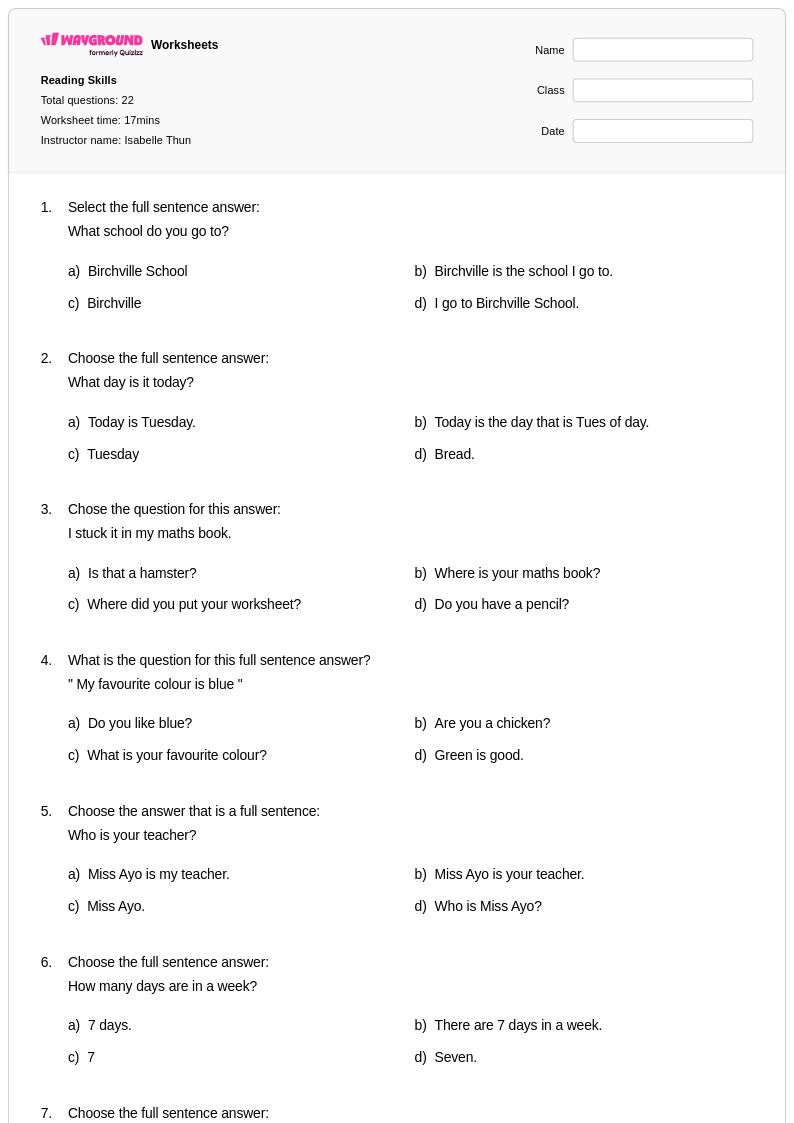
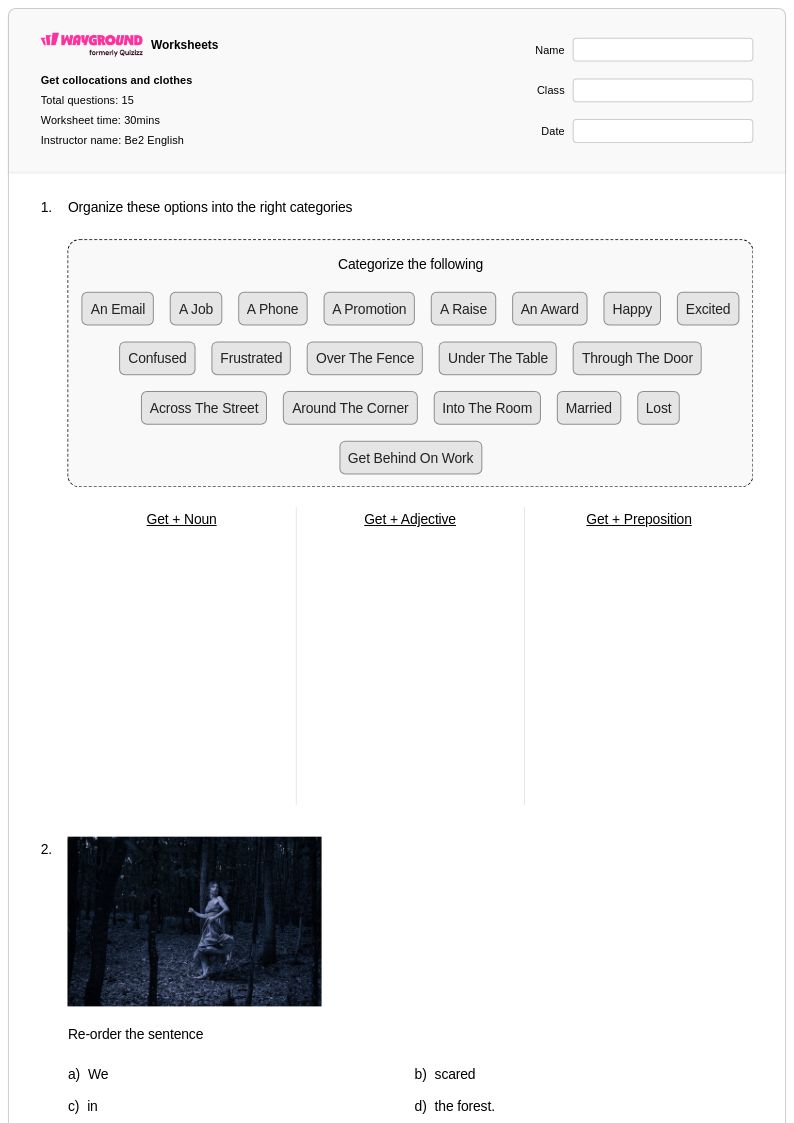
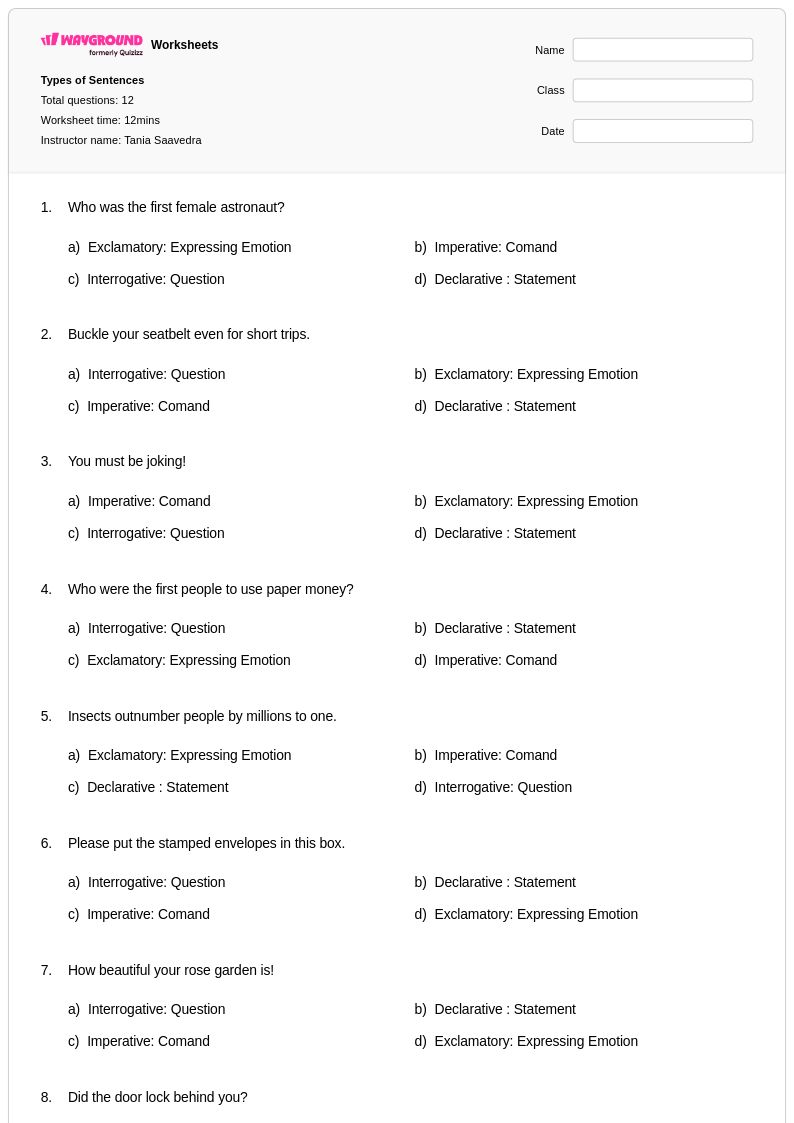
Sentence copying worksheets for Class 2 students available through Wayground (formerly Quizizz) provide essential foundational practice for developing proper handwriting mechanics and reinforcing basic sentence structure concepts. These carefully designed printable resources help young learners strengthen their fine motor skills while simultaneously building familiarity with capitalization, punctuation, and word spacing conventions. Students practice transcribing complete sentences with accuracy and attention to detail, developing the muscle memory and visual recognition skills necessary for independent writing. Each worksheet includes clear examples and guided practice opportunities, with accompanying answer keys that allow teachers and parents to monitor progress effectively. These free educational materials serve as valuable practice problems that bridge the gap between letter formation exercises and original composition work.
Wayground's extensive collection of teacher-created sentence copying resources supports Class 2 educators with millions of professionally developed worksheets that align with early writing standards and developmental expectations. The platform's robust search and filtering capabilities enable teachers to quickly locate materials that match their specific instructional needs, whether focusing on particular sentence types, handwriting styles, or thematic content areas. These versatile resources are available in both printable PDF formats for traditional classroom use and digital formats for interactive learning experiences, providing flexibility for diverse learning environments. Teachers can easily customize worksheets to accommodate different ability levels, making them ideal for differentiation, remediation activities, and enrichment opportunities that support each student's individual writing development journey.
FAQs
How do I teach sentence copying to early writers?
Effective sentence copying instruction begins with explicit modeling: show students how to look at the model, hold it in memory, and then write without constantly glancing back. Start with single high-frequency words before progressing to short phrases and full sentences. Emphasize consistent letter formation, appropriate spacing between words, and correct punctuation from the start, since habits formed early are difficult to correct later.
What skills does sentence copying practice build in young students?
Sentence copying exercises develop fine motor control, visual tracking, letter recognition, and muscle memory for handwriting simultaneously. Regular copying practice also reinforces spelling patterns, capitalization rules, and end punctuation in context, because students encounter these conventions repeatedly in meaningful text. Over time, this structured repetition builds the automaticity students need before moving on to independent composition.
What mistakes do students commonly make when copying sentences?
The most common errors in sentence copying include omitting or reversing letters, ignoring spacing between words, skipping punctuation, and losing their place in the model mid-copy. Many early writers also copy letter by letter rather than chunking words, which slows fluency and increases error rates. Teachers should watch for inconsistent letter sizing and baseline drift, as these often signal that a student needs more targeted fine motor support.
How can I differentiate sentence copying activities for students at different skill levels?
For students who are still developing letter formation, begin with tracing exercises before moving to independent copying. More advanced students can copy longer, more syntactically complex sentences or work with sentences that contain target spelling patterns. On Wayground, teachers can apply accommodations such as Read Aloud support for students who benefit from hearing the sentence before copying it, or adjust font size using Reading Mode to reduce visual strain for students with perceptual difficulties.
How do I use Wayground's sentence copying worksheets in my classroom?
Wayground's sentence copying worksheets are available as printable PDFs for traditional pencil-and-paper practice and in digital formats for tablet-based learning environments. Teachers can assign them as morning warm-ups, literacy center activities, or handwriting homework. Each worksheet includes answer keys so teachers can monitor accuracy and letter formation. Worksheets can also be hosted as a quiz on Wayground, making it easy to track student responses digitally.
When should students move on from sentence copying to independent writing?
Students are generally ready to transition to independent writing when they can copy a full sentence accurately without losing their place, maintain consistent letter size and spacing, and reproduce punctuation correctly without prompting. Copying remains a valuable scaffold even after students begin composing independently, since it continues to reinforce spelling patterns and conventions in context. If a student consistently produces error-free copies with fluent pacing, gradually reduce copying support while introducing guided writing frames.