Free Printable Sentence Expansion Worksheets for Class 8
Enhance your Class 8 students' sentence expansion skills with Wayground's comprehensive collection of free worksheets, printables, and practice problems that teach effective techniques for developing detailed, complex sentences with included answer keys.
Explore printable Sentence Expansion worksheets for Class 8
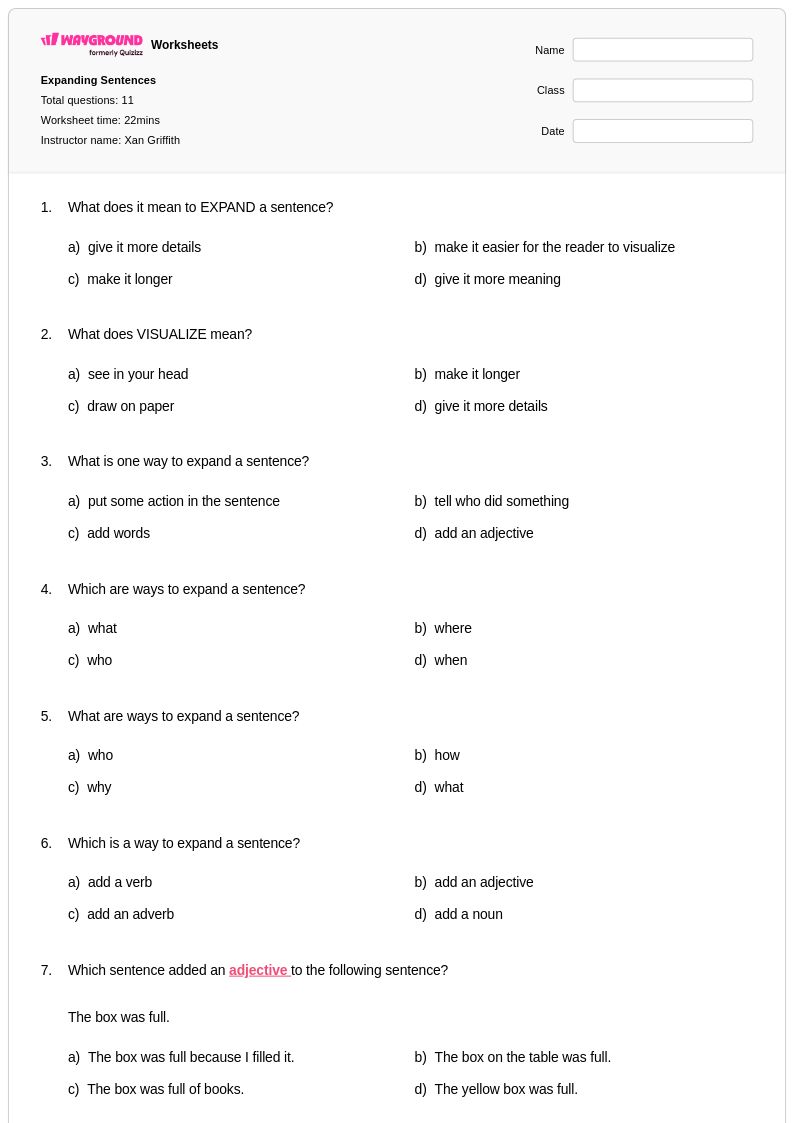
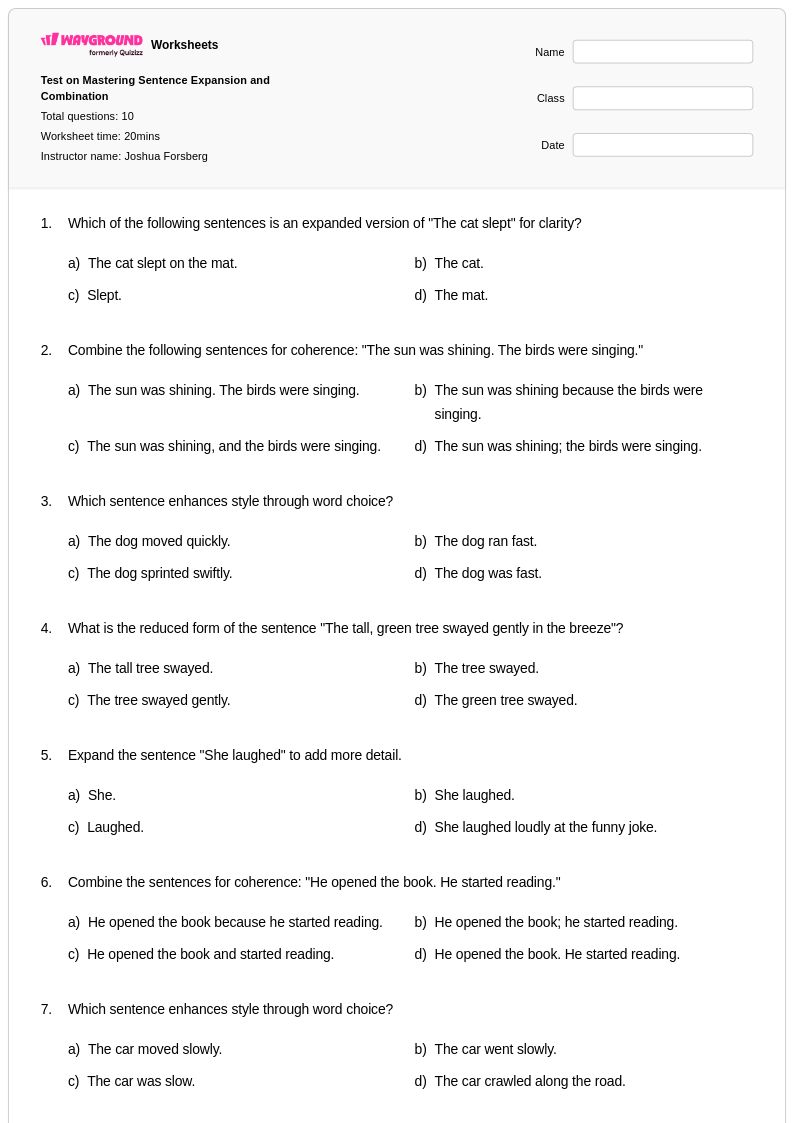
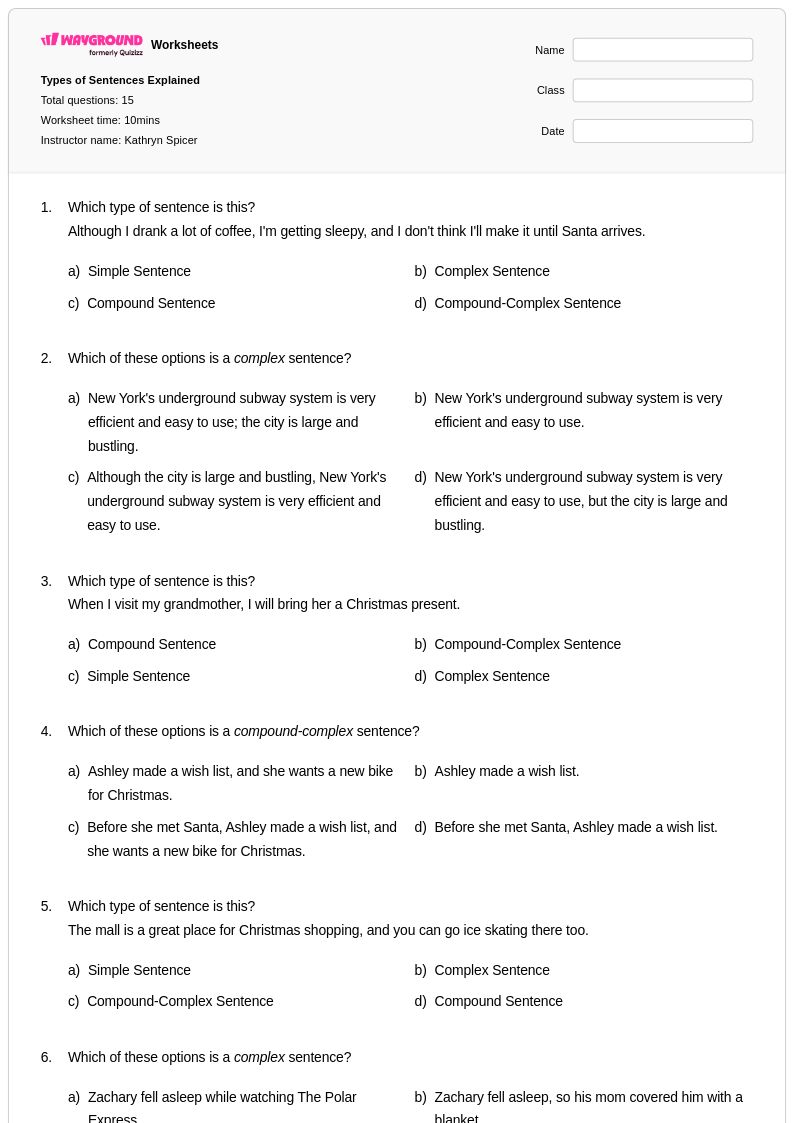
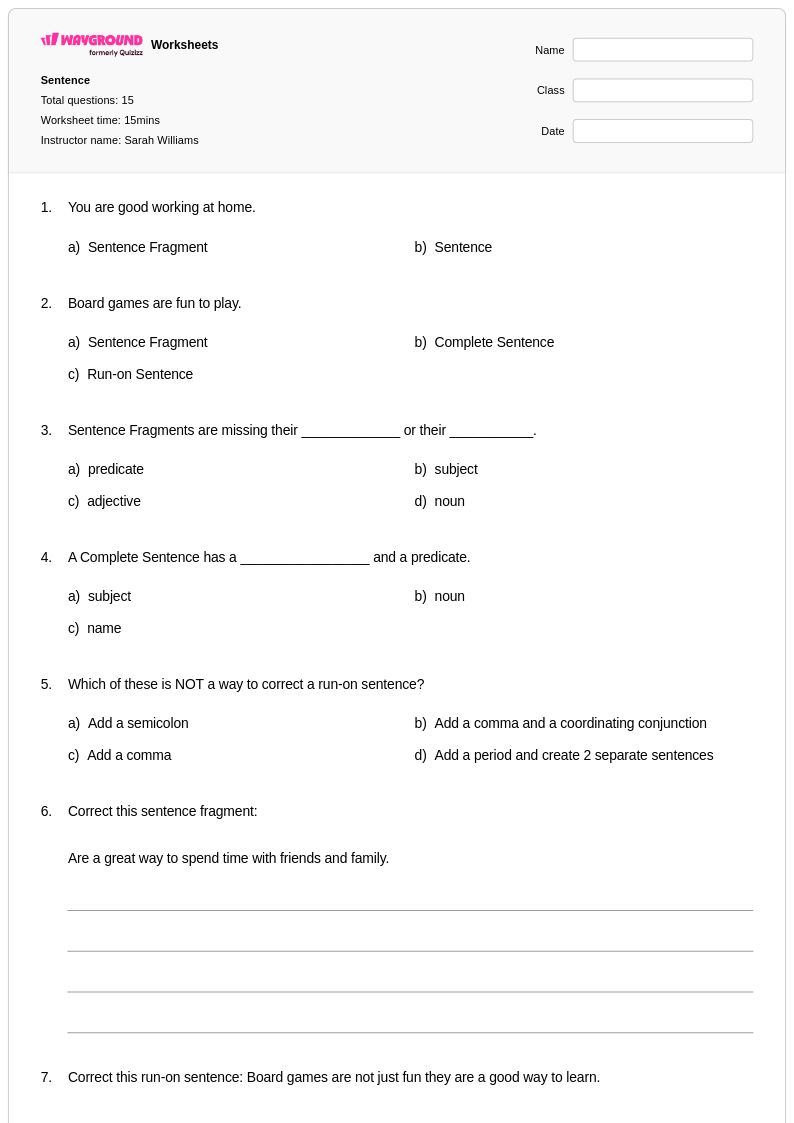
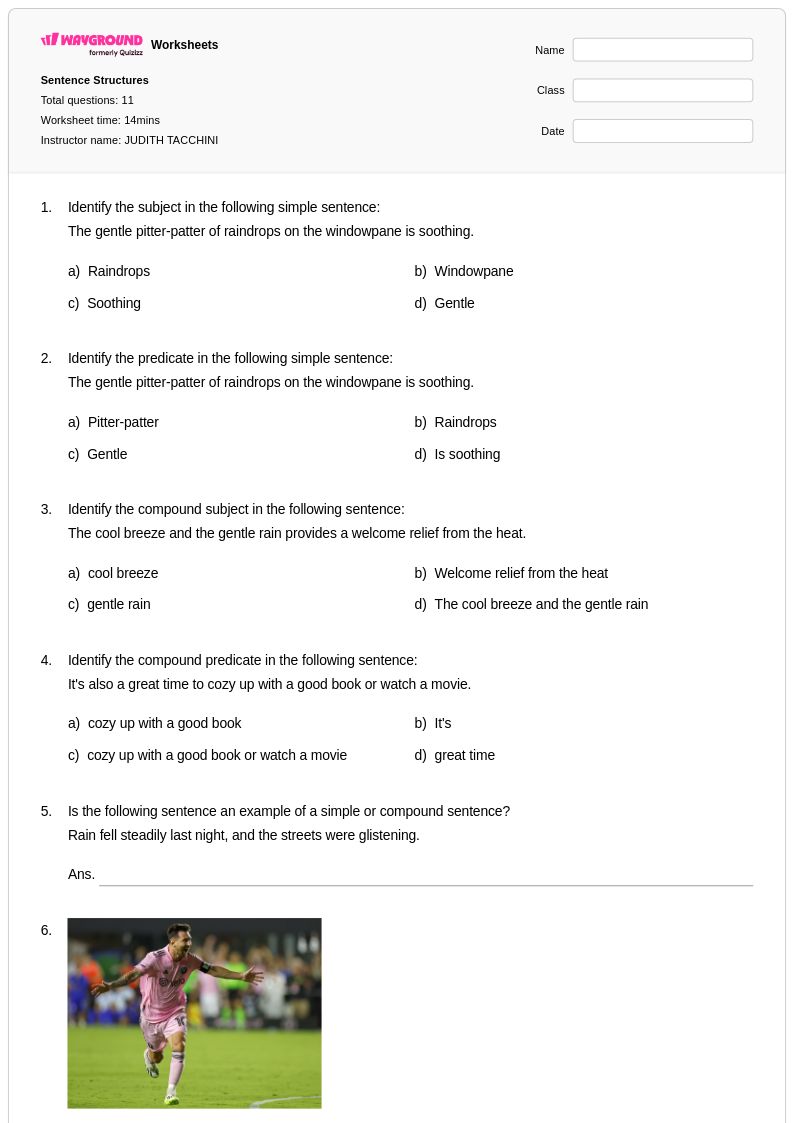
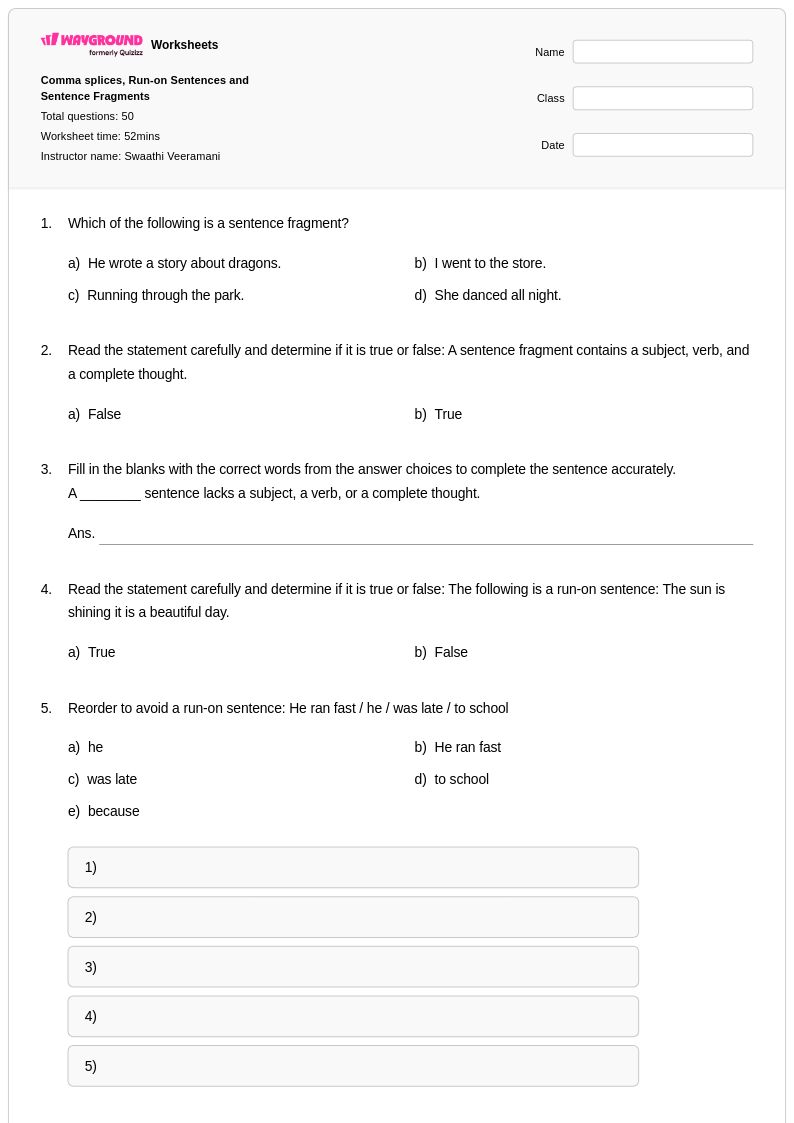
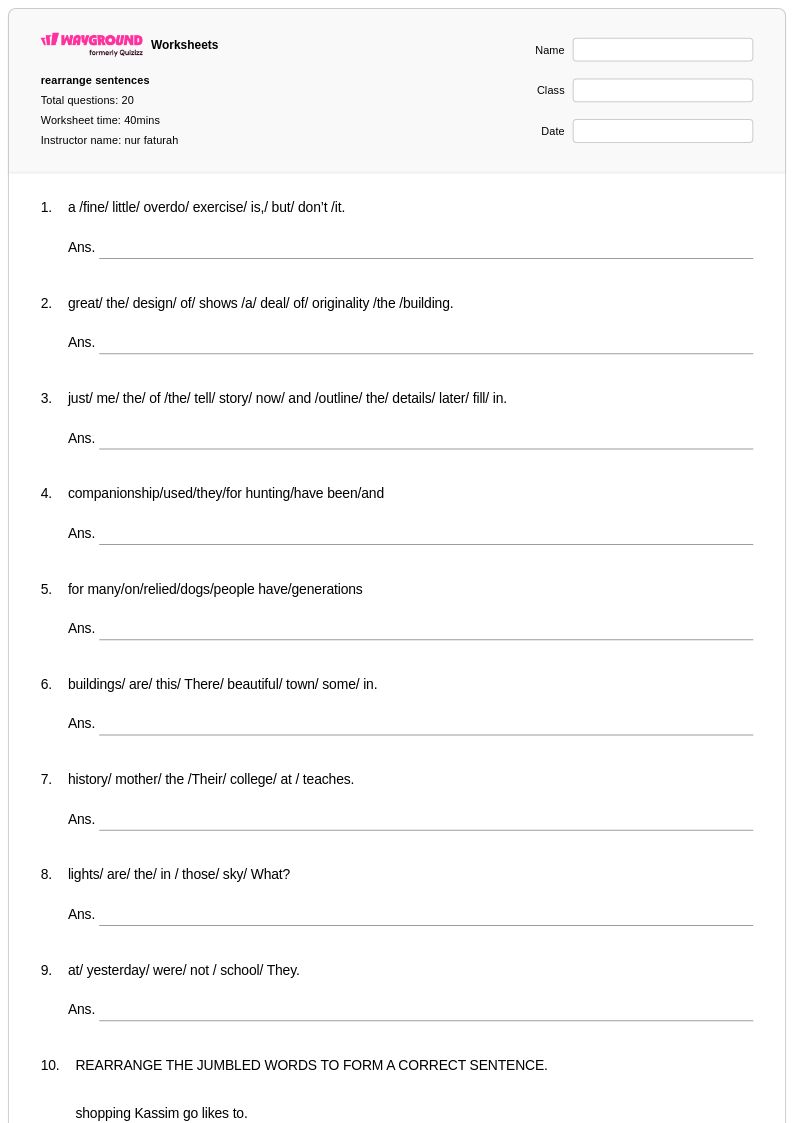
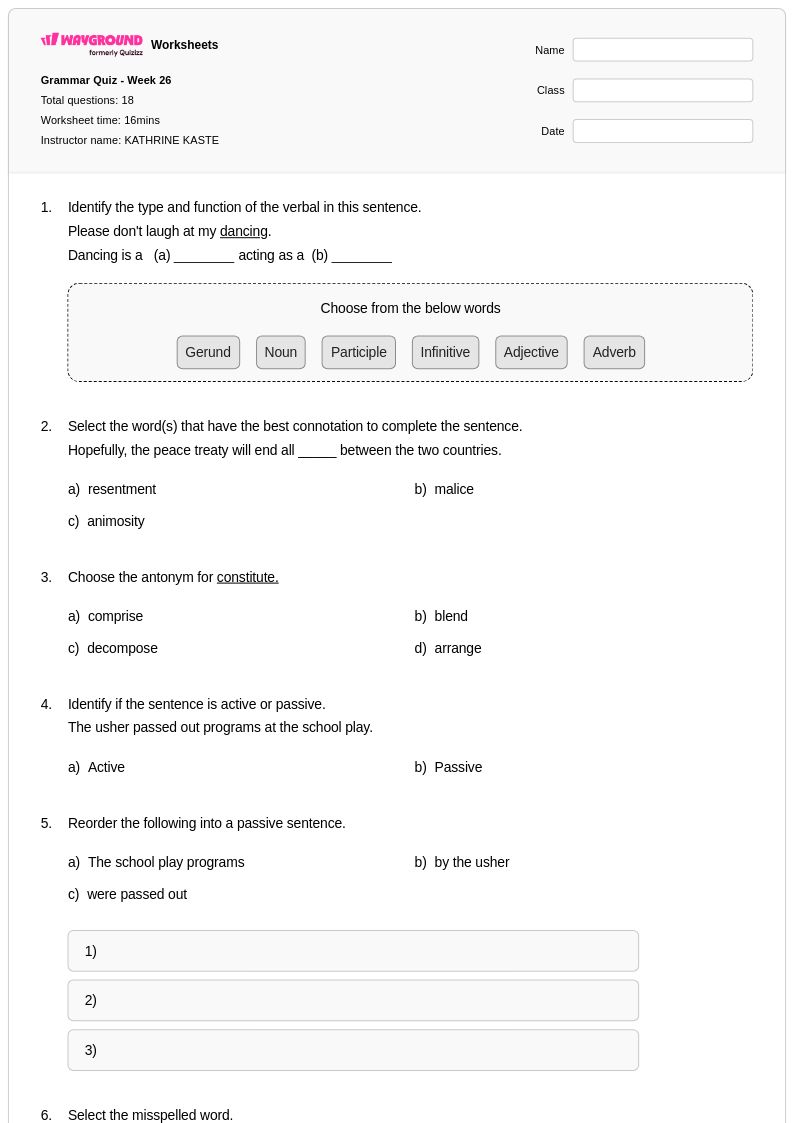
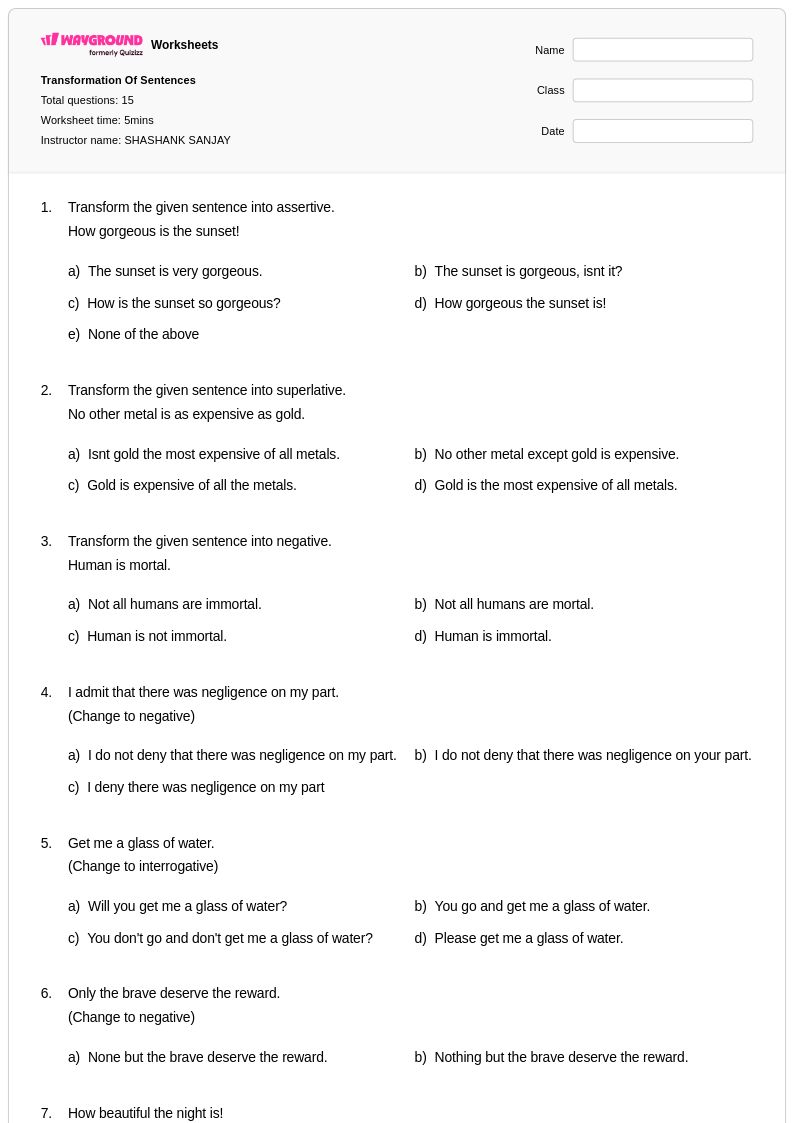
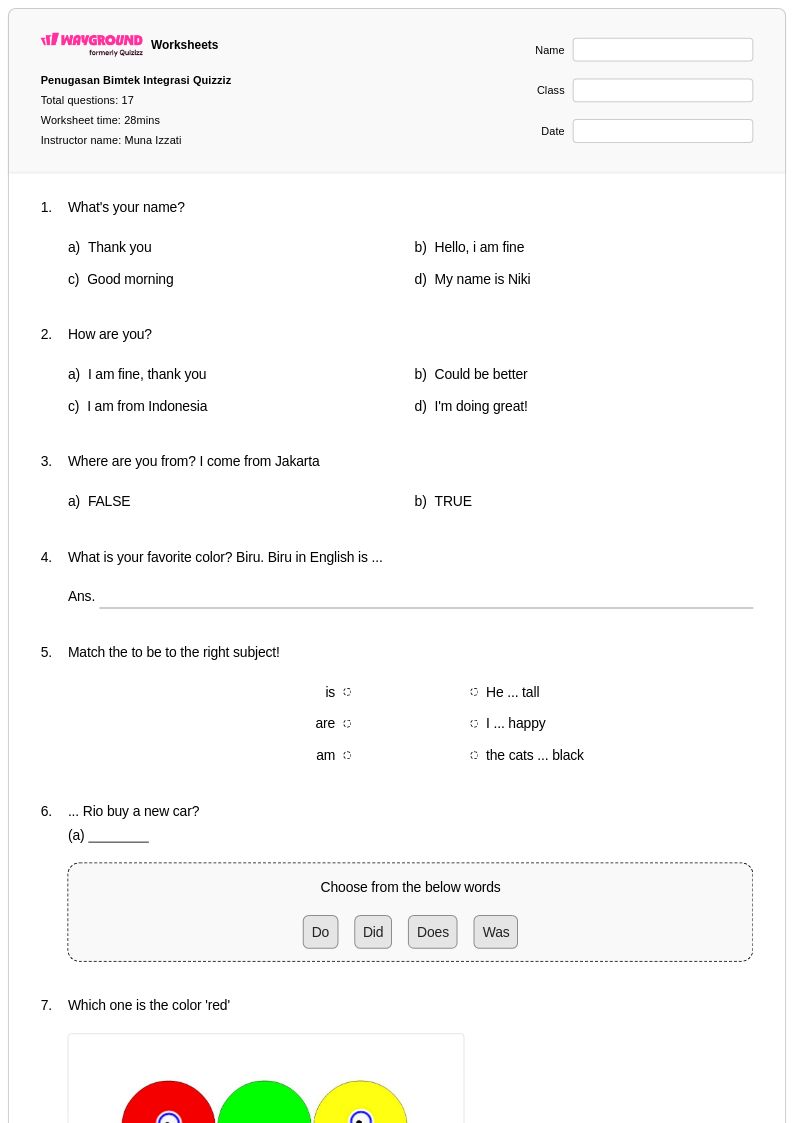
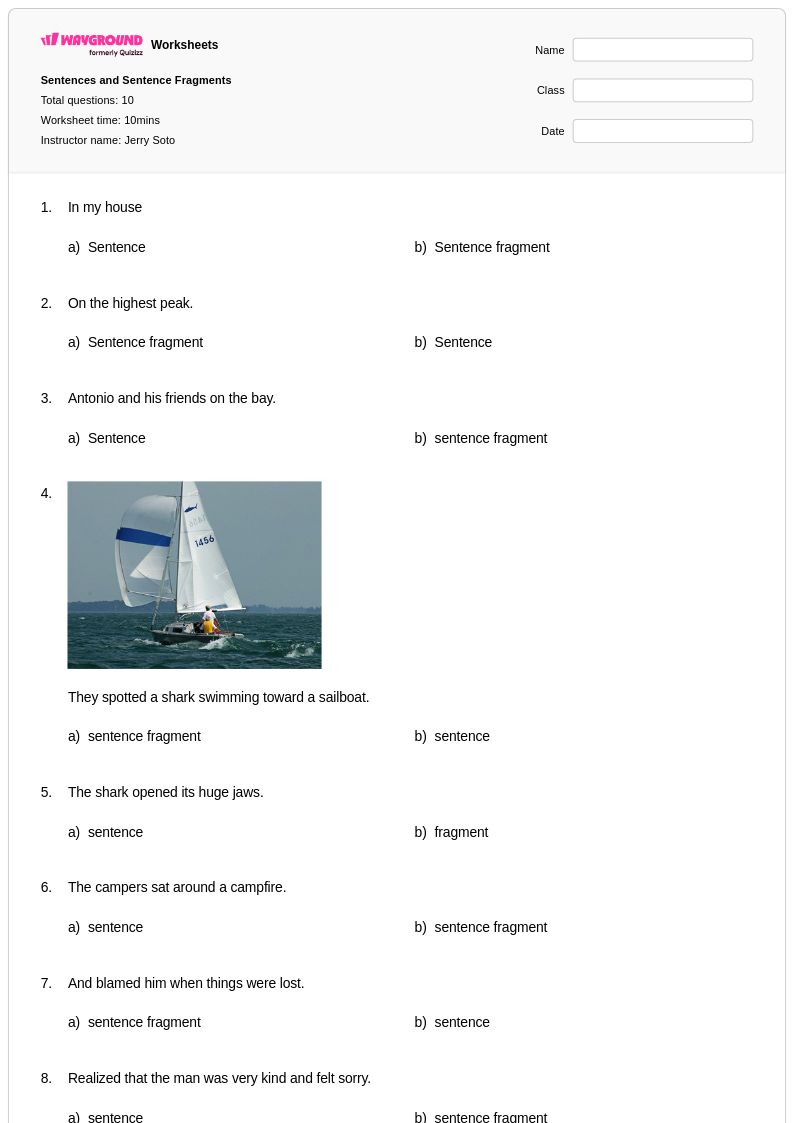
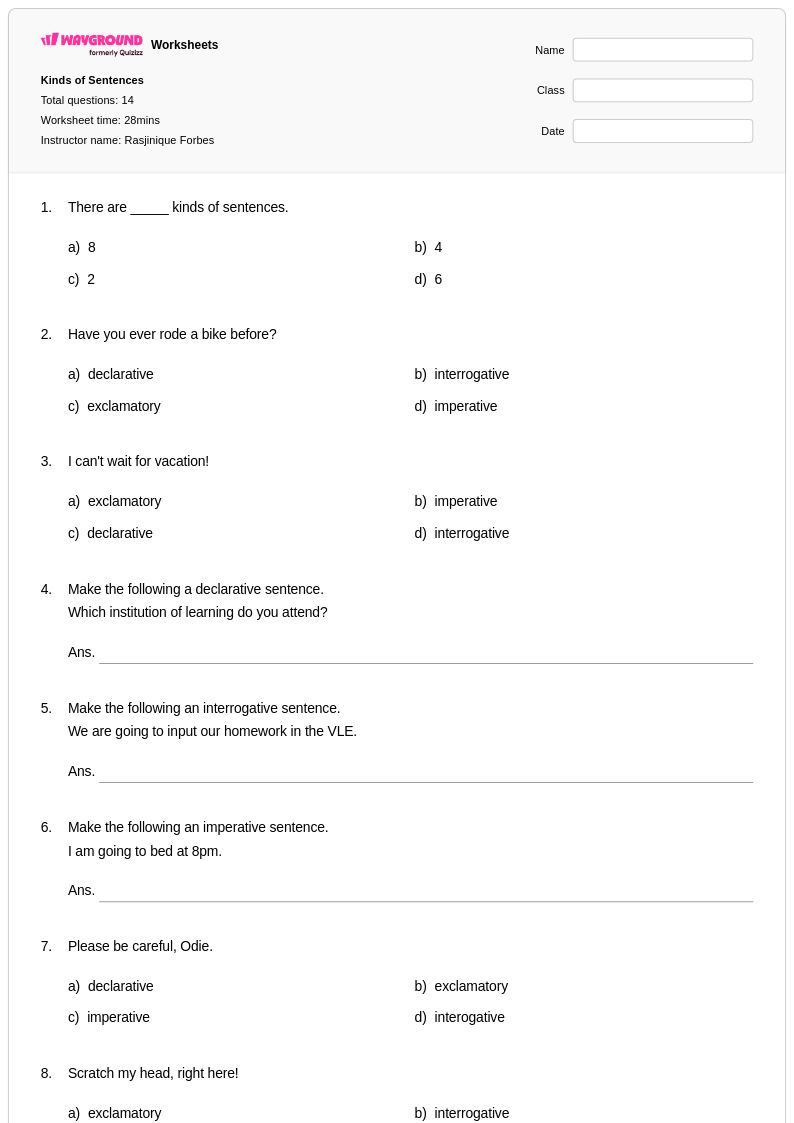
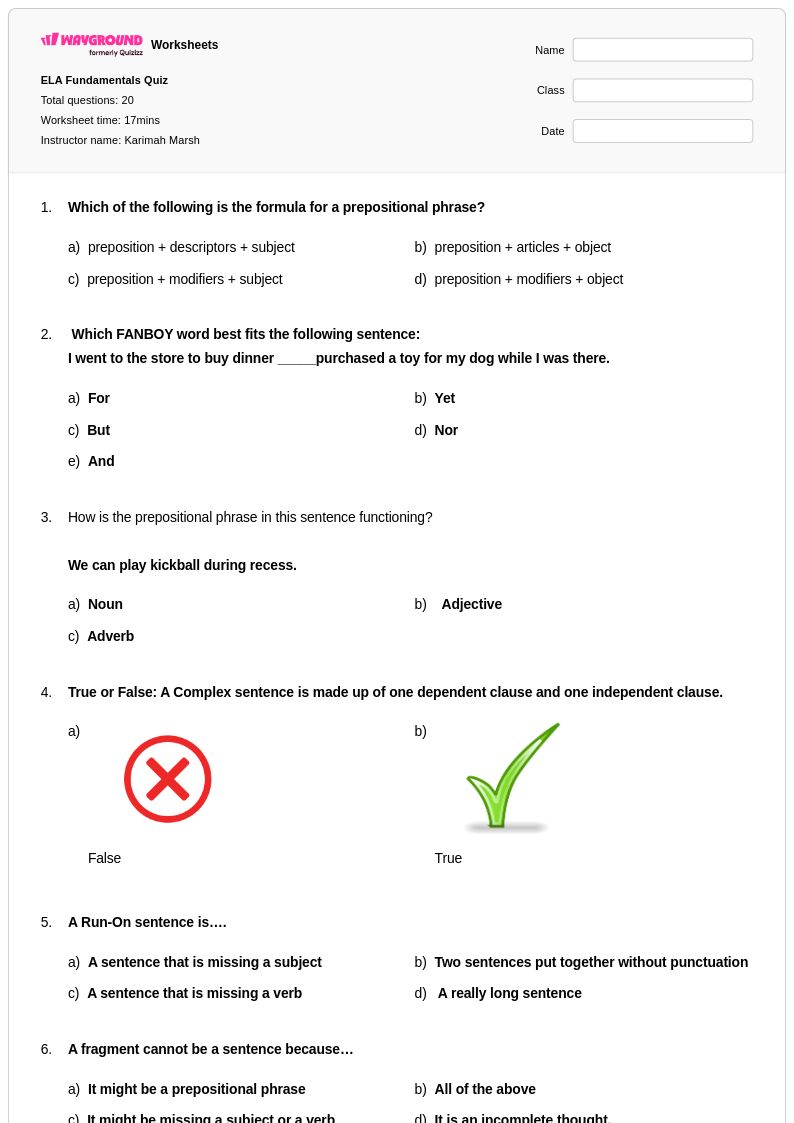
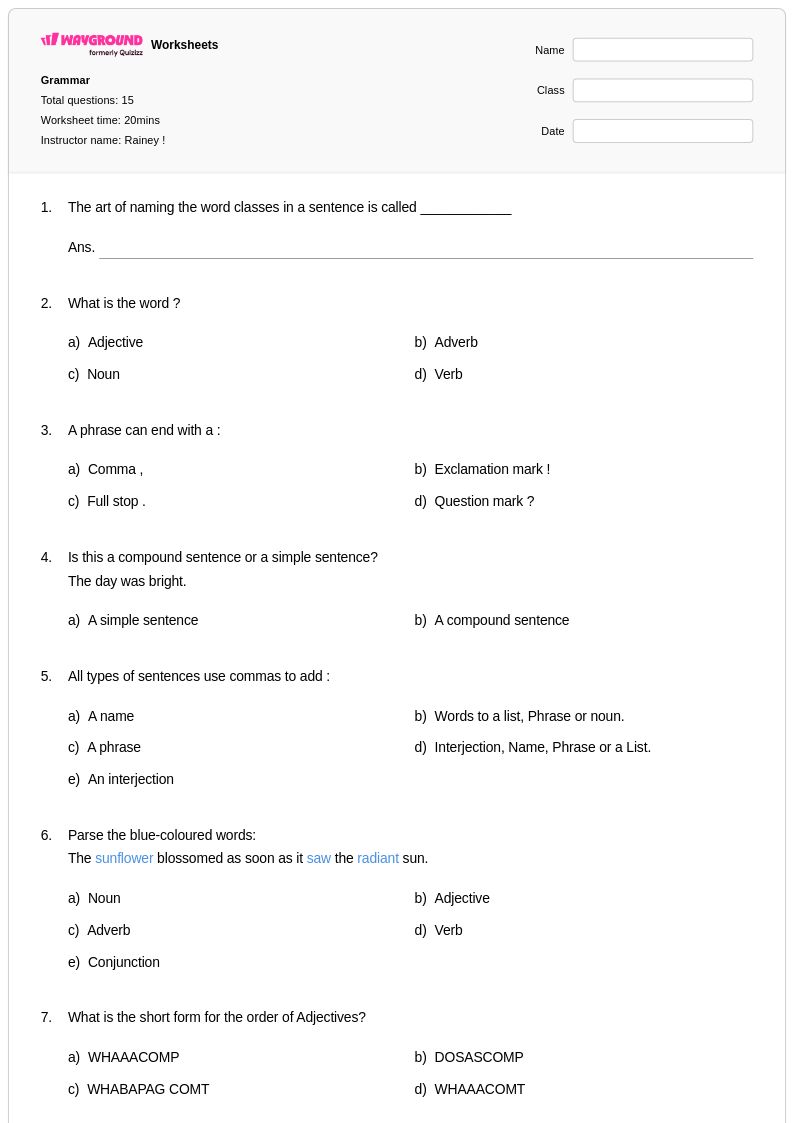
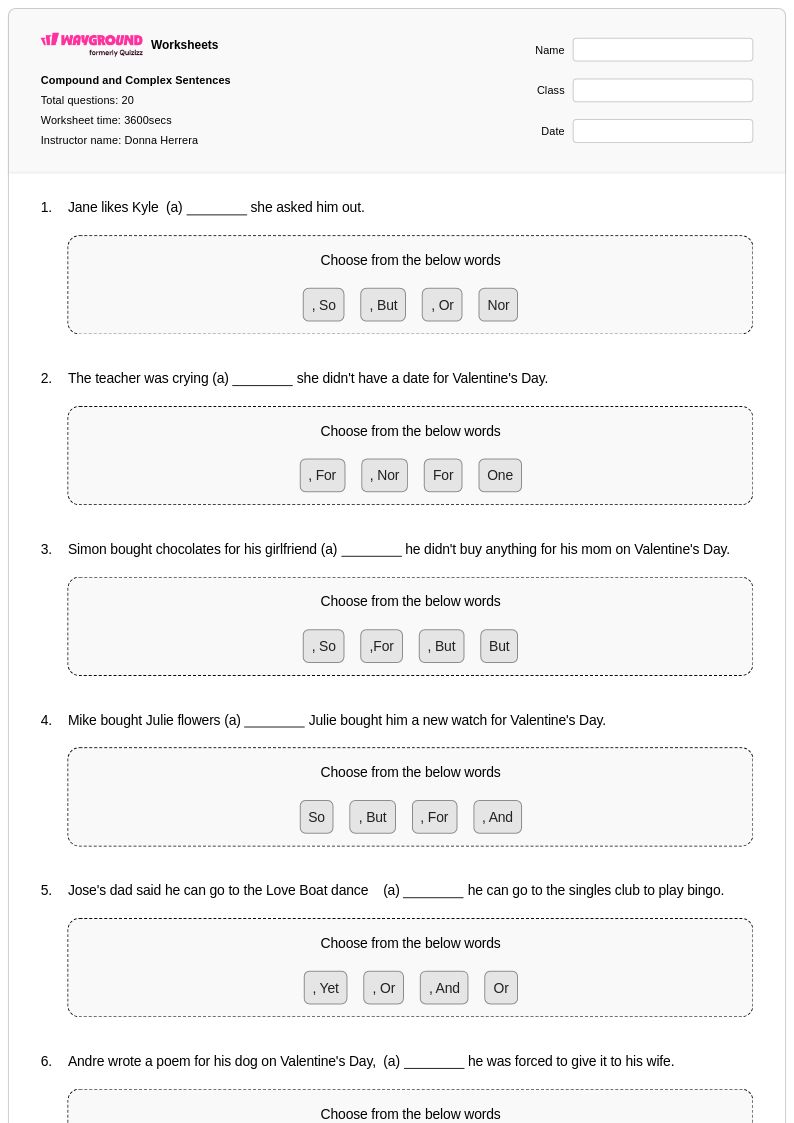
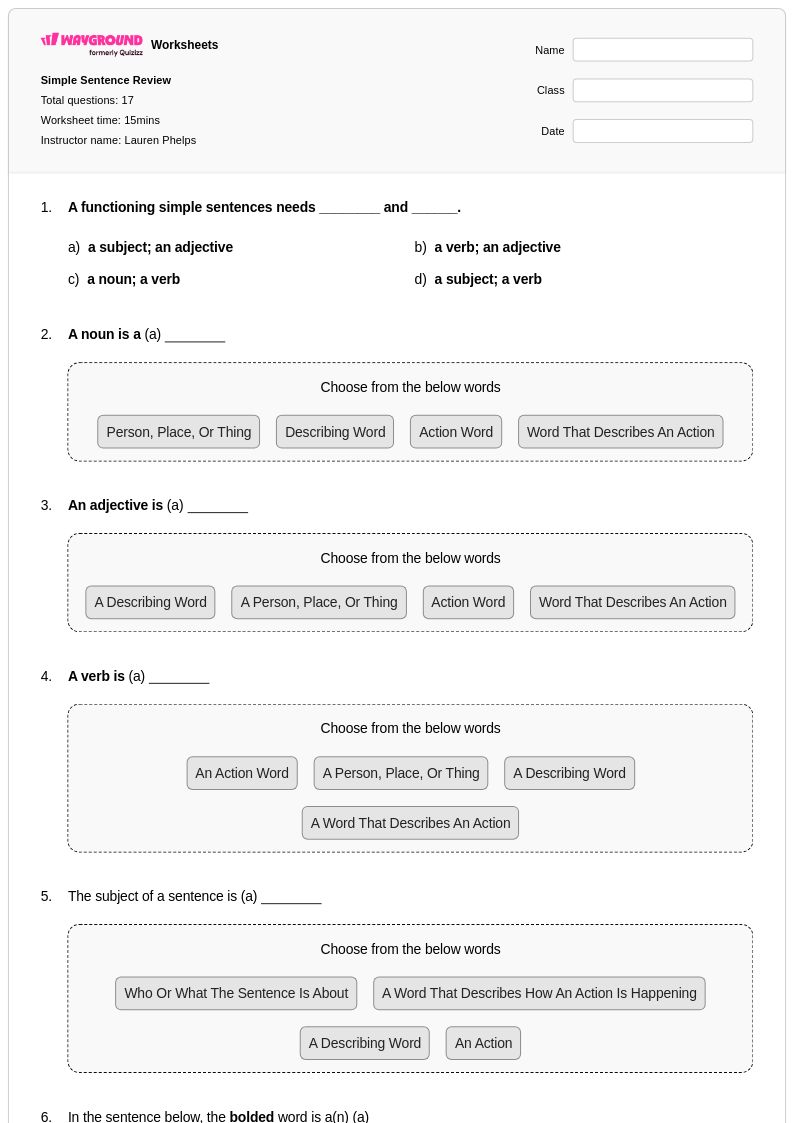
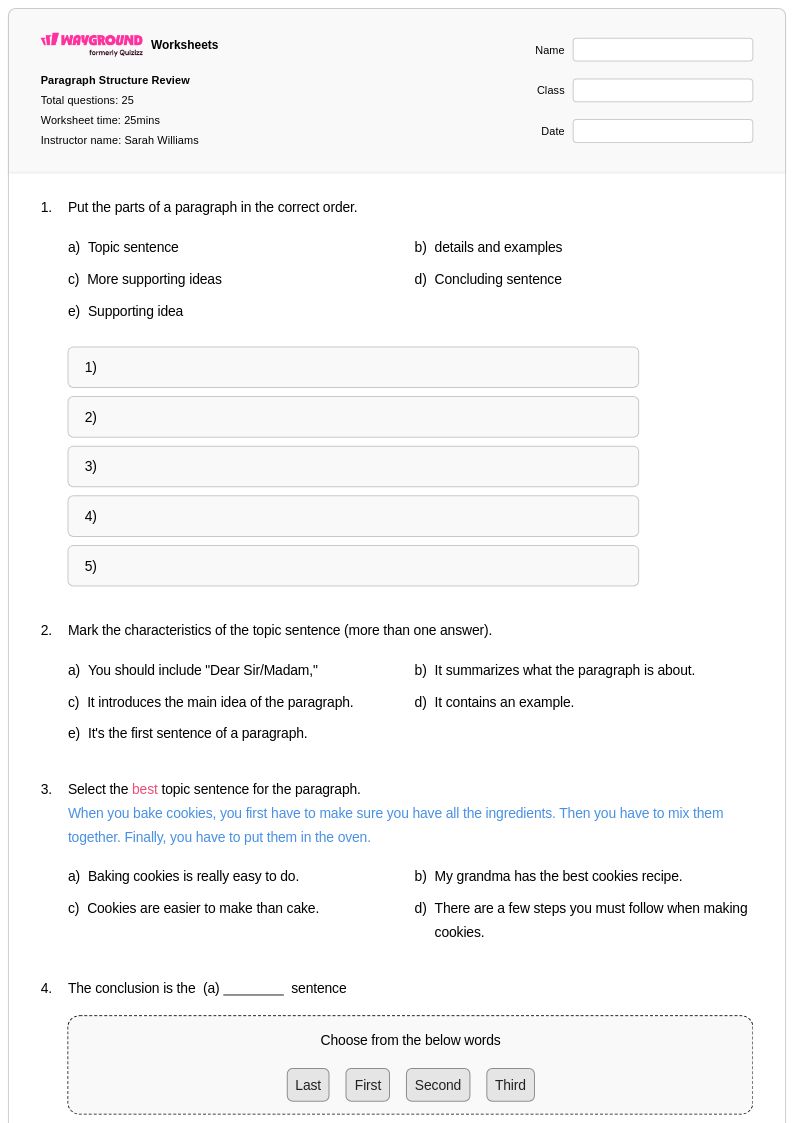
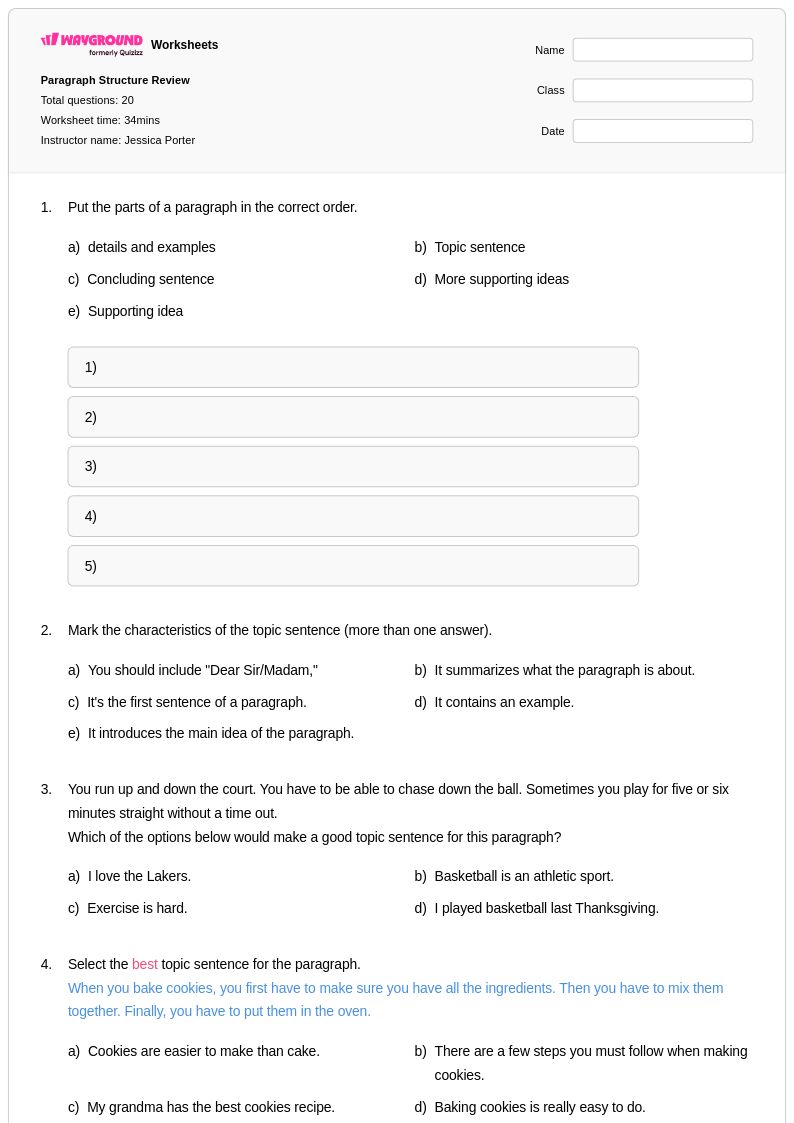
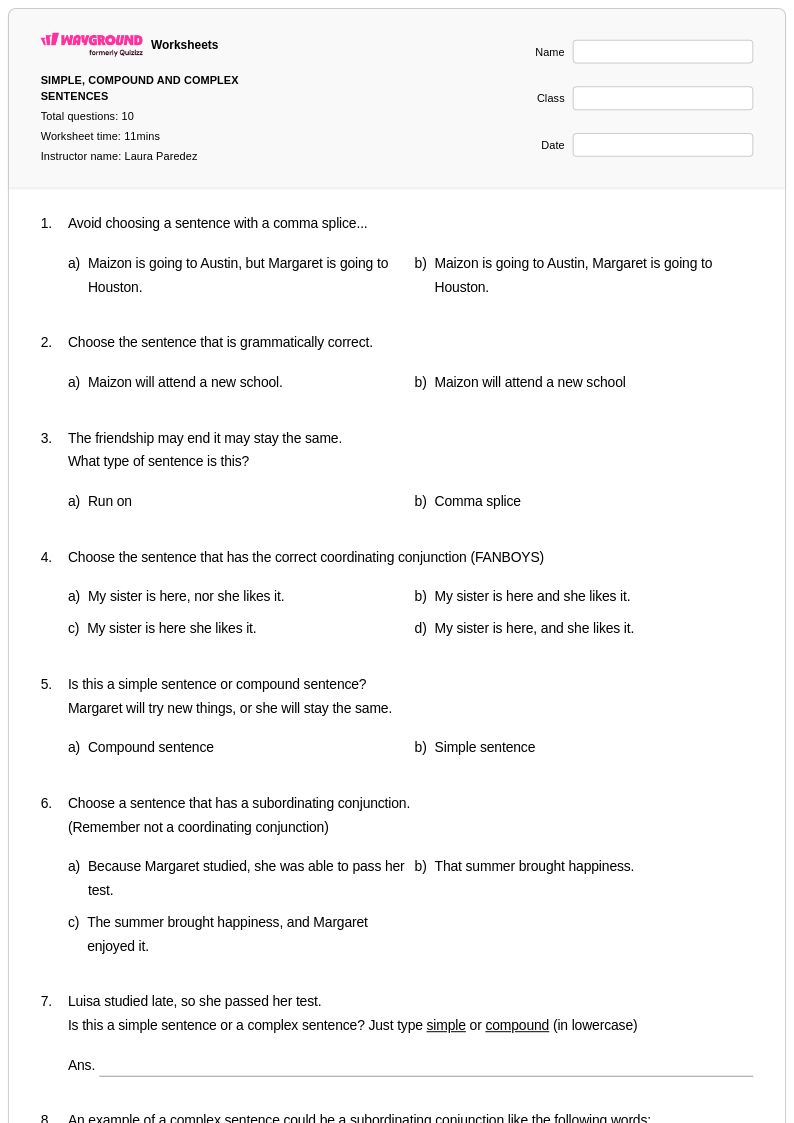
Class 8 sentence expansion worksheets available through Wayground (formerly Quizizz) provide comprehensive practice in transforming basic sentences into more complex, detailed, and engaging written expressions. These carefully designed educational resources strengthen students' ability to enhance simple sentences by adding descriptive adjectives, adverbial phrases, prepositional phrases, and subordinate clauses while maintaining grammatical accuracy and clarity. The worksheets focus on essential techniques such as combining short, choppy sentences into flowing compound and complex structures, incorporating sensory details and specific vocabulary, and varying sentence beginnings to create more sophisticated writing. Each printable worksheet includes structured practice problems that guide eighth-grade students through progressive levels of sentence development, from basic expansion exercises to advanced revision tasks, with comprehensive answer keys that support both independent learning and teacher-directed instruction in free, accessible pdf formats.
Wayground (formerly Quizizz) empowers educators with millions of teacher-created sentence expansion resources specifically aligned to Class 8 writing standards and differentiated to meet diverse classroom needs. The platform's robust search and filtering capabilities enable teachers to quickly locate worksheets targeting specific expansion techniques, grammatical structures, or complexity levels, while customization tools allow for seamless modification of existing materials to match individual student requirements or curriculum objectives. These versatile resources are available in both printable pdf formats for traditional classroom use and digital formats for technology-enhanced learning environments, supporting flexible instructional approaches for skill practice, targeted remediation, and enrichment activities. Teachers can efficiently plan comprehensive writing instruction sequences, assess student progress through varied practice opportunities, and provide focused support for students developing the sophisticated sentence construction skills essential for academic success across all subject areas.
FAQs
How do I teach sentence expansion to students who write very short, simple sentences?
Start by teaching students the 'Who, What, When, Where, Why, and How' questioning strategy applied directly to a base sentence. For example, take 'The dog ran' and prompt students to ask where the dog ran, how it ran, and why — then guide them to fold those answers back into the original sentence. Modeling this process with think-alouds before independent practice helps students internalize the habit of elaborating rather than stopping at the first complete thought.
What exercises help students practice expanding sentences?
Effective practice exercises include starting with a bare-bones sentence and asking students to add one element at a time — first an adjective, then a prepositional phrase, then a subordinate clause. Sentence expansion worksheets that scaffold this process step-by-step are particularly useful because they give students a structured path from simple to complex without overwhelming them. Repeated guided practice with immediate feedback, such as answer keys, helps students build automaticity with the skill.
What mistakes do students commonly make when expanding sentences?
The most common error is adding words that create run-on sentences or comma splices rather than grammatically integrated expansions. Students also frequently over-expand, piling on modifiers until the original meaning is obscured or the sentence becomes unwieldy. Another pattern is repetitive sentence openings — students tend to default to adding information in the same position each time, so instruction should explicitly address varying where expansion occurs within a sentence.
How can I use sentence expansion worksheets to support struggling writers?
For struggling writers, sentence expansion worksheets work best when paired with sentence frames that show where new information can be inserted — for example, blanks placed before the subject, after the verb, or at the end of the clause. Breaking the task into single-skill steps (add only a describing word first, then only a prepositional phrase) reduces cognitive load and builds confidence incrementally. On Wayground, teachers can also enable the Read Aloud accommodation so students can hear the base sentence and their expanded version read back to them, which helps them catch awkward phrasing before submitting.
How do I use Wayground's sentence expansion worksheets in my classroom?
Wayground's sentence expansion worksheets are available as printable PDFs for traditional classroom use and in digital formats for technology-integrated environments, including the option to host them as a quiz directly on Wayground. Each worksheet includes an answer key, making them suitable for independent practice, homework, writing centers, or formative assessment. Teachers can also apply student-level accommodations such as extended time or reduced answer choices to meet the needs of diverse learners without disrupting the rest of the class.
How does sentence expansion connect to broader writing development?
Sentence expansion is a foundational writing skill because it builds syntactic flexibility — the ability to choose sentence structures that match the complexity of an idea. Students who practice expansion develop stronger vocabulary usage, greater awareness of how phrases and clauses function, and the ability to control sentence rhythm and variety, all of which directly improve the quality of their paragraphs and essays. Teaching expansion at the sentence level creates a concrete, manageable entry point into the larger skill of elaboration in writing.