Free Printable Sentence Structure Worksheets for Class 1
Strengthen Class 1 sentence structure skills with Wayground's free printable worksheets and practice problems, complete with answer keys to help young learners build proper grammar foundations through engaging PDF activities.
Explore printable Sentence Structure worksheets for Class 1
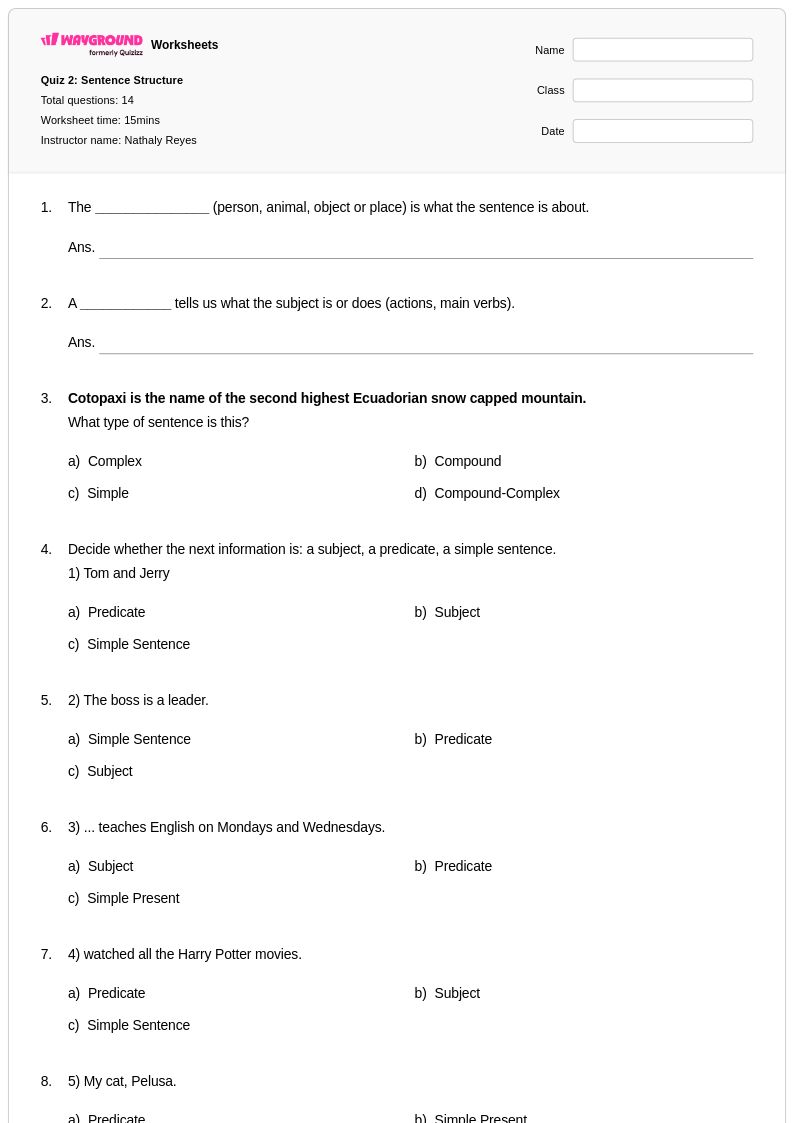
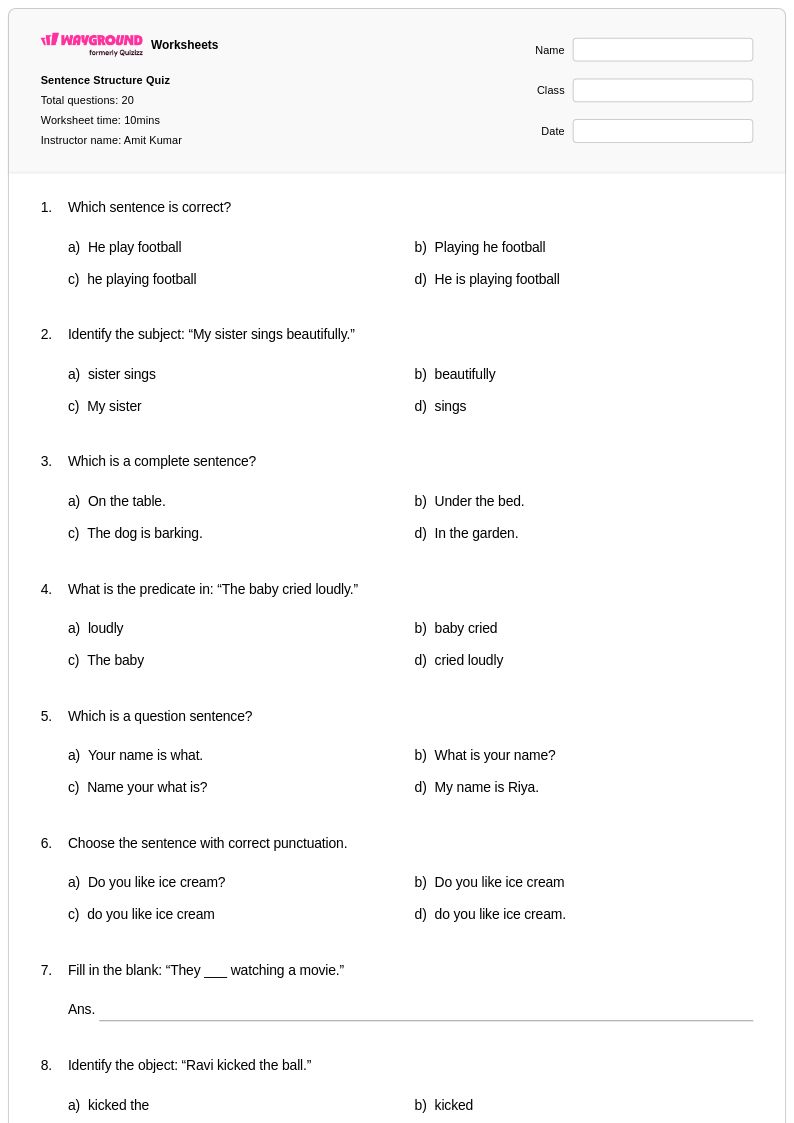
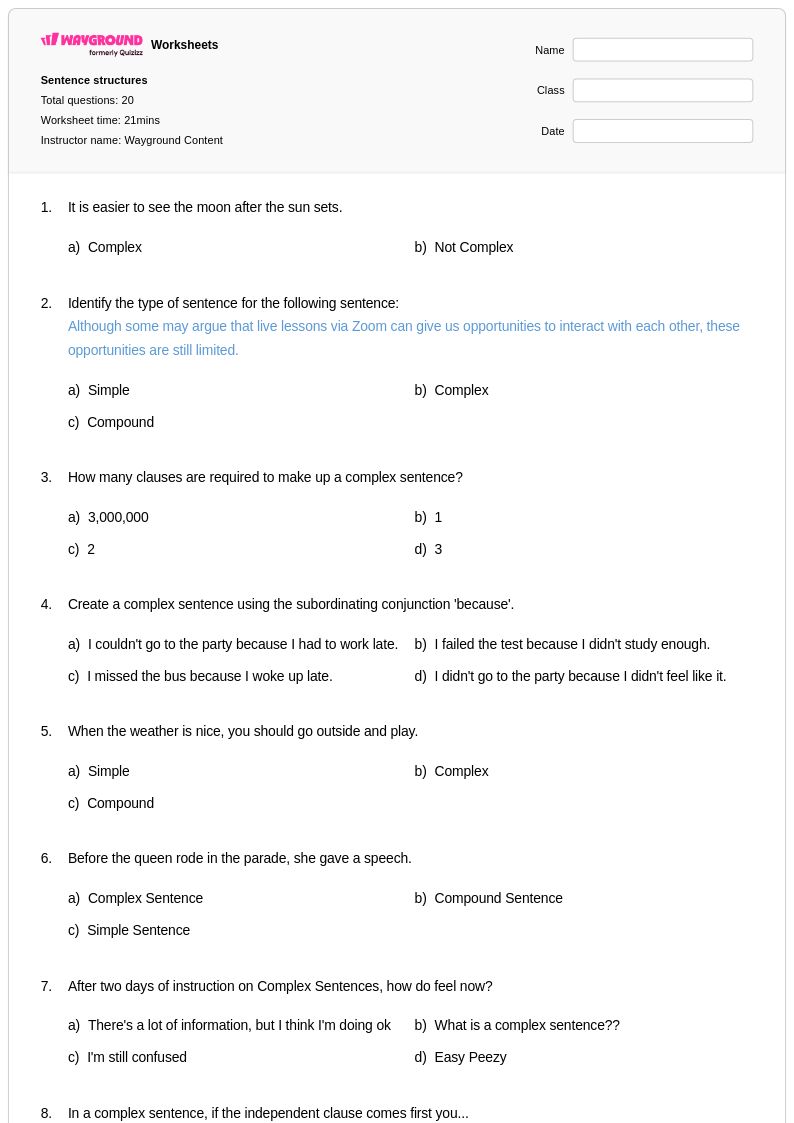
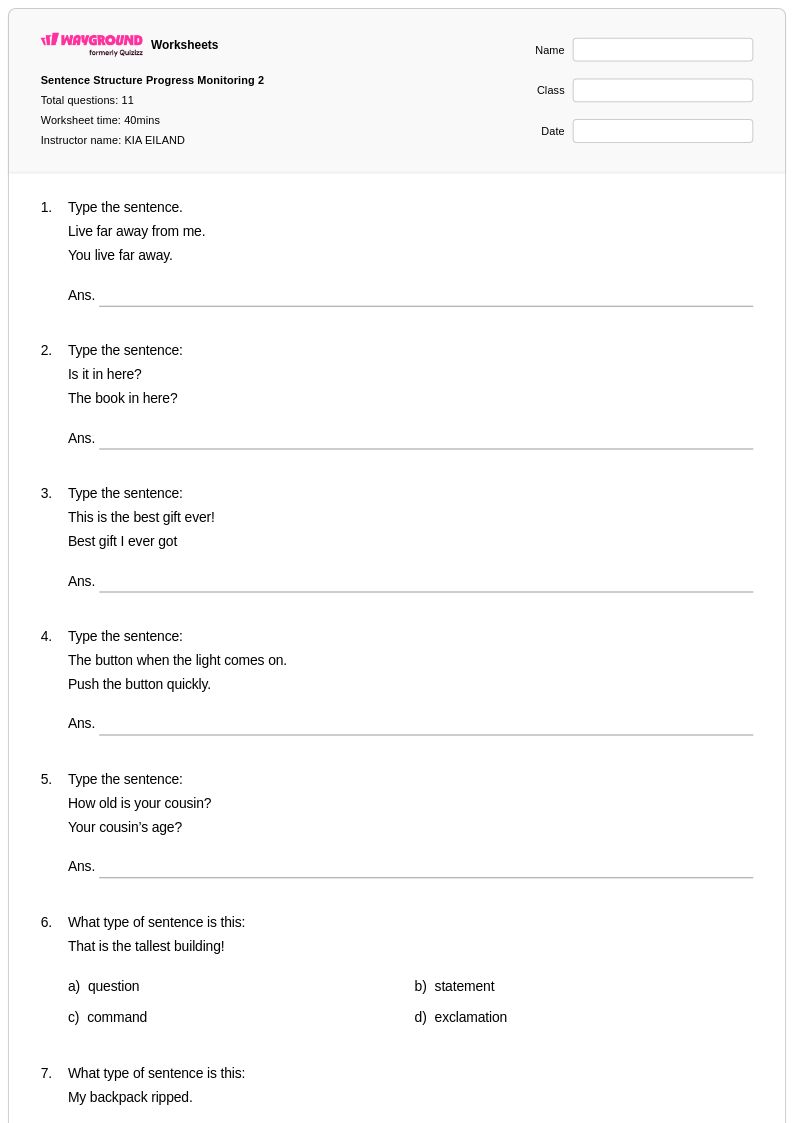
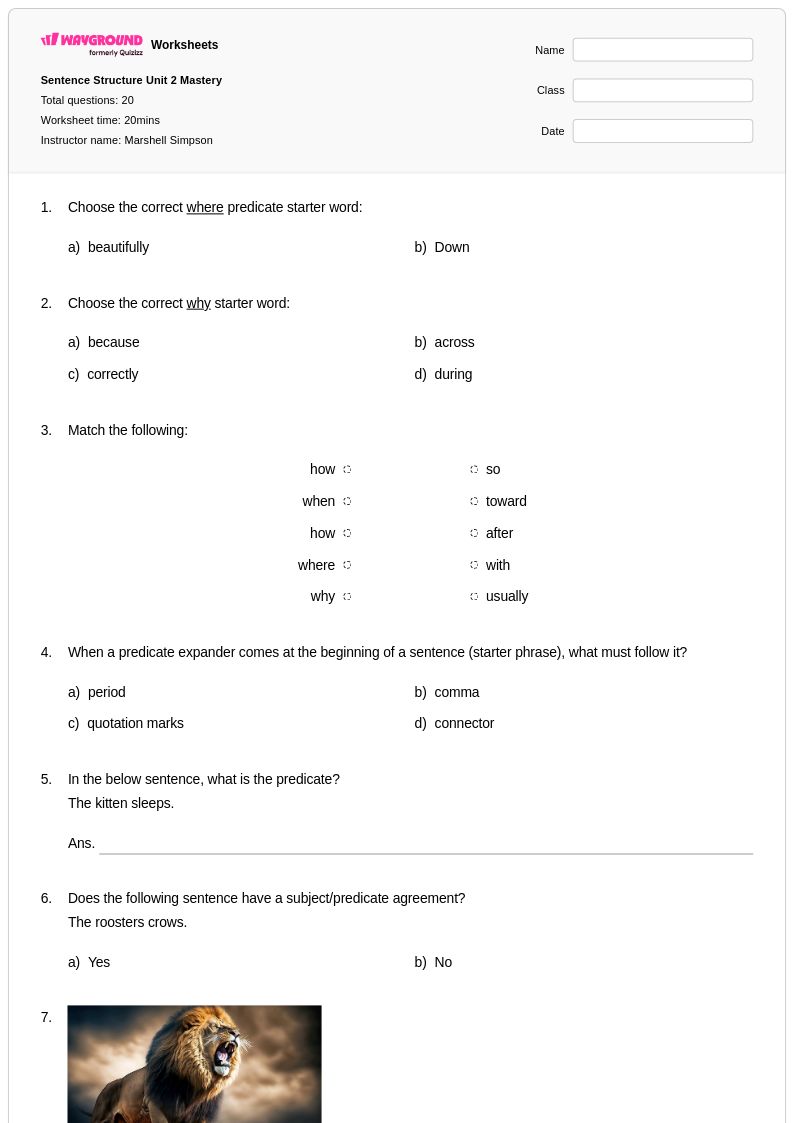
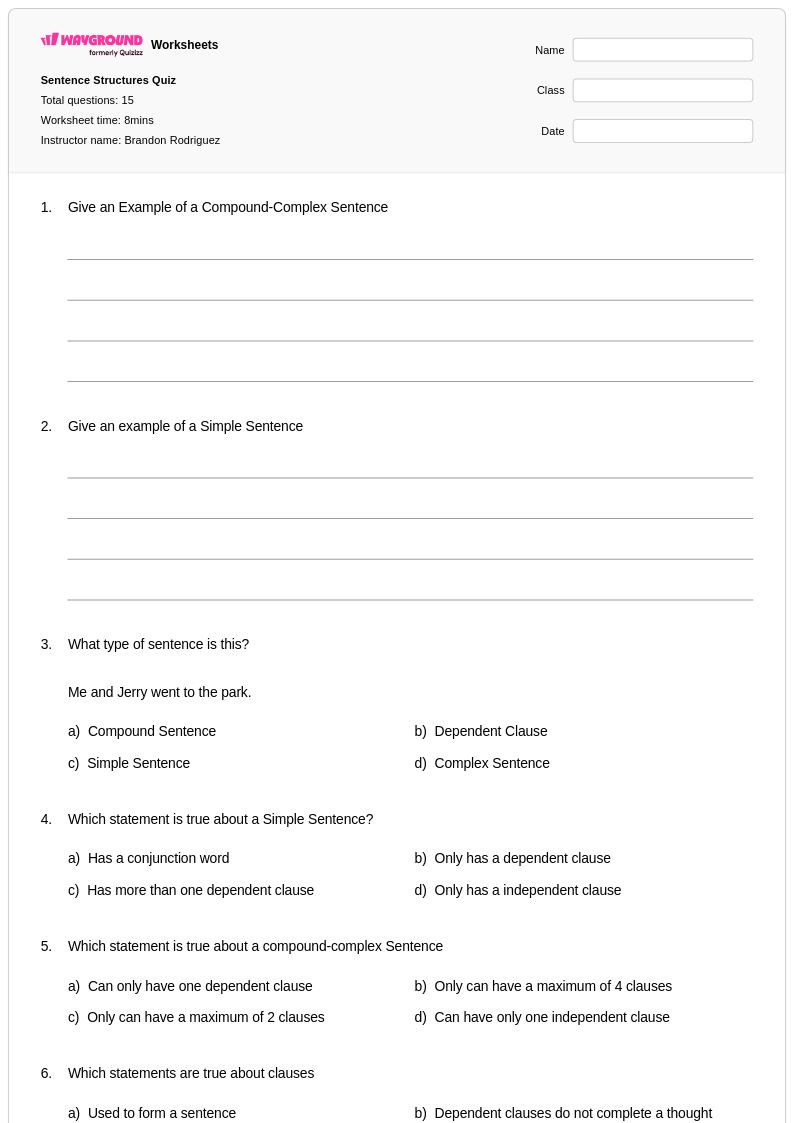
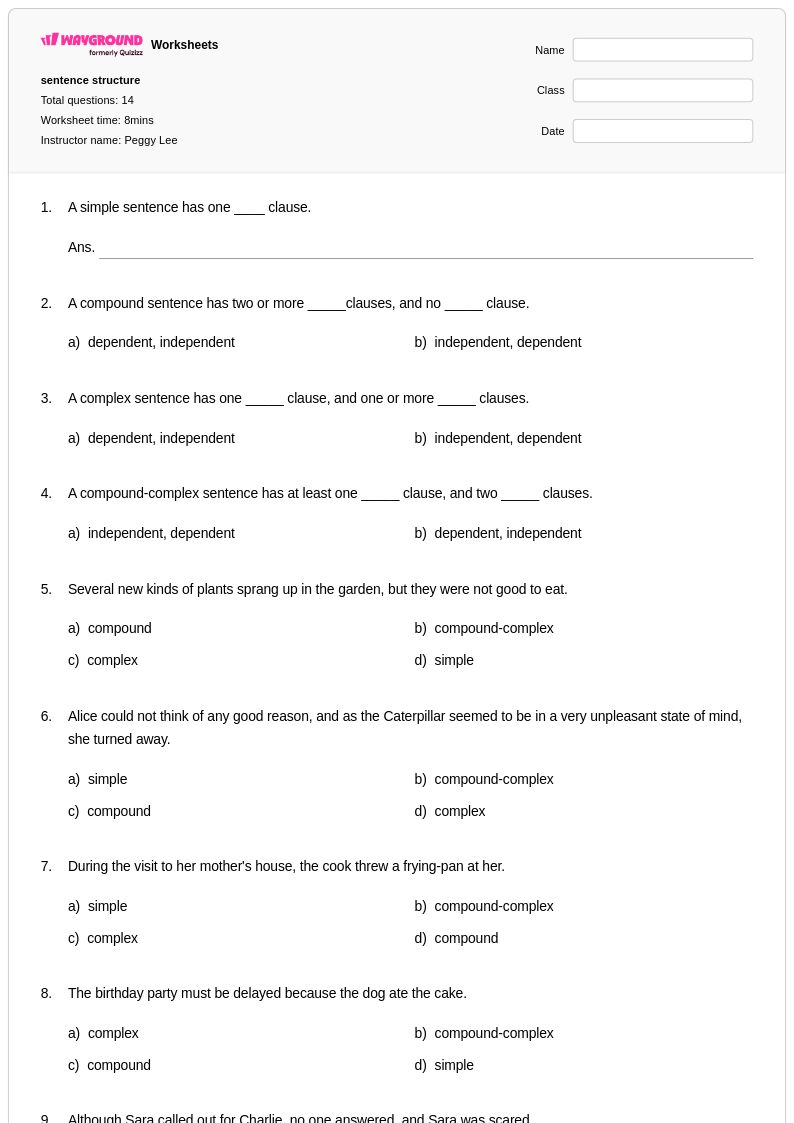
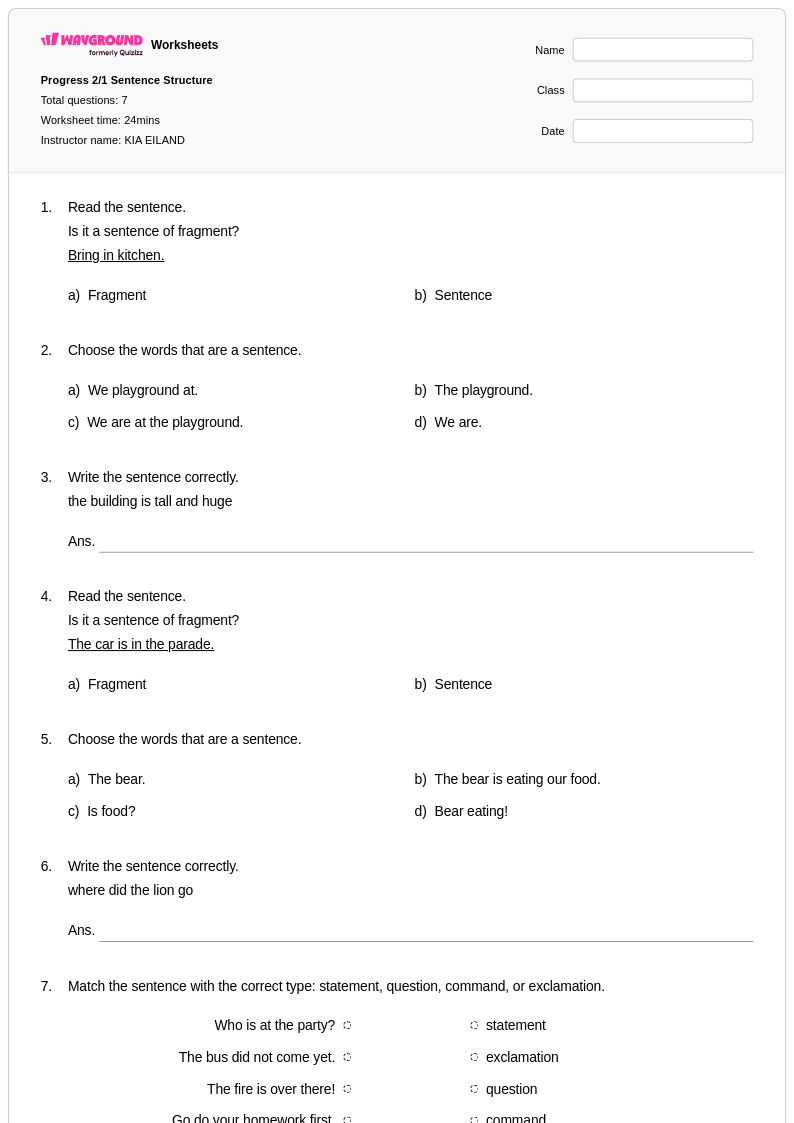
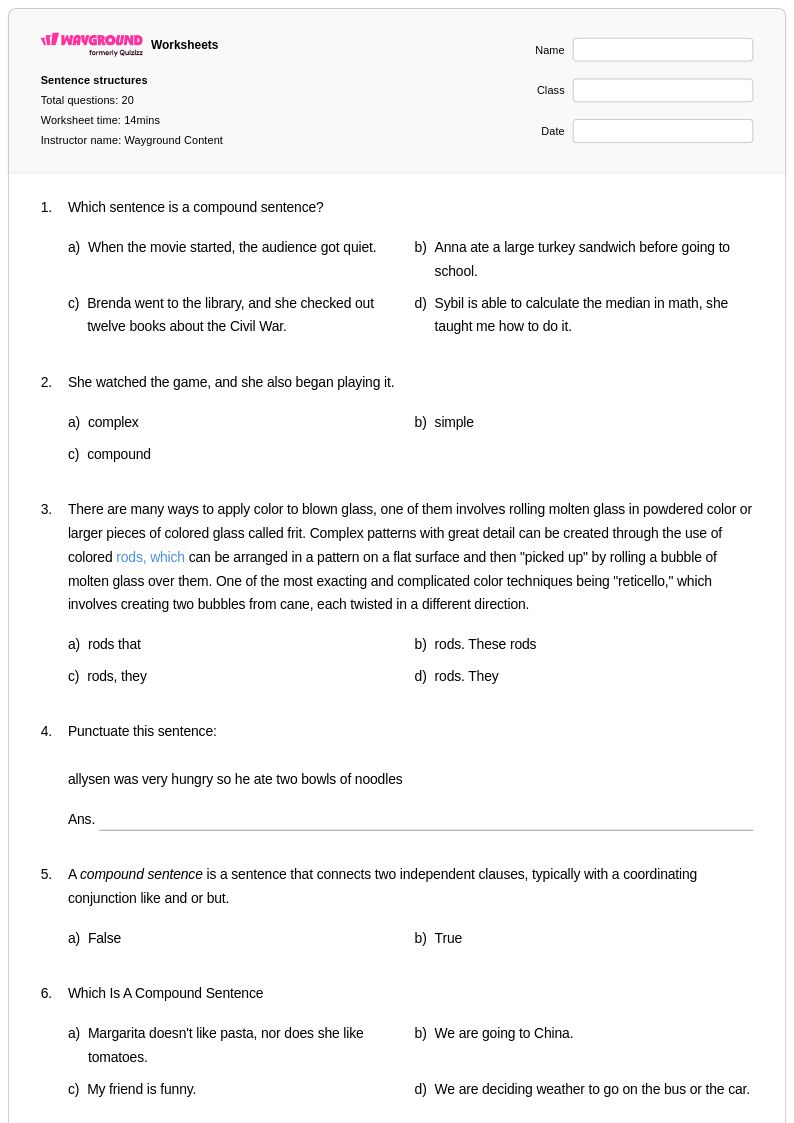
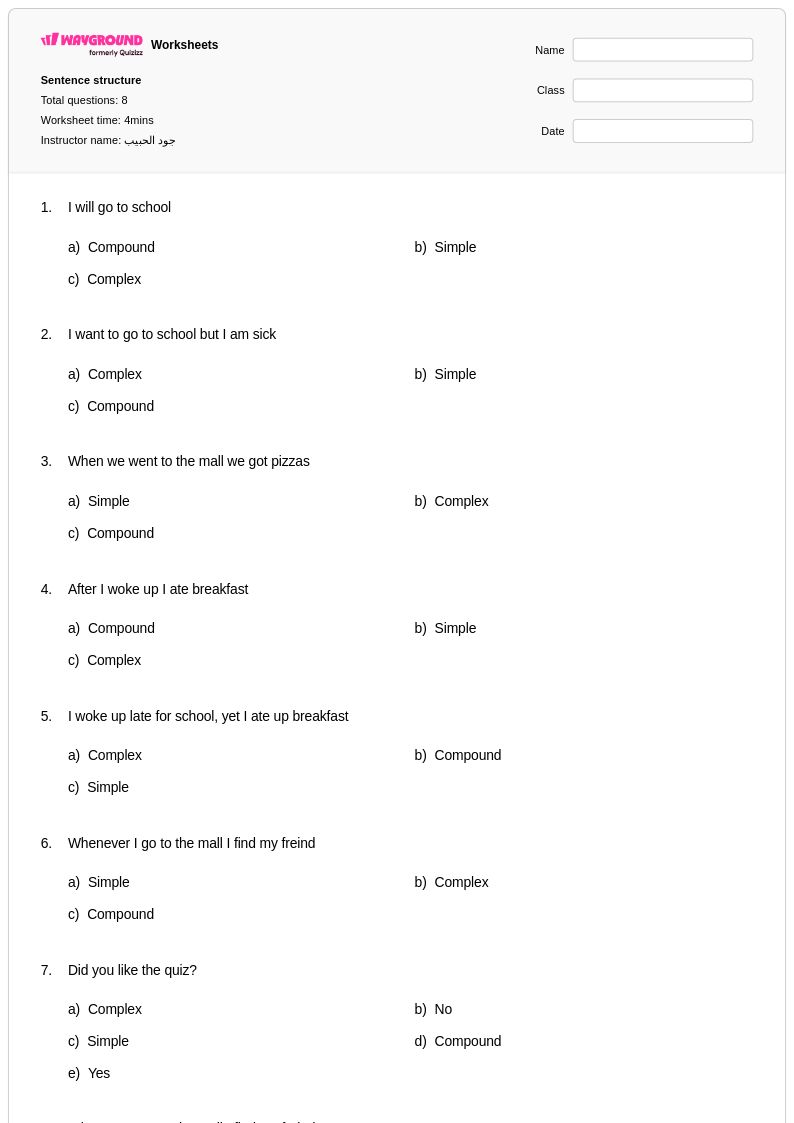
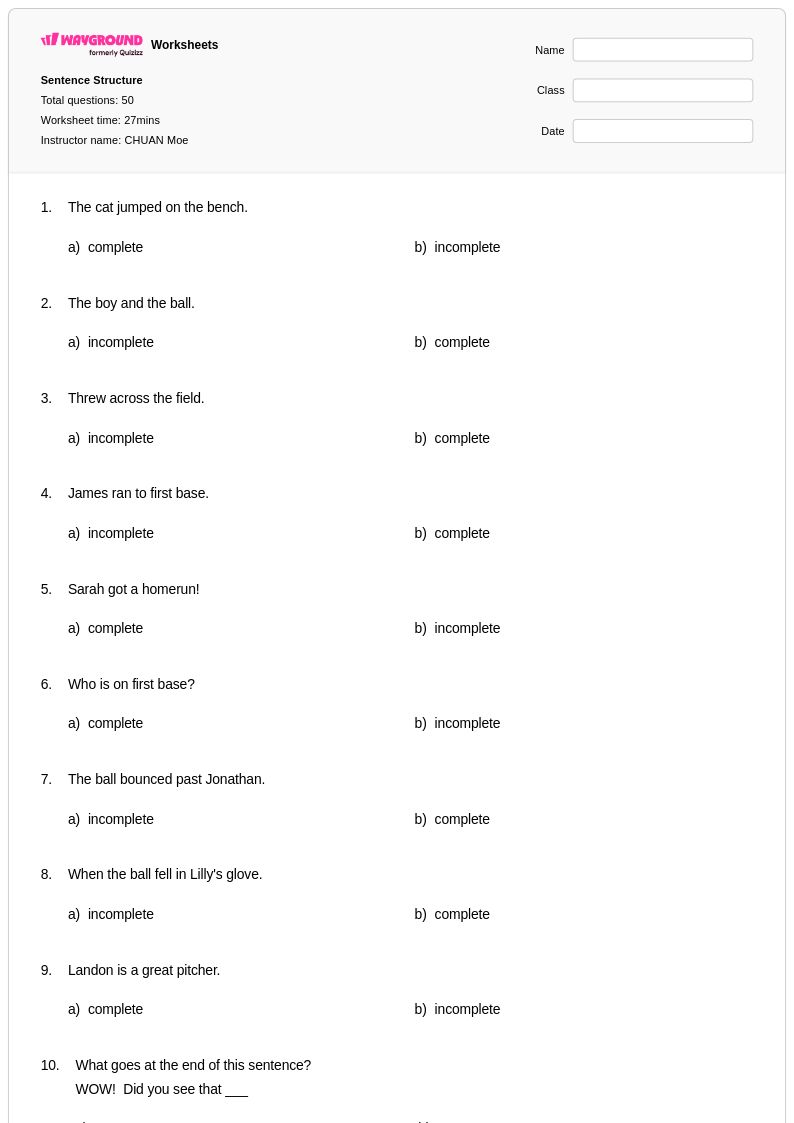
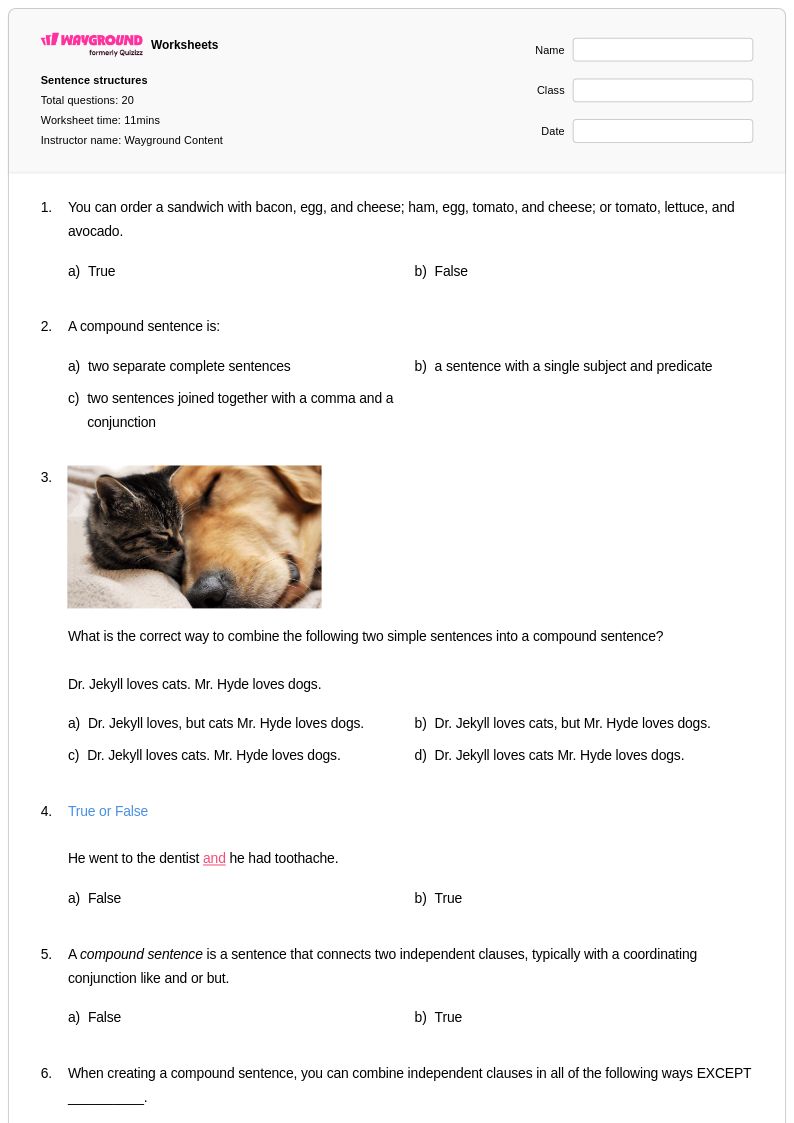
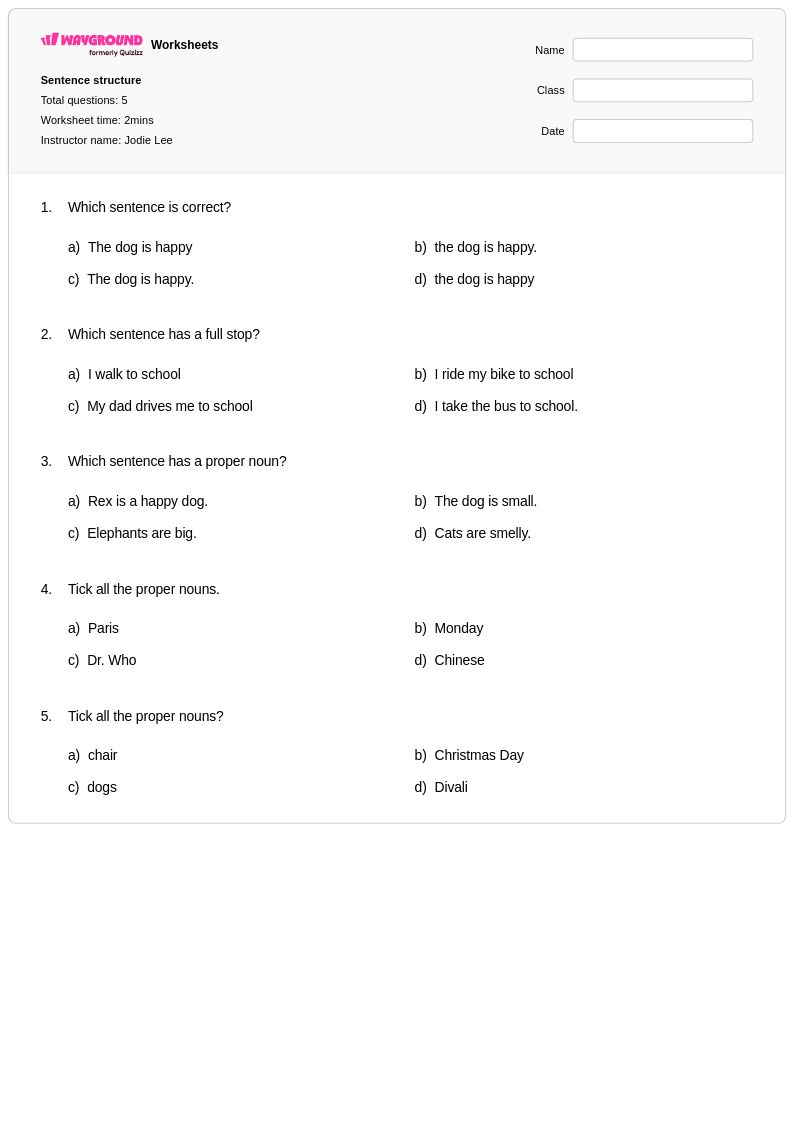
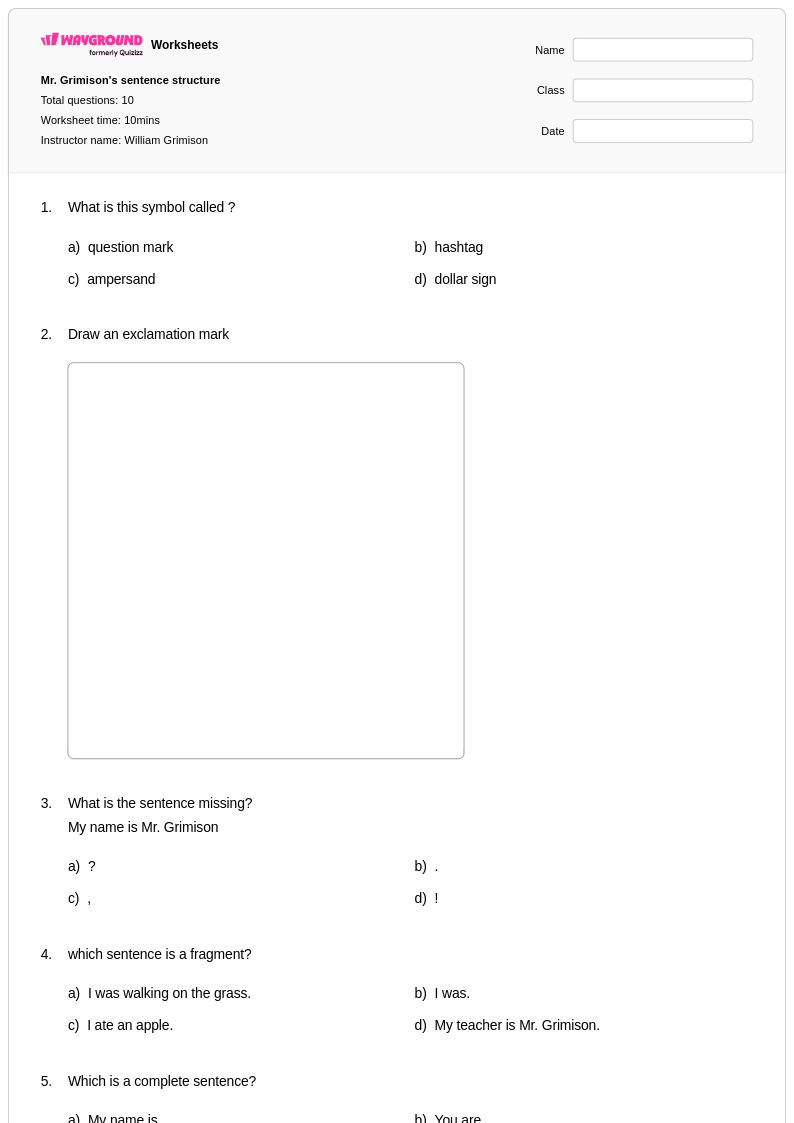
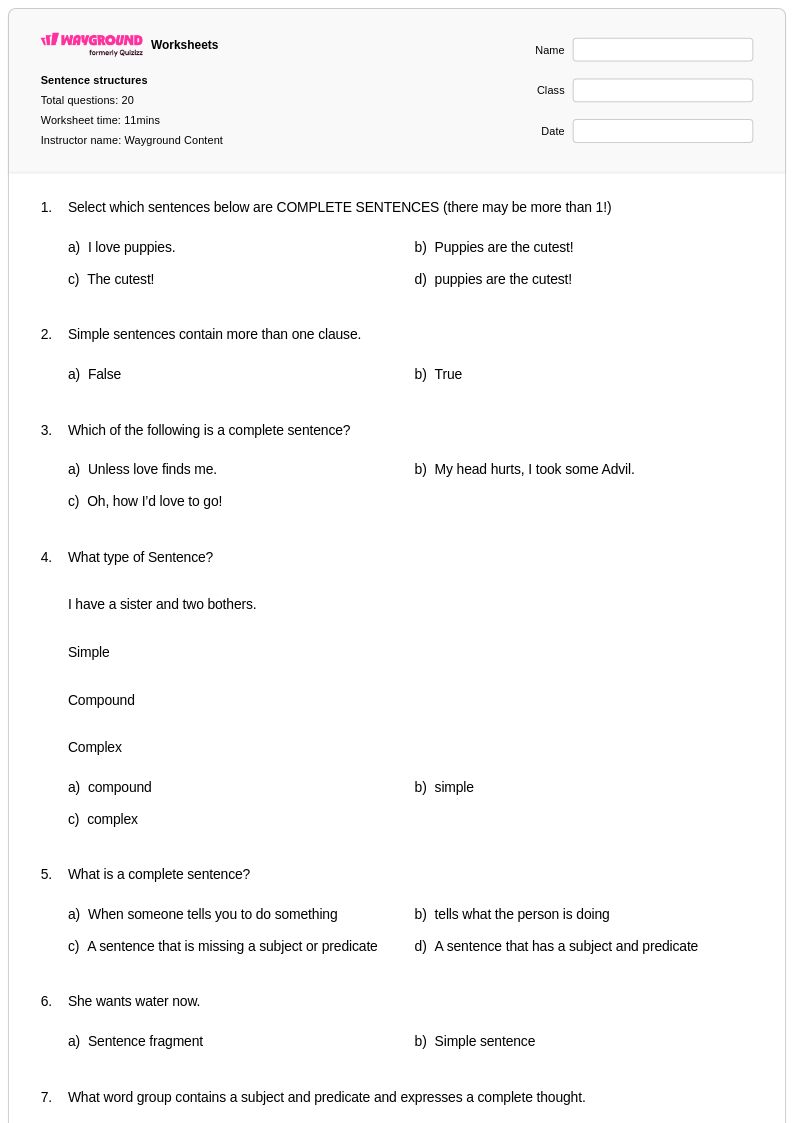
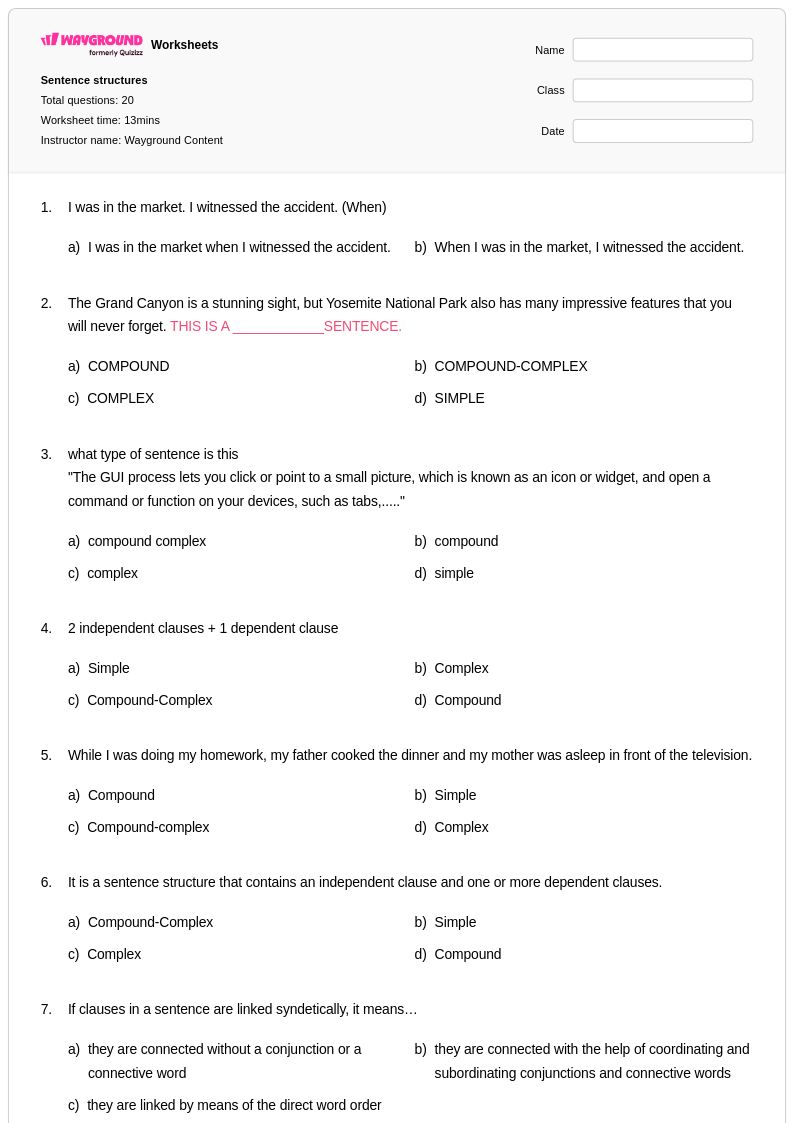
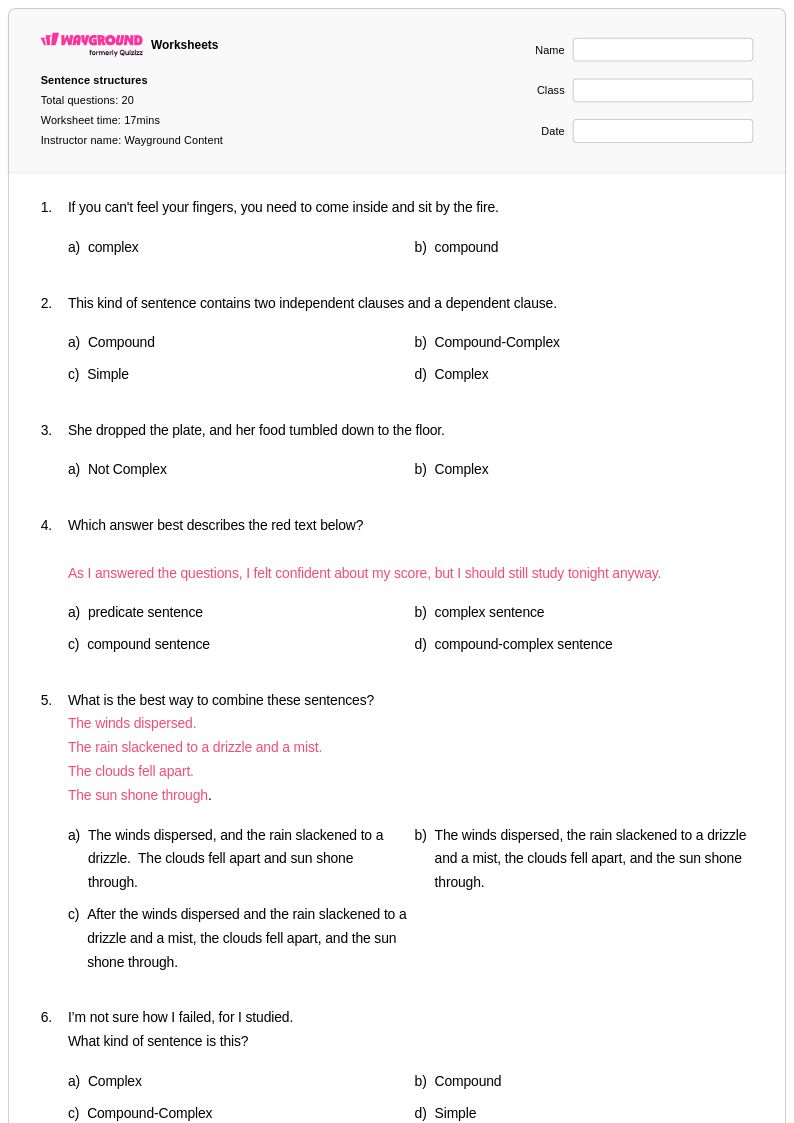
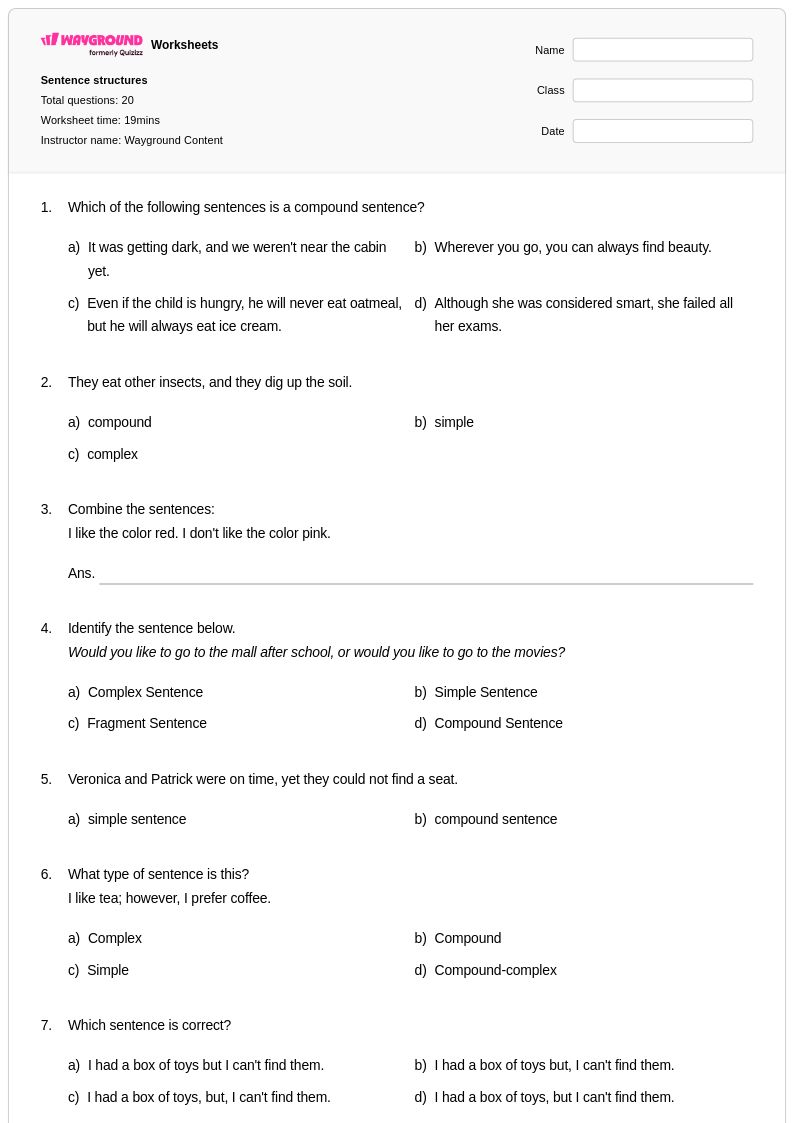
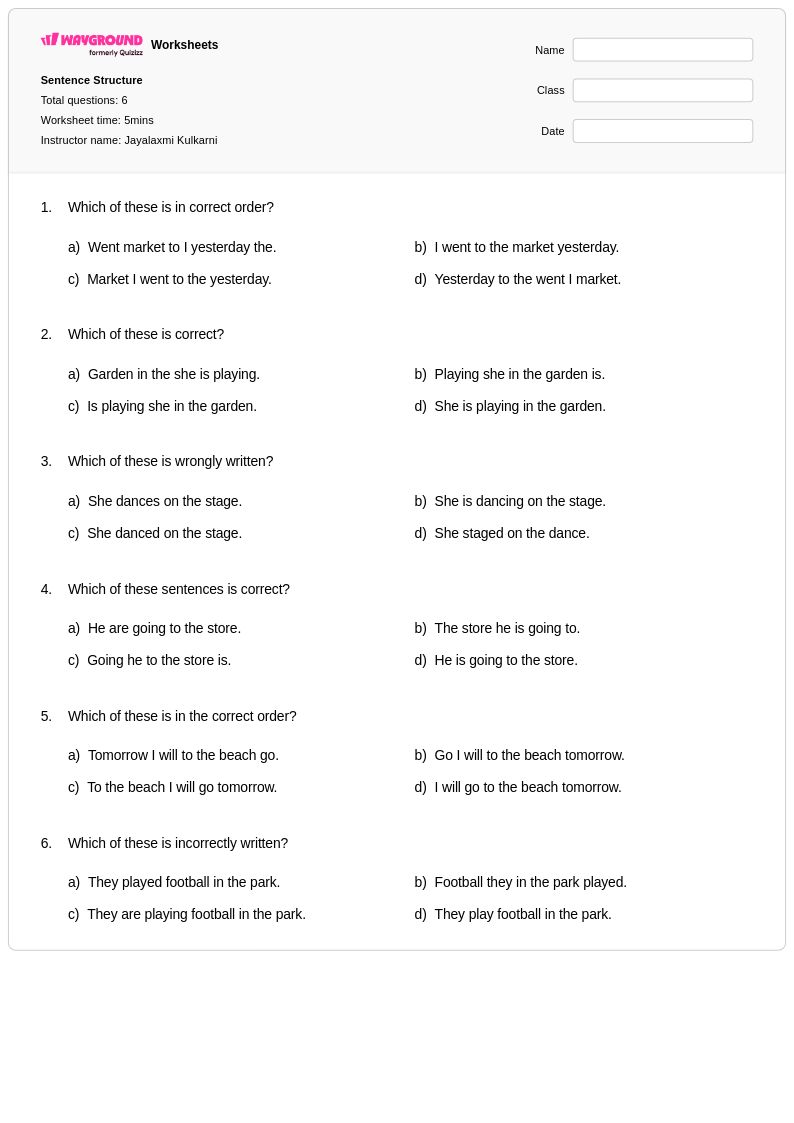
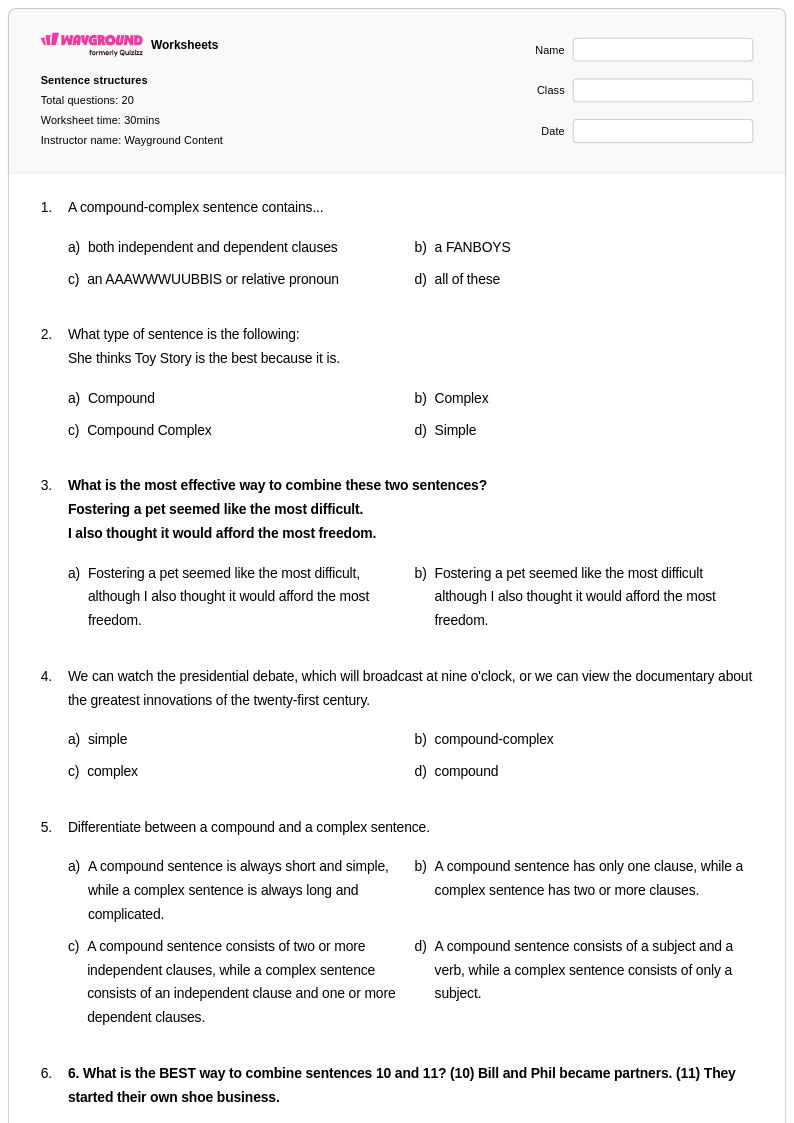
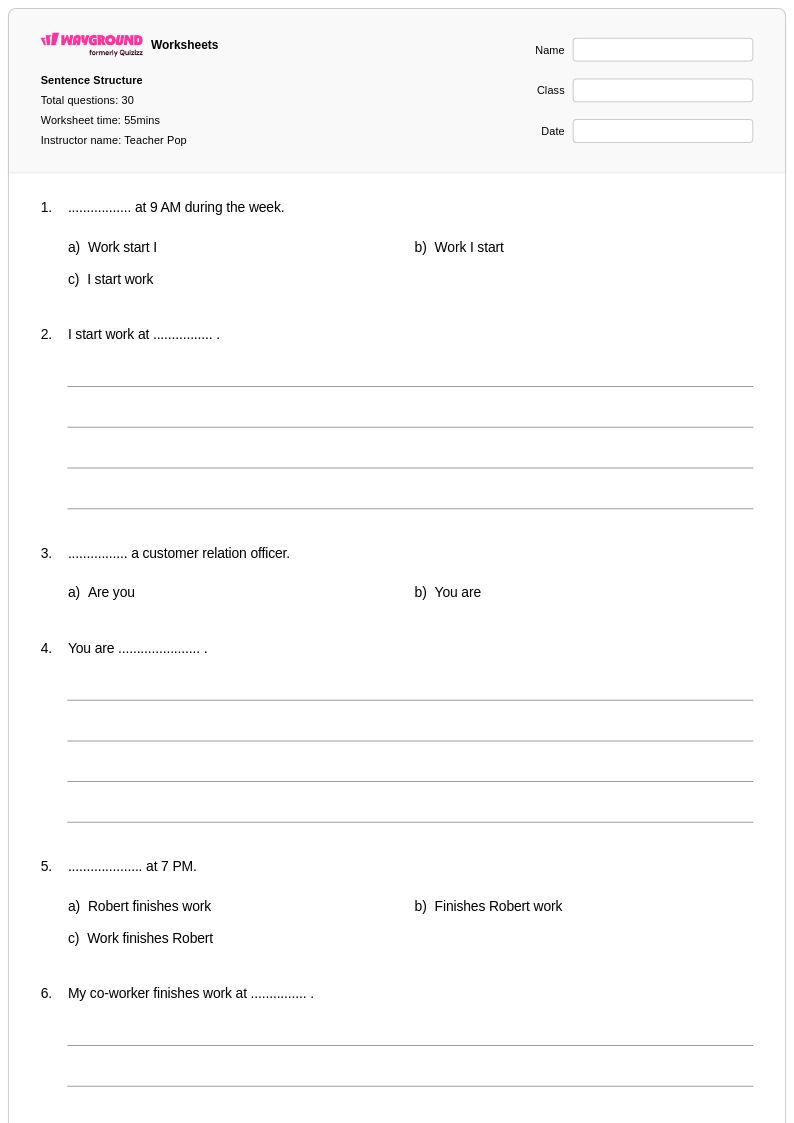
Sentence structure worksheets for Class 1 students available through Wayground (formerly Quizizz) provide essential foundational practice in organizing words to create clear, complete thoughts. These comprehensive printables focus on helping young learners understand the basic components of sentences, including identifying subjects and predicates, recognizing the difference between complete and incomplete sentences, and arranging words in proper order to convey meaning. Each worksheet collection includes detailed answer keys and offers systematic practice problems that gradually build students' confidence in constructing simple sentences, from basic noun-verb combinations to more complex structures incorporating adjectives and prepositional phrases. The free pdf resources emphasize hands-on learning through engaging activities that make grammar concepts accessible and enjoyable for first-grade students.
Wayground (formerly Quizizz) empowers educators with millions of teacher-created sentence structure resources specifically designed for Class 1 instruction, featuring robust search and filtering capabilities that allow teachers to quickly locate materials aligned with their curriculum standards and learning objectives. The platform's differentiation tools enable instructors to customize worksheets based on individual student needs, whether for remediation of struggling learners or enrichment activities for advanced students. Teachers can seamlessly integrate these resources into their lesson planning, utilizing both printable and digital formats including downloadable pdfs for flexible classroom implementation. The extensive collection supports ongoing skill practice through varied exercise types, from sentence building activities to error correction tasks, helping educators provide targeted instruction that strengthens students' fundamental understanding of how words work together to create meaningful communication.
FAQs
How do I teach sentence structure to students who struggle with grammar basics?
Start with the subject-predicate relationship as the foundation, using simple sentences before introducing compound or complex forms. Visual tools like sentence diagramming help students see how clauses and phrases connect, while color-coding subjects, verbs, and modifiers makes abstract grammar rules concrete. Progressing systematically from sentence recognition to sentence construction ensures students build confidence before tackling manipulation tasks like combining clauses or identifying subordinate structures.
What worksheets or exercises help students practice sentence structure effectively?
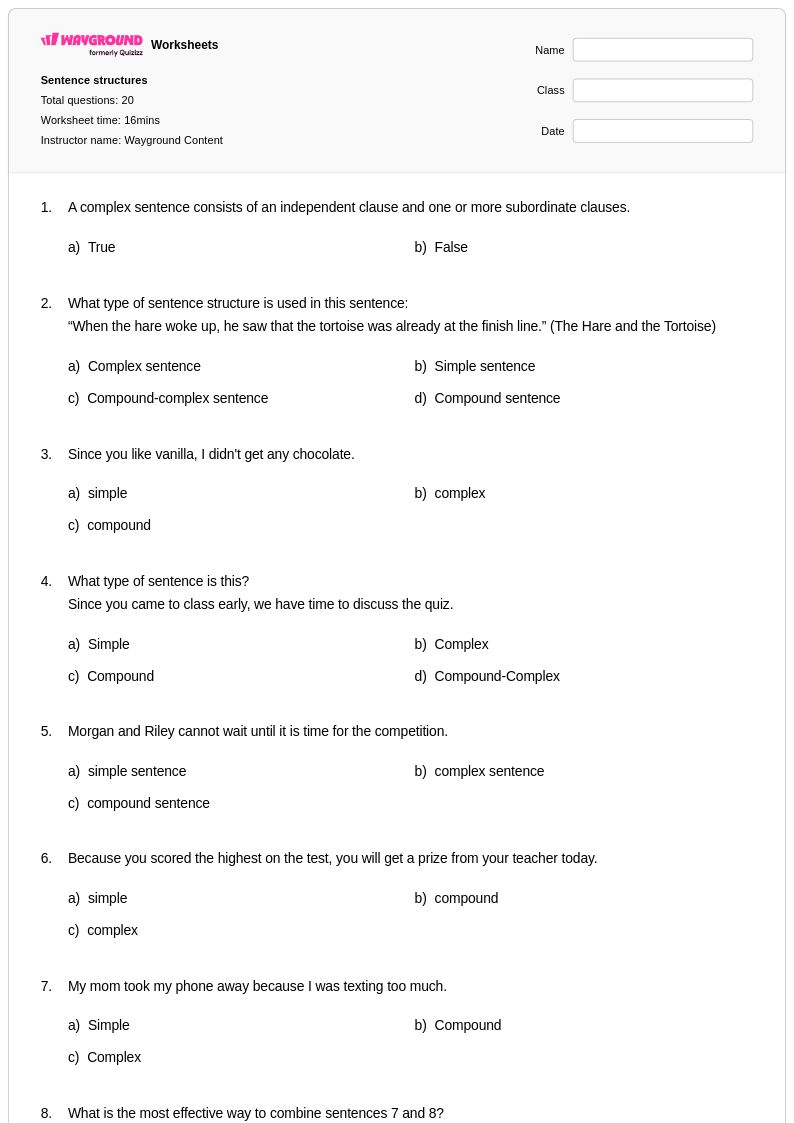
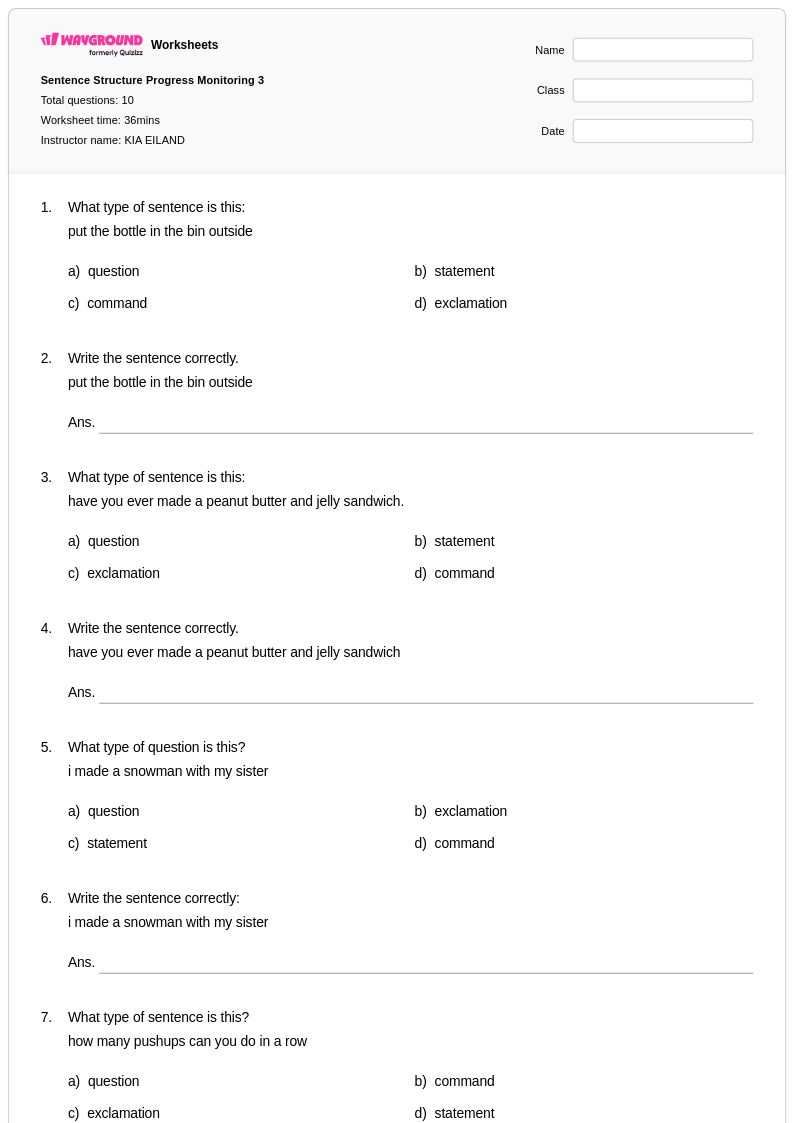
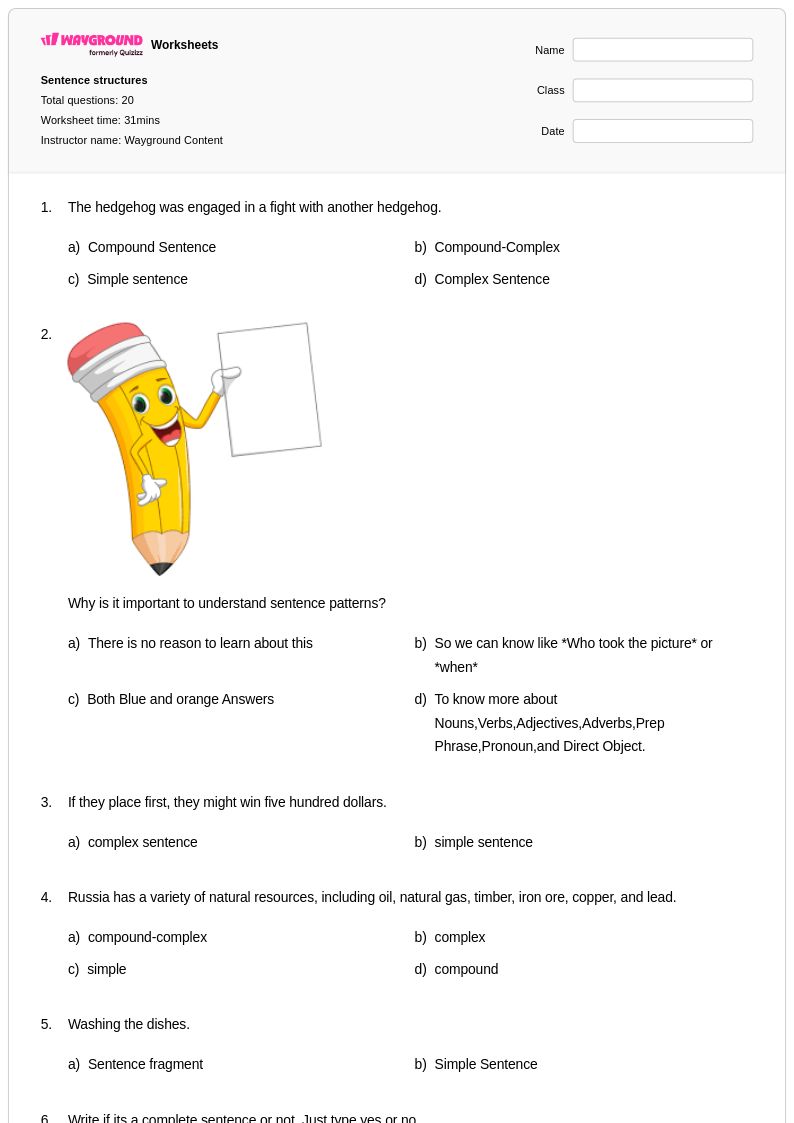
Effective practice worksheets for sentence structure include scrambled sentence exercises, sentence repair tasks, and fragment-to-complete-sentence conversions, each targeting a distinct skill. Activities that ask students to rearrange sentences reinforce their understanding of how word order affects meaning, while run-on sentence correction builds awareness of clause boundaries. Exercises covering simple, compound, and complex sentence types help students recognize and apply structural variety in their own writing.
What are the most common mistakes students make with sentence structure?
The most frequent errors include writing sentence fragments by mistaking a phrase or dependent clause for a complete sentence, and creating run-on sentences by joining independent clauses without proper punctuation or conjunctions. Students also commonly misplace or dangle modifiers, which can make sentences ambiguous or unintentionally humorous. Confusion between coordinating and subordinating conjunctions is another persistent issue, particularly when students attempt compound-complex sentence constructions.
How do I help students understand the difference between phrases and clauses?
The clearest distinction to teach is that a clause contains a subject and a verb, while a phrase does not. Using side-by-side examples on worksheets, such as 'running quickly' versus 'she was running quickly,' helps students see this difference in context rather than memorizing a rule in isolation. Practice that asks students to label and categorize phrases and clauses within real sentences solidifies the concept more effectively than definition-only instruction.
How can I use sentence structure worksheets to support students at different skill levels?
Wayground allows teachers to assign individual accommodations to students, including reduced answer choices to lower cognitive load for struggling learners and read-aloud support for students who benefit from hearing questions read to them. More advanced students can be directed toward complex sentence manipulation tasks, while foundational learners work on identifying complete sentences and correcting fragments. These settings are saved per student and apply automatically across future sessions, making differentiation practical rather than time-consuming.
How do I use Wayground's sentence structure worksheets in my classroom?
Wayground's sentence structure worksheets are available as printable PDFs for traditional classroom use and in digital formats for technology-integrated environments, including the option to host them as a live quiz on the platform. Teachers can use them for direct instruction support, independent practice, homework, or formative assessment depending on the lesson context. Each worksheet includes a complete answer key, so students can self-check their work or teachers can use them for quick scoring.