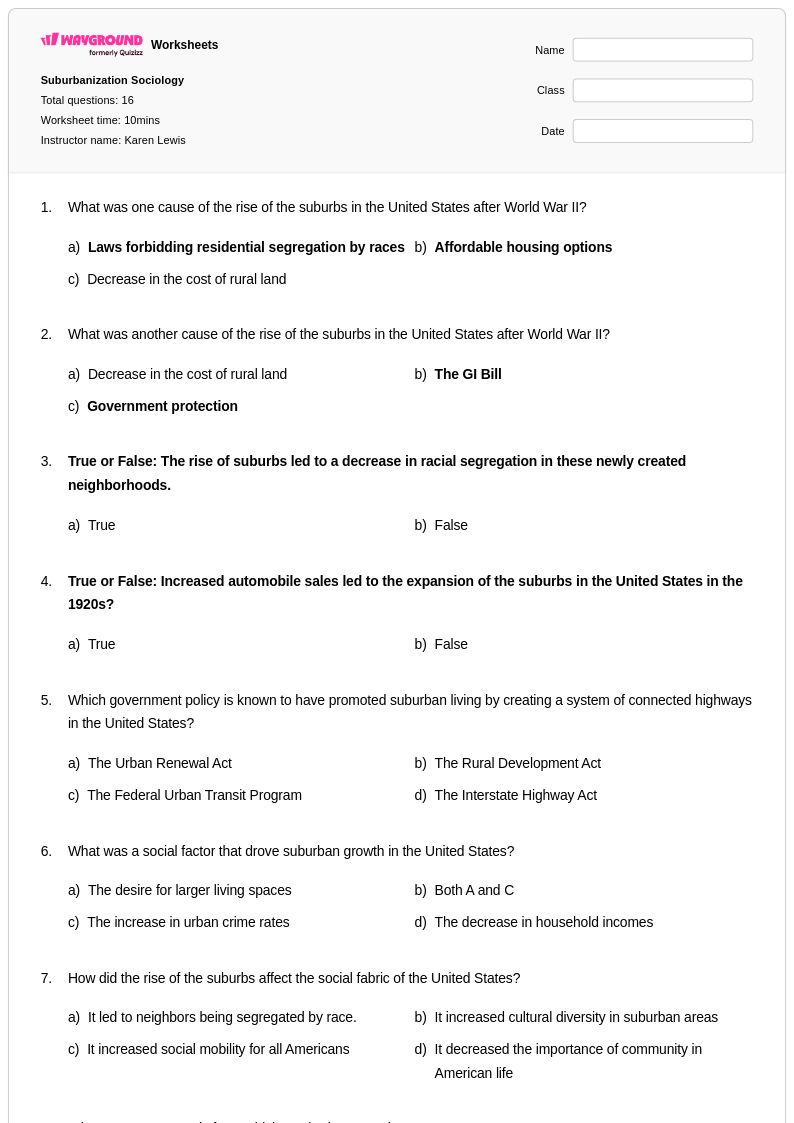
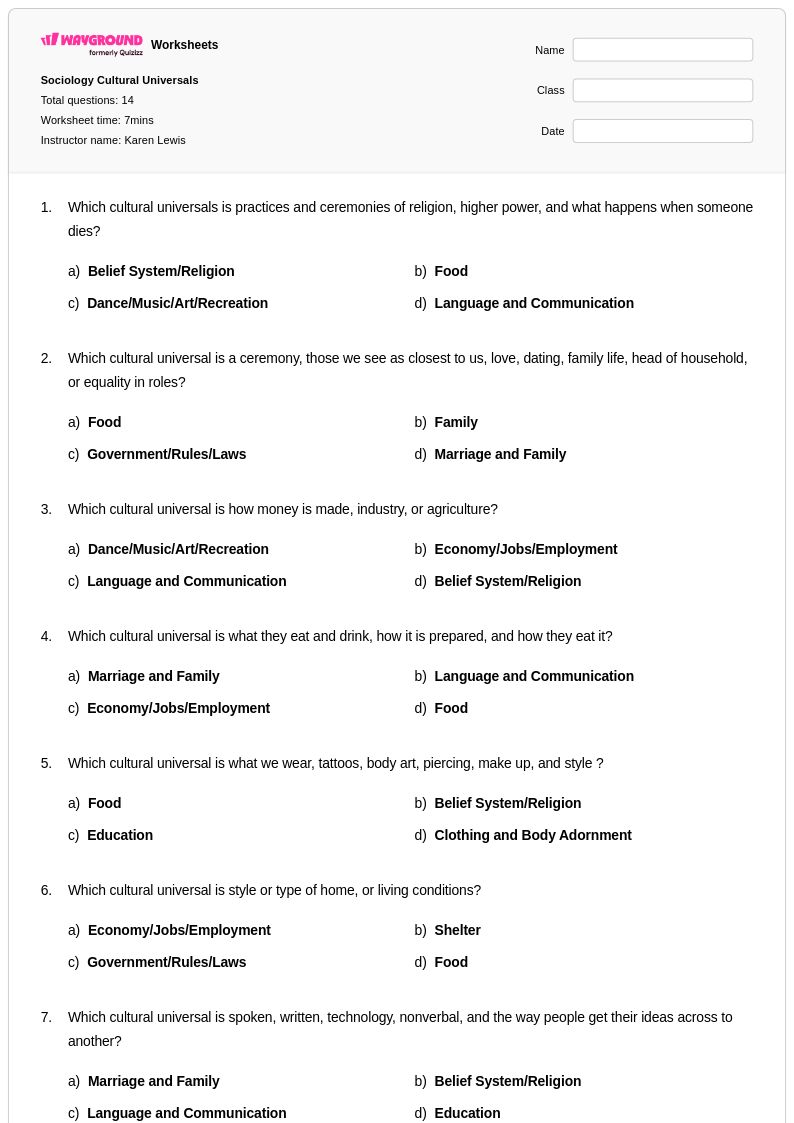
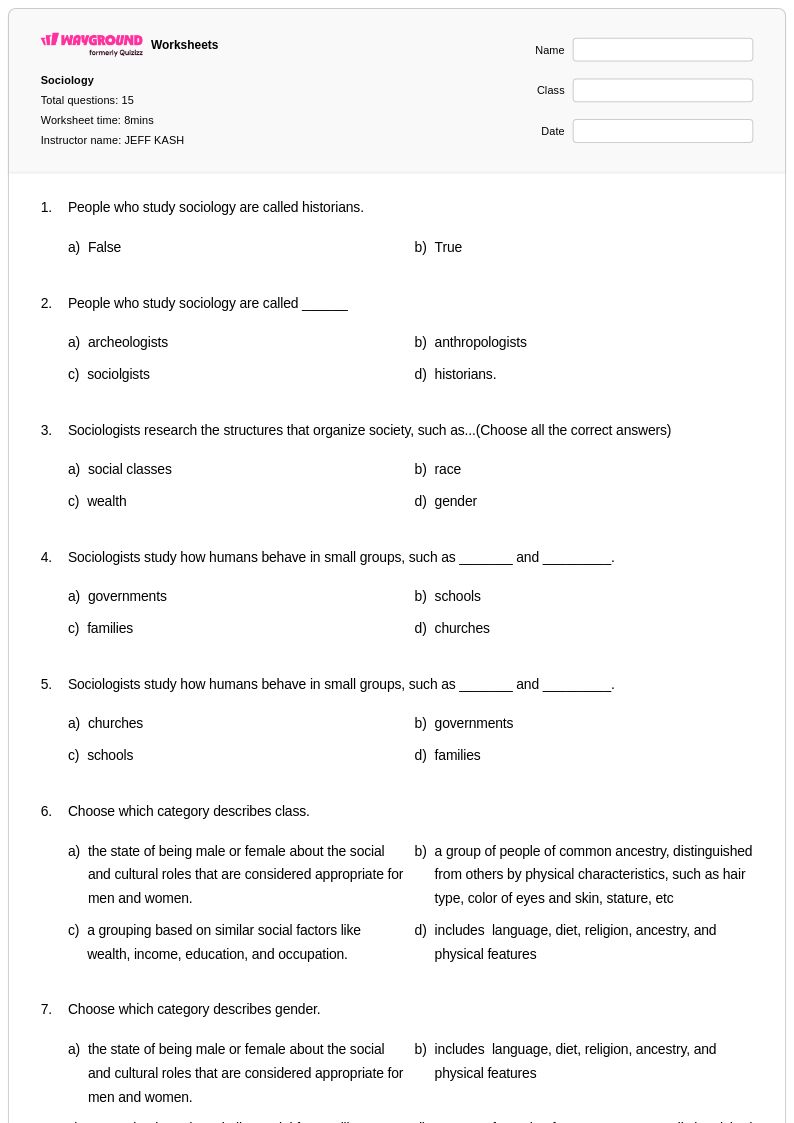
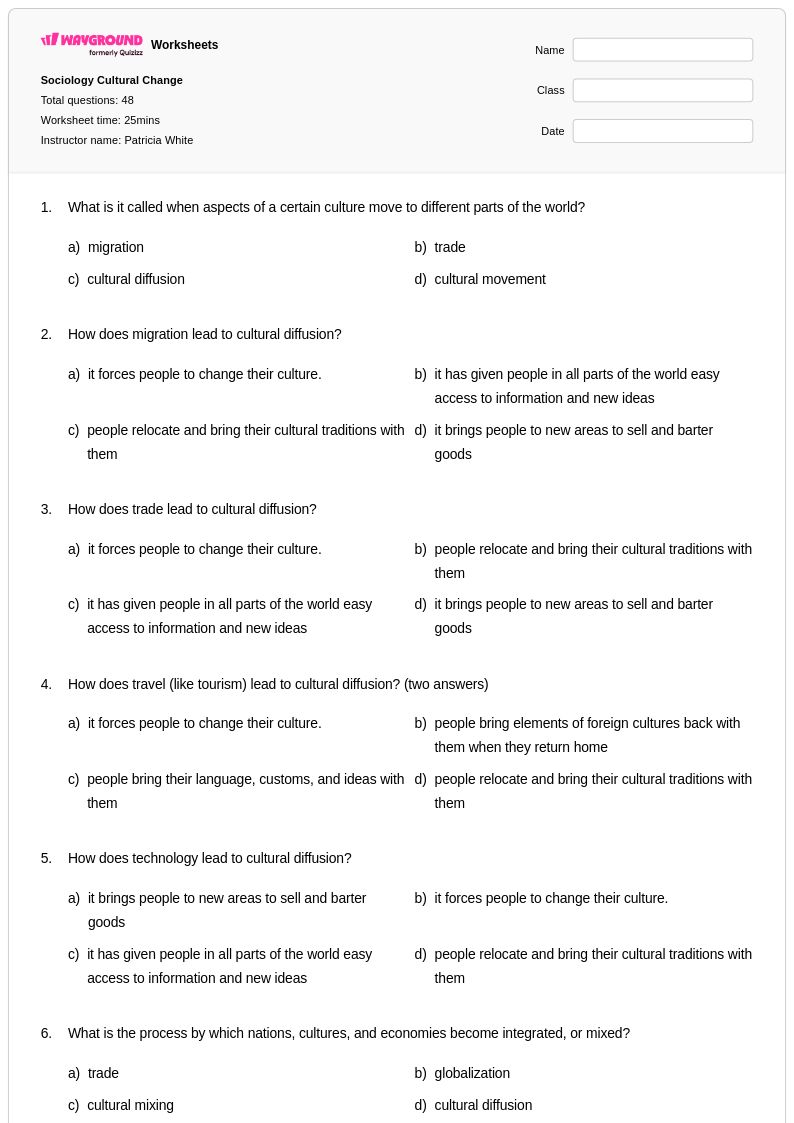
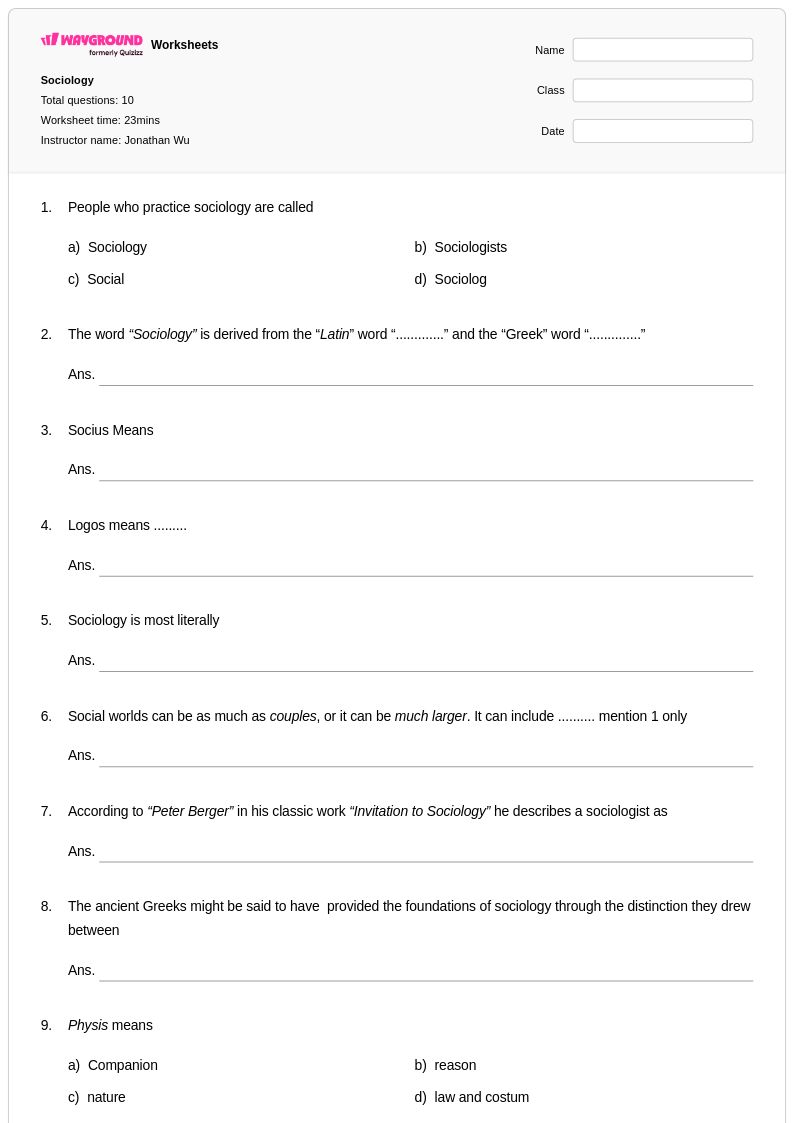
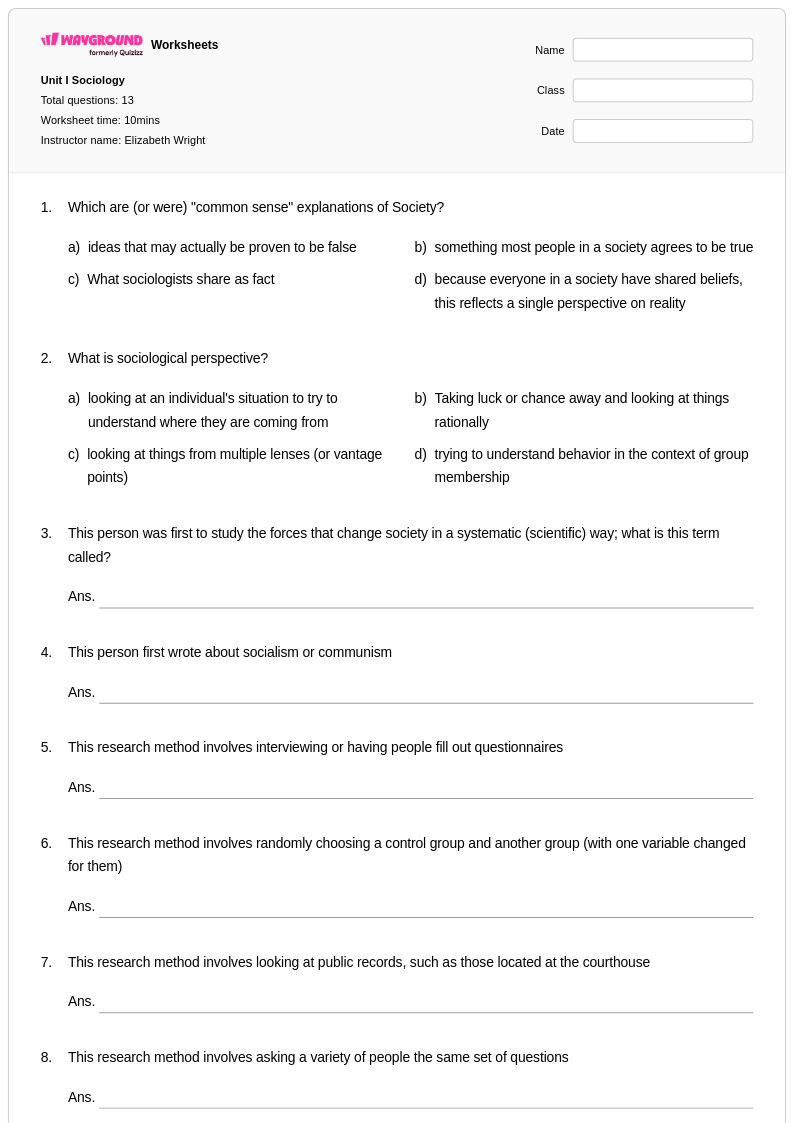
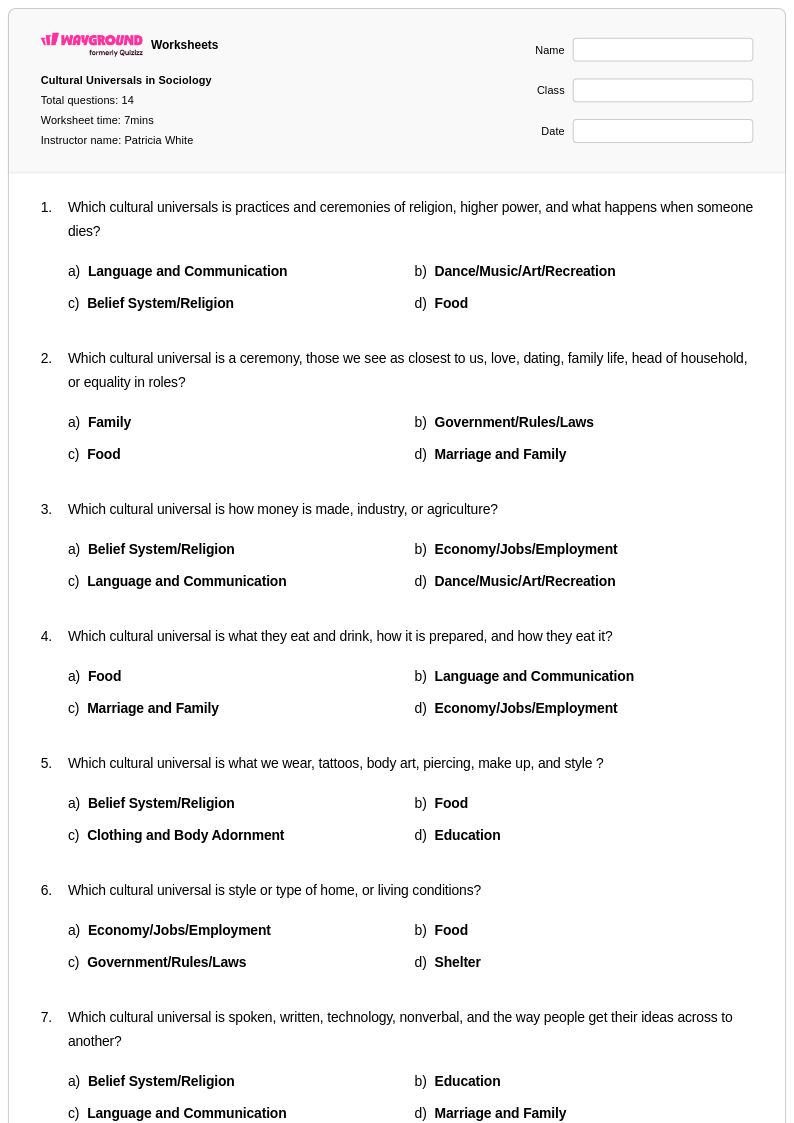
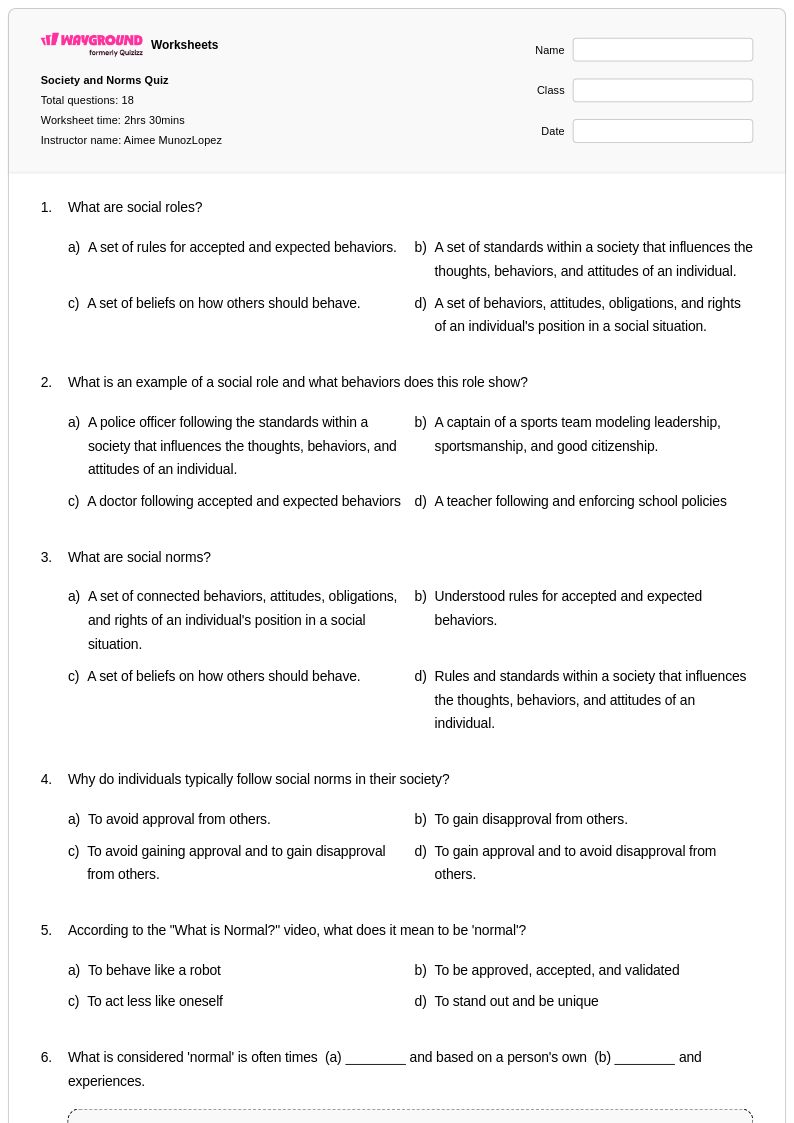
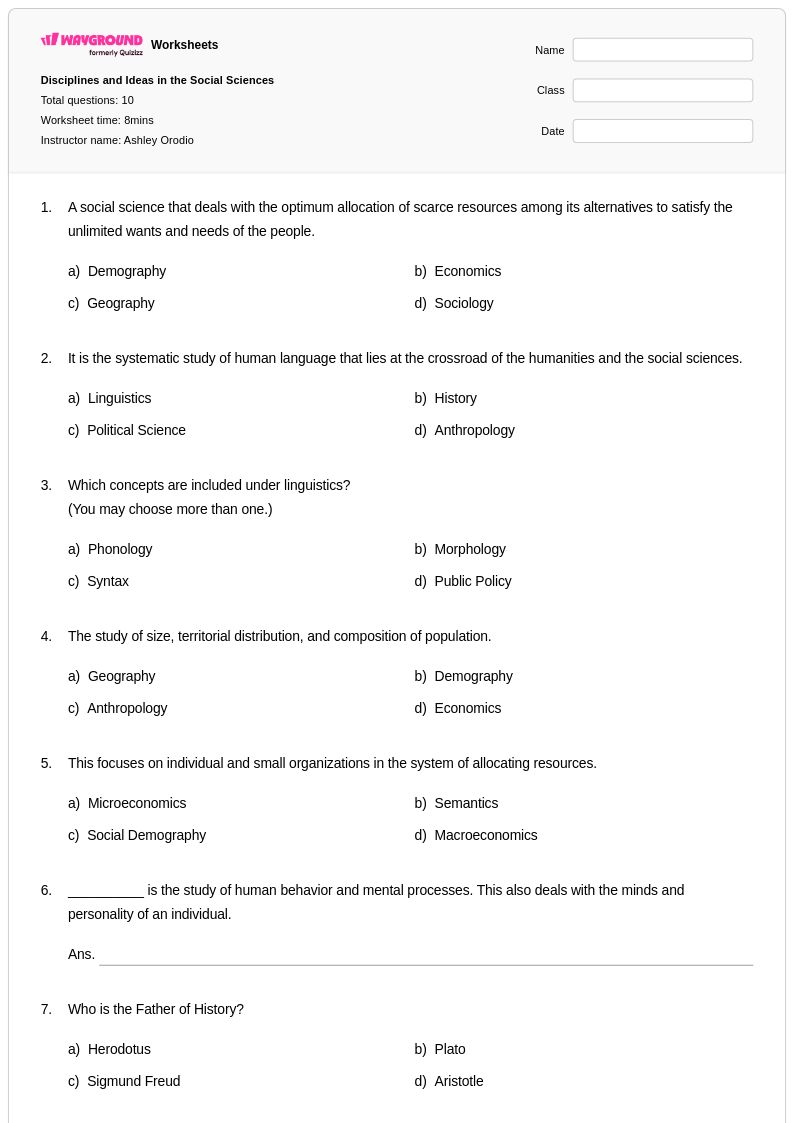
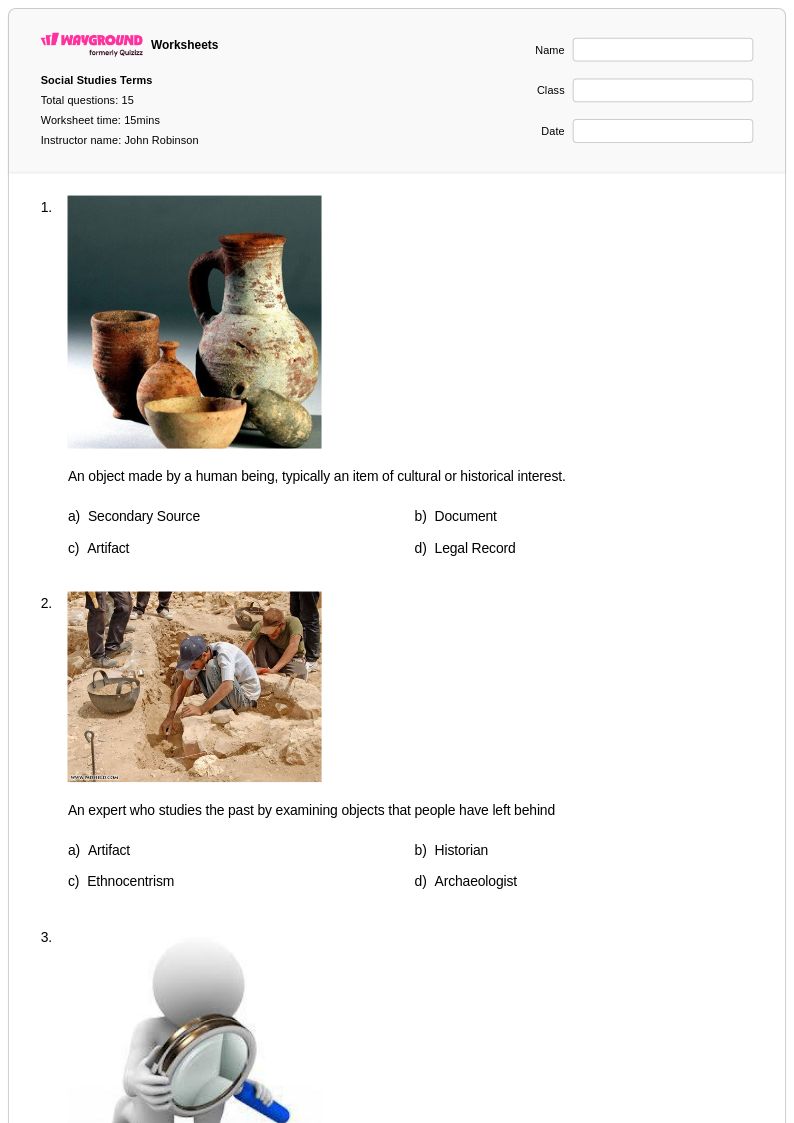
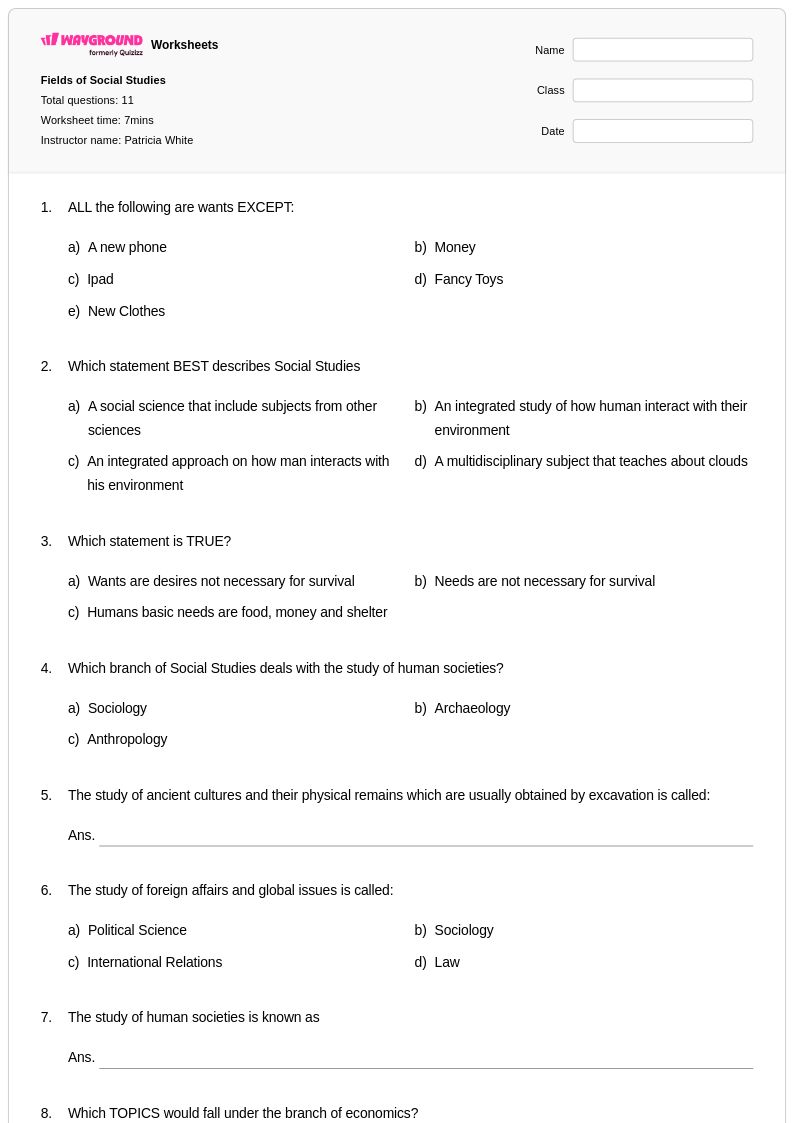
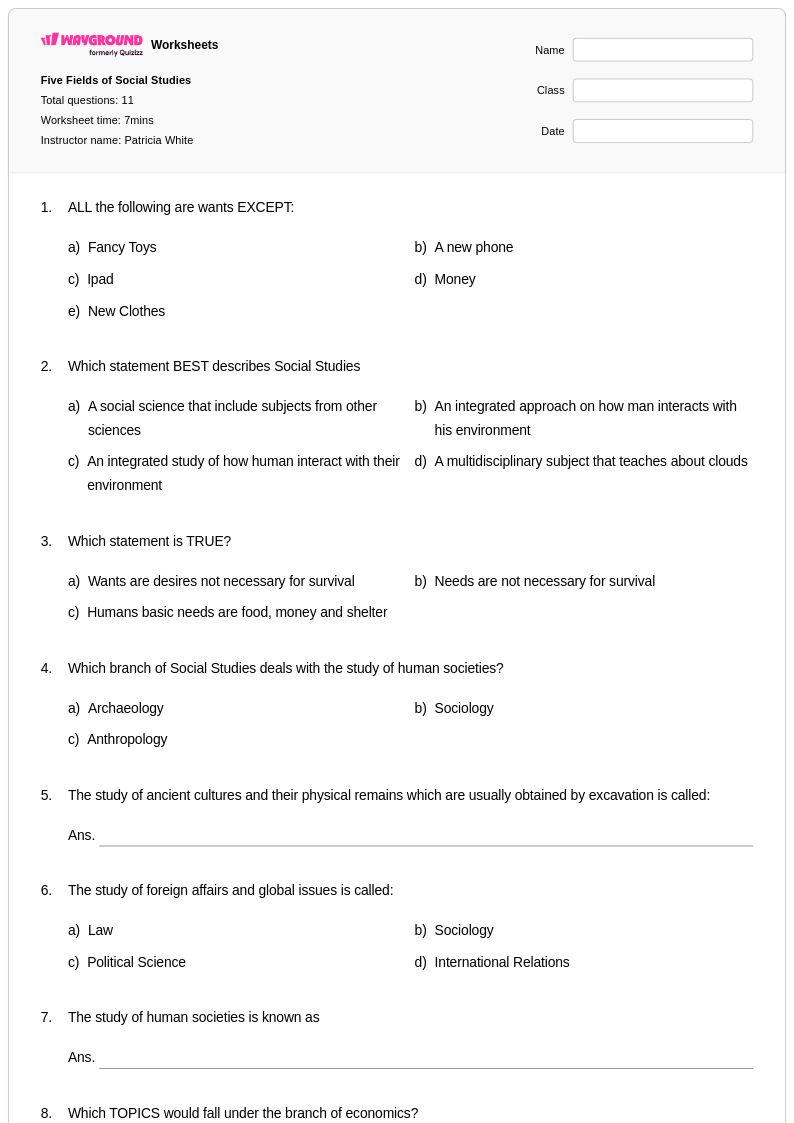
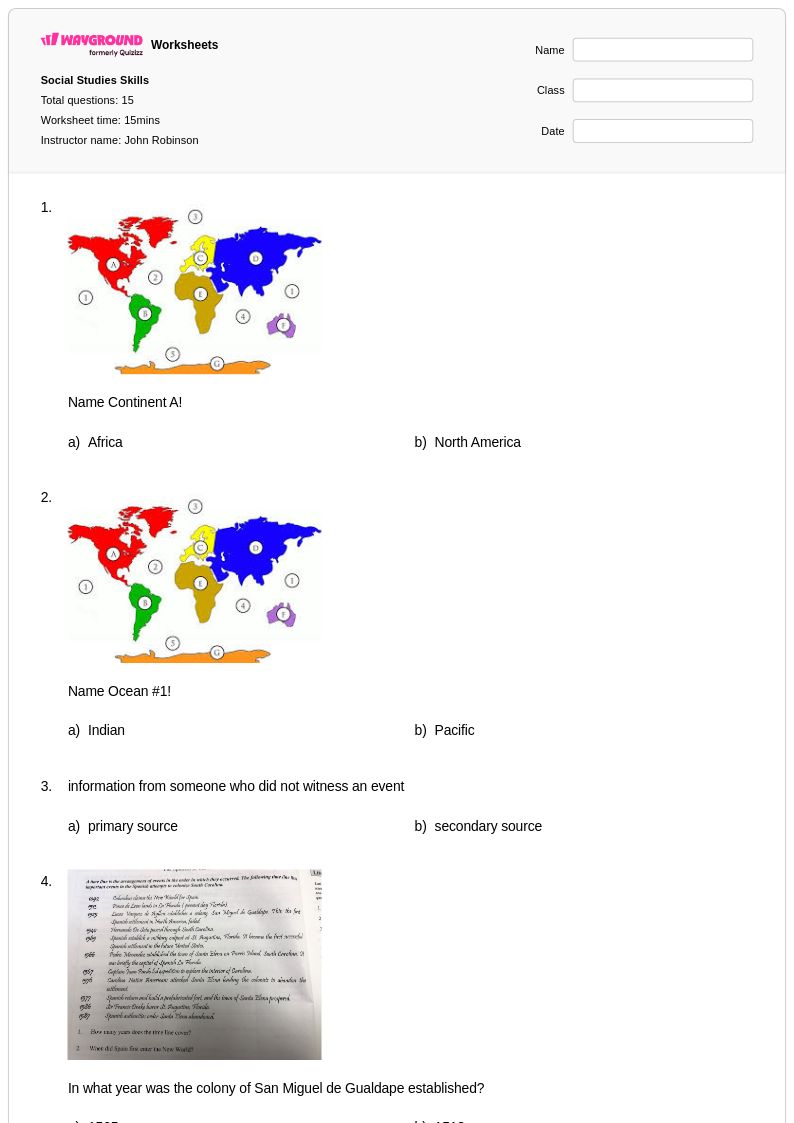
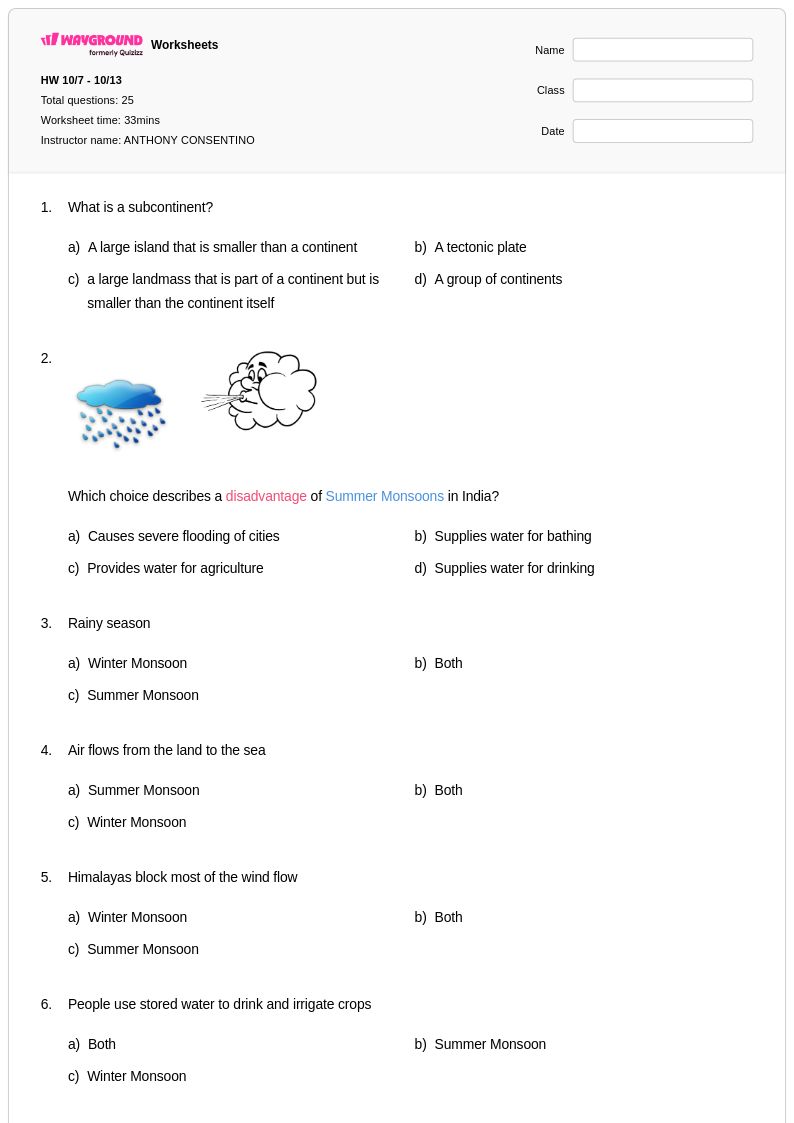
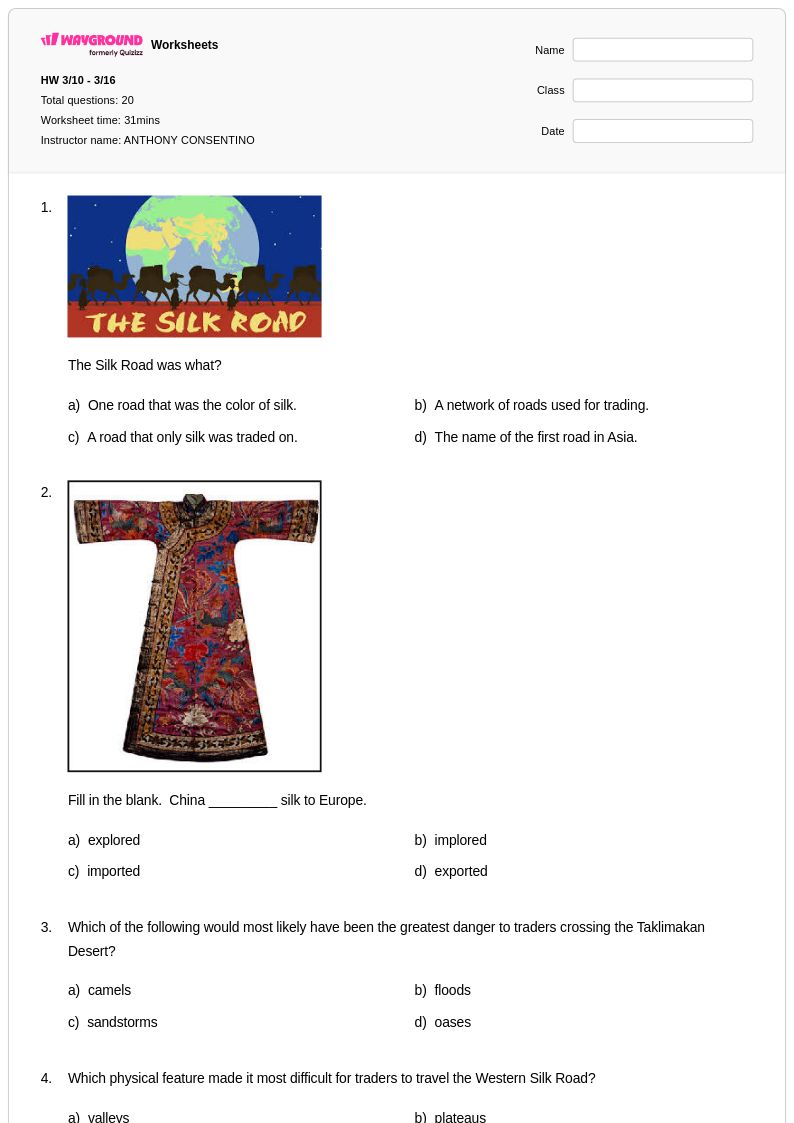
Explore Class 7 sociology printables and free worksheets that help students analyze social structures, group dynamics, and human behavior through engaging practice problems with comprehensive answer keys.
Explore printable Sociology worksheets for Class 7
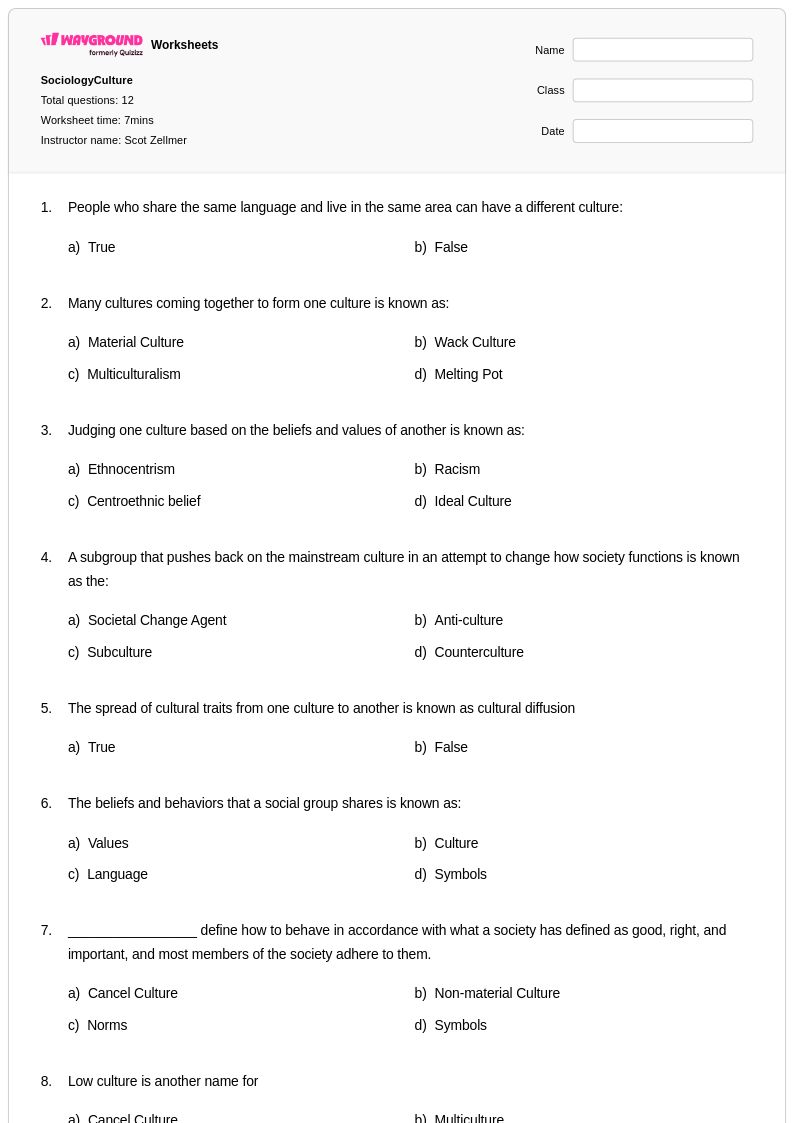
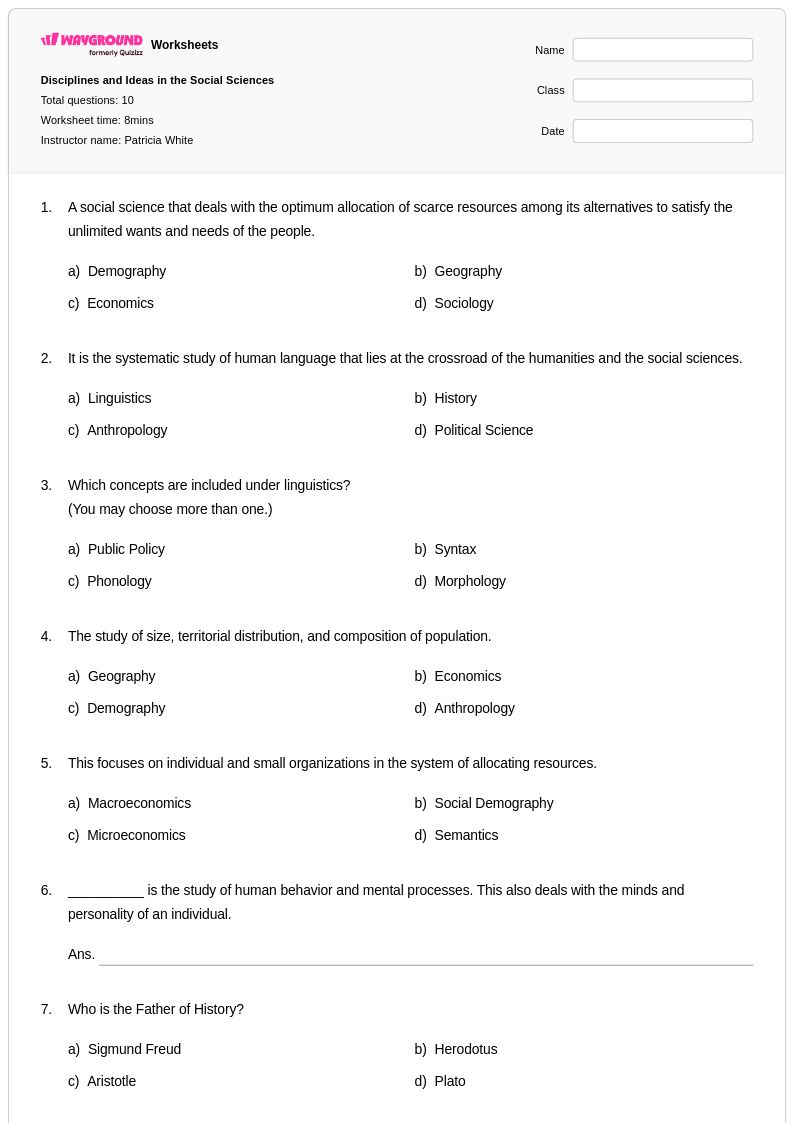
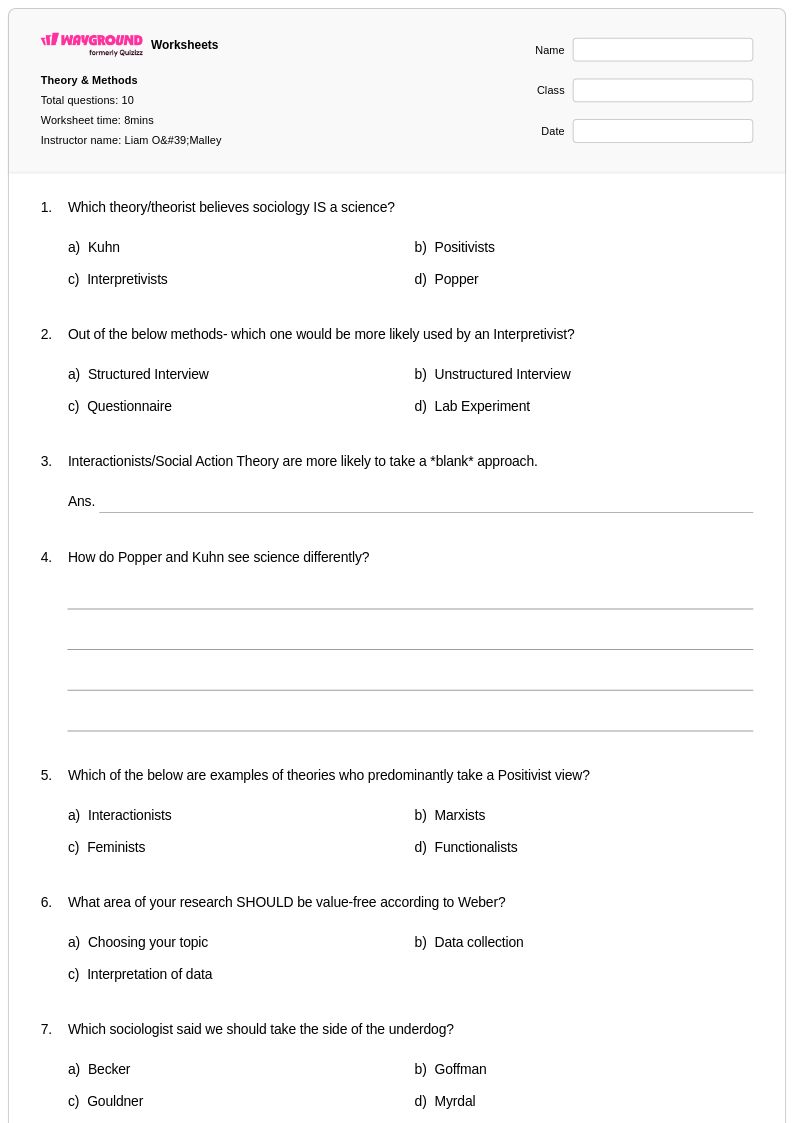
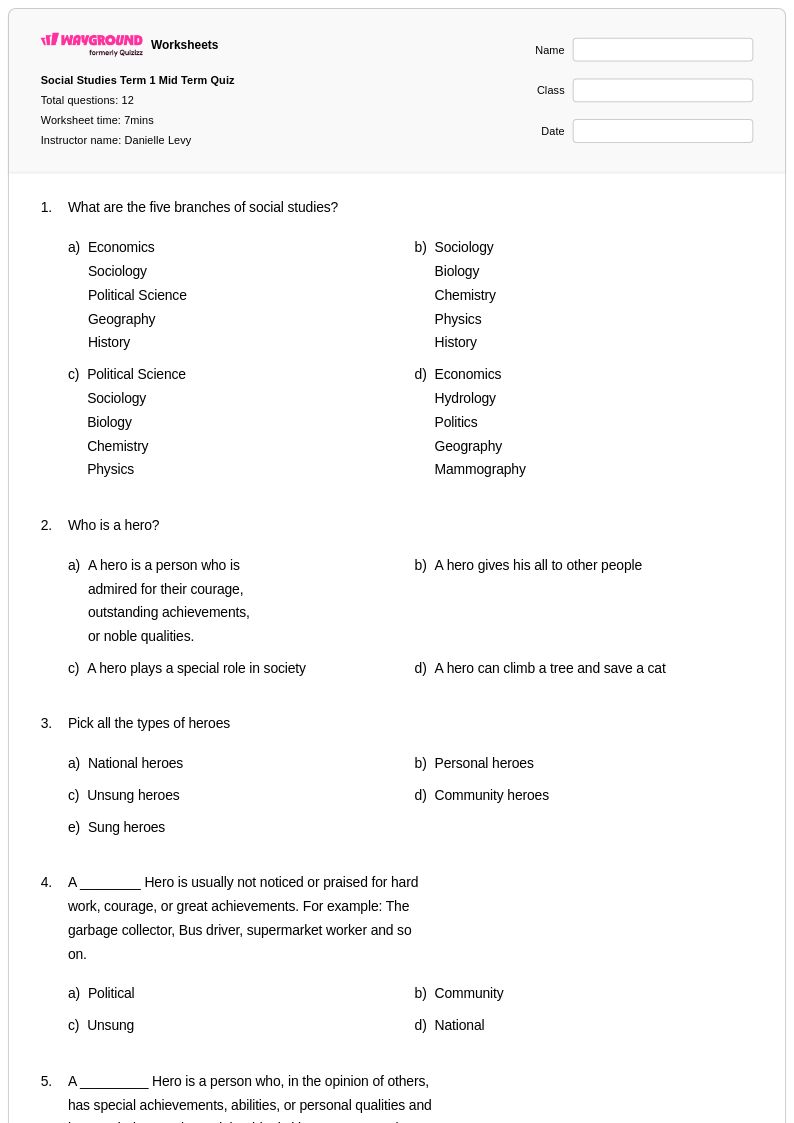
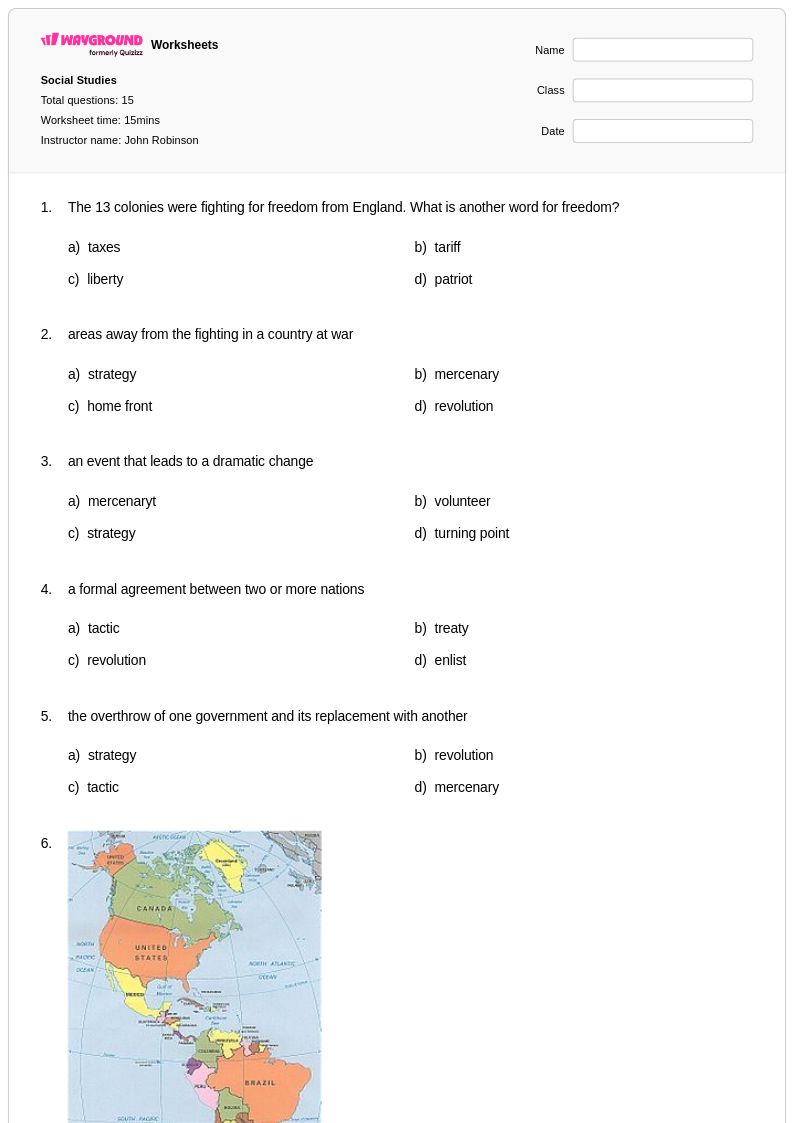
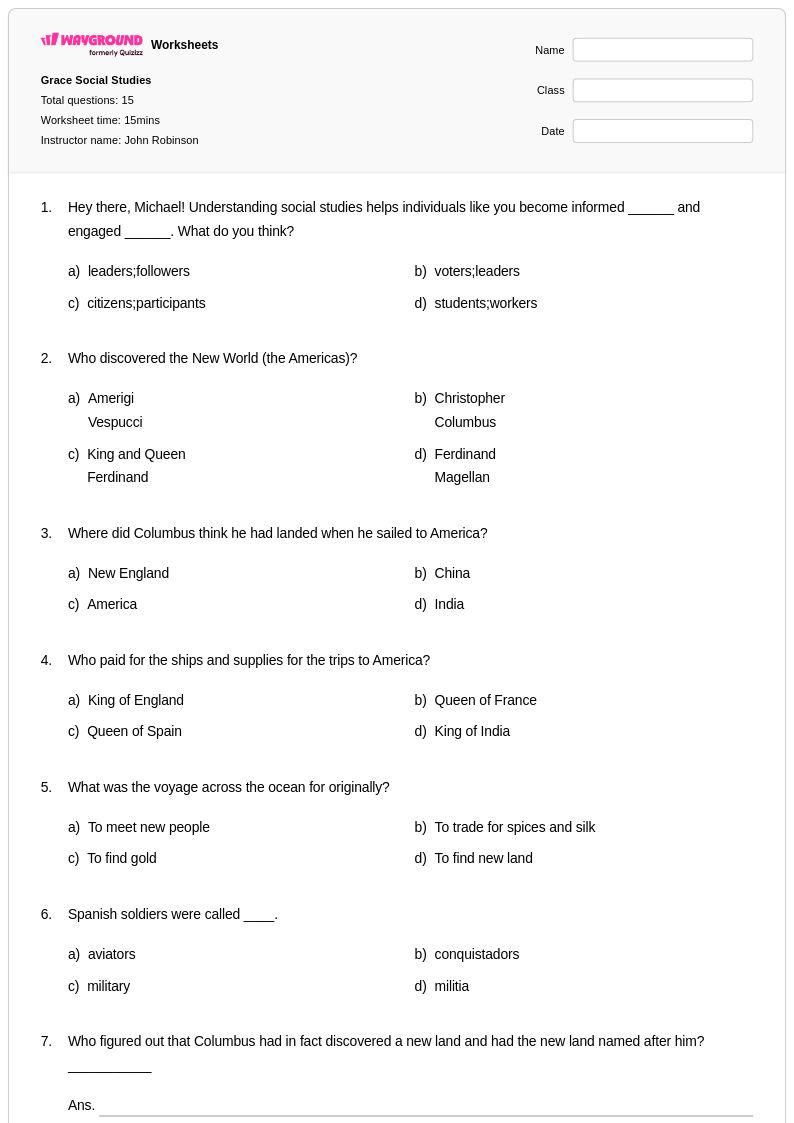
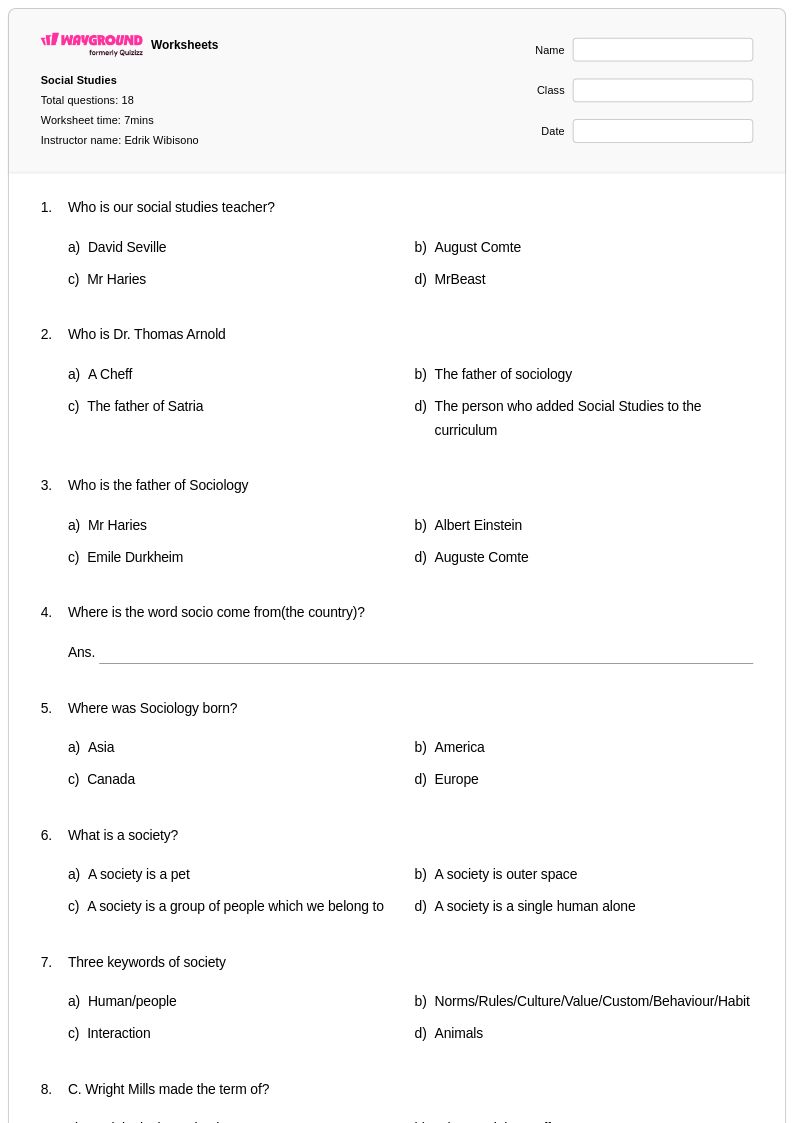
Class 7 sociology worksheets available through Wayground provide students with comprehensive opportunities to explore the fundamental principles of human society and social behavior within diverse communities and cultures. These carefully designed resources strengthen critical analytical skills by engaging students in examining social structures, group dynamics, cultural norms, and the complex relationships between individuals and their communities. Students work through practice problems that challenge them to identify patterns in social organization, analyze the impact of cultural values on behavior, and evaluate how different societies address common human needs. Each worksheet collection includes detailed answer keys that support both independent learning and classroom instruction, with free printables offering educators flexible options for implementing sociology concepts across various learning environments.
Wayground's extensive collection of millions of teacher-created sociology resources empowers educators with robust search and filtering capabilities that streamline lesson planning and curriculum alignment. Teachers can easily locate materials that meet specific learning objectives while utilizing differentiation tools to address diverse student needs through both remediation and enrichment activities. The platform's flexible customization features allow instructors to modify worksheets for targeted skill practice, ensuring content remains accessible and challenging for all Class 7 learners. Available in both printable pdf formats and interactive digital versions, these sociology worksheets integrate seamlessly into traditional classroom settings and remote learning environments, providing consistent support for students developing their understanding of community structures, cultural analysis, and social scientific thinking.
FAQs
How do I introduce sociology concepts to students who have never studied it before?
Start by grounding sociology in students' lived experiences before moving to abstract theory. Use familiar examples like family structure, peer groups, and school hierarchies to illustrate concepts like social institutions, norms, and group dynamics. From there, introduce foundational frameworks such as functionalism, conflict theory, and symbolic interactionism, giving students a lens through which to analyze these everyday examples. Building from the personal to the theoretical helps students see sociology as relevant rather than abstract.
What exercises help students practice analyzing social structures and cultural patterns?
Case study analysis is one of the most effective practice formats for sociology, as it asks students to apply concepts like social stratification, cultural norms, and institutional power to real-world scenarios. Structured worksheets that prompt students to identify sociological concepts within a given situation, then explain their reasoning, build both analytical and writing skills simultaneously. Practice problems that ask students to compare societies, trace patterns of social change, or evaluate the impact of group dynamics give learners repeated exposure to core vocabulary and conceptual frameworks in varied contexts.
What are the most common misconceptions students have when learning sociology?
One of the most persistent misconceptions is that sociology is simply common sense or opinion rather than a scientific discipline with rigorous methods. Students often conflate sociology with psychology, failing to distinguish between individual behavior (psychology's focus) and the social forces and structures that shape behavior (sociology's focus). Another common error is treating social categories like class, race, and gender as fixed or natural rather than as socially constructed and historically contingent. Addressing these misconceptions early prevents students from applying concepts superficially throughout the course.
How do I teach social stratification in a way that feels relevant to students?
Anchor the concept in data students can observe and interpret directly, such as income distribution charts, occupational prestige rankings, or educational attainment statistics broken down by demographic group. Ask students to trace how stratification intersects with race, gender, and geography rather than treating class as an isolated variable. Having students analyze specific institutions, like schools or healthcare systems, through the lens of stratification makes the concept concrete and encourages critical thinking about systemic inequality rather than individual circumstance.
How can I use Wayground's sociology worksheets in my classroom?
Wayground's sociology worksheets are available as printable PDFs for traditional classroom use and in digital formats for technology-integrated or blended learning environments. Teachers can also host worksheets directly as a quiz on Wayground, making them suitable for formative assessment, independent practice, or homework assignments. Each worksheet includes a detailed answer key, so teachers can use them for self-paced student work without extensive preparation. The digital format also allows teachers to apply accommodations for individual students, such as extended time or read-aloud support, directly within the platform.
How do I differentiate sociology instruction for students with varying reading and analytical skill levels?
Differentiation in sociology often requires adjusting both the complexity of source texts and the depth of analytical response expected. For students who need additional support, Wayground's platform allows teachers to enable read-aloud functionality so questions and content are read to students, and font size and display themes can be adjusted through reading mode for accessibility. Reduced answer choices can also be applied for specific students to lower cognitive load on assessment items without altering the content for the rest of the class. These accommodations can be assigned to individual students and saved for reuse across future sessions.