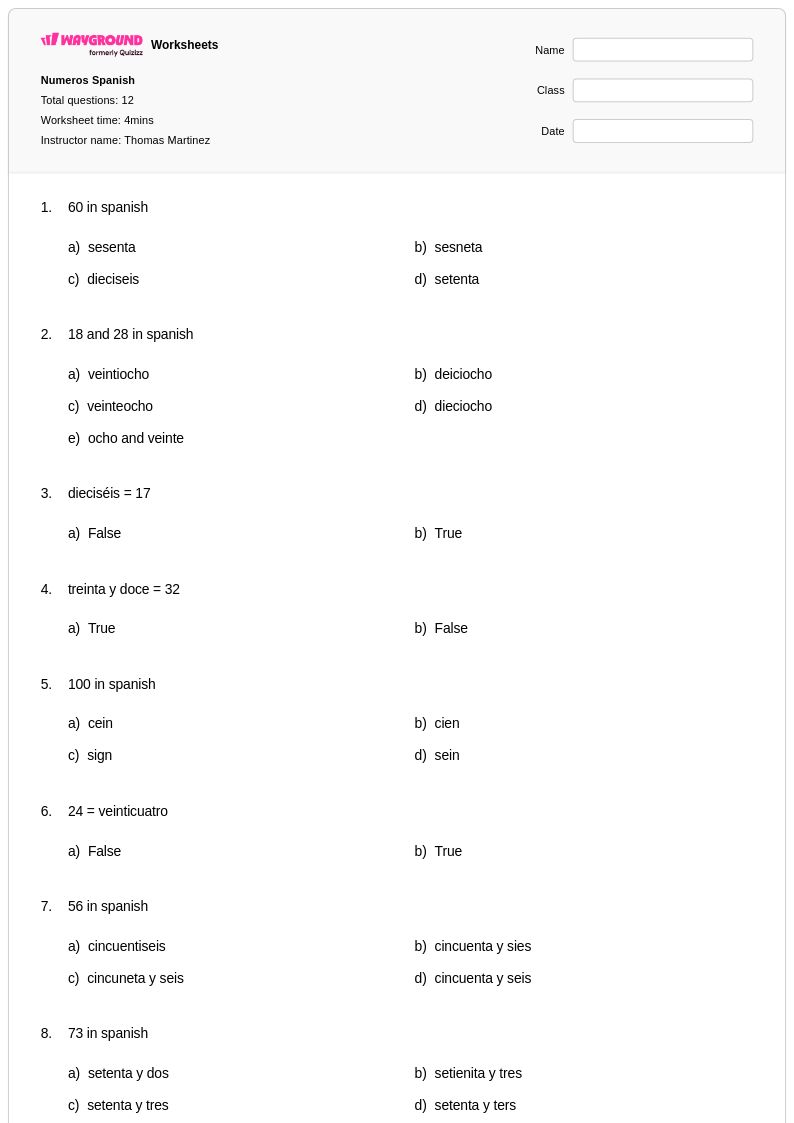
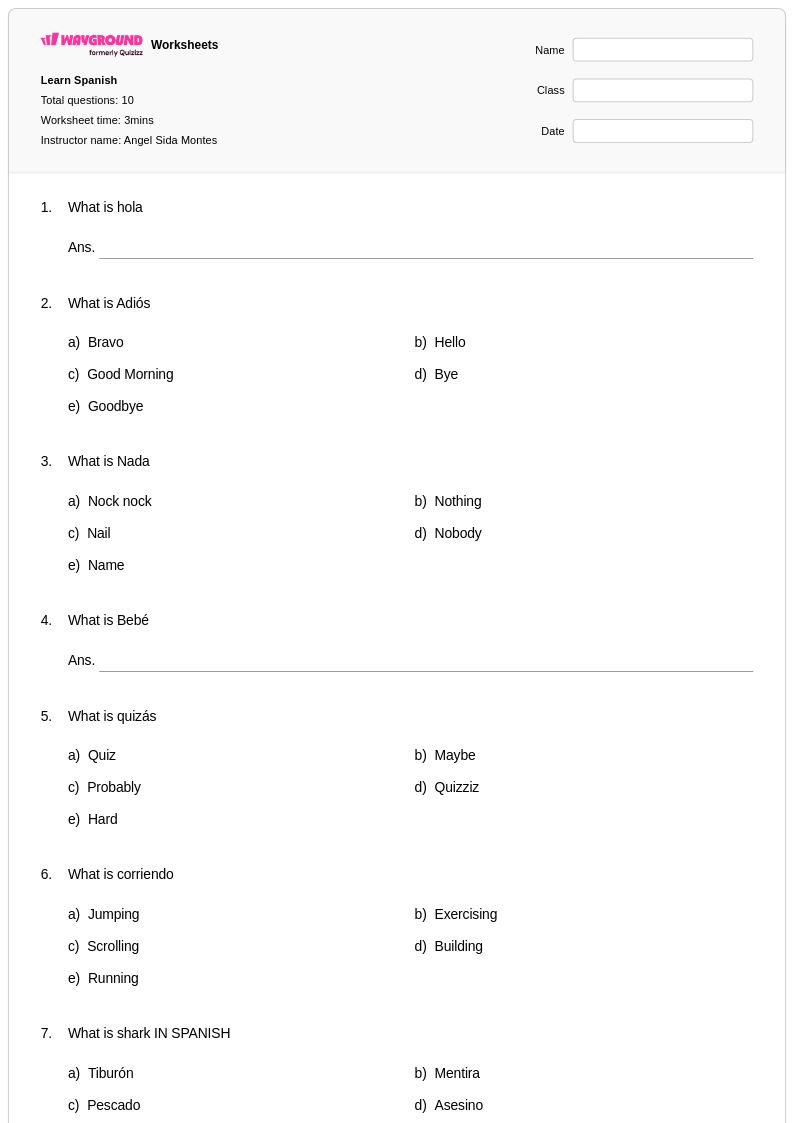
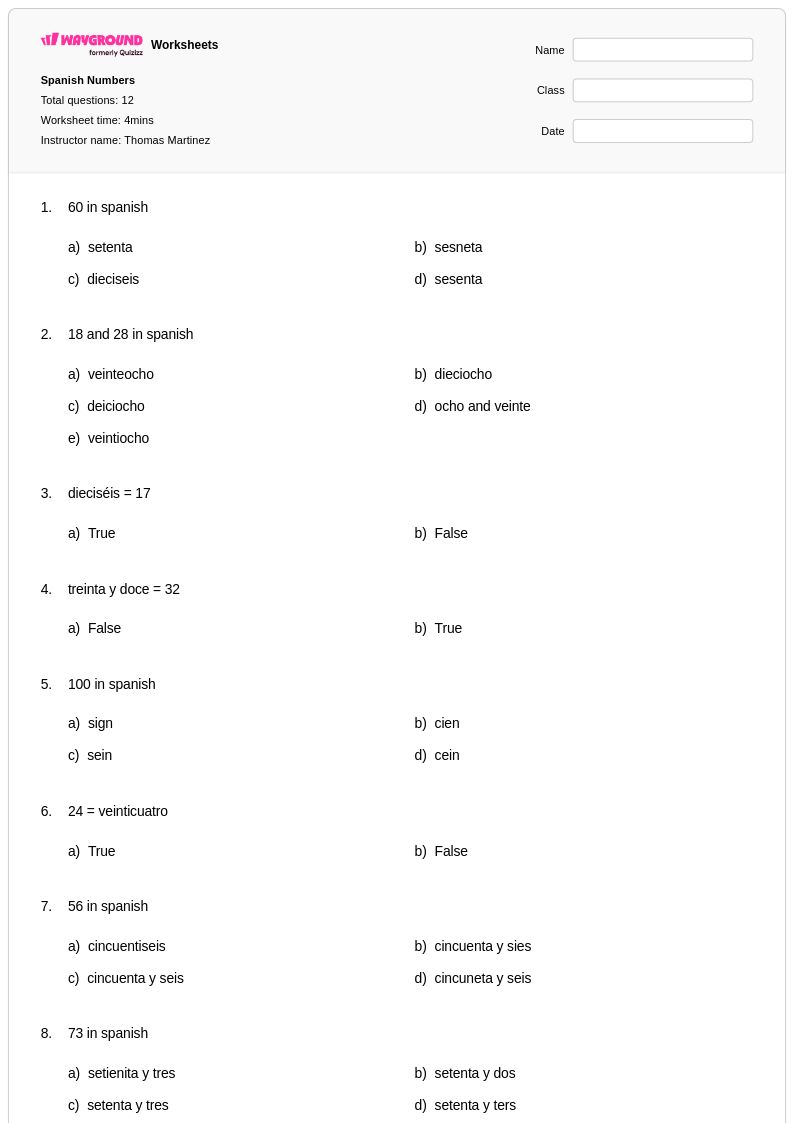
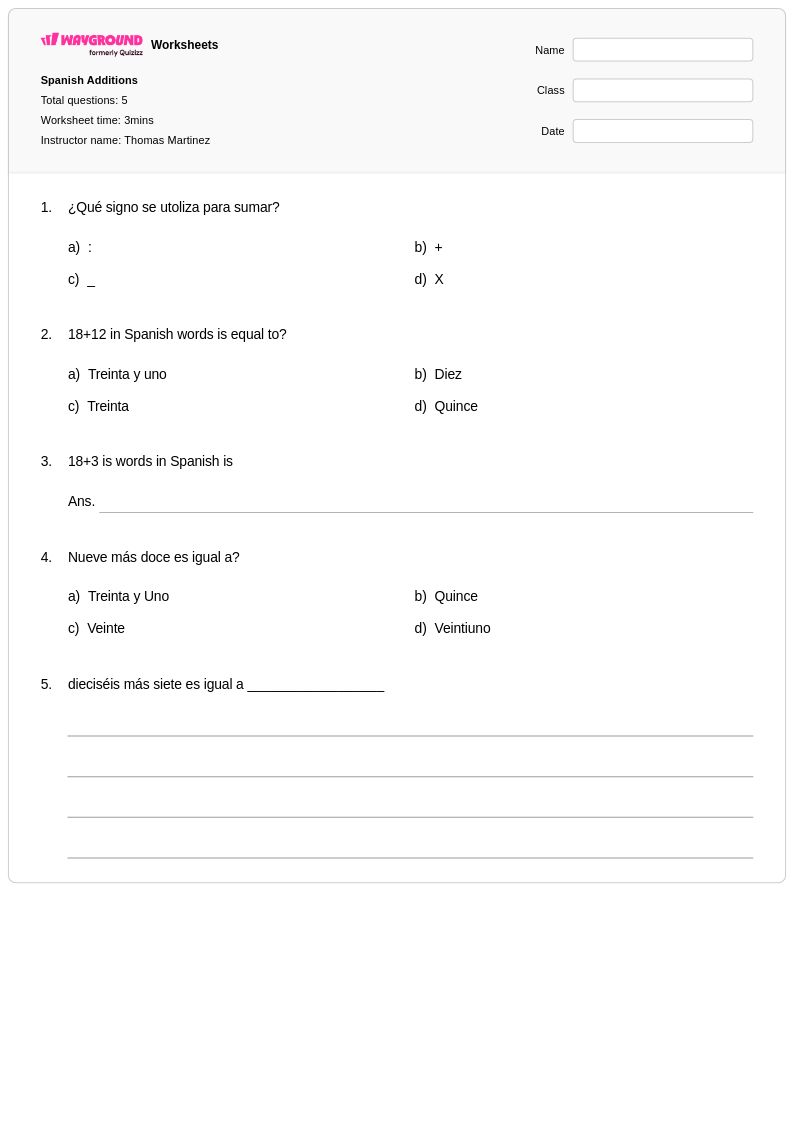
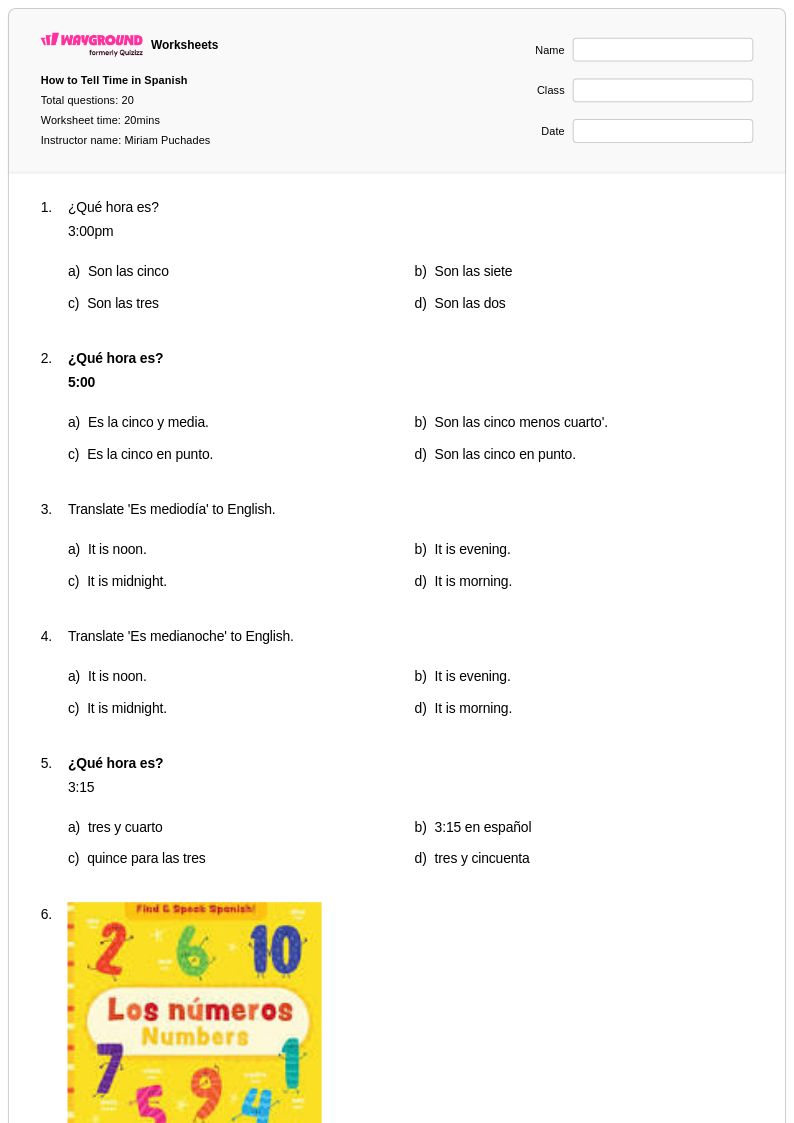
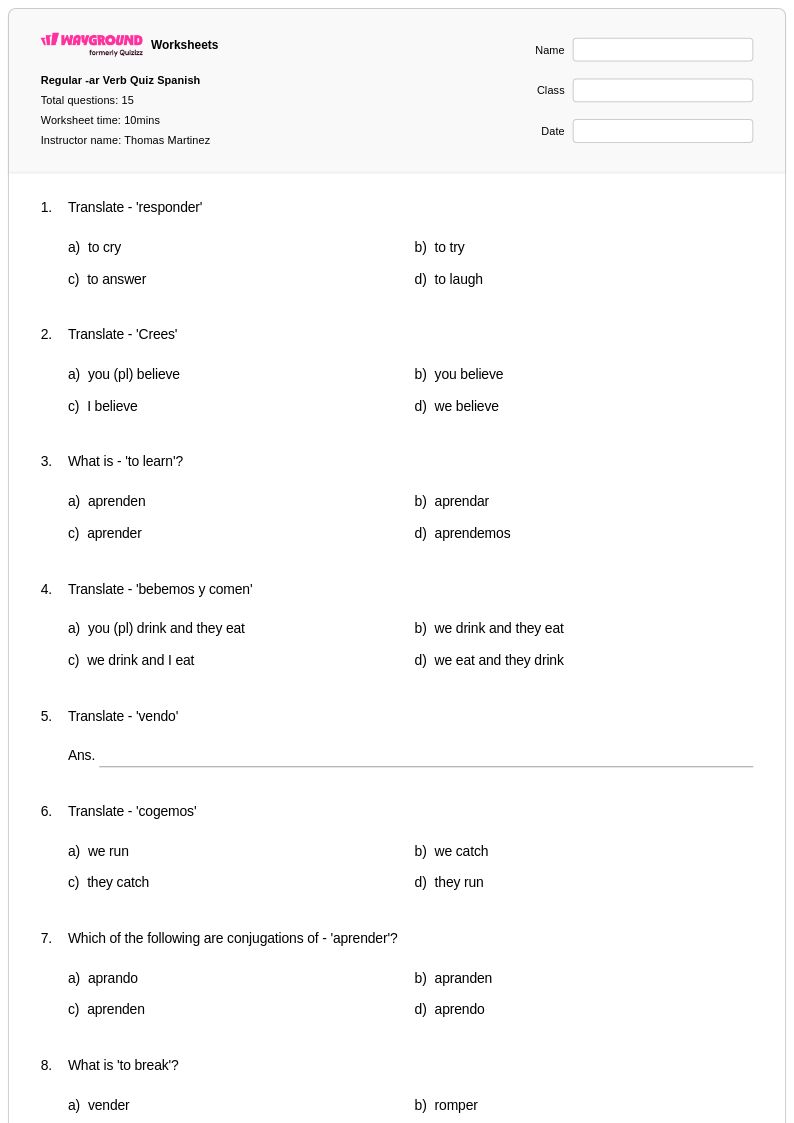
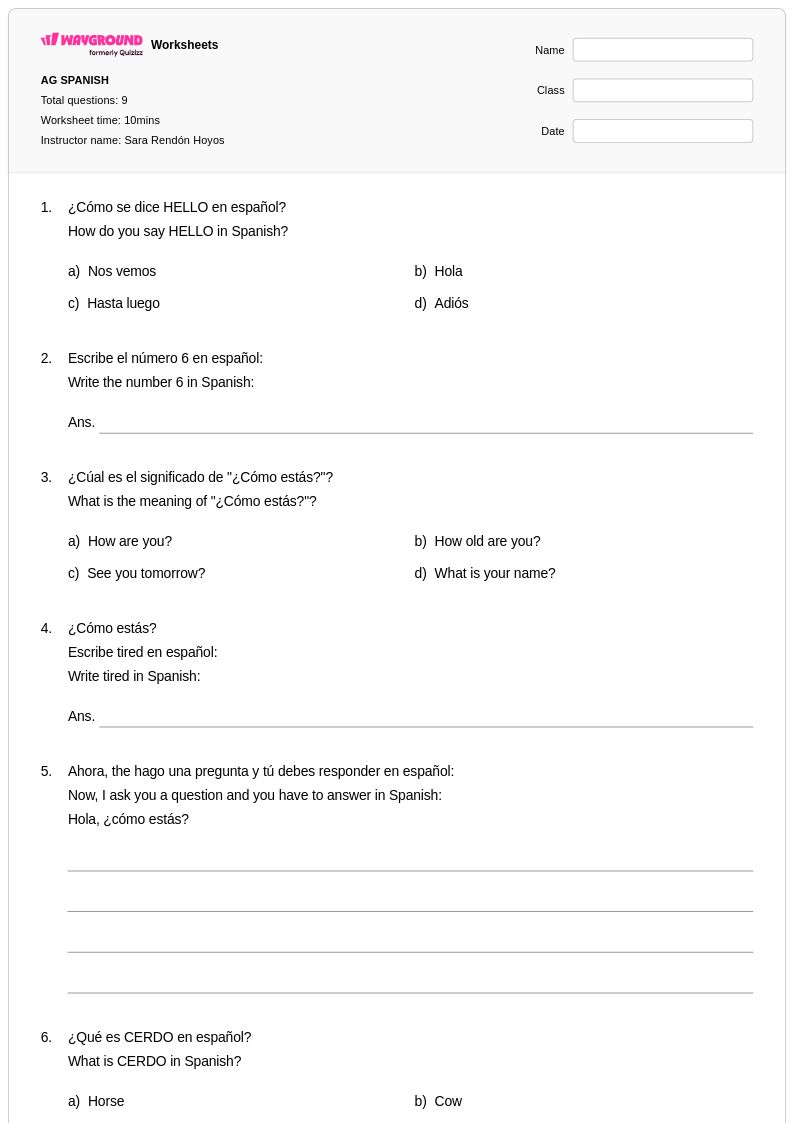
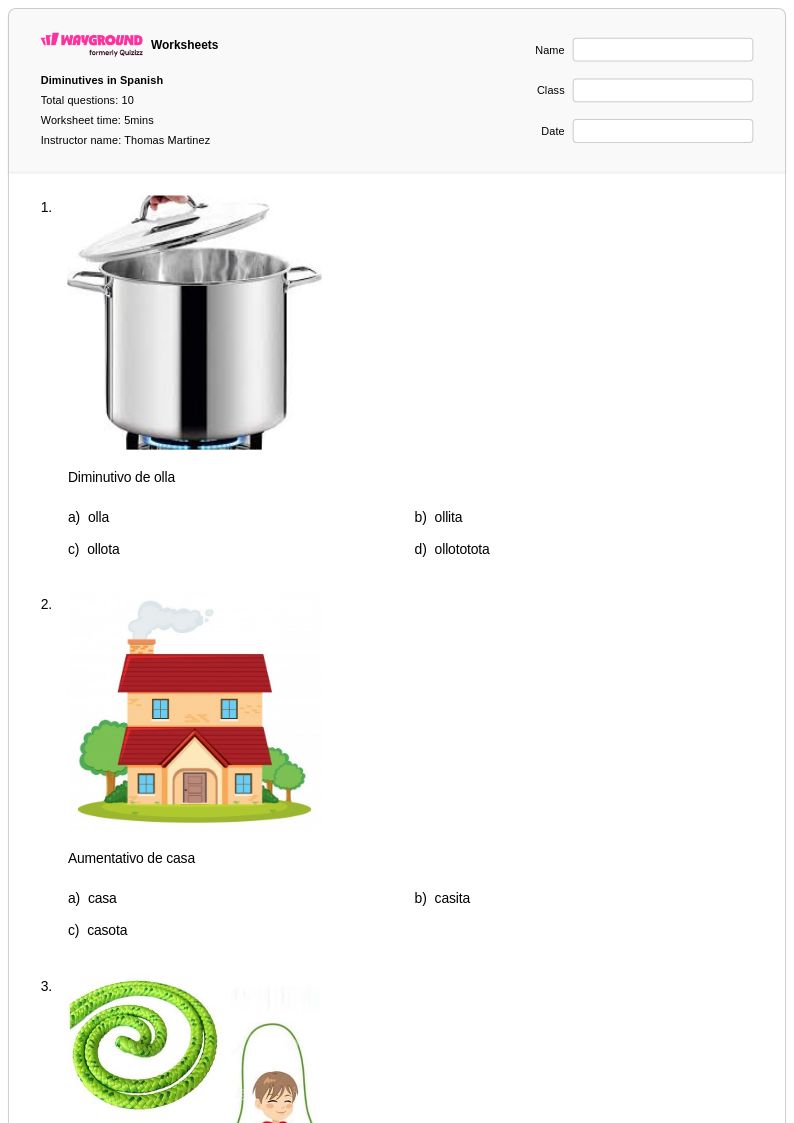
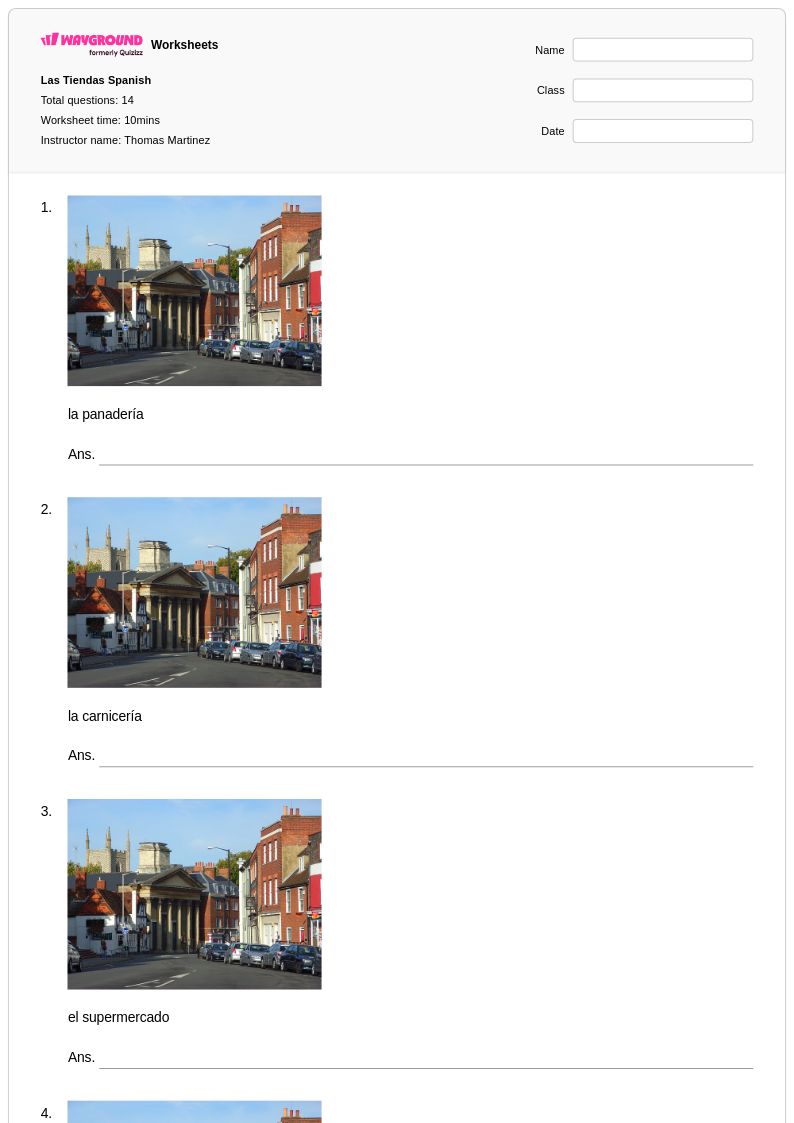
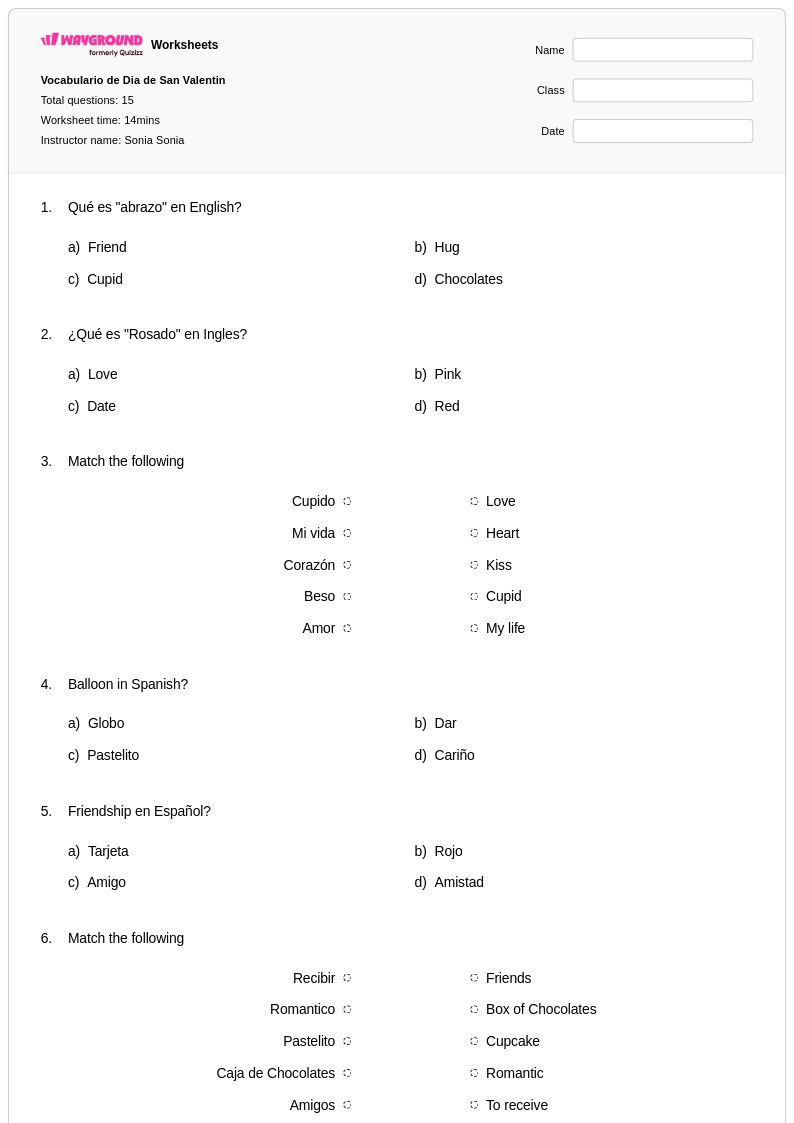
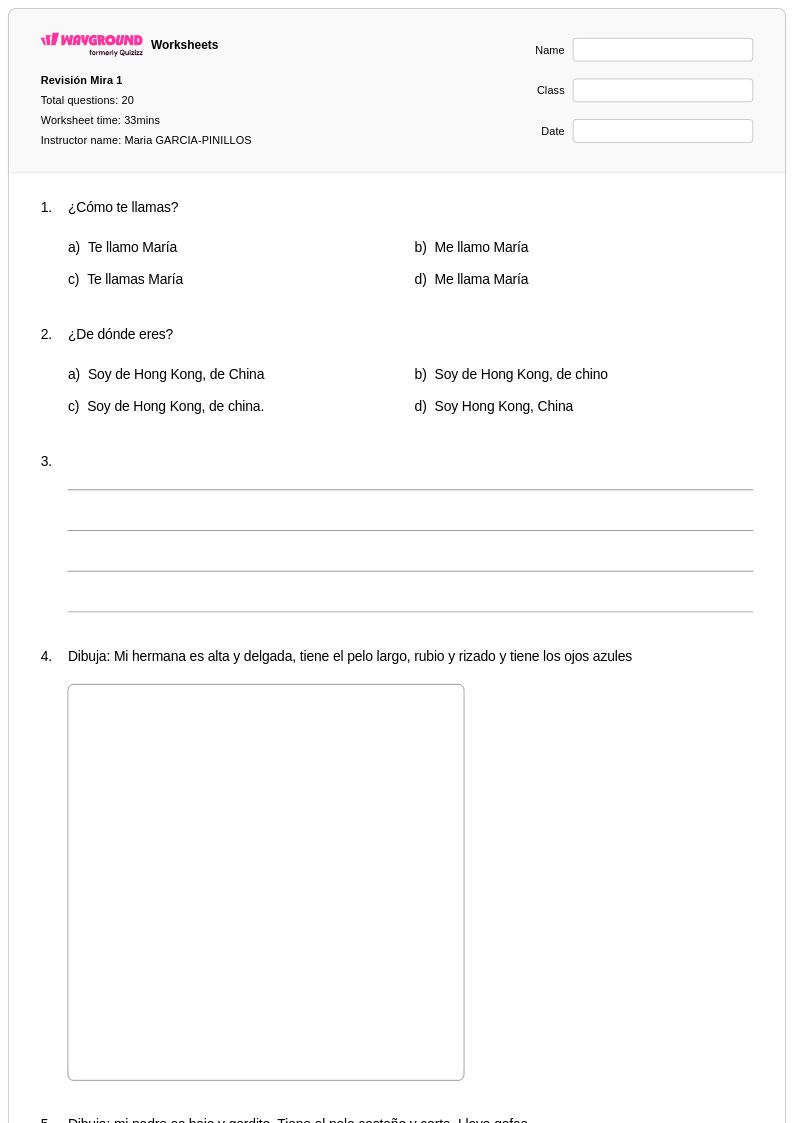
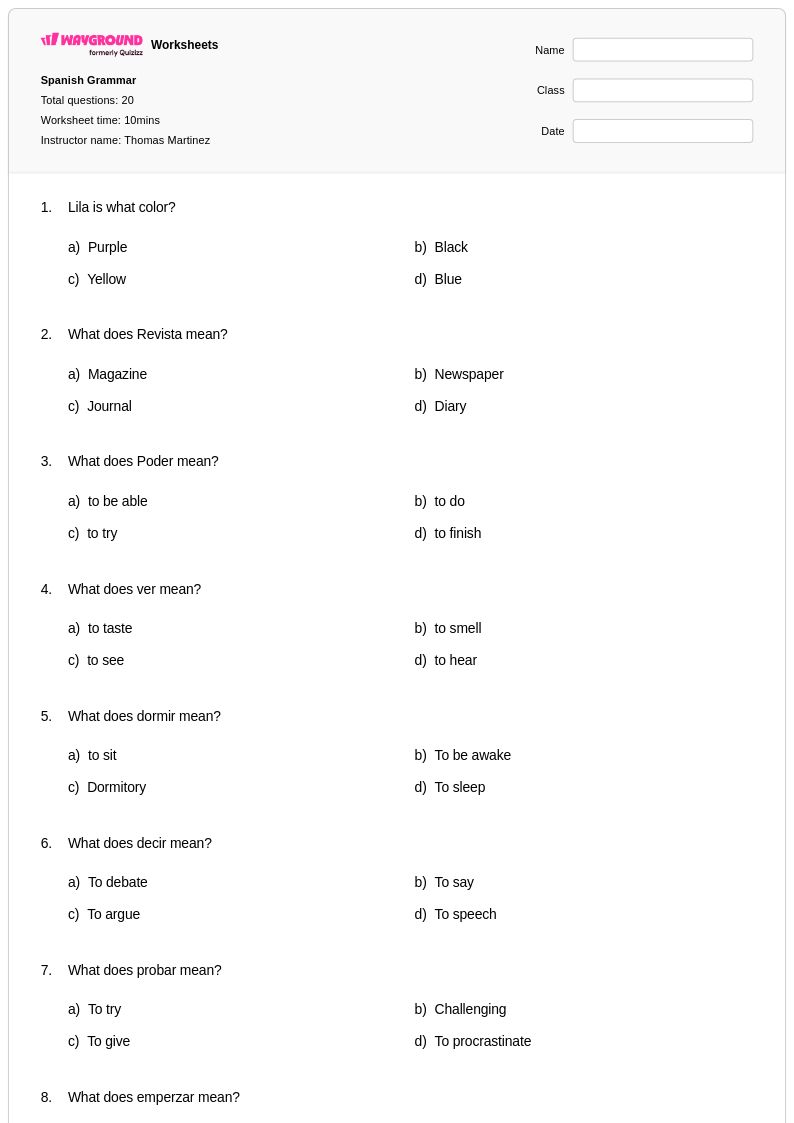
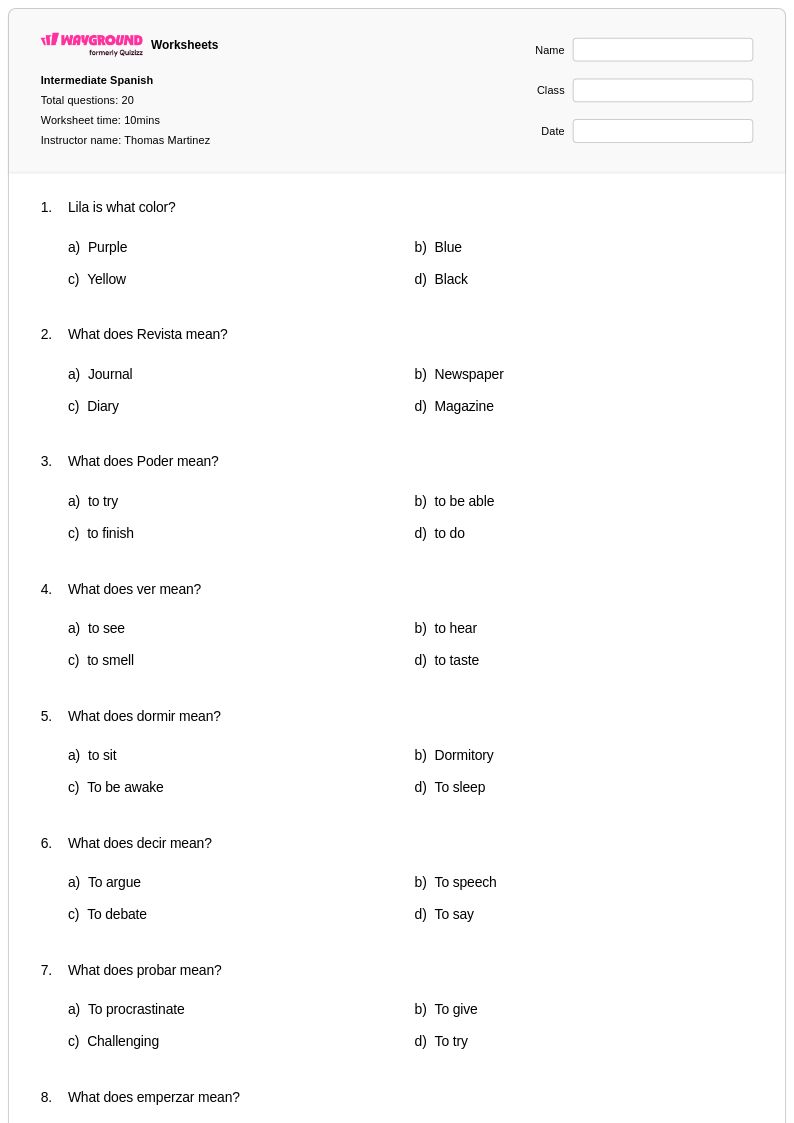
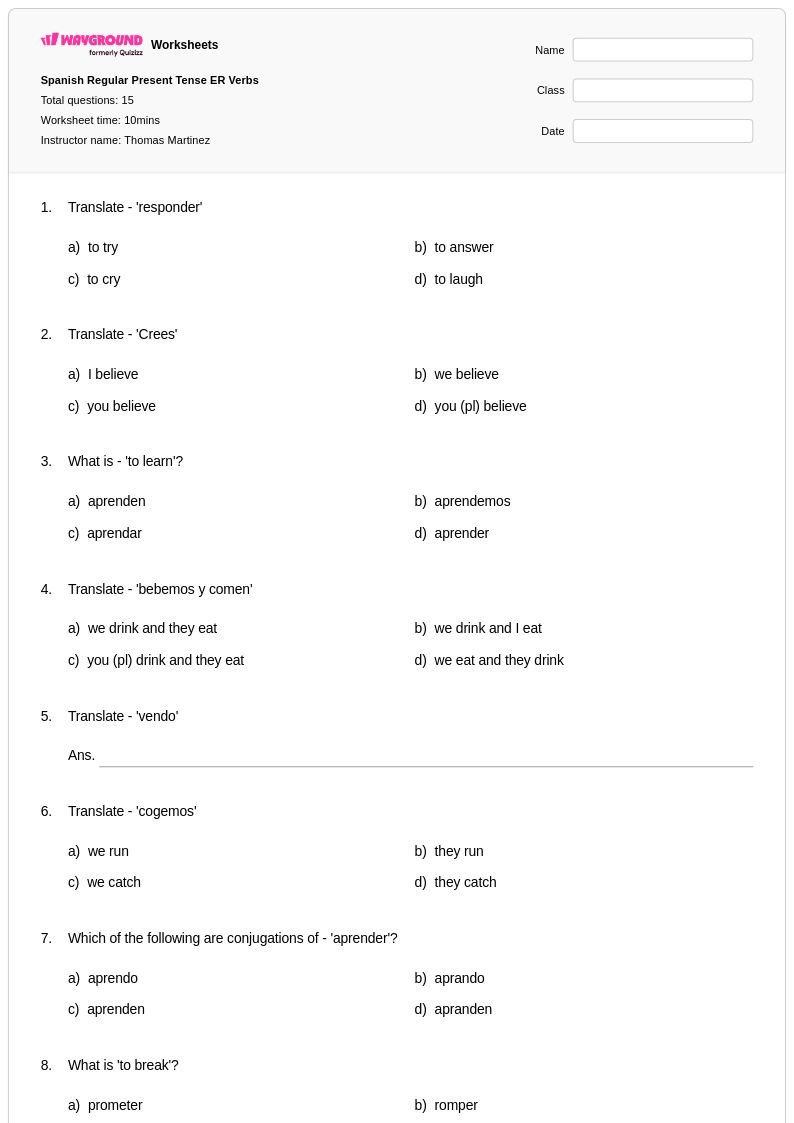
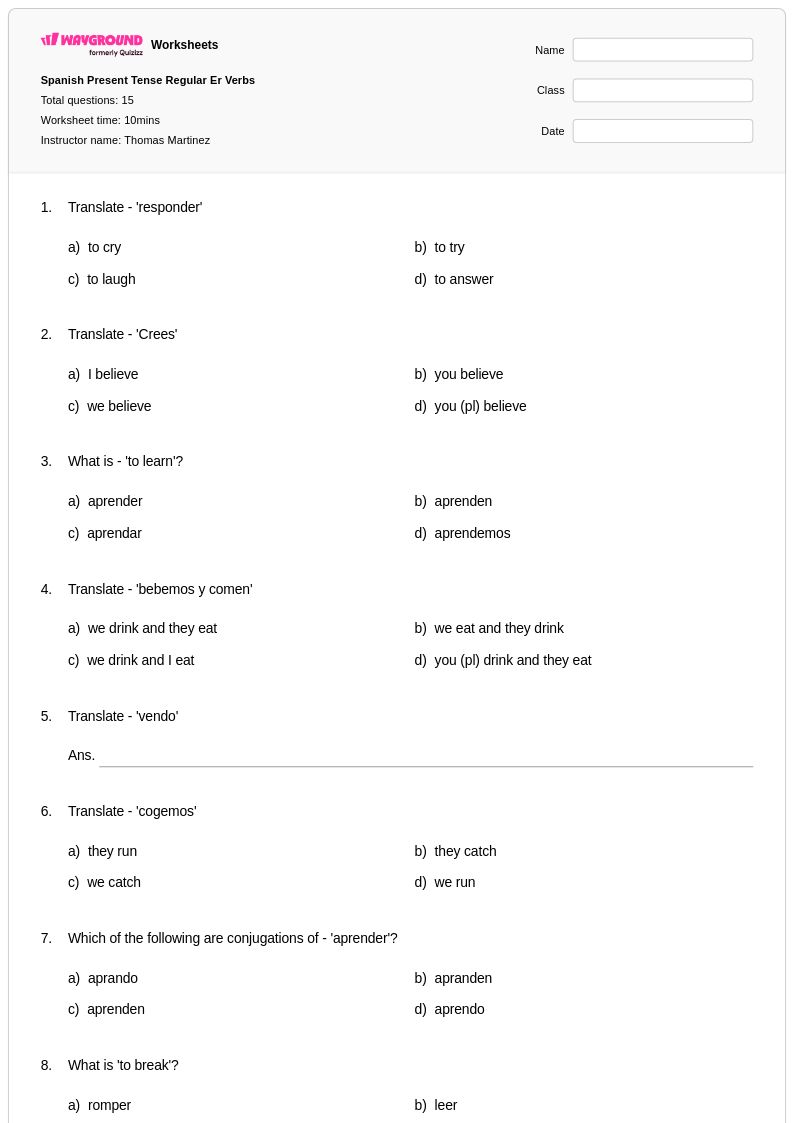
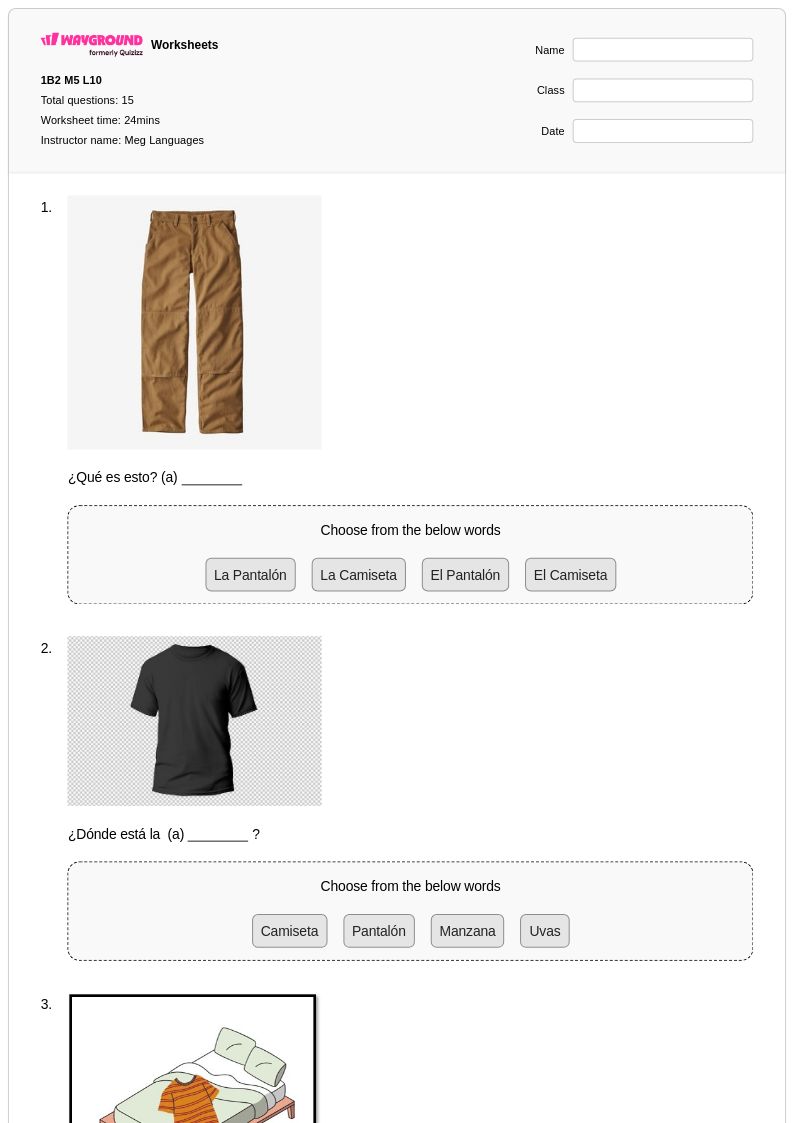
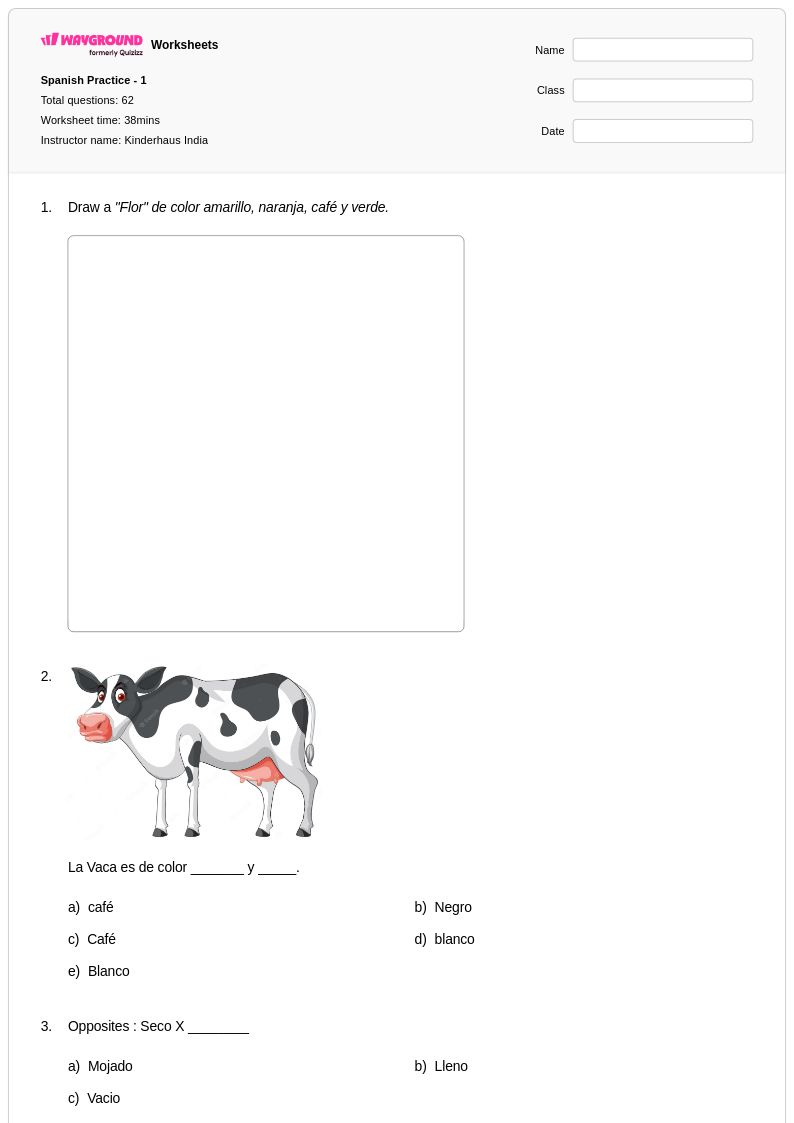
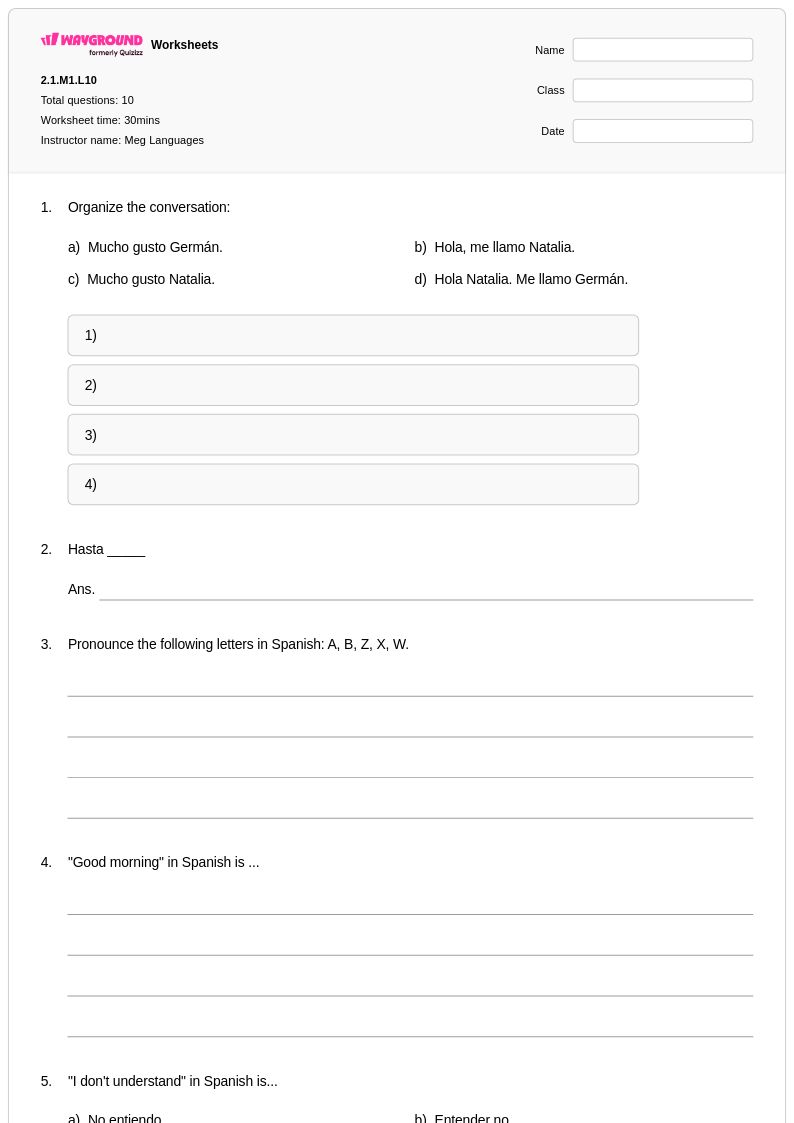
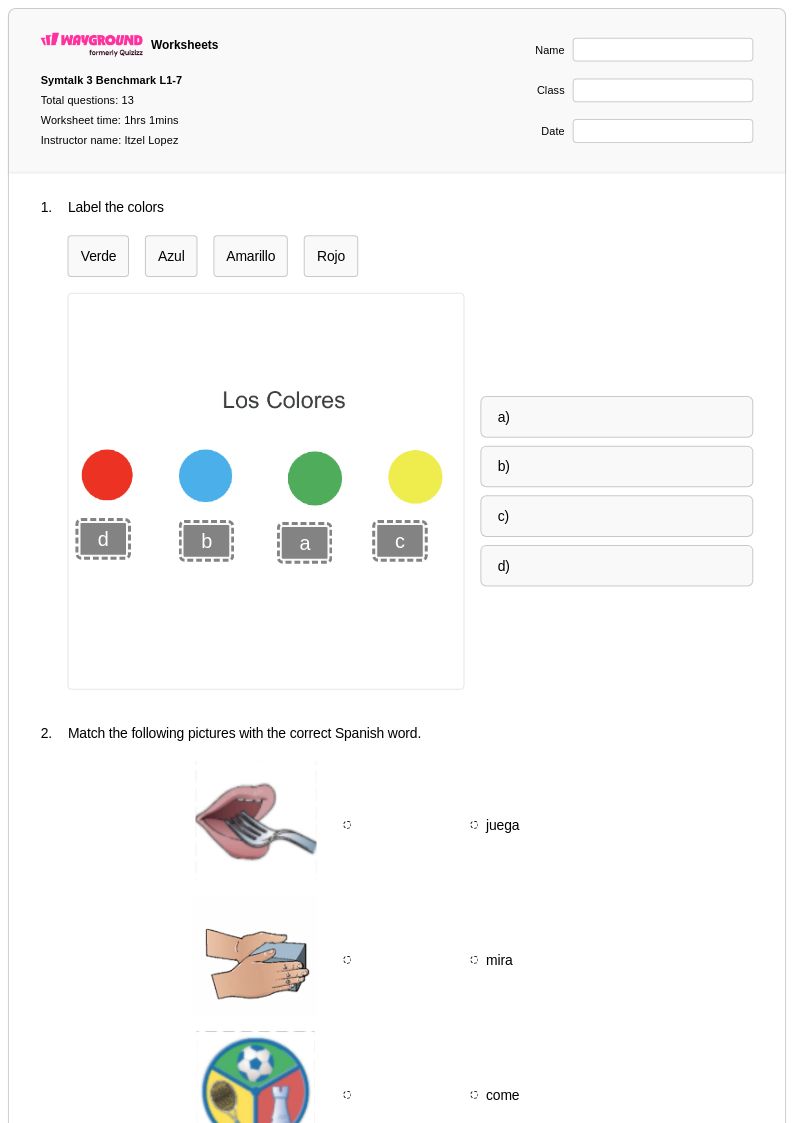
Class 1 Spanish worksheets and printables help young learners build foundational foreign language skills through engaging practice problems, free PDF resources, and comprehensive answer keys available on Wayground.
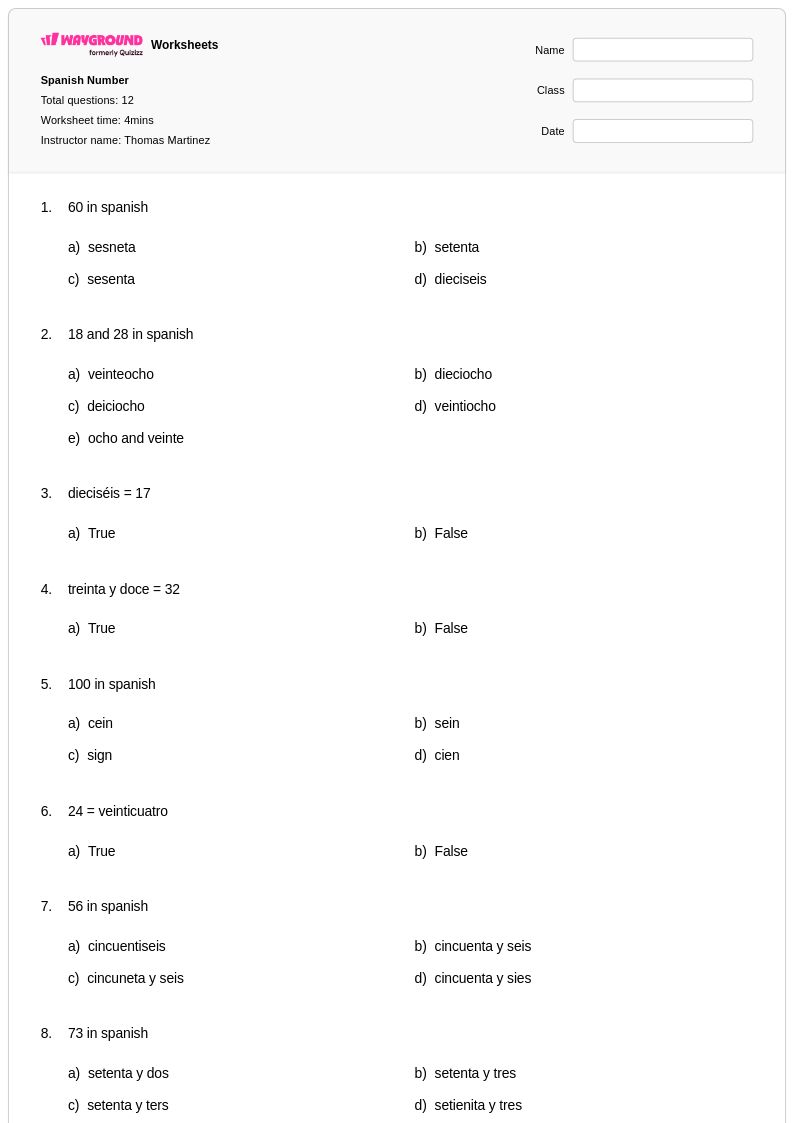
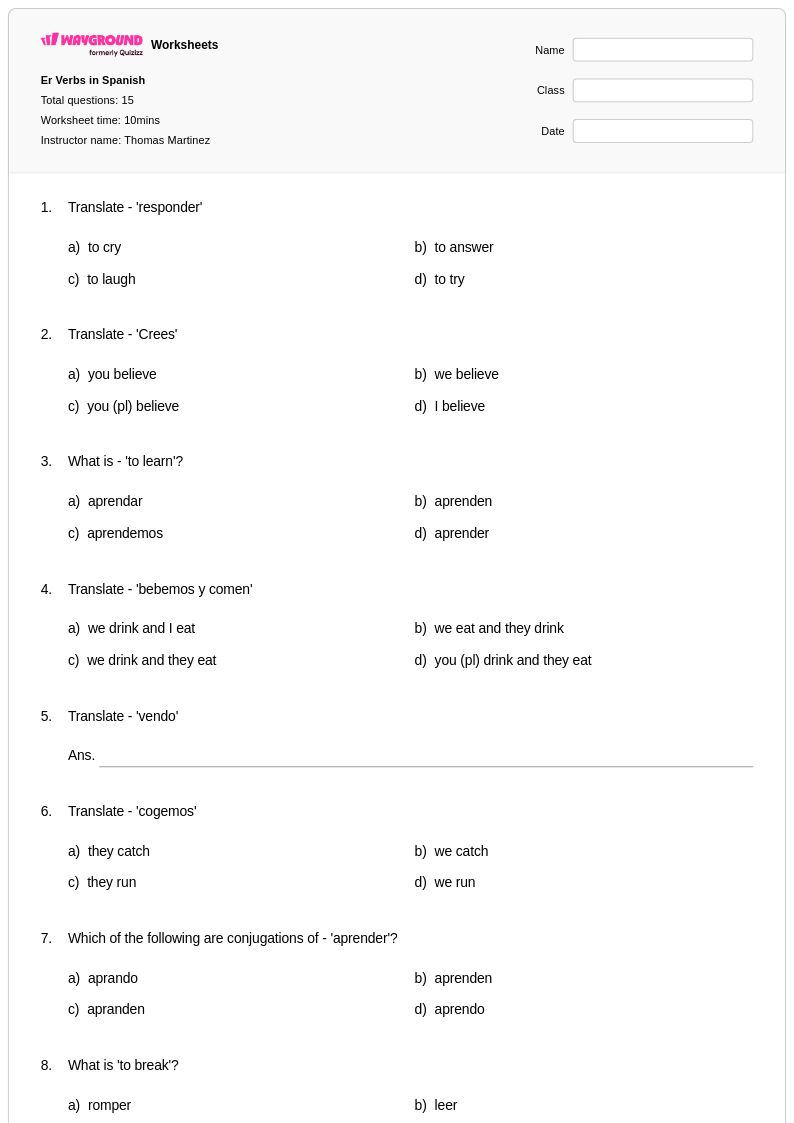
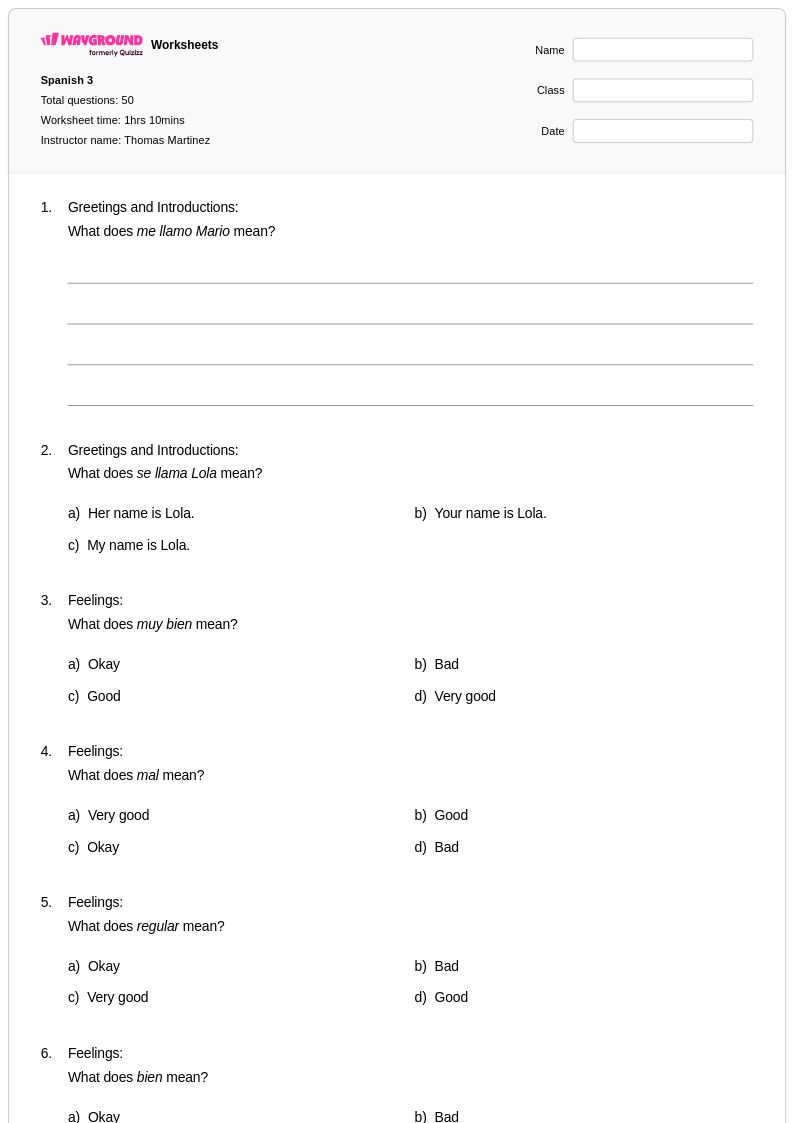
Spanish worksheets for Class 1 students available through Wayground (formerly Quizizz) provide an essential foundation for young learners beginning their journey into foreign language acquisition. These carefully designed resources focus on fundamental Spanish vocabulary, basic pronunciation patterns, and simple conversational phrases that are developmentally appropriate for first-grade students. The worksheets strengthen critical early language skills including letter recognition in Spanish, sound-symbol relationships, basic vocabulary retention, and introductory cultural awareness. Each printable resource includes comprehensive practice problems that reinforce learning through repetition and visual engagement, with answer key materials that support both independent work and guided instruction. The free pdf format ensures accessibility for all classrooms while maintaining the high-quality educational standards necessary for effective language instruction at the elementary level.
Wayground (formerly Quizizz) empowers teachers with an extensive collection of millions of teacher-created Spanish resources specifically curated for Class 1 instruction. The platform's robust search and filtering capabilities allow educators to quickly locate materials that align with specific curriculum standards and learning objectives for beginning Spanish learners. Advanced differentiation tools enable teachers to customize worksheets based on individual student needs, learning styles, and proficiency levels, ensuring that both struggling learners and advanced students receive appropriate challenges. The flexible format options, including printable pdf versions and interactive digital alternatives, support diverse classroom environments and teaching methodologies. These comprehensive features streamline lesson planning while providing targeted resources for remediation, enrichment, and consistent skill practice, ultimately helping teachers create engaging and effective Spanish learning experiences that build confidence and competency in young language learners.
FAQs
How do I teach Spanish grammar to beginners effectively?
Start with high-frequency structures like ser vs. estar, present-tense regular verb conjugations, and noun-adjective agreement before introducing irregular forms. Scaffolding grammar instruction with visual models and immediate practice helps students internalize patterns rather than memorize rules in isolation. Pairing explicit grammar instruction with thematic vocabulary sets gives students meaningful context for applying new structures from the start.
What worksheets help students practice Spanish vocabulary?
Thematic vocabulary worksheets organized around everyday topics such as family, food, school, and travel are among the most effective tools for building retention. Practice formats that include fill-in-the-blank sentences, matching definitions, and short written responses require students to actively retrieve and apply new words rather than passively recognize them. Repeated exposure across different exercise types is key to moving vocabulary from short-term recall into long-term use.
What are the most common mistakes students make when learning Spanish?
Students frequently confuse ser and estar, misapply noun-adjective gender and number agreement, and default to English word order when constructing sentences. Verb conjugation errors are especially common with irregular verbs in the preterite and subjunctive tenses, which students often overgeneralize using regular patterns. Targeted practice on these specific pain points, rather than broad grammar review, is the most efficient way to address persistent errors.
How can I differentiate Spanish instruction for students at different proficiency levels?
Differentiation in Spanish class works best when the same core content is accessible at multiple entry points, such as offering sentence starters for novice learners while expecting paragraph-level responses from intermediate students. On Wayground, teachers can apply individual accommodations including reduced answer choices to lower cognitive load for struggling learners, read-aloud support for students who need audio scaffolding, and extended time settings for students who require additional processing time. These accommodations can be assigned per student without notifying the rest of the class, keeping the experience seamless for all learners.
How do I use Spanish worksheets from Wayground in my classroom?
Wayground's Spanish worksheets are available as printable PDFs for traditional classroom use and in digital formats for technology-integrated environments, including the option to host them as an interactive quiz directly on Wayground. Teachers can use them for warm-up activities, guided practice, independent review, or formative assessment, depending on where students are in a unit. Each worksheet includes a complete answer key, which supports both self-assessment by students and efficient grading by teachers.
How do I help students improve Spanish conversation skills in a classroom setting?
Conversation fluency develops through structured speaking practice that gives students predictable frameworks before open-ended dialogue, such as scripted exchanges, question-and-answer drills, and role-play scenarios tied to vocabulary themes. Written grammar and vocabulary practice builds the foundational knowledge students need to speak with greater accuracy and confidence. Pairing written worksheet practice with regular low-stakes speaking tasks creates a feedback loop that reinforces both skills simultaneously.