Free Printable Stress Management Worksheets for Class 10
Class 10 stress management worksheets and printables help students develop essential coping strategies and wellness techniques through engaging practice problems, free PDF resources, and comprehensive answer keys available on Wayground.
Explore printable Stress Management worksheets for Class 10
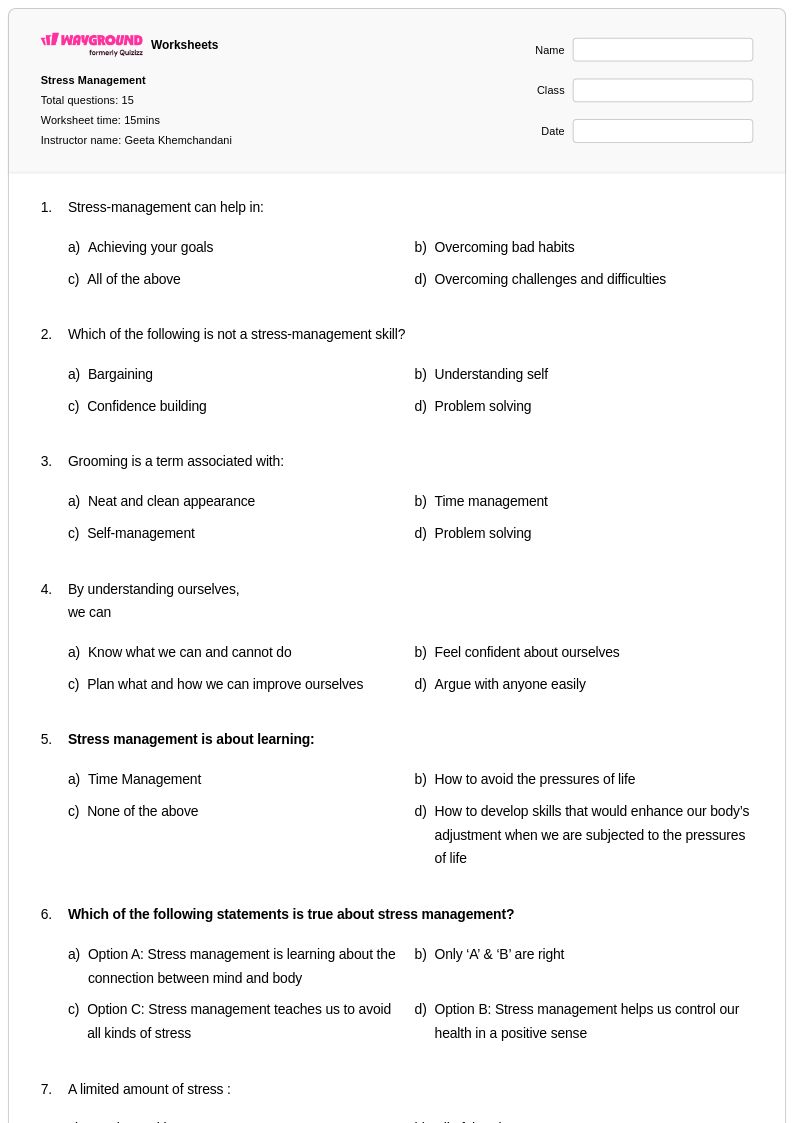
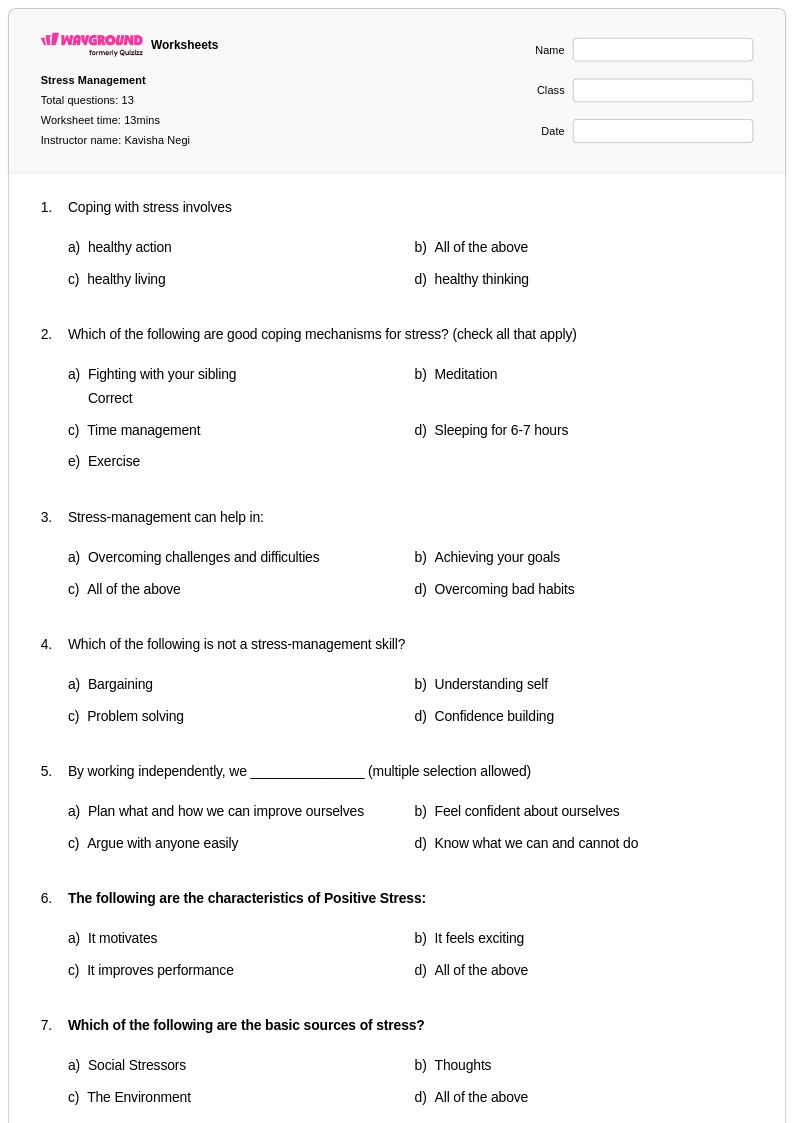
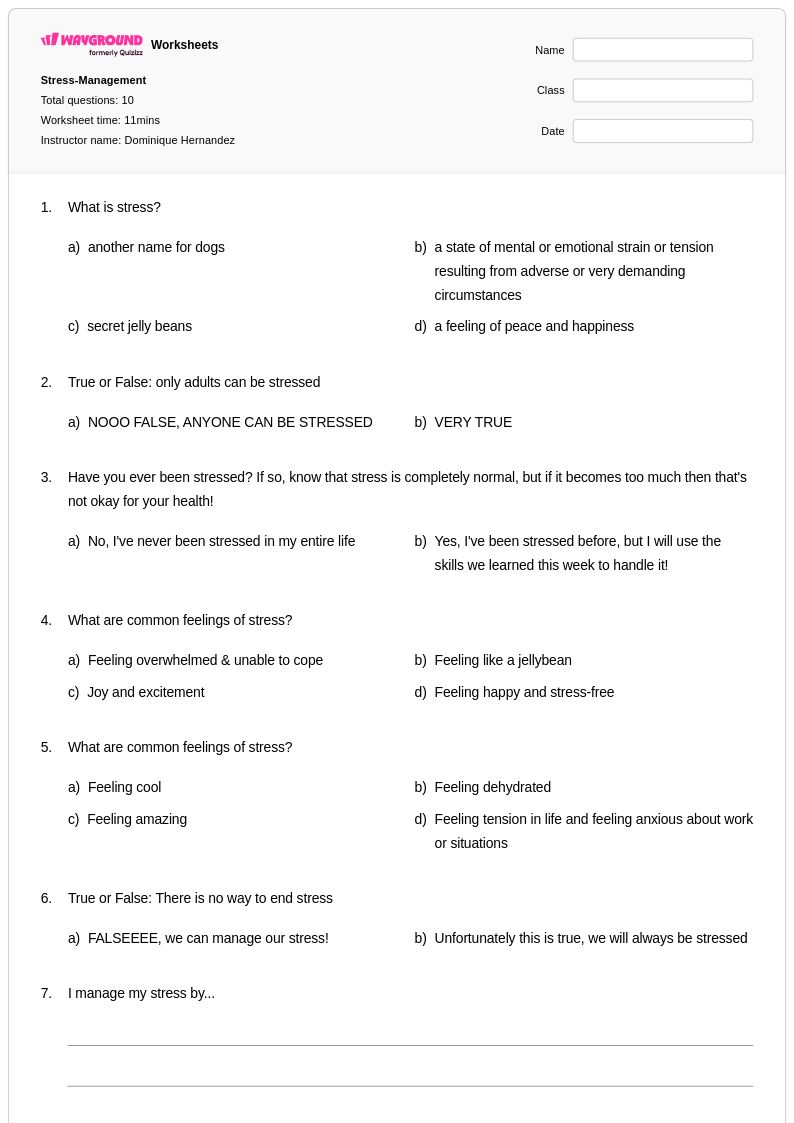
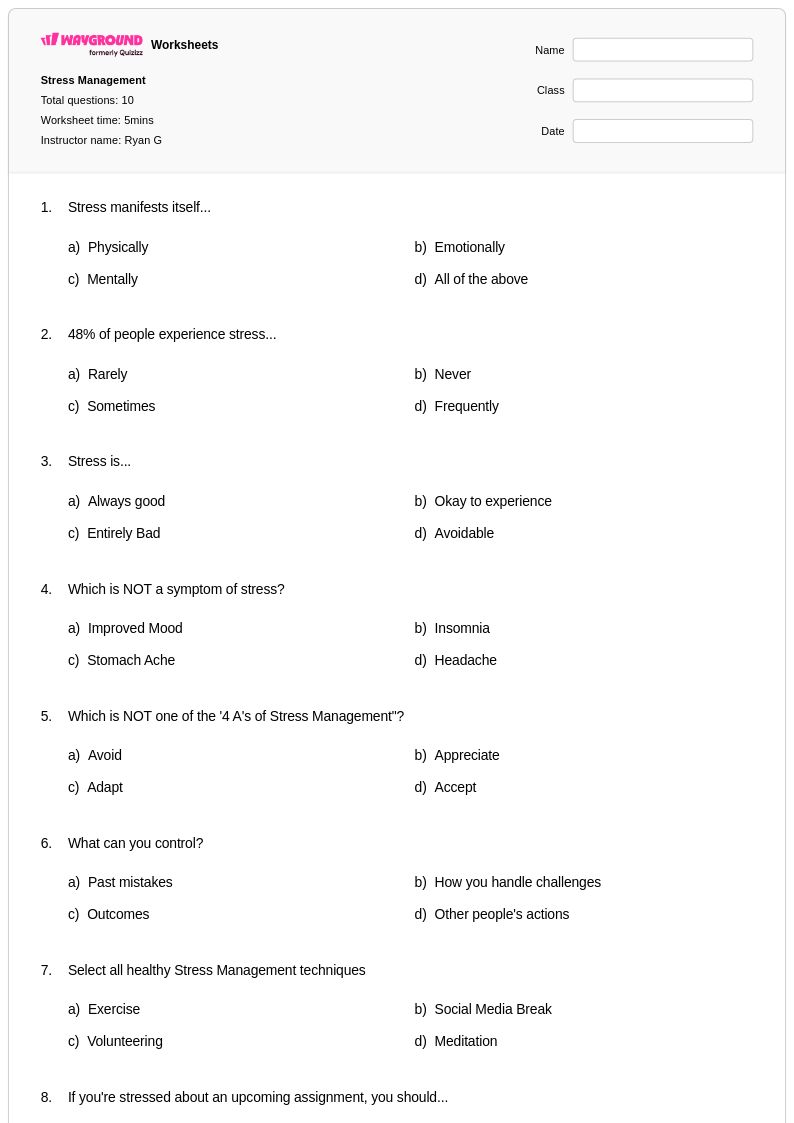
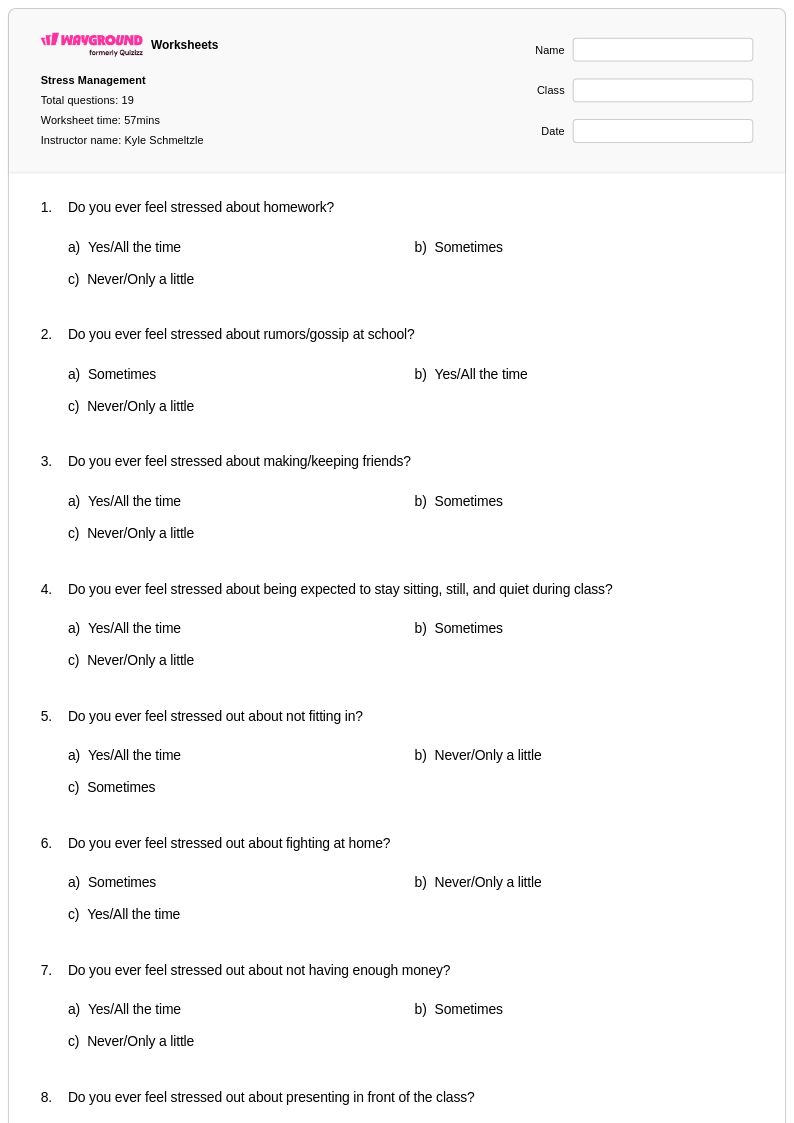
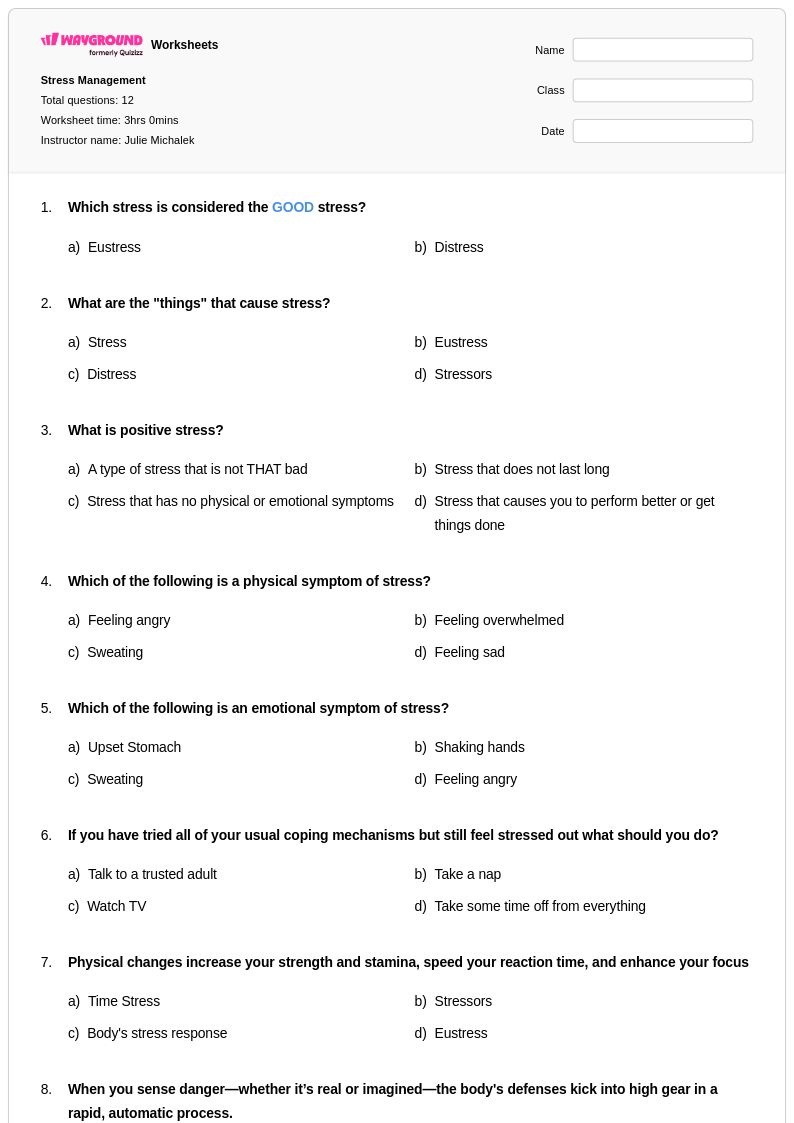
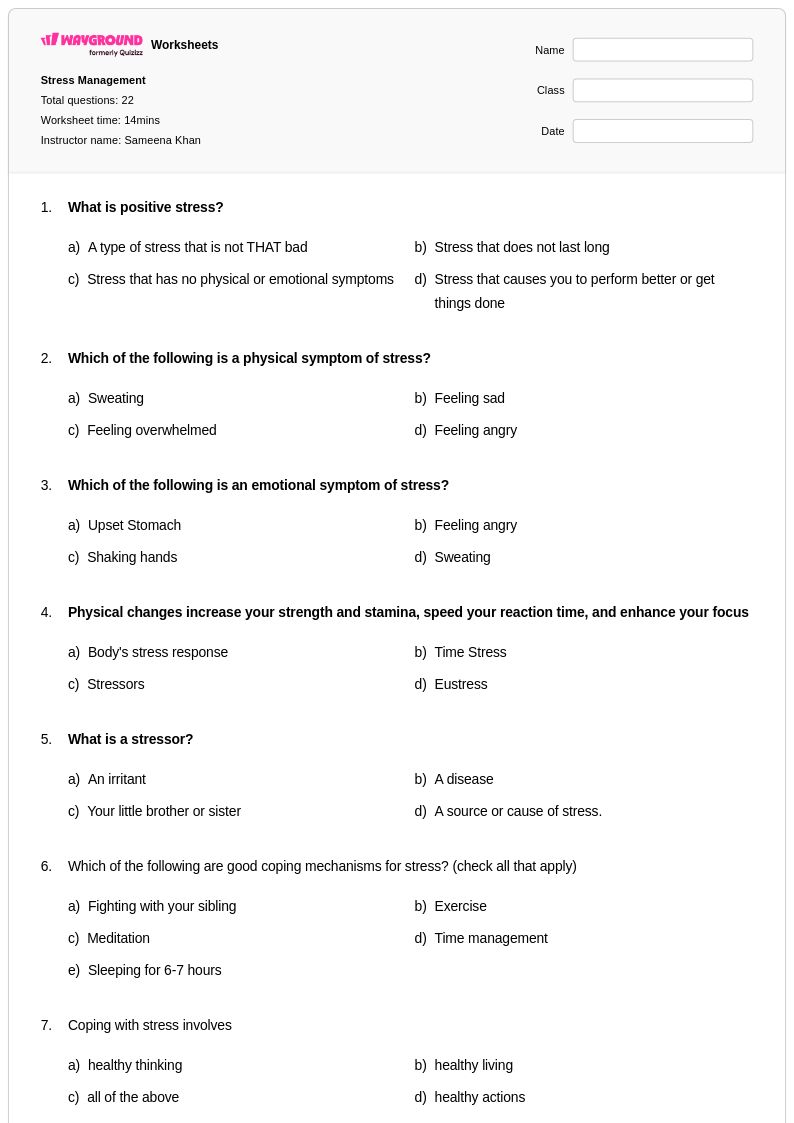
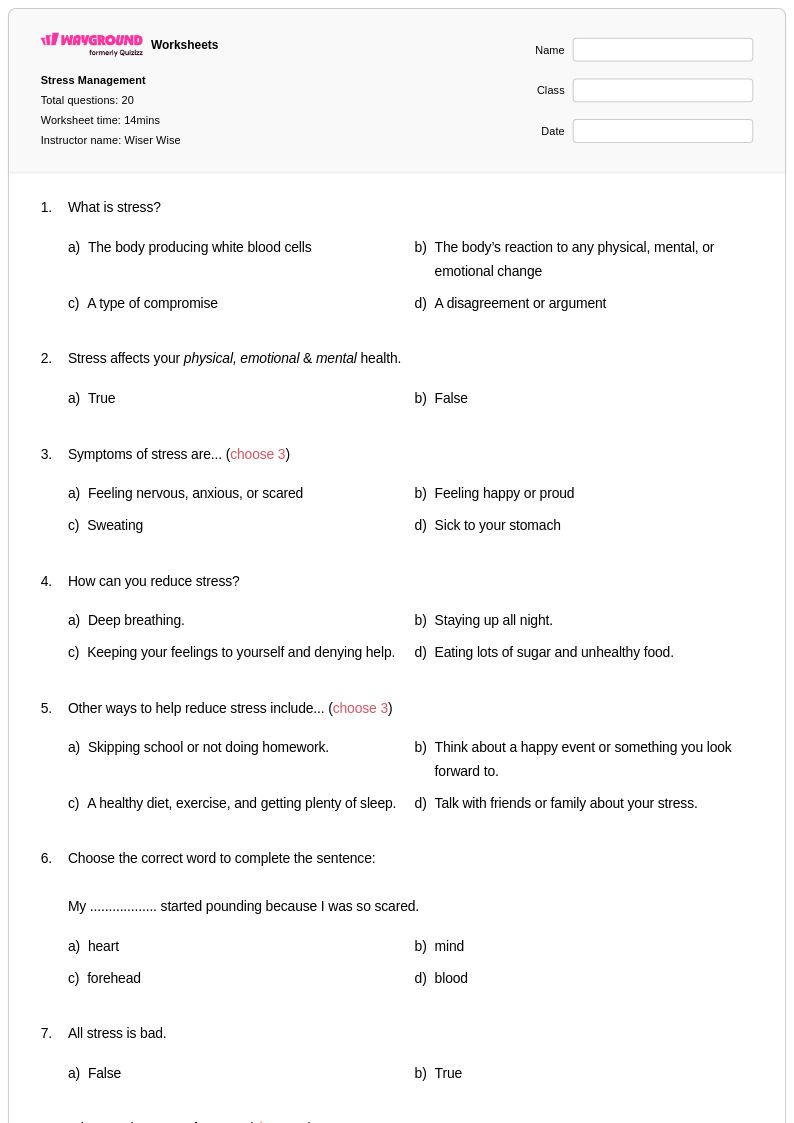
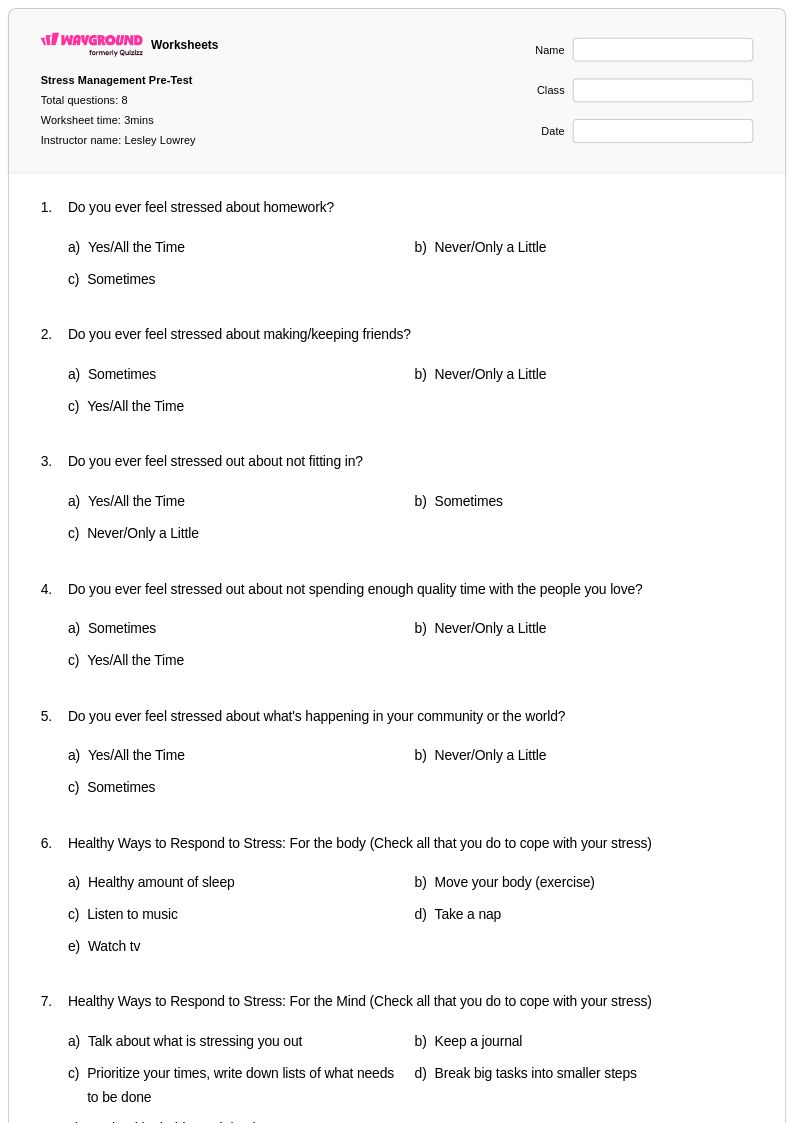
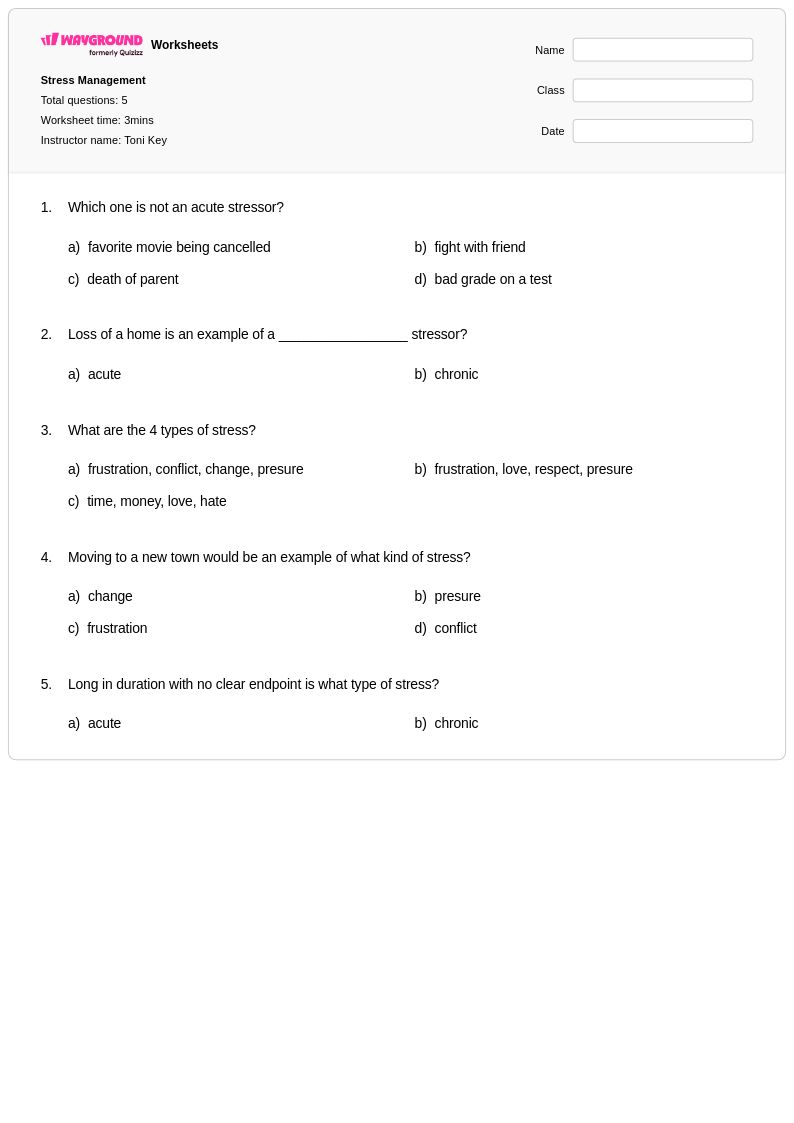
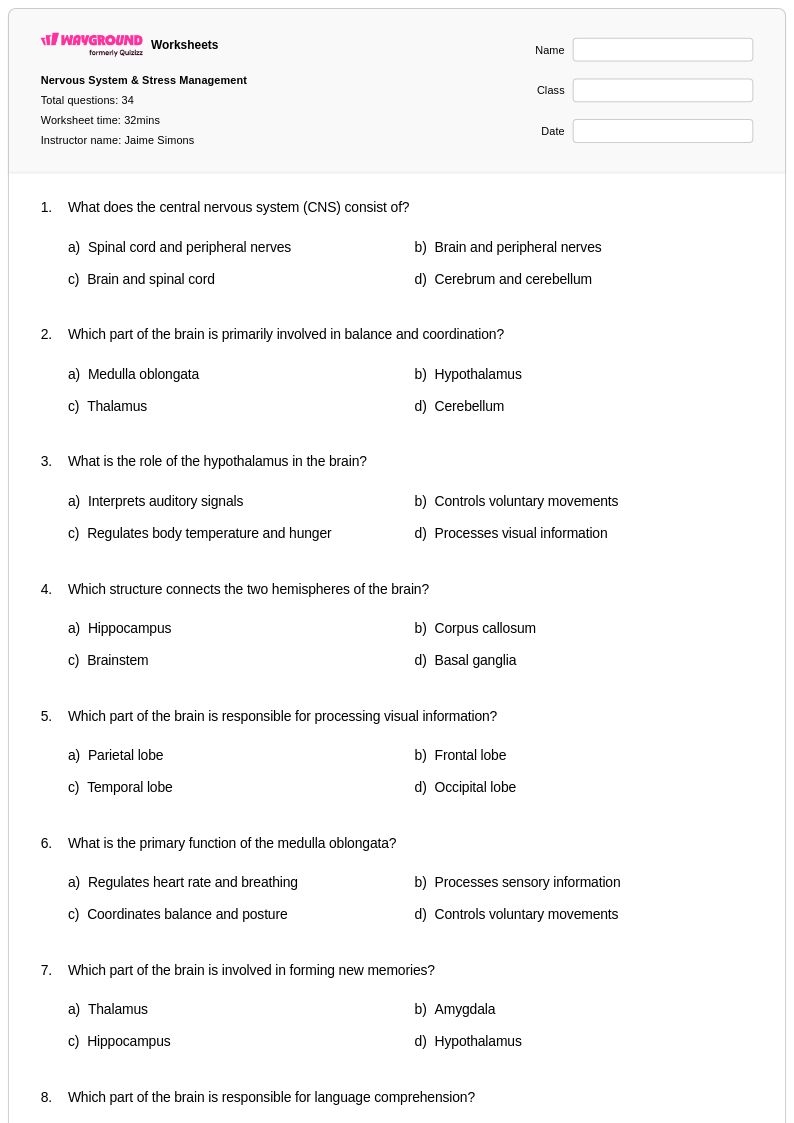
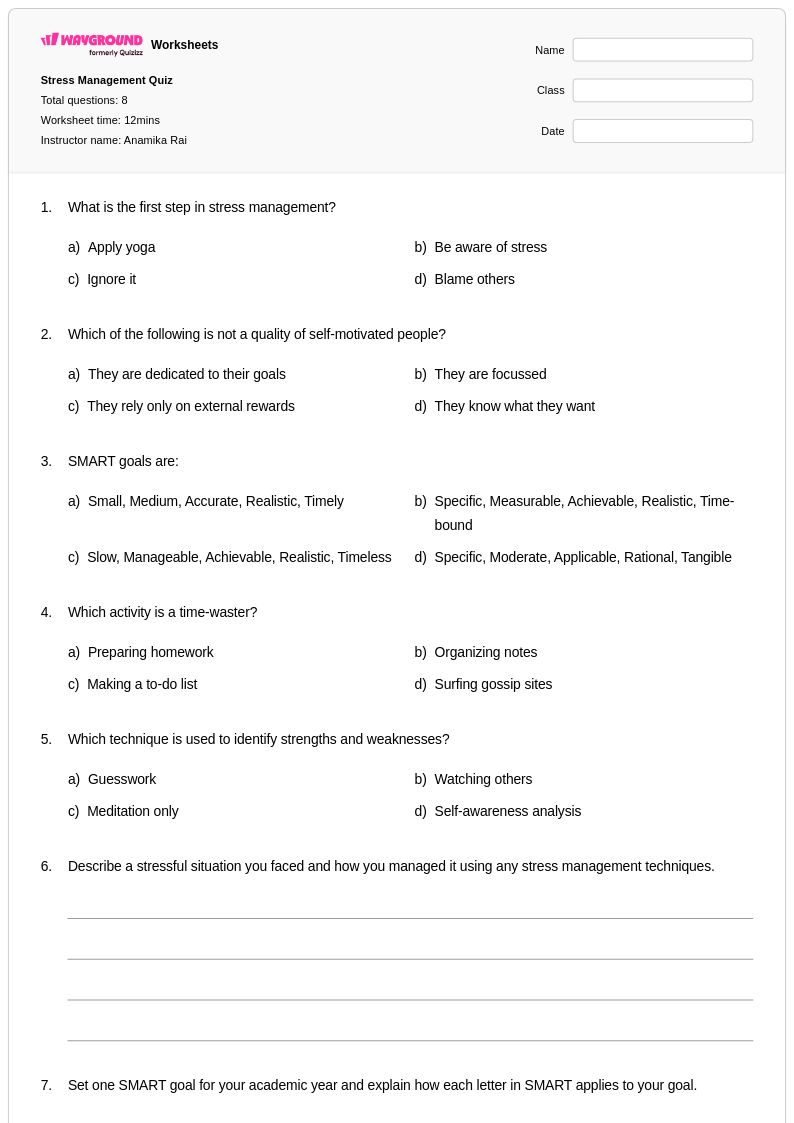
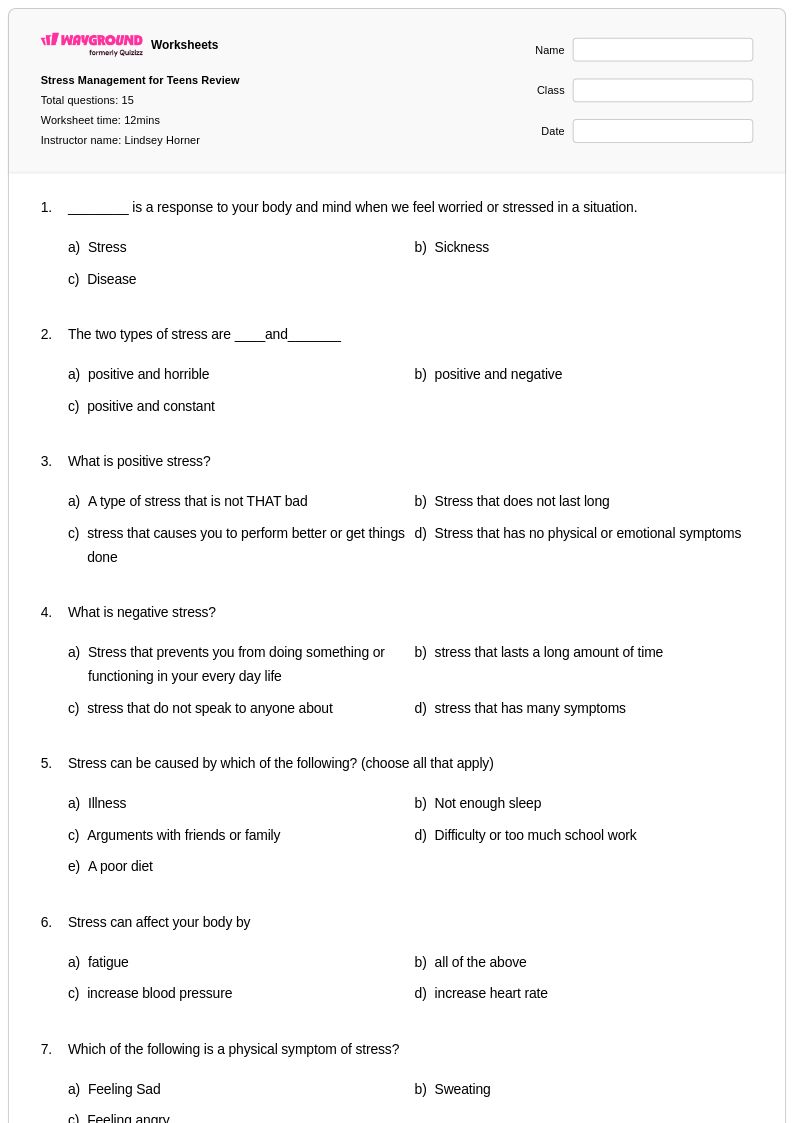
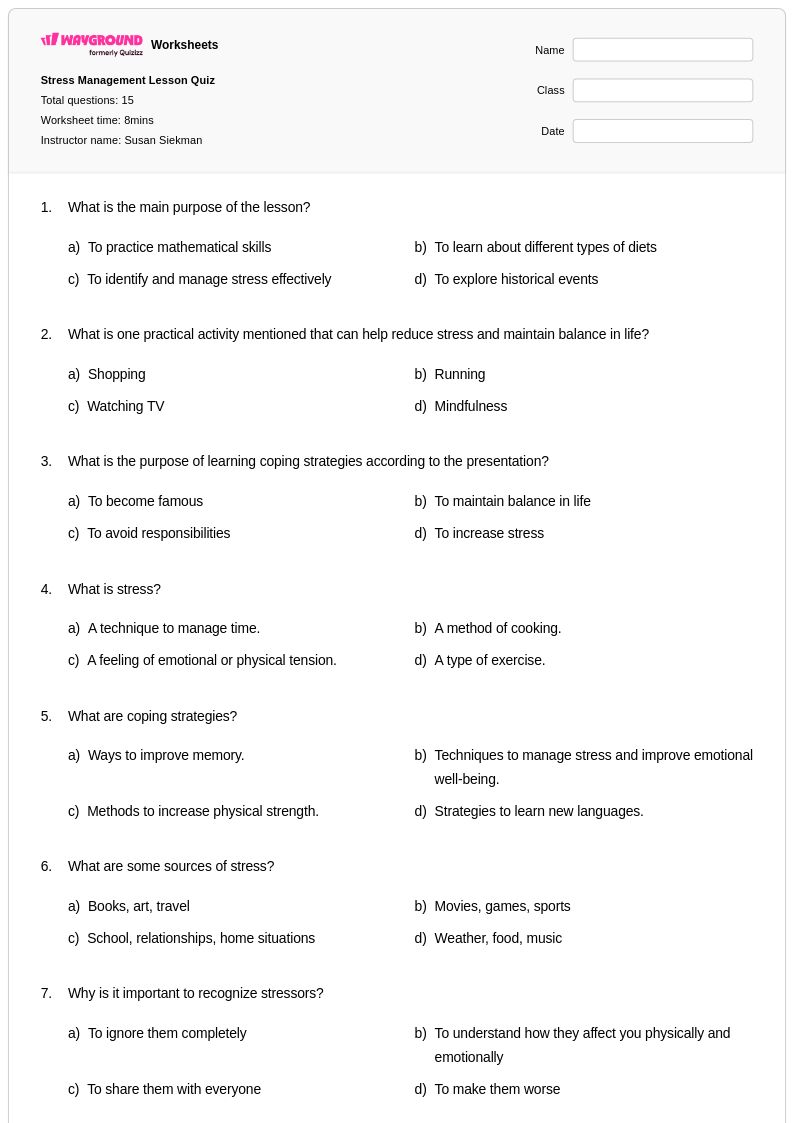
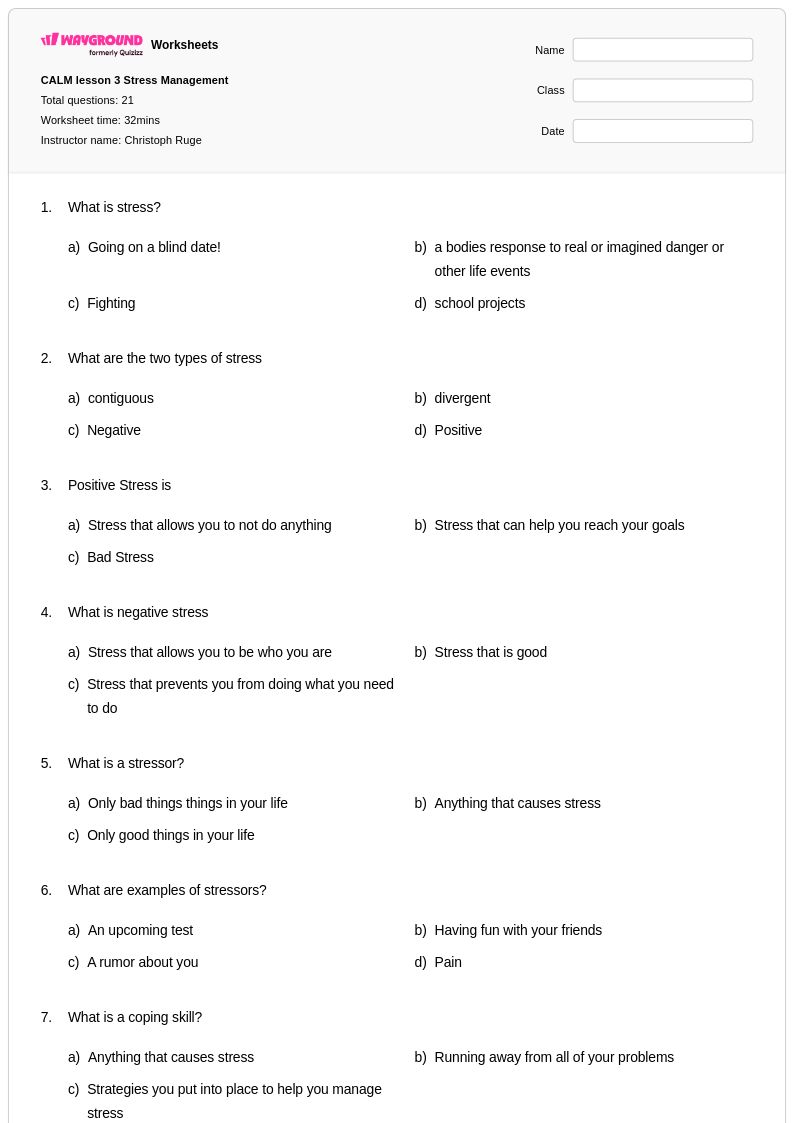
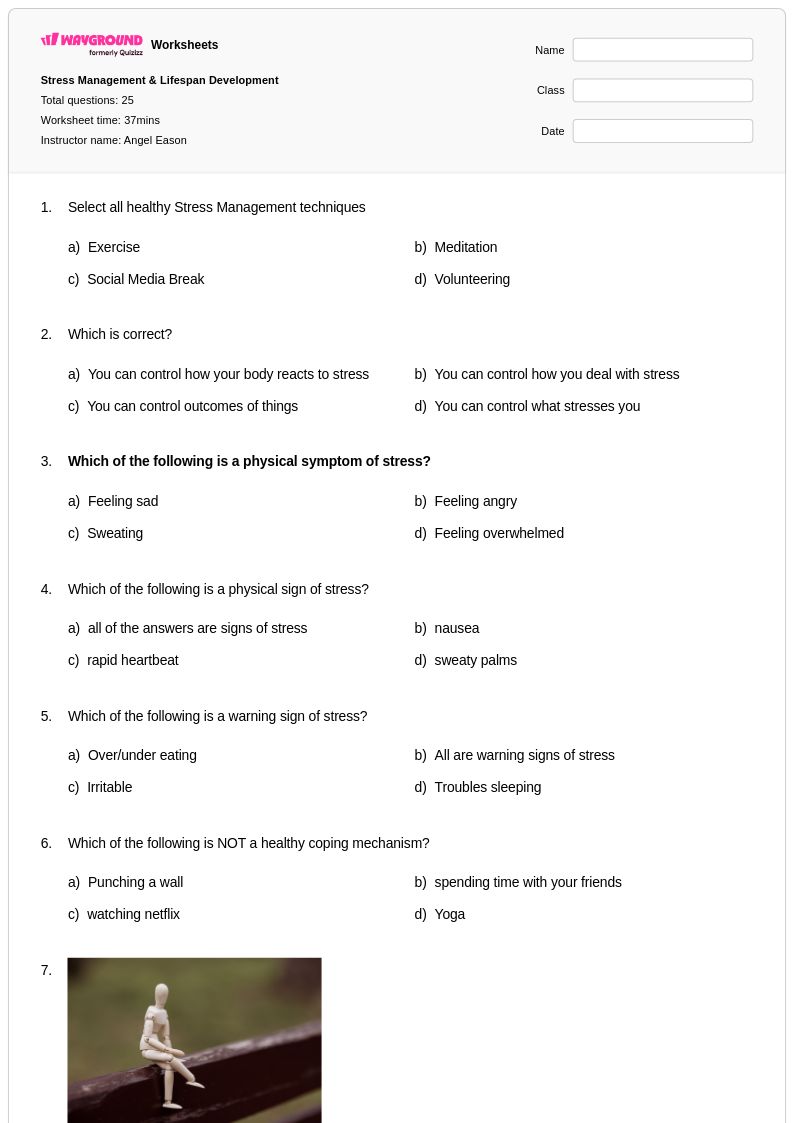
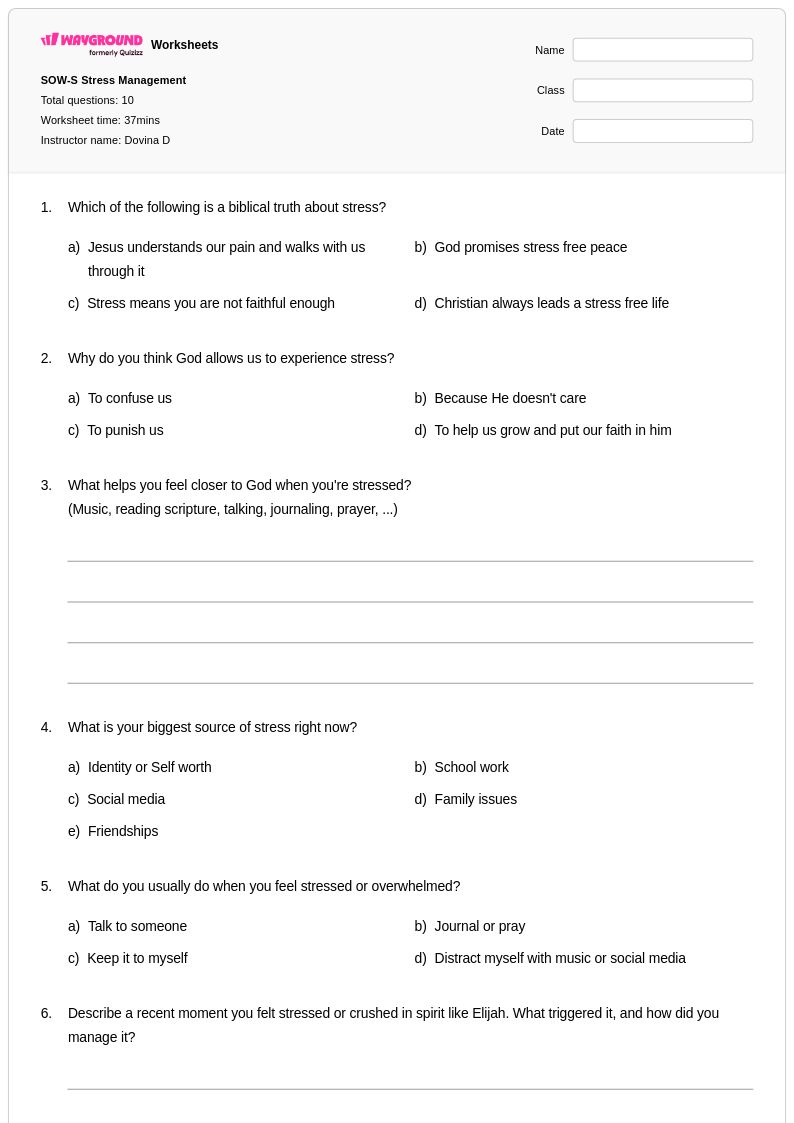
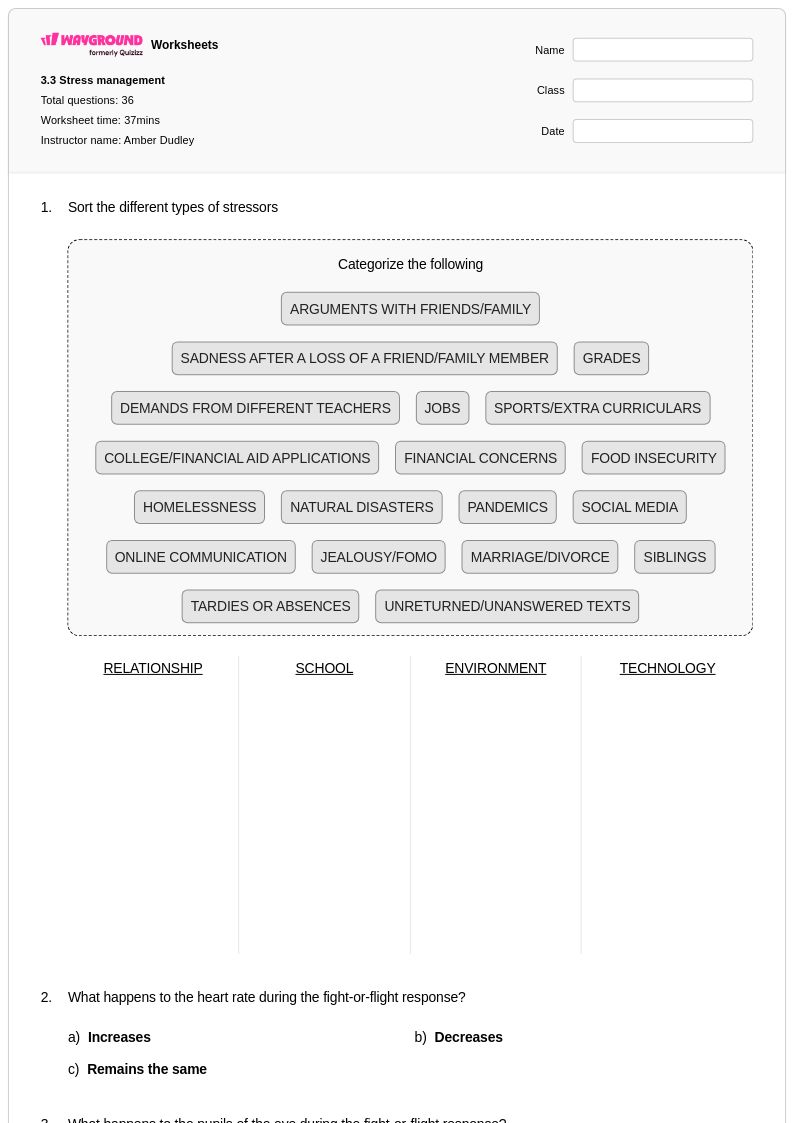
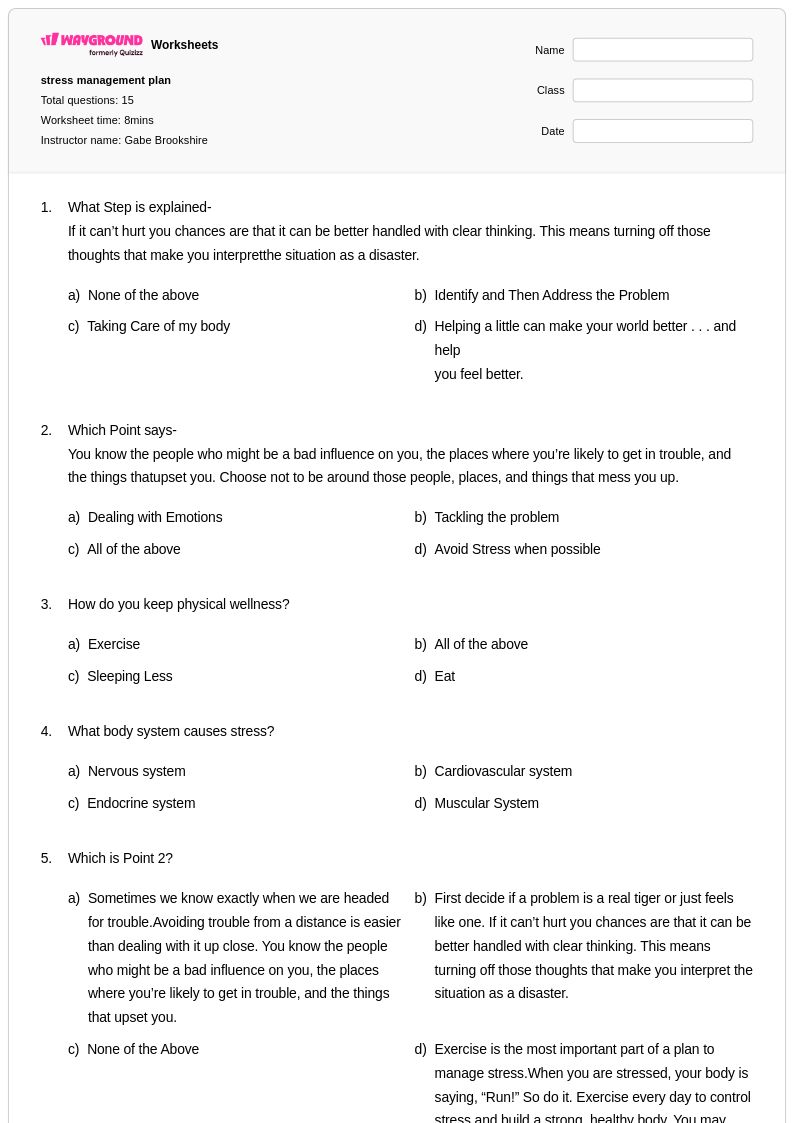
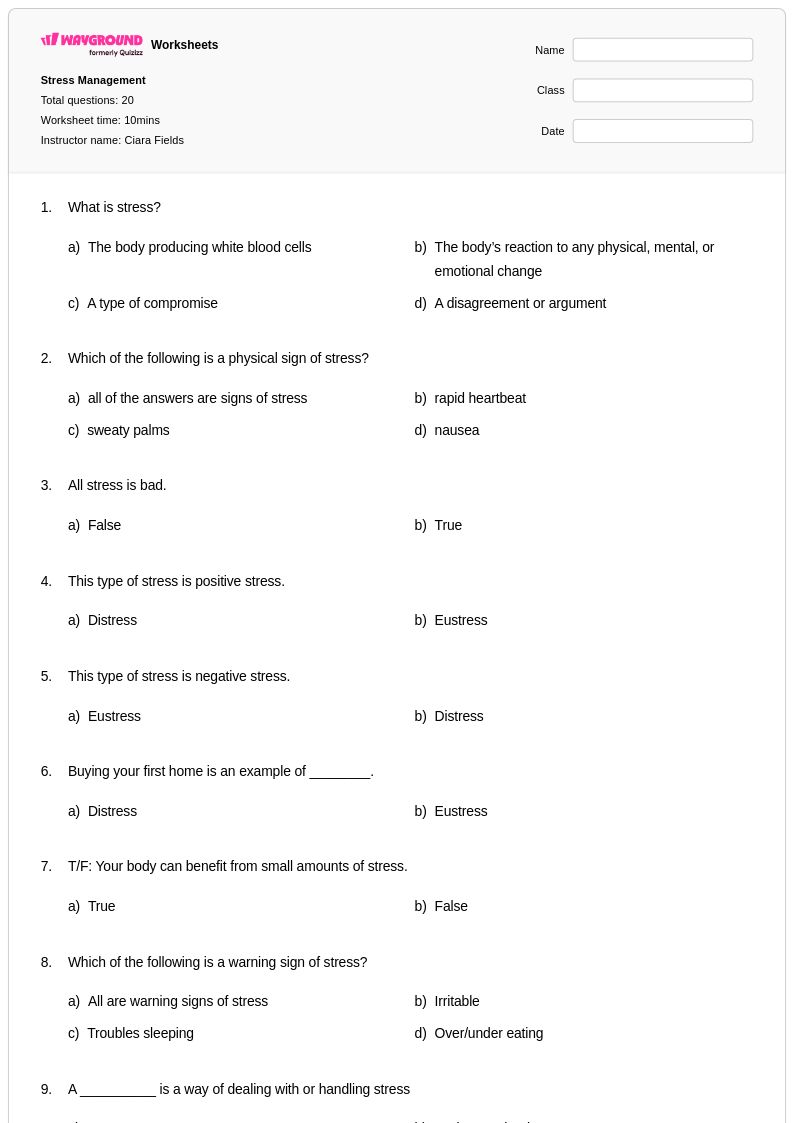
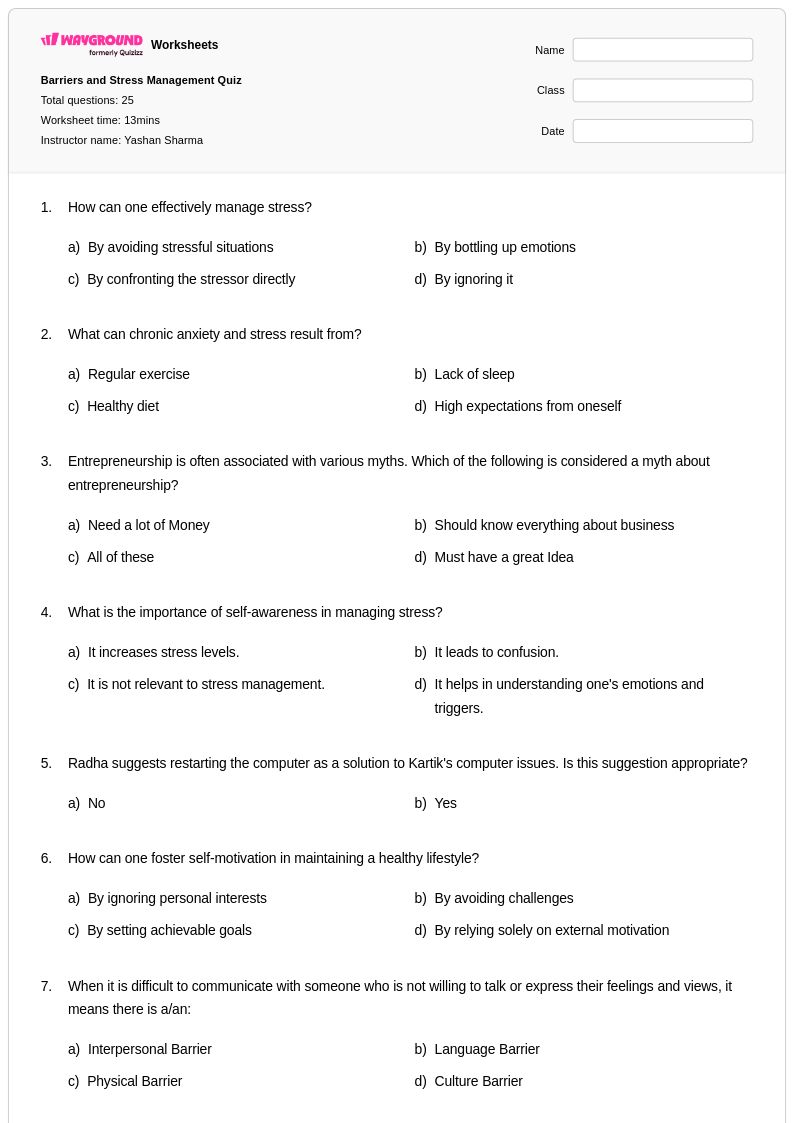
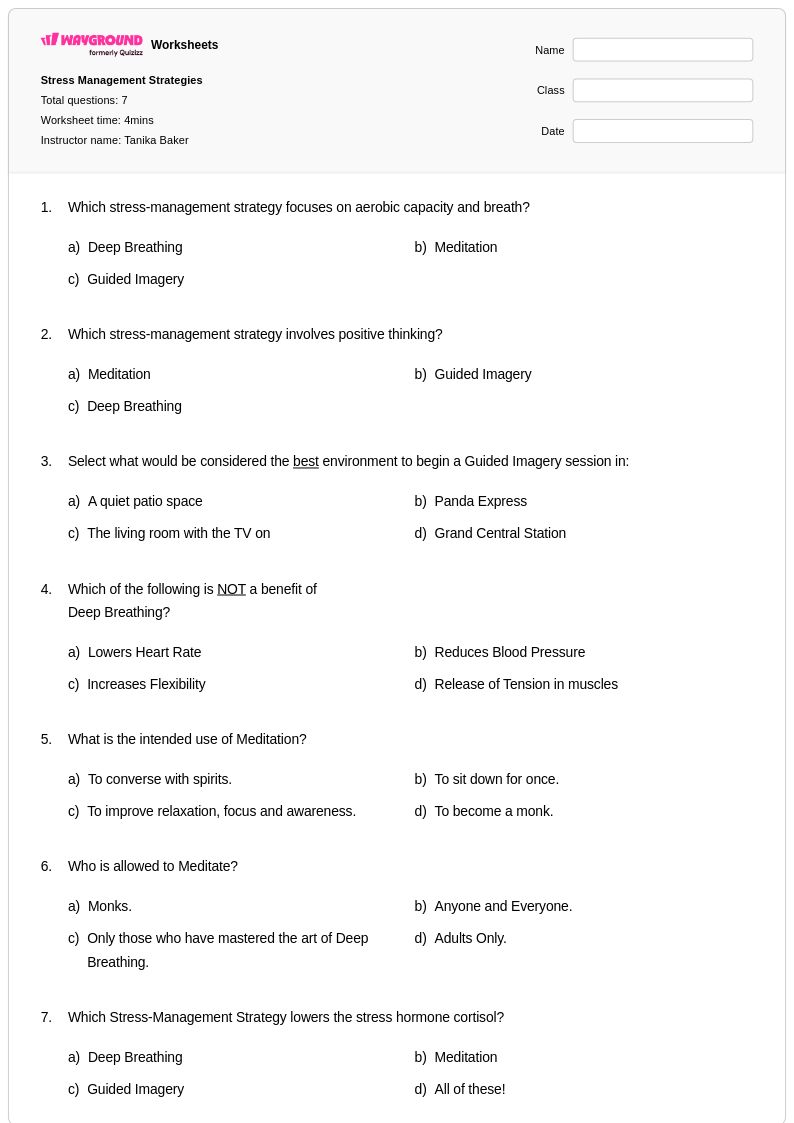
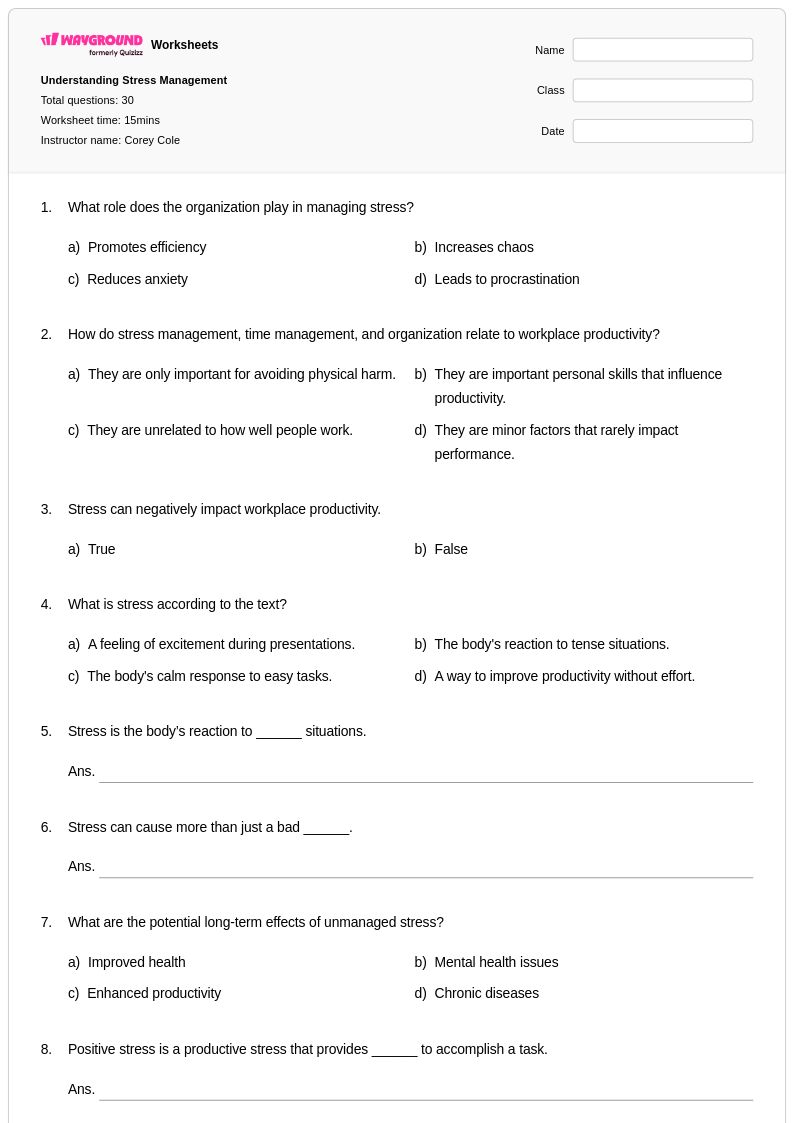
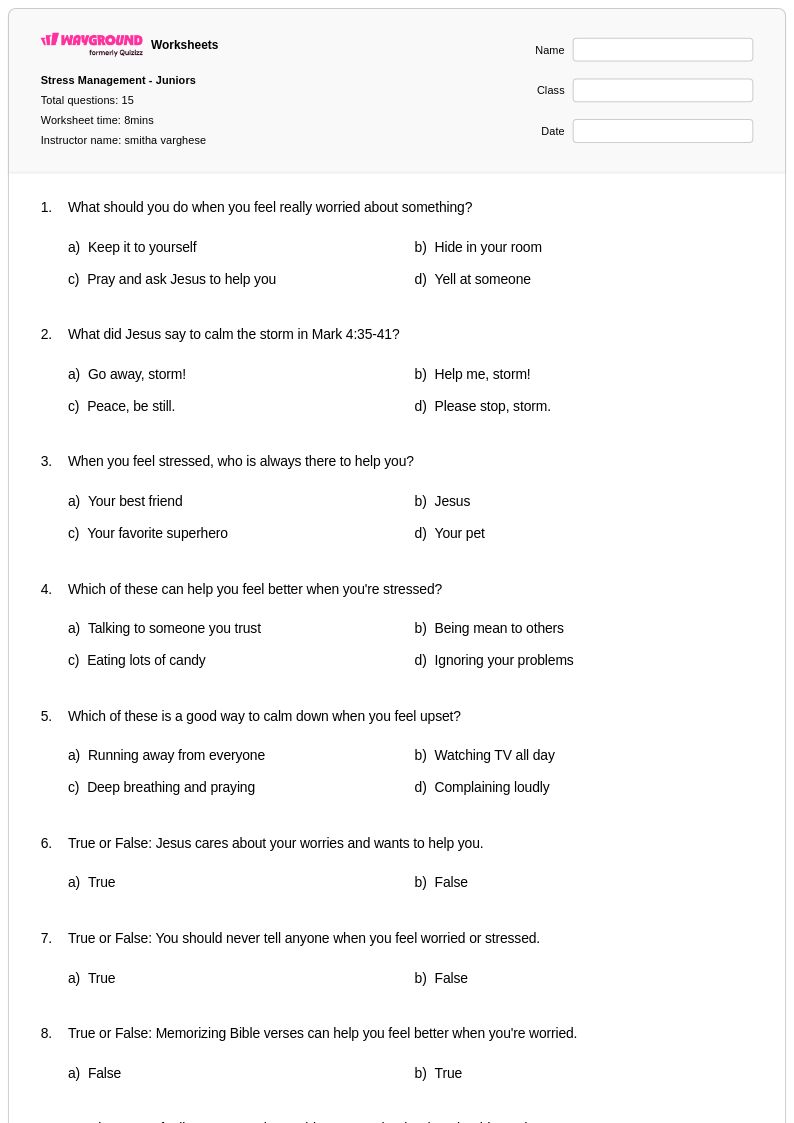
Stress management worksheets for Class 10 students provide essential tools for developing healthy coping mechanisms and emotional regulation skills within the physical education curriculum. These comprehensive resources help students identify stress triggers, understand physiological responses to stress, and practice evidence-based techniques such as deep breathing exercises, progressive muscle relaxation, and mindfulness strategies. The worksheets include practical scenarios that tenth graders commonly face, from academic pressure to social challenges, allowing students to apply stress management concepts through guided practice problems and reflective exercises. Each printable resource comes with a detailed answer key to support both independent learning and classroom instruction, while pdf formats ensure easy accessibility for homework assignments and study sessions. These free educational materials strengthen students' ability to recognize stress symptoms, evaluate different coping strategies, and develop personalized stress management plans that promote overall wellness and academic success.
Wayground, formerly Quizizz, empowers physical education teachers with an extensive collection of millions of teacher-created stress management resources specifically designed for Class 10 students. The platform's robust search and filtering capabilities allow educators to quickly locate worksheets aligned with health and wellness standards, while differentiation tools enable customization for diverse learning needs and ability levels. Teachers can easily modify existing materials or create new resources using flexible templates, then distribute them in both digital and printable pdf formats to accommodate various classroom environments and learning preferences. These comprehensive worksheet collections support effective lesson planning by providing ready-to-use materials for skill practice, formative assessment, and remediation activities, while enrichment options challenge advanced learners to explore deeper applications of stress management techniques. The platform's organizational features streamline resource management, allowing educators to build cohesive units that progress logically from basic stress awareness to advanced coping strategy implementation and evaluation.
FAQs
How do I teach stress management to students in a health or PE class?
Effective stress management instruction starts with helping students identify their personal stress triggers and understand the physical and emotional symptoms stress produces in the body. From there, teachers should introduce evidence-based coping strategies such as diaphragmatic breathing, progressive muscle relaxation, time management planning, and positive self-talk. Anchoring each technique to real-life scenarios students recognize makes the content more actionable and easier to retain.
What activities help students practice stress management skills?
Structured worksheet activities that walk students through breathing exercises, muscle relaxation sequences, and self-talk reframing give them repeated, low-stakes practice with specific coping techniques. Reflective prompts asking students to log their stress triggers and rate the effectiveness of different strategies also build metacognitive awareness. Consistent practice across multiple sessions is what moves these skills from awareness to habitual response.
What misconceptions do students commonly have about stress?
A frequent misconception is that all stress is harmful and should be eliminated, when in fact short-term stress can be motivating and functional. Students also often fail to recognize the physical symptoms of stress, such as muscle tension, headaches, or disrupted sleep, as stress responses at all. Teaching the mind-body connection explicitly helps students identify what is happening in their bodies before stress becomes unmanageable.
How do I use Wayground's stress management worksheets in my classroom?
Wayground's stress management worksheets are available as printable PDFs for traditional classroom use and in digital formats for technology-integrated or hybrid learning environments, and teachers can also host them as a quiz directly on Wayground. Each worksheet includes a comprehensive answer key, so they work equally well for guided instruction, independent practice, or self-paced review. For students who need additional support, Wayground's accommodation tools allow teachers to enable read-aloud, extended time, or reduced answer choices on an individual basis without disrupting the rest of the class.
How can I differentiate stress management instruction for students with varying needs?
Differentiation in stress management instruction can involve adjusting the complexity of reflection prompts, pairing visual learners with diagram-based activities, or providing sentence stems for students who struggle with open-ended responses. On Wayground, teachers can apply individual accommodations such as read-aloud support, extended time, or reduced answer choices to specific students while the rest of the class works with default settings. These accommodations are saved and reusable across future sessions, reducing the setup burden for ongoing support.
Why is stress management an important topic to teach in school?
Stress management is a foundational life skill because chronic unmanaged stress negatively affects academic performance, physical health, and long-term emotional wellbeing. Teaching students to recognize stress signals early and respond with healthy coping strategies builds the kind of emotional resilience that supports them well beyond the classroom. Schools that embed stress management into health and PE curricula are equipping students with practical tools they can apply in daily life.