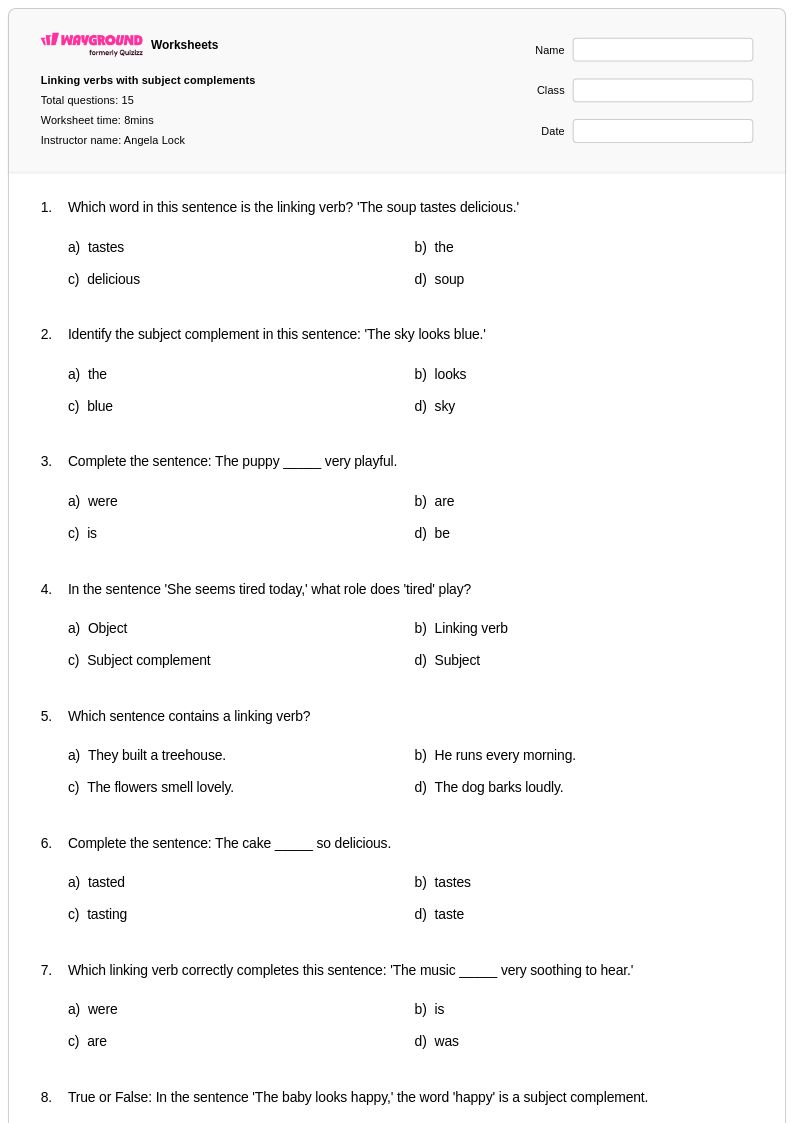
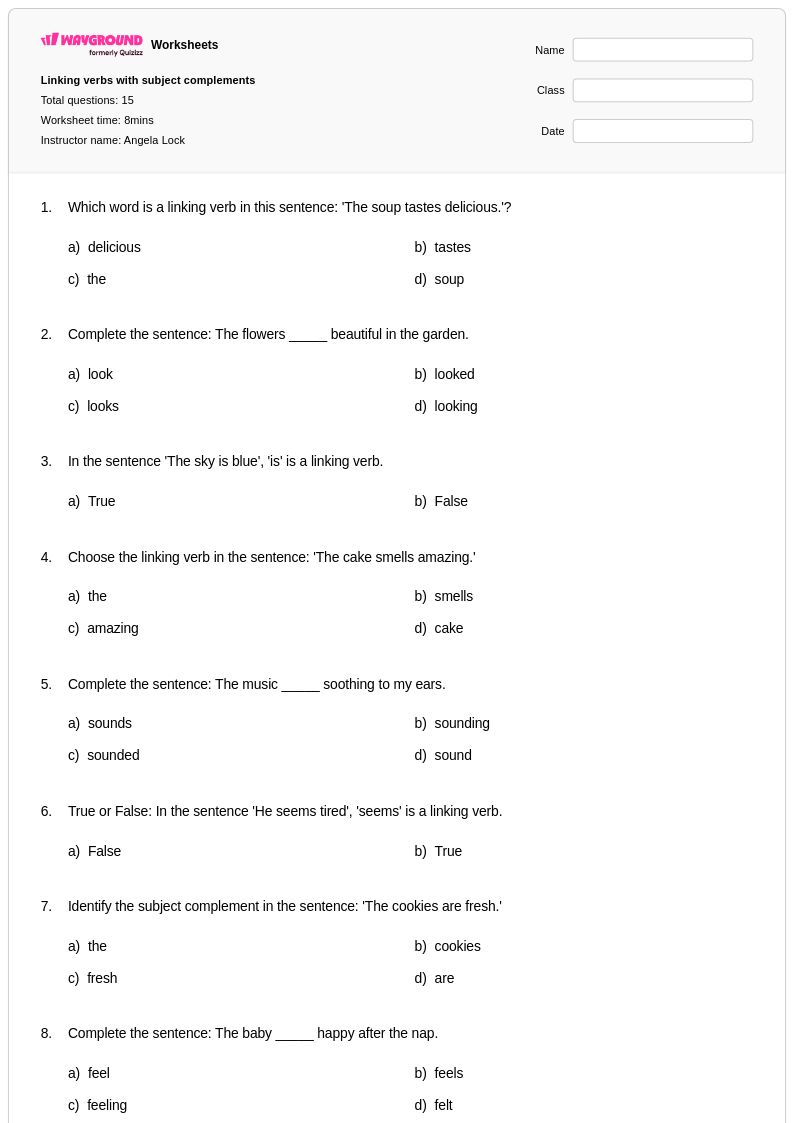
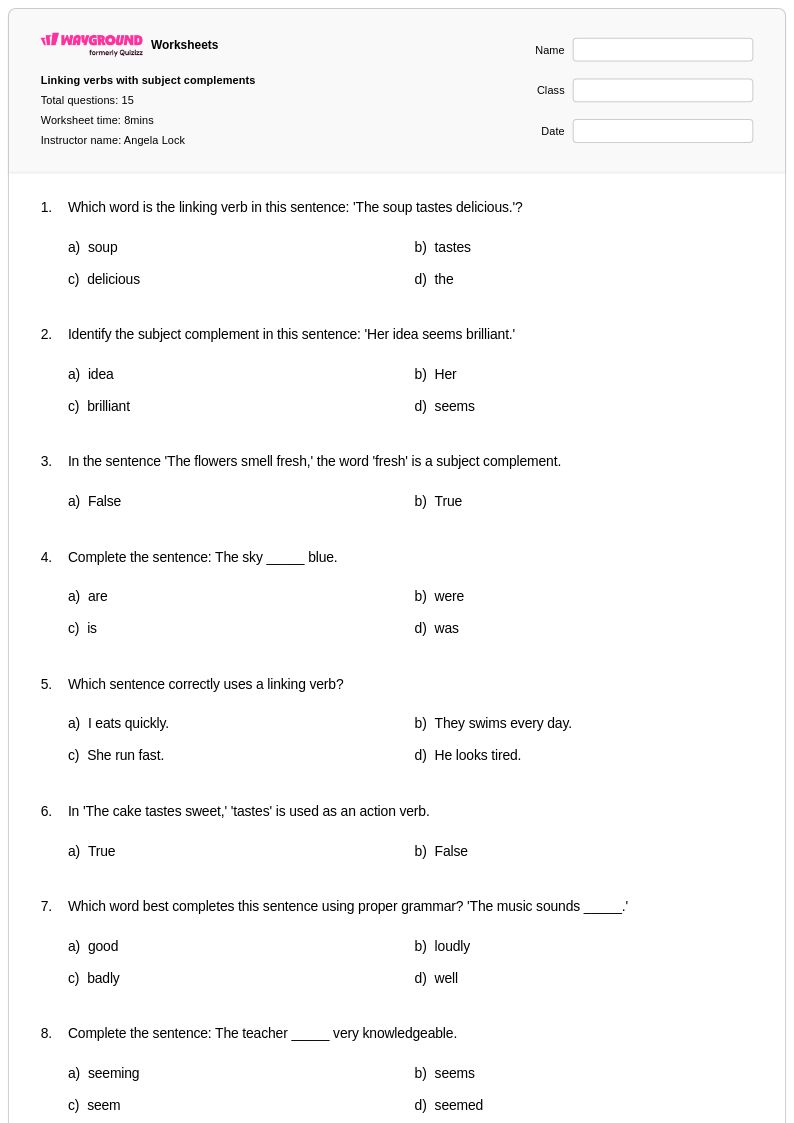
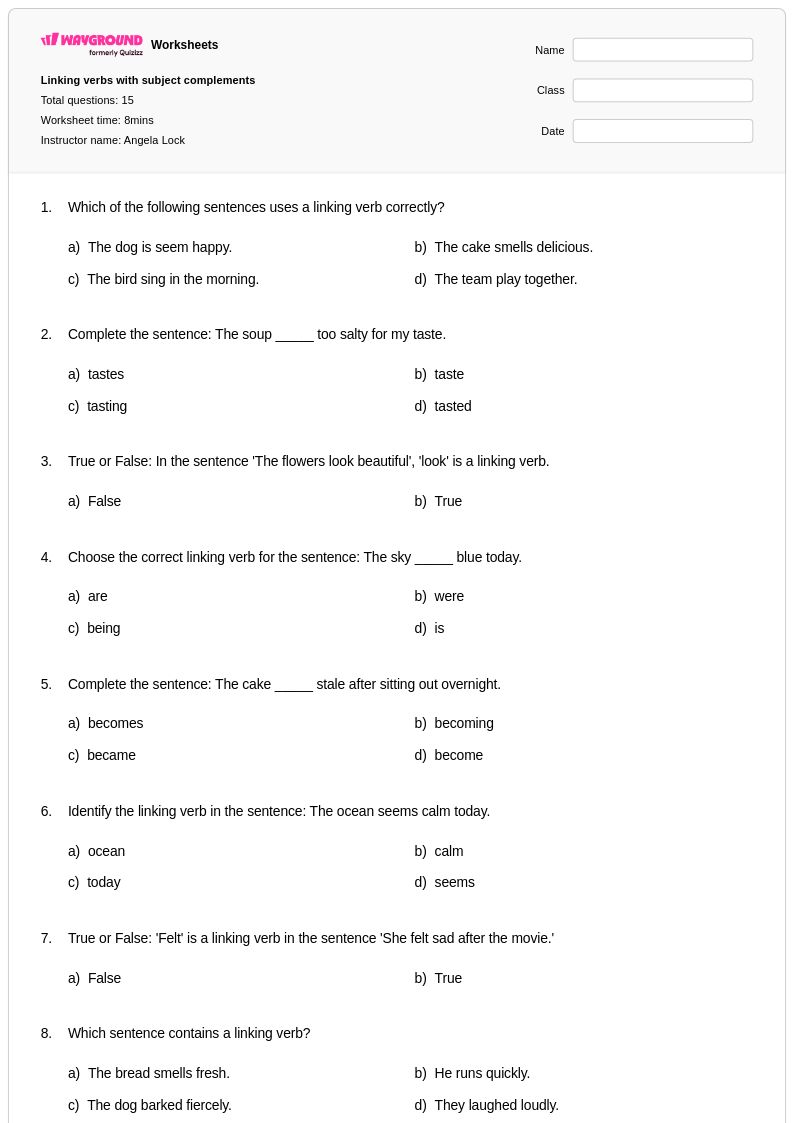
Free Printable Subject Complements Worksheets for Class 12
Class 12 subject complements worksheets from Wayground provide comprehensive printables and practice problems with answer keys to help students master identifying and using predicate nominatives and predicate adjectives in complex sentences.
Explore printable Subject Complements worksheets for Class 12
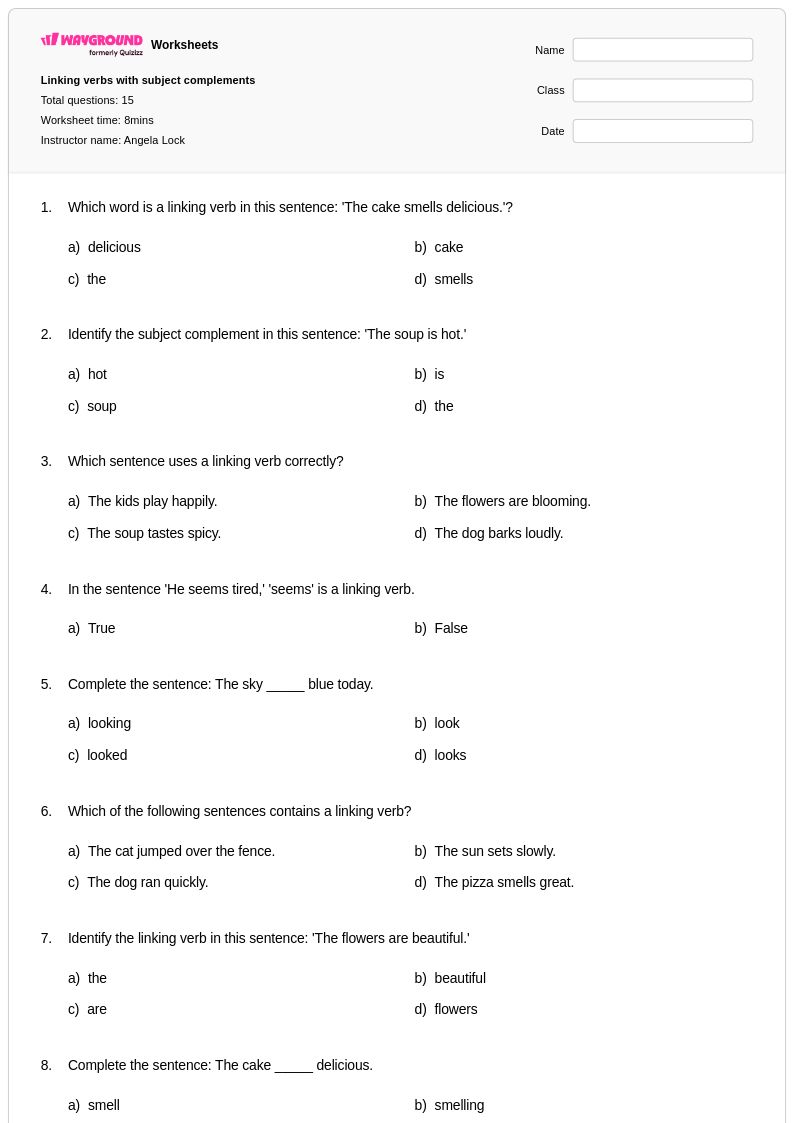
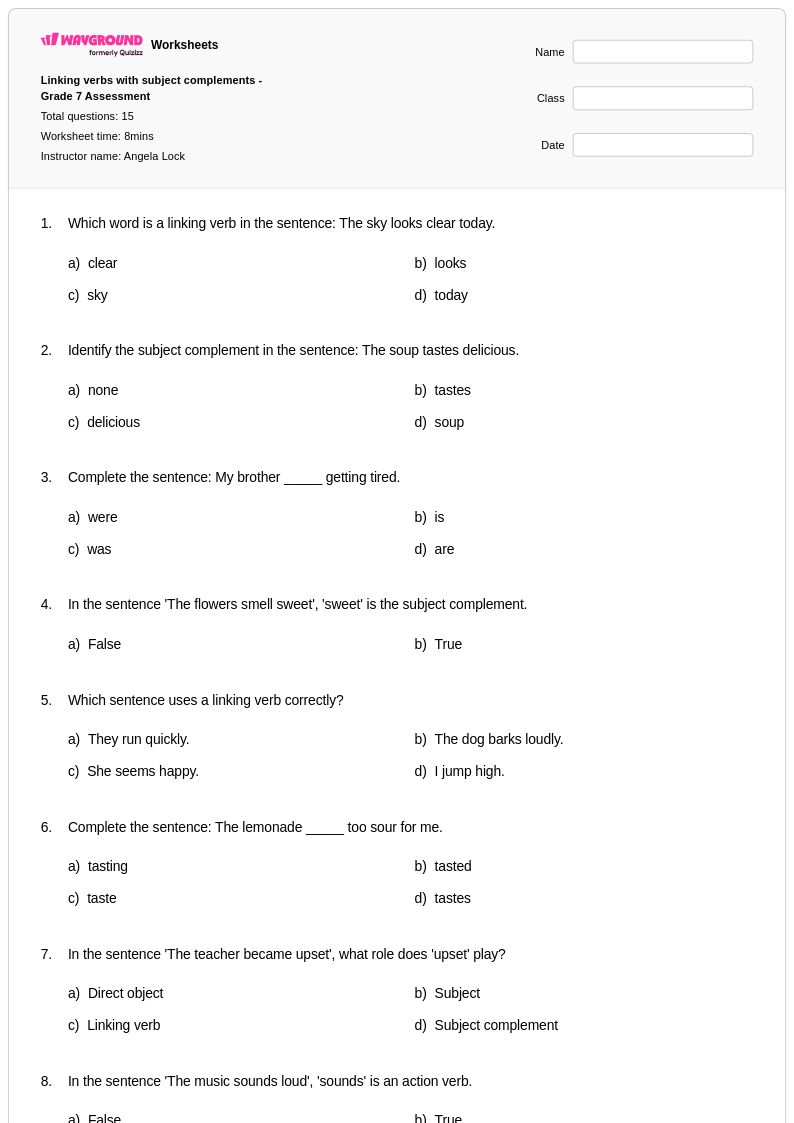
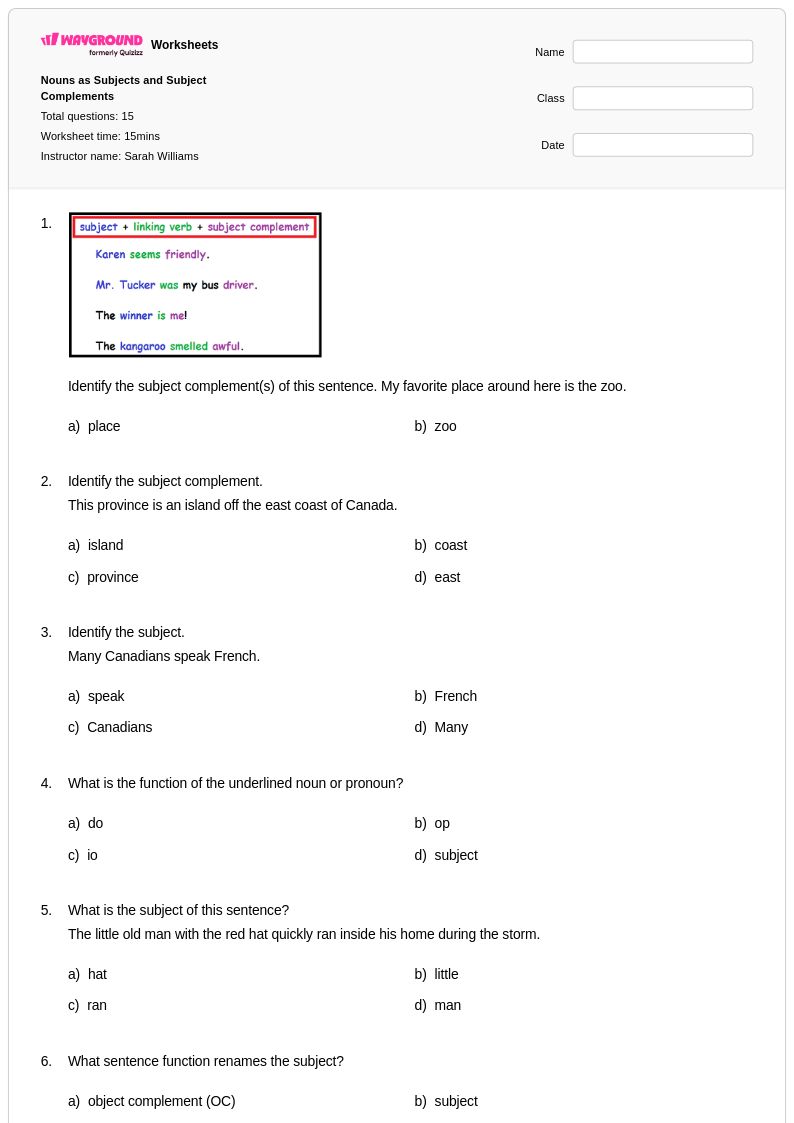
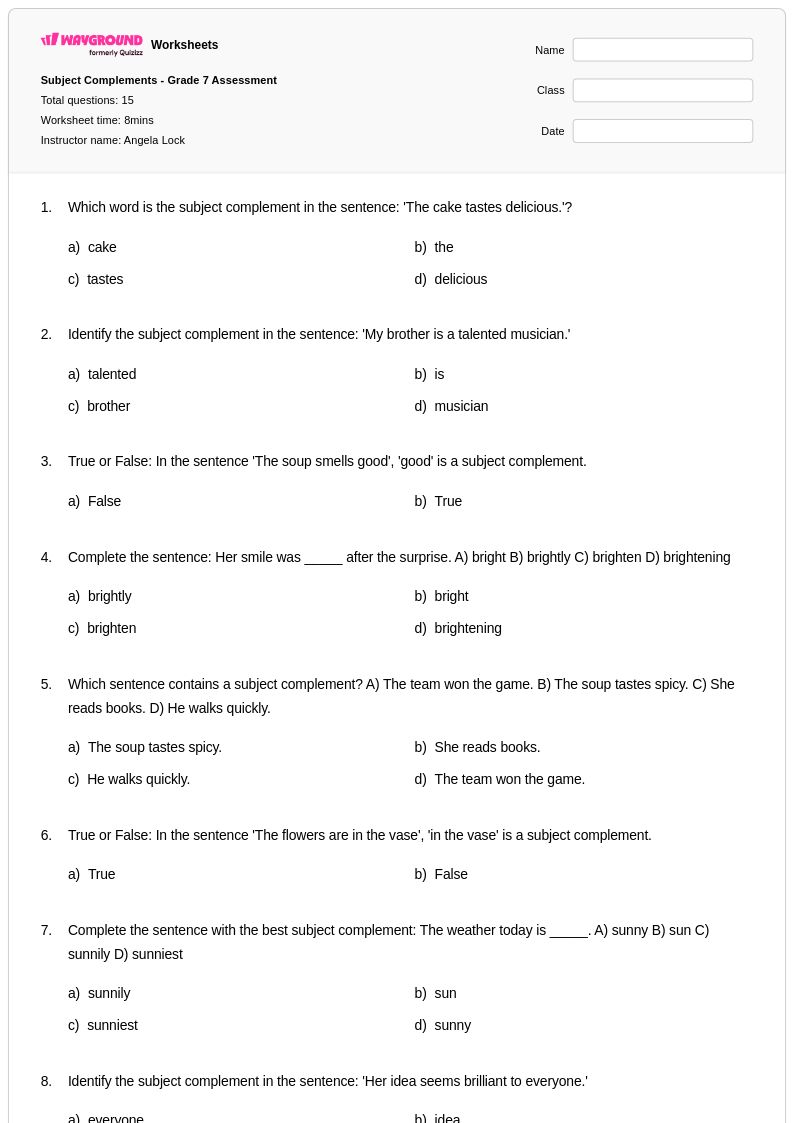
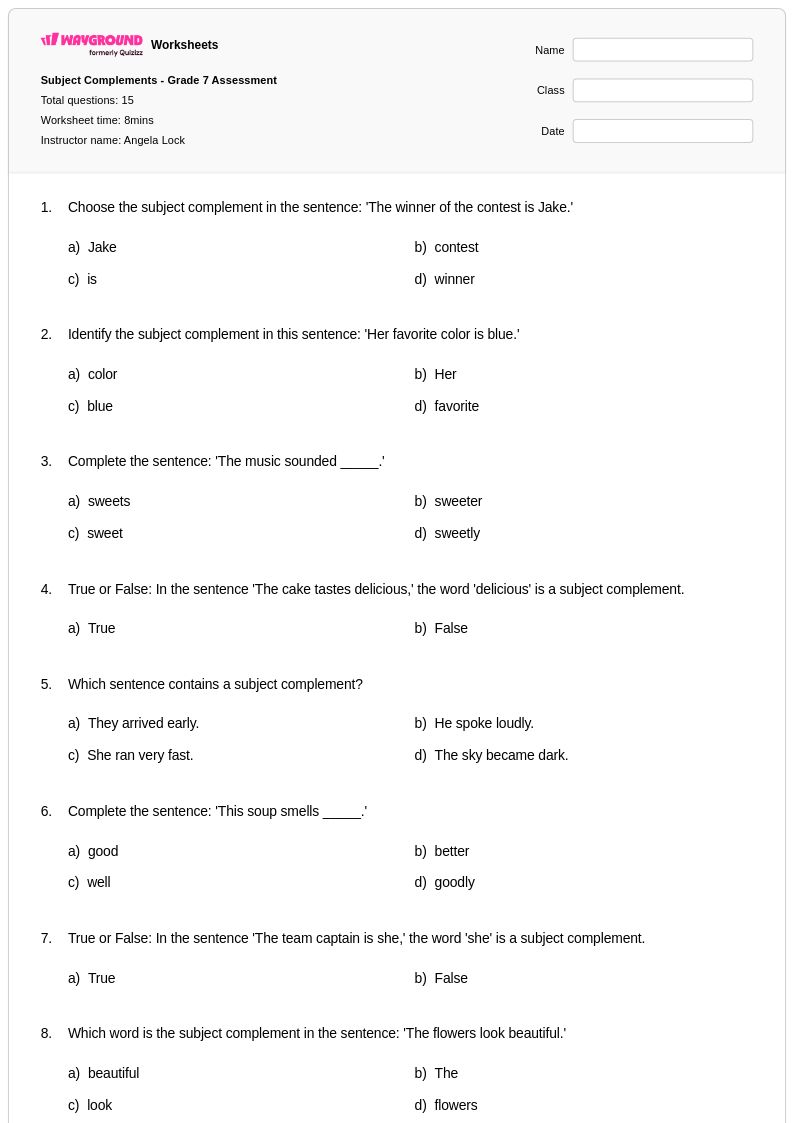
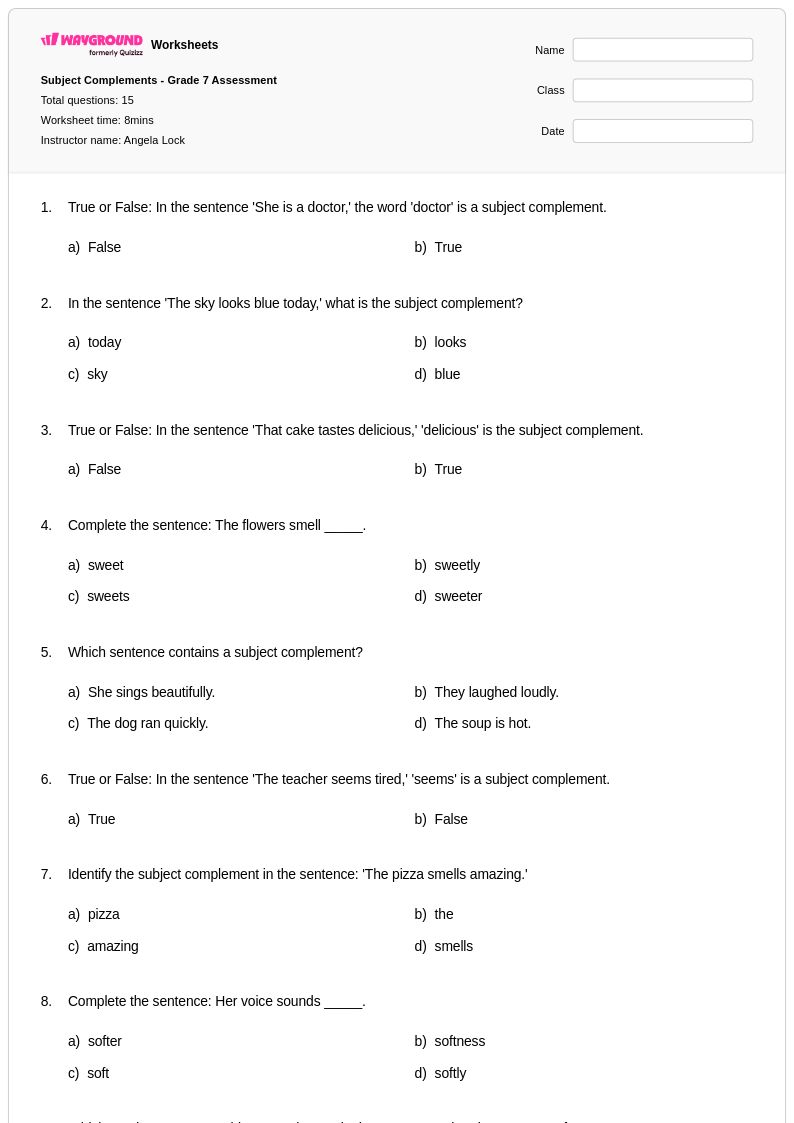
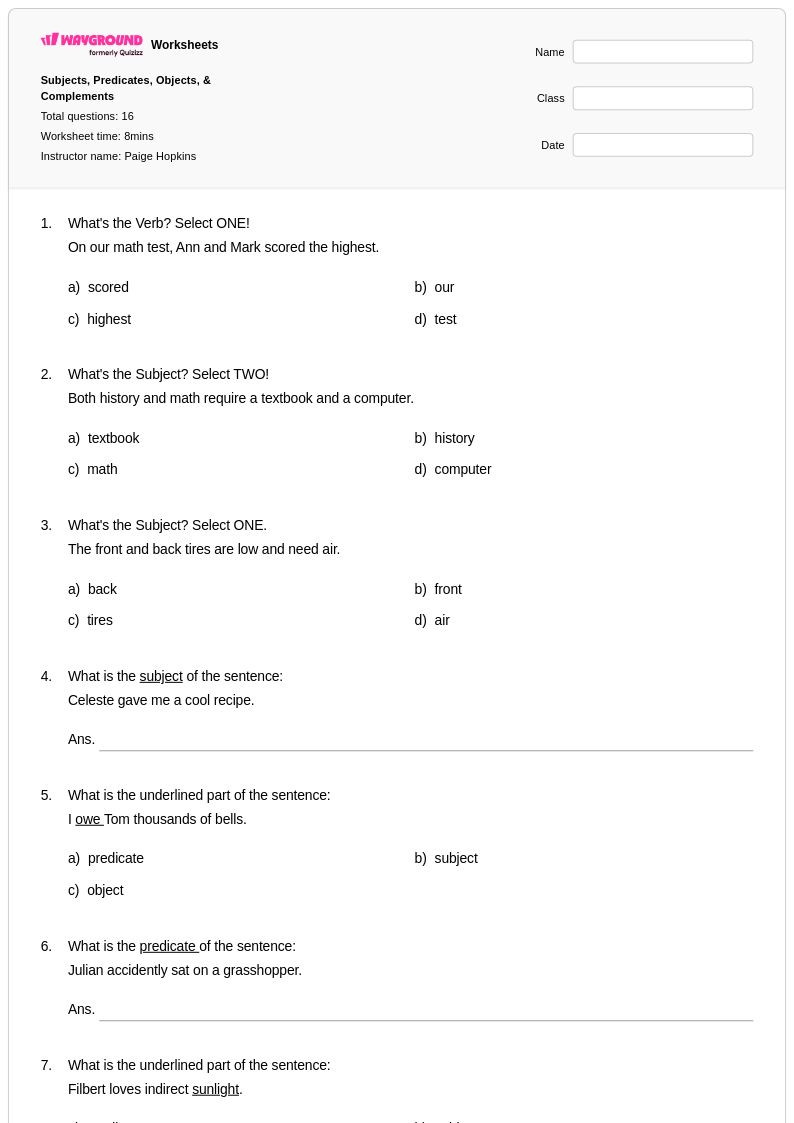
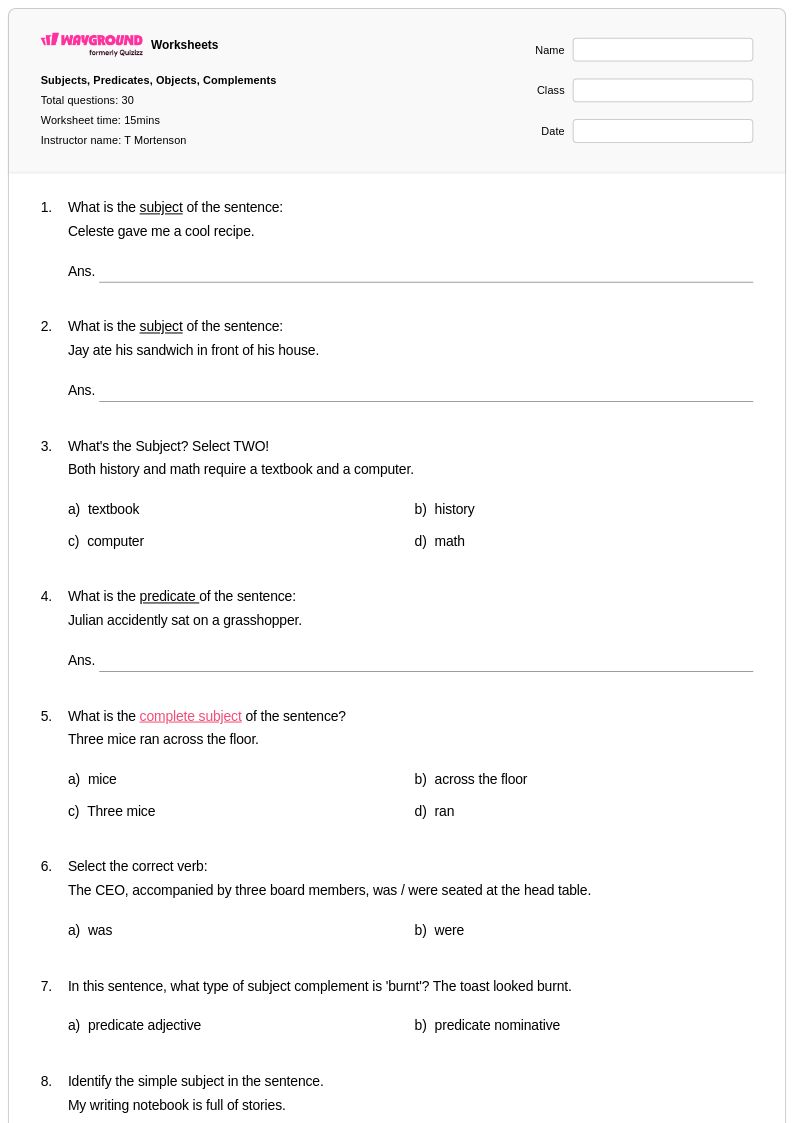
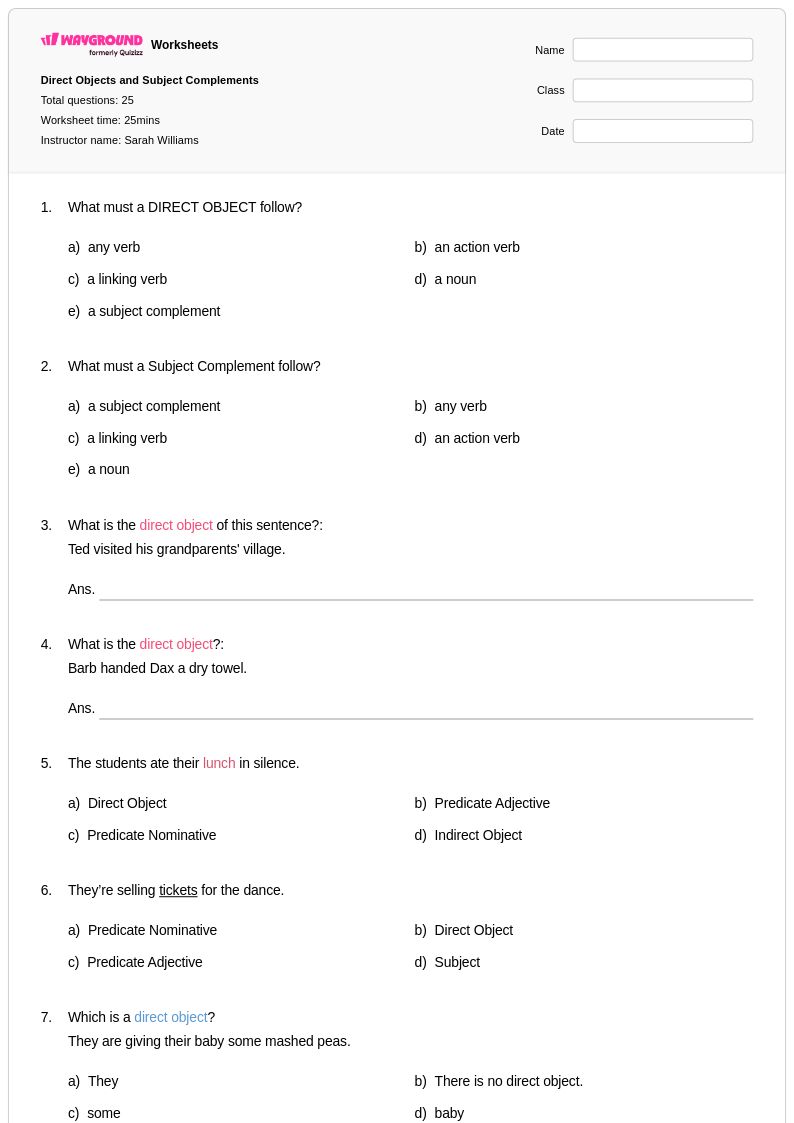
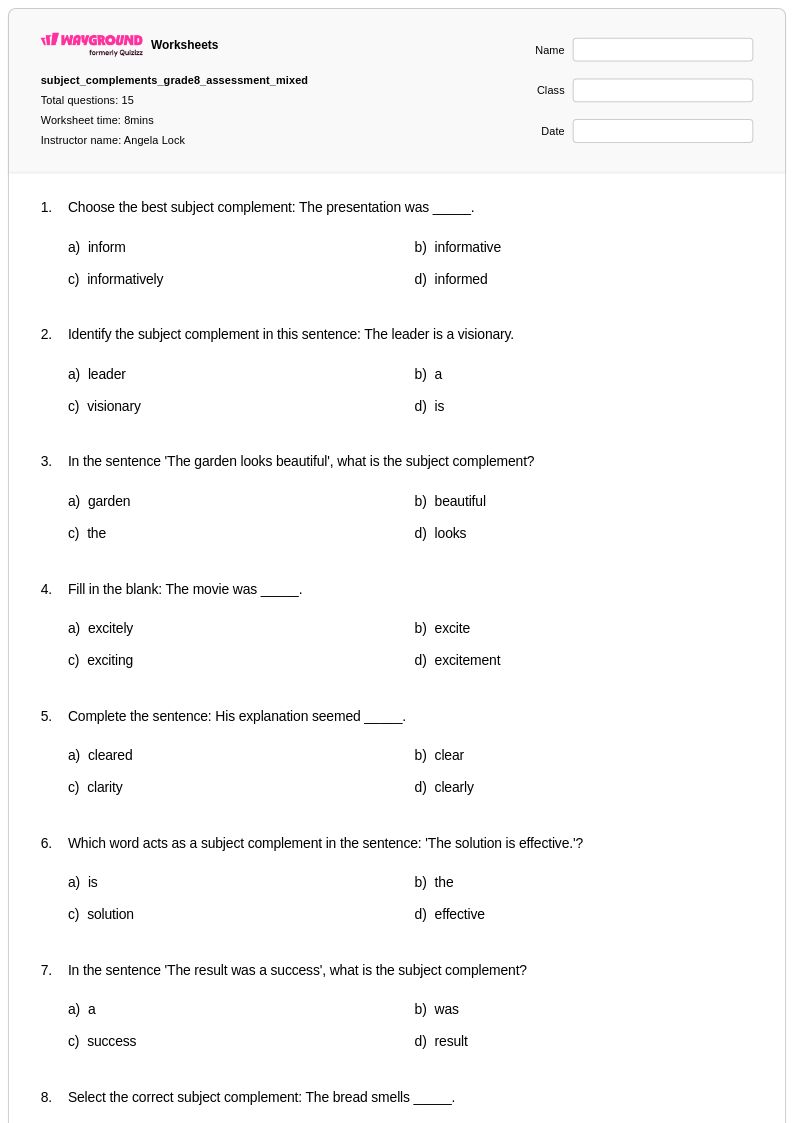
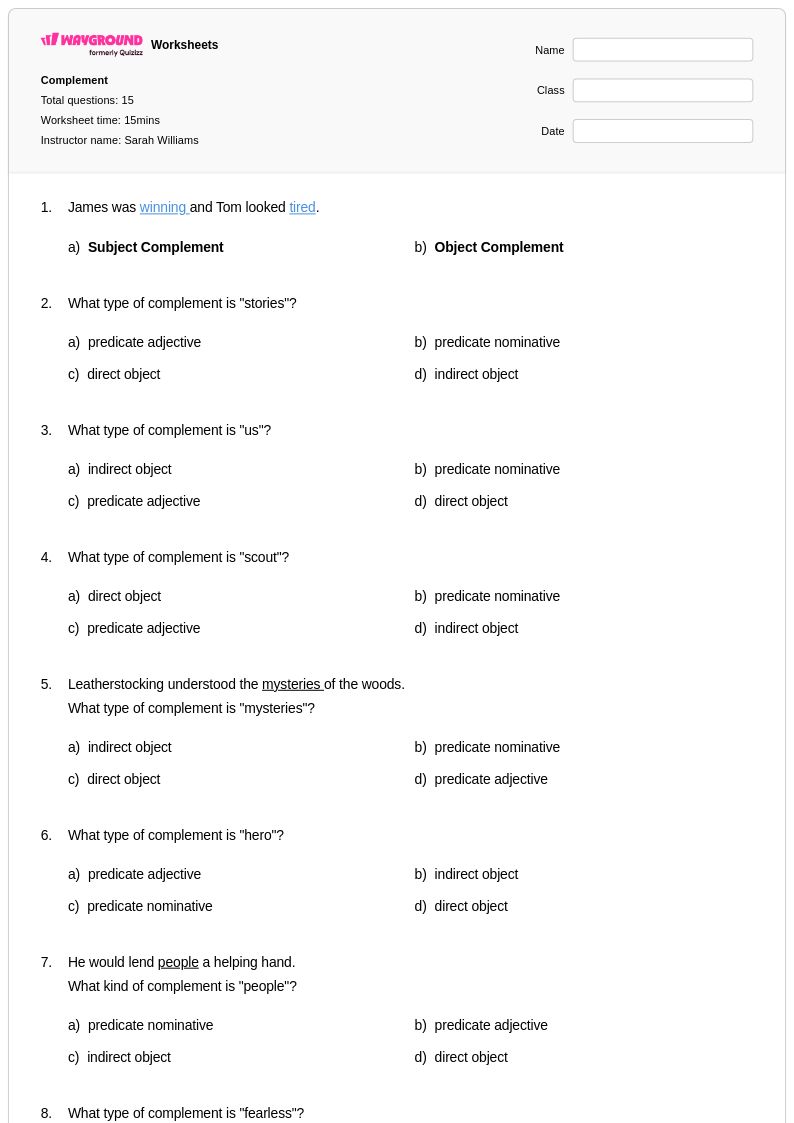
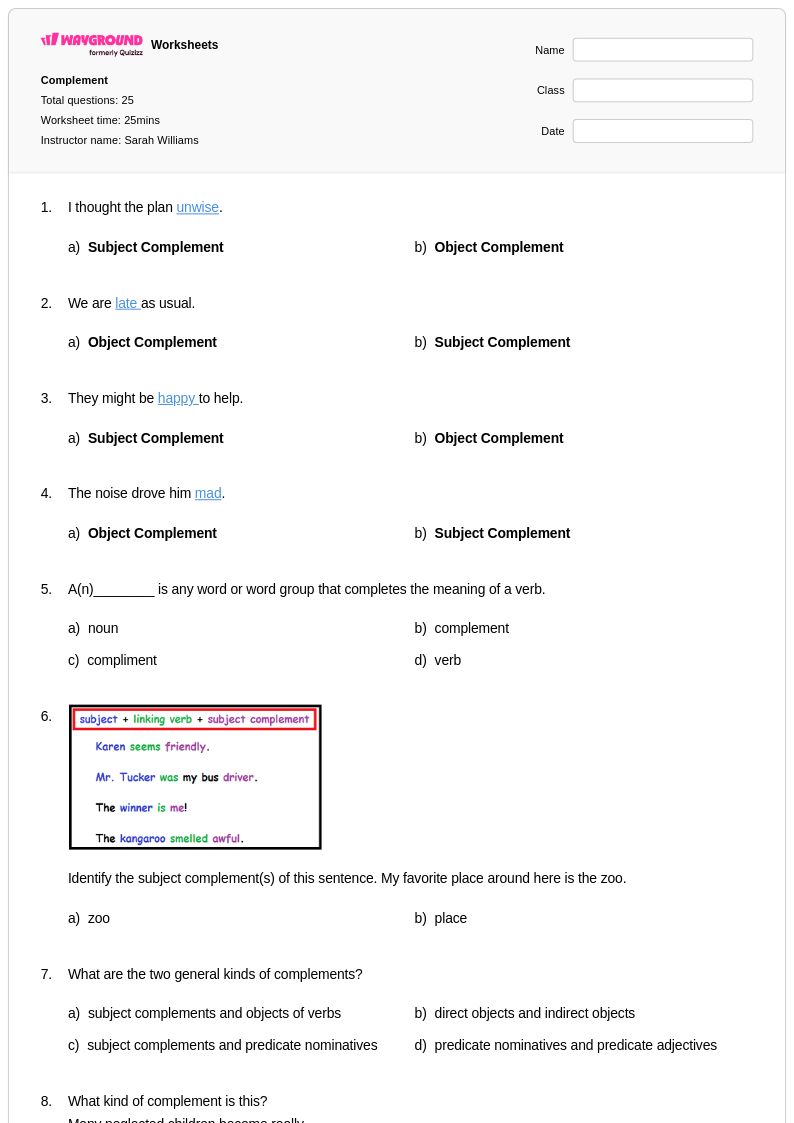
Subject complements represent a critical grammatical concept for Class 12 students as they master advanced sentence structure and prepare for college-level writing. Wayground's comprehensive collection of subject complement worksheets provides students with extensive practice identifying and using predicate nominatives, predicate adjectives, and other complement structures that complete the meaning of linking verbs. These educational resources strengthen students' ability to recognize how complements rename, describe, or complete subjects within complex sentences, while also developing their skills in constructing sophisticated prose that demonstrates grammatical precision. Each worksheet includes detailed answer keys and practice problems that guide students through progressively challenging exercises, with free printable pdf formats making these materials accessible for both classroom instruction and independent study.
Wayground's robust platform, formerly known as Quizizz, empowers educators with millions of teacher-created subject complement resources that can be easily located through advanced search and filtering capabilities. The platform's standards-aligned worksheet collections support differentiated instruction by offering materials at varying complexity levels, allowing teachers to customize content for remediation, grade-appropriate practice, or enrichment activities. Teachers can seamlessly integrate these digital and printable pdf resources into their lesson planning, whether conducting whole-class instruction on complement identification, providing targeted practice for students struggling with linking verb constructions, or challenging advanced learners with sophisticated sentence analysis exercises. The platform's flexible customization tools enable educators to modify existing worksheets or combine multiple resources to create comprehensive subject complement practice sessions that address their specific classroom needs.
FAQs
How do I teach subject complements to my students?
Start by ensuring students have a solid grasp of linking verbs, since subject complements only follow verbs like 'be,' 'seem,' 'become,' and 'appear.' From there, introduce the two types separately: predicate nominatives, which rename the subject, and predicate adjectives, which describe it. A reliable classroom strategy is to have students substitute the linking verb with an equals sign — if the sentence still makes logical sense, the complement renames or describes the subject rather than receiving action. Sentence sorting activities that contrast subject complements with direct objects are especially effective for reinforcing the distinction.
What is the difference between a predicate nominative and a predicate adjective?
A predicate nominative is a noun or pronoun that follows a linking verb and renames the subject — for example, 'She is the captain,' where 'captain' renames 'she.' A predicate adjective is an adjective that follows a linking verb and describes a quality of the subject — for example, 'The soup smells delicious,' where 'delicious' describes 'soup.' Both are types of subject complements, but they differ in their part of speech and function: one renames, the other describes.
What mistakes do students commonly make with subject complements?
The most frequent error is confusing subject complements with direct objects, since both follow the verb. Students need to learn that direct objects follow action verbs and receive the action, while subject complements follow linking verbs and refer back to the subject. Another common mistake is misidentifying the linking verb itself — students often treat verbs like 'look,' 'taste,' or 'feel' as action verbs when they function as linking verbs in a given sentence. Targeted sentence analysis practice that requires students to identify the verb type before labeling the complement helps correct both errors.
What exercises help students practice identifying subject complements?
Effective practice exercises include sentence completion tasks where students choose whether a predicate nominative or predicate adjective fits, and labeling activities where students underline the linking verb and circle the subject complement in a given sentence. Error-correction exercises — where students identify incorrectly labeled complements — build analytical thinking and reinforce the distinction between subject complements and direct objects. Varied question formats, such as fill-in-the-blank and sentence writing prompts, ensure students can both recognize and produce subject complements in context.
How can I use subject complement worksheets in my classroom?
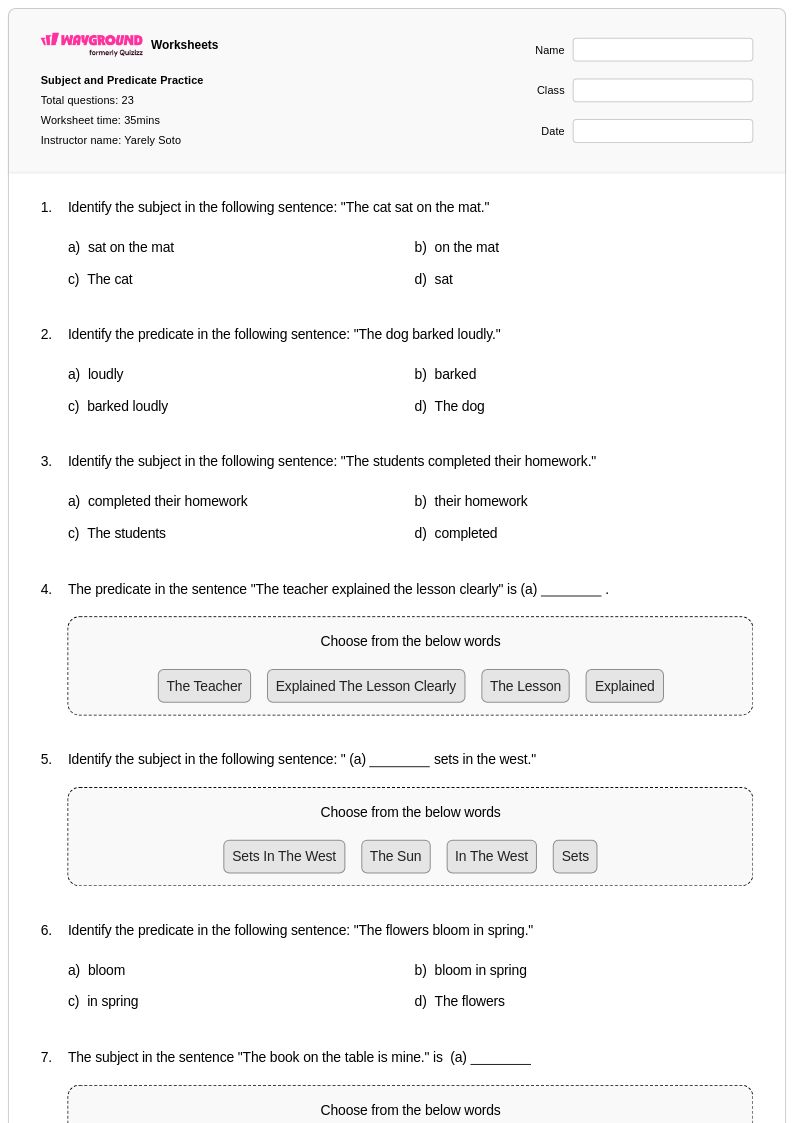
Subject complement worksheets on Wayground are available as printable PDFs for traditional classroom use and in digital formats for technology-integrated or hybrid learning environments, and can also be hosted as an interactive quiz directly on Wayground. Each worksheet includes a detailed answer key, making them practical for independent practice, homework assignments, or small-group review sessions. Teachers can use them for initial skill introduction, targeted remediation, or enrichment, and Wayground's customization tools allow modification of existing materials to better match specific instructional needs.
How do I differentiate subject complement instruction for students at different skill levels?
For students who are still developing foundational grammar skills, begin with sentences that use only a form of 'be' as the linking verb before introducing verbs like 'seem' or 'become,' which are less intuitive. For advanced learners, introduce more complex sentences with compound subject complements or multiple clauses. Wayground supports differentiation directly through student-level accommodations including reduced answer choices to lower cognitive load for struggling students, read aloud for students who benefit from audio support, and extended time settings — all configurable per student without notifying the rest of the class.