Free Printable The Legislative Branch Worksheets for Class 6
Class 6 Legislative Branch worksheets from Wayground help students explore Congress, lawmaking processes, and federal representation through engaging printables, practice problems, and comprehensive answer keys for effective civics learning.
Explore printable The Legislative Branch worksheets for Class 6
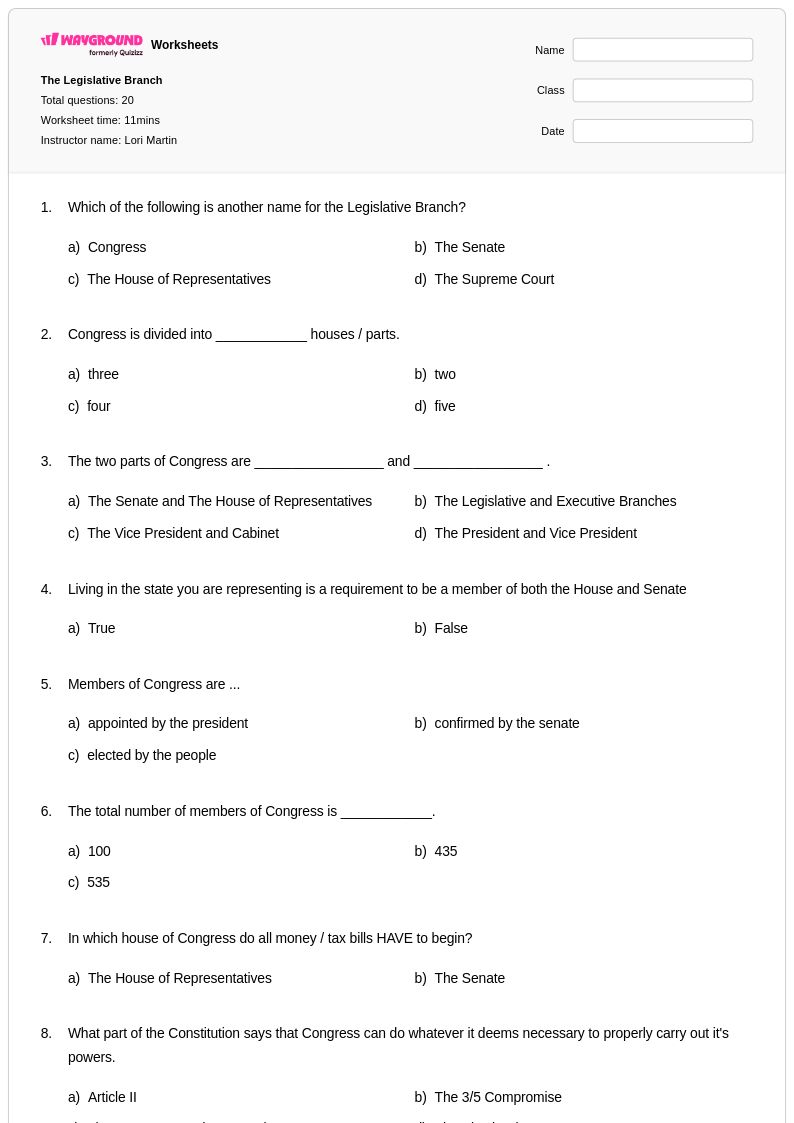
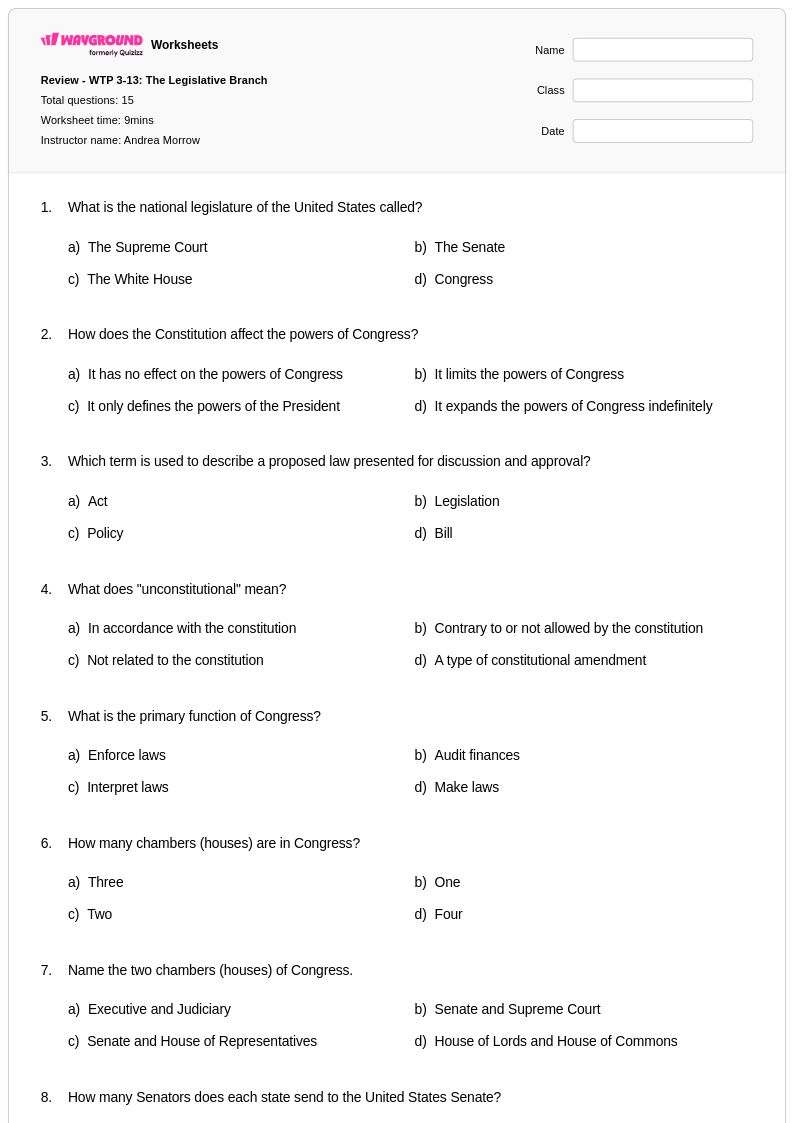
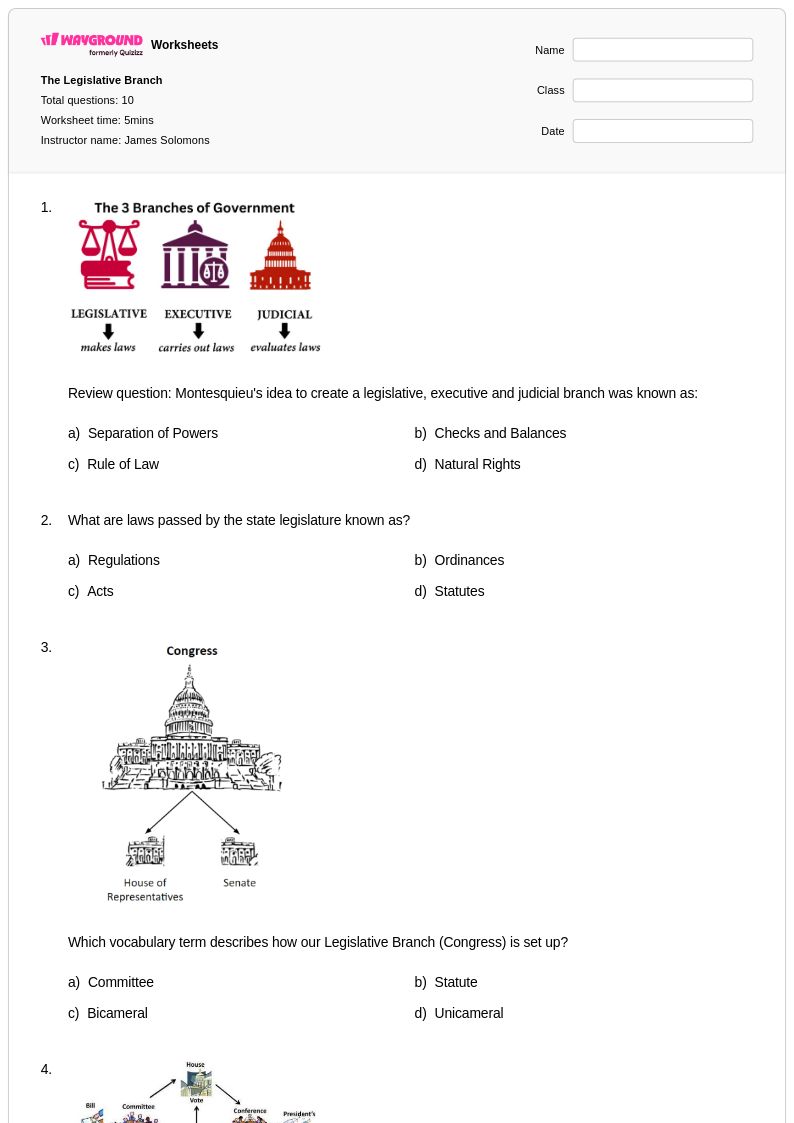
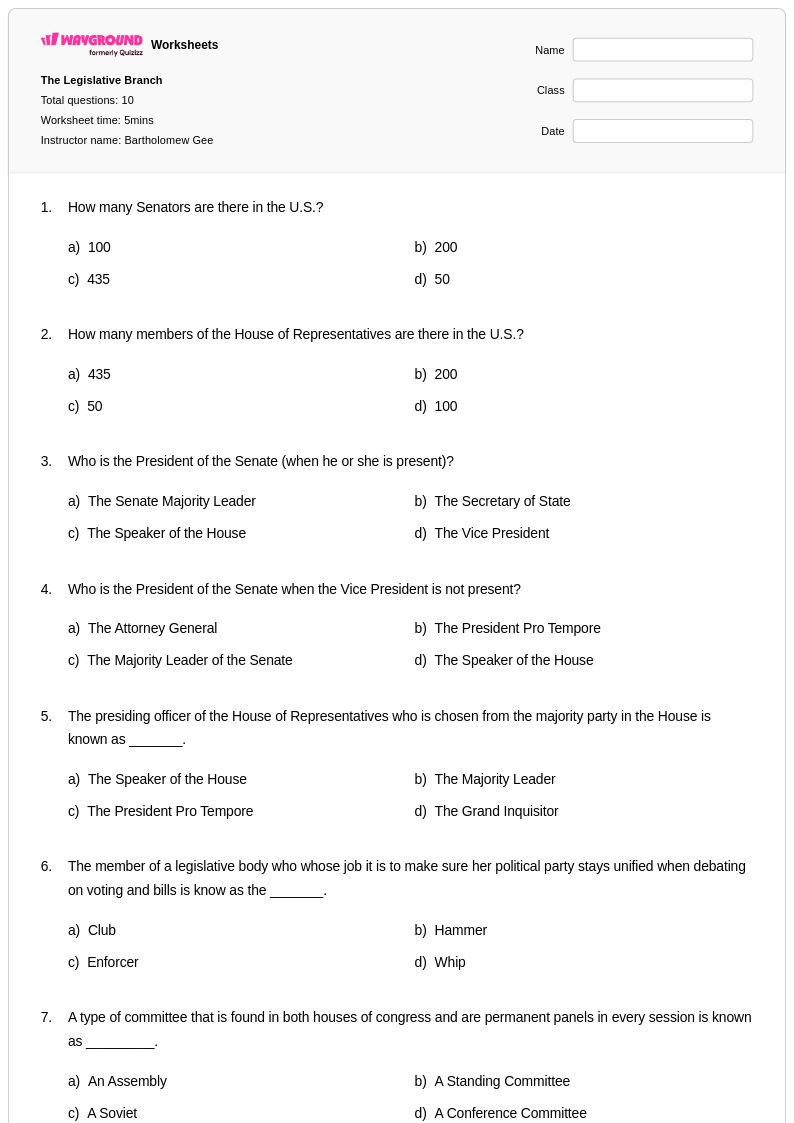
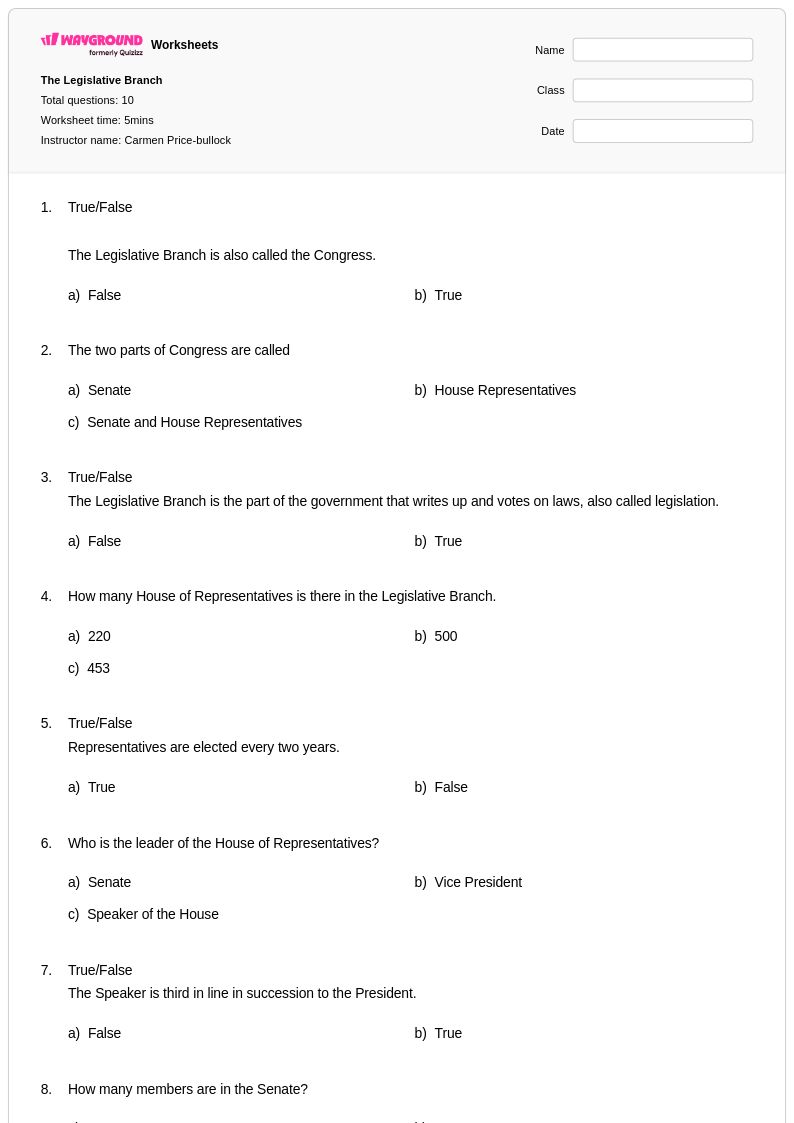
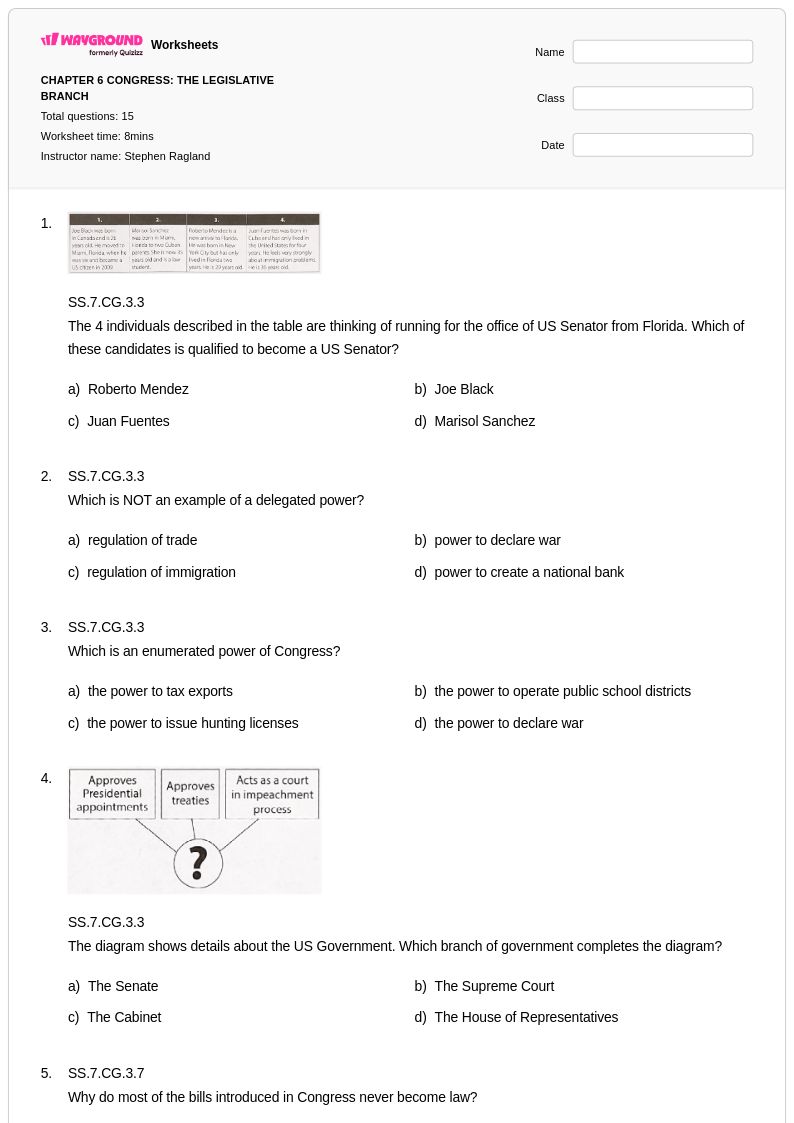
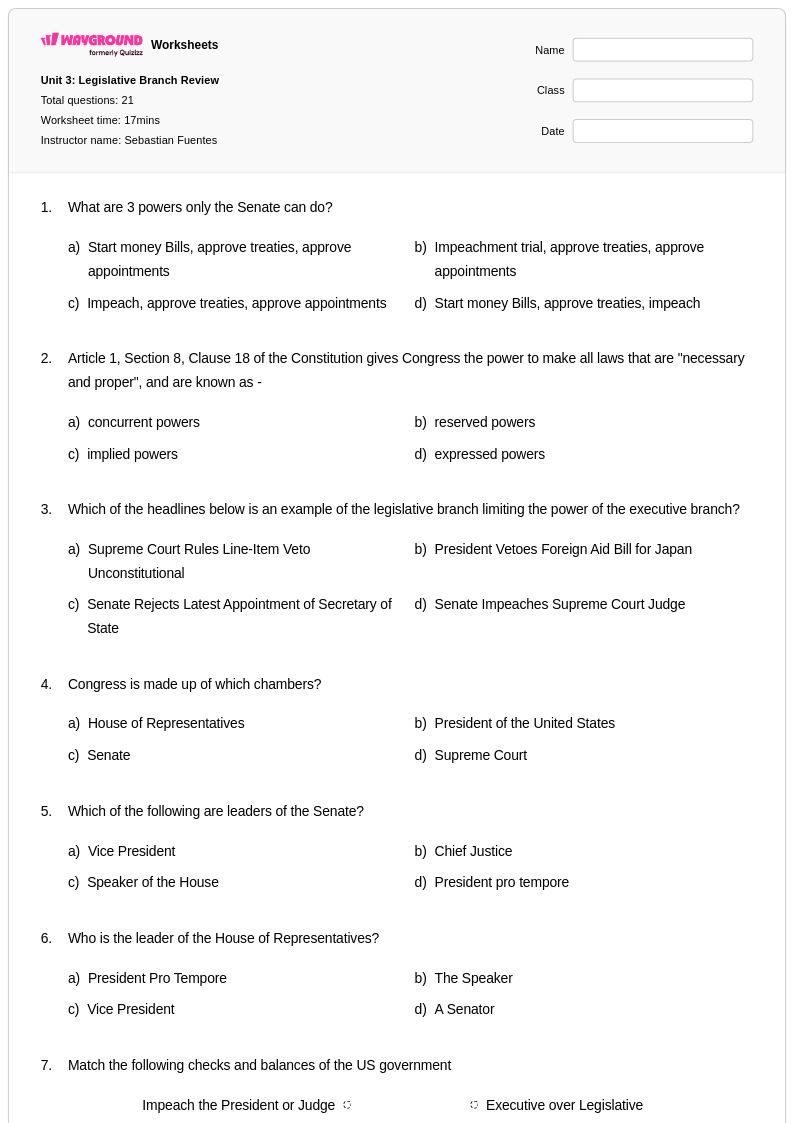
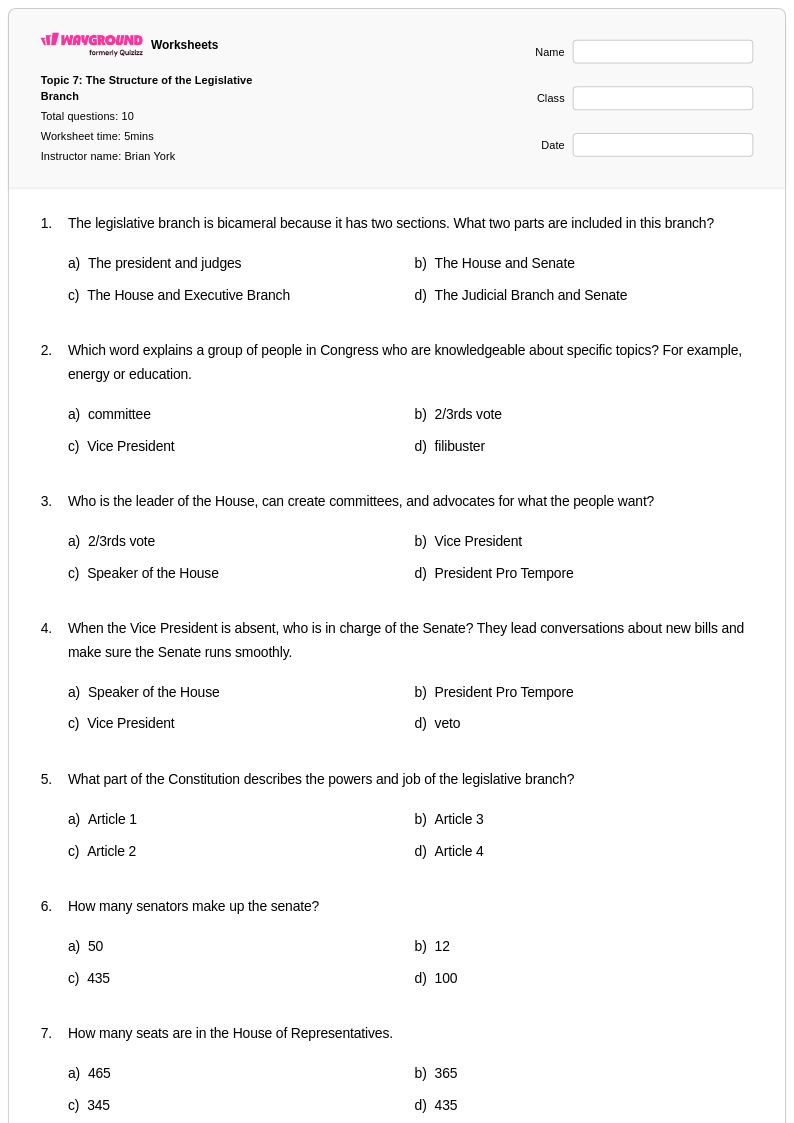
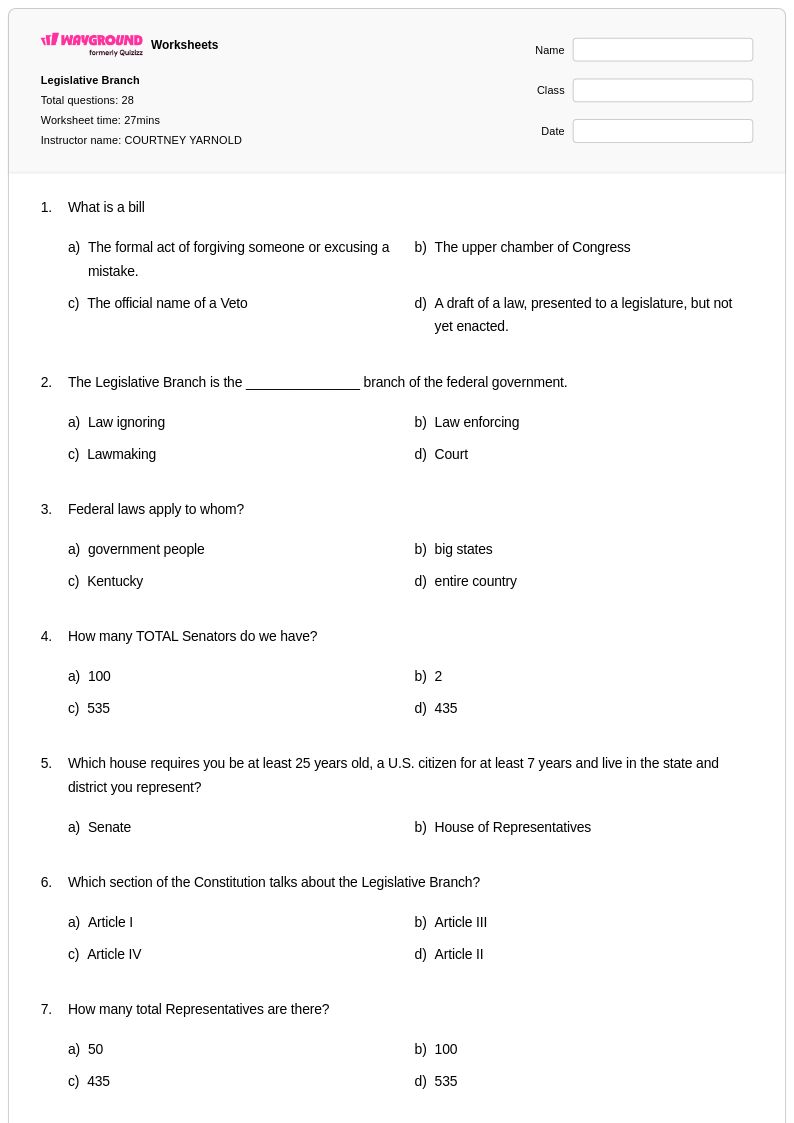
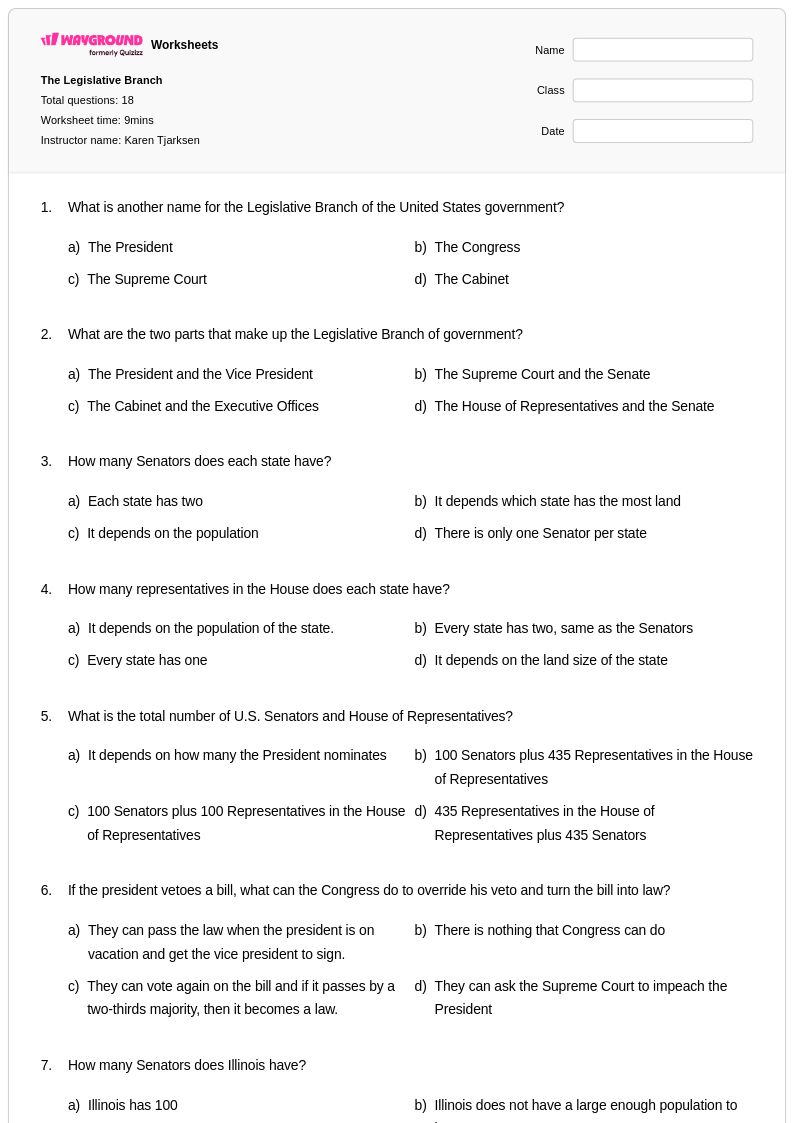
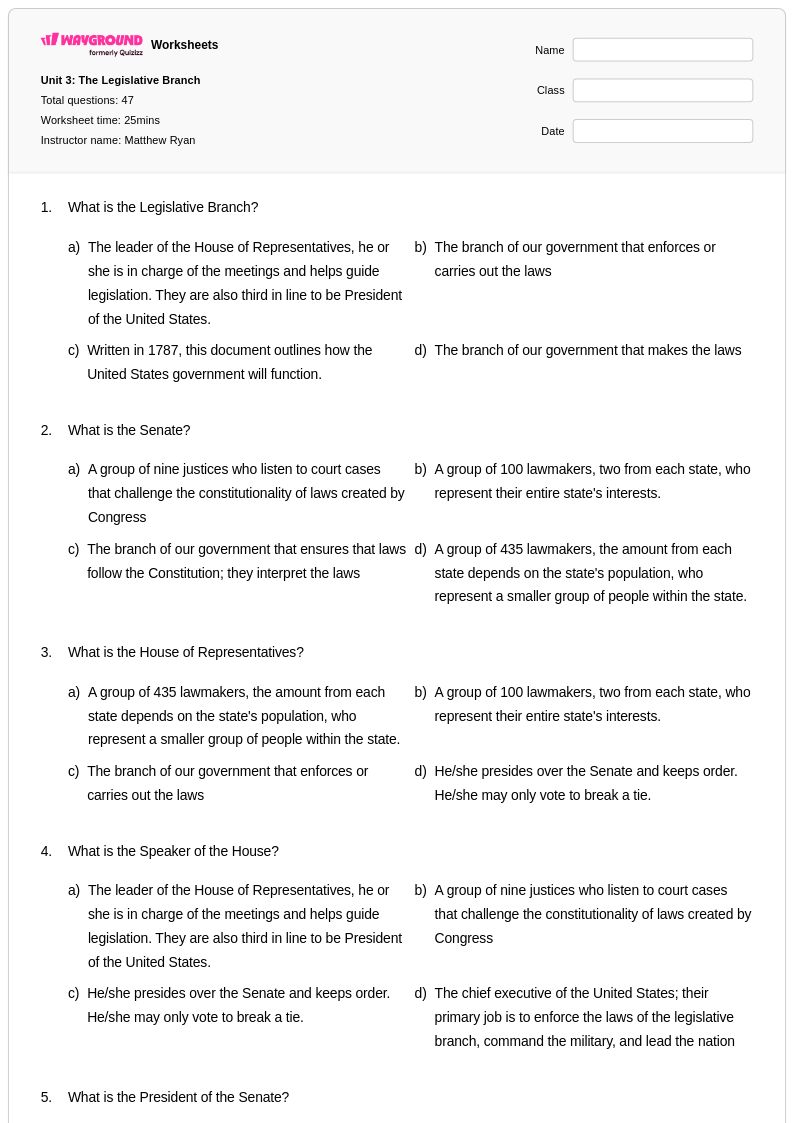
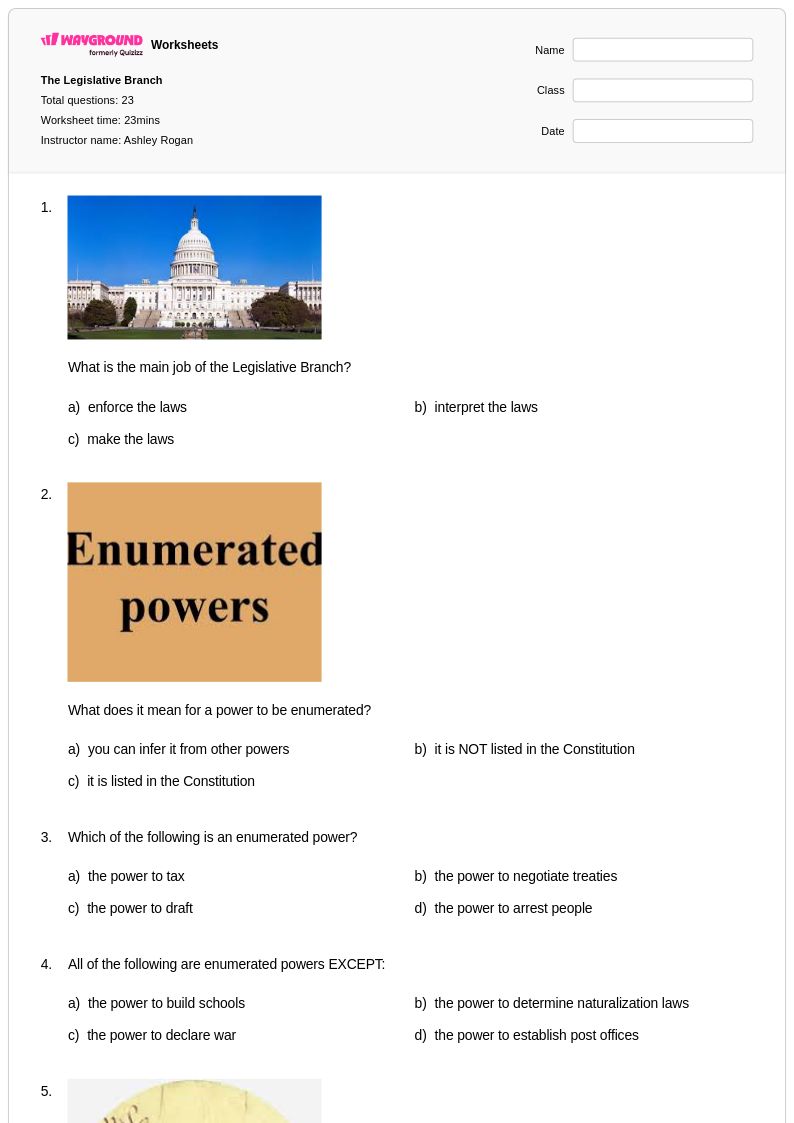
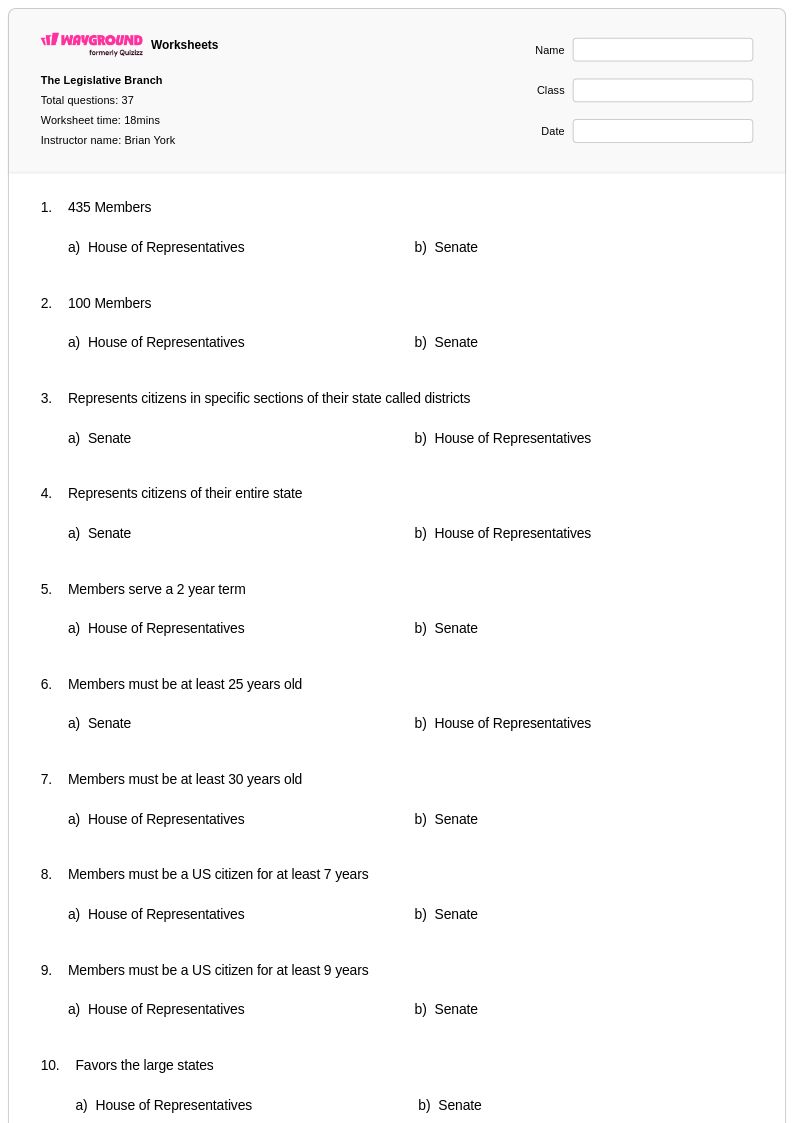
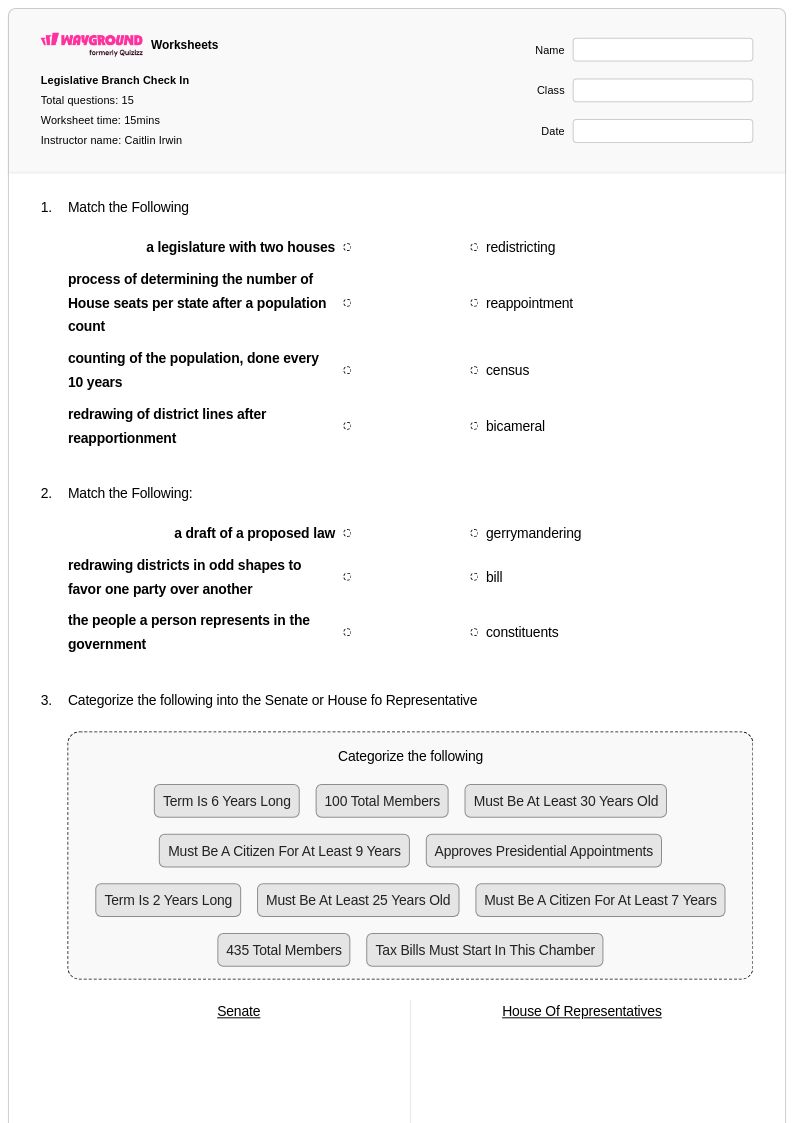
The Legislative Branch worksheets available through Wayground (formerly Quizizz) provide Class 6 students with comprehensive practice materials that develop essential understanding of Congress and its vital role in American government. These expertly crafted printables guide students through the structure, powers, and functions of the House of Representatives and Senate, helping them master concepts like how bills become laws, congressional leadership roles, and the relationship between representation and population. Each worksheet collection includes detailed answer keys and focuses on building critical thinking skills through engaging practice problems that require students to analyze legislative processes, compare the two chambers of Congress, and evaluate the importance of checks and balances in the federal system. These free pdf resources strengthen students' ability to understand complex governmental structures while developing their civic knowledge and analytical reasoning skills.
Wayground (formerly Quizizz) empowers educators with millions of teacher-created resources specifically designed for Legislative Branch instruction, featuring robust search and filtering capabilities that allow teachers to quickly locate materials aligned with state and national social studies standards. The platform's differentiation tools enable educators to customize worksheets for varying ability levels, ensuring that all Class 6 students can access appropriate content whether they need additional support or enrichment opportunities. Teachers can seamlessly utilize these resources in both printable and digital formats, making them ideal for traditional classroom instruction, remote learning, or hybrid educational environments. This flexibility supports comprehensive lesson planning by providing educators with ready-to-use materials for introducing new concepts, reinforcing learning through targeted practice, and conducting formative assessments that help identify students who may benefit from additional remediation or advanced challenges in understanding congressional functions and legislative processes.
FAQs
How do I teach the Legislative Branch to my students?
Start by grounding students in the bicameral structure of Congress before moving into the distinct roles of the House of Representatives and the Senate. Use the lawmaking process as an anchor concept, tracing how a bill moves through committee, floor debate, and both chambers before reaching the president. Connecting each step to the system of checks and balances helps students understand why the process is designed the way it is, rather than just memorizing procedural steps.
What exercises help students practice understanding Congress and how laws are made?
Practice exercises that map the bill-to-law process step by step are particularly effective, as they require students to sequence information and apply procedural knowledge. Questions that distinguish between enumerated and implied powers, or that compare the roles of congressional leadership and committee structures, build analytical depth. Varied practice formats, including fill-in-the-blank, short answer, and matching activities, help reinforce these concepts across different skill levels.
What misconceptions do students commonly have about the Legislative Branch?
A frequent misconception is that the House and Senate function identically, when in fact they differ significantly in size, term length, representation models, and exclusive powers such as originating revenue bills or ratifying treaties. Students also commonly confuse the president's role in the legislative process, assuming a veto ends a bill permanently rather than understanding the override mechanism. Clarifying that Congress's implied powers extend the explicit text of the Constitution is another area where targeted practice is essential.
How do I use Legislative Branch worksheets in my classroom?
Legislative Branch worksheets on Wayground are available as printable PDFs for traditional classroom use and in digital formats for technology-integrated environments, including the option to host them as a quiz directly on Wayground. Printable versions work well for guided notes, homework, or in-class review, while digital formats allow for self-paced practice and immediate feedback. The included answer keys make it easy to use these materials for both instruction and formative assessment.
How can I differentiate Legislative Branch instruction for students at different readiness levels?
For students who need additional support, Wayground's accommodation tools allow teachers to enable Read Aloud so questions are read to students, reduce answer choices to lower cognitive load, or grant extended time on individual questions. These settings can be applied to specific students without other students being notified, so differentiation happens seamlessly within a shared session. For enrichment, worksheets that address advanced topics like constitutional interpretation of congressional authority can challenge students who have already mastered basic structure and process.
How do Legislative Branch worksheets align to civics and social studies standards?
Legislative Branch content is a core component of K-12 civics and U.S. government standards at both the state and national level, covering concepts such as constitutional powers, representation, and separation of powers. Wayground's search and filtering capabilities allow teachers to locate worksheets aligned to specific state and national social studies standards, making it easier to connect practice materials directly to required learning objectives. This alignment supports both lesson planning and documentation of standards coverage.