Free Printable United States Symbols Worksheets for Class 1
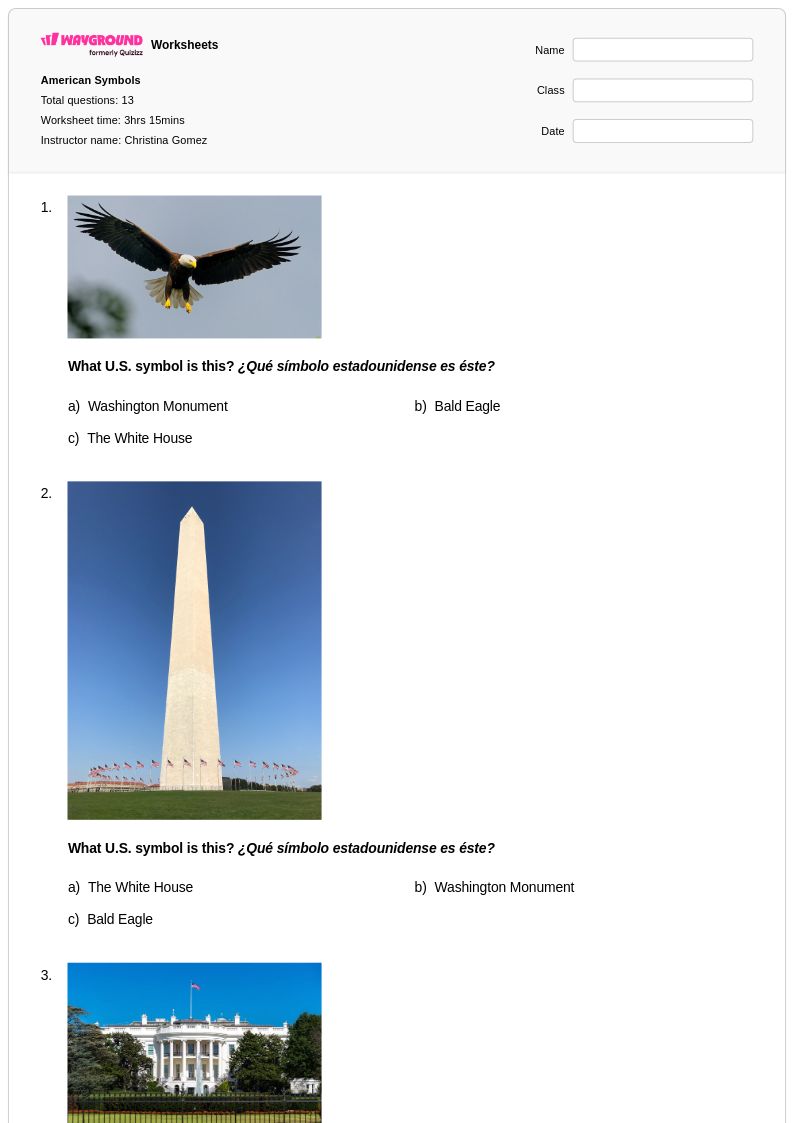
Class 1 United States Symbols worksheets from Wayground help young learners discover America's important national symbols through engaging printables, practice problems, and free PDF resources with complete answer keys.
Explore printable United States Symbols worksheets for Class 1
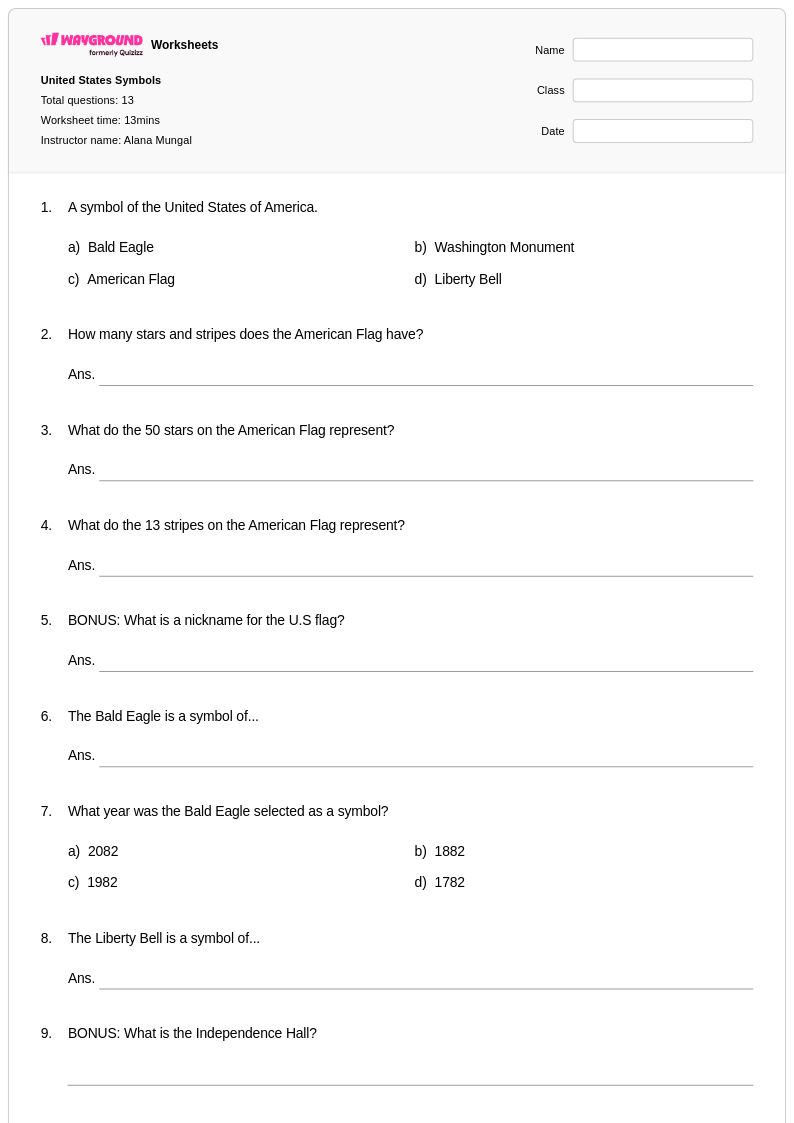
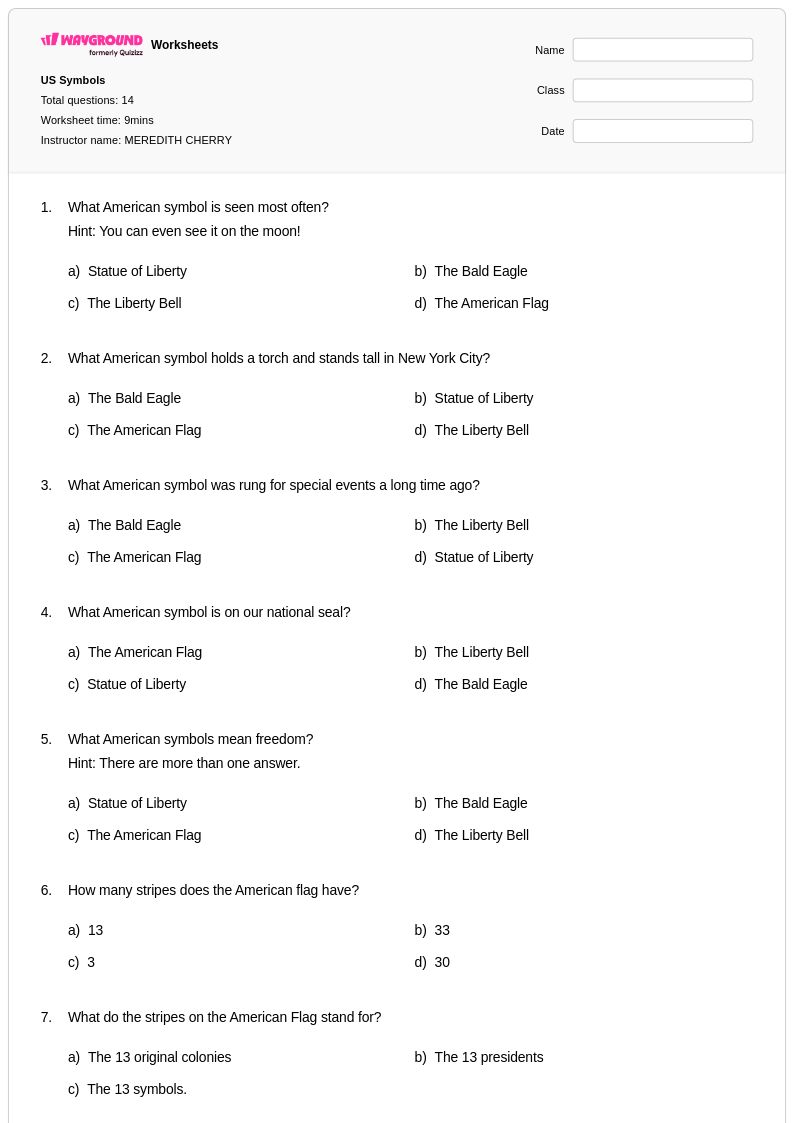
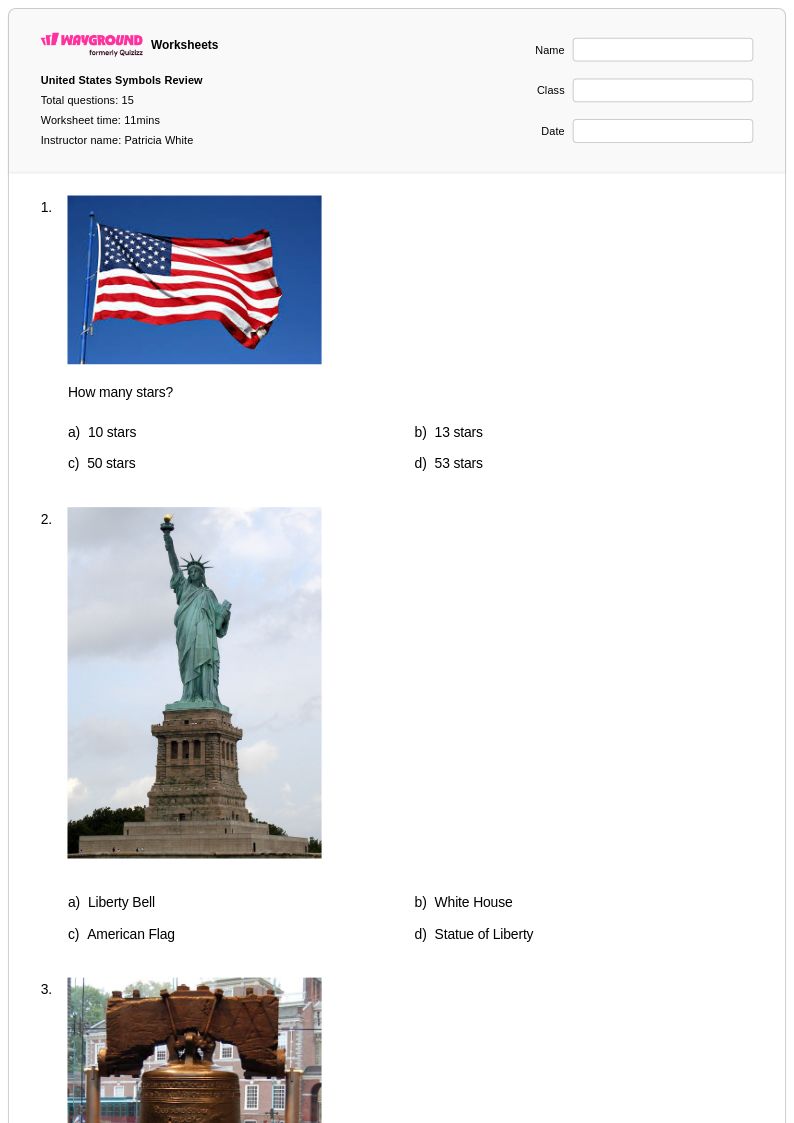
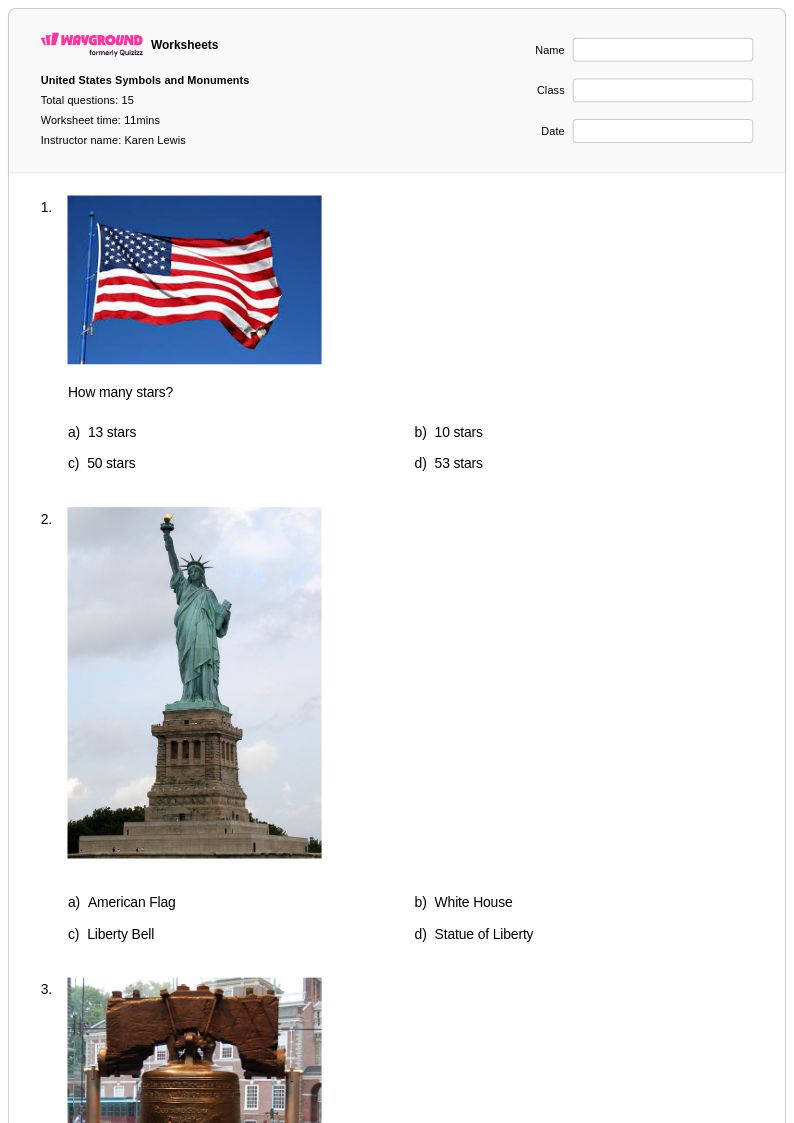
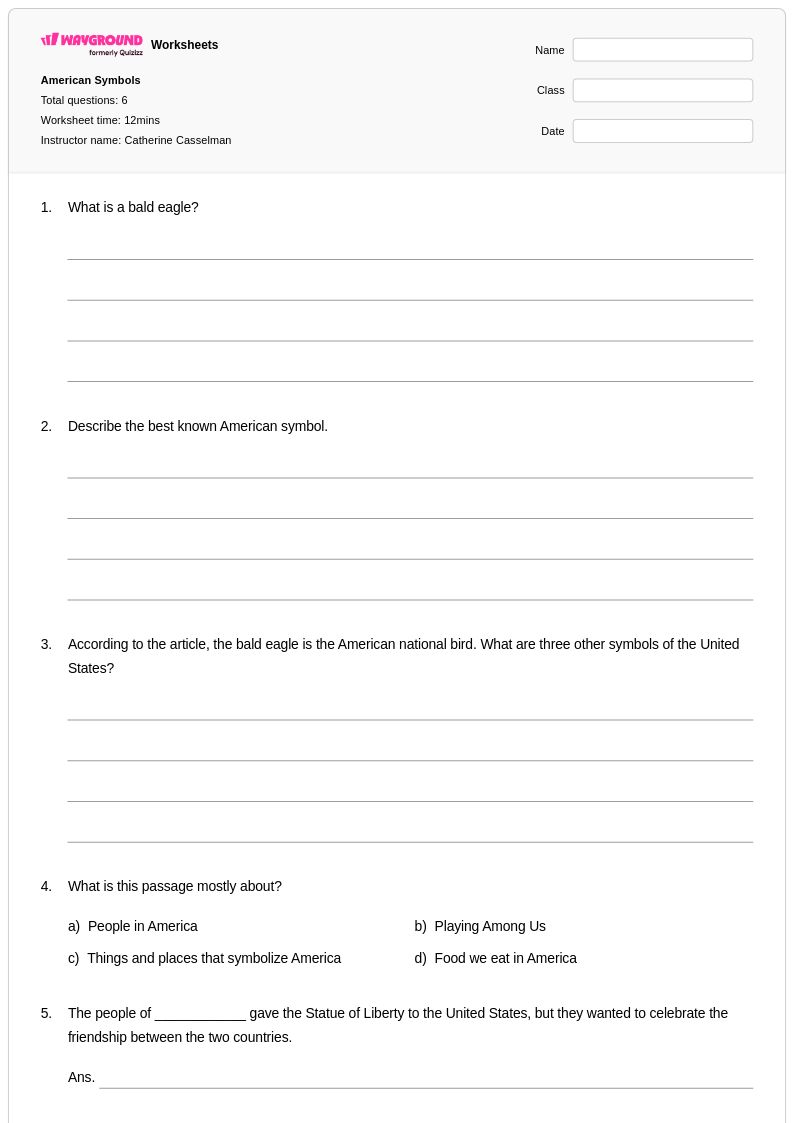
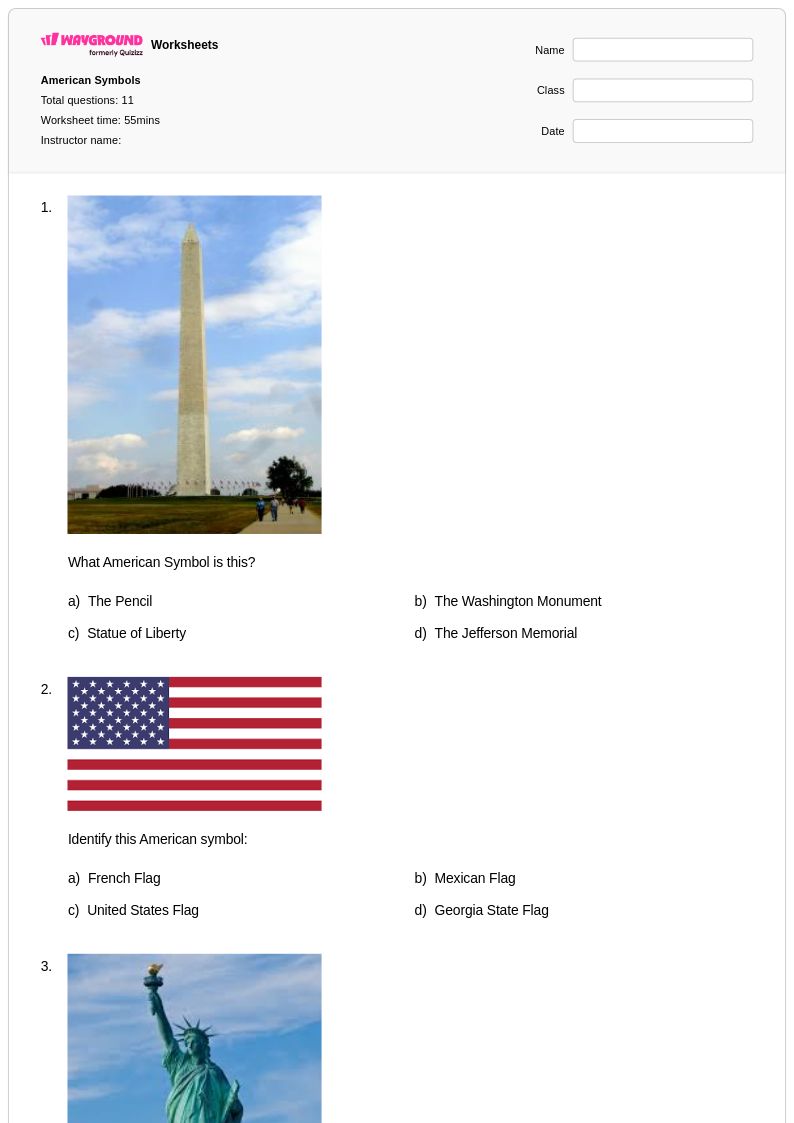
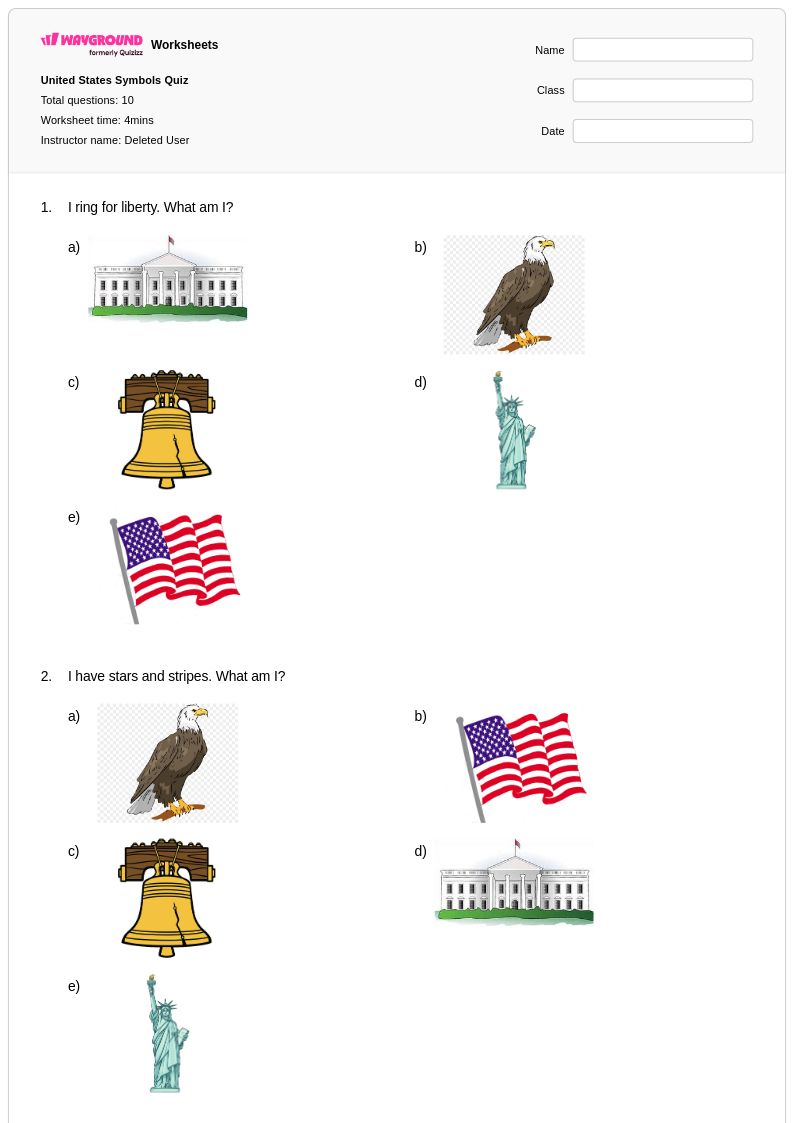
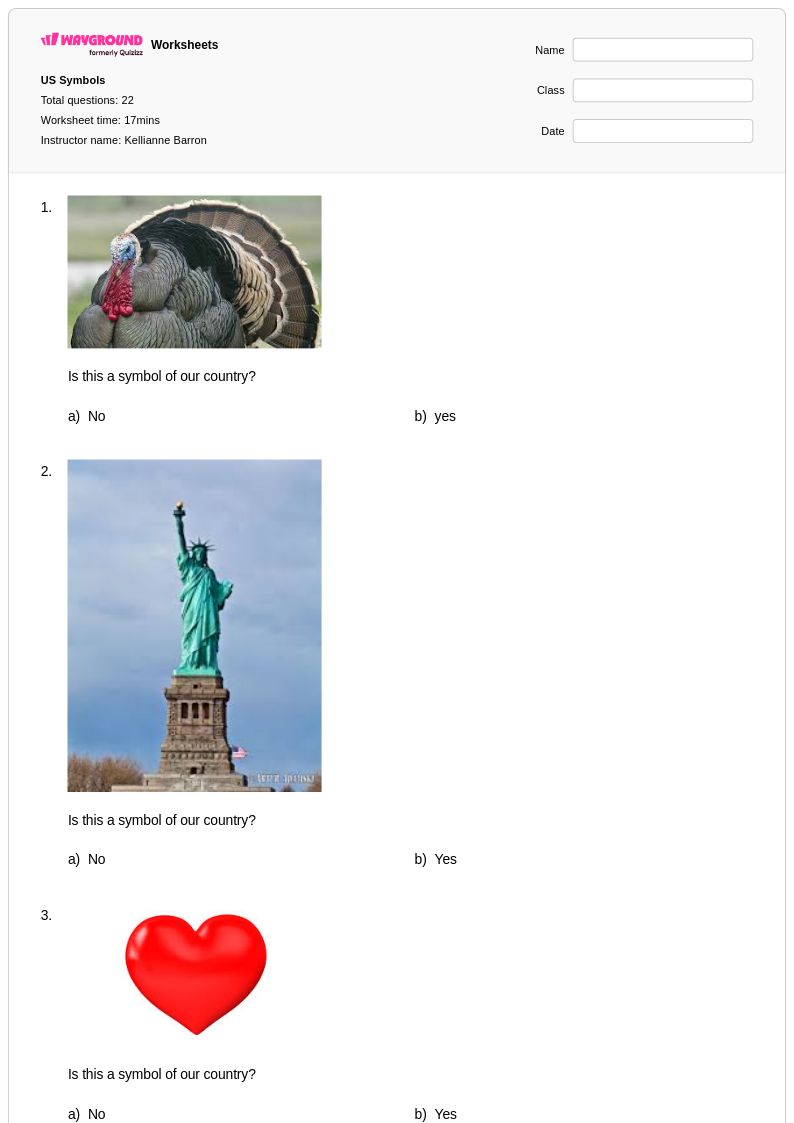
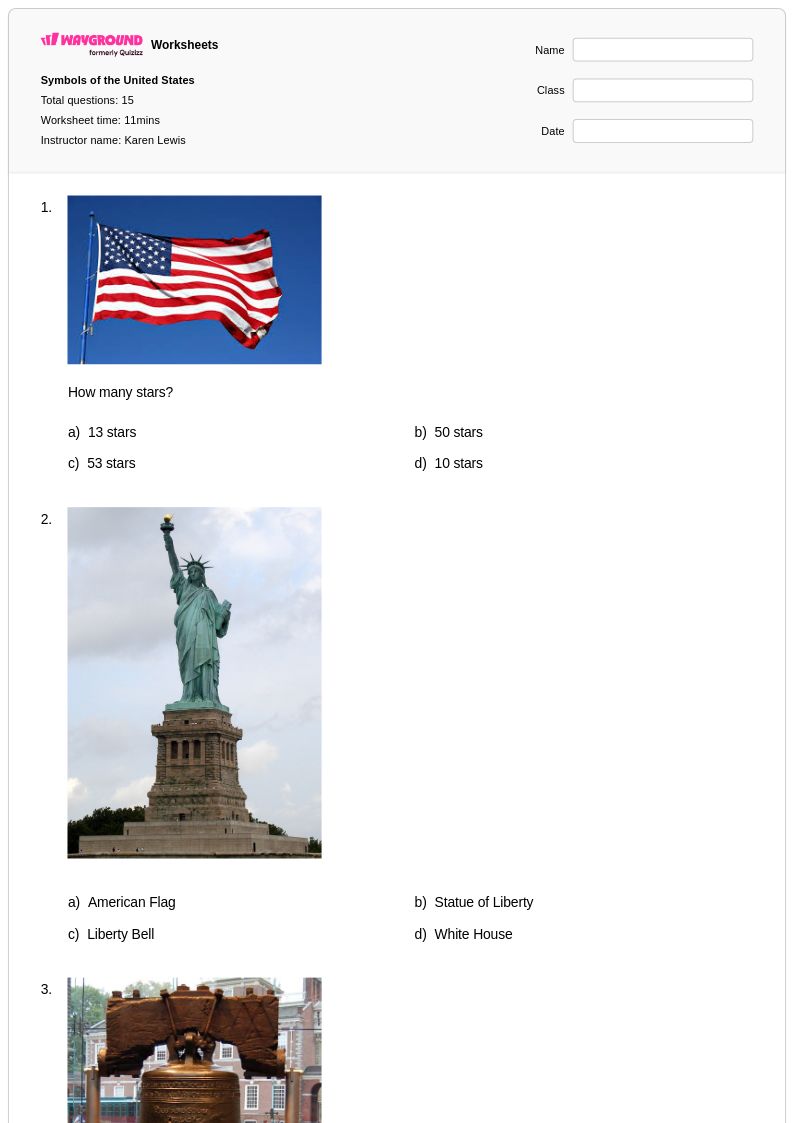
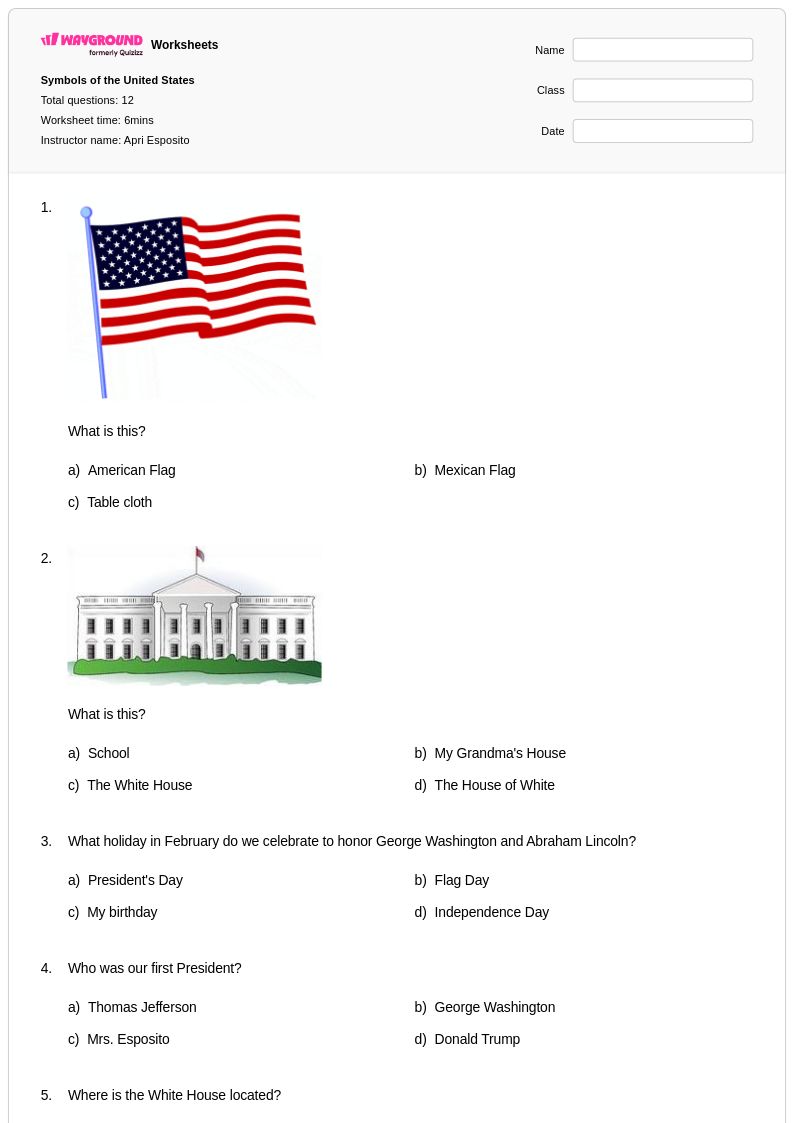
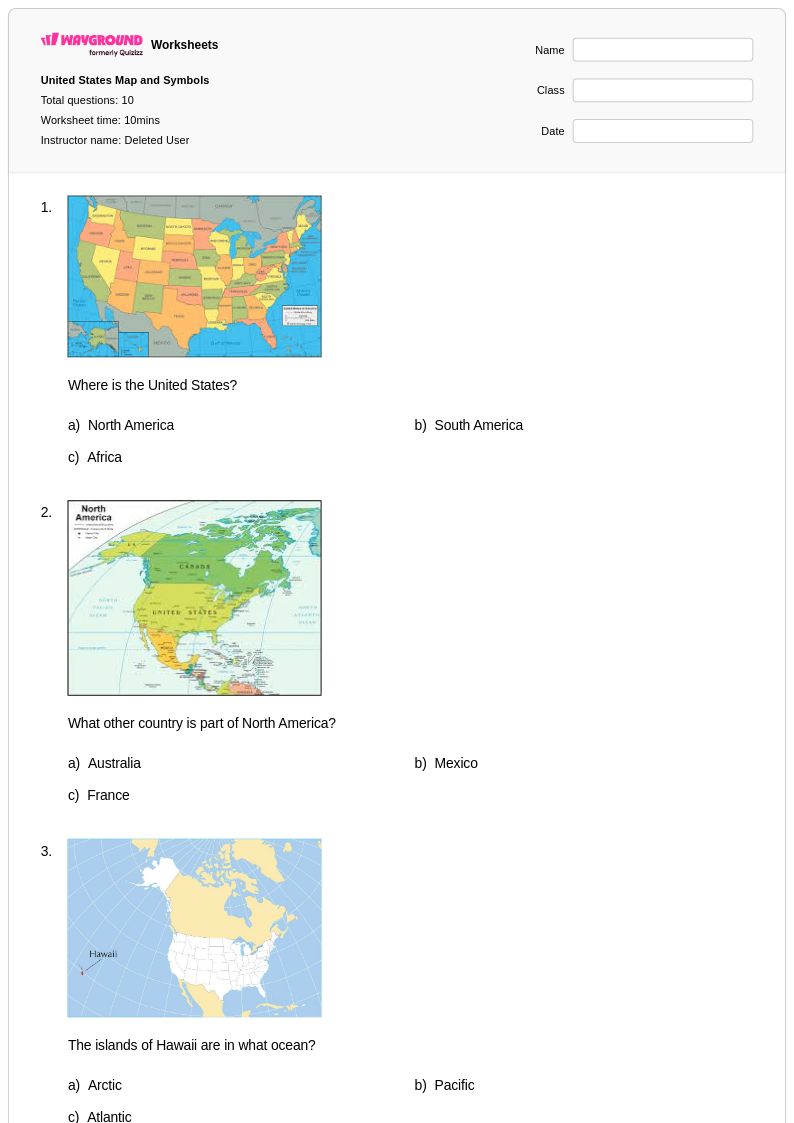
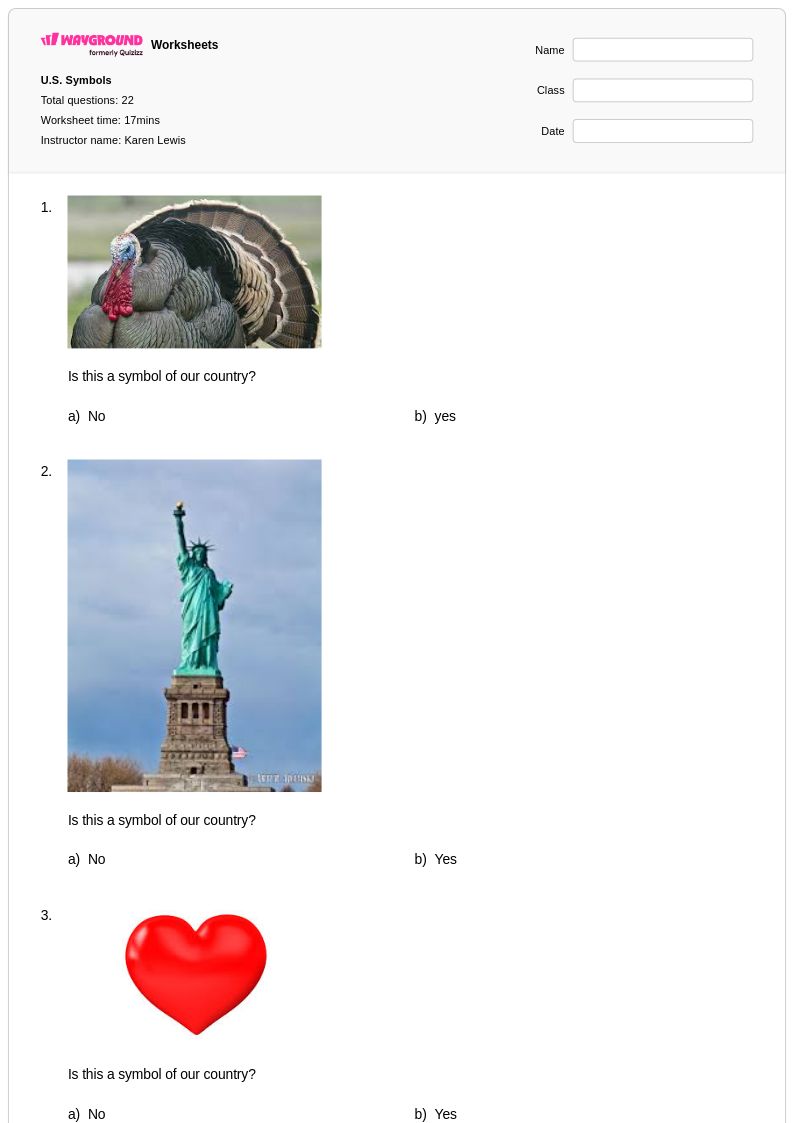
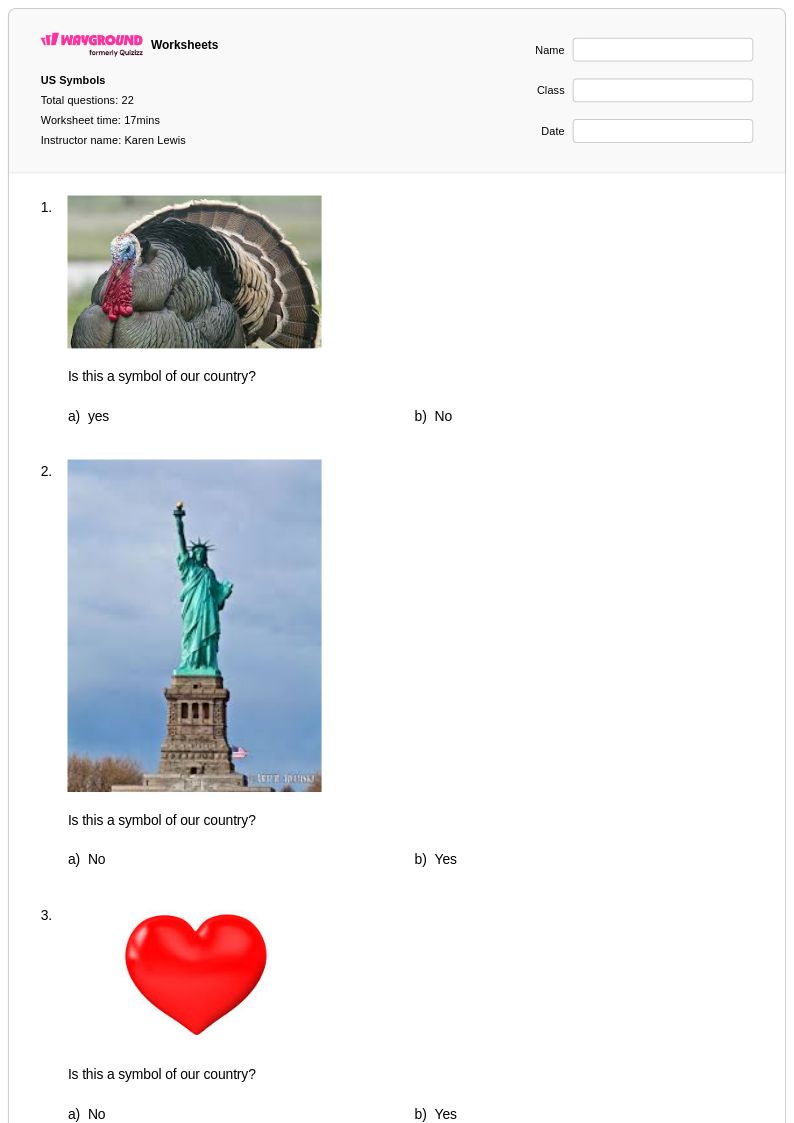
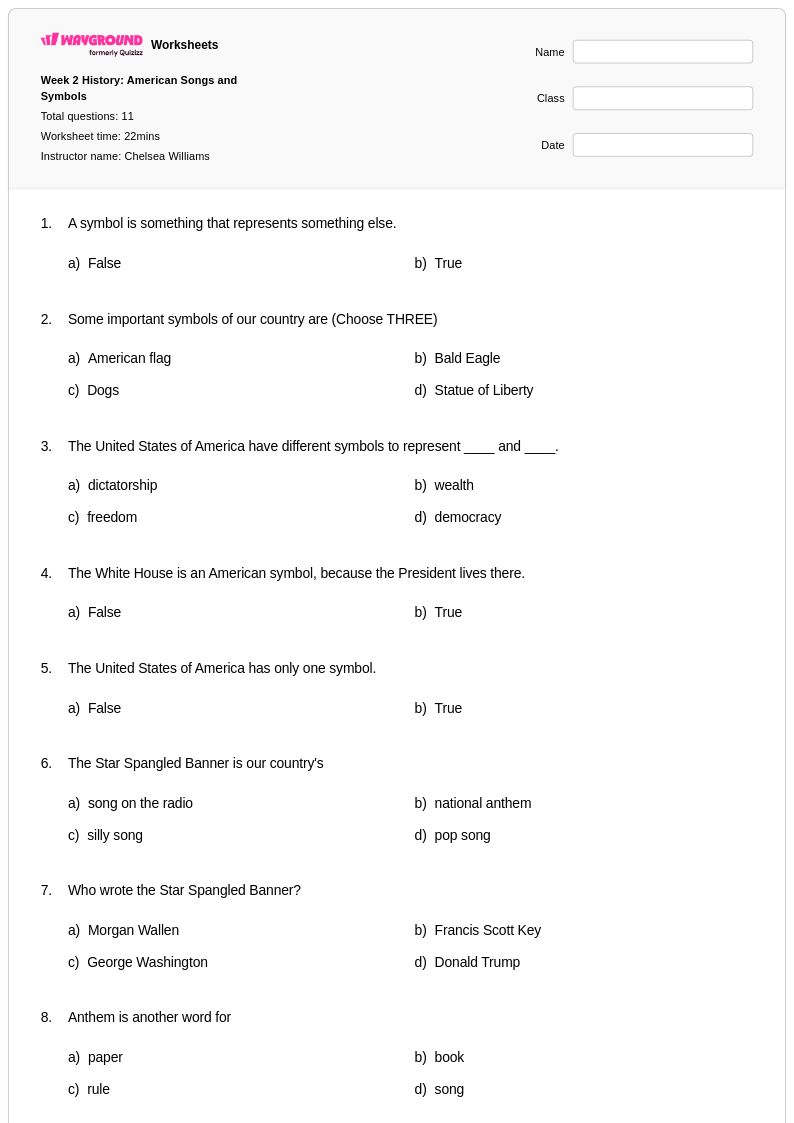
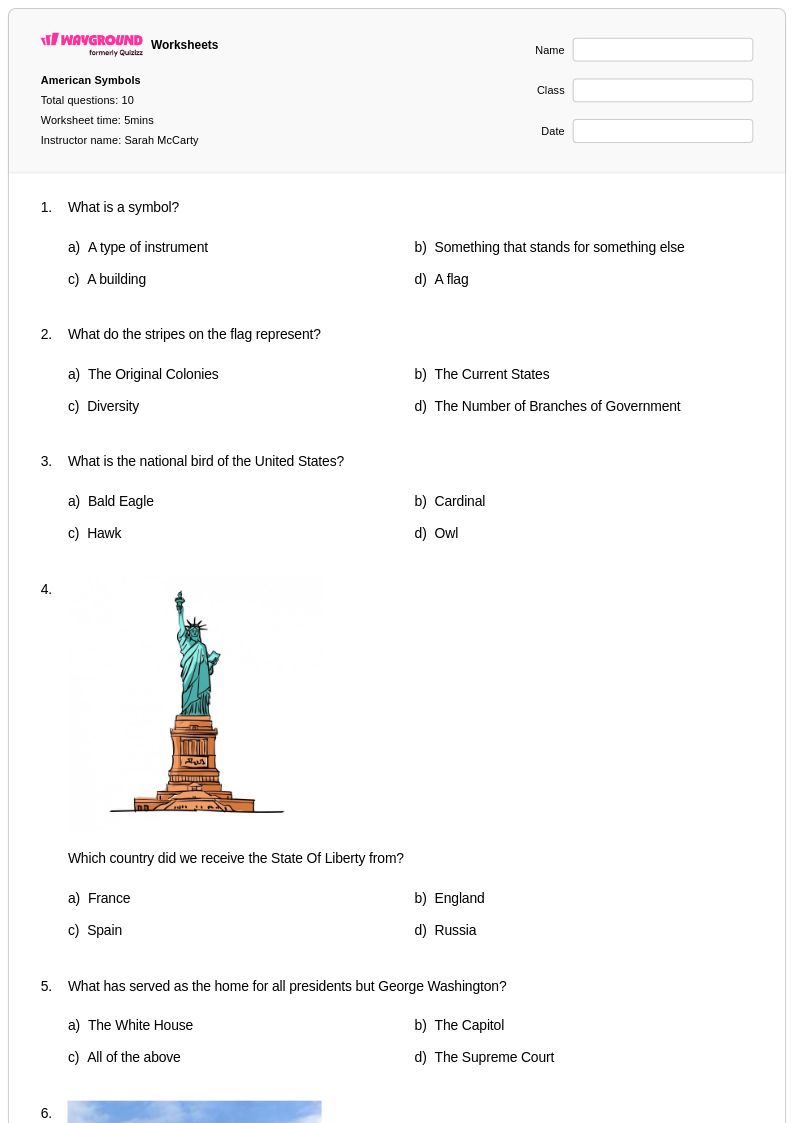
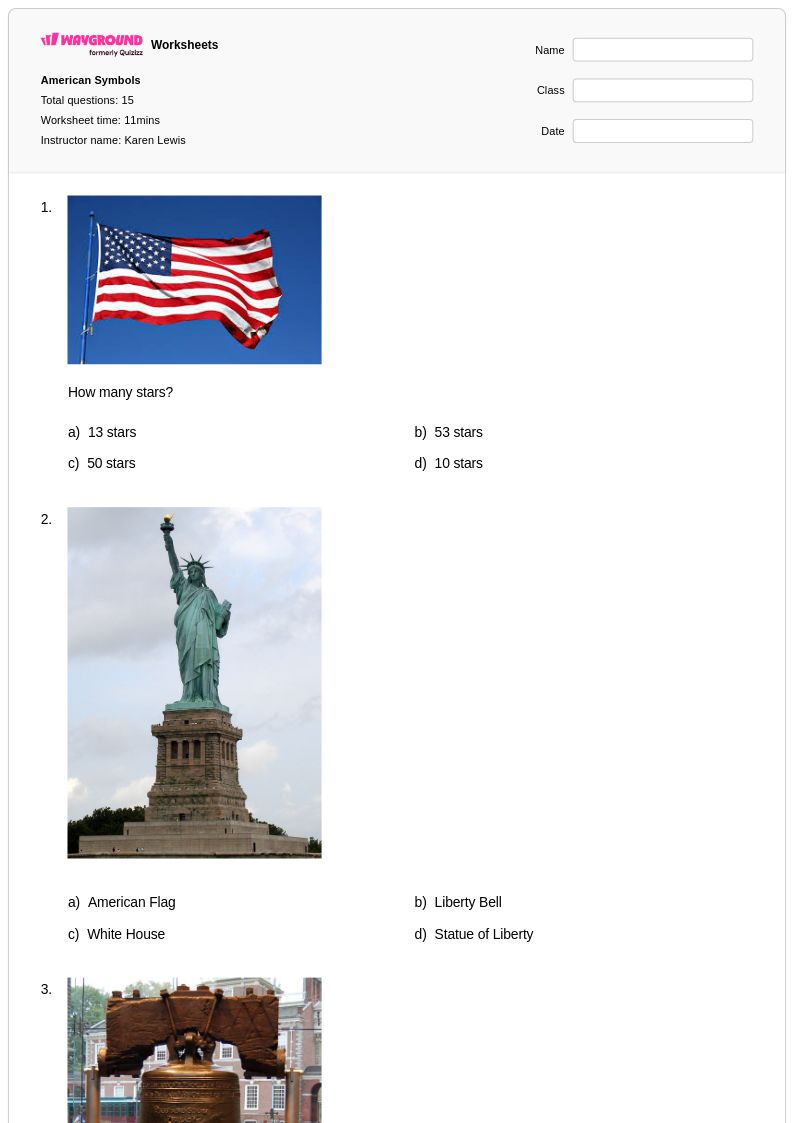
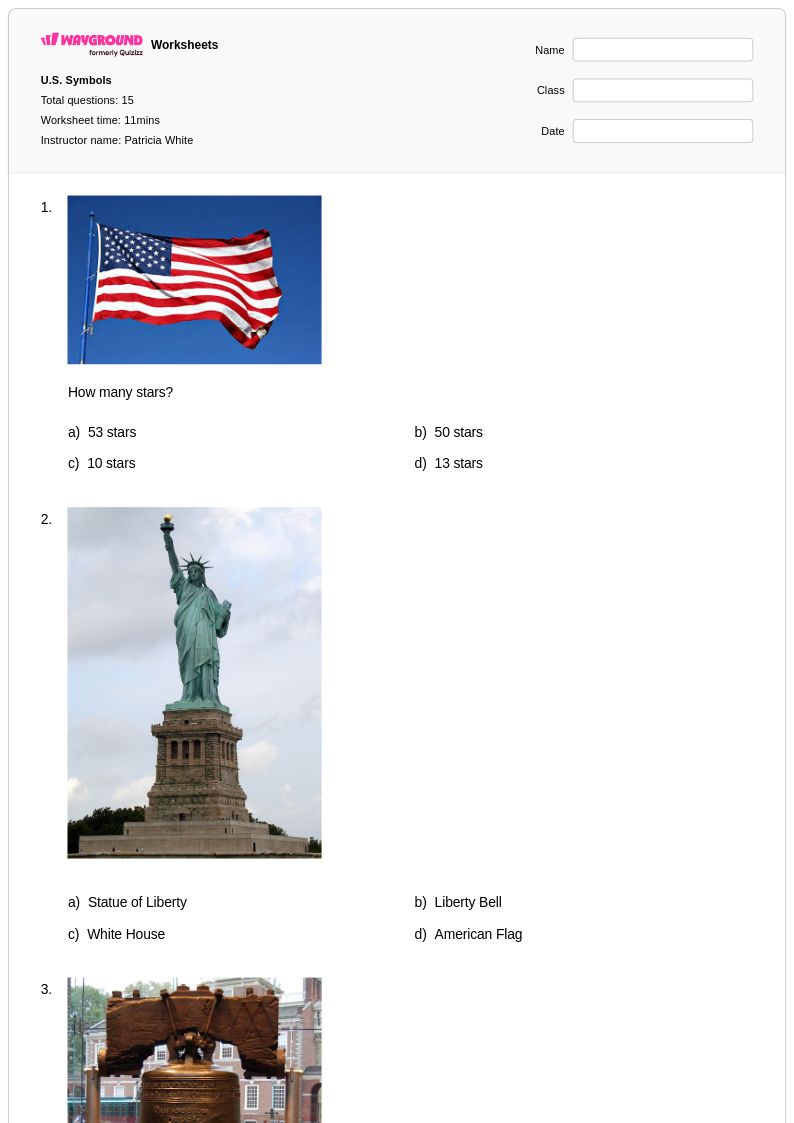
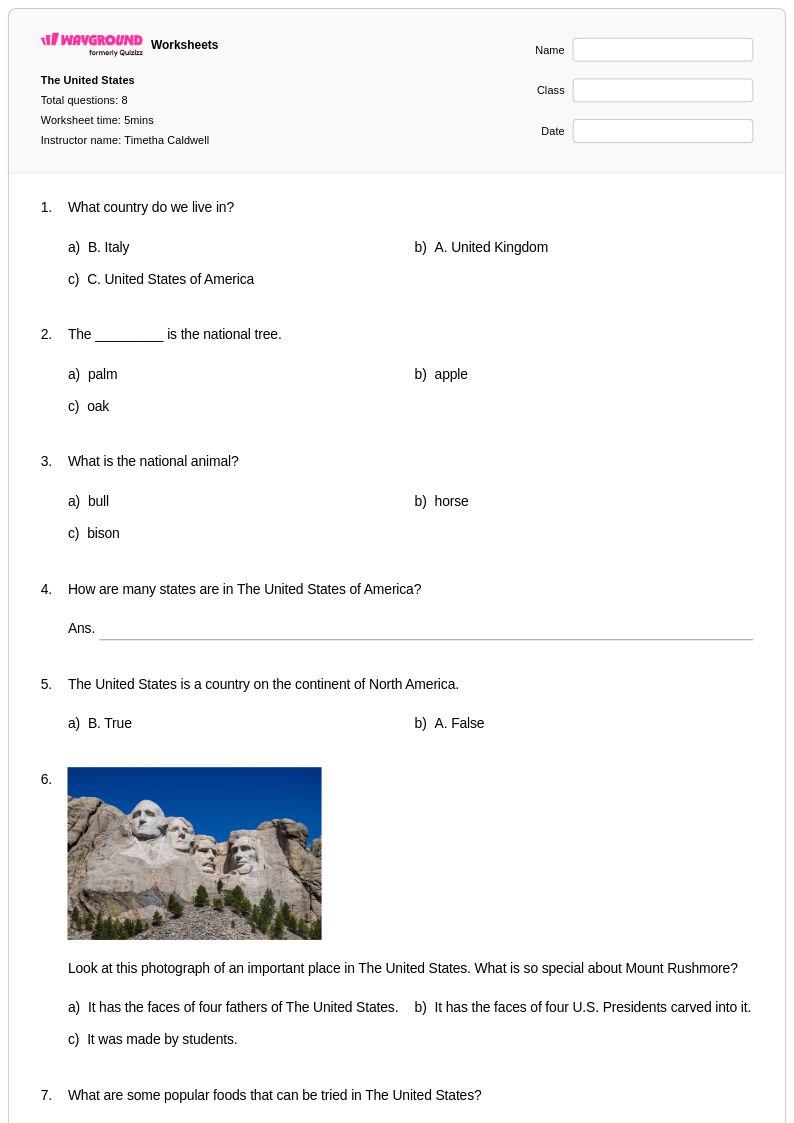
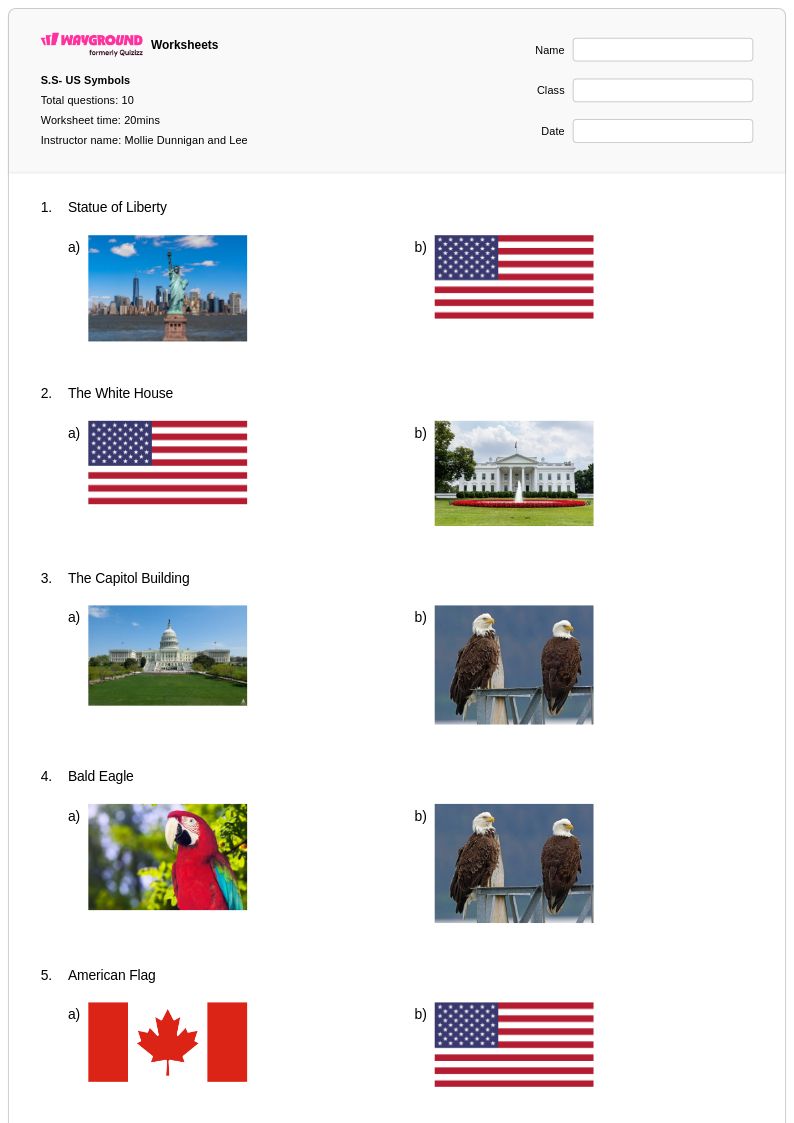
United States Symbols worksheets for Class 1 through Wayground provide young learners with engaging activities to explore America's most important national emblems and their meanings. These educational resources help first-grade students develop foundational knowledge about patriotic symbols like the American flag, bald eagle, Statue of Liberty, and Liberty Bell while strengthening essential skills in reading comprehension, visual recognition, and civic awareness. The worksheets feature age-appropriate content with clear illustrations and simple text that supports emerging readers as they learn to identify key symbols and understand their significance in American culture. Each worksheet includes practice problems that reinforce learning through coloring activities, matching exercises, and basic writing tasks, with comprehensive answer keys provided to support both classroom instruction and home learning. These free printable resources offer valuable pdf downloads that teachers can easily reproduce for their students.
Wayground supports educators with an extensive collection of teacher-created United States Symbols worksheets specifically designed for Class 1 learners, drawing from millions of high-quality educational resources developed by classroom professionals. The platform's robust search and filtering capabilities enable teachers to quickly locate materials that align with social studies standards and match their students' developmental needs, while differentiation tools allow for easy customization to accommodate various learning styles and abilities. These worksheets are available in both printable pdf format and interactive digital versions, providing flexibility for in-person and remote learning environments. Teachers can efficiently plan engaging lessons, provide targeted remediation for struggling students, offer enrichment opportunities for advanced learners, and create meaningful skill practice sessions that build students' understanding of American symbols and foster early civic engagement and national pride.
FAQs
How do I teach United States symbols to elementary students?
Start by introducing one symbol at a time, anchoring each to a concrete story or historical moment — for example, explaining why the bald eagle was chosen as the national bird in 1782 or what the Statue of Liberty represented to immigrants arriving in New York Harbor. Pair visual materials with guided questions that ask students to connect each symbol to American values like freedom, unity, and democracy. Building from symbol to meaning, rather than definition to symbol, helps students retain the material and develop genuine civic understanding.
What activities help students practice identifying and understanding U.S. national symbols?
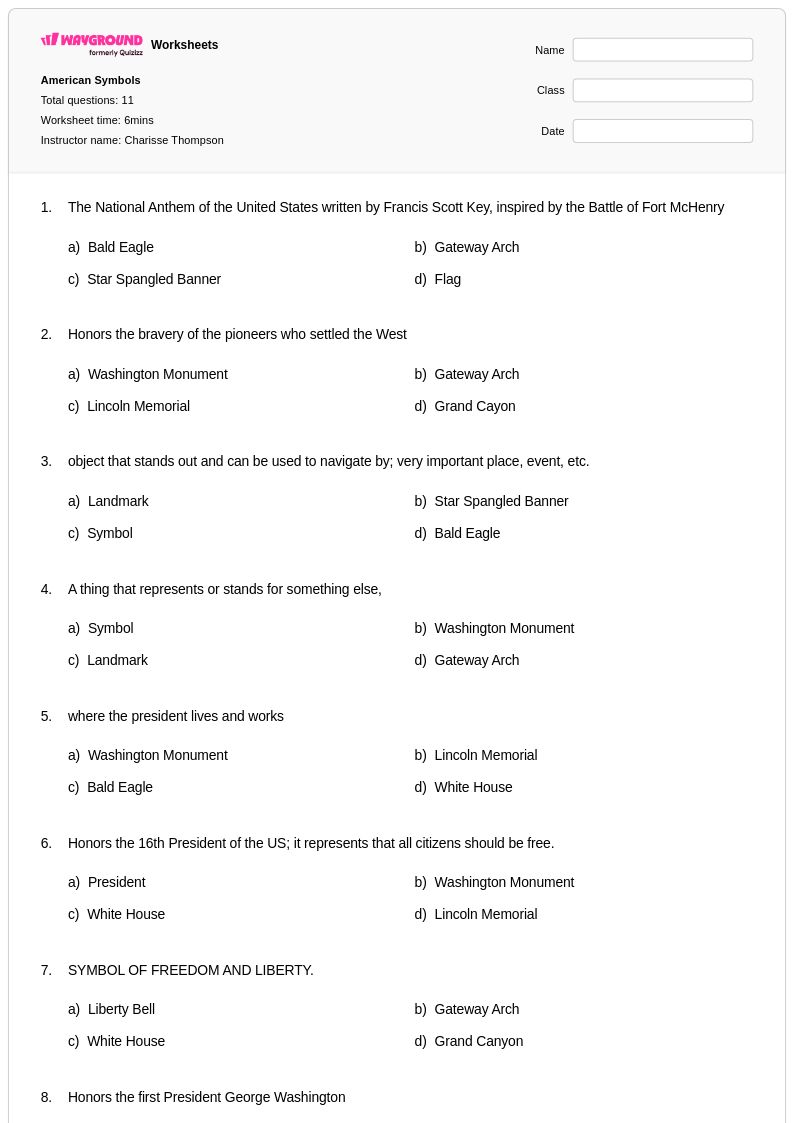
Effective practice activities include matching exercises that pair symbols with their names and meanings, short-answer questions that ask students to explain the historical significance of each symbol, and image-based prompts where students label parts of the Great Seal or the American flag. Sequencing activities that trace how a symbol evolved over time also reinforce deeper comprehension beyond simple memorization. United States Symbols worksheets on Wayground offer diverse practice problems designed to build both recognition and analytical thinking about civic symbols.
What common misconceptions do students have about U.S. national symbols?
Students often confuse the symbolic meaning of national emblems with literal descriptions — for instance, believing the bald eagle was chosen purely for its appearance rather than its association with strength and freedom. Many students also conflate the Great Seal with the American flag or assume all national symbols were established at the same time. A frequent error is treating these symbols as decorative rather than understanding that each was deliberately selected to represent specific American democratic values.
How can I use United States Symbols worksheets to support diverse learners in my classroom?
United States Symbols worksheets on Wayground are available in both printable PDF format and digital formats, making them easy to deploy across different classroom environments and student needs. In digital mode, Wayground supports individual student accommodations including read-aloud functionality for students who need audio support, reduced answer choices to lower cognitive load, and adjustable font sizes through reading mode. These settings can be applied per student and saved for future sessions, so differentiation does not require extra preparation each time.
How do I assess whether students understand the significance of U.S. national symbols, not just their names?
Move beyond identification questions and use prompts that require students to explain the connection between a symbol and an American value — for example, asking why the torch held by the Statue of Liberty represents enlightenment rather than simply asking what the statue is called. Short constructed-response items and symbol-to-concept matching tasks are reliable ways to distinguish surface recognition from genuine comprehension. Reviewing student responses for vague or circular answers (e.g., 'the flag represents America') helps identify where deeper instruction is still needed.
What U.S. national symbols are typically covered in elementary social studies curriculum?
Core symbols covered in most elementary social studies standards include the American flag, the bald eagle, the Statue of Liberty, the Liberty Bell, the Great Seal of the United States, and the national anthem. Some curricula also include the Washington Monument, the White House, and Uncle Sam as recognizable national representations. These symbols are typically introduced in grades K through 3 and revisited with increasing analytical depth in grades 4 and 5.