Free Printable Using Sensory Details Worksheets for Class 9
Help Class 9 students master using sensory details in their writing with Wayground's free worksheets and printables that provide engaging practice problems and comprehensive answer keys to strengthen descriptive writing skills.
Explore printable Using Sensory Details worksheets for Class 9
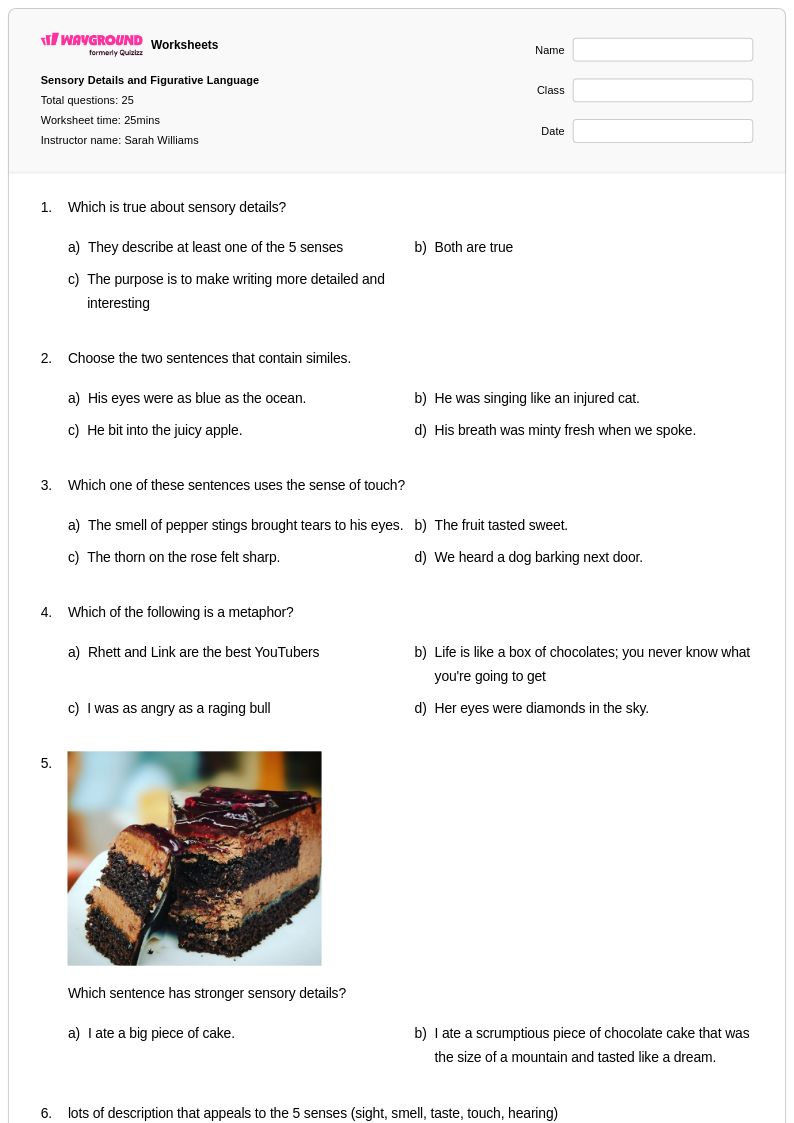
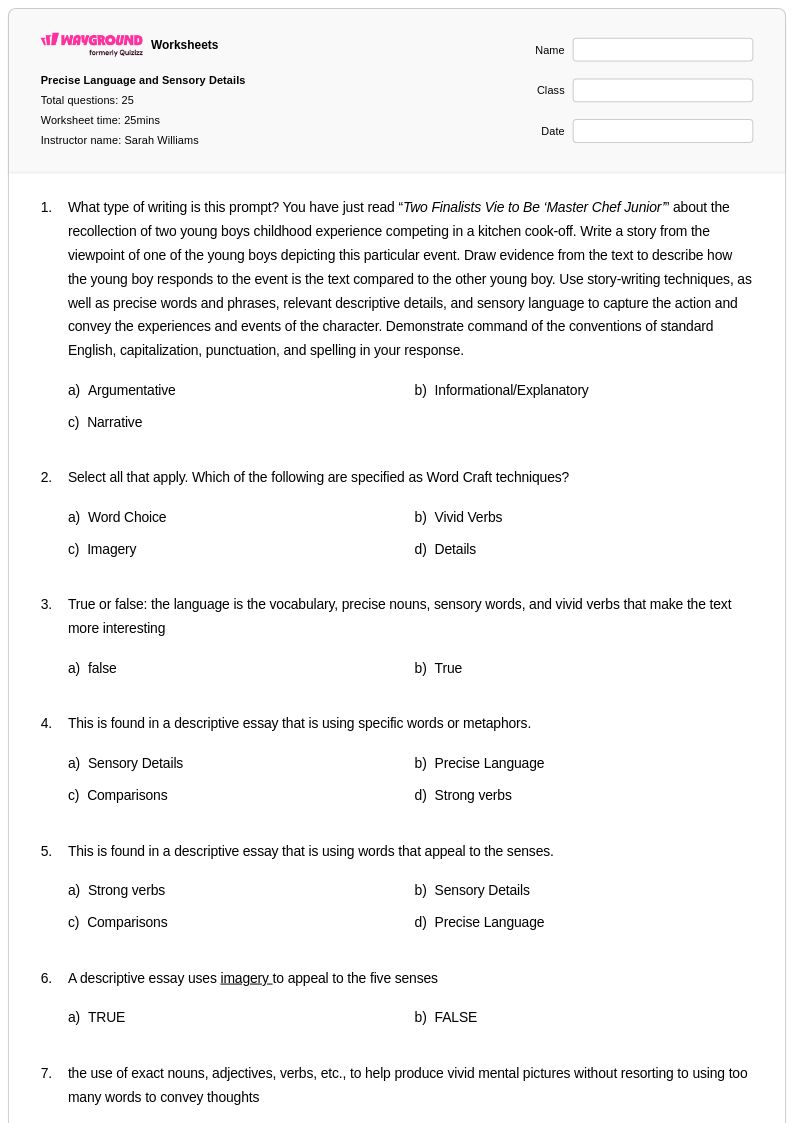
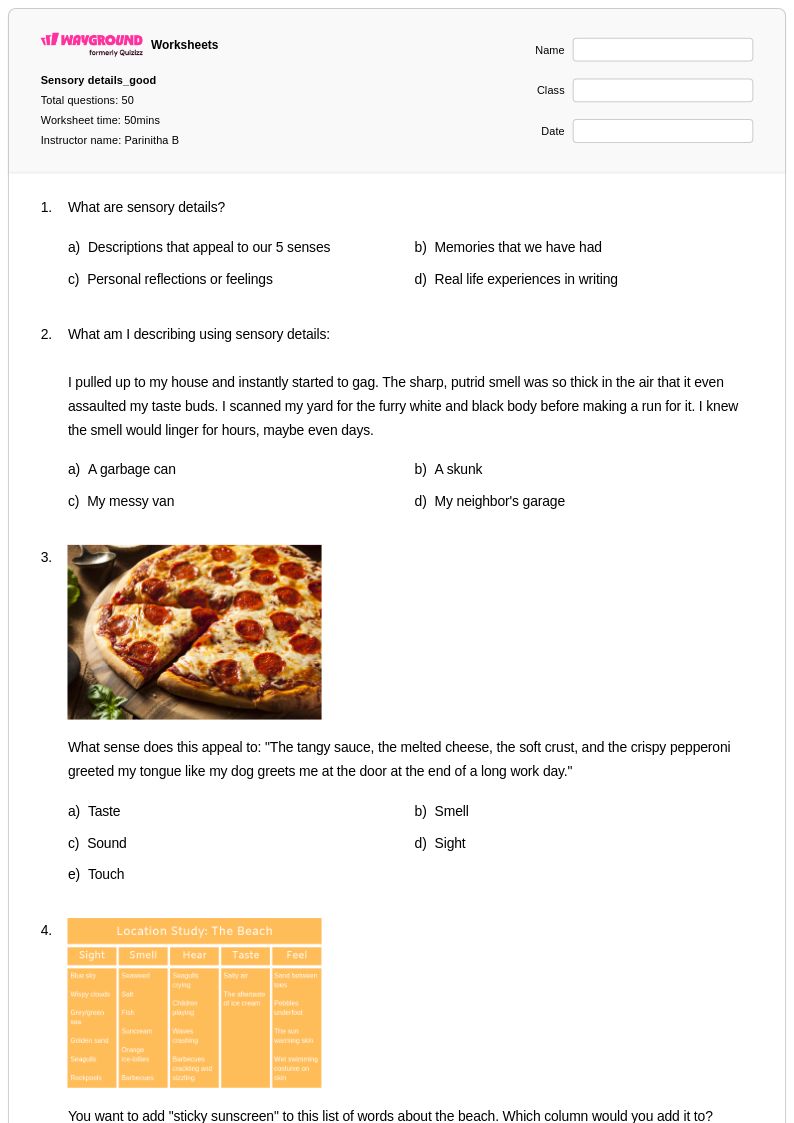
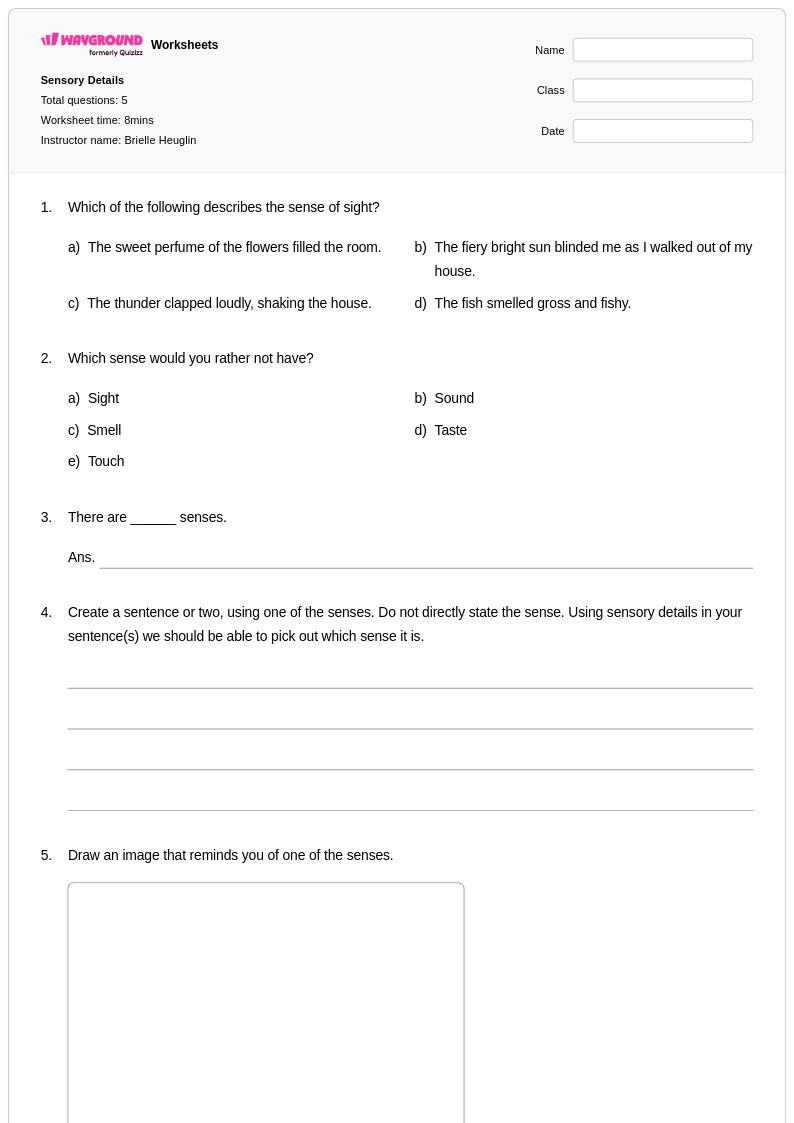
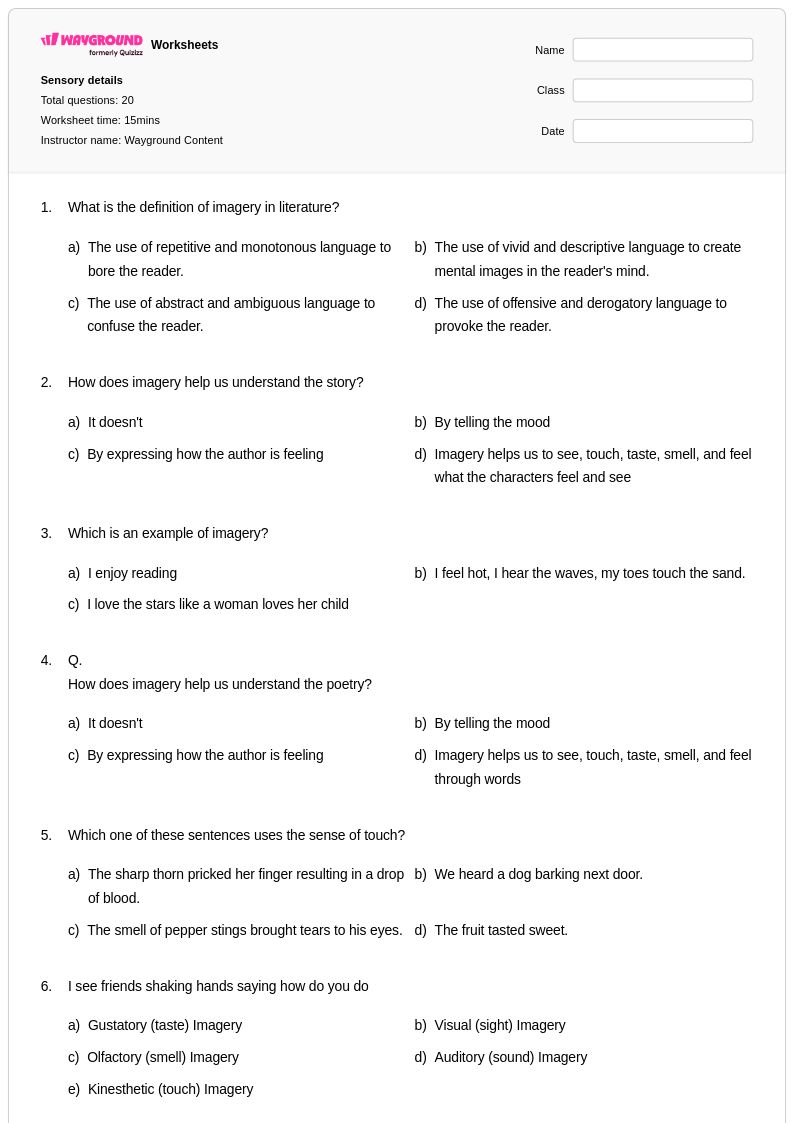
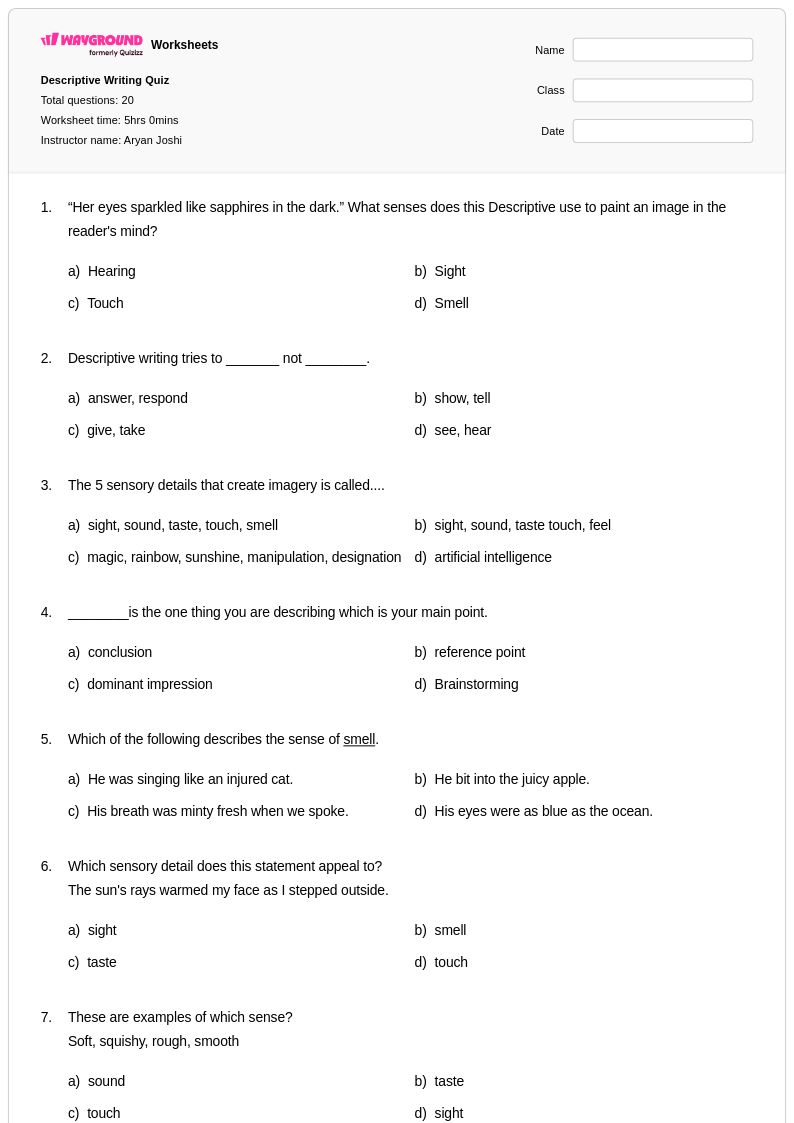
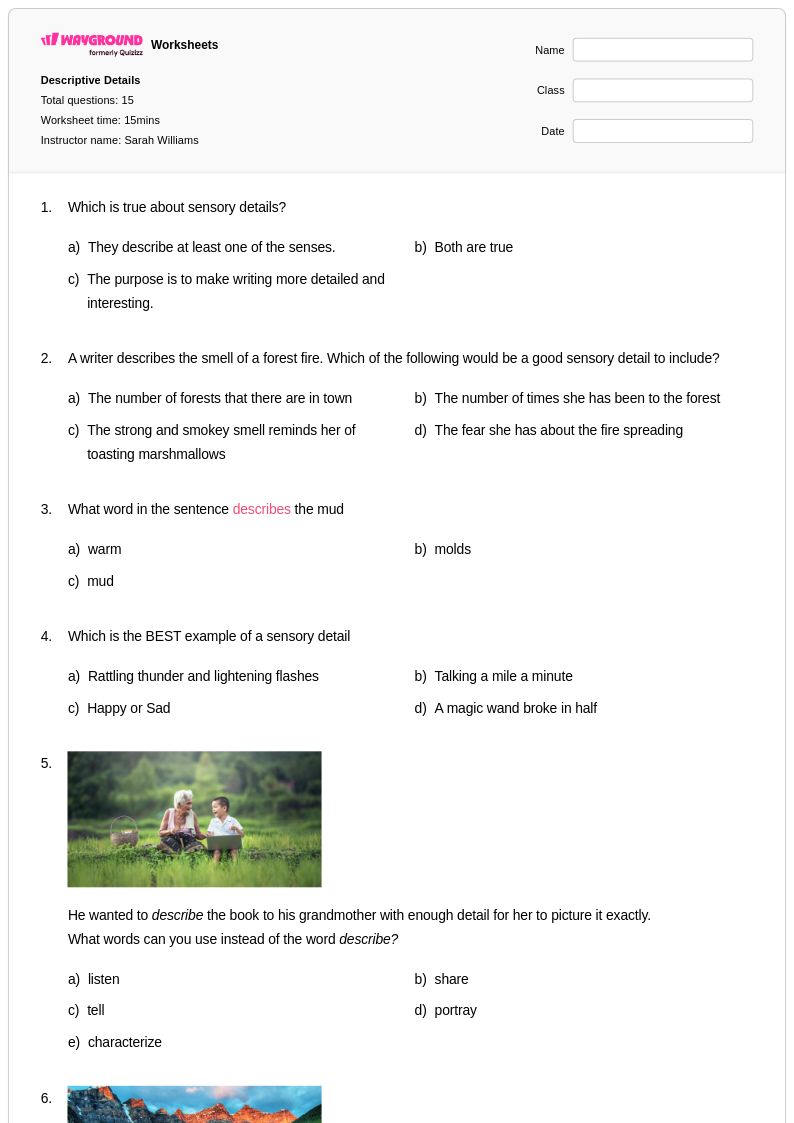
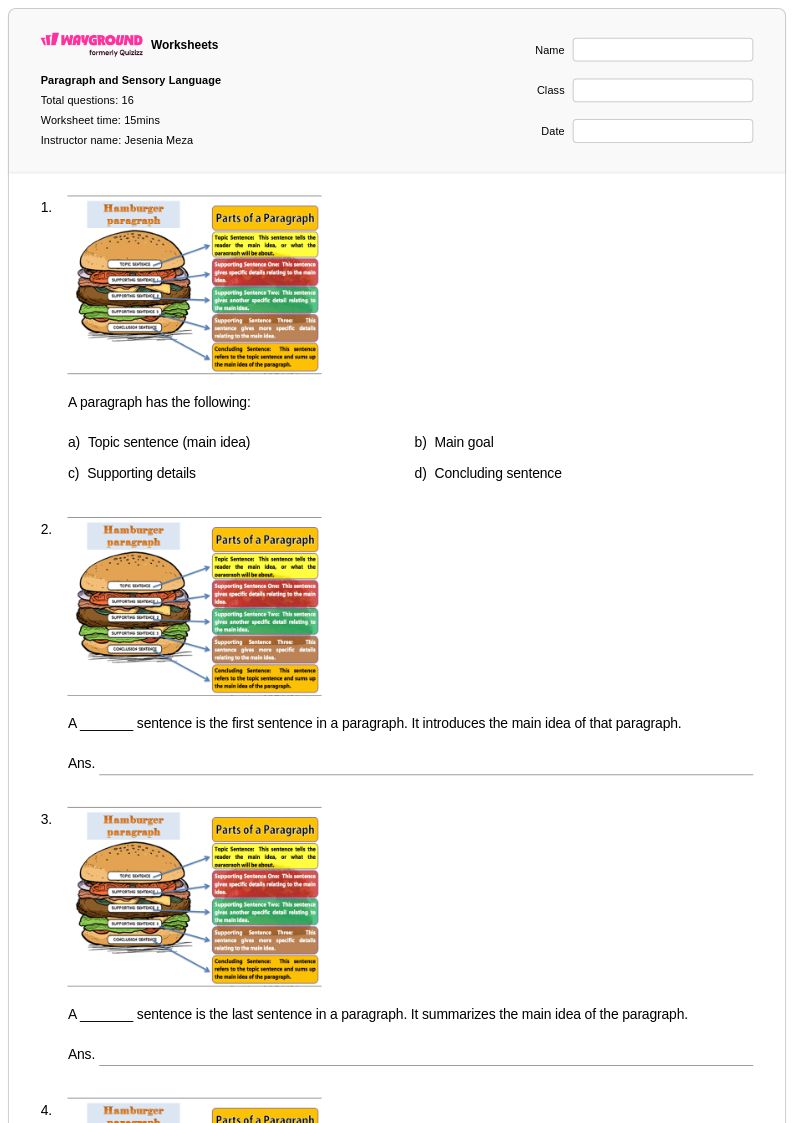
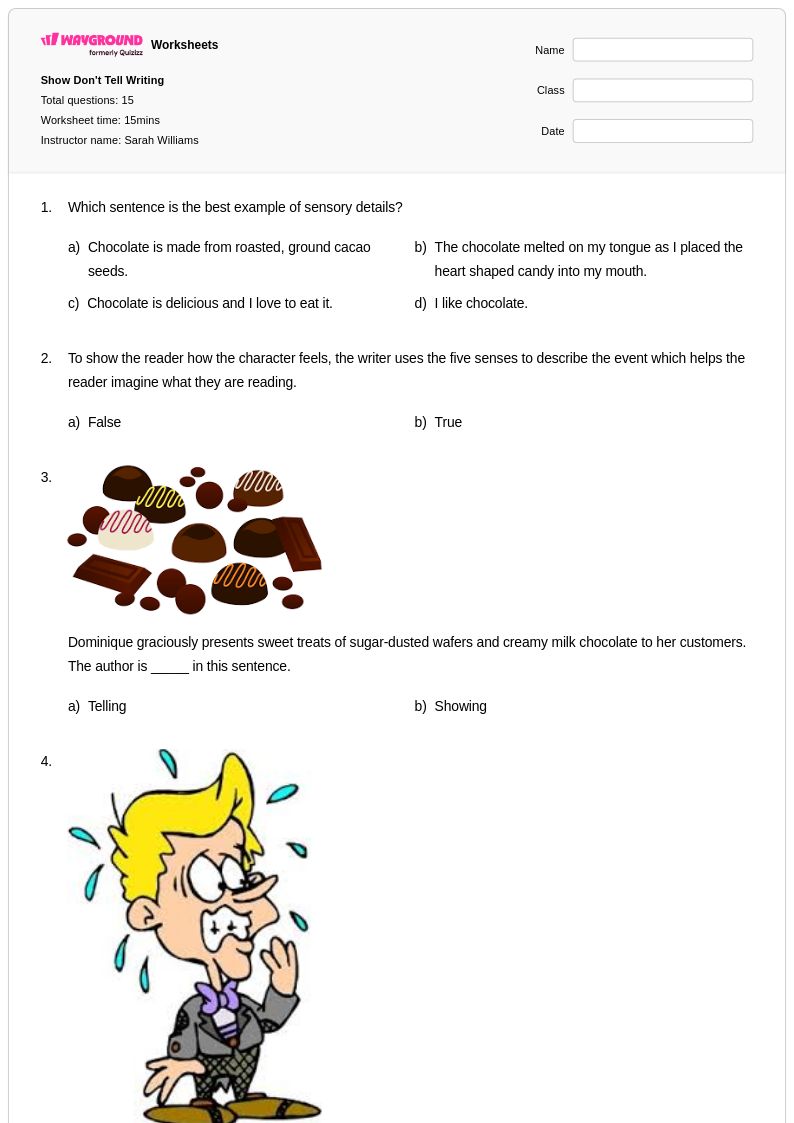
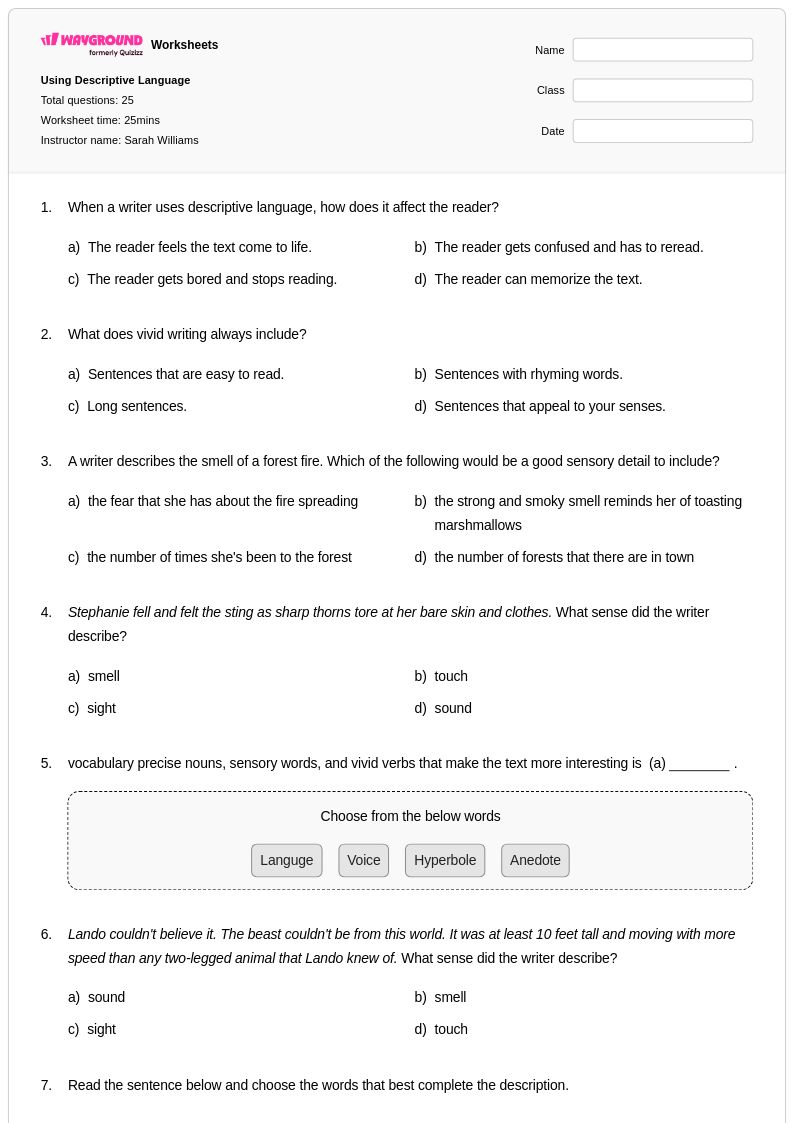
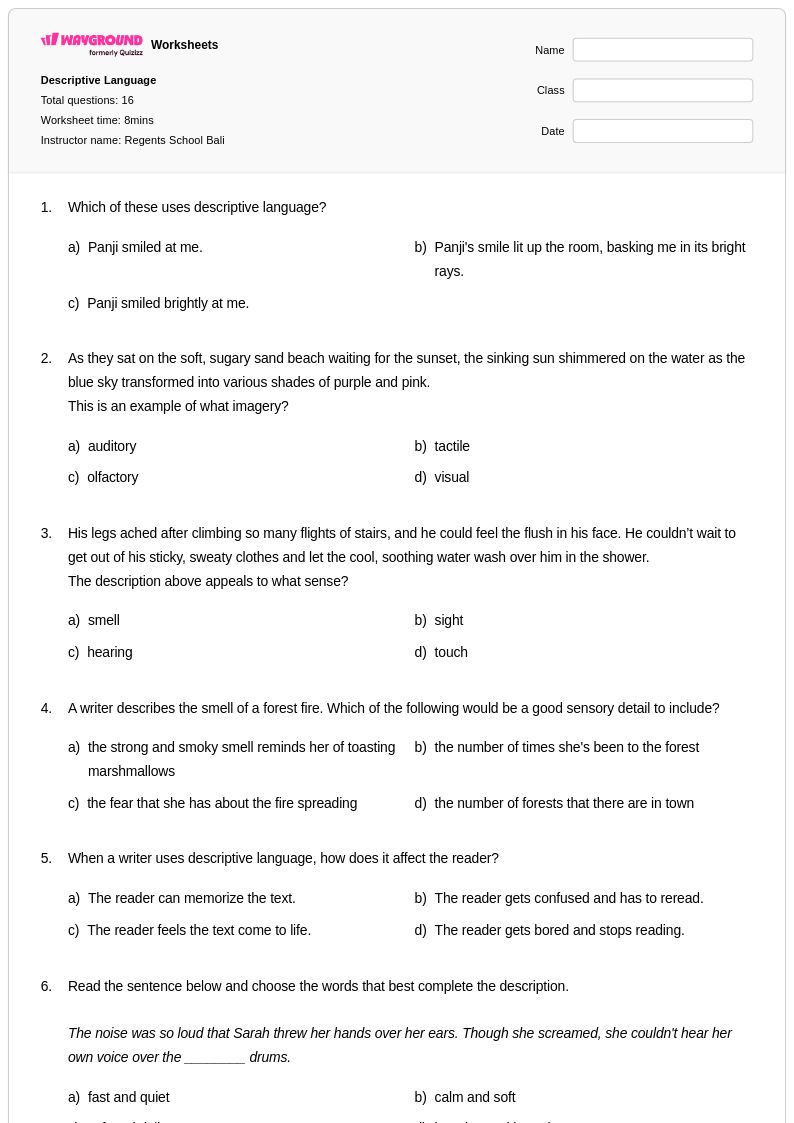
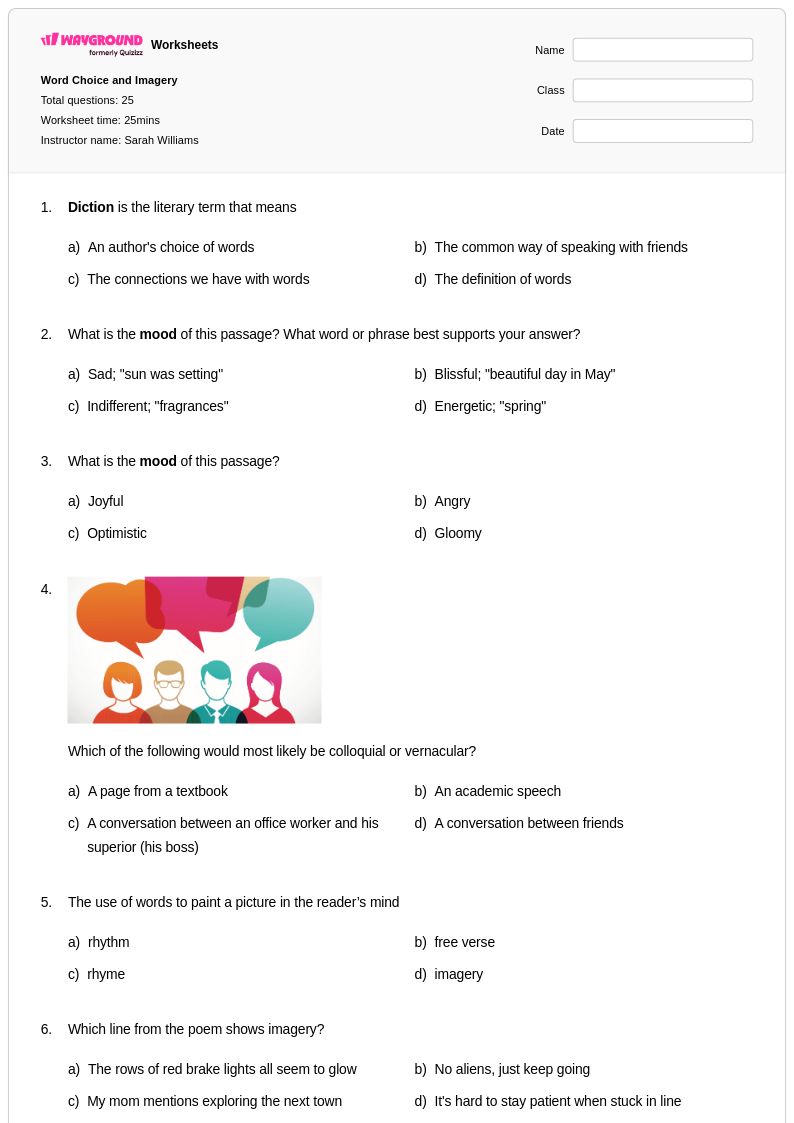
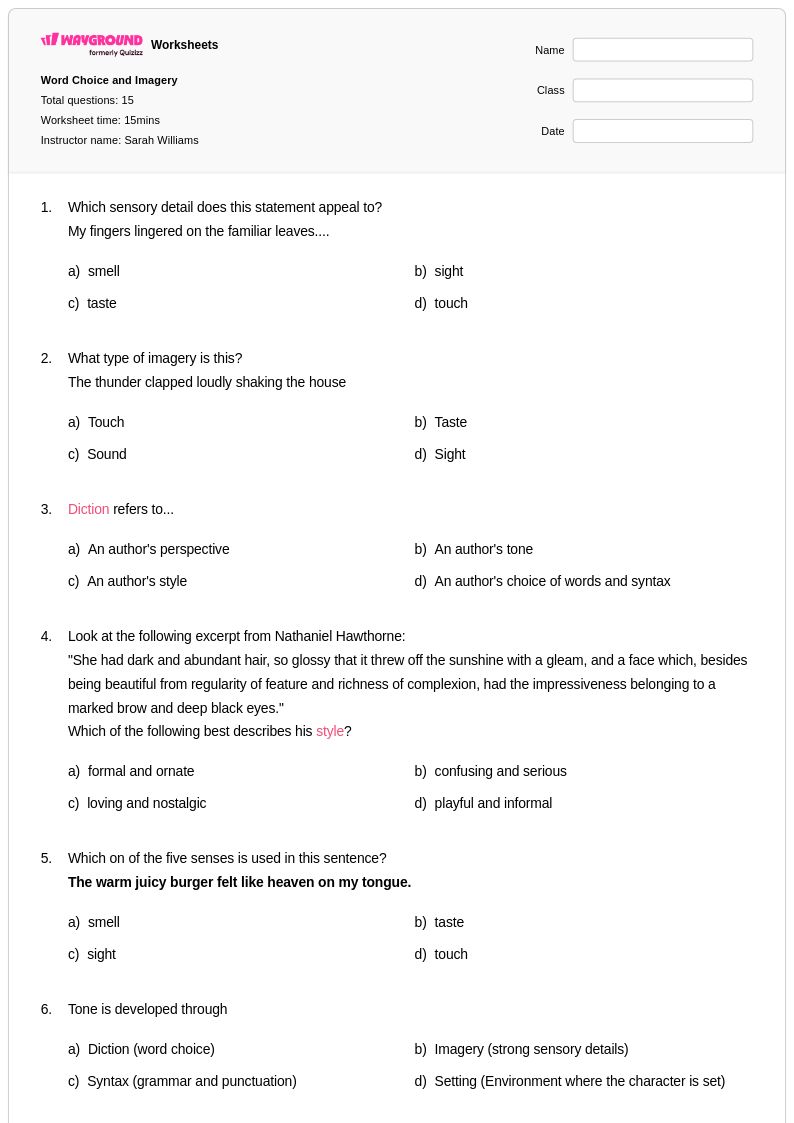
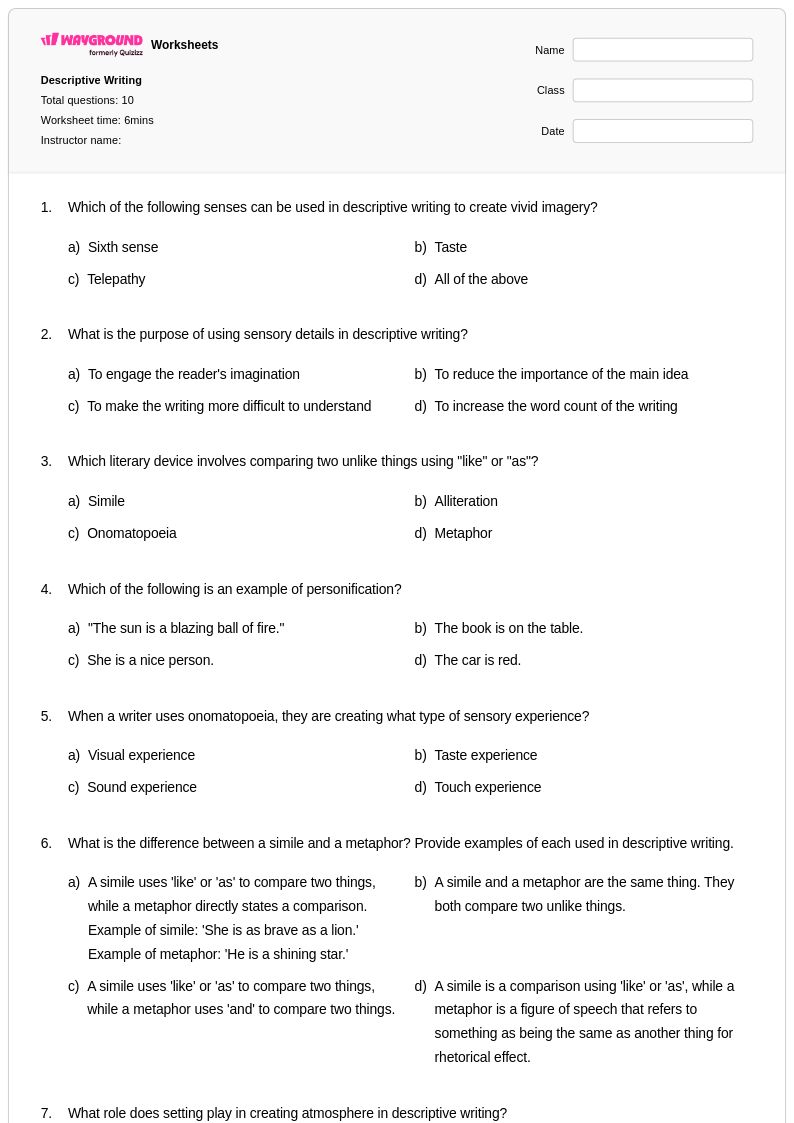
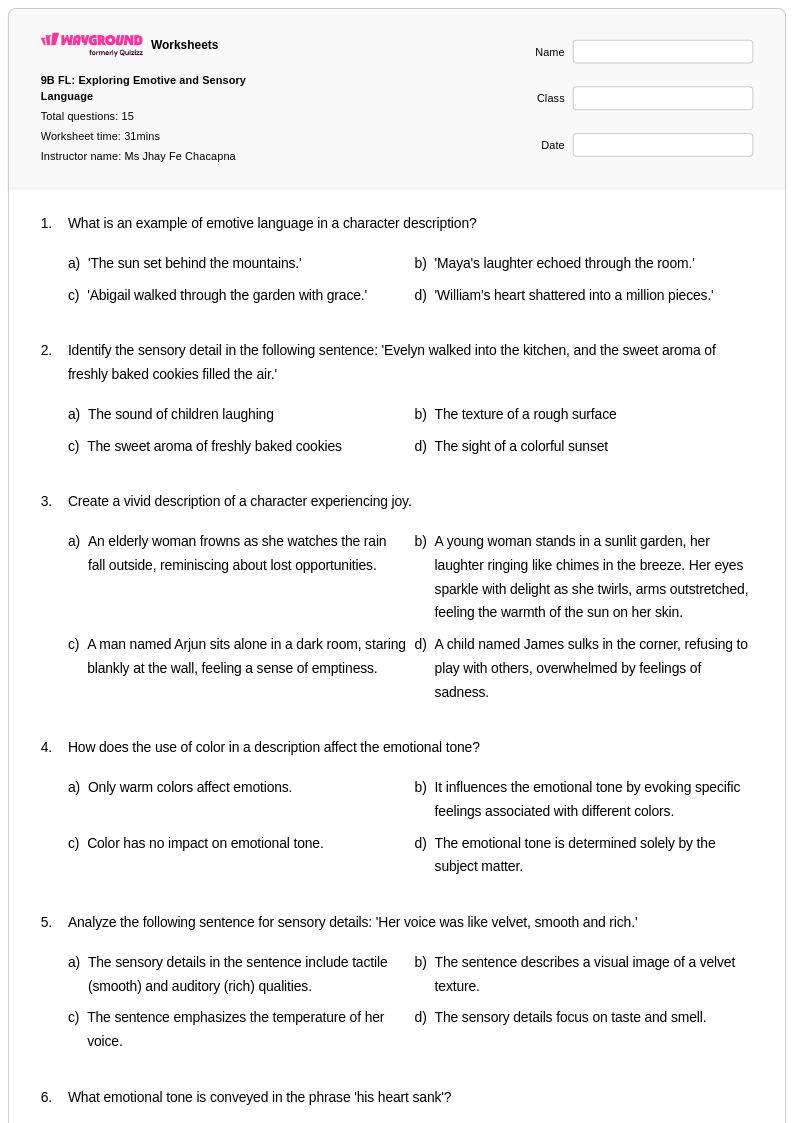
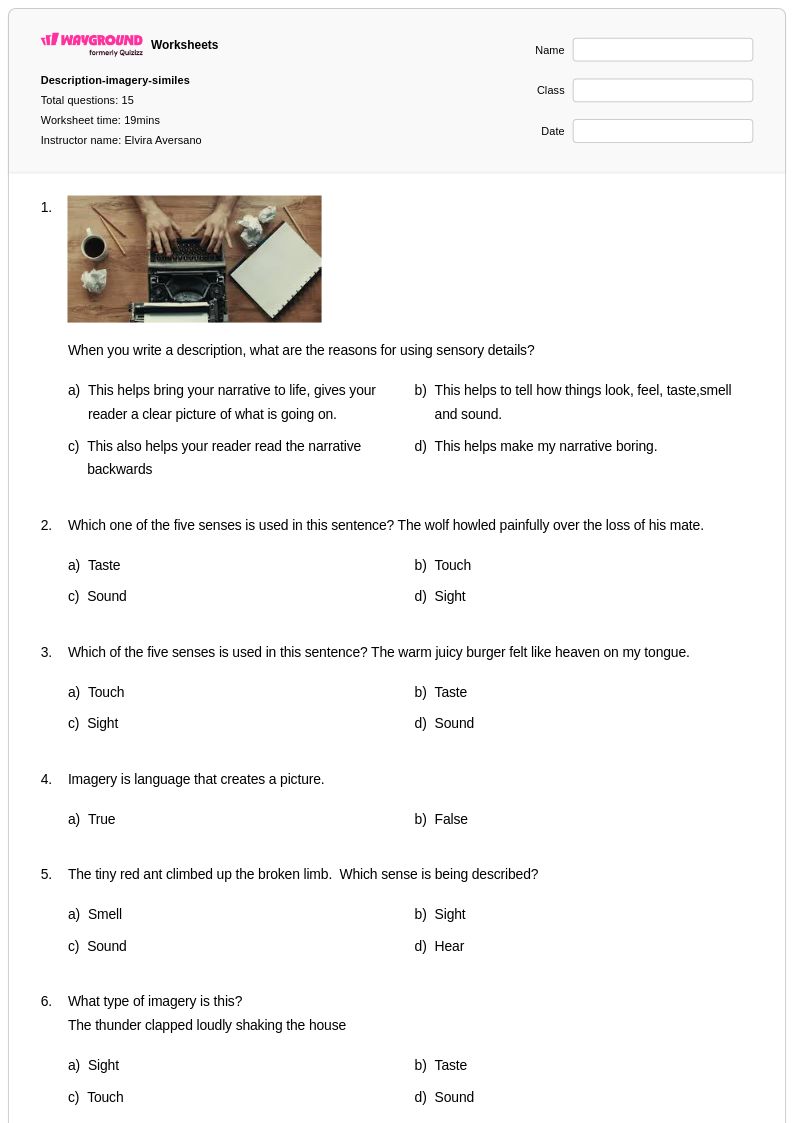
Using sensory details worksheets for Class 9 students available through Wayground (formerly Quizizz) provide comprehensive practice in incorporating vivid descriptive language that appeals to the five senses into written compositions. These carefully designed worksheets strengthen students' ability to craft immersive narratives and descriptive passages by teaching them to strategically employ sight, sound, smell, taste, and touch details that bring their writing to life. Each worksheet includes structured practice problems that guide ninth graders through the process of identifying weak descriptive passages and transforming them using specific sensory language, while accompanying answer keys allow for immediate feedback and self-assessment. The free printable resources progress systematically from basic sensory detail identification exercises to more complex writing tasks where students must seamlessly integrate multiple sensory elements to create compelling, vivid prose that engages readers on multiple levels.
Wayground (formerly Quizizz) supports educators with an extensive collection of millions of teacher-created resources focused on sensory detail instruction, featuring robust search and filtering capabilities that allow teachers to quickly locate materials aligned with specific writing standards and learning objectives. The platform's differentiation tools enable instructors to customize worksheets for varying skill levels within their Class 9 classrooms, ensuring that both struggling writers and advanced students receive appropriately challenging practice opportunities. Available in both printable pdf format and interactive digital versions, these resources seamlessly integrate into lesson planning for writing organization and structure units, supporting targeted remediation for students who struggle with descriptive language while providing enrichment activities for those ready to explore advanced literary techniques. The comprehensive nature of these worksheet collections allows teachers to scaffold sensory detail instruction throughout the academic year, building students' confidence and competence in creating richly detailed, engaging written work.
FAQs
How do I teach students to use sensory details in their writing?
Start by having students read a mentor text and identify which of the five senses — sight, sound, smell, taste, and touch — the author appeals to, then discuss why each detail strengthens the writing. From there, guide students through gradual release: model adding sensory language to a bland sentence, practice together as a class, then have students revise their own writing. Anchor instruction around purpose — students write more vividly when they understand that sensory details are a tool for engaging a specific audience, not decoration.
What exercises help students practice using sensory details?
Effective practice moves from recognition to application. Begin with exercises where students identify sensory language in published passages and label which sense each detail targets, then progress to sentence-level revision tasks where they replace vague language with specific sensory vocabulary. The most transferable practice involves students drafting original descriptive passages with a requirement to incorporate at least three distinct senses, which forces intentional word choice rather than accidental sensory writing.
What mistakes do students commonly make when using sensory details?
The most common error is over-relying on sight while neglecting smell, taste, and touch, which flattens descriptions even when students are trying to be vivid. Students also tend to stack sensory details without purpose, listing adjectives rather than integrating details into the flow of a sentence. A third frequent mistake is using vague sensory language — writing 'it smelled good' rather than 'the sharp scent of pine needles' — which signals that students understand the concept but haven't yet internalized the need for precision.
How do I differentiate sensory details instruction for struggling and advanced writers?
For struggling writers, reduce the task scope: give them a pre-written paragraph and ask them to add one sensory detail per sentence using a provided word bank. This isolates the skill without the cognitive load of drafting from scratch. For advanced students, introduce the idea of strategic sensory selection — choosing which senses to activate based on audience and purpose — and have them analyze how published authors make deliberate choices about which details to include and which to omit. On Wayground, differentiation tools allow teachers to customize worksheets for various skill levels, supporting both remediation and enrichment within the same assignment.
How can I use sensory details worksheets in my classroom?
Sensory details worksheets on Wayground are available as printable PDFs for traditional classroom use and in digital formats for technology-integrated environments, including the option to host them as a quiz directly on Wayground. Printable versions work well as warm-ups, independent practice, or writing center activities, while digital formats are suited for homework, self-paced review, or whole-class instruction on a shared screen. All worksheets include answer keys, which makes them practical for self-assessment and peer review as well as teacher-led correction.
How do sensory details fit into a broader descriptive writing unit?
Sensory details are most effective when taught as one tool within a larger descriptive writing toolkit, alongside techniques like show-don't-tell, specific nouns, and strong verbs. Position sensory language instruction after students understand basic descriptive writing conventions, so they can layer the new skill onto an existing foundation. A well-sequenced unit moves from identifying sensory details in mentor texts to revising existing writing, then to drafting original pieces where students balance multiple senses within a single composition to serve a clear writing purpose.