Free Printable Using Text Features Worksheets for Class 6
Enhance Class 6 students' reading skills with Wayground's free printable worksheets focused on using text features, complete with practice problems and answer keys to develop comprehension strategies.
Explore printable Using Text Features worksheets for Class 6
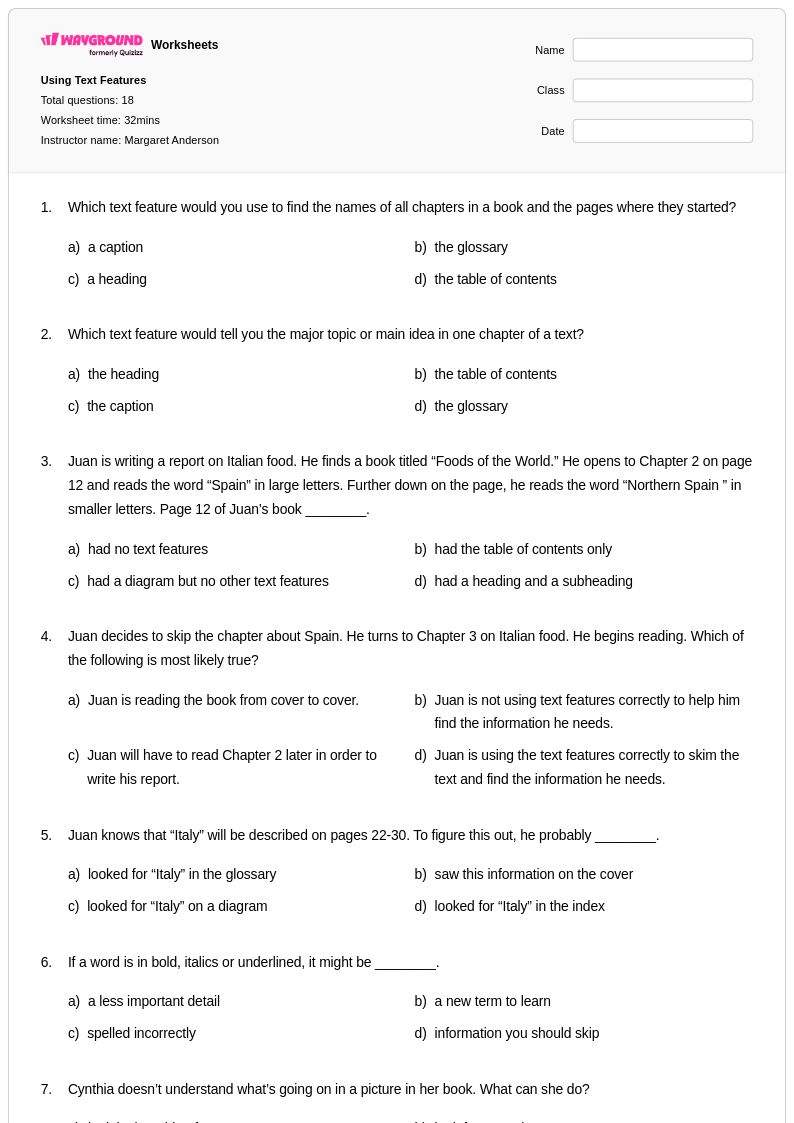
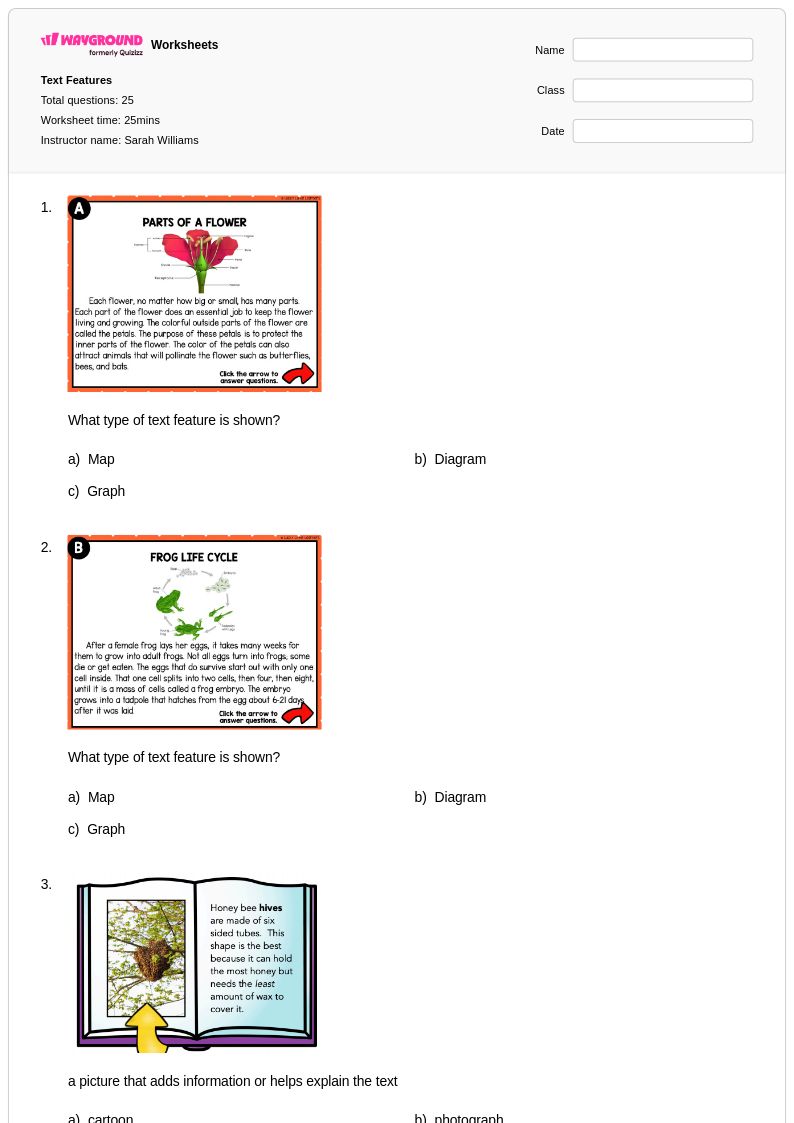
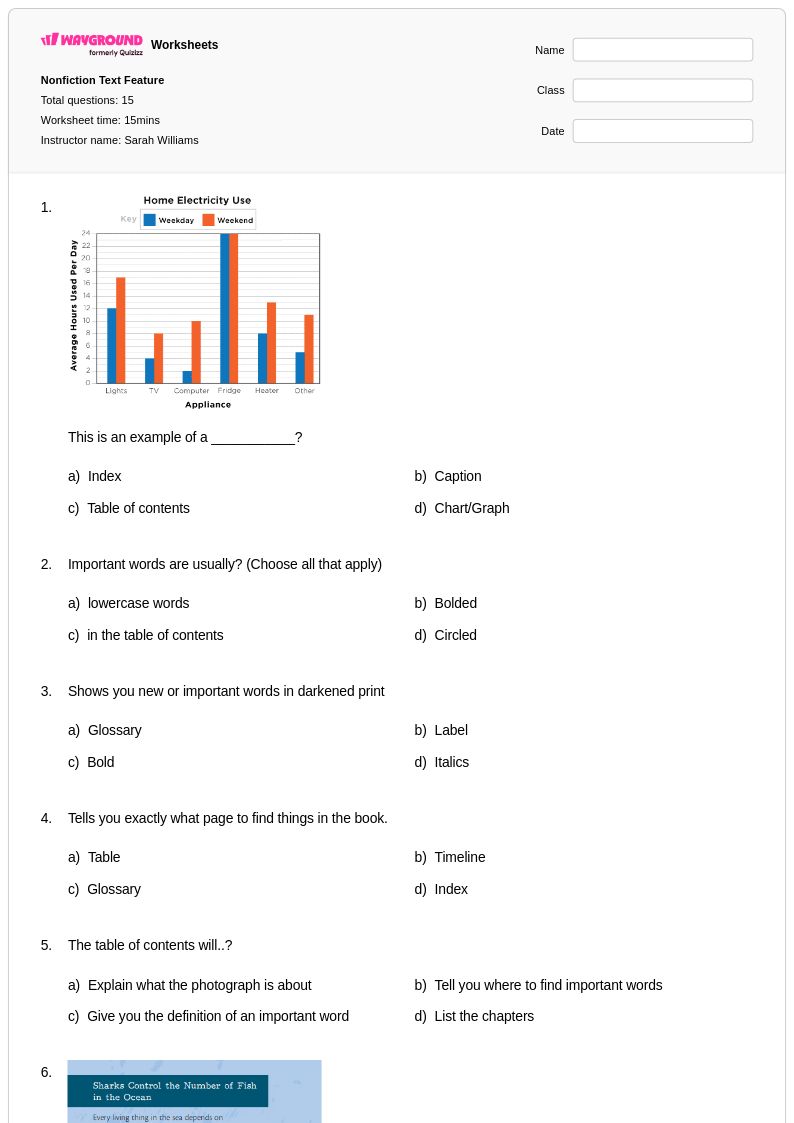
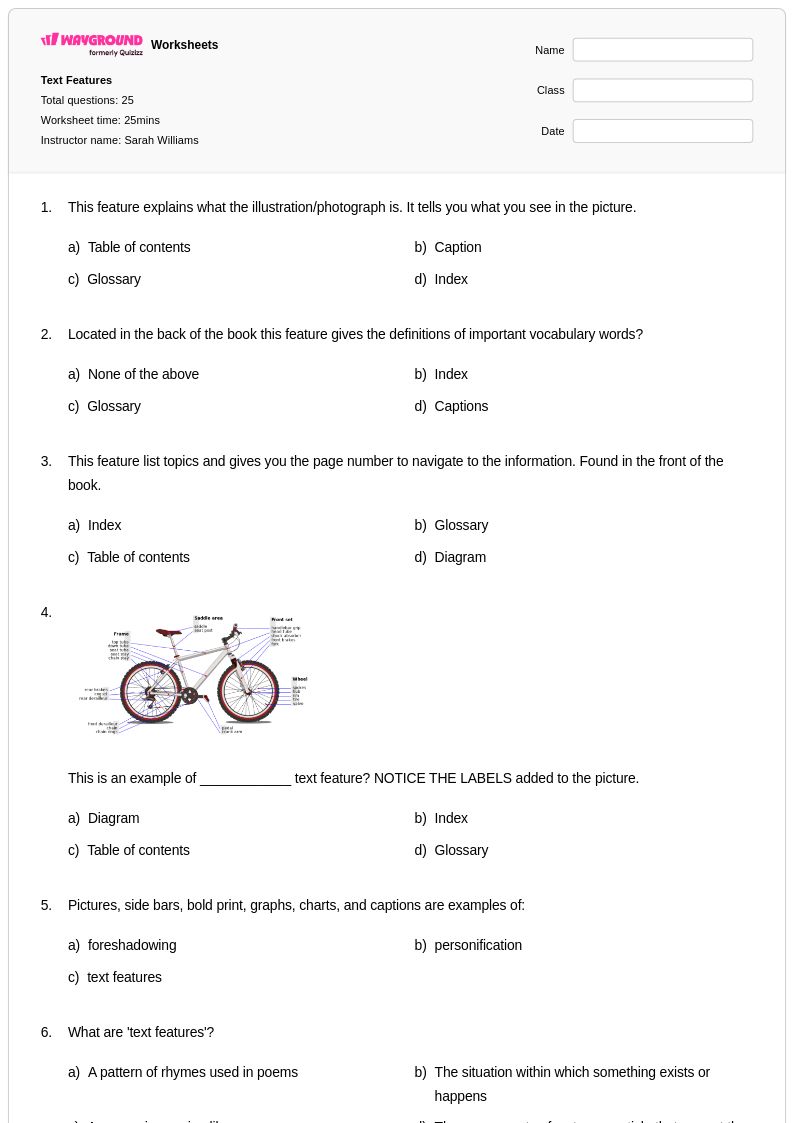
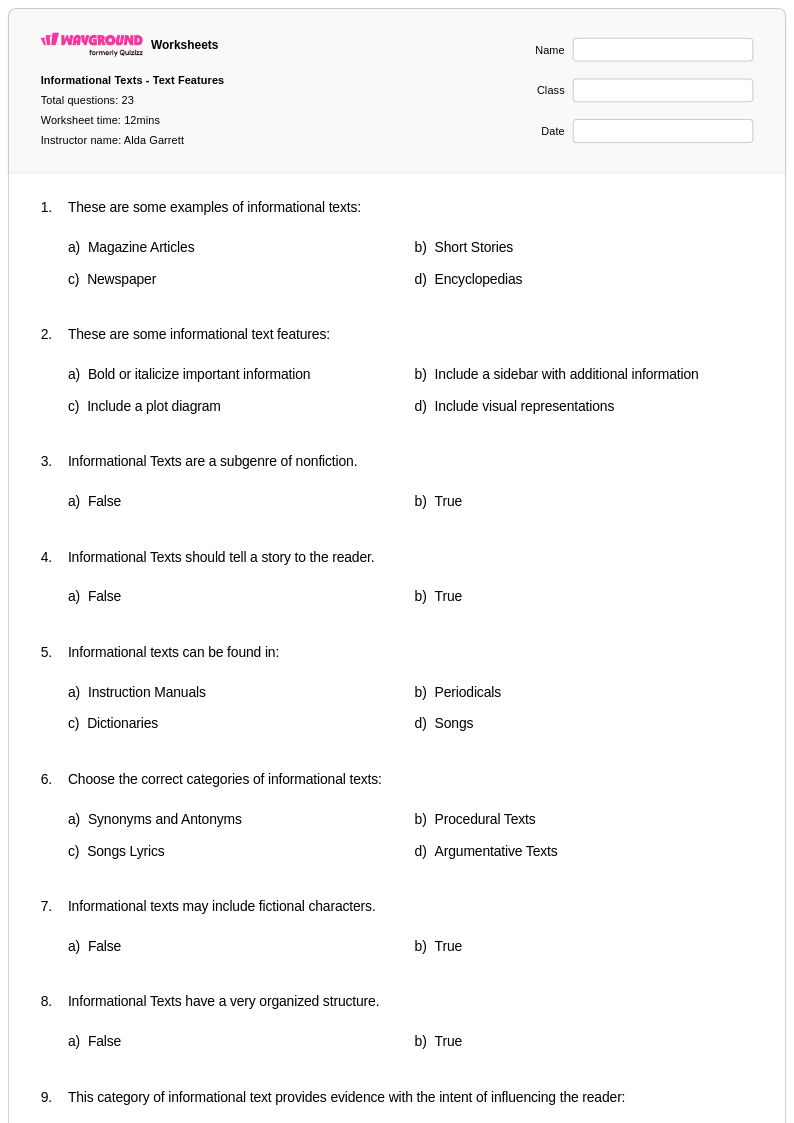
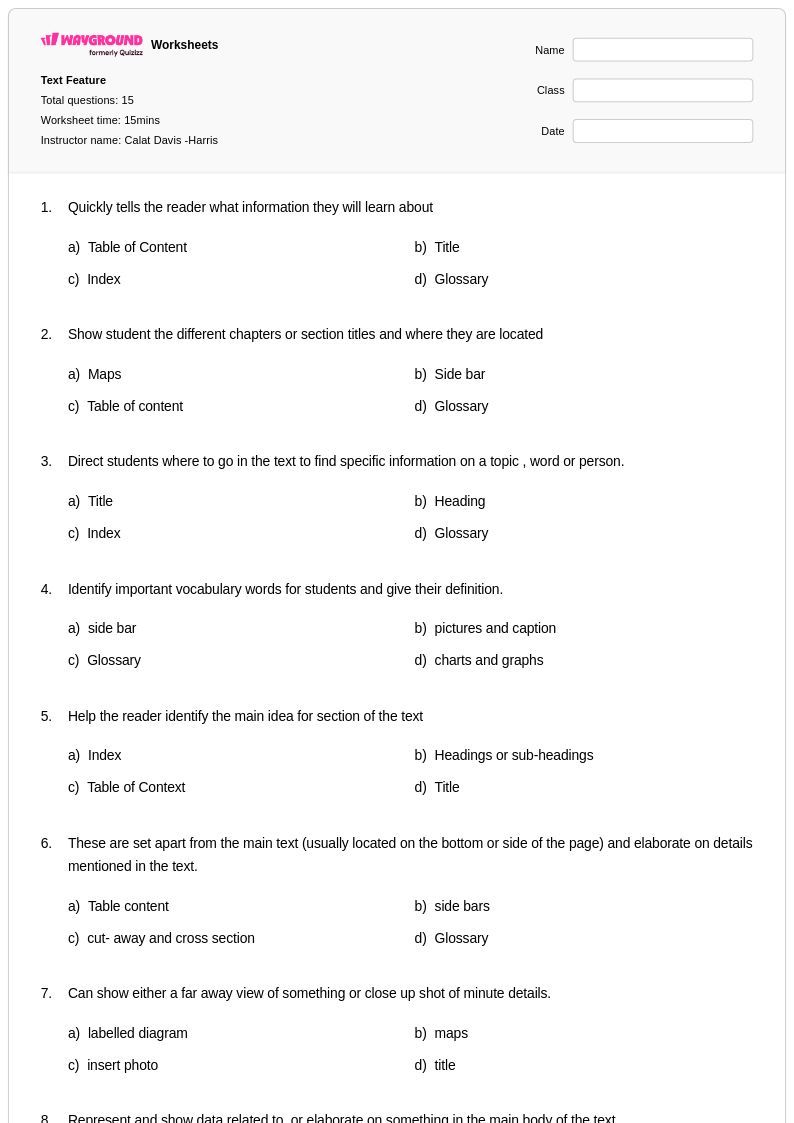
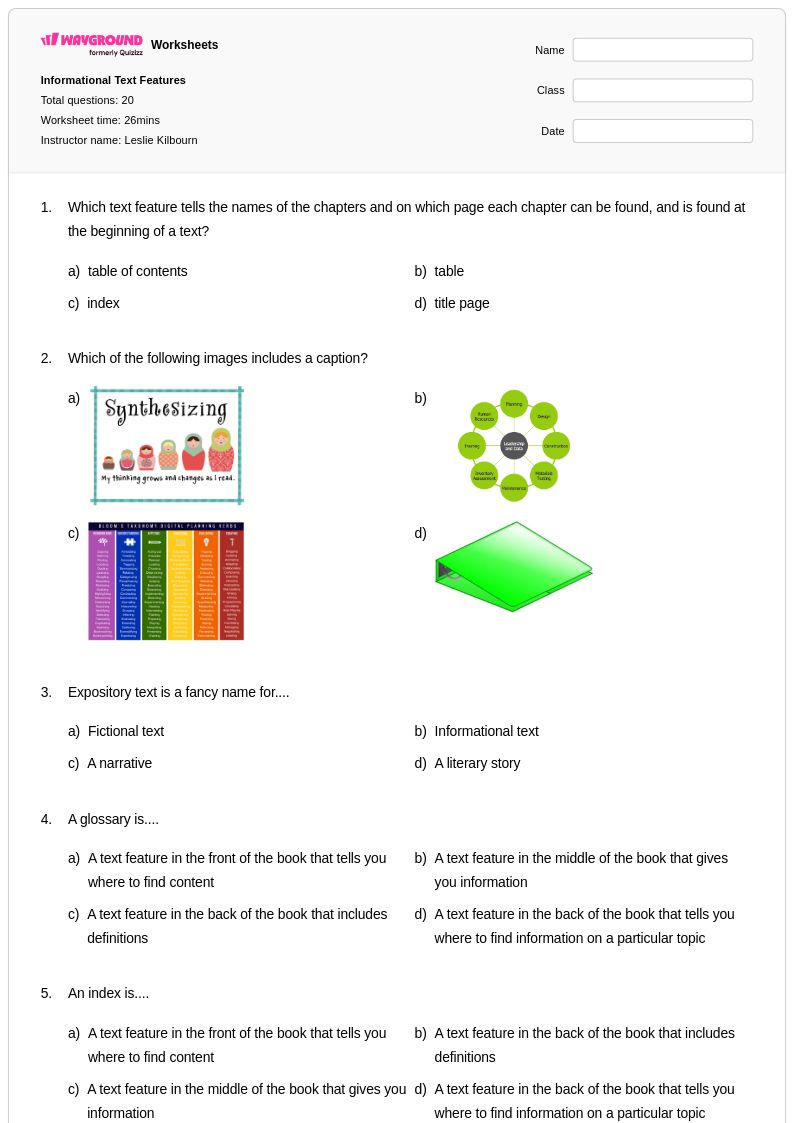
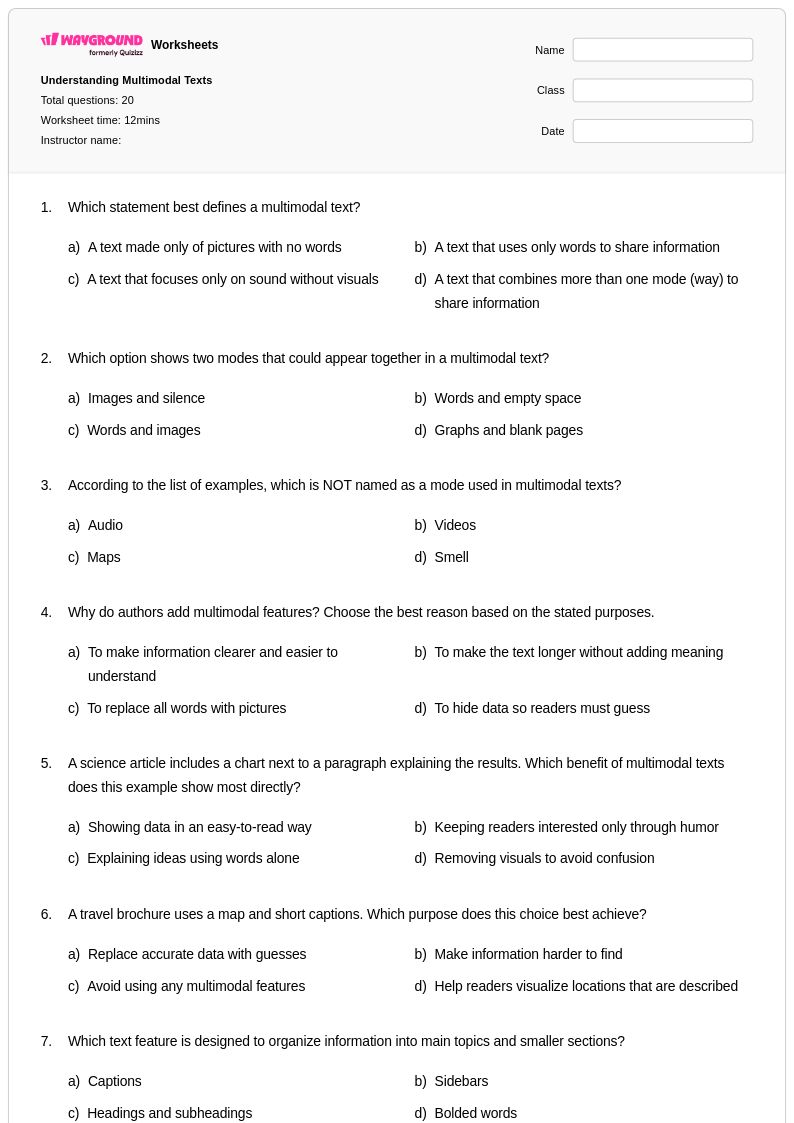
Using text features for Class 6 reading comprehension represents a critical skill that bridges basic reading abilities with advanced analytical thinking. Wayground's comprehensive collection of worksheets focuses specifically on helping sixth-grade students identify, interpret, and utilize various text features such as headings, subheadings, captions, diagrams, charts, glossaries, and indexes to enhance their understanding of complex texts. These carefully designed practice problems guide students through systematic exploration of how authors organize information and present key concepts through visual and structural elements. Each worksheet includes detailed answer keys that allow students to verify their understanding while building confidence in navigating informational texts, and the free printable pdf format ensures easy access for both classroom instruction and independent study sessions.
Wayground's extensive library of teacher-created resources provides educators with millions of high-quality worksheets specifically aligned to reading comprehension standards, offering robust search and filtering capabilities that make finding the perfect text features materials effortless. Teachers can easily differentiate instruction by selecting from various complexity levels and text types, while the platform's flexible customization tools allow for modifications that meet diverse learning needs within the Class 6 classroom. The dual availability of printable and digital formats, including downloadable pdf versions, supports seamless integration into any teaching environment, whether for whole-class instruction, small group work, or individual remediation and enrichment activities. This comprehensive approach ensures that educators have the resources needed for effective lesson planning while providing students with consistent, standards-based practice in recognizing and utilizing text features across multiple subject areas and text types.
FAQs
How do I teach text features to elementary students?
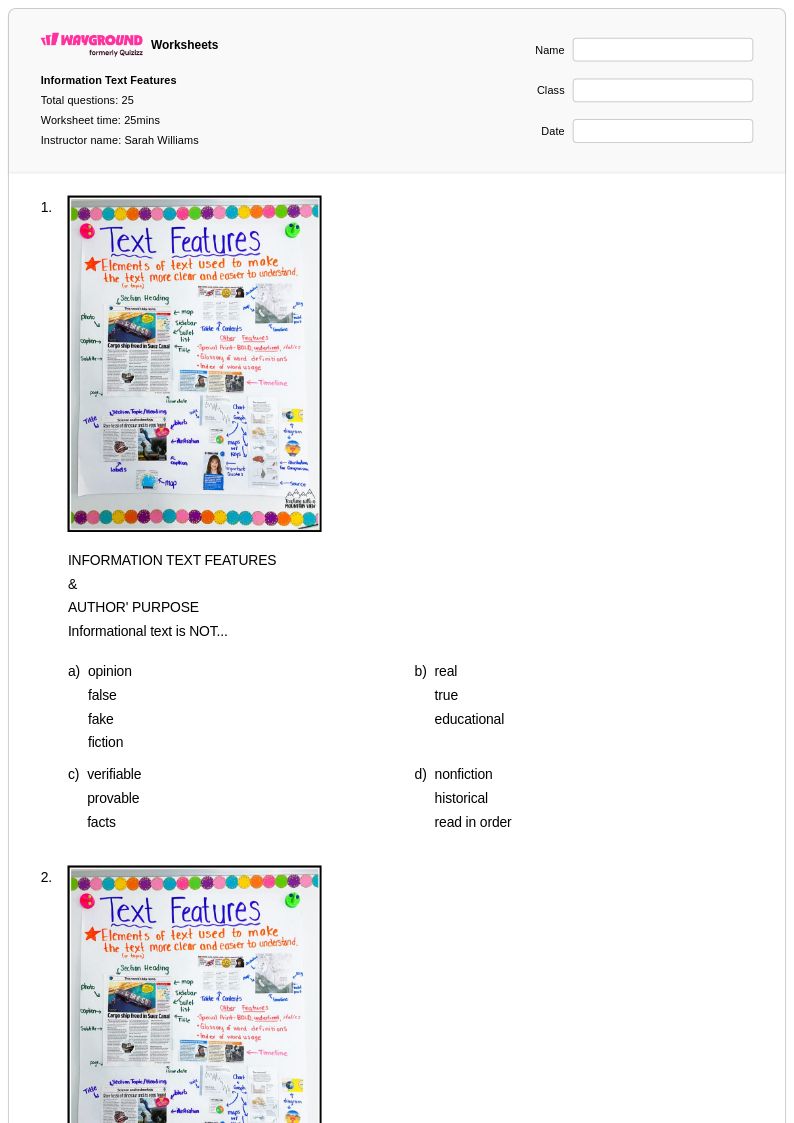
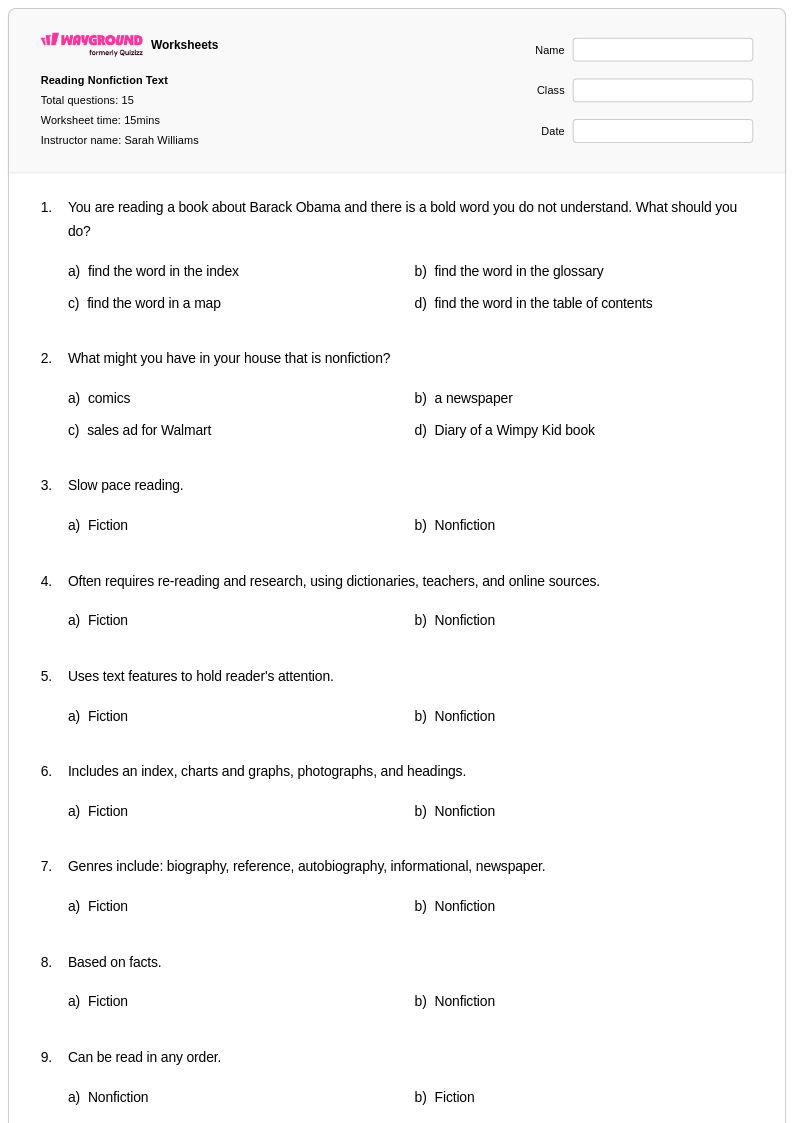
Start by distinguishing between fiction and nonfiction text features, since students often encounter both but need different frameworks for each. Use mentor texts with clear visual elements like charts, captions, and headings, and have students physically locate and label each feature before discussing its purpose. Anchor charts that categorize text features by type (visual, organizational, reference) help students build a mental model they can apply independently across subjects.
What are the most important text features students should be able to identify?
Students should be able to identify and explain the purpose of headings, subheadings, captions, graphs, charts, tables, glossaries, indexes, and graphic organizers. Beyond identification, the goal is for students to understand why authors use these features — how they organize information, signal importance, and support comprehension. Nonfiction texts in science and social studies are especially rich sources for practicing this skill in context.
What exercises help students practice identifying and using text features?
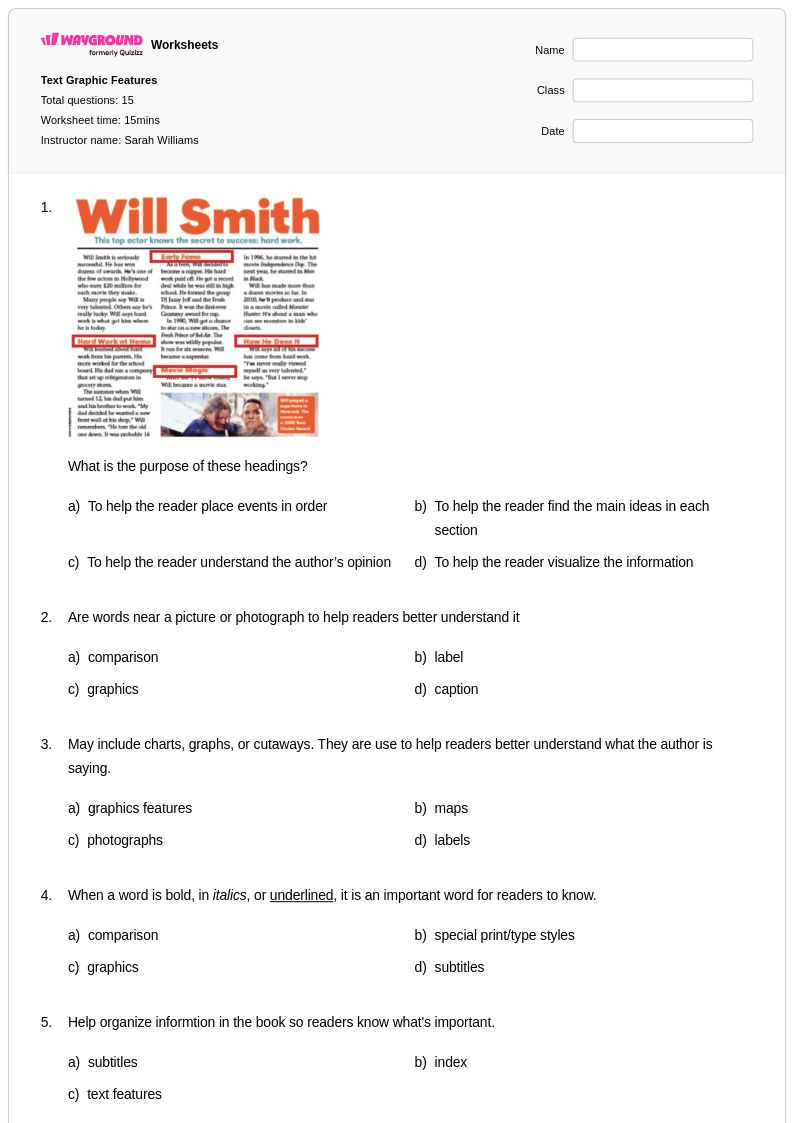
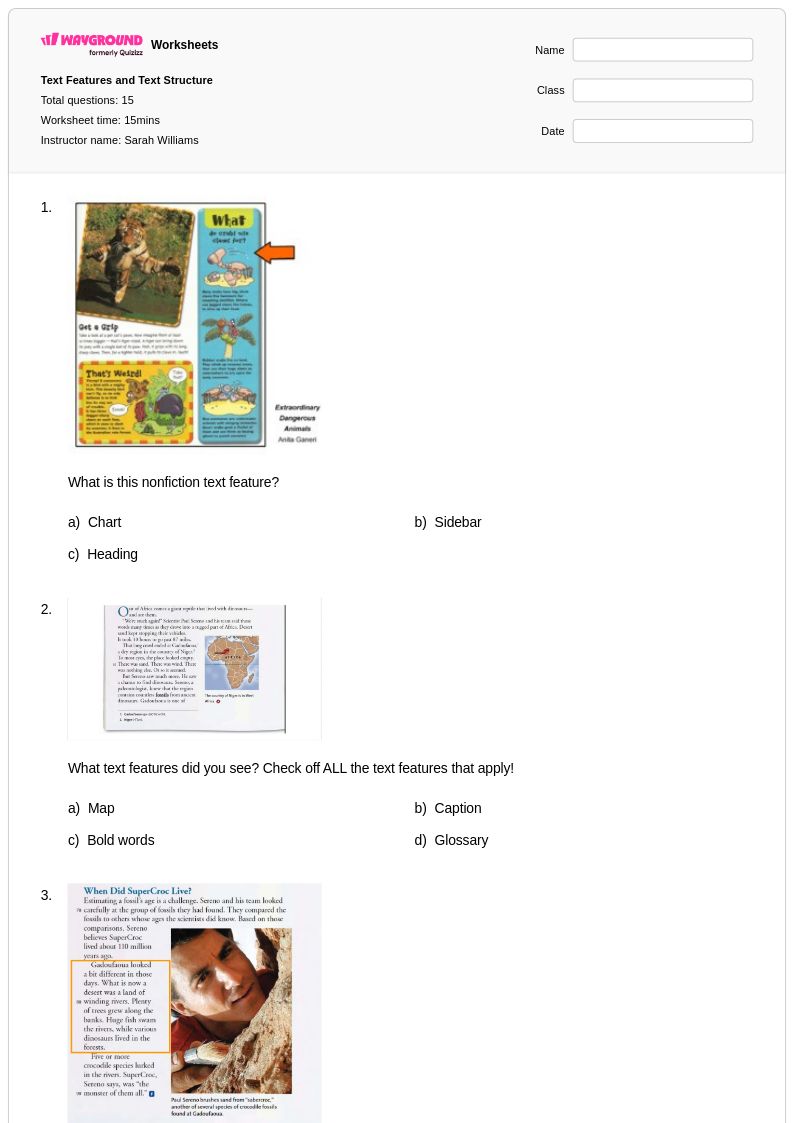
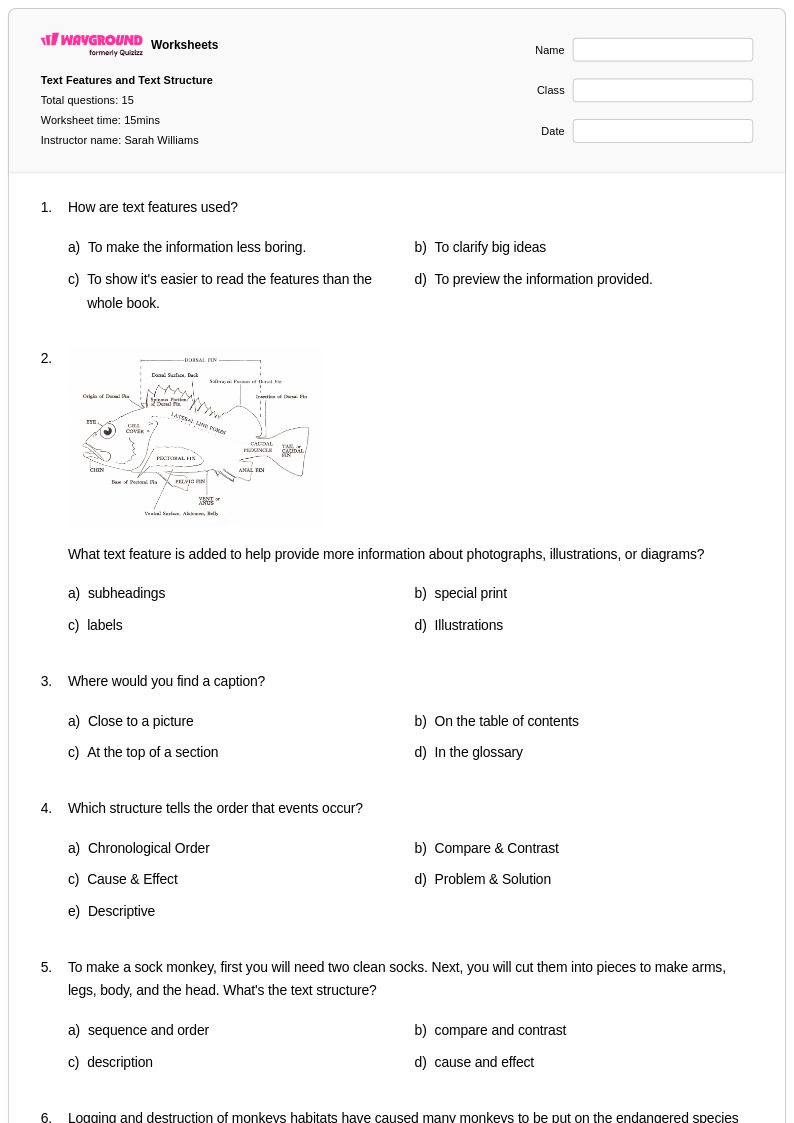
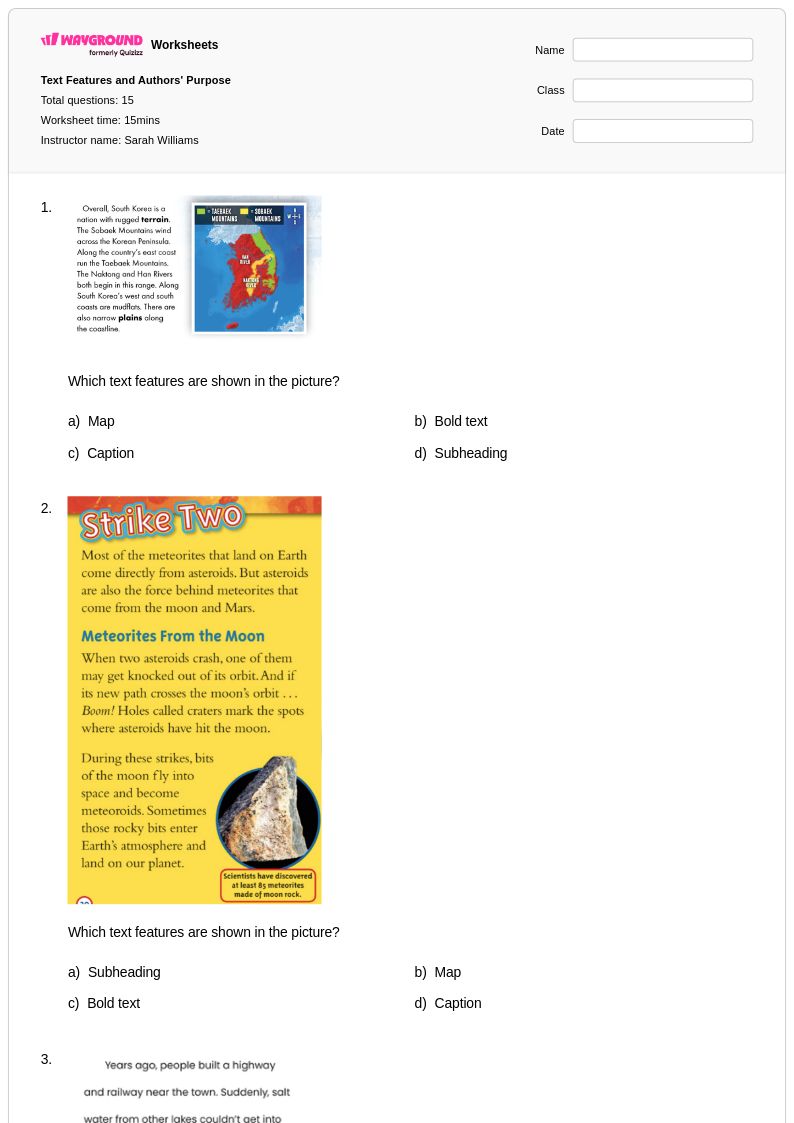
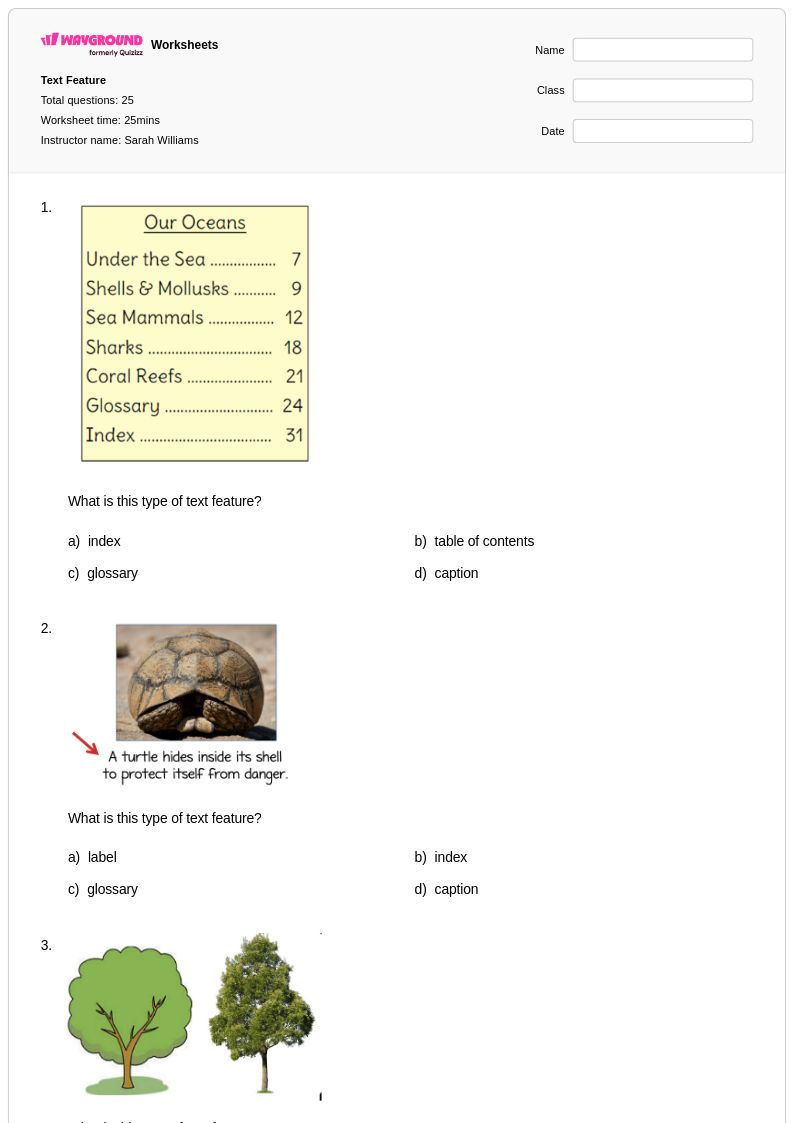
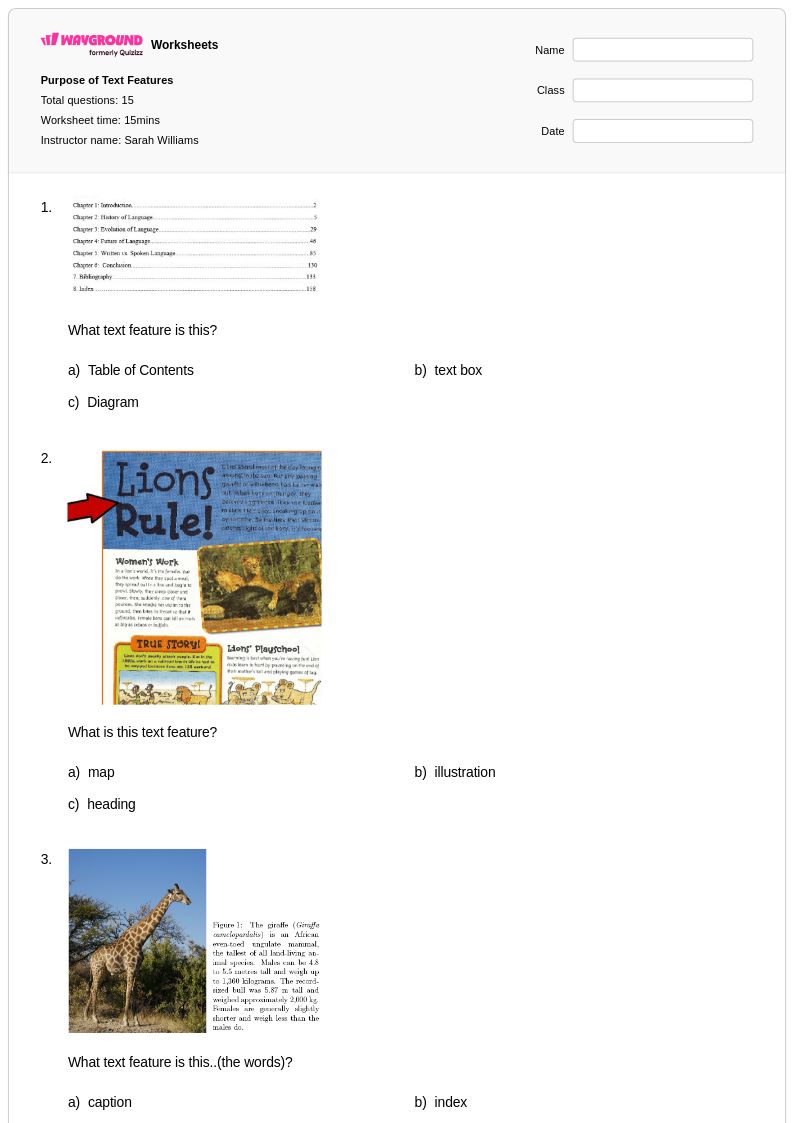
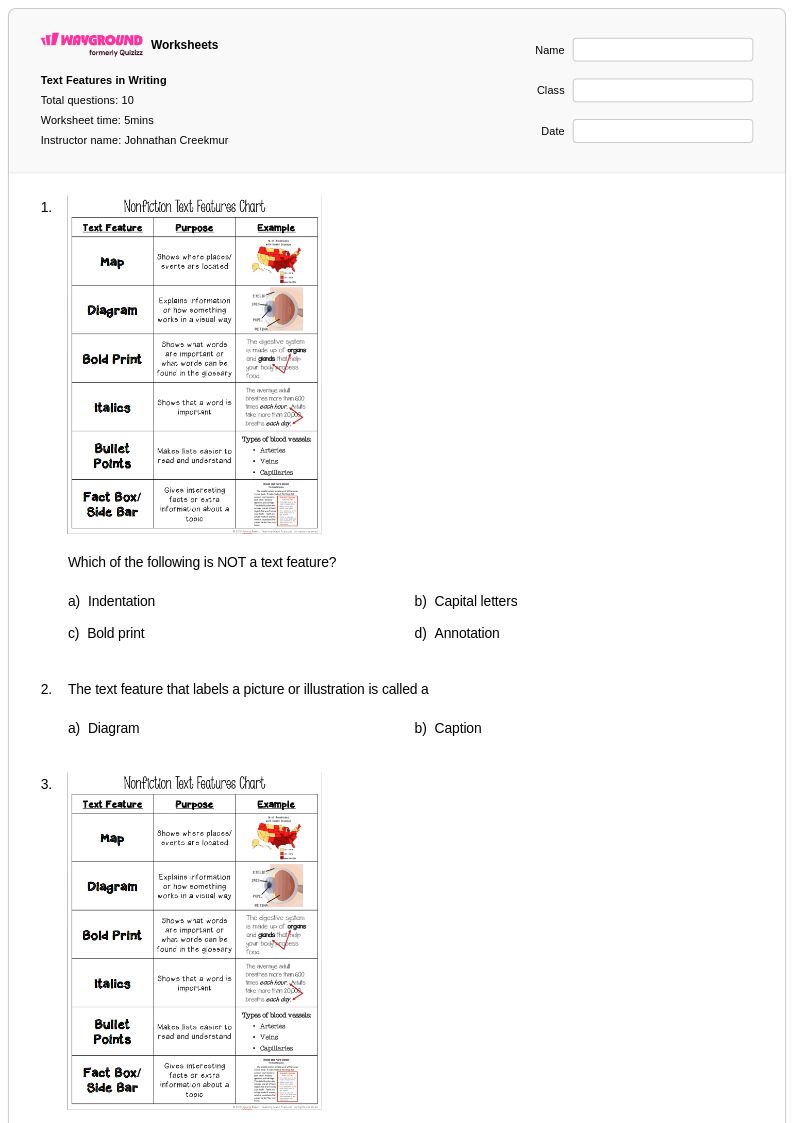
Effective practice includes labeling activities where students identify text features in a sample passage, purpose-matching tasks where students explain why a specific feature is used, and comprehension questions that require students to extract information directly from a chart, caption, or heading rather than from body text. Worksheets that pair a nonfiction excerpt with targeted questions about its structural elements are particularly effective for building this skill systematically.
What mistakes do students commonly make when working with text features?
The most common misconception is that text features are optional or decorative rather than meaningful sources of information. Students often skip captions, charts, and sidebars entirely when reading, missing key content that the body text does not repeat. Another frequent error is confusing the function of different features — for example, treating a glossary like an index or not understanding that a heading signals the main idea of the section that follows.
How can I differentiate text features instruction for struggling readers?
For struggling readers, reduce the number of text features introduced at once and build from the most visually obvious (headings, captions) toward more abstract ones (indexes, graphic organizers). Wayground supports individual accommodations such as Read Aloud, which can audio-read questions and content for students who need it, and reduced answer choices to lower cognitive load during practice. Extended time can also be configured per student, allowing struggling readers to work at a pace that doesn't penalize processing differences.
How do I use Wayground's text features worksheets in my classroom?
Wayground's text features worksheets are available as free printable PDFs for traditional classroom use and in digital formats for technology-integrated environments, including the option to host them as a quiz directly on Wayground. Teachers can use the search and filtering tools to find worksheets aligned to specific standards or subtopics such as fiction versus nonfiction text features. Each worksheet includes a complete answer key, making it straightforward to use for guided practice, independent work, or targeted remediation.