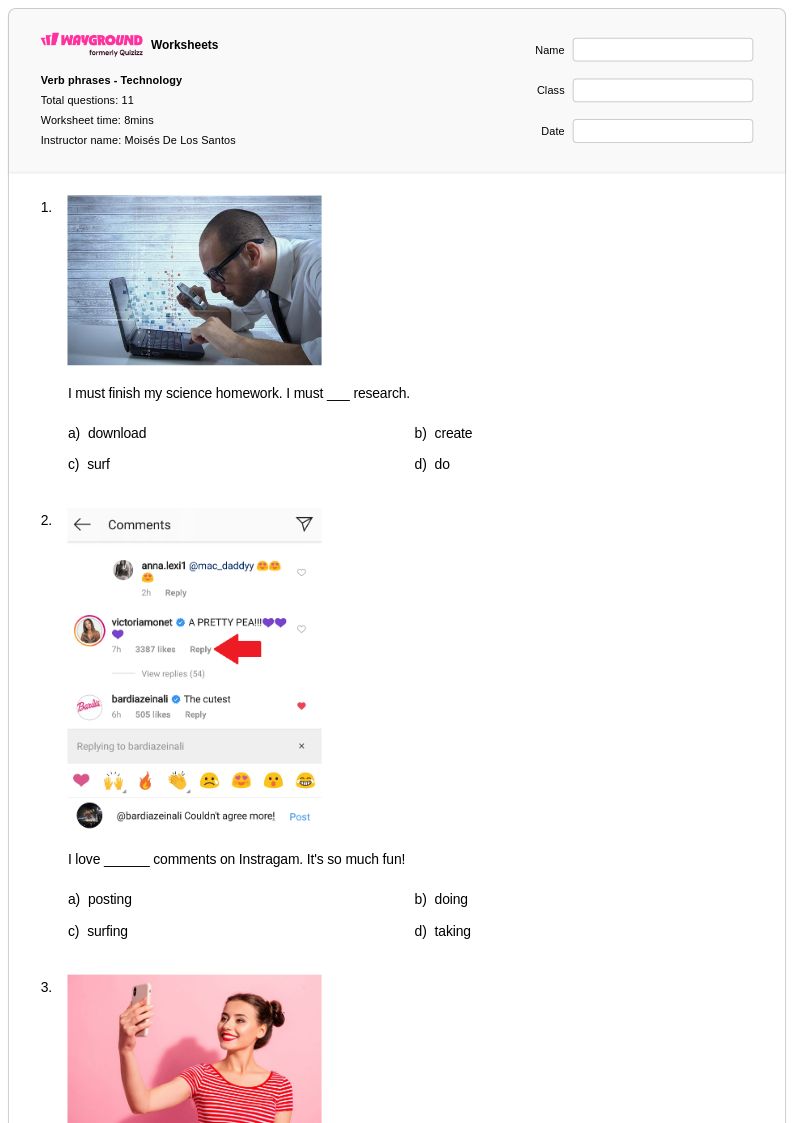
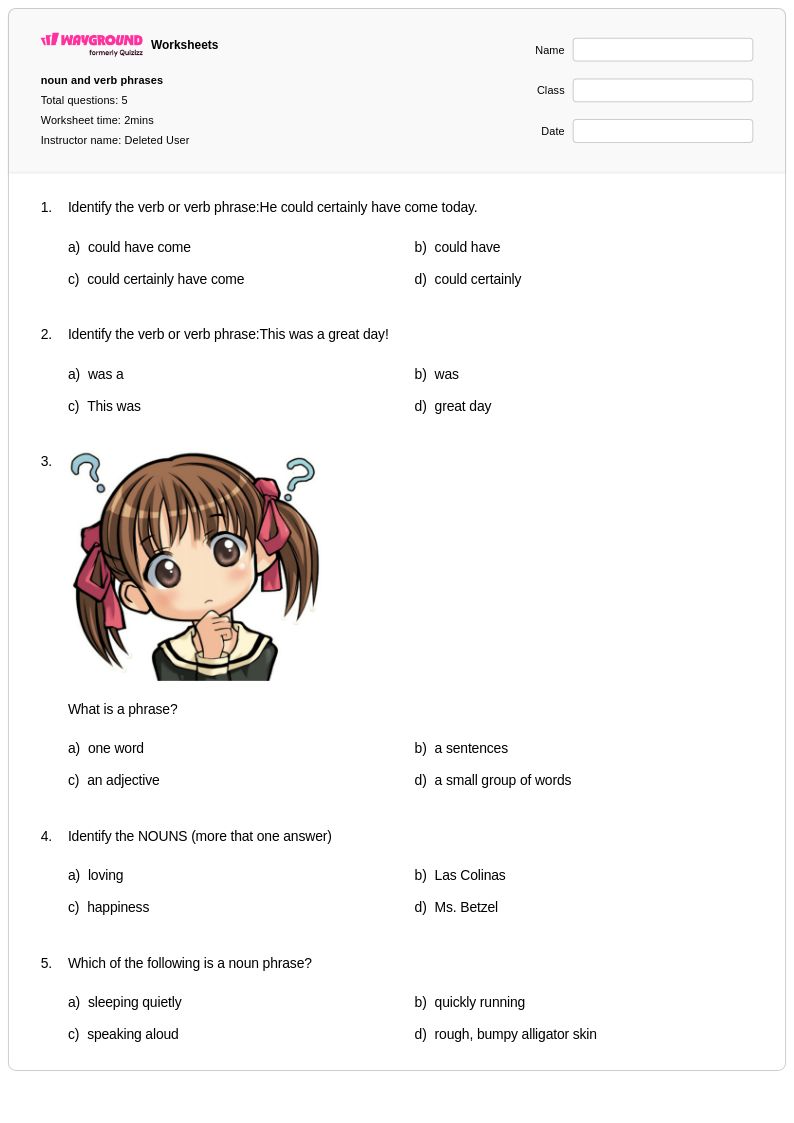
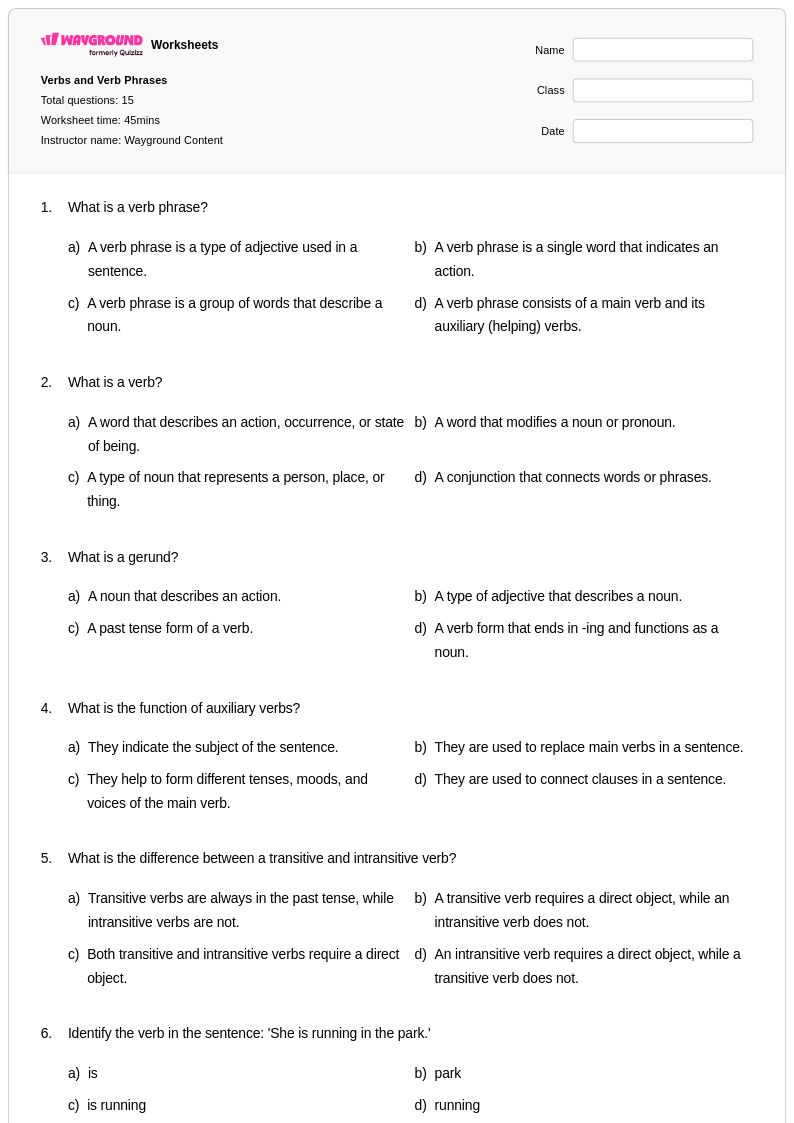
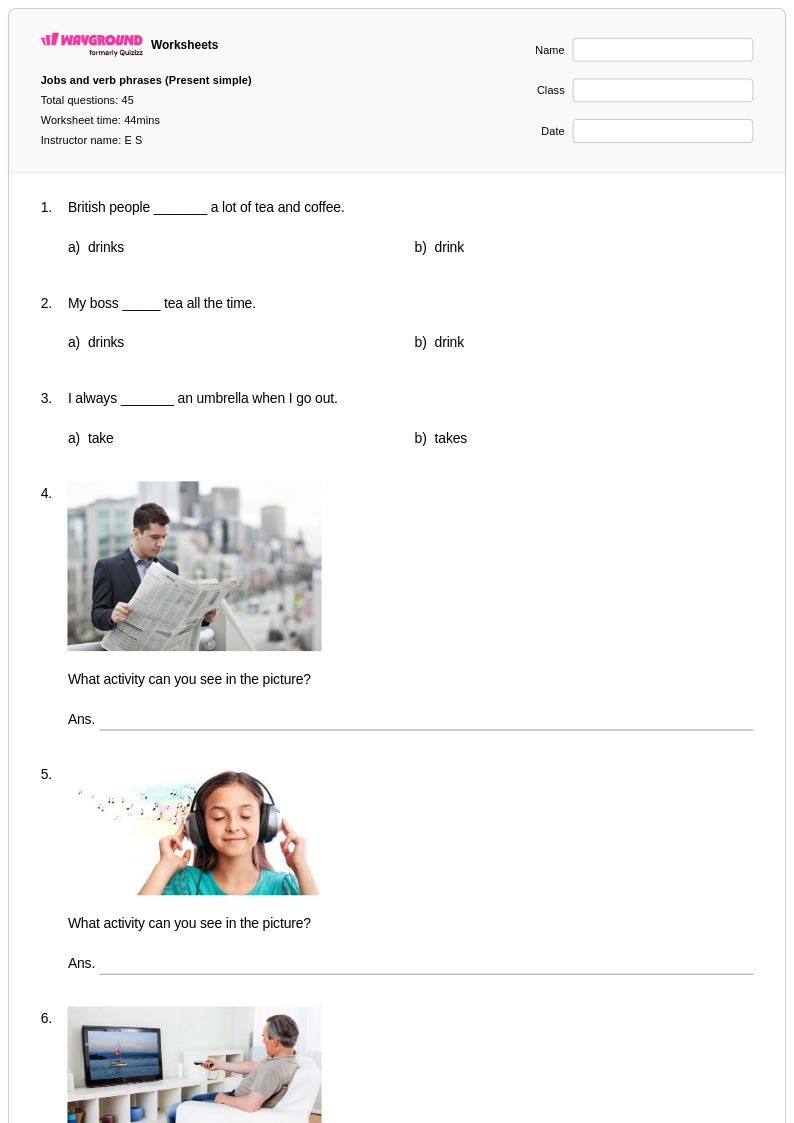
Free Printable Verb Phrases Worksheets for Class 10
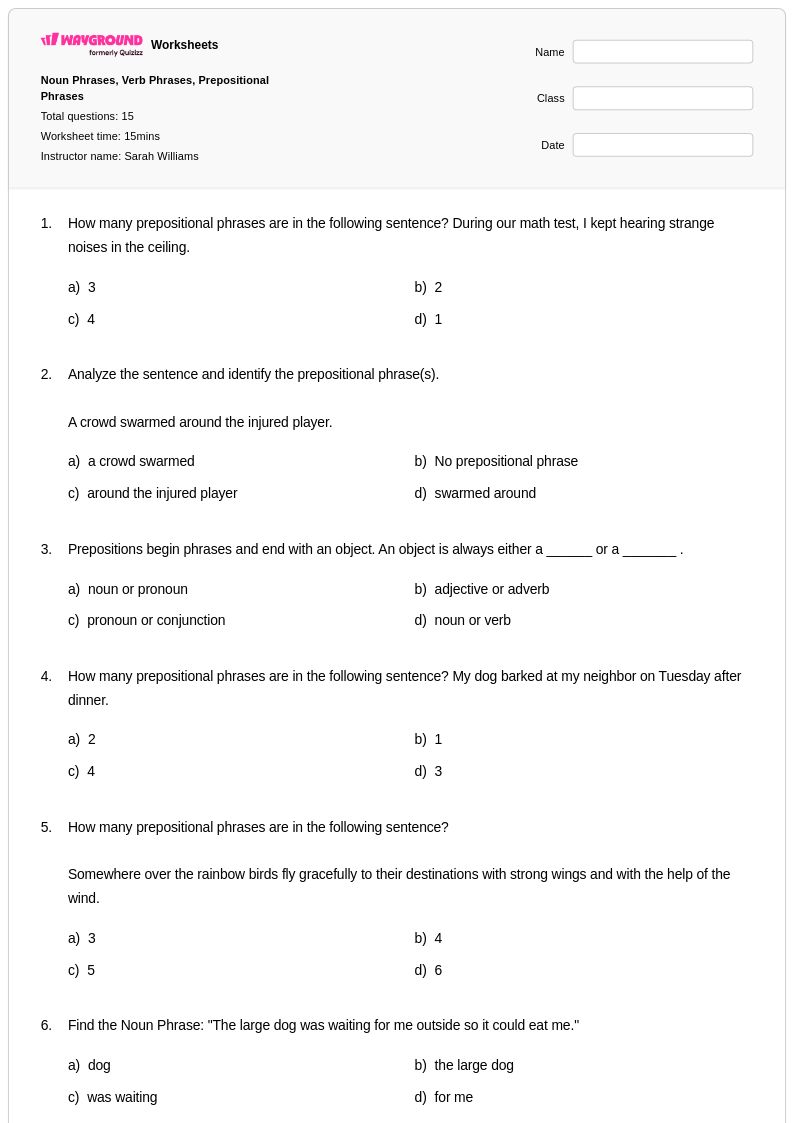
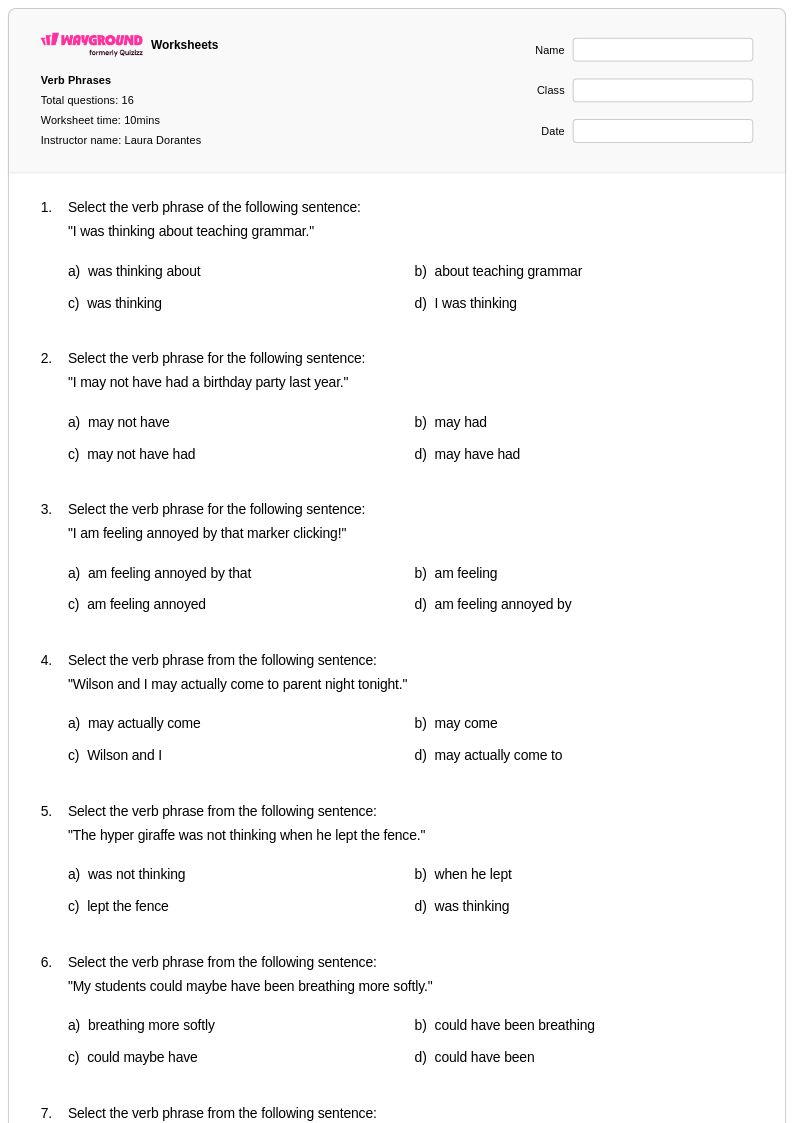
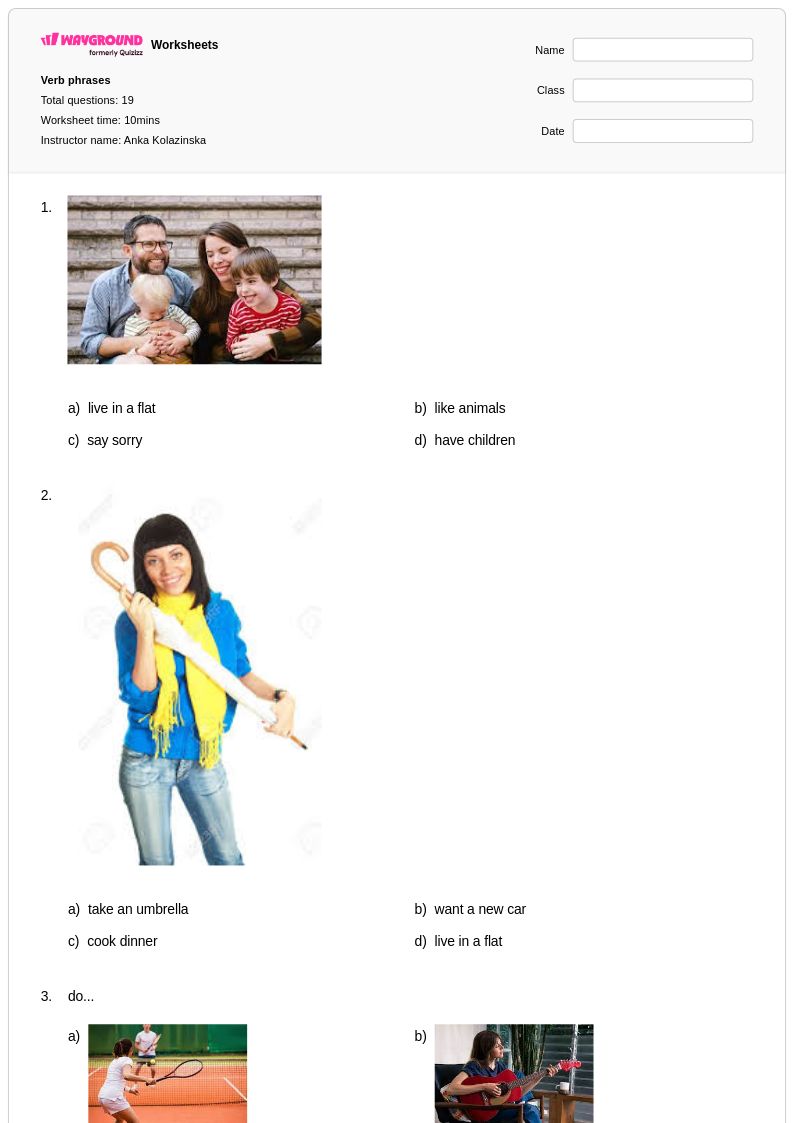
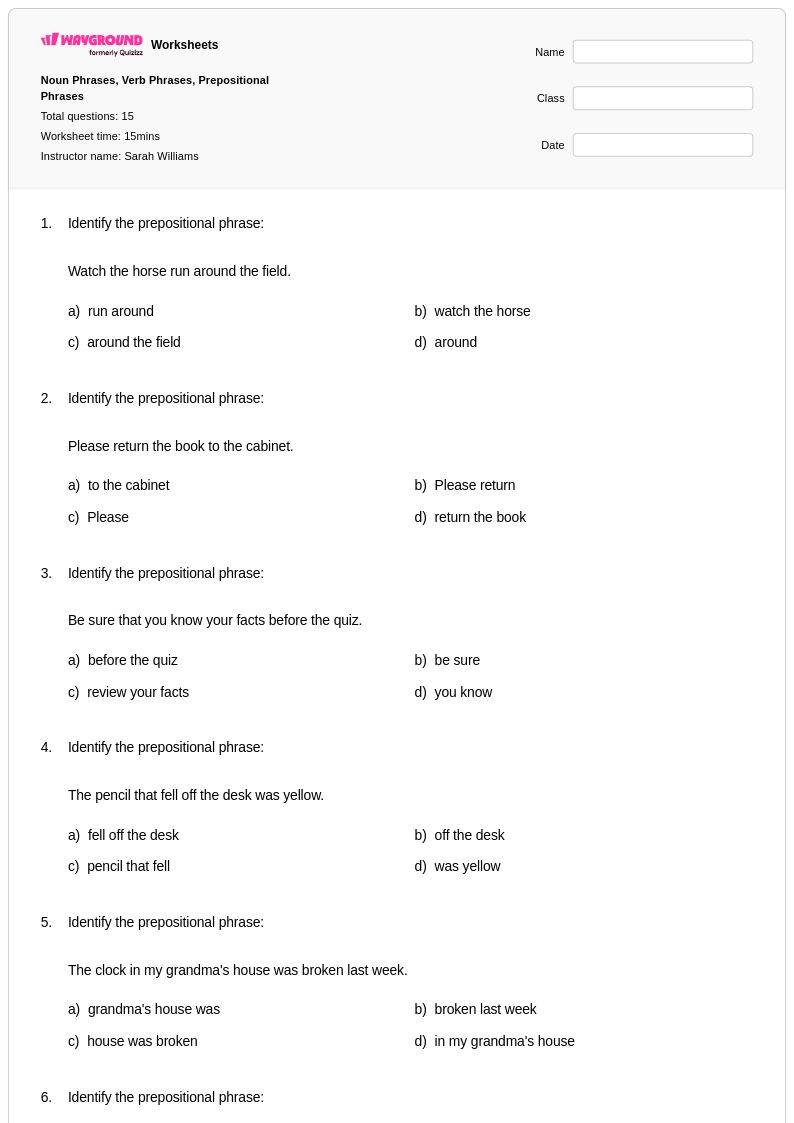
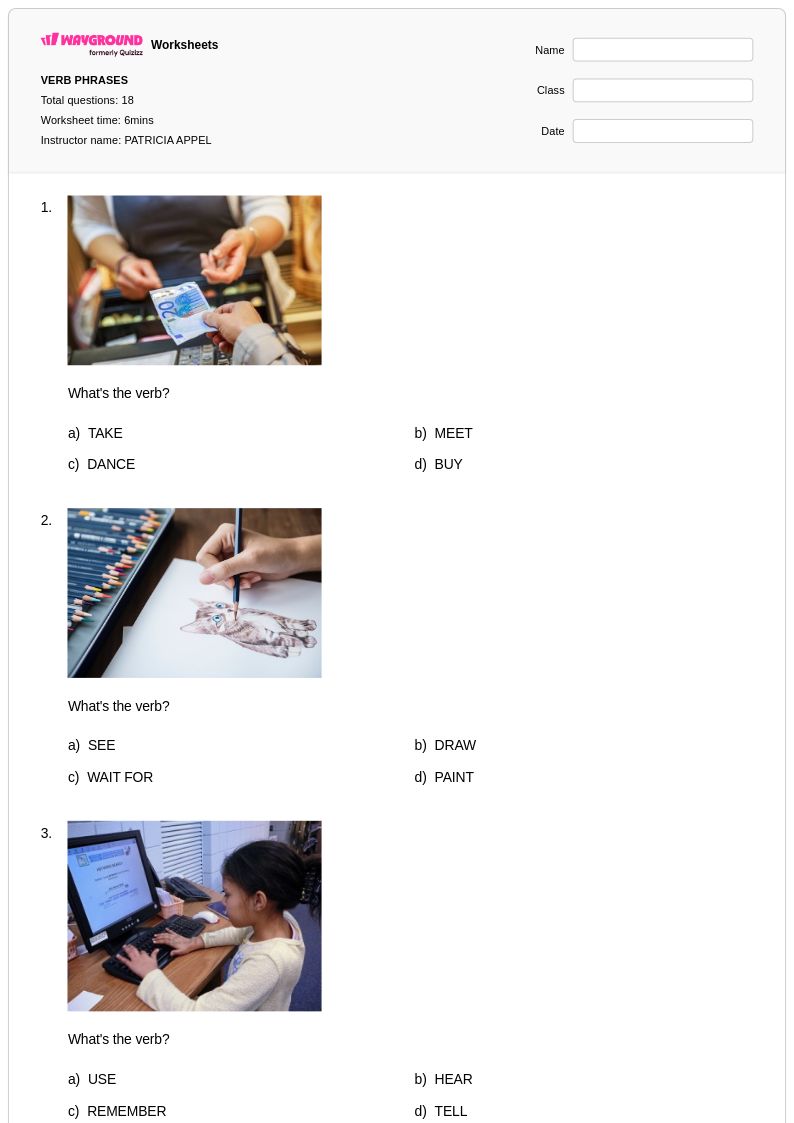
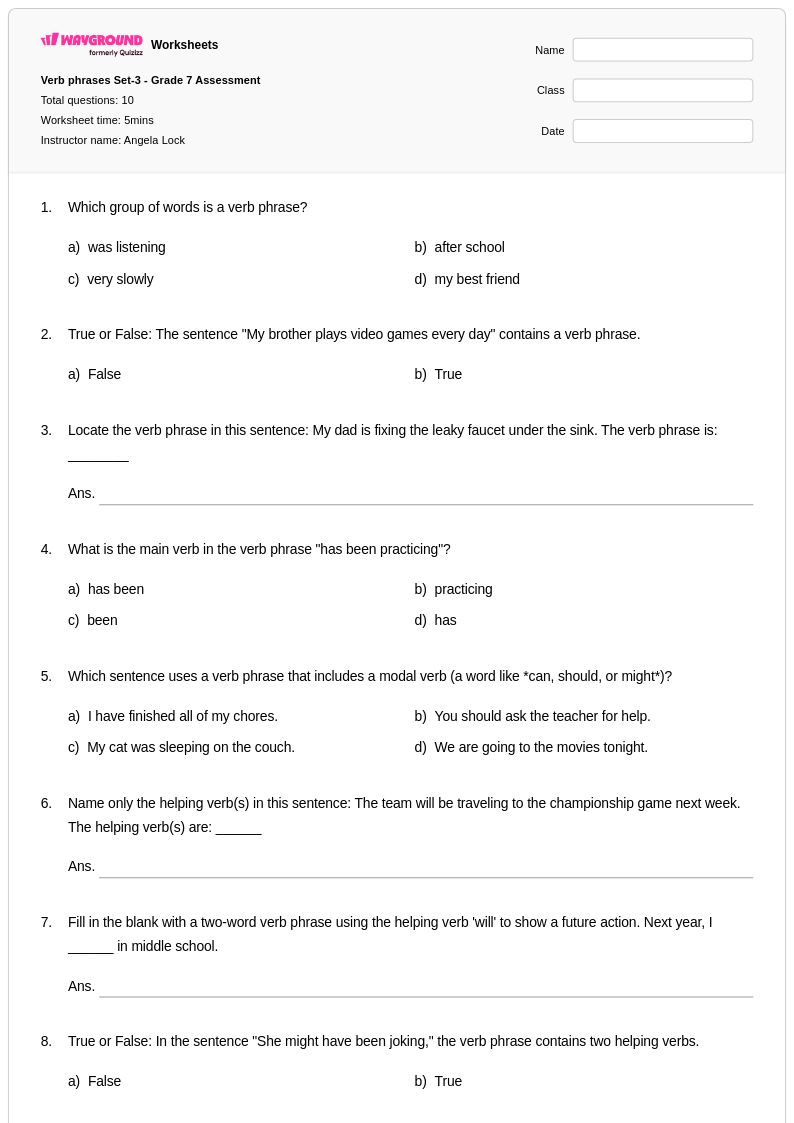
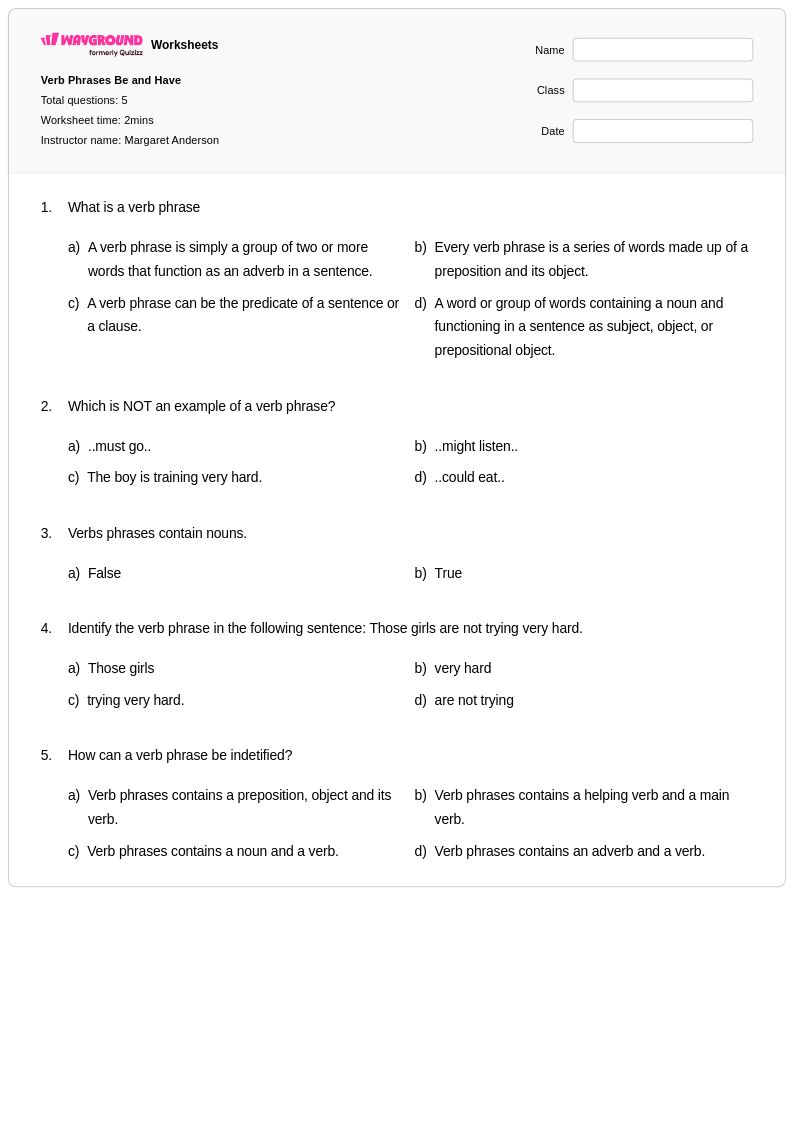
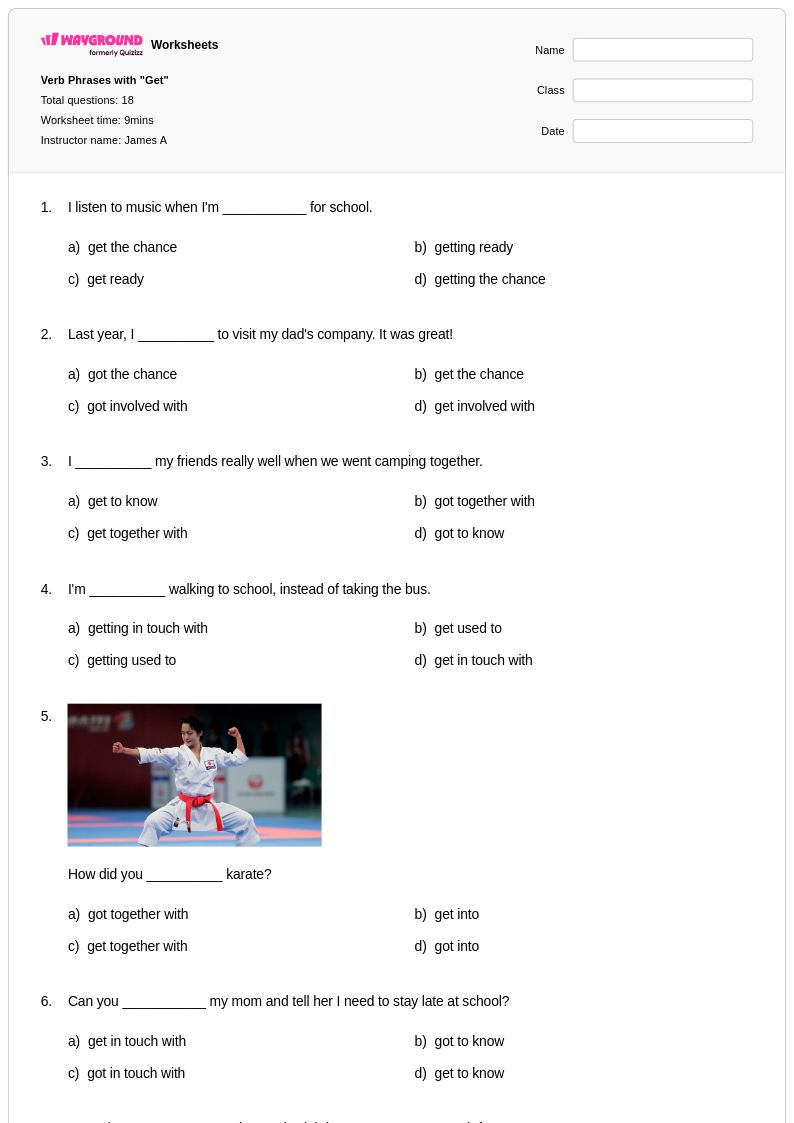
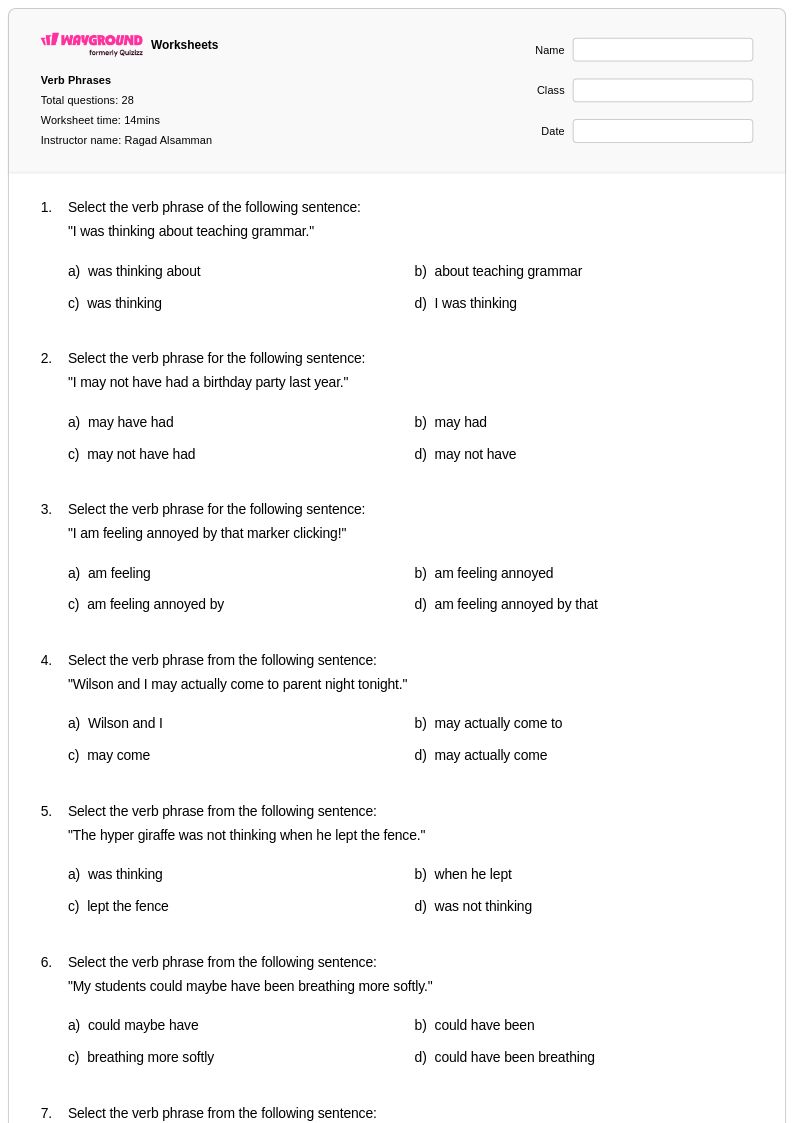
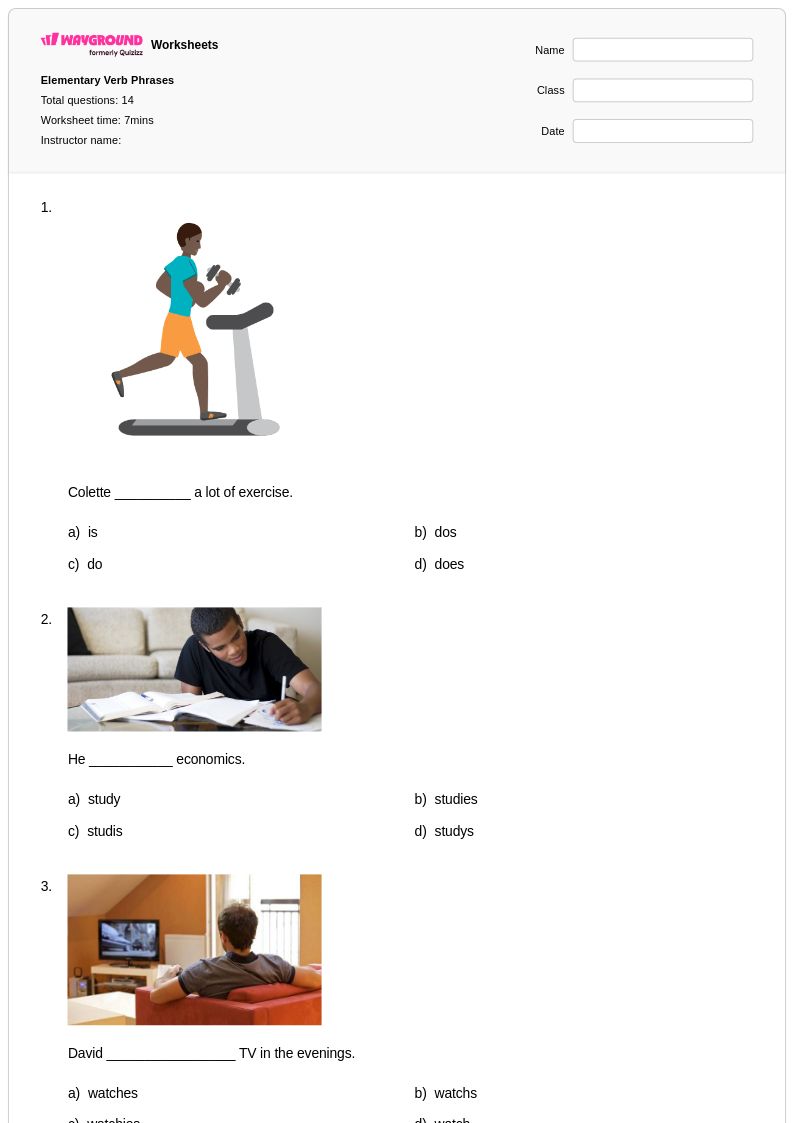
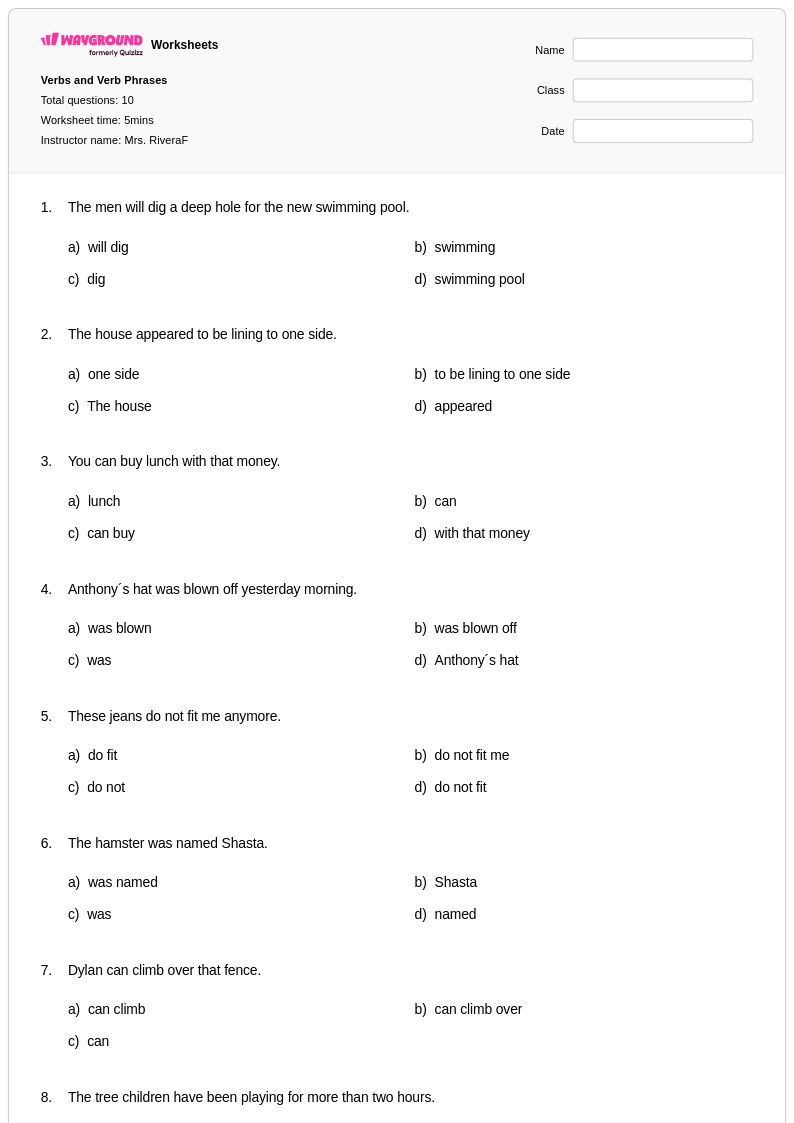
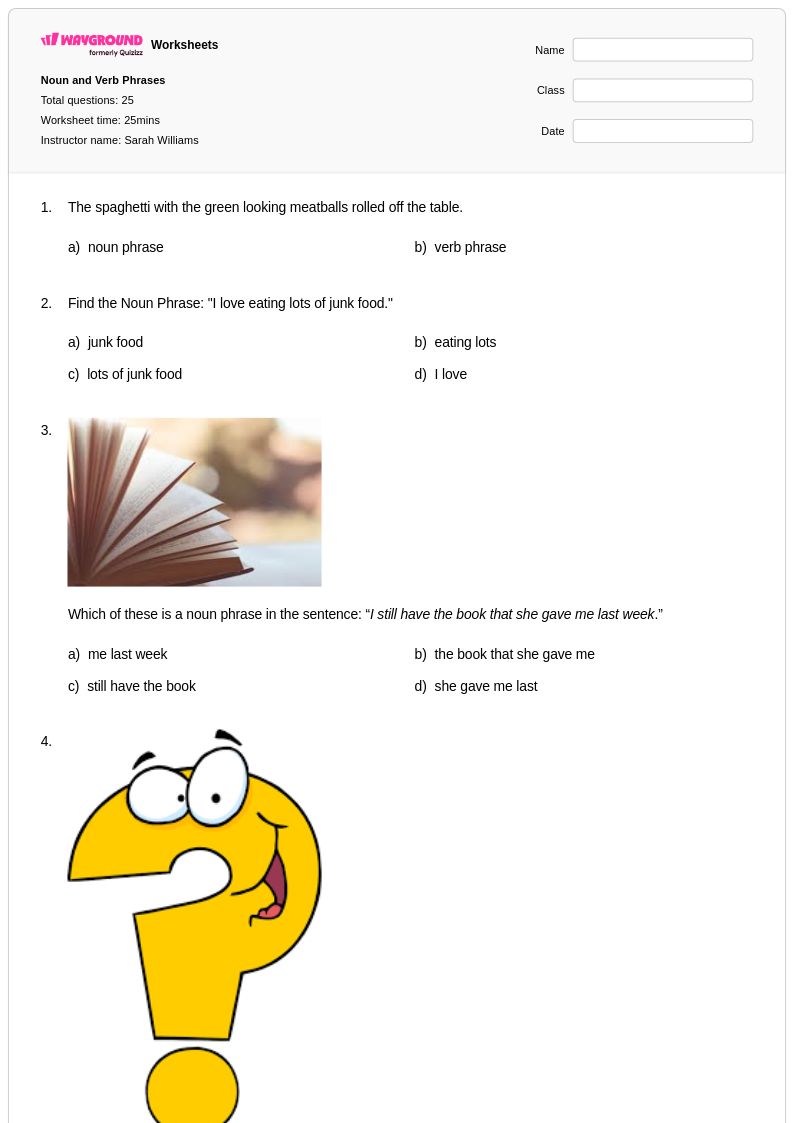
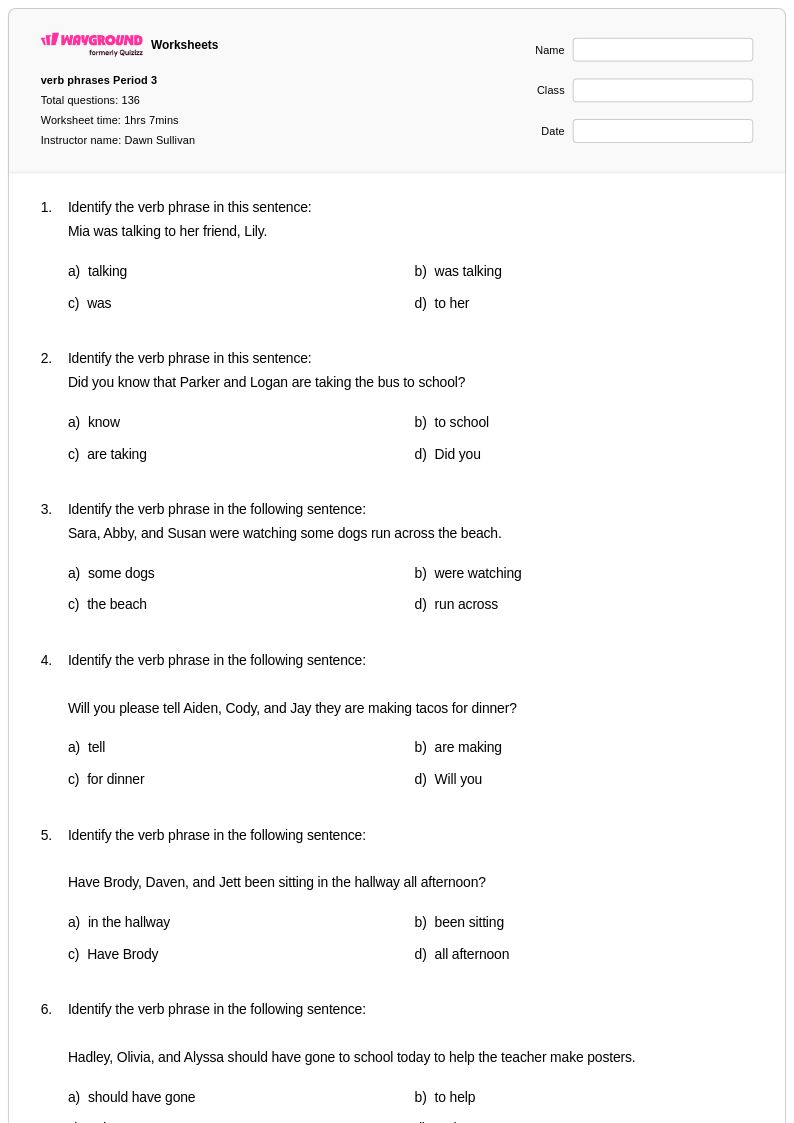
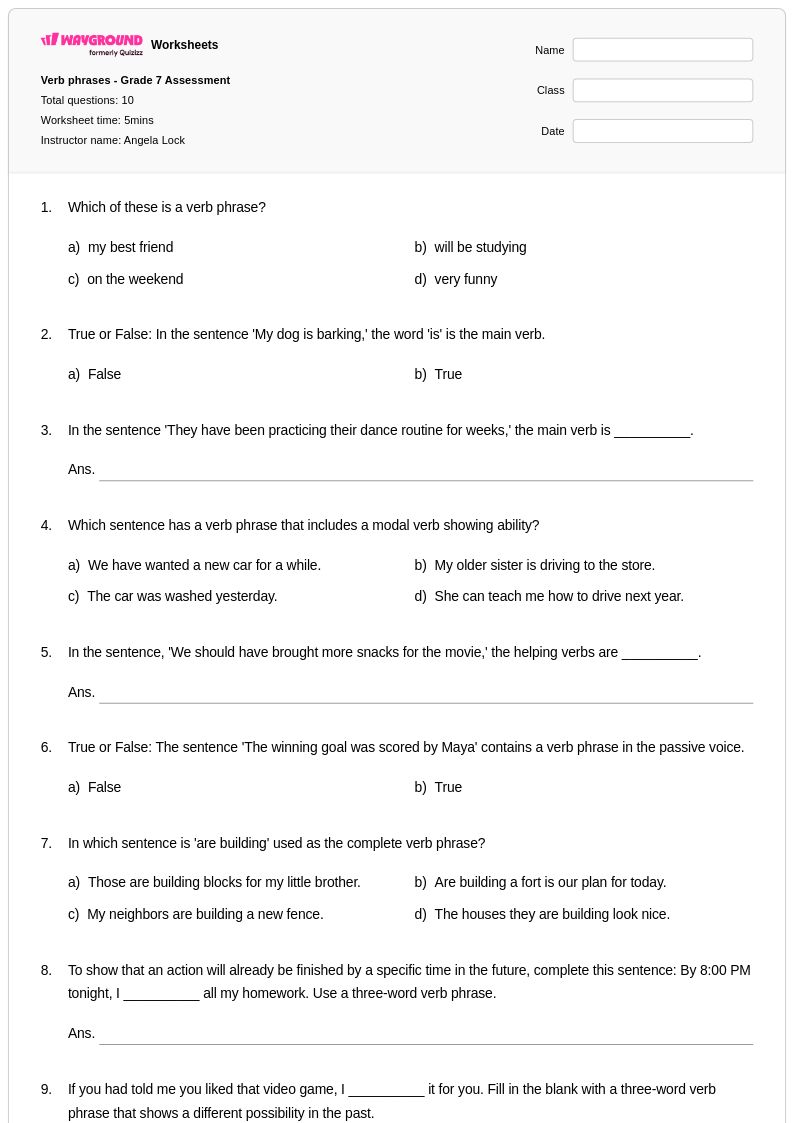
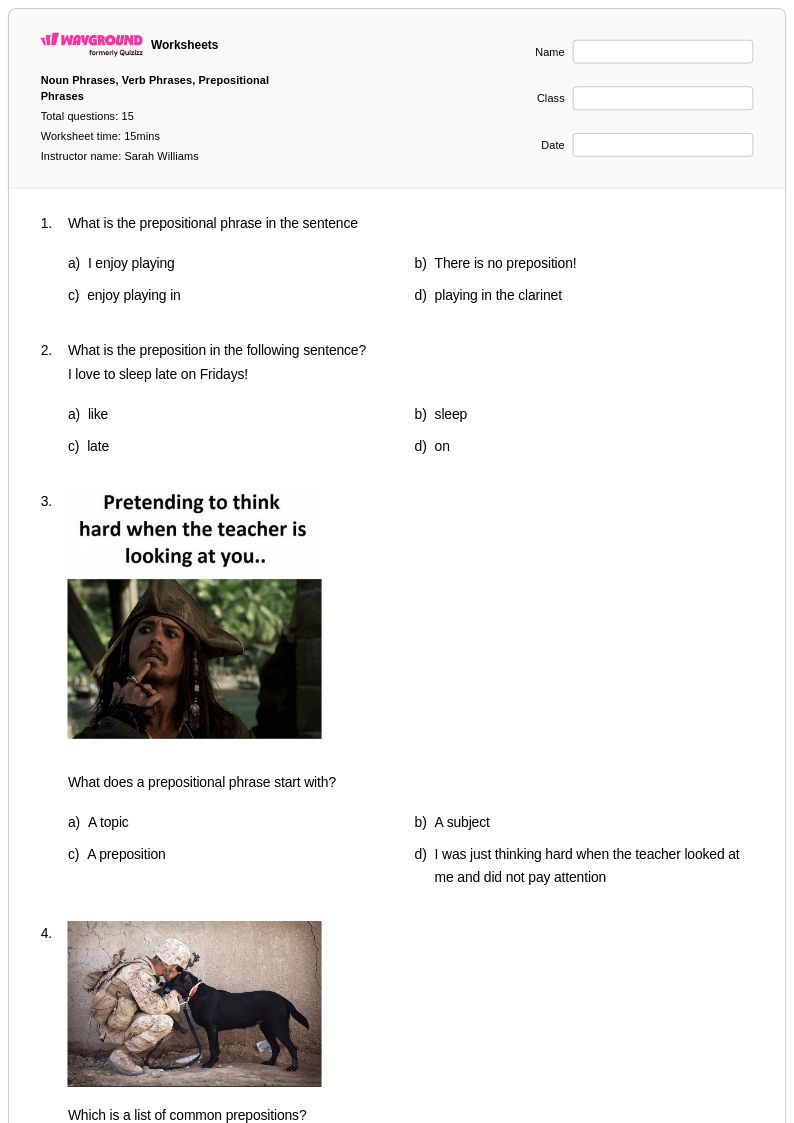
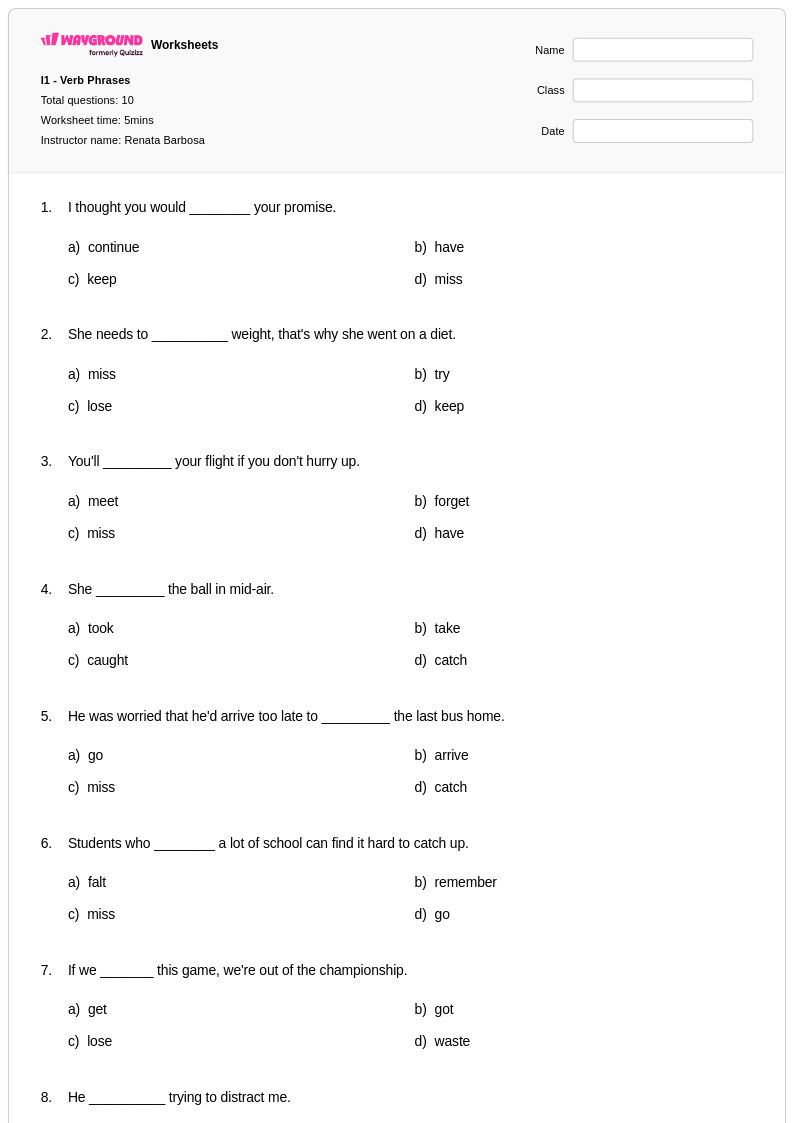
Class 10 verb phrase worksheets from Wayground provide comprehensive printables and practice problems to help students master identifying and using verb phrases, complete with answer keys and free PDF resources.
Explore printable Verb Phrases worksheets for Class 10
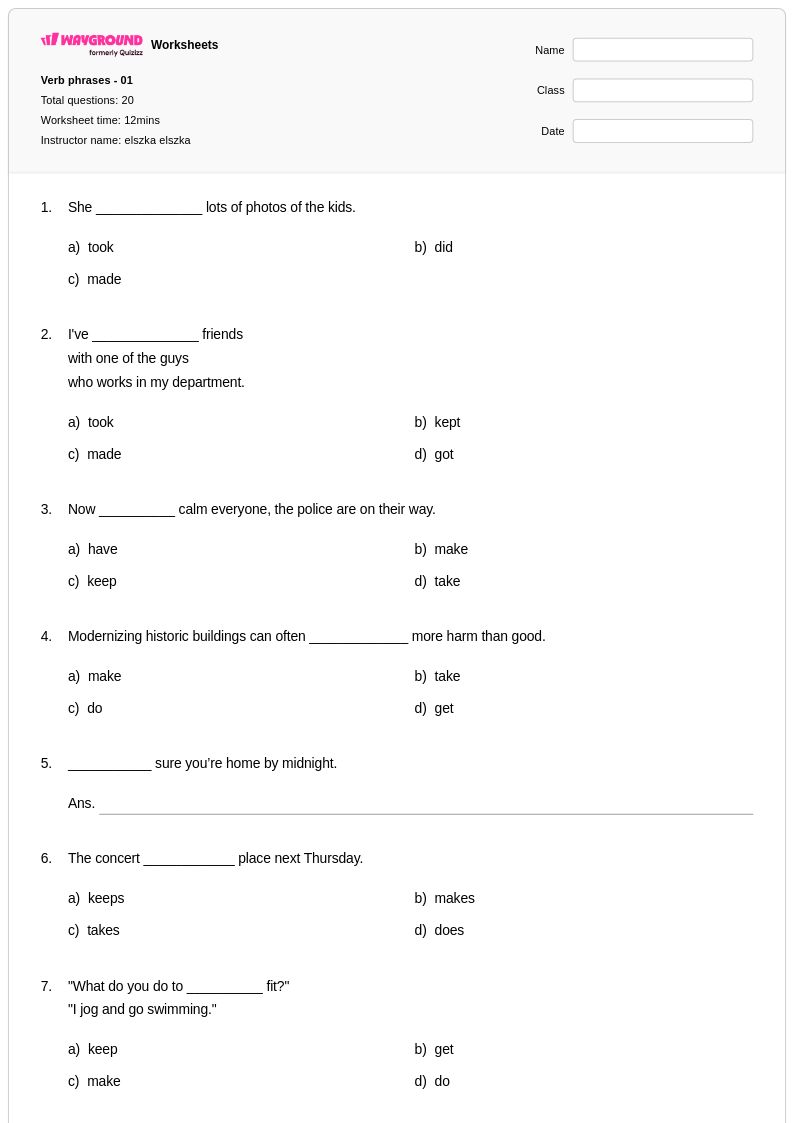
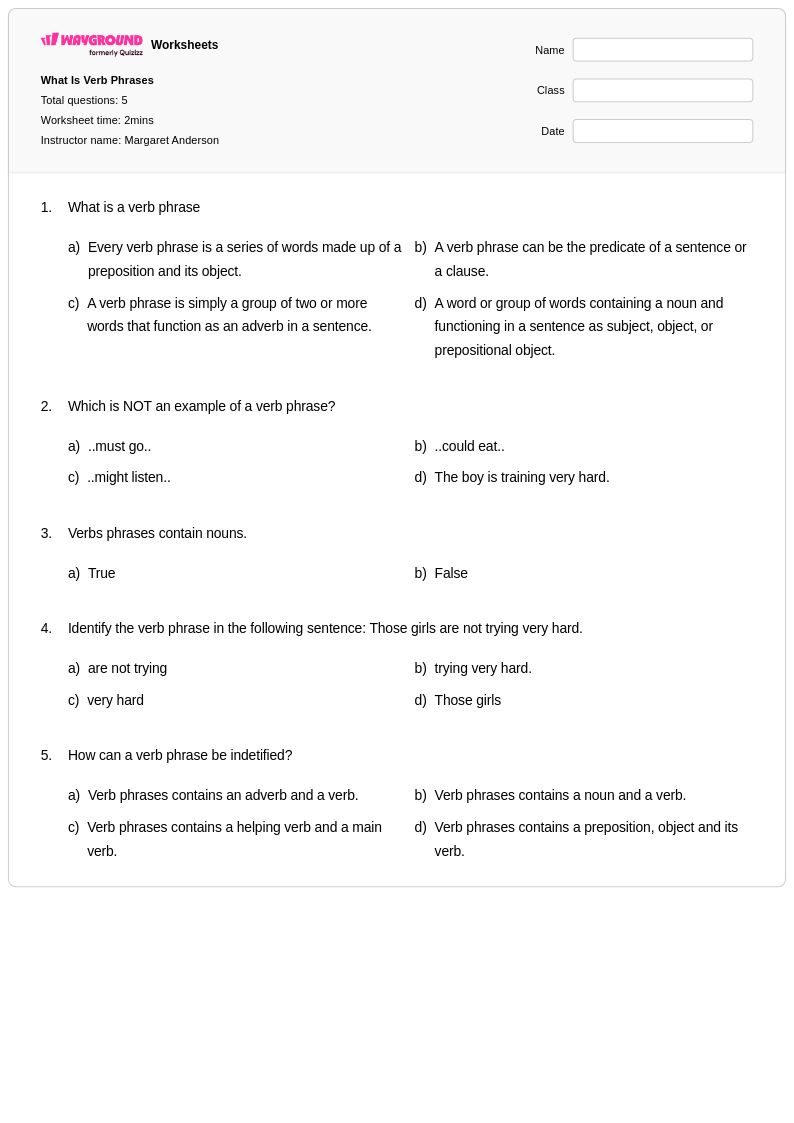
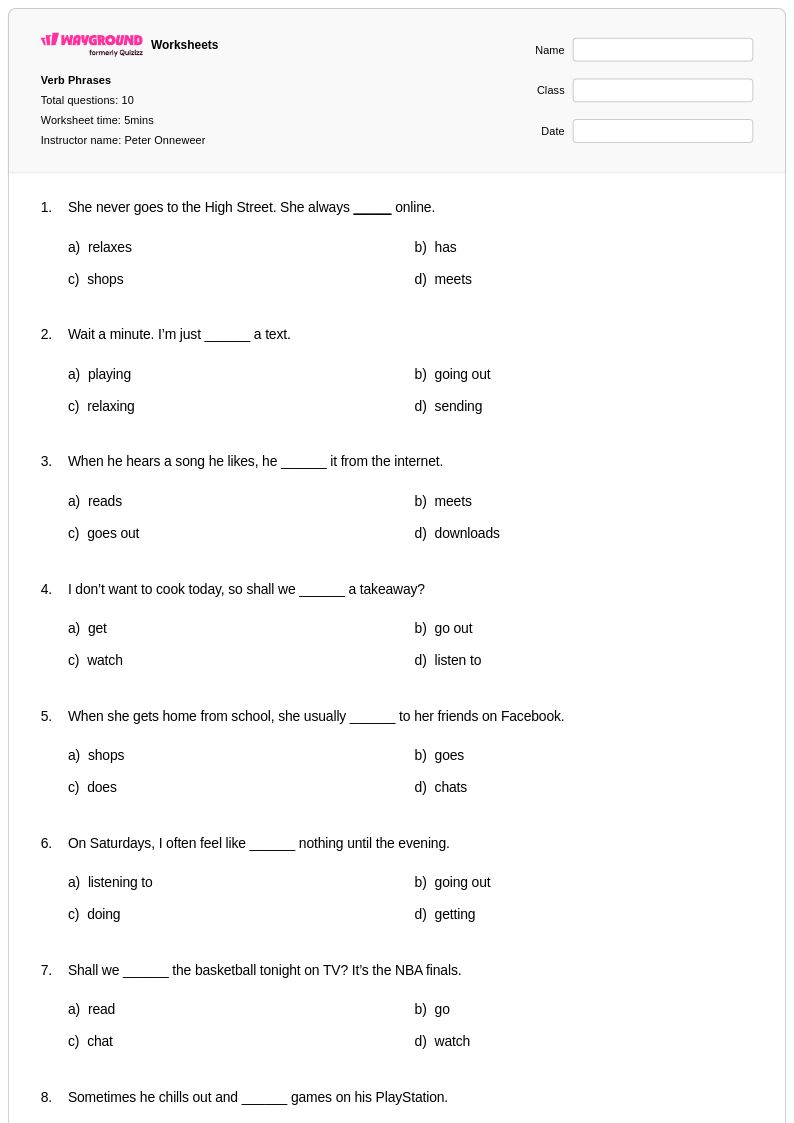
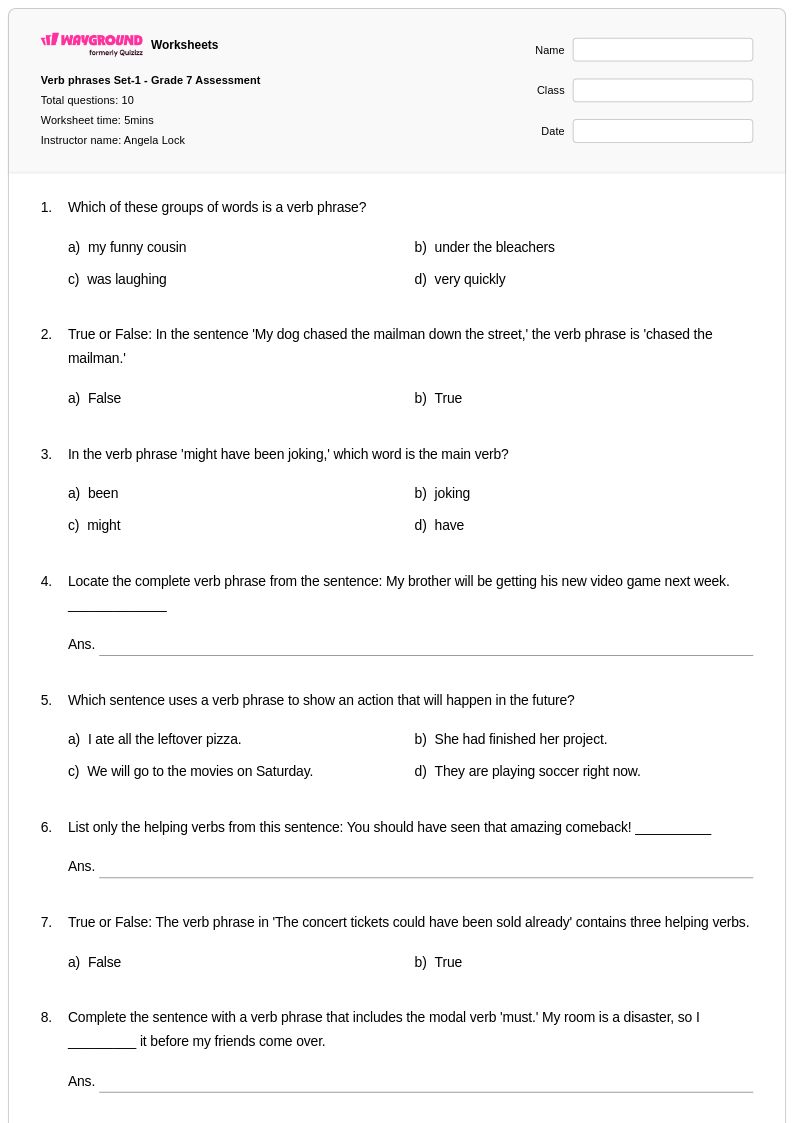
Verb phrases represent a fundamental component of English grammar that Class 10 students must master to achieve sophisticated written and oral communication skills. Wayground's comprehensive verb phrase worksheets provide targeted practice with identifying, analyzing, and constructing various types of verb phrases including auxiliary verb combinations, modal verb constructions, and progressive tenses. These carefully designed printables strengthen students' understanding of how helping verbs work with main verbs to express complex meanings, tenses, and moods in English sentences. Each worksheet includes detailed practice problems that guide students through recognizing verb phrases in context, distinguishing them from simple verbs, and applying proper verb phrase construction in their own writing, with accompanying answer keys ensuring accurate self-assessment and instructor evaluation.
Wayground's extensive collection of teacher-created verb phrase resources offers educators flexible tools for delivering effective grammar instruction across diverse learning environments. With millions of professionally developed worksheets available through advanced search and filtering capabilities, teachers can quickly locate materials aligned to specific curriculum standards and differentiate instruction based on individual student needs. The platform's customization features allow educators to modify existing worksheets or combine multiple resources to create targeted practice sessions for remediation or enrichment purposes. Available in both printable PDF format and interactive digital versions, these verb phrase worksheets support varied instructional approaches from traditional paper-based exercises to technology-enhanced learning experiences, enabling teachers to efficiently plan comprehensive grammar lessons that build essential language arts competencies.
FAQs
How do I teach verb phrases to students who are new to grammar?
Start by establishing the difference between a main verb and an auxiliary (helping) verb, since verb phrases are built from this combination. Use clear, simple examples like 'is running' or 'can swim' before moving to more complex constructions such as 'should have been completed.' Once students can identify the components, have them locate verb phrases in real sentences so they can see how these constructions function in context. Building from single auxiliary verbs to multi-auxiliary constructions in stages helps prevent overwhelm.
What exercises help students practice identifying verb phrases?
Effective practice exercises include underlining or circling verb phrases within sentences, sorting main verbs from helping verbs, and completing sentences by filling in the correct auxiliary verb. Students also benefit from exercises that ask them to classify verb phrases by tense or modality, such as distinguishing 'was running' from 'should have been running.' Repeated exposure to a range of constructions, from simple to multi-auxiliary, builds the pattern recognition that grammar fluency requires.
What mistakes do students commonly make when identifying verb phrases?
The most common error is identifying only the main verb and missing the auxiliary verbs that accompany it. Students also frequently confuse verb phrases with noun phrases or adjective phrases when a form of 'to be' is involved, such as mistaking 'is tired' as a verb phrase when 'tired' is a predicate adjective. Another frequent mistake is omitting negatives like 'not' from a verb phrase or, conversely, including them when they are adverbs rather than part of the verb phrase itself.
How do I differentiate verb phrase instruction for students at different skill levels?
For struggling students, limit initial practice to two-word verb phrases with common auxiliaries like 'is,' 'was,' and 'can' before introducing modal or perfect constructions. Advanced learners can analyze multi-auxiliary verb phrases and examine how tense, aspect, and modality interact within a single construction. On Wayground, teachers can apply accommodations such as reduced answer choices to decrease cognitive load for students who need additional support, while other students receive standard practice without any disruption to their workflow.
How do I use Wayground's verb phrase worksheets in my classroom?
Wayground's verb phrase worksheets are available as printable PDFs for traditional classroom use and in digital formats for technology-integrated environments, giving teachers flexibility depending on their setup. Teachers can also host the worksheets as a quiz directly on Wayground, allowing for automated grading and instant feedback. The included answer keys make the worksheets practical for independent practice, homework assignments, or targeted remediation sessions without requiring additional teacher prep.