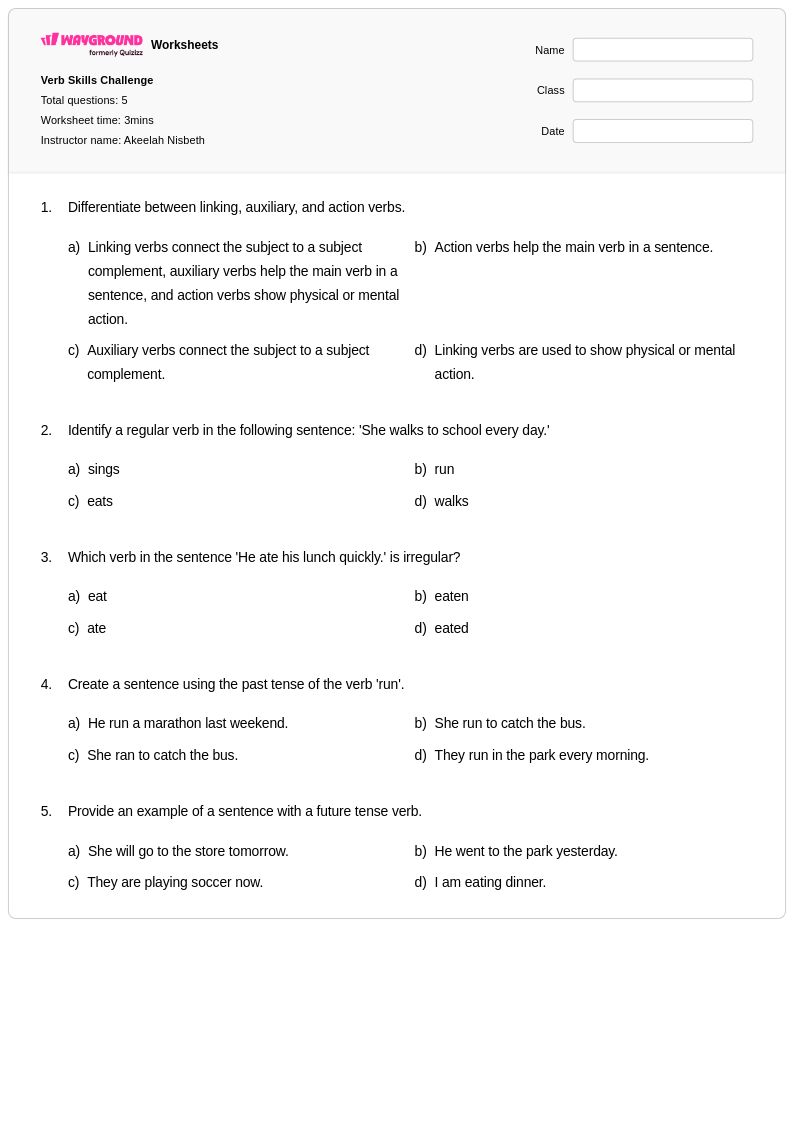
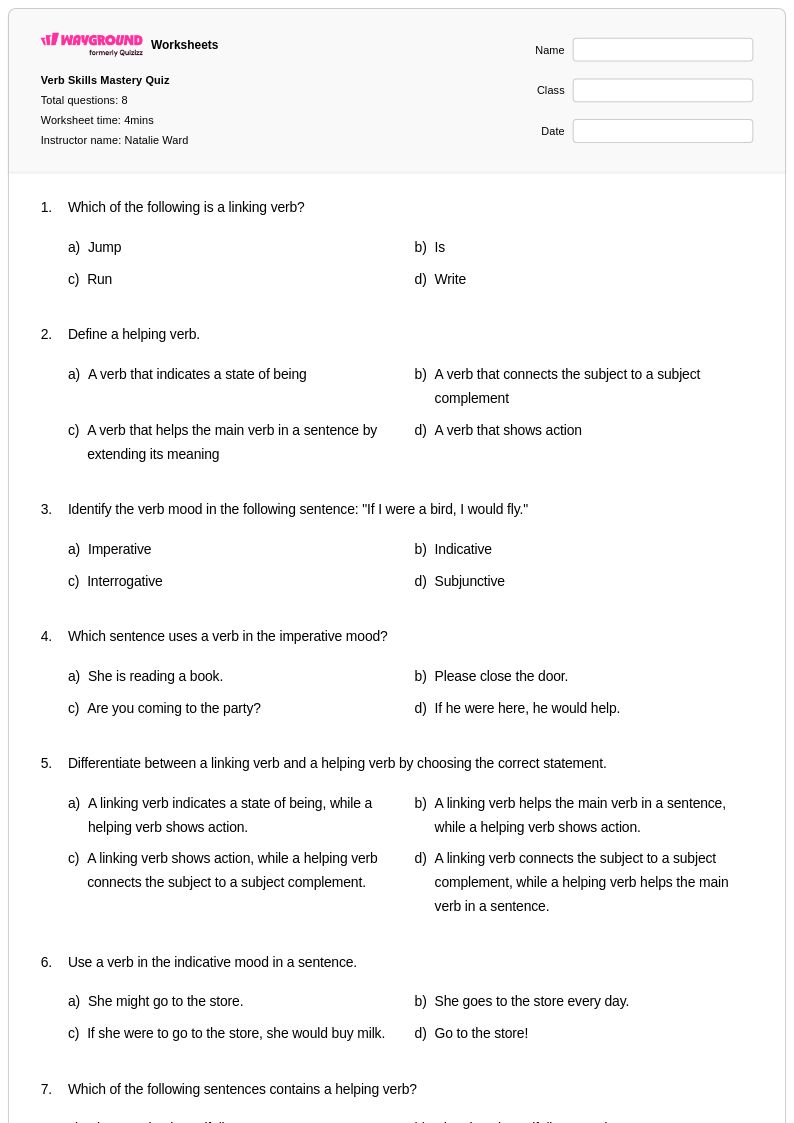
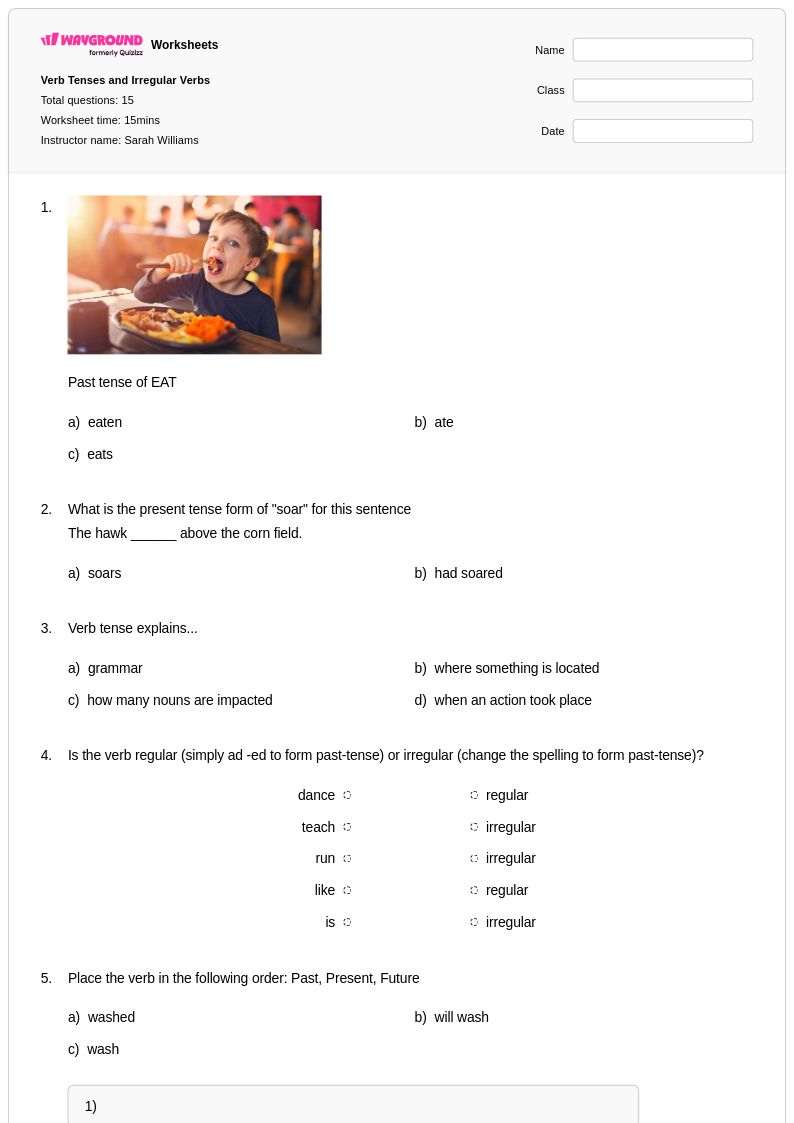
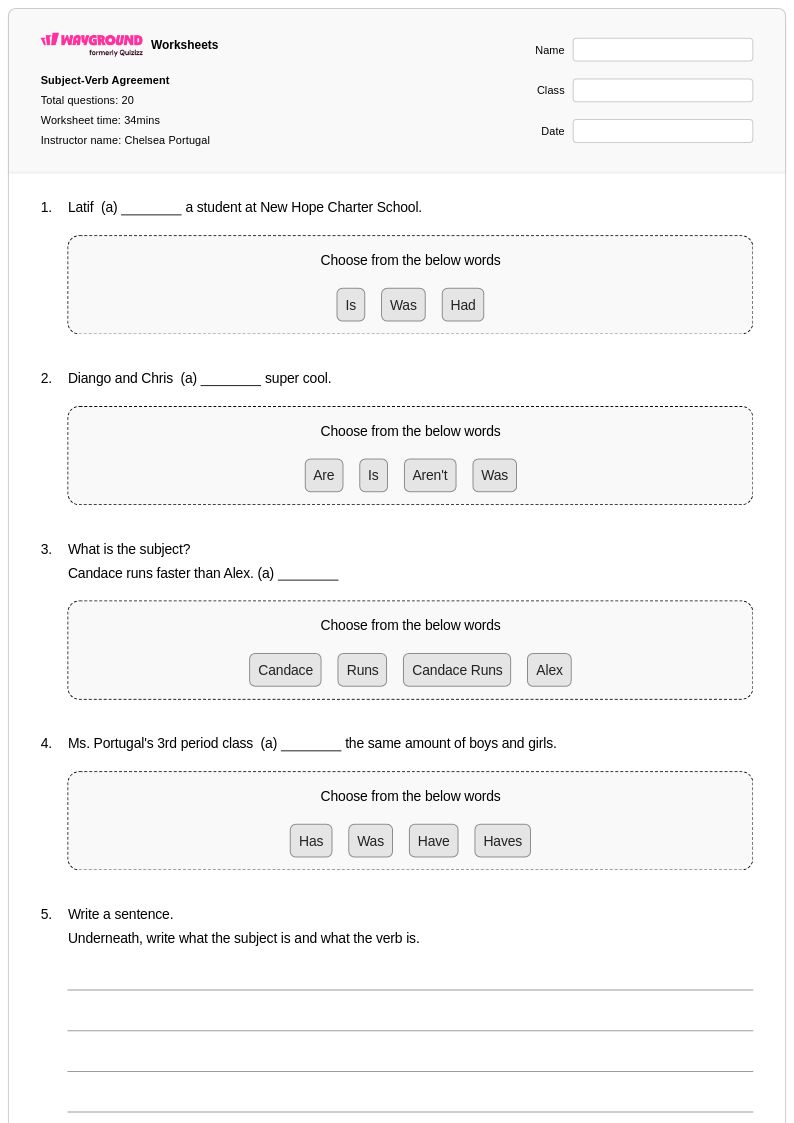
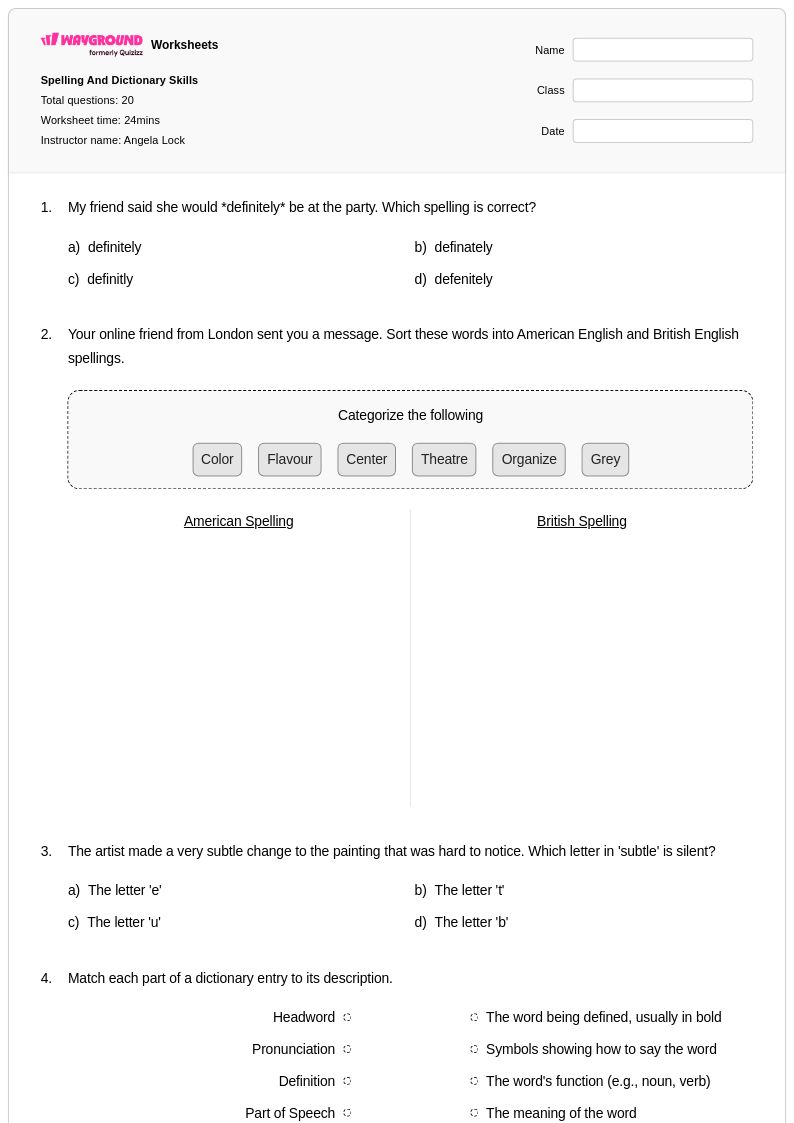
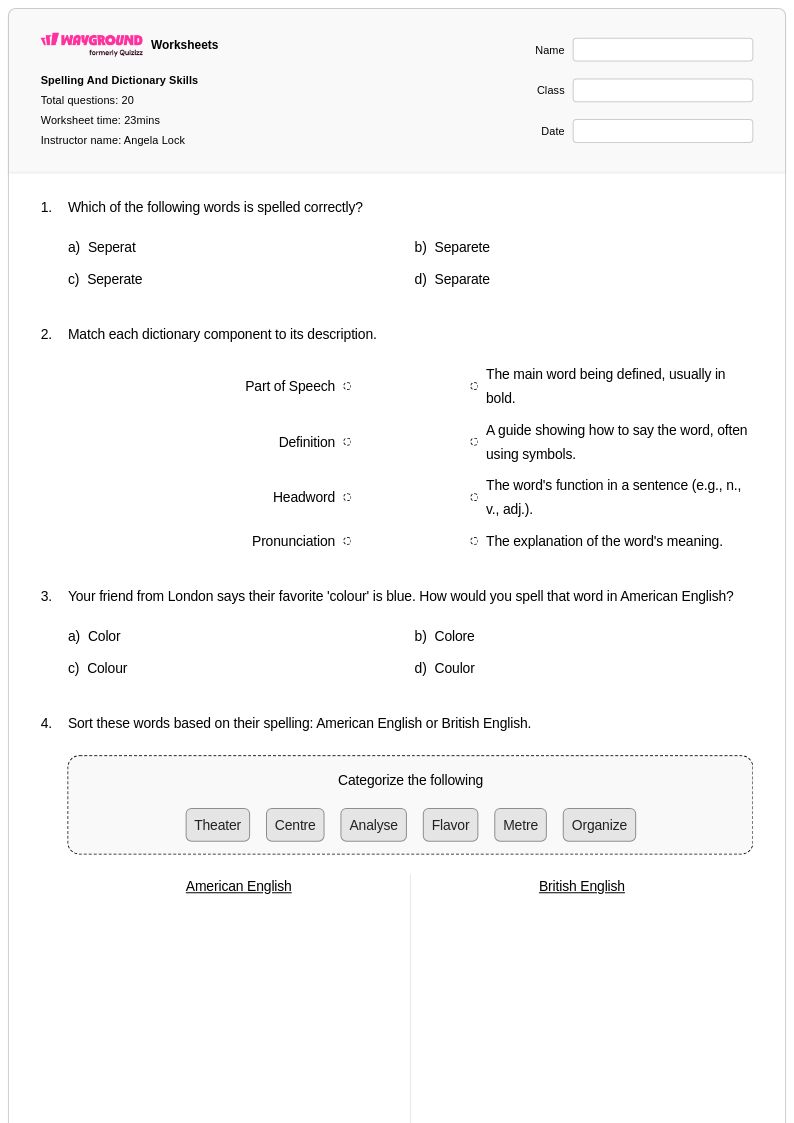
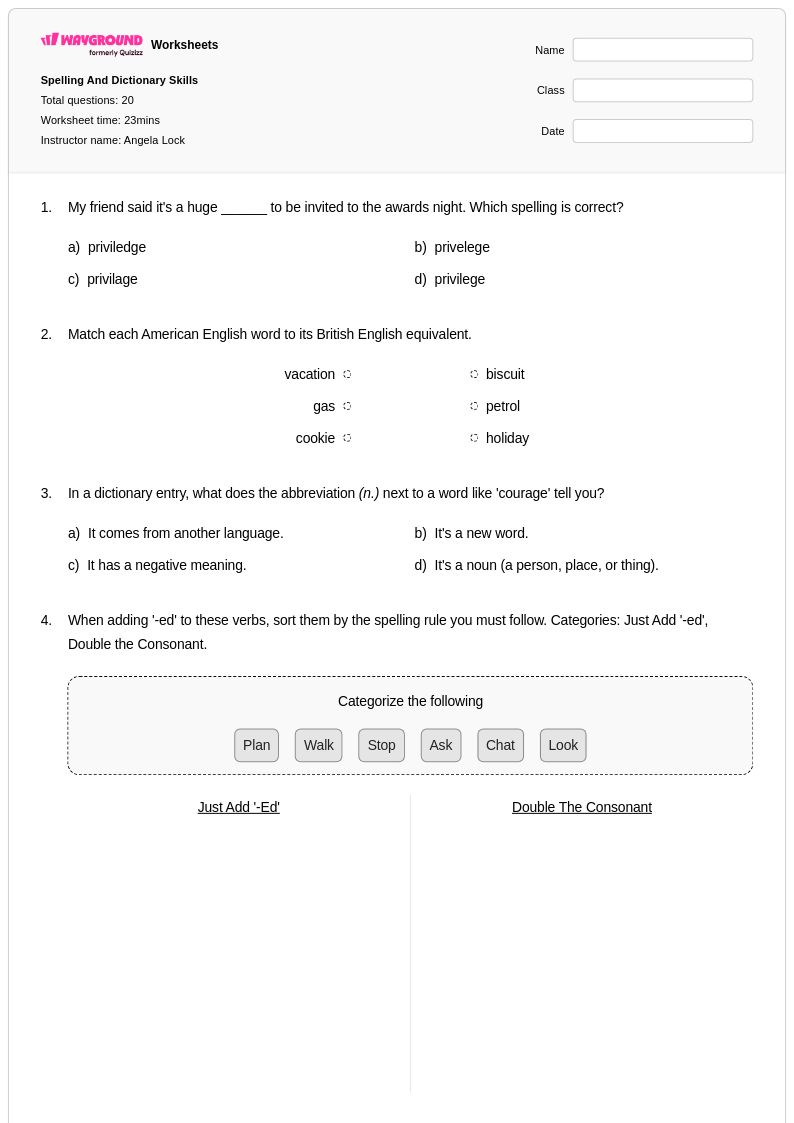
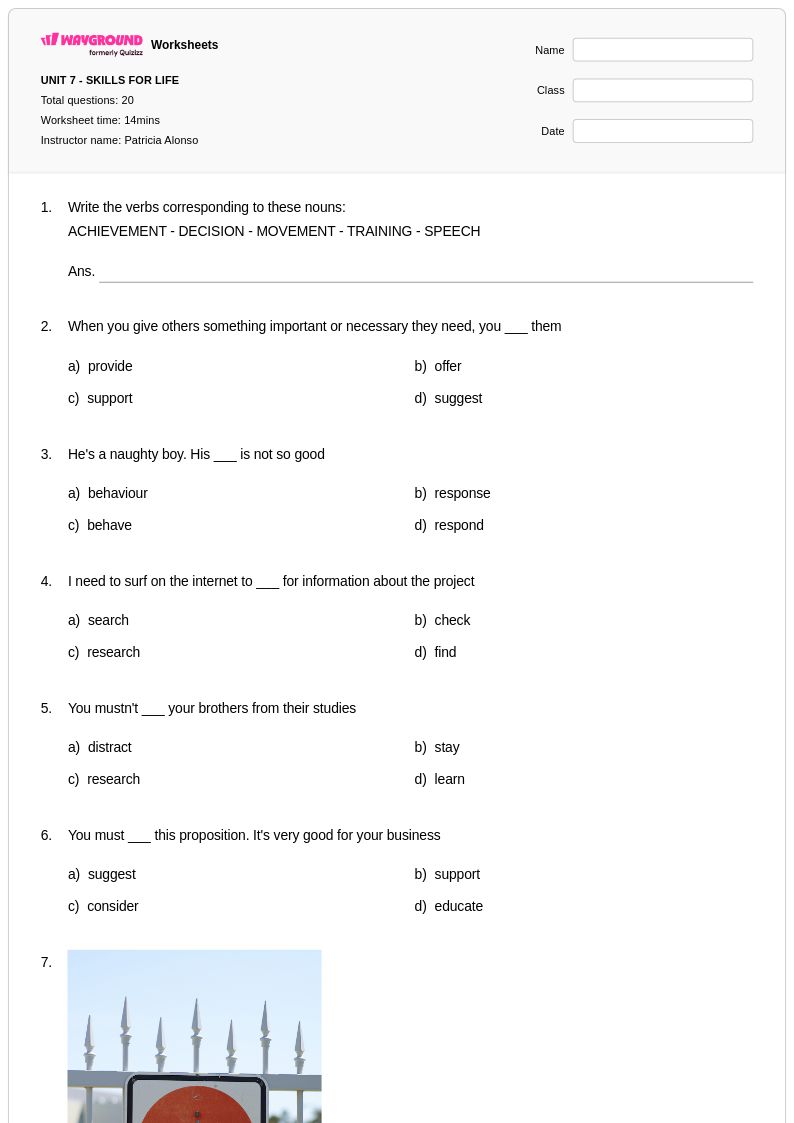
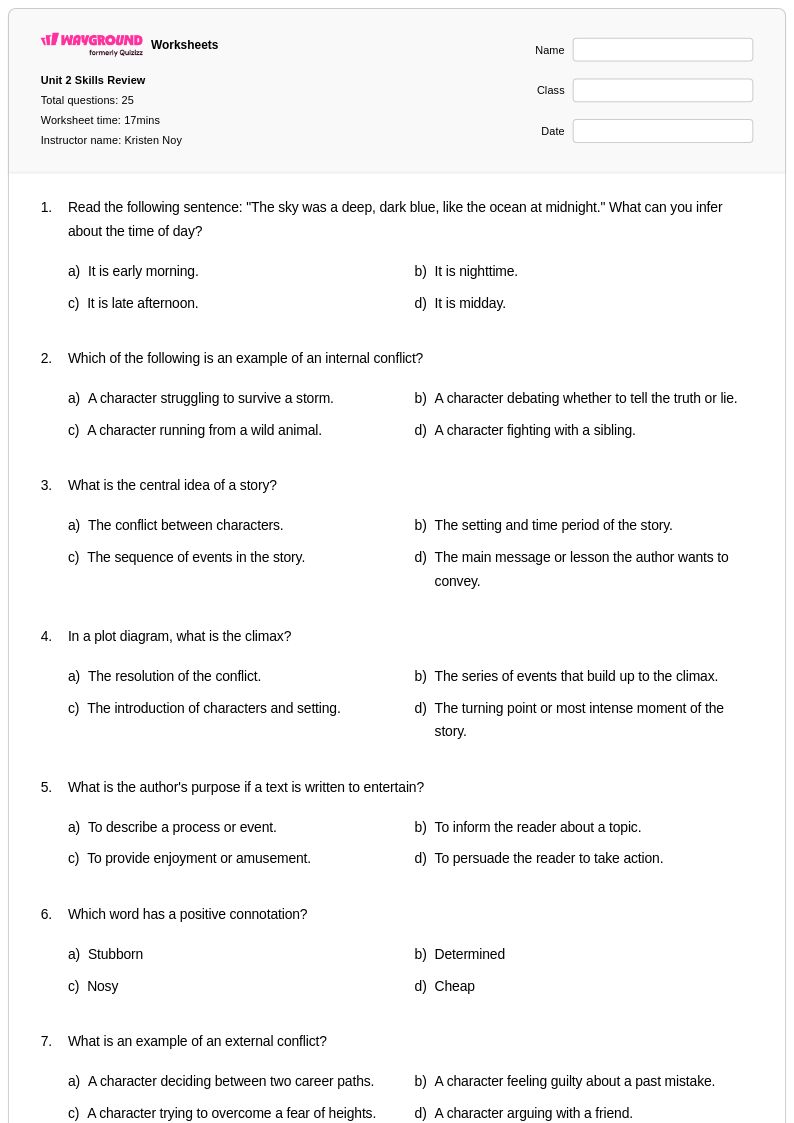
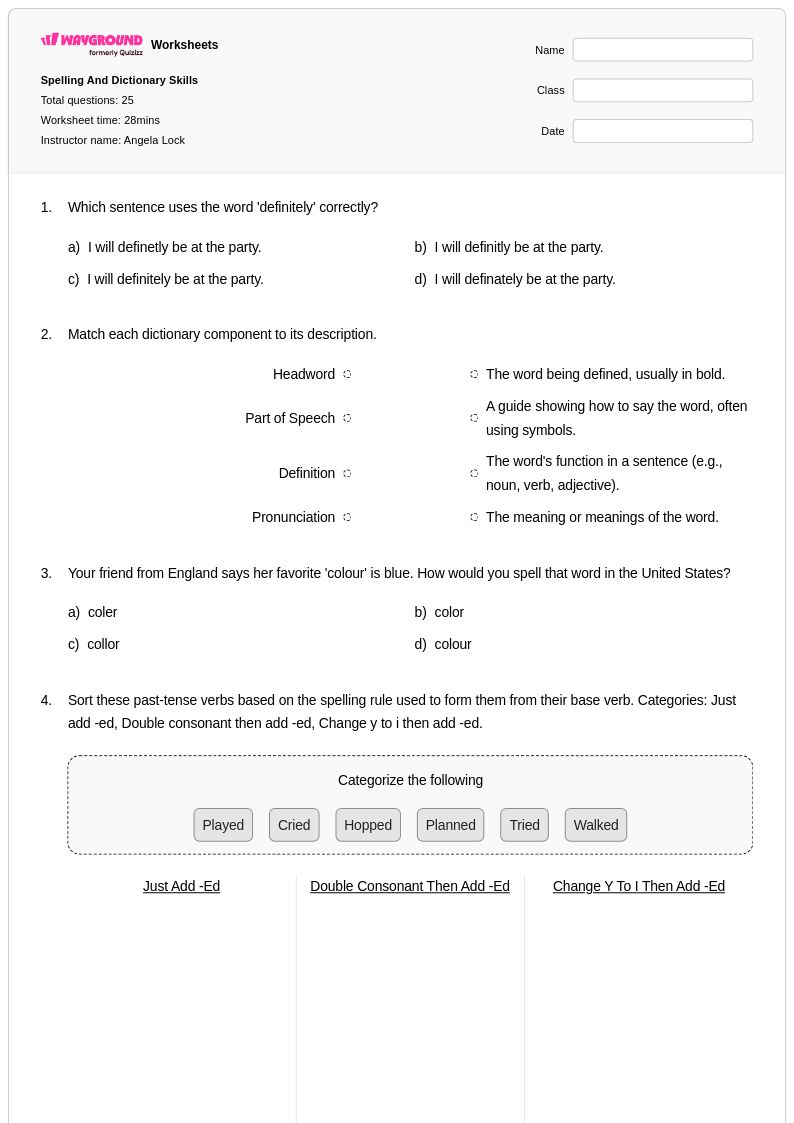
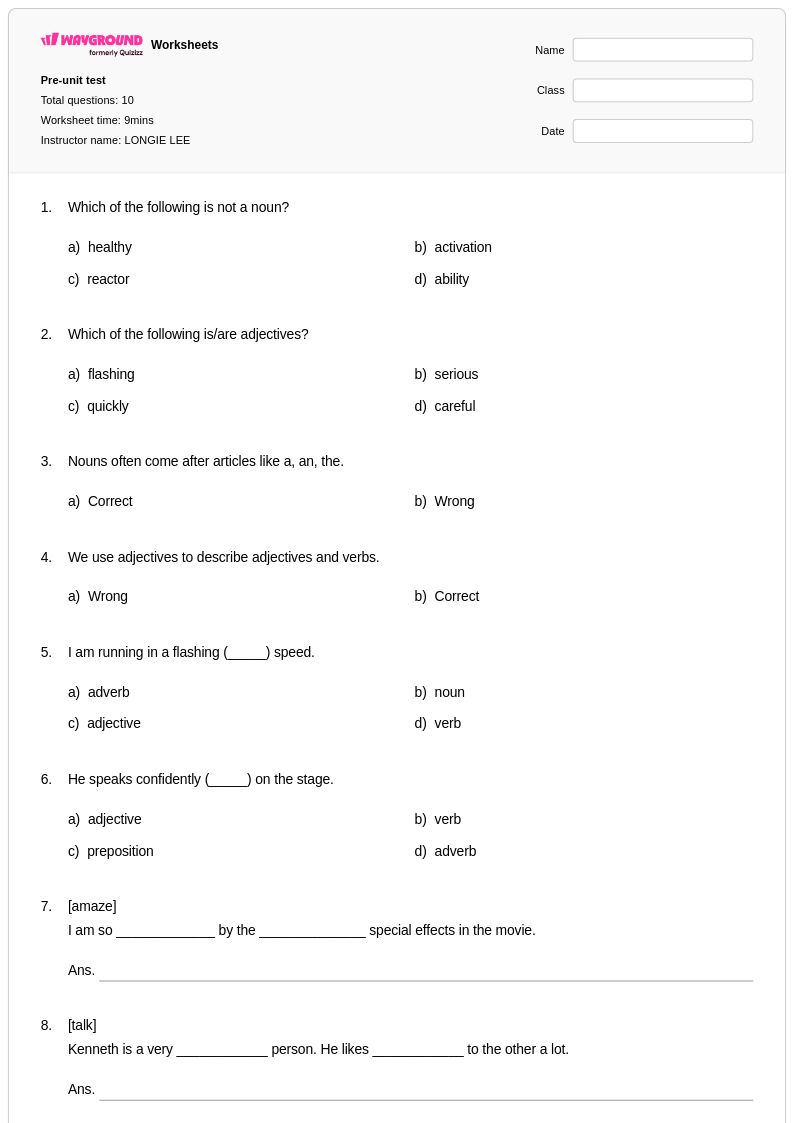
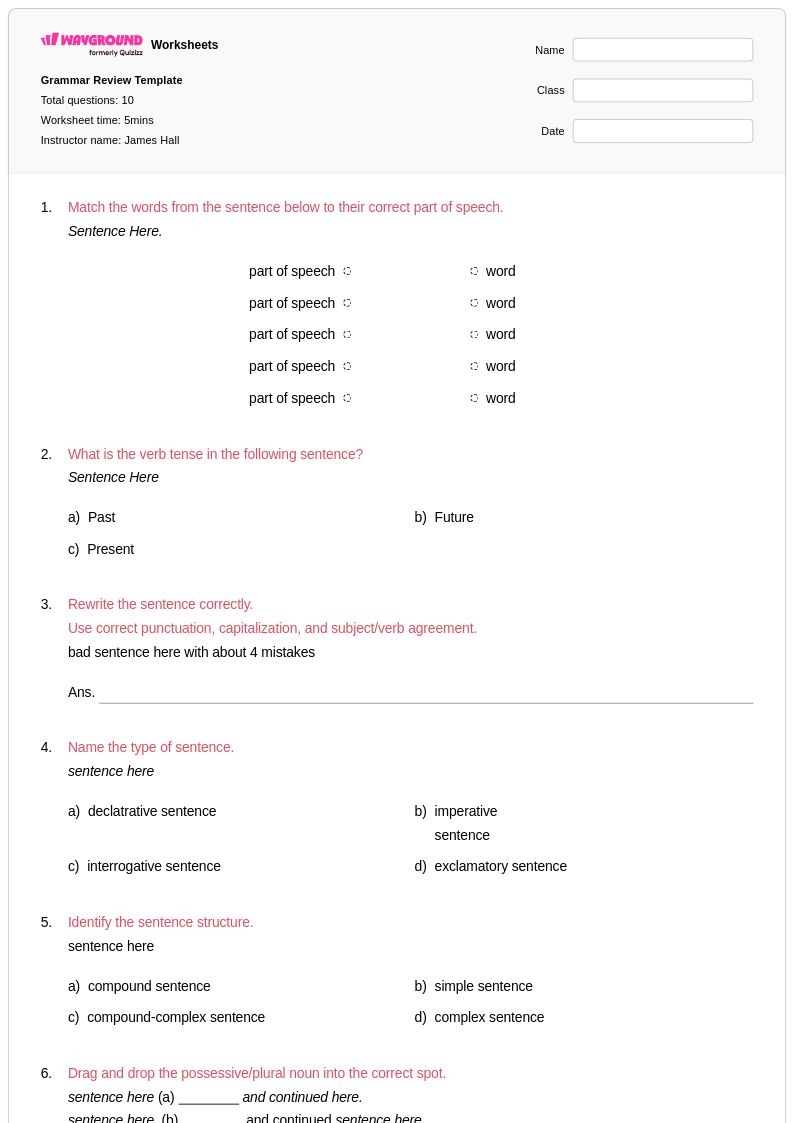
Class 7 verb skills worksheets from Wayground help students master essential verb concepts through engaging printables, practice problems, and comprehensive answer keys for effective learning.
Explore printable Verb Skills worksheets for Class 7
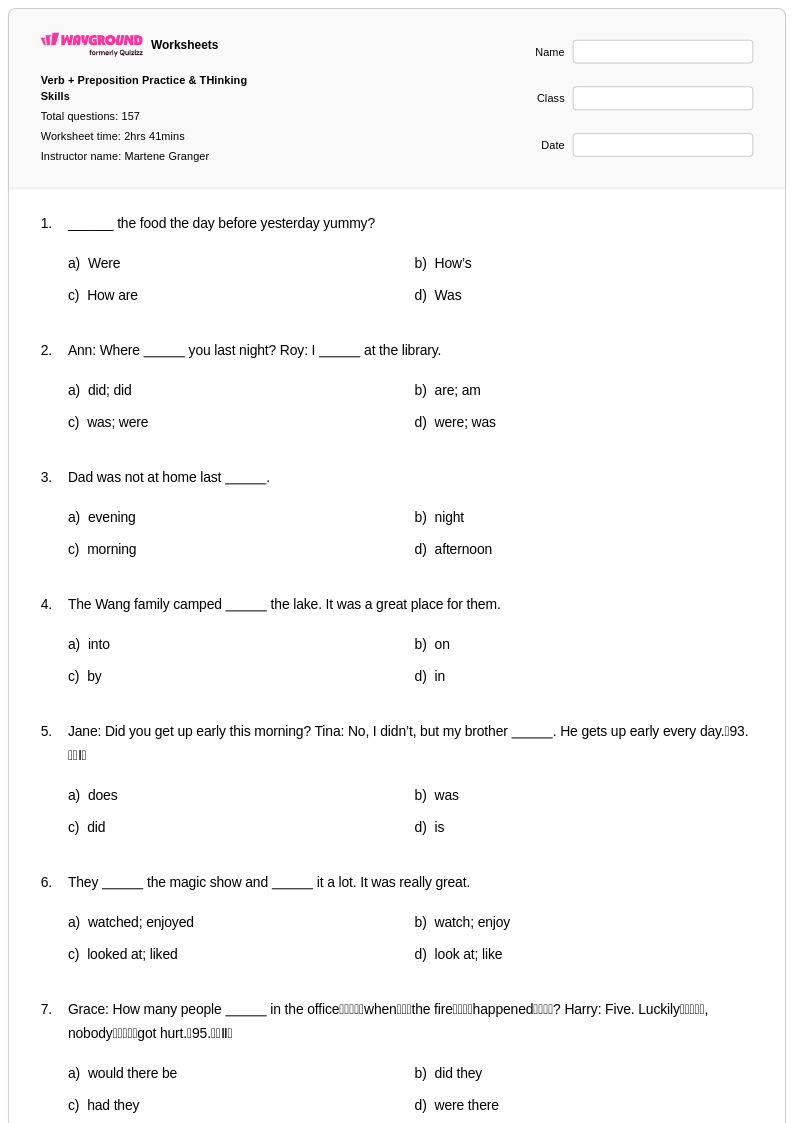
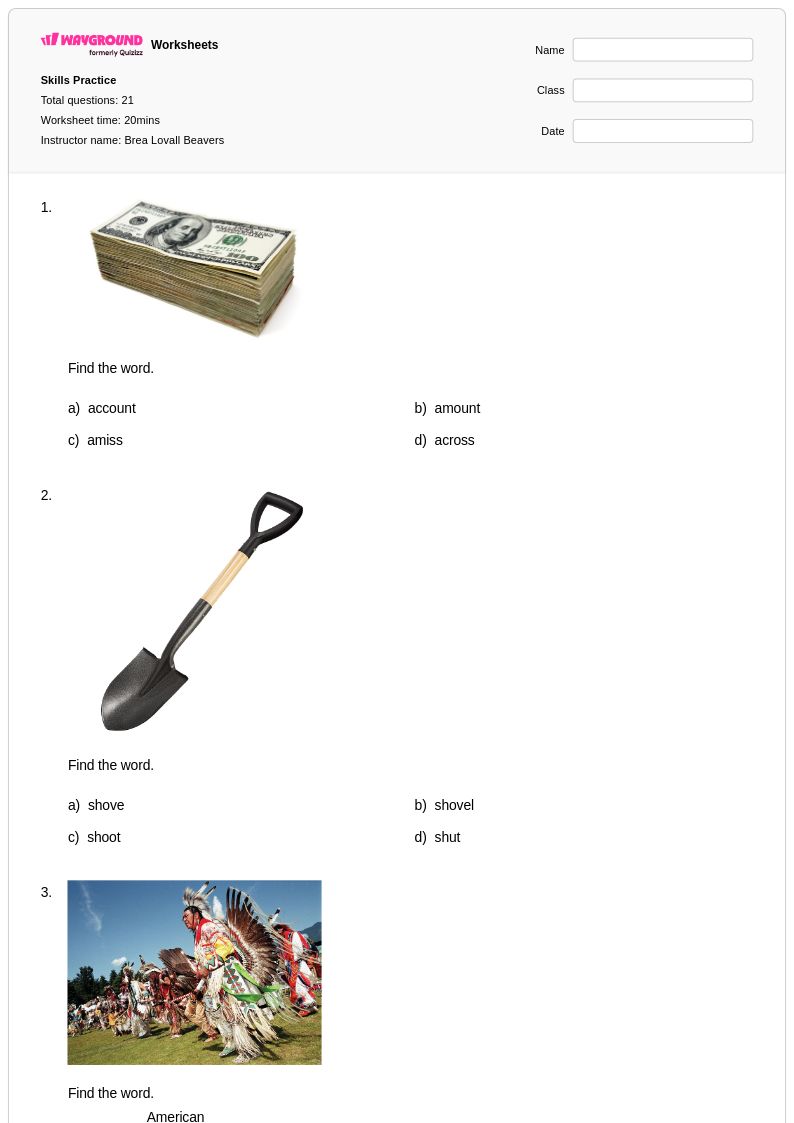
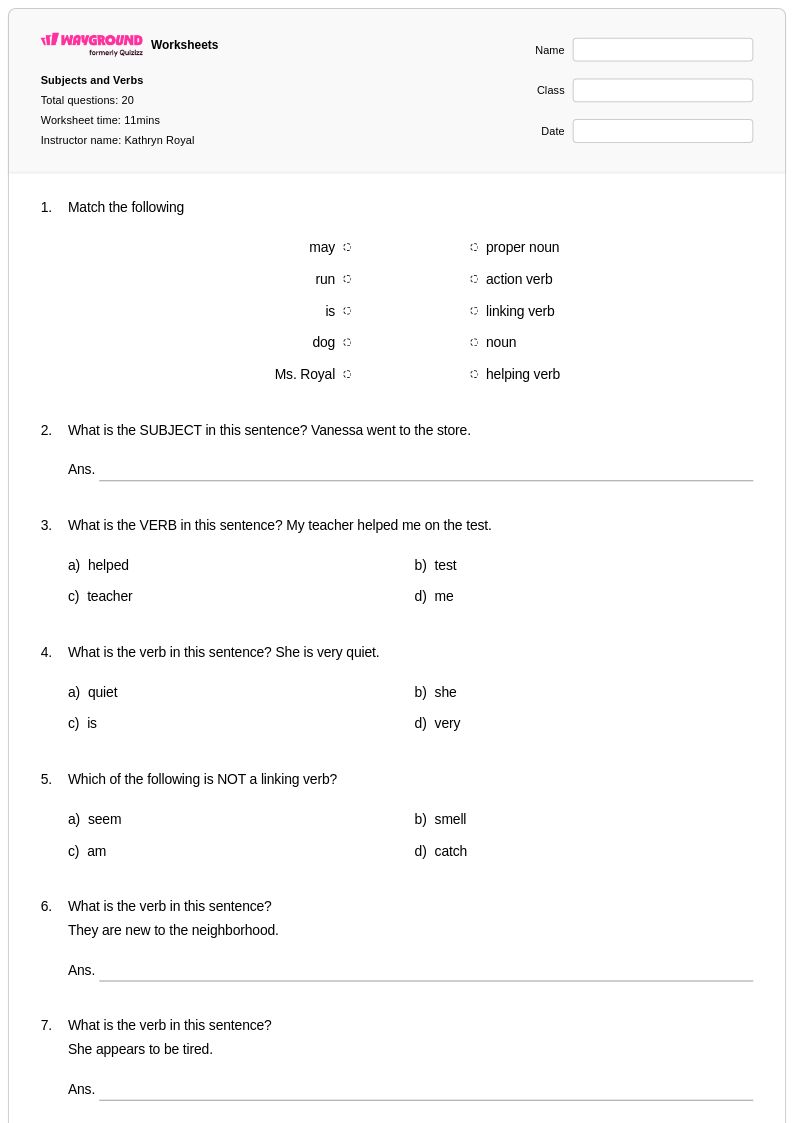
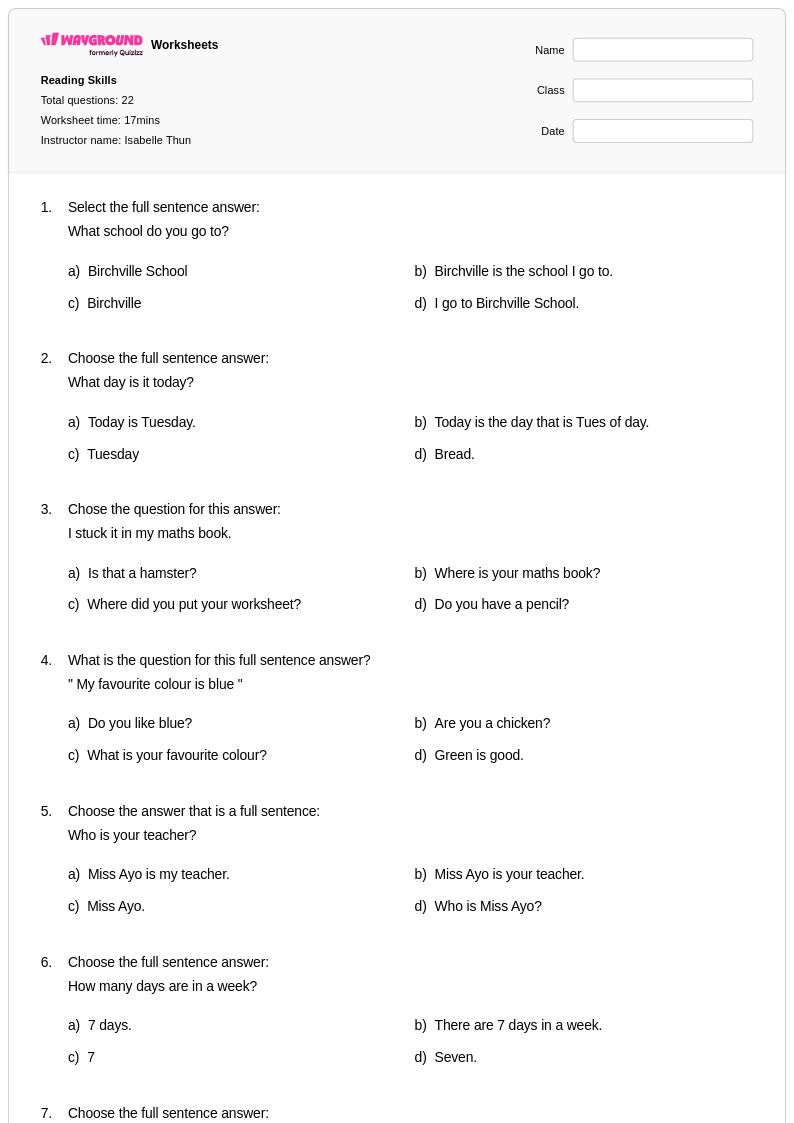
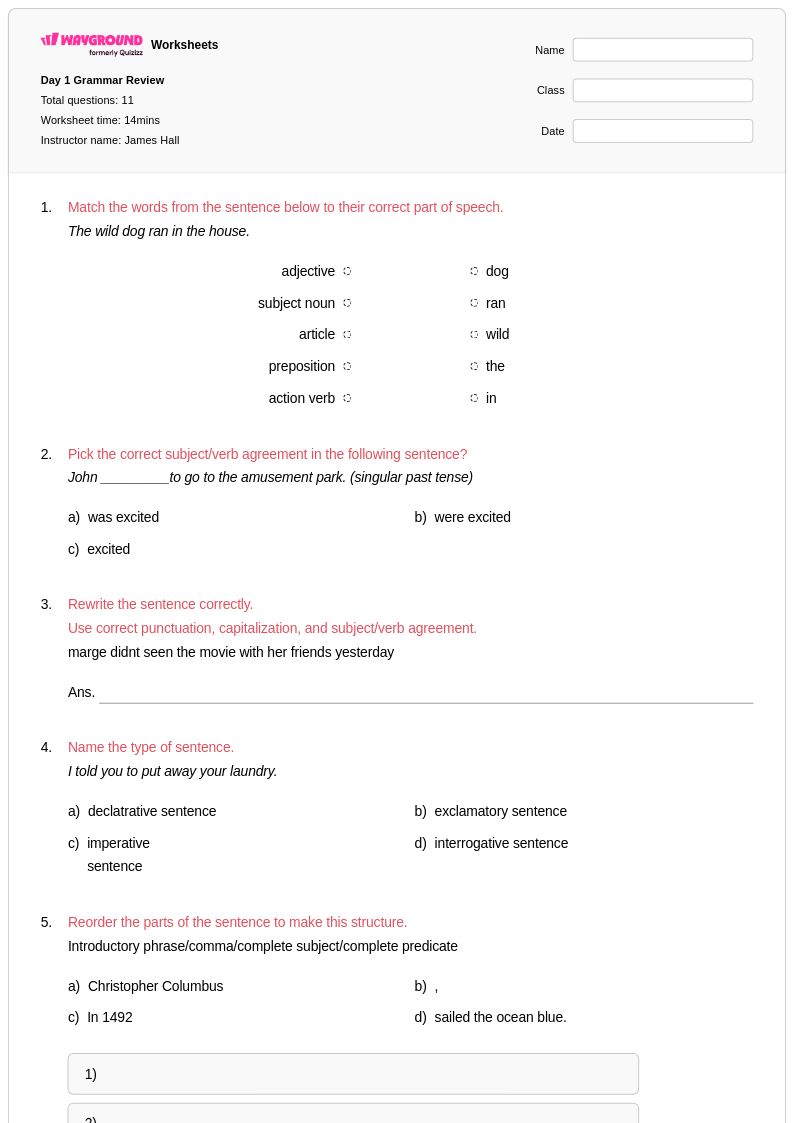
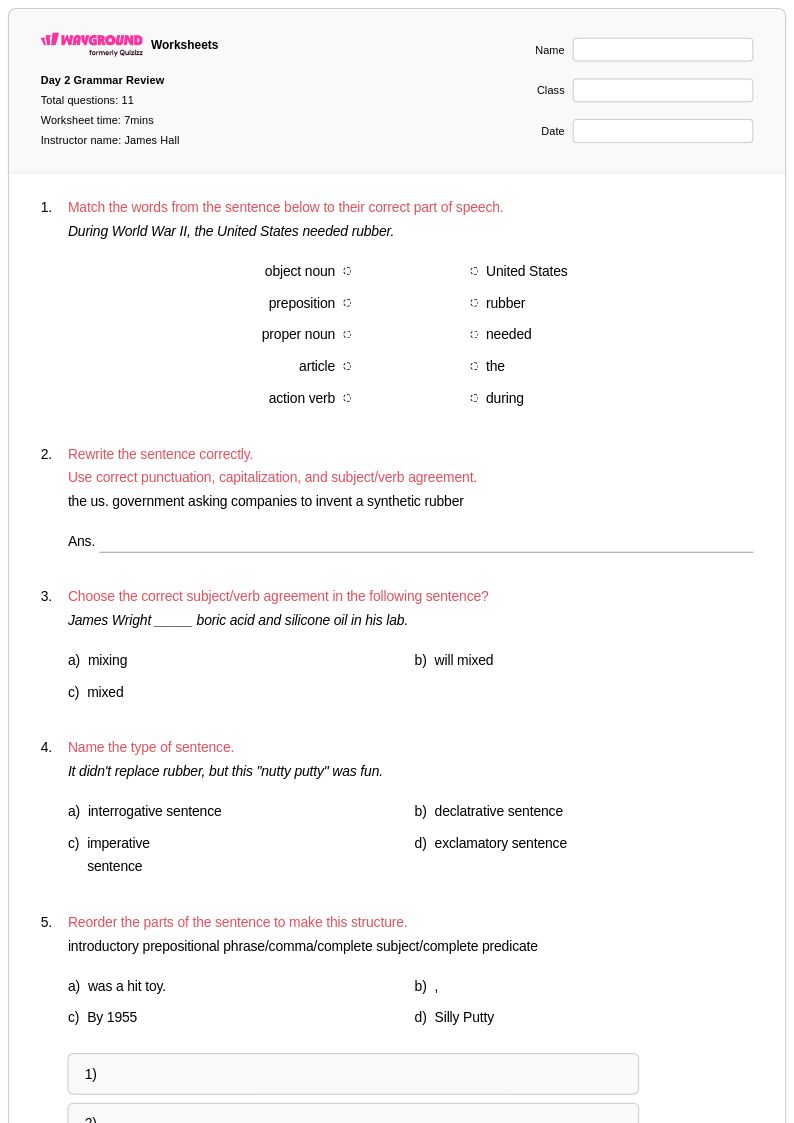
Class 7 verb skills worksheets available through Wayground (formerly Quizizz) provide comprehensive practice opportunities for students to master essential grammatical concepts including verb tenses, subject-verb agreement, irregular verbs, and proper verb usage in complex sentence structures. These expertly designed resources strengthen students' ability to identify, conjugate, and apply verbs correctly across various writing contexts, building the foundation necessary for advanced composition and communication skills. Each worksheet collection includes detailed answer keys and comes in convenient pdf format, offering educators free printables that can be seamlessly integrated into classroom instruction or assigned as independent practice problems to reinforce learning objectives.
Wayground (formerly Quizizz) empowers teachers with access to millions of educator-created verb skills resources, featuring robust search and filtering capabilities that allow for quick identification of materials aligned with specific learning standards and student needs. The platform's differentiation tools enable instructors to customize worksheets for varying ability levels, while the flexible format options support both digital classroom environments and traditional printable assignments. These comprehensive features streamline lesson planning by providing ready-to-use materials for skill practice, targeted remediation for struggling learners, and enrichment opportunities for advanced students, ensuring that all Class 7 learners can develop confident command of verb usage through structured, progressive practice.
FAQs
How do I teach verb skills to students who are struggling with grammar basics?
Start with verb identification before moving into tense or agreement — students need to reliably spot verbs in sentences before they can manipulate them. Use high-frequency, simple sentences so cognitive load stays low, then gradually introduce irregular forms and more complex structures. Anchor instruction in the function of verbs (what they do in a sentence) rather than just the label, which builds more durable understanding.
What exercises help students practice subject-verb agreement?
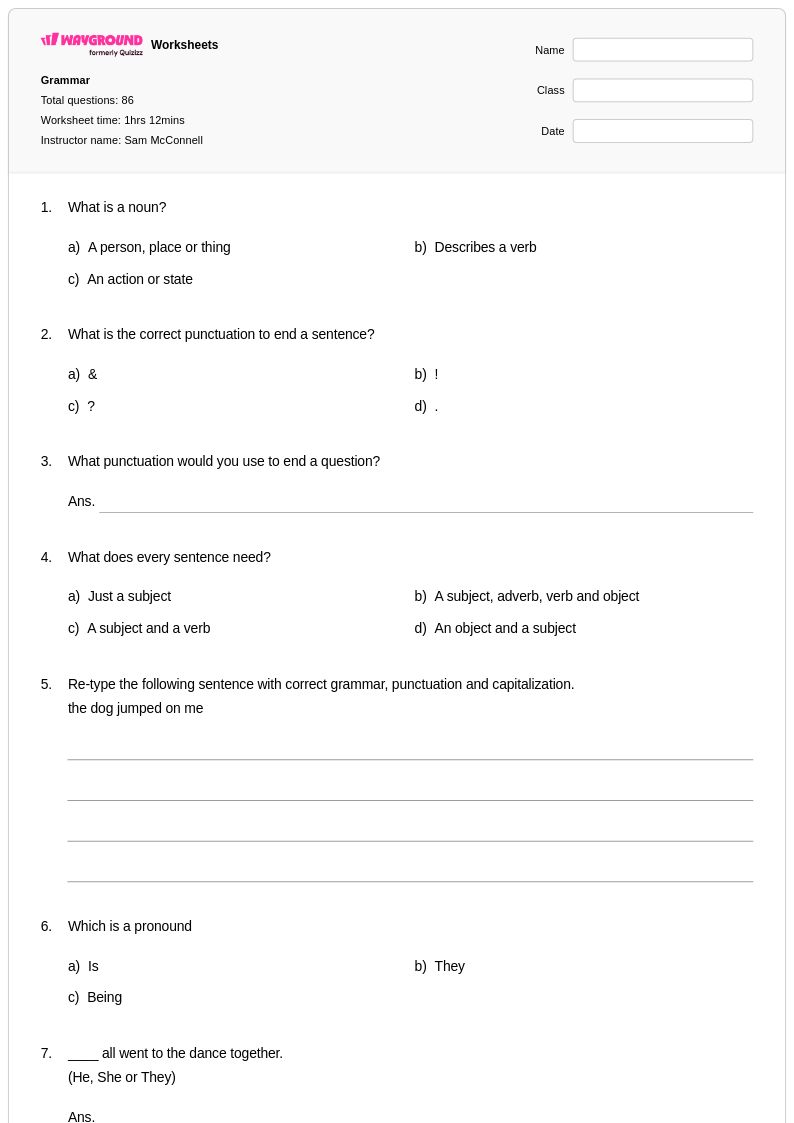
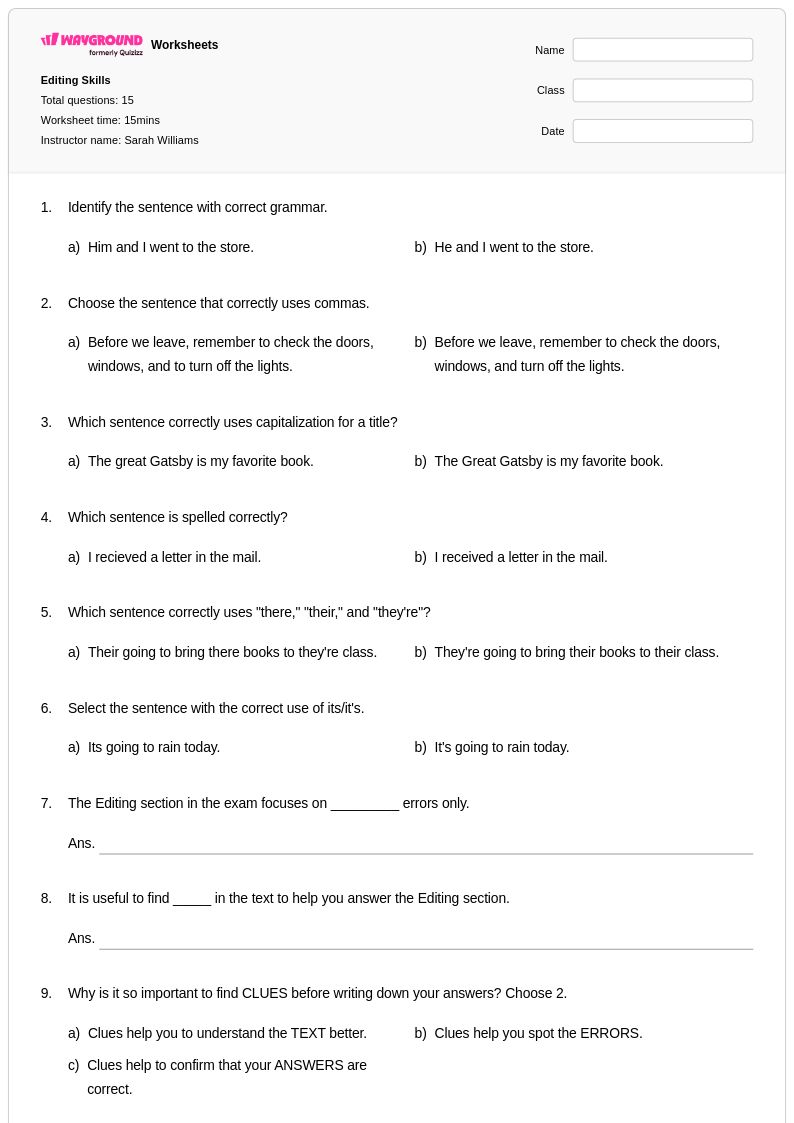
Sentence-level exercises that isolate the subject and verb work well for initial practice, particularly when students must identify the subject first before choosing the correct verb form. Error correction tasks — where students find and fix agreement mistakes in a paragraph — push students toward deeper application. Including tricky cases like collective nouns, indefinite pronouns, and inverted sentence structures helps students move beyond rote pattern-matching.
What are the most common mistakes students make with verb tense and how can I address them?
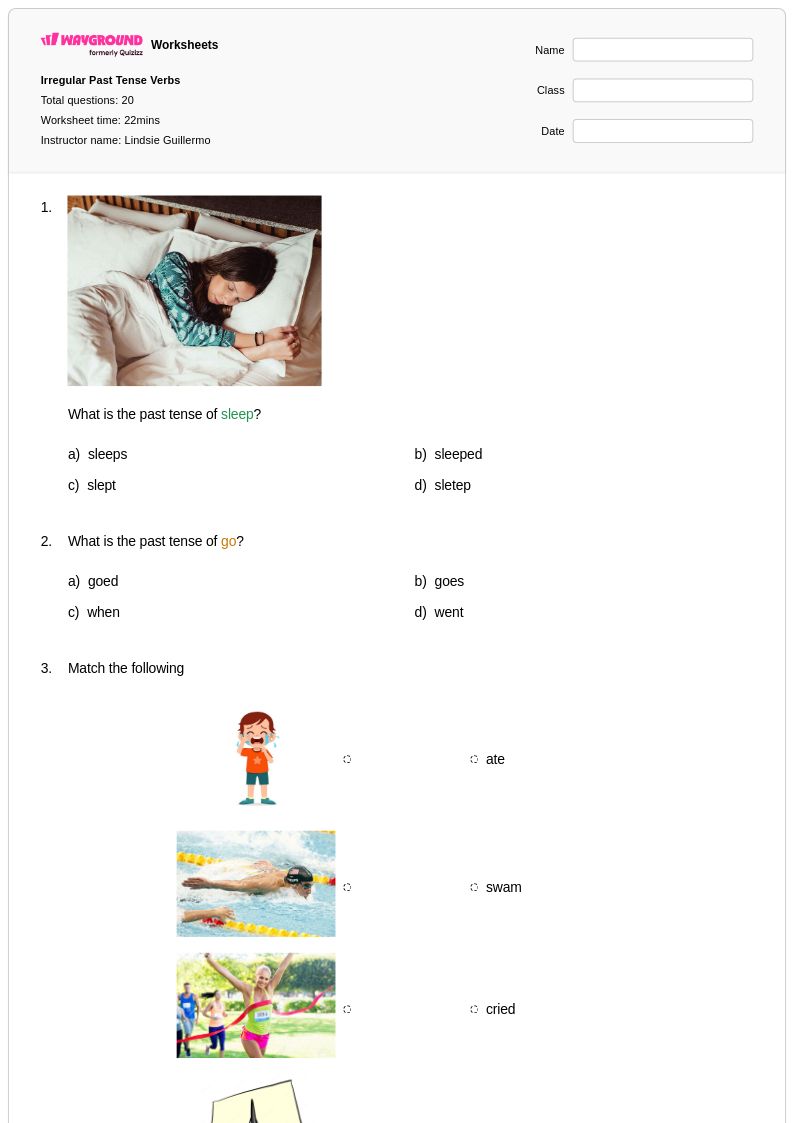
The most frequent errors involve irregular past tense forms (e.g., 'goed' instead of 'went'), confusion between simple past and present perfect, and mixing tenses within a single piece of writing. Students often apply regular '-ed' endings universally because it is the rule they learned first. Targeted practice with irregular verb charts, combined with sentence-editing tasks that require tense consistency, helps students internalize the exceptions more reliably.
How do I help students understand the difference between present simple and present continuous?
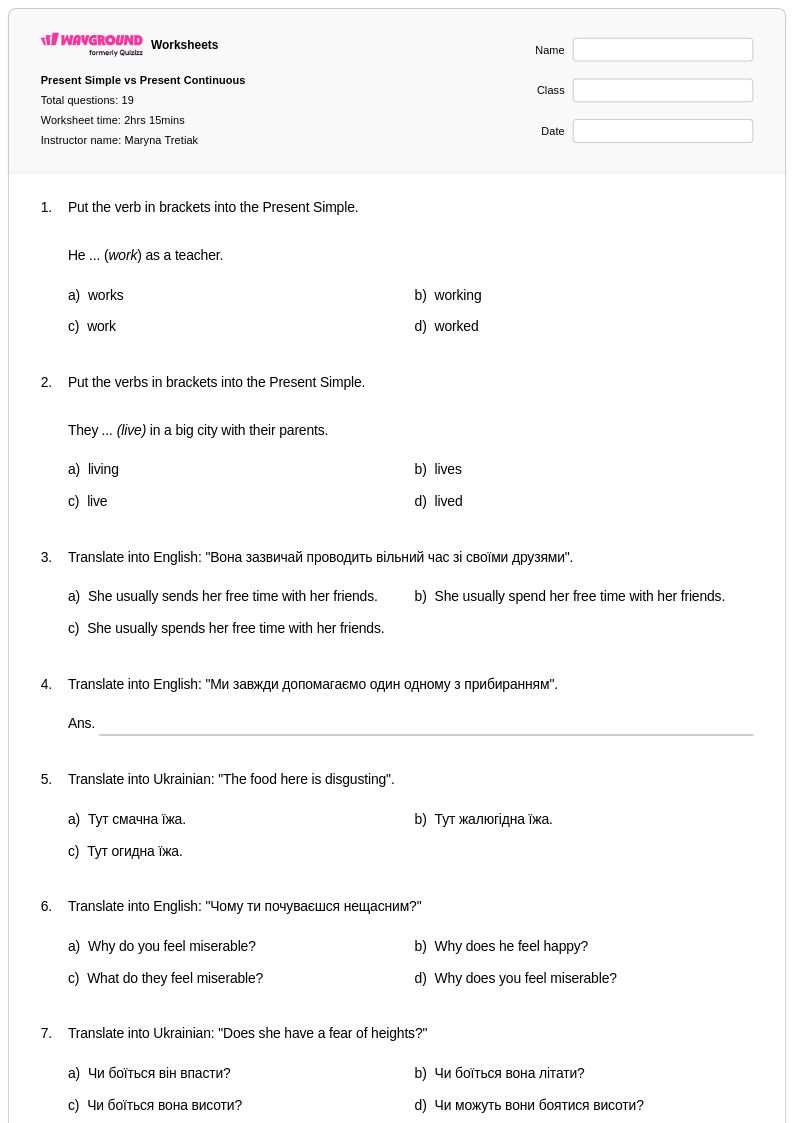
Students often default to present continuous because it mirrors how speech feels in the moment, leading to errors like 'I am knowing the answer.' The key distinction to teach is that present simple describes habits, states, and facts, while present continuous describes actions happening right now or temporarily. Sorting exercises and controlled writing tasks — where students must justify their tense choice — are particularly effective at making this distinction concrete.
How can I use Wayground's verb skills worksheets in my classroom?
Wayground's verb skills worksheets are available as printable PDFs for traditional classroom use and in digital formats for technology-integrated environments, giving teachers flexibility across instructional settings. Each worksheet includes a complete answer key, making it straightforward to use for independent practice, small-group work, or assigned homework. Teachers can also host worksheets as a quiz on Wayground, enabling real-time tracking of student responses and progress.
How do I differentiate verb skills practice for students at different levels?
For students who need additional support, reduce the complexity of sentence structures used in practice tasks and focus on high-frequency regular verbs before introducing irregular patterns. Wayground supports individual accommodations including read aloud, reduced answer choices, and extended time, which can be assigned to specific students without affecting the rest of the class. For advanced students, shift the focus toward verb moods, nuanced usage distinctions, and editing tasks within authentic writing contexts.