Free Printable Visual Motor Skills Worksheets for Class 3
Class 3 visual motor skills worksheets from Wayground help students develop hand-eye coordination and spatial awareness through engaging printables, practice problems, and free PDF activities with comprehensive answer keys.
Explore printable Visual Motor Skills worksheets for Class 3
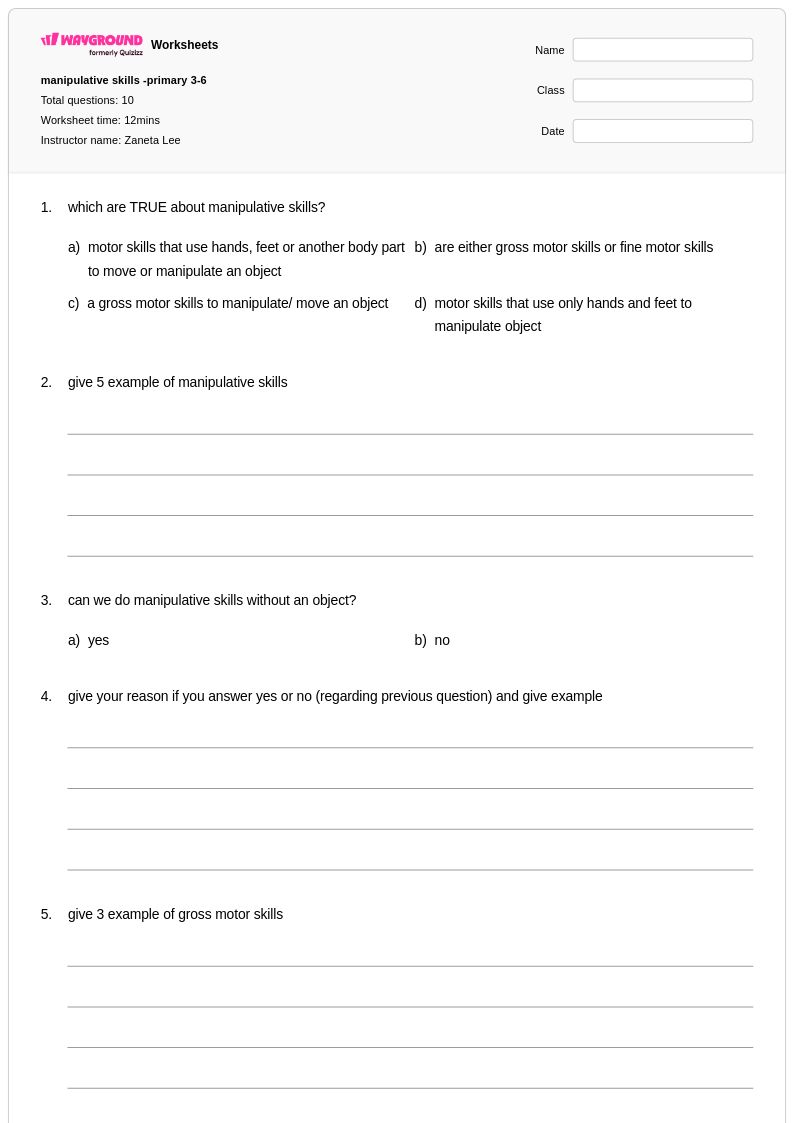
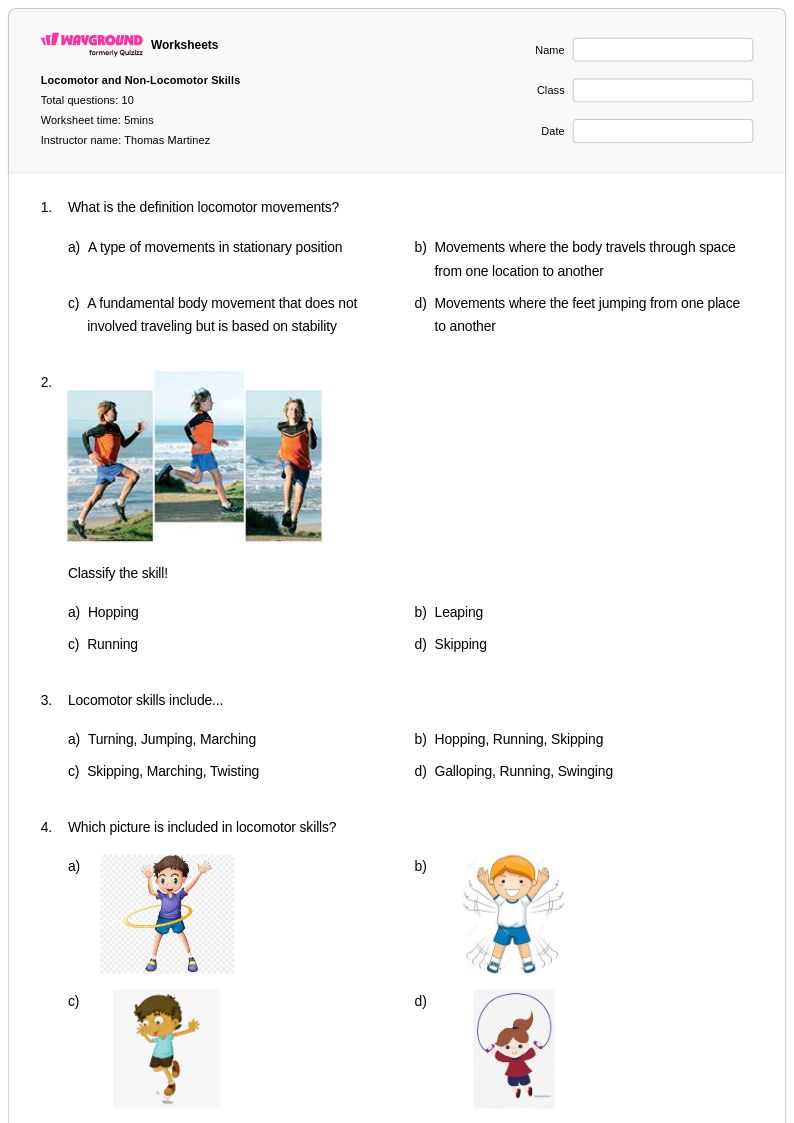
Visual motor skills worksheets for Class 3 students available through Wayground (formerly Quizizz) provide essential practice in coordinating visual perception with motor responses, a fundamental component of physical education development. These comprehensive worksheets target the integration of visual processing and motor planning skills that third-grade students need to master for successful participation in sports, games, and daily physical activities. Each worksheet collection includes structured practice problems that challenge students to track moving objects, coordinate hand-eye movements, and develop spatial awareness through age-appropriate exercises. Teachers can access complete answer keys and printable pdf formats for seamless classroom implementation, while the free resources offer diverse activities ranging from ball tracking exercises to precision movement tasks that strengthen the neural pathways connecting visual input to motor output.
Wayground (formerly Quizizz) empowers educators with millions of teacher-created visual motor skills resources specifically designed to support Class 3 physical education instruction and motor development goals. The platform's robust search and filtering capabilities allow teachers to locate worksheets that align with specific learning standards and individual student needs, while built-in differentiation tools enable customization for varying skill levels within the classroom. These resources are available in both printable and digital formats, including downloadable pdf versions that facilitate flexible lesson planning and accommodate different teaching environments. The extensive worksheet collection supports comprehensive instructional planning by providing materials for skill assessment, targeted remediation for students experiencing motor coordination challenges, and enrichment opportunities for advanced learners, ultimately helping teachers create well-rounded visual motor skills practice that enhances students' overall physical competency and confidence in movement activities.
FAQs
How do I teach visual motor skills in physical education?
Teaching visual motor skills effectively means structuring practice around the integration of visual perception and physical response, rather than treating them as separate abilities. Start with basic tracking exercises where students follow moving objects with their eyes before responding with movement, then progressively build toward complex sequences like catching a thrown object or tracing a path while maintaining body control. Breaking tasks into smaller components and giving immediate, specific feedback helps students internalize the coordination patterns they need for sports and everyday movement.
What exercises help students practice visual motor integration?
Effective visual motor integration practice includes activities that require students to track a stimulus and respond with a precise movement, such as ball-toss drills, maze tracing, dot-to-dot sequencing, and mirror-movement exercises. Worksheets that progress from simple tracking tasks to multi-step coordination challenges are particularly useful because they build skill systematically rather than jumping to complex movements before foundational coordination is established. Structured practice problems with clear visual cues give students the repetition needed to internalize hand-eye timing.
What mistakes do students commonly make when developing visual motor skills?
A common error is leading with physical movement before fully processing the visual input, which produces rushed, inaccurate responses during tasks like catching or tracing. Students also frequently anchor their gaze on their own hands rather than the target, breaking the feedback loop that accurate visual motor integration requires. Teachers should watch for these patterns during practice tasks because they indicate the student has not yet internalized the perceptual step that must precede the motor response.
How can I differentiate visual motor skills practice for students with varying ability levels?
Differentiation in visual motor skills practice works best when both the complexity of the visual stimulus and the precision demand of the motor response are adjusted independently. For students who need support, reducing the number of response choices in a tracking or matching task lowers cognitive load while still targeting the same coordination goal. On Wayground, teachers can apply accommodations such as reduced answer choices and Read Aloud support to individual students, so each learner works at an appropriate challenge level without disrupting the rest of the class.
How do I use Wayground's visual motor skills worksheets in my classroom?
Wayground's visual motor skills worksheets are available as printable PDFs for traditional physical education settings and in digital formats for technology-integrated environments, giving teachers flexibility in how they deploy the material. Teachers can also host worksheets as a live quiz on Wayground, which allows for real-time monitoring of student responses. Each resource includes answer keys, making it straightforward to assess skill development after structured practice sessions and identify which students need additional targeted work.
How do visual motor skills transfer to real-world sports performance?
Visual motor integration is a foundational component of nearly every sport and recreational activity because athletes must continuously process visual information and translate it into precise, timed movements. Skills like tracking a ball, anticipating trajectory, and coordinating limb movements in response to a moving target all depend on the same visual-motor pathways that structured worksheets and drills target. Building these skills through progressive, deliberate practice in physical education directly improves a student's ability to perform in game situations and everyday movement contexts.