Free Printable Word Recognition Worksheets for Class 3
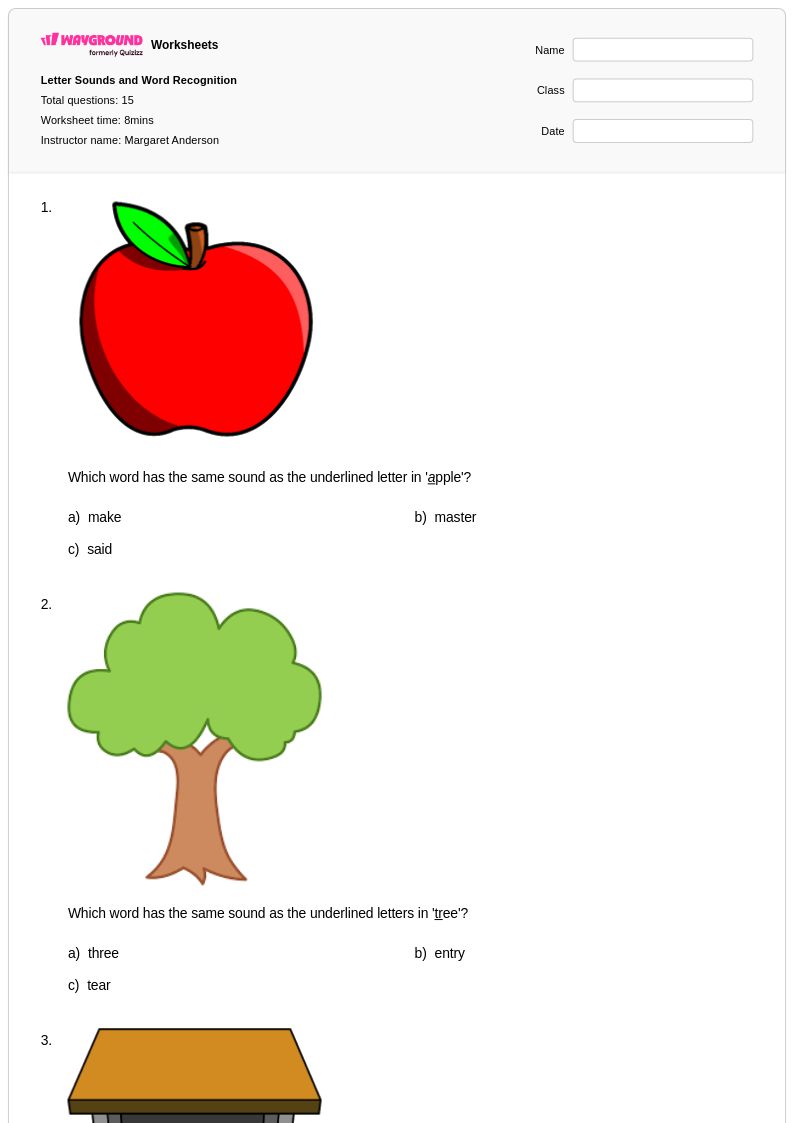
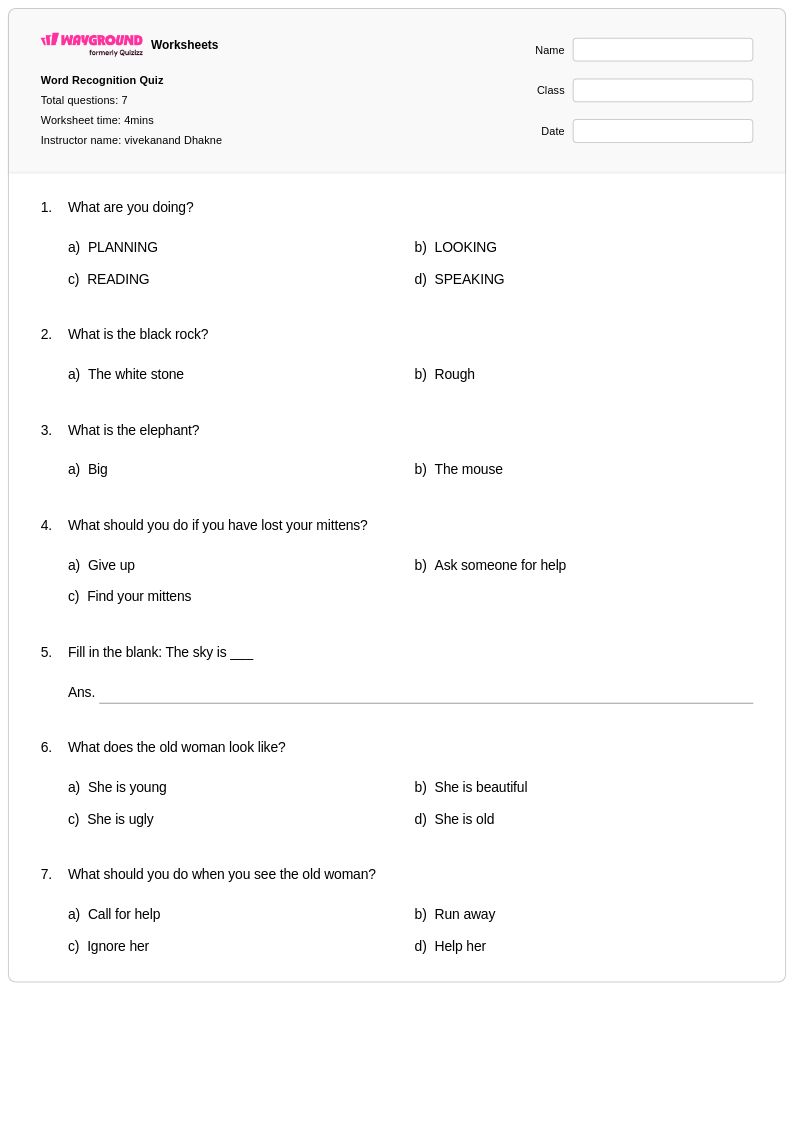
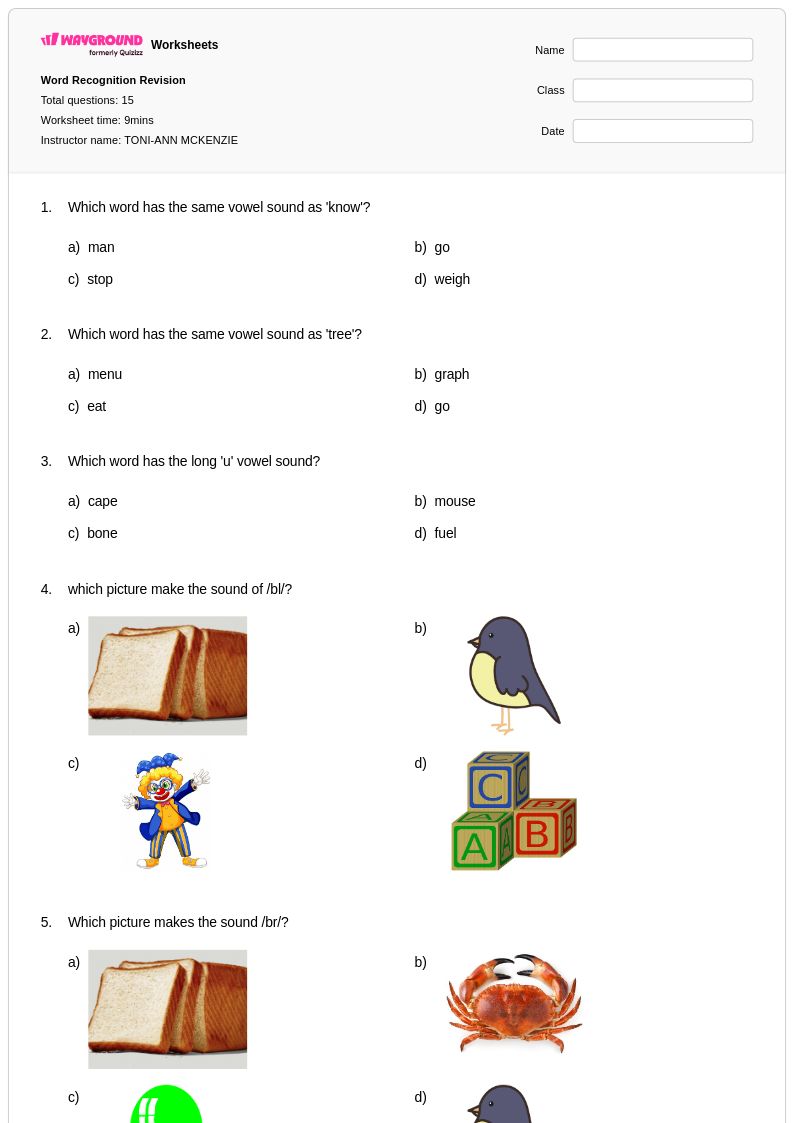
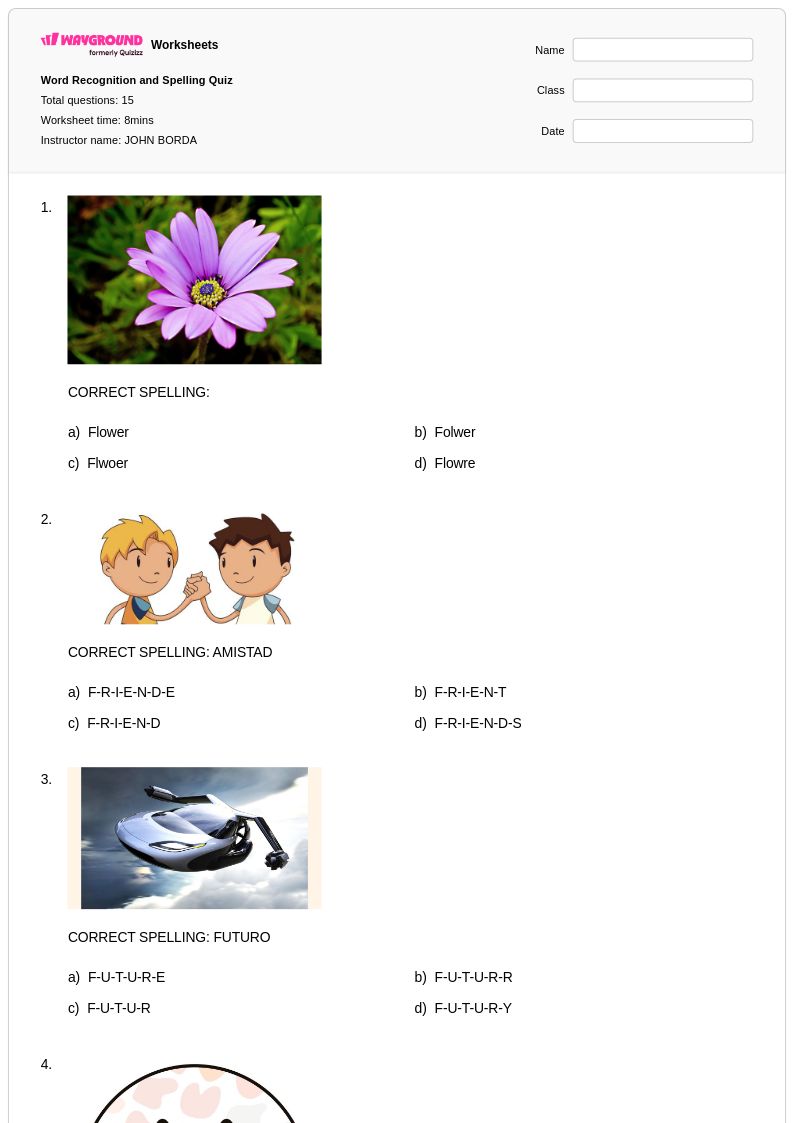
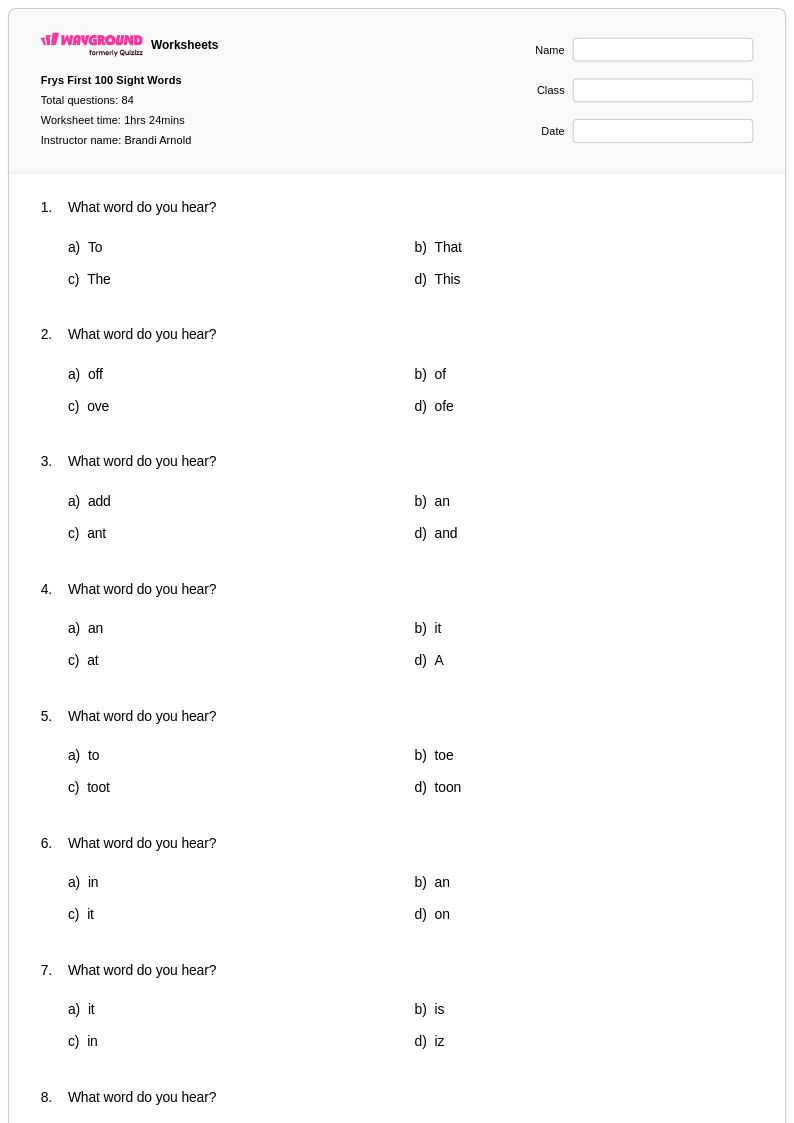
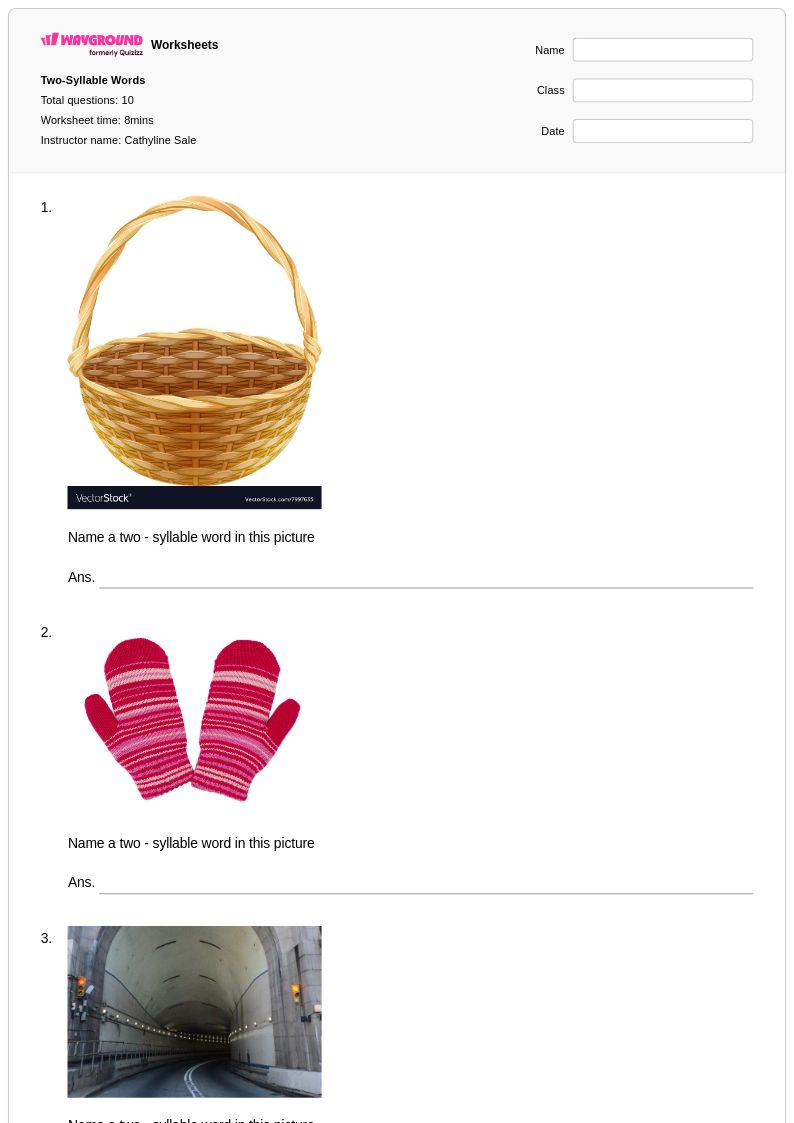
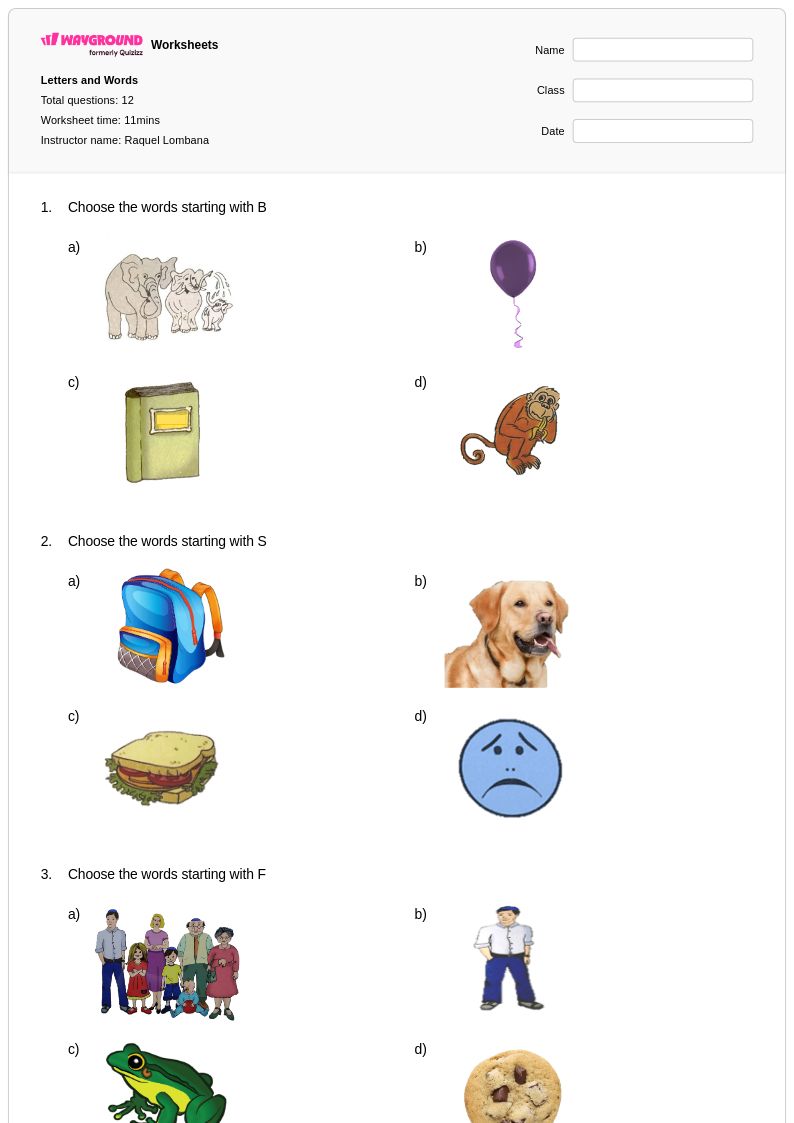
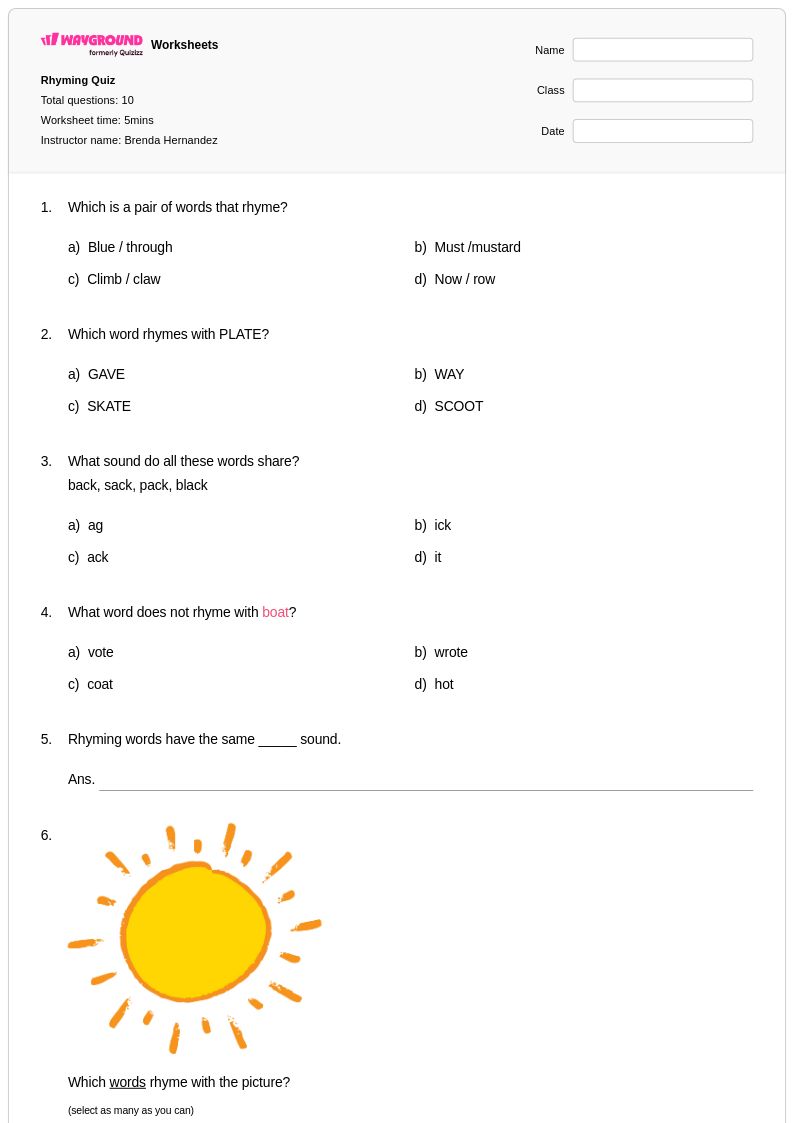
Free Class 3 word recognition worksheets and printables help students master sight words, phonics patterns, and vocabulary identification through engaging practice problems with complete answer keys available as downloadable PDFs.
Explore printable Word Recognition worksheets for Class 3
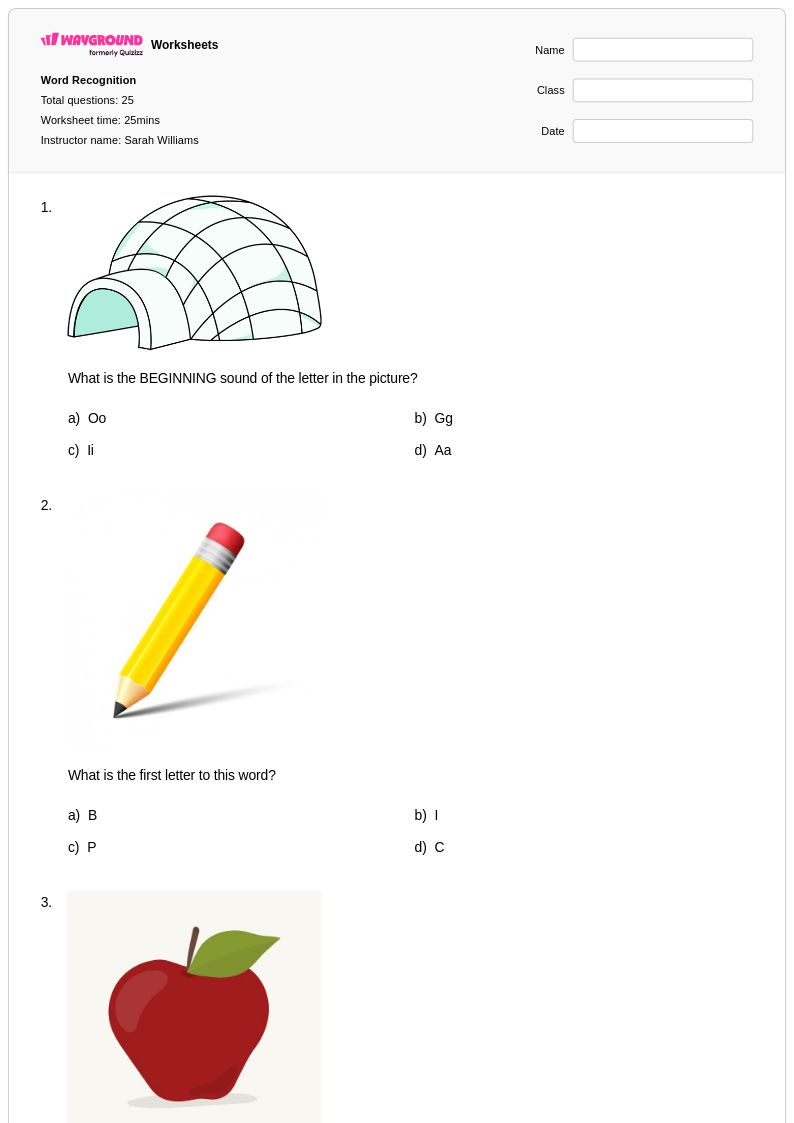
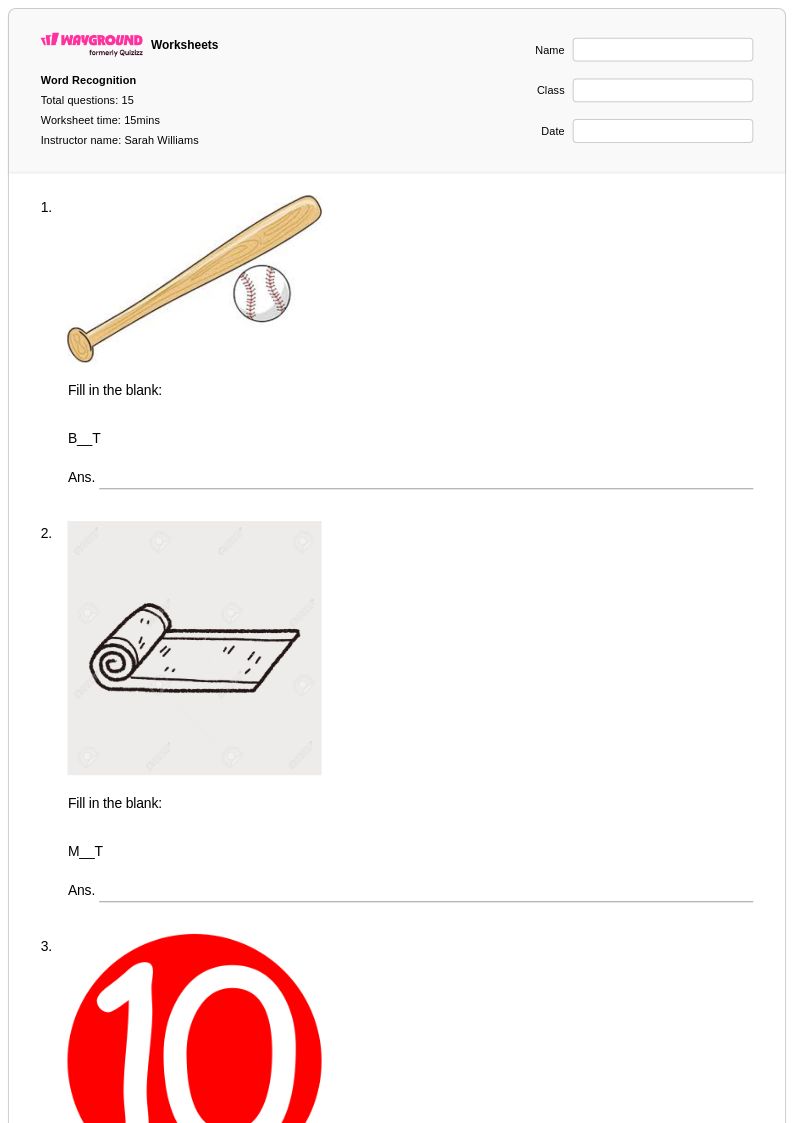
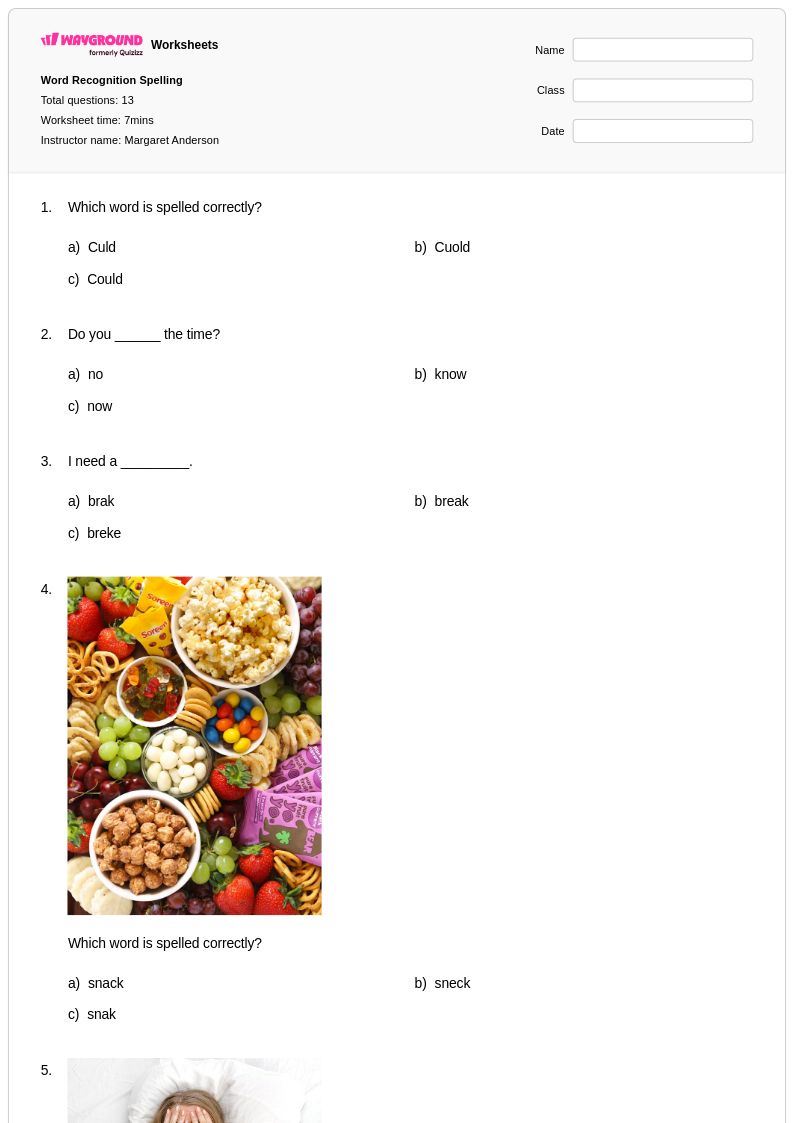
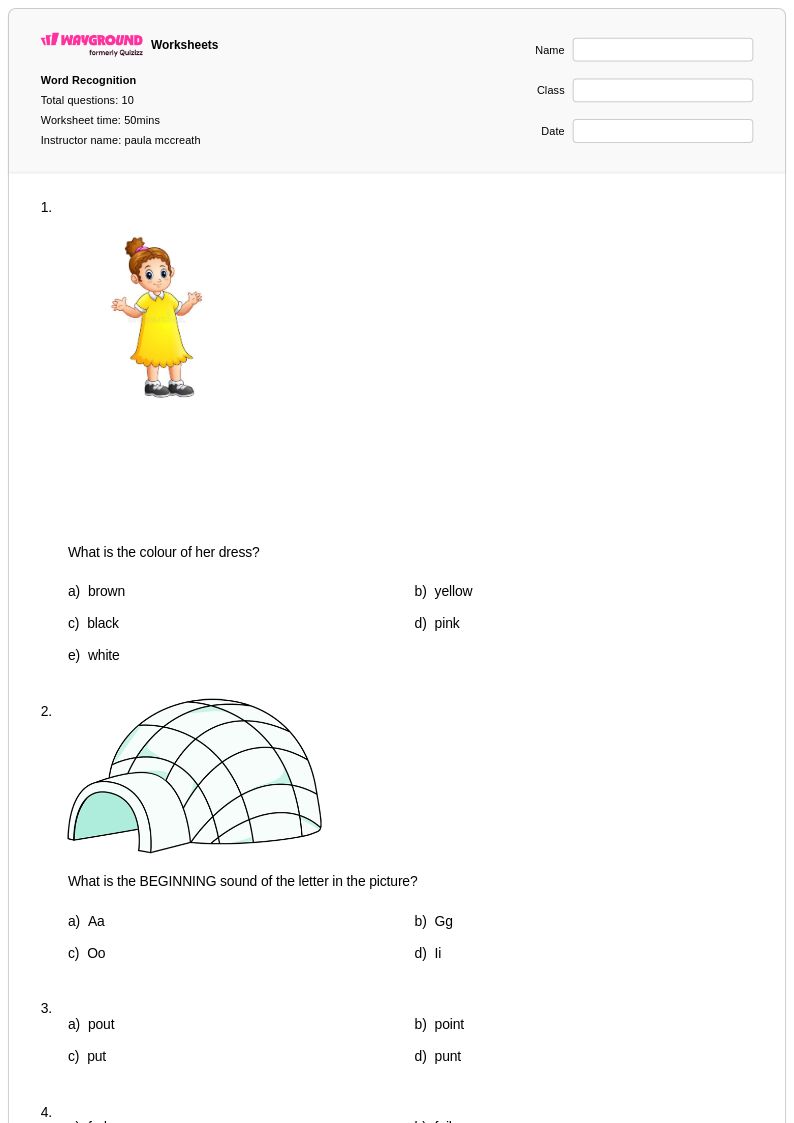
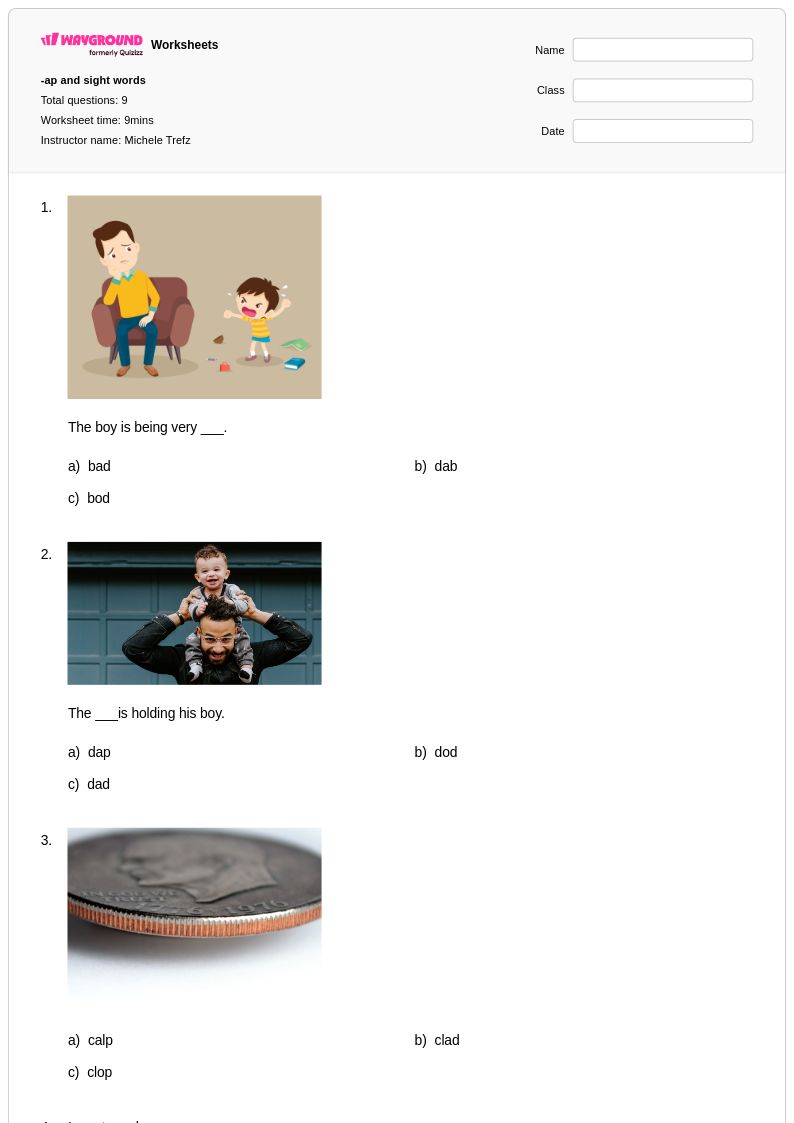
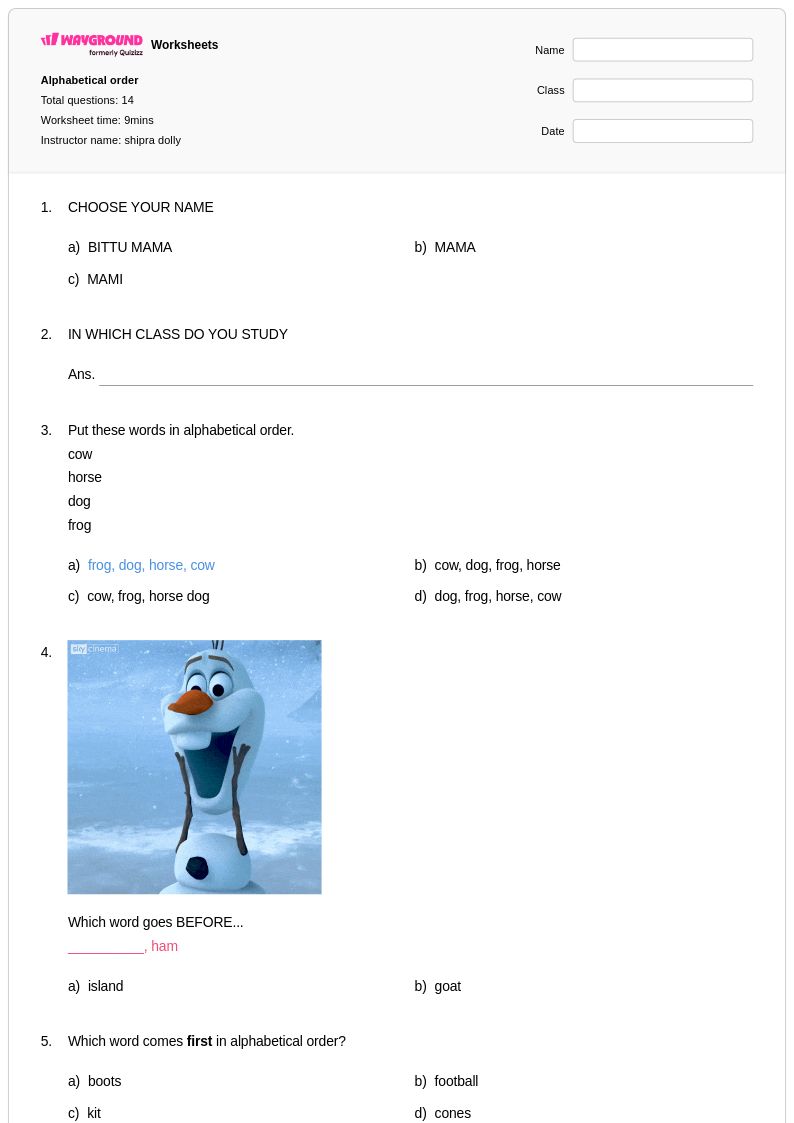
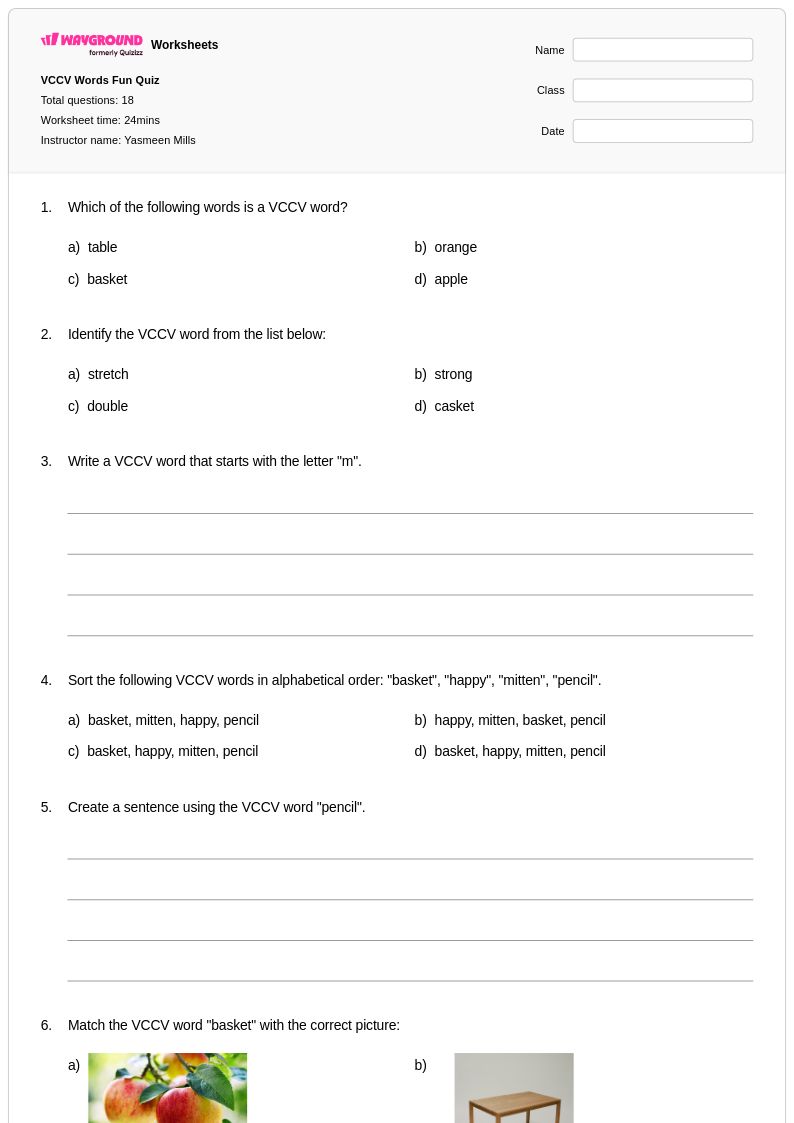
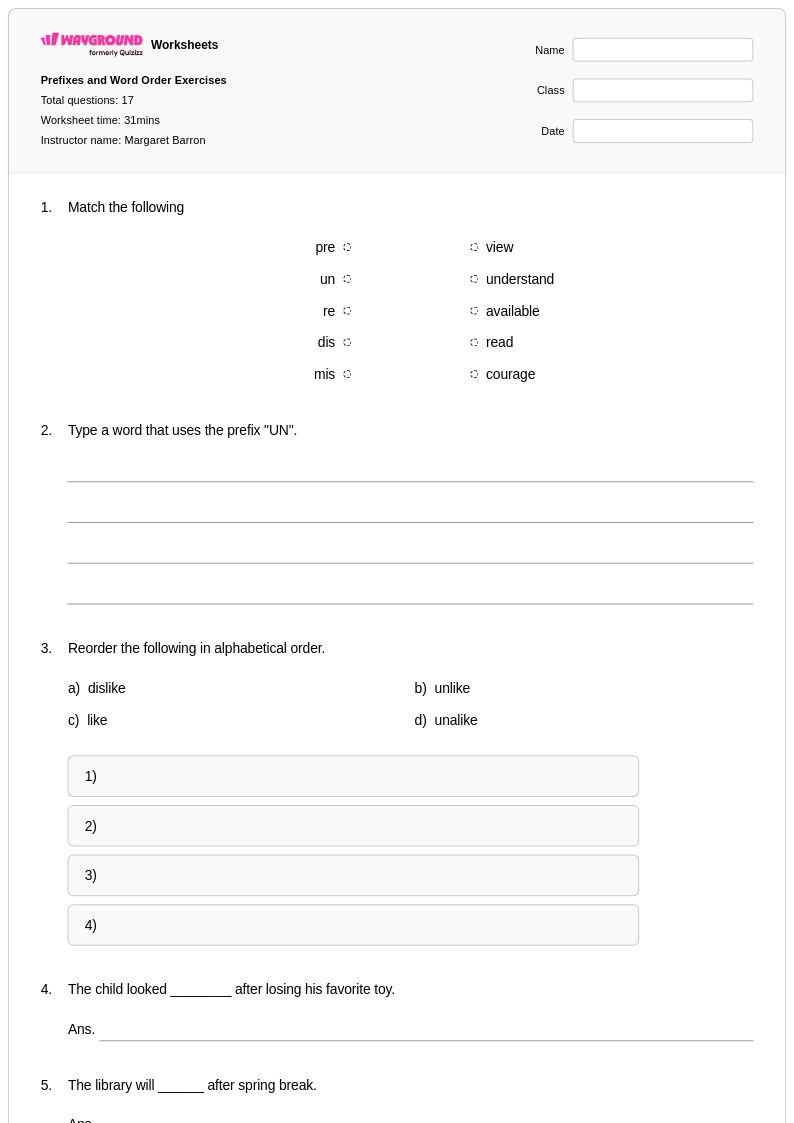
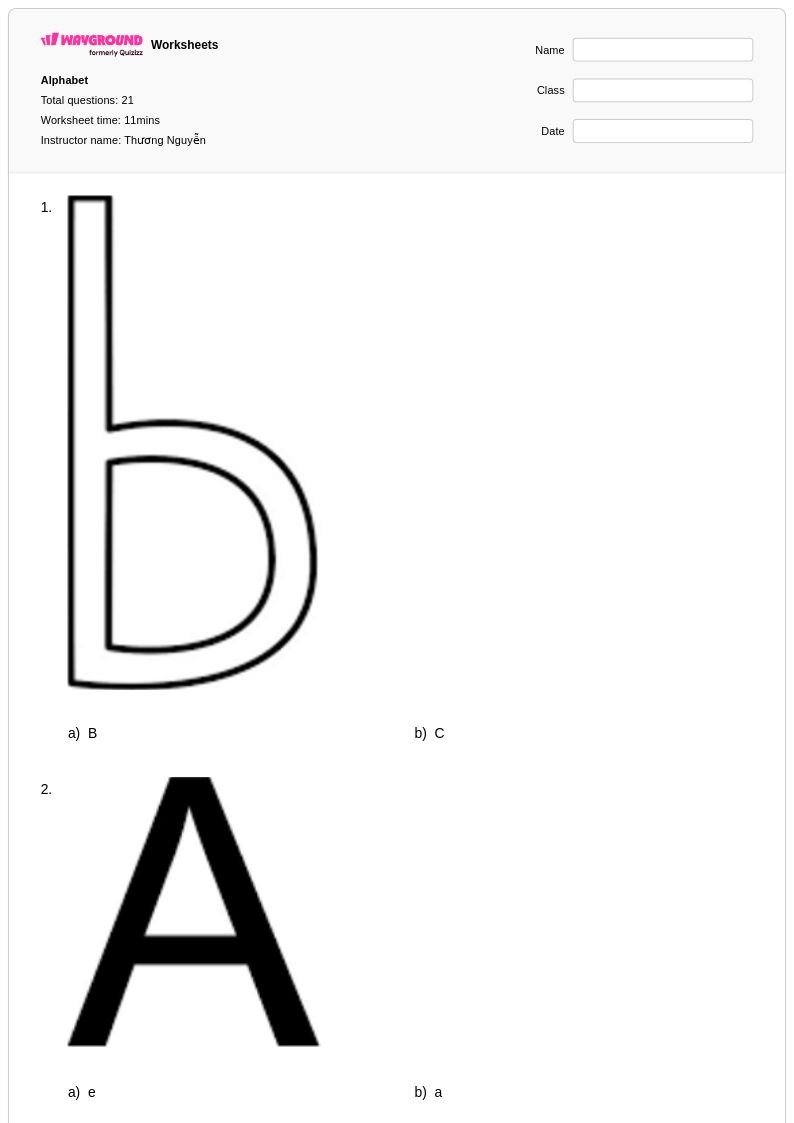
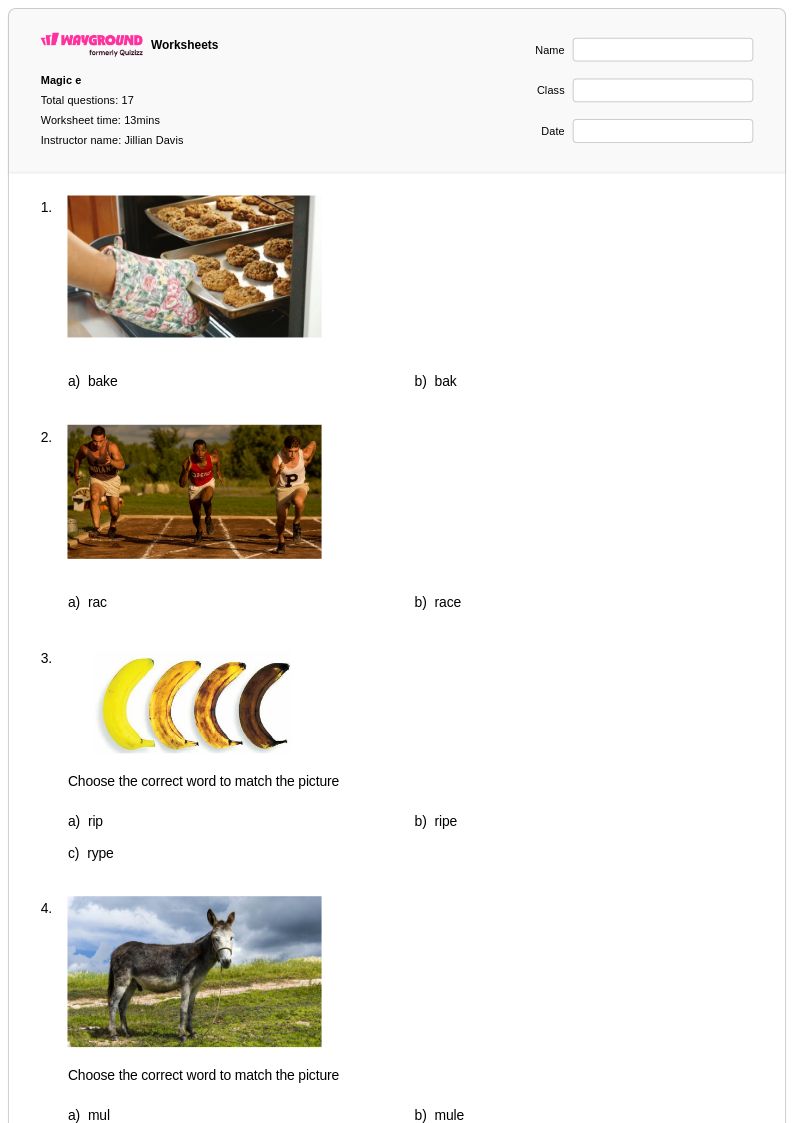
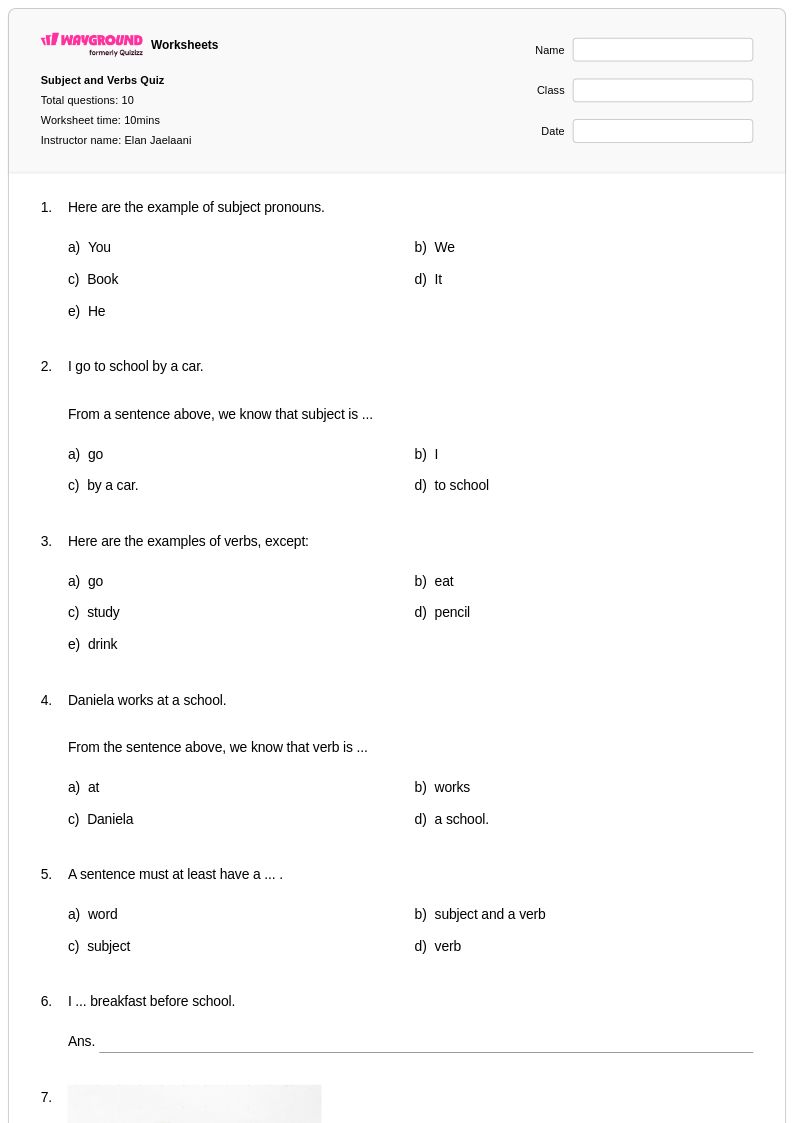
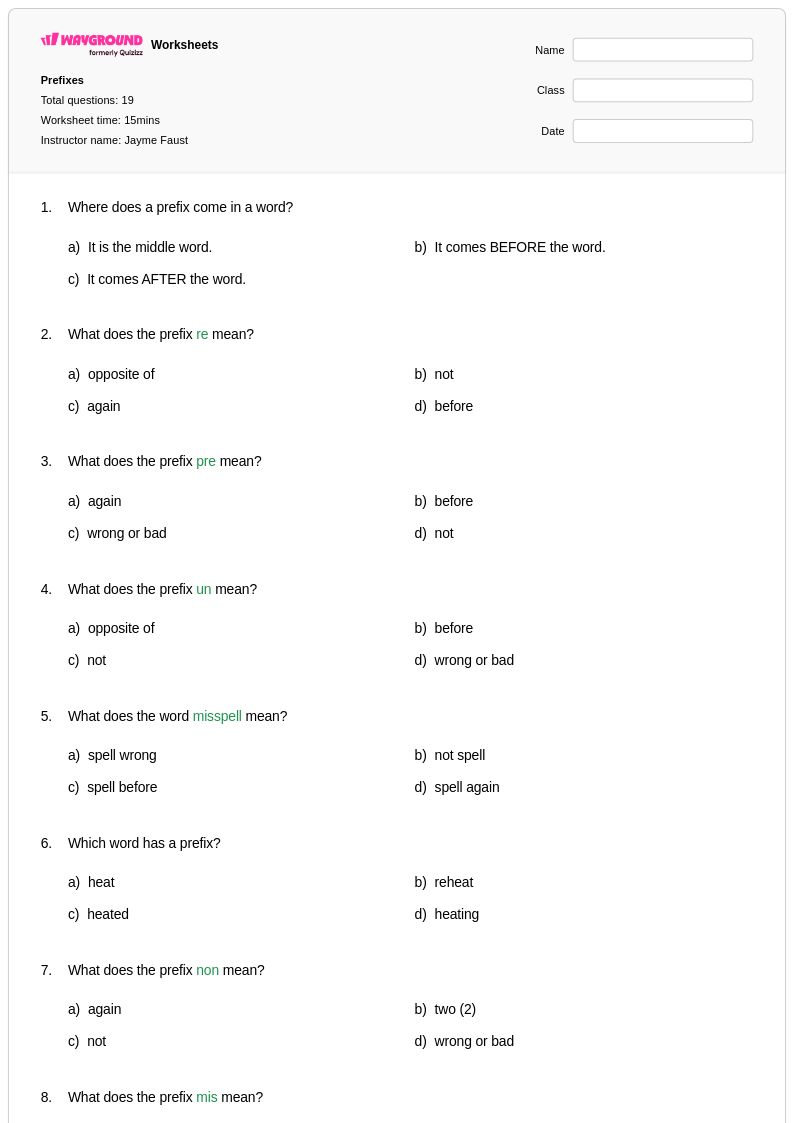
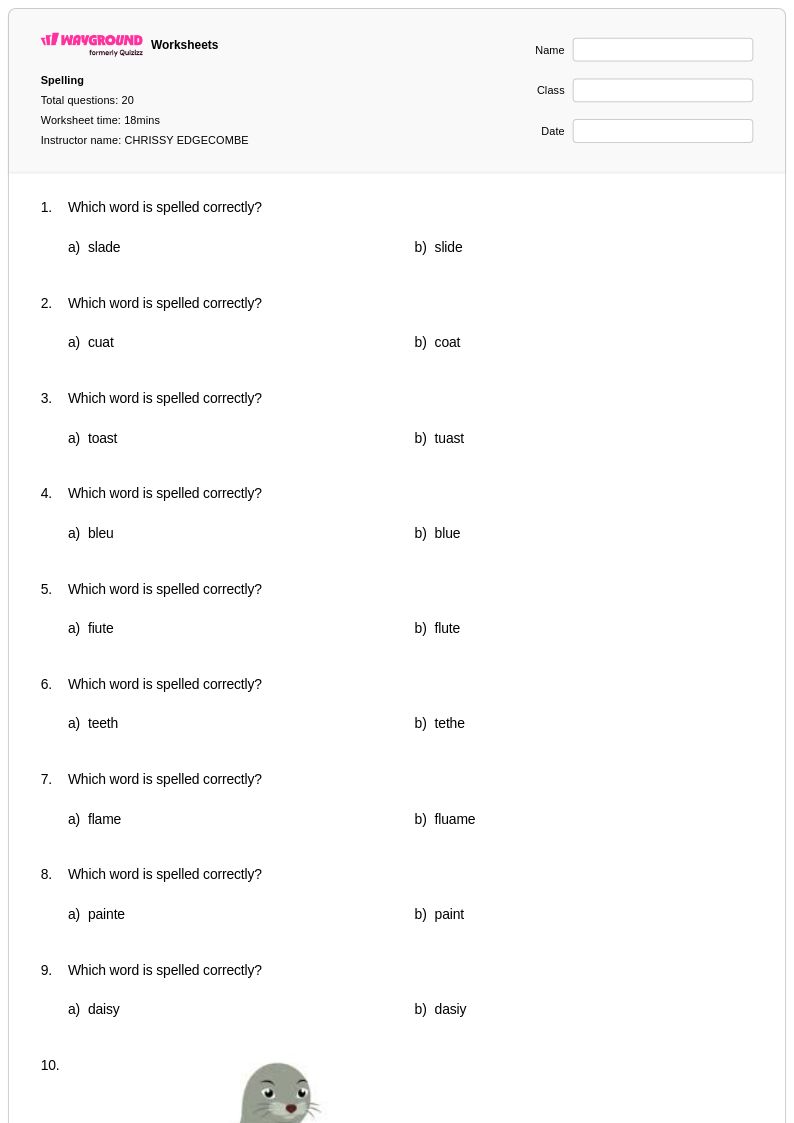
Word recognition worksheets for Class 3 students available through Wayground (formerly Quizizz) provide essential practice for developing automatic word identification skills that form the foundation of reading fluency. These comprehensive printables target key recognition strategies including sight word mastery, phonetic decoding, structural analysis of prefixes and suffixes, and context clue utilization. Each worksheet collection includes carefully sequenced practice problems that progress from basic high-frequency words to more complex vocabulary, with answer keys provided to support independent learning and immediate feedback. The free pdf resources emphasize both accuracy and speed in word identification, helping third-grade students build the rapid recognition skills necessary for successful reading comprehension across all academic subjects.
Wayground's extensive library of teacher-created word recognition materials offers educators access to millions of differentiated resources specifically designed to meet diverse Class 3 learning needs. The platform's robust search and filtering capabilities enable teachers to quickly locate worksheets aligned with specific reading standards while customization tools allow for seamless modification of difficulty levels and content focus. These versatile resources are available in both printable and digital formats, including downloadable pdf versions, making them ideal for classroom instruction, homework assignments, intervention programs, and enrichment activities. Teachers can efficiently plan targeted skill practice sessions, implement remediation strategies for struggling readers, and provide advanced challenges for accelerated learners, all while tracking student progress through systematic word recognition assessment and practice.
FAQs
How do I teach word recognition to early readers?
Effective word recognition instruction combines explicit phonics teaching with repeated exposure to high-frequency sight words. Teachers should use multisensory approaches — pairing visual, auditory, and kinesthetic activities — to help students build automatic identification of common words. Systematic practice that moves from simple CVC words to more complex phonetic patterns gives students a structured pathway toward reading fluency.
What exercises help students practice word recognition?
Effective practice exercises include timed word identification drills, word sorting by phonetic pattern, and fill-in-the-blank sentences that require students to use contextual clues. Repeated reading activities and sight word flashcard routines also reinforce automatic recognition. Worksheets that progress from basic identification tasks to more complex recognition challenges help students build both accuracy and processing speed.
What mistakes do students commonly make with word recognition?
Students frequently confuse visually similar words such as 'where' and 'were' or 'their' and 'there', relying too heavily on initial letters rather than processing the full word. Others over-apply phonics rules to irregular sight words, causing hesitation and decoding errors. A common misconception is that reading slowly and sounding out every word will eventually lead to fluency — in practice, automaticity requires deliberate repeated exposure, not just careful decoding.
How can I differentiate word recognition instruction for students at different reading levels?
Differentiation in word recognition starts with grouping students by their current sight word bank and phonetic pattern knowledge, then assigning practice tasks that target their specific gaps. For students who need additional support, reducing the number of answer choices or enabling read-aloud features can lower cognitive load while keeping them engaged. Wayground allows teachers to apply individual accommodations — including read aloud, extended time, and reduced answer choices — to specific students without disrupting the experience for the rest of the class.
How do I use Wayground's word recognition worksheets in my classroom?
Wayground's word recognition worksheets are available as printable PDFs for traditional classroom use and in digital formats for technology-integrated environments, making them flexible for independent work, homework, or small group instruction. Teachers can also host them as a quiz directly on Wayground, enabling real-time student responses and immediate feedback. Each worksheet includes an answer key, so students can self-assess or teachers can review responses efficiently.
How does word recognition relate to reading comprehension?
Word recognition is a prerequisite for reading comprehension — when students must devote cognitive effort to decoding individual words, less working memory is available for understanding meaning. Automatic word recognition frees up mental resources so students can focus on sentence structure, inference, and text-level meaning. Research consistently shows that students who achieve fluent word recognition are better positioned to comprehend grade-level texts.