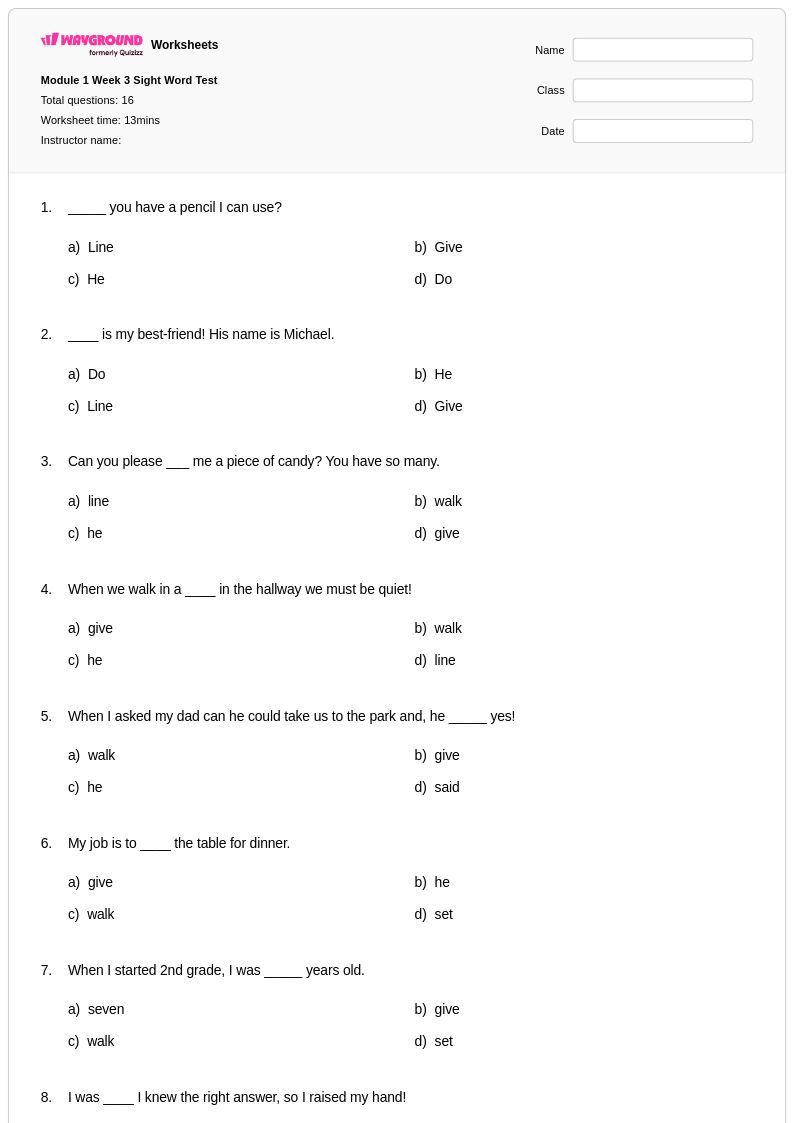
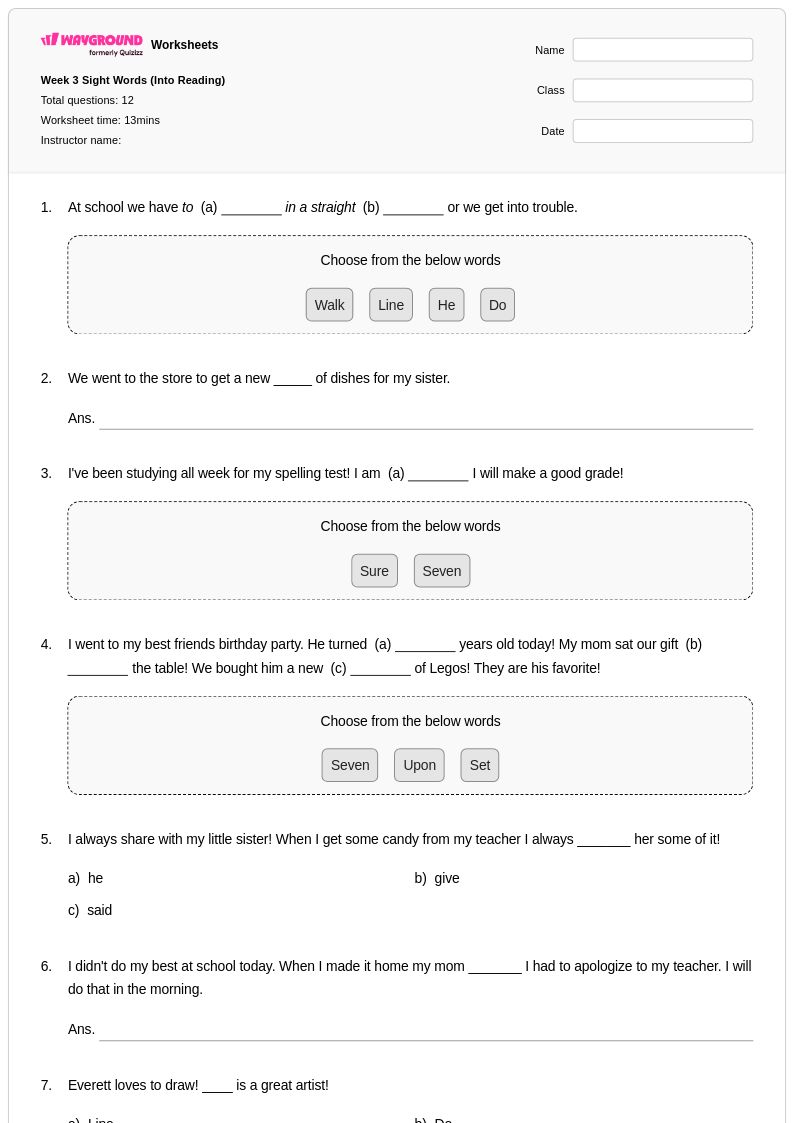
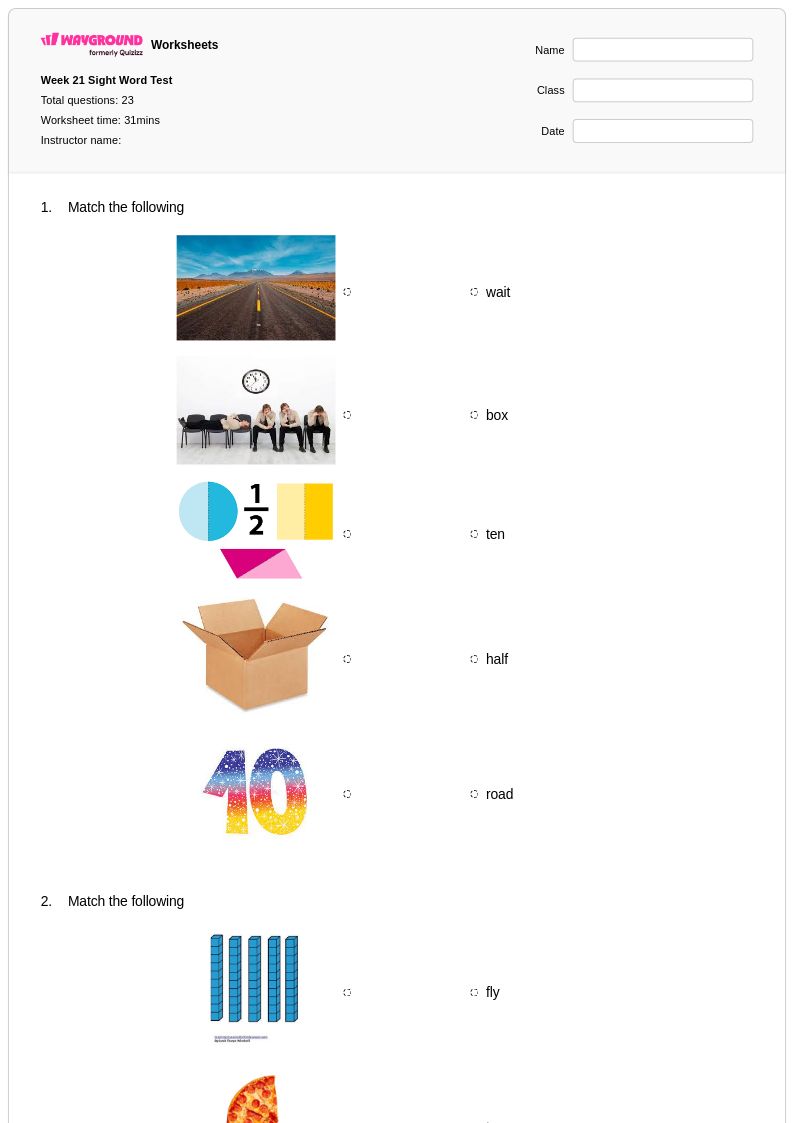
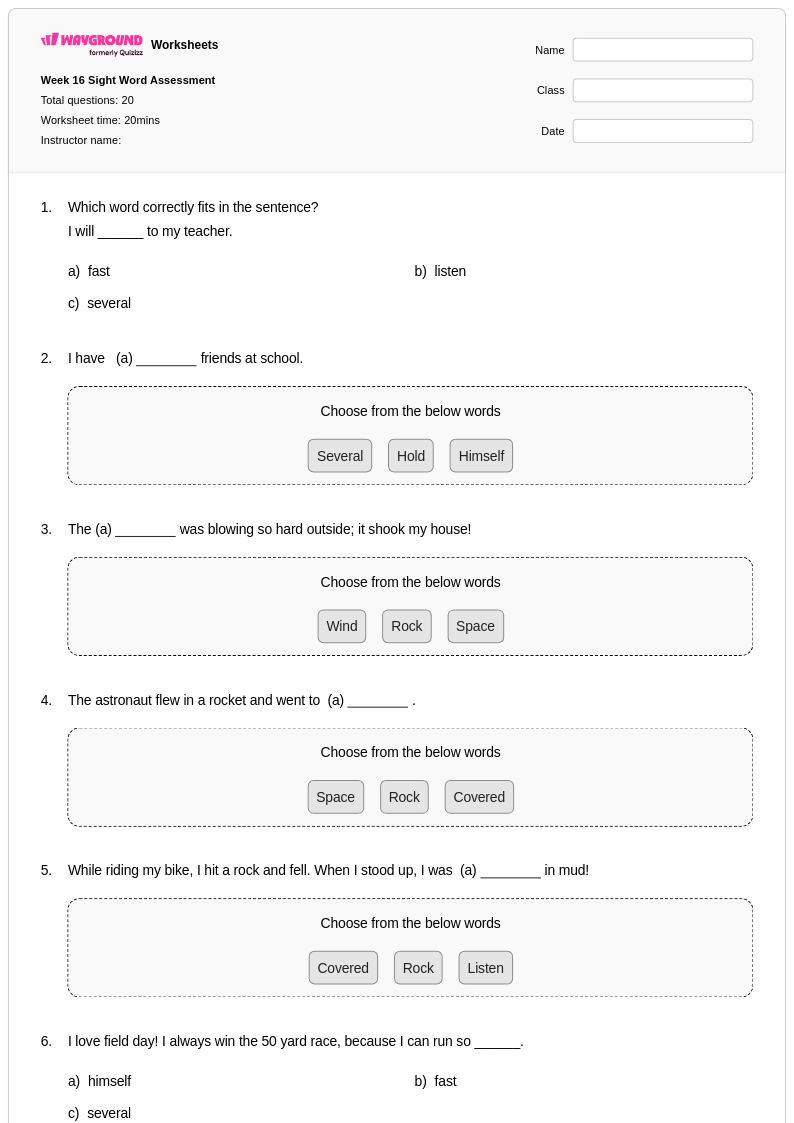
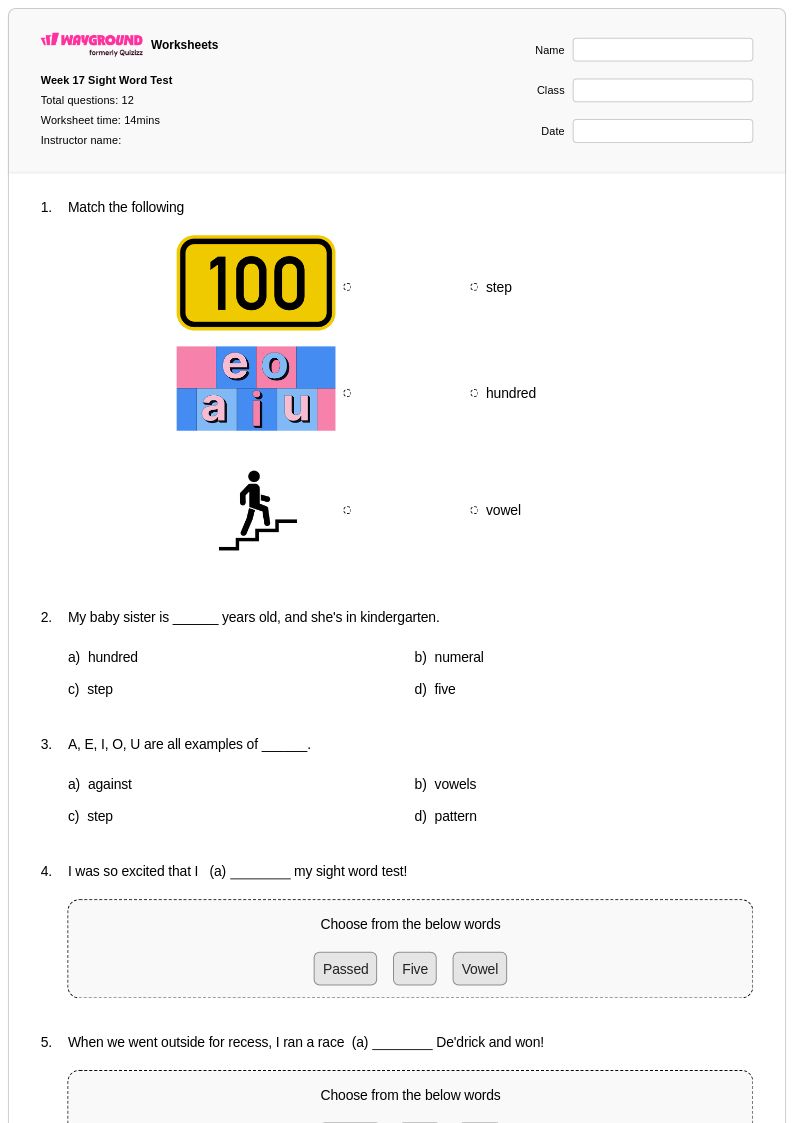
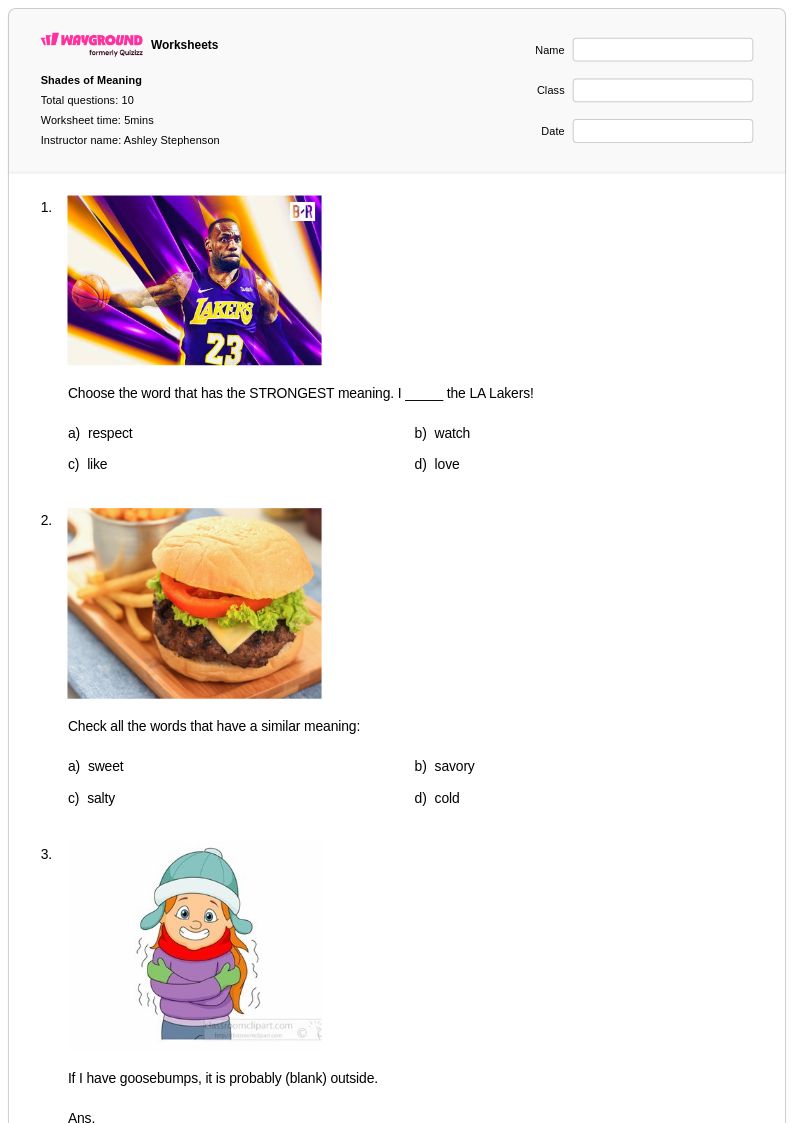
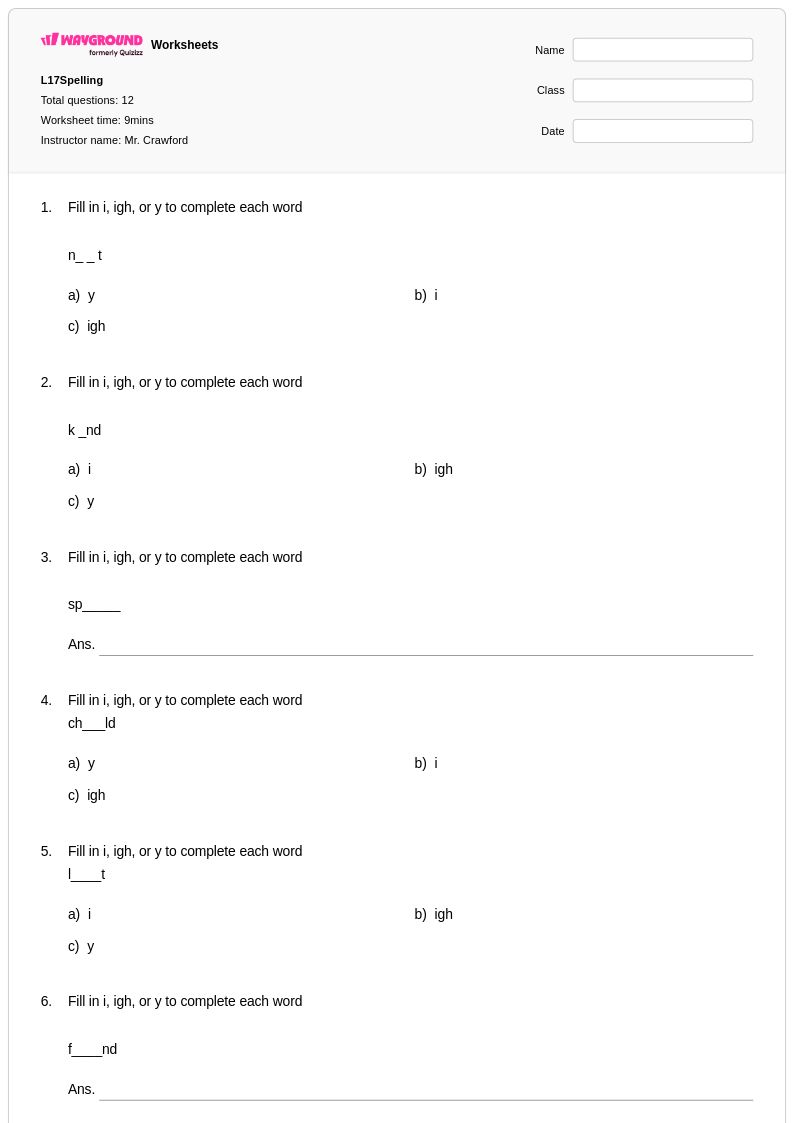
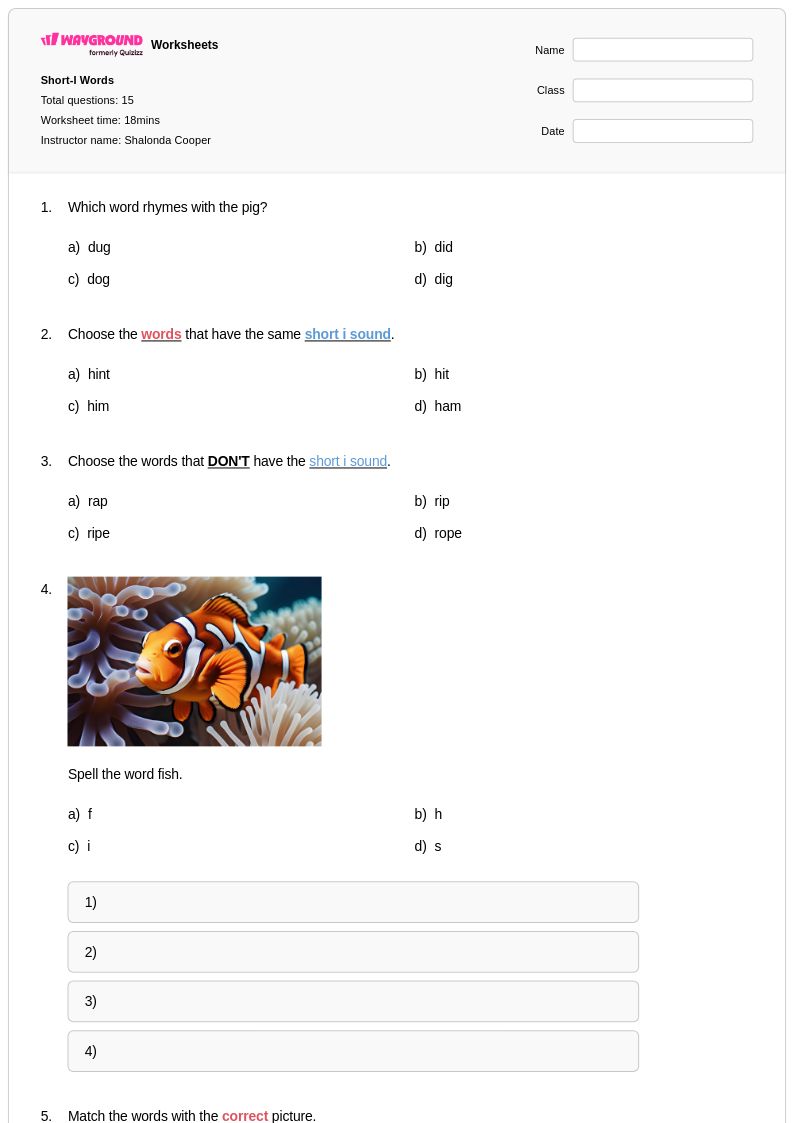
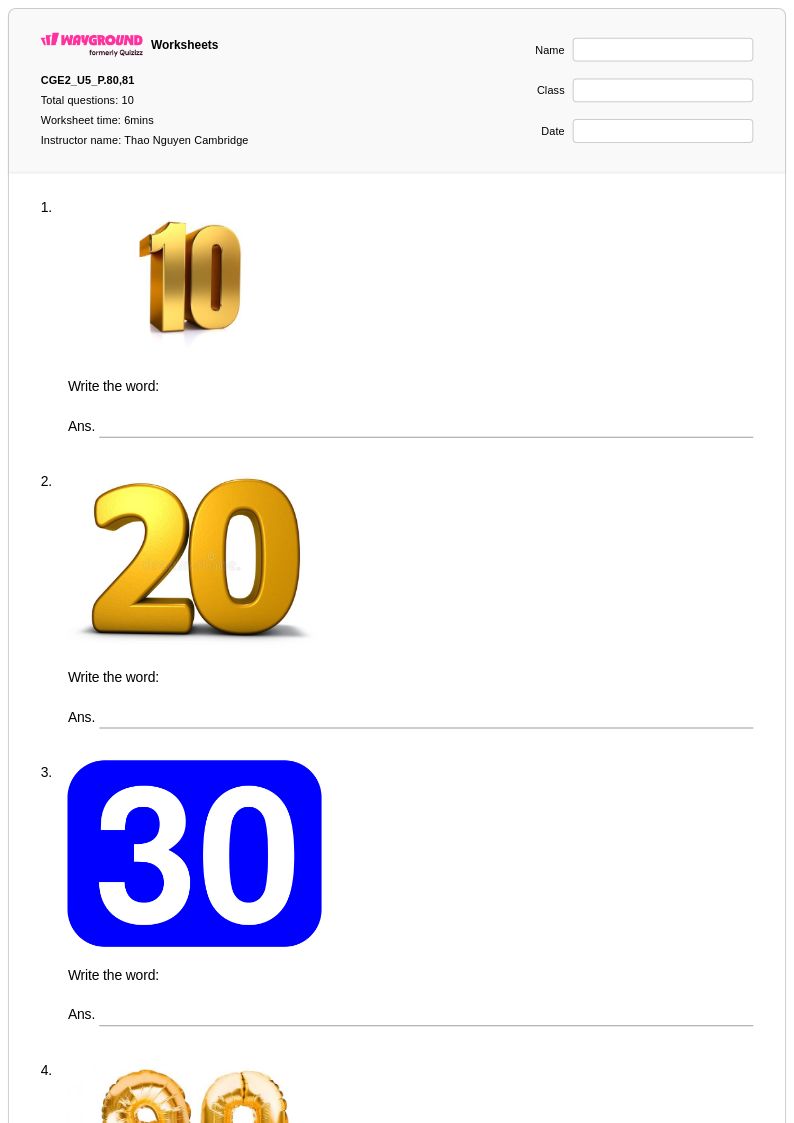
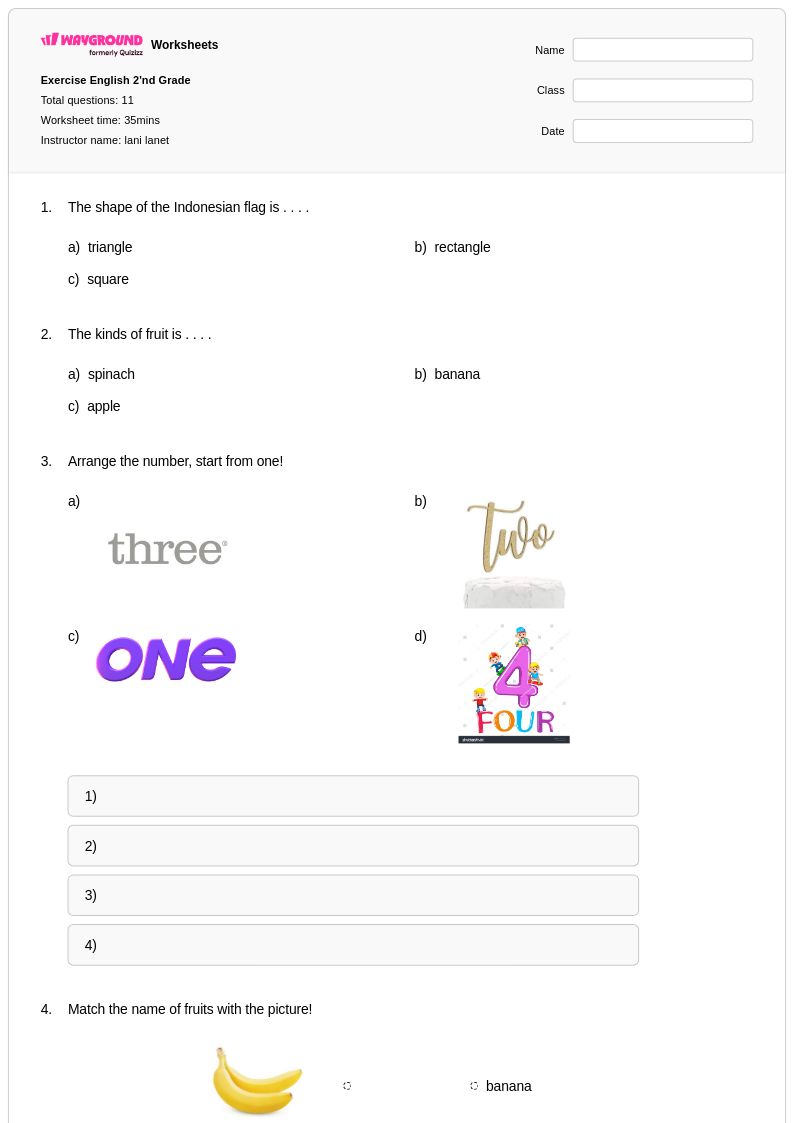
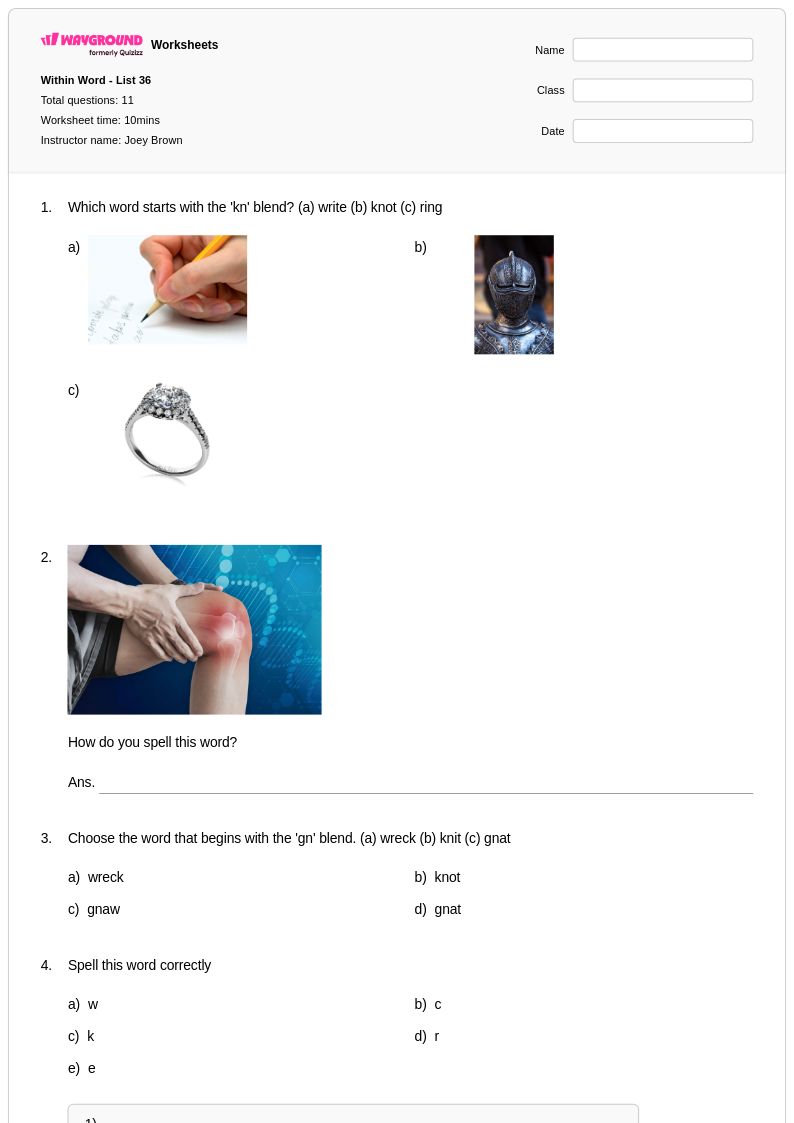
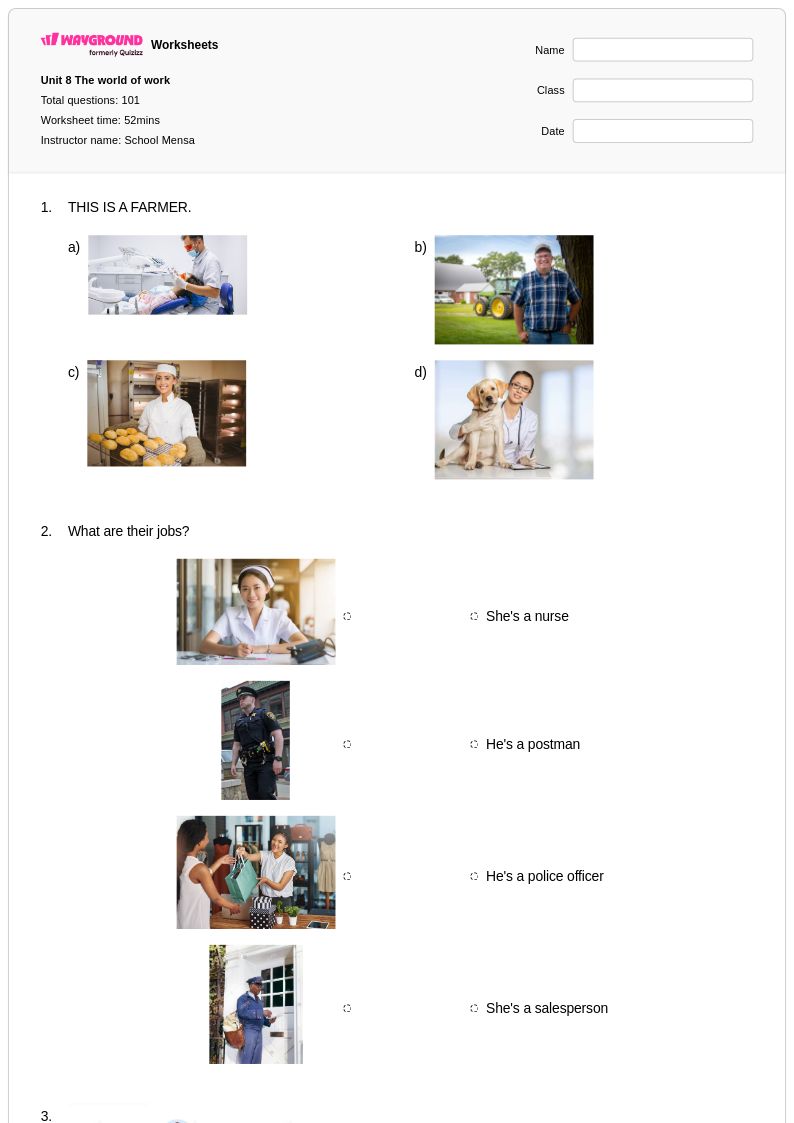
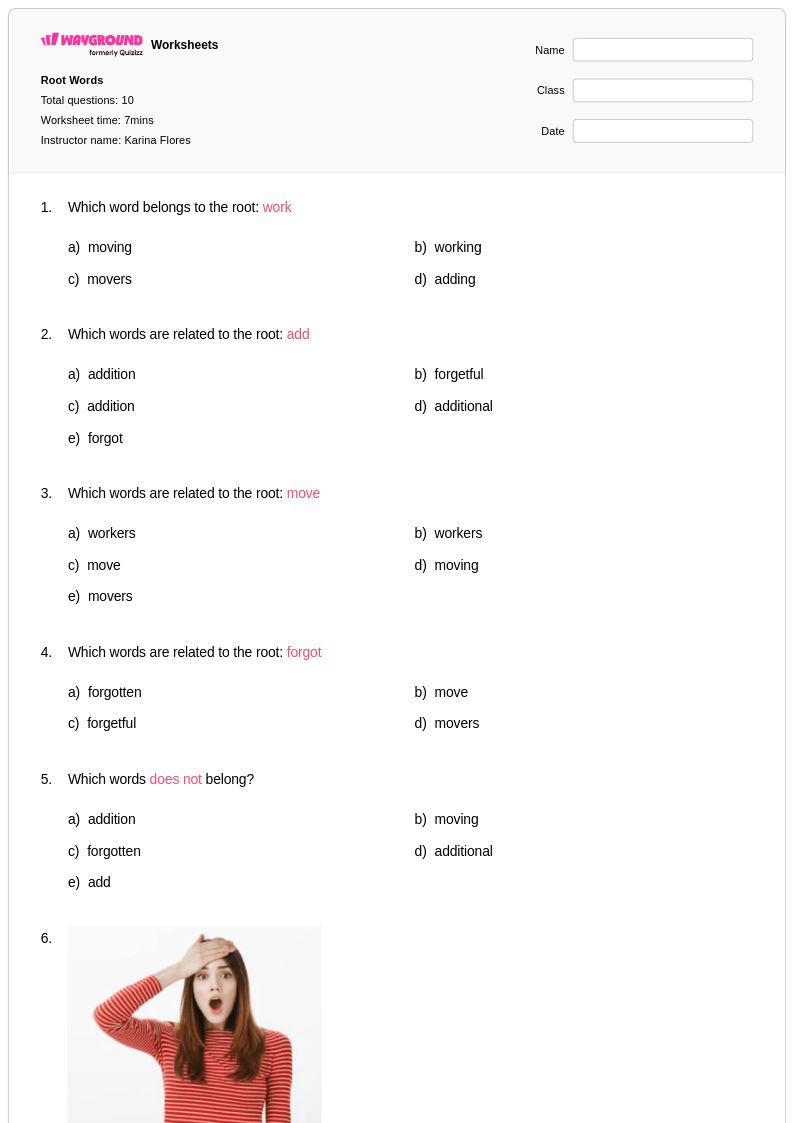
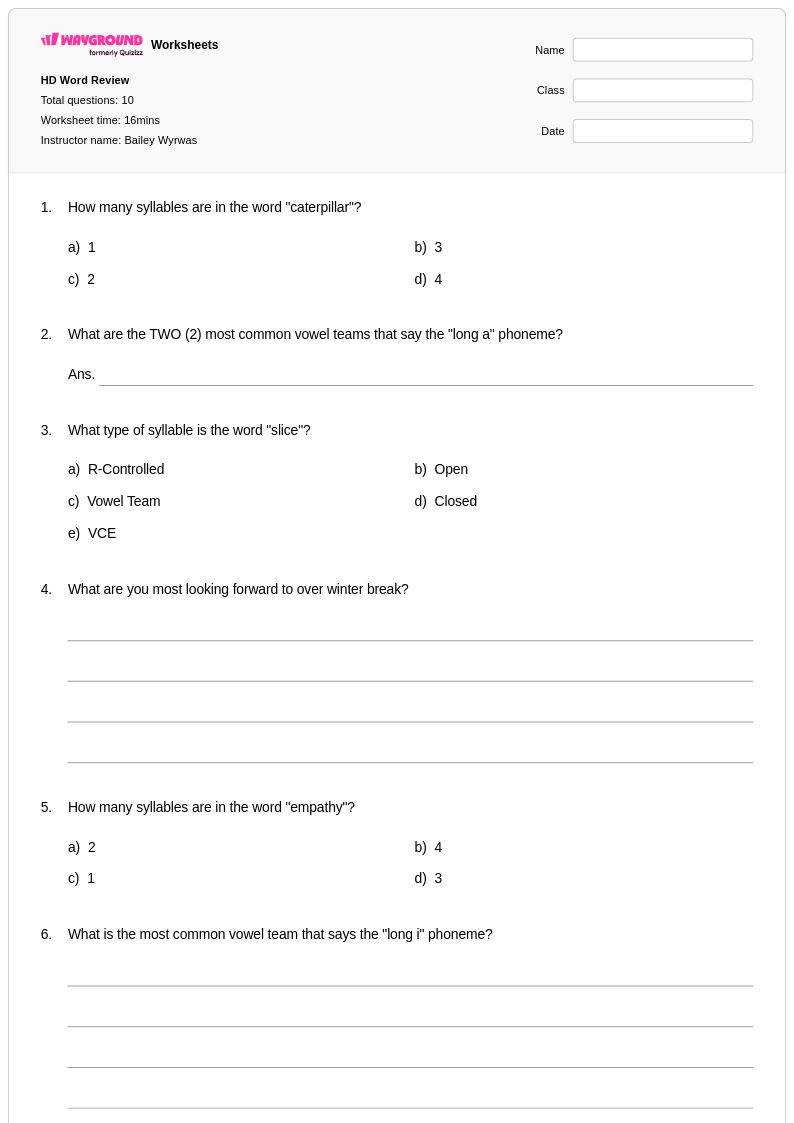
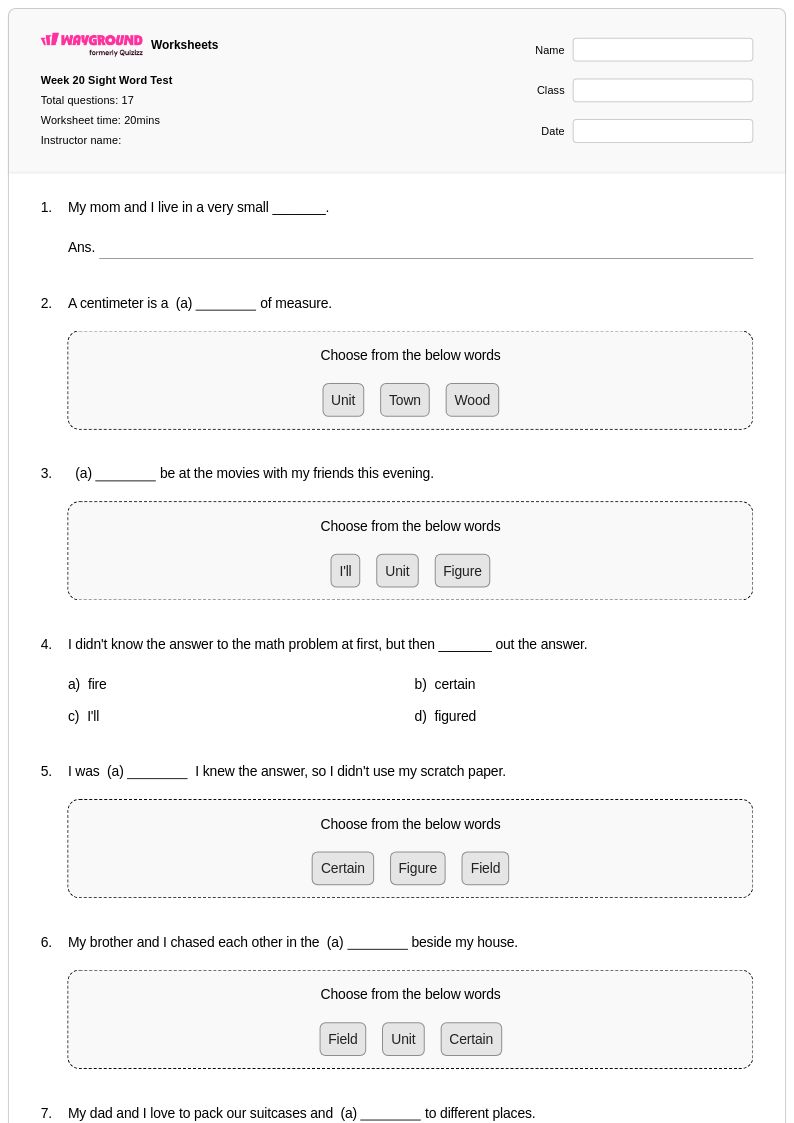
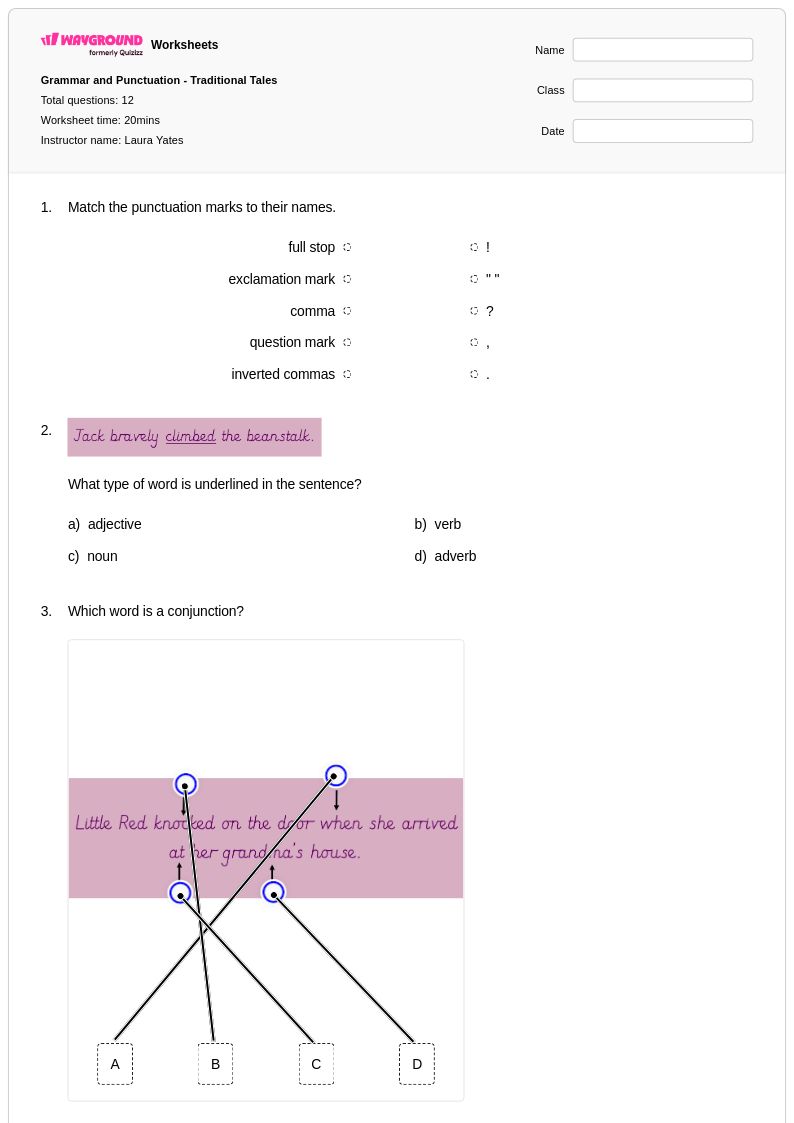
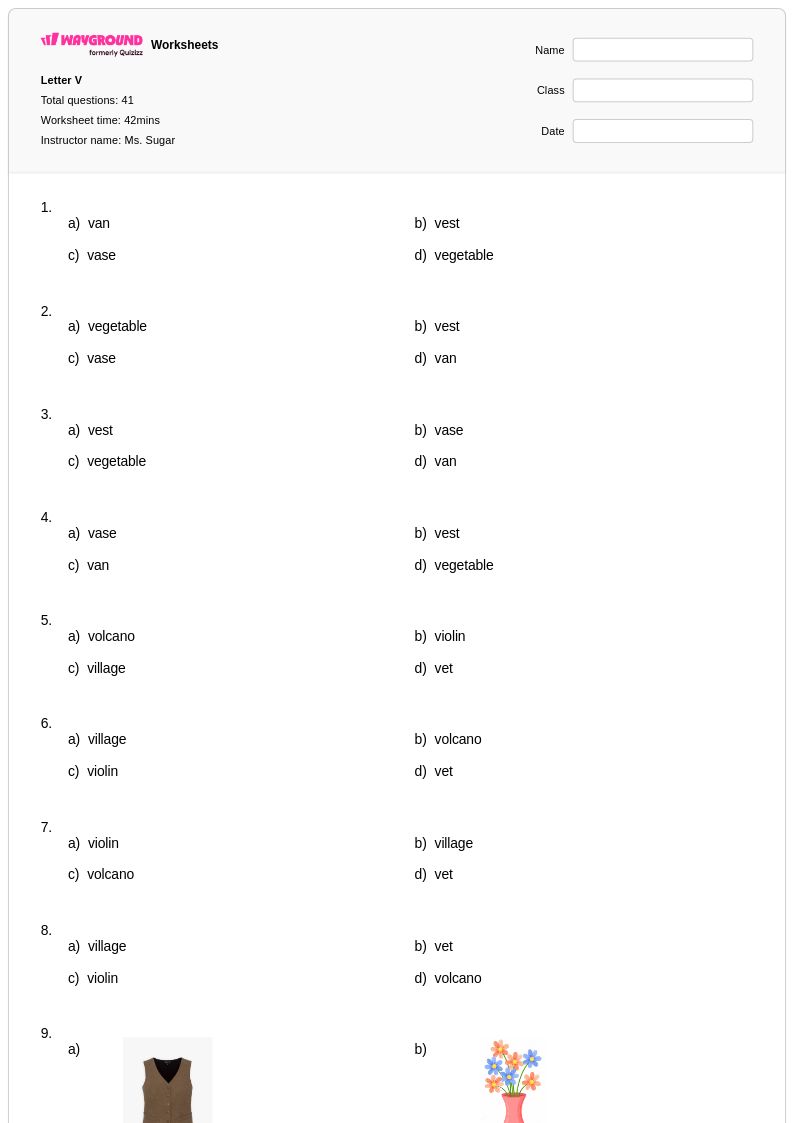
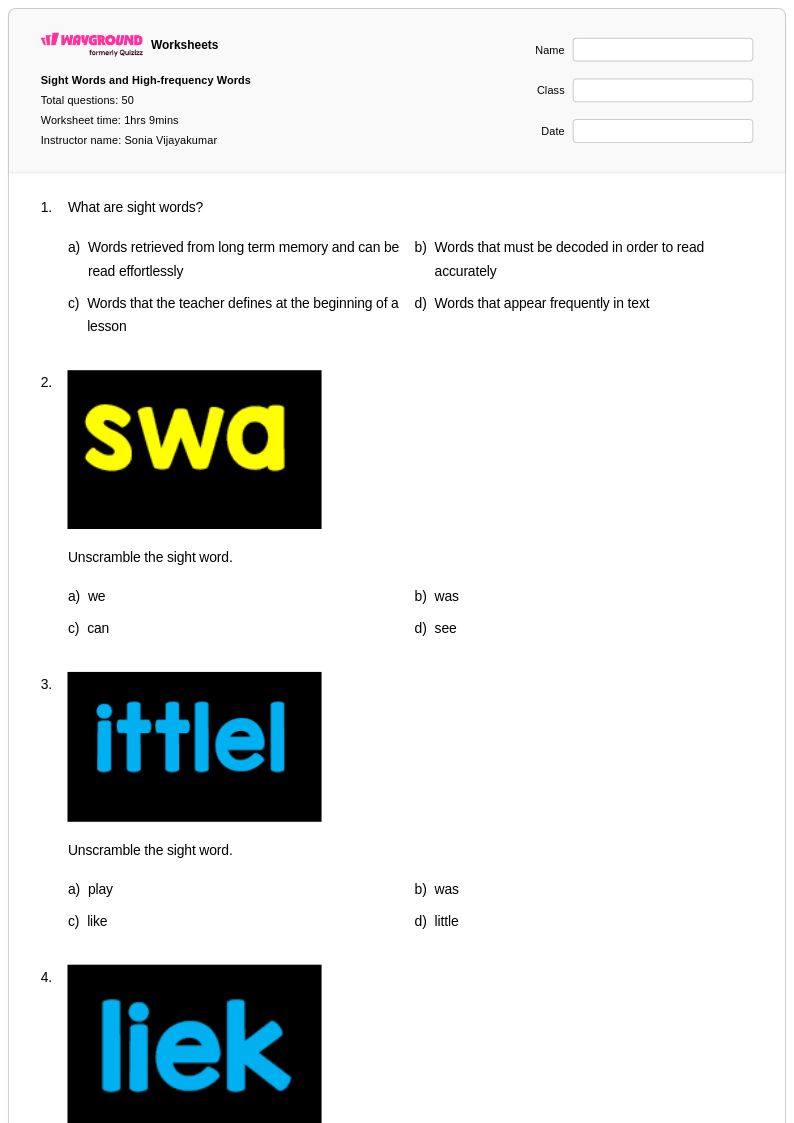
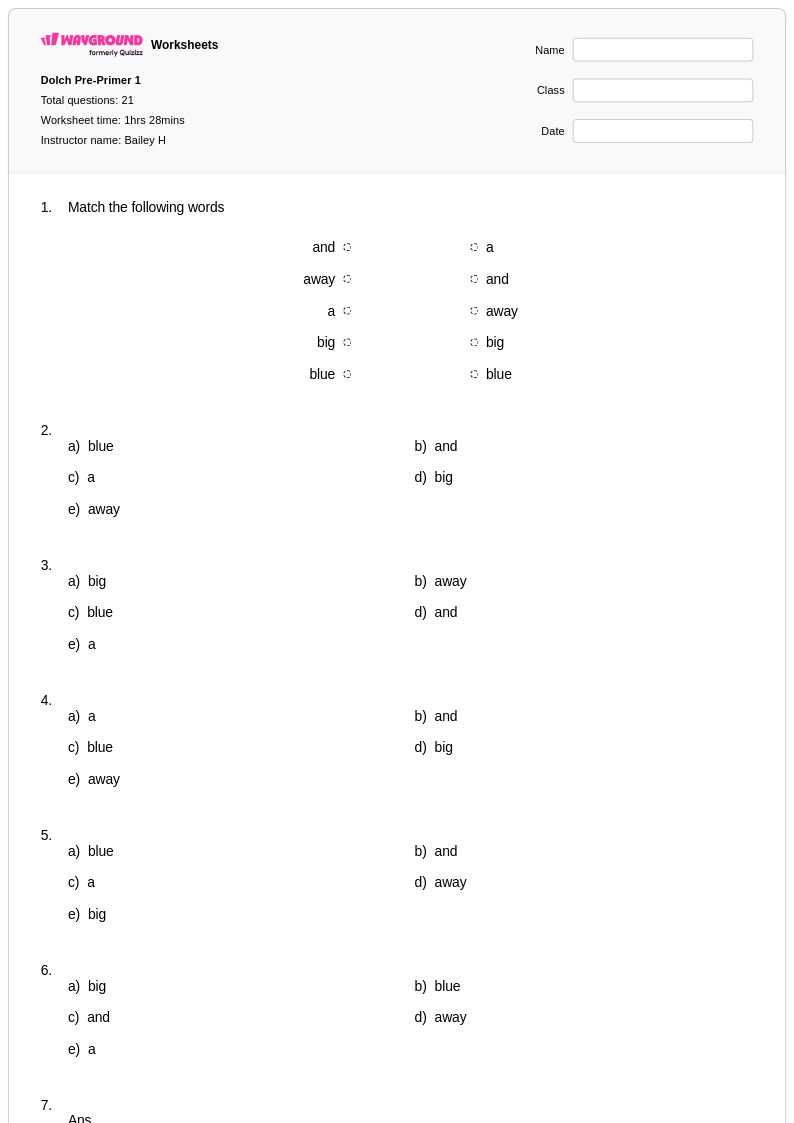
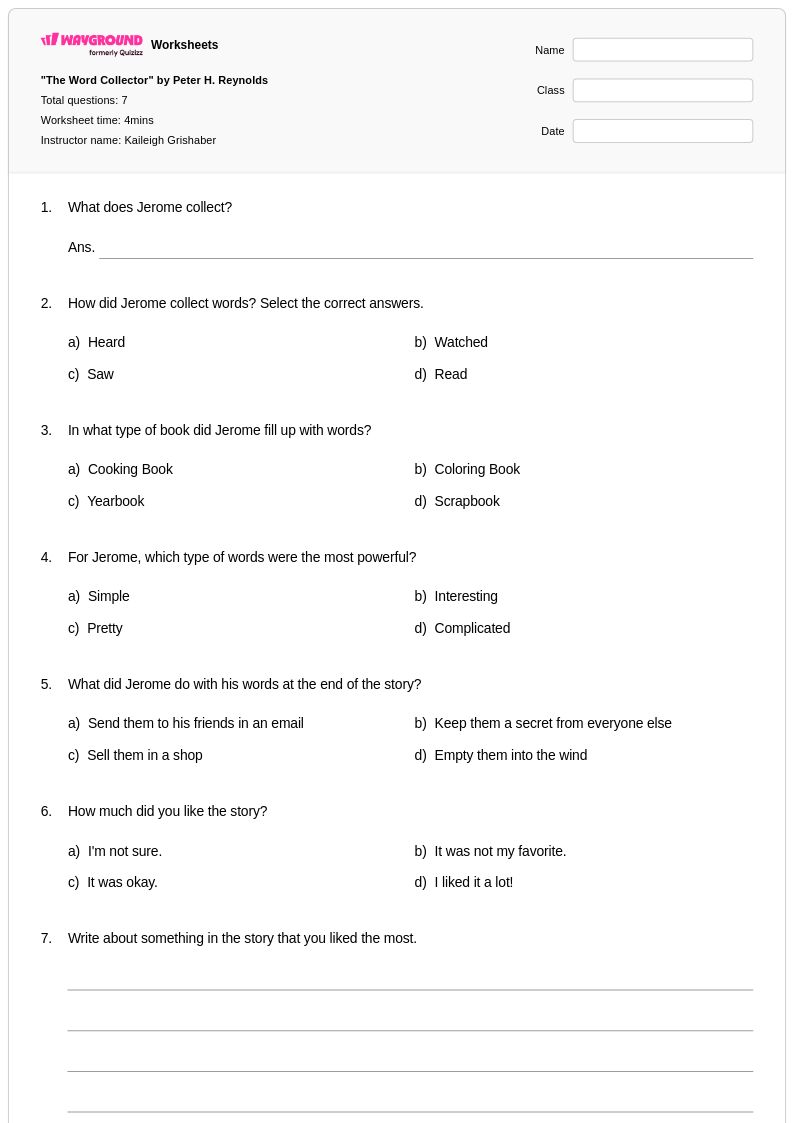
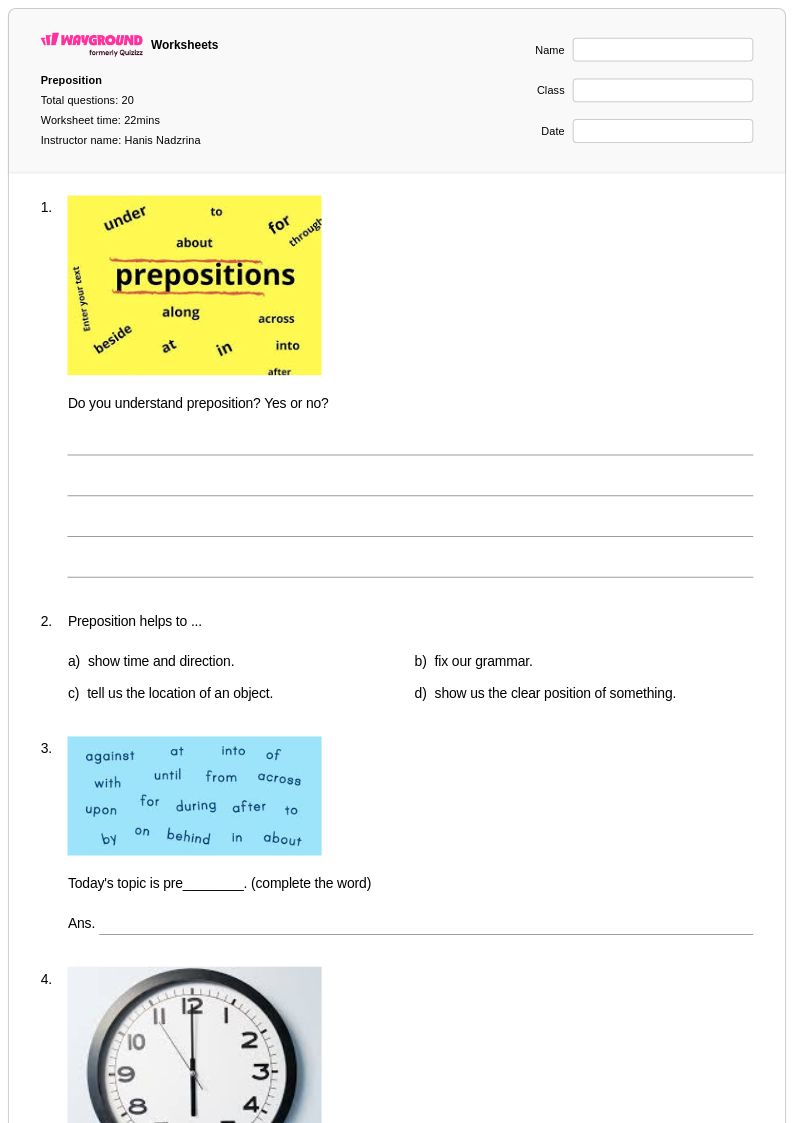
Class 2 word shapes worksheets and printables help students recognize letter patterns and visual word structures through engaging practice problems, complete with answer keys for effective early literacy development.
Explore printable Word Shapes worksheets for Class 2
Word shapes worksheets for Class 2 students available through Wayground (formerly Quizizz) provide essential foundational practice for developing visual word recognition and reading fluency skills. These comprehensive printables focus on helping young learners identify and analyze the distinctive silhouettes and contours that different letters create when combined into words, strengthening their ability to recognize familiar words quickly and accurately. The practice problems within these free resources systematically guide students through exercises where they match words to their corresponding outline shapes, fill in missing letters based on word shape clues, and distinguish between similarly shaped words. Each worksheet includes a detailed answer key that enables teachers and parents to provide immediate feedback, while the pdf format ensures easy distribution and consistent formatting across different devices and printing scenarios.
Wayground's extensive collection of word shapes worksheets draws from millions of teacher-created resources, offering educators powerful search and filtering capabilities to locate materials that align with specific learning objectives and curriculum standards. The platform's differentiation tools allow teachers to customize these digital and printable resources to meet diverse student needs, whether providing additional support for struggling readers or offering enrichment activities for advanced learners. Teachers can seamlessly integrate these worksheets into lesson planning for systematic skill practice, use them for targeted remediation when students struggle with word recognition, or deploy them as independent practice activities that reinforce classroom instruction. The flexibility of having both printable pdf versions and interactive digital formats enables educators to adapt their instruction to various learning environments while maintaining consistent focus on this critical early literacy milestone.
FAQs
How do I teach word shapes to early readers?
Teaching word shapes involves helping students notice the visual outline a word creates based on the height and depth of its letters — tall letters like 'b' and 'd', short letters like 'a' and 'e', and descenders like 'g' and 'y' each contribute to a word's unique silhouette. Start by having students trace word shape boxes around familiar sight words, then progress to matching words to their outlines without tracing. This builds a visual memory pathway that supports faster word recognition and early reading fluency.
What exercises help students practice identifying word shapes?
Effective practice exercises include tracing the outline boxes around printed words, matching a set of words to their corresponding shape grids, and filling in letters inside pre-drawn word shape boxes. These activities train students to look beyond individual letters and recognize words as unified visual units, which accelerates sight word acquisition. Word shapes worksheets that cycle through the same high-frequency words in varied formats are especially effective for reinforcing this skill across multiple exposures.
What mistakes do students commonly make when learning word shapes?
A common error is treating all letters as the same height, which means students fail to register the visual contrast between tall, short, and descending letters when drawing or matching word outlines. Students also frequently confuse words with similar shape profiles, such as 'who' and 'the', because they rely on shape alone without integrating letter knowledge. Pairing word shape activities with explicit phonics instruction helps students use both visual and sound-based cues together.
Why is recognizing word shapes important for early literacy development?
Word shape recognition trains the brain to process written words as whole visual units rather than letter-by-letter sequences, which is a key step toward automatic word recognition and reading fluency. When students can quickly identify a word by its overall outline, they spend less cognitive effort decoding and can focus more attention on meaning and comprehension. This skill is particularly valuable for building a strong sight word bank in the early grades.
How can I use word shapes worksheets in my classroom?
Word shapes worksheets on Wayground are available as printable PDFs for traditional classroom use and in digital formats for technology-integrated learning environments, including the option to host them as a quiz on Wayground. Printed versions work well for literacy centers, morning work, and homework, while digital formats support remote learners or one-to-one device settings. Both formats include comprehensive answer keys, so they can be used for independent practice, small group instruction, or targeted intervention with equal ease.
How can I differentiate word shapes practice for students at different skill levels?
For emerging readers, start with simple three-letter CVC words where the shape contrast between tall and short letters is clear and predictable. More advanced students can work with longer words or multi-syllable sight words where shape patterns are more complex and nuanced. On Wayground, teachers can apply accommodations such as reduced answer choices or read-aloud support to individual students, allowing the same worksheet activity to serve learners across a range of readiness levels without singling anyone out.