Free Printable World War 2 Causes Worksheets for Class 12
Class 12 World War 2 Causes worksheets from Wayground help students analyze the complex factors leading to WWII through engaging printables, practice problems, and comprehensive answer keys.
Explore printable World War 2 Causes worksheets for Class 12
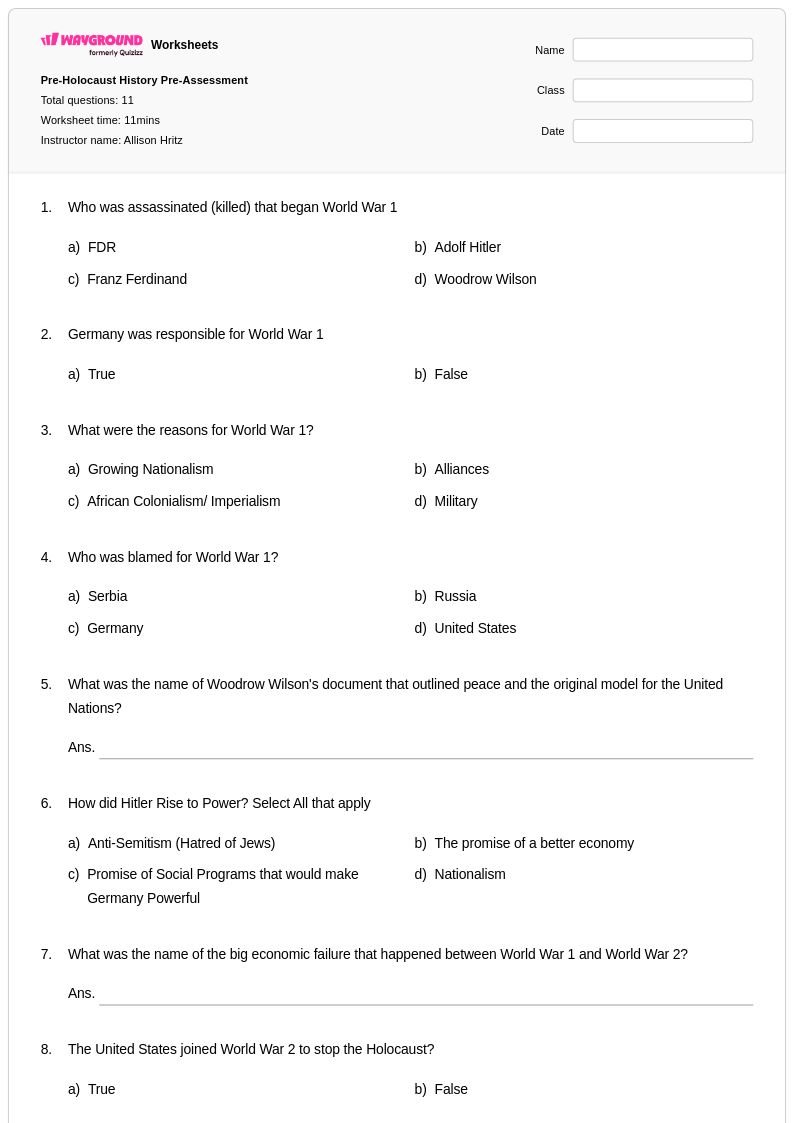
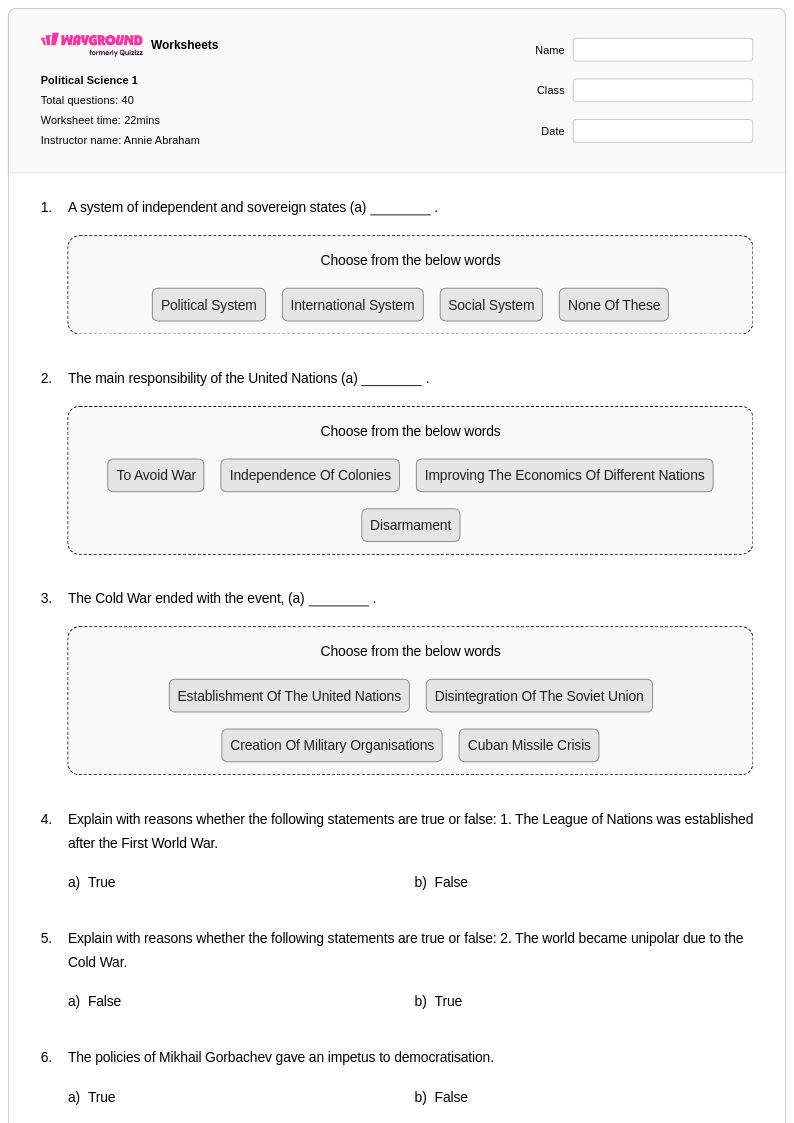
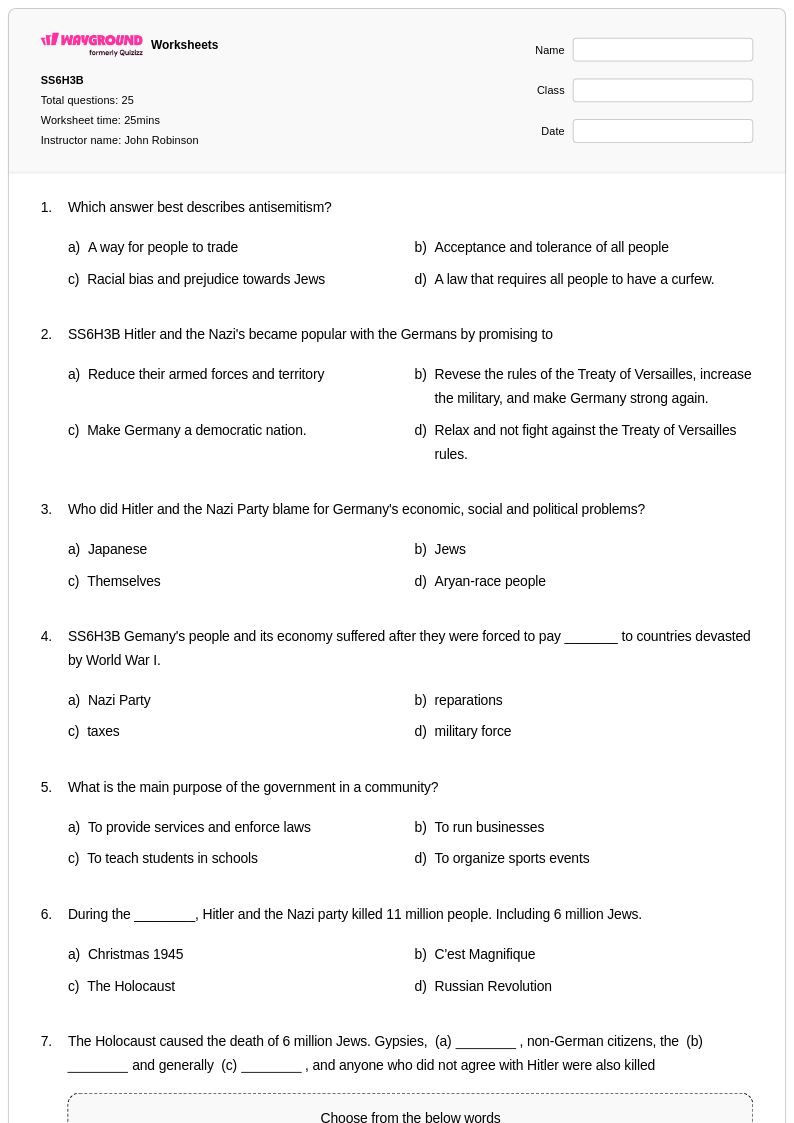
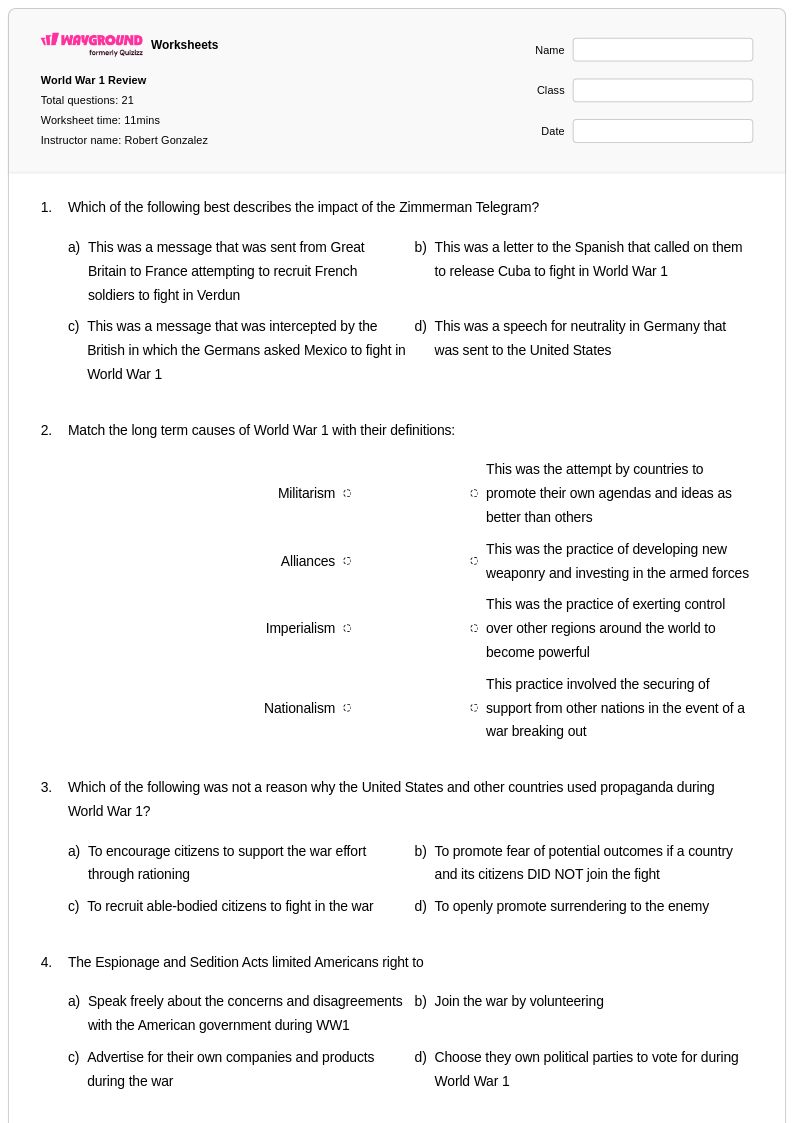
Class 12 students exploring the complex origins of World War 2 will find comprehensive worksheet collections through Wayground that examine the multifaceted causes leading to this global conflict. These expertly crafted materials guide students through critical analysis of the Treaty of Versailles, the rise of totalitarian regimes, economic instability, and the failure of international diplomacy in the 1930s. Each worksheet strengthens essential historical thinking skills including cause-and-effect analysis, primary source interpretation, and chronological reasoning while students investigate how factors like German remilitarization, Japanese expansion in Asia, and the policy of appeasement contributed to the outbreak of war. The practice problems challenge students to synthesize information from multiple perspectives, and accompanying answer keys provide detailed explanations that reinforce understanding of these pivotal historical developments. Available as free printables in convenient pdf format, these resources support both classroom instruction and independent study.
Wayground's extensive platform offers teachers access to millions of educator-created resources specifically designed for World War 2 causes instruction, with robust search and filtering capabilities that allow quick identification of materials aligned to specific curriculum standards and learning objectives. The platform's differentiation tools enable teachers to modify worksheets for varying ability levels within Class 12 classrooms, while customization features allow educators to adapt content to emphasize particular aspects of pre-war tensions or regional perspectives. These comprehensive collections are available in both printable and digital formats, providing flexibility for traditional classroom settings and technology-enhanced learning environments. Teachers can seamlessly integrate these resources into lesson planning for initial instruction, targeted remediation for students struggling with complex causation concepts, or enrichment activities for advanced learners ready to explore nuanced historical interpretations, making skill practice both accessible and academically rigorous.
FAQs
How do I teach the causes of World War 2 effectively?
Teaching the causes of World War 2 is most effective when students examine the interconnected factors rather than isolated events. Structure instruction around thematic categories — political instability, economic collapse, the failure of collective security, and ideological extremism — so students can trace how the Treaty of Versailles, the Great Depression, and the rise of totalitarian regimes compounded one another. Using primary source documents and timeline activities helps students see causation as a layered, cumulative process rather than a single trigger.
What exercises help students practice analyzing the causes of World War 2?
Cause-and-effect graphic organizers, document analysis tasks, and sequencing activities are particularly effective for this topic. Students benefit from exercises that ask them to rank or categorize causes by type (political, economic, social) and then justify their reasoning in writing. Timeline activities that connect events from 1919 through 1939 help students develop a chronological understanding of how conditions escalated toward open conflict.
What misconceptions do students commonly have about the causes of World War 2?
One of the most persistent misconceptions is that Adolf Hitler and Nazi Germany were solely responsible for the war, which causes students to overlook the systemic failures — such as the League of Nations' inability to enforce collective security and European powers' policy of appeasement — that enabled aggression to go unchecked. Students also frequently conflate the causes of World War 1 with those of World War 2, so it is important to explicitly teach how the unresolved grievances from the Treaty of Versailles created the conditions that extremist movements then exploited.
How do I help struggling students understand complex historical causation like the origins of World War 2?
Breaking causation into concrete, familiar categories — such as economic hardship, political power struggles, and failed diplomacy — lowers the cognitive barrier for students who find abstract historical thinking difficult. Scaffolded graphic organizers and sentence frames for analytical writing give students structured entry points. On Wayground, teachers can apply individual accommodations such as Read Aloud for text-heavy primary source questions and reduced answer choices for multiple-select items, ensuring that all learners can access the content at an appropriate level of challenge.
How can I use World War 2 Causes worksheets to assess student understanding?
World War 2 Causes worksheets work well as formative assessments when paired with short constructed-response prompts that ask students to explain the relationship between two or more causes. Look for student work that demonstrates an understanding of interconnection — strong responses will link the Treaty of Versailles to economic instability to political radicalization rather than listing causes in isolation. Common errors to watch for include oversimplification, anachronistic reasoning, and conflating symptoms of the war with its root causes.
How do I use World War 2 Causes worksheets from Wayground in my classroom?
Wayground's World War 2 Causes worksheets are available as printable PDFs for traditional classroom use and in interactive digital formats for technology-integrated environments, giving teachers flexibility regardless of their classroom setup. Teachers can also host these materials as a quiz directly on Wayground, enabling real-time student responses and built-in answer key scoring. Each worksheet includes a complete answer key, making them practical for independent practice, formative checks, or whole-group instruction without additional prep work.