Free Printable Accuracy Vs Precision Worksheets for Grade 9
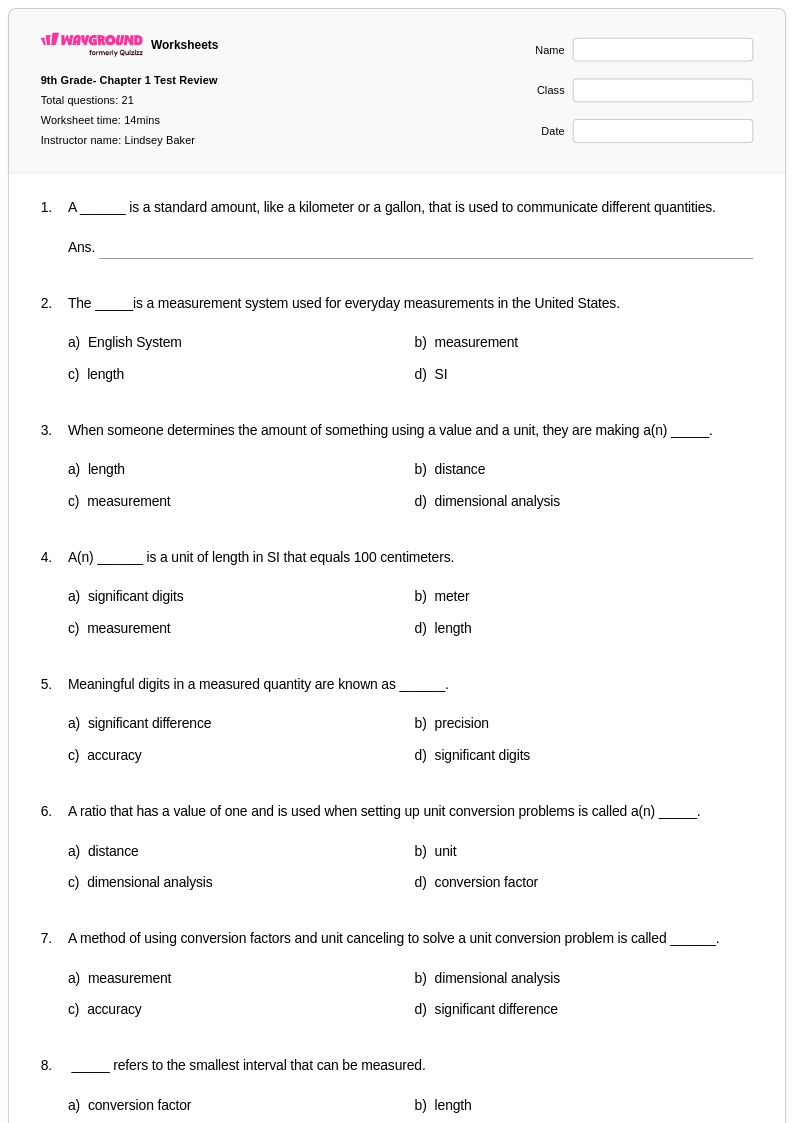
Grade 9 accuracy vs precision science worksheets from Wayground help students master the critical distinction between these measurement concepts through engaging printables, practice problems, and comprehensive answer keys.
Explore printable Accuracy Vs Precision worksheets for Grade 9
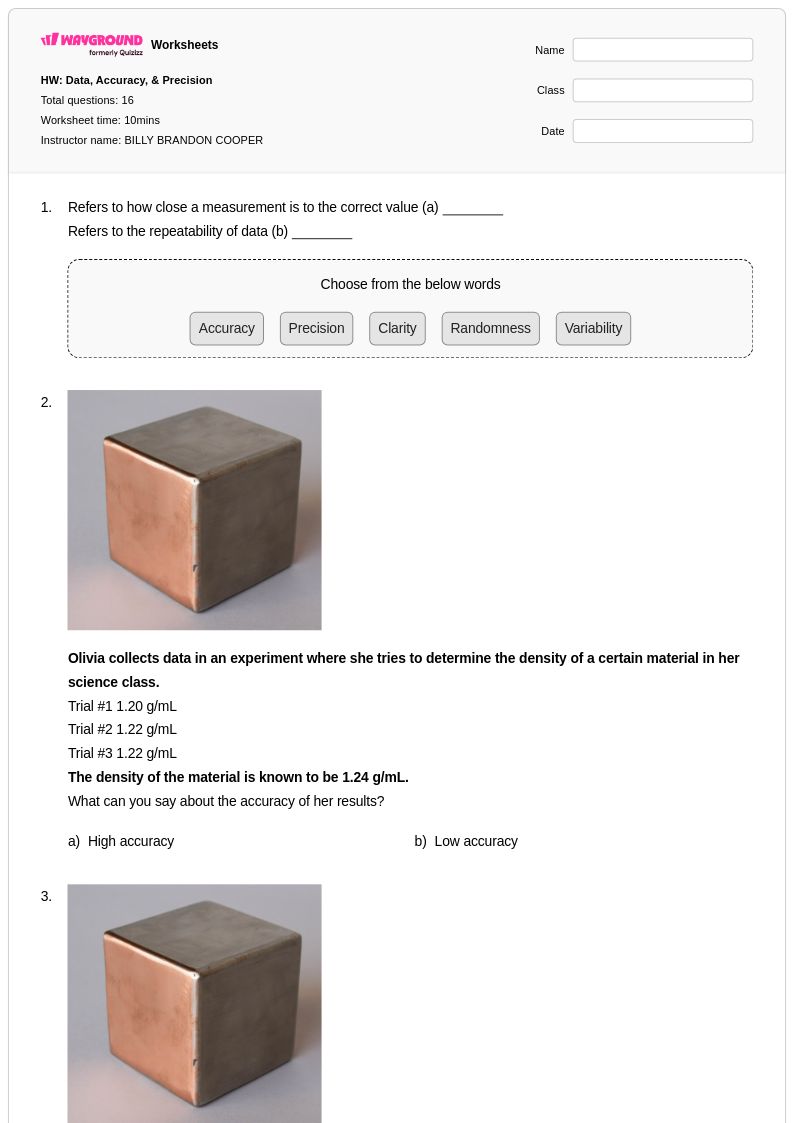
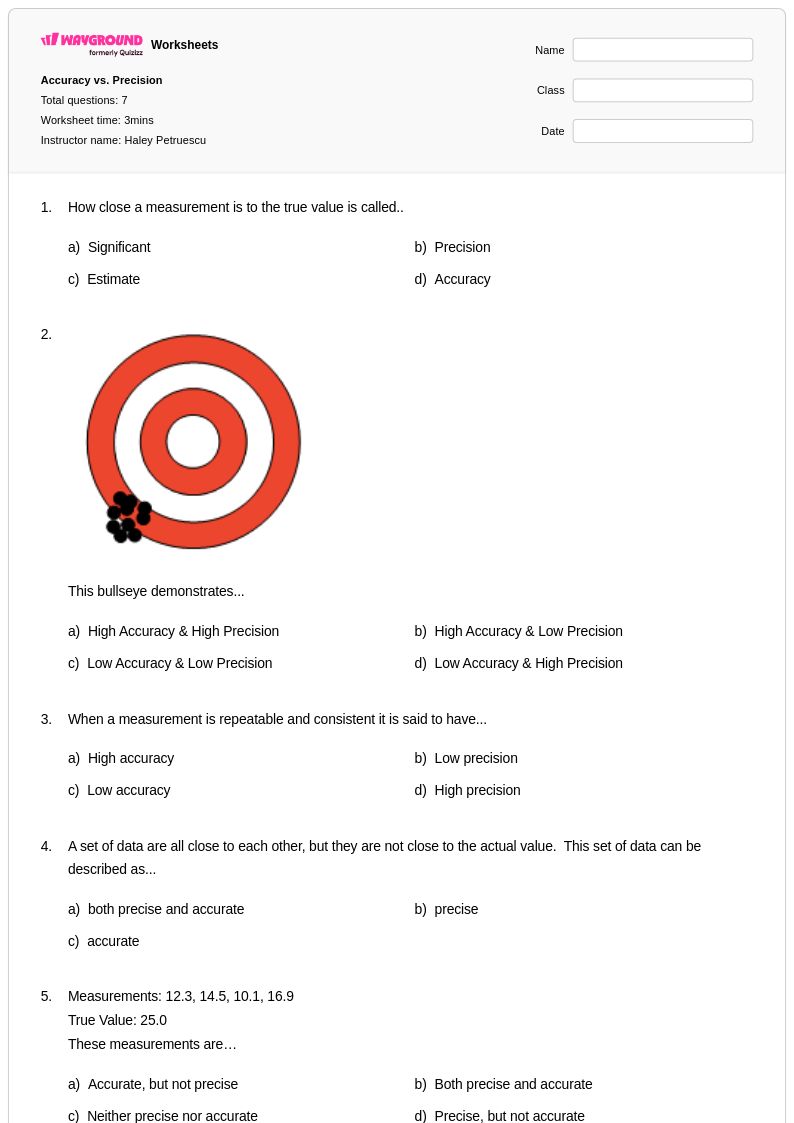
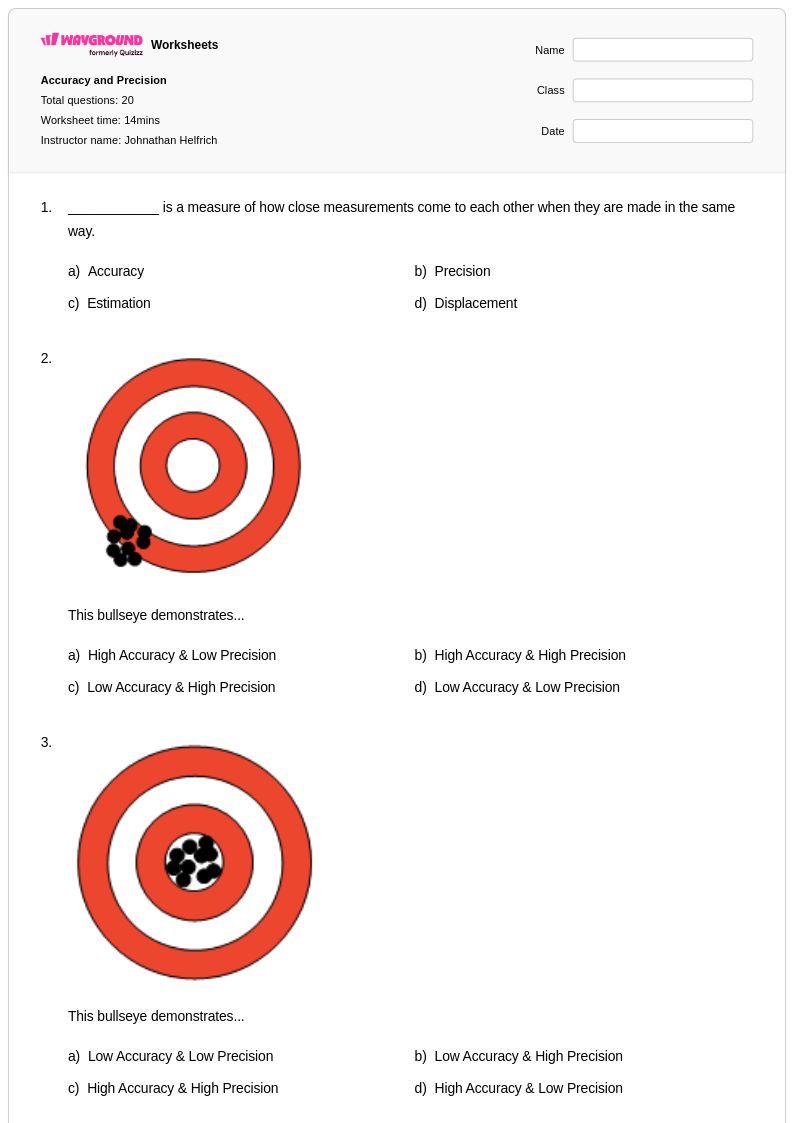
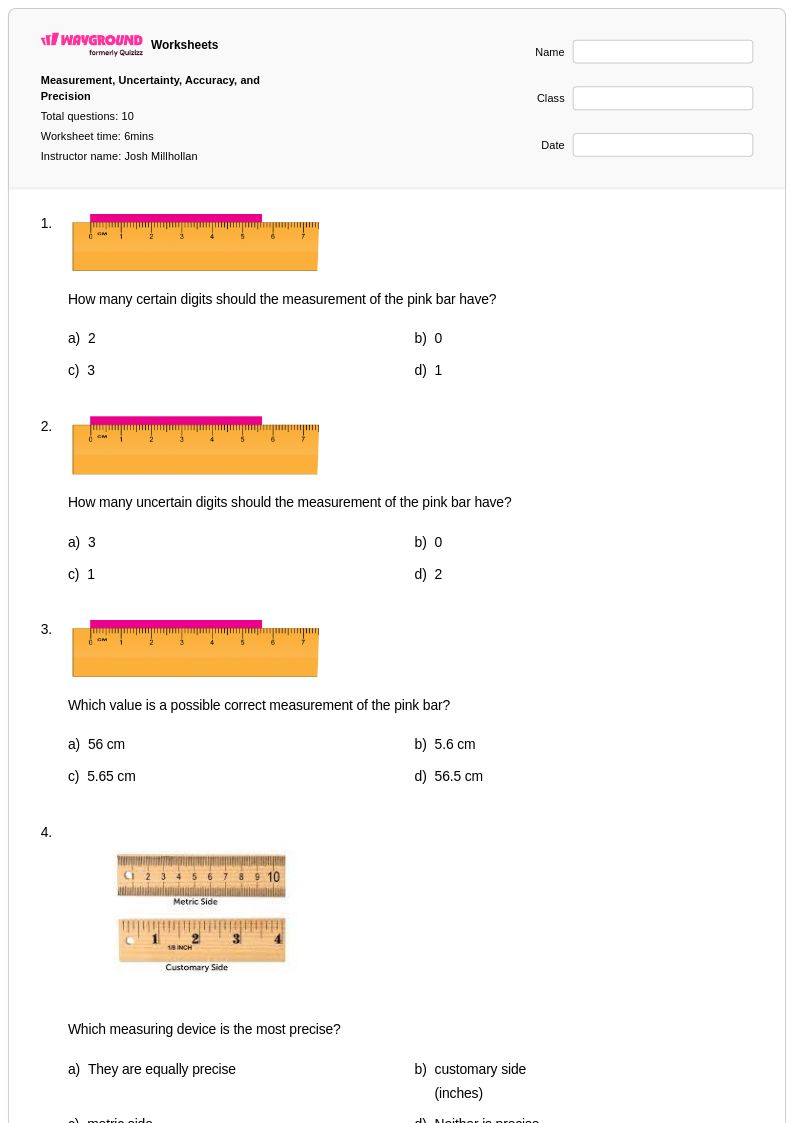
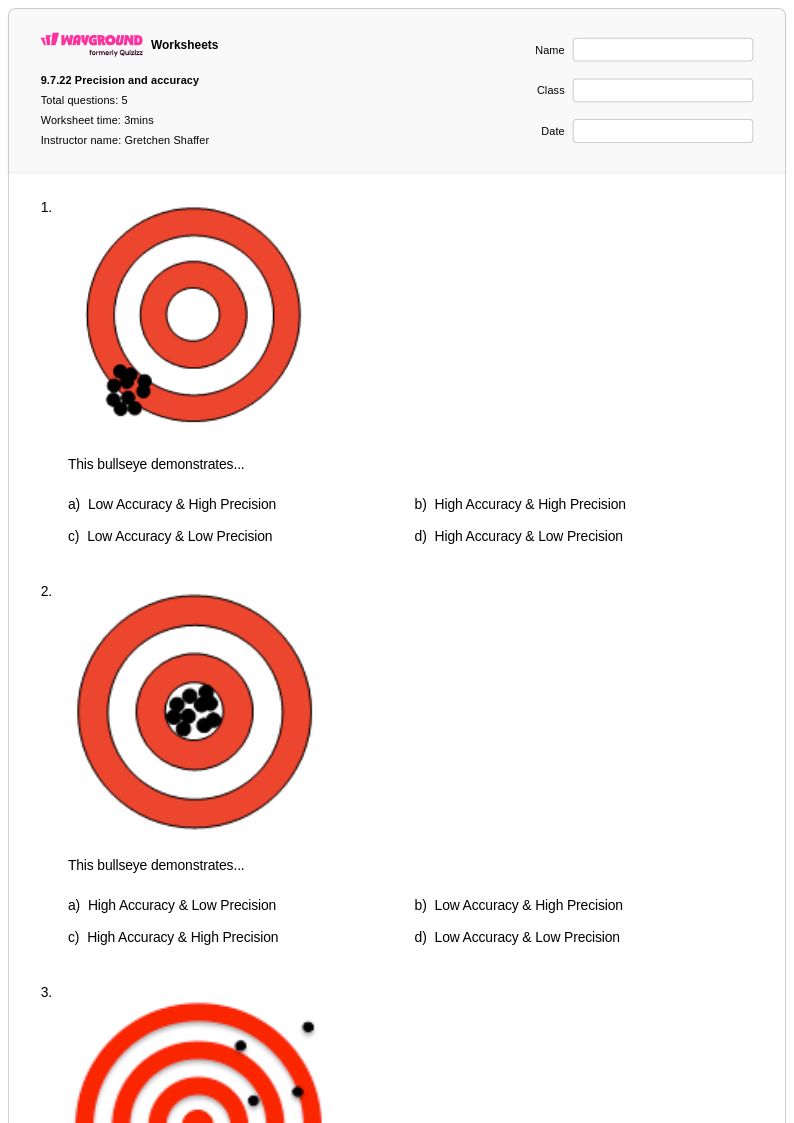
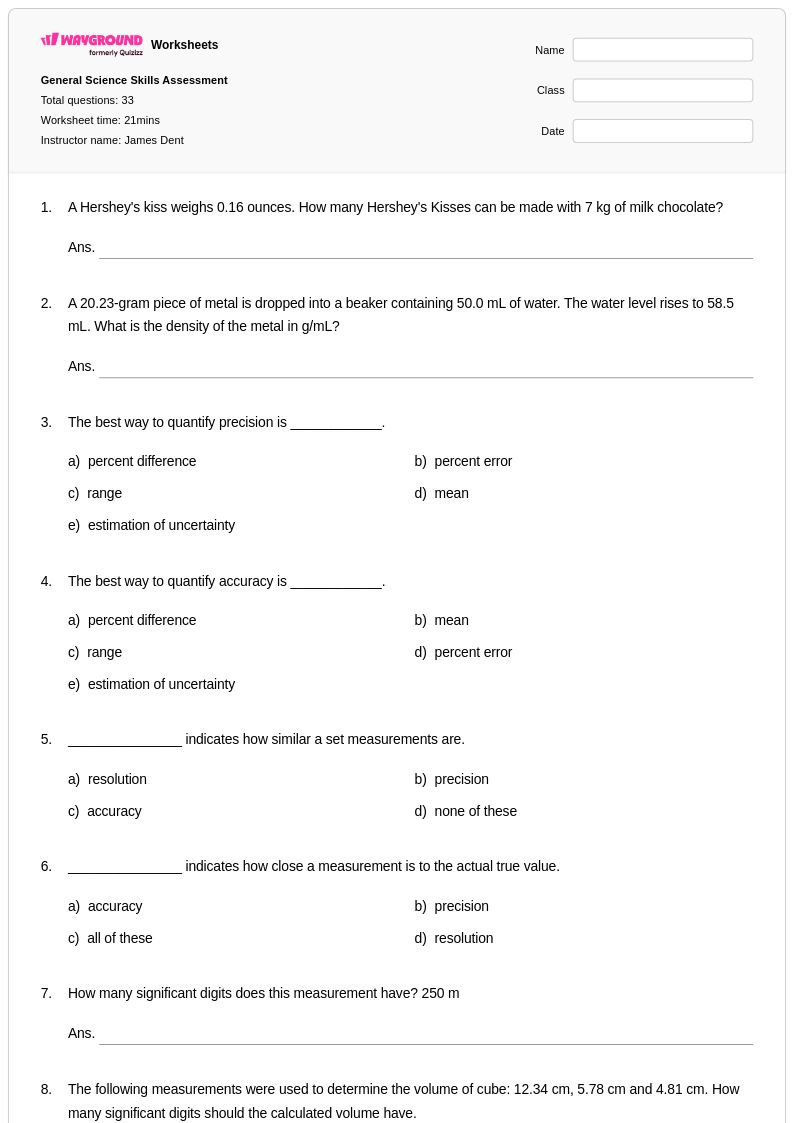
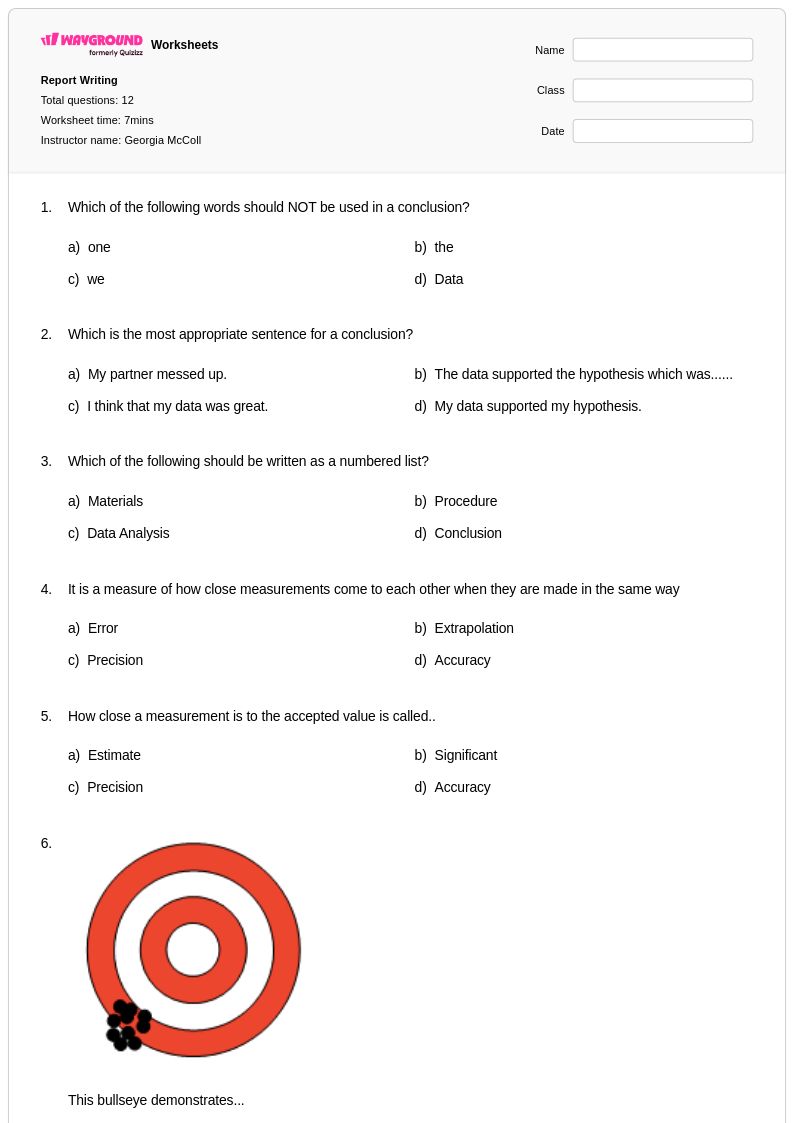
Accuracy vs precision worksheets for Grade 9 science students provide essential practice in understanding one of the fundamental concepts in scientific measurement and data analysis. These comprehensive worksheet collections help students distinguish between how close measurements are to the true value (accuracy) and how consistent repeated measurements are with each other (precision). Through carefully designed practice problems, students learn to evaluate measurement quality, interpret data sets, and apply these concepts to real-world scientific scenarios. The worksheets include detailed answer keys that guide students through step-by-step solutions, making them valuable for both classroom instruction and independent study. Available as free printables in convenient pdf format, these resources strengthen critical thinking skills essential for scientific inquiry and laboratory work.
Wayground (formerly Quizizz) supports science educators with an extensive collection of teacher-created accuracy vs precision worksheets drawn from millions of educational resources. The platform's robust search and filtering capabilities allow teachers to quickly locate materials that align with specific curriculum standards and match their students' learning needs. Differentiation tools enable educators to customize worksheets for various skill levels, supporting both remediation for struggling learners and enrichment for advanced students. These versatile resources are available in both printable and digital formats, including downloadable pdf versions, providing flexibility for diverse classroom environments and teaching approaches. Teachers can seamlessly integrate these materials into lesson planning, use them for targeted skill practice, or deploy them for formative assessment to gauge student understanding of this critical scientific concept.
FAQs
How do I teach the difference between accuracy and precision in science class?
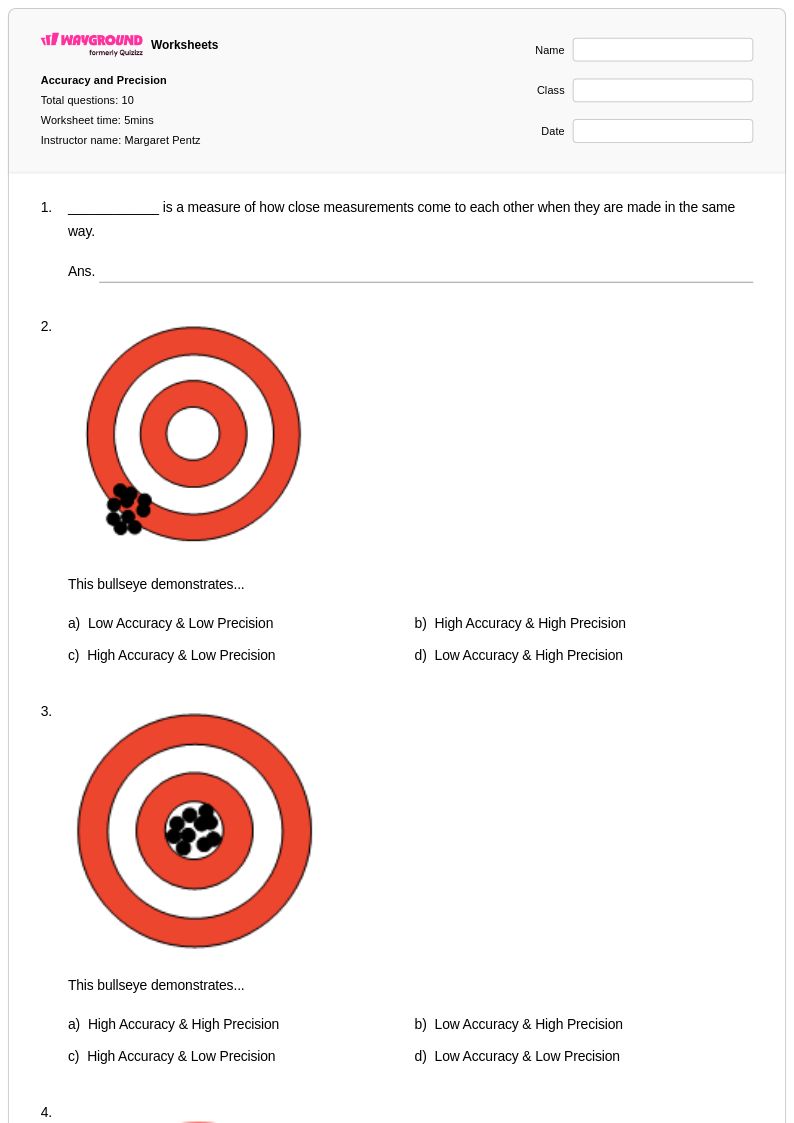
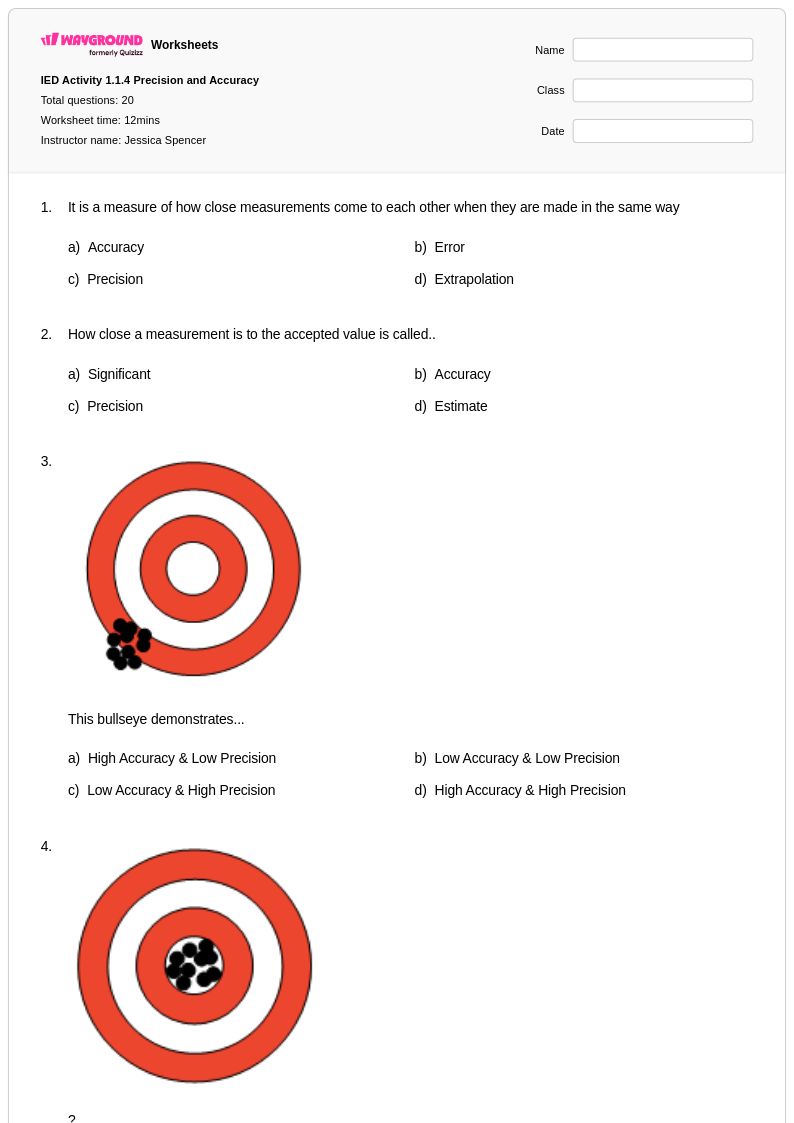
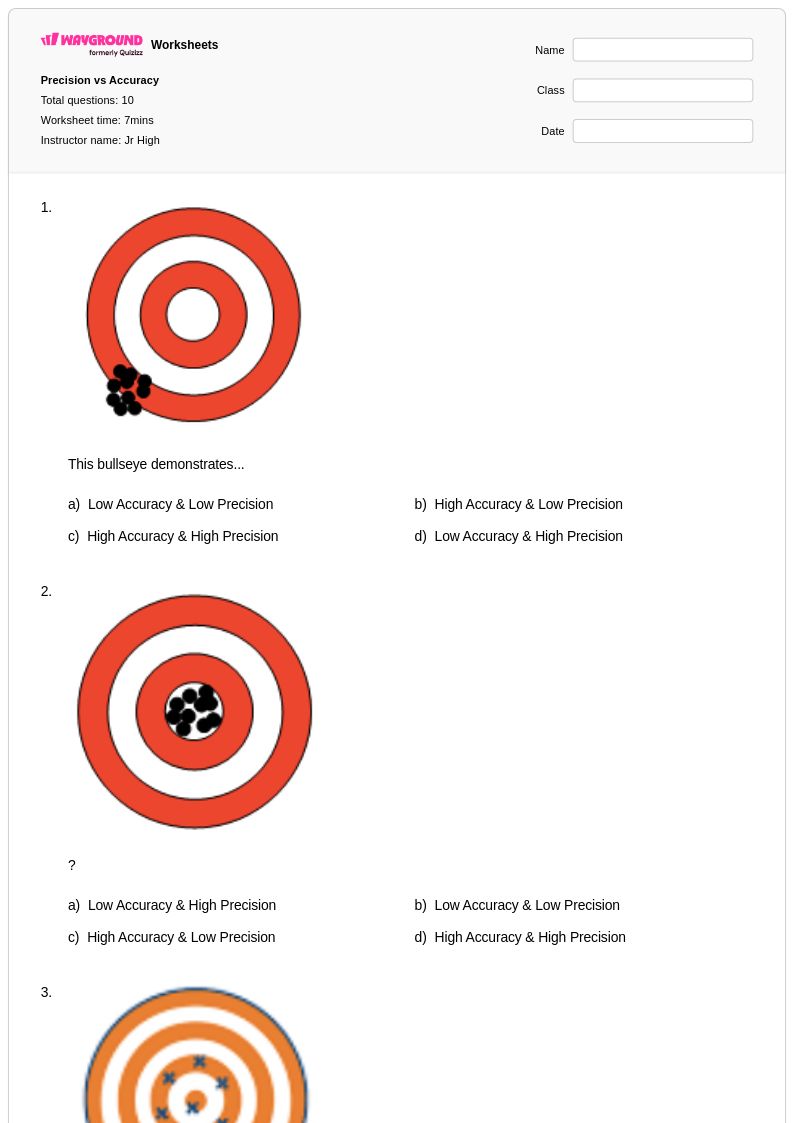
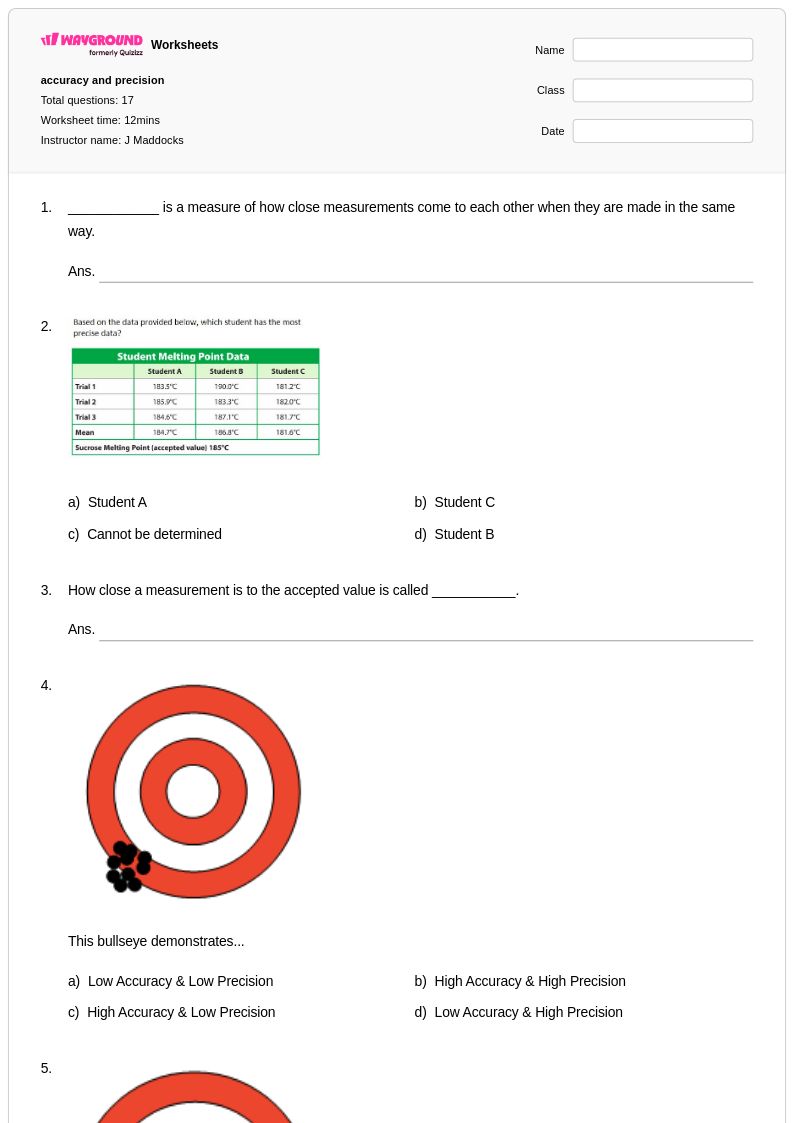
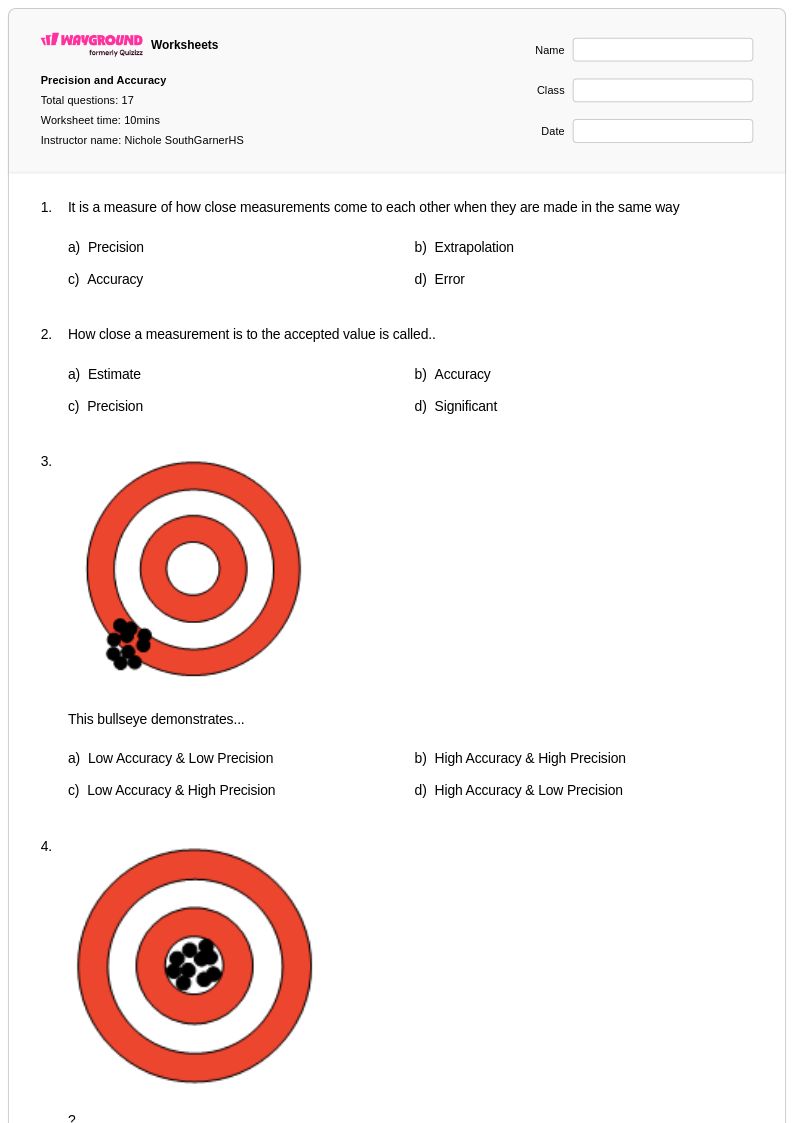
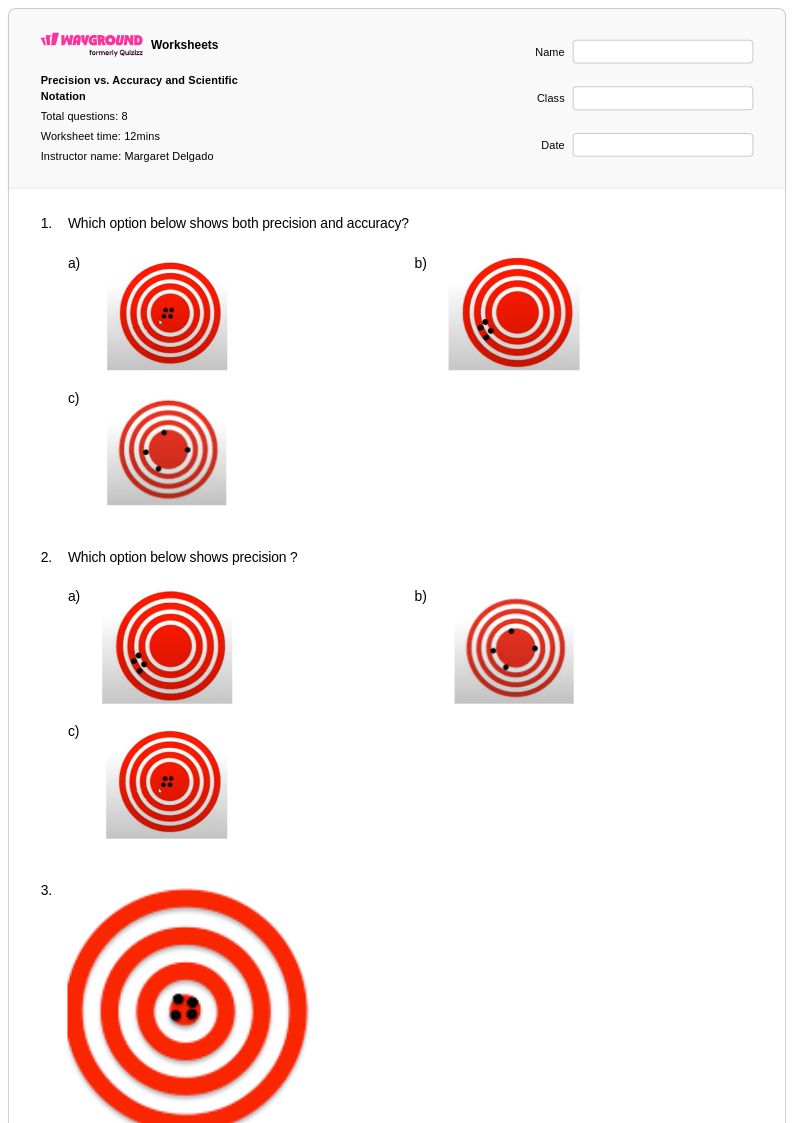
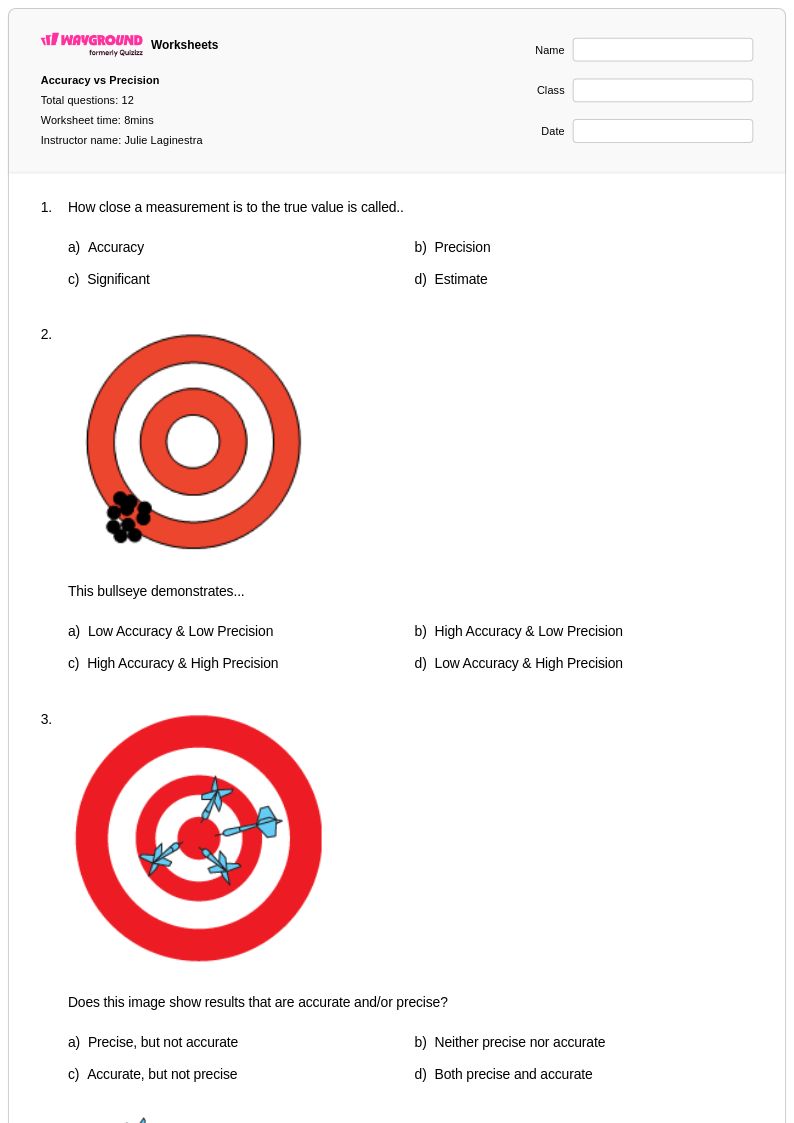
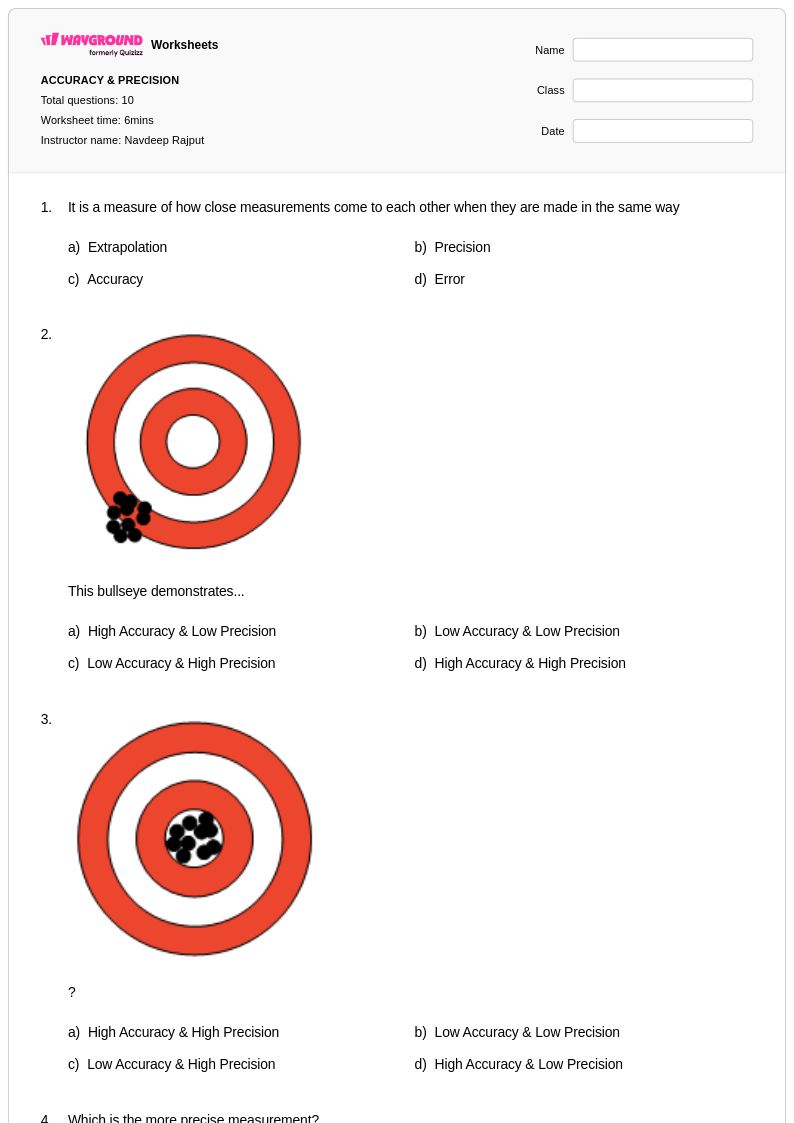
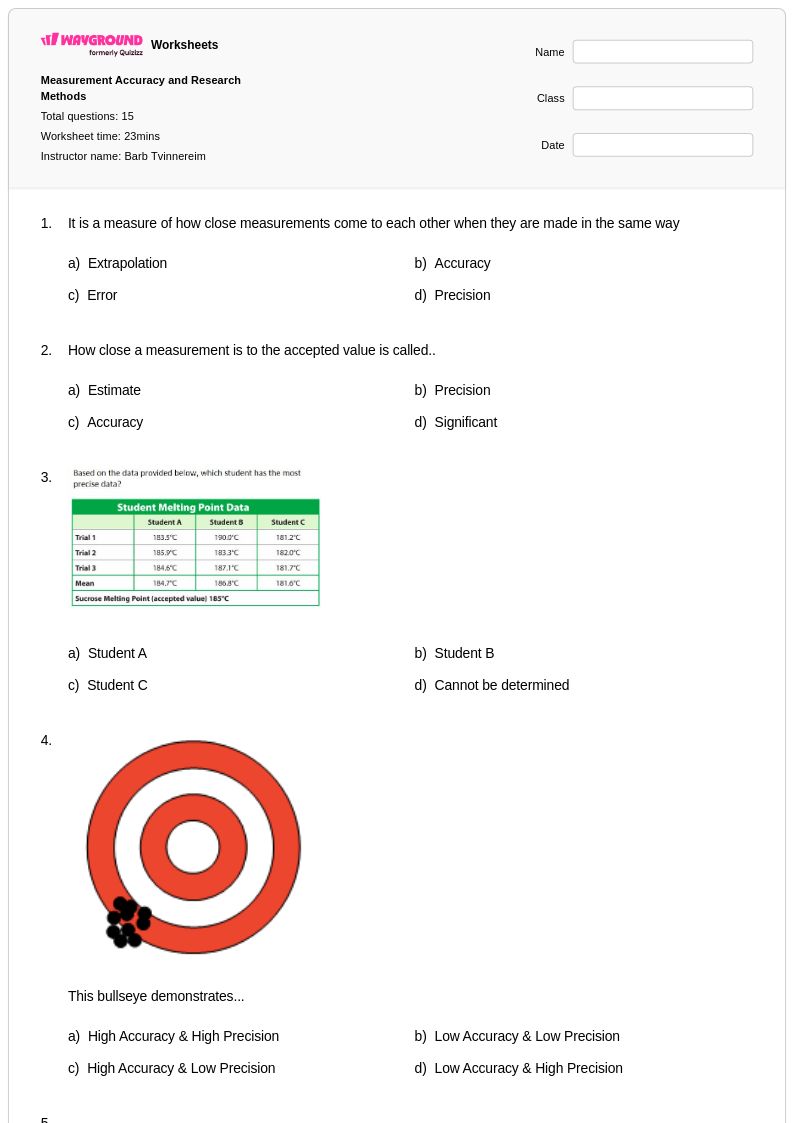
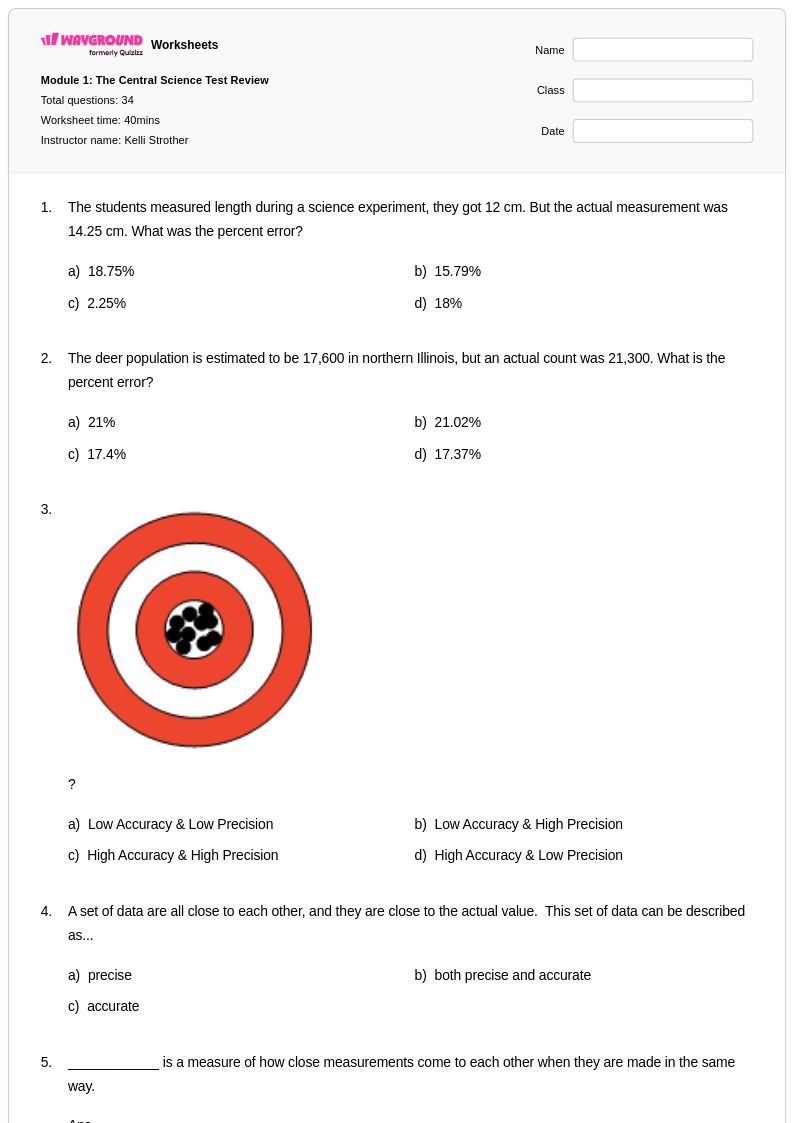
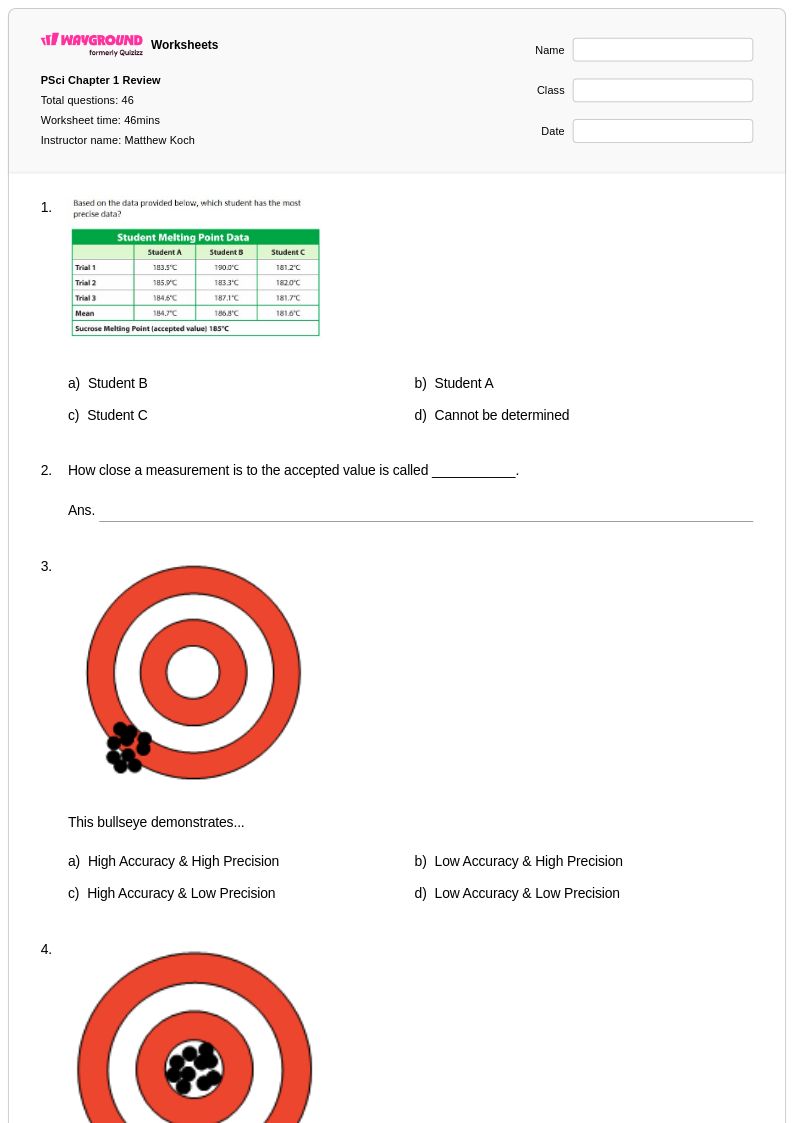
Start with a concrete analogy before introducing formal definitions — the classic dartboard example works well because students can visually see how shots can be tightly grouped (precise) but far from the bullseye (inaccurate), or scattered near the center (accurate but not precise). From there, move into real laboratory scenarios such as repeated mass measurements or volume readings, asking students to evaluate whether results are close to the accepted value, consistent with each other, or both. Building from visual models to data analysis helps students internalize the distinction rather than simply memorizing definitions.
What exercises help students practice accuracy vs precision?
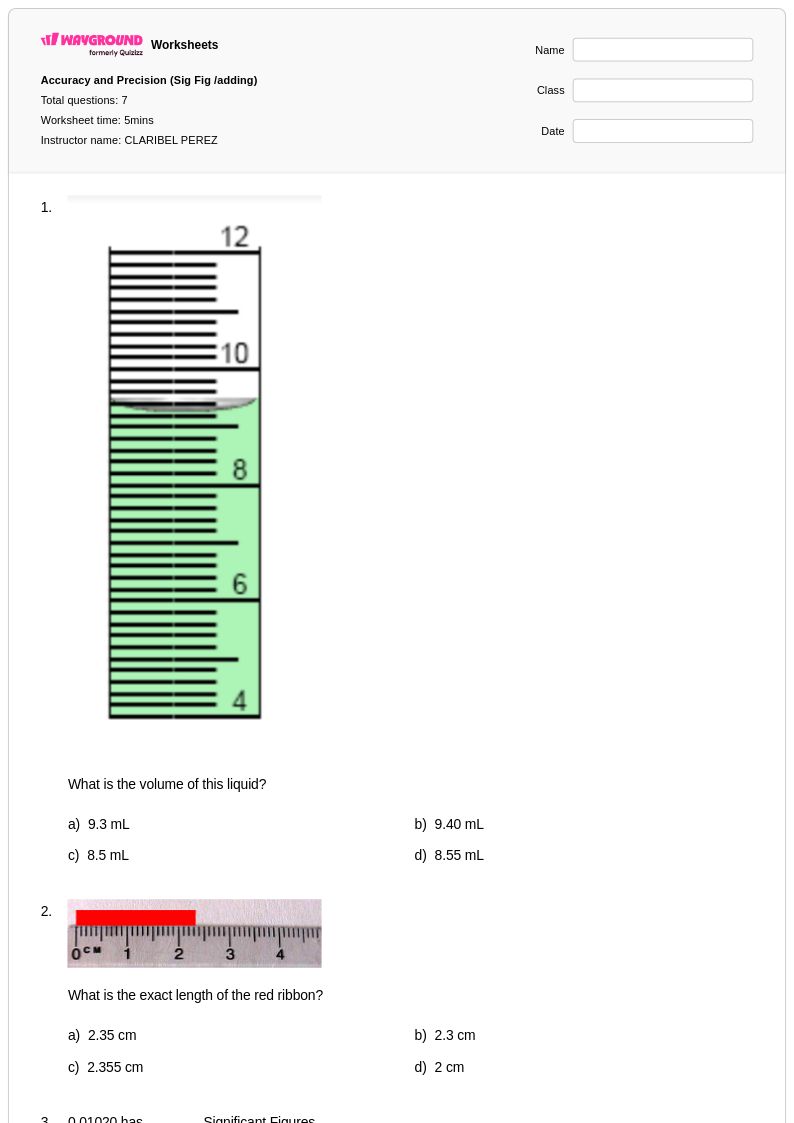
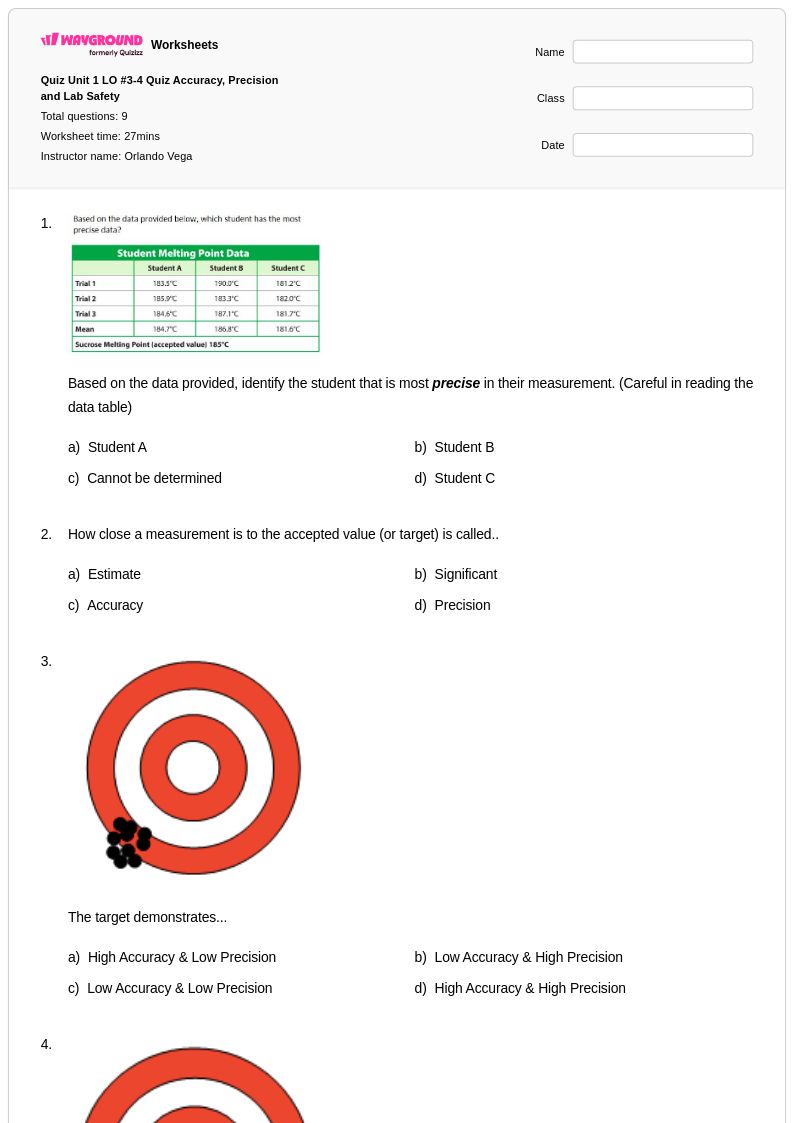
The most effective practice exercises ask students to analyze data sets and classify measurements as accurate, precise, both, or neither — rather than simply defining the terms. Scenarios drawn from laboratory contexts, such as evaluating repeated temperature readings against a known standard, give students the analytical practice they need. Interpreting measurement results from tables and graphs also reinforces the concept by requiring students to apply both definitions simultaneously in context.
What mistakes do students commonly make when learning accuracy vs precision?
The most persistent misconception is that accuracy and precision mean the same thing, or that one automatically implies the other. Students often assume that if measurements are consistent with each other, they must also be correct — conflating repeatability with correctness. Another common error is confusing which term refers to closeness to the true value versus closeness among repeated measurements, especially under timed or high-stakes conditions. Targeted practice with labeled data sets helps students confront and correct these specific confusions.
How do I use Wayground's accuracy vs precision worksheets in my classroom?
Wayground's accuracy vs precision worksheets are available as printable PDFs for traditional classroom use and in digital formats for technology-integrated learning environments, giving teachers flexibility in how they assign and collect student work. You can also host the worksheet directly as a quiz on Wayground, which allows students to complete it online while you track responses and results. The included answer keys make it straightforward to use these materials for independent practice, guided instruction, or review sessions without additional preparation.
How can I support struggling students when teaching accuracy vs precision?
Students who struggle with this concept often benefit from reduced cognitive load during initial practice — focusing on one dimension at a time before asking them to evaluate both accuracy and precision simultaneously. On Wayground, teachers can apply accommodations such as reduced answer choices for individual students, which lowers the difficulty of multiple-choice analysis problems without changing the underlying concept being assessed. Read Aloud support is also available for students who need questions read to them, and these settings can be saved and reused across future sessions.
Are accuracy vs precision worksheets useful for both introductory and advanced science students?
Yes — the concept spans multiple levels of rigor depending on how it is framed. At the introductory level, worksheets that ask students to classify simple data sets build foundational understanding. At a more advanced level, problems that require students to evaluate experimental design, calculate percent error, or assess the impact of systematic versus random error demand higher-order thinking. Having materials suitable for initial instruction, remediation, and enrichment means teachers can use accuracy vs precision worksheets across a range of learners within the same course.