
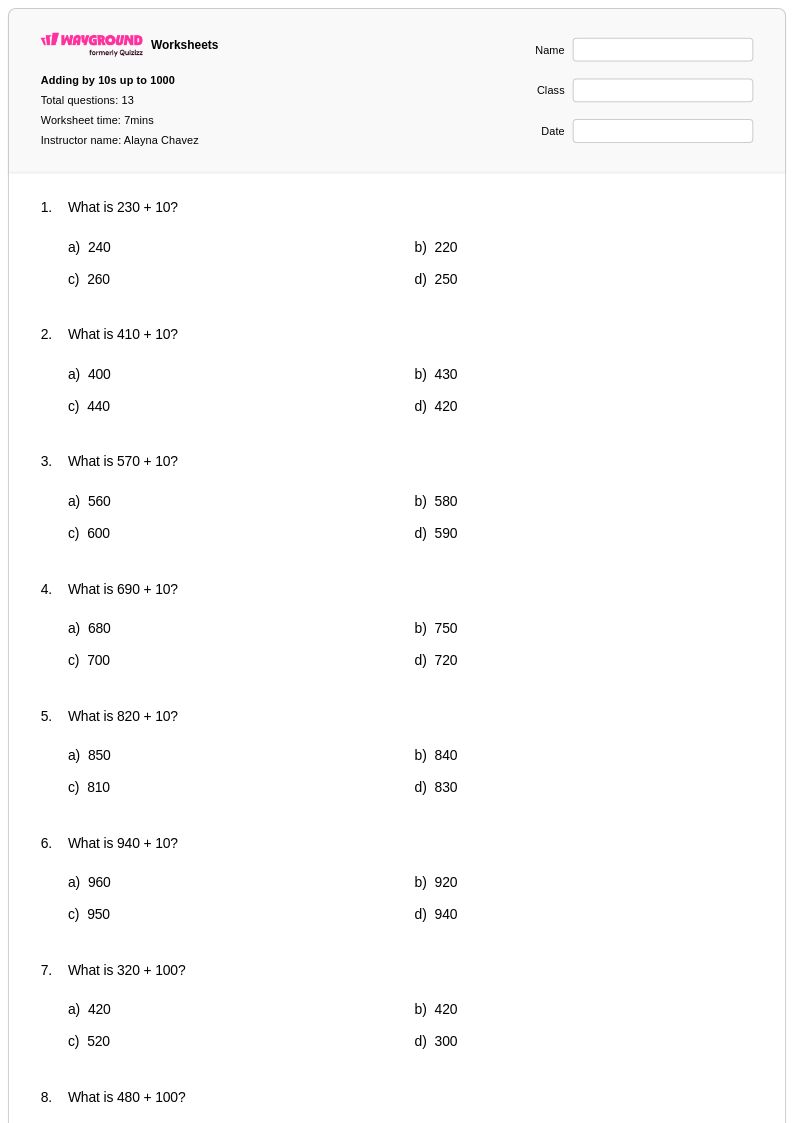
13 Q
5th
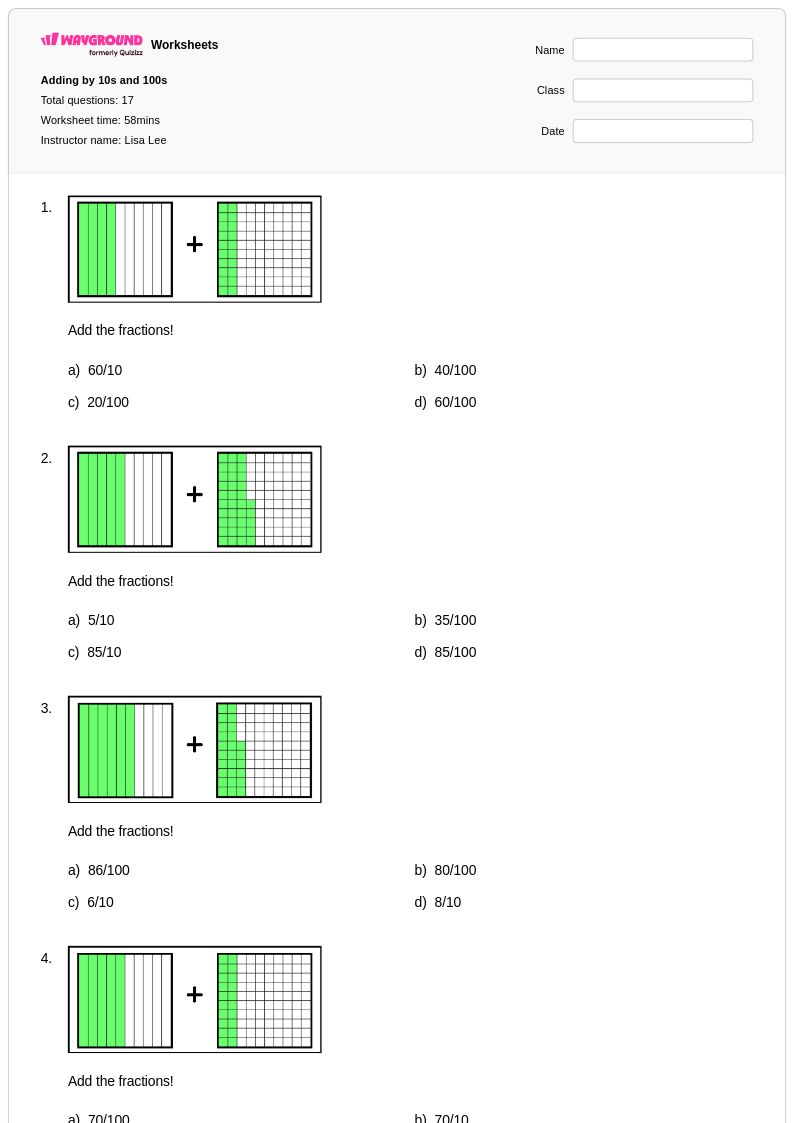
17 Q
4th - 5th
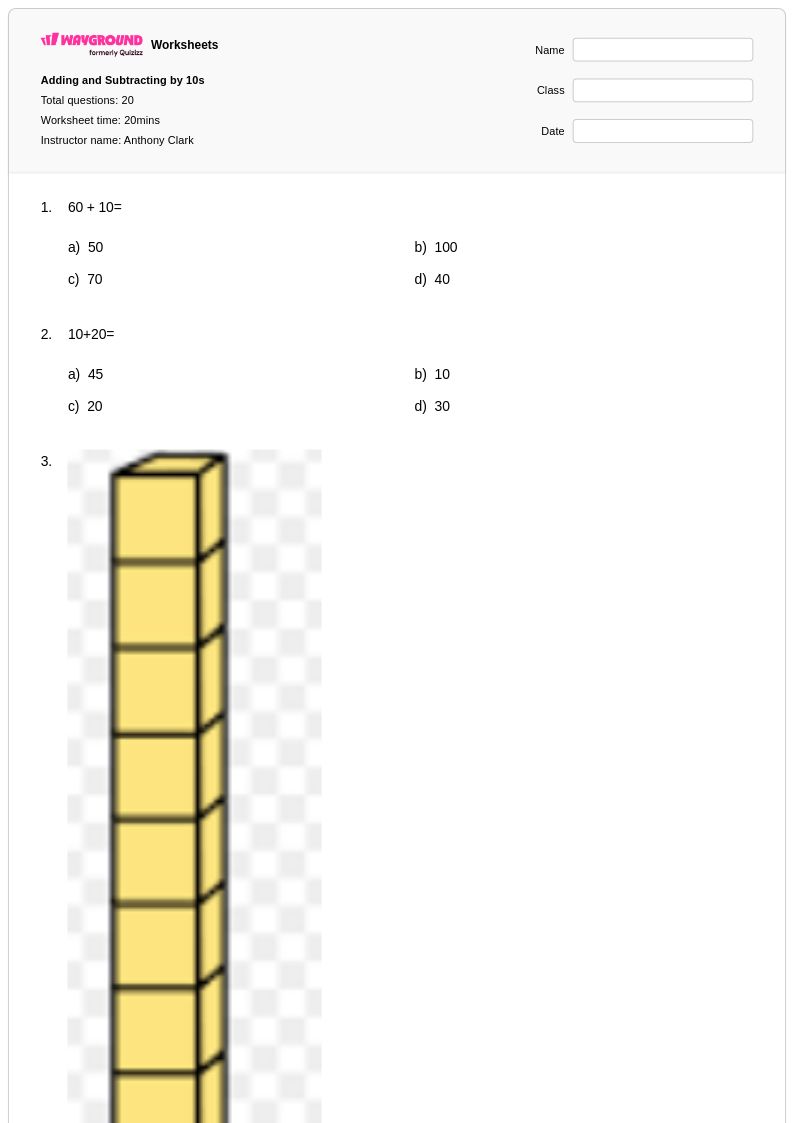
20 Q
2nd - Uni
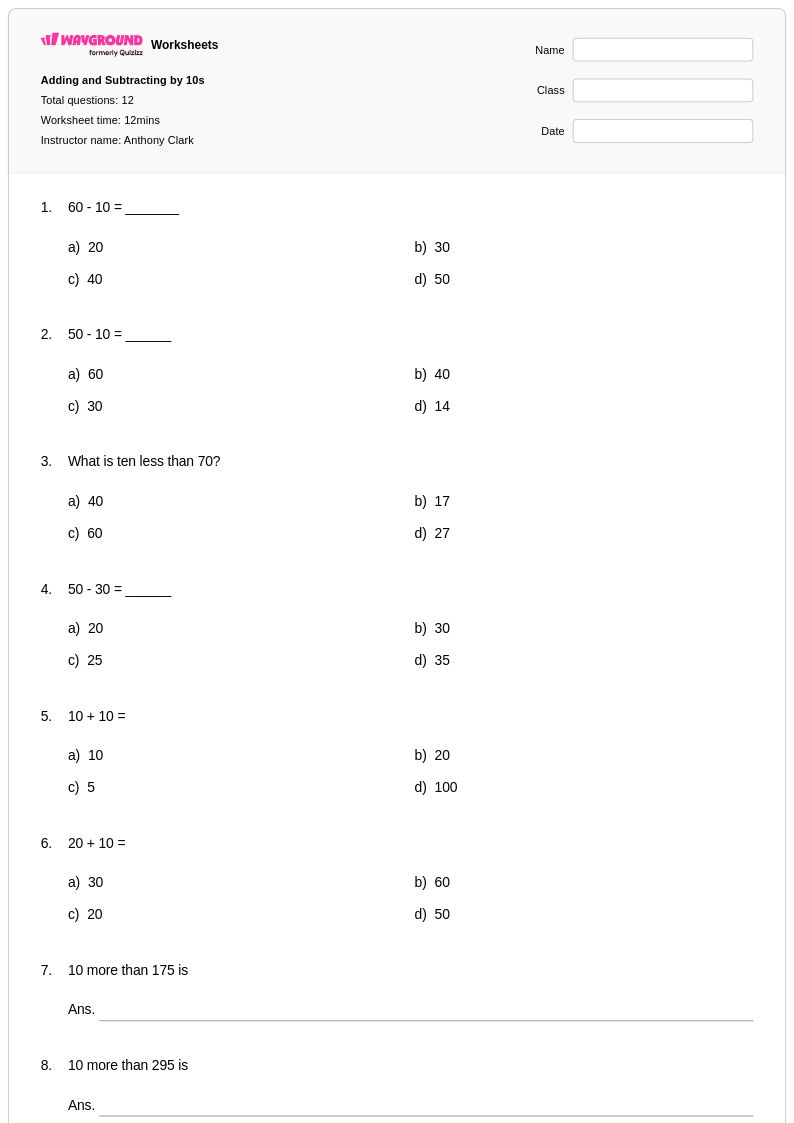
12 Q
2nd - Uni
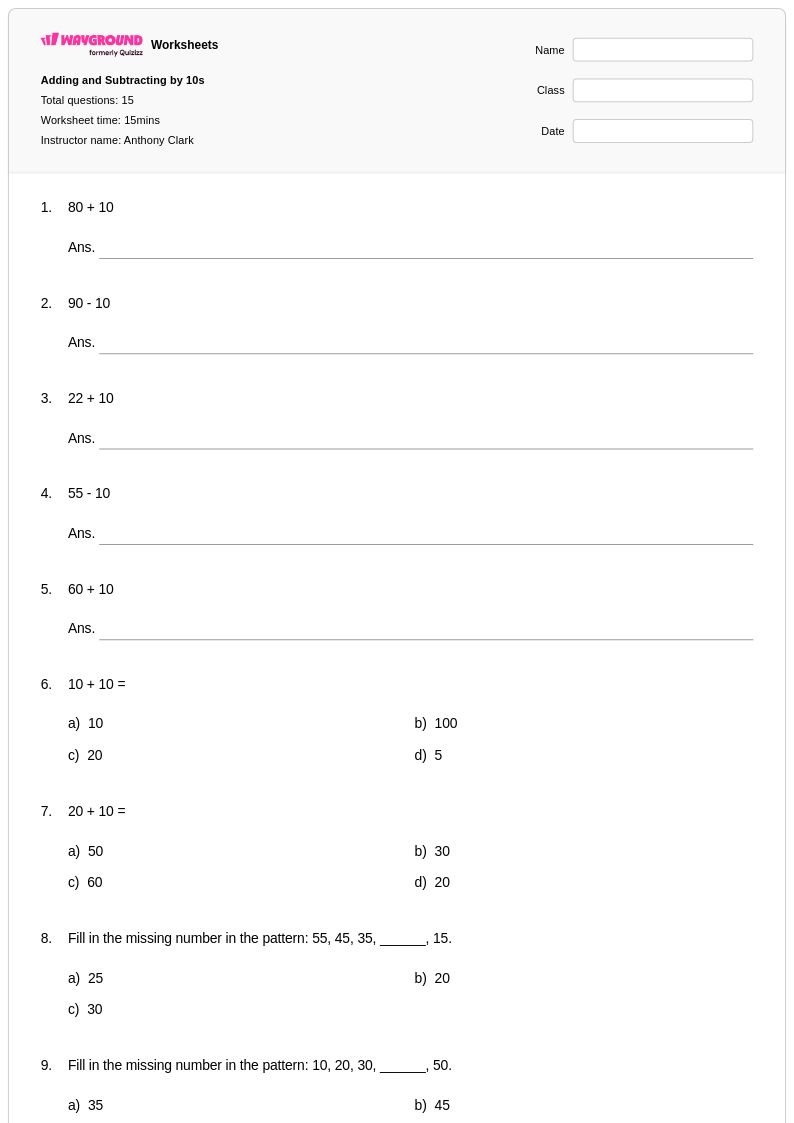
15 Q
2nd - Uni
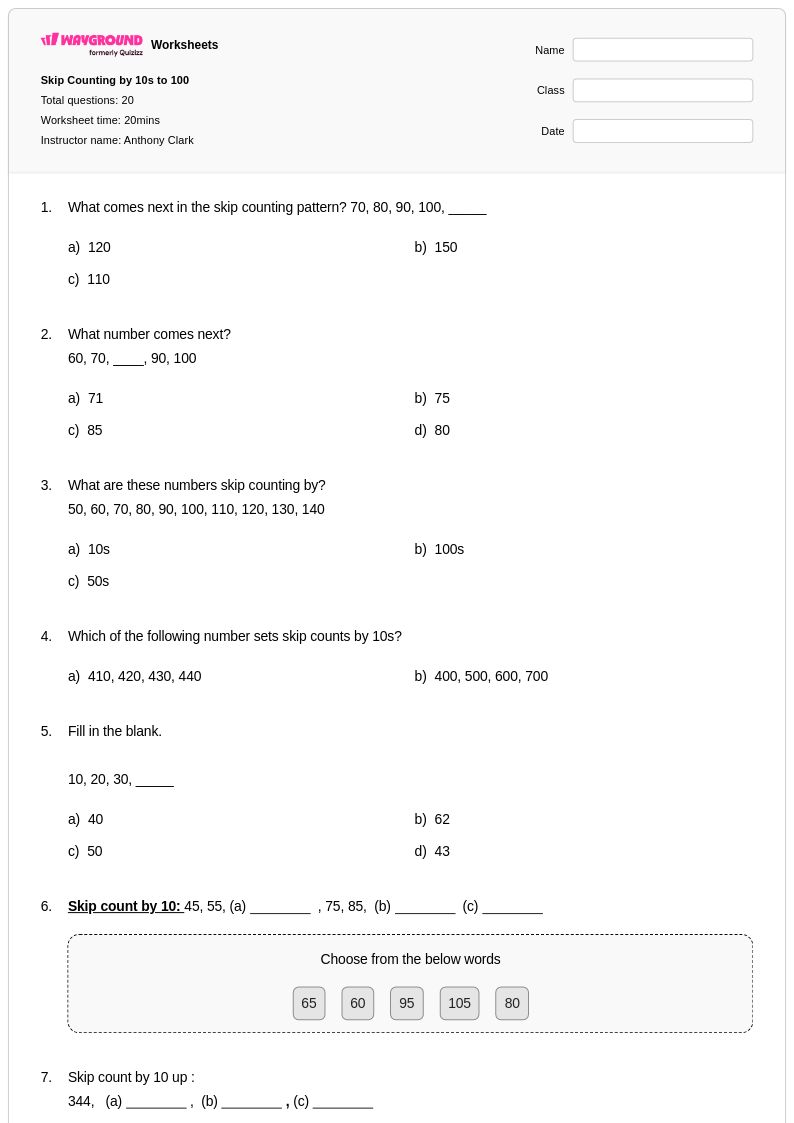
20 Q
2nd - Uni
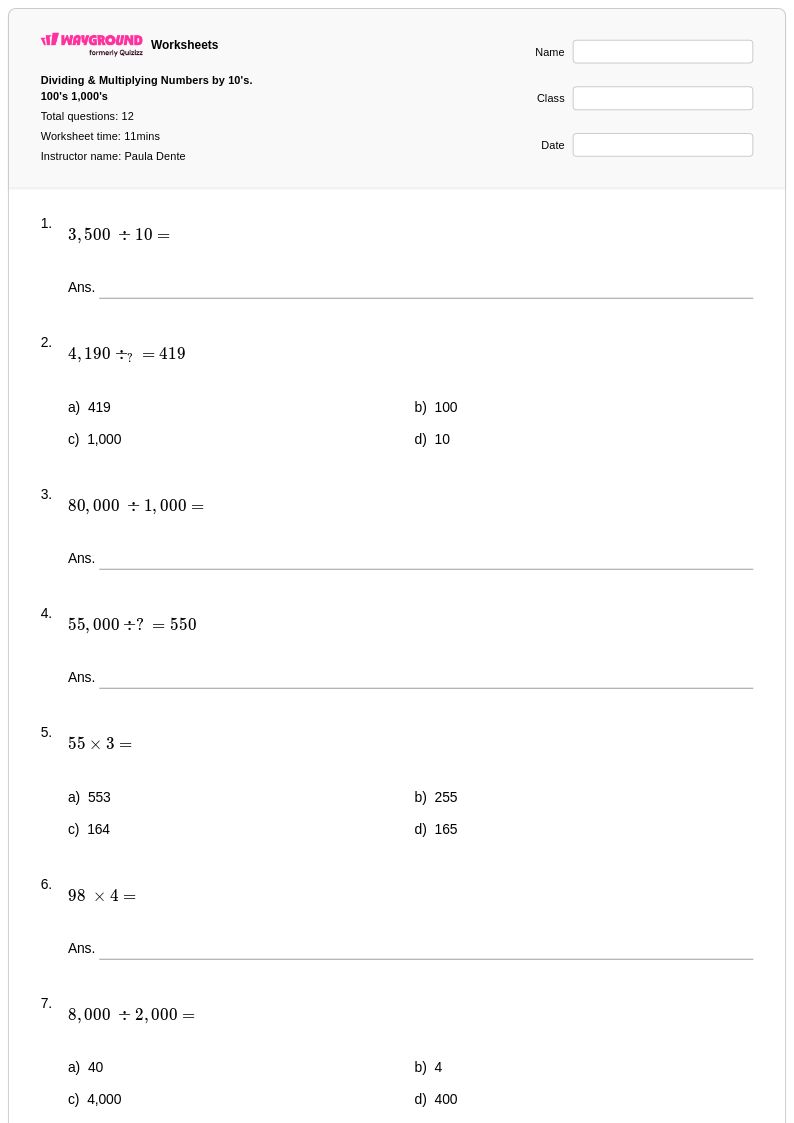
12 Q
5th
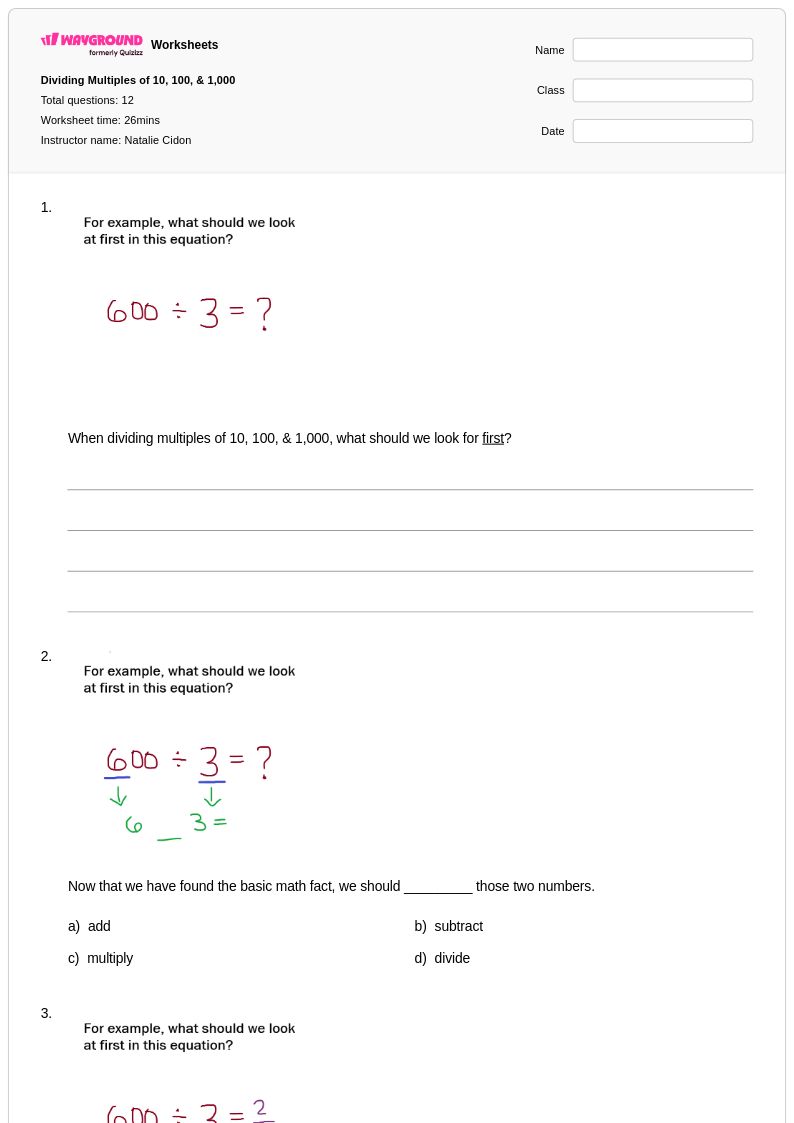
12 Q
4th - 5th
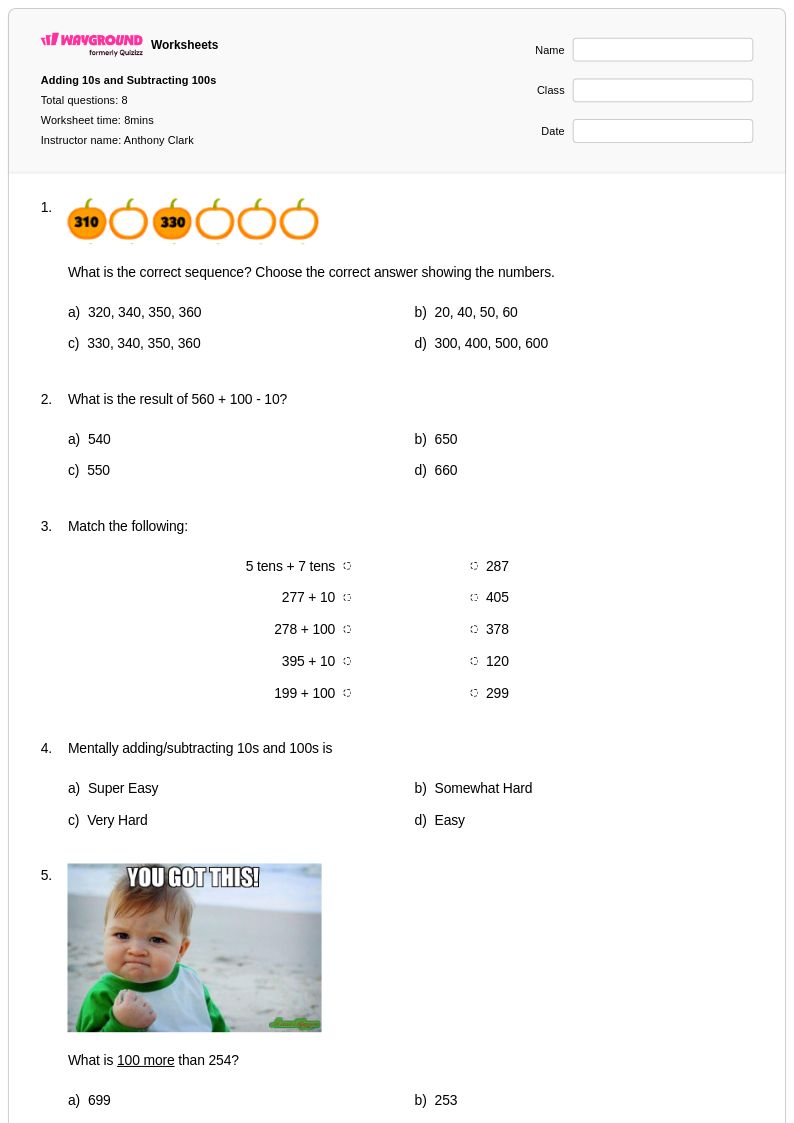
8 Q
4th - Uni
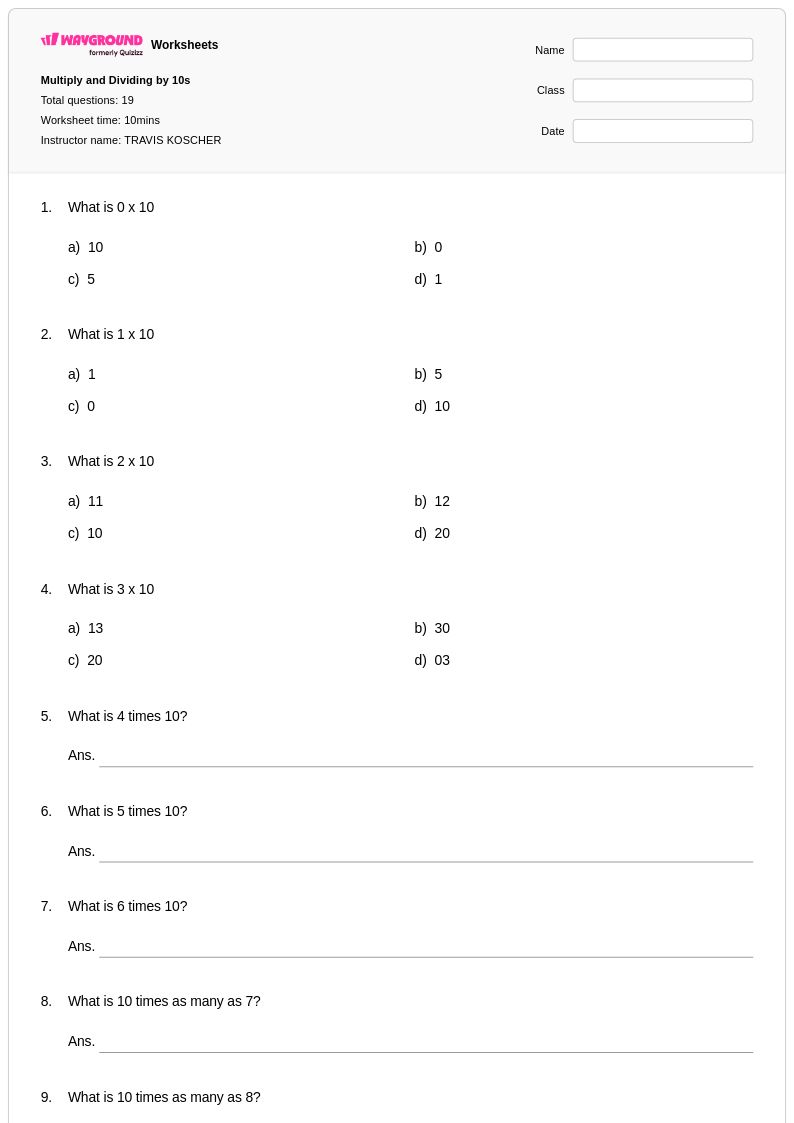
19 Q
5th
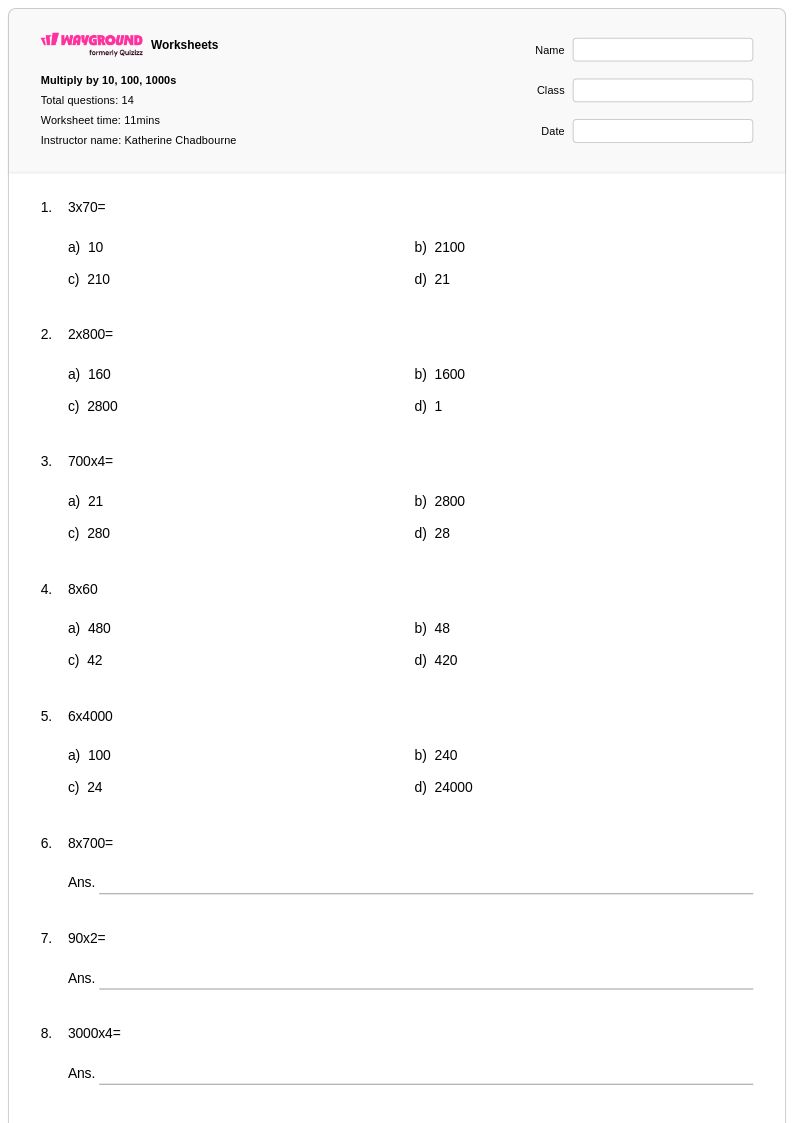
14 Q
3rd - 5th
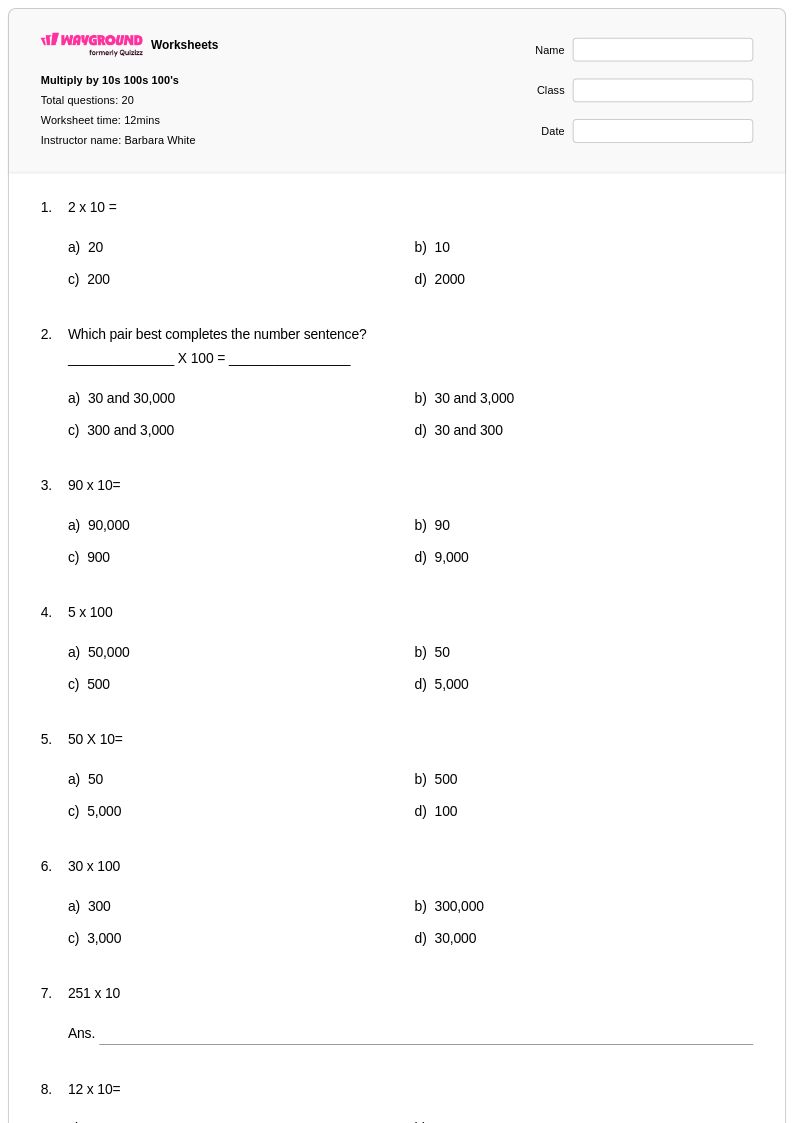
20 Q
5th
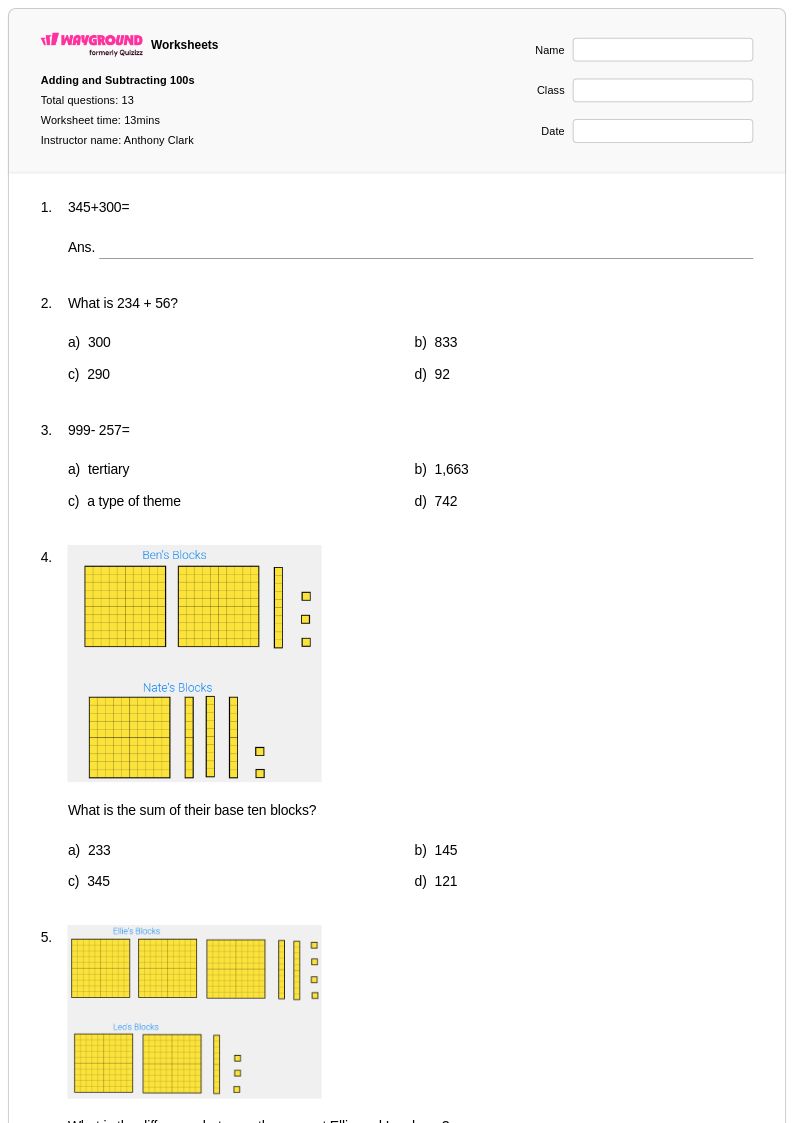
13 Q
2nd - Uni
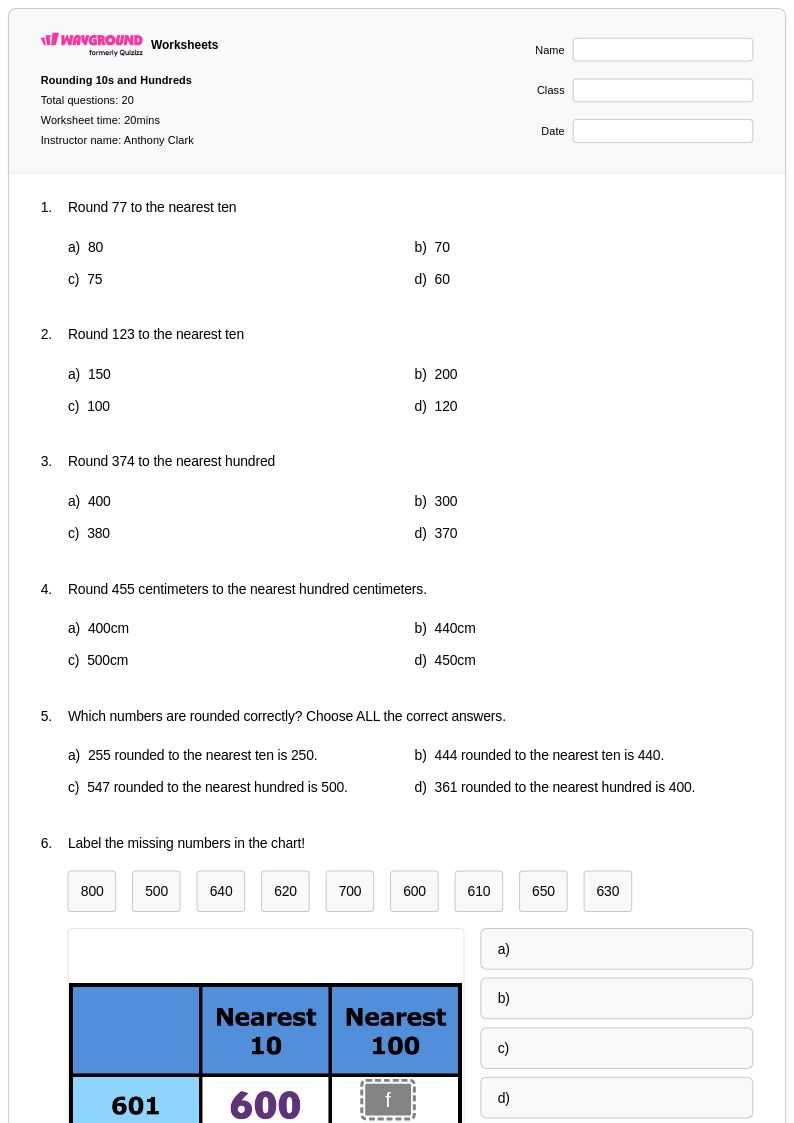
20 Q
3rd - Uni
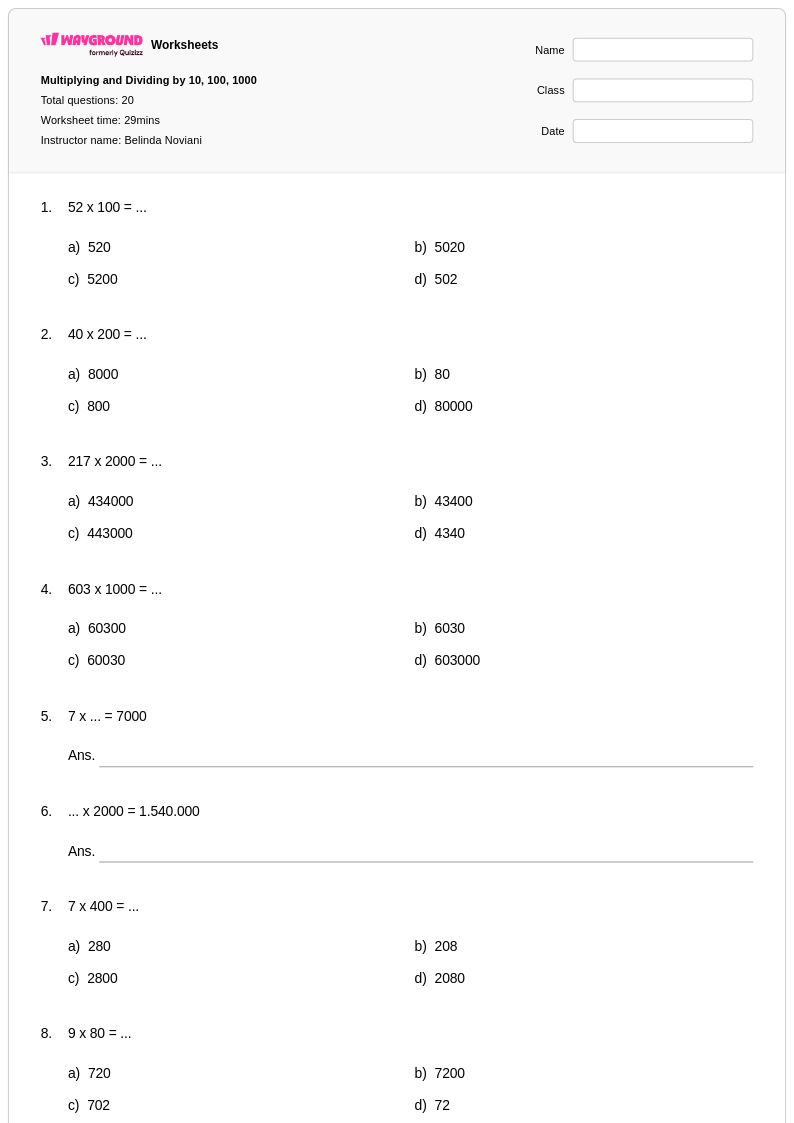
20 Q
5th
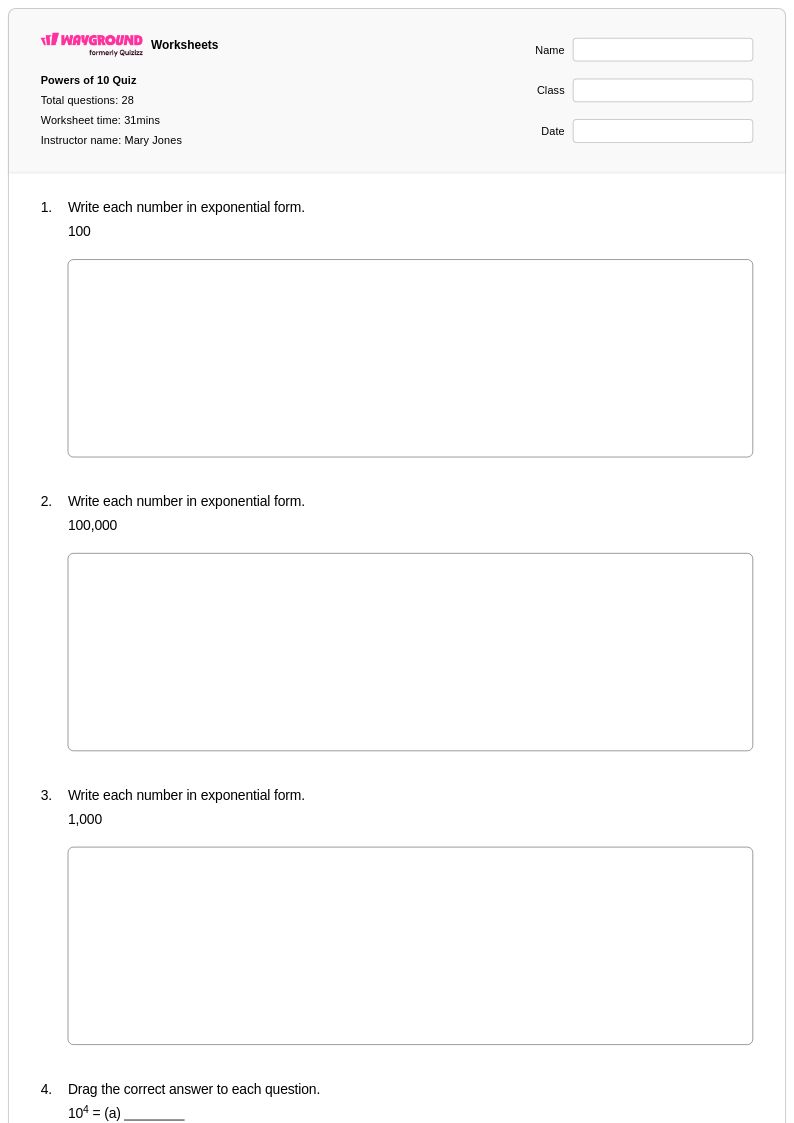
28 Q
5th
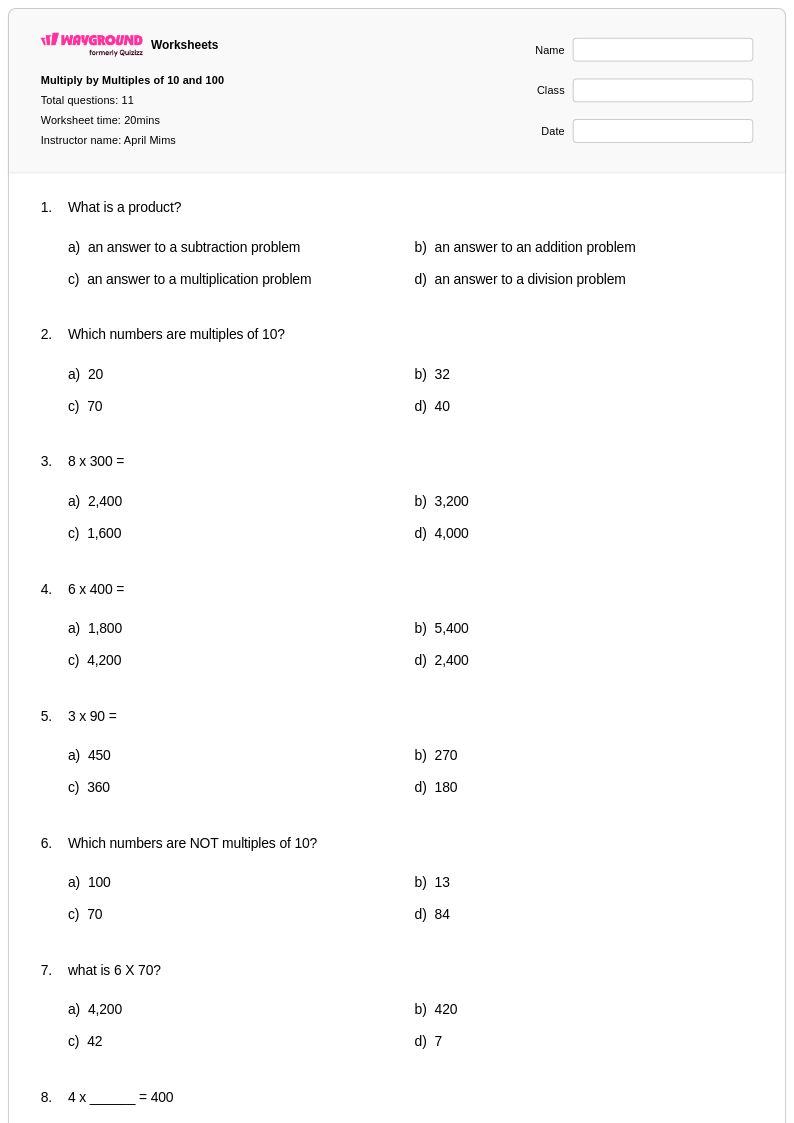
11 Q
4th - 5th
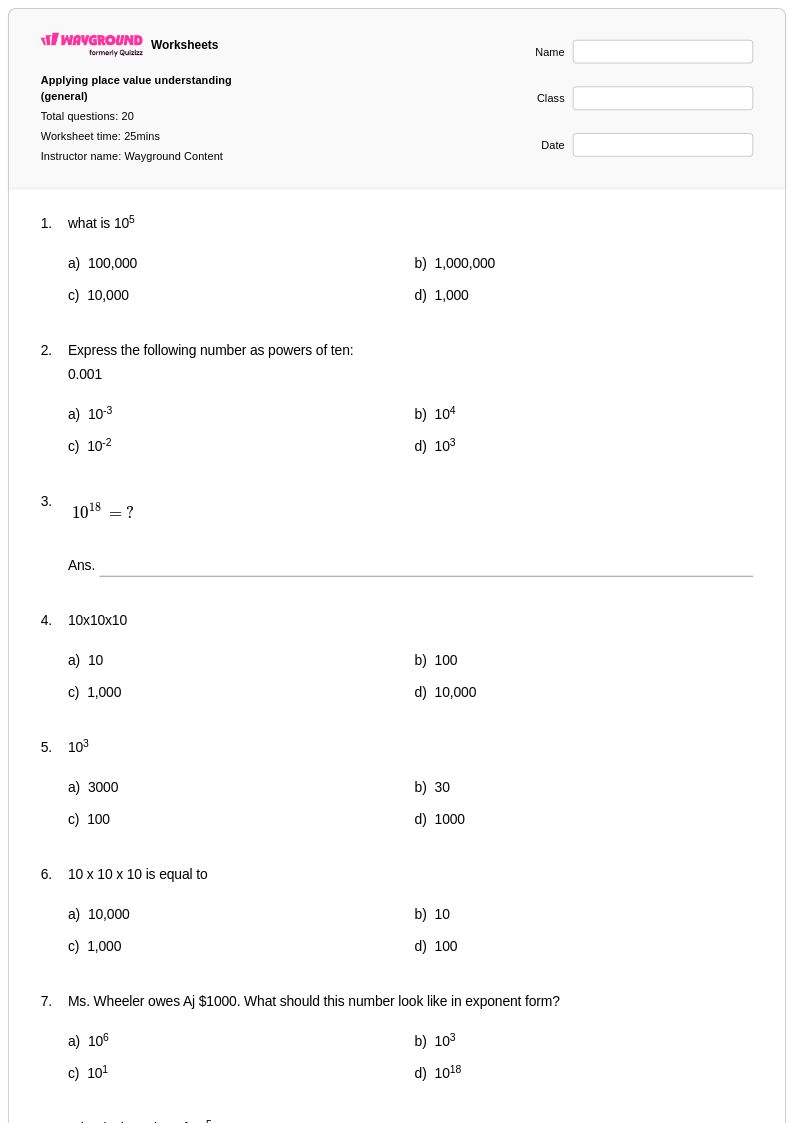
20 Q
5th
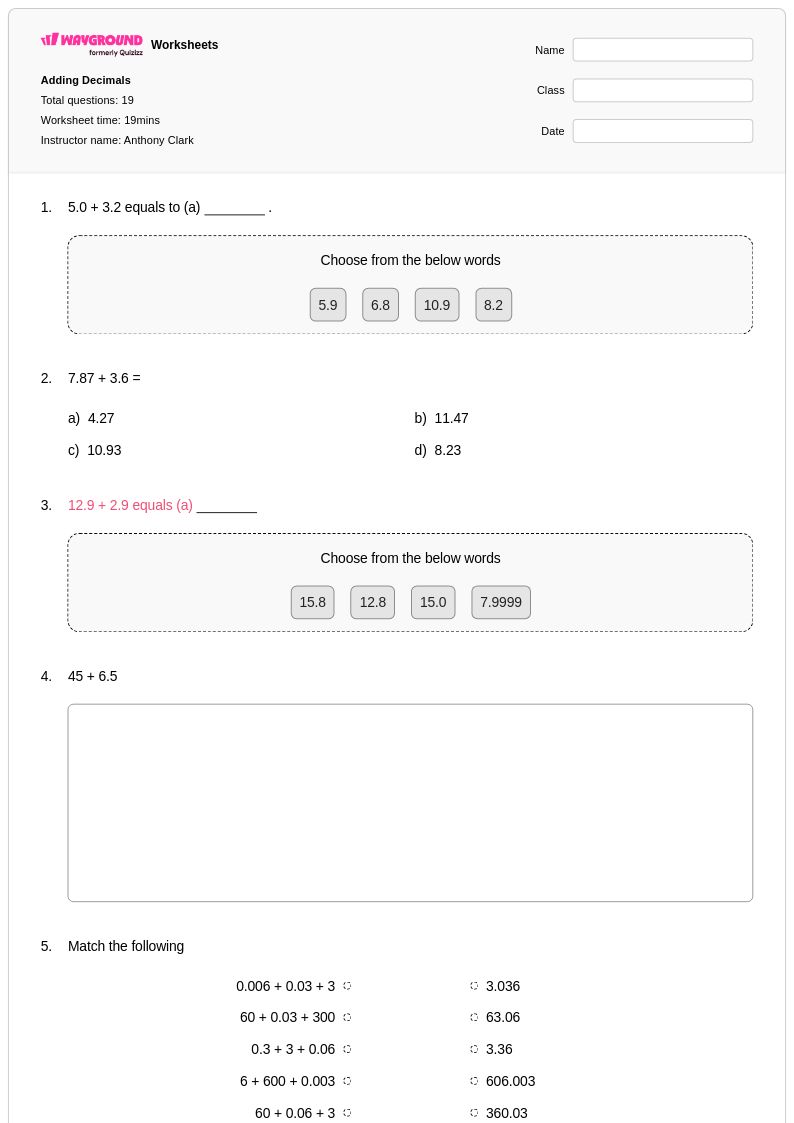
19 Q
5th - Uni
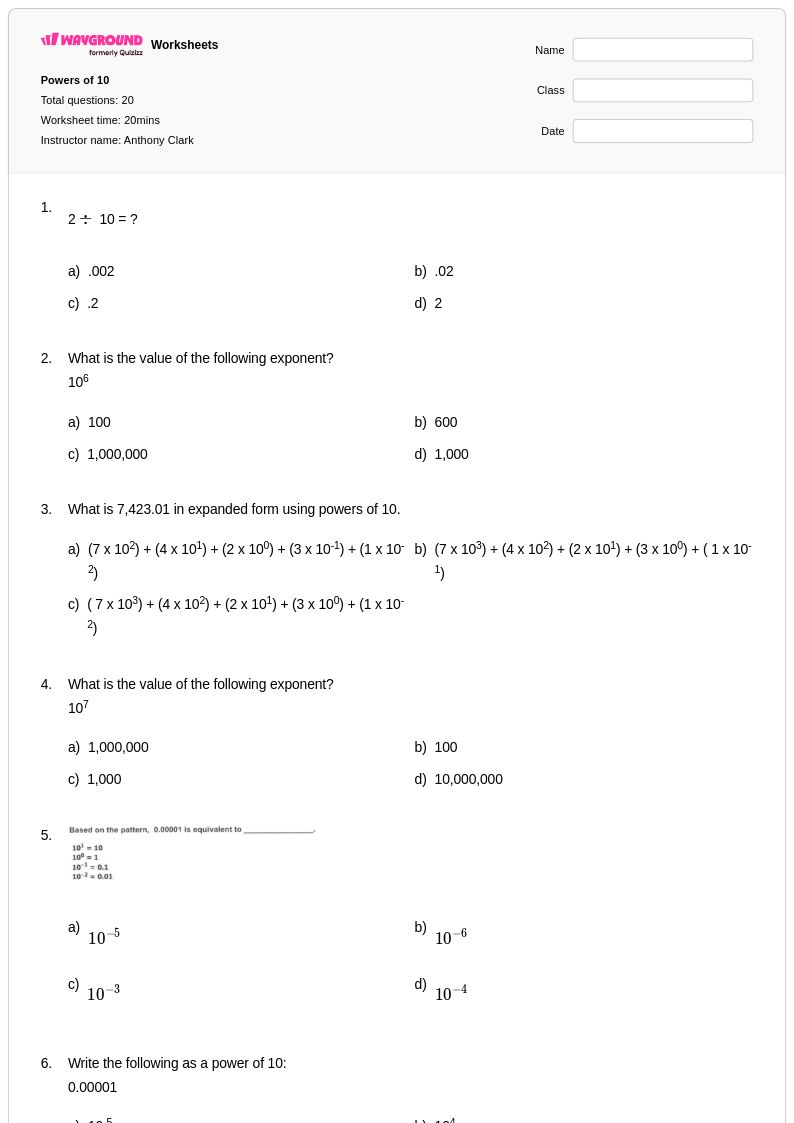
20 Q
5th - Uni
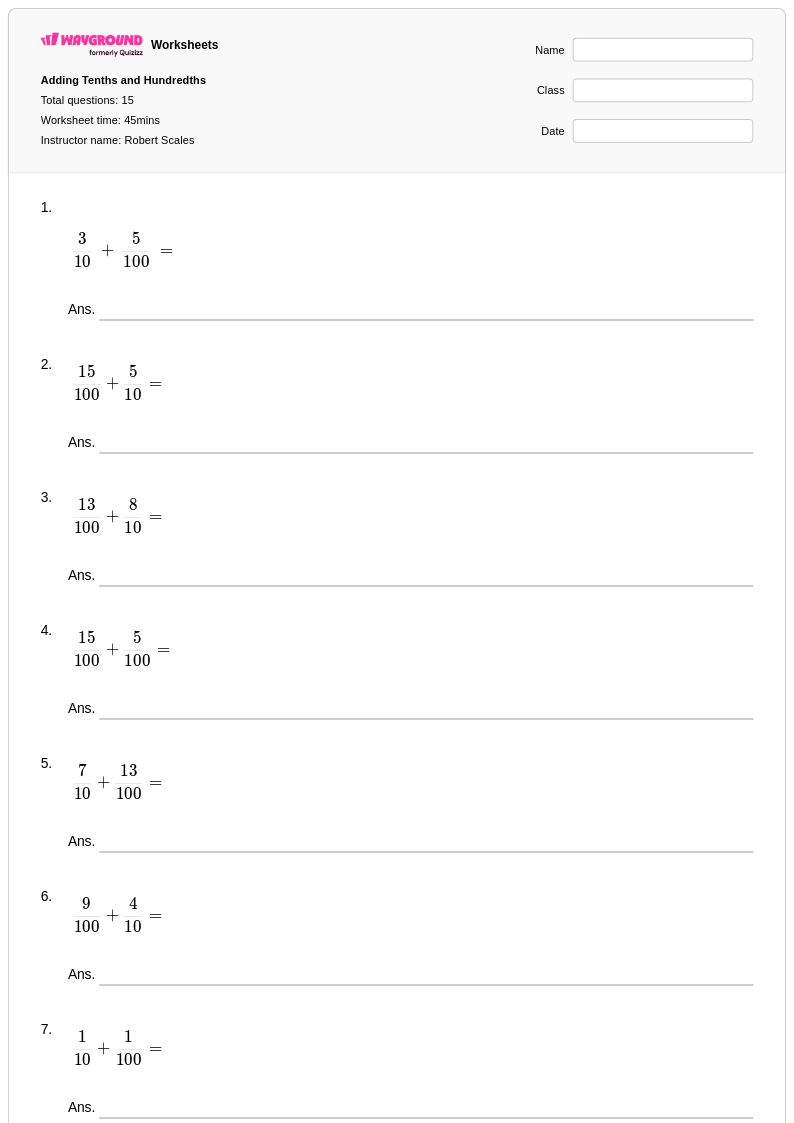
15 Q
4th - 5th
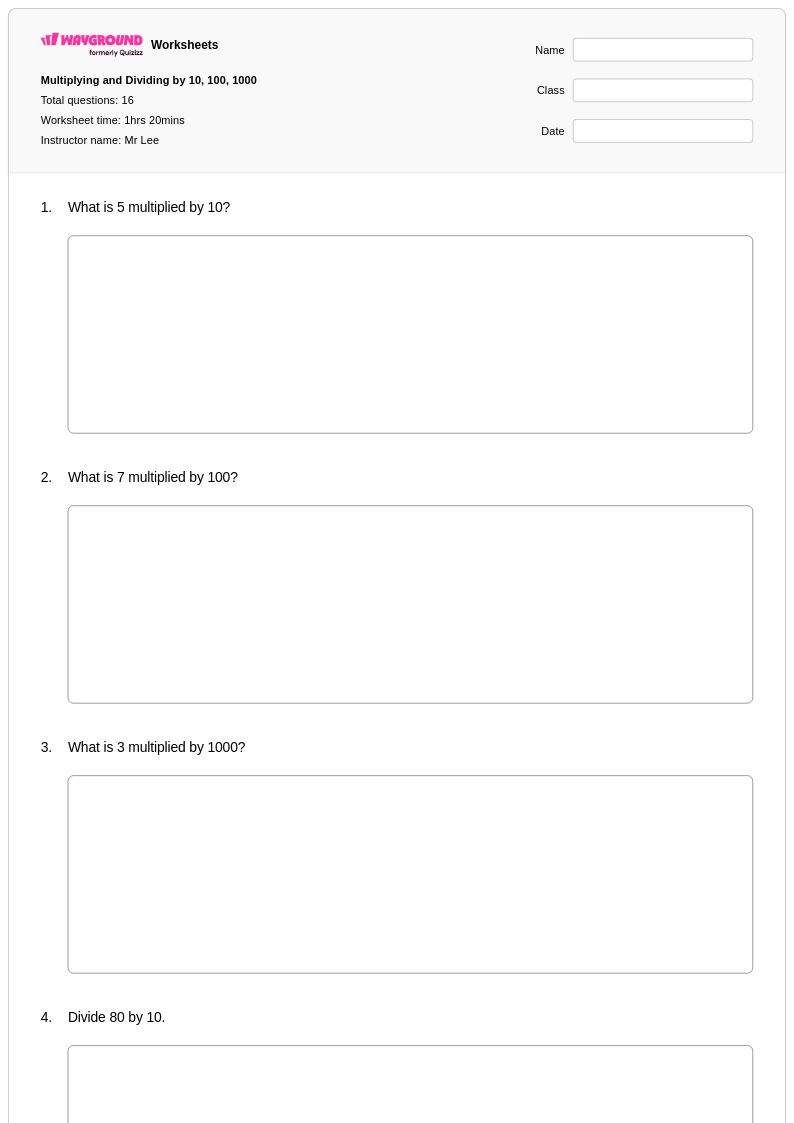
16 Q
5th
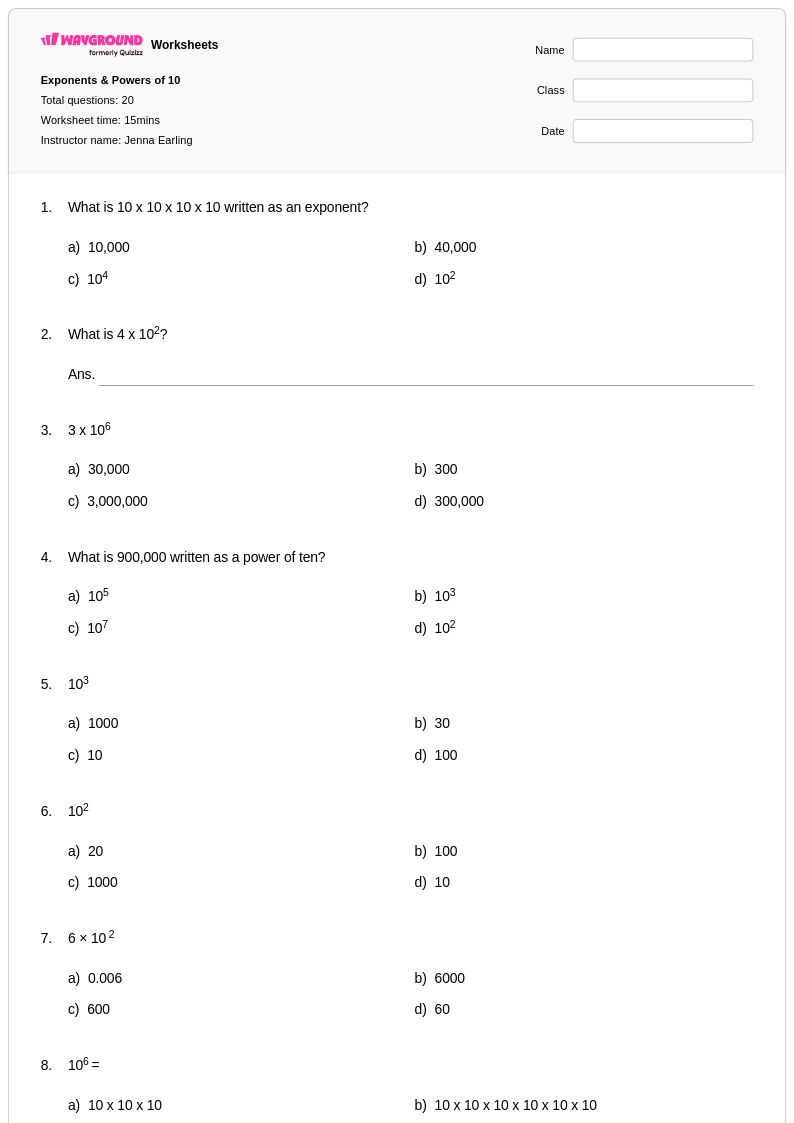
20 Q
5th
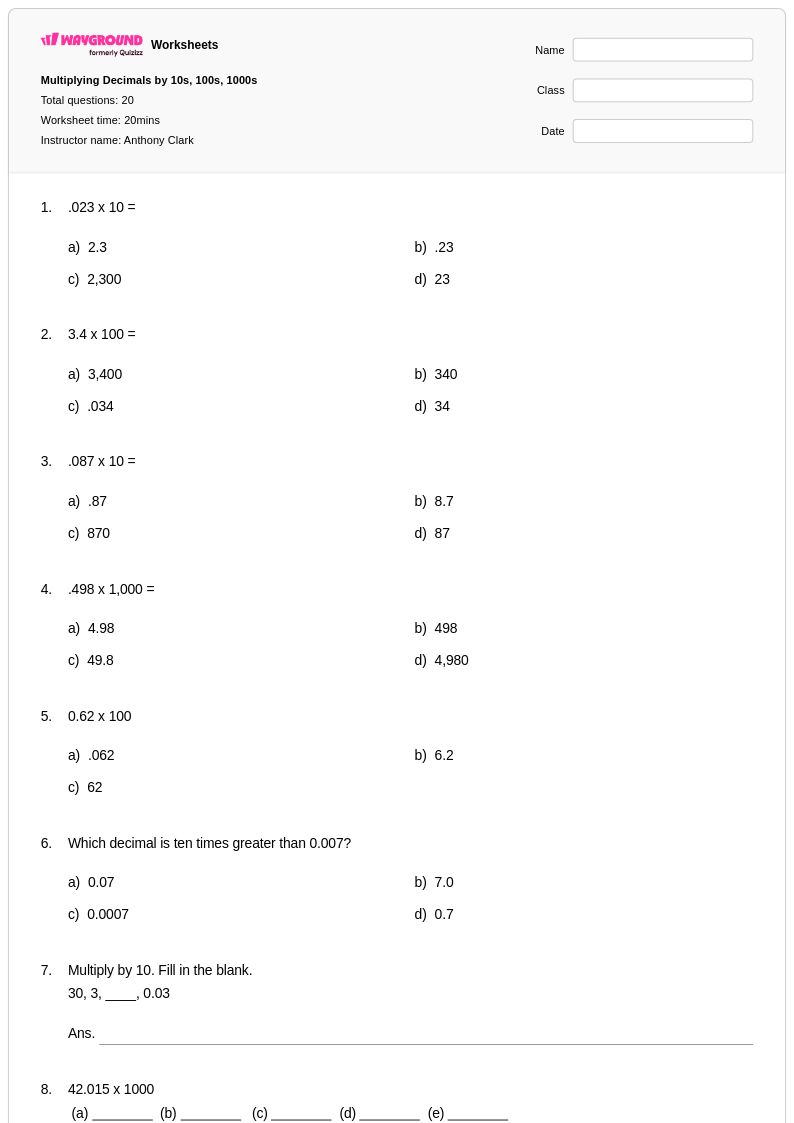
20 Q
4th - Uni
Explore Other Subject Worksheets for grade 5
Explore printable Adding by 10s worksheets for Grade 5
Grade 5 adding by 10s worksheets available through Wayground (formerly Quizizz) provide students with essential practice in developing mental math fluency and number sense strategies. These comprehensive worksheets focus specifically on helping fifth-grade students master the efficient technique of adding multiples of ten to various numbers, building upon their understanding of place value and base-ten number systems. Students work through carefully structured practice problems that reinforce the pattern recognition skills necessary for quick mental calculations, such as recognizing that adding 30 to 245 simply requires increasing the tens digit by 3. Each worksheet collection includes detailed answer keys and is available as free printables in convenient pdf format, allowing teachers to seamlessly integrate this fundamental addition strategy into their mathematics instruction while providing students with the repetitive practice needed to achieve automaticity.
Wayground (formerly Quizizz) supports educators with an extensive library of millions of teacher-created resources specifically designed for adding by 10s instruction at the Grade 5 level. The platform's robust search and filtering capabilities enable teachers to quickly locate worksheets that align with specific curriculum standards and match their students' current skill levels, while built-in differentiation tools allow for easy customization to meet diverse learning needs within the classroom. Teachers can access these resources in both printable and digital formats, including downloadable pdf versions, making them ideal for various instructional settings from traditional paper-and-pencil practice to interactive digital learning environments. This flexibility proves invaluable for lesson planning, targeted remediation sessions, enrichment activities for advanced learners, and ongoing skill practice, ensuring that all students develop strong foundational skills in this critical addition strategy that serves as a building block for more complex mathematical operations.
FAQs
How can I teach adding by 10s as a mental-math strategy in Grade 5?
What exercises make adding-by-10s practice worthwhile for fifth graders?
What misconceptions do fifth graders have about adding multiples of 10?
How can I use Wayground’s Grade 5 adding-by-10s worksheets?
How does adding by 10s connect to the Grade 5 Common Core math progression?
How can I differentiate adding-by-10s work for fifth graders?
Why practice adding by 10s in Grade 5?