Free Printable African American Inventors Worksheets for Grade 5
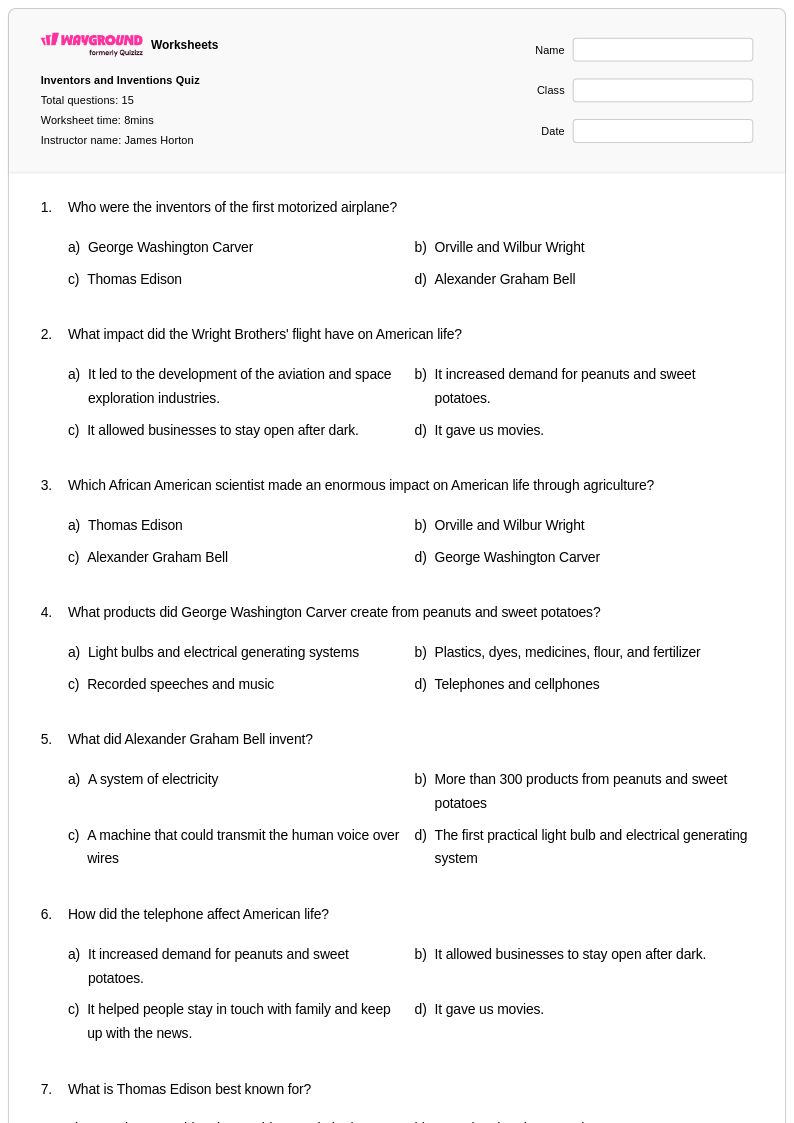
Explore Grade 5 African American inventors through our comprehensive collection of free worksheets and printables that help students discover groundbreaking contributions to science, technology, and society with engaging practice problems and answer keys.
Explore printable African American Inventors worksheets for Grade 5
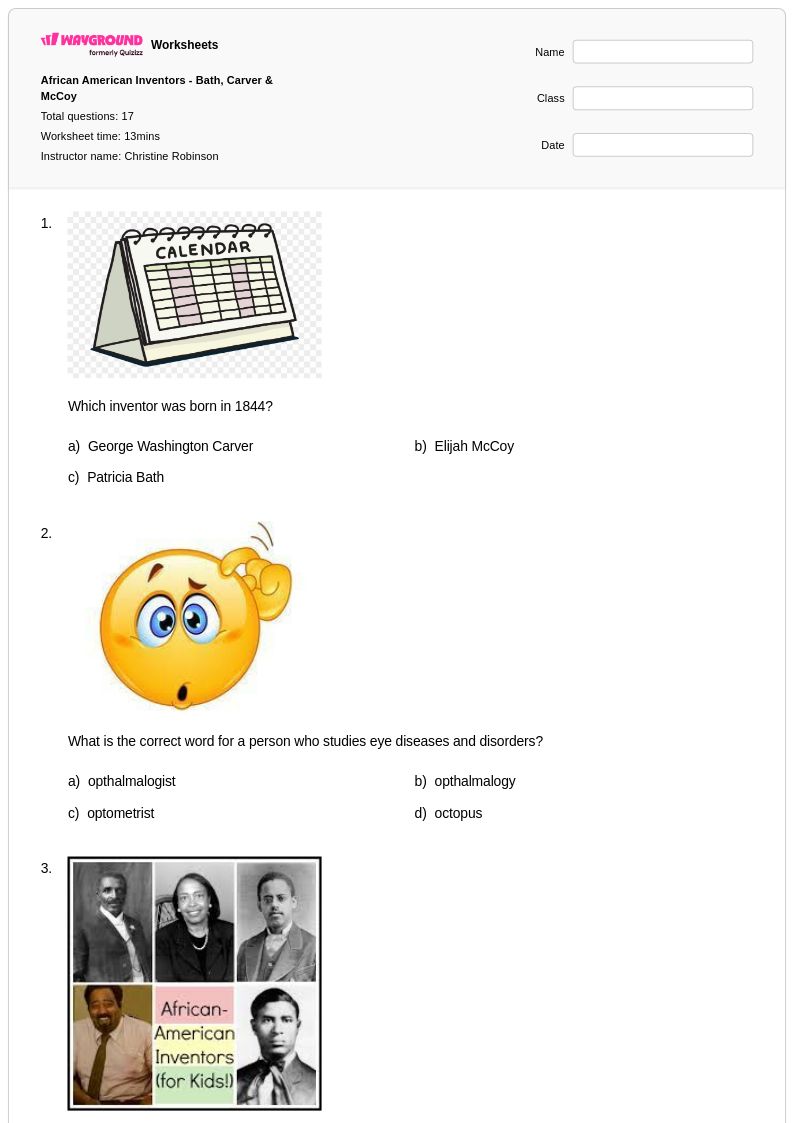
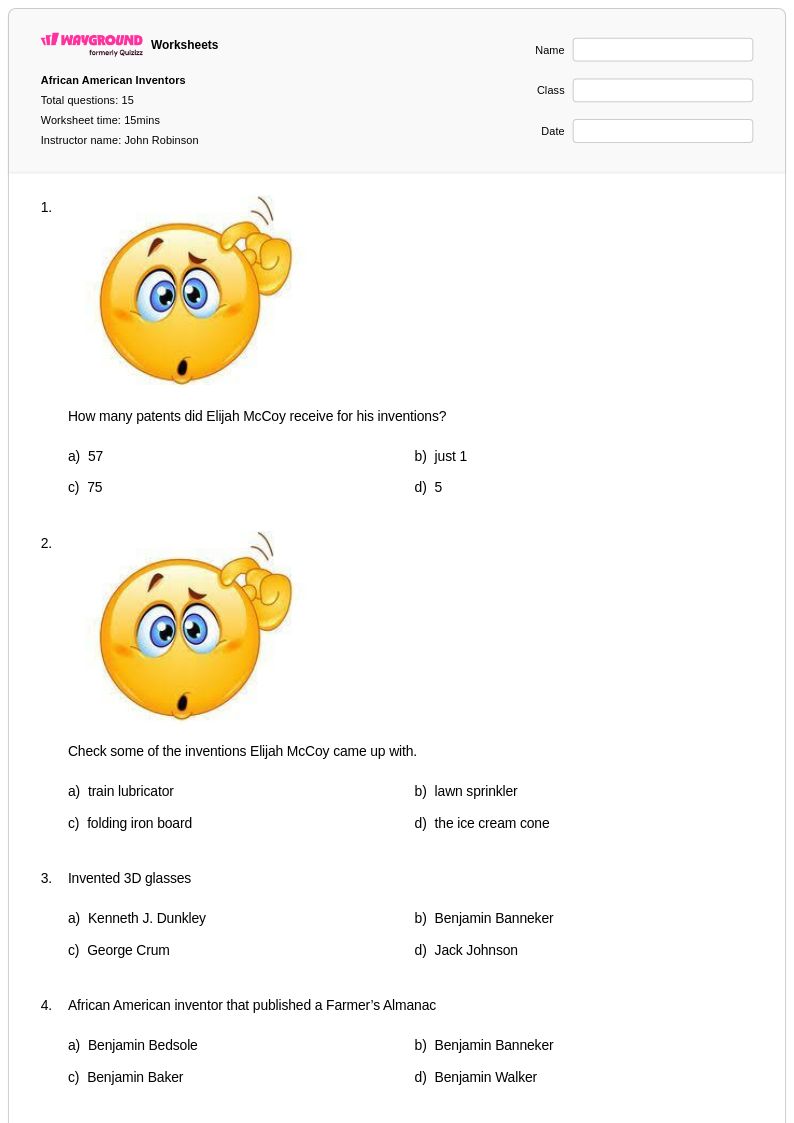
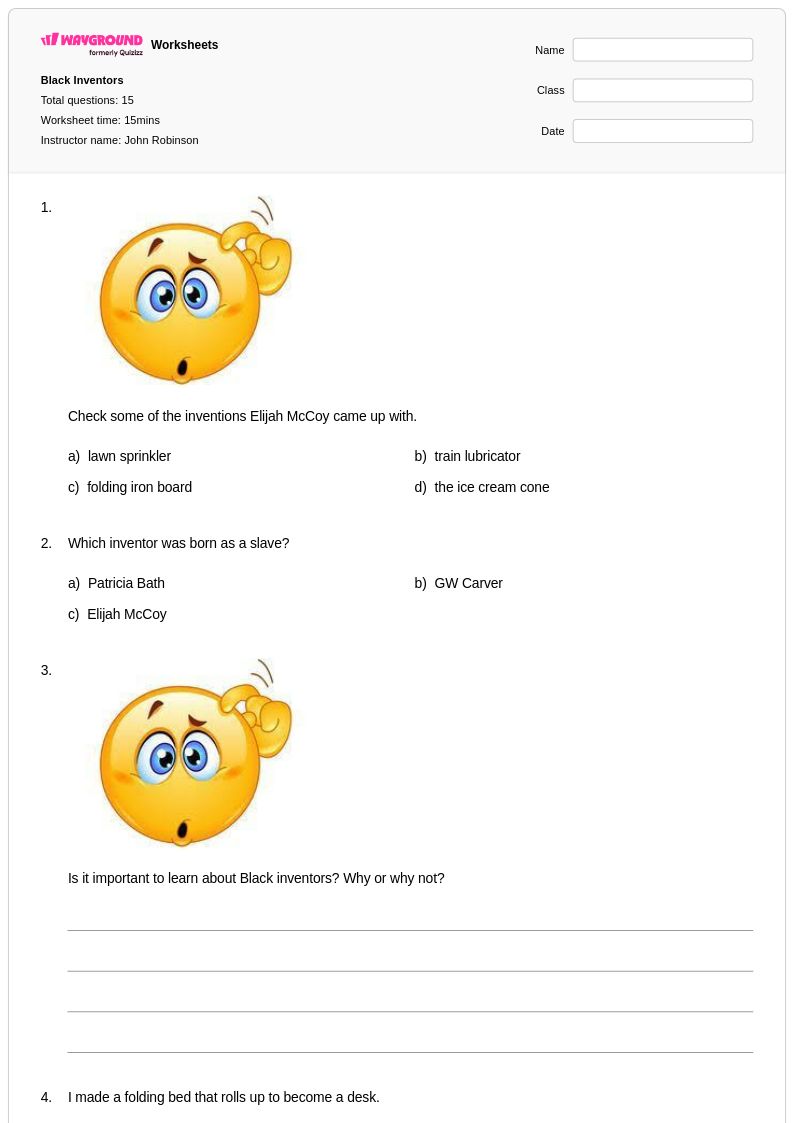
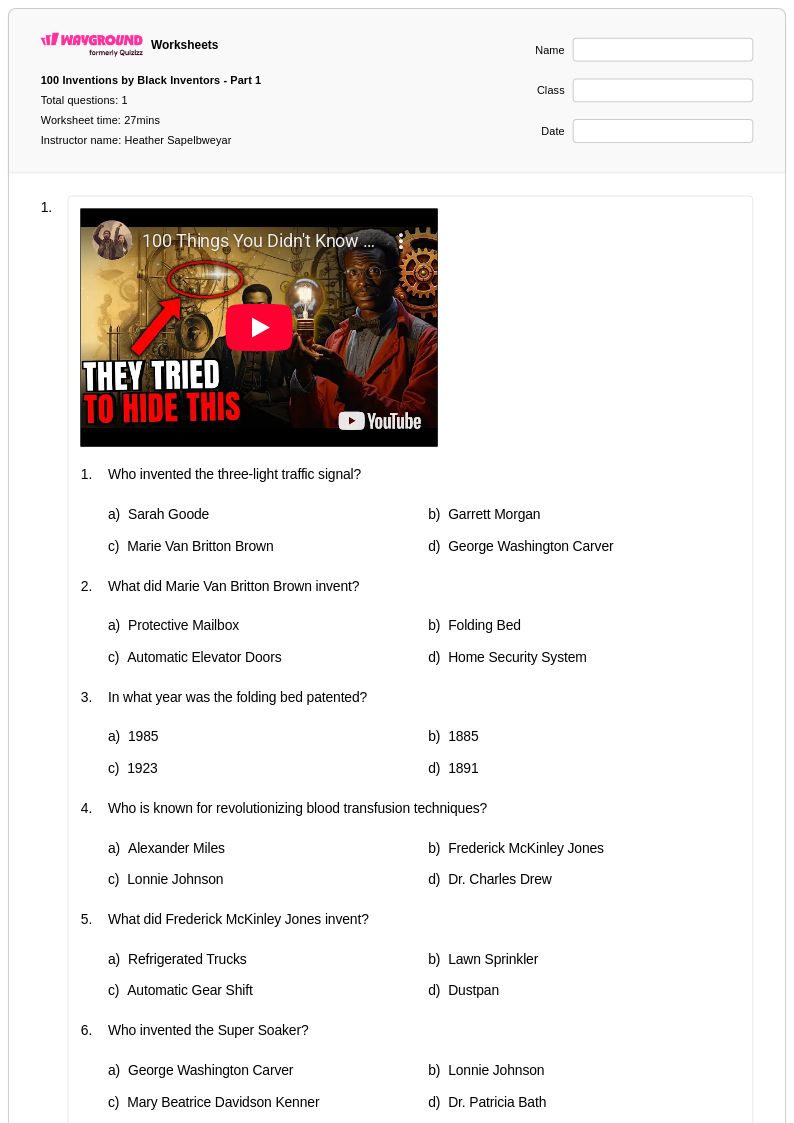
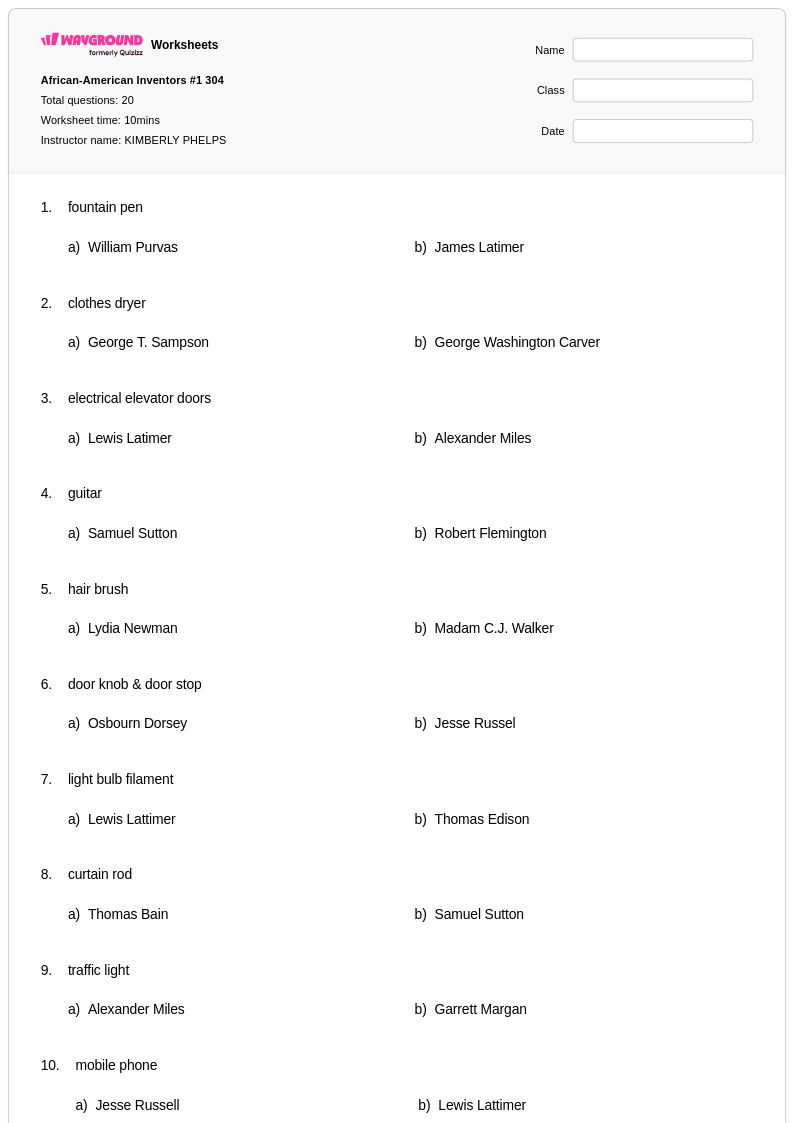
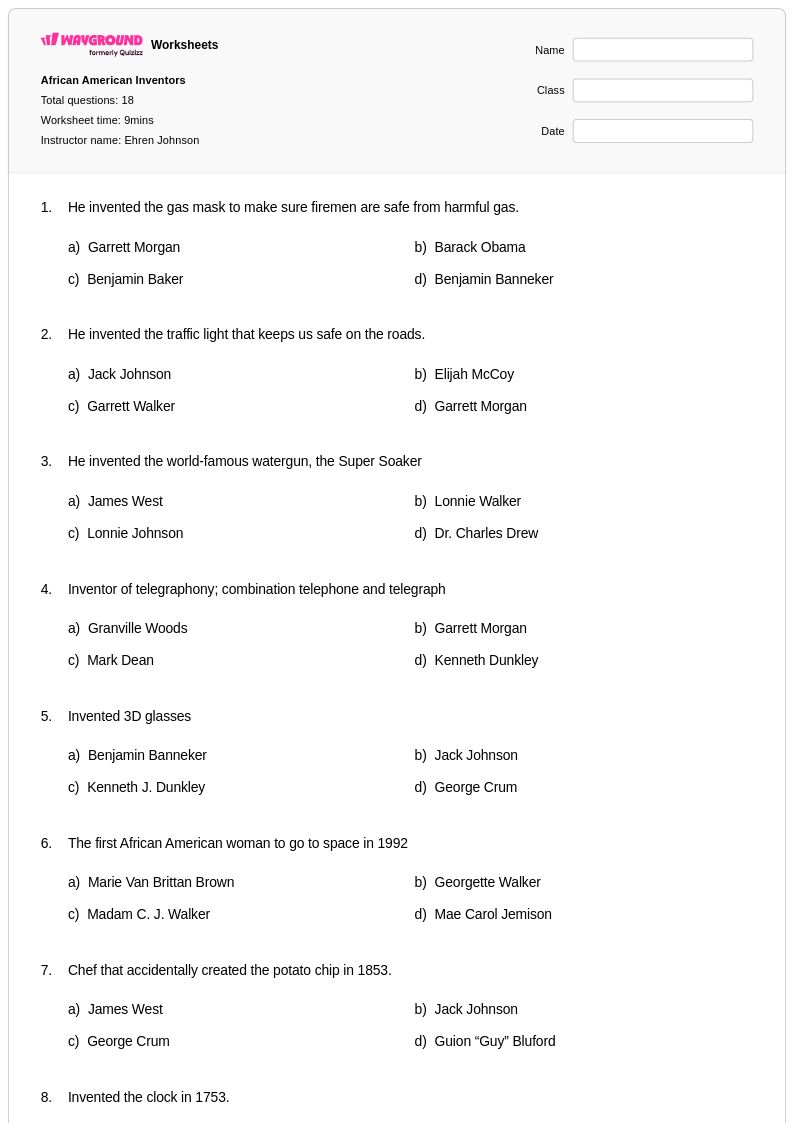
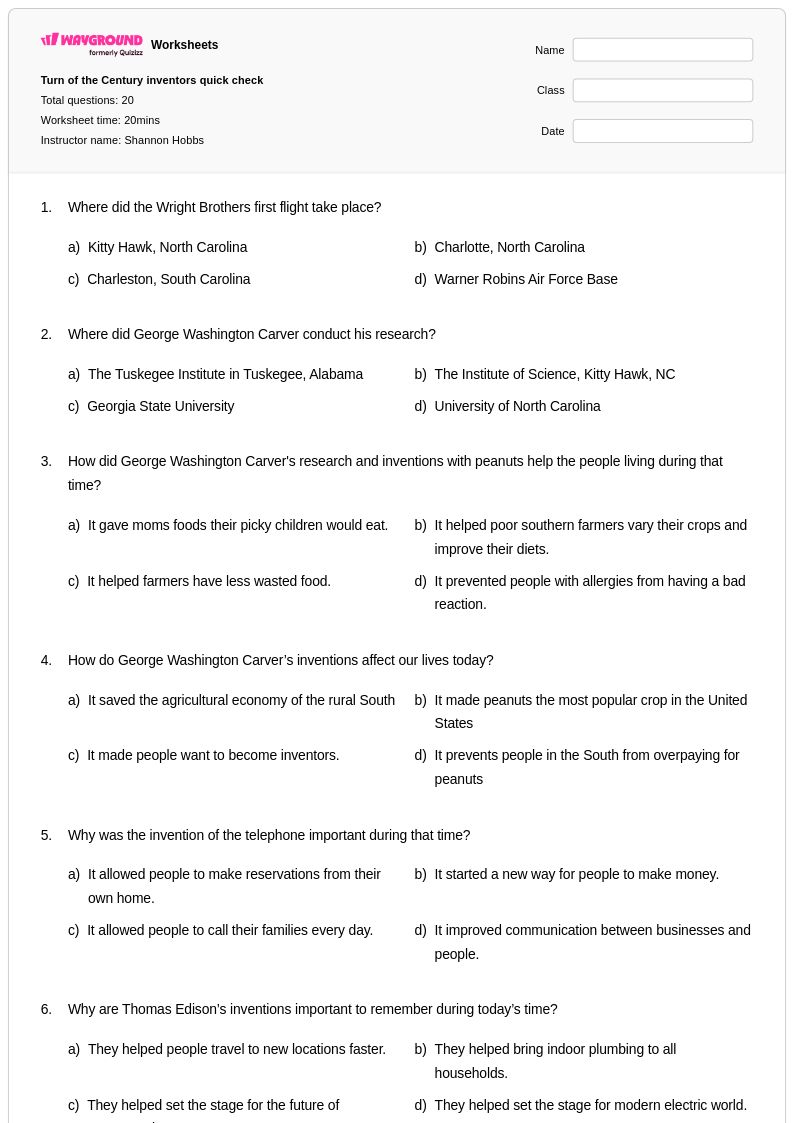
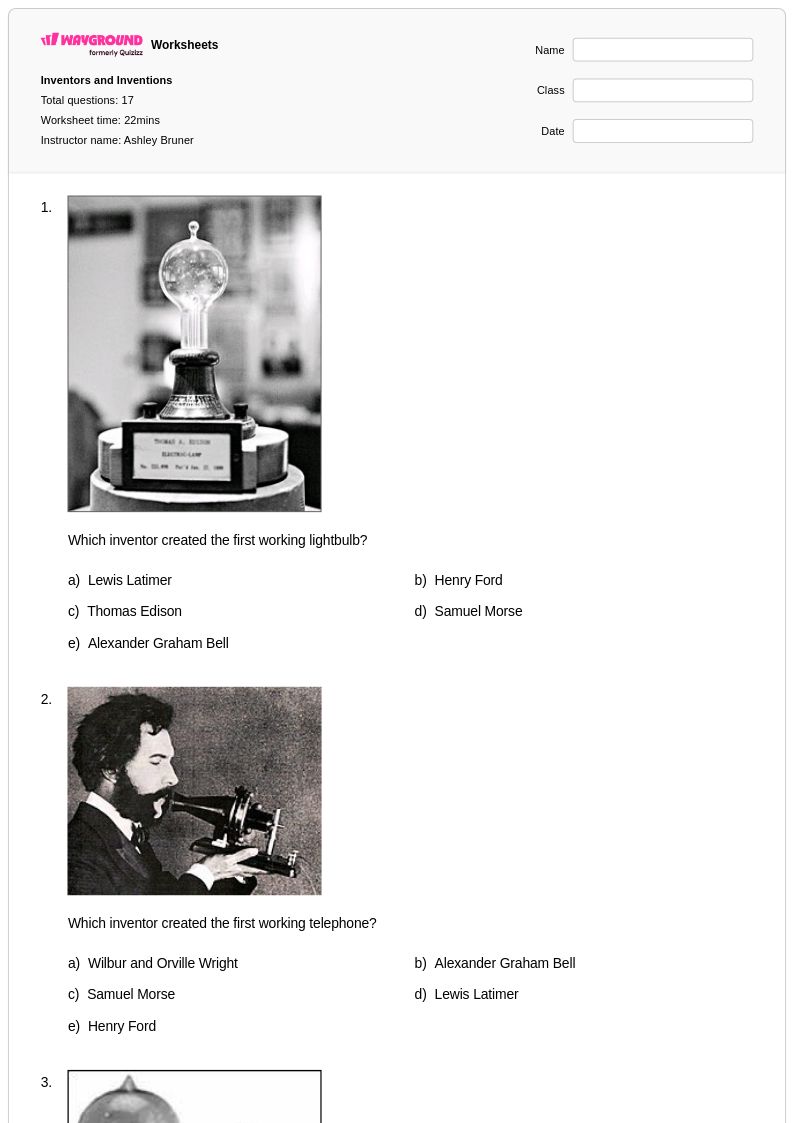
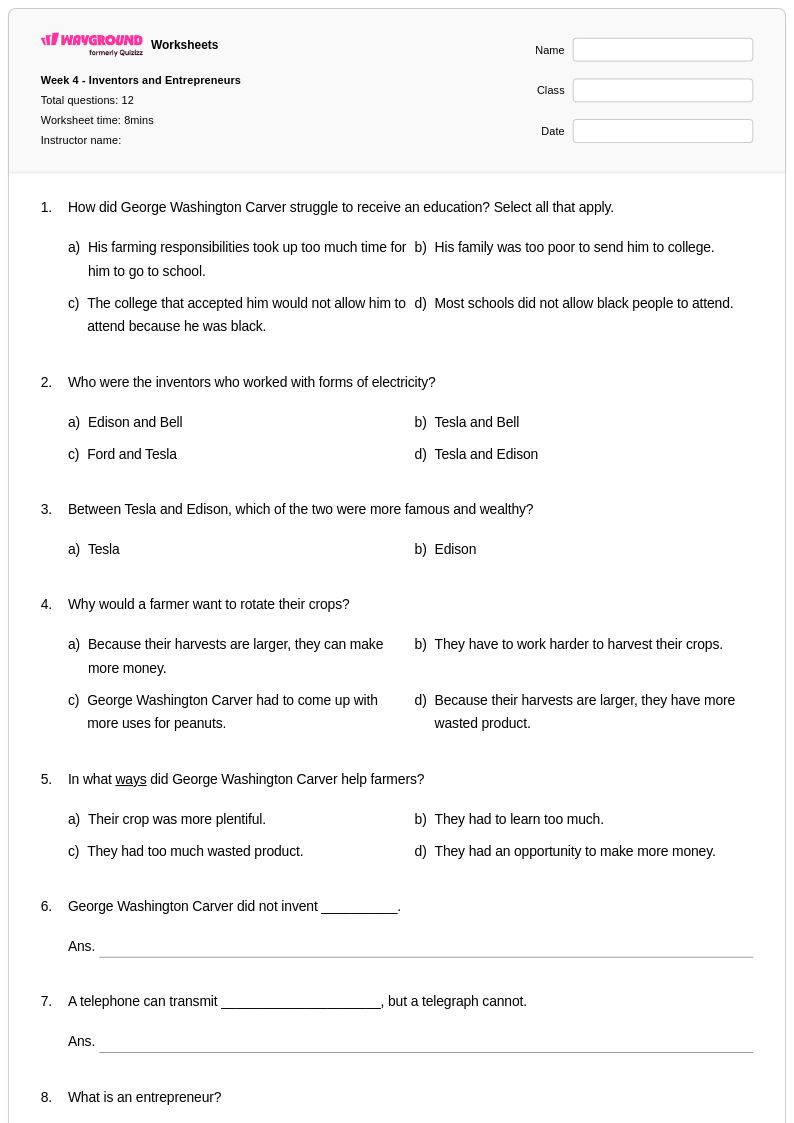
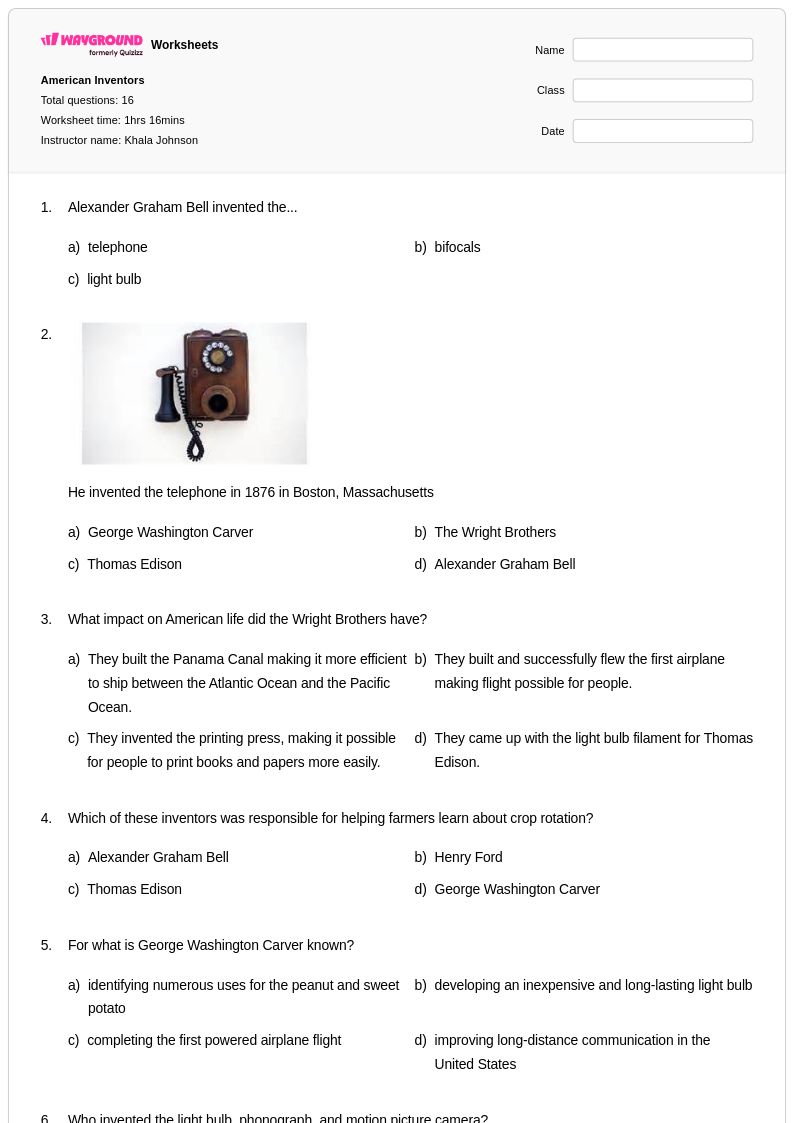
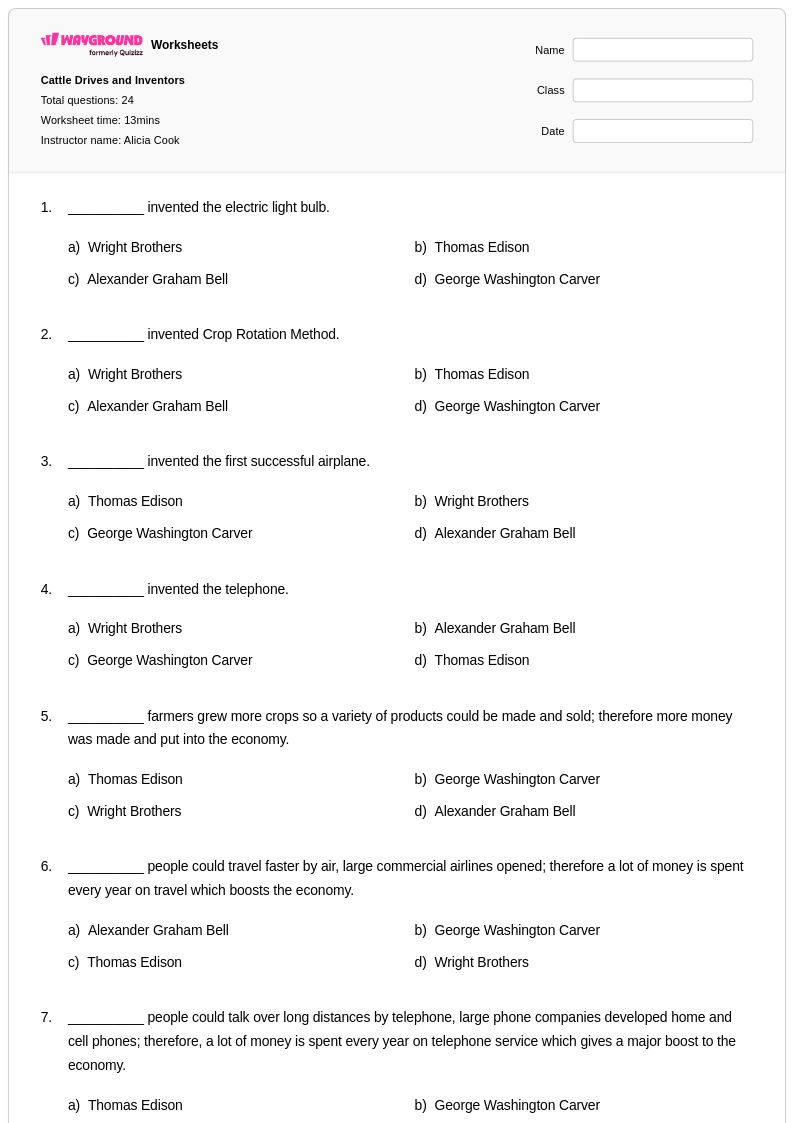
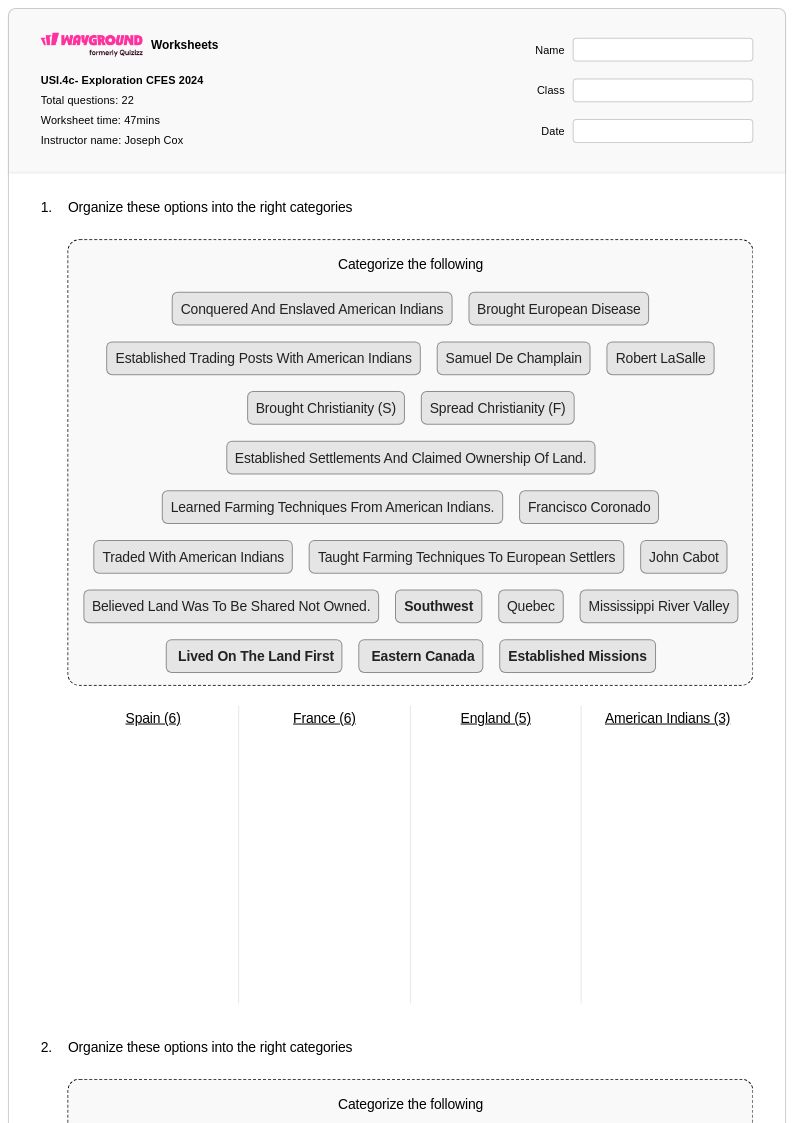
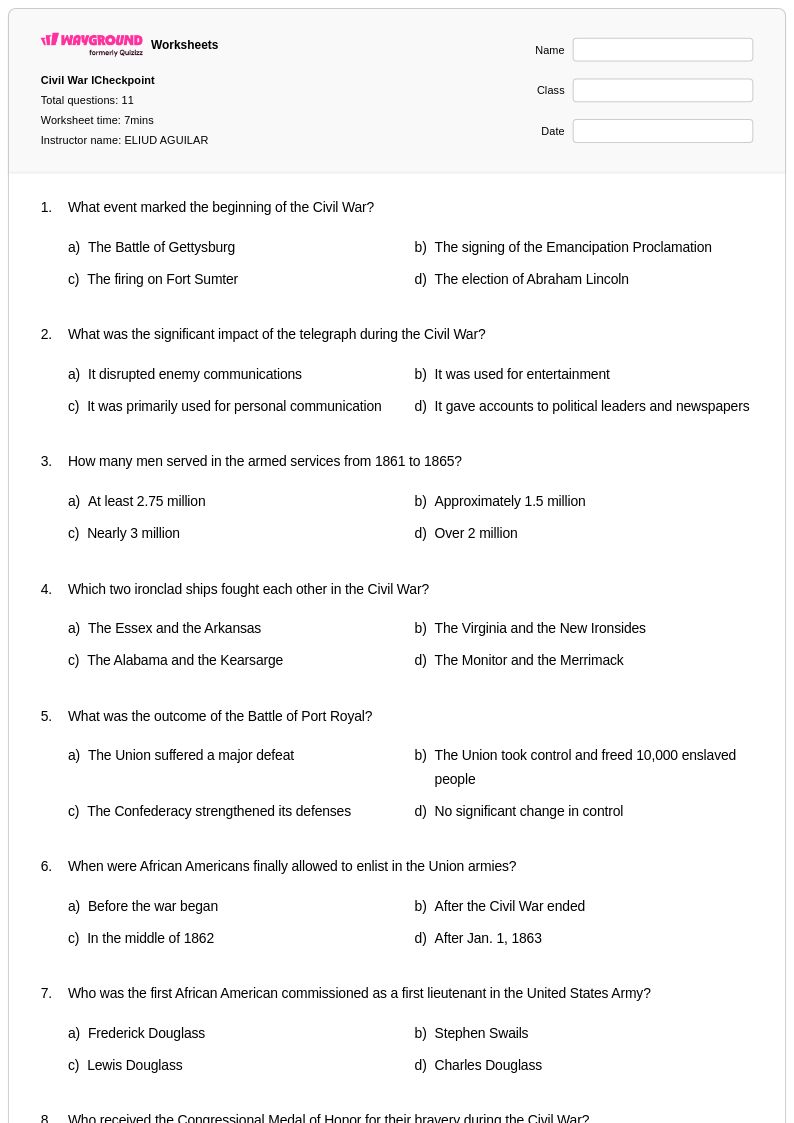
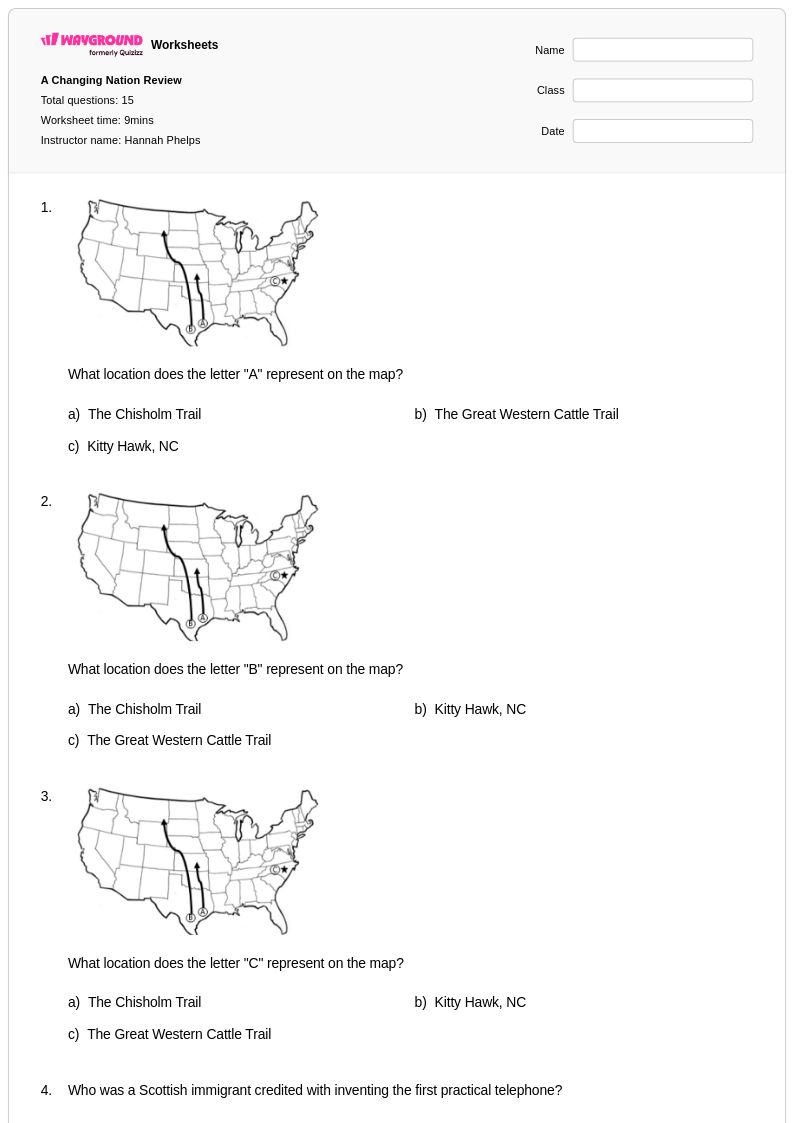
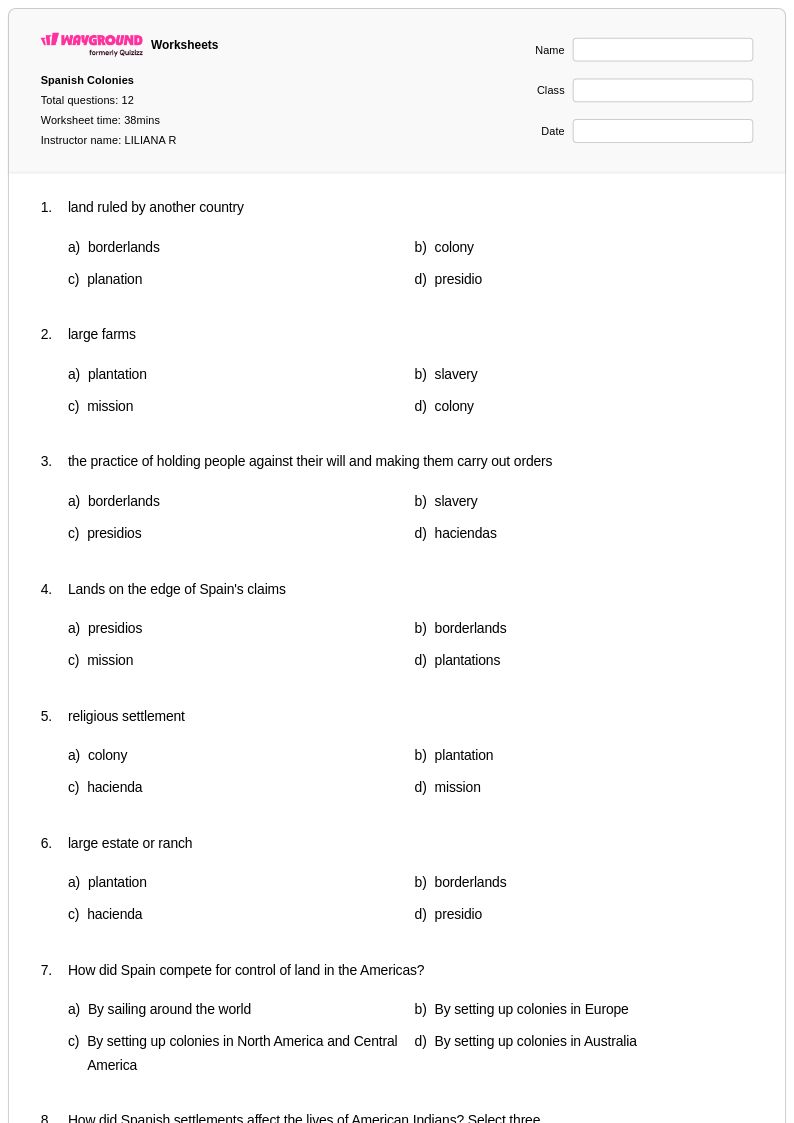
African American Inventors worksheets for Grade 5 students available through Wayground (formerly Quizizz) provide comprehensive exploration of the remarkable contributions made by Black innovators throughout American history. These educational resources strengthen students' understanding of how African American inventors have shaped modern society through their groundbreaking creations, from Garrett Morgan's traffic light system to Madam C.J. Walker's hair care innovations. The worksheets develop critical thinking skills as students analyze primary sources, timeline significant inventions, and connect historical innovations to contemporary technology. Each printable resource includes detailed answer keys and practice problems that encourage students to examine the social and economic factors that influenced these inventors' work, while free pdf formats ensure accessibility for diverse learning environments.
Wayground (formerly Quizizz) supports educators with millions of teacher-created resources focused on African American inventors and broader cultural studies, featuring robust search and filtering capabilities that align with Grade 5 social studies standards. The platform's differentiation tools allow teachers to customize worksheets based on individual student needs, offering both printable pdf versions for traditional classroom use and digital formats for technology-integrated learning. These comprehensive collections facilitate effective lesson planning by providing educators with ready-to-use materials for skill practice, targeted remediation for students requiring additional support, and enrichment opportunities for advanced learners. The flexible customization options enable teachers to adapt content for diverse learning styles while maintaining academic rigor, ensuring that all Grade 5 students can engage meaningfully with the inspiring stories and lasting legacies of African American inventors.
FAQs
How do I teach African American inventors in a meaningful way?
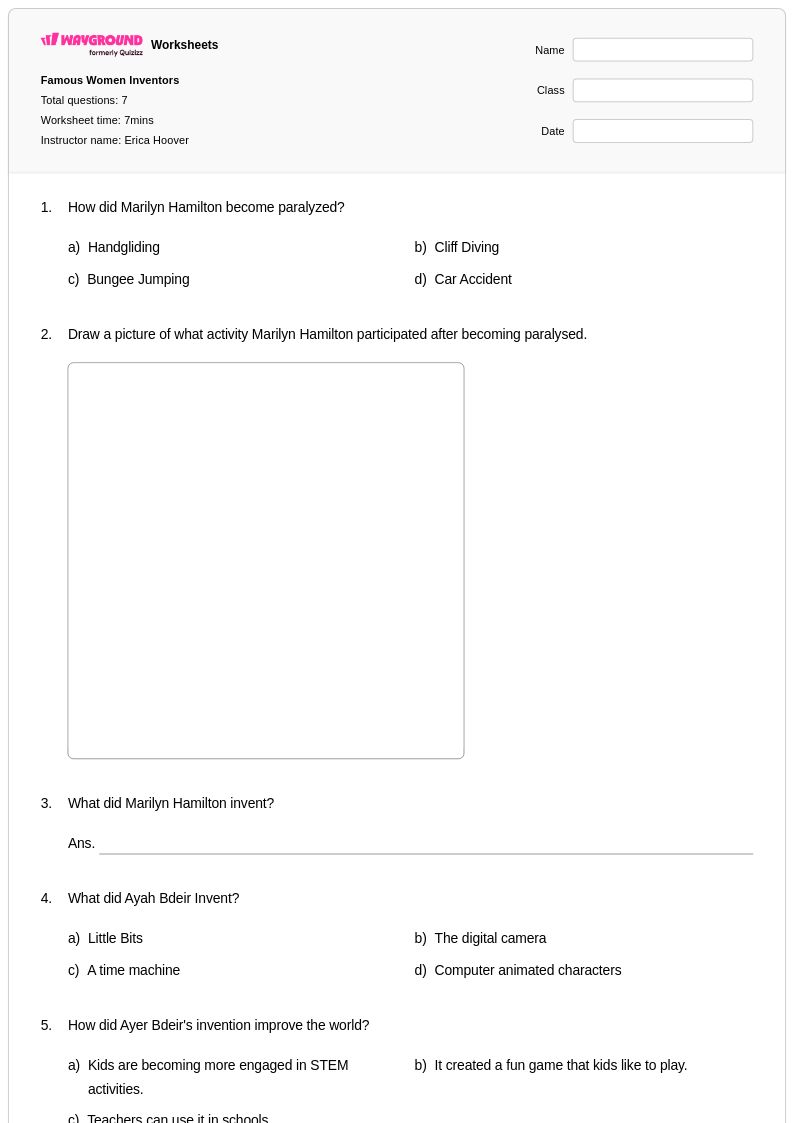
Effective instruction on African American inventors goes beyond memorizing names and dates — it asks students to connect each invention to its historical moment and social impact. Start by grounding lessons in context: why was this inventor's work significant given the era they lived in? Then move into analysis, having students evaluate how inventions like Garrett Morgan's traffic signal or Patricia Bath's laser cataract surgery device changed everyday life. Pairing primary sources with structured reading and response activities helps students engage critically rather than passively.
What activities help students practice identifying African American inventors and their contributions?
Matching exercises that connect inventors to their inventions, timeline-sequencing tasks, and cause-and-effect analysis are among the most effective practice formats for this topic. Students benefit from working through problems that ask them to explain why an invention mattered, not just who created it. Structured worksheets that include prompts for historical context and societal impact help students develop a more complete understanding of figures like George Washington Carver, Lewis Latimer, and others.
What misconceptions do students commonly have about African American inventors?
A frequent misconception is that African American inventors worked in isolation from broader scientific or industrial progress, when in reality many were deeply embedded in — and often excluded from — the institutions of their time. Students also sometimes conflate invention with immediate recognition, not realizing that many innovators like Lewis Latimer went uncredited for decades. Teachers should explicitly address the role that systemic barriers played in shaping both the inventions themselves and the inventors' historical recognition.
How can I use African American inventors worksheets to support different learners in my classroom?
African American inventors worksheets work well for differentiation because the content naturally accommodates varied entry points — from basic inventor-to-invention matching for developing readers to analytical writing prompts for advanced learners. On Wayground, teachers can apply individual accommodations such as Read Aloud for students who need audio support, reduced answer choices to lower cognitive load, and extended time for students who need it. These settings can be assigned per student without notifying the rest of the class, keeping the experience equitable and unobtrusive.
How do I use African American inventors worksheets from Wayground in my classroom?
Wayground's African American inventors worksheets are available as both printable PDFs and in digital formats, making them usable whether you're teaching in person, remotely, or in a hybrid setting. Teachers can print them for traditional classroom use or assign them digitally, including the option to host them as a quiz directly on Wayground. Each worksheet includes a complete answer key, so grading and review are straightforward. They fit naturally into social studies units and can serve as introductory activities, lesson reinforcement, or enrichment tasks.
How do I fit African American inventors into my existing social studies curriculum?
African American inventors connect directly to U.S. history, STEM education, and social justice frameworks, making them adaptable across multiple curriculum units. They fit naturally within modules on the Industrial Revolution, the Civil Rights Movement, or innovation and technology. Many teachers integrate these materials as stand-alone lessons during Black History Month or as recurring examples within broader units on American ingenuity and systemic inequality. The key is framing inventors not as isolated facts but as part of ongoing historical narratives students are already studying.