Free Printable Analyzing Political Cartoons Worksheets for Grade 10
Grade 10 students can master analyzing political cartoons with Wayground's comprehensive collection of free worksheets, printables, and practice problems that develop critical thinking skills through engaging PDF resources and detailed answer keys.
Explore printable Analyzing Political Cartoons worksheets for Grade 10
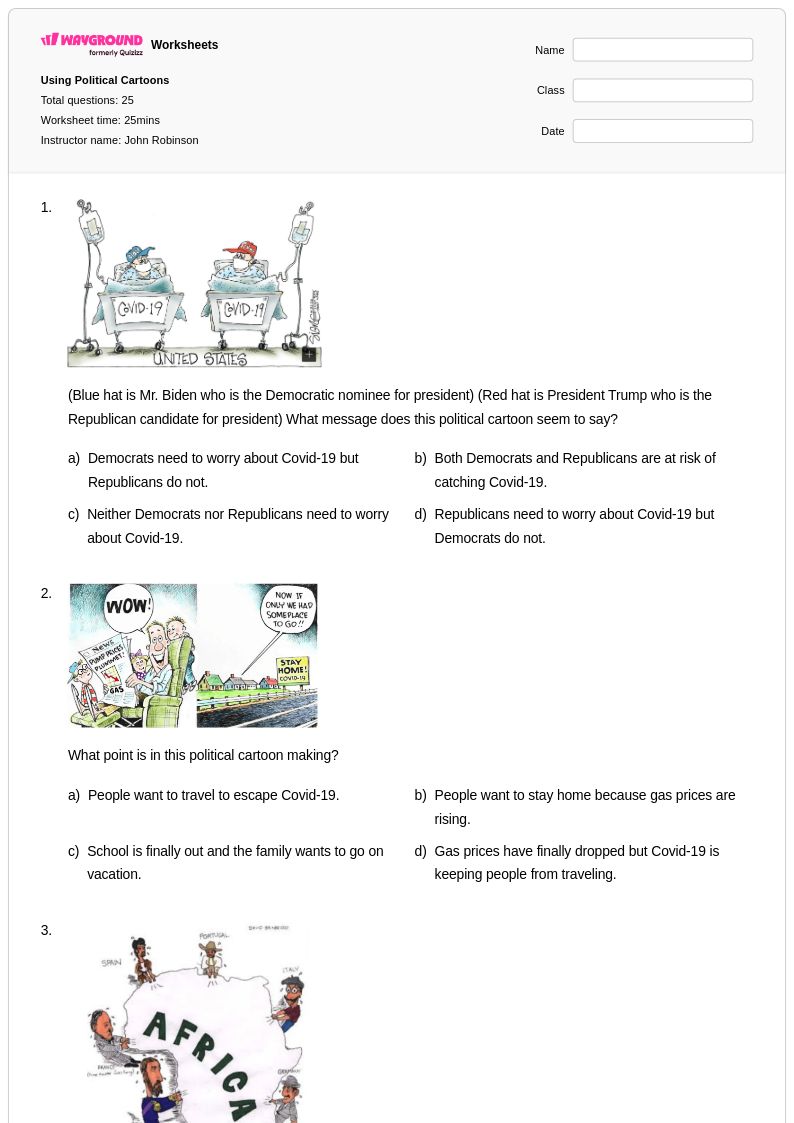
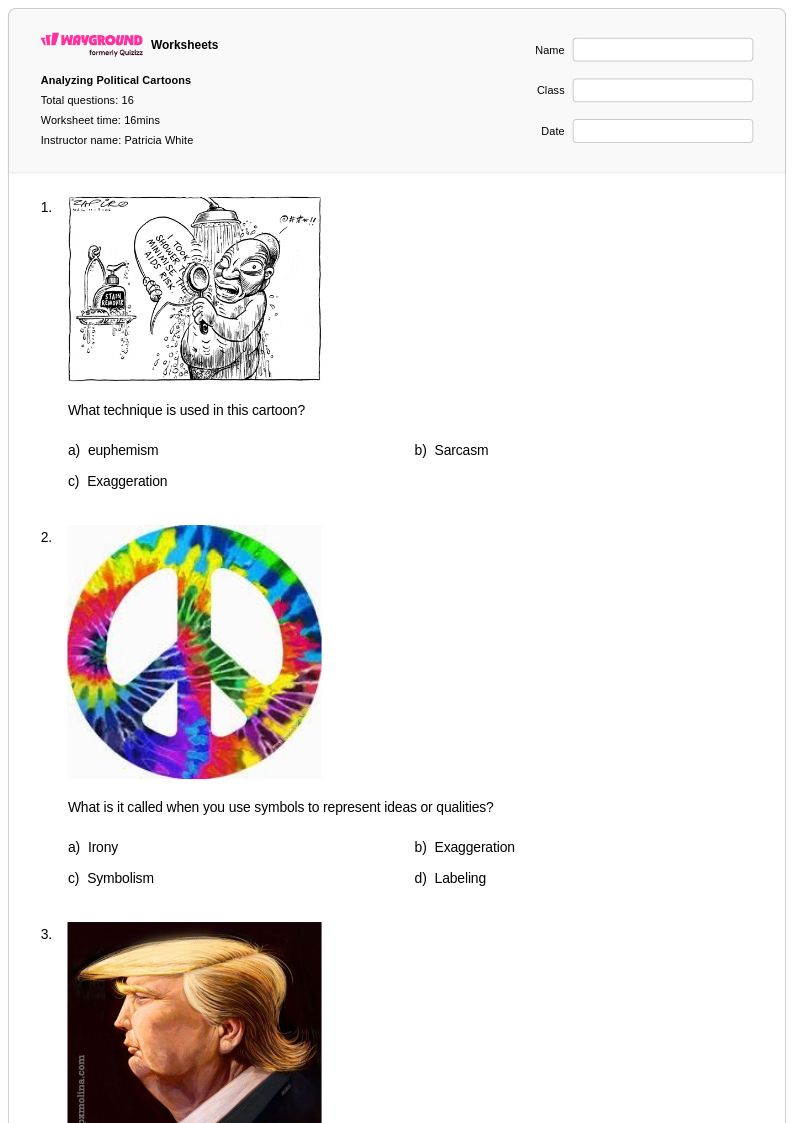
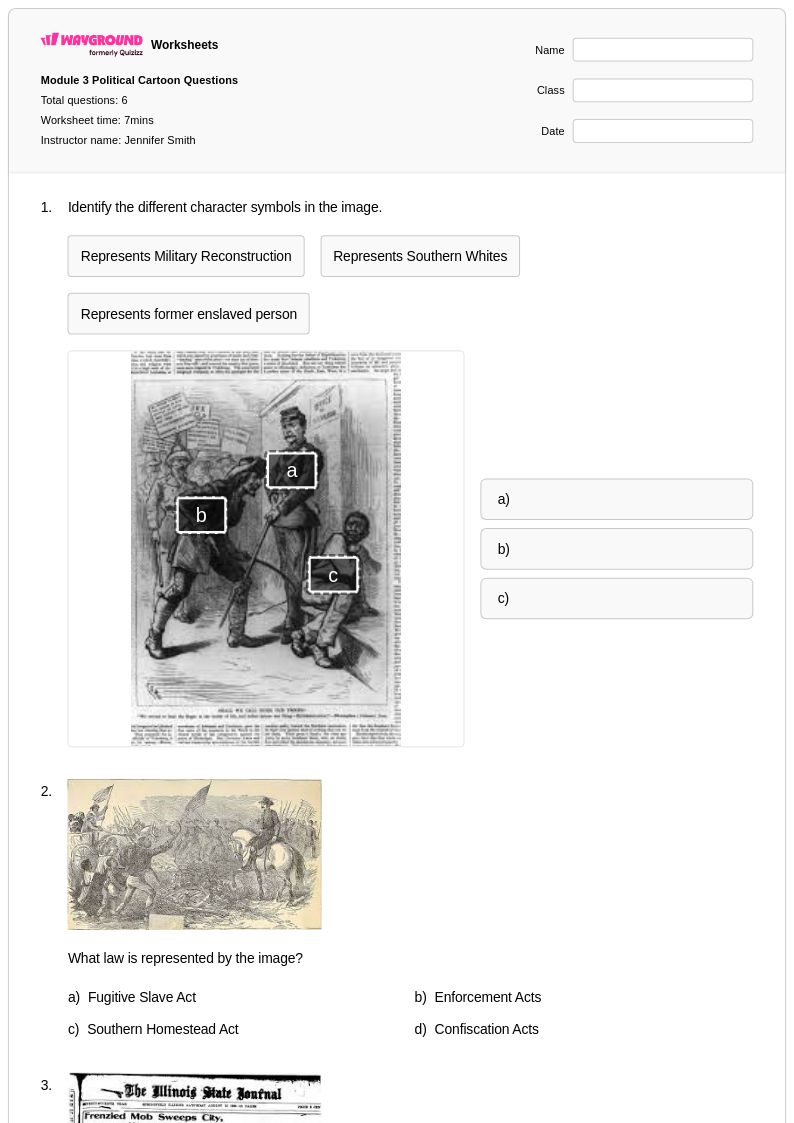
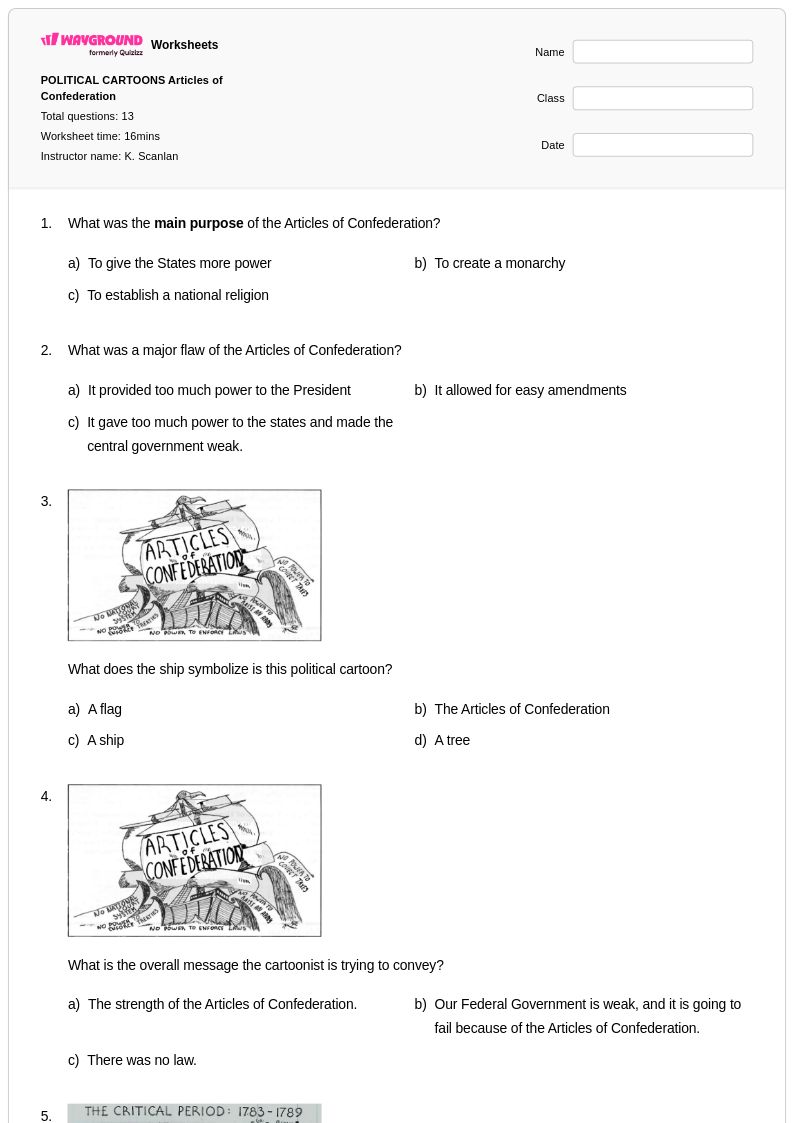
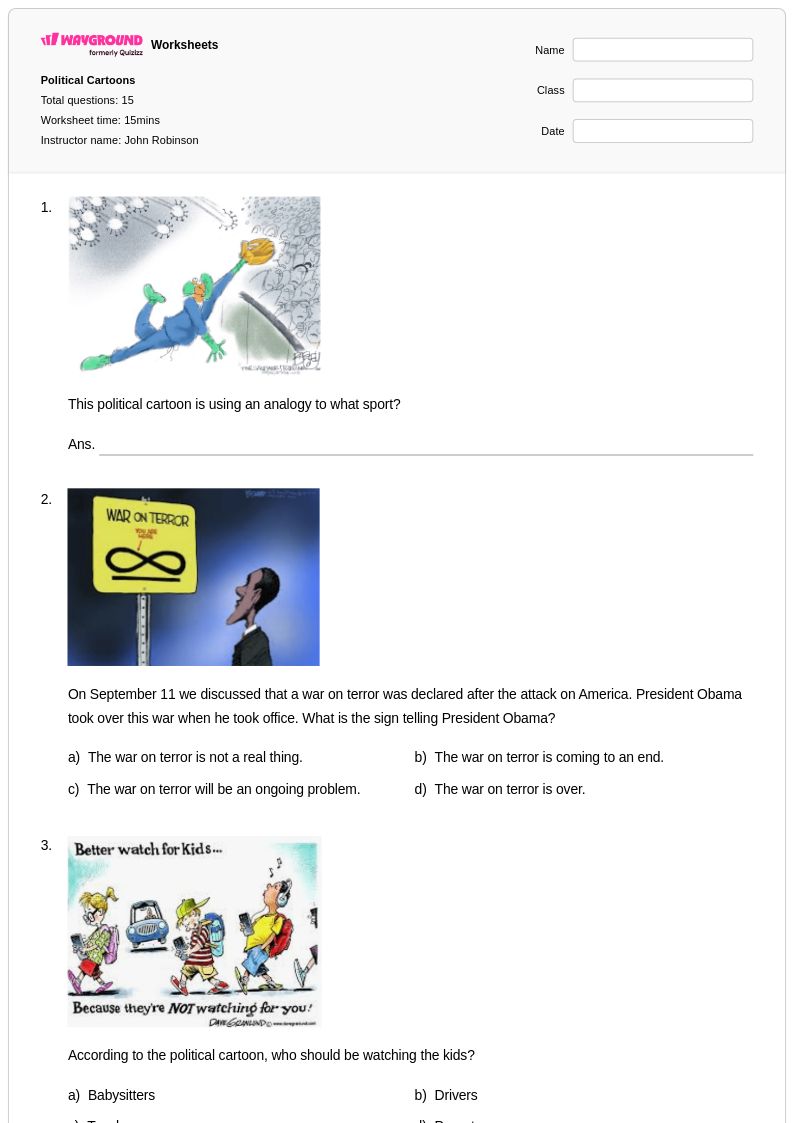
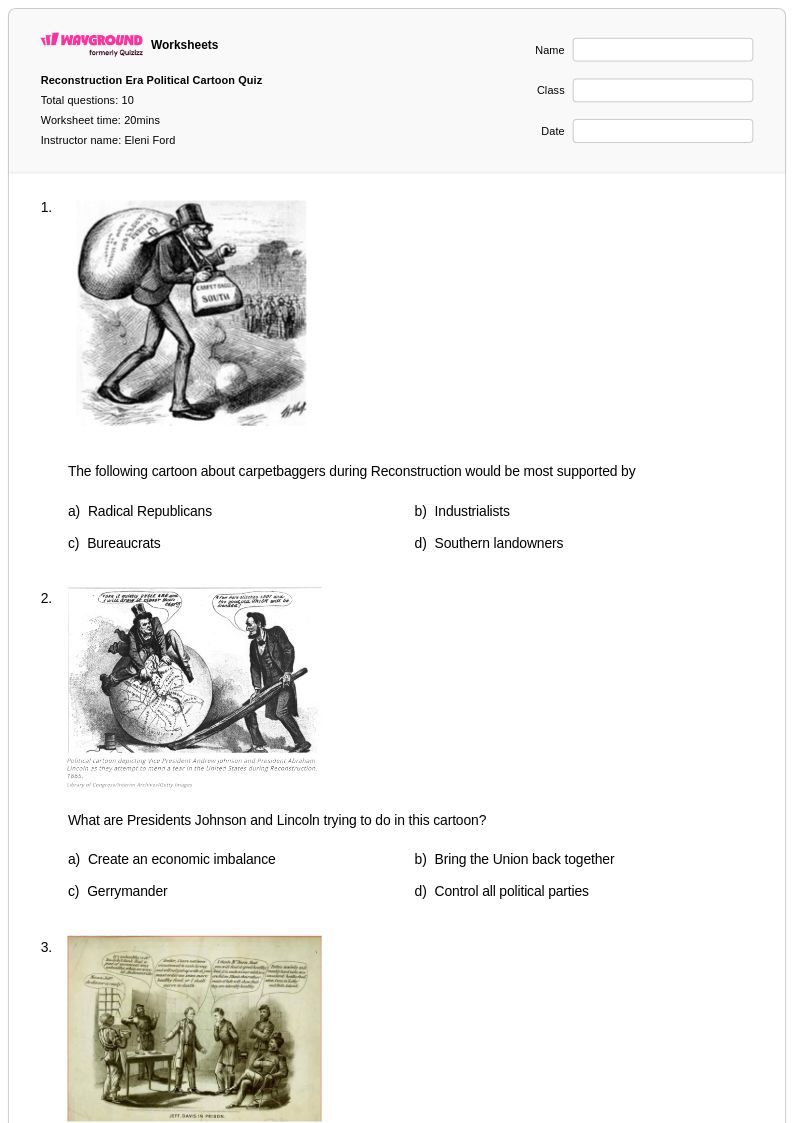
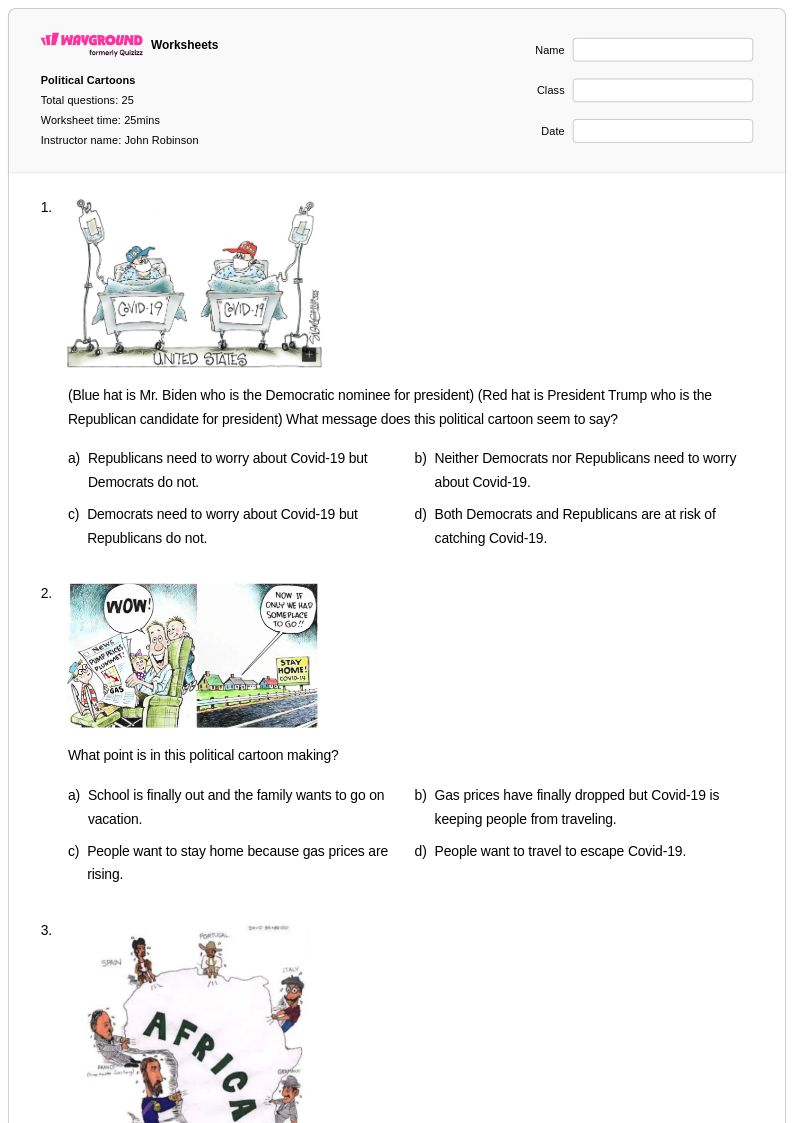
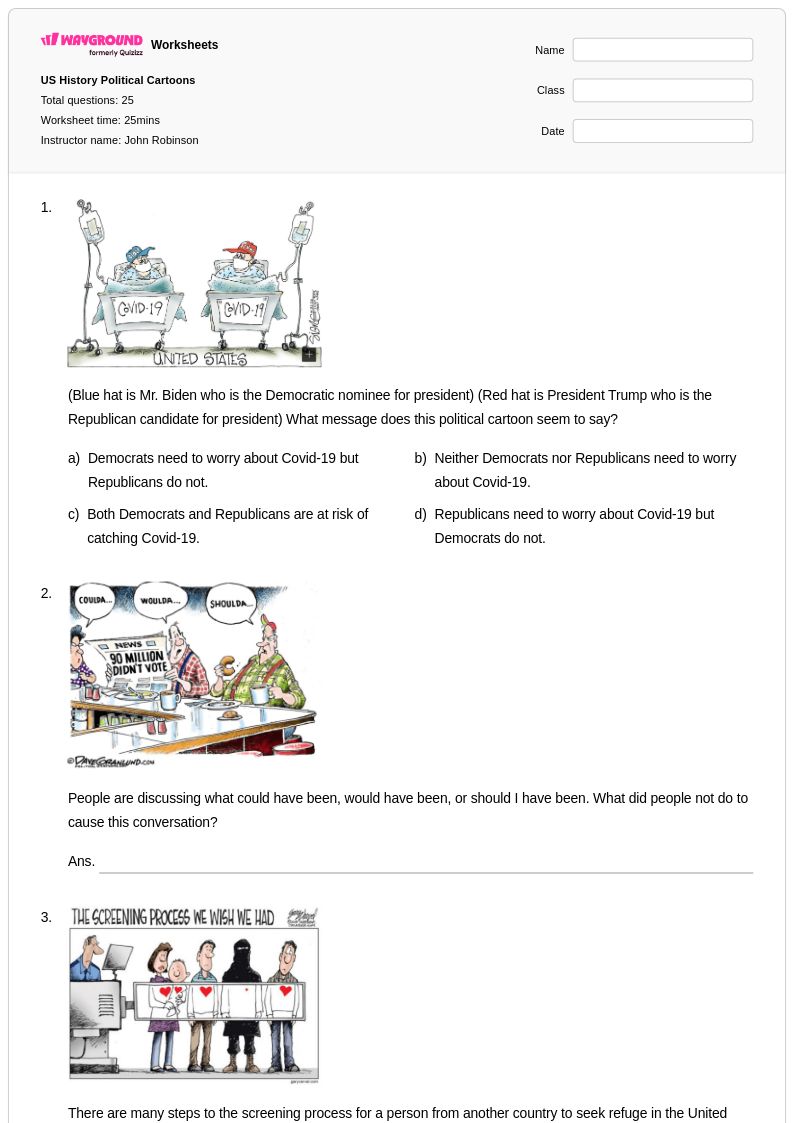
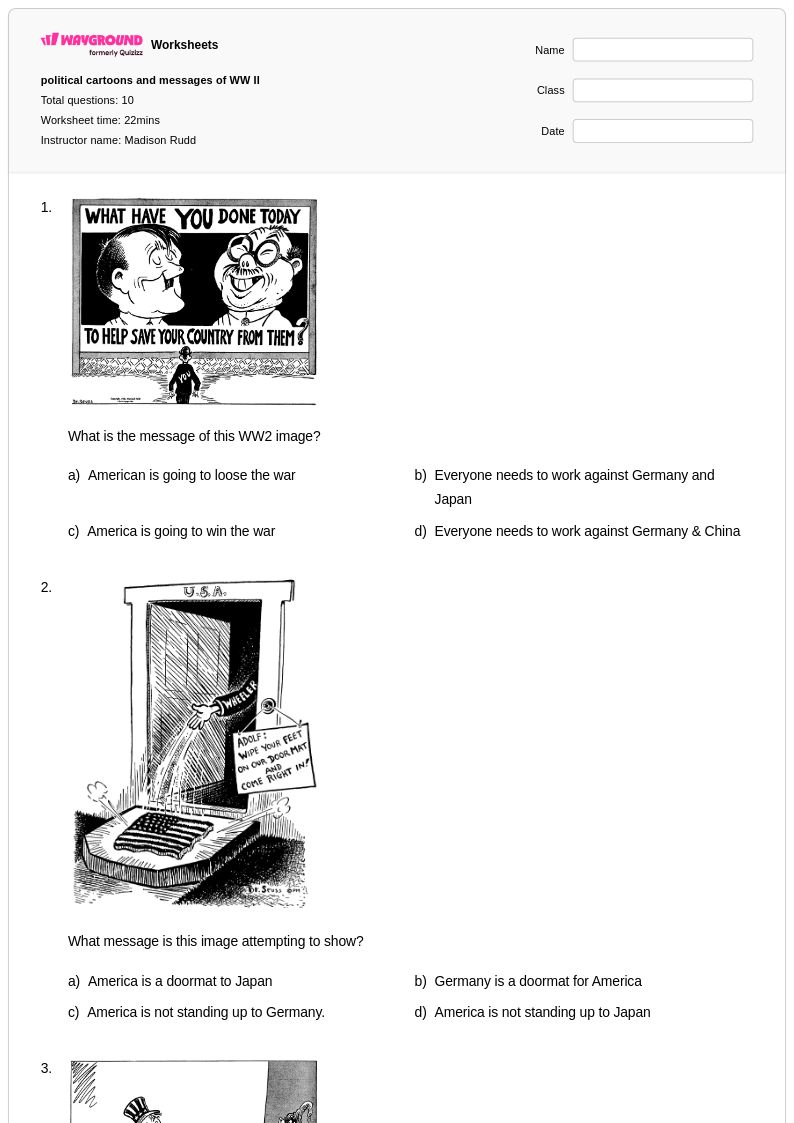
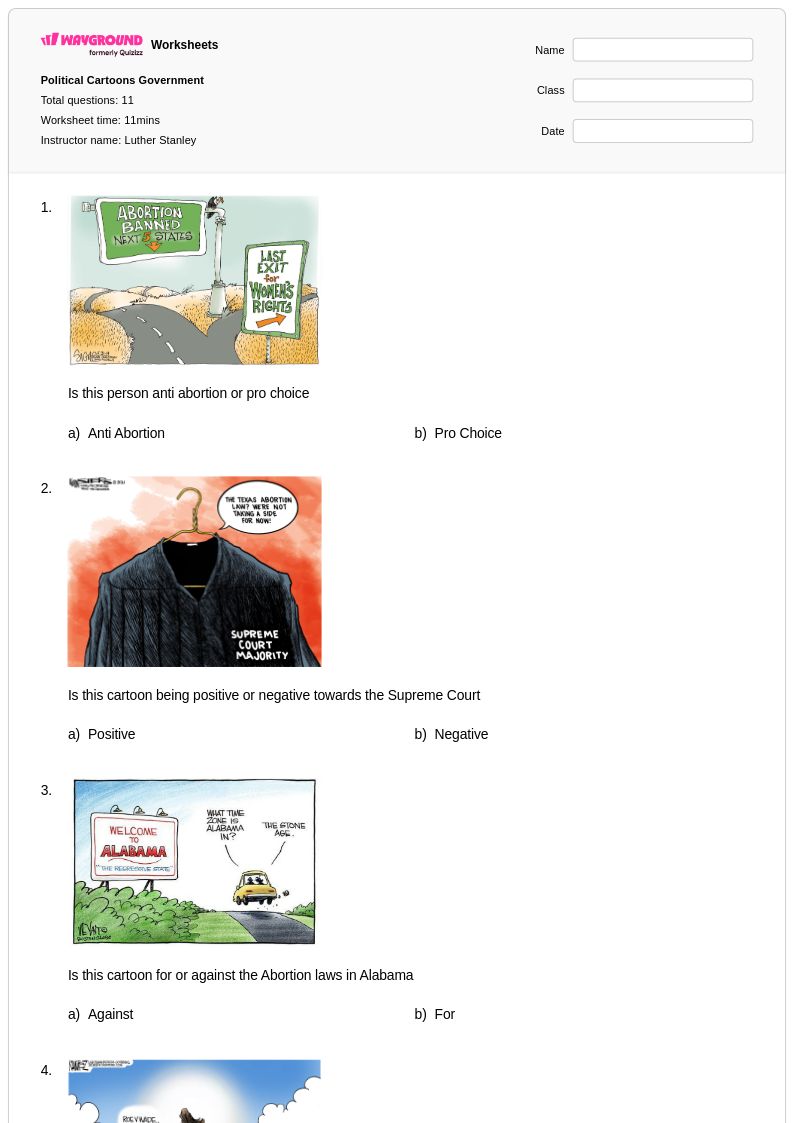
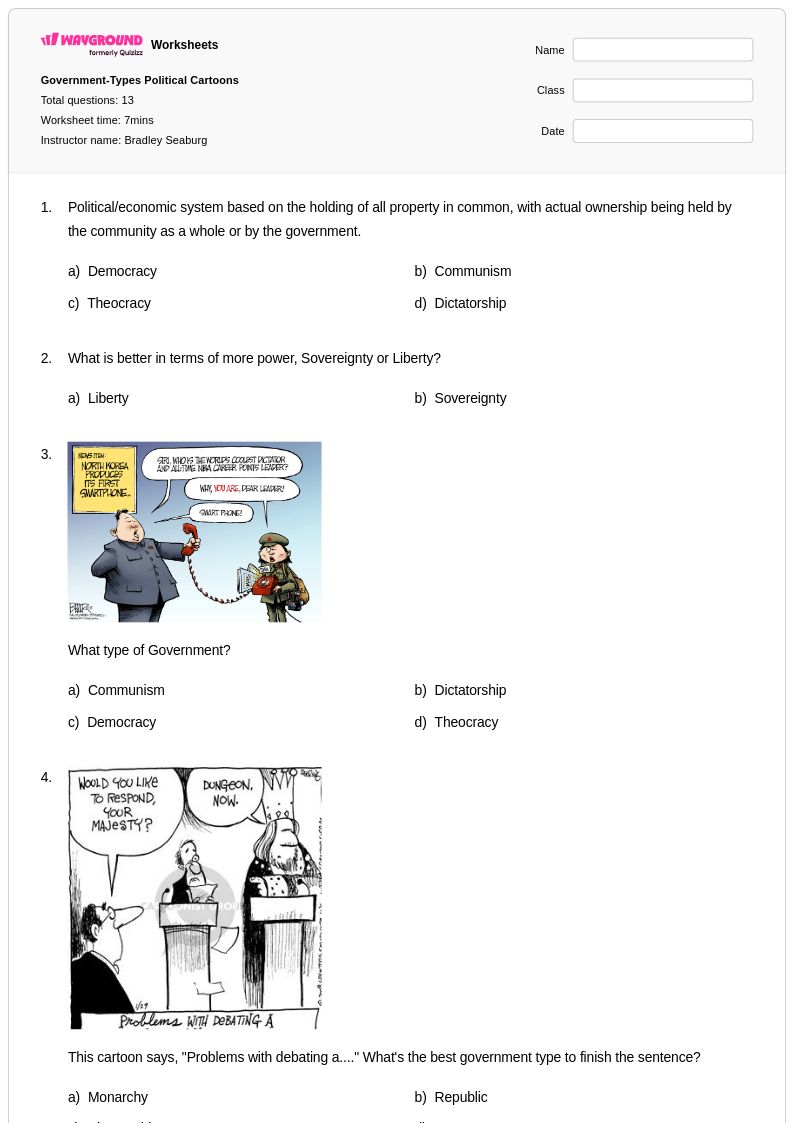
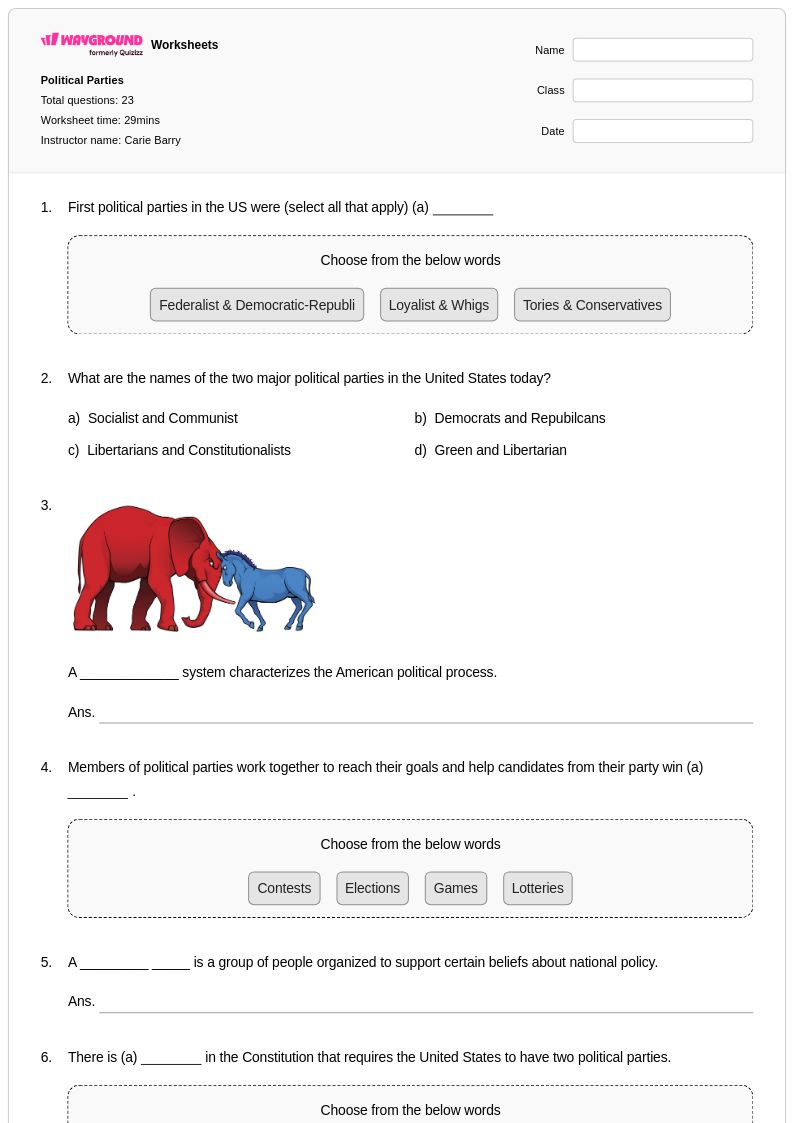
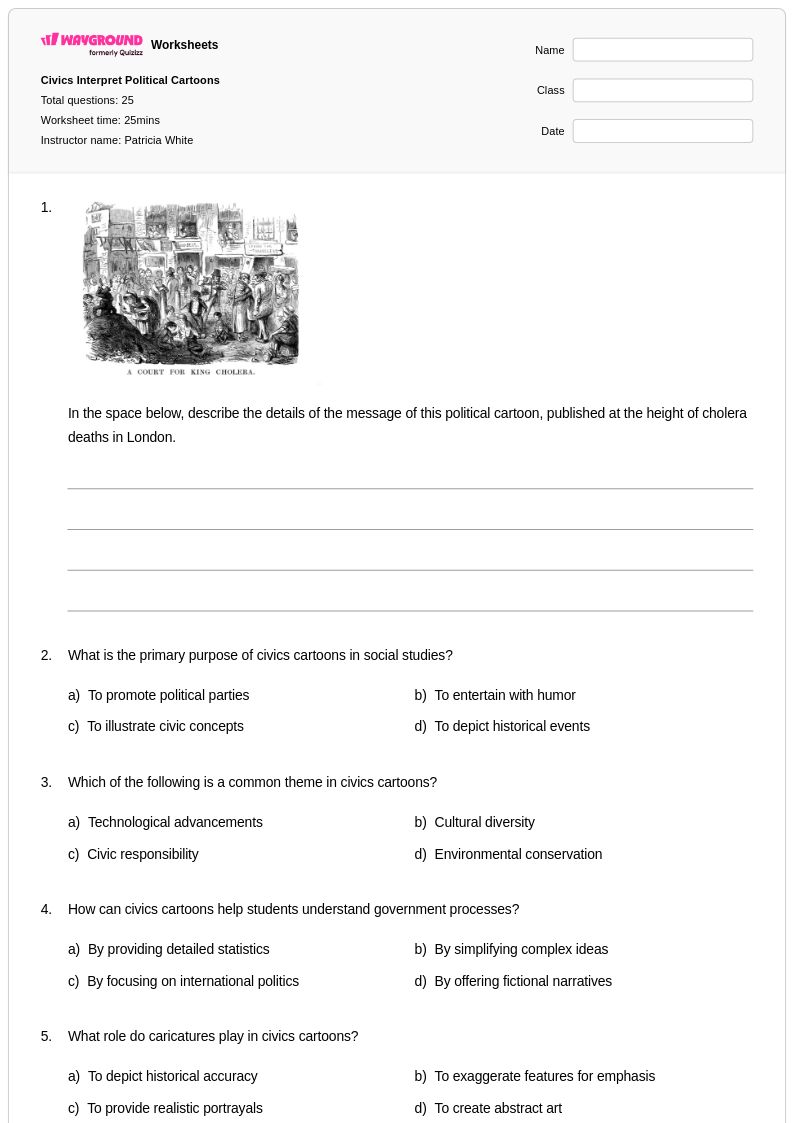
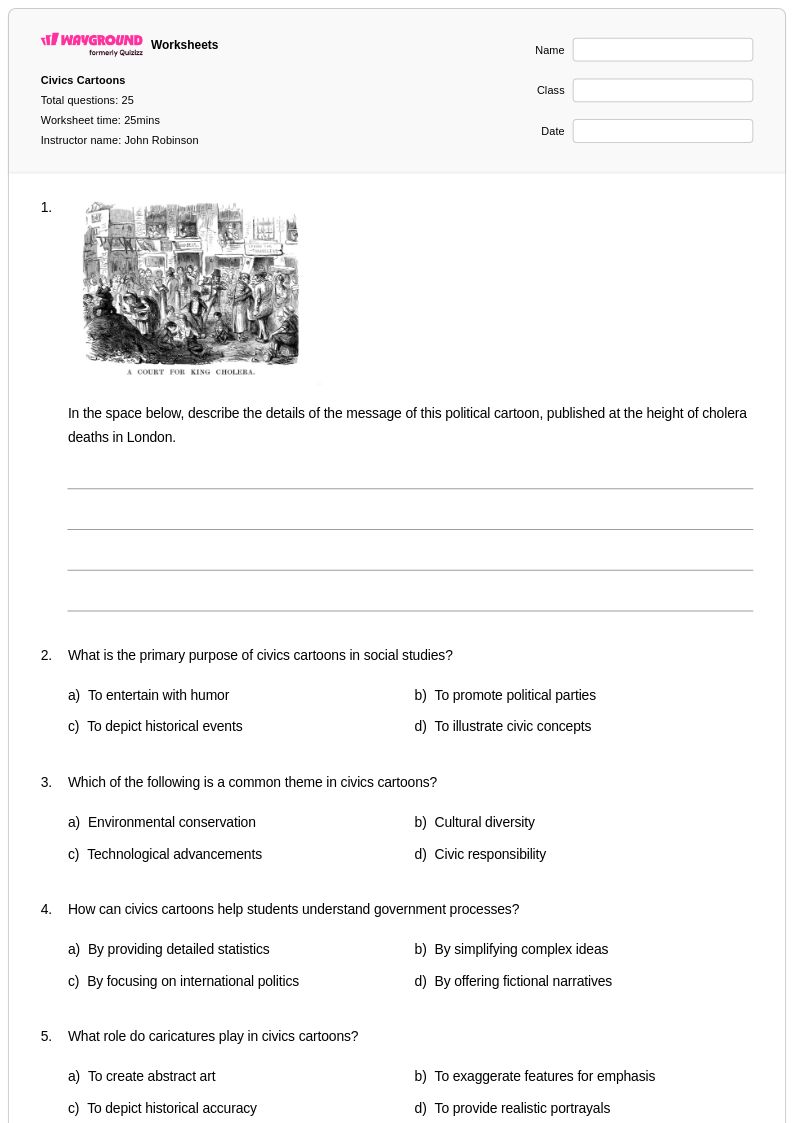
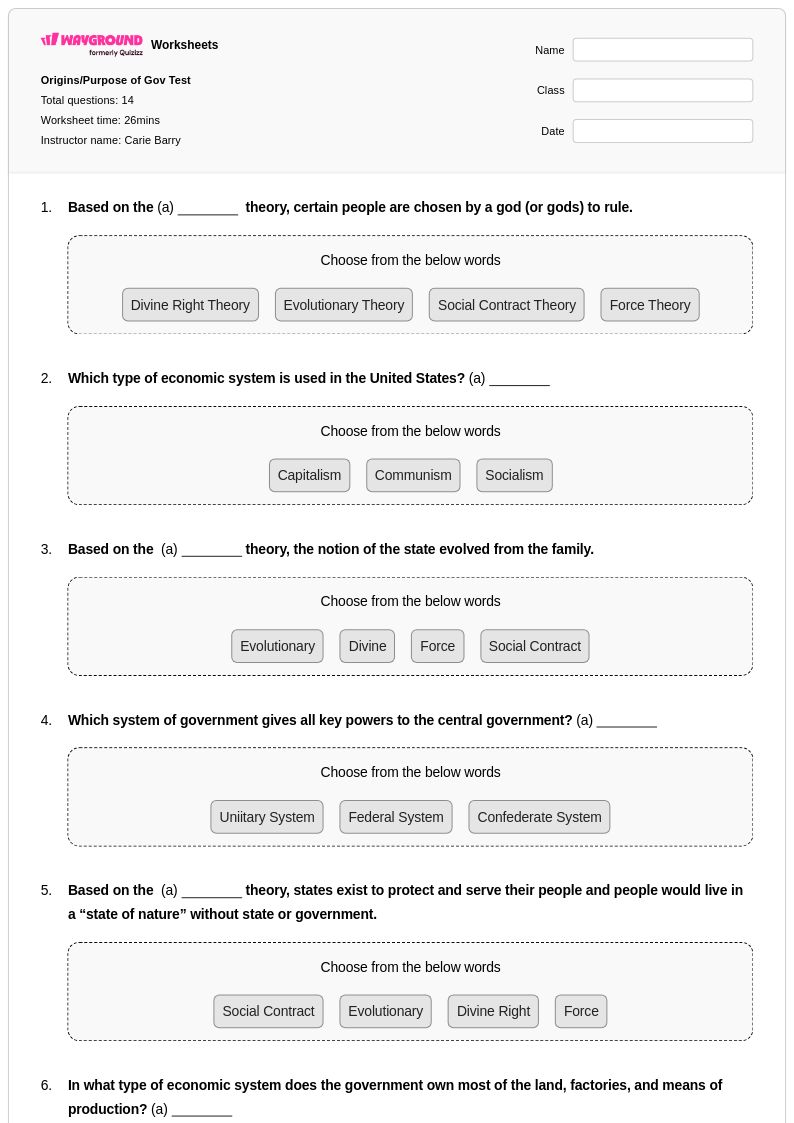
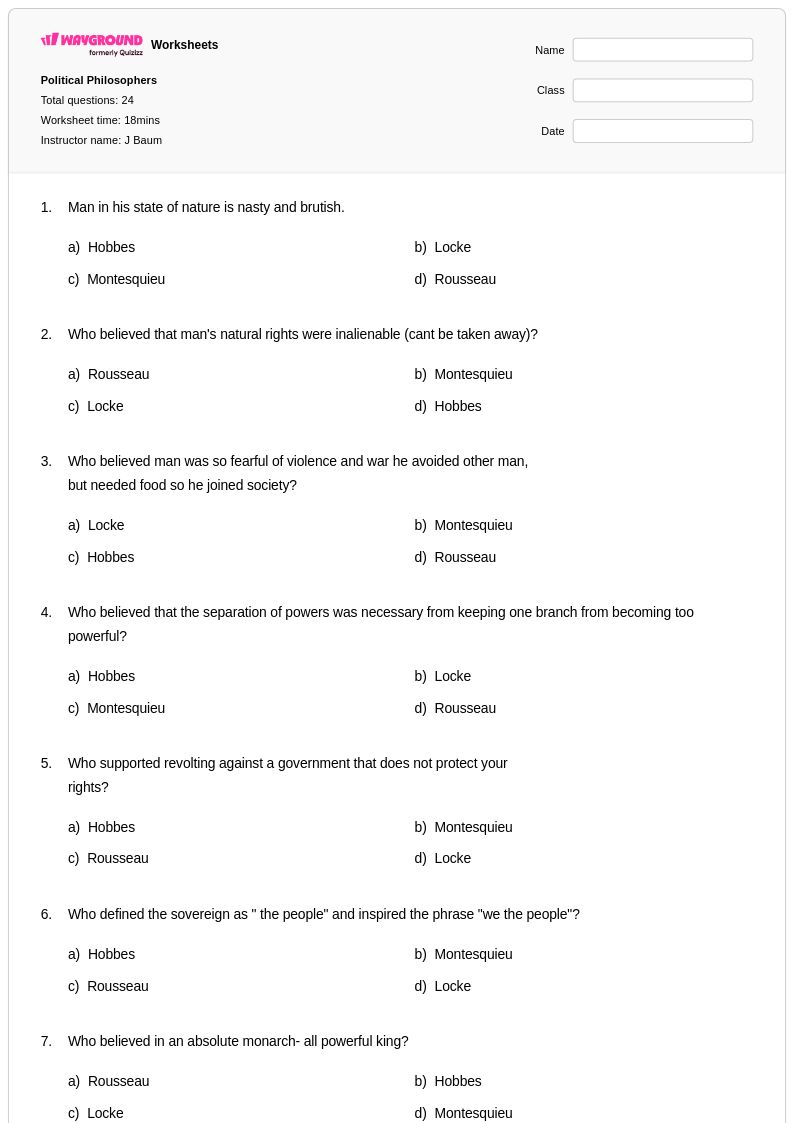
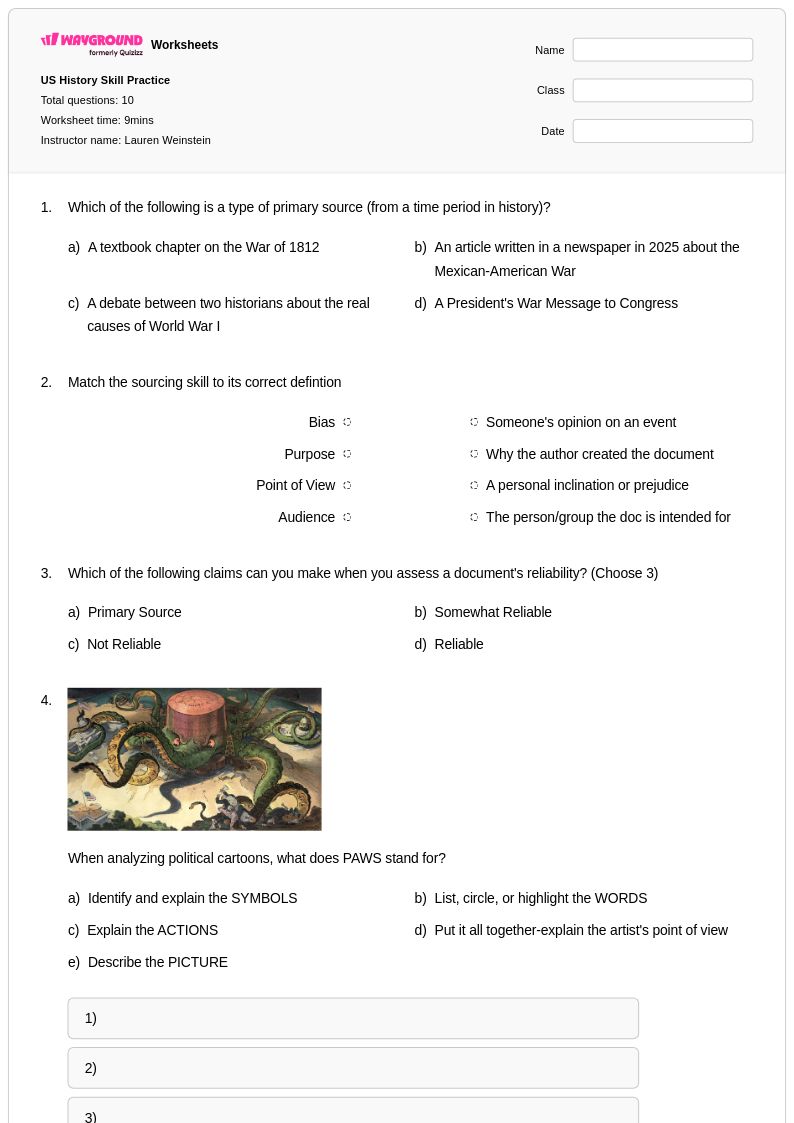
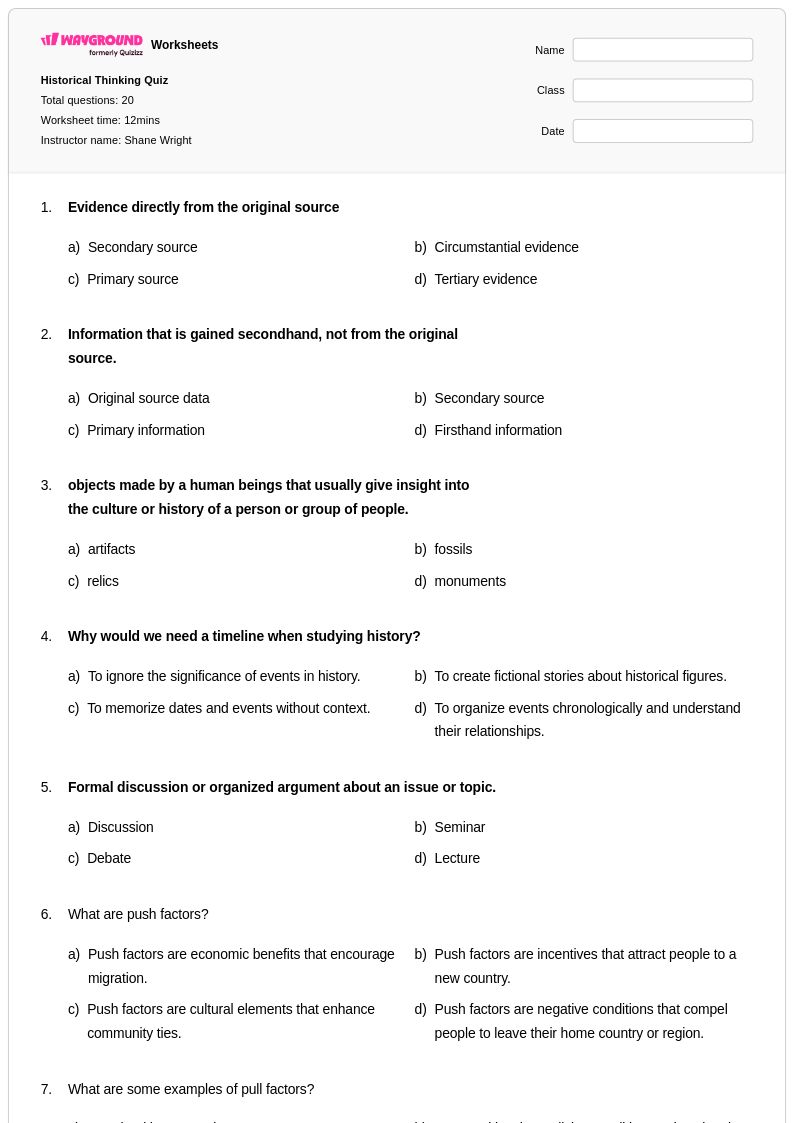
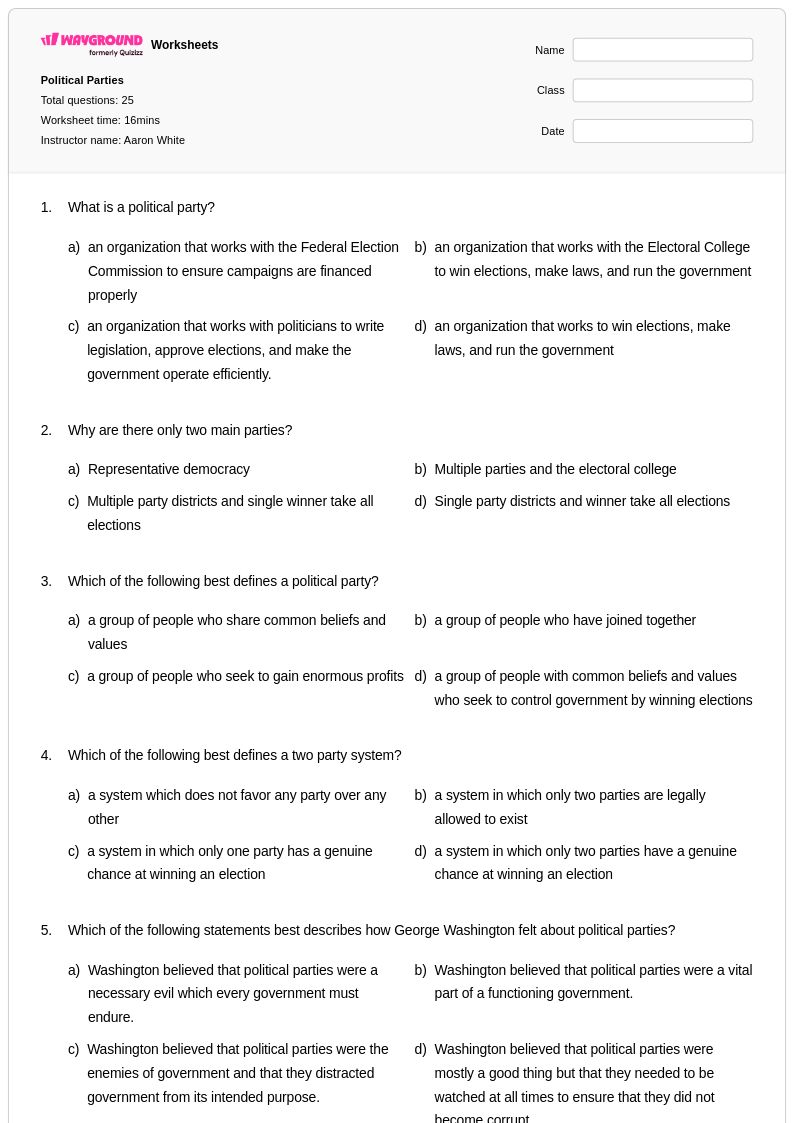
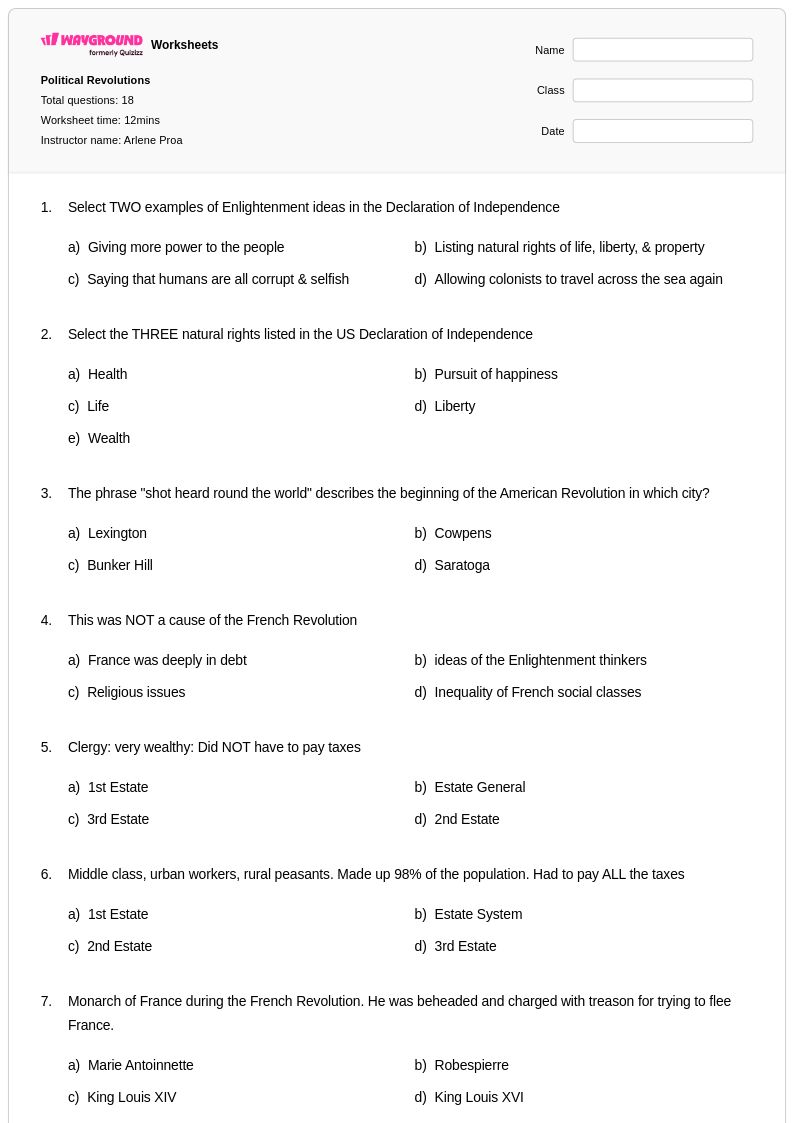
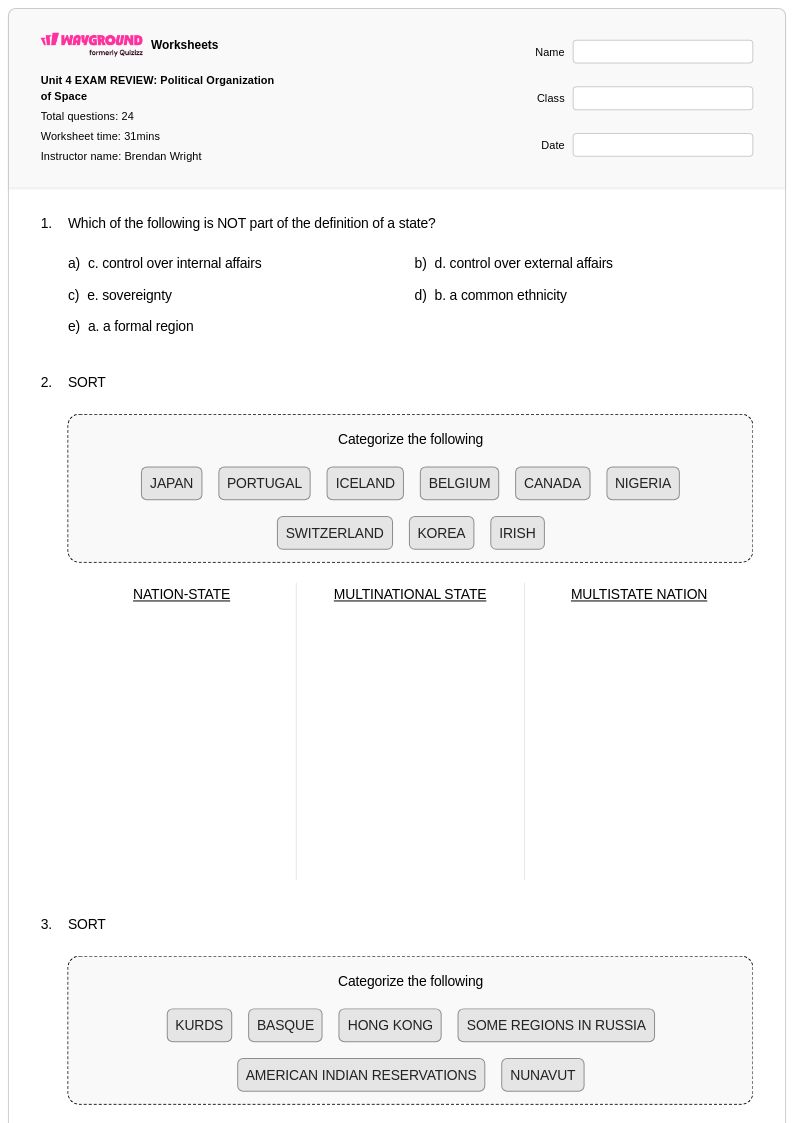
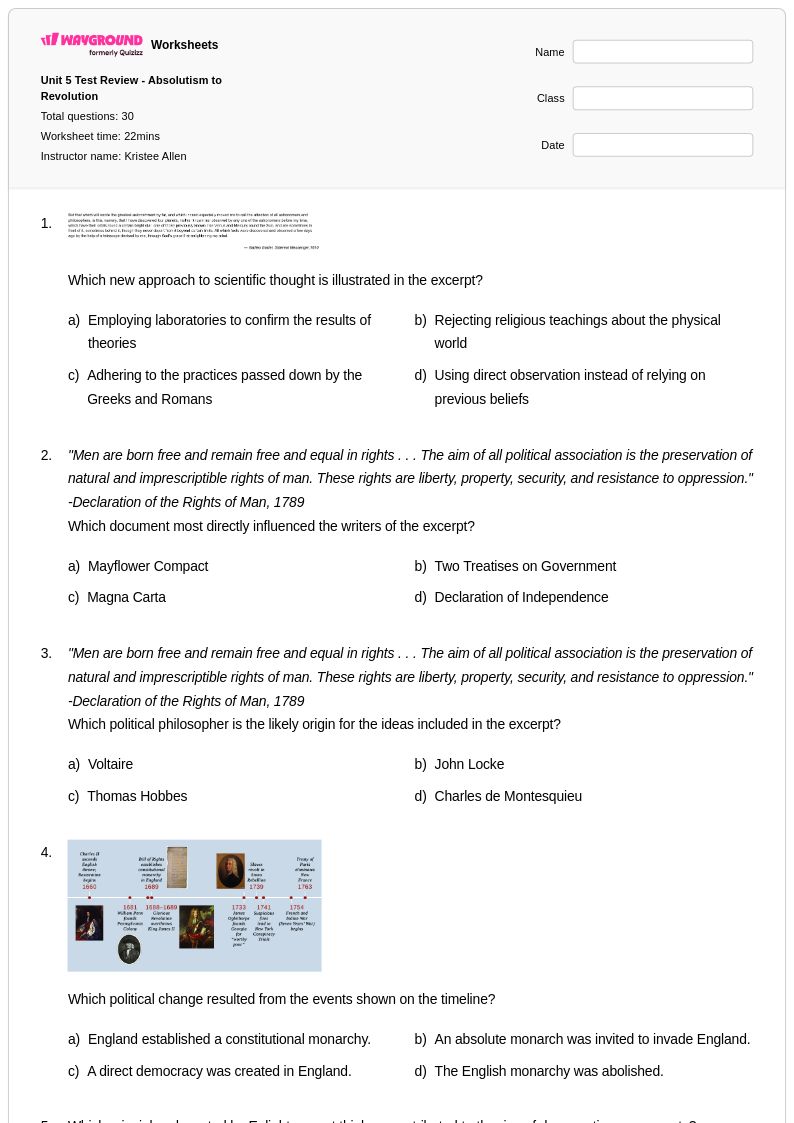
Analyzing political cartoons worksheets for Grade 10 students available through Wayground (formerly Quizizz) provide comprehensive practice in decoding the symbolic language, persuasive techniques, and historical context embedded within editorial illustrations. These carefully designed resources strengthen critical thinking skills by guiding students through systematic analysis of visual rhetoric, including identification of symbols, caricatures, and metaphors that cartoonists use to communicate complex political messages. The worksheets include practice problems that challenge students to interpret bias, point of view, and intended audience while examining cartoons from various historical periods and contemporary sources. Each resource comes with detailed answer keys that help students understand the reasoning behind interpretations, and the free printables offer structured frameworks for analyzing artistic techniques, caption significance, and the broader socio-political commentary these visual texts represent.
Wayground (formerly Quizizz) supports educators with an extensive collection of teacher-created resources specifically designed for political cartoon analysis instruction, featuring millions of worksheets that can be easily located through robust search and filtering capabilities. The platform's standards-aligned materials enable teachers to differentiate instruction effectively, offering customizable options that accommodate diverse learning needs and skill levels within Grade 10 classrooms. These versatile resources are available in both printable pdf formats and interactive digital versions, allowing for seamless integration into lesson planning whether for whole-class instruction, small group activities, or individual practice sessions. Teachers can utilize these comprehensive worksheet collections for targeted skill remediation, enrichment opportunities for advanced learners, and ongoing assessment of students' ability to analyze visual media critically, ultimately preparing them to become more discerning consumers of political communication in democratic society.
FAQs
How do I teach students to analyze political cartoons?
Start by building students' familiarity with the visual vocabulary of political cartoons: symbols, caricature, exaggeration, labeling, and irony. Introduce a single cartoon and model a think-aloud process that moves from identifying the subject and symbols to interpreting the cartoonist's message and evaluating the argument being made. Once students understand the analytical framework, structured practice with a variety of cartoons from different eras reinforces the skill and builds transferable visual literacy.
What exercises help students practice political cartoon analysis?
Effective practice exercises ask students to identify specific visual symbols and explain what each represents, then connect those symbols to a historical or political context. Guided annotation worksheets — where students label elements, write margin notes, and answer scaffolded questions — move learners from surface observation to interpretive analysis. Comparing two cartoons on the same topic but from opposing viewpoints is particularly effective for developing bias detection and persuasive technique identification.
What mistakes do students commonly make when analyzing political cartoons?
The most common error is taking visual elements at face value rather than reading them as symbols — students describe what they see literally instead of interpreting what it means. A related mistake is ignoring context: without knowing the political event or figure being satirized, students cannot accurately decode the cartoon's message. Students also frequently confuse the cartoonist's opinion with objective fact, which is why explicit instruction on distinguishing bias and perspective is essential to this skill.
How do I help struggling students access political cartoon analysis?
Scaffolding is critical for students who find visual interpretation difficult. Provide a reference sheet of common political cartoon symbols (e.g., the donkey and elephant for U.S. political parties, Uncle Sam for the federal government) so students are not decoding from scratch. Starting with cartoons about familiar current events before moving to historical examples reduces cognitive load. On Wayground, teachers can enable Read Aloud so question text is read to students who need it, and Reduced Answer Choices to lower the difficulty of interpretation prompts for selected students.
How do I use Wayground's political cartoon analysis worksheets in my classroom?
Wayground's analyzing political cartoons worksheets are available as printable PDFs for traditional classroom use and in digital formats for technology-integrated instruction, accommodating a range of teaching environments and student preferences. Teachers can also host the worksheets as a quiz directly on Wayground, enabling real-time student responses and instant scoring. Each worksheet includes a complete answer key, giving teachers reliable guidance through nuanced interpretations and saving preparation time.
How do political cartoon analysis skills connect to media literacy?
Analyzing political cartoons is a foundational media literacy skill because it trains students to recognize how visual rhetoric constructs meaning, shapes opinion, and reflects bias. The same analytical moves — identifying the creator's purpose, evaluating persuasive techniques, and situating a message in its historical context — apply directly to evaluating news photographs, advertisements, and social media content. Regular practice with political cartoons gives students a concrete, low-stakes entry point into the broader critical framework they need to evaluate all forms of media.