Free Printable Analyzing Story Structure Worksheets for Grade 5
Grade 5 students can master analyzing story structure with Wayground's comprehensive collection of free reading comprehension worksheets, featuring engaging printables, practice problems, and detailed answer keys in convenient PDF format.
Explore printable Analyzing Story Structure worksheets for Grade 5
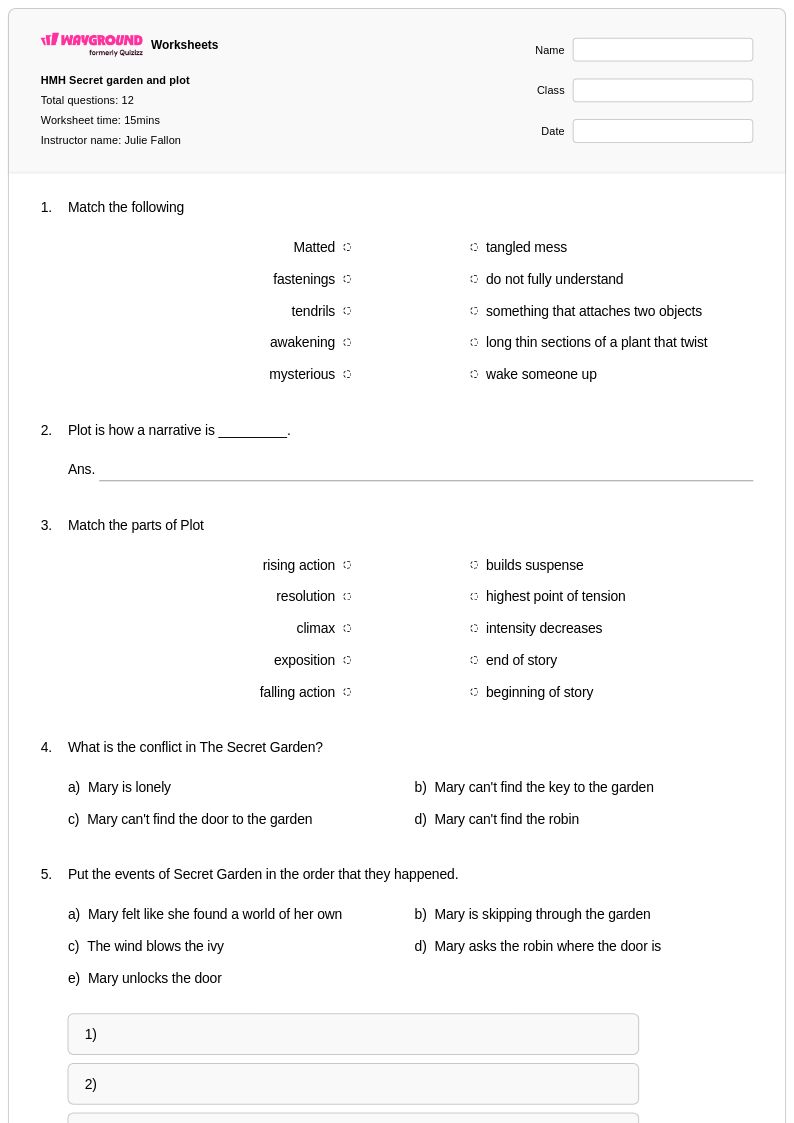
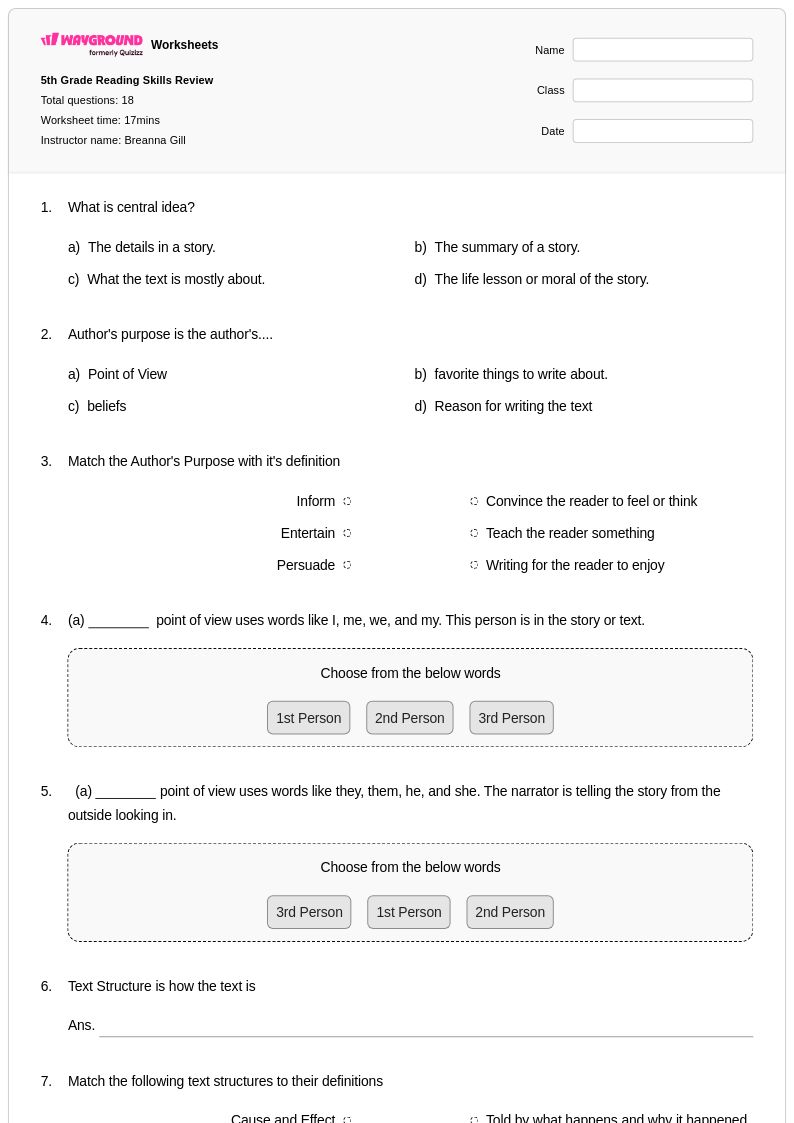
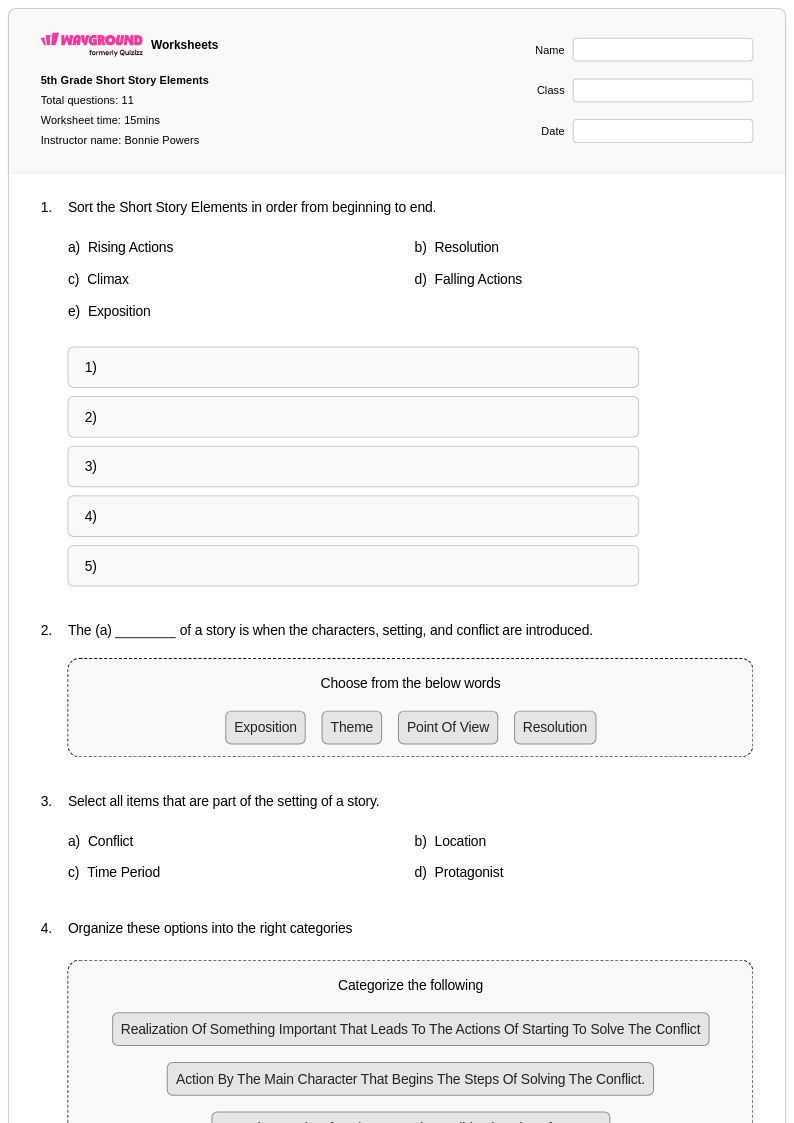
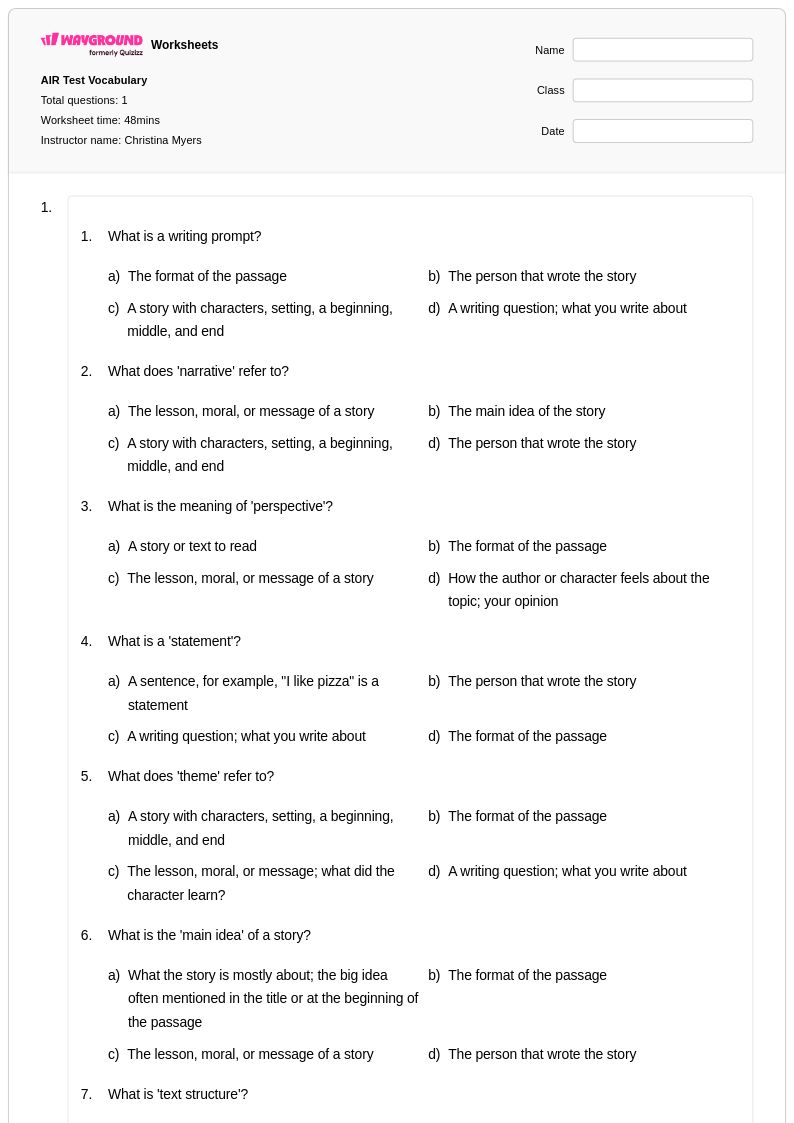
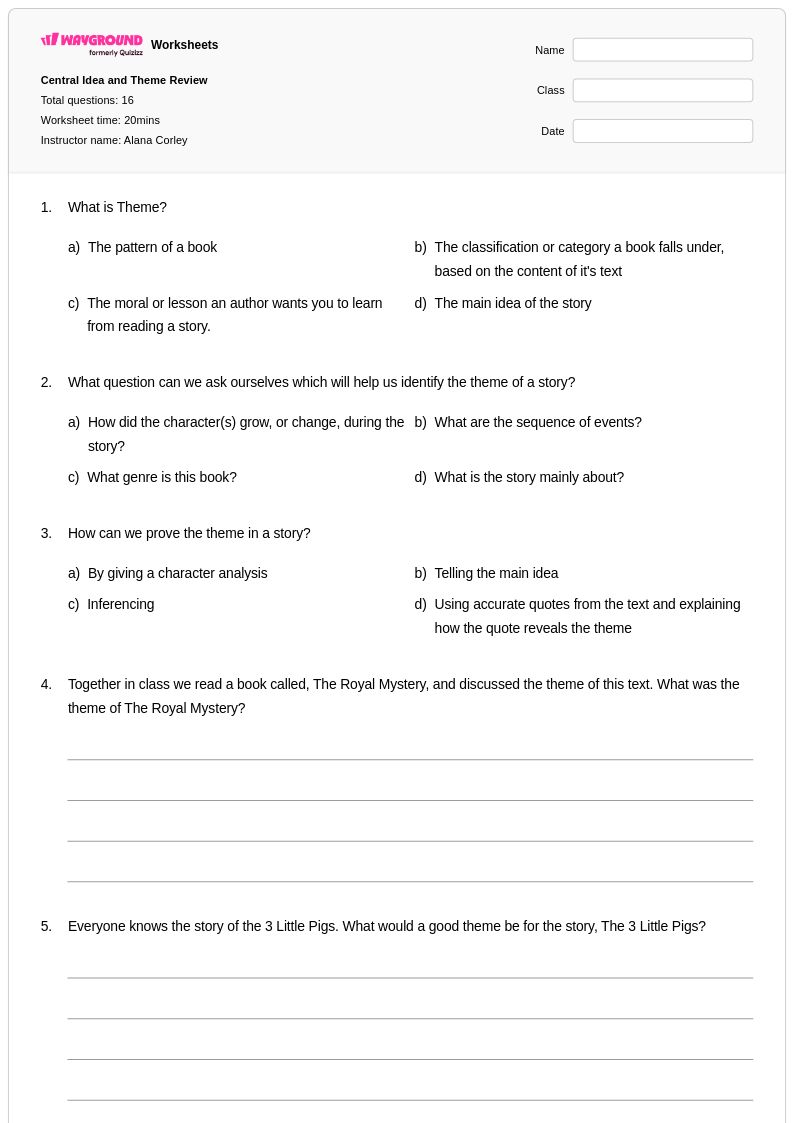
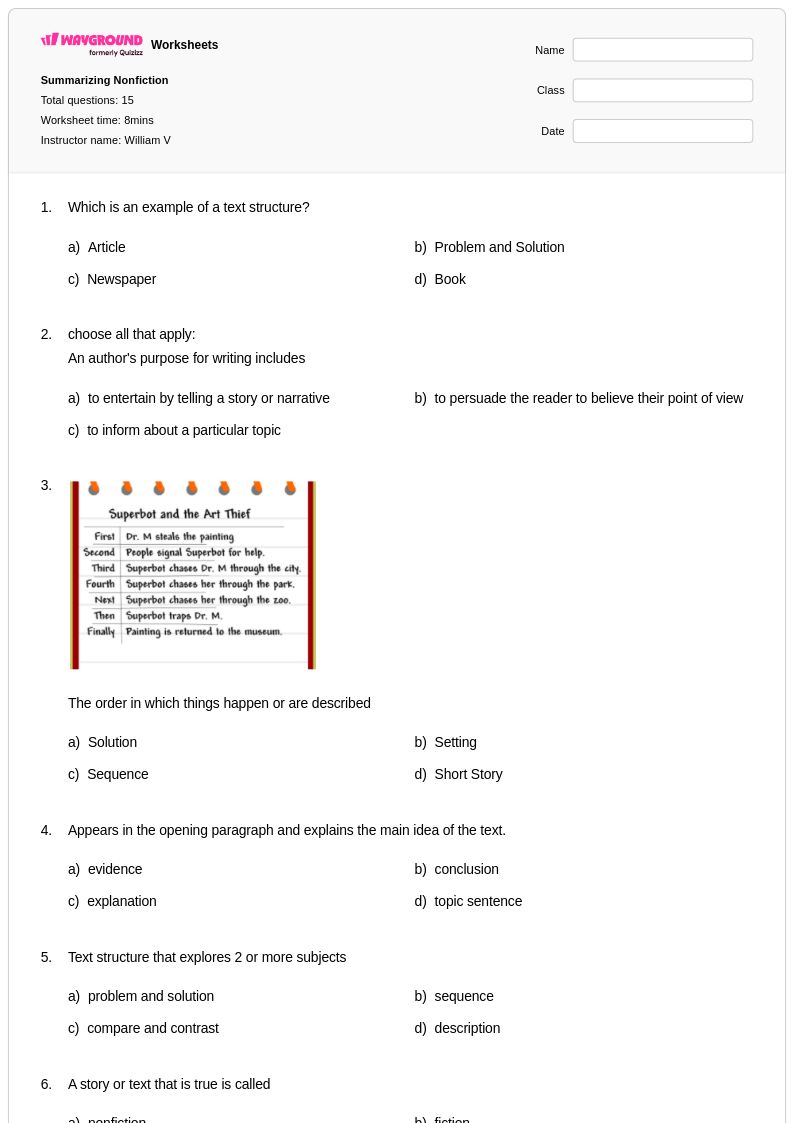
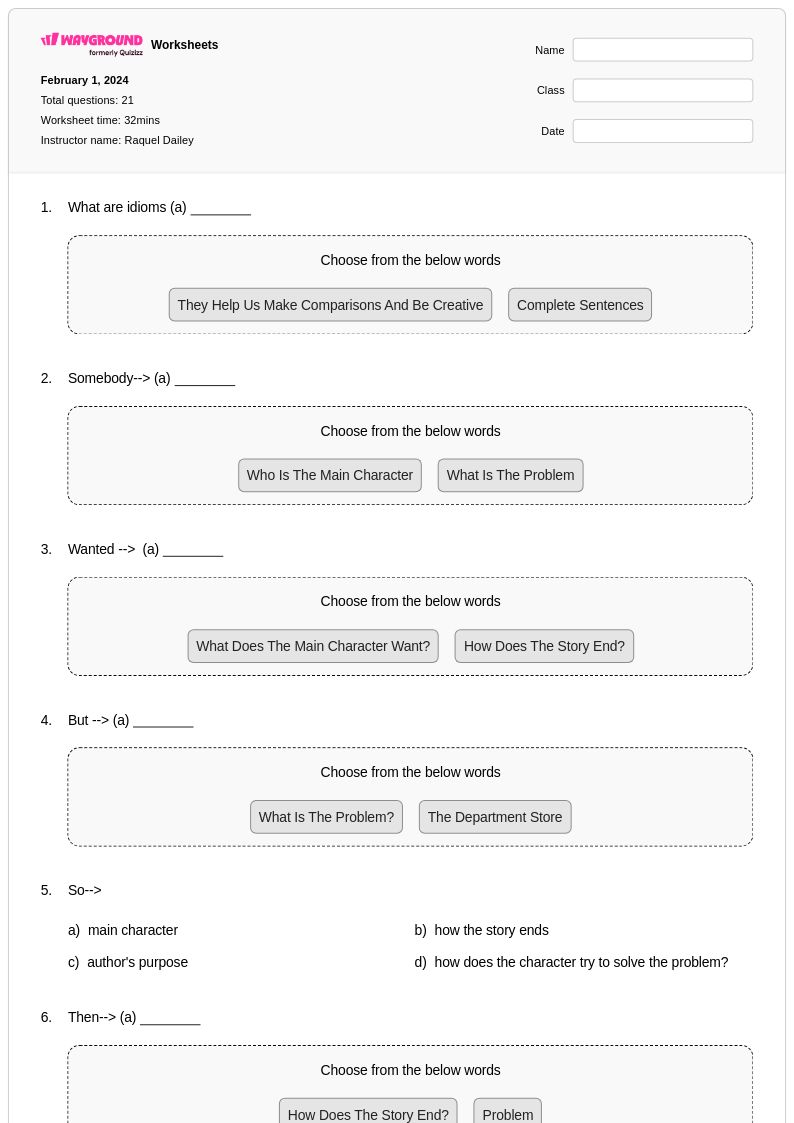
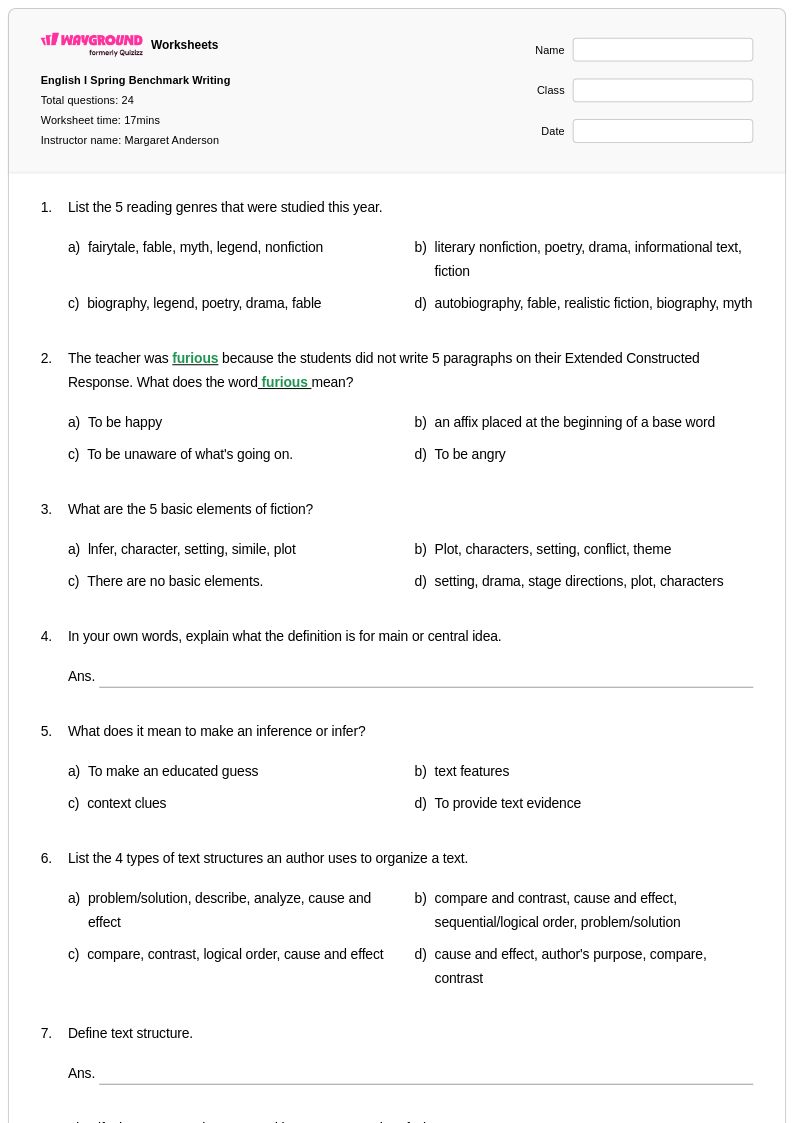
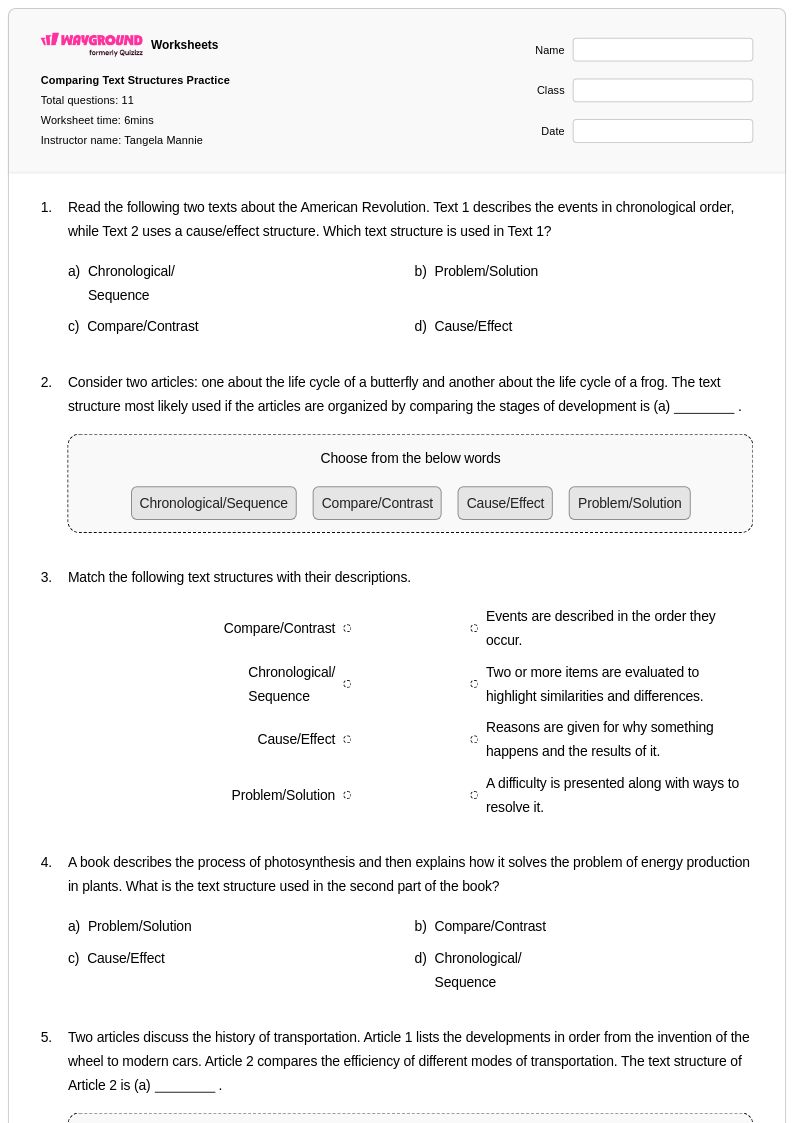
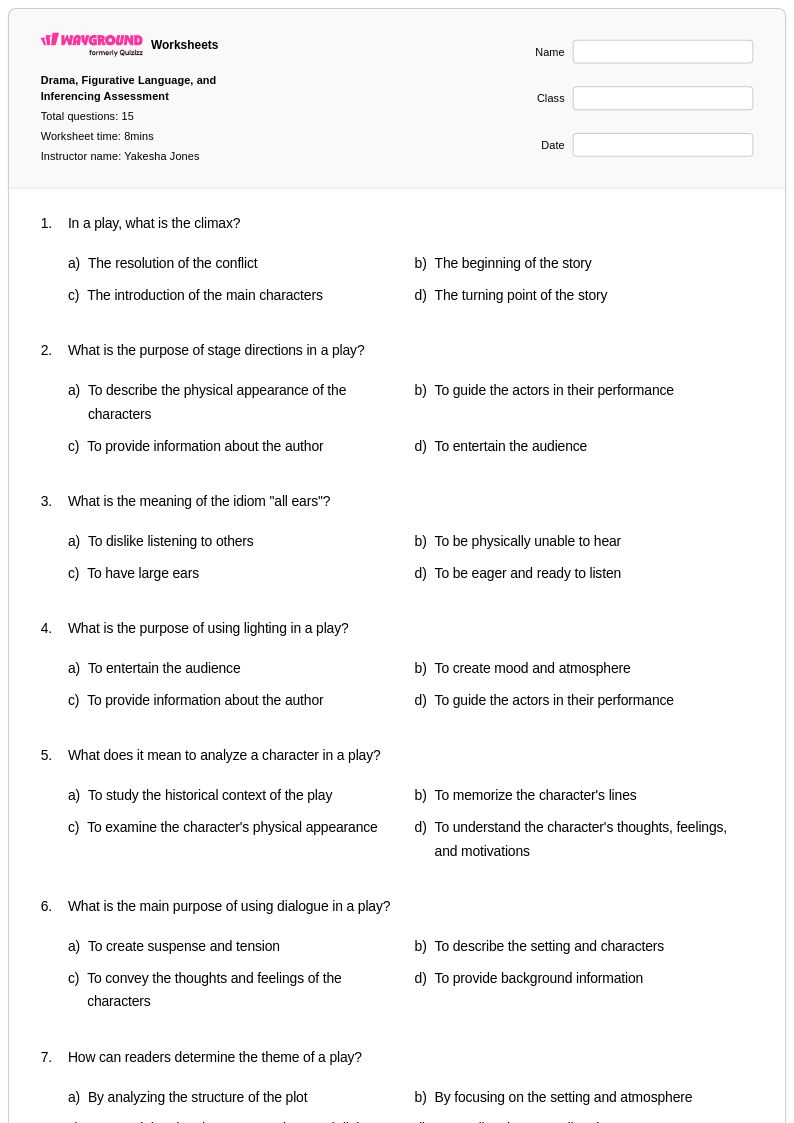
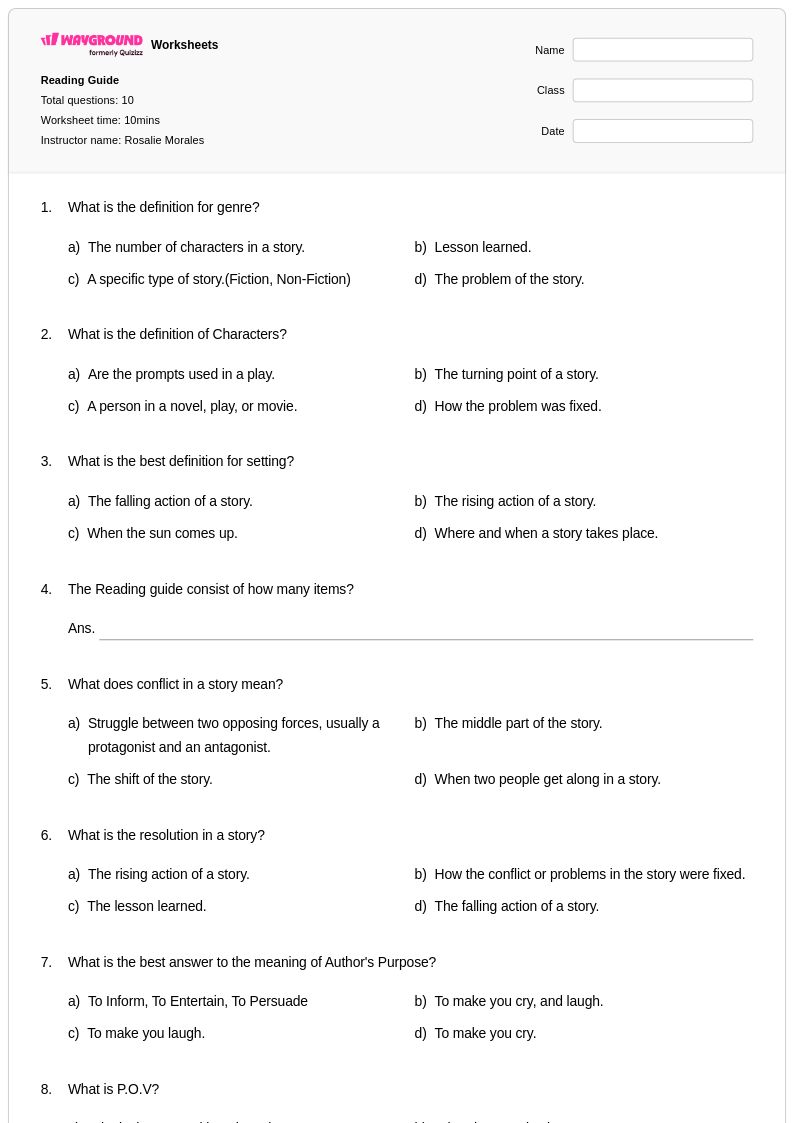
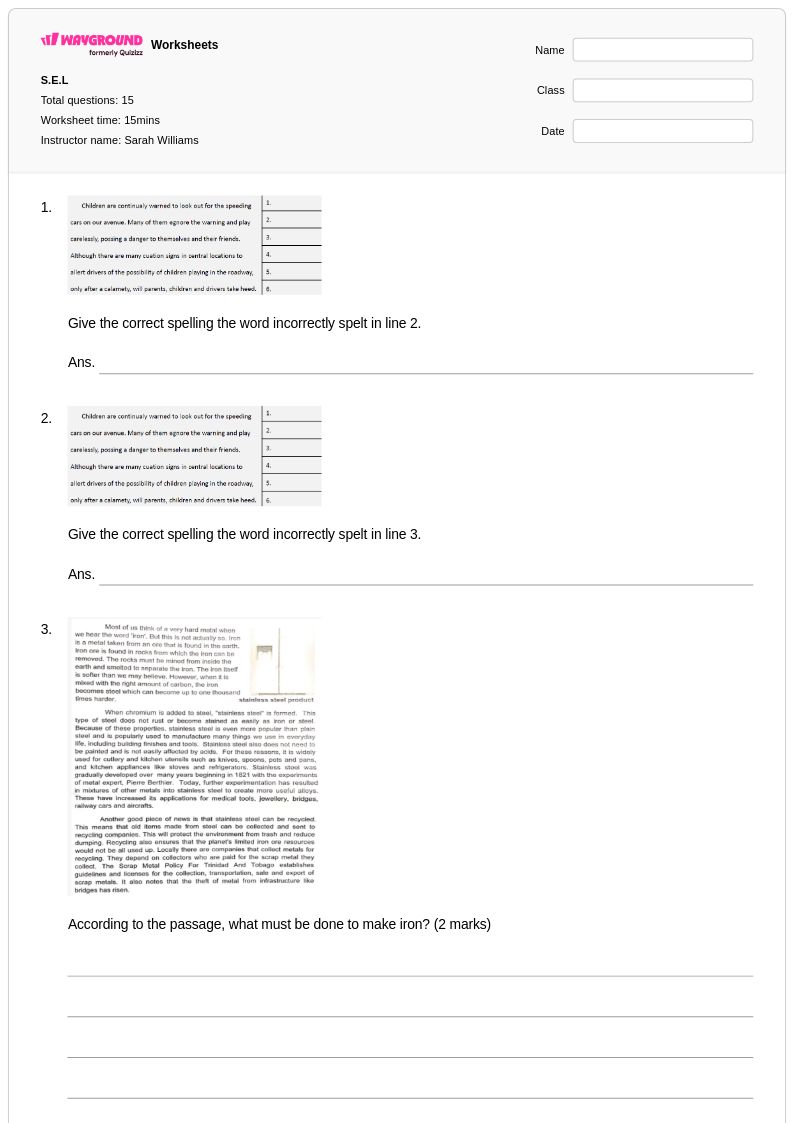
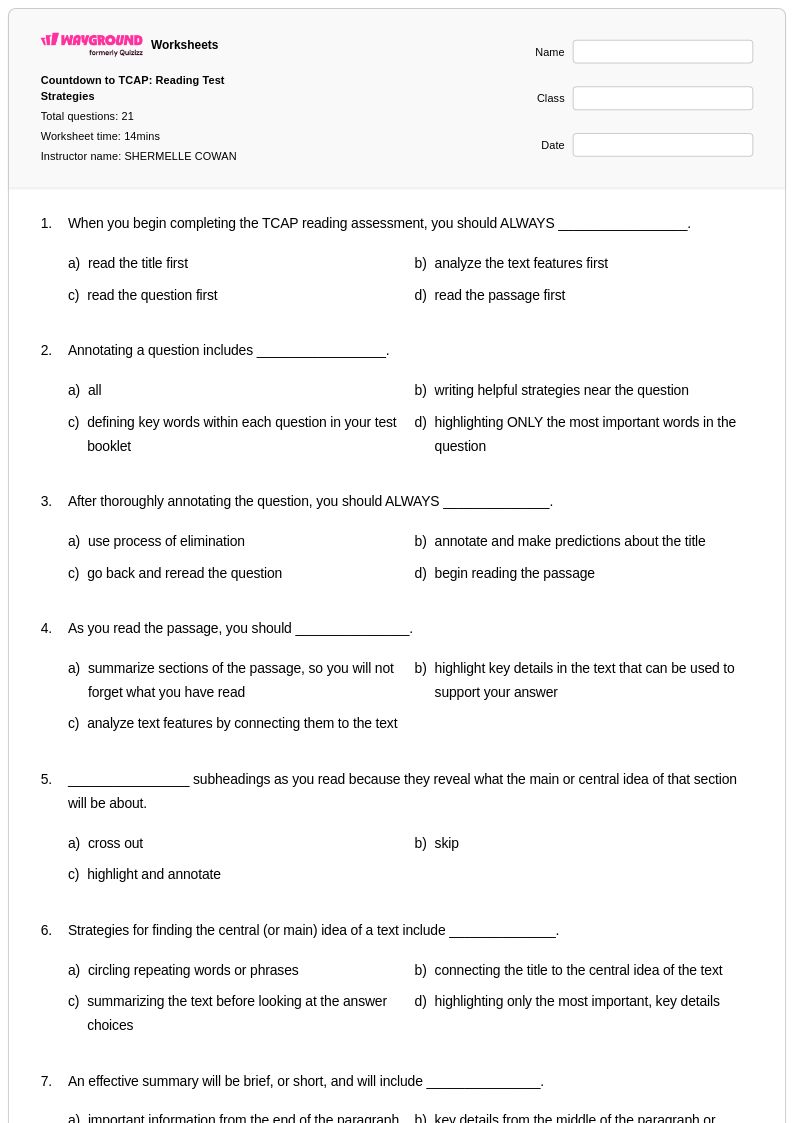
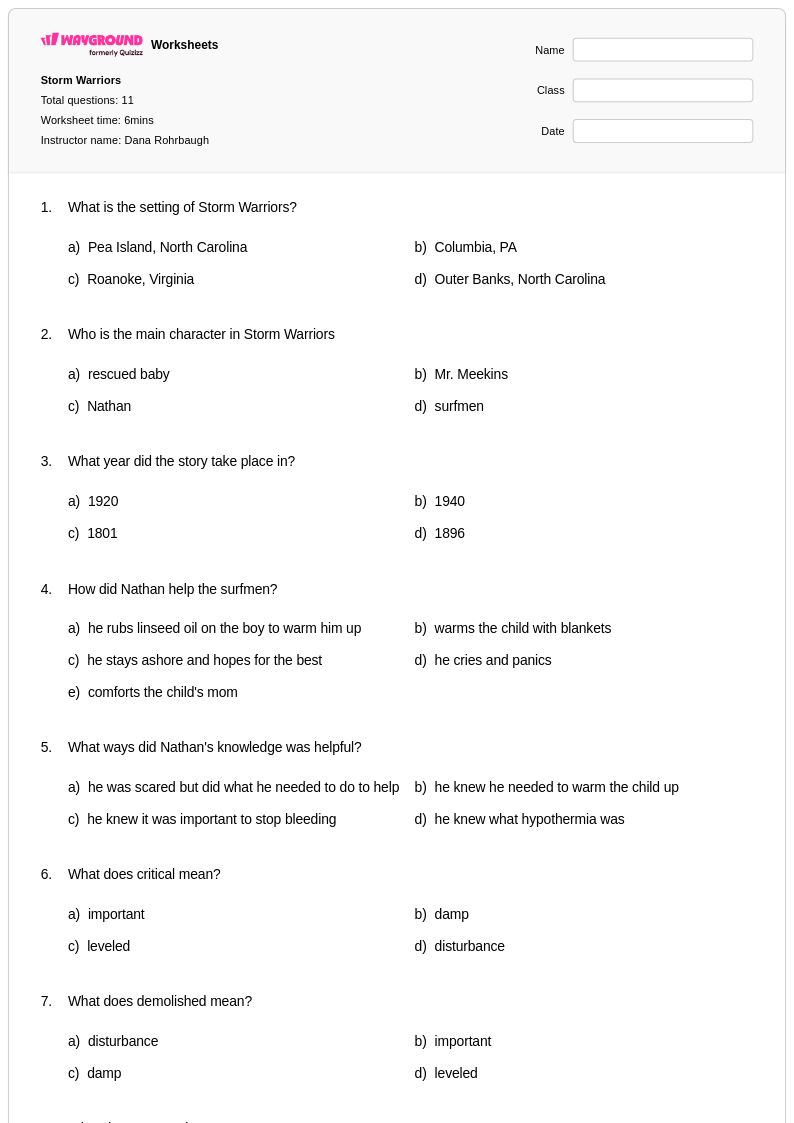
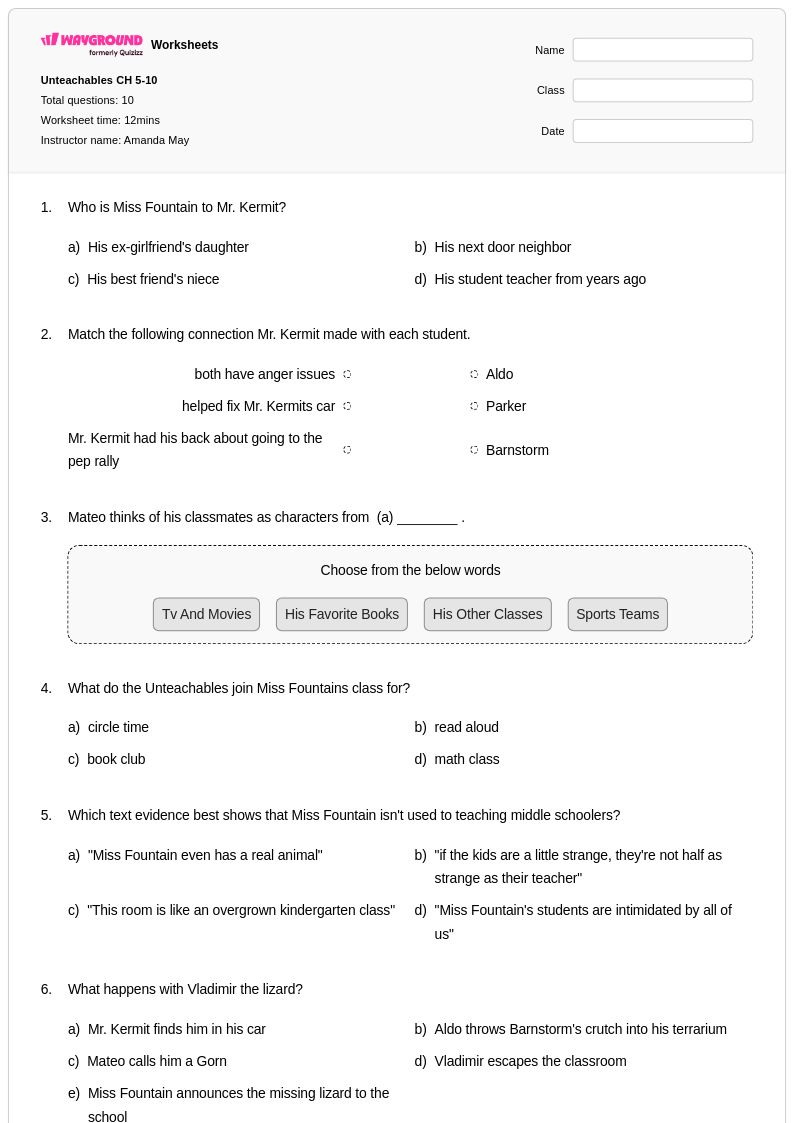
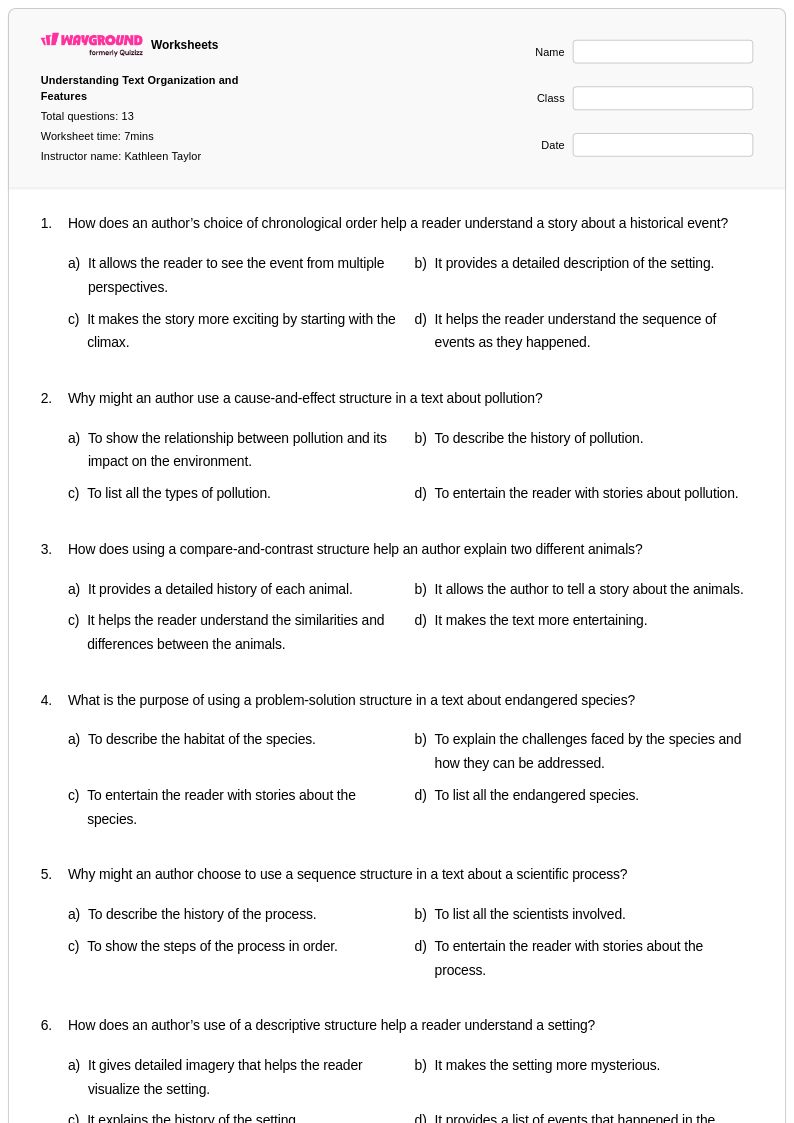
Analyzing story structure worksheets for Grade 5 students available through Wayground (formerly Quizizz) provide comprehensive practice in identifying and understanding the fundamental elements that create compelling narratives. These carefully designed printables help fifth-grade students master essential skills including recognizing plot development, identifying story elements like exposition, rising action, climax, falling action, and resolution, and understanding how authors construct narrative arcs to engage readers. The practice problems systematically guide students through examining character development, setting establishment, conflict introduction and resolution, and theme emergence within various literary works. Each worksheet includes detailed answer keys that support both independent learning and guided instruction, while the free pdf format ensures accessibility for diverse classroom and home learning environments.
Wayground (formerly Quizizz) empowers educators with millions of teacher-created resources specifically focused on story structure analysis, featuring robust search and filtering capabilities that allow instructors to locate materials perfectly aligned with Grade 5 reading comprehension standards and individual student needs. The platform's differentiation tools enable teachers to customize worksheets for varying skill levels, ensuring that struggling readers receive appropriate scaffolding while advanced students encounter suitable challenges in their literary analysis practice. These versatile resources are available in both printable and digital formats, including downloadable pdfs, supporting flexible lesson planning whether educators need quick remediation activities, enrichment exercises for accelerated learners, or systematic skill practice for whole-class instruction. The comprehensive collection streamlines curriculum planning by providing standards-aligned materials that develop critical thinking skills essential for literary analysis and reading comprehension success.
FAQs
How do I teach story structure to students who struggle to see how plot elements connect?
Start by anchoring students to a familiar story before introducing structural vocabulary like exposition, rising action, climax, falling action, and resolution. Use visual story maps or plot diagrams so students can physically place events before writing about them. Once students can sequence events correctly, shift the focus to how each structural element creates meaning — for example, how the climax forces a character to change. Grounding abstract terms in stories students already know dramatically reduces confusion.
What exercises help students practice identifying plot structure in a text?
Effective practice asks students to do more than label — they should explain why a moment qualifies as the climax or how the resolution connects back to the conflict introduced in the exposition. Sequencing tasks, where students reorder scrambled story events, build structural awareness before analysis. Worksheets that pair short passages with targeted questions about plot stages and character arcs give students repeated, focused exposure to how narrative structure works across different texts.
What are the most common mistakes students make when analyzing story structure?
The most frequent error is confusing the climax with the most exciting moment rather than identifying it as the turning point where the central conflict reaches its peak. Students also tend to treat the resolution as a simple ending summary rather than recognizing how it reflects character change or thematic resolution. Another common misconception is treating plot structure as a rigid checklist rather than understanding that authors use these elements purposefully and sometimes non-linearly to shape meaning.
How do I help students analyze character development as part of story structure?
Character development is most effectively taught by connecting character change to structural moments — specifically, how the climax forces a shift in a character's beliefs, behavior, or understanding. Ask students to track what a character wants at the beginning versus the end, and what obstacles (rising action) complicated that goal. This approach ties characterization directly to plot structure rather than treating character analysis as a separate skill, which deepens comprehension of both.
How do I teach point of view in the context of story structure?
Point of view shapes what structural information the reader has access to and when — a first-person narrator can withhold information the reader might want, while a third-person omniscient narrator can reveal motivations across multiple characters. Teach students to ask not just who is telling the story, but how that choice affects their understanding of the conflict and resolution. Comparing the same story event as told from first versus third person perspective is a concrete way to make this abstract concept visible.
How do Wayground's story structure worksheets work, and what formats are they available in?
Wayground's analyzing story structure worksheets cover subtopics including character analysis, point of view, beginning-middle-end, character change, characterization, and first and third person perspective. Each worksheet includes a complete answer key to support both independent student work and teacher-led instruction. Worksheets are available as printable PDFs for traditional classroom use and in digital formats for technology-integrated or remote learning environments, and teachers can also host them as a quiz directly on Wayground to track student responses in real time.