Free Printable Analyzing Word Choice Worksheets for Grade 5
Grade 5 analyzing word choice worksheets help students master reading comprehension by examining how authors select specific words to convey meaning, with free printable PDFs and answer keys available.
Explore printable Analyzing Word Choice worksheets for Grade 5
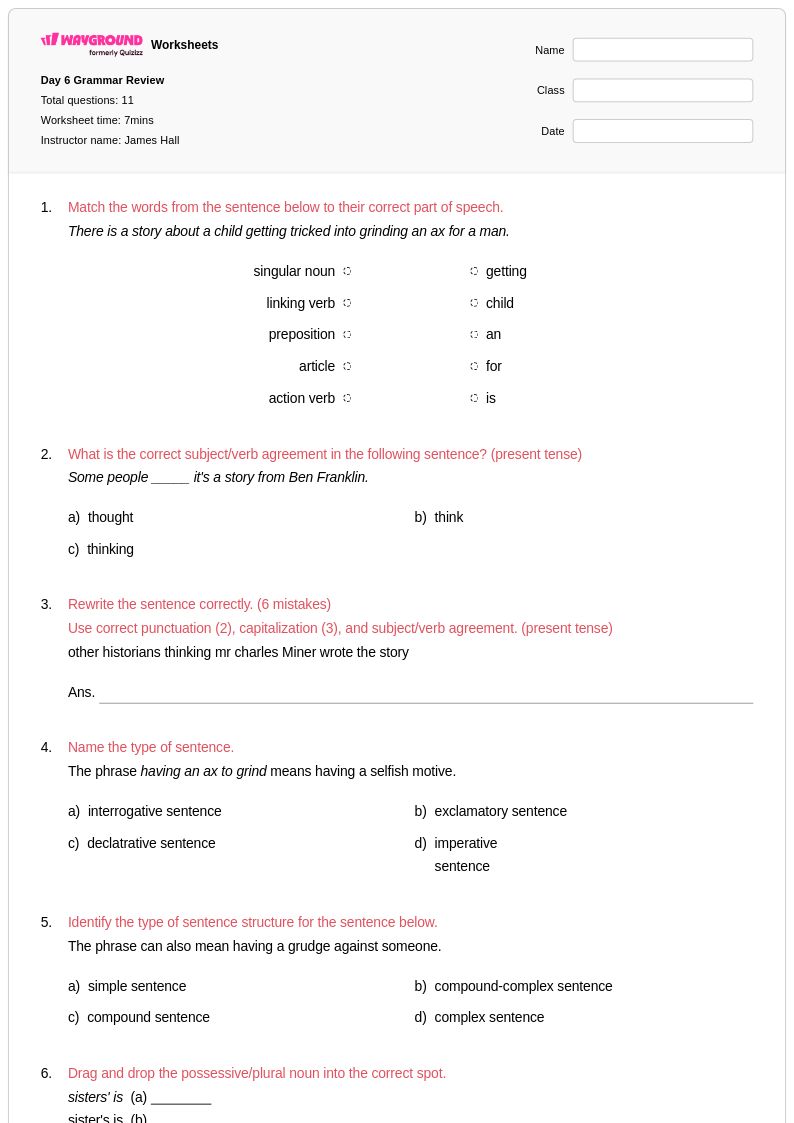
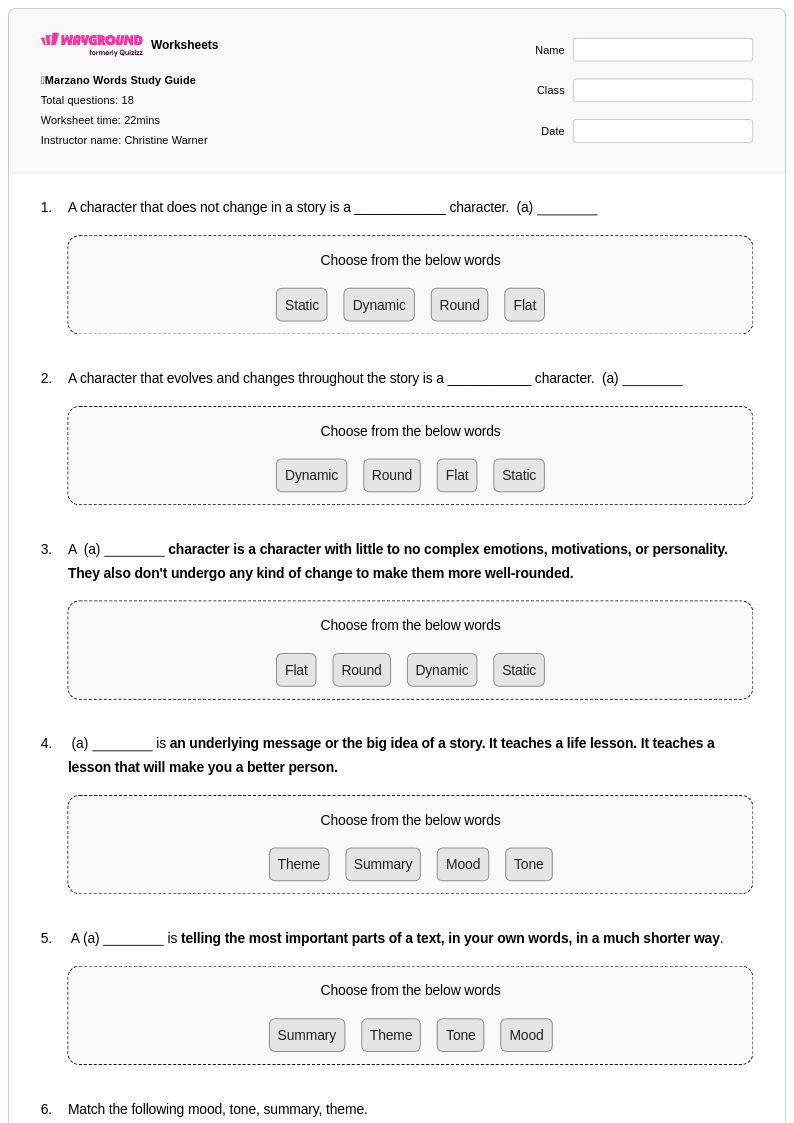
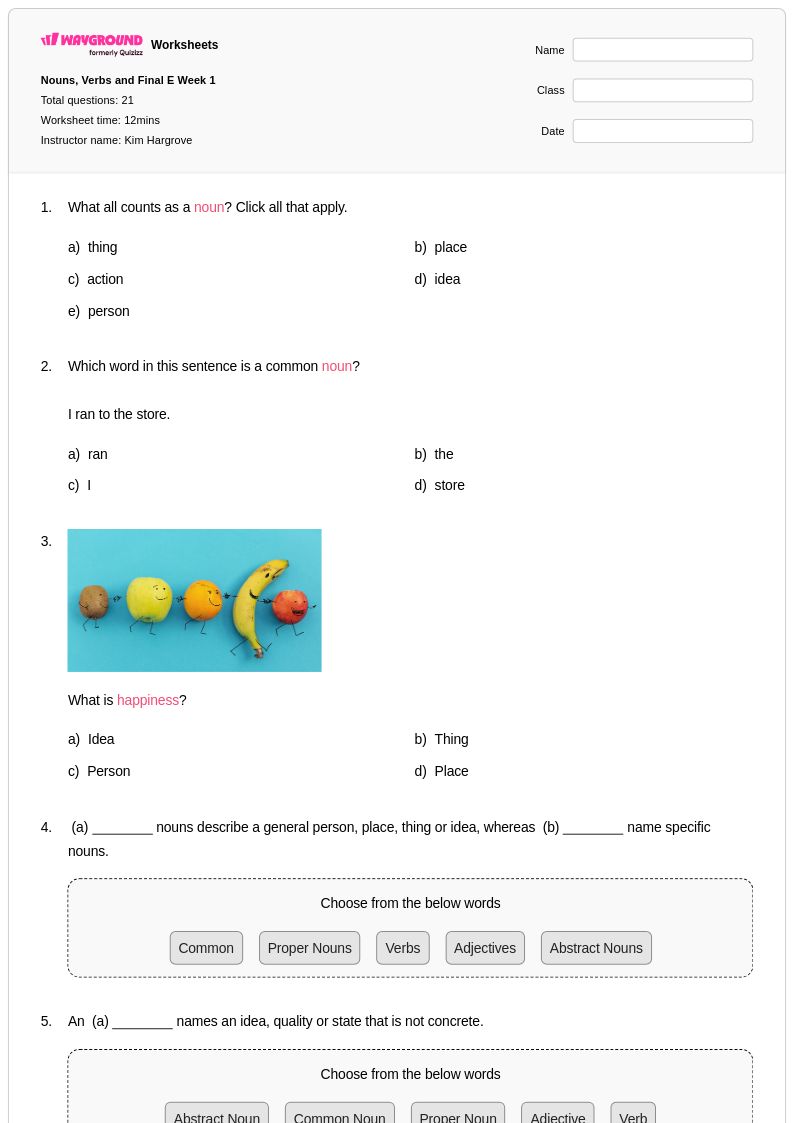
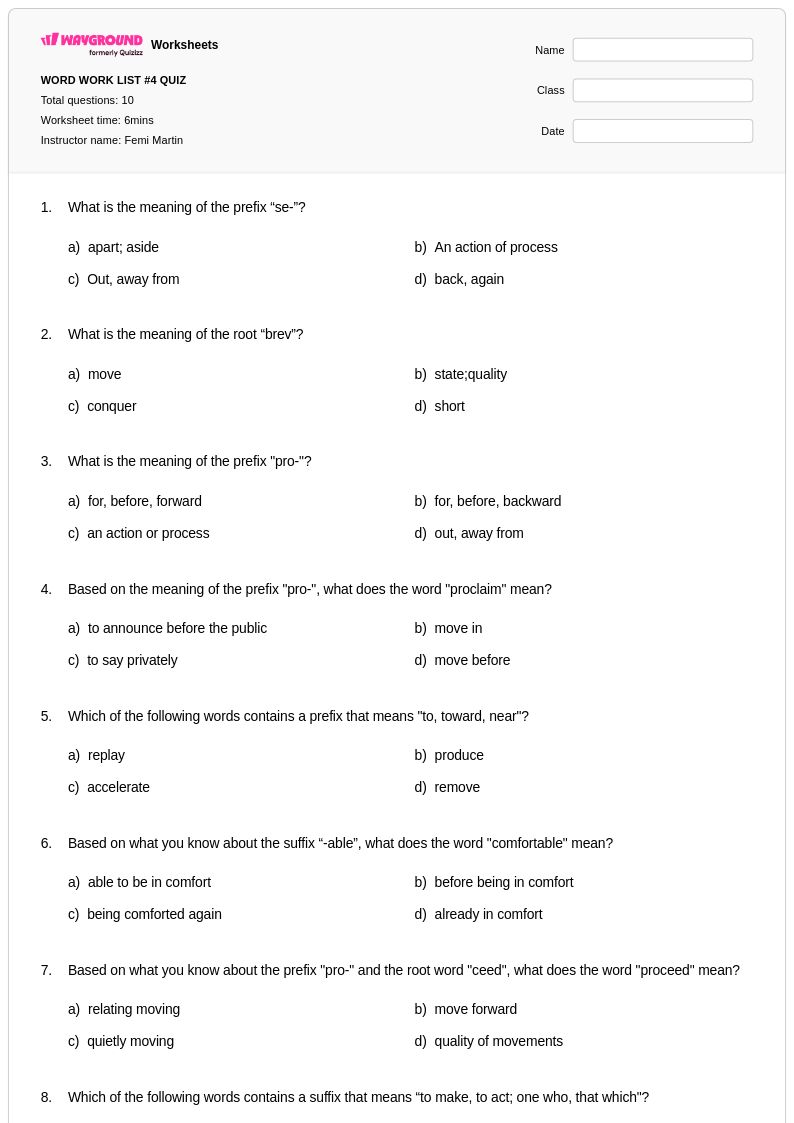
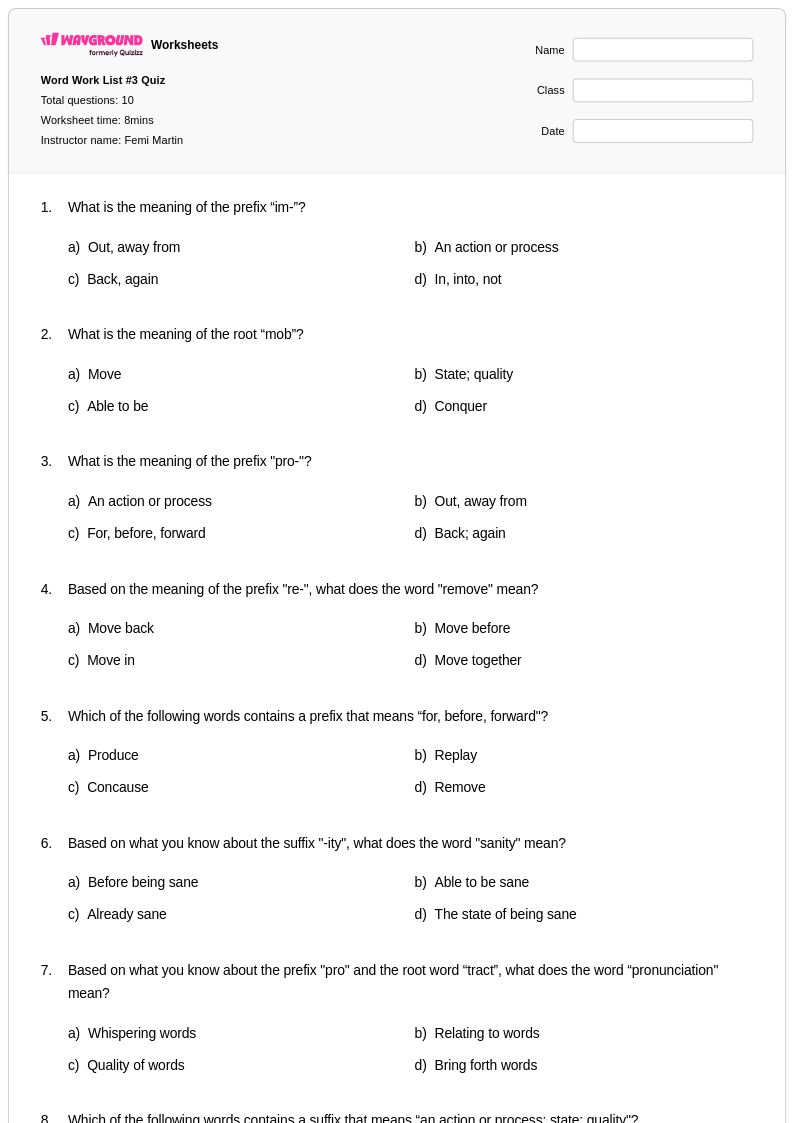
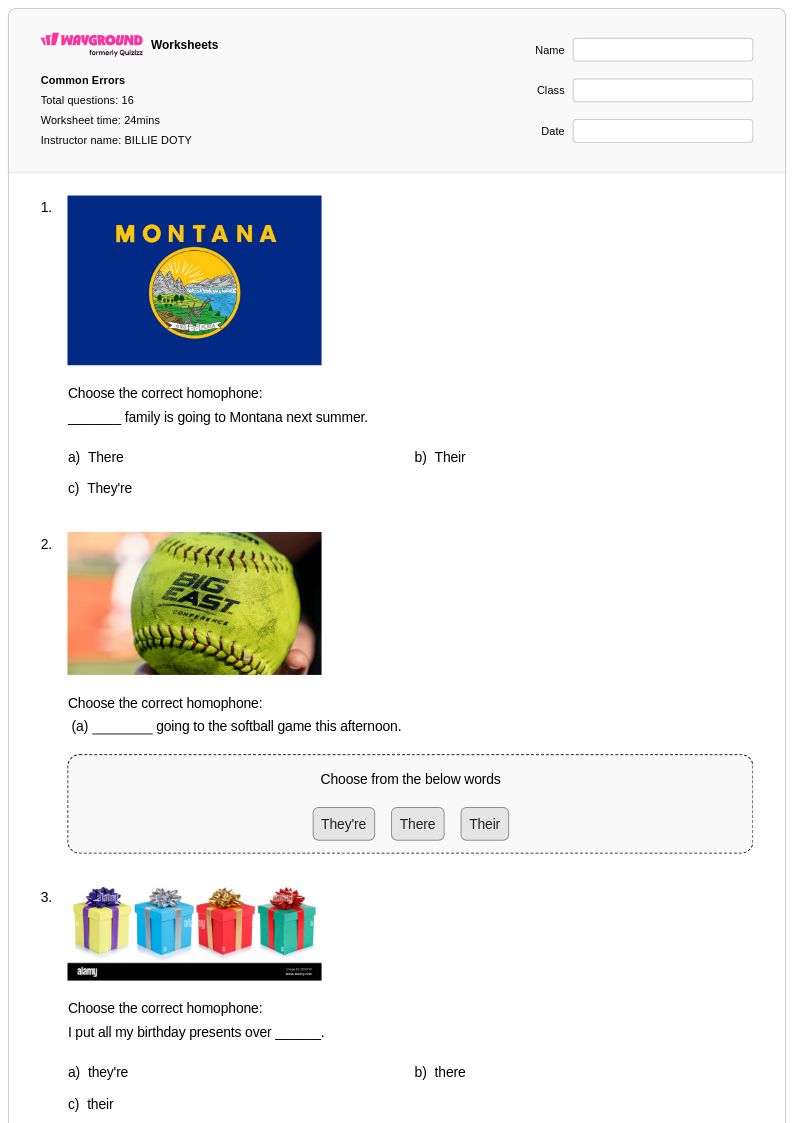
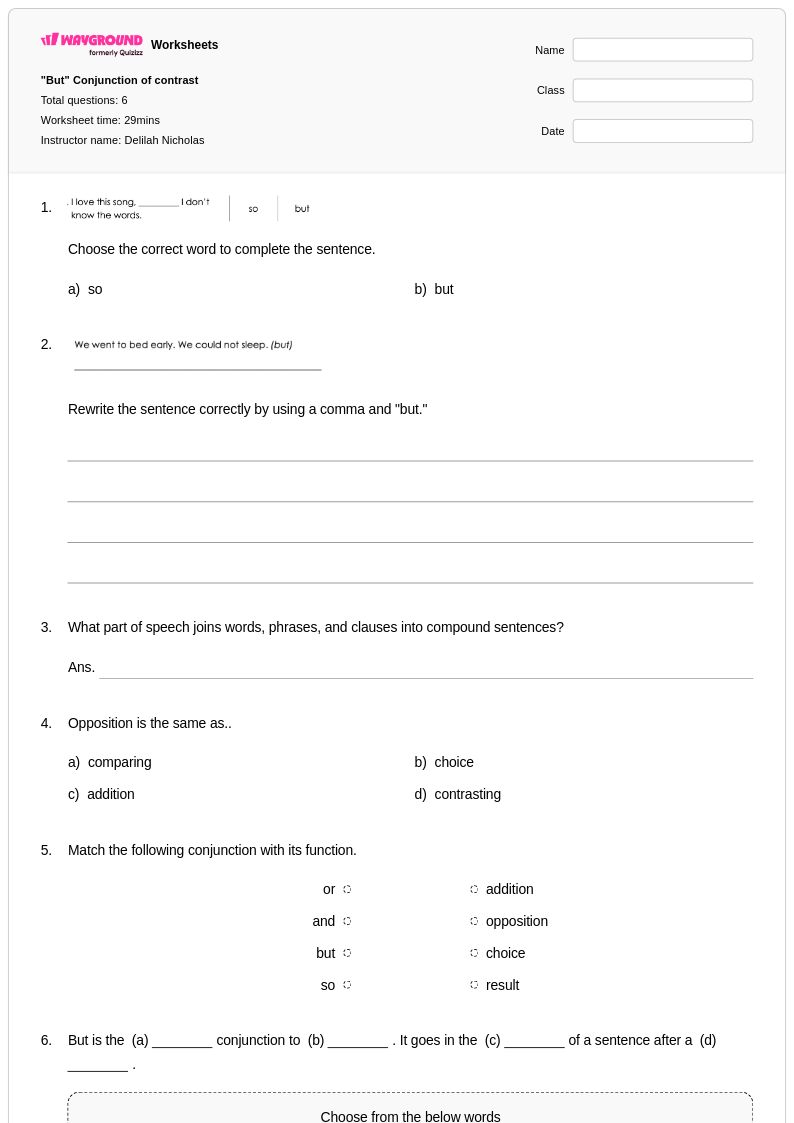
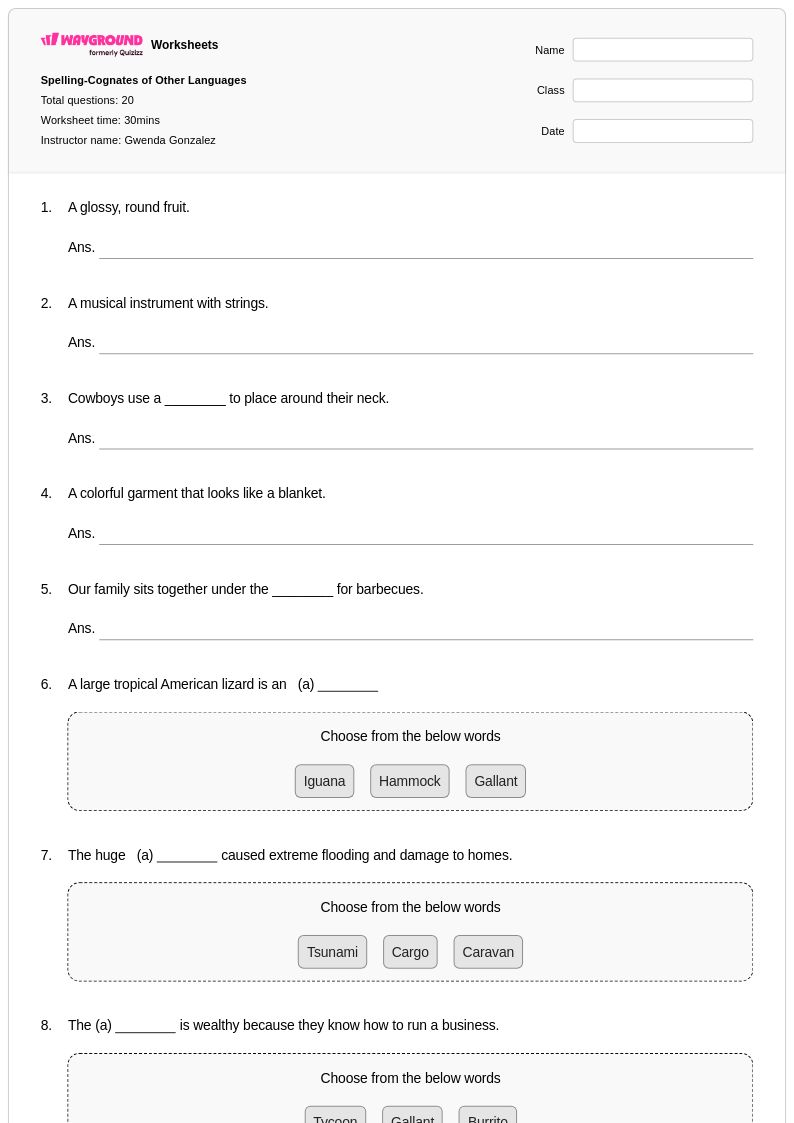
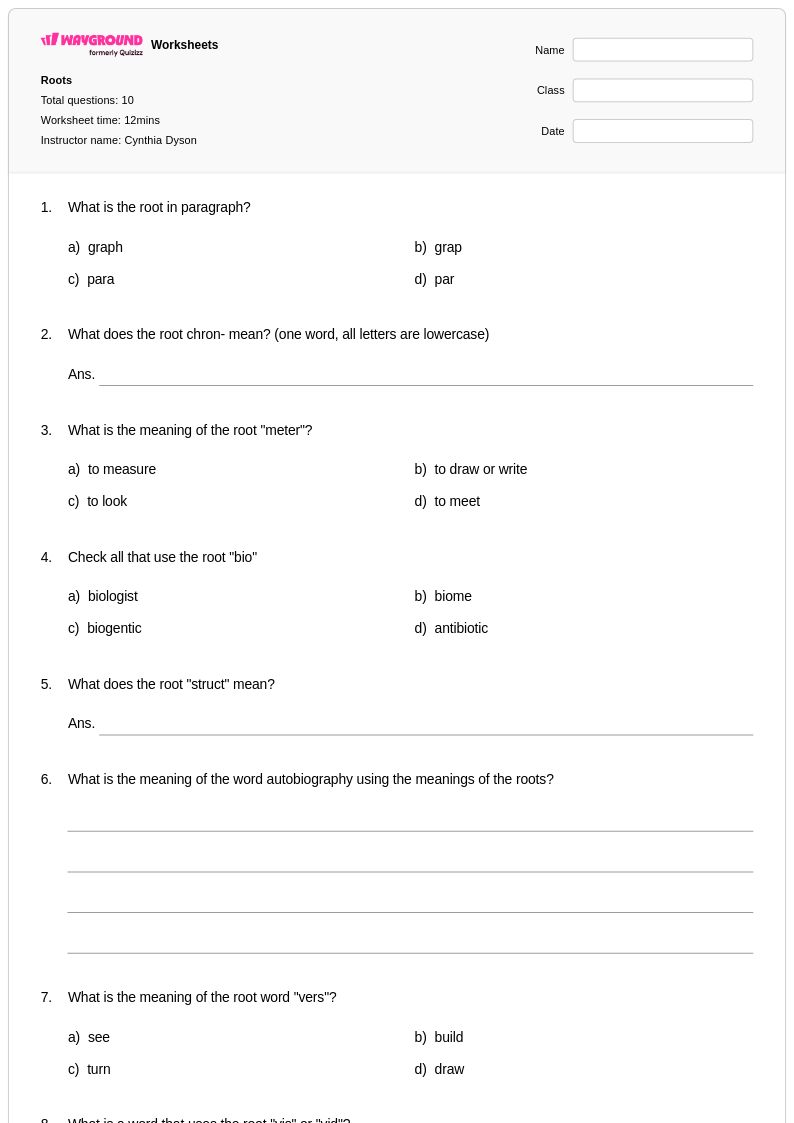
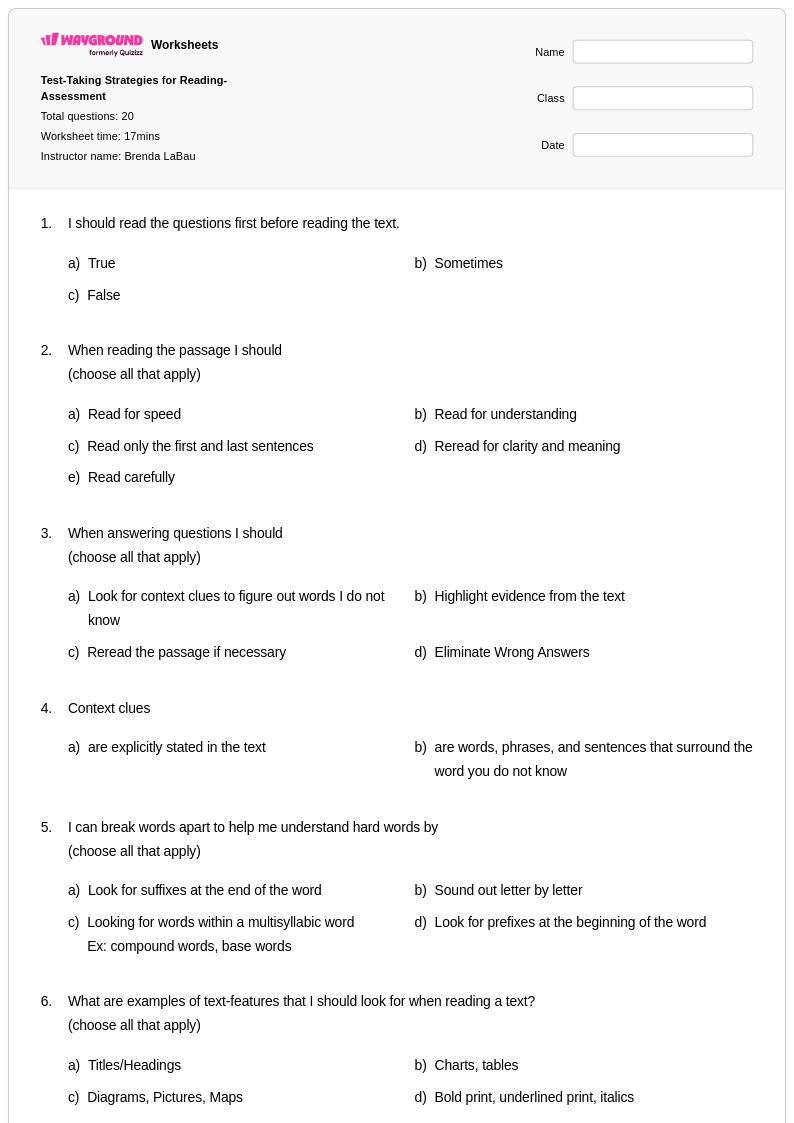
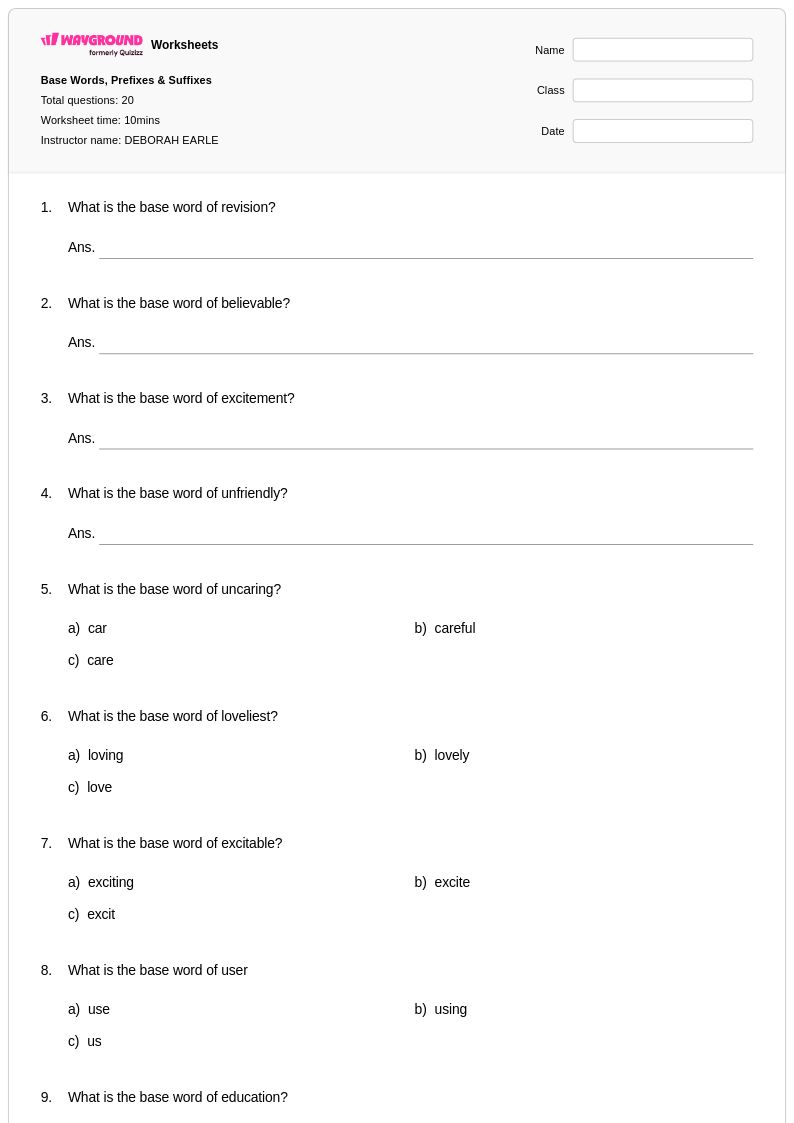
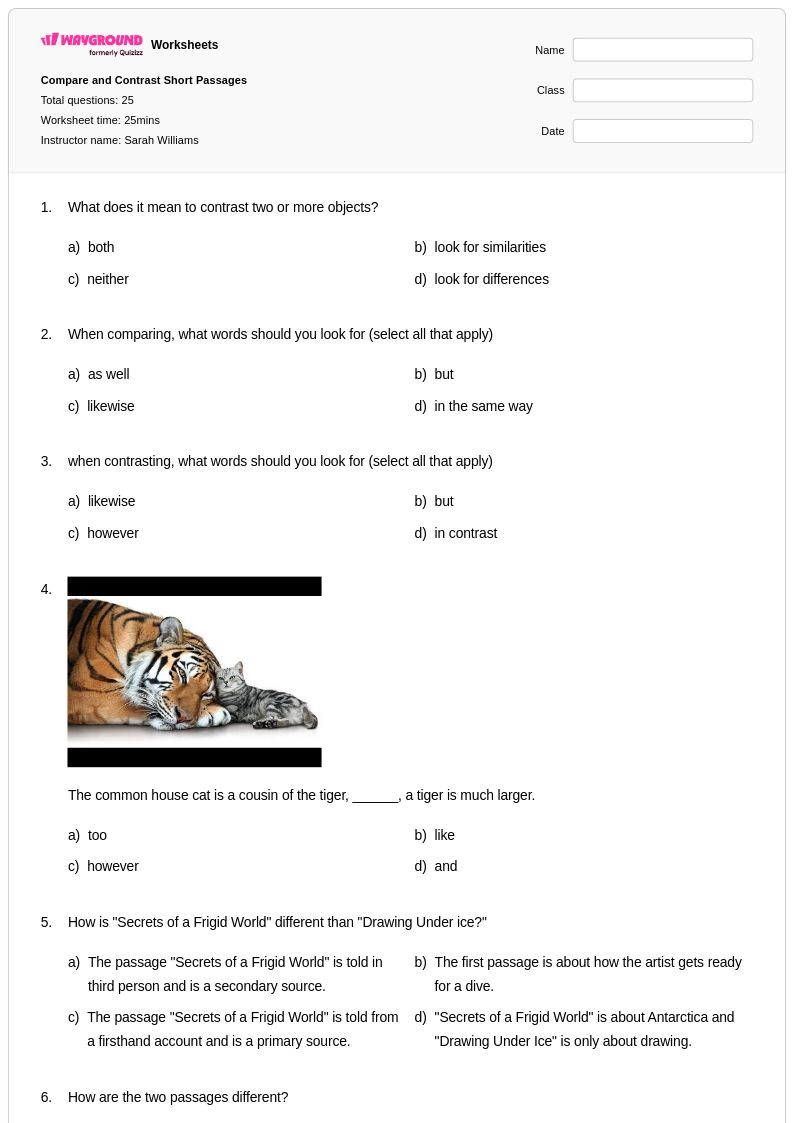
Analyzing word choice worksheets for Grade 5 students available through Wayground (formerly Quizizz) provide comprehensive practice in examining how authors deliberately select specific words to create meaning, tone, and effect in their writing. These expertly designed worksheets guide fifth-grade learners through the critical process of identifying powerful verbs, descriptive adjectives, and precise nouns while understanding how these choices influence reader interpretation and emotional response. Students engage with authentic texts through structured practice problems that require them to compare word alternatives, analyze connotation versus denotation, and evaluate the impact of formal versus informal language choices. Each worksheet includes detailed answer keys that support independent learning and self-assessment, while the free printable format ensures accessibility for diverse classroom and home learning environments.
Wayground (formerly Quizizz) empowers educators with an extensive collection of millions of teacher-created resources specifically focused on word choice analysis skills, featuring robust search and filtering capabilities that allow instructors to locate materials perfectly aligned with Grade 5 reading comprehension standards. The platform's differentiation tools enable teachers to customize worksheets based on individual student reading levels and learning needs, supporting both remediation for struggling readers and enrichment opportunities for advanced learners. Available in both printable PDF format and interactive digital versions, these resources seamlessly integrate into lesson planning workflows while providing flexible options for classroom instruction, homework assignments, and targeted skill practice sessions. The comprehensive nature of these materials supports systematic instruction in literary analysis, helping students develop the critical thinking skills necessary for deeper text comprehension and more sophisticated written expression.
FAQs
How do I teach students to analyze word choice in a text?
Start by distinguishing between denotation (a word's dictionary definition) and connotation (its emotional or cultural associations), since students need this foundation before they can evaluate why an author chose one word over another. From there, have students compare near-synonyms in context — for example, asking why an author wrote 'demanded' instead of 'asked' — to surface how diction shapes tone and meaning. Modeling this process with short, high-interest passages before moving to longer texts helps students internalize the habit of questioning every deliberate word choice.
What exercises help students practice analyzing word choice?
Effective practice exercises include synonym substitution tasks, where students swap out a word and explain how the meaning or tone shifts, and connotation sorting activities that ask students to classify words as positive, negative, or neutral within a specific context. Analyzing loaded language and bias in informational texts is another strong exercise because it connects word choice to real-world persuasion and rhetoric. Worksheets that present literary and non-fiction passages side by side allow students to compare how diction functions differently across text types.
What mistakes do students commonly make when analyzing word choice?
The most common error is surface-level identification — students note that a word 'sounds negative' without explaining its effect on the reader or the author's purpose. Another frequent mistake is treating denotation and connotation as interchangeable, which causes students to miss the emotional weight a word carries beyond its literal meaning. Students also tend to analyze individual words in isolation rather than considering how word choice accumulates across a passage to build mood, atmosphere, or argument. Targeted practice with answer-key explanations helps students self-correct these patterns before they become habits.
How do I differentiate word choice instruction for students at different reading levels?
For students who struggle, begin with concrete, high-contrast word pairs (e.g., 'scrawny' vs. 'slender') before introducing subtler distinctions, and use shorter passages with guided annotation prompts to reduce cognitive load. More advanced students benefit from analyzing extended passages where diction patterns shift across paragraphs, requiring them to track how tone evolves. On Wayground, teachers can apply accommodations such as reduced answer choices and read-aloud support to individual students, allowing the same core activity to serve a full range of learners without requiring separate lesson plans.
How do I use Wayground's analyzing word choice worksheets in my classroom?
Wayground's analyzing word choice worksheets are available as printable PDFs for traditional classroom use and in digital formats for technology-integrated environments, giving teachers flexibility for in-class instruction, homework, or assessment prep. Teachers can also host worksheets directly as a quiz on Wayground, enabling real-time tracking of student responses. All worksheets include complete answer keys, so they work equally well for guided instruction, independent practice, or student self-assessment.
How does word choice affect tone and mood in a text?
Word choice is one of the primary tools authors use to establish tone — their attitude toward a subject — and mood, the emotional atmosphere the reader experiences. A passage describing a storm using words like 'howling,' 'relentless,' and 'devoured' creates a sense of menace that the same scene described with 'gusty,' 'persistent,' and 'swept' does not. Teaching students to map clusters of diction onto a tone spectrum helps them move from vague impressions ('it feels scary') to precise analytical claims about how language produces specific reader responses.