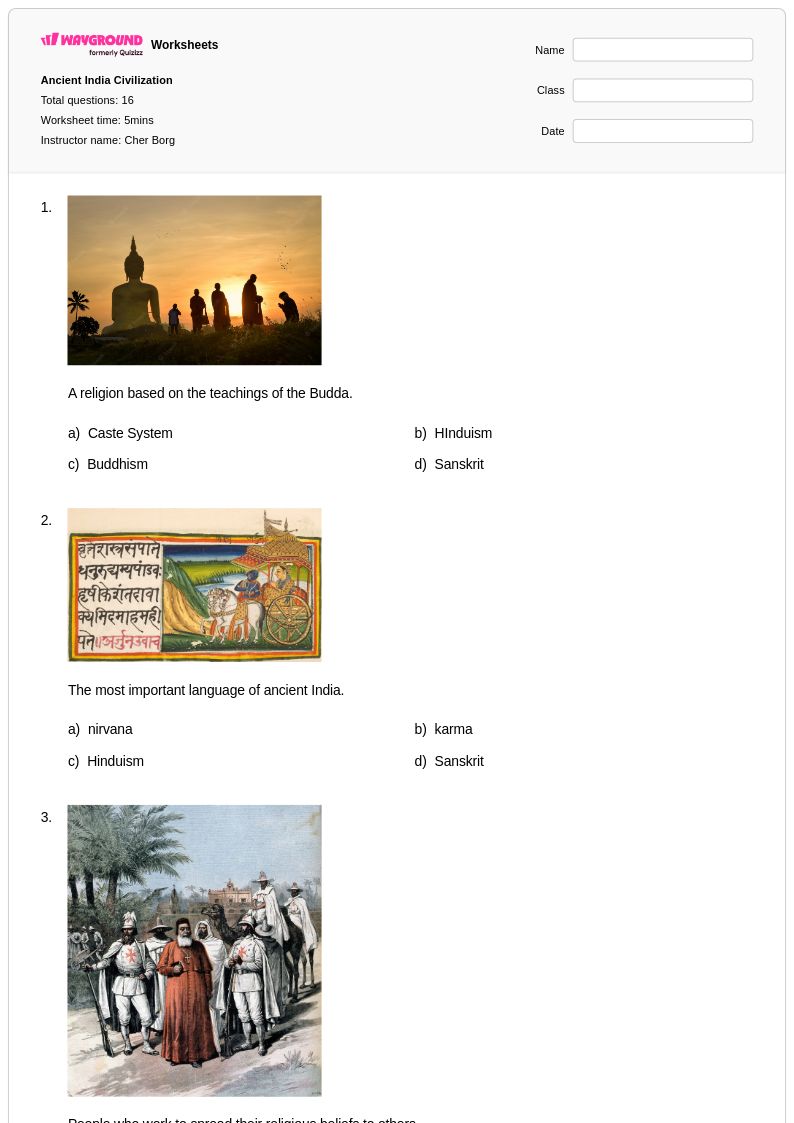
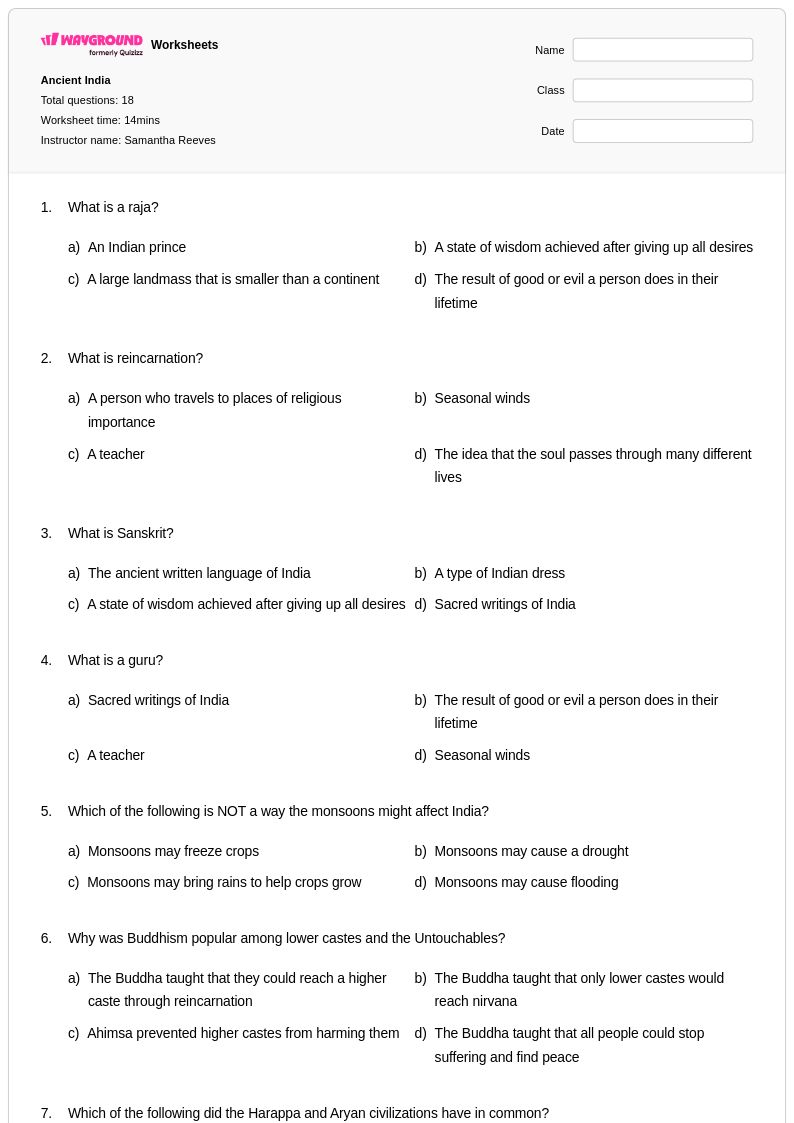
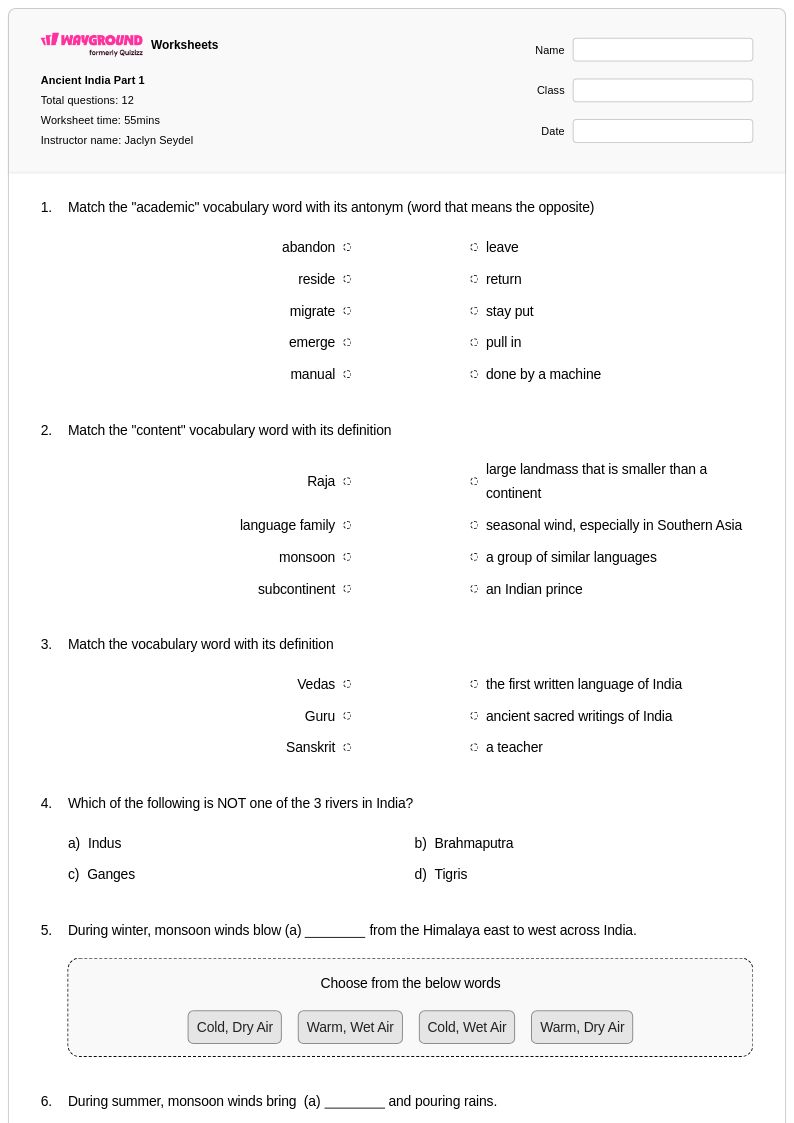
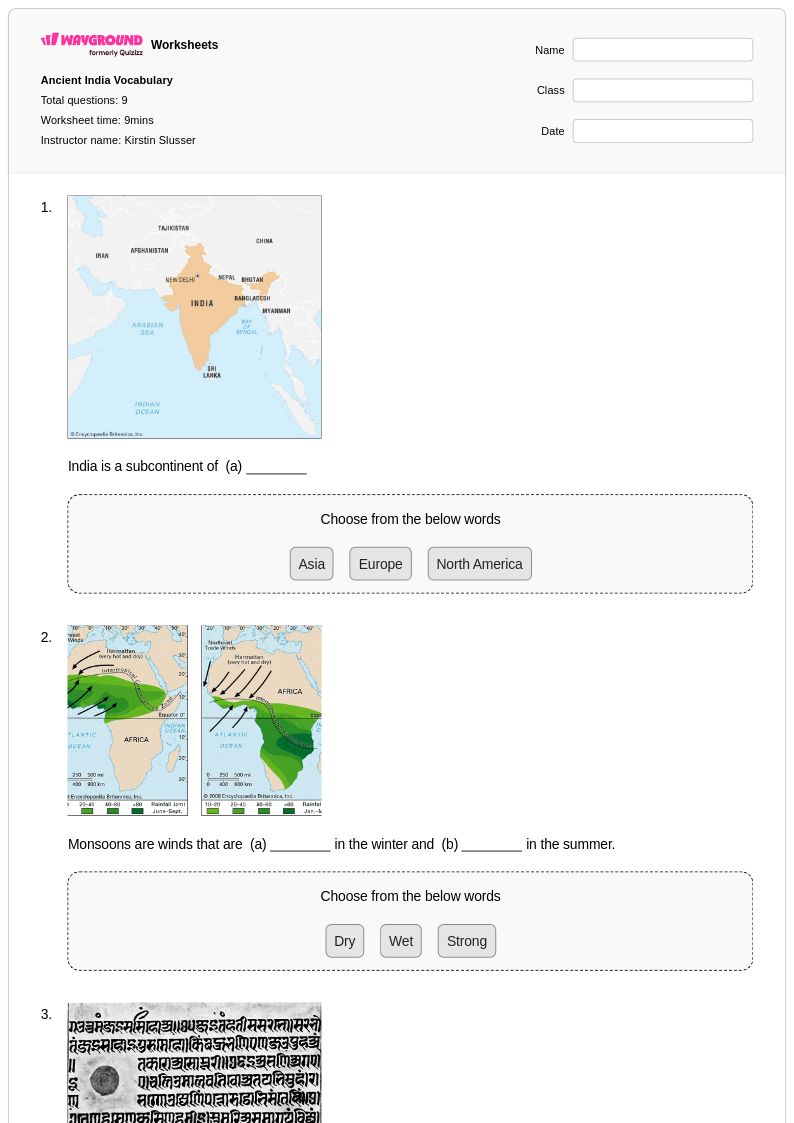
Free Printable Ancient India Worksheets for Grade 6
Grade 6 Ancient India worksheets and printables help students explore early civilizations, religions, and cultural achievements through engaging practice problems with comprehensive answer keys available as free PDF downloads.
Explore printable Ancient India worksheets for Grade 6
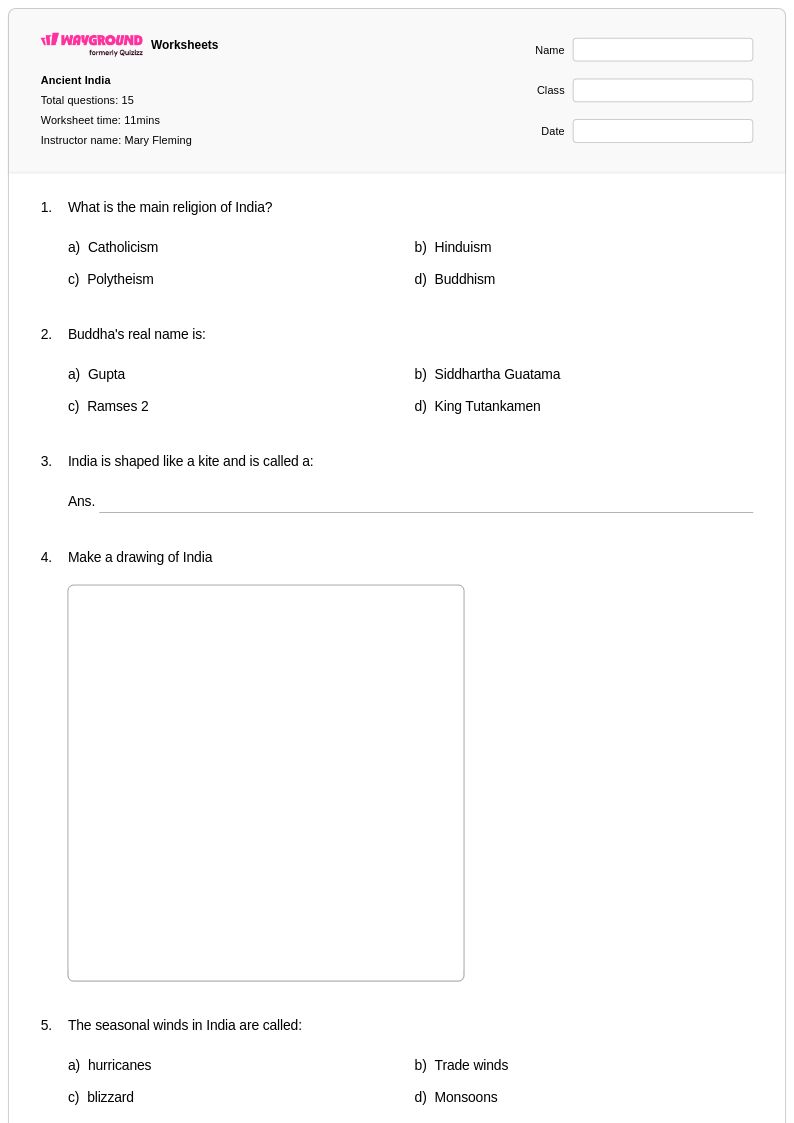
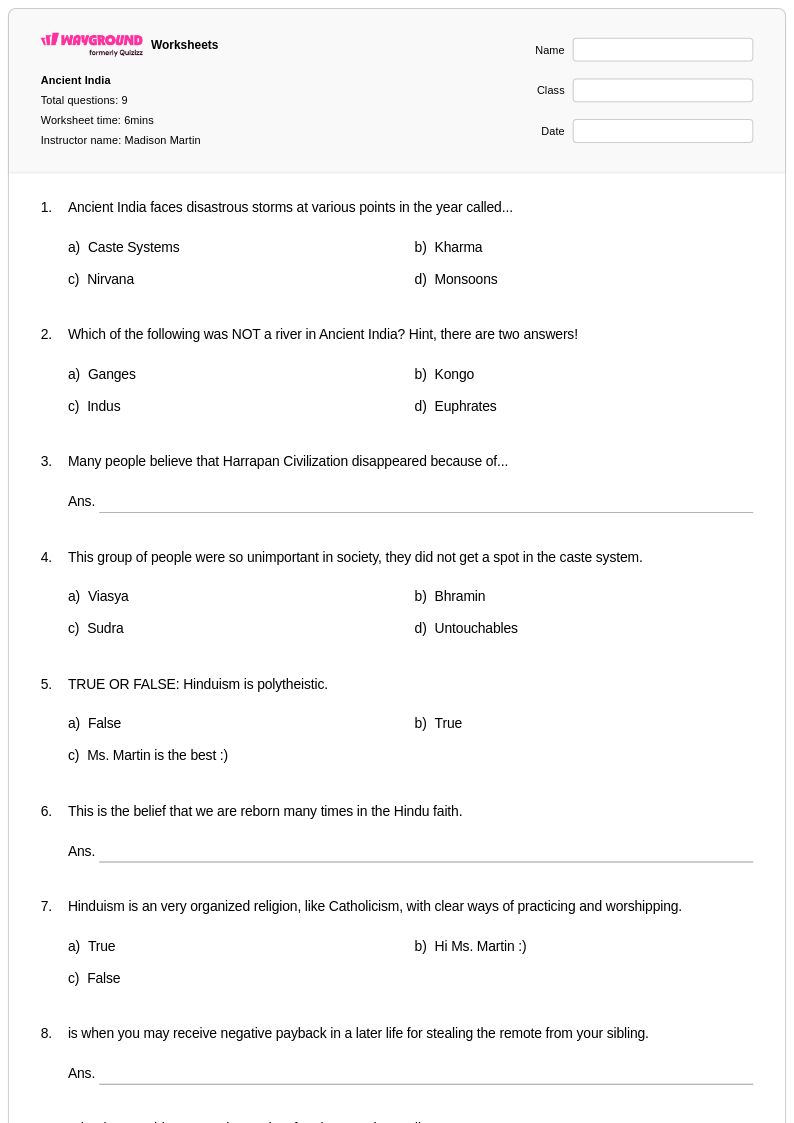
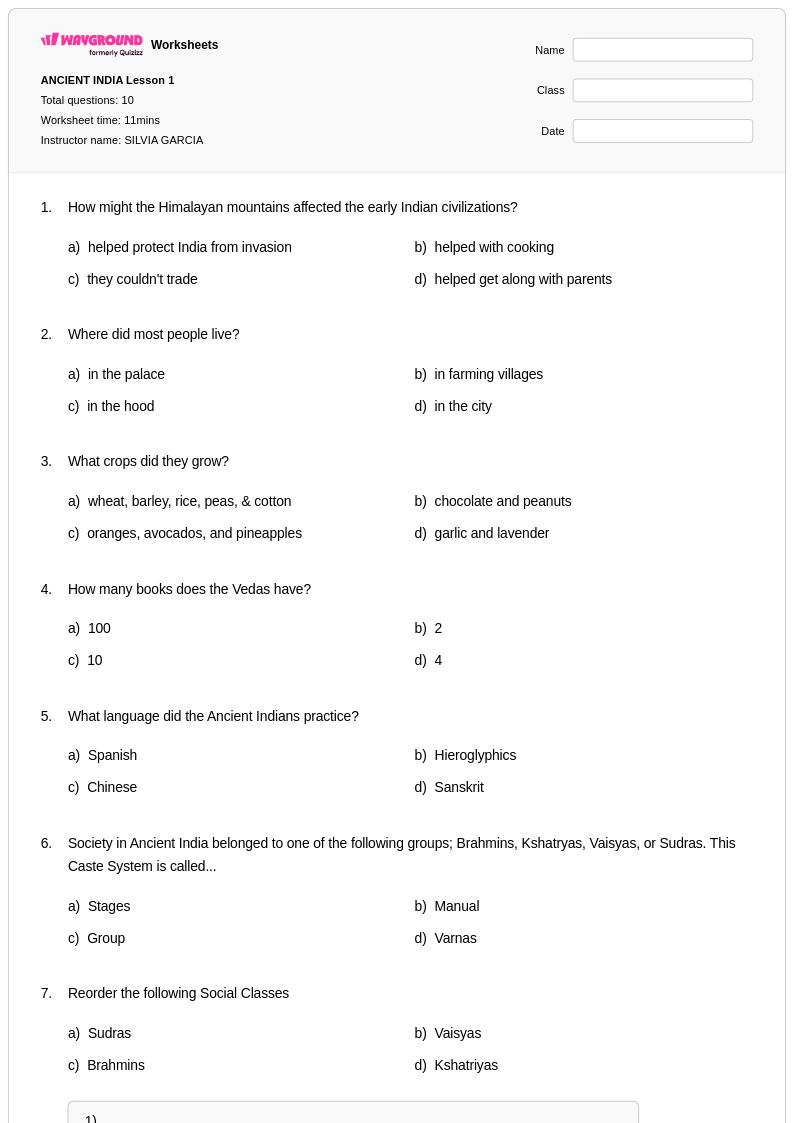
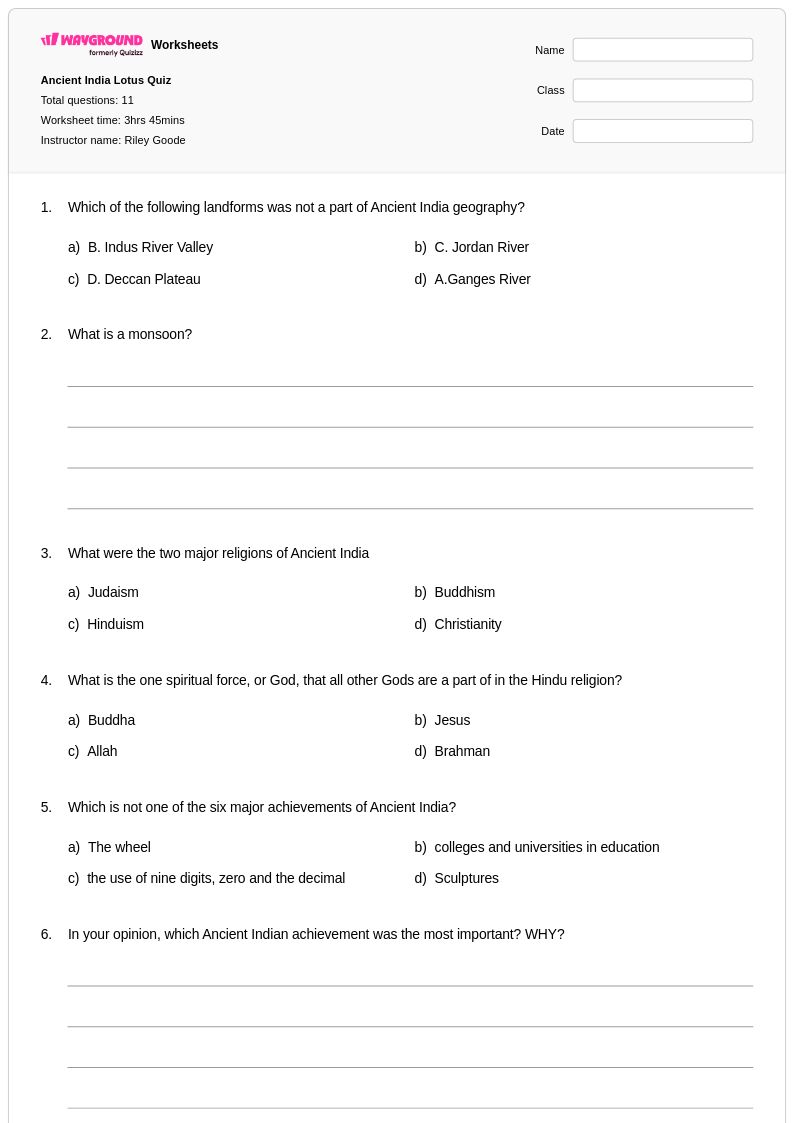
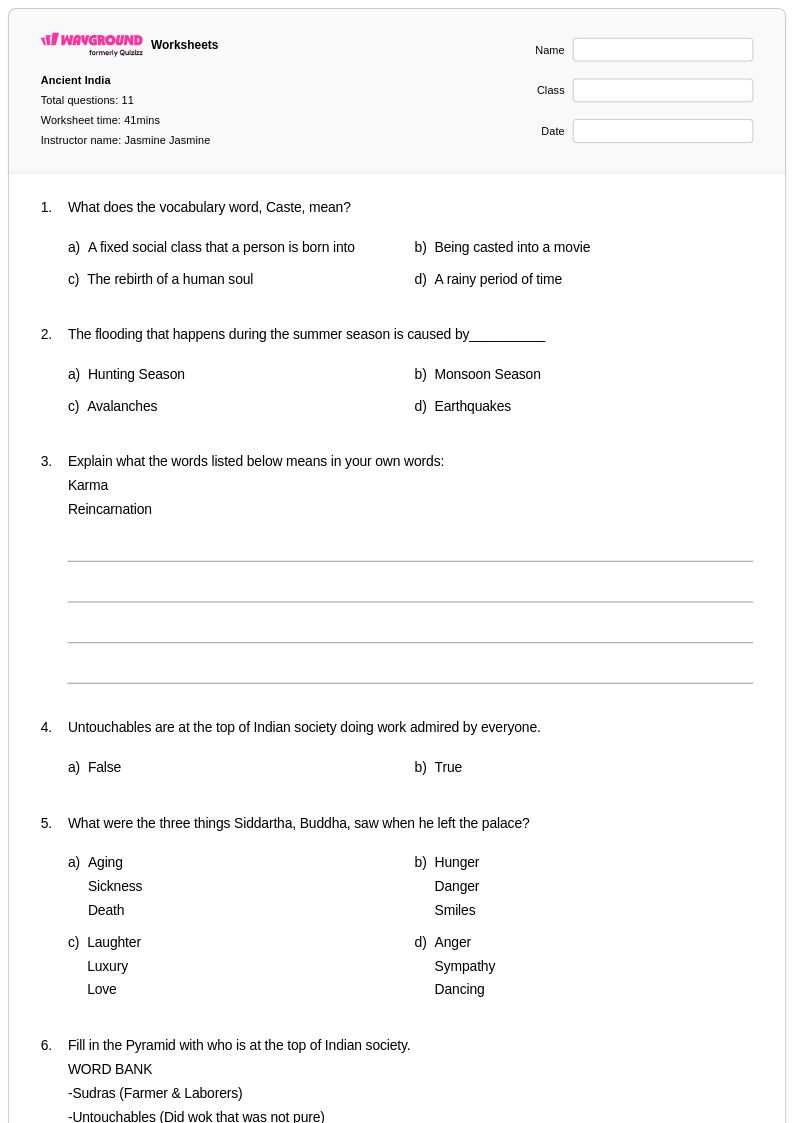
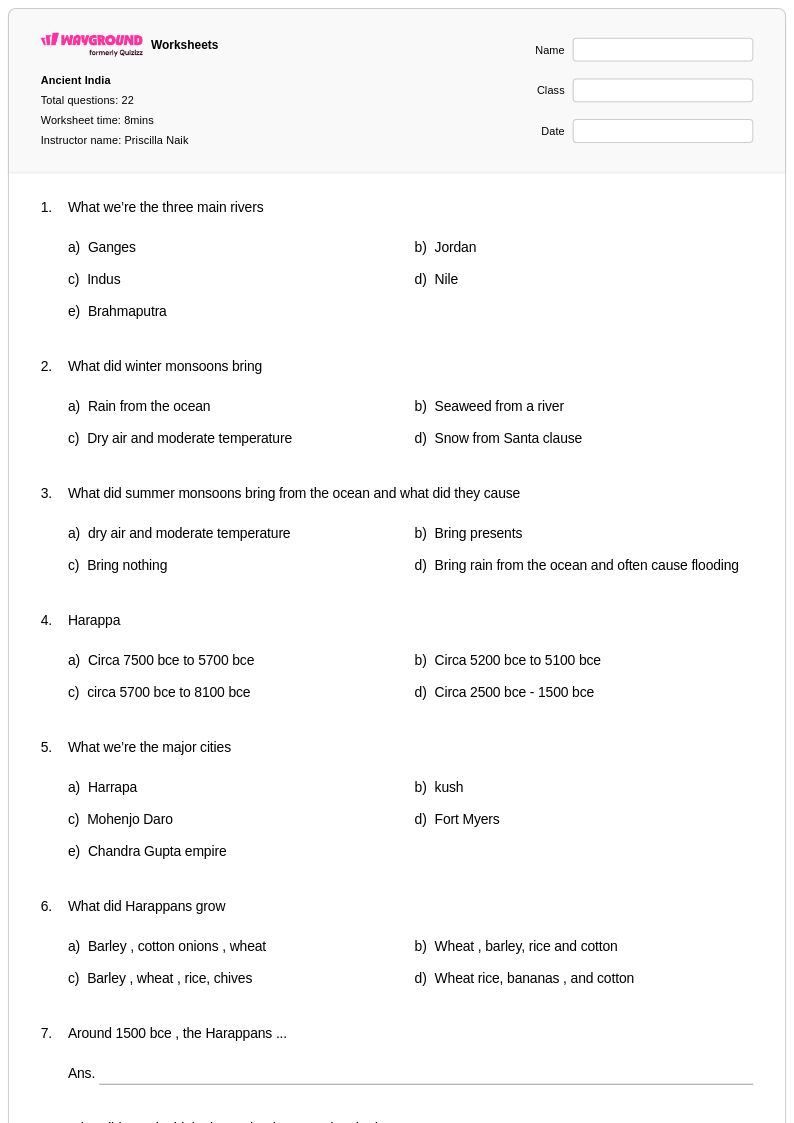
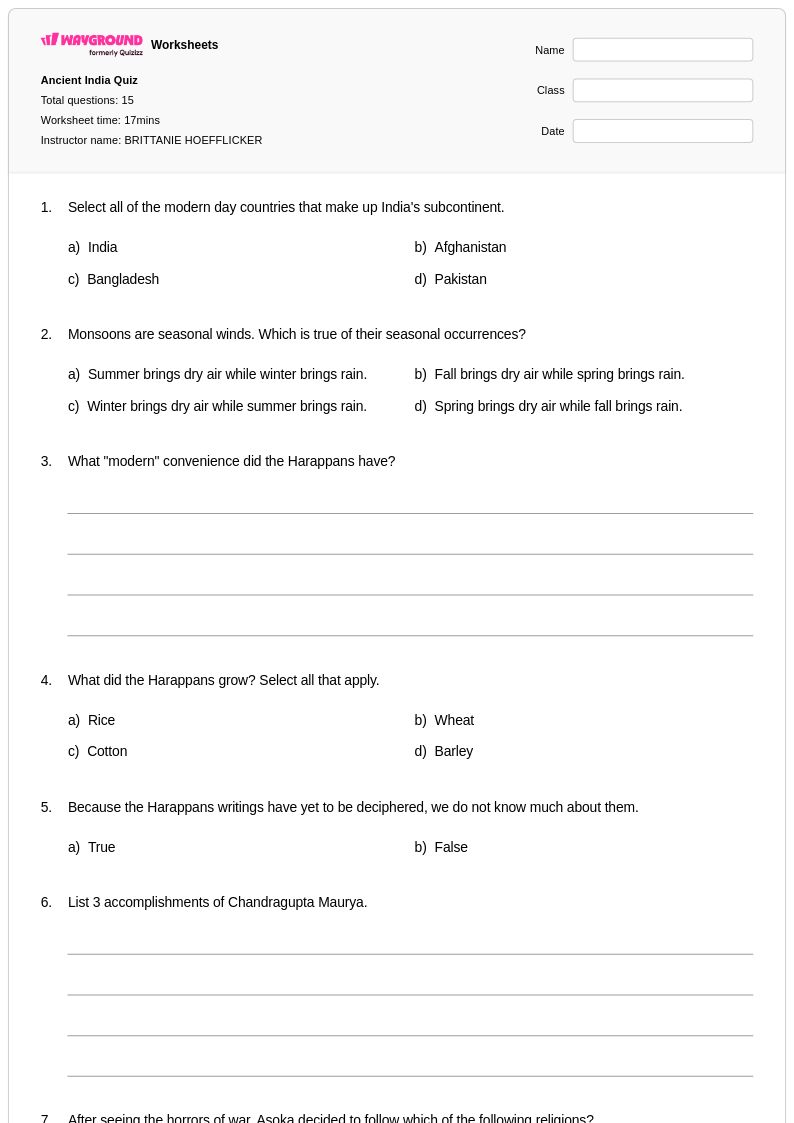
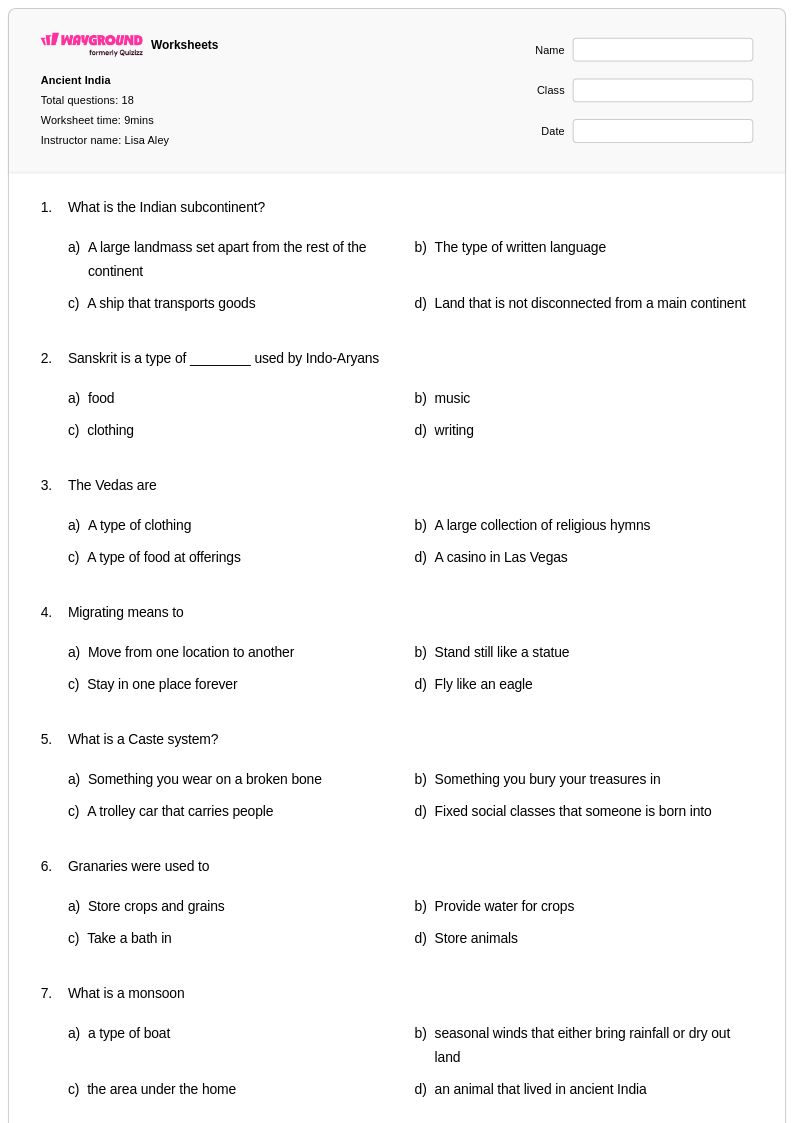
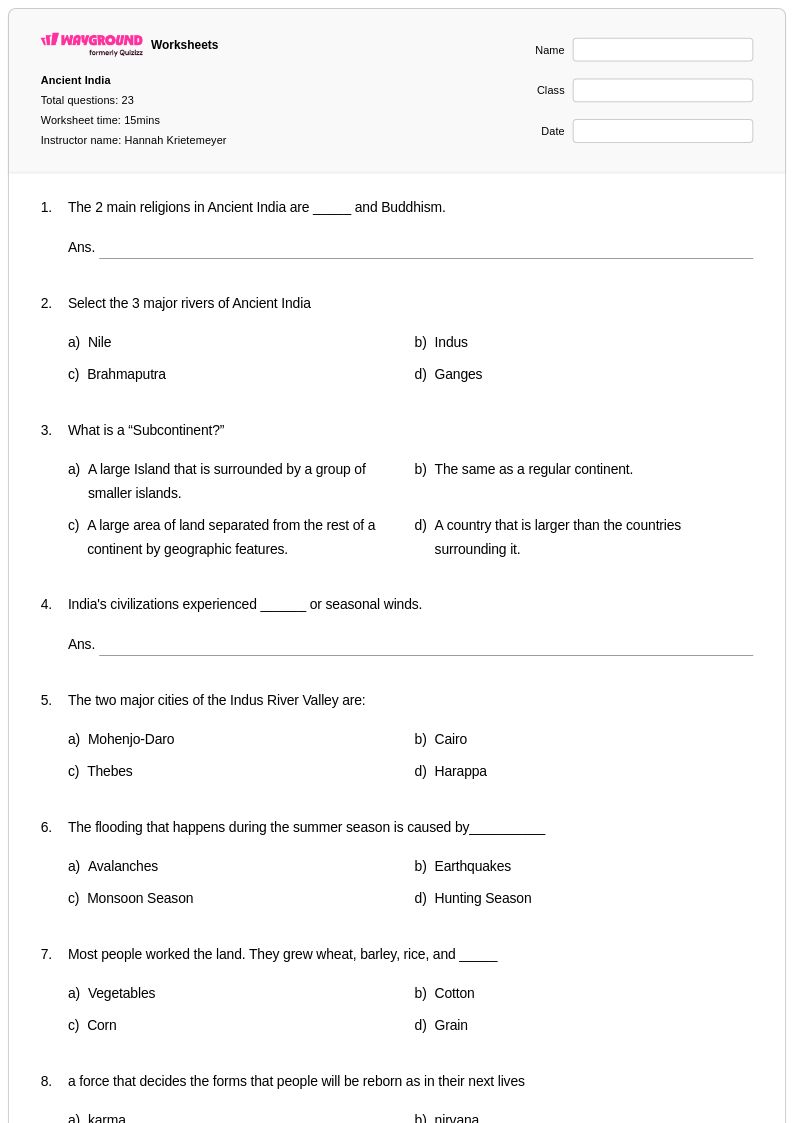
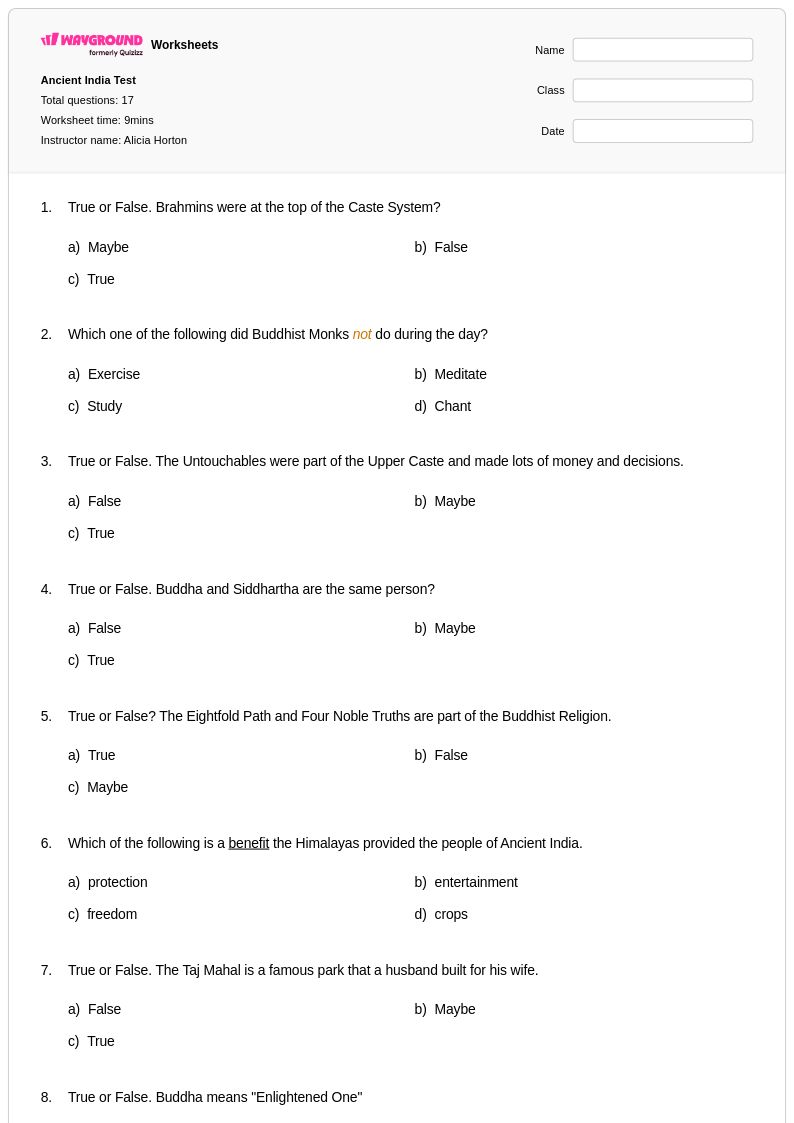
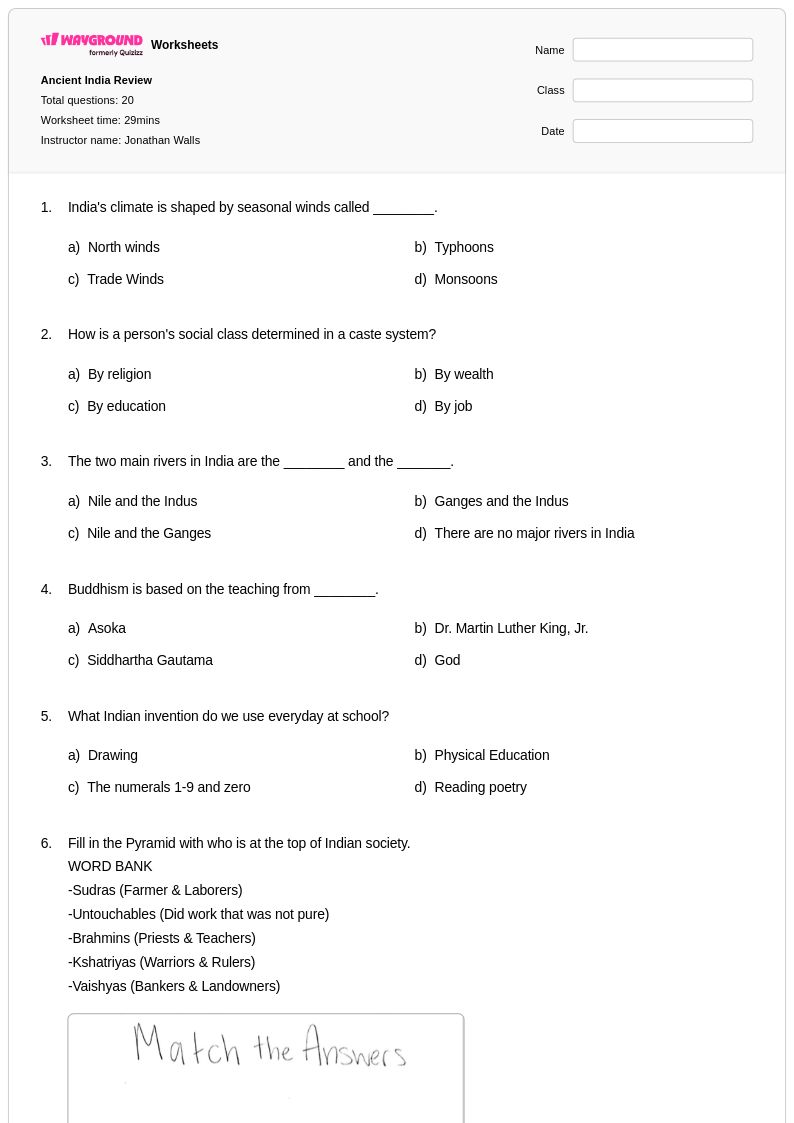
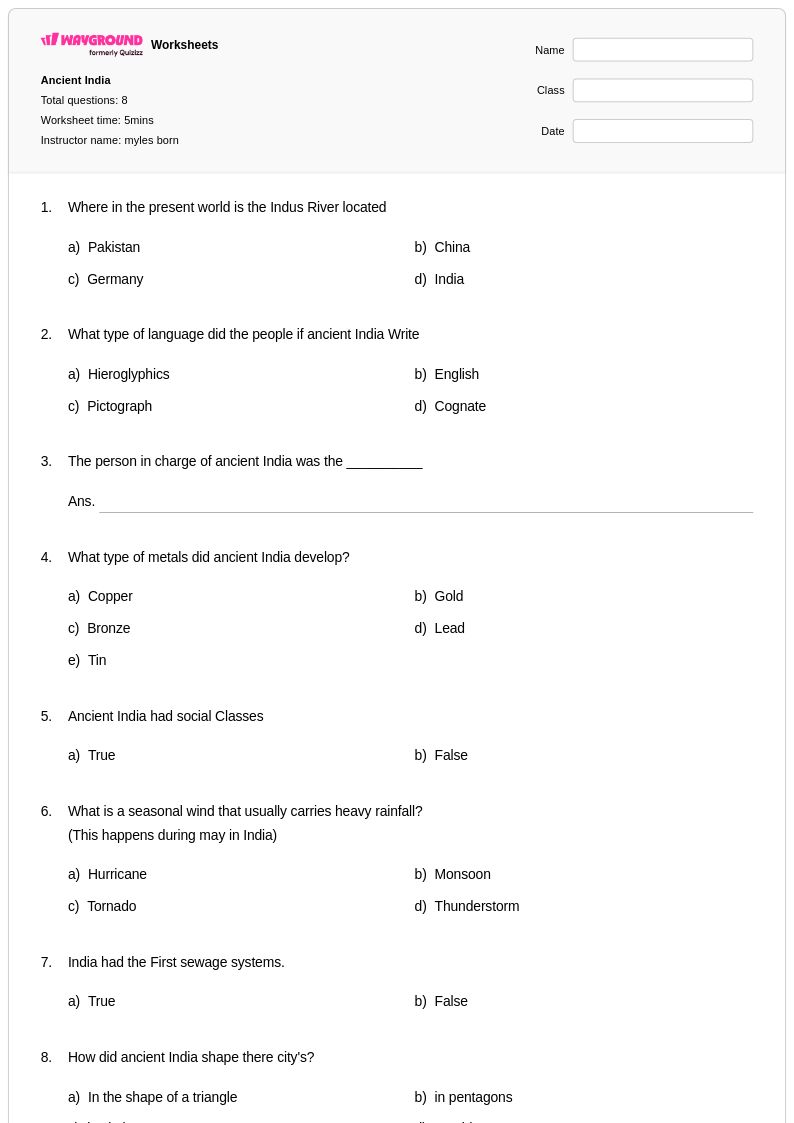
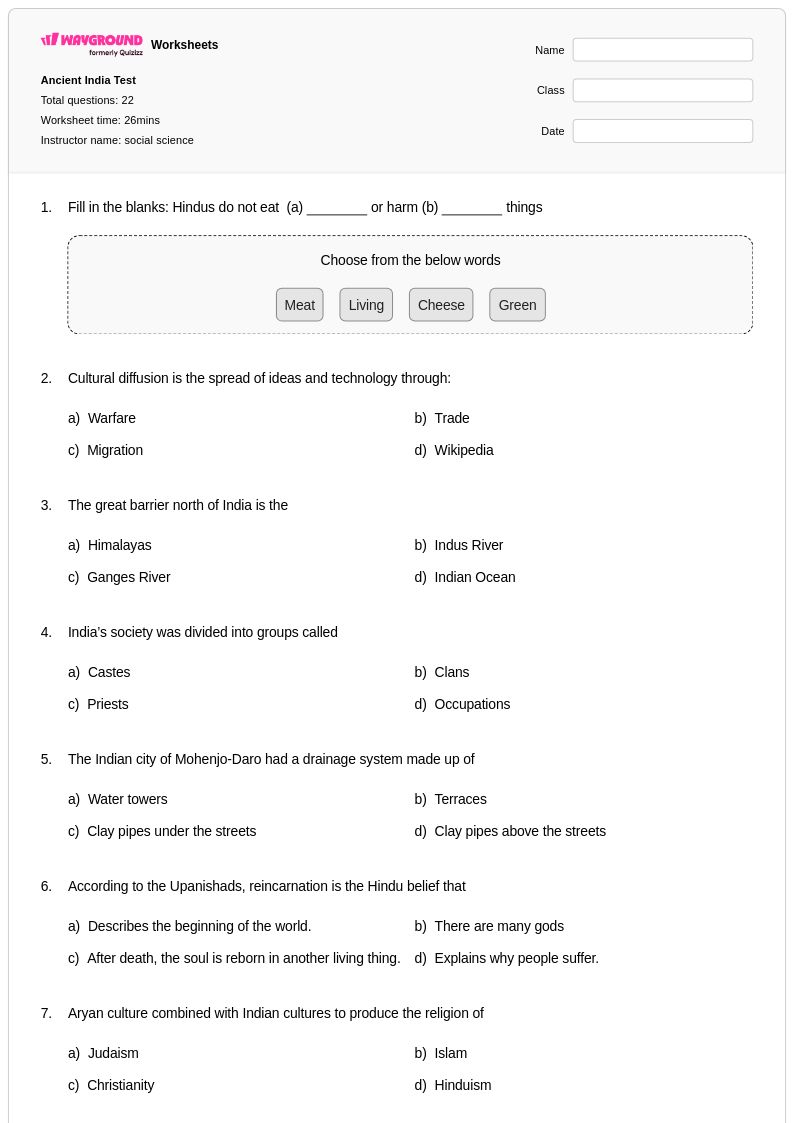
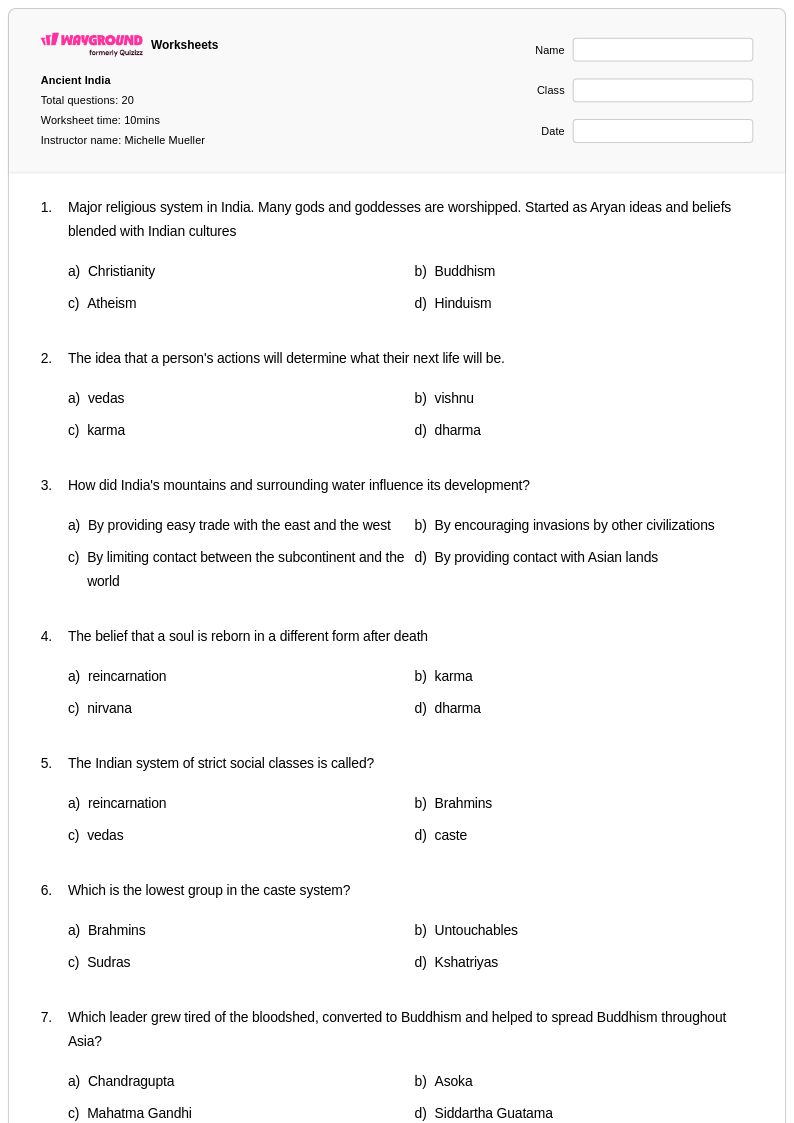
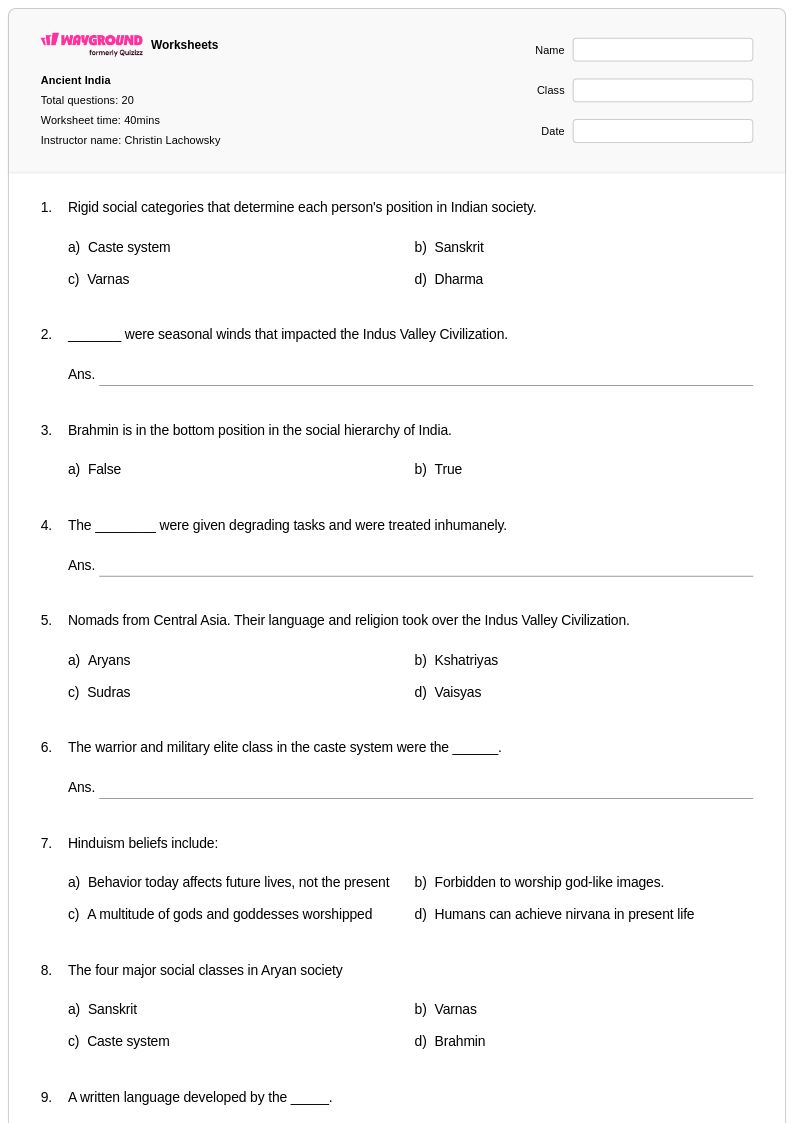
Ancient India worksheets for Grade 6 students available through Wayground (formerly Quizizz) provide comprehensive coverage of one of history's most influential civilizations, focusing on the Indus Valley civilization, Vedic period, and classical Indian empires. These educational resources strengthen critical thinking skills as students analyze archaeological evidence from Harappa and Mohenjo-daro, examine the development of Hinduism and Buddhism, and explore the achievements of the Mauryan and Gupta empires. Each worksheet includes detailed answer keys that support independent learning and self-assessment, while the free printable format ensures accessibility for diverse classroom environments. Students engage with practice problems that challenge them to connect geographic factors like the monsoon system to agricultural development, analyze primary sources from ancient Indian texts, and evaluate the lasting impact of Indian mathematical and scientific innovations on world civilization.
Wayground (formerly Quizizz) supports educators with an extensive collection of teacher-created Ancient India resources, drawing from millions of high-quality materials that have been developed and refined by classroom professionals. The platform's robust search and filtering capabilities allow teachers to quickly locate worksheets aligned with specific social studies standards, whether focusing on chronological thinking, historical analysis, or cultural understanding. Differentiation tools enable educators to customize content difficulty and modify assignments to meet diverse learning needs, while the availability of both printable pdf formats and digital versions provides flexibility for various instructional models. These comprehensive features streamline lesson planning by offering ready-to-use materials for skill practice, support targeted remediation for students struggling with complex historical concepts, and provide enrichment opportunities for advanced learners to explore deeper connections between ancient Indian achievements and contemporary global society.
FAQs
How do I teach Ancient India to middle or high school students?
Teaching Ancient India effectively means organizing instruction around its major historical periods: the Indus Valley and Harappan civilization, the Vedic period, and the Mauryan and Gupta empires. Anchoring lessons in geography first, using maps to show how the Indus and Ganges rivers shaped settlement and trade, gives students a concrete foundation before moving into political and cultural developments. From there, comparative analysis works well, asking students to evaluate how innovations in mathematics, philosophy, and urban planning connect across periods and to other ancient civilizations.
What are common misconceptions students have about Ancient India?
One of the most common errors is treating Ancient India as a single, continuous civilization rather than a sequence of distinct cultures and empires, each with different political structures and belief systems. Students also frequently confuse Hinduism and Buddhism as interchangeable rather than understanding their separate origins and philosophical distinctions. Another persistent misconception is underestimating the Indus Valley civilization's sophistication, as Harappan urban planning, standardized weights, and sanitation systems are often overlooked in comparison to Egypt or Mesopotamia.
What worksheet activities help students practice their knowledge of Ancient India?
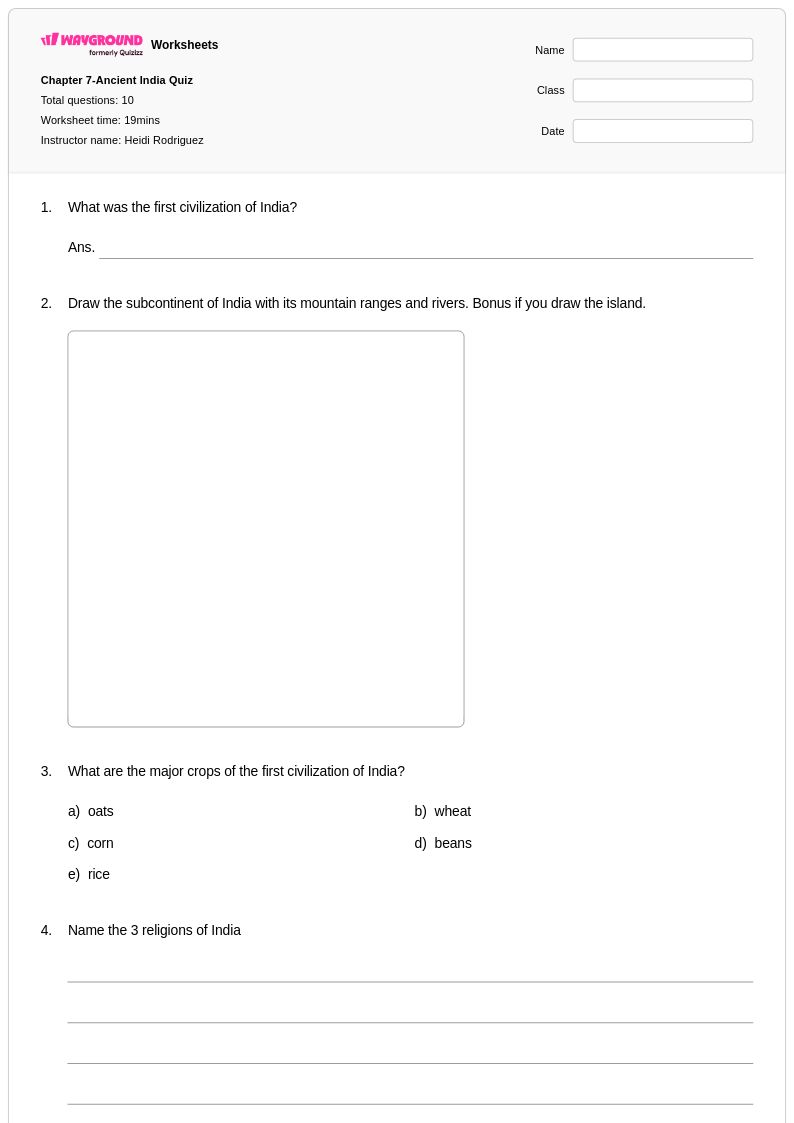
Effective practice activities for Ancient India include primary source analysis of ancient texts such as the Arthashastra or Buddhist sutras, map exercises tracing trade routes and the spread of religions, and comparison charts connecting Harappan, Mauryan, and Gupta achievements. Structured practice problems covering specific topics, from the caste system to Ashoka's edicts, help reinforce content knowledge while building analytical skills. These activity types mirror the kinds of exercises found in well-designed Ancient India worksheets.
How can I use Ancient India worksheets to support students with different learning needs?
Ancient India worksheets can be differentiated by adjusting text complexity, scaffolding primary source analysis with guiding questions, or reducing the number of answer choices on assessment items for students who need additional support. On Wayground, teachers can apply individual accommodations such as extended time, read-aloud functionality, and reduced answer choices to specific students without affecting the rest of the class. These settings are reusable across future sessions, making it practical to maintain consistent support for diverse learners throughout an Ancient India unit.
How do I use Ancient India worksheets from Wayground in my classroom?
Wayground's Ancient India worksheets are available as printable PDFs for traditional classroom use and in digital formats for technology-integrated instruction, including the option to host them as a quiz directly on Wayground. Teachers can filter resources by topic, covering specific dynasties, cultural developments, or historical periods, to find materials that fit their current lesson focus. All worksheets include complete answer keys, which streamlines grading and supports independent or self-paced student practice.
How does Ancient India connect to broader world history standards?
Ancient India is a core component of world history curricula because its contributions to mathematics, astronomy, philosophy, and religion had lasting global influence, including the development of the decimal number system and the origins of Buddhism, which spread across Asia. Comparing Ancient India to contemporaneous civilizations such as Ancient China, Greece, or Mesopotamia helps students meet standards related to cross-cultural exchange and the development of classical civilizations. Map work examining Silk Road trade connections also ties Ancient India directly to standards on early globalization and cultural diffusion.