Free Printable Anger Management Worksheets for Grade 3
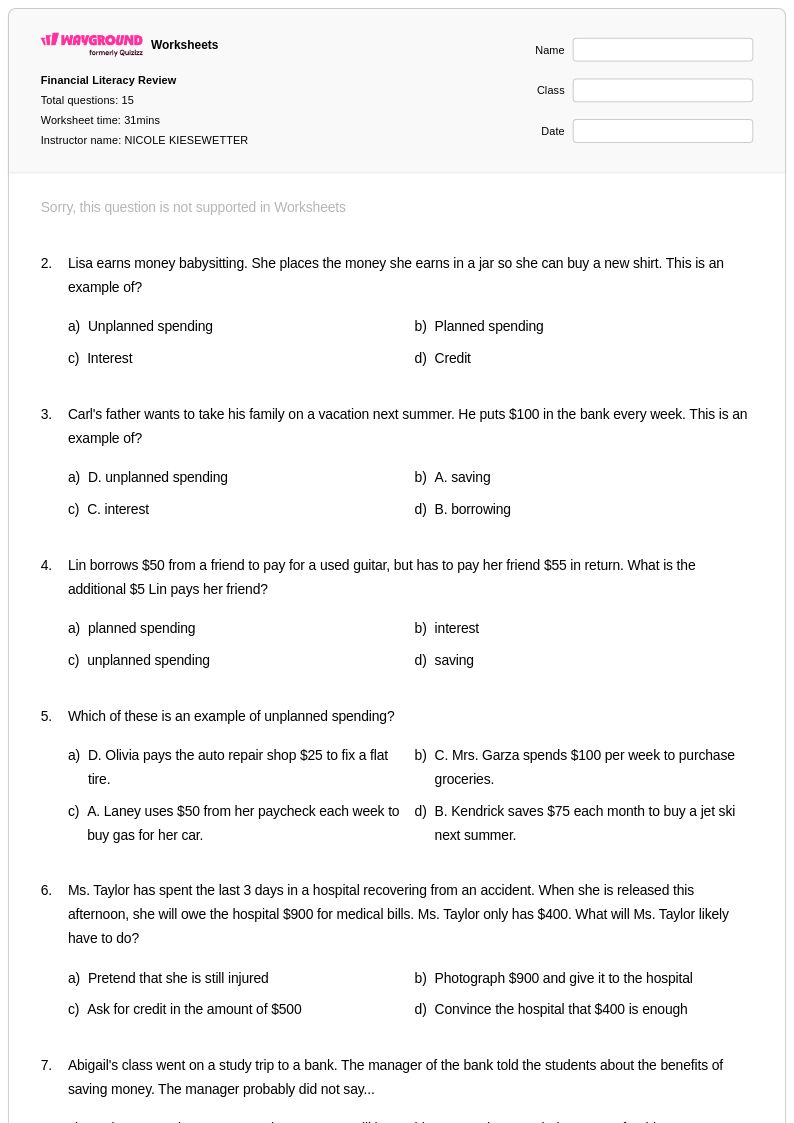
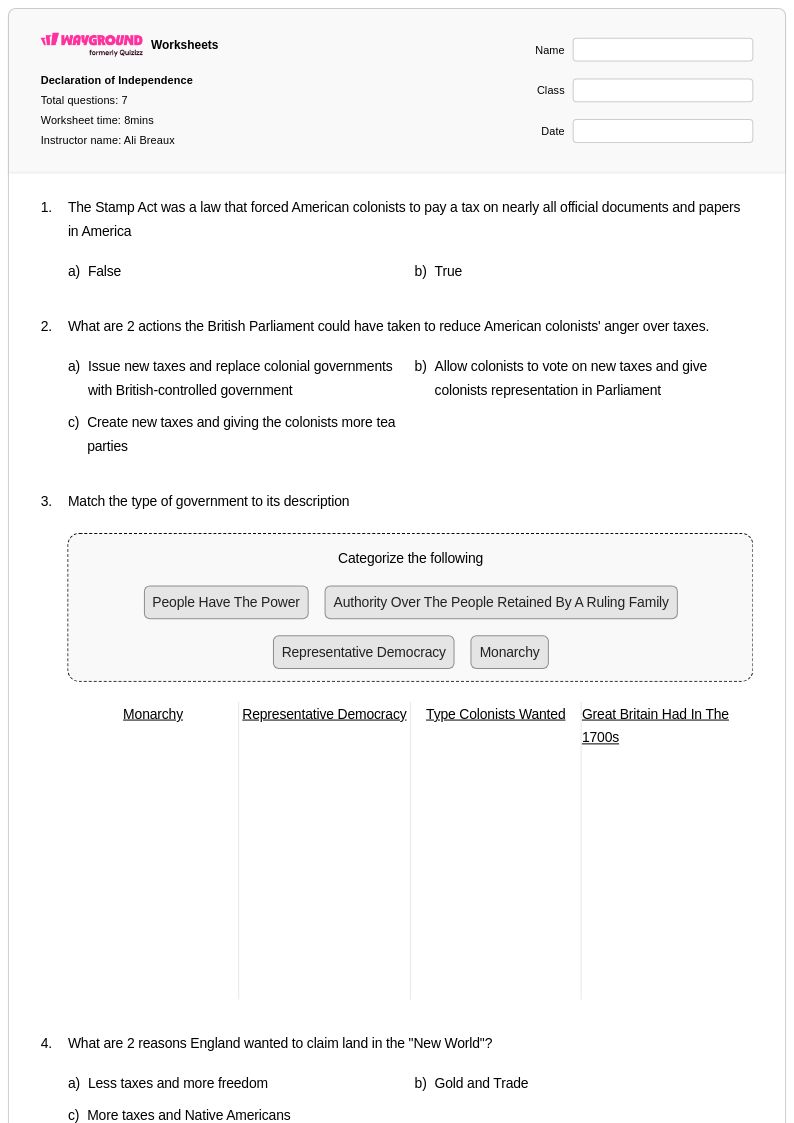
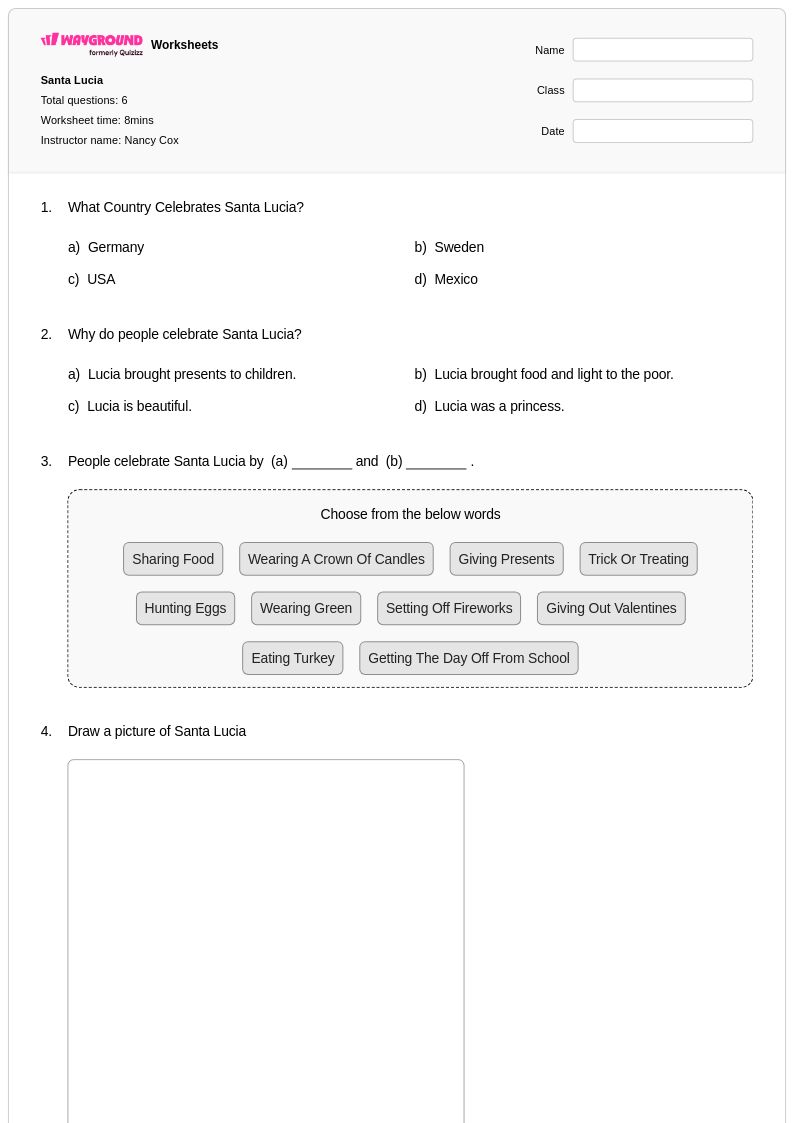
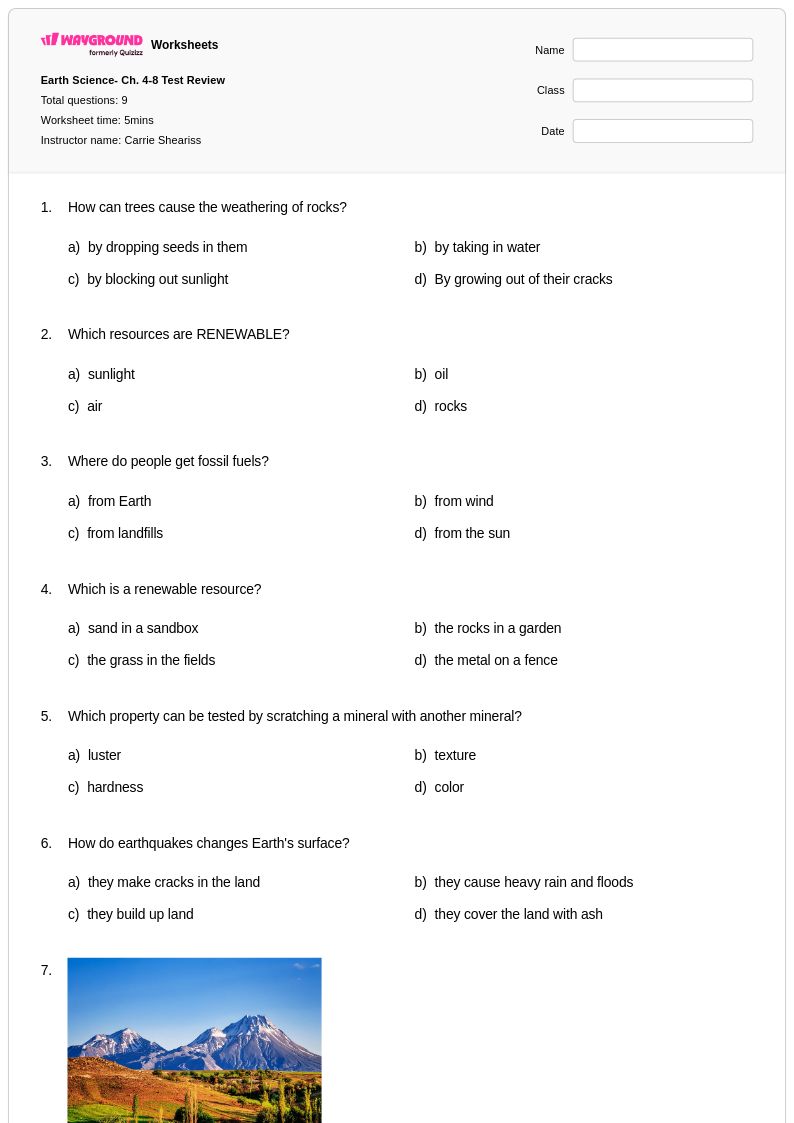
Explore Grade 3 anger management worksheets and printables that help students develop essential social skills through engaging practice problems, featuring free PDF downloads with answer keys for effective emotional regulation learning.
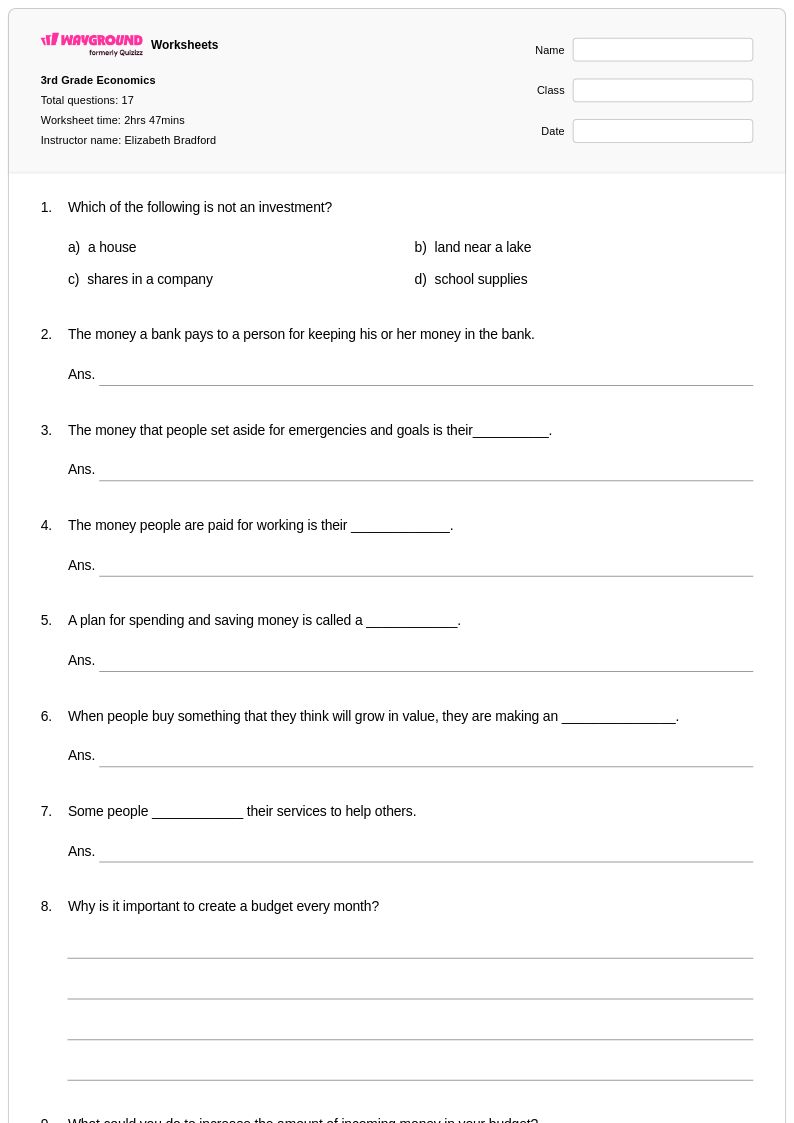
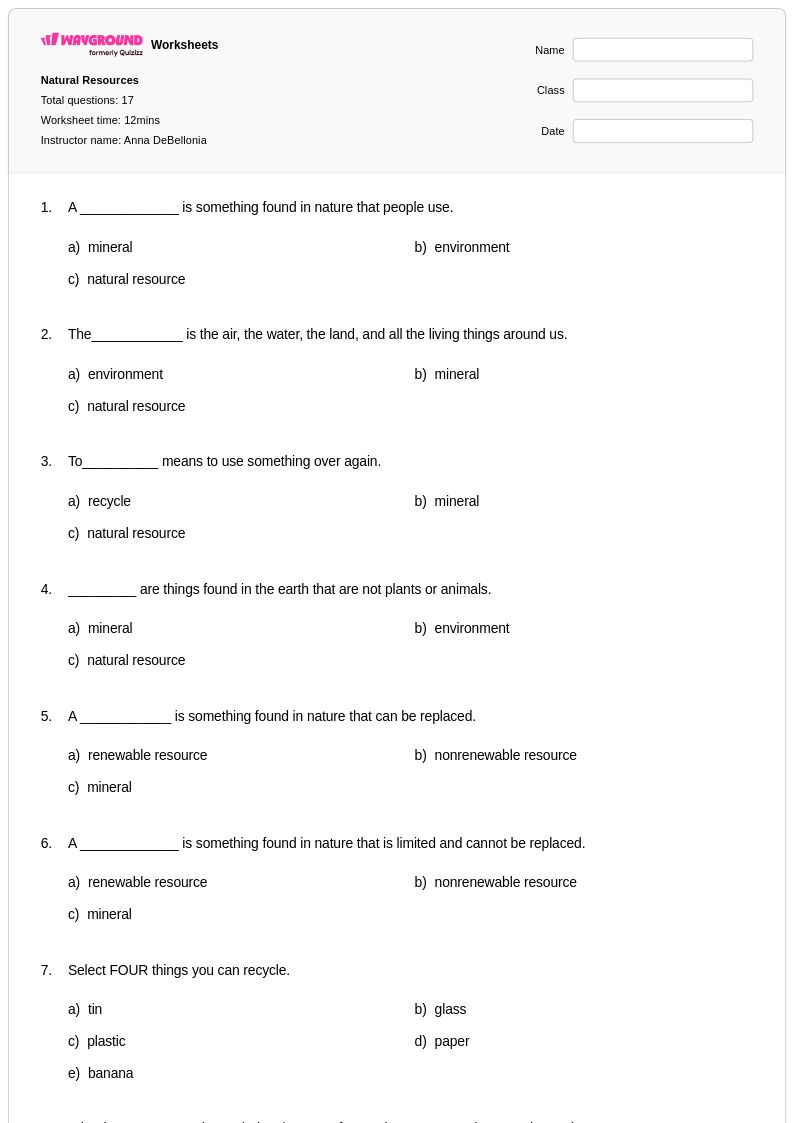
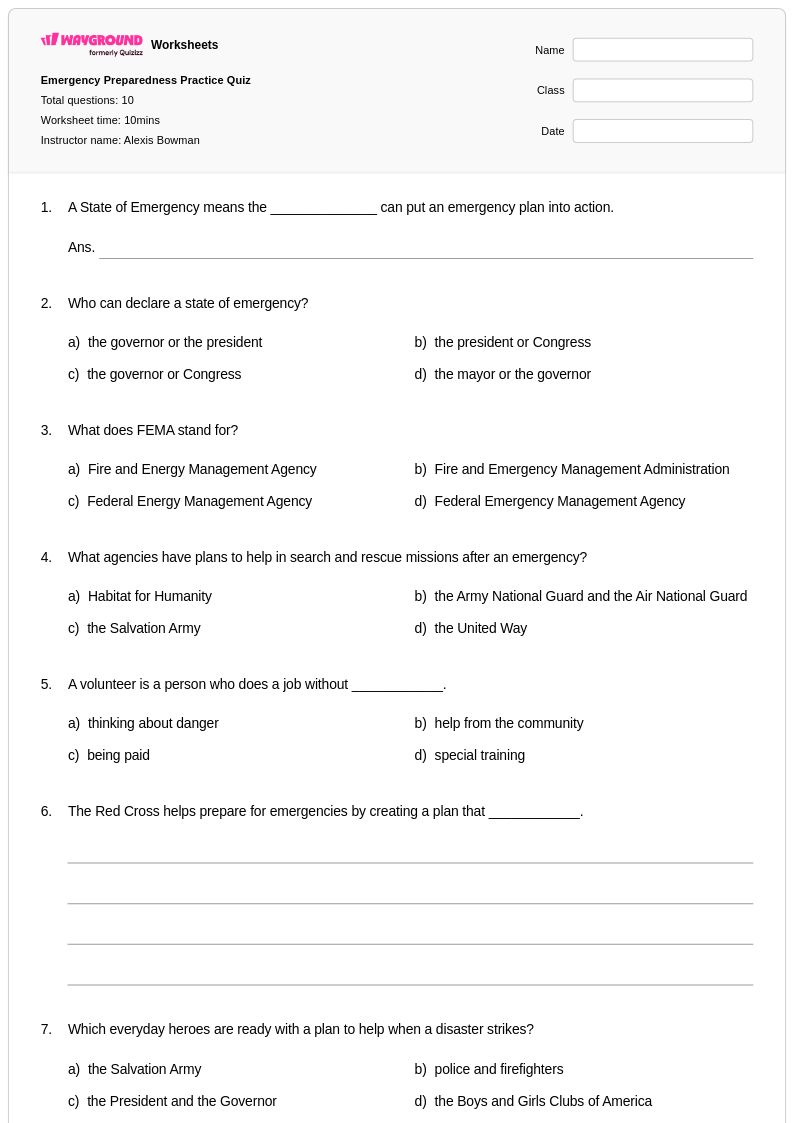
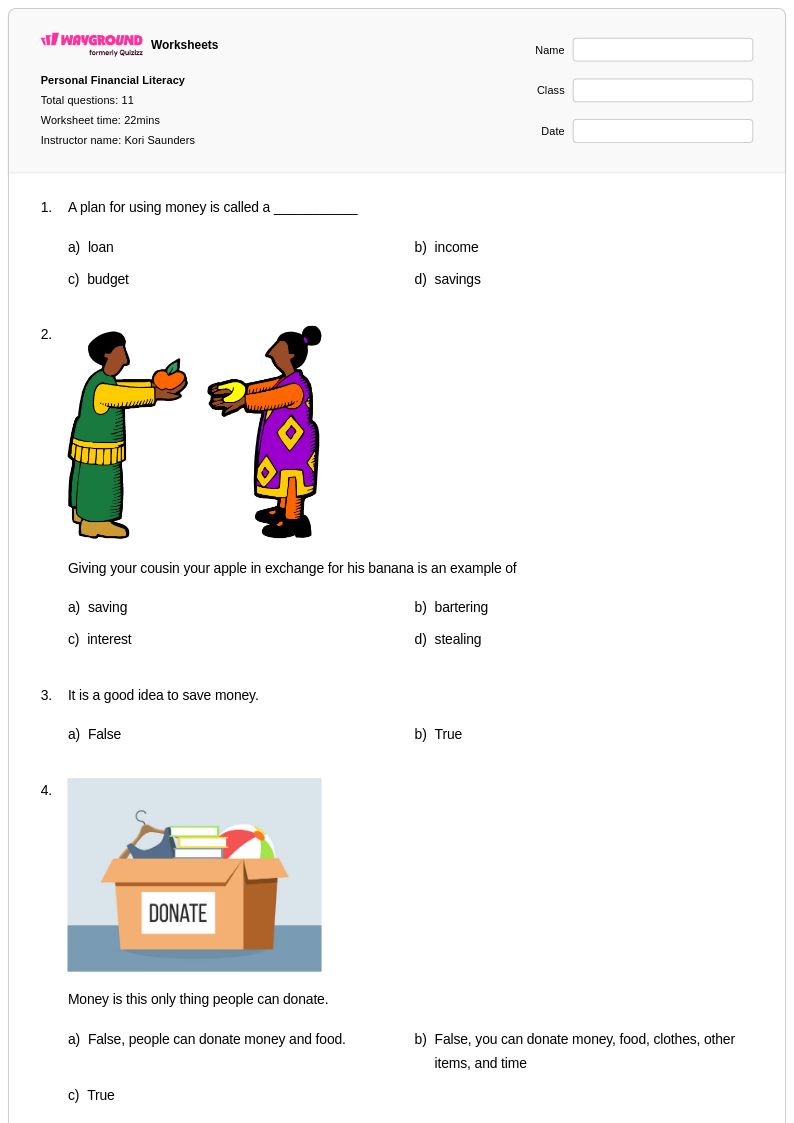
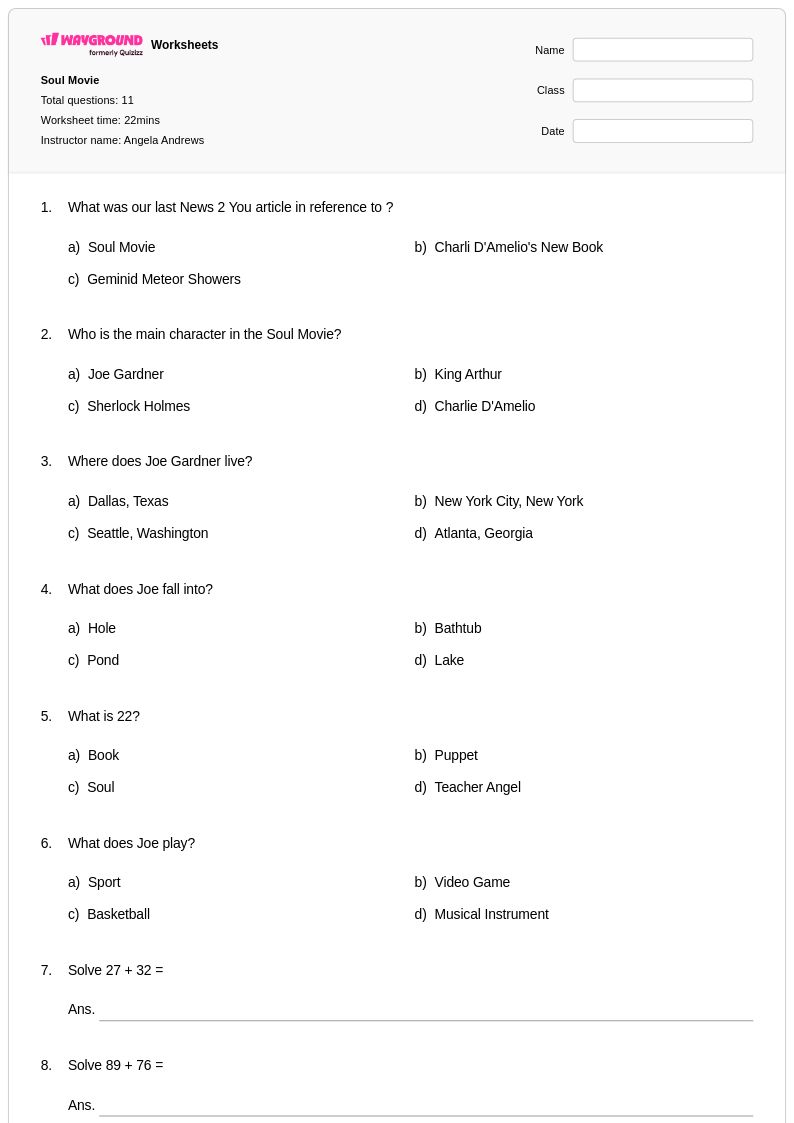
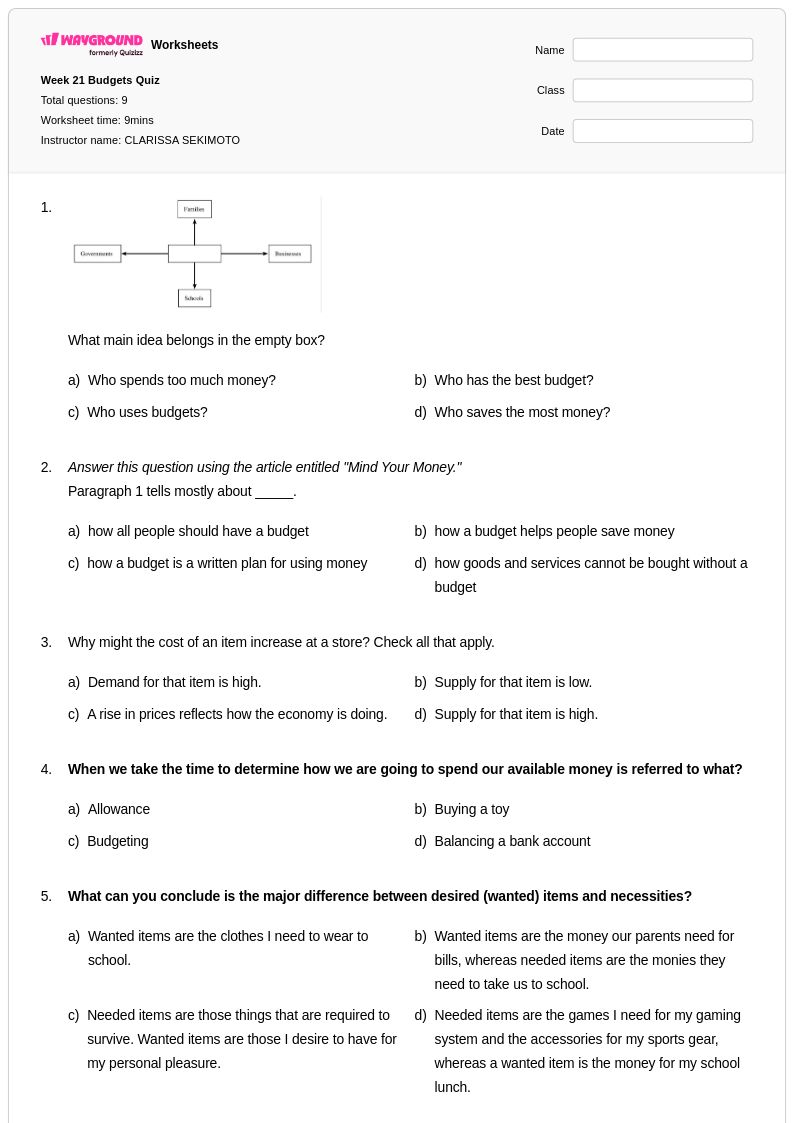
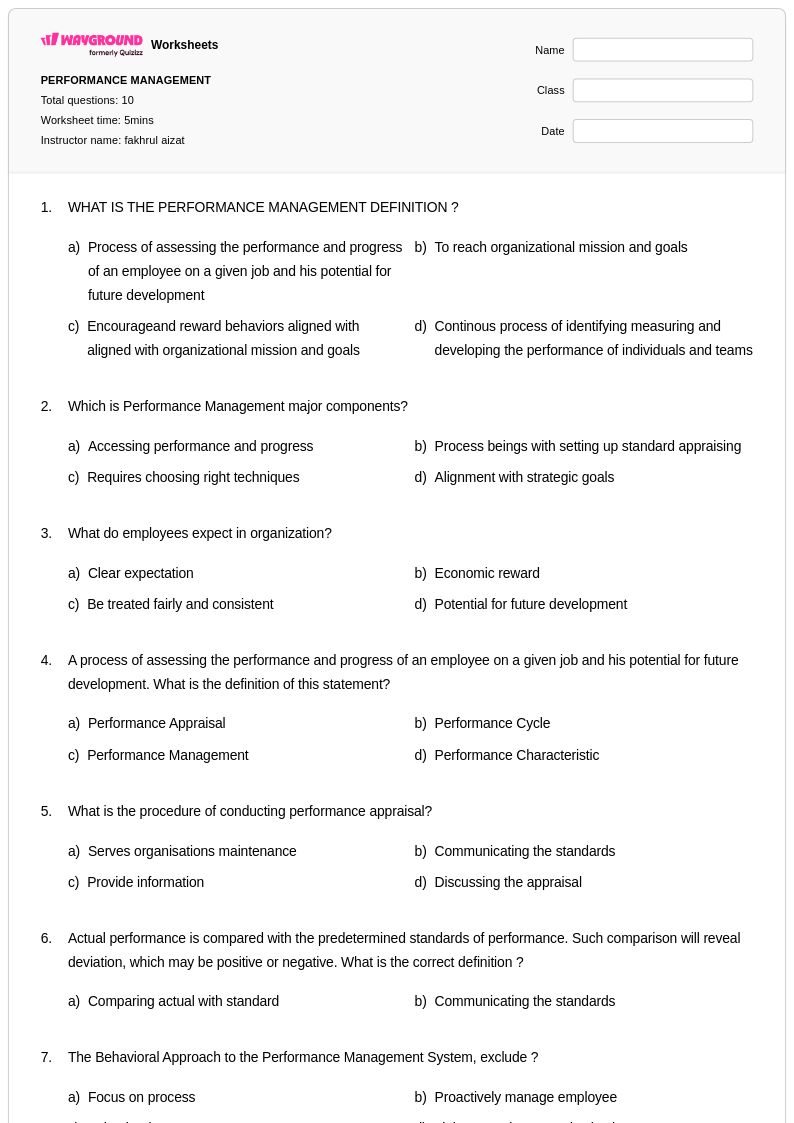
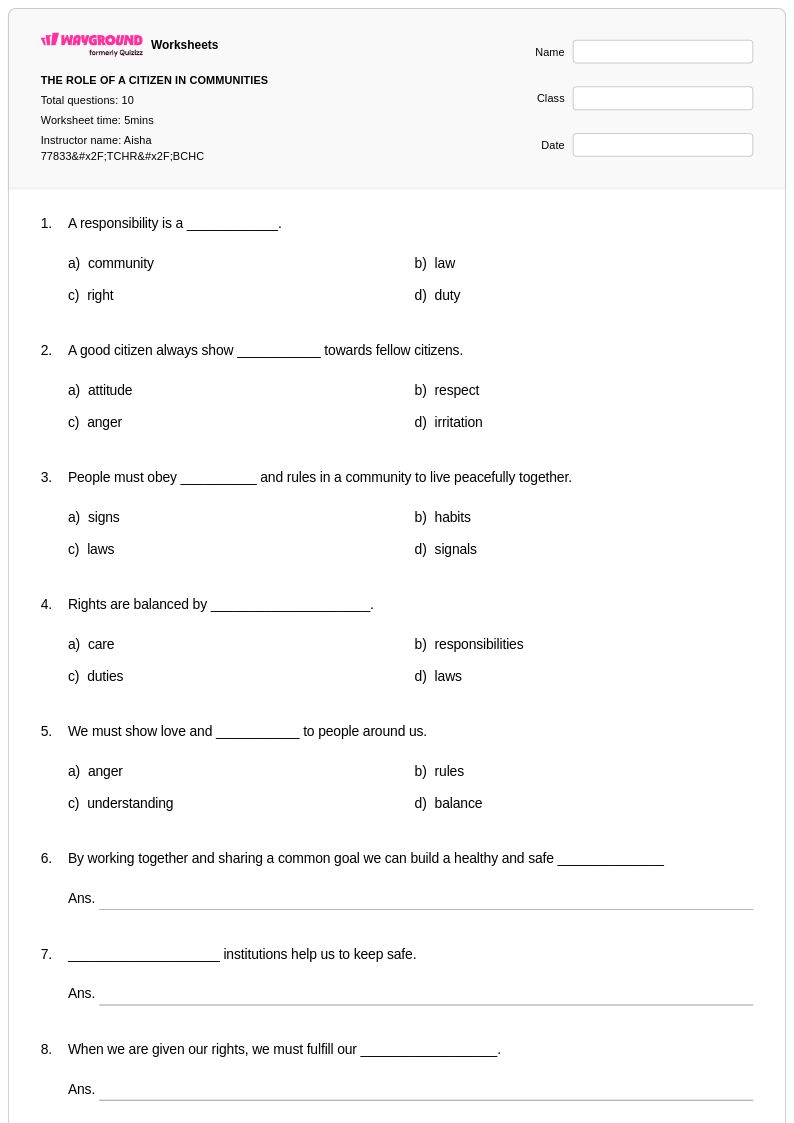
Explore printable Anger Management worksheets for Grade 3
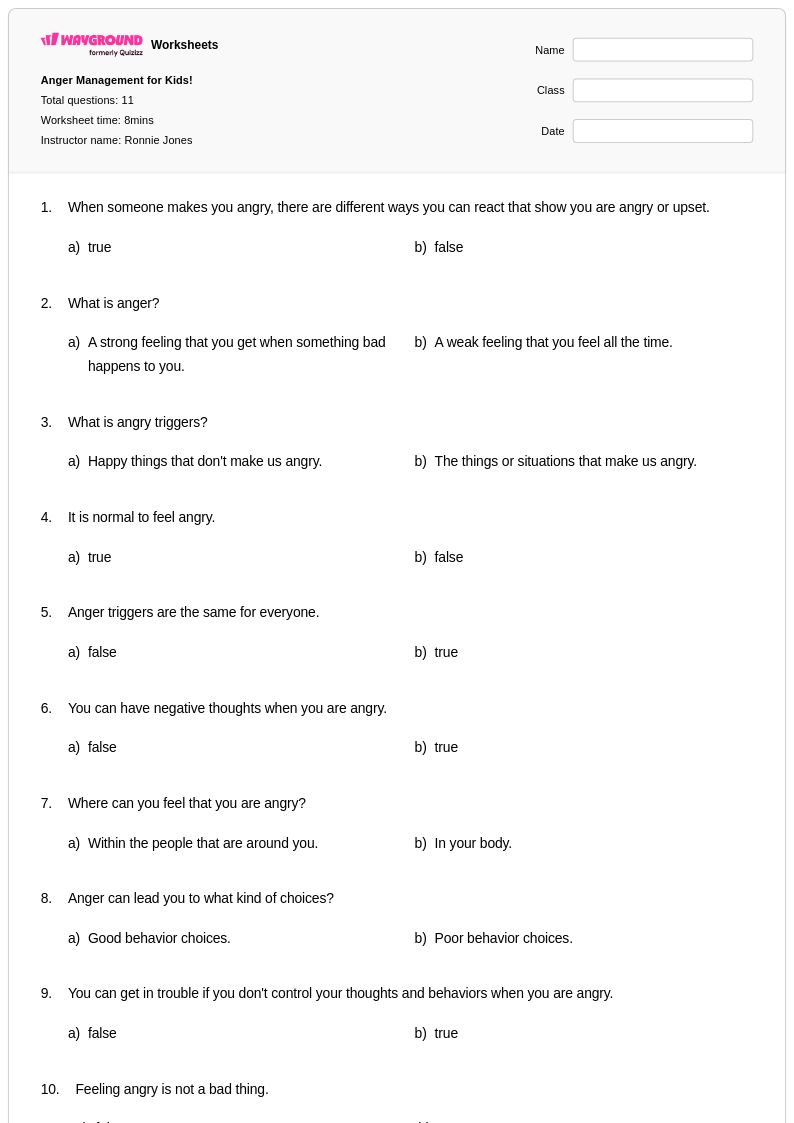
Anger management worksheets for Grade 3 students available through Wayground (formerly Quizizz) provide essential tools for developing emotional regulation and self-control skills that are fundamental to social-emotional learning. These carefully designed printables focus on helping third-grade students identify anger triggers, understand physical and emotional responses to frustration, and practice healthy coping strategies through age-appropriate scenarios and interactive exercises. Each worksheet collection includes comprehensive answer keys that enable teachers to facilitate meaningful discussions about emotions while providing immediate feedback on practice problems. The free pdf resources cover critical concepts such as recognizing warning signs of anger, implementing calming techniques like deep breathing and counting, and developing problem-solving skills that promote positive peer interactions and classroom behavior.
Wayground's extensive library supports educators with millions of teacher-created anger management resources specifically aligned to Grade 3 developmental needs and social studies standards. The platform's advanced search and filtering capabilities allow teachers to quickly locate worksheets that match their students' specific skill levels and learning objectives, while differentiation tools enable seamless customization for diverse classroom needs. These comprehensive collections are available in both printable and digital pdf formats, making them ideal for traditional classroom instruction, remote learning environments, and hybrid educational settings. Teachers can efficiently plan targeted lessons for skill practice, identify students requiring additional support through remediation activities, and provide enrichment opportunities for advanced learners, all while maintaining consistent focus on building essential anger management competencies that contribute to positive school climate and student success.
FAQs
How do I teach anger management skills to students in the classroom?
Effective anger management instruction begins with helping students identify their personal triggers and recognize the physical signs of anger before it escalates. Teachers should model coping strategies explicitly, such as deep breathing, counting, or using 'I' statements, and then give students structured opportunities to practice these skills through role-play and reflective writing. Embedding anger management instruction within social-emotional learning routines, rather than addressing it only after incidents occur, produces more lasting skill development.
What kinds of exercises help students practice anger management strategies?
Practical exercises include trigger identification activities, where students map situations that provoke frustration, and scenario-based worksheets that walk through de-escalation steps for realistic social conflicts. Reflective journaling prompts help students connect physiological responses, such as a racing heart or clenched fists, to emotional states, building self-awareness over time. Structured practice with coping menus, where students select and rehearse specific strategies, reinforces transfer to real situations.
What are the most common mistakes students make when learning anger management?
A frequent misconception is that anger itself is the problem rather than the behavior it can trigger; students often benefit from reframing anger as a normal emotion that requires a skillful response. Many students also struggle to apply strategies they can name in calm moments when they are actually dysregulated, which is why low-stakes practice through written scenarios is important before real-life application. Skipping the physiological awareness step, recognizing bodily warning signs early, is another common gap that leaves students without enough lead time to use their coping tools.
How can I differentiate anger management worksheets for students with varying needs?
For students who need additional support, simplifying scenario complexity and reducing the number of response choices helps lower cognitive load so they can focus on the skill itself. On Wayground, teachers can enable built-in accommodations such as Read Aloud, which reads questions and content aloud for students who need it, and Reduced Answer Choices, which limits the number of options displayed for specific students without affecting the rest of the class. Extended time settings can also be applied per student, ensuring that pace-sensitive work does not become a barrier to demonstrating emotional reasoning skills.
How do I use Wayground's anger management worksheets in my classroom?
Wayground's anger management worksheets are available as printable PDFs for traditional classroom use and in digital formats for technology-integrated environments, including the option to host them as a live quiz on the platform. Teachers can assign worksheets for independent practice, guided small-group work, or at-home reinforcement, with included answer keys supporting efficient review. The digital format allows real-time monitoring of student responses, which can help teachers identify students who may need additional support with specific coping strategies.
How do anger management worksheets connect to social-emotional learning standards?
Anger management worksheets directly address core SEL competencies including self-awareness, self-management, and responsible decision-making, all of which appear in frameworks such as CASEL. Activities that focus on identifying triggers and practicing impulse control map to self-management benchmarks, while conflict resolution scenarios build relationship skills and social awareness. Using structured worksheets ensures that SEL instruction is explicit and documented rather than incidental, which supports both lesson planning and progress monitoring.