
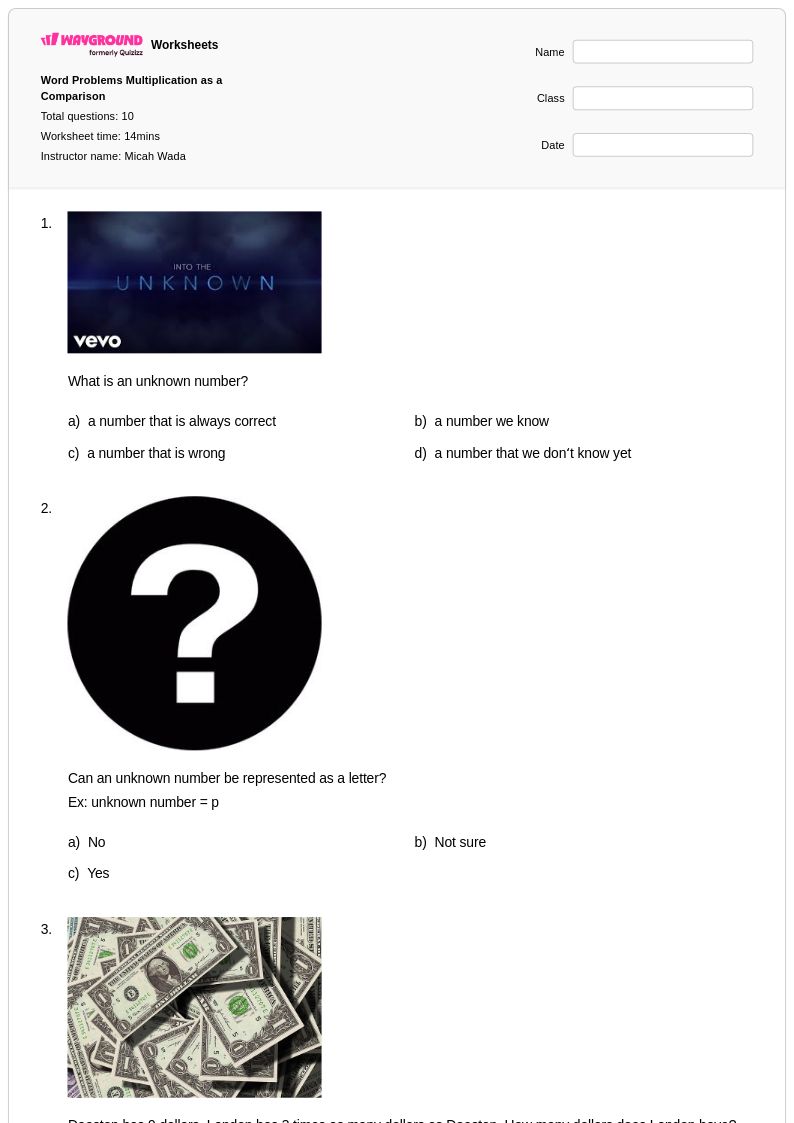
10 Q
4th
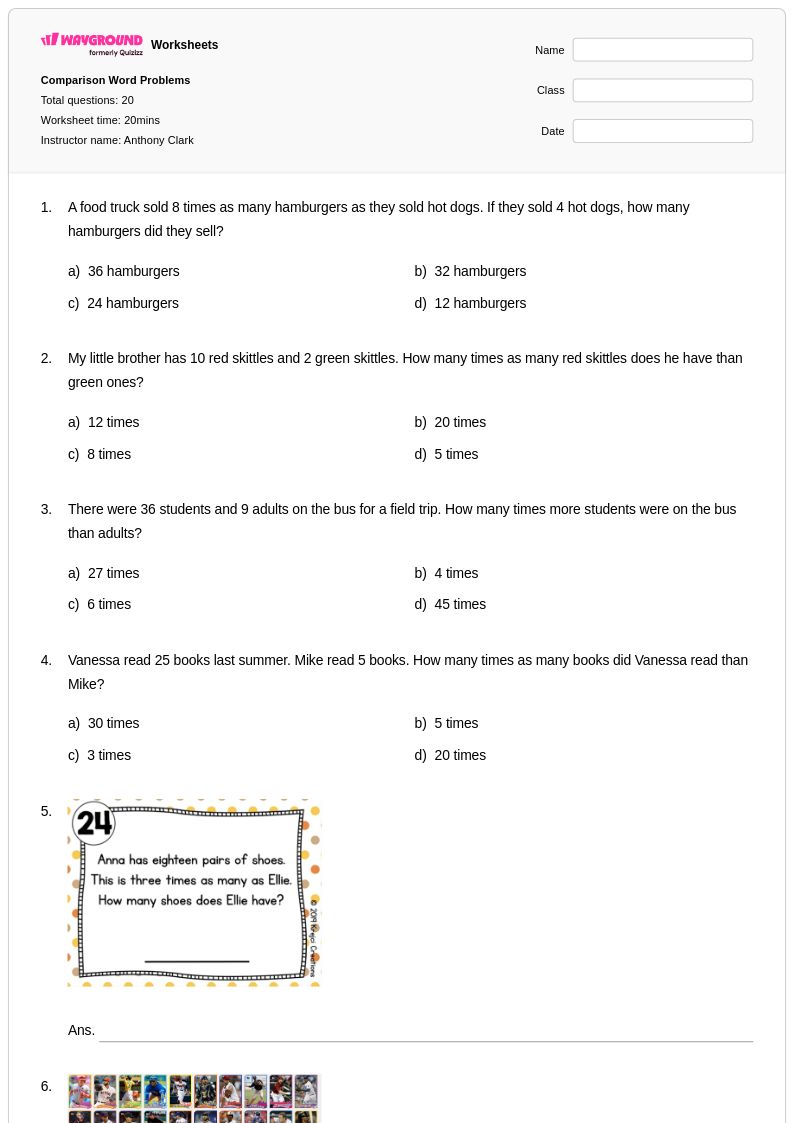
20 Q
4th - Uni
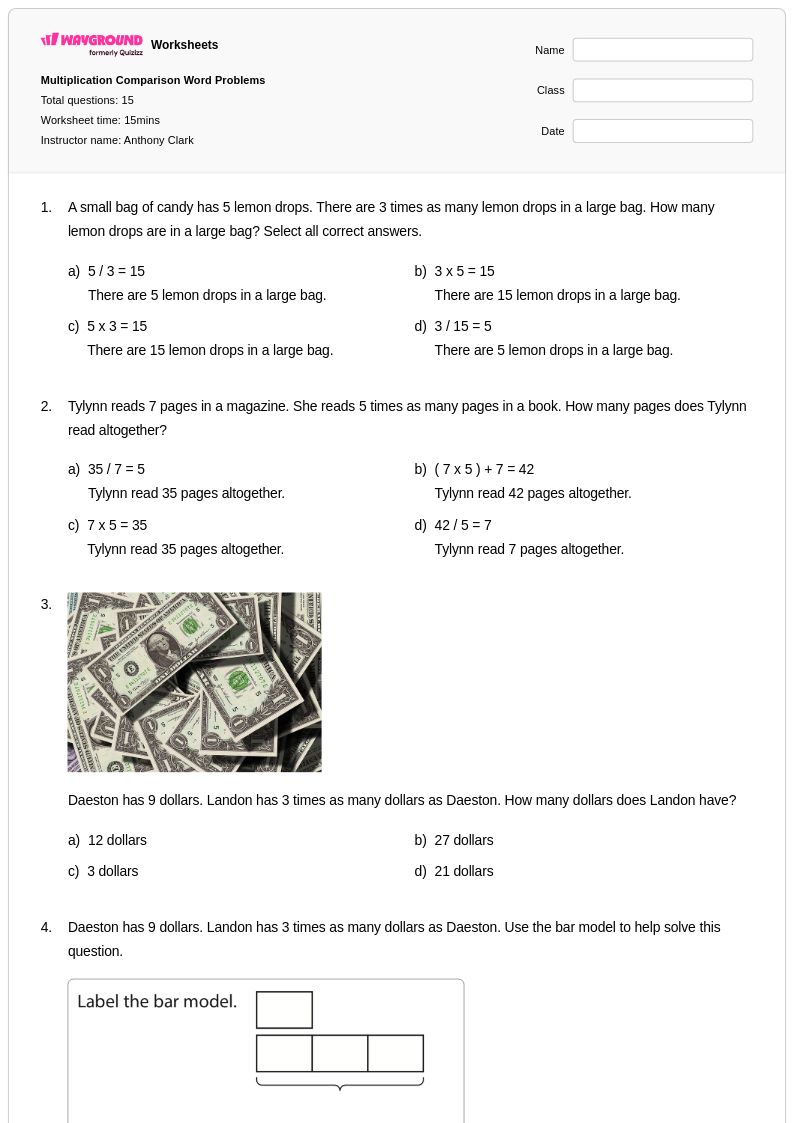
15 Q
4th - Uni
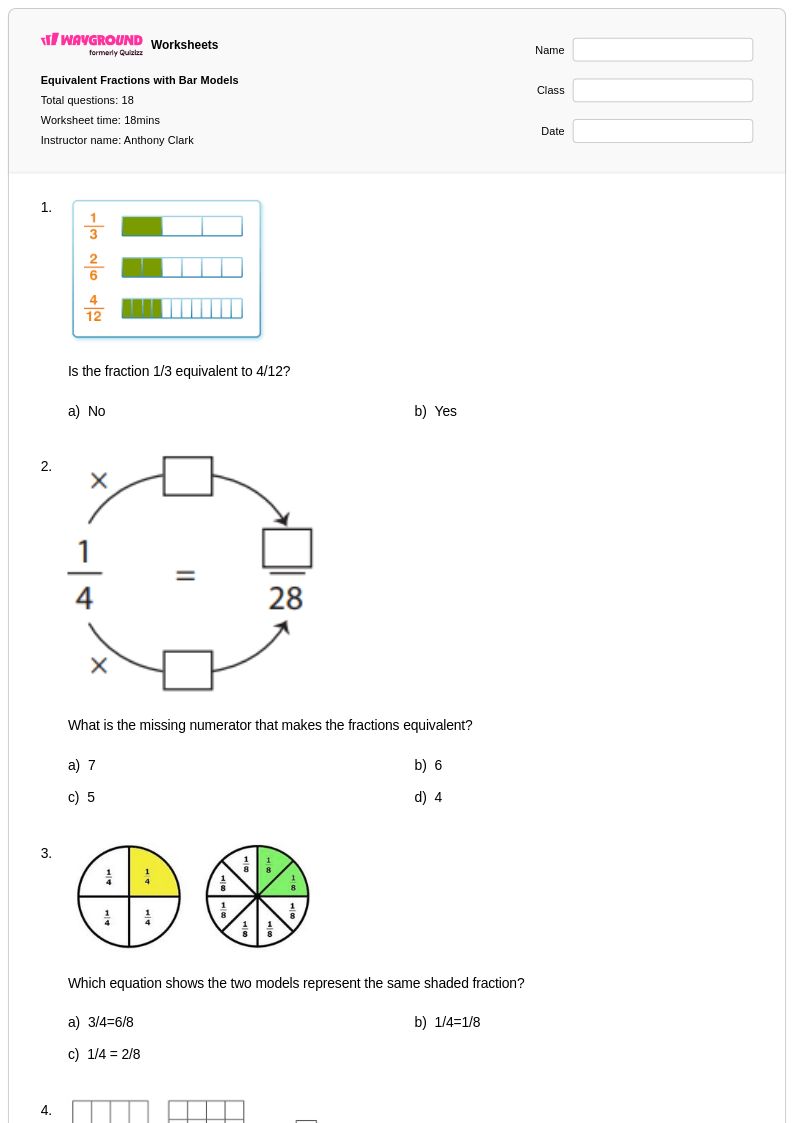
18 Q
4th - Uni
20 Q
4th
15 Q
3rd - Uni
9 Q
4th
20 Q
4th
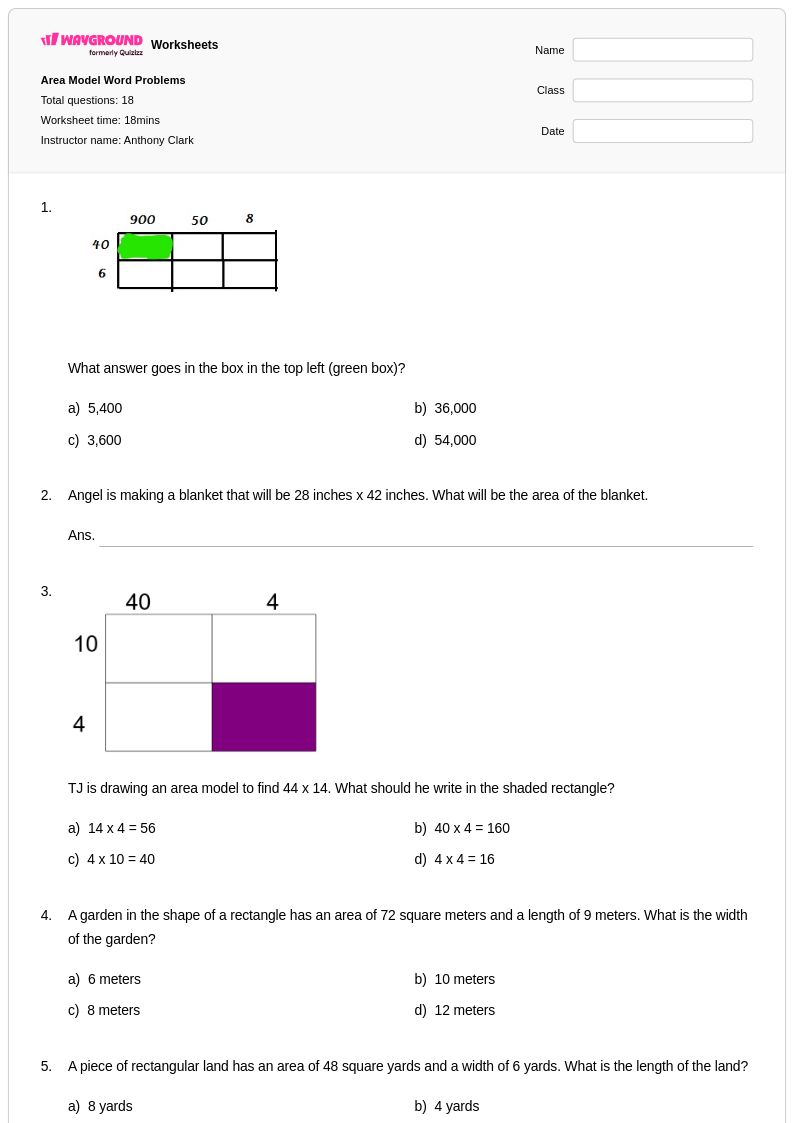
18 Q
4th - Uni
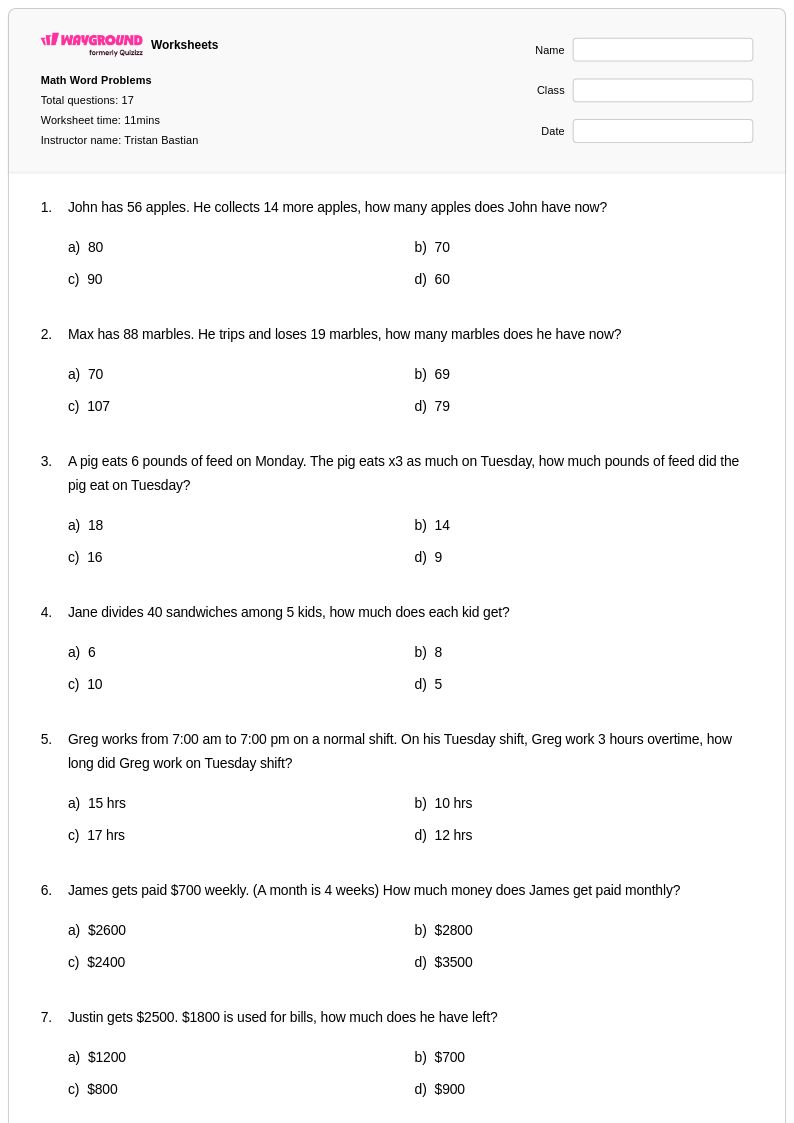
17 Q
1st - PD
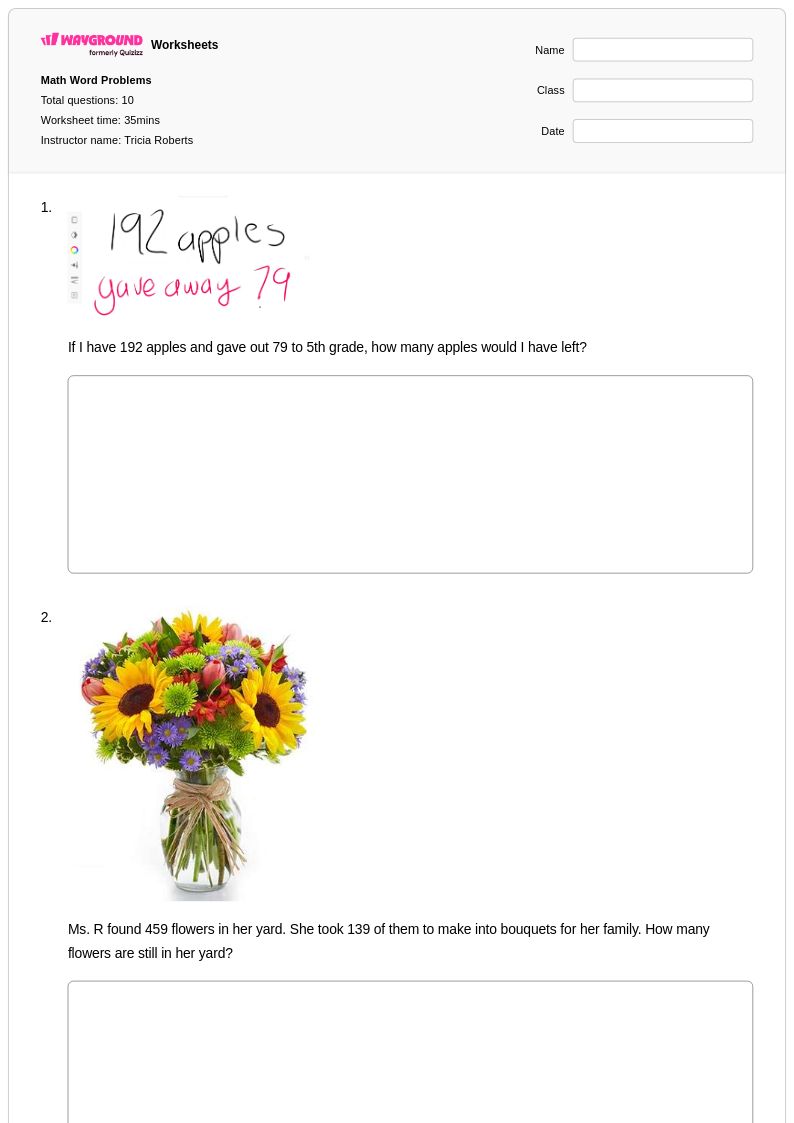
10 Q
3rd - 5th
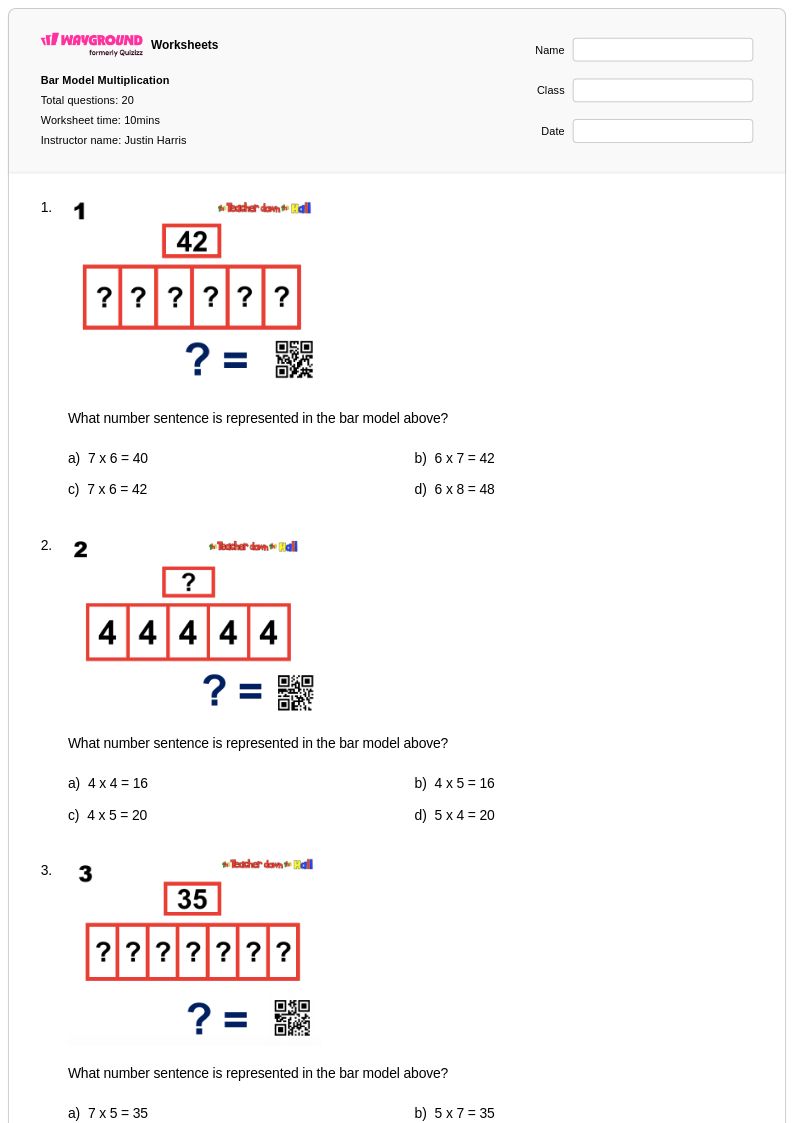
20 Q
4th
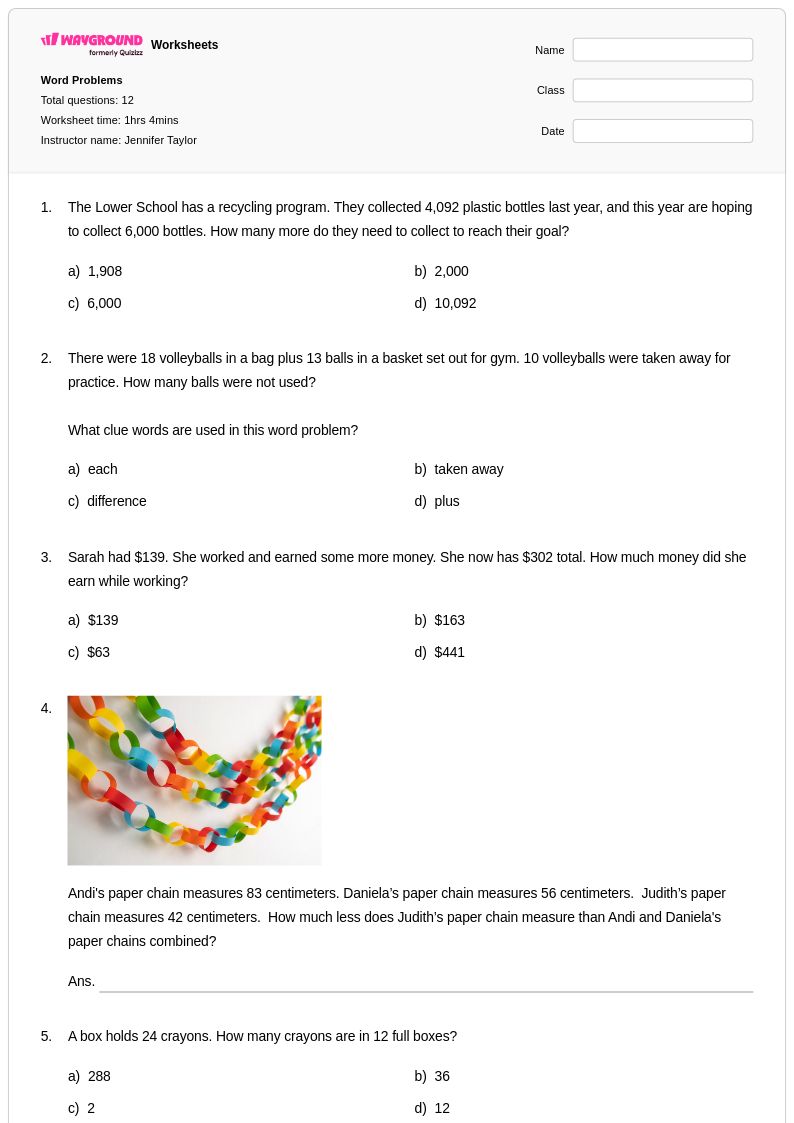
12 Q
4th
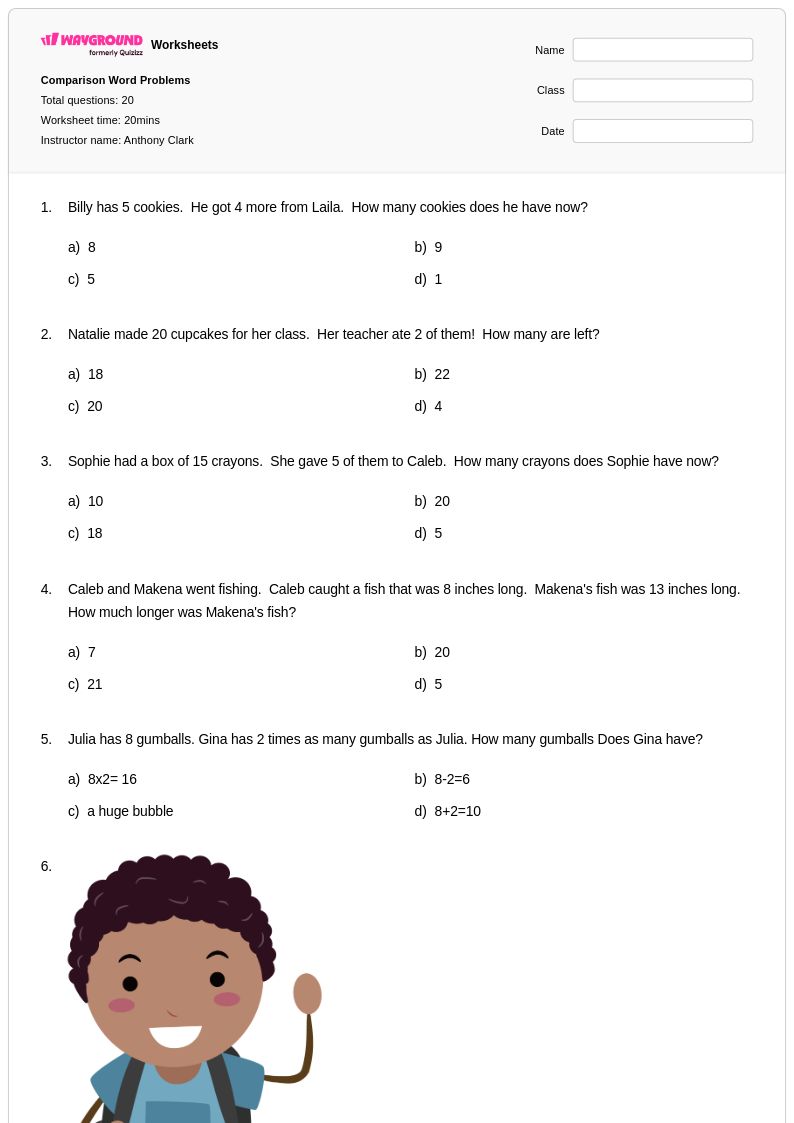
20 Q
2nd - Uni
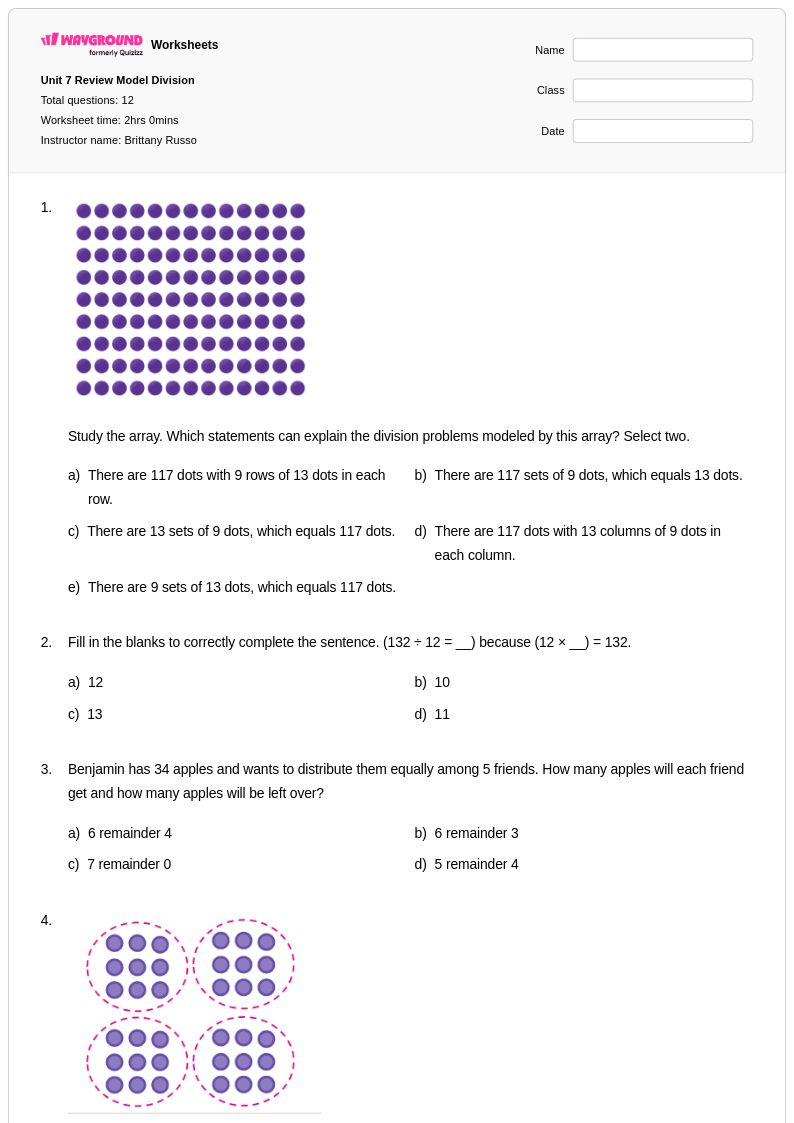
12 Q
4th - Uni
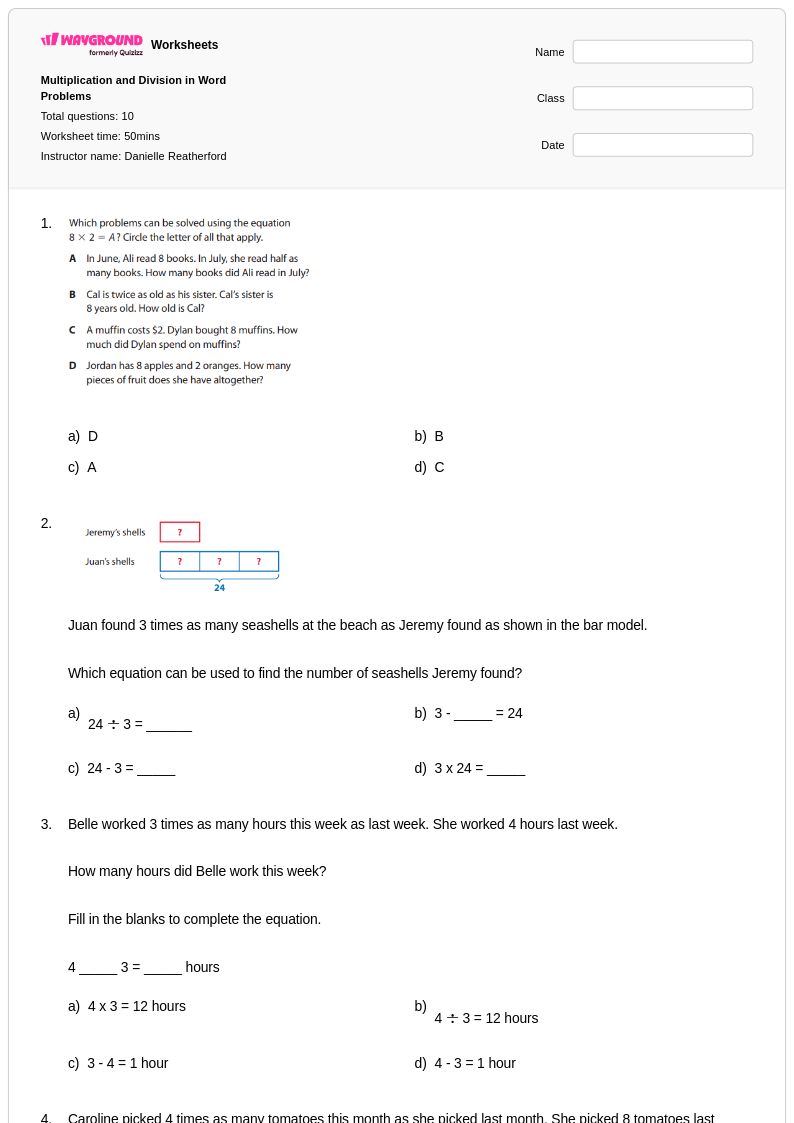
10 Q
4th
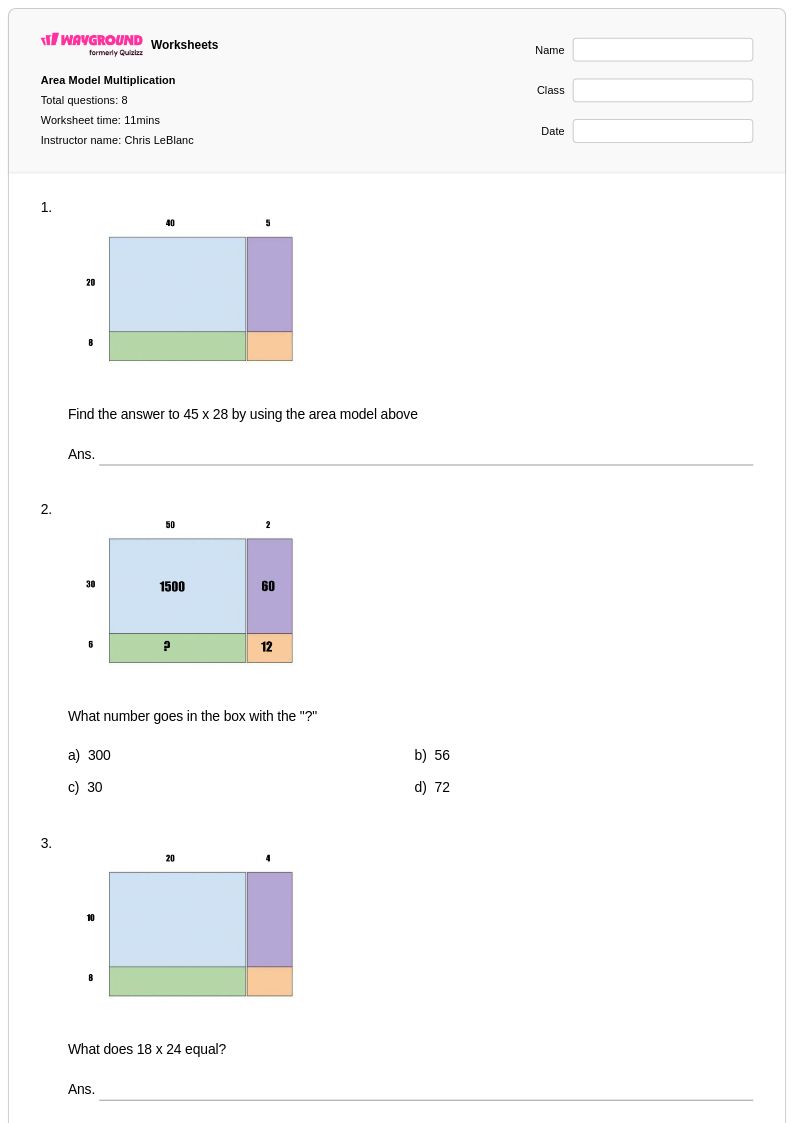
8 Q
4th - 6th
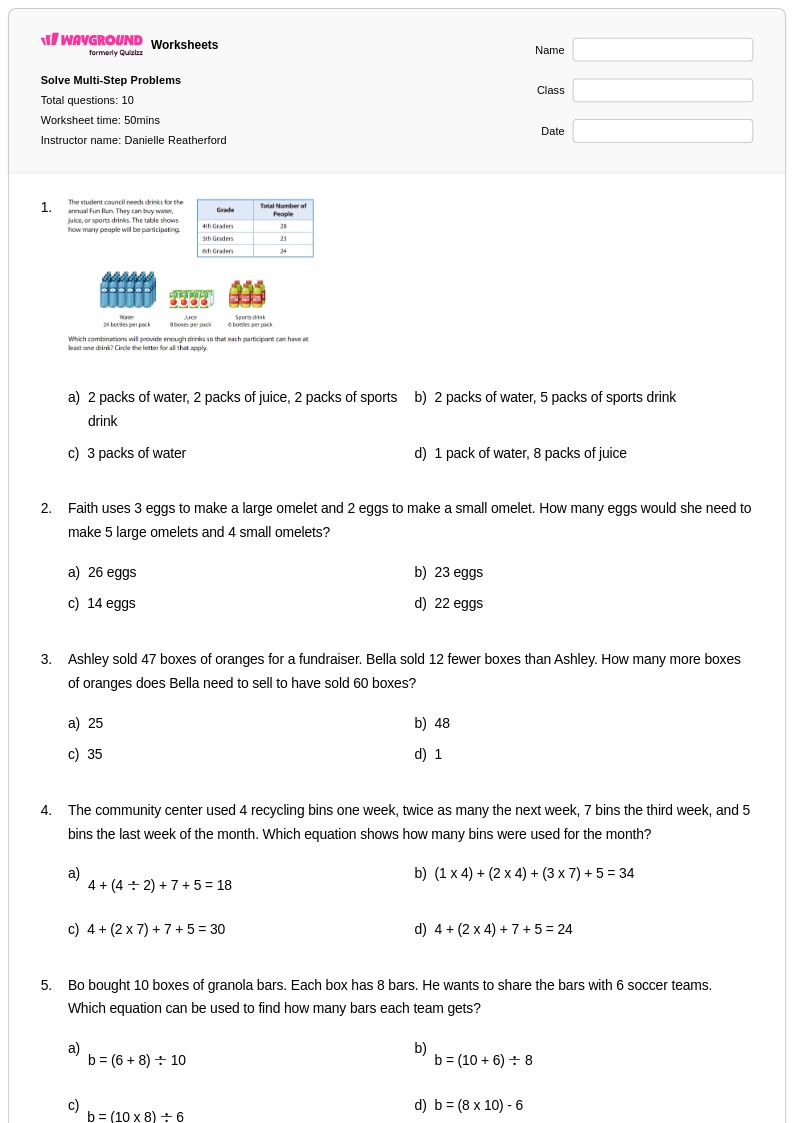
10 Q
4th
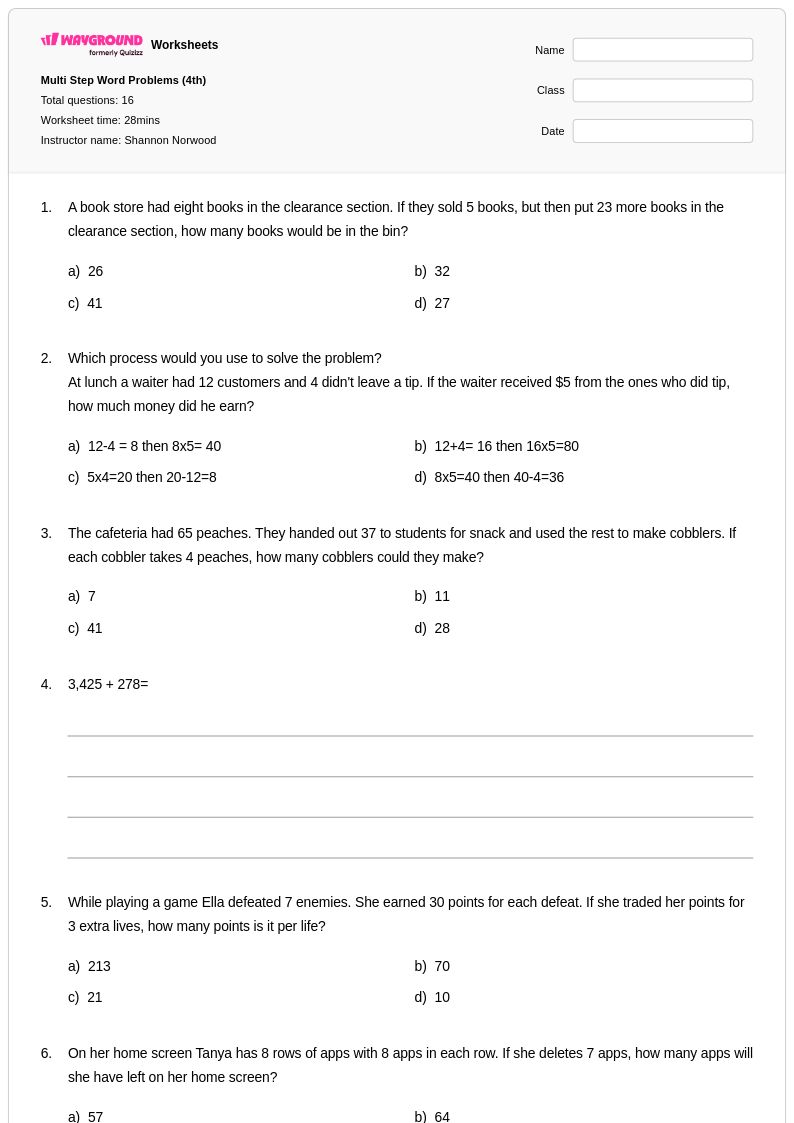
16 Q
4th
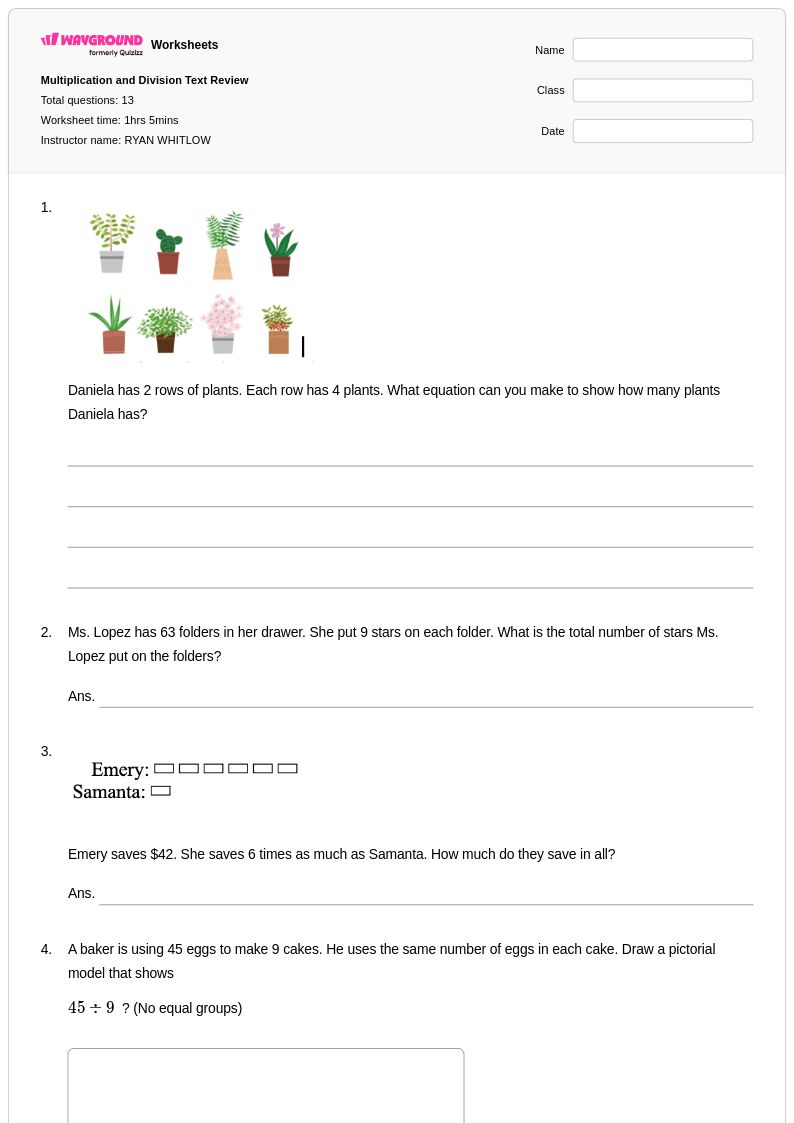
13 Q
3rd - 5th
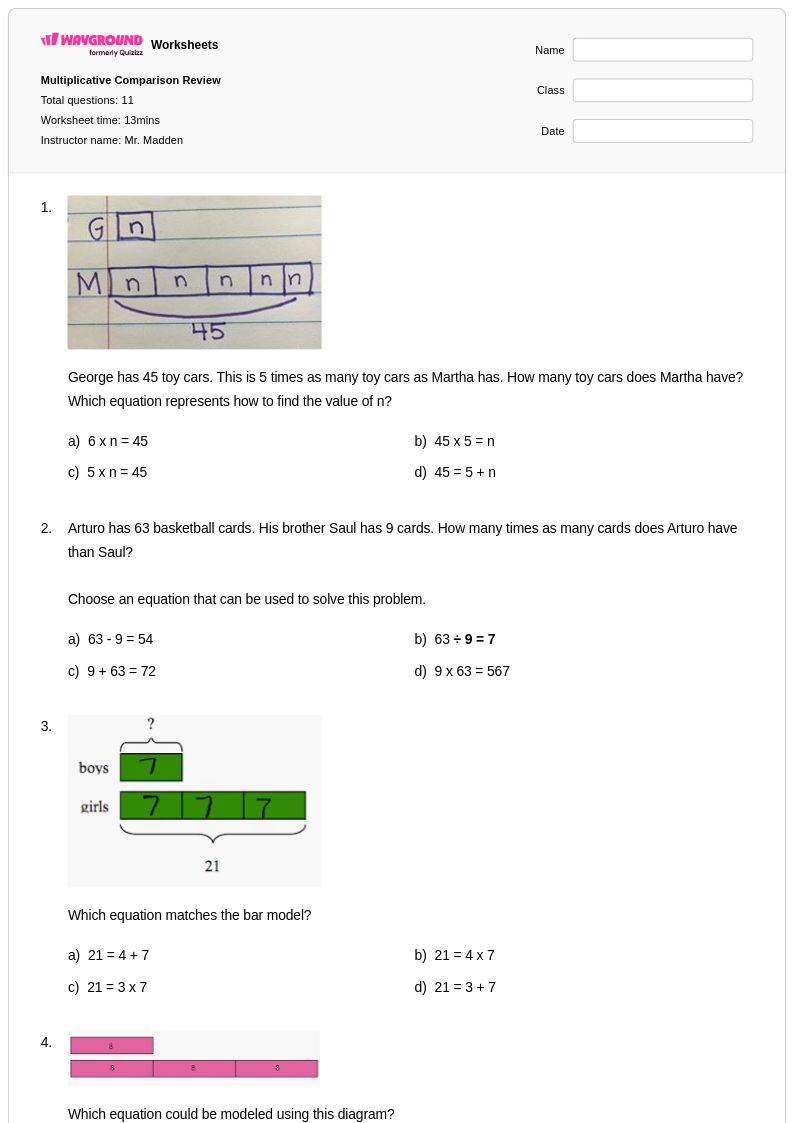
11 Q
4th
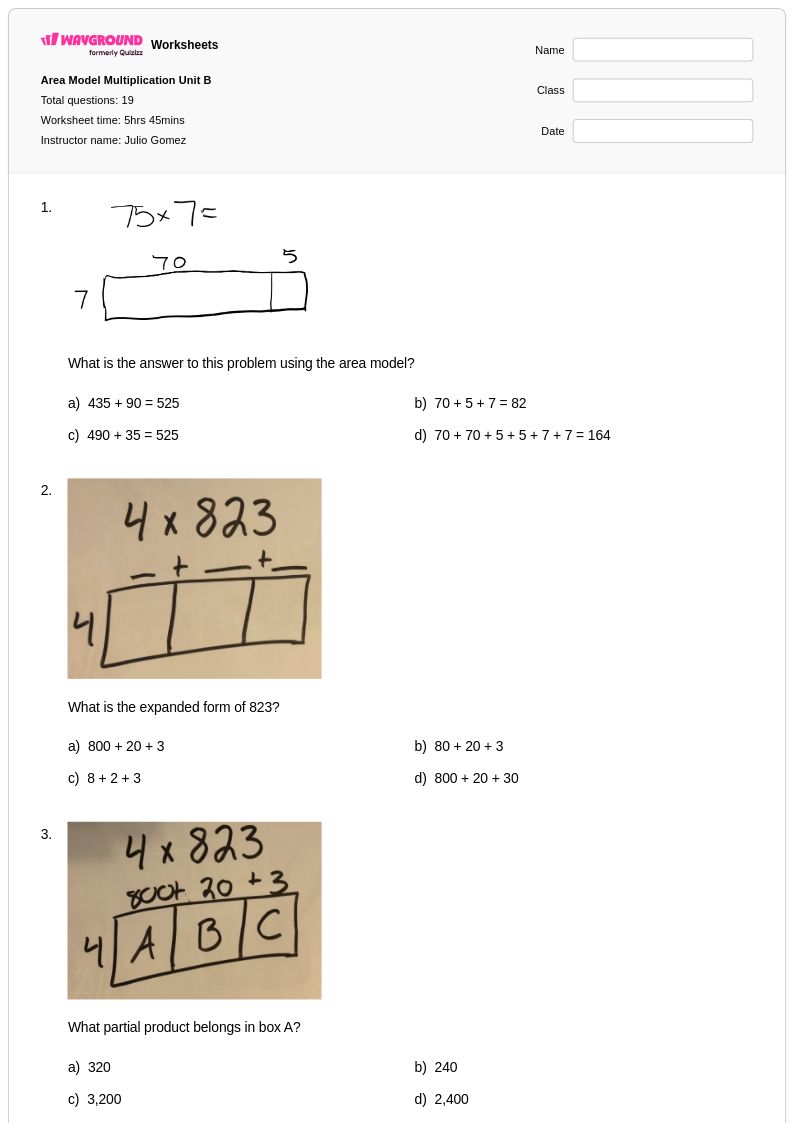
19 Q
4th
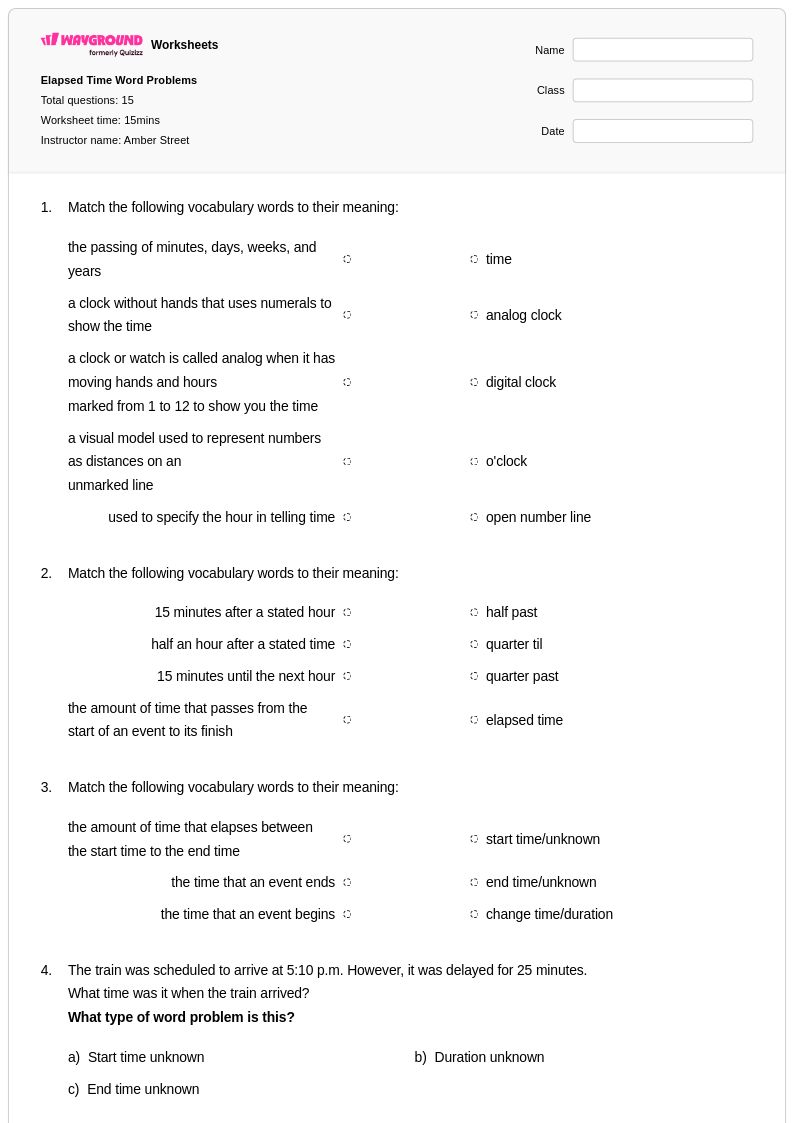
15 Q
4th
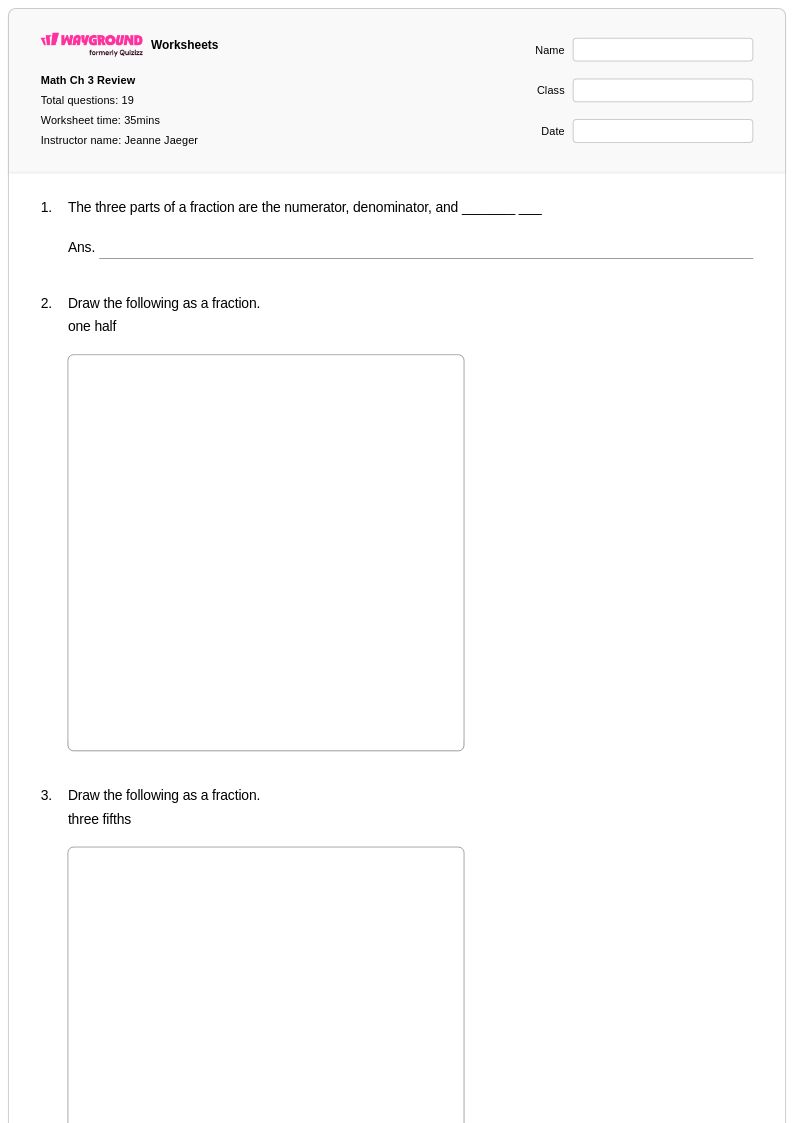
19 Q
4th
Explore Other Subject Worksheets for grade 4
Explore printable Bar Model Word Problems worksheets for Grade 4
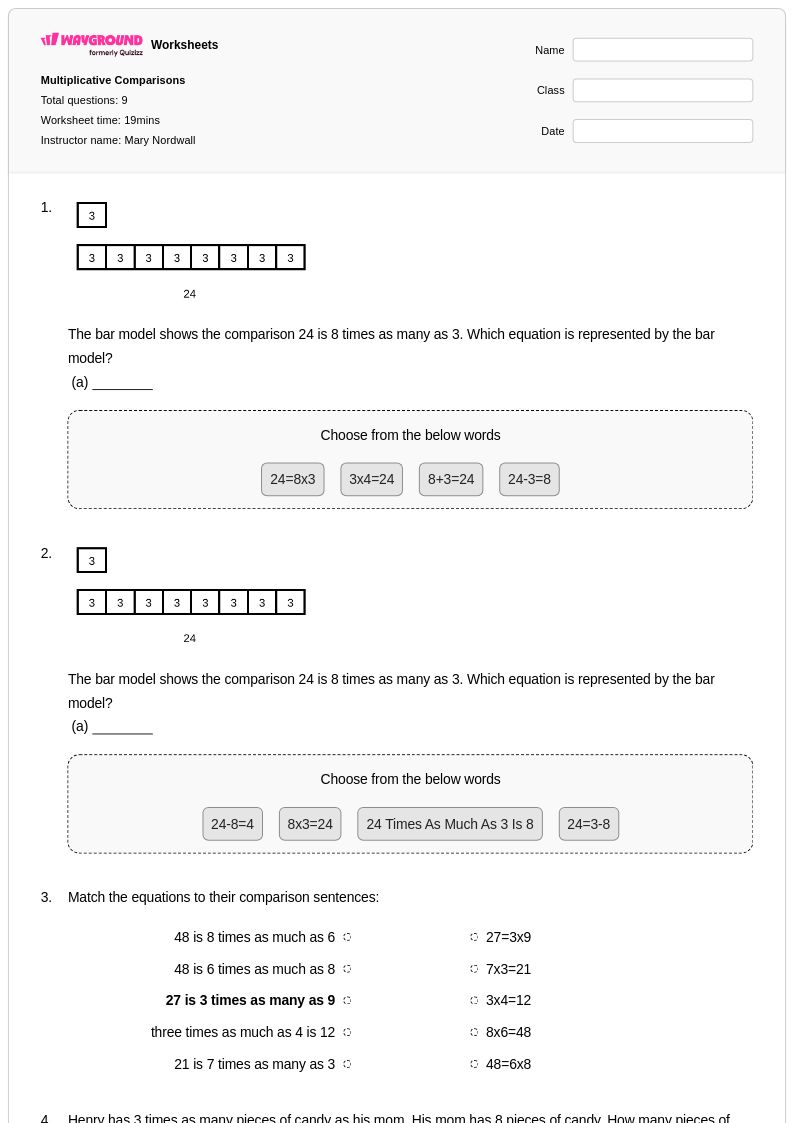
Bar model word problems for Grade 4 represent a crucial visual problem-solving strategy that helps students organize complex mathematical information and develop systematic thinking skills. These worksheets available through Wayground (formerly Quizizz) focus specifically on teaching students how to draw rectangular bars or strips to represent quantities, relationships, and operations within multi-step word problems. The practice problems guide fourth-grade learners through the process of identifying known and unknown values, visualizing part-whole relationships, and translating abstract mathematical concepts into concrete visual representations. Each worksheet comes with a comprehensive answer key and is available as a free pdf download, making these printables an invaluable resource for reinforcing algebraic thinking, proportional reasoning, and problem-solving strategies that align with elementary mathematics standards.
Wayground (formerly Quizizz) empowers educators with millions of teacher-created bar model word problem worksheets specifically designed for Grade 4 mathematics instruction. The platform's robust search and filtering capabilities allow teachers to quickly locate resources that match specific learning objectives, standards alignment requirements, and student ability levels. These differentiation tools enable educators to customize worksheets for remediation, enrichment, or targeted skill practice, ensuring that every student receives appropriately challenging content. Available in both printable pdf format and interactive digital versions, these bar model resources support flexible lesson planning and can be seamlessly integrated into whole-group instruction, small-group interventions, homework assignments, or independent practice sessions, giving teachers the versatility they need to address diverse learning needs and mathematical readiness levels.
FAQs
How do I teach bar model word problems in Grade 4?
What bar model exercises are useful for fourth graders?
What errors should I watch for in Grade 4 bar model problems?
How should I assign these Grade 4 bar model worksheets?
Are Grade 4 bar model word problems aligned with Common Core?
How can I support mixed-ability students with bar model worksheets?
Why are bar model word problems taught in Grade 4?