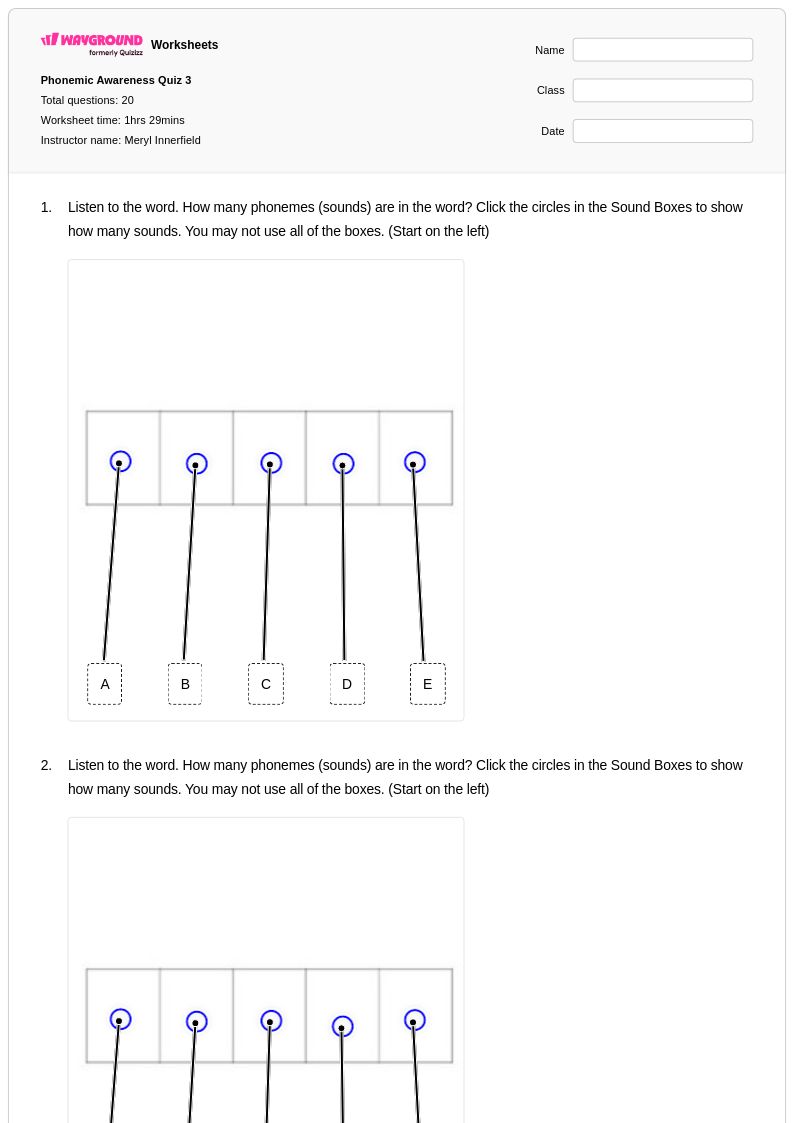
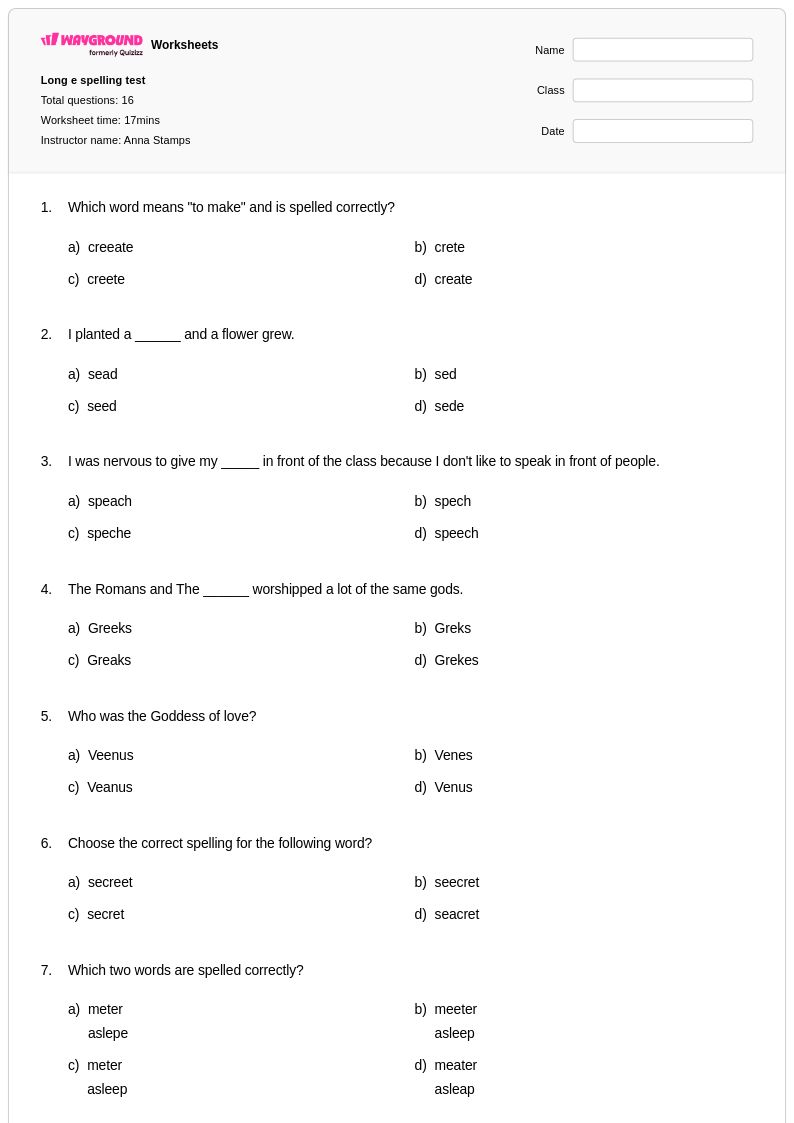
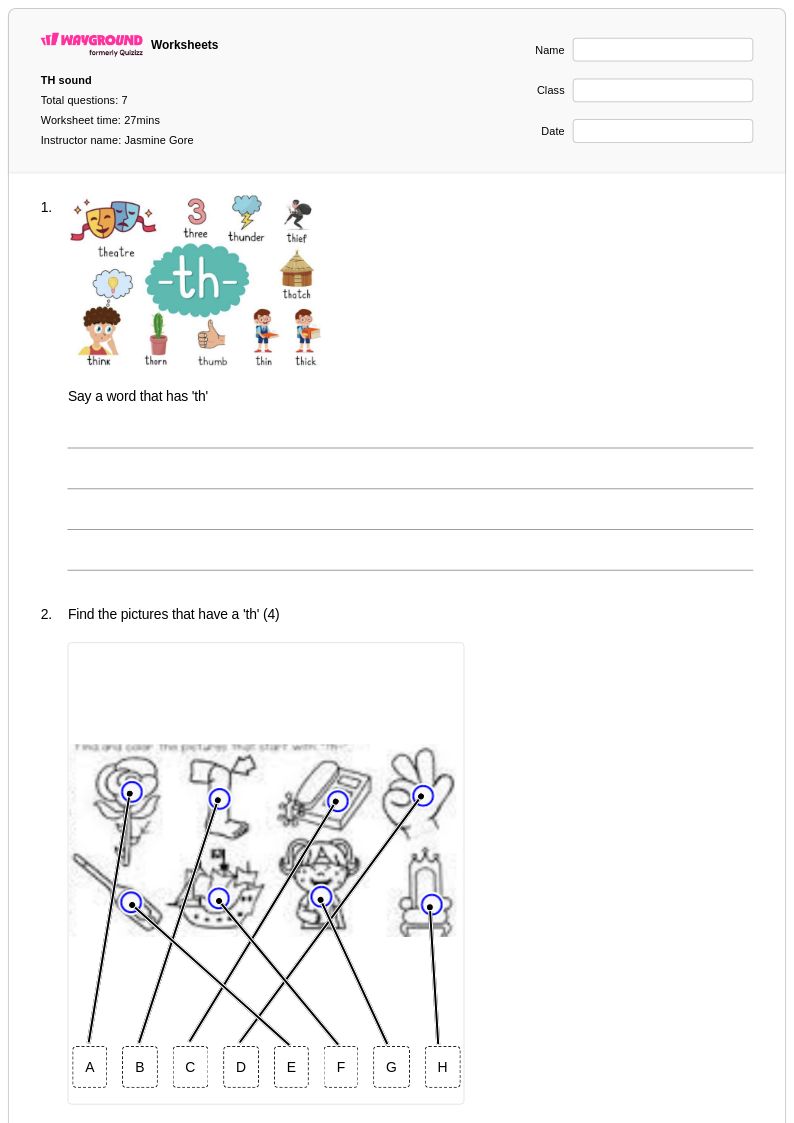
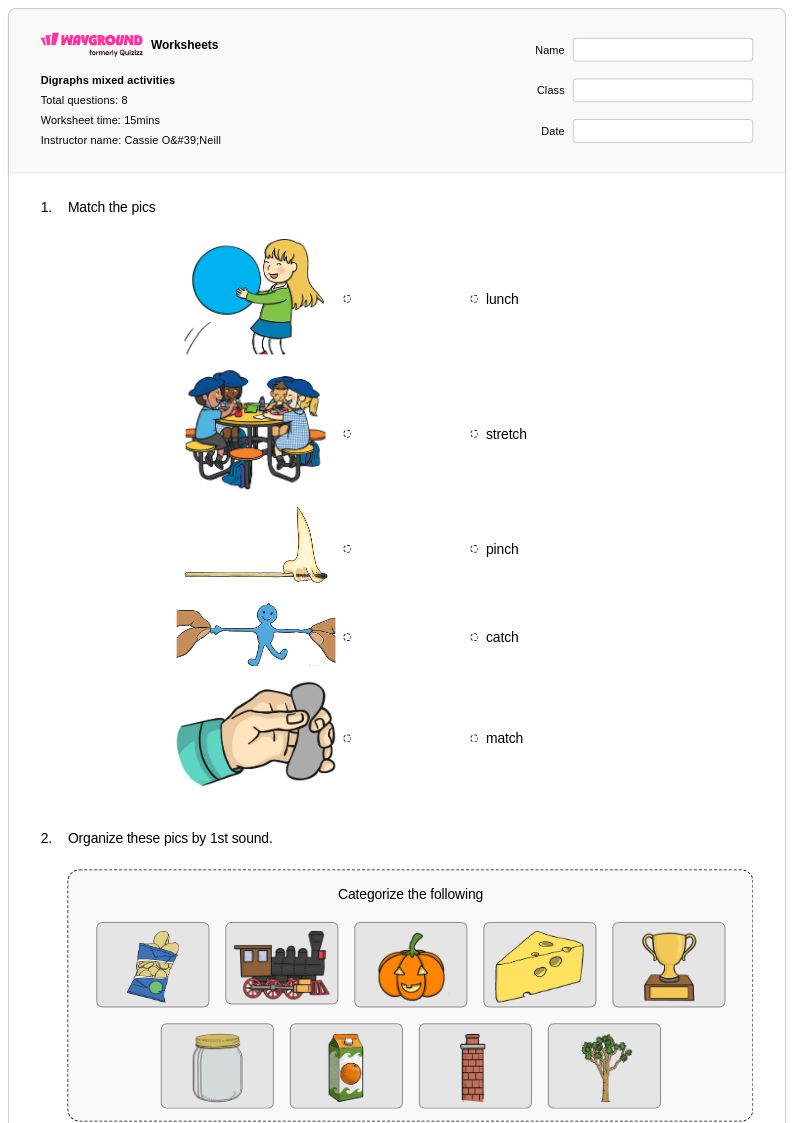
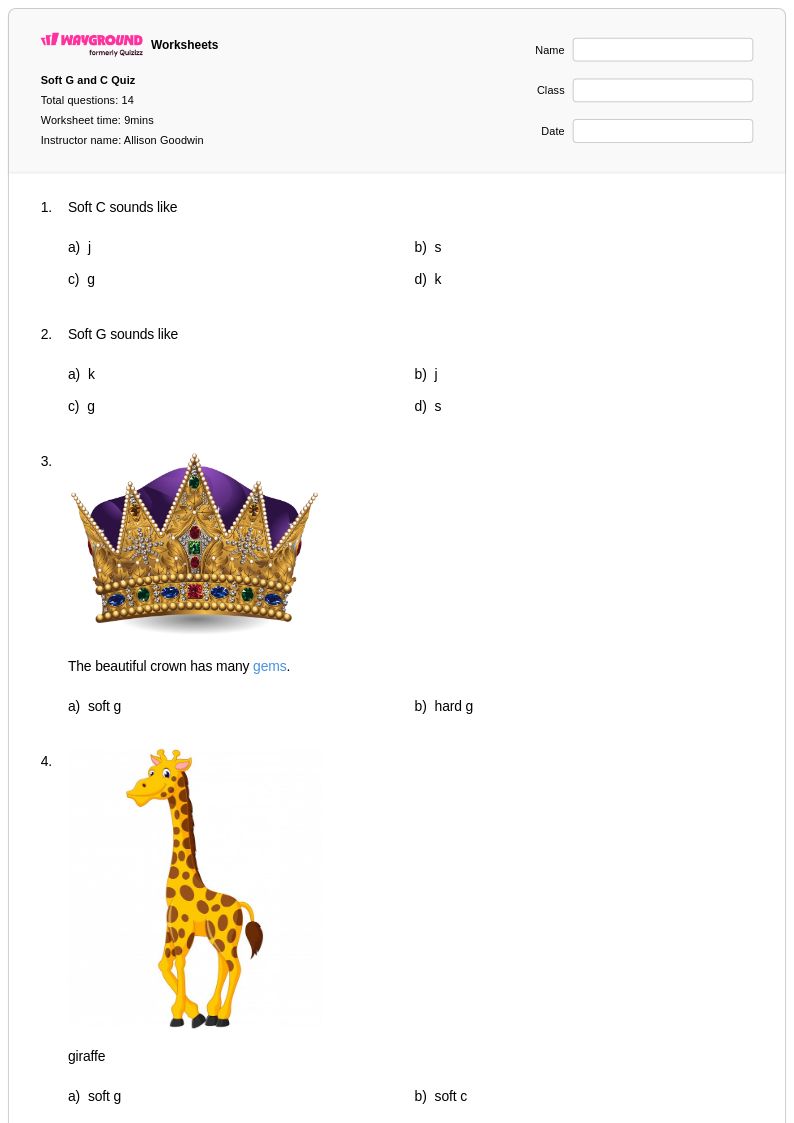
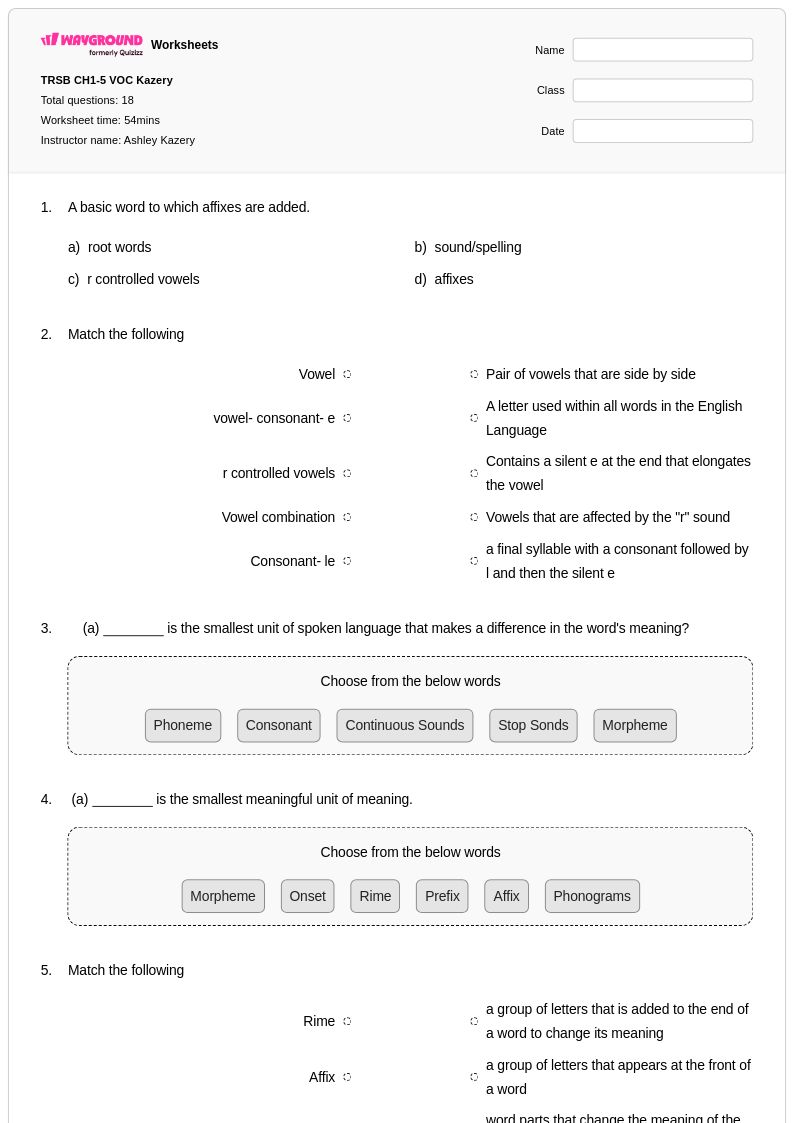
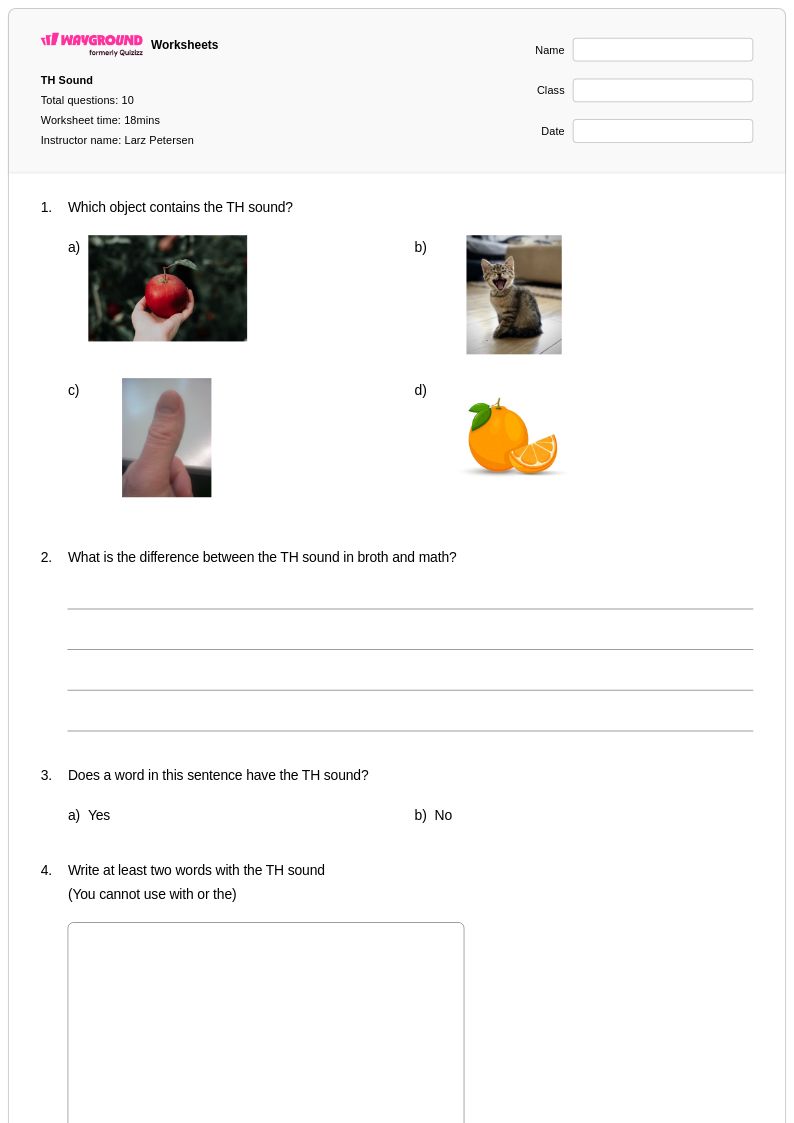
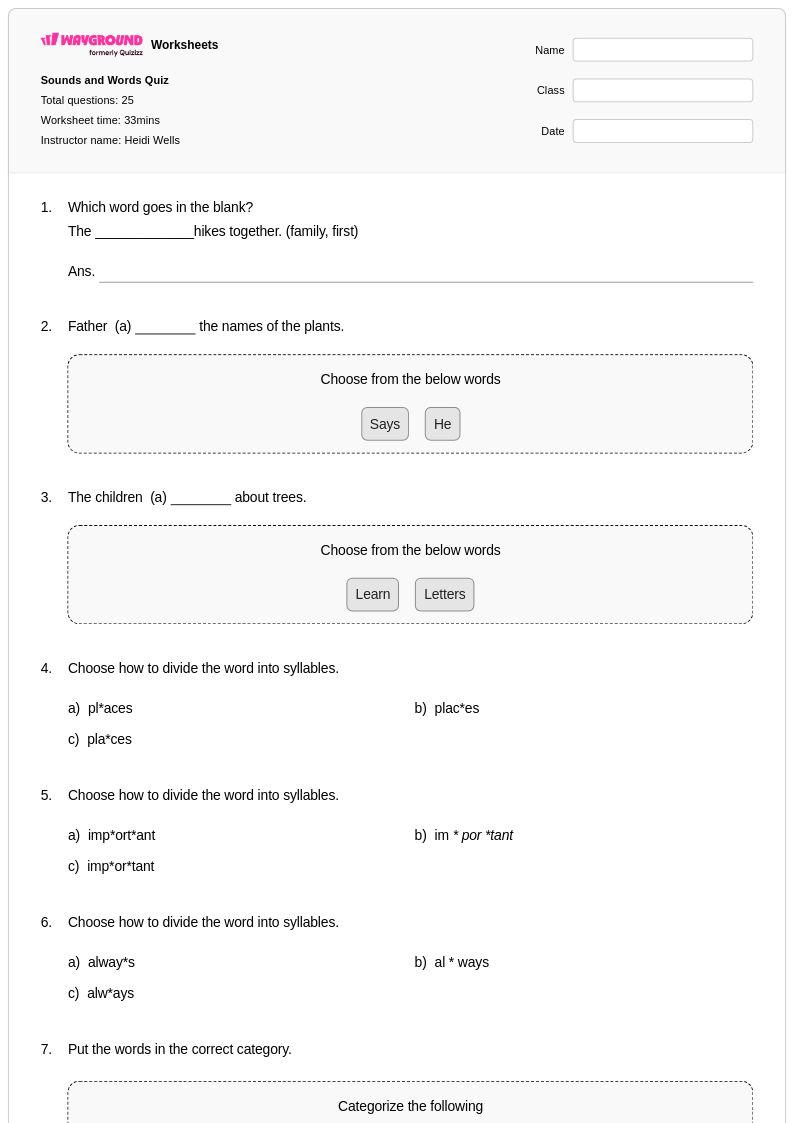
Wayground's free blended sounds worksheets offer comprehensive printables and practice problems to help students master phonics combinations, complete with answer keys for effective learning reinforcement.
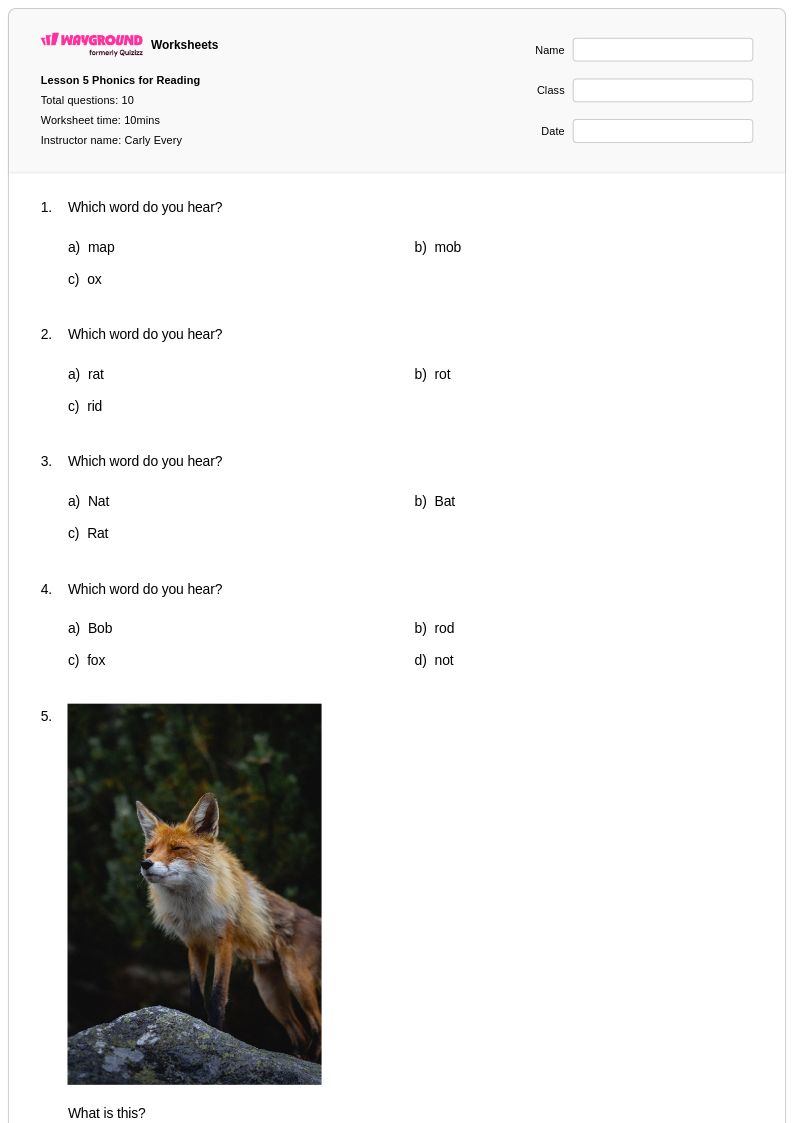
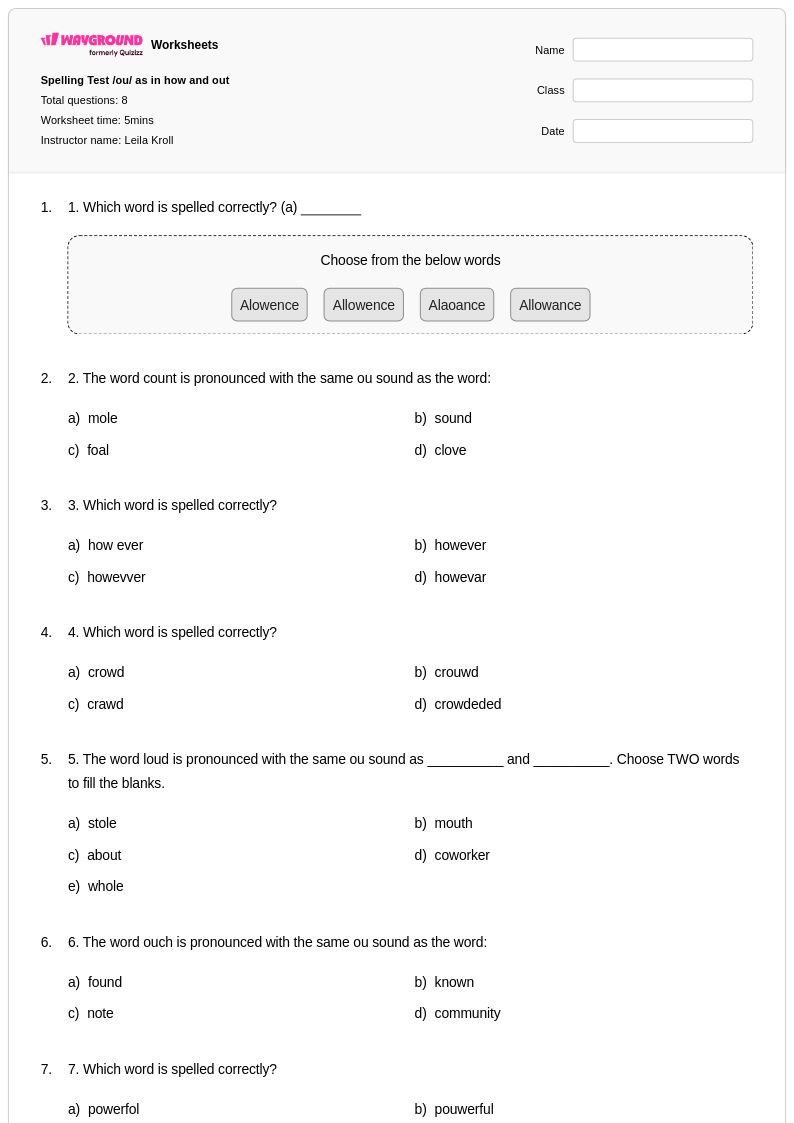
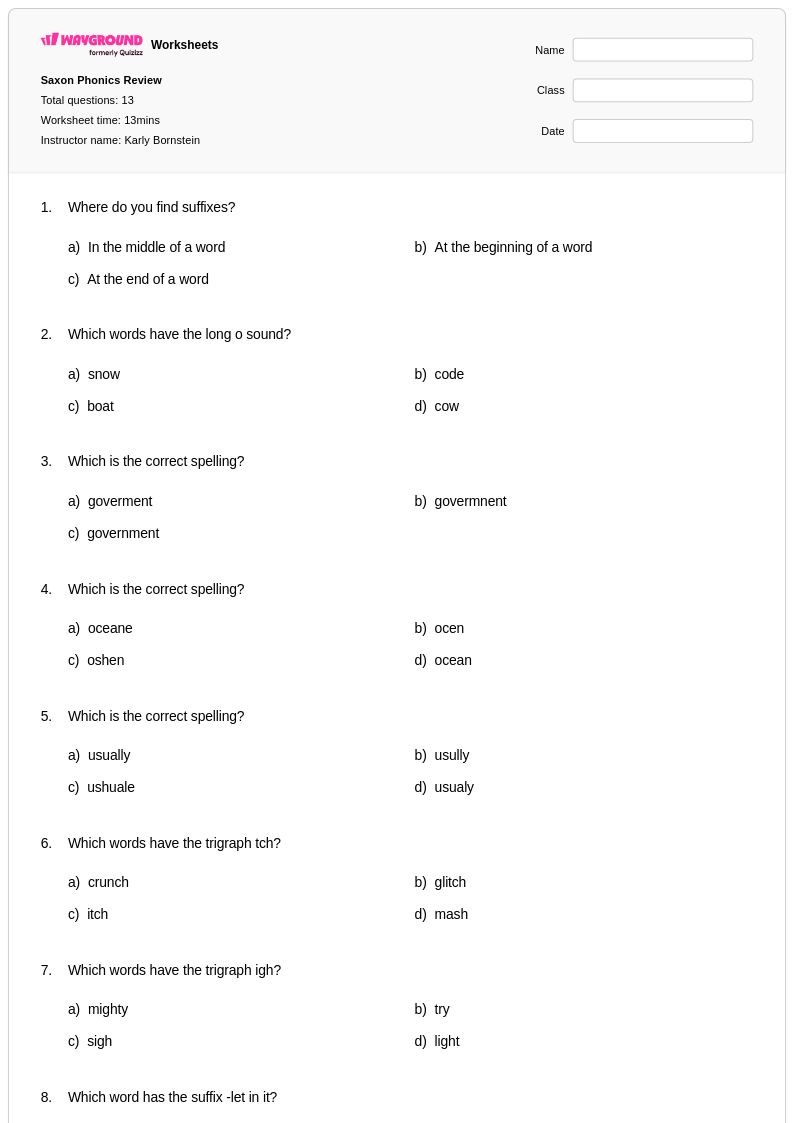
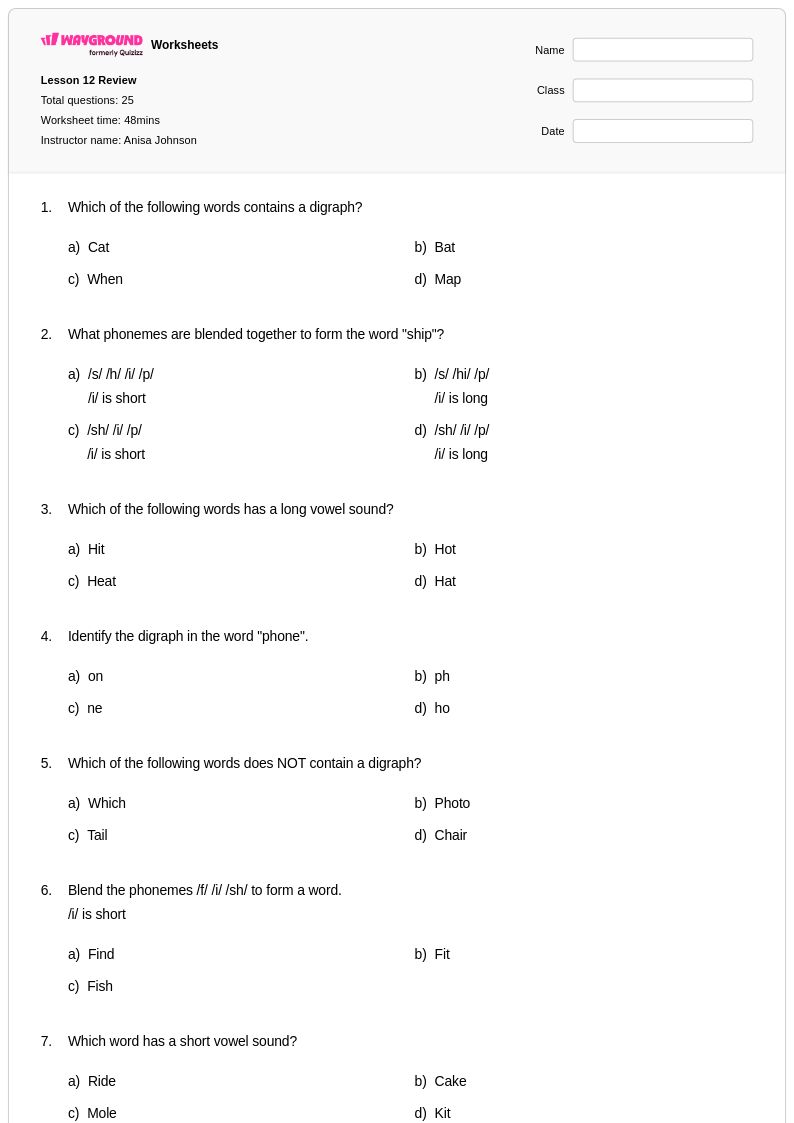
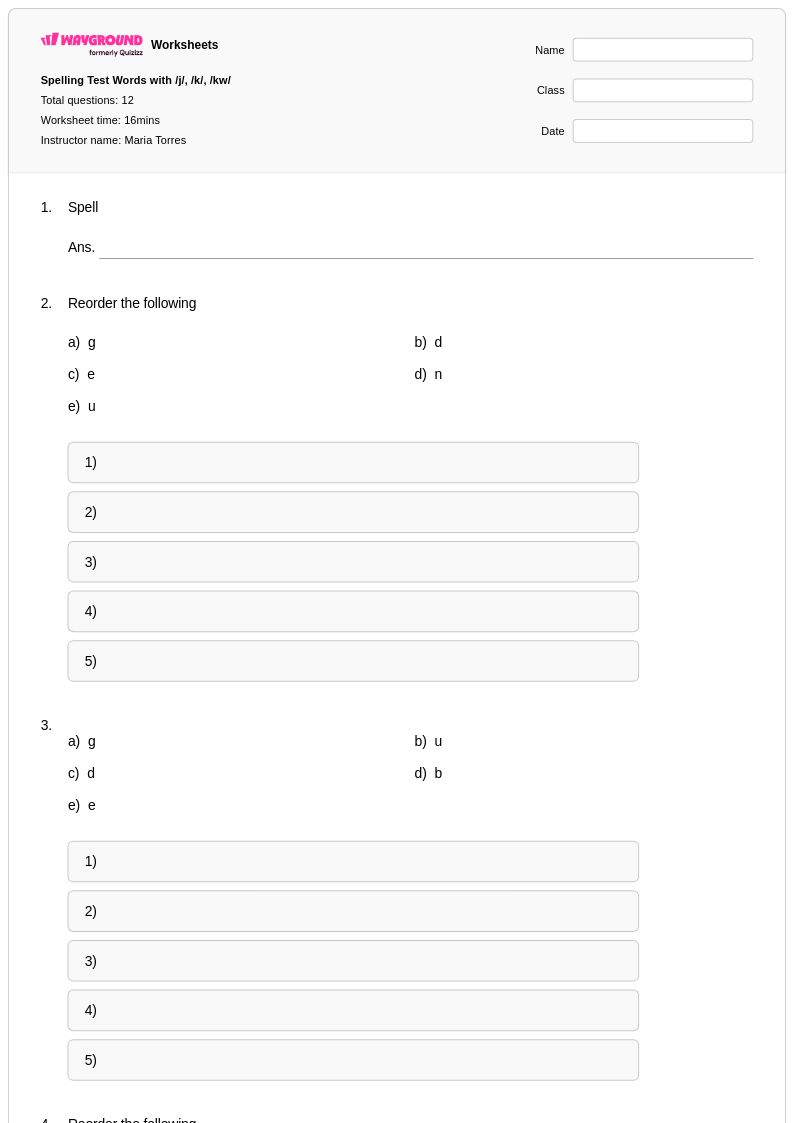
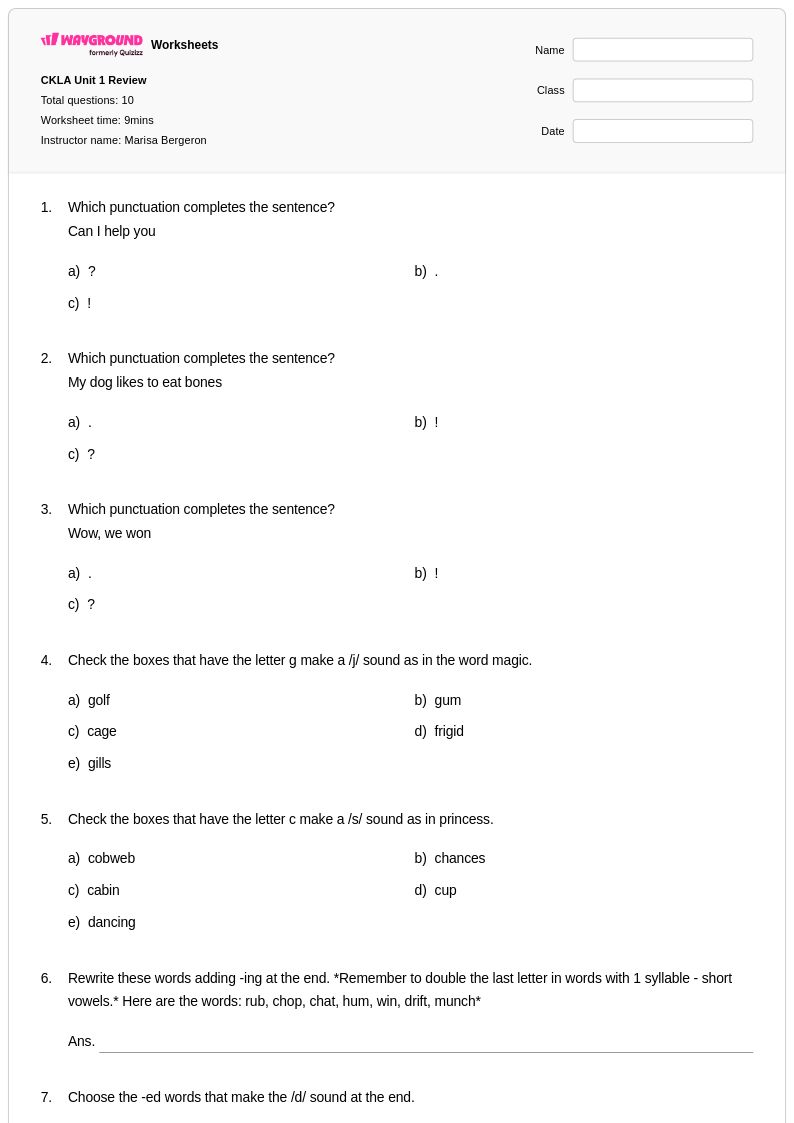
Blended sounds worksheets available through Wayground (formerly Quizizz) provide comprehensive practice for students learning to decode and pronounce consonant clusters and letter combinations that create unique phonetic patterns. These expertly designed resources strengthen essential phonemic awareness skills by focusing on common blends like "bl," "cr," "st," and "tr," as well as more complex combinations that appear frequently in English words. Students engage with systematic practice problems that progress from simple blend identification to reading complete words containing these sound patterns, with each worksheet including a detailed answer key to support independent learning and self-assessment. The free printables cover both initial and final blends, ensuring students develop fluency in recognizing these crucial phonetic elements across various word positions and contexts.
Wayground's extensive collection draws from millions of teacher-created resources, offering educators powerful search and filtering capabilities to locate worksheets perfectly aligned with their instructional needs and curriculum standards. Teachers can easily differentiate instruction by selecting materials that match individual student reading levels, from beginning blend recognition through advanced multisyllabic word decoding activities. The platform's flexible customization tools allow educators to modify existing worksheets or combine multiple resources to create targeted practice sessions for remediation or enrichment purposes. Available in both printable pdf format and interactive digital versions, these blended sounds worksheets seamlessly integrate into lesson planning workflows, providing teachers with reliable, standards-aligned materials that support systematic phonics instruction and help students build the foundational decoding skills necessary for reading success.
FAQs
How do I teach blended sounds to early readers?
Teaching blended sounds works best when introduced systematically, starting with the most common two-letter initial blends like 'bl,' 'cr,' 'st,' and 'tr' before moving to three-letter clusters and final blends. Teachers should model blending by first isolating each phoneme, then smoothly connecting them, and having students repeat the process with controlled-vocabulary words. Embedding blends into word-reading practice rather than isolation drills helps students transfer the skill to real reading contexts.
What exercises help students practice blended sounds?
Effective blend practice includes blend identification tasks (circling or underlining the blend in a word), word-sorting activities that group words by their blend type, and reading sentences or short passages that feature target blends in context. Progressing from simple blend recognition to reading complete words and then connected text ensures students build fluency rather than just pattern memorization. Worksheets that cover both initial and final blends across varied word positions give students the breadth of exposure needed to generalize the skill.
What mistakes do students commonly make with blended sounds?
A common error is omitting one phoneme in a cluster — for example, reading 'stop' as 'top' or 'black' as 'back' — because students process only the more salient consonant. Students also frequently confuse blends with digraphs, treating 'ch' or 'sh' the same way they treat 'cl' or 'sh,' which disrupts accurate decoding. Targeted practice that explicitly contrasts blends with digraphs, and that requires students to articulate each phoneme before blending, helps correct these patterns.
How can I use blended sounds worksheets for differentiated instruction?
Select worksheets at varied difficulty levels: beginning blend recognition activities for students still developing phonemic awareness, and multisyllabic word decoding tasks for students ready for more advanced work. On Wayground, you can apply individual accommodations such as Read Aloud (audio playback of questions), reduced answer choices, and extended time to specific students, while the rest of the class receives standard settings without notification. This means a single worksheet assignment can serve the full range of learners in your classroom without requiring separate lesson plans.
How do I use Wayground's blended sounds worksheets in my classroom?
Wayground's blended sounds worksheets are available as printable PDFs for traditional classroom use and in digital formats for technology-integrated environments, and you can also host them as a live quiz on the Wayground platform. Each worksheet includes a detailed answer key, supporting both teacher-led review and student self-assessment. You can use Wayground's search and filtering tools to find worksheets aligned to your specific blend targets and reading level, then assign them for independent practice, small-group instruction, or remediation sessions.
In what order should I introduce consonant blends to students?
Most phonics scope-and-sequence frameworks recommend introducing two-letter initial blends first, beginning with those that use already-mastered consonants (such as 's' blends: 'st,' 'sl,' 'sn,' 'sp'). 'L' blends ('bl,' 'cl,' 'fl,' 'pl') and 'r' blends ('br,' 'cr,' 'dr,' 'tr') typically follow before moving to final blends like '-nd,' '-st,' and '-lt.' Three-letter clusters ('str,' 'spl,' 'spr') are generally introduced last, once students have solidified two-letter blend decoding.