
20 Q
4th - Uni
20 Q
3rd - Uni
8 Q
4th - 6th
10 Q
3rd - 5th
15 Q
3rd - Uni
15 Q
3rd - Uni
13 Q
4th
13 Q
4th
14 Q
4th - 5th
18 Q
4th - Uni
20 Q
1st - Uni
20 Q
4th - Uni
20 Q
4th
20 Q
4th - Uni
20 Q
4th - Uni
20 Q
4th - Uni
20 Q
4th - Uni
20 Q
4th - Uni
20 Q
4th - Uni
10 Q
4th
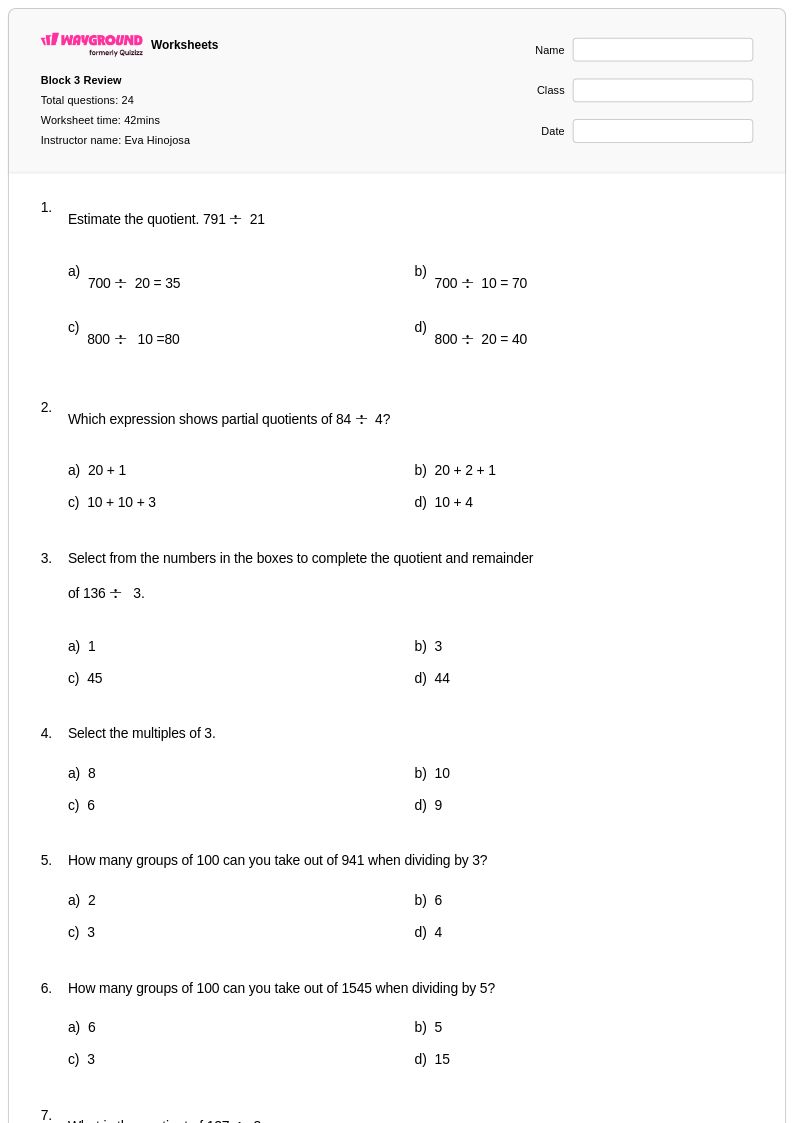
24 Q
4th
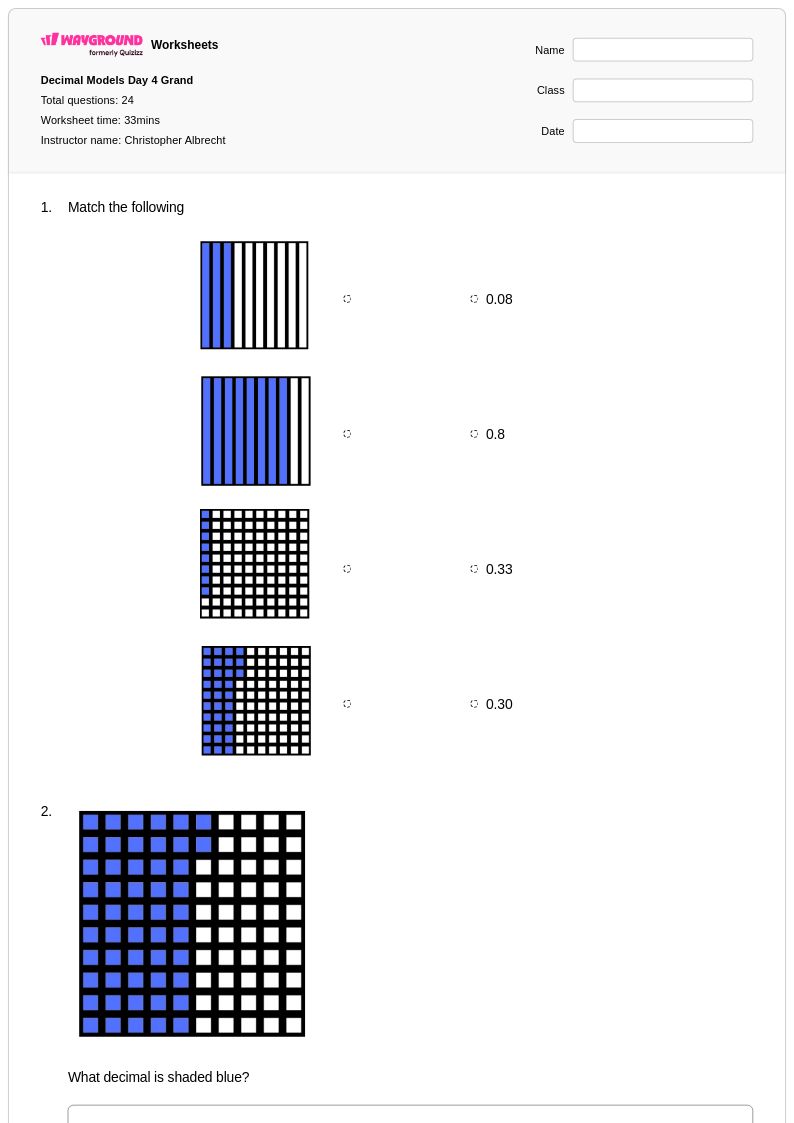
24 Q
4th
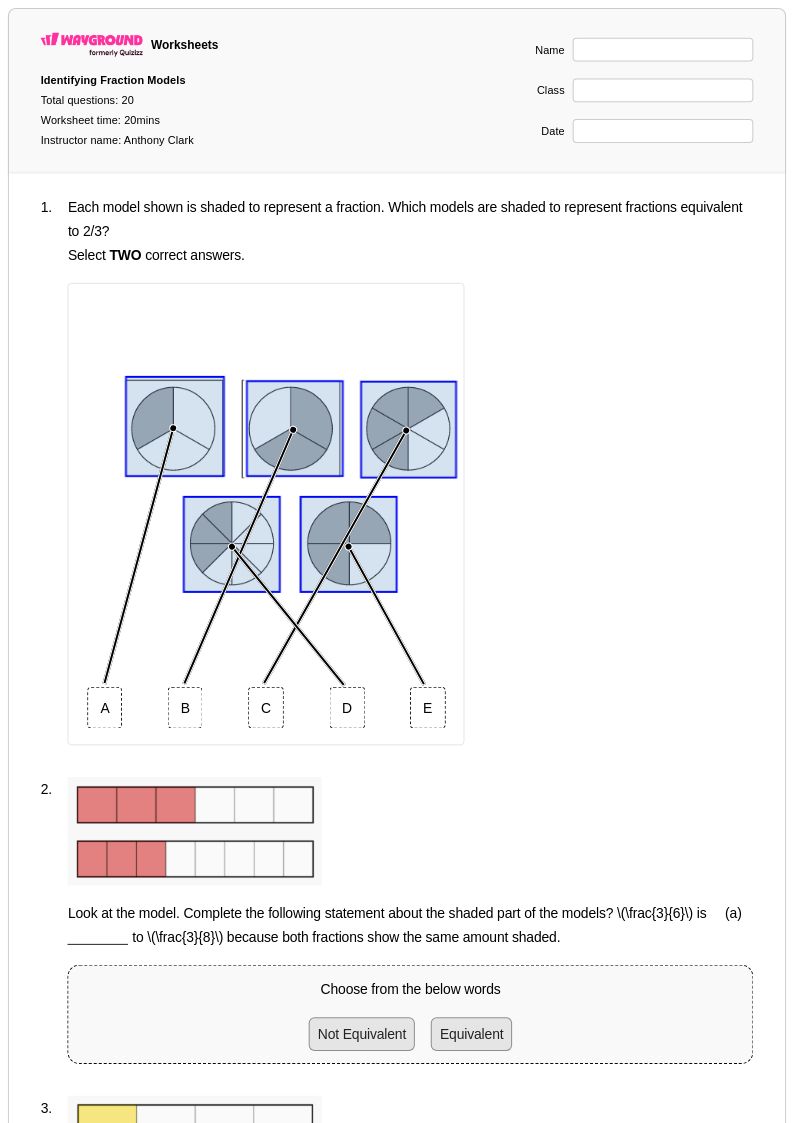
20 Q
4th - Uni
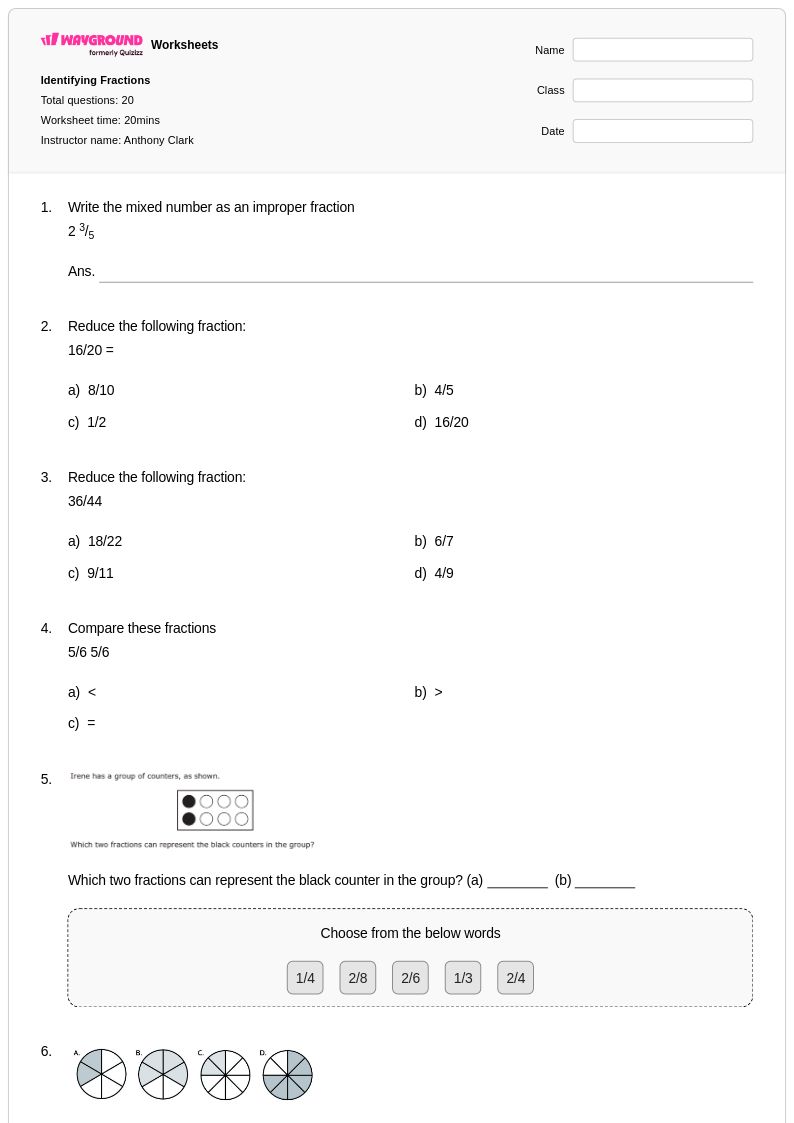
20 Q
4th - Uni
Explore Other Subject Worksheets for grade 4
Explore printable Block Model worksheets for Grade 4
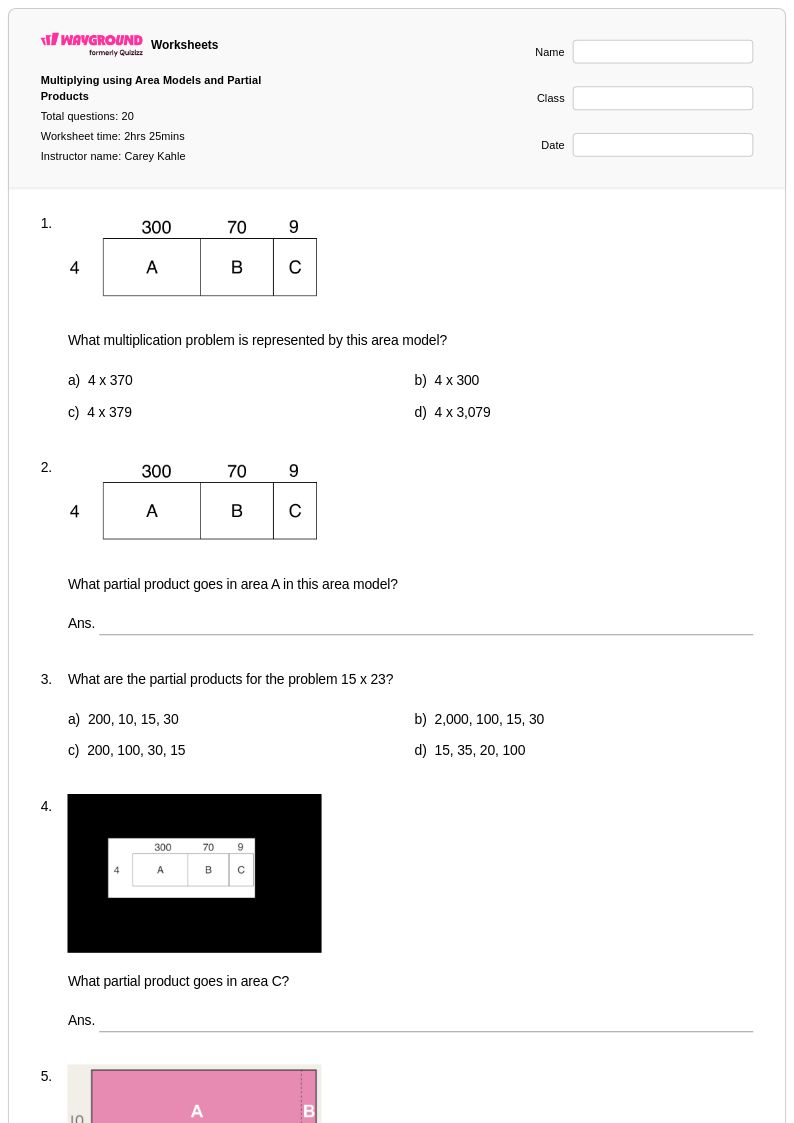
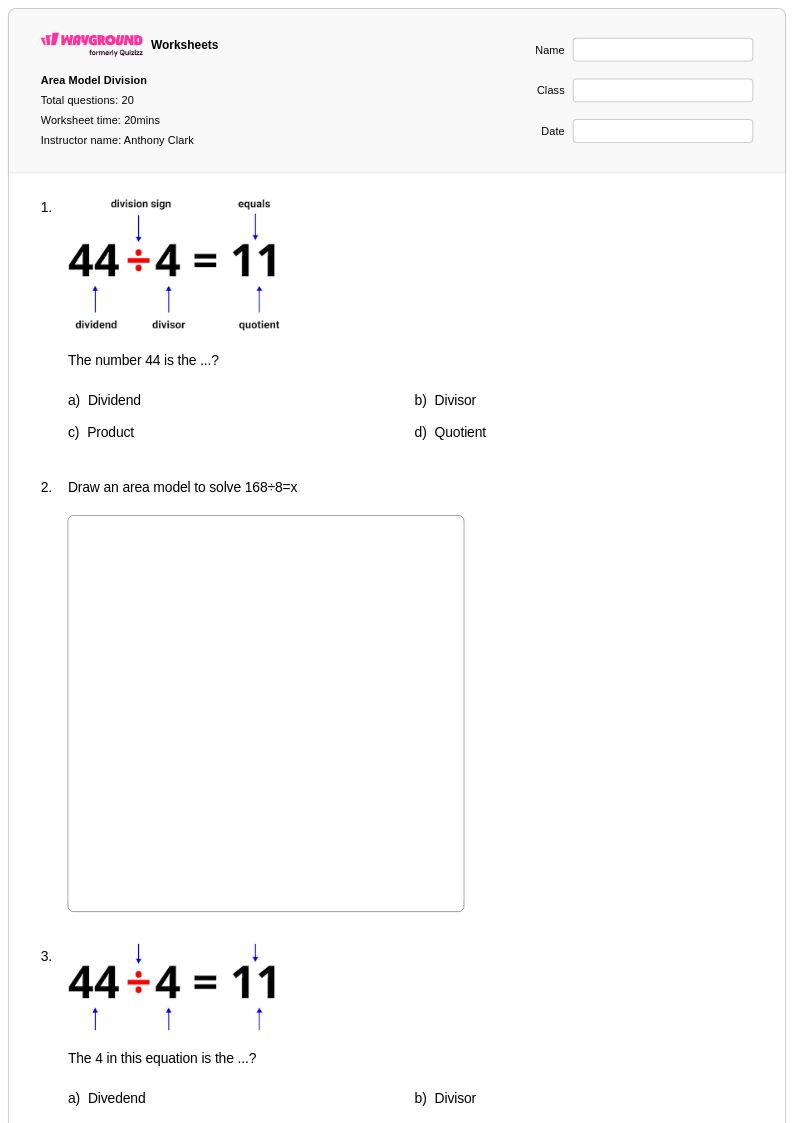
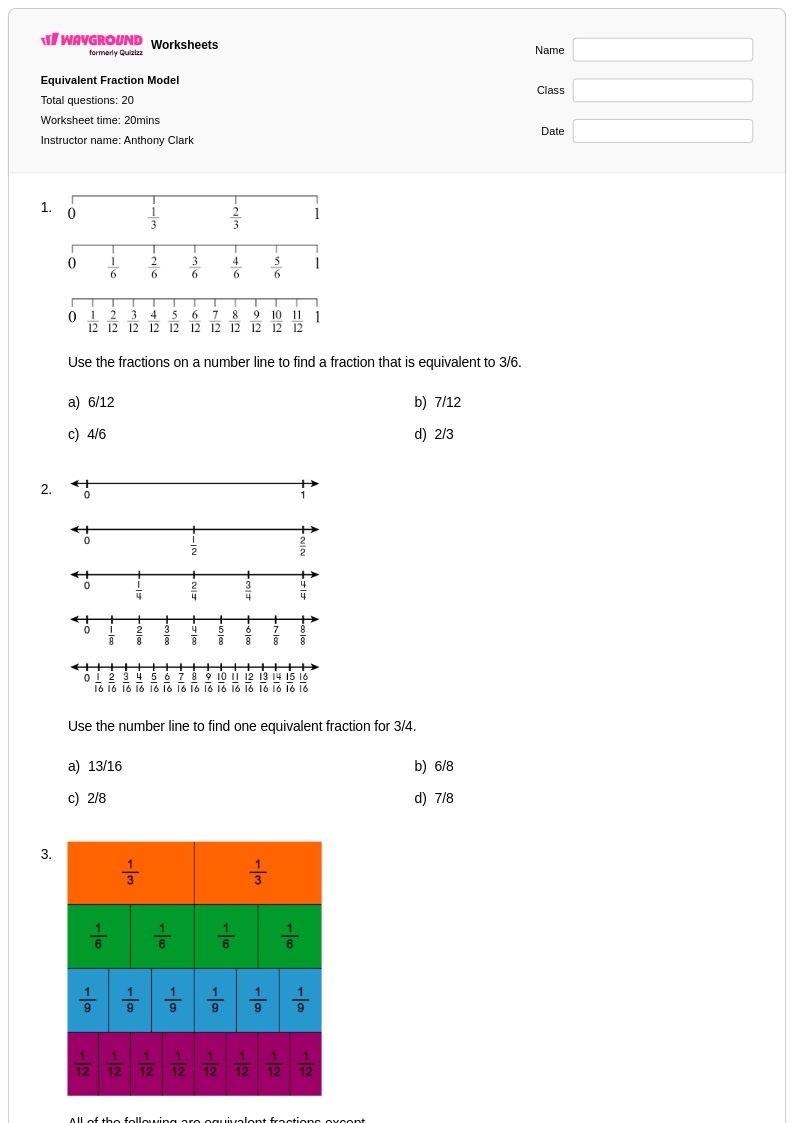
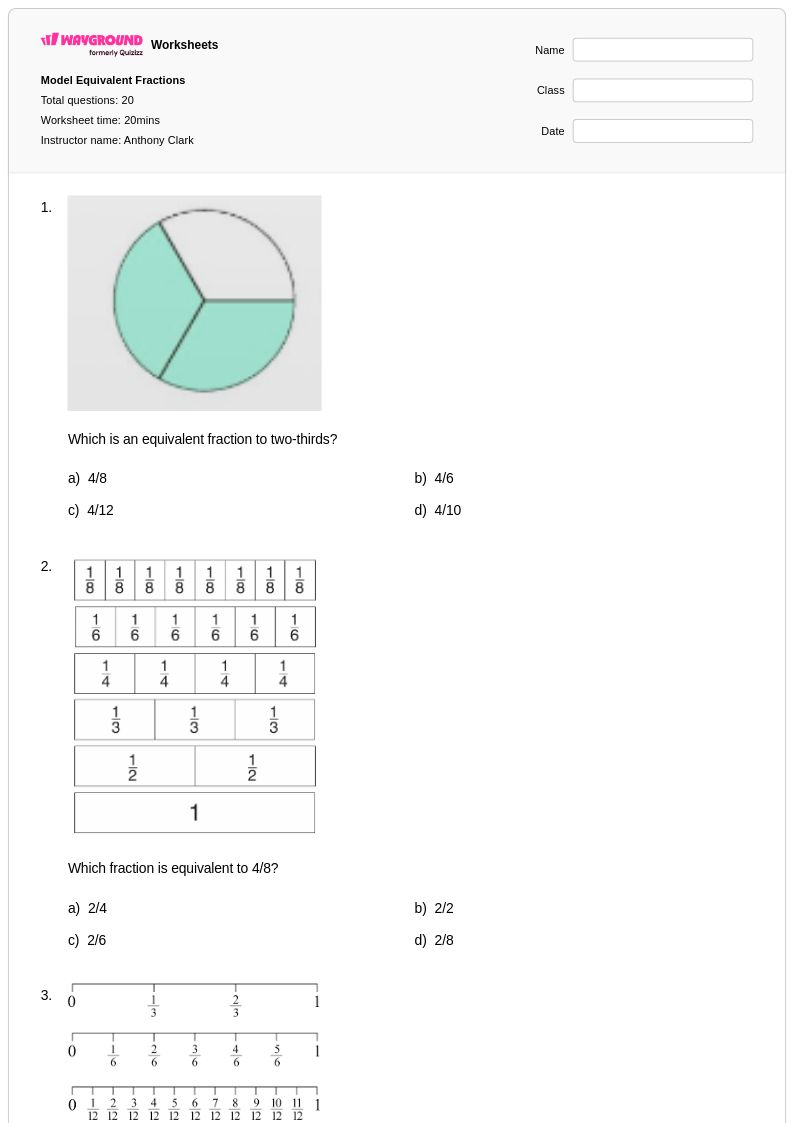
Block Model worksheets for Grade 4 students provide essential practice in visual algebra concepts that bridge concrete mathematical thinking with abstract algebraic reasoning. These comprehensive worksheets from Wayground help fourth-grade students develop crucial problem-solving skills by using rectangular block diagrams to represent mathematical relationships, unknown quantities, and multi-step equations in an age-appropriate format. Students strengthen their ability to visualize mathematical concepts, organize information systematically, and build foundational understanding of algebraic thinking through carefully designed practice problems that progress from simple to complex scenarios. Each worksheet includes detailed answer keys and is available as free printables in convenient pdf format, making them accessible resources for both classroom instruction and independent practice.
Wayground's extensive collection of Grade 4 Block Model worksheets draws from millions of teacher-created resources, ensuring educators have access to high-quality materials that align with mathematical standards and support diverse learning needs. The platform's robust search and filtering capabilities allow teachers to quickly locate worksheets that match specific skill levels, learning objectives, and instructional goals, while differentiation tools enable seamless customization for students requiring additional support or enrichment opportunities. These versatile resources are available in both printable and digital formats, including downloadable pdf versions, providing flexibility for various classroom environments and teaching preferences. Teachers can effectively use these materials for lesson planning, targeted remediation, skill reinforcement, and formative assessment, helping students build confidence in algebraic thinking while developing essential mathematical reasoning abilities.
FAQs
How do I teach block models in fourth grade?
What block model exercises are useful for Grade 4 students?
What mistakes do fourth graders commonly make with block models?
How should I use a Grade 4 block model worksheet?
Are Grade 4 block models aligned with Common Core math?
How can I support mixed-ability learners with a block model worksheet?
Why are block models taught in Grade 4?