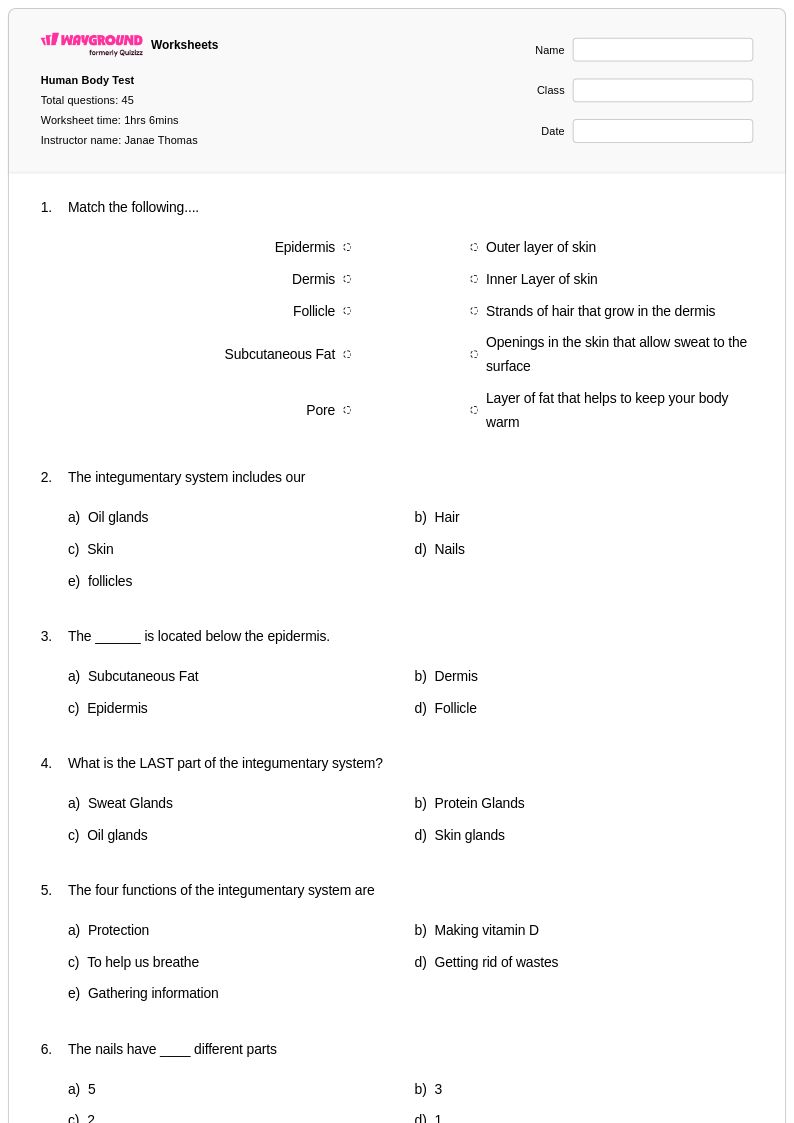
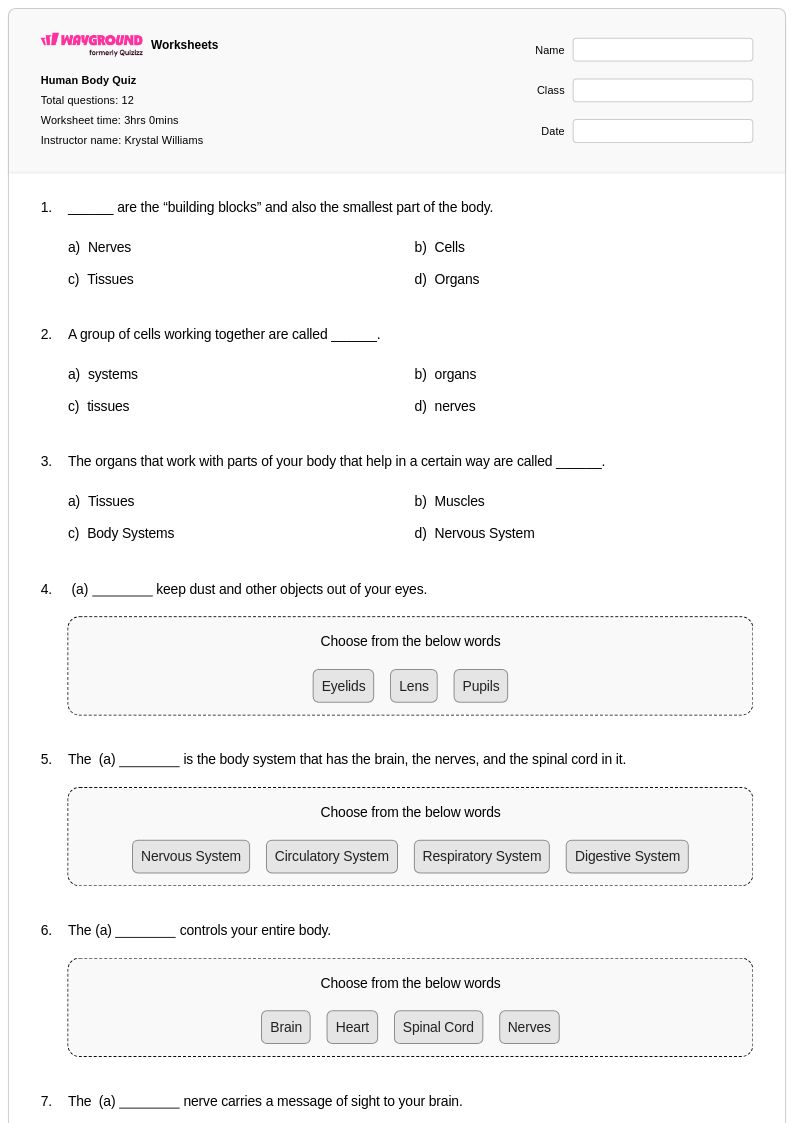
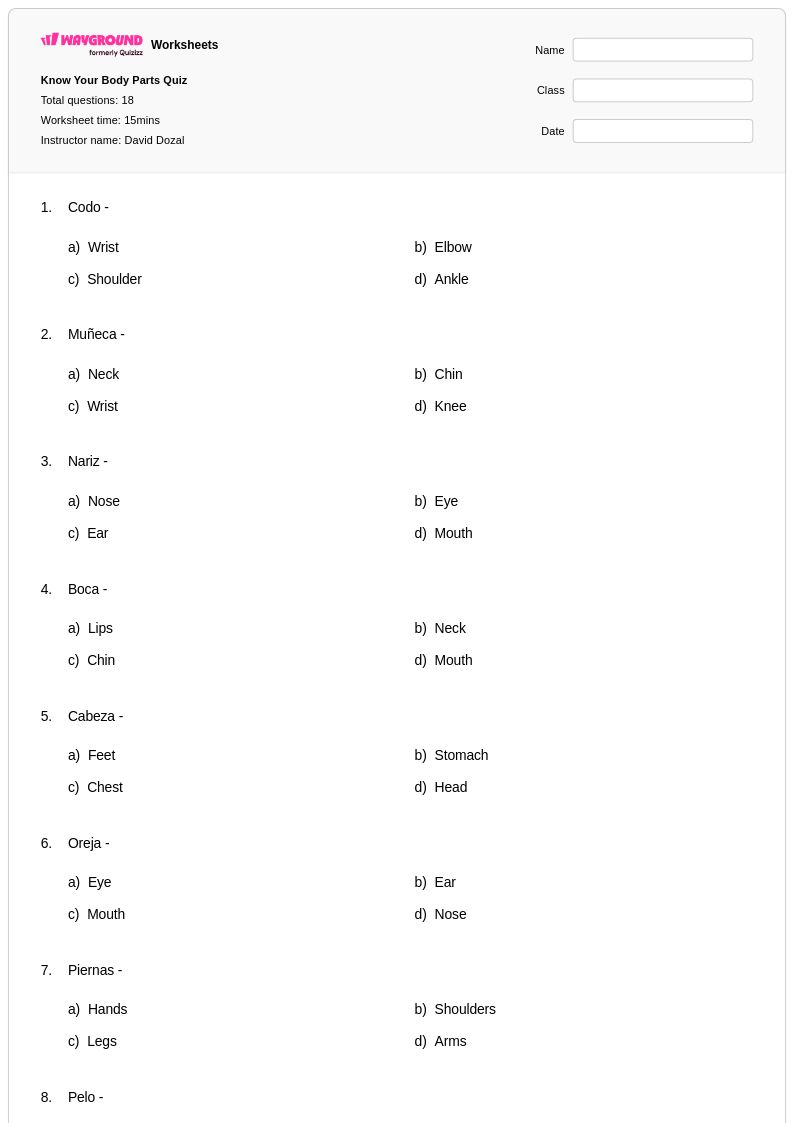
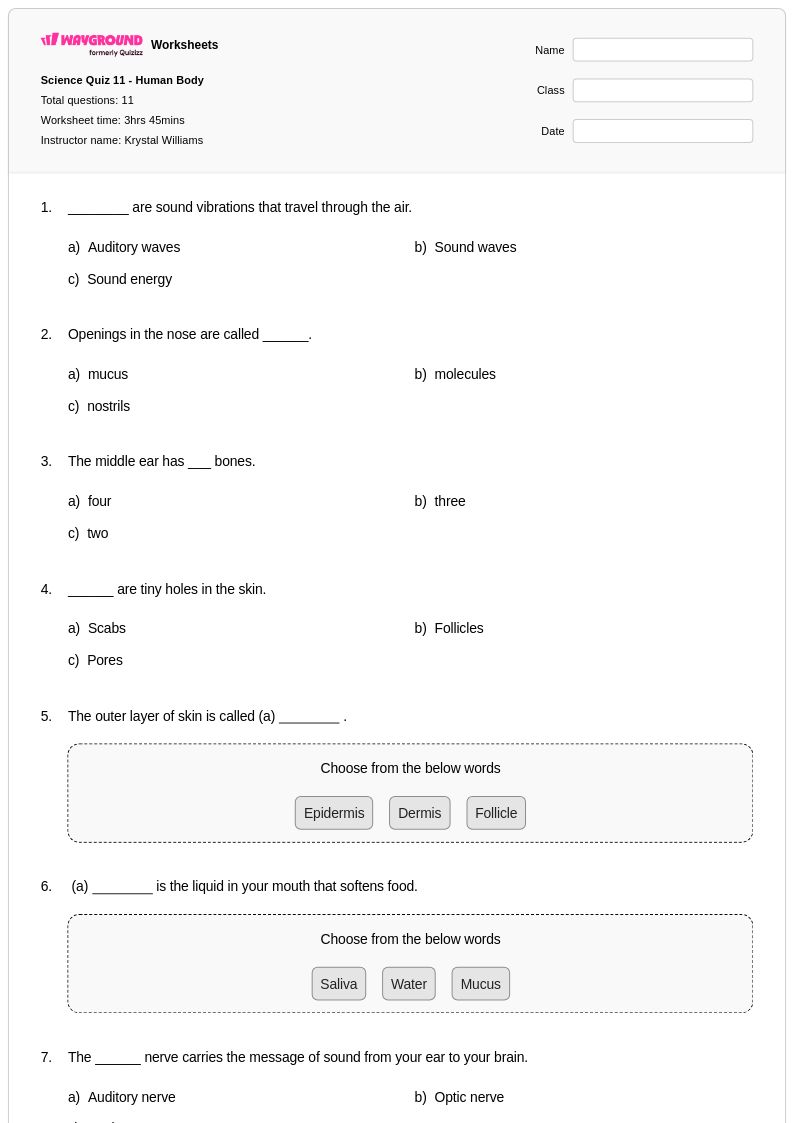
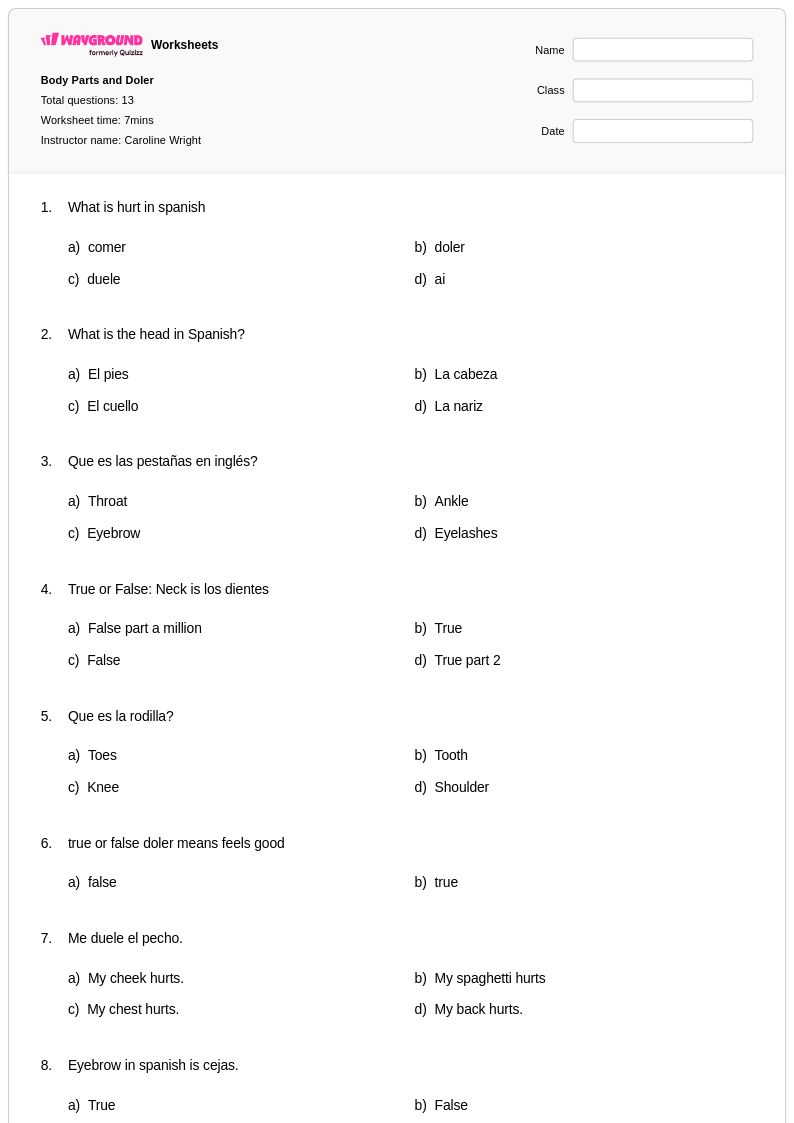
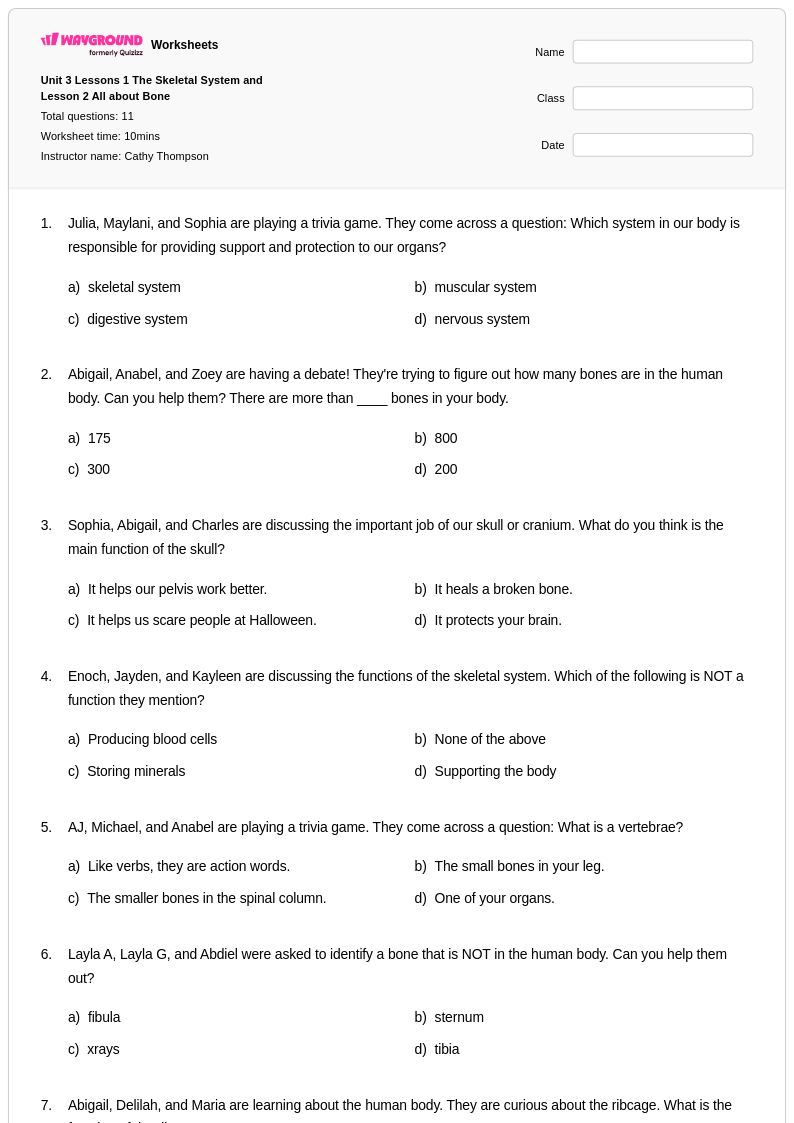
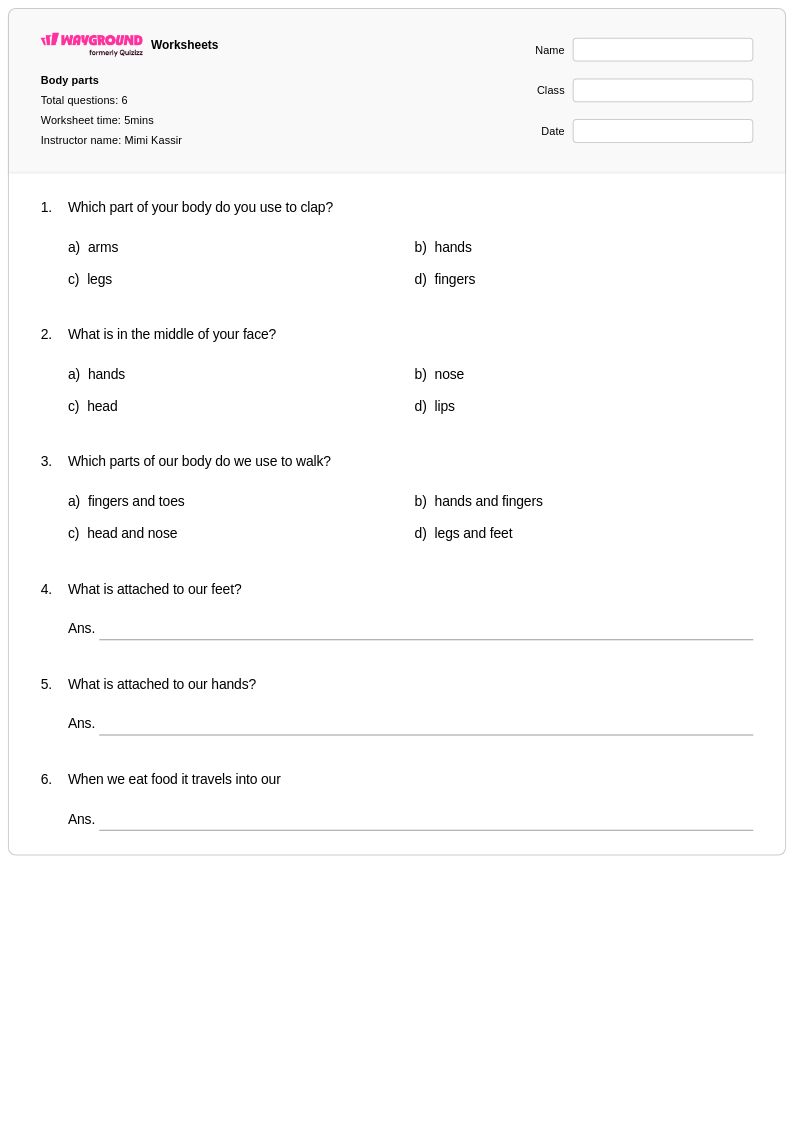
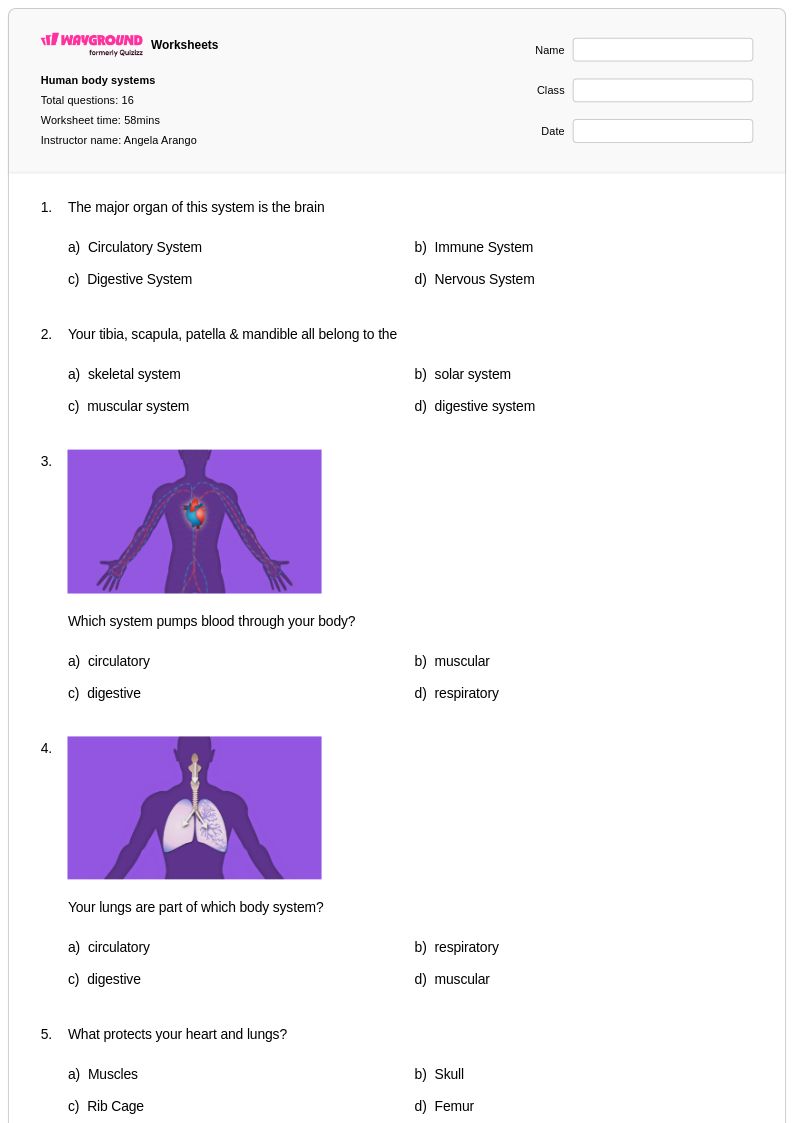
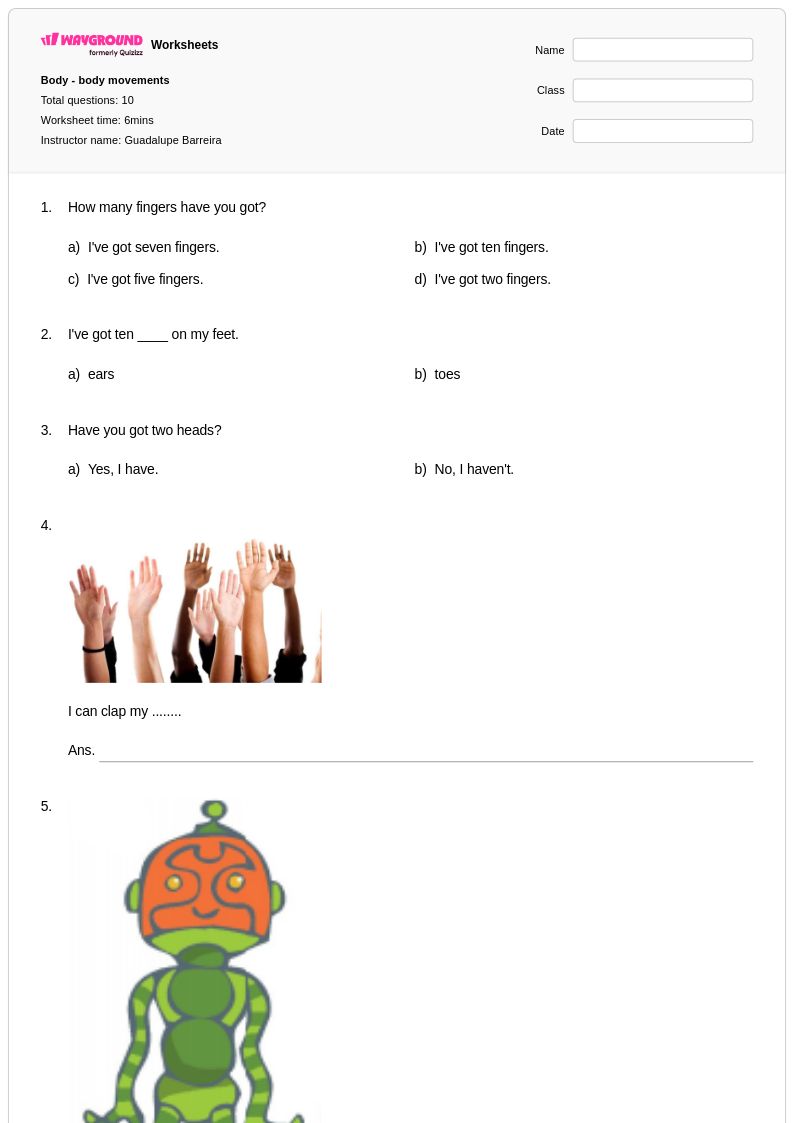
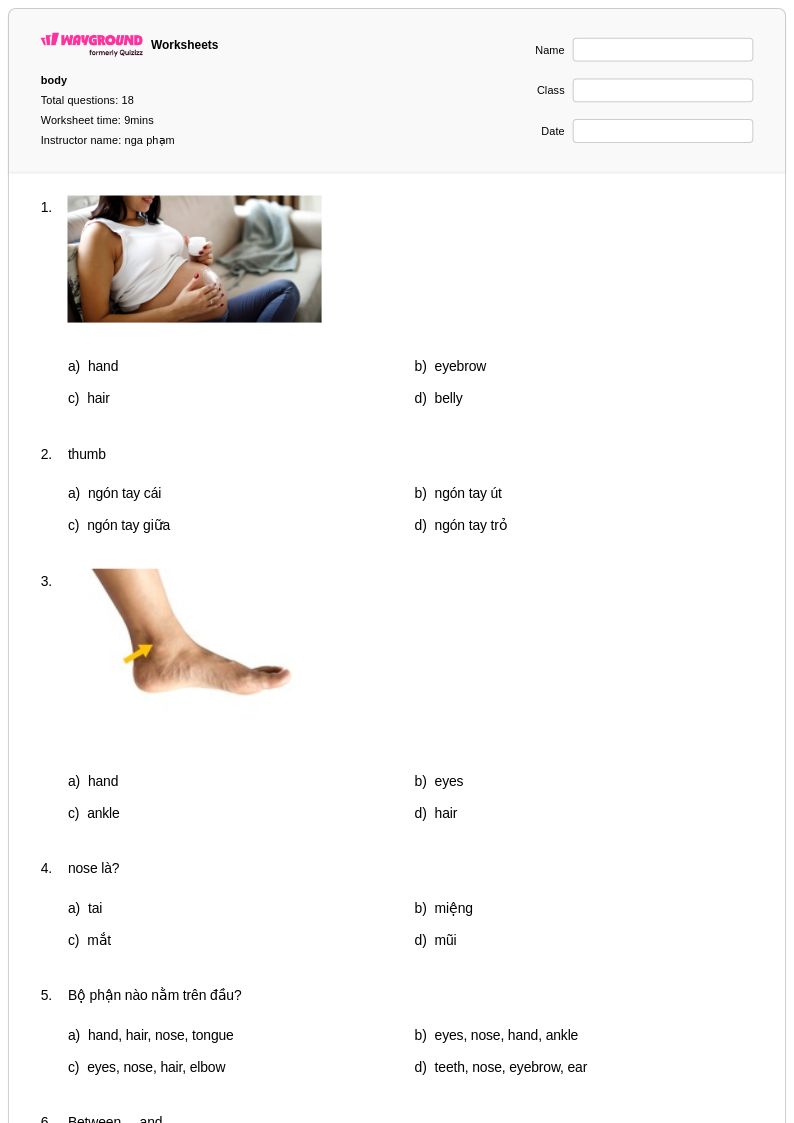
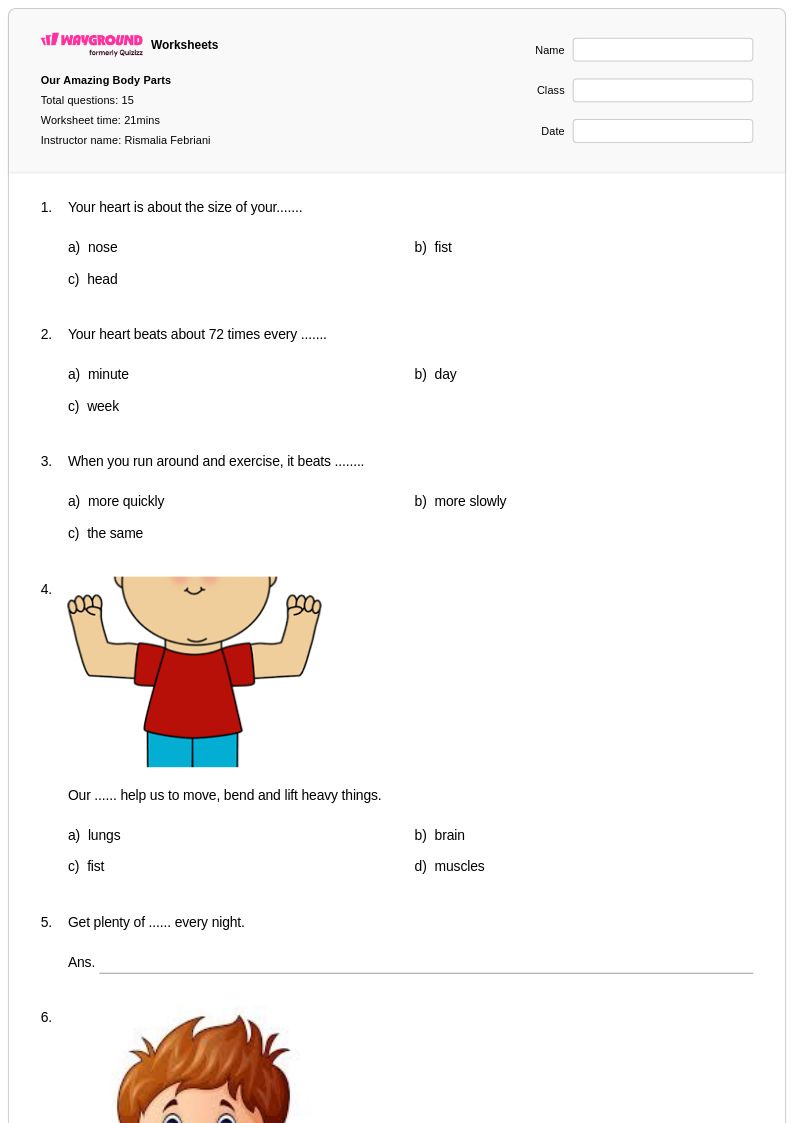
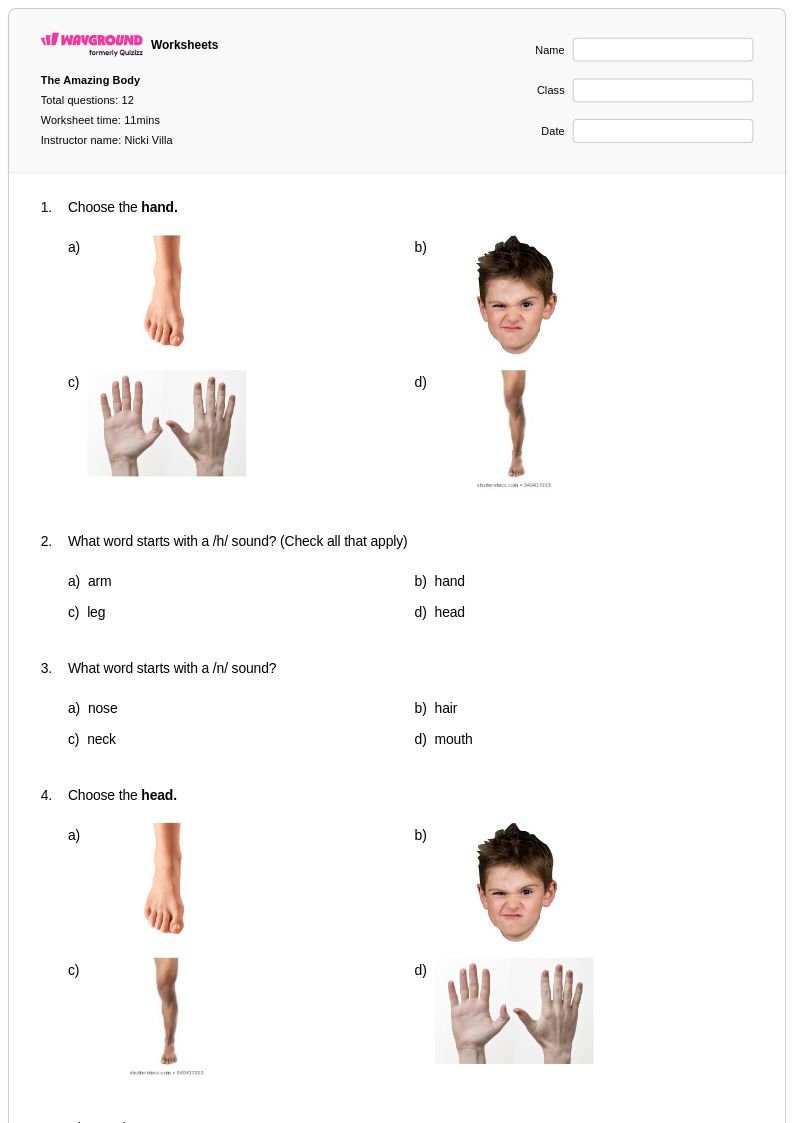
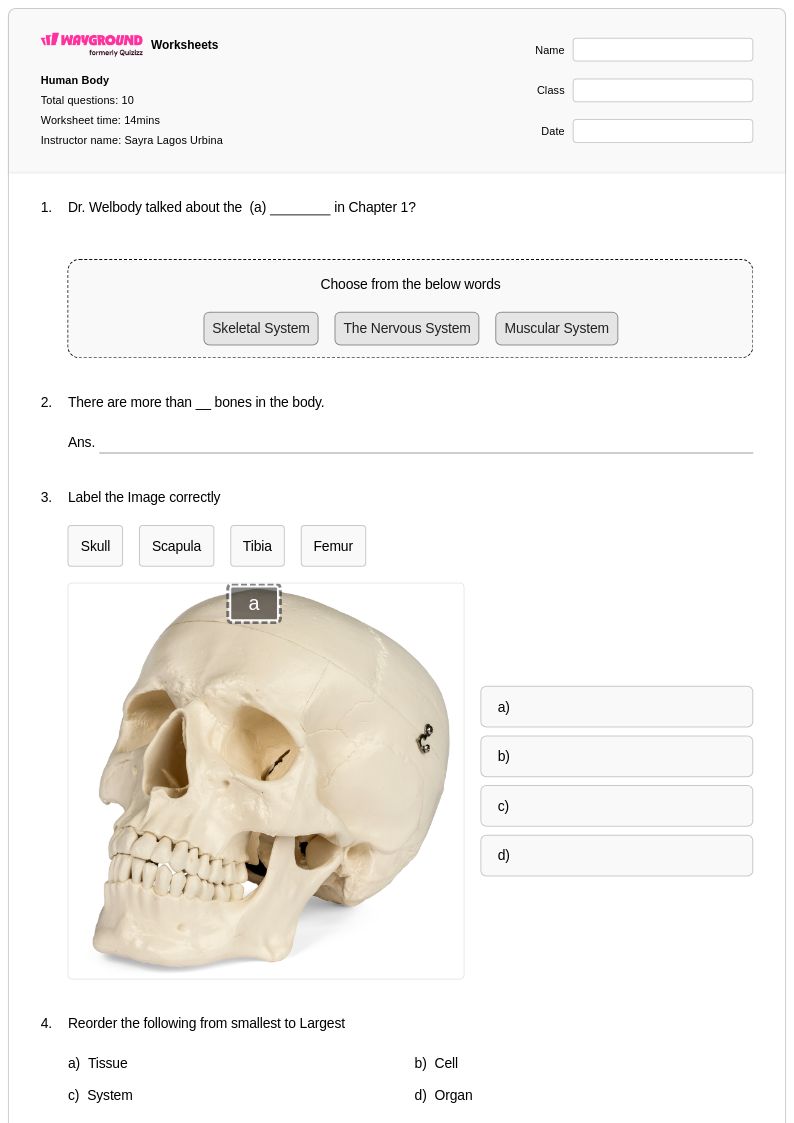
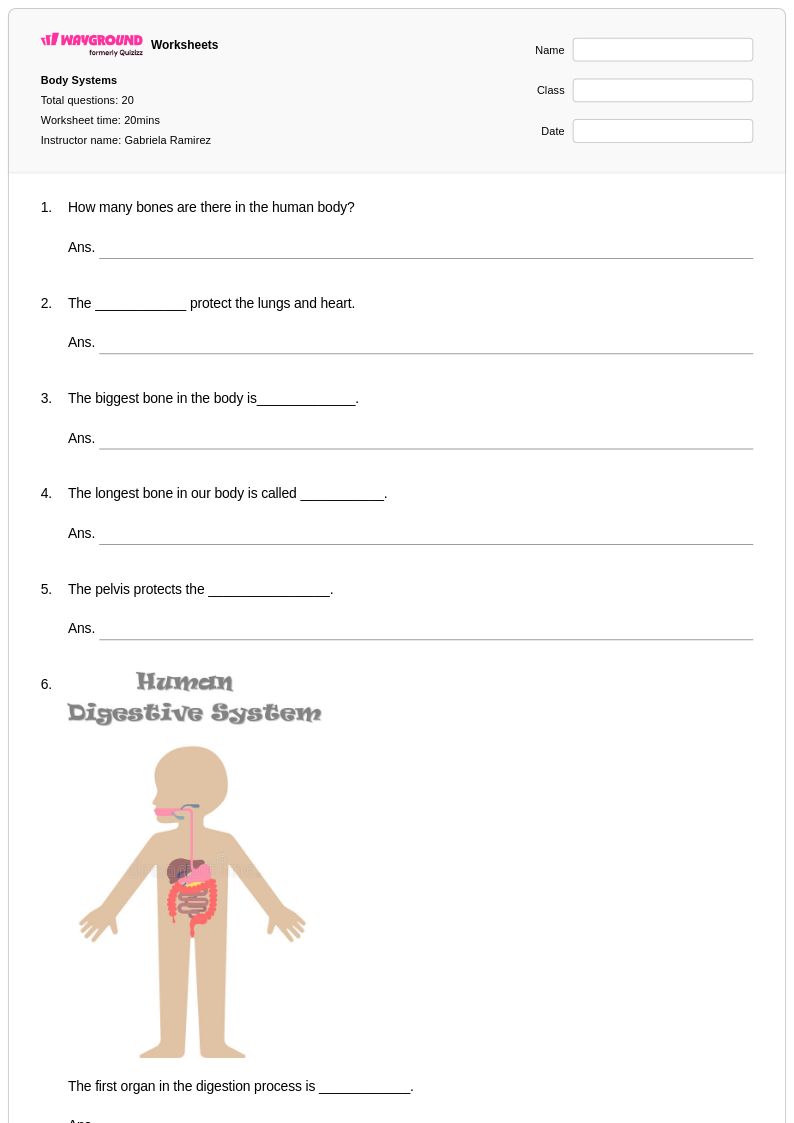
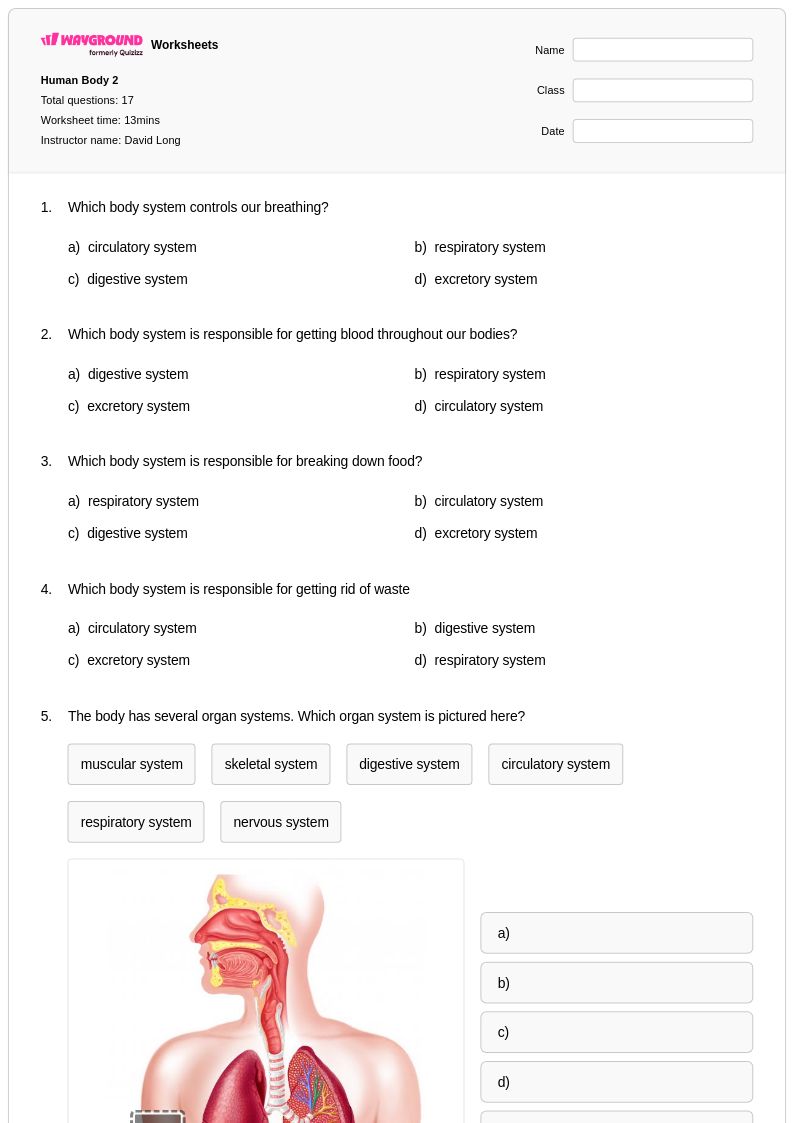
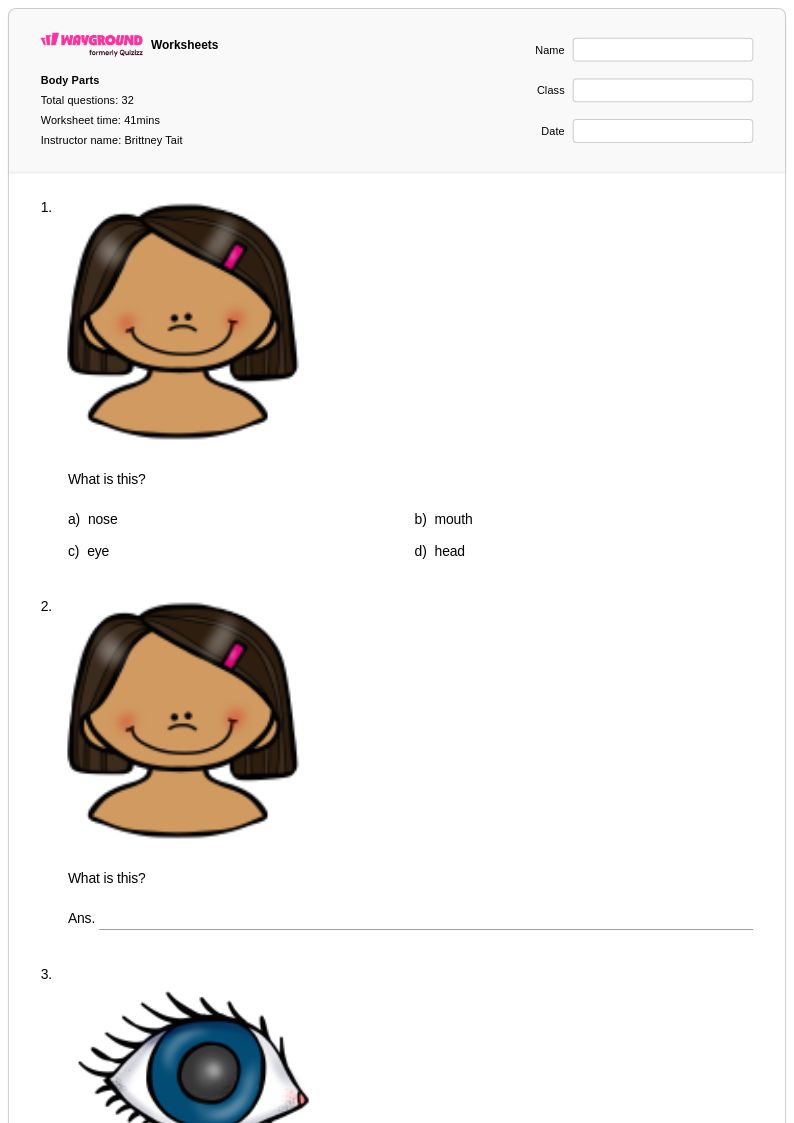
Explore Wayground's free Grade 3 body scan worksheets and printables that help students develop mindfulness skills through guided physical awareness exercises, complete with practice problems and answer keys in PDF format.
Explore printable Body Scan worksheets for Grade 3
Body scan activities for Grade 3 students represent a foundational approach to developing mindfulness and body awareness within Physical Education curricula. Wayground's comprehensive collection of body scan worksheets guides young learners through systematic exercises that help them recognize physical sensations, understand the connection between mind and body, and develop essential self-regulation skills. These carefully designed printables incorporate age-appropriate language and engaging activities that teach students to notice tension, relaxation, and different feelings throughout their bodies. Each worksheet includes structured guidance for progressive muscle awareness, breathing coordination, and reflective exercises, with accompanying answer keys that help educators assess student understanding of mindfulness concepts. The free pdf resources feature practice problems that encourage students to identify emotions through physical sensations and develop vocabulary for describing their internal experiences.
Wayground's extensive platform, built from the foundation of Quizizz, provides educators with millions of teacher-created resources specifically designed to support mindfulness instruction in elementary Physical Education settings. The platform's robust search and filtering capabilities enable teachers to quickly locate body scan materials that align with specific learning standards and accommodate diverse student needs through built-in differentiation tools. These worksheets are available in both printable and digital formats, allowing for flexible implementation whether students are learning in classroom, gymnasium, or remote environments. Teachers can easily customize activities to match their students' developmental levels, create targeted interventions for students who need additional support with self-awareness skills, and provide enrichment opportunities for advanced learners ready to explore deeper mindfulness concepts through structured skill practice and reflection exercises.
FAQs
How do I teach a body scan to students who have never done mindfulness before?
Start by explaining the purpose of a body scan in simple terms: it is a technique for noticing physical sensations, tension, and relaxation in different parts of the body without trying to change them. Begin with short, guided sessions of two to three minutes, focusing on just a few body regions such as the hands, shoulders, and feet before progressing to full-body sequences. Structured worksheets that move from basic body part identification to guided meditation sequences can help students build this skill incrementally and give them a reference point between sessions.
What exercises help students practice body scan and mindfulness techniques?
Effective practice exercises include guided journaling prompts where students record physical sensations before and after a scan, tension-mapping activities where they shade or label areas of tightness on a body outline, and progressive relaxation sequences that move systematically from head to toe. Worksheets with structured practice problems help students develop consistent mindful attention over time, making the skill transferable to high-stress situations like physical activity or assessments.
What mistakes do students commonly make when learning body scan techniques?
The most common error is trying to change or judge the sensations they notice rather than simply observing them, which disrupts the non-reactive awareness the technique is designed to build. Students also frequently rush through the scan without pausing long enough at each body region to register actual sensation. Some students conflate relaxation with the goal, becoming frustrated when tension persists, so it helps to explicitly teach that noticing tension without reacting is itself the skill.
How do body scan worksheets support self-regulation skills in physical education?
Body scan worksheets teach students to identify physical cues of stress and arousal, which is a foundational self-regulation skill relevant to both physical education and social-emotional learning. By regularly practicing structured scans, students learn to recognize their body's response to exertion, competition, or anxiety and develop language to describe those states. This awareness creates a bridge between physical experience and cognitive response, supporting students' ability to manage effort, recovery, and emotional regulation during and after physical activity.
How do I use body scan worksheets in my classroom, and are they available digitally?
Body scan worksheets on Wayground are available as printable PDFs for traditional classroom or gym use and in digital formats for technology-integrated environments, including the option to host them as a quiz on Wayground. Printable versions with answer keys are well-suited for independent practice or guided group instruction, while digital formats allow for flexible deployment in blended or remote settings. Both formats include answer keys to ensure students receive consistent feedback as they develop mindfulness competencies.
How can I differentiate body scan activities for students with different needs or abilities?
Differentiation for body scan activities can include shortening the number of body regions covered for students who need reduced cognitive load, providing audio-guided versions for students who benefit from read-aloud support, or extending time for students who process more slowly. On Wayground, teachers can apply student-level accommodations such as read aloud, extended time, and reduced answer choices individually without other students being notified, making it practical to support diverse learners within the same session.