Free Printable Butterfly Anatomy Worksheets for Kindergarten
Explore Wayground's free kindergarten butterfly anatomy worksheets and printables that help young learners identify and understand the basic parts of a butterfly through engaging practice problems with answer keys.
Explore printable Butterfly Anatomy worksheets for Kindergarten
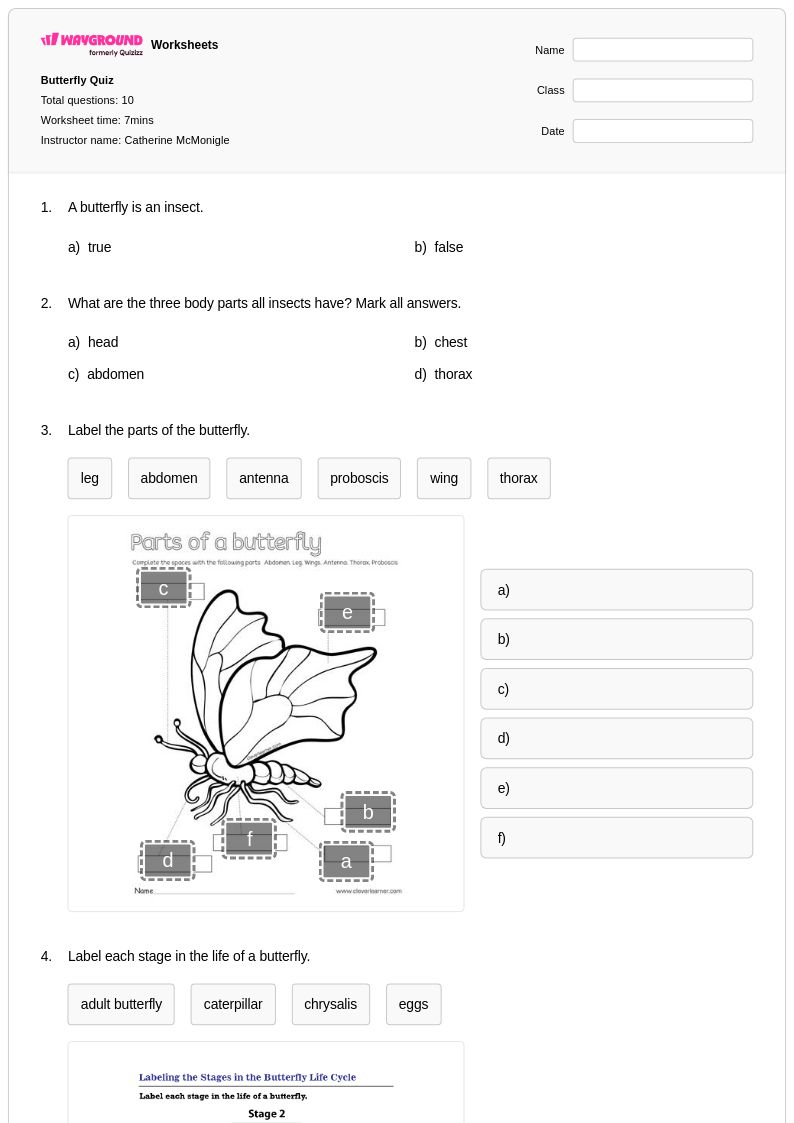
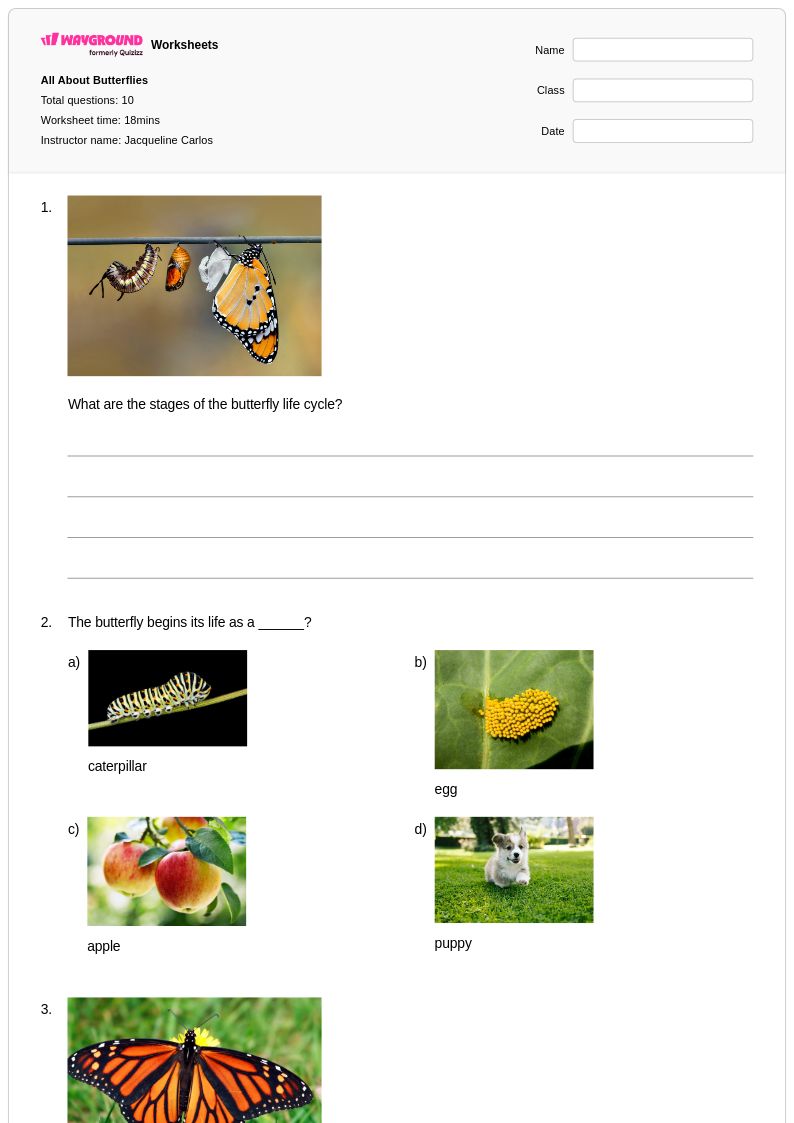
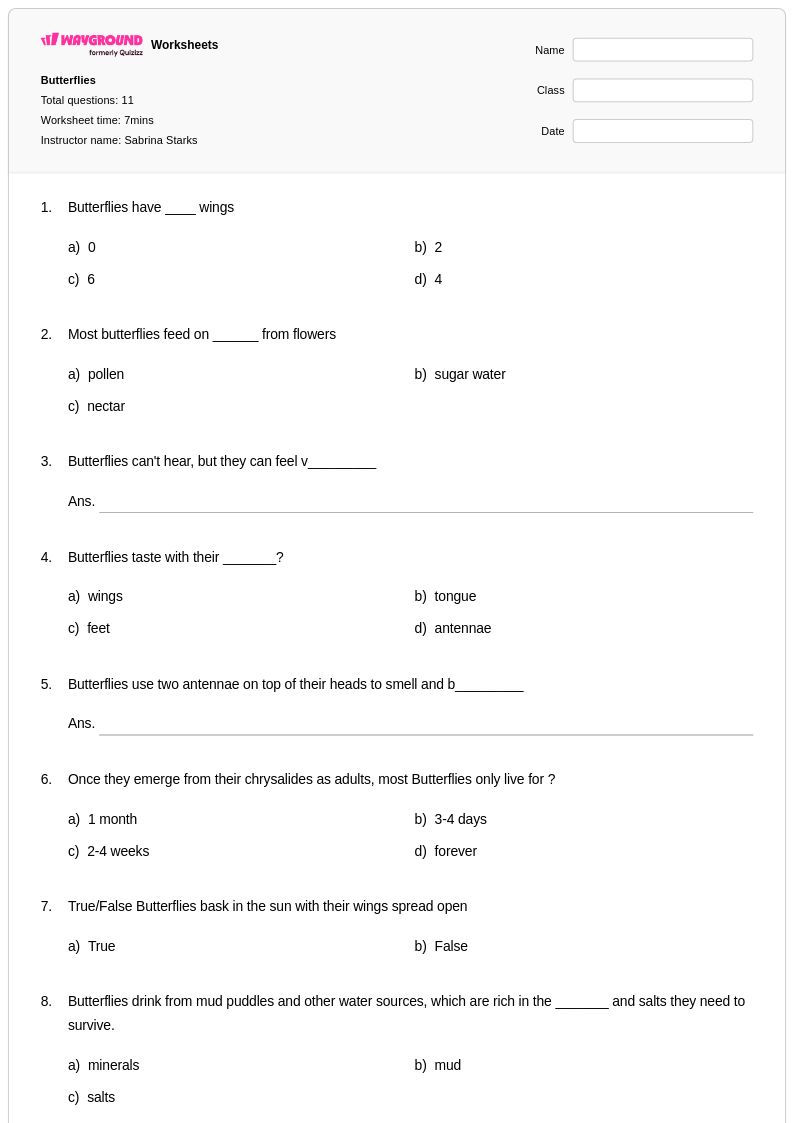
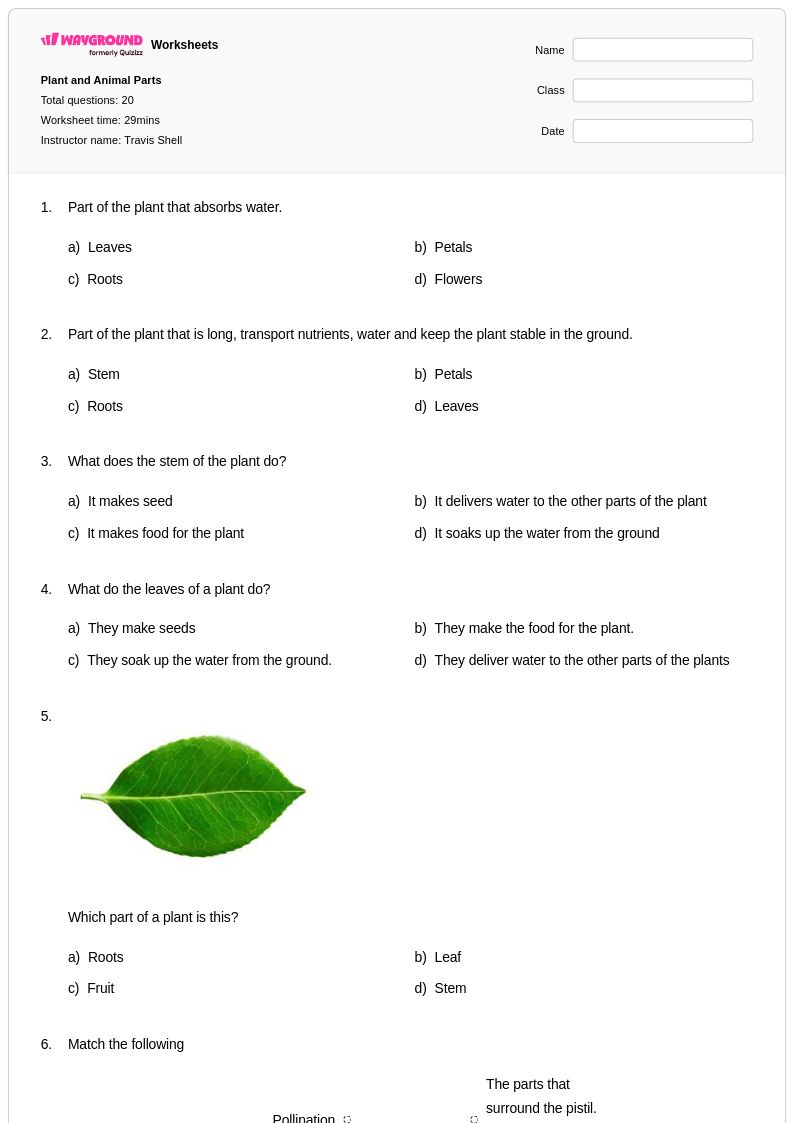
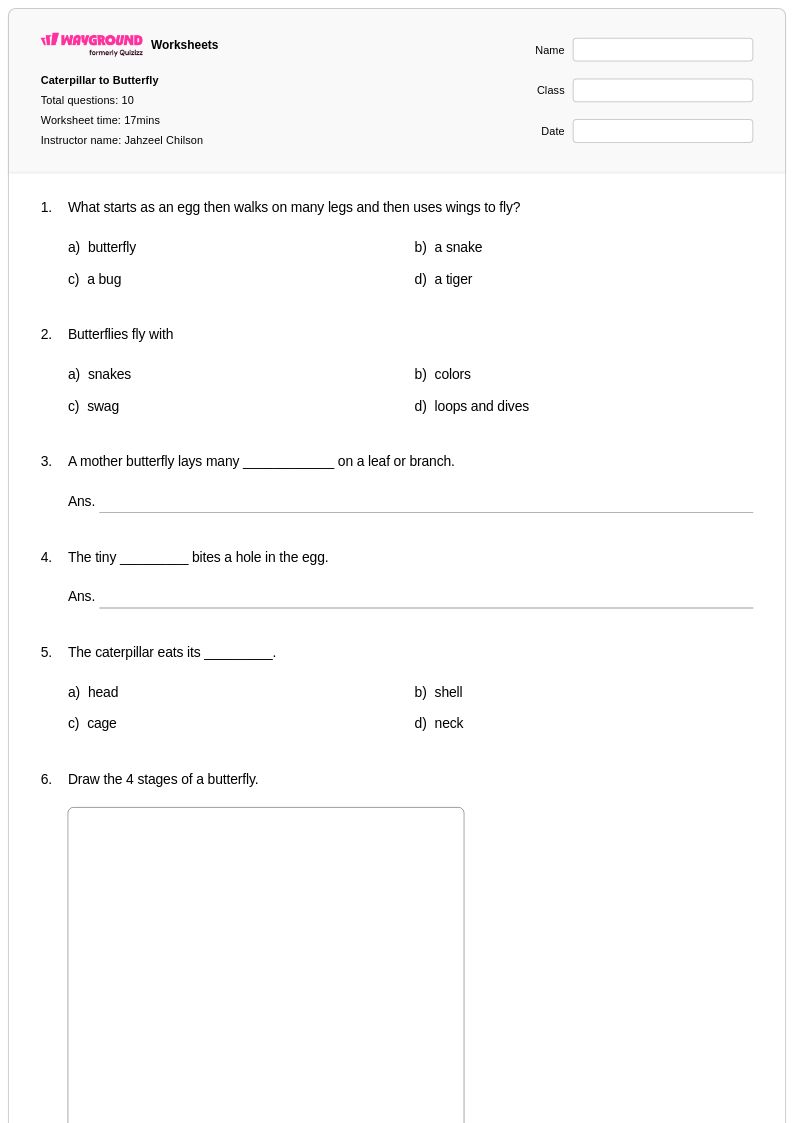
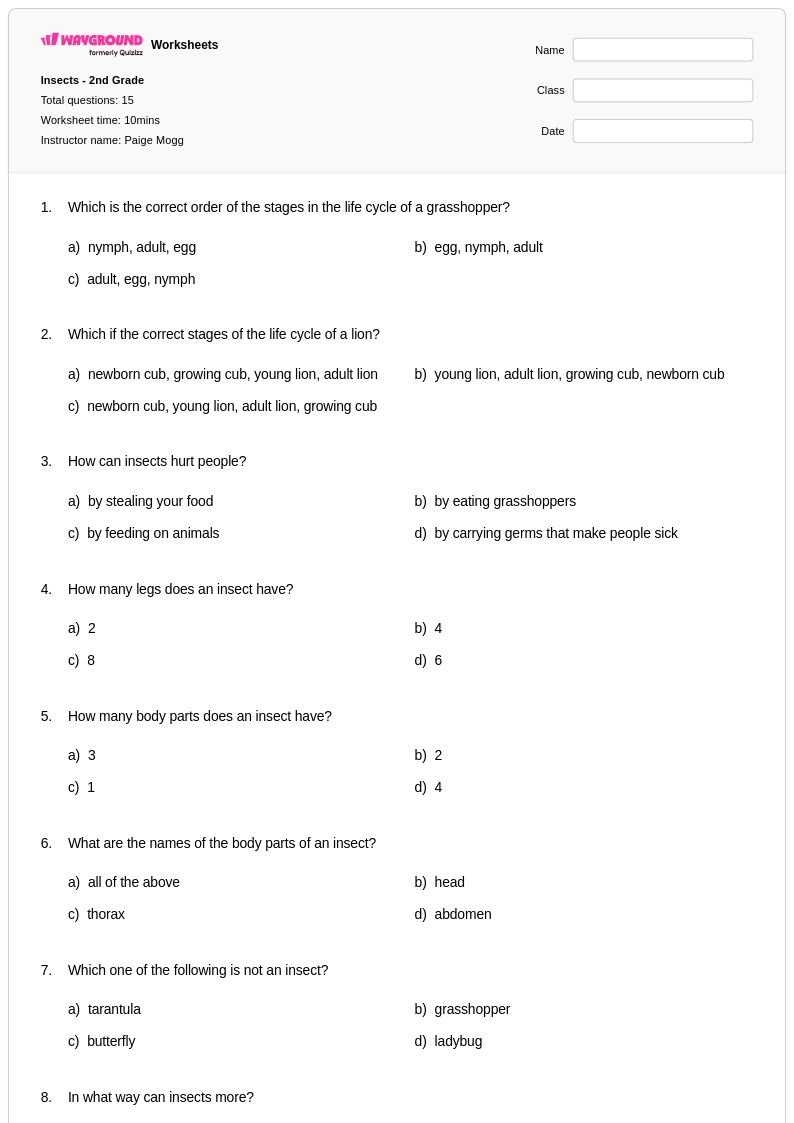
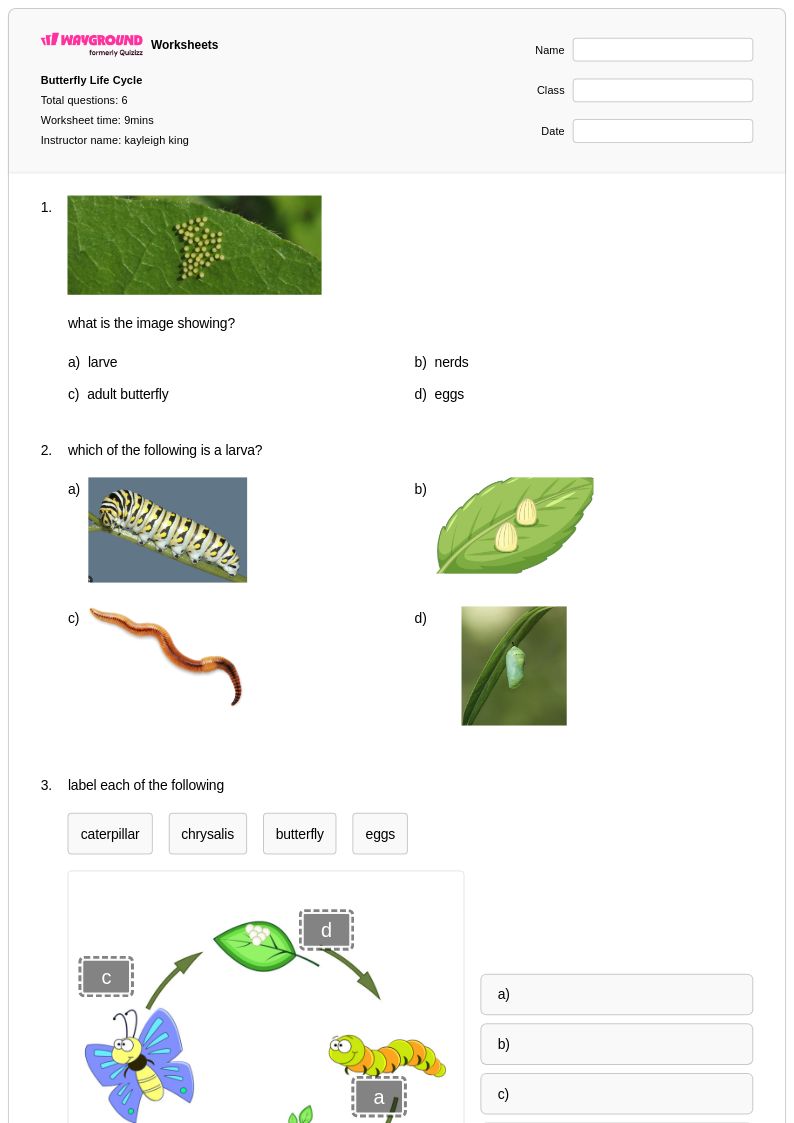
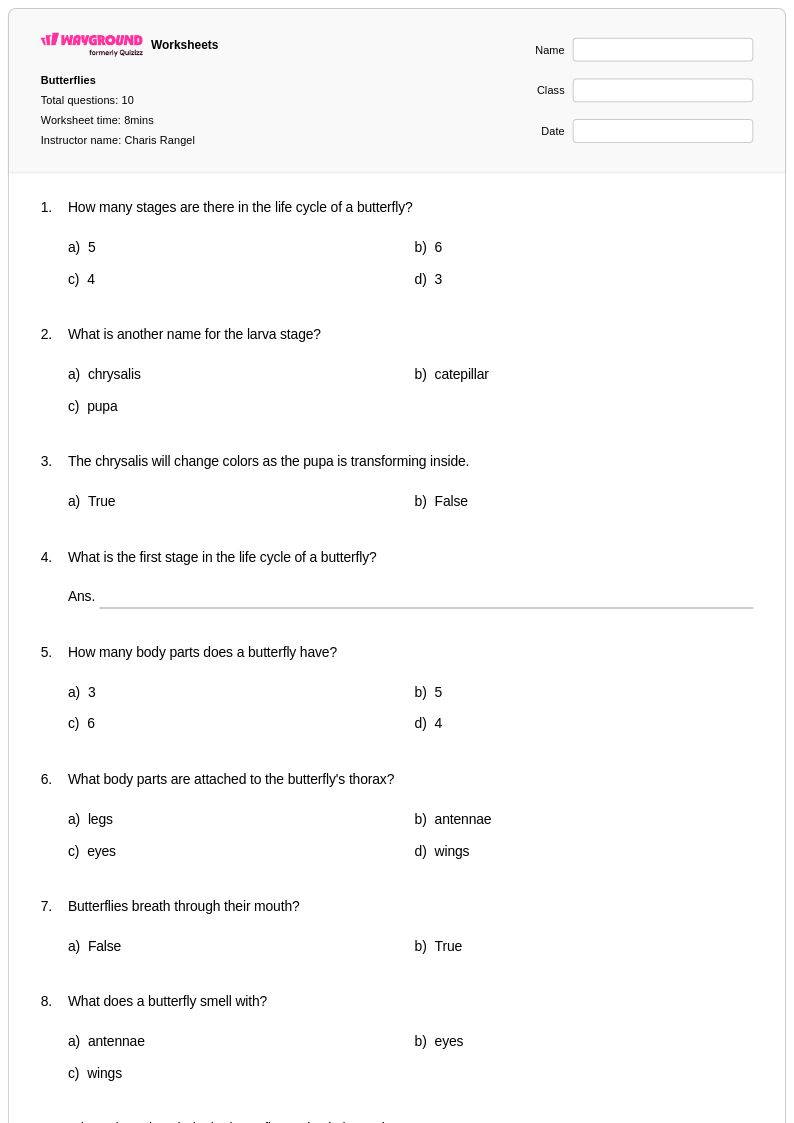
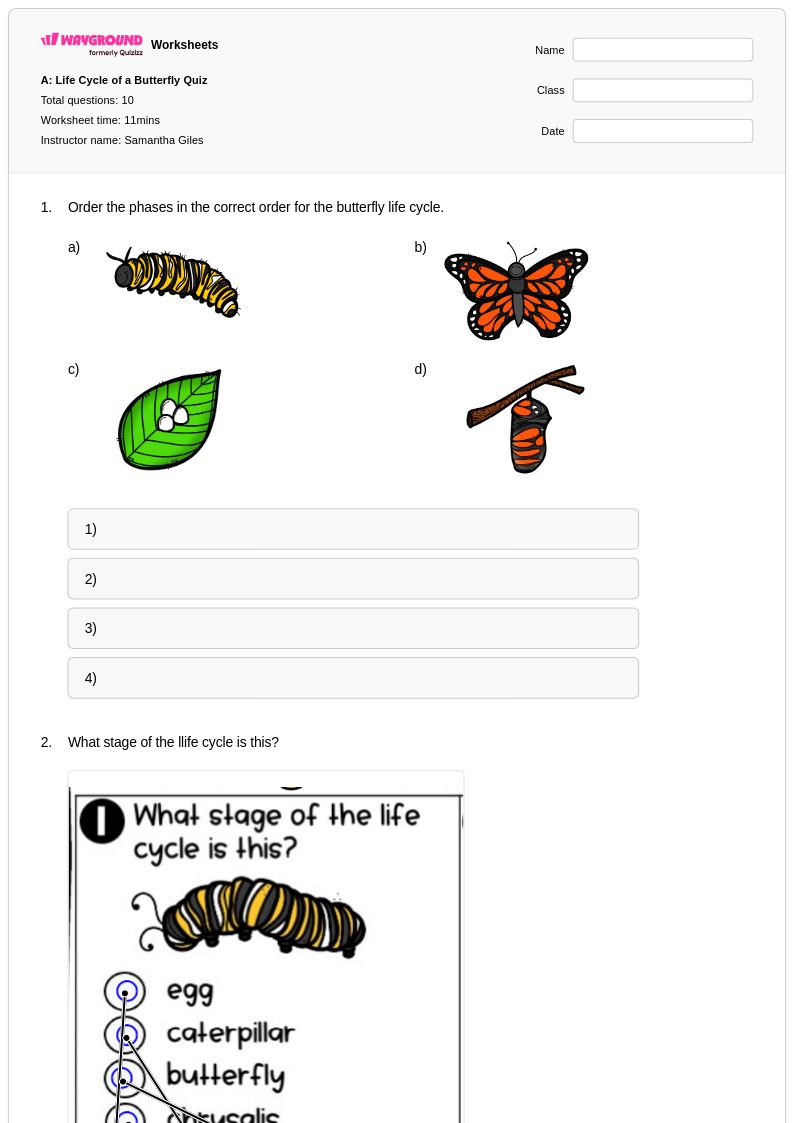
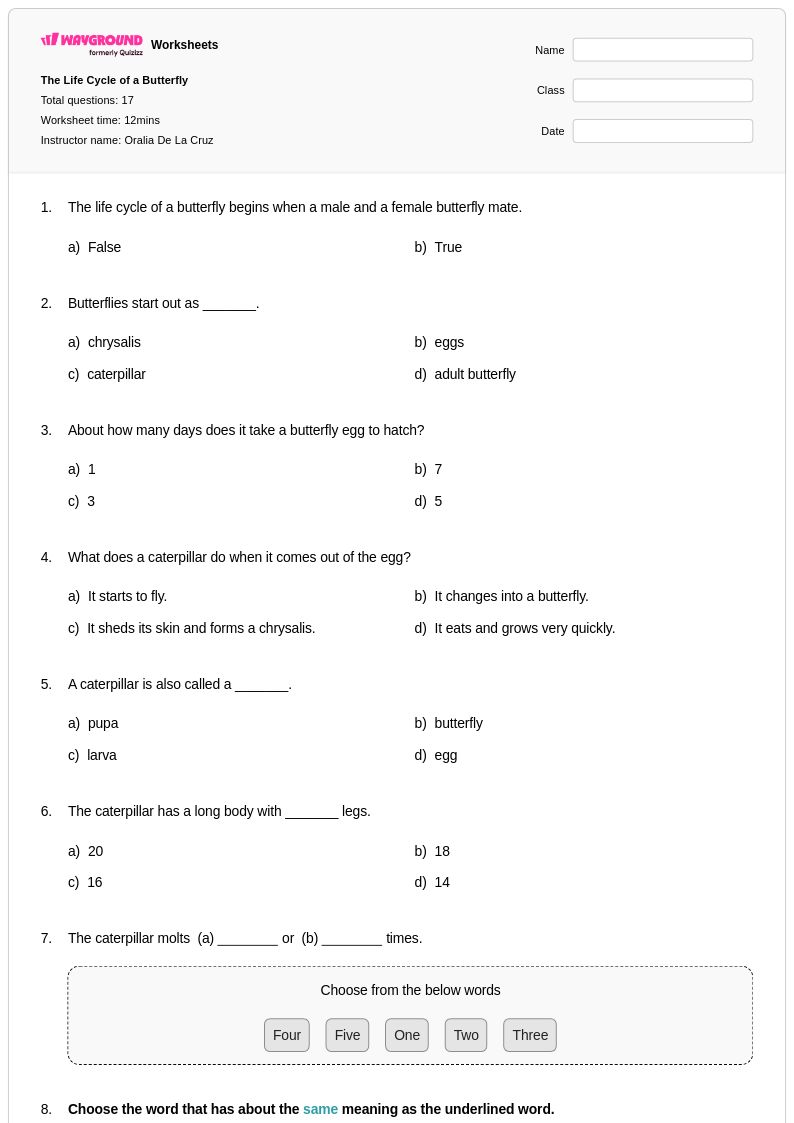
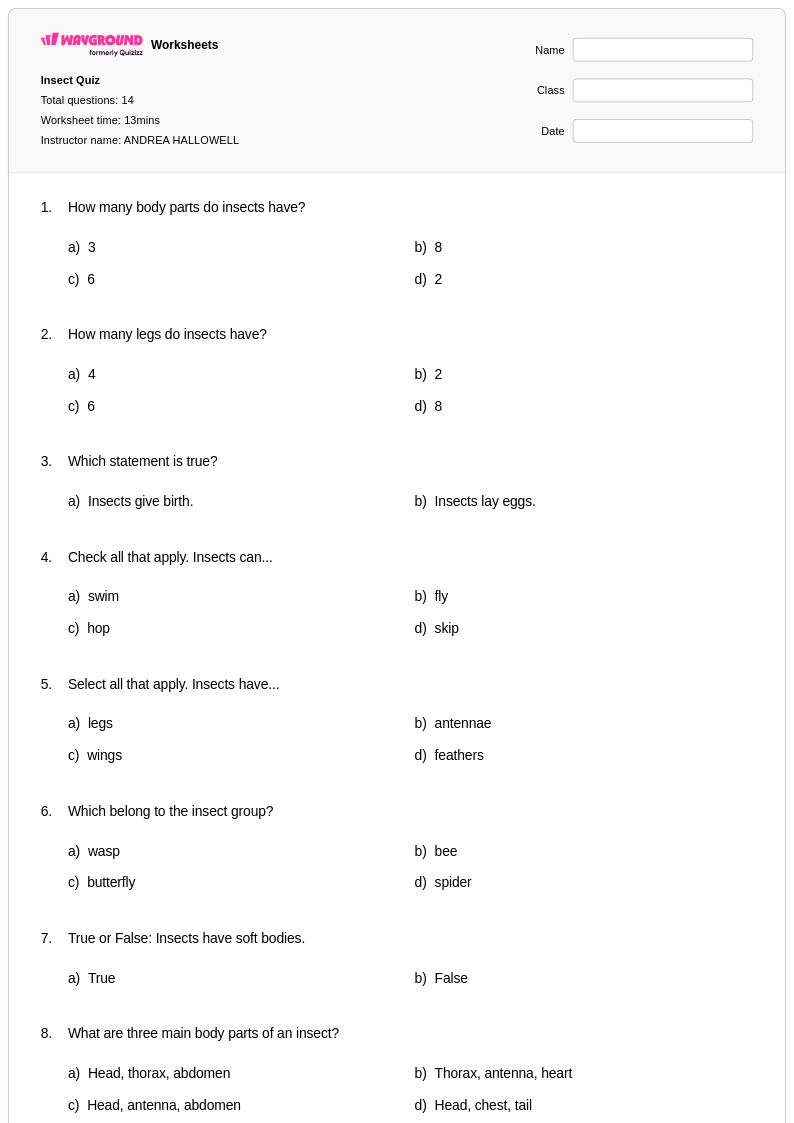
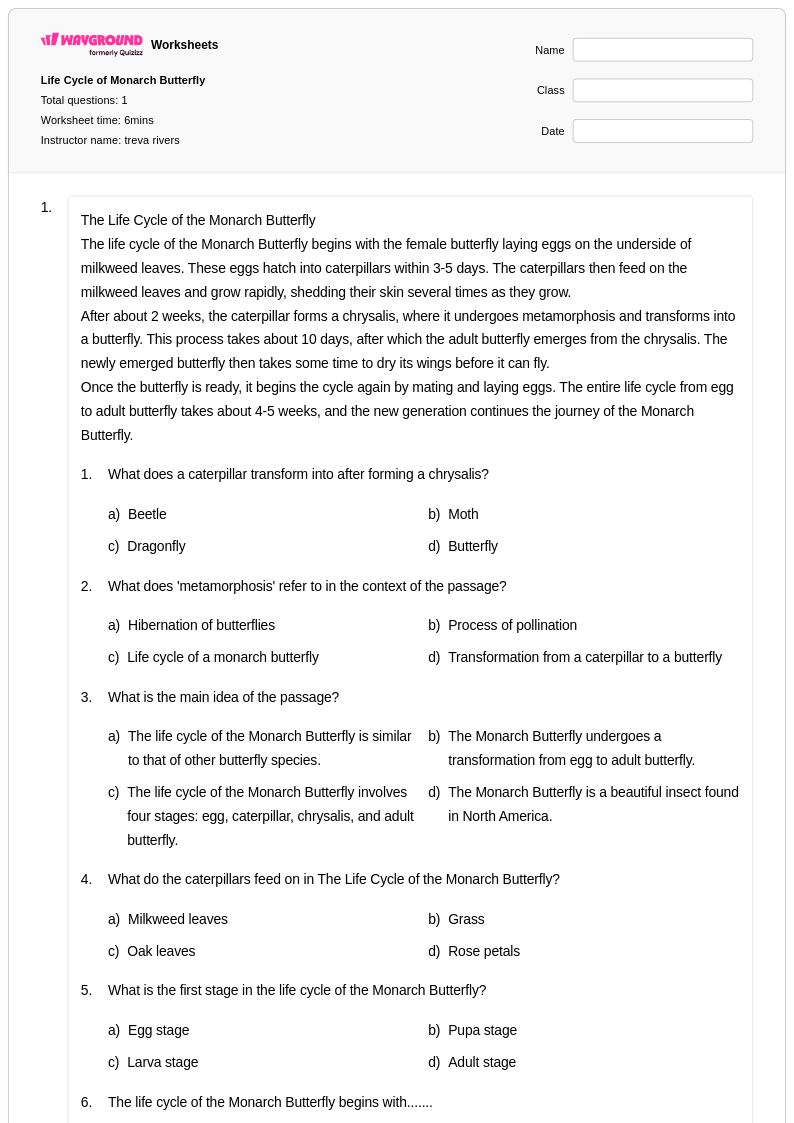
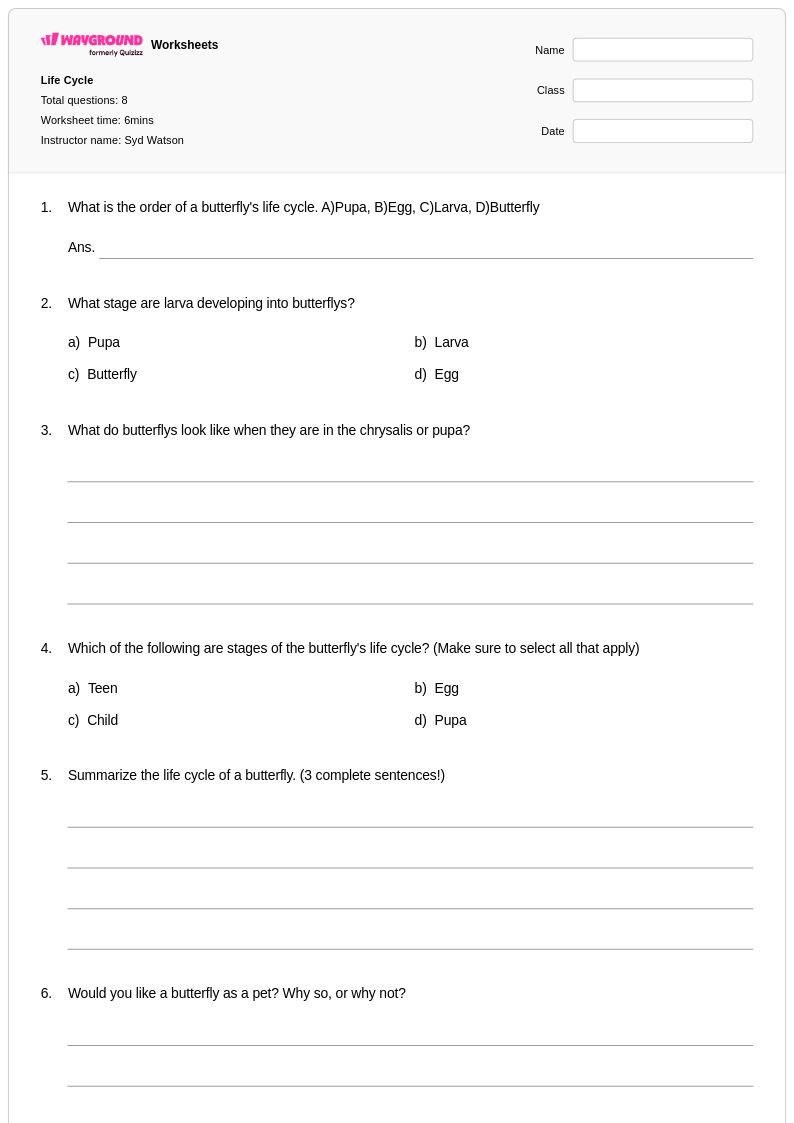
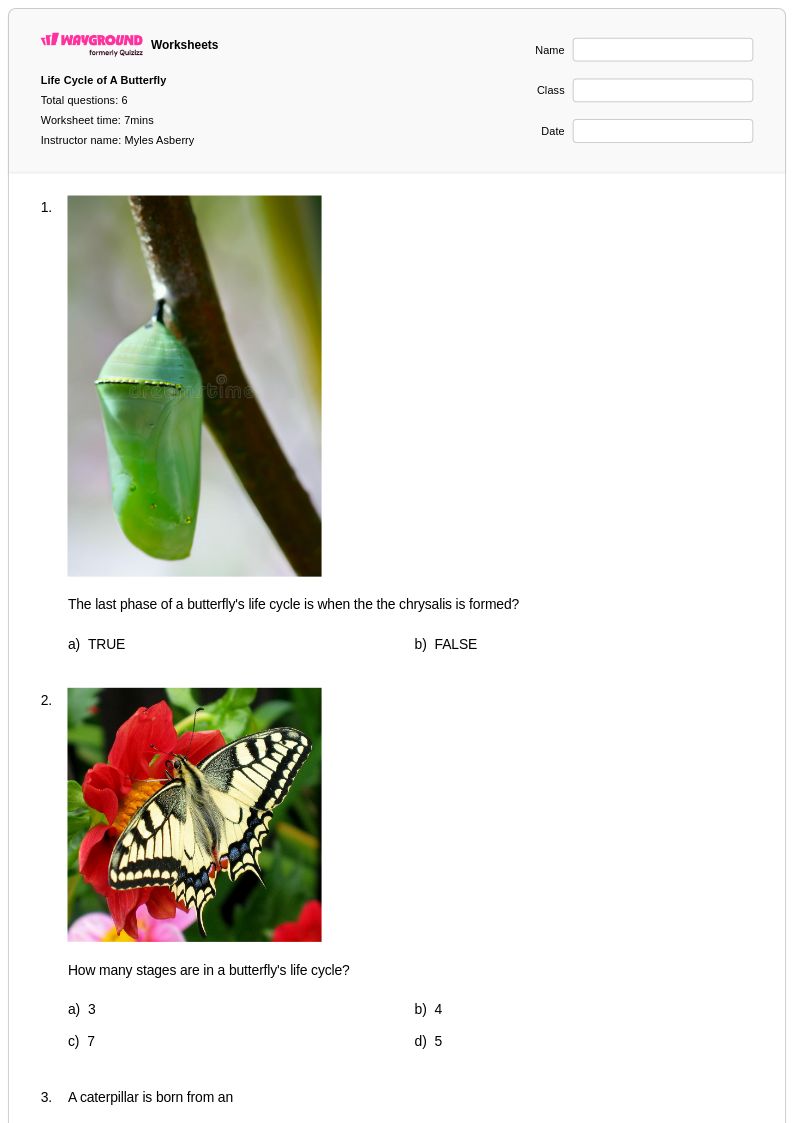
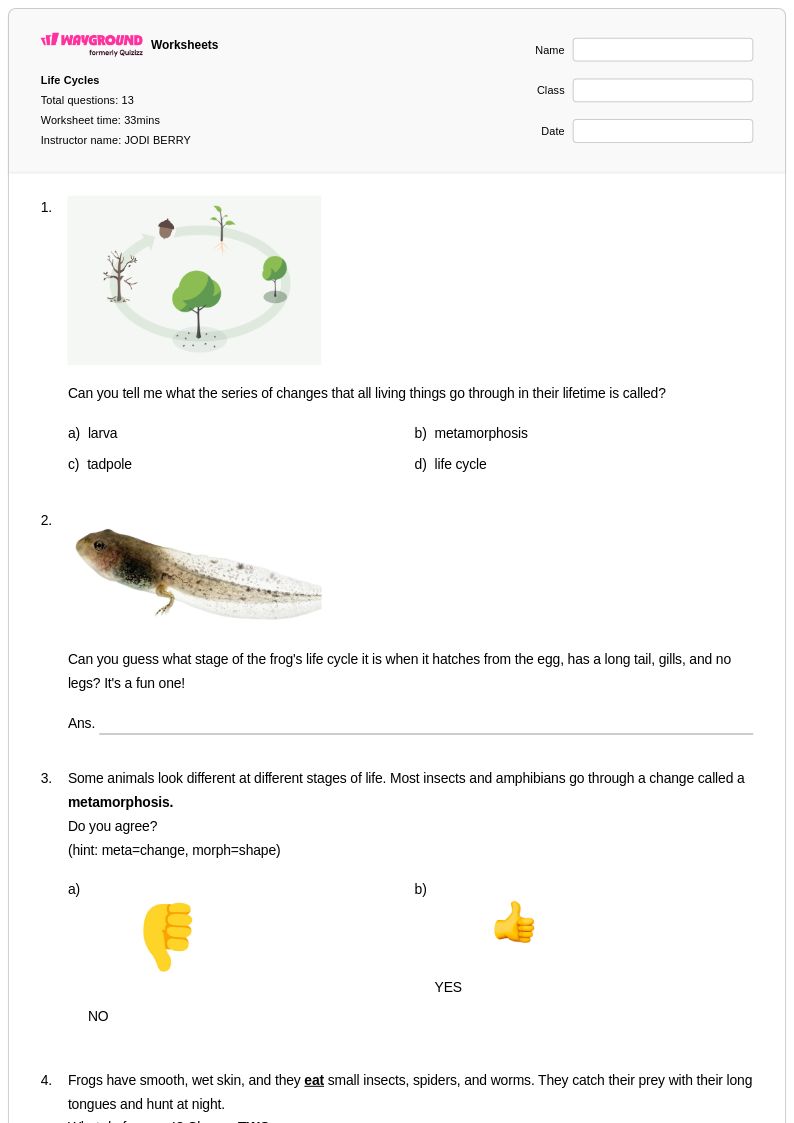
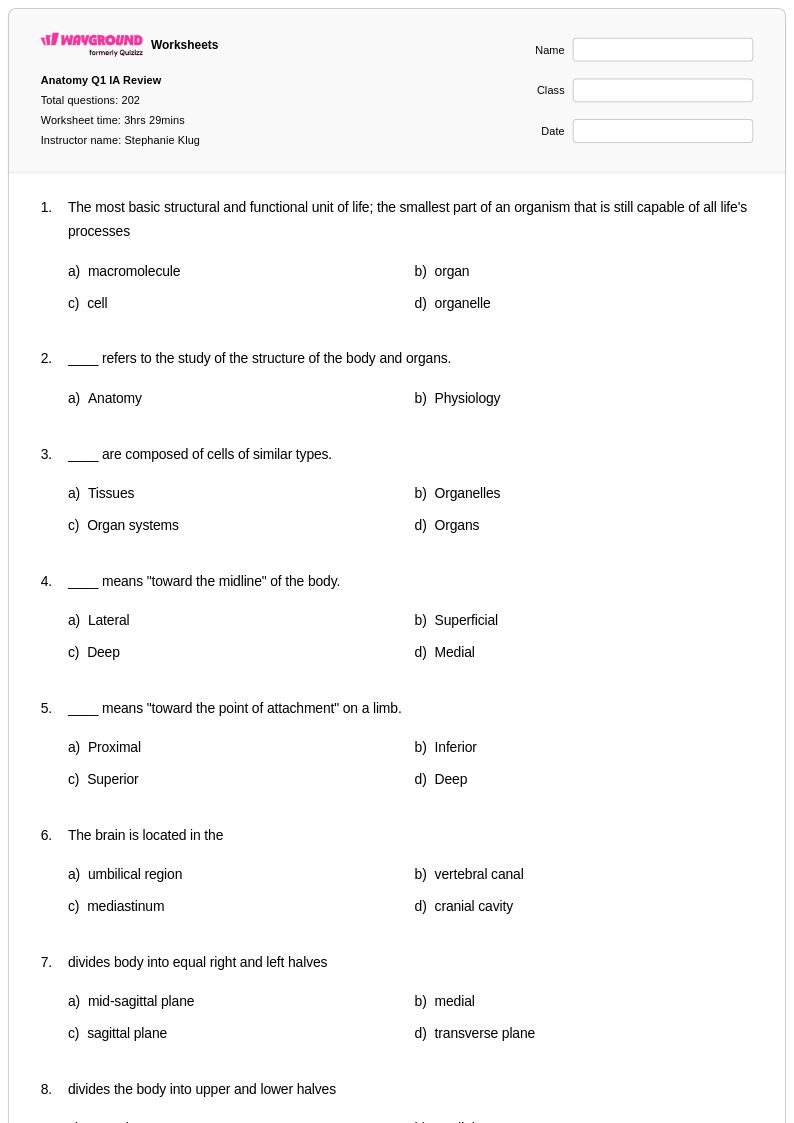
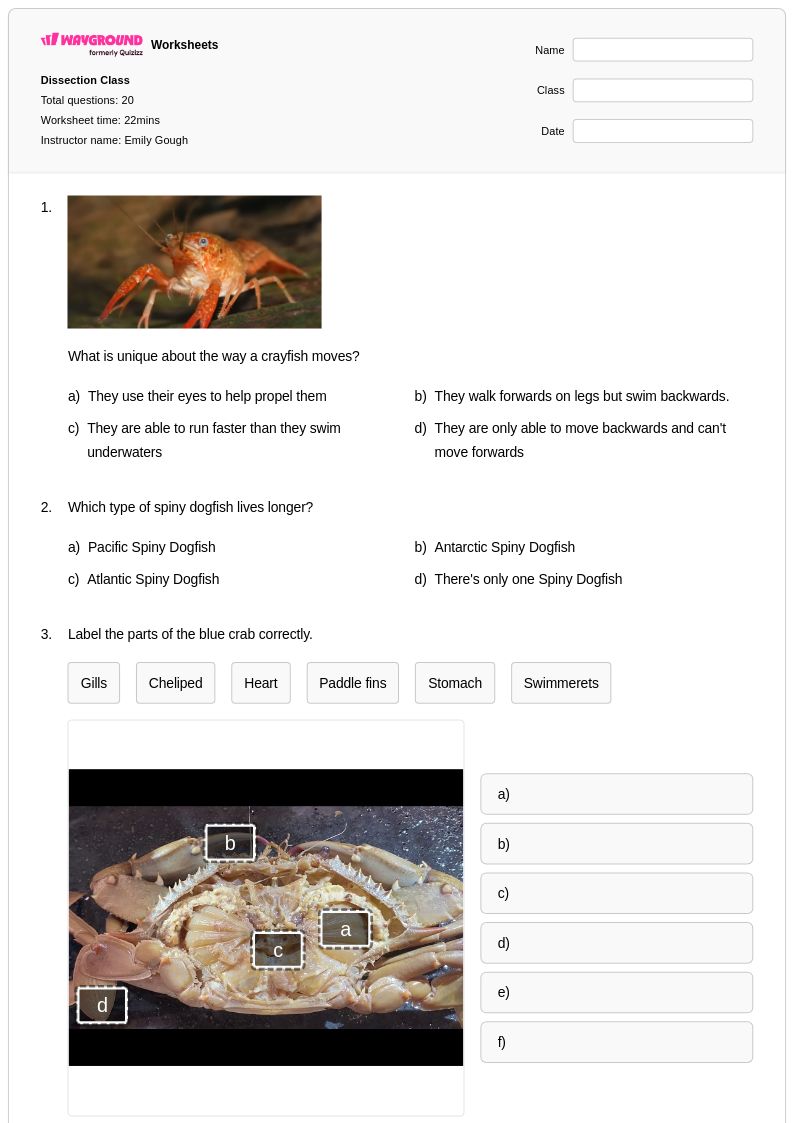
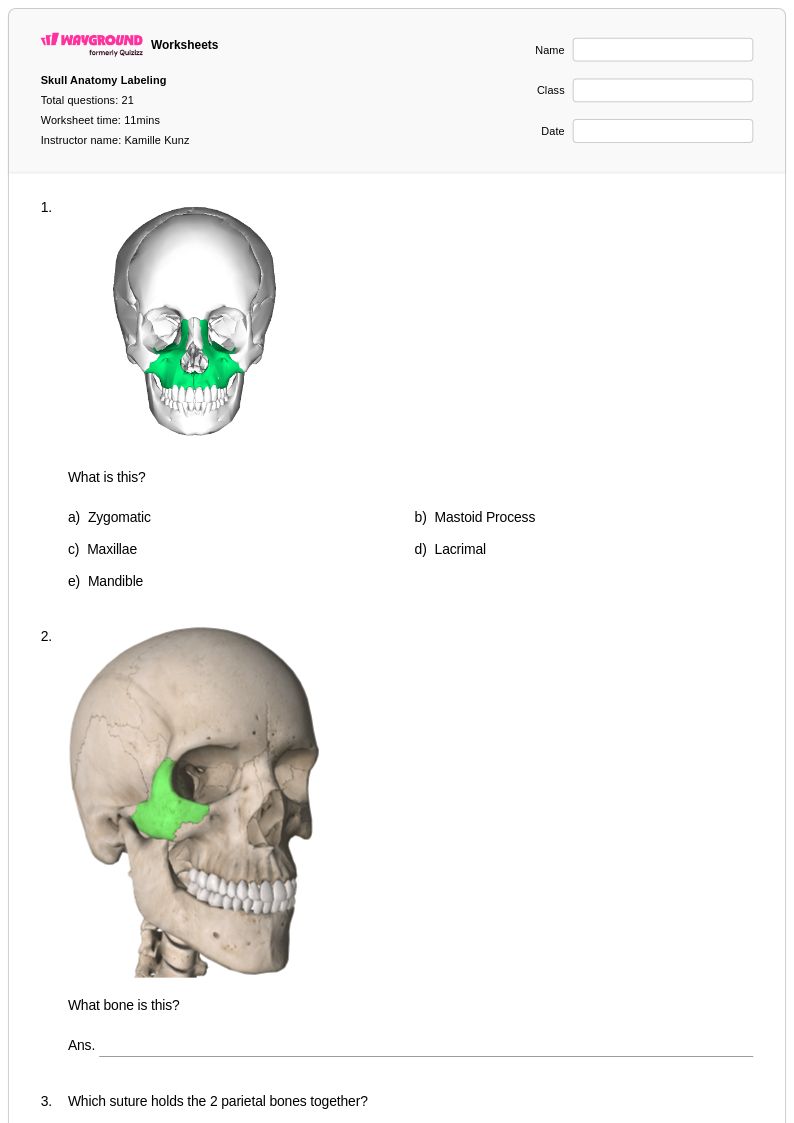
Butterfly anatomy worksheets for kindergarten students provide an engaging introduction to basic life science concepts through age-appropriate exploration of these fascinating insects. These educational resources help young learners identify and understand the main body parts of butterflies, including wings, antennae, head, thorax, and abdomen, while developing essential observation and vocabulary skills. The worksheets feature colorful illustrations, simple labeling activities, and interactive exercises designed specifically for early elementary students, making complex biological concepts accessible through hands-on practice problems. Teachers can utilize these free printables with confidence, as each worksheet includes a comprehensive answer key and is available in convenient pdf format for easy classroom distribution and home learning support.
Wayground, formerly Quizizz, empowers educators with an extensive collection of millions of teacher-created butterfly anatomy resources specifically designed for kindergarten-level instruction. The platform's robust search and filtering capabilities allow teachers to quickly locate materials that align with state science standards and match their students' developmental needs. These versatile worksheet collections support effective differentiation through customizable features that accommodate various learning styles and ability levels, enabling teachers to provide targeted remediation for struggling students while offering enrichment opportunities for advanced learners. Available in both printable and digital formats, these comprehensive resources streamline lesson planning and provide flexible options for skill practice, whether used for whole-group instruction, small-group activities, or independent learning stations.
FAQs
How do I teach butterfly anatomy to my students?
Start by grounding students in the three-part insect body plan (head, thorax, abdomen) before zooming into butterfly-specific structures like the proboscis, compound eyes, wing venation, and thoracic segments. Use labeled diagrams alongside physical observation — images of real specimens or magnified wing scales help students connect vocabulary to structure. Comparative activities, such as contrasting butterfly and moth anatomy, reinforce understanding of why specific adaptations exist and build scientific reasoning alongside anatomical knowledge.
What exercises help students practice identifying butterfly body parts?
Labeling diagrams is one of the most effective practice formats for butterfly anatomy, requiring students to actively recall and place terms like proboscis, forewing, hindwing, spiracles, and compound eyes without passive recognition. Structural identification tasks that ask students to match a function to a body part — such as pairing the proboscis with nectar feeding — deepen comprehension beyond memorization. Scientific drawing exercises, where students sketch and annotate butterfly structures from reference images, build both observational accuracy and anatomical vocabulary retention.
What mistakes do students commonly make when learning butterfly anatomy?
A common error is confusing the thorax and abdomen, since students often assume the largest segment must be the abdomen when, in butterflies, the thorax carries the wings and legs and is visually prominent. Students also frequently mislabel the proboscis as a mouth or tongue rather than understanding it as a specialized coiled feeding tube. Wing venation is another area of difficulty — students may treat the wings as uniform surfaces rather than recognizing that vein patterns are taxonomically significant structural features used to identify species.
How do butterfly anatomy worksheets connect to life cycle content?
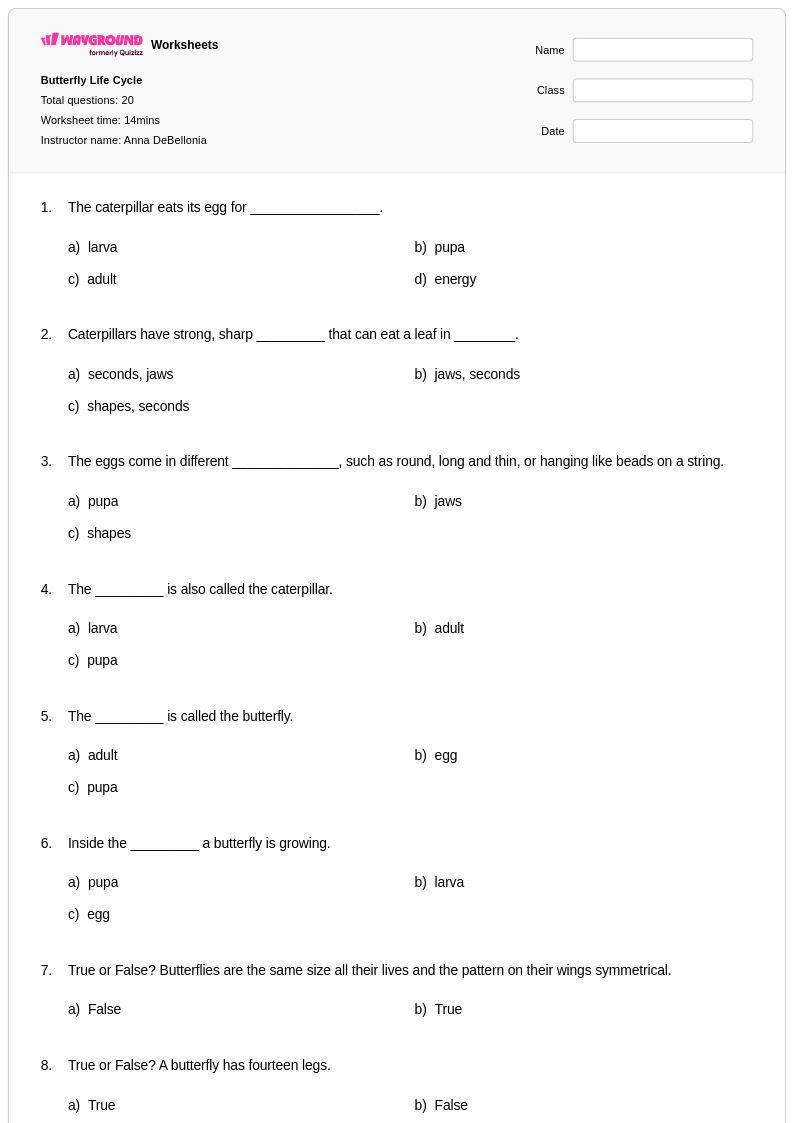
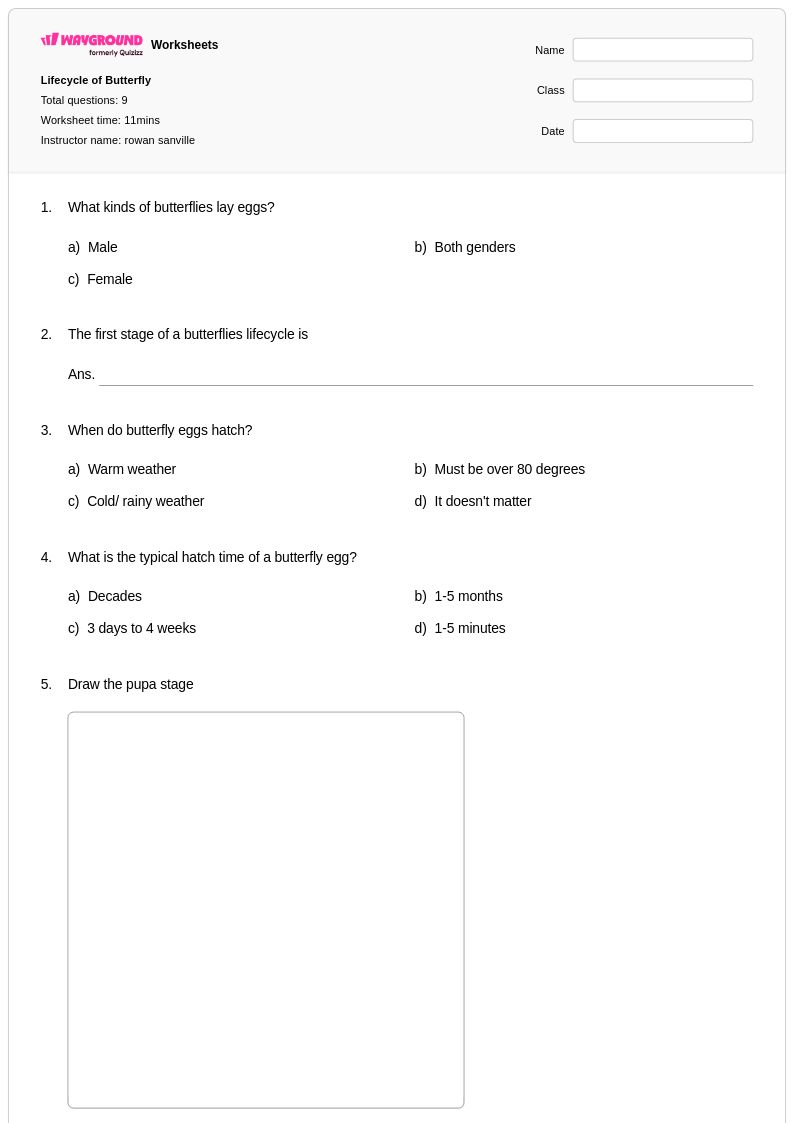
Butterfly anatomy is most meaningful when taught alongside the life cycle because each stage — egg, larva, pupa, adult — features distinct anatomical structures suited to different functions. Caterpillar anatomy (chewing mouthparts, prolegs, simple eyes) contrasts sharply with adult butterfly anatomy (proboscis, compound eyes, scaled wings), giving students a clear example of how metamorphosis produces structural transformation. Worksheets that integrate both topics help students understand that anatomy is not static but changes in direct response to the organism's biological stage and ecological role.
How can I use butterfly anatomy worksheets to support students with different learning needs?
Butterfly anatomy worksheets on Wayground can be assigned digitally, which opens access to built-in accommodation tools. Teachers can enable Read Aloud so anatomical terms and questions are read to students who need audio support, or apply reduced answer choices for students who benefit from lower cognitive load during identification tasks. Extended time can be configured per student for those who need more processing time, and reading mode offers adjustable font sizes and themes for accessibility — all settings are saved and reusable across future sessions without other students being notified.
How do I use Wayground's butterfly anatomy worksheets in my classroom?
Butterfly anatomy worksheets on Wayground are available as printable PDF documents for traditional classroom use and as interactive digital activities for technology-integrated learning environments, including the option to host them as a quiz directly on Wayground. Teachers can search, filter, and customize worksheets to target specific anatomical systems — from external morphology to internal organ structures — and modify content complexity for remediation or enrichment. All worksheets include detailed answer keys, reducing prep time and making them practical for both in-class activities and independent practice assignments.